Pages

Showing posts with label danger. Show all posts

Oct 25, 2012

Medal of Honor: Warfighter review: Mixed messages from home

EA and Danger Close’s second offering in the rebooted Medal of Honor franchise, Medal of Honor: Warfighter, offers a few moments of brilliance that are offset by its many technical issues and design flaws.
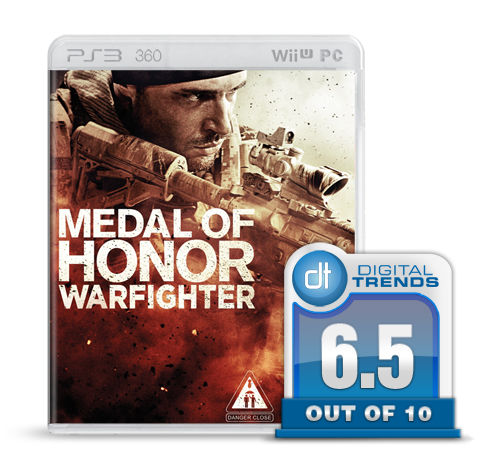
Medal of Honor Warfighter reviewMedal of Honor: Warfighter gets many things wrong, but most of all it is the victim of poor messaging. Those who have been following the marketing campaign for the latest from EA’s Danger Close studio have no doubt picked up on the fact that the game was developed in collaboration with actual Navy SEALs. There’s been a lot of noise from Danger Close about honoring those who serve, and while I do think that Warfighter‘s narrative speaks to that, the actual play is driven by the same sort of over-the-top spectacle that you’d expect from a modern military first-person shooter.

My negative reaction to Warfighter stems in part from getting something that was other than what had been expected. The key words there being “in part.” My negative reaction also stems even more from the fact that, at base, this is just not a very good game.

A Love Letter to the Troops

The patriotic narrative that drives events forward in Warfighter isn’t inherently a bad thing. I can even accept the loosely tied together series of levels. They don’t do much for telling a coherent story in the traditional sense, but I also imagine it’s similar to the experience of being a soldier who simply follows orders. The bigger picture comes together over the course of an extended military campaign, but your day-to-day operations aren’t necessarily accompanied by associated context. You might come to believe that the shadowy, faceless figure handing out each assignment in the game is actually presiding over some future conspiracy theory, but he’s really just the guy tasked with pulling the strings. 

Medal of Honor Warfighter  Warfighter‘s story is just about as “America, f*ck yeah!” as it can be, but again, that’s not a bad thing in and of itself. It’s frankly more than a little bit refreshing. With so many military shooters embracing the paranoia of what we don’t know about our country’s military maneuverings, it’s nice to see a narrative like this that steps away from conspiracy and offers a nod of appreciation to the troops on the ground. The game’s coda is particularly moving despite the fact that its impact is lessened by the game that precedes it.

Players take control of two different SEALs in two separate teams over the course of the campaign: Preacher and Stump. Both teams are working to bring down a terrorist organization, and while their paths rarely cross, their individual squad efforts resonate back and forth into each subsequent mission. You need to pay careful attention to cutscenes and incidental dialogue to pick up on all of this since, as I mentioned previously, there’s a disjointed feel to the way your missions are presented. Just prepare for some nightmare fuel: the CG cutscenes feature some mind-bogglingly impressive graphics, but the lifelike facial animations, particularly on the main character’s little daughter, are ridiculously creepy.

Carrying a Big Stick

As much as the story concerns itself with looking at the real life implications of trying to balance family with the life of a soldier, the gameplay couldn’t be further removed from reality. Medal of Honor: Warfighter embraces spectacle just as much as its predecessor. It’s less a FPS than it is an over-the-top military simulation. I’d estimate that you spend only roughly half the game doing the sort of things that one would typically expect from an FPS. The rest of the play is focused on scripted sequences (such as providing sniper support) or vehicle/turret sequences.

This sort of setup is actually integral to Medal of Honor‘s brand identity under Danger Close’s watch. For the most part, it also works in Warfighter. The driving sequences in particular really shine thanks to the development time put in by EA Black Box, the team behind Need for Speed: The Run. The non-FPS moments serve to break up the action, but they’re also (for the most part) plenty of fun in their own right.
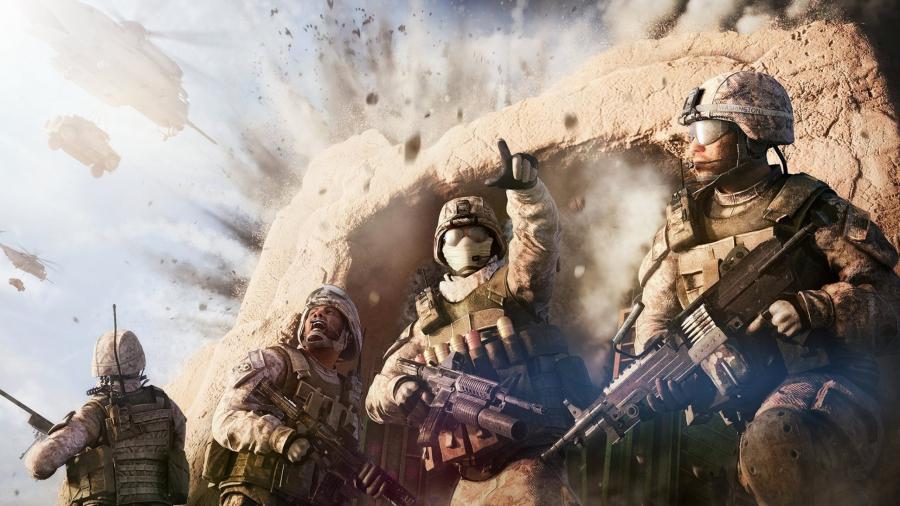
Medal of Honor Warfighter Also strong is Warfighter‘s peek-from-cover mechanic. It amounts to only a slight control tweak to the established norms for modern-day first-person shooters, but it works so well that I hope to see it embraced more widely. In a standard FPS, holding down left trigger or L2 on a PS3 controller will typically aim down your weapon’s sights. The same is true in Warfighter, but you also have the option of holding down the left bumper or L1 to aim down your sights. LB/L1 aiming locks your soldier in place, with the left stick controlling the direction and extent of your lean. It’s brilliantly simple and it works extremely well in those rare moments that you’re able to overlook the rest of the game’s technical shortcomings.

Unfortunately, Warfighter really goes off the rails in the one category where it’s supposed to excel: being a shooter. The FPS gameplay leans on some of the genre’s worst design tactics. I blame the Frostbite 2 engine. DICE’s Battlefield 3 workhorse paints a pretty picture (less pretty on consoles), but as we learned from the 2011 game’s campaign, it doesn’t fare so well outside of multiplayer.

The AI governing both your allies and your enemies is blindingly stupid. Foes will prioritize you above all targets, even if that means they’re running right past your completely exposed squadmates as they rush you. Not that your squadmates will respond in any appreciable way.  They’re similarly dim and generally unreliable, leaving you with the grim task of killing every gun-toting brown person (Eastern Europeans, at one point!) that you see.

The armies of bad guys will pop up out of nowhere too. It’s not quite on the level of Doom‘s “monster closets,” but Warfighter‘s enemies spawn in unrealistic ways. You might thoroughly check and re-check one area, only to cross an invisible checkpoint and suddenly find yourself facing half a dozen armed foes who have magically appeared in that very spot. Of that group, four will almost certainly dip behind any nearby cover, popping out in an easily predicted pattern like you’re playing some modern warfare-themed shooting gallery. The other two will run blindly toward you, no doubt hoping to shoot you in the face.

Medal of Honor WarfighterThis blunt-force AI is what ultimately shatters any sense of investment in the action. You may as well be shooting metal ducks on a track with an Airsoft rifle. There’s no nuance, no sense of tactical engagement. See bad guys, shoot bad guys, move on to the next gallery. Again, the issue comes back to the Frostbite 2 engine in my mind. You’ve got a campaign-focused shooter here relying heavily on a game engine designed, first and foremost, for a multiplayer gaming environment. If Danger Close and EA really want to challenge Call of Duty with Medal of Honor — and, after playing the game, that certainly seems to be the case — it’s going to take more than pretty graphics and a story built around lip service.

Finding Your Fireteam

Given all of that, it’s no surprise that Warfighter‘s multiplayer is up to the same standards, generally speaking, as Battlefield 3 (after its various post-release patches). The scale is much, much smaller, with more compact maps and zero vehicles to be found. The action also has its own distinct feel; this is not a carbon-copy of BF3‘s Close Quarters map pack nor is it easily described as a Call of Duty clone. Warfighter‘s adversarial multiplayer definitely has its own flavor, thanks largely to its fireteam mechanics.

Similar to BF3‘s squads, fireteams are the individual two-person units that make up the ranks of each match’s two opposing teams. While you’re always fighting as part of a larger group, your fireteam buddy offers several specific advantages. You can always spawn on your partner, provided that he or she is out of combat and relatively safe for a few seconds after you’re taken out. Your partner is also always visible as a silhouette even if you don’t have direct line of sight, and you can use him or her as a resupply and healing point (as you can with anyone on your team).

There are a few cool returning objective-based game modes from 2010′s Medal of Honor in addition to the standard Team Deathmatch. The new mode, Hotspots, is actually a personal  favorite. Attacking and defending teams work to plant/defuse bombs at three of five possible locations. The twist is that the three locations are only revealed one at a time, and they’re picked randomly out of the five total spots. The flow of the action is dictated by the moving attack/defend locations, requiring lots of on-the-fly tactical thinking.

Medal-of-Honor-Warfighter Multiplayer

Unfortunately, a clunky interface and confusing profile customization features make Warfighter‘s multiplayer more unapproachable than it really needs to be. I’ve spent several hours now leveling up my various classes, and I’m still not entirely clear how everything works. I’m constantly unlocking tokens for use on the MedalofHonor.com website but none of that is ever really explained inside the game. There’s a very deep weapon customization system as well, with numbers tied to both cosmetic and functional unlocks. What’s not clear is which numbers those refer to. A tutorial, even just a non-interactive video, would go a long way toward explaining how things work. It’s not enough to make this information accessible online; it really ought to be included as part of the game.

Conclusion

I really wanted to like the Medal of Honor: Warfighter that I’ve been reading and writing about over the past bunch of months. Unfortunately, the game that Danger Close released isn’t quite that. The multiplayer offers good times once you get the hang of its various systems, but the campaign is an unrestrained mess. The driving sequences are solid and the peek-from-cover mechanic is genius in its intuitive simplicity, but the campaign that wraps around the good stuff simply doesn’t measure up. In a season where every game released is in a week-to-week shootout with competitors from the same genre, Warfighter just doesn’t have enough firepower to ensure a victory.

Score: 6.5 out of 10


Source : digitaltrends[dot]com

Sep 12, 2012

Drones: 13 things you need to know from Congress’s new report

Congress drones report privacy spying technology

A new Congressional report lays out in vivid detail the danger drones could pose for personal privacy. Here's everything you need to know.

Starting in 2015, the skies above the United States will become infiltrated by a rare creature: drones. Also known as unmanned aerial vehicles (UAVs), drones are currently forbidden from flying in U.S. airspace above 400 feet, unless the Federal Aviation Administration (FAA) provides a license. But thanks to a bill passed by Congress early this year to make these licenses easier to get, drones will likely become a part of everyday life for Americans. 

While fun and futuristic, this coming reality unearths serious questions about privacy and personal liberty in the 21st century. A report published last week by the Congressional Research Service (CRS) shows that our laws are currently unprepared to deal with the privacy implications posed by the use of drones. The report (pdf) is an excellent read — at least if you’re a wonk like me. But if you don’t have time to peruse a 20-page CRS report, here are the 13 things you must know about the looming drone privacy apocalypse.

1. There will be 30,000 drones in the sky in less than 20 years

drone swarm

The FAA estimates (pdf) that within the next 15 years, more than 20,000 drones will take to the skies in the U.S., including drones operated by police, military, public health and safety agencies, corporations, and the public in general. That number is expected to jump to 30,000 within 20 years from today — a number the FAA refers to as “relatively small.” Currently, the FAA has only given out about 300 licenses to fly drones capable of cruising at more than 400 feet in the air.

2. Matters of privacy are all about “reasonableness”

reasonable

The Fourth Amendment to the U.S. Constitution guarantees our right against “unreasonable searches and seizures.” The key word here is “unreasonable” — and thanks to our rapidly changing technologies, its definition is in near-constant flux.

CRS researcher and legislative attorney Richard M. Thompson II, who authored the report on drones, explains in the report that “the reasonableness of drone surveillance [as considered by the courts] would likely be informed by location of the search, the sophistication of the technology used, and society’s conception of privacy in an age of rapid technological advancement.”

It’s this last part — “society’s conception of privacy” — that you should worry about on a daily basis, as it applies to the use of information gathered by everything from drones flying over our back yards to GPS capabilities in our smartphones to our Facebook profiles. Once society becomes generally “OK” with certain information becoming public, or becoming public in a certain way — once we think of these things as “reasonable — the Fourth Amendment protects us less. 

3. The Fourth Amendment: It depends what the definition of “search” is

surveillance-camera-shutterstock

As with what can be considered “reasonable,” the definition of what constitutes a “search” under the Fourth Amendment is a slippery beast. The Fourth Amendment provides for little wiggle room when it comes to activities performed in your home, behind closed doors and curtained windows. (No searches without a warrant there — most of the time, anyway.) But as soon as you leave the confines of your house, things start getting more complicated — and things get even worse when you consider surveillance that uses planes and helicopters. Throw drones in the mix and, well, the fine line across which surveillance by the state becomes “search” gets downright knotty.

Thompson’s CRS report explains that a court reviewing the use of drones under the Fourth Amendment will have to consider past cases that involved “privacy in the home, privacy in public spaces, location tracking, manned aerial surveillance, those involving the national border,” and instances when warrants aren’t needed to perform a “routine” search (like searching a car at a U.S. border), to determine the definition of a “search.”

4. Drones will have the ability to see through walls and ceilings

x-ray vision

Thanks to technology like the Xaver 800 from Camero, which uses electromagnetic radar to construct 3D images of hidden objects, law enforcement and military personnel can now “see” through walls. Combine this with laser radar and thermal imaging techniques, and our homes practically have glass walls, as far as the police are concerned. Thompson estimates that similar technology will eventually be outfitted on drones, allowing them to see through ceilings and walls. The question before the courts will be: Without a warrant, is that reasonable?

5. Drones could be outfitted with face recognition technology

face recognition

In addition to seeing through our walls, Thompson writes that law enforcement organizations “might seek to outfit drones with facial recognition or soft biometric recognition, which can recognize and track individuals based on attributes such as height, age, gender, and skin color.”

Considering that the FBI is currently undertaking a $1 billion project to build out its face recognition capabilities, this one seems all but inevitable. However, as Thompson explains, the sophisticated nature of such technology may determine whether the use of face recognition technology on drones “is lawful under the Fourth Amendment.”

6. Aerial searches in manned aircraft are not against the Fourth Amendment — but drone surveillance may be different

helicopter

While the Fourth Amendment provides strict protections for privacy inside the home, anywhere outside the home falls into other categories of protection. The first is “curtilage,” which is defined as the area surrounding a home (like a front or back yard). Areas outside of that are referred to as “open fields.” The Fourth Amendment protections apply differently for each of these categories; curtilage is often nearly as highly protected as inside the home, while open fields may not be protected at all.

That said, existing case law (precedent) determines that police may use airplanes and helicopters that fly within federal aviation guidelines to look in on citizens’ curtilage — even if it’s fenced in or otherwise hidden from public view — without a warrant. It is not yet clear whether drones would fall into the same category as planes and ‘copters, according to Thompson.

7. Long-term tracking is different from short-term tracking

Real_Time_GPS_Tracking_Device

In the recent Supreme Court case United States vs Jones, the Court ruled that the tracking of an individual using GPS for a long period of time (say, a month) constitutes a “search” under the Fourth Amendment due to how much information can be gathered about a person over an extended period, thus requiring a warrant to perform the tracking. But previous case law upheld law enforcement’s ability to track users outside their homes for a shorter period of time without the need for a warrant.

Now, because drones can stay in the sky for long periods of time — and, in the case of Lockheed Martin’s Stalker drone, possibly forever — they could be used to track people’s movements for extremely long periods of time. Because of this, the courts will have to decide whether the use of long-duration flight drones for surveillance purposes constitutes a search under the Fourth Amendment.

8. U.S. borders are a search free-for-all

US-border-drone

As you may have gathered, reasonable expectations of privacy have a lot to do with where a person is. But the one place you should have zero expectation of privacy is near a U.S. border. Border agents already have the ability to search things like your car, without a warrant, within 25 miles of a U.S. border.

Because of the looser restrictions near U.S. borders, the use of drones is, and will be, extremely prevalent. And since the surveillance using drones “may be considered more passive” than surveillance agents on the ground, or in planes and helicopters, by the courts, explains Thompson, drones “may be even less likely to run afoul of Fourth Amendment requirements.” (Emphasis mine.)

9. Technology sophistication matters

 thermal-imaging-camera

Under the Fourth Amendment, all technology is not created equal. The use of gadgets that anyone can get their hands on (like binoculars) for surveillance purposes are more permissible by the courts than technology that is extremely sophisticated (like radar that can see through walls).

With this in mind, the courts will likely have to decide what types of technology can be attached to drones for surveillance use. Is a low-powered camera allowed while a high-powered camera isn’t? Should drones be outfitted with face recognition systems? It’s not yet clear — and it’s something that the courts (or Congress) must establish.

10. The more common drones become, the less privacy protections you may have

privacy

As with the public definition of “reasonable” under the Fourth Amendment, the public’s expectations of privacy with regards to certain technology changes with time. The more a technology is used, the more acceptable (read: reasonable) it is. Thompson points out that as drones become increasingly commonplace, the more the public will accept the use of drones for surveillance purposes, potentially changing which types of surveillance practices are and are not protected under the Fourth Amendment.

11. Americans are worried about drones

drone camera

According to a study released in June by Monmouth University (pdf), 80 percent of Americans approve of using drones for search and rescue missions, while 67 percent believe drones should be used to “track down runaway criminals.” 

And yet, 42 percent of respondents said they would be “very concerned” about their own privacy if drones were used by law enforcement. Twenty two percent would be “somewhat concerned,” and 16 percent would be “just a little concerned.” A full 15 percent said they would not be concerned at all.

Oh, and only 23 percent said they would feel comfortable with using drones to catch speeding motorists.

12. There are ways to fight back against drone privacy invasion now

S 3287

The courts are not the only government body that can decide what is and is not allowed by drones. Congress can also take action, and it’s already begun to do that. Rep Austin Scott (R-GA) and Sen. Rand Paul (R-KY) recently introduced the Preserving Freedom from Unwarranted Surveillance Act of 2012 (H.R. 5925, S. 3287), which would require the federal government to gain a warrant based on probable cause before drones could be used for surveillance purposes. And Rep. Ted Poe’s (R-TX) Preserving American Privacy Act of 2012 (H.R. 6199) would also require law enforcement to obtain a warrant for drone surveillance, among other restrictions.

Thompson suggests that “Congress could also limit the admissibility of evidence in a criminal prosecution to situations where its acquisition was the purpose of the drone search.”

If you’re afraid of waiting to let the courts decide how drones can be used for surveillance — a decision that will come after the drones are already being used for that purpose — I suggest you look into vocally supporting some of these bills.

13. We’re just making this up as we go along

winging it

Valuable tidbits about the Fourth Amendment aside, the key takeaway from all this is that laws are nothing more than a man-made creation. In other words, they are made up. And as technology advances faster than our government can respond, those in charge of crafting the rules are forced to figure out all the implications on the fly — not just for drones, but for all emerging technologies. More important, our view of drone surveillance (or GPS tracking or Facebook data scraping) plays a major role in how the government will decide these issues for us. We would do well for ourselves to pay close attention.

Shutterstock images: camera via Sto; X-ray via jgl247; helicopter via Sofron;  gun/thermal imaging camera via Brent Wong; privacy via Thomas Skjaeveland; winging it via Yuri Arcurs


Source : digitaltrends[dot]com

Aug 9, 2012

Do you need antivirus on Android? We ask the experts

android security antivirus

We interview experts from Avast, Lookout, and AV-Test to determine if you really need to download antivirus and security apps for Android and how much danger your phone is in.

Android has been around for a few years now and yet the topic of security continues to be the source of some argument. On the one hand you have the argument that Android is not susceptible to virus threats and, provided you are careful about what you download, there is no real need for antivirus software. On the other, you have reports and statistics claiming that malware is frighteningly common and any Android device without protection is sure to get infected. So where does the truth lie? We’ve asked experts from three prominent companies in mobile security — AV-Test, Avast, and Lookout — to help us figure out just how much danger we’re in.

Antivirus is just part of the package

We already took a look at the top security apps on the Android platform and found that they tend to offer a lot more than just antivirus protection. In our security app roundup, we referred to a report by independent security experts, AV-Test, which compared the detection rates of the top Android antivirus apps. AV-Test CEO, Andreas Marx, said that antivirus is important, but a well-rounded security app is better.

“Antivirus is usually only one component of the offered Android protection packages,” said Marx. “So a stand-alone AV is not yet required at all times, but it is a good-to-have feature as part of a bigger package. Such packages often include easy-to-use backup features for user’s data, remote wipe in case the phone gets lost, etc.”

We also spoke to Jan Gahura, Director of Non-Windows products at Avast and he suggested that the real benefit of Avast! Mobile Security goes beyond the antivirus features. When asked about the biggest risk to Android users and the main incentive to download avast! Mobile Security he also concurred that viruses aren’t the biggest risk.

“I’d say that the biggest risk is that someone will get access to your device (either you lose your device or it’s stolen),” said Gahura. “That’s why we have focused on the best anti-theft solution currently available on the market. To have a smartphone in your pocket without a remote wipe possibility is a dangerous thing. It’s even more dangerous than losing keys to your house. Of course someone can steal your private data using a fraudulent application, but that’s certainly the harder way. With avast! Mobile Security, you are shielded from both threats.”

Malware, fact or fiction?

AV-TEST certifiedSo what about malware? Should we be worried? The key thing to remember about malware on Android is that you have to actually install it. Malware writers will use increasingly clever techniques to try and trick you into doing just that.

“If you only install software from trustworthy market places (like Google Play) and do not use your smartphone very often for web surfing or e-mailing, the OS is still pretty safe,” said Andreas Marx, AV-Test. “The majority of problems arise from the installation of ‘cracked’ applications from 3rd party market places which are often bundled with malicious software.”

As malware writers try to earn money for their bad deeds, they continually look for new ways to get their malicious software installed on your devices. The best recommendation is still to think twice before installing untrusted software or clicking on strange-looking links.

“The Google Play store is a relatively open environment,” said Jan Gahura, Avast. “Even after Google introduced its Bouncer (an automatic analysis tool to approve each application which is submitted to the Google Play Store) malicious applications still exist. Here at Avast we know how hard is to develop such a tool and how easy is to fool it from a bad guy’s perspective.”

That point of view is echoed by Derek Halliday, Senior Product Manager at Lookout, who had some lengthy remarks on mobile security. In his eyes, Android users are far from safe.

“No OS is completely safe, and protection is a requirement across mobile platforms. No matter where you find a critical mass of people, there will always be some bad guys looking for ways to exploit them. Android has exploded in popularity, attracting a lot of consumers in the last few years, so it’s only natural that it’s targeted.”

“It’s not actually a case of Android being particularly vulnerable – Google has taken some great steps toward protecting people and screens all apps entering Google Play – but the basic programming language is Java, and that’s what makes Android more of a target for the creators of malware. No special hardware is required – code can be written on a standard PC – so unlike iOS which requires a Mac, Android code writing is readily accessible to a lot of people across the world. This lower barrier to development attracts more bad guys.”

“In the last 12 months, there has been an increase in for-profit malware across all OSs. We’ve seen increasingly sophisticated threats emerging – for the first time ever, we witnessed malware writers targeting the mobile Web via compromised or infected websites with the NotCompatible threat.”

Is Google Play a hot bed of malware?

Google-toys-around-with-the-Android-Market,-changes-name-to-Google-PlayThe idea that malware-infected apps are proliferating in Google Play is popular and there is some statistical evidence to back it. At the recent NetEvents Americas a BT (British Telecom), security expert Jill Knesek suggested that up to a third of Android applications carried some form of malware (based on a test of 1,000 apps) and that most devices are compromised. It was widely reported, but not true. ZDNet questioned BT on the subject and it backpedaled, saying that it no longer wishes to talk about the subject. The claims have yet to be supported by any released report.

So is all this talk really just scaremongering designed to panic you into installing antivirus software? Chris DiBona, Open Source Programs Manager at Google, certainly thought so when he released an update tackling the topic on his Google+ account back in November, 2011. In it, he argued that: “Yes, virus companies are playing on your fears to try to sell you bs protection software for Android, RIM and iOS. They are charlatans and scammers. IF you work for a company selling virus protection for Android, RIM or iOS, you should be ashamed of yourself.”

He was talking about traditional virus problems of the kind you might see on Windows or Mac computers. Mobile platforms are not at risk in the same way because of the way they were designed. He makes a distinction between ‘viruses’ which spread themselves and bad apps containing malware, which you have to choose to install.

So what is Android malware?

The vast majority of malware on Android is focused on stealing your information, which is obviously a major concern. Perhaps the worst case scenario at the moment is malware that sends SMS messages to premium rate numbers. There’s no denying that it is dangerous but it’s also like a vampire – in that you have to invite it into your home, or onto your phone. It is not spreading by itself and, if you are sensible, you can avoid it without needing antivirus software.

Unfortunately, as we mentioned before, malware writers are employing ever more sophisticated techniques to fool you. There are apps that clone legitimate apps to fool you into downloading them and apps that are malware free when you first install them, but download malware through the update system.

“Currently, Premium SMS scams are the biggest threat to smartphone users, regardless of OS,” explained Derek Halliday, Lookout. ”They’re relatively simple to set-up, and have the potential to pay-off big. But there are constantly new threats evolving, ranging from aggressive ad networks, through to Trojans and new forms of malware. Mobile phones have become our wallet, contact list, communications, and more. You wouldn’t leave your bank account open to everyone, so why take the same chances with your phone when it contains so much information? But at the same time, you shouldn’t be scared of using all the features on your device – Lookout gives people the freedom to enjoy their smartphone to the full. ”

Pros and cons of security apps

Since many Android security apps combine anti-theft features with backup and antivirus, it won’t hurt to install them, but a pure antivirus solution might not be so worthwhile. In the future, antivirus on Android may move from a ‘good to have’ feature to a ‘must have’ component. It doesn’t sound like we’re at that point yet. Right now, it depends more on how careful you are.

If you’re wondering about the disadvantage of installing antivirus then it really boils down to three things –

  • cost (which you can avoid with a free option)
  • footprint (it will eat some processing power)
  • false positives (it will occasionally identify legitimate apps as malware)

Tomorrow, we’ll take a look at how to stay safe on Android without security apps. These are simple tips for people keen to avoid malware and not so keen on running antivirus software.


Source : digitaltrends[dot]com