Pages

Showing posts with label united. Show all posts

Nov 6, 2012

Barack Obama Announces ‘Four More Years’ With Tweet

ht obama wins tweet wy 121106 wblog Barack Obama Announces Four More Years With Tweet

Image credit: @BarackObama/Twitter

It wasn’t in a speech or a statement that Barack Obama announced that he was going to be re-elected as the president of the United States. It was through Twitter.

At 11:14 p.m. ET, @BarackObama tweeted, “This happened because of you. Thank you.”

A few minutes later: “We’re all in this together. That’s how we campaigned, and that’s who we are. Thank you. – bo.”

And finally along with a photo of him and Michelle Obama: “Four more years.” That last tweet is now his most retweeted tweet and one of the most retweeted tweets ever. Twitter would not confirm if it was the most retweeted tweet ever. Just 40 minutes after posting it, it had 308,705 retweets.

According to Twitter, after a network call of the presidential race at 11:19 p.m., there were 327,453 tweets per minute. On Election Day itself there were over 20 million election related tweets. For more on the social media reaction to Election Day, check out our guide.

Check out our full article on Barack Obama’s win. 


Source : abcnews[dot]go[dot]com

Nov 5, 2012

Skyfall gear guide: All the gadgets fit for a spy

Skyfall gear guide

Skyfall hits theaters in the United States later this week, but many of the gadgets Bond will use are already available to buy – if you have a Bond budget. Prepare your lusty eyes over these one-of-a-kind pieces.


While the latest 007 flick, Skyfall, has already popped up in UK theaters, those of us in the States will lay eyes on Daniel Craig’s third go around as Bond this Friday, November 9. Of course, the super sleek spy is known for a closet full of badass gadgets, and Skyfall is no exception. Here’s a first look at all the gear Bond will be sporting in Skyfall – and where you can snag some for your next mission.

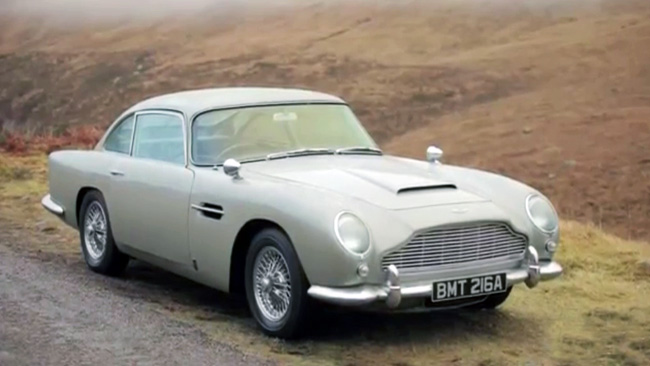
Aston Martin DB5

Plenty of exotic automotive nameplates have graced the Bond films throughout the decades — Lotus, BMW, and Jaguar have all served as four-wheel chariots for the dapper double O. But another car, more than any other, has come to define our beloved MI6 agent, and that car is the Aston Martin DB5.

Marking its third appearance in the long-running Bond franchise, the iconic Aston is back. We’re not sure what additional gadgets and weaponry the classic car may feature, but we expect upgrades to the original’s bulletproof shield, passenger ejector seat, oil slick sprayer and pop-out guns are in order. Consider our excitement shaken, not stirred, to see DB5 in action once again.

Walther PPK

If you’ve seen the trailer for Skyfall, you might have noticed that Q is a lot younger than we’re used to seeing. In one scene, he is seen issuing Bond a brand new Walther PPK. Perhaps his most personalized gadget yet, this re-modified version of classic Bond handgun has a palm-sensitive biometric reader that will not fire unless Bond is the one holding the firearm. So, enemies, if you’re out of ammo, don’t bother trying to snatch this bad boy from the man. It’s not Bond’s most powerful weapon to date, but it sure is pretty cool.

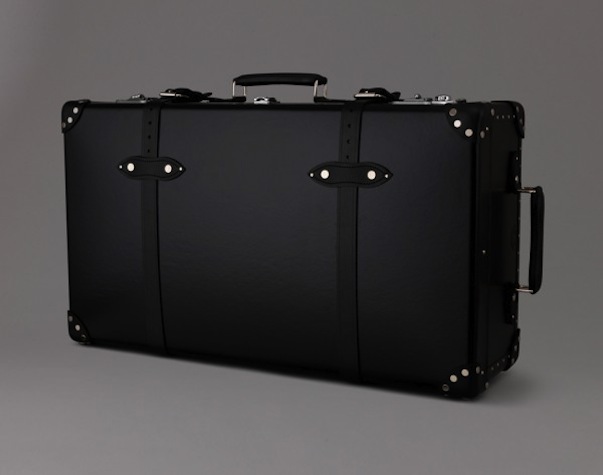
Globe-Trotter Stabilist Rifle Case

Produced just for Skyfall, this limited-edition rifle case features an aluminium body with a diamond-quilted lining and chrome locks so even your weapons get the ultra-luxe accommodation. The handle in this commercial edition also has the telescopic sight, replicating the James Bond’s version to a tee (without the actual functionality, of course. We can only dream.) Globe-Trotter has crafted only 100 of these for global sale at a retail value of £5,000 (approximately $8,000 USD) so get your order in while supplies last, if you’ve got the cash.

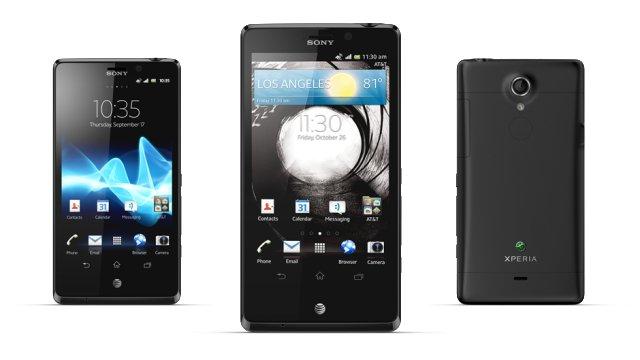
Sony Xperia TL

Every gadget James Bond uses is full of crazy doo-dads and secret features. Oddly enough, with a modern smartphone, there’s an app for just about everything. The Sony Xperia TL is set to be Bond’s phone of choice in Skyfall, and this time he’s in for a treat. The TL will soon be released on AT&T and comes with a 4.6-inch HD screen and an impressive 13-megapixel camera, which we’d imagine would be good for spying. Bond might also make use of the NFC capabilities of the TL, which can pair with other devices by simply tapping it on them. The only downside is that Bond will be stuck using Android 4.0 at launch. Like the rest of us, he’ll have to wait for an upgrade to Android 4.1 (Jelly Bean) … unless, of course, Q has already hacked into the system to give him all the apps he’ll ever need.

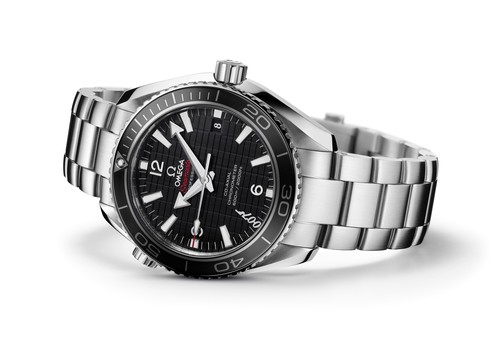
Omega Seamaster Planet Ocean 600M

Think you can walk into your nearest Omega retailer, spend big bucks, and get yourself a piece of that James Bond flavor? Well, yes and no. The special edition watch Bond wears in the film can perform any function a phone can (and then some), so expect some hidden tricks to unveil throughout the movie. While your Omega might not be able to shoot lasers, it is equipped with a scratch-resistant crystal dome, a chromium-nitride diving scale, rhodium-plated hands, steel case, and is water-resistant for up to 2,000 feet deep. The limited-edition Planet Ocean Skyfall edition is slated for release some time before the year’s end, with prices to be announced. Bond can be seen wearing the watch in some of the promotional posters, along with a classic black suit. Speaking of which…

Bespoke Tom Ford suit

Hardly a gadget but hardly James Bond without, the staple Tom Ford suit is a must-have if you’re looking to cop Bond’s style. The custom tailored suit uses breathable, flexible fabric that allows Bond to both battle and strut while maintaining a modern fit.

[Additional reporting by Amir Iliaifar and Jeffrey Van Camp]


Source : digitaltrends[dot]com

Oct 4, 2012

Nokia Lumia 920 and 820 are AT&T exclusives in the U.S.

Nokia Lumia 920

AT&T will exclusively carry the Nokia Lumia 920 and 820 in the United States.

AT&T just announced that the Windows Phone 8 smartphones, the Nokia Lumia 920 and Nokia Lumia 820 will be exclusive to the carrier in the States.

The flagship Lumia 920 is Nokia’s first Windows Phone 8 device, which also means its one of the first Windows Phones to pack some impressive hardware. It has a 4.5-inch curved glass touchscreen, a dual-core 1.5GHz Snapdragon S4 chip, 32GB of storage, and an 8-megapixel camera. The Lumia 820 is a little smaller with a 4.3-inch display and is being billed as a mid-range smartphone. The stand out feature for both is wireless charging support.

Jeff Bradley, senior vice president of Devices and Developer Services at AT&T Mobility said, “Exclusive to our customers and featuring unique innovations in imaging technology, wireless charging and a bright, sensitive display – all on the nation’s largest 4G network – the Lumia 920 will be one of the hottest phones for the holidays,”

AT&T continues to position itself as the leading Windows Phone 8 carrier and reminded us in its press release that it has sold more Windows Phones than any other carrier to date. It will also offer the HTC 8X.

Both the Lumia 920 and 820 will feature Nokia’s City Lens AR overlay and benefit from all the new features Windows Phone 8 has to offer. The 920 comes in red, white, black, yellow, and cyan; the 820 comes in black.

There’s no word on release date or pricing beyond the fact that the new devices will hit shelves sometime this autumn.


Source : digitaltrends[dot]com

Sep 13, 2012

Can’t drive 55? No problem: New Texas highway will have an 85 mph speed limit

Hennessey VR1200 Twin Turbo Coupe rear three-quarter motion

When it opens in November, a stretch of toll road between Austin and Seguin, Texas will be the fastest highway in the United States, but not by much.

Texas will soon have the fastest highway in the United States. A stretch of road between Austin and Seguin has been gifted with an 85 mph speed limit, according to the Associated Press.

The Texas Transportation Commission approved the new limit for this 35-mile stretch of toll road, which runs east of the crowded Interstate 35 corridor favored by commuters, after the state’s legislature approved raising speed limits on new roads last year. The Austin-Seguin road opens in November.

For years, American speed freaks have had to watch Germans have all the fun on their autobahns, and this could be an excellent opportunity to really drop the hammer on U.S. soil. It could also help reduce travel times between two of the biggest cities, and potentially others, in the biggest state in the contiguous United States.

However, the decision isn’t as radical as it seems. Texas already has an 80 mph maximum speed limit, so drivers on the new toll road will only be going five mph faster than their fellow Texans.

The 85 mph speed limit also includes an economic incentive for the state government. The state’s contract with the toll operator allows it to collect a $67 million up-front cash payment, or a certain percentage of the toll profits, if the speed limit is 80 mph or lower. If the speed limit is above 80 mph, the state gets $100 million or a higher percentage of the profits.85 mph speed limit sign

“We must continue to look for innovative ways to generate revenue and be good stewards of taxpayer dollars,” Texas Department of Transportation Spokeswoman Veronica Byer told the Associated Press.

Sound economic reasoning aside, there are obvious concerns over drivers cruising 10-20 mph faster than nearly every other American.

“The research is clear that when speed limits go up, fatalities go up,” Russ Rader, a spokesman for the Insurance Institute for Highway Safety said. He said higher speed limits will get people from place to place faster, but they would cause more crashes and, ultimately, deaths.

Texas officials believe that, despite the connection between speed and highway danger, the 85 mph limit is within the envelope of safety.

“Safety is our top priority and tests have shown the designated speed is a safe one,” Beyer said. Speed limits on Texas highways are reportedly set by the 85th percentile method, where the speed limit reflects the maximum speed 85 percent of drivers are willing to drive at or below.

On most highways, speeds are restricted to 65 or 75 mph. Certain stretches of road in Texas and Utah have 80 mph limits. Montana was the last state to have no speed limits, but that practice ended in 1999.


Source : digitaltrends[dot]com

Sep 12, 2012

Drones: 13 things you need to know from Congress’s new report

Congress drones report privacy spying technology

A new Congressional report lays out in vivid detail the danger drones could pose for personal privacy. Here's everything you need to know.

Starting in 2015, the skies above the United States will become infiltrated by a rare creature: drones. Also known as unmanned aerial vehicles (UAVs), drones are currently forbidden from flying in U.S. airspace above 400 feet, unless the Federal Aviation Administration (FAA) provides a license. But thanks to a bill passed by Congress early this year to make these licenses easier to get, drones will likely become a part of everyday life for Americans. 

While fun and futuristic, this coming reality unearths serious questions about privacy and personal liberty in the 21st century. A report published last week by the Congressional Research Service (CRS) shows that our laws are currently unprepared to deal with the privacy implications posed by the use of drones. The report (pdf) is an excellent read — at least if you’re a wonk like me. But if you don’t have time to peruse a 20-page CRS report, here are the 13 things you must know about the looming drone privacy apocalypse.

1. There will be 30,000 drones in the sky in less than 20 years

drone swarm

The FAA estimates (pdf) that within the next 15 years, more than 20,000 drones will take to the skies in the U.S., including drones operated by police, military, public health and safety agencies, corporations, and the public in general. That number is expected to jump to 30,000 within 20 years from today — a number the FAA refers to as “relatively small.” Currently, the FAA has only given out about 300 licenses to fly drones capable of cruising at more than 400 feet in the air.

2. Matters of privacy are all about “reasonableness”

reasonable

The Fourth Amendment to the U.S. Constitution guarantees our right against “unreasonable searches and seizures.” The key word here is “unreasonable” — and thanks to our rapidly changing technologies, its definition is in near-constant flux.

CRS researcher and legislative attorney Richard M. Thompson II, who authored the report on drones, explains in the report that “the reasonableness of drone surveillance [as considered by the courts] would likely be informed by location of the search, the sophistication of the technology used, and society’s conception of privacy in an age of rapid technological advancement.”

It’s this last part — “society’s conception of privacy” — that you should worry about on a daily basis, as it applies to the use of information gathered by everything from drones flying over our back yards to GPS capabilities in our smartphones to our Facebook profiles. Once society becomes generally “OK” with certain information becoming public, or becoming public in a certain way — once we think of these things as “reasonable — the Fourth Amendment protects us less. 

3. The Fourth Amendment: It depends what the definition of “search” is

surveillance-camera-shutterstock

As with what can be considered “reasonable,” the definition of what constitutes a “search” under the Fourth Amendment is a slippery beast. The Fourth Amendment provides for little wiggle room when it comes to activities performed in your home, behind closed doors and curtained windows. (No searches without a warrant there — most of the time, anyway.) But as soon as you leave the confines of your house, things start getting more complicated — and things get even worse when you consider surveillance that uses planes and helicopters. Throw drones in the mix and, well, the fine line across which surveillance by the state becomes “search” gets downright knotty.

Thompson’s CRS report explains that a court reviewing the use of drones under the Fourth Amendment will have to consider past cases that involved “privacy in the home, privacy in public spaces, location tracking, manned aerial surveillance, those involving the national border,” and instances when warrants aren’t needed to perform a “routine” search (like searching a car at a U.S. border), to determine the definition of a “search.”

4. Drones will have the ability to see through walls and ceilings

x-ray vision

Thanks to technology like the Xaver 800 from Camero, which uses electromagnetic radar to construct 3D images of hidden objects, law enforcement and military personnel can now “see” through walls. Combine this with laser radar and thermal imaging techniques, and our homes practically have glass walls, as far as the police are concerned. Thompson estimates that similar technology will eventually be outfitted on drones, allowing them to see through ceilings and walls. The question before the courts will be: Without a warrant, is that reasonable?

5. Drones could be outfitted with face recognition technology

face recognition

In addition to seeing through our walls, Thompson writes that law enforcement organizations “might seek to outfit drones with facial recognition or soft biometric recognition, which can recognize and track individuals based on attributes such as height, age, gender, and skin color.”

Considering that the FBI is currently undertaking a $1 billion project to build out its face recognition capabilities, this one seems all but inevitable. However, as Thompson explains, the sophisticated nature of such technology may determine whether the use of face recognition technology on drones “is lawful under the Fourth Amendment.”

6. Aerial searches in manned aircraft are not against the Fourth Amendment — but drone surveillance may be different

helicopter

While the Fourth Amendment provides strict protections for privacy inside the home, anywhere outside the home falls into other categories of protection. The first is “curtilage,” which is defined as the area surrounding a home (like a front or back yard). Areas outside of that are referred to as “open fields.” The Fourth Amendment protections apply differently for each of these categories; curtilage is often nearly as highly protected as inside the home, while open fields may not be protected at all.

That said, existing case law (precedent) determines that police may use airplanes and helicopters that fly within federal aviation guidelines to look in on citizens’ curtilage — even if it’s fenced in or otherwise hidden from public view — without a warrant. It is not yet clear whether drones would fall into the same category as planes and ‘copters, according to Thompson.

7. Long-term tracking is different from short-term tracking

Real_Time_GPS_Tracking_Device

In the recent Supreme Court case United States vs Jones, the Court ruled that the tracking of an individual using GPS for a long period of time (say, a month) constitutes a “search” under the Fourth Amendment due to how much information can be gathered about a person over an extended period, thus requiring a warrant to perform the tracking. But previous case law upheld law enforcement’s ability to track users outside their homes for a shorter period of time without the need for a warrant.

Now, because drones can stay in the sky for long periods of time — and, in the case of Lockheed Martin’s Stalker drone, possibly forever — they could be used to track people’s movements for extremely long periods of time. Because of this, the courts will have to decide whether the use of long-duration flight drones for surveillance purposes constitutes a search under the Fourth Amendment.

8. U.S. borders are a search free-for-all

US-border-drone

As you may have gathered, reasonable expectations of privacy have a lot to do with where a person is. But the one place you should have zero expectation of privacy is near a U.S. border. Border agents already have the ability to search things like your car, without a warrant, within 25 miles of a U.S. border.

Because of the looser restrictions near U.S. borders, the use of drones is, and will be, extremely prevalent. And since the surveillance using drones “may be considered more passive” than surveillance agents on the ground, or in planes and helicopters, by the courts, explains Thompson, drones “may be even less likely to run afoul of Fourth Amendment requirements.” (Emphasis mine.)

9. Technology sophistication matters

 thermal-imaging-camera

Under the Fourth Amendment, all technology is not created equal. The use of gadgets that anyone can get their hands on (like binoculars) for surveillance purposes are more permissible by the courts than technology that is extremely sophisticated (like radar that can see through walls).

With this in mind, the courts will likely have to decide what types of technology can be attached to drones for surveillance use. Is a low-powered camera allowed while a high-powered camera isn’t? Should drones be outfitted with face recognition systems? It’s not yet clear — and it’s something that the courts (or Congress) must establish.

10. The more common drones become, the less privacy protections you may have

privacy

As with the public definition of “reasonable” under the Fourth Amendment, the public’s expectations of privacy with regards to certain technology changes with time. The more a technology is used, the more acceptable (read: reasonable) it is. Thompson points out that as drones become increasingly commonplace, the more the public will accept the use of drones for surveillance purposes, potentially changing which types of surveillance practices are and are not protected under the Fourth Amendment.

11. Americans are worried about drones

drone camera

According to a study released in June by Monmouth University (pdf), 80 percent of Americans approve of using drones for search and rescue missions, while 67 percent believe drones should be used to “track down runaway criminals.” 

And yet, 42 percent of respondents said they would be “very concerned” about their own privacy if drones were used by law enforcement. Twenty two percent would be “somewhat concerned,” and 16 percent would be “just a little concerned.” A full 15 percent said they would not be concerned at all.

Oh, and only 23 percent said they would feel comfortable with using drones to catch speeding motorists.

12. There are ways to fight back against drone privacy invasion now

S 3287

The courts are not the only government body that can decide what is and is not allowed by drones. Congress can also take action, and it’s already begun to do that. Rep Austin Scott (R-GA) and Sen. Rand Paul (R-KY) recently introduced the Preserving Freedom from Unwarranted Surveillance Act of 2012 (H.R. 5925, S. 3287), which would require the federal government to gain a warrant based on probable cause before drones could be used for surveillance purposes. And Rep. Ted Poe’s (R-TX) Preserving American Privacy Act of 2012 (H.R. 6199) would also require law enforcement to obtain a warrant for drone surveillance, among other restrictions.

Thompson suggests that “Congress could also limit the admissibility of evidence in a criminal prosecution to situations where its acquisition was the purpose of the drone search.”

If you’re afraid of waiting to let the courts decide how drones can be used for surveillance — a decision that will come after the drones are already being used for that purpose — I suggest you look into vocally supporting some of these bills.

13. We’re just making this up as we go along

winging it

Valuable tidbits about the Fourth Amendment aside, the key takeaway from all this is that laws are nothing more than a man-made creation. In other words, they are made up. And as technology advances faster than our government can respond, those in charge of crafting the rules are forced to figure out all the implications on the fly — not just for drones, but for all emerging technologies. More important, our view of drone surveillance (or GPS tracking or Facebook data scraping) plays a major role in how the government will decide these issues for us. We would do well for ourselves to pay close attention.

Shutterstock images: camera via Sto; X-ray via jgl247; helicopter via Sofron;  gun/thermal imaging camera via Brent Wong; privacy via Thomas Skjaeveland; winging it via Yuri Arcurs


Source : digitaltrends[dot]com

Sep 5, 2012

Feds investigate alleged hacking of Romney’s tax returns

1040 Tax Form

Quite possibly a giant waste of time for the Secret Service, an investigation has been launched into threats of stolen tax returns.

Covered by Venturebeat earlier today, the United States Secret Service is looking into a claim that hackers stole several years worth of Mitt Romney’s tax returns from the offices of PriceWaterhouseCoopers in Franklin, Tennessee. Posted on Pastebin earlier this week, the hacking team that allegedly stole Romney’s tax returns detailed an account of the theft. According to the account, the thieves gained access to the PriceWaterhouseCoopers office on August 25 through the third floor of the office building. Moving down to the second floor, the group allegedly accessed the PriceWaterhouseCoopers office in question and copied scans of all available Romney tax returns to a USB drive. After leaving the offices, the hacking team allegedly copied the documents onto three USB drives. They had flash drives delivered to the PriceWaterhouseCoopers office as well as the local branches of the Republican and Democratic party.

romney-floridaAfter the group threatened to release all files to the public on September 28, they posted a follow-up threat on September 4 regarding payment by Bitcoins. Detailed in the second Pastebin post, the group claims to have accessed the network file servers at the Tennessee office of PriceWaterhouseCoopers and copied the tax documents. The second threat states that all major news organizations will be sent an encrypted copy of the files and the key to unlock Romney’s tax returns will be distributed on September 28. 

However, the group setup two separate Bitcoin addresses in an attempt to force a bidding competition between parties that want to see the Romney’s old tax returns and parties that want to keep the tax returns out of the public’s eye. According to the group, they want $1,000,000 million in Bitcoin currency in order to make any decision prior to September 28. The group doesn’t seem to care if the entire amount comes from a single donor or multiple donors, nor are they particularly interested in either outcome. 

PricewaterhouseCoopers released a statement that denied the hacking attempt on the servers as well as the theft from the office building. Regarding the threats, company representatives stated “We are aware of the allegations that have been made regarding improper access to our systems. We are working closely with the United States Secret Service, and at this time there is no evidence that our systems have been compromised or that there was any unauthorized access to the data in question.”

Top Secret packageAccording to CNET, both the Democratic and Republican offices within Williamson County received a package last week with a black Cruzer 4GB USB drive, a letter with the first threat that was eventually posted on Pastebin and a stamp of Mitt Romney’s signature.

Peter Burr, the chairman of the county’s Democratic Party headquarters, noted that they found the envelope dropped through the mail slot. People within the office didn’t take the package seriously and it apparently caused quite a bit of laughter as the package was passed around the office.

Also mentioned in the Tennessean, representatives at the GOP office in Williamson County were equally skeptical. Executive director Jean Barwick jokingly stated “A million dollars seemed kind of low. If you’re going to go for a million, why not go for $100 million?” Neither office attempted to access any information on the flash drives and both drives have been turned over to representatives with the United States Secret Service.


Source : digitaltrends[dot]com

Aug 18, 2012

Samsung Galaxy Tab 2 7.0 Student Edition will hit the shelves of select retailers tomorrow

In order to get a piece of the currently ongoing “back to school” sales frenzy in the United States, Samsung has released a Student Edition of its Galaxy Tab 2 7.0 slate. Set to go on sale in select retailers tomorrow, the tablet’s special edition bundle includes $100 worth of free accessories and an exclusive glossy white color.

The abovementioned free accessories include a keyboard dock and USB adapter, which supports USB flash drives, as well as peripherals such as USB mice. The price of the tablet has not been changed. Samsung is still asking the highly acceptable $249.99 for it.

While many will say that this is Google Nexus 7 money, keep in mind that Samsung’s offering features a microSD card slot, which might make a lot of difference for students. You can check out our review of the slate here.


Source : blog[dot]gsmarena[dot]com

Aug 7, 2012

Facebook introduces real money gambling games

United Kingdom-based Facebook users can now enjoy a new game that allows them to gamble live cash without going through Facebook's credits system.

Just when you think the addictive Farmville fiasco on Facebook was getting out of hand, now there’s something new to possibly worry about. Facebook is launching a new gaming app that will be the first to allow real money gambling without using Facebook’s credits system.

Known as Bingo Friendzy, the United Kingdom-based game currently offers a casino-type slots game and 90 Ball Bingo for players above the age of 18. Features of the game also include “enhanced pay-outs” when a user successfully brings his or her friend into play. In bypassing the Facebook credits system, players can trade the exact amount of cash gambled rather than letting Facebook take a 30 percent cut of each transactions. However, it is not yet confirmed whether Facebook will be able to take any commission.

Aside from using live monetary gambles, the game also requires users to register outside of Facebook with their own e-mail and physical addresses before attempting to win cold hard cash. To ensure players are actually ages 18 and older, Facebook will double check credit card verifications before allowing them to fully access the app.

“People love playing new types of games with their friends on Facebook, and real money gaming is a popular leisure activity in the UK,” Julien Codorniou, Facebook’s Head of EMEA Gaming Partnerships, told The Next Web. “We’re delighted to be working with Gamesys to enable them to offer their games on Facebook so that people can enjoy playing more games with their friends.”

Bingo Friendzy is only the first of Facebook’s partnership with gambling entertainment companies as the social media giant aims to put more live cash gambling fun on its Apps Center. However, Gamesys apps will integrate a limit system where users can adjust how much they want to cap their spendings to prevent gambling their lives away.

While Bingo Friendzy is currently exclusive to residents of the UK, Zynga is reportedly planning to introduce its own array of gambling games with real money. Keep in mind that although options may soon increase, it should be more difficult to offer the same types of entertainment in American territory thanks to the laws that forbid online gambling in several states. I don’t know about you, but I think I’ll stick with Flip Night at the bar as far as real world gambling goes.


Source : digitaltrends[dot]com