Pages

Showing posts with label strategies. Show all posts

Nov 14, 2012

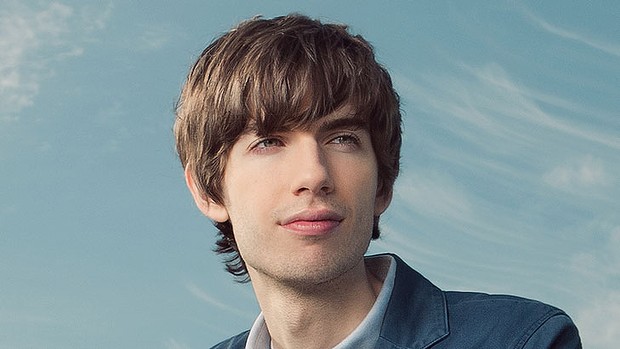
Tumblr CEO David Karp talks monetization, user franchises, and the power of the reblog button

david karp

At Uncubed, Tumblr CEO David Karp shed some light on the future of Tumblr as a content distribution platform, and its monetization strategies.

As the visualization of the Web continues to evolve, all eyes are on one of the network’s that started it all: Tumblr. David Karp, the blogging platform’s CEO and co-founder, took to the stage during an Uncubed panel in New York City yesterday to discuss the company’s future as a content distribution network.

It was apparent that during Karp’s discussion with Reuter’s Felix Salmon, when Karp was drawing comparisons between Tumblr and YouTube, the “blog” was being taken out of social blogging. Tumblr has become a hub for creative users turn to the platform to get their careers off the ground and snag book and film deals. But an economic trend that Karp is seeing now more than ever is that the audiences being built around a Tumblr blog are being leveraged to sell digital goods or to promote a Kickstarter campaign. Look no further than the franchise being built around the Fu*k!I’mInMy20s or the meteoric rise of Kelly Oxford, whose Tumblr has a massive following. 

And the company recognizes that there’s an economic opportunity here that Tumblr can monetize, and it’s something that Karp admits he wants to experiment in — although, for now, he says the company is just focusing on building its audience. He did point out, however, that while Tumblr and YouTube are both content distributors, YouTube’s economic model is proving to be creatively restrictive to its users. Because YouTube is sending a check to its users at the end of every month, YouTube’s monetization structure “shapes the behavior of the community” and normalizes content creation. It motivates content creators to churn out work for the sake of generating revenue on YouTube.

Tumblr, on the other hand, “has different sensibilities,” and intends to keep its platform “open” for its users. Users have room to flex their creative muscles using the platform, whether it’s for making money or for garnering recognition.

“One of the nice things about the economics of Tumblr being wide, wide open, is that we’ve got people who are just in it for the fame, and who are just in it for the fortune. But, that fortune might be from becoming on air talent, or from getting the next big photograph gig,” said Karp. It’s clear that there isn’t just one way to leverage Tumblr and the company is a marketing platform, with some bells and whistles, at heart.

While Karp knows Tumblr has plenty of opportunities to really go after the marketing angle, he still seems wary of totally turning the network into a means of capitalizing on its users’ promotion and content — like YouTube has done with its content creators. Unlike YouTube, Tumblr won’t say “you need X number of views to receive $Y.” At the same time, Tumblr isn’t going to provide its users with a clear-cut strategy to monetize their blogs, so it’s not to say that one strategy is better than the other. 

Tumblr also isn’t just a platform that strictly promotes original content. Karp was fond of Tumblr’s reblog feature, which enables users to republish another’s content onto their own blog with a press of a button (like Twitter’s retweet), and explained that it was a tool that lets users express themselves through the curation of content. The reblog feature also helps distribute content virally throughout Tumblr’s network of users. In fact, Karp revealed, if an original piece of content is published to Tumblr, that content is on average reblogged nine times, appears in four Facebook feeds, and five Twitter feeds. So among the 80 million blogs on Tumblr, only between 10 and 15 percent of the content is deemed “original.” The remainder is reblogged — something you can either interpret as the inspiring power of the Tumblr network or the slow death of original Web content.

When we asked Karp how Tumblr was performing, he told us they were finally able to return calls from the advertisers that were anxious to promote their content on Tumblr. We also asked how Tumblr was monetizing its features like reblogs, and Karp explained that while the company doesn’t generate revenue directly from its features, the platform is able to monetize the audience by selling ads against the resulting traffic. “A big chunk of the traffic represents reblogging, it represents logged in users viewing the dashboard, people who spend hours a day sitting there hitting refresh, it represents views for people who search for something, so in a sense we’re monetizing all the behaviors there.” And Tumblr generates most of its advertising revenue by elevating content from brands on Tumblr Spotlight, which features influencers each week, and Tumblr Radar, essentially an image-based promoted link to a brand’s Tumblr blog. Tumblr also offers individual users the option to Highlight or Pin posts (a feature much like Facebook’s Promoted Posts) for the small fee of $2 and $5 respectively. “It’s doing pretty well,” Karp said about Tumblr Radar.

Karp remarked that things could have gone very differently for Tumblr, and the network could have taken a sharp turn back in 2008. At that time, Tumblr received $4.5 million in Series B funding and which was to be invested into its freemium model, but after a couple of months of conversations Karp was finally convinced by “smarter people” in his team who realized that by releasing features for free instead of going the premium route, Tumblr would end up attracting audiences who were creating the “best creative content in the world.”


Source : digitaltrends[dot]com

Sep 16, 2012

Touchdown for digital: Why the NFL’s online strategy makes for a winning game plan

nfl online game rewind sports football

While the NBA, NHL and MLB fumble with their online strategies, the NFL has mastered the with the help of former MySpace exec Jeff Berman.

The National Football League kicked off its 2012-2013 season last week. As the United States’ most popular sport, this signals the return of football’s “total domination” of both television and your company’s water cooler.

The NFL hopes to dominate online, as well. Two significant assets will help with this effort: a good streaming plan and a forward-thinking digital strategist.

Good (though not perfect) digital distribution

Though no sport’s online plan is perfect, the NFL has the best of America’s four major sports.

For $39.99, NFL Game Rewind provides full, high-definition replays of every 2012 Regular Season game. While Game Rewind is flawed for not airing live game action, it makes up for it in other ways. For instance, the NFL even provides replays of its entire schedule of games with no blackout restrictions, which is very progressive when viewed in context of plans for other sports. As I wrote in April:

  • Though the NBA offers a for-pay online streaming plan in its League Pass service, blackout rules will prevent many viewers from watching games in which they will be most interested — those for their local teams and those nationally televised.
  • Major League Baseball’s MLB.TV is more expensive than any other league’s streaming plan and has even more blackout problems than NBA League Pass.
  • The NHL’s Gamecenter LIVE provides access to only out-of-market games and does not carry the Stanley Cup Playoffs. GameCenter Premium, the NHL’s playoff product, offers only radio broadcasts.
  • Don’t worry though, hockey fans. There likely will not be a season this year anyway, so you won’t have an opportunity to complain about that ridiculous “premium” plan.

The NFL’s plan really shines when it comes to additional features. Game Rewind provides access to not just this season’s games, but also to those from the last three seasons, plus 20 of the best Super Bowls ever broadcast. Game Pass has great features to enhance the viewing experience, too. You can watch up to four games simultaneously with the player, and use their “Big Play Markers” to instantly jump to the most important events in each game. The player also has “Condensed” streams, which cover all of the game’s pertinent action in about a half hour. New to the player this year is a Coaches Film view, which provides additional All-22 and EndZone viewing angles previously unavailable to the public.

nfl game pass football season streaming online sportsThe NFL’s contracts with its television partners are also very digital-friendly. The League’s best products — its playoffs and NBC’s phenomenal Sunday Night Football telecast — are streamed online for free. Further, more games will become available online over the course of the 2014-2022 NFL television contracts, which extend streaming rights to all networks.

It may not be perfect, but, for today, the NFL has the best online streaming plan of US major sports.

A smart, seasoned digital boss

Jeff Berman, NFL General Manage of Digital Media, is in charge of making sure things stay that way. In August, Berman provided some insight into the NFL’s high-level digital strategy in an interview with Bloomberg.

What we focus on, and this is very much the mandate from the commissioner, is creating world-class, extraordinary fan experiences. Obviously, revenue follows from that, and we have a healthy model that mixes ad revenue and transactional revenue. But, by creating world-class experiences for our fans, we know that we’re just creating more value overall for the NFL, and that’s an unequivocally good thing.

Berman hasn’t limited the NFL’s search for “world-class experiences” to the usual suspects like Facebook, Twitter, and YouTube. For instance, Bloomberg interviewed him when the NFL had just partnered with Google to bring Google+ Hangout video conferences to NFL.com fantasy football.

The NFL’s partnership with Google is a brilliant idea. Video conferencing will return face-to-face interaction to fantasy football drafts that often occur between participants separated by hundreds of miles. Including this feature differentiates the NFL’s fantasy football platform against competition from Yahoo!, ESPN, and a host of other companies. That Berman is apparently on a first-name basis with “Mark and Cheryl” at Facebook makes him strike all the more convincing a figure — though I do disagree with his assertion that Fantasy Football is “in many respects … the first social network.” I was also disappointed when he deflected a question about the NFL’s proportion of viewership from tablet and mobile devices.

google plus hangout nfl sports football2011 Mashable interview with Berman, when he discussed experimentation with Google+, Tumblr, and Pinterest provides further evidence of the NFL Digital Chief’s savviness. However, the best support for Berman’s credibility may be his history with MySpace.

Though once a candidate to be MySpace’s CEO, Berman departed the company in August 2009. He could hardly have chosen a better time to leave. Berman was at MySpace for much of the social network’s rise to, by some estimates, 114 million global visitors, but hardly any of its precipitous decline. It may have simply been good luck, but I theorize that Berman saw the writing on the wall at MySpace and got out while the getting was good.

Conclusion

NFL Game Rewind and the League’s 2014 TV contracts will ensure that the core experience of watching football online will only increase in quality. Jeff Berman will work to keep football’s peripheral experiences — like fantasy leagues and social media interactions — at the cutting edge.

As a football fan, I look forward to what Berman and his team can offer in the future.


Source : digitaltrends[dot]com