Pages

Showing posts with label distribution. Show all posts

Nov 14, 2012

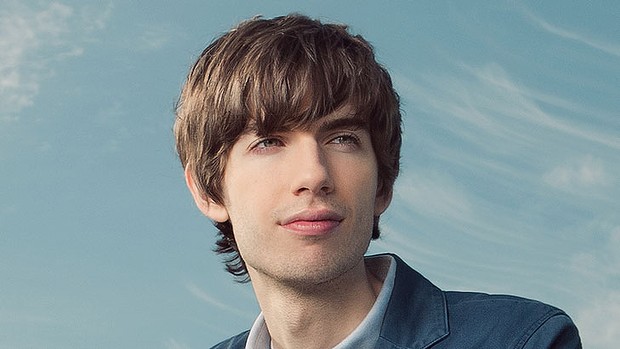
Tumblr CEO David Karp talks monetization, user franchises, and the power of the reblog button

david karp

At Uncubed, Tumblr CEO David Karp shed some light on the future of Tumblr as a content distribution platform, and its monetization strategies.

As the visualization of the Web continues to evolve, all eyes are on one of the network’s that started it all: Tumblr. David Karp, the blogging platform’s CEO and co-founder, took to the stage during an Uncubed panel in New York City yesterday to discuss the company’s future as a content distribution network.

It was apparent that during Karp’s discussion with Reuter’s Felix Salmon, when Karp was drawing comparisons between Tumblr and YouTube, the “blog” was being taken out of social blogging. Tumblr has become a hub for creative users turn to the platform to get their careers off the ground and snag book and film deals. But an economic trend that Karp is seeing now more than ever is that the audiences being built around a Tumblr blog are being leveraged to sell digital goods or to promote a Kickstarter campaign. Look no further than the franchise being built around the Fu*k!I’mInMy20s or the meteoric rise of Kelly Oxford, whose Tumblr has a massive following. 

And the company recognizes that there’s an economic opportunity here that Tumblr can monetize, and it’s something that Karp admits he wants to experiment in — although, for now, he says the company is just focusing on building its audience. He did point out, however, that while Tumblr and YouTube are both content distributors, YouTube’s economic model is proving to be creatively restrictive to its users. Because YouTube is sending a check to its users at the end of every month, YouTube’s monetization structure “shapes the behavior of the community” and normalizes content creation. It motivates content creators to churn out work for the sake of generating revenue on YouTube.

Tumblr, on the other hand, “has different sensibilities,” and intends to keep its platform “open” for its users. Users have room to flex their creative muscles using the platform, whether it’s for making money or for garnering recognition.

“One of the nice things about the economics of Tumblr being wide, wide open, is that we’ve got people who are just in it for the fame, and who are just in it for the fortune. But, that fortune might be from becoming on air talent, or from getting the next big photograph gig,” said Karp. It’s clear that there isn’t just one way to leverage Tumblr and the company is a marketing platform, with some bells and whistles, at heart.

While Karp knows Tumblr has plenty of opportunities to really go after the marketing angle, he still seems wary of totally turning the network into a means of capitalizing on its users’ promotion and content — like YouTube has done with its content creators. Unlike YouTube, Tumblr won’t say “you need X number of views to receive $Y.” At the same time, Tumblr isn’t going to provide its users with a clear-cut strategy to monetize their blogs, so it’s not to say that one strategy is better than the other. 

Tumblr also isn’t just a platform that strictly promotes original content. Karp was fond of Tumblr’s reblog feature, which enables users to republish another’s content onto their own blog with a press of a button (like Twitter’s retweet), and explained that it was a tool that lets users express themselves through the curation of content. The reblog feature also helps distribute content virally throughout Tumblr’s network of users. In fact, Karp revealed, if an original piece of content is published to Tumblr, that content is on average reblogged nine times, appears in four Facebook feeds, and five Twitter feeds. So among the 80 million blogs on Tumblr, only between 10 and 15 percent of the content is deemed “original.” The remainder is reblogged — something you can either interpret as the inspiring power of the Tumblr network or the slow death of original Web content.

When we asked Karp how Tumblr was performing, he told us they were finally able to return calls from the advertisers that were anxious to promote their content on Tumblr. We also asked how Tumblr was monetizing its features like reblogs, and Karp explained that while the company doesn’t generate revenue directly from its features, the platform is able to monetize the audience by selling ads against the resulting traffic. “A big chunk of the traffic represents reblogging, it represents logged in users viewing the dashboard, people who spend hours a day sitting there hitting refresh, it represents views for people who search for something, so in a sense we’re monetizing all the behaviors there.” And Tumblr generates most of its advertising revenue by elevating content from brands on Tumblr Spotlight, which features influencers each week, and Tumblr Radar, essentially an image-based promoted link to a brand’s Tumblr blog. Tumblr also offers individual users the option to Highlight or Pin posts (a feature much like Facebook’s Promoted Posts) for the small fee of $2 and $5 respectively. “It’s doing pretty well,” Karp said about Tumblr Radar.

Karp remarked that things could have gone very differently for Tumblr, and the network could have taken a sharp turn back in 2008. At that time, Tumblr received $4.5 million in Series B funding and which was to be invested into its freemium model, but after a couple of months of conversations Karp was finally convinced by “smarter people” in his team who realized that by releasing features for free instead of going the premium route, Tumblr would end up attracting audiences who were creating the “best creative content in the world.”


Source : digitaltrends[dot]com

Sep 7, 2012

Spike Lee’s Oldboy remake now officially coming to America

Oldboy

With a distribution deal now officially in place, it looks like Spike Lee's worrying remake of Korean thriller Oldboy is officially on track.

When it was first announced that Spike Lee would be directing an English-language remake of Park Chan-wook’s Oldboy, fans of the film were understandably worried. The original film was, quite simply, a masterpiece. It’s a tragedy that’s almost Shakespearian in quality, and every element of the film, from the actors to the set design to the special effects, is perfectly designed to tell this harrowing tale. Plus, it contains what may be the most viscerally impressive fight scene ever committed to film. In short, it’s a great movie that works brilliantly on a number of levels, and honestly, it seems unlikely that anyone, Spike Lee included, could do a better job with the story than Park Chan-wook.

Of course, the original Oldboy had one glaring flaw as far as Hollywood is concerned: subtitles. No matter how great a film is you just can’t expect American audiences to seek out a movie that forces them to read. The Constitution guarantees us all the right to be as illiterate and lazy as we’d like, and that goes along nicely with our collective desire to use our brain meat as little as possible. Yes, it’s a depressing point, but you can’t really deny its validity: How many foreign-language movies have been actual, legitimate hits here in America?

With the assumption that we’ve impressed upon you readers that this remake is potentially a very bad, depressing idea, on to today’s news. According to The Hollywood Reporter, FilmDistrict snapped up the US distribution rights for Lee’s version of Oldboy at the ongoing Toronto International Film Festival. Given that FilmDistrict co-founder Peter Schlessel has an executive producer credit on the film, this agreement isn’t entirely surprising, but it is something of a final nail in the coffin of hope that somehow Lee’s Oldboy might not be made. This movie is happening people, and according to THR the production starts shooting a mere month from now.

So, now that pessimism is utterly fruitless, we may as well make the best of this imminent situation. As much as the remake itself seems like the very definition of a cynical, money-driven Hollywood decision, we do like some aspects of the idea. Specifically, that Josh Brolin has been cast to portray protagonist Oh Dae-Su (or whatever he’s called in the American version; probably Bill or Steve). While we’re unconvinced that Brolin can trump the performance given by Min-sik Choi in the complex lead role, we do enjoy everything we’ve seen him in, and are quite curious to see how he will interpret the character. Likewise, when we heard that Samuel L. Jackson would be joining the cast, our excitement for the film greatly increased. Not because we think Jackson’s presence somehow validates this remake’s existence, but simply because Mr. Jackson is entertaining in any movie. We could watch that guy read a phone book, as long as he occasionally drops a few angry F-bombs along the way.

While we continue to wait for the studios to offer up a release date for this project, we’d like to recommend that you all visit your favorite Netflix device and watch the original, 2003 version of Oldboy. It was recently added to the service’s instant streaming option, and it’s absolutely worth two hours of your Friday afternoon.


Source : digitaltrends[dot]com

Sep 4, 2012

Watch a 13-minute promotional short for 1982′s Blade Runner

Blade Runner

In an effort to promote Blade Runner, the producers had this 13-minute short created for distribution at sci-fi conventions.

Let’s say you’ve been tasked with marketing a movie. It’s an ambitious film, one that simultaneously hopes to live up to the lofty standards of one of Philip K. Dick’s most beloved novels while also creating a vast, dystopian world that is equal parts unimaginably different from our own and a logical extension of current and near-future technology. In 2012 that wouldn’t be too difficult — just capture a few seconds of bombastic CGI, hire a deep-voiced narrator and cut a TV commercial that may or may not accurately reflect the film (but who cares as long as it puts people in the seats?) — but way back in 1982 it was a whole lot more difficult to entice notoriously picky sci-fi fans into the theater.

Thus, when faced by a similar situation for Ridley Scott’s phenomenal Blade Runner, the crew at M.K. Productions opted to put together a short, promotional movie to be distributed at various conventions around the country. According to Open Culture the short was a hit, and was widely circulated among sci-fi, horror and fantasy fan groups prior to Blade Runner’s theatrical debut. Whether or not it directly contributed to the movie’s success and current status as one of the all-time greatest sci-fi films Hollywood has ever created is debatable, but the vignette does serve as an undeniably cool look back at the creation of the film, and that’s a solid enough reason for us to embed the clip at the bottom of this post.

Along with the expected images and footage from Blade Runner, the short includes interviews with director Ridley Scott, special effects artist Douglas Trumbull and “futurist designer” Syd Mead. Normally we wouldn’t be this excited about what we now call a “behind the scenes featurette,” but in this case we’re utterly stoked to hear what these people have to say. If you’ve seen Blade Runner you know how masterfully crafted its futuristic world is, and there’s a very good reason why so many sci-fi movies, novels and video games created since 1982 have blatantly lifted ideas from Ridley Scott’s film.

More impressively, Blade Runner was created in an era where computer generated graphics weren’t really something Hollywood studios could use. They existed, certainly, but any CGI work was exorbitantly expensive, and few people had any idea how to effectively use the technology for making films. Thus, when you’re watching Blade Runner and being drawn in by the hyper-detailed detritus of that cyberpunk universe, everything you’re seeing was created by old-school practical visual effects work, making the film that much more stunning a feat.

Before you hit play on the embed below, we will give you a heads up that the footage is not exactly crystal-clear, 1080p HD quality. It is, after all, a 16mm movie from three decades ago, that was never really intended for public consumption. Thus, just be happy that this thing still exists, and that we can all use it to avoid dirtying our hands with any actual work on a lazy Tuesday afternoon.


Source : digitaltrends[dot]com

Aug 17, 2012

Ubisoft takes on Steam, EA Origin with Uplay PC

Ubisoft has opened its Steam competitor Uplay PC.Is there still room in the digital distribution business for another video game retailer?

Uplay is more than Ubisoft’s digital rights management solution. It’s more than a fragile target for hacking exploitation. It’s also Ubisoft’s new digital distribution platform. The Frenchman’s EA Origin or Valve Steam, if you will!

Ubisoft opened Uplay PC for business on Thursday, an application that let’s people buy Ubisoft games like Assassin’s Creed III direct from the company. It also gives players more direct access to the other perks of Uplay like extra content and community features, but that’s a tertiary purpose for the new client. The secondary purpose is to cut out the digital distribution middlemen like GameStop, Steam, and Amazon.com to reach customers directly. It won’t get all 35 million of Ubisoft’s registered Uplay members—many are console players, many will use competing clients—but it will get them some.

The primary purpose though, as always, is to strengthen Ubisoft’s anti-piracy measures. Uplay was conceived as a DRM solution and Uplay PC is just the latest realization of that effort.

Uplay PC could potentially have a grand effect on Ubisoft’s business on PC though. Despite grumbling in the press and in the PC gamer community, Electronic Arts’ digital distribution service Origin has done quite well for itself. In May, claimed that it was now the “number 2 direct to consumer game service” with 11 million registered users. That’s only people who have installed the Origin client. It’s a far cry from Steam’s 35 million registered users, but a hearty population of potential paying customers nonetheless. EA did say at the time that the majority of revenue generated by Origin is from its own games, but it didn’t specify exact sales data.

Digital sales are already growing for Ubisoft. Its online sales grew 110 percent between March 2012 and the previous year, totaling more than $102 million. Those sales only represent a small portion of the overall $1.36 billion in revenue Ubisoft pulled in over the last fiscal year, but with digital sales expected to continue growing throughout this year, expect that number to grow significantly before fiscal 2013 is out.

Steam is growing too though, and consumers like Valve. EA’s proven that big publishers can make money with their own digital distribution clients, but it isn’t clear how many publishers can replicate that success. Ubisoft’s got the intellectual properties and frequency of releases to make it happen, but there aren’t many other companies in the business who can open a similar service and expect to succeed. Uplay PC can be successful but it isn’t part of a trend. 


Source : digitaltrends[dot]com