Pages

Showing posts with label light. Show all posts

Nov 14, 2012

Tumblr CEO David Karp talks monetization, user franchises, and the power of the reblog button

david karp

At Uncubed, Tumblr CEO David Karp shed some light on the future of Tumblr as a content distribution platform, and its monetization strategies.

As the visualization of the Web continues to evolve, all eyes are on one of the network’s that started it all: Tumblr. David Karp, the blogging platform’s CEO and co-founder, took to the stage during an Uncubed panel in New York City yesterday to discuss the company’s future as a content distribution network.

It was apparent that during Karp’s discussion with Reuter’s Felix Salmon, when Karp was drawing comparisons between Tumblr and YouTube, the “blog” was being taken out of social blogging. Tumblr has become a hub for creative users turn to the platform to get their careers off the ground and snag book and film deals. But an economic trend that Karp is seeing now more than ever is that the audiences being built around a Tumblr blog are being leveraged to sell digital goods or to promote a Kickstarter campaign. Look no further than the franchise being built around the Fu*k!I’mInMy20s or the meteoric rise of Kelly Oxford, whose Tumblr has a massive following. 

And the company recognizes that there’s an economic opportunity here that Tumblr can monetize, and it’s something that Karp admits he wants to experiment in — although, for now, he says the company is just focusing on building its audience. He did point out, however, that while Tumblr and YouTube are both content distributors, YouTube’s economic model is proving to be creatively restrictive to its users. Because YouTube is sending a check to its users at the end of every month, YouTube’s monetization structure “shapes the behavior of the community” and normalizes content creation. It motivates content creators to churn out work for the sake of generating revenue on YouTube.

Tumblr, on the other hand, “has different sensibilities,” and intends to keep its platform “open” for its users. Users have room to flex their creative muscles using the platform, whether it’s for making money or for garnering recognition.

“One of the nice things about the economics of Tumblr being wide, wide open, is that we’ve got people who are just in it for the fame, and who are just in it for the fortune. But, that fortune might be from becoming on air talent, or from getting the next big photograph gig,” said Karp. It’s clear that there isn’t just one way to leverage Tumblr and the company is a marketing platform, with some bells and whistles, at heart.

While Karp knows Tumblr has plenty of opportunities to really go after the marketing angle, he still seems wary of totally turning the network into a means of capitalizing on its users’ promotion and content — like YouTube has done with its content creators. Unlike YouTube, Tumblr won’t say “you need X number of views to receive $Y.” At the same time, Tumblr isn’t going to provide its users with a clear-cut strategy to monetize their blogs, so it’s not to say that one strategy is better than the other. 

Tumblr also isn’t just a platform that strictly promotes original content. Karp was fond of Tumblr’s reblog feature, which enables users to republish another’s content onto their own blog with a press of a button (like Twitter’s retweet), and explained that it was a tool that lets users express themselves through the curation of content. The reblog feature also helps distribute content virally throughout Tumblr’s network of users. In fact, Karp revealed, if an original piece of content is published to Tumblr, that content is on average reblogged nine times, appears in four Facebook feeds, and five Twitter feeds. So among the 80 million blogs on Tumblr, only between 10 and 15 percent of the content is deemed “original.” The remainder is reblogged — something you can either interpret as the inspiring power of the Tumblr network or the slow death of original Web content.

When we asked Karp how Tumblr was performing, he told us they were finally able to return calls from the advertisers that were anxious to promote their content on Tumblr. We also asked how Tumblr was monetizing its features like reblogs, and Karp explained that while the company doesn’t generate revenue directly from its features, the platform is able to monetize the audience by selling ads against the resulting traffic. “A big chunk of the traffic represents reblogging, it represents logged in users viewing the dashboard, people who spend hours a day sitting there hitting refresh, it represents views for people who search for something, so in a sense we’re monetizing all the behaviors there.” And Tumblr generates most of its advertising revenue by elevating content from brands on Tumblr Spotlight, which features influencers each week, and Tumblr Radar, essentially an image-based promoted link to a brand’s Tumblr blog. Tumblr also offers individual users the option to Highlight or Pin posts (a feature much like Facebook’s Promoted Posts) for the small fee of $2 and $5 respectively. “It’s doing pretty well,” Karp said about Tumblr Radar.

Karp remarked that things could have gone very differently for Tumblr, and the network could have taken a sharp turn back in 2008. At that time, Tumblr received $4.5 million in Series B funding and which was to be invested into its freemium model, but after a couple of months of conversations Karp was finally convinced by “smarter people” in his team who realized that by releasing features for free instead of going the premium route, Tumblr would end up attracting audiences who were creating the “best creative content in the world.”


Source : digitaltrends[dot]com

Nov 9, 2012

Hands on: Halo Belt makes us believe in Kickstarter again

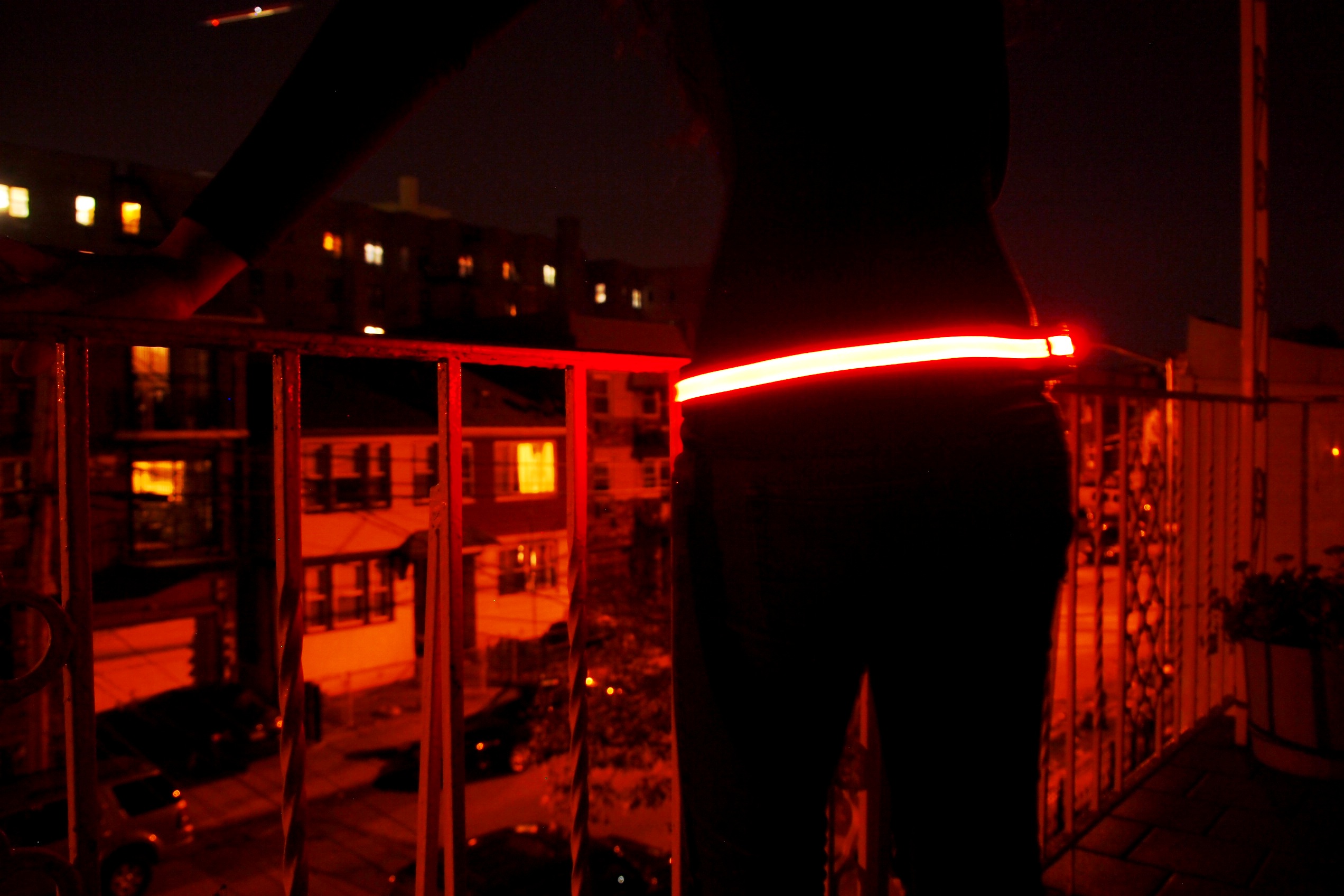
Tired of getting your bike lights stolen? Why not just wear the bike light? WIth Halo Belt, the Kickstarted project brings nighttime visibility directly to - and on - you so you can commute with ease.

In a sea of hidden failures and over-promised ideas, Halo Belt makes Kickstarter a worthy source for creative projects again. Over the summer, we caught a glimpse of the LED belt designed to increase land commuters’ visibility when traveling at night. By October’s end, the Kickstarted project shipped the final product to its loyal supporters, with an international launch due in January. Well, is Halo Belt worth the hype? 

Look and feel

Halo Belt comes packaged in a tube container, a clever design that’s sure to please retail showrooms with how portable yet presentable the product can be. Out of the tube, the belt is like your average fabric strap found on most backpacks. On the outer side of the belt is the flexible LED strip lining the majority of the belt length. The belt loops on the wearer with a plastic buckle, all designed to be weather proof during your commute. 

Halo Belt advises that it one size fits most, from a women’s 0 to men’s 38-inch waist. I’m wear a women’s 0 and found myself forcing parts of the LED through the adjustment loop for Halo Belt to fit loosely on my hip. It’s not a difficult fix, but I can’t imagine jamming the LED strip through the plastic slots is good for prolonged use, especially if you continually readjust the size. Fortunately for Halo Belt, I’m likely in the minority of being too thin for the product.

Once worn, the Halo Belt is noticeable without feeling noticeable. The strap is lightweight, looks cool while glowing in the dark, and the Power button is easily accessible next to the plastic buckle. One tap turns the belt on at a flashing mode, an extra push puts it on strobe, and one more keeps the LED light on solid. 

Utility 

With an intuitive functionality, Halo Belt works like a charm. The light is soft on the eyes but bright enough to make you more visible on the street. Quick access to the button makes it easy for you to switch to flash mode to indicate turns or change of lanes, if you’re an expert at one-handed bike riding. Halo Belt runs on two CR2025 batteries that lasts up to 20 consecutive hours or 75 non-consecutive. Assuming your nightly commute lasts no more than 45 minutes on average, you can get about three and a half months of power on a full set of batteries. If your commute takes less time, more power to you (and your belt).

Even with prolonged use, the LED light never gets too hot, and you can wear the belt in as many styles as you want: around your shoulder and arm like a messenger bag, high-waisted, loose on the hips. With four color choices, you can also use it to categorize teams during a night game of basketball in the park. We’ve even seen photos on Halo Belt’s Facebook that show wearers utilizing the belt as a Halloween accessory. Take it to your next concert or club night and hit up strobe mode for an attention-grabbing look. What was made as a commuter’s utility belt has clearly become a fashion item of its own caliber, and the possibilities make Halo Belt an exciting and fun accessory.

Bottom Line

Halo Belt first appeared on Kickstarter in June, completed its funding in August, and fell into our hands late October. Aspiring entrepreneurs should look at the Halo Belt team as a prime example of how to successfully promise, create, and deliver a product in a timely manner – all while keeping backers in the loop with monthly updates, tweets, and Facebook statuses. Halo Belt project starter Vincent Ng clearly had the sourcing and design logistics figured out to offer a simple and well-made item without losing his backers’ faith or over-promising any features. In fact, Halo Belt underestimated itself for how cool it could be to multitask a seemingly basic strap of LED light into something fun, fashionable, and useful. If only Halo Belt included an extra set of batteries… because now that daylight savings is in effect, I might just wear it all the darn time.

Halo Belt is available today for $85 in red, blue, green, and yellow. 


Source : digitaltrends[dot]com

Oct 25, 2012

Co-op, Not Competition: Nintendo reveals list of worldwide best-selling games of 2012

Nintendo revealed comprehensive lists of the best-selling video games of 2012 to date, shedding significant light on player tastes around the world. What games will publishers be investing in based on current trends?

Regional sales tracking firms like the NPD Group, Media Creates and others are often the only regular source for getting a picture of what people are paying to play in the video game market. As the balance between digital distribution and traditional brick and mortar retail even out, it’s become more difficult to accurately portray just what people like to play besides Call of Duty. It’s surprising then that Nintendo, one of gaming’s most secretive companies, revealed the top twenty bestselling video games from around the world during its recent earnings report. Nintendo compiled data from those previously listed research firms as well as Gfk International.

With breakdowns for the US, Europe, and Japan, the lists show not just what’s performed well this year, but helps gauge what types of games console publishers will invest in over the next few years as the transition to next-gen consoles begins in earnest.

The tops of the charts aren’t surprising based on how the industry’s past half decade. The top two best-selling video games in the United States between January and September 2012 were Madden NFL 13 for the Xbox 360 and PlayStation 3. Electronic Arts also dominated Europe (Gfk tracks fourteen countries in the region), taking the top three spots with FIFA 13 on PS3 and Xbox 360 in first and second respectively with FIFA 12 on PS3 taking third. Nintendo dominated Japan, with Pokémon Black 2/White 2 taking the top two slots.

It’s deeper in the list that more revealing statistics emerge. Call of Duty: Modern Warfare 3, for example, was only the sixth best-selling game across 2012, beaten out by competitors like Mass Effect 3 and even Borderlands 2 (fifth and third respectively.) This means that while the sales tail on Call of Duty remains strong, it’s diminished from highs in 2010 with Call of Duty: Black Ops and Call of Duty: Modern Warfare 2, which dominated for months after their respective releases. The competitive shooting games was not as favored over the first nine months of the year as co-operative, campaign-centric shooters like Mass Effect and Borderlands. The rest of the list bears this out as well. Tom Clancy’s Ghost Recon: Future Soldier came in at eleventh, where EA’s Battlefield 3 came in at fourteenth. Future Soldier was a May release, and it does sport competitive modes, but even that example supports the POV that multiplayer tastes in the US are shifting.

What of Europe? Modern Warfare 3, Battlefield 3, Uncharted 3, and Mass Effect 3 were on the European list, but that was it for shooters. Nintendo published titles like Super Mario 3D Land, Wii Party and others were far more common in the region, boding well for the Wii U. Gran Turismo 5 also took eighth in Europe, reaffirming the strength of that brand for Sony abroad.

Japan was, again unsurprisingly, dominated by Nintendo and Square-Enix published games for handhelds, with three Capcom titles and two Namco Bandai titles sneaking in as well.


Source : digitaltrends[dot]com

Oct 18, 2012

Newsweek to kill money-sucking print edition, go digital-only

Newsweek goes all-digital

Having seen the glowing light of the digital age, Newsweek will no longer be a real-life print magazine, as of December 31. Instead, the 80-year-old print publication will be available exclusively as a mobile app and on the Web — behind a paywall, of course.

After nearly 80 years, Newsweek will cease to exist as a print publication in early 2013, according to an announcement this morning from editor-in-chief Tina Brown. Instead, the company will expand its Web and mobile app offerings. The December 31 issue will be Newsweek’s last in the United States.

Founded in 1933, Newsweek’s “turn of the page,” as Brown calls it, comes just two years after its merger with Web-only outlet The Daily Beast. With the closure of Newsweek’s print edition, the publication will be renamed Newsweek Global, with a single edition created for the world market. Like The New York Times, and the Wall Street Journal, the majority of Newsweek Global’s content will only be available with a paid subscription, though select content will still be accessible for free on The Daily Beast. Newsweek Global will be available on e-readers, tablets, and on the Web (behind a paywall).

The transition to a digital-only comes amidst financial trouble for Newsweek, which has reportedly been losing about $40 million a year — an unnecessary cost, according to Brown, who believes readers have jumped head first into the digital era, and are ready to abandon expensive print versions of publications.

“Currently, 39 percent of Americans say they get their news from an online source, according to a Pew Research Center study released last month. In our judgment, we have reached a tipping point at which we can most efficiently and effectively reach our readers in all-digital format,” wrote Brown. “This was not the case just two years ago. It will increasingly be the case in the years ahead.”

Of course, surging forward into the digital age means a number of Newsweek staffers will fall off the back of the wagon.

“Regrettably we anticipate staff reductions and the streamlining of our editorial and business operations both here in the U.S. and internationally,” wrote Brown.

For those of you wanting to jump ahead of the curve, Newsweek currently offers its magazine for iOS, Android, and Kindle e-readers.


Source : digitaltrends[dot]com

Oct 10, 2012

Motorola RAZR i battery life test concludes, results are inside

We’ve just concluded our in-depth review of the Motorola RAZR i and its Intel Atom Medfield chipset inside and now it’s time to shine a light on its battery performance.

The Motorola RAZR i achieved some pretty good scores in all of our tests, but its talk time endurance was partucularly impressive.

Here we go – the call test is where the new Intel-designed modem really shines. The Motorola RAZR i got a whopping 20 hours and 7 minutes, climbing to third spot in our call test chart and making top 3 a Moto exclusive territory. More impressively it managed to match the achievement of its MAXX siblings with a battery that has a 1300 mAh smaller capacity.

Talk time

  • Motorola RAZR MAXX (ICS)
    21:18
  • Motorola DROID RAZR MAXX
    20:24
  • Motorola RAZR i
    20:07
  • Samsung Galaxy Note II N7100
    16:57
  • Huawei Ascend P1
    12:30
  • Samsung Galaxy Note
    12:14
  • Samsung I8530 Galaxy Beam
    11:58
  • Samsung Wave 3 S8600
    11:07
  • HTC One X (AT&T, LTE)
    10:35
  • Samsung I9300 Galaxy S III
    10:20
  • Samsung I9300 Galaxy S III (JB)
    10:15
  • HTC One V
    10:00
  • Meizu MX 4-core
    10:00
  • HTC One X
    9:57
  • HTC One S
    9:42
  • Samsung I9103 Galaxy R
    9:40
  • HTC Sensation XL
    9:30
  • Nokia Lumia 710
    9:05
  • Motorola Atrix HD
    9:04
  • HTC Vivid
    9:02
  • HTC Rhyme
    8:48
  • Apple iPhone 5
    8:42
  • LG Optimus 3D Max P720
    8:42
  • Sony Ericsson Xperia neo V
    8:41
  • Meizu MX
    8:39
  • Samsung Galaxy S II
    8:35
  • Nokia Lumia 800
    8:25
  • Samsung Galaxy Nexus
    8:23
  • HTC Desire V
    8:20
  • Samsung Captivate Glide
    8:20
  • Sony Xperia T
    8:15
  • HTC Rezound (LTE)
    8:10
  • Samsung Galaxy Note (LTE)
    8:02
  • LG Optimus Vu
    7:57
  • LG Optimus 4X HD
    7:41
  • Apple iPhone 4S
    7:41
  • Samsung i937 Focus S
    7:25
  • HTC Evo 4G LTE (LTE)
    7:21
  • Samsung Galaxy S Blaze 4G
    7:14
  • Sony Xperia acro S
    7:09
  • Samsung Rugby Smart I847
    7:09
  • Sony Ericsson Xperia Pro
    6:57
  • Nokia N9
    6:57
  • HTC Radar
    6:53
  • Samsung Galaxy Ace Duos
    6:53
  • BlackBerry Curve 9380
    6:52
  • Samsung Galaxy Pocket
    5:54
  • Nokia Lumia 900 for AT&T (LTE)
    5:53
  • Sony Xperia ion LTE
    5:52
  • Sony Xperia P
    5:33
  • Nokia 808 PureView
    5:16
  • LG Nitro HD (LTE)
    5:16
  • HTC Titan II (LTE)
    5:10
  • BlackBerry Bold 9790
    5:00
  • Pantech Burst
    4:46

The RAZR i got stellar results in the web browsing department as well. The 2000 mAh Li-Ion battery under the RAZR i’s Kevlar vest was able to pump out 7 whole hours of non-stop browsing, which is not particularly kind to smartphones with AMOLED Screen.

Web browsing

  • Apple iPhone 5
    9:56
  • Motorola RAZR MAXX (ICS)
    9:12
  • Samsung Galaxy Note II N7100
    8:48
  • Motorola DROID RAZR MAXX
    7:23
  • HTC Radar
    7:17
  • Motorola RAZR i
    7:06
  • Apple iPhone 4S
    6:56
  • HTC One V
    6:49
  • Motorola Atrix HD
    6:40
  • BlackBerry Curve 9380
    6:40
  • Samsung I9300 Galaxy S III (JB)
    6:27
  • Samsung i937 Focus S
    6:15
  • Sony Xperia ion LTE
    5:56
  • Samsung Rugby Smart I847
    5:53
  • Pantech Burst
    5:51
  • Samsung Galaxy S Blaze 4G
    5:45
  • HTC Desire V
    5:44
  • HTC Evo 4G LTE
    5:41
  • Samsung Wave 3 S8600
    5:34
  • Sony Xperia T
    5:33
  • Samsung Captivate Glide
    5:33
  • Samsung I8530 Galaxy Beam
    5:28
  • Samsung Galaxy Note LTE
    5:24
  • HTC Sensation XL
    5:20
  • Meizu MX 4-core
    5:19
  • Samsung I9300 Galaxy S III
    5:17
  • Sony Xperia acro S
    5:16
  • HTC Rezound
    5:16
  • HTC Rhyme
    5:08
  • Samsung I9103 Galaxy R
    5:07
  • HTC One X (AT&T)
    5:03
  • Sony Ericsson Xperia Pro
    4:50
  • LG Optimus Vu
    4:49
  • HTC Vivid
    4:46
  • Samsung Galaxy Ace Duos
    4:45
  • Meizu MX
    4:35
  • Nokia N9
    4:33
  • Samsung Galaxy S II
    4:24
  • Sony Ericsson Xperia neo V
    4:20
  • HTC One X
    4:18
  • Nokia 808 PureView
    4:14
  • LG Optimus 3D Max P720
    4:10
  • Nokia Lumia 900 for AT&T
    4:10
  • Nokia Lumia 800
    4:07
  • HTC Titan II (LTE)
    4:05
  • HTC One S
    4:03
  • BlackBerry Bold 9790
    4:02
  • LG Nitro HD
    4:00
  • LG Optimus 4X HD
    3:59
  • Sony Xperia P
    3:59
  • Nokia Lumia 710
    3:51
  • Samsung Galaxy Pocket
    3:47
  • Samsung Galaxy Note
    3:35
  • Huawei Ascend P1
    3:23
  • Samsung Galaxy Nexus
    3:01

And finally the video test for all those people who spend a lot of time traveling and like watching videos on their smartphones during the trips. The Intel Atom-sporting RAZR’s got you covered with 8 solid hours and 11 minutes of video playback, which isn’t a top score but definitely one to be respected.

Video playback

  • Motorola RAZR MAXX (ICS)
    16:35
  • Motorola DROID RAZR MAXX
    14:17
  • Samsung Galaxy Note II N7100
    11:27
  • Apple iPhone 5
    10:12
  • Samsung I9300 Galaxy S III
    10:01
  • Nokia 808 PureView
    9:53
  • Samsung I8530 Galaxy Beam
    9:42
  • Samsung Rugby Smart I847
    9:34
  • HTC One S
    9:28
  • Samsung I9300 Galaxy S III (JB)
    9:27
  • Apple iPhone 4S
    9:24
  • HTC Evo 4G LTE
    9:07
  • Nokia N9
    8:40
  • Samsung Galaxy Note
    8:25
  • Motorola RAZR i
    8:11
  • Samsung Galaxy S II
    8:00
  • Samsung i937 Focus S
    7:55
  • Samsung Wave 3 S8600
    7:52
  • Sony Ericsson Xperia neo V
    7:45
  • Huawei Ascend P1
    7:38
  • Samsung Galaxy S Blaze 4G
    7:33
  • Samsung Galaxy Note LTE
    7:30
  • Meizu MX 4-core
    6:33
  • HTC Desire V
    6:26
  • HTC One X (AT&T)
    6:26
  • Samsung Galaxy Ace Duos
    6:25
  • LG Optimus Vu
    6:23
  • Samsung I9103 Galaxy R
    6:21
  • HTC Sensation XL
    6:12
  • Samsung Galaxy Pocket
    6:06
  • Samsung Captivate Glide
    6:04
  • Sony Xperia ion LTE
    6:03
  • Samsung Galaxy Nexus
    6:02
  • Sony Xperia T
    6:01
  • Motorola Atrix HD
    6:01
  • HTC Vivid
    6:00
  • HTC Radar
    5:54
  • Nokia Lumia 800
    5:52
  • HTC Titan II
    5:50
  • BlackBerry Bold 9790
    5:47
  • HTC One X
    5:45
  • Sony Ericsson Xperia Pro
    5:44
  • Sony Xperia acro S
    5:38
  • Pantech Burst
    5:38
  • Meizu MX
    5:27
  • HTC Rhyme
    5:23
  • HTC One V
    5:20
  • Nokia Lumia 900 for AT&T
    5:18
  • BlackBerry Curve 9380
    5:09
  • HTC Rezound
    5:03
  • Sony Xperia P
    4:30
  • LG Nitro HD
    4:17
  • LG Optimus 4X HD
    4:14
  • LG Optimus 3D Max P720
    3:28
  • Nokia Lumia 710
    3:27

At the end the Intel-designed modem got another chance to shine and it took it. The RAZR i turned out to be excellently efficient at stand-by, which allowed it to get an endurance score of 64h.This means that if you were to use the smartphone for an hour of talking, an hour of web browsing and an hour of video playback per day, you’d need to charge it once every 64 hours.

Still, the breakdown shows that if you use your smartphone for web-browsing and video playback more than you do for actual telephony, than you are probably going to get shorter discharge times.


Source : blog[dot]gsmarena[dot]com

Sep 7, 2012

Quadrocopter swarm performs amazing light show [video]

50 quadrocopters perform light show in Austria

Austrian and German robot makers launch a record-breaking 50 quadrocopters to perform an incredible 3D light show in the sky.

When I think of quadrocopters — the miniature flying drones that can be programmed to fly in choreographed formations — the first thing that comes to mind is a nightmarish future where people are bombarded by these little robots, picked up off the ground, and flown to some secret CIA prison. But apparently not everyone is as paranoid and crazy as I am.

Like the clever folks at Austria’s Ars Electronica Futurelab and German firm Ascending Technologies GmbH, who recently used a swarm of 50 quadrocopters to create what can only be called 21st century performance art. Outfitted with programmable LED lights, the swarm of Hummingbird quadrocopters flickered and danced in the night sky on September 1, above Linz, Austria, for the 34th annual Klangwolke (Cloud of Sound) multi-media music festival, to create 2D and 3D images in the sky.

Dubbed “The Cloud in the Web,” the eight-part performance tells the story of “the networking of our world,” according to the press release (pdf). “Episode 0″ starts with the story of waterways like the Danube river (along which the performance took place), which first connected humanity with one another. From there, the story travels through the first harnessing of electricity, to the birth of telecommunication and radio, to the rise of the robots, and finally to the age of the Internet.

The performance set a world record for the number of synced quadrocopters flying in unison. But the team says that it’s not finished there. Better 2D and 3D images are in the works, as is long-range flight. But what the team really wants to do is “crank up the numbers” — say, somewhere in the neighborhood of 5,000 quadrocopters in the sky at once.

Now, if that doesn’t sound like something out of a nightmarish dystopia, I don’t know what does.

Watch a video of “The Cloud of Sound” below:


Source : digitaltrends[dot]com