Pages

Showing posts with label platform. Show all posts

Nov 19, 2012

Myspace pitch deck leaks, reveals how the underdog plans to take on Spotify and Pandora

search myspace

After giving us details on the new Myspace last week, the music platform's leaked pitch deck reveals more about how the site plans to challenge Spotify and Pandora for a top streaming service spot.

Last week we finally got a first look at the new Myspace, a sleek, smart, conceptual twist on one of the original social networks. New owners Chris and Tim Vanderhook and Justin Timberlake have more than managed to inspire renewed interested in a platform that very nearly faded into the darkest corners of the Internet.

But the Myspace revival isn’t only UI-deep, and BusinessInsider has gotten its hands on a very revealing pitch deck from the company. According to the document, Myspace plans to challenge Spotify and Pandora and position itself as a top streaming service. Interactive Media (owned by the Vanderhooks) is looking to raise $50 million toward the site’s relaunch – $10 million dedicated to marketing, $15-$25 million for licensing deals, and another $15-$25 for general expenses.

Right now, the new Myspace features an embedded music player that follows you around the site, as well as a video player that automatically fills the screen (which you can optionally pop into the lower right-hand corner). There is no downloadable client, it’s all Web-based, and at the moment there are no premium account options. Of course, in our time with Myspace last week, it was emphasized that we were getting a very early look at the site, and that there’s plenty of growing and building to do. Specifically, the team said the platform would follow what the community of artists and users wanted – including ways to sell merchandise and download music.

And in the pitch deck, you can see Myspace plans to deliver; prospective plans include “subscription, transaction (downloads, merchandise, tickets),” and something called “Myspace TV.” The transaction model is slated to launch in 2013.

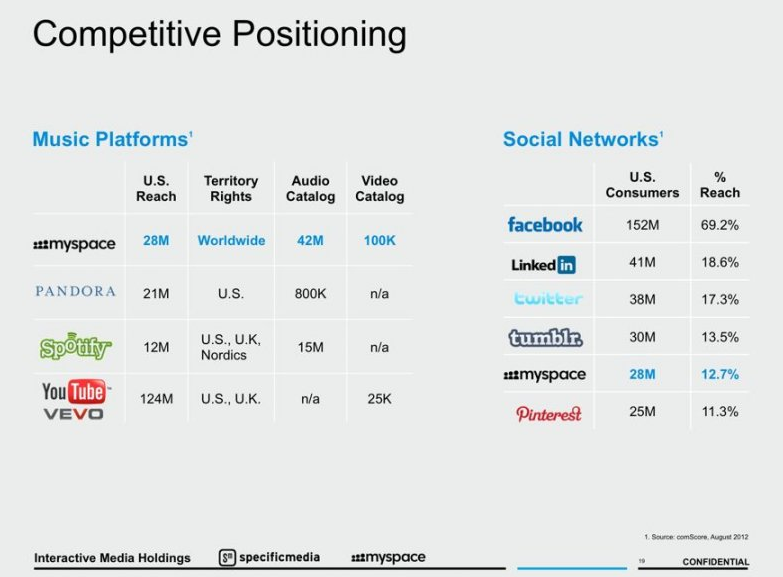
The fact the Myspace is positioning itself to take on Spotify and Pandora isn’t surprising. The company has deals with all four major labels as well as an impressive number of indie labels and artists – five million unsigned artists to be exact (the catalog boasts 42 million songs in total). This slide right here pinpoints the competition Myspace is about to get itself into:

myspace slide

And here’s why it thinks it can do things better: “Myspace has a significant cost advantage with respect to the music streaming costs compared to Spotify and Pandora because our proprietary 27,000,000 song library from unsigned artists accounts for ~50 percent of song plays on our services and has a zero cost basis … Myspace pays the lower Radio rate on the vast majority of our label related song plays.”

Myspace plans to leverage its vast amount of unsigned music and artists to propel itself among other streaming services, which is a bold move: The streaming wars have so far been won by being able to provide licensed music (right, Google Music?). But Myspace also has the four major labels in its arsenal, making it a very viable option. It’s definitely a much more immersive, versatile experience than either Spotify or Pandora, although its plans for introducing a transaction model will likely play a huge role in its potential. For now, we’ll continue to try out the beta and see how this all unfolds in the coming months. 


Source : digitaltrends[dot]com

Nov 14, 2012

Tumblr CEO David Karp talks monetization, user franchises, and the power of the reblog button

david karp

At Uncubed, Tumblr CEO David Karp shed some light on the future of Tumblr as a content distribution platform, and its monetization strategies.

As the visualization of the Web continues to evolve, all eyes are on one of the network’s that started it all: Tumblr. David Karp, the blogging platform’s CEO and co-founder, took to the stage during an Uncubed panel in New York City yesterday to discuss the company’s future as a content distribution network.

It was apparent that during Karp’s discussion with Reuter’s Felix Salmon, when Karp was drawing comparisons between Tumblr and YouTube, the “blog” was being taken out of social blogging. Tumblr has become a hub for creative users turn to the platform to get their careers off the ground and snag book and film deals. But an economic trend that Karp is seeing now more than ever is that the audiences being built around a Tumblr blog are being leveraged to sell digital goods or to promote a Kickstarter campaign. Look no further than the franchise being built around the Fu*k!I’mInMy20s or the meteoric rise of Kelly Oxford, whose Tumblr has a massive following. 

And the company recognizes that there’s an economic opportunity here that Tumblr can monetize, and it’s something that Karp admits he wants to experiment in — although, for now, he says the company is just focusing on building its audience. He did point out, however, that while Tumblr and YouTube are both content distributors, YouTube’s economic model is proving to be creatively restrictive to its users. Because YouTube is sending a check to its users at the end of every month, YouTube’s monetization structure “shapes the behavior of the community” and normalizes content creation. It motivates content creators to churn out work for the sake of generating revenue on YouTube.

Tumblr, on the other hand, “has different sensibilities,” and intends to keep its platform “open” for its users. Users have room to flex their creative muscles using the platform, whether it’s for making money or for garnering recognition.

“One of the nice things about the economics of Tumblr being wide, wide open, is that we’ve got people who are just in it for the fame, and who are just in it for the fortune. But, that fortune might be from becoming on air talent, or from getting the next big photograph gig,” said Karp. It’s clear that there isn’t just one way to leverage Tumblr and the company is a marketing platform, with some bells and whistles, at heart.

While Karp knows Tumblr has plenty of opportunities to really go after the marketing angle, he still seems wary of totally turning the network into a means of capitalizing on its users’ promotion and content — like YouTube has done with its content creators. Unlike YouTube, Tumblr won’t say “you need X number of views to receive $Y.” At the same time, Tumblr isn’t going to provide its users with a clear-cut strategy to monetize their blogs, so it’s not to say that one strategy is better than the other. 

Tumblr also isn’t just a platform that strictly promotes original content. Karp was fond of Tumblr’s reblog feature, which enables users to republish another’s content onto their own blog with a press of a button (like Twitter’s retweet), and explained that it was a tool that lets users express themselves through the curation of content. The reblog feature also helps distribute content virally throughout Tumblr’s network of users. In fact, Karp revealed, if an original piece of content is published to Tumblr, that content is on average reblogged nine times, appears in four Facebook feeds, and five Twitter feeds. So among the 80 million blogs on Tumblr, only between 10 and 15 percent of the content is deemed “original.” The remainder is reblogged — something you can either interpret as the inspiring power of the Tumblr network or the slow death of original Web content.

When we asked Karp how Tumblr was performing, he told us they were finally able to return calls from the advertisers that were anxious to promote their content on Tumblr. We also asked how Tumblr was monetizing its features like reblogs, and Karp explained that while the company doesn’t generate revenue directly from its features, the platform is able to monetize the audience by selling ads against the resulting traffic. “A big chunk of the traffic represents reblogging, it represents logged in users viewing the dashboard, people who spend hours a day sitting there hitting refresh, it represents views for people who search for something, so in a sense we’re monetizing all the behaviors there.” And Tumblr generates most of its advertising revenue by elevating content from brands on Tumblr Spotlight, which features influencers each week, and Tumblr Radar, essentially an image-based promoted link to a brand’s Tumblr blog. Tumblr also offers individual users the option to Highlight or Pin posts (a feature much like Facebook’s Promoted Posts) for the small fee of $2 and $5 respectively. “It’s doing pretty well,” Karp said about Tumblr Radar.

Karp remarked that things could have gone very differently for Tumblr, and the network could have taken a sharp turn back in 2008. At that time, Tumblr received $4.5 million in Series B funding and which was to be invested into its freemium model, but after a couple of months of conversations Karp was finally convinced by “smarter people” in his team who realized that by releasing features for free instead of going the premium route, Tumblr would end up attracting audiences who were creating the “best creative content in the world.”


Source : digitaltrends[dot]com

Nov 9, 2012

7 Google Android Apps to Protect Your Phone from Virus

Google Android is one of the most popular operating systems in the mobile world. As an open source platform it allows others to modify the system files and develop applications. Unfortunately this can result in security threats to the very device that stores all your personal information. Protecting your personal data is easy with one of these free securities and antivirus applications offered for Android.


Antivirus Free
The Antivirus Free application will protect your phone from any malicious apps and viruses by discovering new apps installed on your system and cross-referencing them with a database. The app will request certain permissions which all for an easy installation and function.

Avast! Mobile Security
This application is a fully featured antivirus and anti-theft security application. The avast! application has an automatic virus scans and alerts for infected URL’s. In addition, if your phone is rooted you can add a firewall, control anti-theft features with remote SMS commands.

AVG Antivirus free

The AVG Antivirus is a free security application that protects your smartphones and tablets in real-time, from any viruses, malware and spyware or online corruption. In addition, this app has a task killer, phone locator, app lock and real-time scanner.

Dr.Web Antivirus Light 
This application will not effect your mobile phone operating system performance or reduce the batter life. Dr. Web Antivirus Light uses a distinctive process for discovering new virus families based on previous threats which reduce the size of the virus database.

Lookout Security & Antivirus
On a daily and weekly basis the Lookout application will scan your mobile phone for viruses. In addition, Lookout will scan the root folder of your mobile phone and solve any other problems relating to holes in security.


NetQin Mobile Security & Antivirus
The NetQin application identifies new applications installed and check a database for malicious apps. The functions and use are practical and user-friendly. In addition, there is an anti-theft feature which will allows you to track your robbed phone through Google Maps.

Zoner Antivirus Free
The Zoner Antivirus application provides protection against trojans, worms, spyware, adware, malware and viruses. In addition, the application offers theft protection which enables you to control remotely your device through SMS messages.

It could be devastating if your mobile phone is lost, stolen, or compromised by a virus. It is free and easy to protect all your information stored in your Google Android with one of these antivirus applications.

Tags: Anti-theft Security, Antivirus Free, Automatic Virus Scans, Avast! Mobile Security, Dr.Web Antivirus Light, Google Android Apps, Lookout Security & Antivirus, Mobile Phone Operating System Performance, NetQin Mobile Security & Antivirus, Security Holes, Trojan Worms, Zoner Antivirus Free

Source : techtalkafrica[dot]com

Nov 8, 2012

Humble Bundle 4 for Android released

The Humble Bundle is back on Android and brings with it some great new games never before seen on the platform. If you don’t know what Humble Bundle is, it’s a collection of games where you get to decide what the final price should be. Once you pay, one part of the money goes to the developers, one part to charity and the remaining to the people at Humble Bundle. Along with being able to choose the price, you can also select who gets how much share of the money.

In the latest Humble Bundle 4 for Android, you get a collection of five great games, including Splice, Eufloria, Waking Mars, Crayon Physics Deluxe and Superbrothers: Swords and Sworcery EP. Moreover, if you pay over the average amount of $5.96, you also get Machinarium.

But wait, there’s more. Along with the Android versions of these games, you also get a Steam key for each of these games so you can play them on your PC or Mac. And each game also comes with its soundtrack.

If all that sounds enticing to you, head over to the website from the source link below and purchase the bundle before the time runs out.


Source : blog[dot]gsmarena[dot]com

Nov 7, 2012

BlackBerry 10 gets important US security clearance ahead of launch

Research In Motion's upcoming BlackBerry 10 platform has received US security clearance that will allow it to be used by goverment agencies – provided they don't all desert the Canadian company before the new platform launches.

As Research In Motion (RIM) executives count down the days to the launch of its next-generation BlackBerry 10 platform (though one wonders if they really know precisely how many days are left), the company has been pushing out a number of positive press releases recently in an effort to create a silver lining on the gray cloud that has been hanging over the firm for some time.

Last week it announced that development of BB10 had passed what it described as a “critical milestone” with news that it had entered lab testing with more than 50 carriers worldwide.

And on Wednesday evening it issued a statement saying its new BB10 smartphones and its Enterprise Service 10 management console had both received important Federal Information Processing Standard (FIPS) 140-2 security certification from the National Institute of Standards and Technology. This is the first time BlackBerry products have been FIPS certified ahead of launch, the Ontario-based company said, and paves the way for US and Canadian government agencies to use the devices in their work.

Commenting on the news, Michael K. Brown, vice president of security product management and research at RIM, said, “Achieving FIPS 140-2 certification means that BlackBerry 10 is ready to meet the strict security requirements of government agencies and enterprises at launch.”

Talking up the security features of BB10, he added, “What differentiates BlackBerry is that it integrates end-to-end security, and includes certified encryption algorithms for data at rest and data in transit. No other mobile solution has achieved the level of security accreditation that the BlackBerry solution has.”

The certification is undoubtedly good news for the mobile company, though with several agencies in recent months announcing their intention to turn away from BlackBerry handsets in favor of iOS and Android-powered devices, RIM will have its work cut out to get them back on board. It must also work to hold on to those who have so far stuck with its devices.

Happily for RIM, last week the Pentagon said it would continue to support “large numbers” of BlackBerry smartphones even though it’ll also be allowing many of its employees to use the iPhone and other devices.

BlackBerry’s reputation for strong security was what until recently made RIM’s handsets stand out for those who required such features. But for many IT administrators working today, iOS and Android phones now offer more secure and manageable platforms.

RIM has been able to offer a few bits of positive news of late, but the real test will of course come when its new, long-awaited BB10 OS and handsets finally make an appearance.


Source : digitaltrends[dot]com

Valve releases Steam for Linux beta

We have reported in the past on Valve’s plans for releasing the Steam client for the Linux platform. Keeping true to that promise, the company has released the first beta that can be installed on systems running Ubuntu 12.04 and above.

To start off, you will be able to play Valve’s highly popular, online multiplayer, free-to-play game Team Fortress 2. If that’s not enough, there are a whole bunch of other games as well, including Amnesia: The Dark Descent, World of Goo, Superbrothers: Sword & Sworcery EP, Serious Sam 3: BFE and many more.

The client is fully featured and also includes the recently released Big Picture mode that is designed for use with a TV and controller.

Valve is currently working on bringing the platform to other Linux distros and bring more games to the service.

In other news, if you have an NVIDIA GPU in your PC, you should also be glad to know that NVIDIA has released a new GeForce R310 drivers for Linux, which promise up to double the performance over the previous drivers.


Source : blog[dot]gsmarena[dot]com

Nov 5, 2012

Instagram Web profiles are here, and – surprise – they look a lot like Facebook

Your patience has been rewarded: Instagram has finally introduced Web profiles so the app is no longer just a mobile-only platform.

Kiss all those third-party Web apps you’ve been using to follow your friend’s Instagram activities goodbye! Instagram has just announced that Web profiles are officially here, and the site will begin rolling out the new feature over the next few days. 

The URL for your Web profile will be kept short and simple — Instagram.com/Username. (At this moment, attempting to log onto my personal profile links me to Instagram’s Web Profiles announcement page, but this should change shortly). Judging by the sample profiles Instagram provided, the design looks a lot like Facebook’s Timeline layout. Which isn’t terribly surprising, of course, since the social network bought Instagram for a whopping $1 billion earlier this year.

The new Instagram Web profiles will feature a rotating stream of photos where your “Cover Photo” would ordinarily be on Facebook. The “Wall” also orders your photos by months, and hovering over each photo gives you an exact upload date and the number of likes and comments. Clicking the photos bring up a lightbox of the selected picture, which looks just like what direct links to Instagram pictures were like if you had the obscure URL for them. If your photos are set as “Private,” only logged-in users with approved friend requests will be able to see them.

Web profiles have long been on Instagram users’ list of demands, since you were unable to obtain the direct URL of your photo without sharing it on Twitter, Facebook, email, or text. With Web profiles, Instagrammers can follow new users, explore trendy pictures, like, and comment straight from their browsers. This will undoubtedly make Instagram a bigger brand promotion platform than ever, allowing companies like Nike to monetize on sharing product photos and making an overall beautiful presentation of the brand.

However, there is one thing still missing from Web profiles: You won’t be able to upload a photo directly from your computer and apply the filters just yet, which would be a huge departure from the mobile-only (now, mobile-first) network. Still, something tells us that the development of a real, interactive website along with its Facebook acquisition may just bring the functionality to us in the very near future.


Source : digitaltrends[dot]com

Nov 2, 2012

Microsoft bricks up the door to freedom with the Windows Store’s ‘walled garden’

Microsoft bricks up the door to freedom with the Windows Store’s ‘walled garden’

As Microsoft migrates from an open platform to a walled garden with Windows 8, freedom falls by the wayside.

For me, Windows 8 is a tale of two cities: There’s an abundance of cool new features that I love, balanced out by an abundance of design changes that I absolutely hate. I accept all of that. Major changes bring major transitions. But as a card-carrying, freedom-loving geek, there’s one thing about Windows 8 I simply cannot accept, a “feature” that seems shiny and new and nice, but hides dark and dangerous possibilities that could devastate computing as we know it and leave us all shackled in Modern-styled chains. Even worse, that ticking time bomb beats as the heart of the new Live Tile interface, a malign tumor threatening to eventually rot the PC’s open core.

The Windows Store. The harbinger. Microsoft’s closed-off answer to Apple’s vaunted walled garden.

Skin-deep beauty

Don’t get me wrong; I have no problem with the usability of the Windows Store itself. No matter what type of device you’re using, the Windows Store is slick, polished and easy to browse, especially with the help of Windows 8′s new “type to search” feature. Its interface sits heads and shoulders above the Apple and Android alternatives.

No, my issue lies with the philosophical underpinnings beneath the attractive veneer.

The only way to get Windows 8 apps is through the Windows Store, some enterprise and developer exceptions aside. And the only way to get into the Windows Store is to go through Microsoft; developers need to pay for a license, submit their apps for approval from on high, and pray to get in.

Windows 8 store microsoftThe new walled garden approach holds a number of advantages for casual and neophyte computer users. Since Microsoft approves the content, Windows 8 apps are sure to be functional at a base level and free of malware. That security comes at the price of freedom, however.

The only way to get Windows 8 apps is to go through the Windows Store, and Microsoft’s app guidelines contain a laundry list of rules that tell developers what types of apps will be approved. Microsoft, like Apple, plans to actively screen the editorial content of apps to avoid offending delicate sensibilities.

A poisoned Apple

Just search Google for “Apple censors apps” and similar phrases to get a feel for what happens when an entire ecosystem’s content flows through a single source that considers itself a moral authority. Apple has censored iOS apps from satirical Pulitzer Prize winners, apps from religious groups, apps with political motivations, Google Voice, apps with Dropbox hooks, any app that overlaps the functionality provided by the core iOS experience, and a whole lot more.

Microsoft allows apps with competing functionality into the Windows Store, but it controls editorial content with an iron fist. Here are the content guidelines for Windows 8 apps:

  • Your app must not contain adult content
  • Your app must not contain content that advocates discrimination, hatred, or violence based on membership in a particular racial, ethnic, national, linguistic, religious, or other social group, or based on a person’s gender, age, or sexual orientation
  • Your app must not contain content or functionality that encourages, facilitates or glamorizes illegal activity
  • Your app must not contain or display content that a reasonable person would consider to be obscene
  • Your app must not contain content that is defamatory, libelous or slanderous, or threatening
  • Your app must not contain content that encourages, facilitates or glamorizes excessive or irresponsible use of alcohol or tobacco products, drugs or weapons
  • Your app must not contain content that encourages, facilitates or glamorizes extreme or gratuitous violence, human rights violations, or the creation or use of weapons against a person or animal in the real world
  • Your app must not contain excessive or gratuitous profanity

In other words, Windows 8 apps are so many bricks in the wall(ed garden), thought-controlled and scrubbed squeaky clean to Microsoft’s new Leave It To Beaver-esque standards.

A Dark Age ahead

Microsoft’s a private company, of course, and it can impose whichever arbitrary and heavy-handed rules it wants. However, a large part of Windows’ past success lied in the relatively open nature of the operating system. (Cool it, Linux lovers.) If you wanted to create a new piece of software, you just whipped it up and slapped it on the Internet — no costly developer license, jumping through censorship hoops, or 30 percent cuts of revenue to Microsoft required. There is a reason that Windows shined while Mac stuttered and iOS users strived to jailbreak their locked-down phones.

Microsoft is gutting its legacy, sacrificing its past on the altar of the tablet gods.

I’m not the only one who thinks so. When Microsoft asked Minecraft’s developer Notch to certify the game for Windows 8, he told them to “Stop trying to ruin the PC as an open platform.” He didn’t stop there. “I’d rather have Minecraft not run on Win 8 at all than to play along,” he tweeted.

windows rt tablets windows 8 storeMinecraft can, of course, still run on Windows 8 thanks to the Desktop mode, which plays classic-style Windows programs just fine. Windows RT tablets don’t have the same privilege; they’re stuck running those squeaky-clean, Microsoft-approved Windows 8 apps alone.

The focus is firmly on the new apps and interface, however. Windows 8 takes great pains to shove the Desktop and its legacy programs into a dusty, dark corner. The entire Modern-style Start screen revolves around glittery, transforming Live Tiles generated by Windows 8 apps, while the entire Desktop functions as a single app in Windows 8′s Switcher, no matter how many classic-style programs you have open. Microsoft doesn’t even allow users to boot to the Desktop directly from start up — you must go through the Modern Start screen.

Unless even users complain and Windows 8 fails miserably, I expect the non-enterprise versions of Windows 9 to be the final bricks in the walled garden, ditching the Desktop completely and leaving users with no choice but to look at the world through glasses colored whichever hue Microsoft decides to approve.

A happy medium

It doesn’t have to be like this. The newbie-friendly benefits provided by a walled garden are huge, and I can understand Microsoft wanting to hand-approve apps that sink deep hooks into Windows 8′s core.

I’m a big boy, though, and I want choice. Grand Theft Auto IV wouldn’t have been anywhere near as fun if Packie didn’t swear like a sailor and Niko laid down his automatic weapons and alcoholic beverages. Fortunately, there’s already an example Microsoft can follow that would dispel all my negativity and doubt: Android and Apple’s own OS X desktop operating system.

Both of those platforms restrict users to central, approved download sources out of the box, which provides casual users with the same level of security and ease-of-use currently offered by the Windows Store. More crucially, they also provide a way around that barrier for power users. Sideloading apps on Android is as simple as switching out a system setting, while disabling Gatekeeper on a Mac is just as straightforward.

Adding a sideloading option for everyone — not just devs and IT admins — would allow Microsoft to have its cake and eat it too. Casual users could stay safe and secure, while power users could bask in the open freedom and continue to use their computers as they see fit.

Sideloaded apps wouldn’t be subject to Microsoft’s 30-percent Windows Store fee, of course. That shouldn’t make too much of a dent in company revenues; as I said, Android allows sideloading, and I don’t hear Google complaining that hordes of users are snagging apps from third-party sources. However, allowing sideloading would let developers distribute Windows 8 apps that are too edgy, mature, political or religious for Microsoft’s squeaky-clean enforced tastes, while maintaining the open tradition the operating system is known for.

Will Microsoft grant this boon after already tossing out the Start button, the desktop and the company’s reluctance to make its own hardware, or will it continue down the ham-fisted (yet profitable) path blazed by the dictators at Apple? That remains to be seen. But if the company doesn’t change its ways, the Windows Store will be the death — not the evolution — of computing as we know it.

Keep on keeping on with that Steam for Linux endeavor, Valve. You might just be sowing the seeds of rebirth that keeps hope alive after a computing apocalypse.


Source : digitaltrends[dot]com

Oct 29, 2012

Meet Windows Phone 8 in a detailed video overview from Microsoft, pokes iOS and Android

Today is a pretty important day for Microsoft, as the company is launching the latest iteration of its Windows Phone mobile platform.

And to make sure that everybody understands and learns all about the new features Windows Phone 8 packs, Microsoft’s Corporate VP of Windows Phone, Joe Belifore stands in front of the camera for a lengthy 18-minute video showcase of the OS.

Dubbing it the “most personal smartphone around”, Mr. Belifore uses an HTC Windows Phone 8X and a Nokia Lumia 920 to demo nearly all the feature Microsoft’s mobile OS offers. He also doesn’t miss the opportunity to poke iOS and Android for the lack of live tiles and the ability to feed you with new information.

So, get some popcorn and watch the video below. Scroll after 1:00 for the iOS and Android commentary.

Have some popcorn left? Thirsty for even more in-depth review of Windows Phone 8? No problem, just check out our extensive review of Microsoft’s new mobile platform.


Source : blog[dot]gsmarena[dot]com

Oct 27, 2012

‘Sonic Jump’ for iOS game review

Sonic Jump is the latest installment in the series of Sonic games for the mobile platform. However, unlike the other games that came before it, this is a brand new game and not a port from some other platform.

With Sonic Jump, the series has taken a new direction, and I mean literally at that. Instead of the previous side scrolling or the third person sprinting, Sonic Jump takes you straight up, as you vertically jump from one platform to another. We decided to take a look and see how well this new experiment works.

Title
Sonic Jump
Developer
SEGA
Platform
iOS
Android
Release Date
October 2012
November 2012
Content rating
4+
N/A
Size
97.7MB
N/A
Price
$1.99
N/A

Note: The game is currently only available on iOS but an Android version is expected in November.

Gameplay

If you have played Doodle Jump, you already know how to play Sonic Jump. You have a character that is constantly bouncing and you have to control him around so he doesn’t fall off the platforms or hit an enemy. You control the character by tilting the device left or right. To jump higher mid-air, tap once on the screen. You will have enemies to deal with and to take them down just jump towards them from below. Hitting them from the sides or the top means you will be the one taking the damage.

This is a Sonic game, so obviously there are rings to collect. You can collect as many rings as you can but if you hit an enemy or a spike strip you lose all of them. Hit something again when you have zero rings and you die. At times you will find safes during a level that you can use to store all the rings you have collected till that point so if you hit something you don’t lose all of them.

Along with the rings, you also have three stars to collect during the level. Depending upon the number of rings and stars you collected and the time you took to reach the top, you get rated in the end. You don’t need a great rating to complete the level; just reaching the top does the trick but you might want to play the levels again to get a better rating. Completing the level unlocks the next one.

There are three worlds in the Story model of the game, with 12 levels each. The first 11 levels have the same basic structure where you have to avoid all obstacles and reach the top. The 12th one is a boss level where you have to keep jumping to the top while avoiding as well as attacking the boss. SEGA has promised more levels in future through free updates.

There is also an Arcade mode, where there is no finish line and you have to keep going as high as you can, similar to Doodle Jump. You can compete with your friends through Game Center to see who can jump the highest in Arcade mode.

The pacing of the game in the initial levels was a bit slow and it was fairly easy to complete the level without breaking into a sweat. But by the second world things go up several notches and while before it hardly took any effort to collect all the rings and reach the top, you would now have a hard time even reaching halfway through the level without dying several times.

The shift in difficulty comes in right when you start thinking things were getting too easy and takes you by surprise. By the end of the second world, the sheer number of things you have to look out for while jumping is quite staggering and it’s hard not to die repeatedly if you aren’t paying attention. In fact, to be honest, I didn’t quite manage to finish the game in time for this review because I got stuck badly at this one level for a long time and am yet to finish it.

Helping you through the game are several power-ups that you can use, such as magnets that attract nearby rings towards you, shield for protection against enemies, etc. You can either purchase them using the rings you collected or you can also often find them within the level while playing. If you don’t have enough rings, you can purchase more using in-app purchase option.

While reading about the premise one might assume that the game would become boring pretty quickly but that does not happen. Sonic Jump introduces new gameplay mechanics at a frequent rate so with every other level you have a new challenge to look out for. The platforms you jump on eventually start sliding around, flipping upside down, crumbling underneath you and at times, completely disappearing. You have spike strips to watch out for, enemies that explode when you’re near them, fans that blow you sideways and giant boulders dropping down from the top. Keeping up with all of this requires the reaction times of a fly on Red Bull and perfect timing for the double jump or else you would soon have to start all over again.

Is the game exciting? Yes. Can it be frustratingly difficult at times? Yes. But I think the developers have managed to keep the difficulty level just high enough to make you want to keep playing and push harder instead of giving up immediately.

If you get tired of playing with Sonic you can also unlock other Sonic world characters such as Tails and Knuckles to play with instead but they can only be unlocked once you reach a specific level in the game.

Graphics and Sound

Sonic Jump uses the same typical colorful visuals that you have seen for a long time in the Sonic series of games. Even the sound is similar to the old-school 8-bit style sounds for some of the actions, such as jumping. Not that the game looks or sounds bad, in fact it looks pretty good on the iPad’s Retina display. It’s just the visuals and the sound feels a bit dated now after all these years.

Just look at the Rayman series, for example. That too has been around for a while now but received a major facelift recently with Rayman Origins and Jungle Run, which significantly freshened up the look and feel of the game while maintaining the basic look that the game is known for. The Sonic series has been around for even longer and is starting to look a bit long in the tooth. A major visual upgrade could inject some new life into the series and make it more appealing to today’s gamers.

Verdict

To dismiss Sonic Jump as a Doodle Jump rip-off would be a folly, because this game is much more than that. The basic gameplay might be similar, but SEGA has added enough bells and whistles to make this feel like an entirely different game, and a good one at that. The basic controls make the game approachable to anyone and the challenging levels will give some of the more serious gamers enough meat to chew on. The visuals and sound are definitely in need of a major refresh and this applies not just to this game but the entire Sonic universe but otherwise it’s not a bad looking game at all and looks especially good on high resolution displays.

For $1.99, Sonic Jump is well worth the money and worth checking out even if you’re not a particularly big fan of Sonic games.

Rating: 4/5
Pros: Fun, challenging gameplay, short levels make it ideal for pick up and play
Cons: Graphics and sound can use some freshening up to keep up with the times


Source : blog[dot]gsmarena[dot]com

Oct 23, 2012

Apple iPad mini enters the compact tablet battleground, faces the Nexus 7 and Kindle Fire HD

Apple just announced their 7.9-inch iPad mini and is now officially ready to enter the fight in the ultra portable tablet market.

iOS is the dominant platform in the large tablet class, but it’s a newbie in the compact segment. So does the Apple iPad mini have what it takes to successfully challenge the already established competition from Google (ASUS) with its Nexus 7 and Amazon with its 7-inch Kindle Fire HD.

We’ve prepared a quick comparison table for you, showing how the iPad mini stacks up against the competition.

 
Apple iPad Mini
Kindle Fire HD
Nexus 7
OS
Apple iOS 6
Android 2.3.3 Gingerbread
Android 4.1.2 Jelly Bean
Display
7.85-inch
IPS LCD
7.0-inch
IPS LCD
7.0-inch
IPS LCD
Resolution
1024 x 768
(163 ppi)
1280 x 800
(216 ppi)
1280 x 800
(216 ppi)
Height
Width
Thickness
200 mm
134.7 mm
7.2 mm
193 mm
137 mm
10.3 mm
198.5 mm
120 mm
10.45 mm
Weight
308 grams
395 grams
340 grams
Processor
1GHz dual-core
processor
A5
1.2GHz dual-core
processor
TI OMAP4460
1.3GHz quad-core
processor
NVIDIA Tegra 3
GPU
PowerVR SGX543MP2
PowerVR SGX540
GeForce ULP
RAM
512 MB
1GB
1GB
Storage
16GB / 32GB / 64GB
16GB / 32GB
8GB / 16GB
microSD card slot
No
No
No
Primary camera
5 MP, 2592×1944 pixels,
autofocus, 1080p video recording
No
No
Front camera
1.2MP Camera
“HD” Camera
1.2MP
Battery Life
10 Hours
11 Hours
10 Hours
Wi-Fi
Wi-Fi 802.11 a/b/g/n, dual-band, dual-antenna
Wi-Fi 802.11 b/g/n
Bluetooth
Yes
Yes
Yes
Network
2G Network GSM 850 / 900 / 1800 / 1900
3G Network HSDPA
4G Network LTE
No
No
NFC
No
No
Yes
Speakers
Mono
Stereo, with Dolby Audio
Mono
Availability
November 2, 2012
Currently available
Currently available
Price
$329 / $429 / $529
$199 / $249
$199 / $249

It’s way to early to be drawing any conclusions, but at first glance it seems that Apple isn’t really understanding what the compact tablet class is about. The way we see it – it’s about getting nicely performing and compact tablets at bargain prices.

Of course, no one was expecting Apple to pack their top-of-the-line A6 chip in the iPad Mini and start selling it for $199. But both the display and the pricing are disappointing. We were hoping to see a higher-res display or at least a more up-to-date CPU that could be relevantly put against the Nexus 7′s and the Kindle Fire HD’s.

Instead, the company that introduced Retina displays announced a 7.9-inch tablet featuring a display with just 162 ppi pixel density for the premium price (for the segment) of $329 (16GB).


Source : blog[dot]gsmarena[dot]com

Oct 19, 2012

All this week’s Facebook news that’s fit to share

Facebook under magnifying glass

Facebook emoticons, anti-virus software, and a Want button lawsuit are just some of the Facebook stories that may have slipped by your radar this week.

Facebook is a platform built on constant iterations — which means its easy to miss new site features and noteworthy updates. We’ve collected this week’s biggest Facebook stories so you don’t have to.

Facebook gets emotional

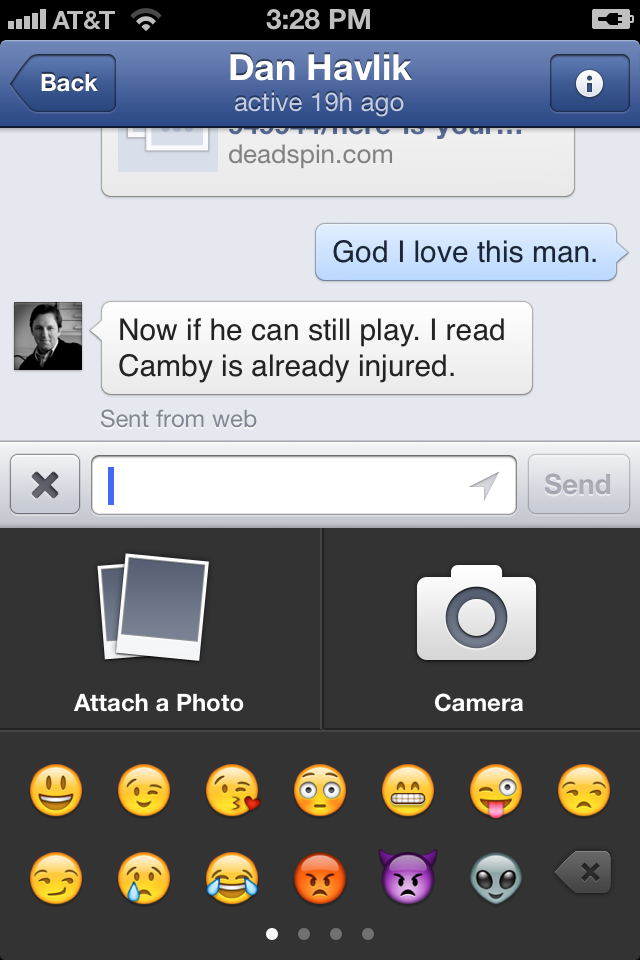
fb emoticonsEmoticons have come along way since we first started using character-number combos to virtually clue others into our feelings. Many messaging apps have started including higher quality, fun options for throwing them into your chats, and Facebook is now doing the same. The social network quietly rolled out a hefty catalog of emoticons that you can add into comments on your friend’s posts this week, although they can’t be published to status updates yet. As for mobile devices, when we tested out the feature on Facebook’s iOS app, the emoticons appeared on the Web app, while it failed to display on the iOS app — however, in Facebook’s Messenger app, there is a + icon that pulls up the new additions. 

You can check out the full list of Facebook-supported emoticons below or head over to fbsmileys.com.

facebook emoticons

Somebody “Wants” to sue Facebook

want button wantbuttondotcom

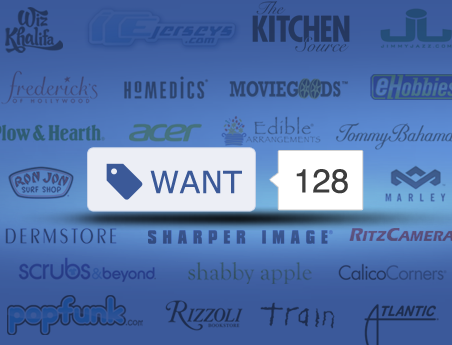
Facebook wasn’t the first to launch a “Want” button, and CVG-SAB, a company based in Michigan responsible for wantbutton.com, is suing Facebook for infringing on the newly announced tool. CVG-SAB’s “Want” button was launched in September 2010 primarily with e-commerce partners like Shopify, and since has grown to boast more than 160 million want-button views. The claim further states that the similarities between the design of Facebook’s button and wantbutton.com’s button are uncanny and already causing confusion among retailers. Wantbutton.com, in fact, offers a Facebook integration, where items that have been wanted appear on a Facebook user’s Timeline. Whether the complaint will hurt Facebook’s upcoming Collections feature remains to be seen — but our gut tells us the brand-boosting mechanism will launch with the Want button intact, lawsuit or no.

Facebook goes globe-trotting

facebook global brand page

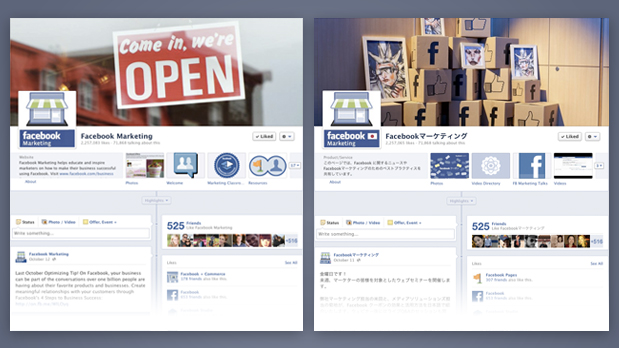
International brands are about to get a boost from the latest Facebook brand page update, which finally rolled out of beta. Facebook was testing international brand pages that can target posts and even languages at the local level. If you live in South Korea, for example, by default you’ll see a Facebook brand page written in the Korean language, as well as geo-targeted Facebook posts that followers from other countries may not be able to see. The update enables companies to manage their brand pages under one roof without resorting to creating multiple accounts or monitoring analytics for multiple pages.

Goodbye, Facebook phone number loophole

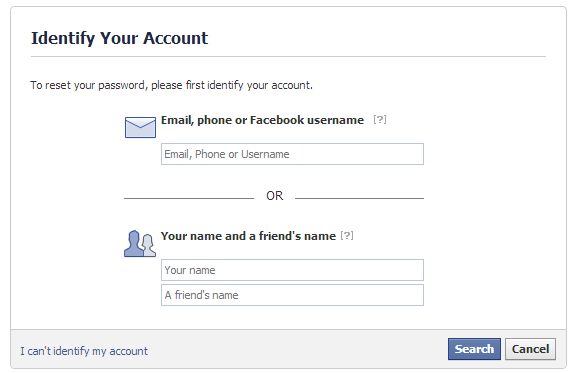
identify account on facebook

You might recall from last week’s privacy-focused roundup an item about Suriya Prakash, who discovered that a reverse-lookup feature could, if abused, easily uncover Facebook account information based on the phone numbers associated with Facebook profiles. Facebook claimed to have patched up the problem by limiting the number of times that someone could search for phone numbers, although Prakash said that these measures were insufficient and easy to work around.

With the realization that anyone could use the reverse phone number lookup feature, find a user’s phone number, and bypass Facebook’s Login Approval system to reset a password, Facebook took precautionary measures this week. Now if you have the two-factor authentication feature set up and have forgotten your password, you’ll be required to input a phone number, email address, or user name. In order to regain access to your account, you will have to use the email address associated with it or create a new one — no more temporary passwords will be sent to your phone.

Reverse-lookups of the same phone number that’s used for password-reset authentications is now blocked off from appearing in Facebook’s search engine. However, if you’ve published your phone number publicly on your Timeline where other users can see it, you won’t be protected. You should be sure the privacy settings here, under “How You Connect,” are no longer set to “Everyone.” 

Facebook fights viruses with free software

facebook antivirus partners

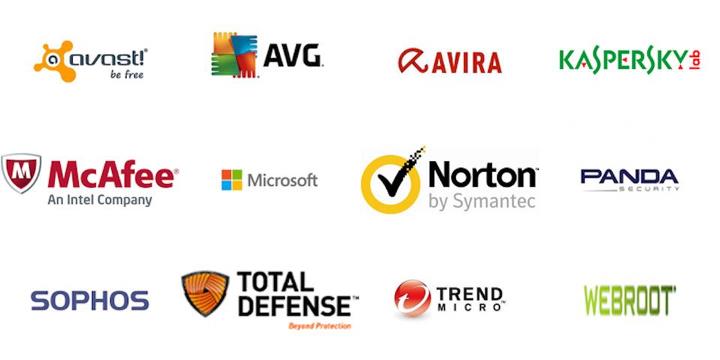
Facebook’s Anti-Virus Marketplace was launched earlier this year and included free trial subscriptions from partners McAfee, Microsoft, Sophos, and Symantec. This week the social network is added seven additional partners to the Anti-Virus Marketplace including AVG, Avira, Kaspersky, Panda, Total Defense, and Webroot.

The partnership isn’t however just about offering users free services to uncover and get rid of malware and viruses. Facebook is using its anti-virus partner’s data to bolster Facebook’s URL blacklist system, which according to Facebook, “scans trillions of clicks per per day, and before each click, the system consults the databases of all our AV Marketplace partners to make sure the website you are about to visit is safe.” With the inordinate volume of content shared on Facebook, you never know when a malicious site is disguised as a simple URL.


Source : digitaltrends[dot]com

Oct 18, 2012

Will Lightt fade in Instagram’s shadow or could its future make it more than just another image app?

lightt web site

Lightt is a new take on content sharing, producing animated GIF-like video clips of the world as you're seeing it. Will the platform prosper thanks to a future integration or is it doomed to fall on Instagram's sword?

You can’t launch a new photo-sharing app without being called an Instagram challenger, and the unfortunate label has not escaped Lightt. The new app launched yesterday, revealing a new take on the photo feed. Instead of creating a network based on stills and filters, Lightt takes 10-second videos and plays them back fast-forwarded with no sound. Will Lightt face the same fate as the amibitious yet ill-fated Color, or will its future integration with Google’s Project Glass keep it safe from being buried in the underbelly of the App Store?

How Lightt works

Your Lightt sign-up experience is nothing new: Download the app, create your account, idly flip through the initial instructions pointing out icons and what they do, and you’re off. Perhaps the strangest part of the whole thing is your profile picture: Instead of letting you pull a still from your gallery or even take a photo, you create a short video that Lightt speeds up and turns into your avatar. It’s disorienting… and honestly, the result is a little strange – it’s like one of those haunted house paintings where the eyes follow you.

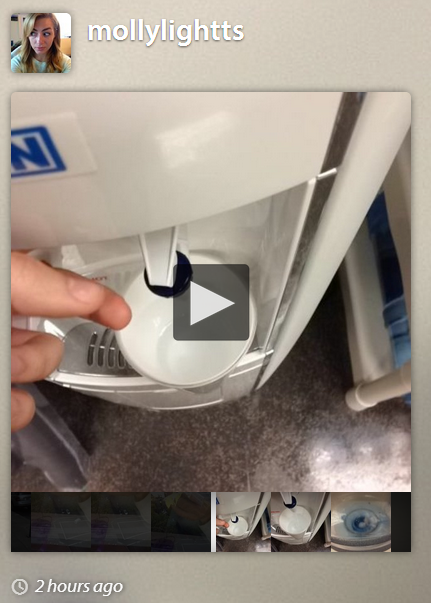
light web viewerAfter that, you should just jump in and start using Lightt. You hit the center camera icon to take quick videos. You can take one (10 seconds), or keep hitting the icon in order to continue to capture the scene – or what Lightt calls a highlight (“A highlight is a burst of pictures that captures about 10 seconds of time in one tap. Your highlights upload immediately and play back faster than real life, like the speed of our memories,” per the Lightt blog).

You can share photos to Facebook or Twitter – thought realize that they aren’t grouped together and you’ll just be posting continuous blocks of this content. From there, you’re sent to a Web viewer, but this is the only way to see your media via desktop, to share it out, and then hit the link. There aren’t any embed options right now, either, so you can’t host your Lightt content on your Tumblr, WordPress, or any other blog yet. 

The app has a home page, which is segmented by your feed, a “happening now” feed, and a “featured” feed. You can also navigate to your own page, your friends list, and an activity bar. Users are able to leave comments or like highlights – and you can strangely share other users’ highlights to your own social networks.

mobile screenshots

The Color connection

If you immediately started playing with Lightt or looking through the available feed and thought things seemed familiar, you’re not the only one: My first thought is that this is  exactly what Color tried to do. When the beleaguered startup first launched, it had a rather simple photo-sharing mechanism (no filters, no editing, no video, no captions, just point and capture) but did introduce what was a rather revolutionary location-aware social network.

Eventually Color pivoted into a video streaming application and became a Facebook Timeline app. The idea was to “show the world what you’re up to,” and users with the app would get an invitation to “visit” the recorded moment in real-time via Facebook. However, when I tried to use the Color app, I recieved this notification from Facebook.

facebook color misconfigured

This, on top of the mountain of rumors that Color is not long for this world (which, honestly, could end up meaning very little if the company is indeed acquired by Apple, not to mention the money it stands to make off patents), all points to the fact that the app wasn’t a hit with users.

And there are some similarities between Color and Lightt. There’s the fact that they are both image, media-focused apps. But that’s not exactly a novelty anymore (you could create a daily newsletter full of these app launches). Then there’s the location element; Color bet heavy on this and ended up scaring the crap out of users. Lightt is using location as well, but it’s not nearly as important to the app (you can choose to have location settings turned on or off, though Lightt will prompt you to give up the data so it can auto tag the vicinity of your content).

The big difference between the two apps is the fact that Lightt has a much more user-friendly, explanatory interface. Color was without words, without explanation, without guidance; you were thrown into this entirely new and unfamiliar territory with no gentle hand to lead you through it. Lightt didn’t make this mistake. And in Color’s defense, the team never thought they’d get the type of early fundraising or attention that they did – the startup has been honest about that fact that mistakes were made.

Don’t look a GIF horse in the mouth

While Lightt falls squarely into the photo-sharing genre, the media it creates is actually far more similar to apps like Cinemagram or Gifture, which take your short-form videos and turn them into animated GIFs.

[Via cinemagr.am]

Lightt sees the result as more of a visual timeline of your activity, but the rest of us are surely going to see the sped-up, stop-motion effect as an animated GIF. This medium has at once become the pride and joy as well as the scourge of the Internet. Twitter has fiercely fought animated GIF avatars (you’re no longer able to upload them to the site), and there’s a quiet but budding movement supporting cleaner Web design that eschews the ostentatious, attention-demanding art form. Despite any of this, they are assuredly the Web’s bread and butter, and it’s hardly an exaggeration to say Tumblr is bursting at the seams with the stuff.

Animated GIFs are the Internet’s comeback kid: After a brief love affair with them in the 90s, they died down for whatever reason. And now, they’re back with a vengeance.

However, while there are a handful of apps tapping into this popularity, they aren’t able to produce as high quality of results. The limitations of working on a small screen with nothing but your hands and the video you can capture with a smartphone means your creations probably won’t enjoy to the viral success many Web animated GIFs do.

While Lightt makes the process far easier (anyone who’s tried Cinemagram, Kinotopic, or Gifture knows the inaccuracy and frustration of coloring in the desired moving segment of media with your finger), the effect isn’t quite an animated GIF. Not that Lightt wants it to be – but maybe we want it to be.  The jury is still out on how well we’ll ever be able to make these with mobile devices, or whether we even want to, but what you’re able to make with Lightt right now sort of feels like a half-hearted effort. 

Instagram, you’re safe 

Instagram killer, Lightt is not – but the most interesting part about the app is where it’s going, which is to Google Glasses. This is where Lightt could make sense; walking around, holding my iPhone up while I record a scene still just feels awkward. That’s the beauty of Instagram: It’s instant. It’s a quickly captured moment. Lightt is still a little too much work, but the minute you implement it into something I’m wearing, the results could be stunning.

For the time being, the actual quality of what you create using Lightt isn’t up to par – Instagrams, and photo apps for stills in general – are still much prettier to look at. Video is a trickier beast, it’s a much more complicated process under-the-hood. Which is why time will only tell if Lightt can bring something compelling to the table when it hits Google Glasses. 


Source : digitaltrends[dot]com

Oct 17, 2012

Grooveshark redesign puts more power artists’ hands, but is it enough to fend off copyright fiends?

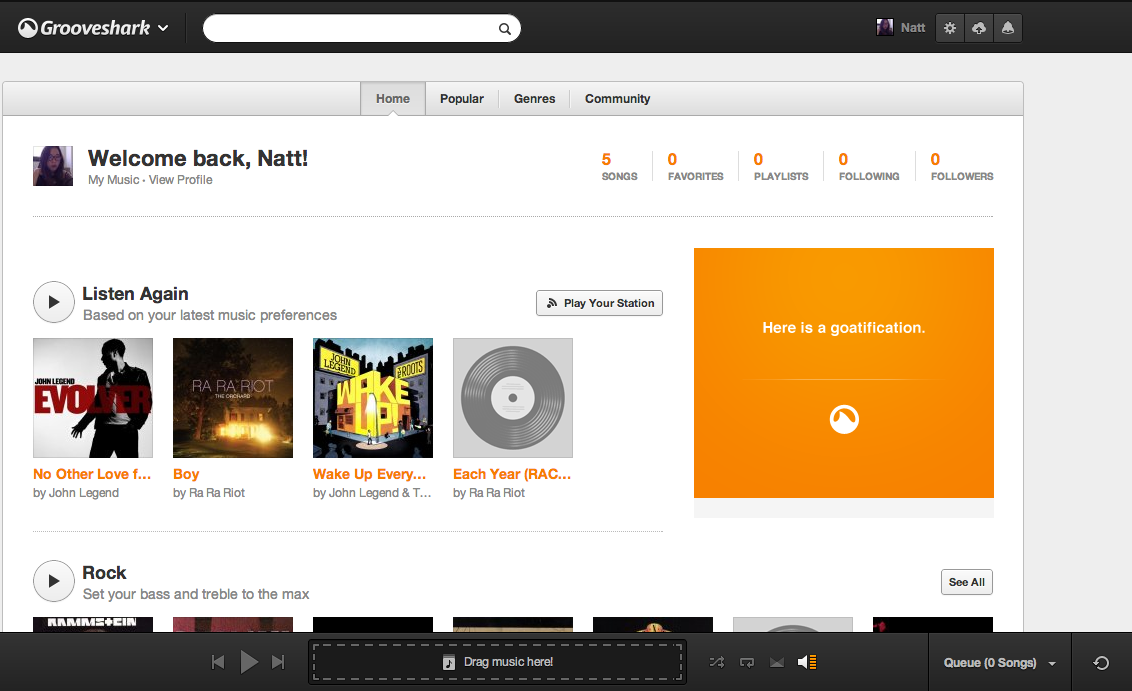
Grooveshark new

After copyright controversies with Facebook, Apple, and Google, Grooveshark is attempting to win back users by giving its platform a redesign that allows artists to have more control over their music property. The overhaul incorporates a bigger social aspect than ever, including a partnership with Flattr to help artists gain monetary support from their fans.

Undermined by the likes of popular music streaming services like Spotify, Pandora, and Rdio, Grooveshark has given its Web interface an overhaul to make music discovery more visual, social, and intuitive. The redesign comes after the site got notoriously banned by Facebook, Apple’s App Stores, and Google’s Play Store. It seems to be aimed at those not yet ready to give up on Grooveshark.

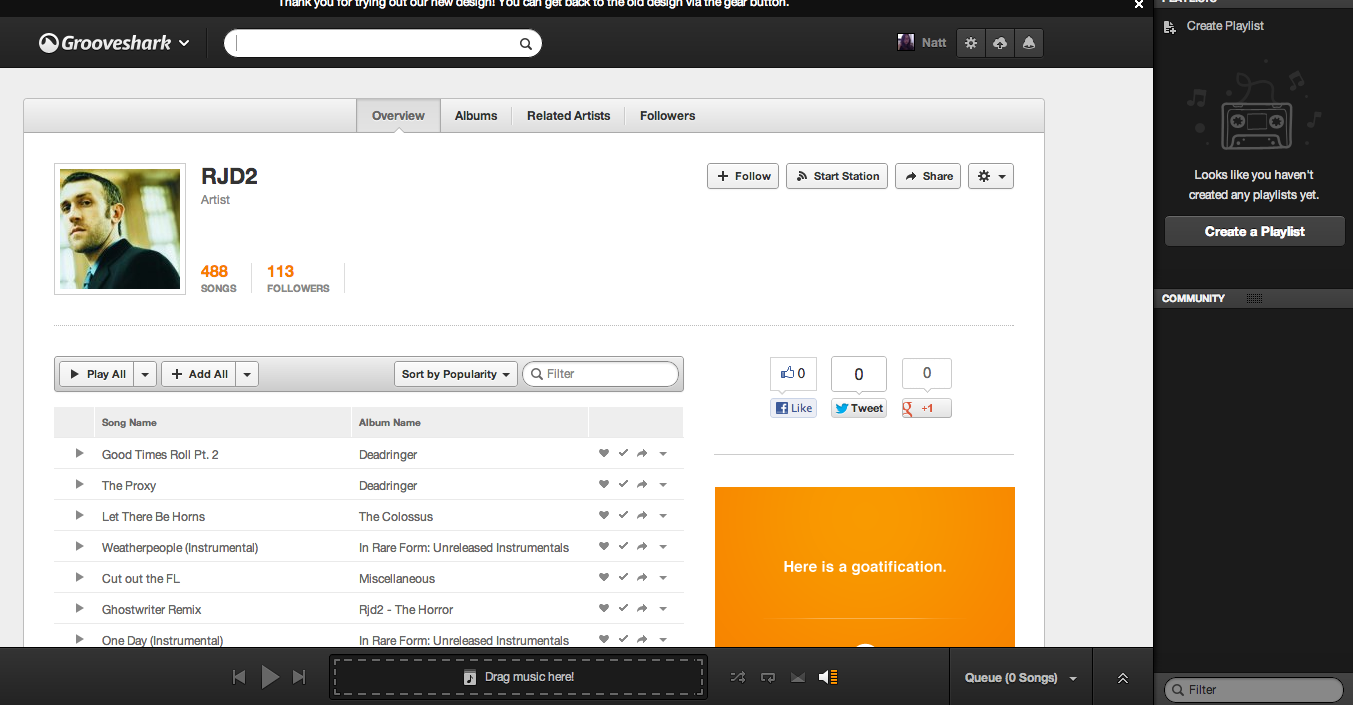
The new design now incorporates social features that, much like Spotify and Rdio, shows what music your added friends are listening to — not Facebook friends, obviously, since the site won’t allow Grooveshark anywhere near the site. The stream flows down the right side column, and the lower edge bar displays a list of songs that you are playing or have in queue.

Another social aspect is the ability to follow an artist, friend, or just a musical influence on the Web and listen to what they’re sharing. Grooveshark maintains an edge over competitors by still offering unlimited-playlist making capability, a stream that’s uninterrupted by ads, the ability to skip tracks as often you as you desire, and the option to (controversially) upload their own music. 

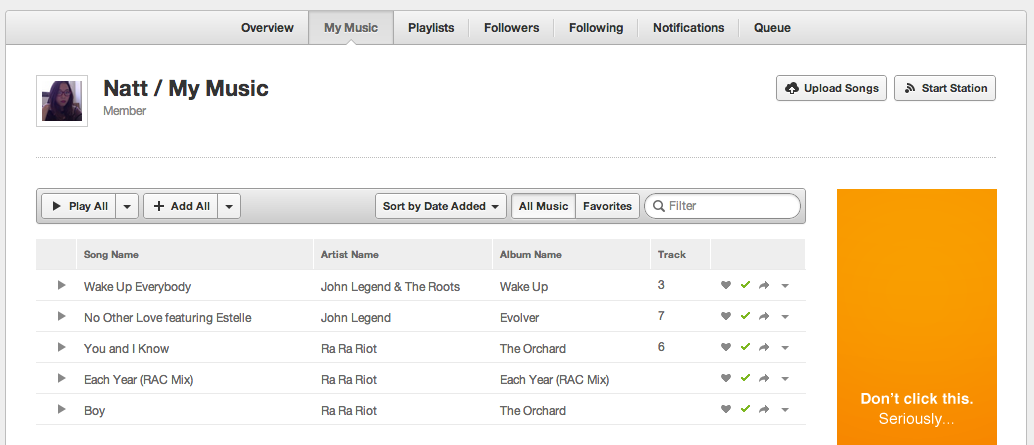
You can choose to create a playlist by dragging the song straight onto your browser, or searching for them then click “Add to collection” to play later. Based off the music you’ve listened to, Grooveshark will also recommend songs from particular artists or genres you might enjoy, or you can choose a station for a curated playlist based on your interest.

“We’ve retooled the Grooveshark website from the ground up,” said Grooveshark CEO and co-founder Sam Tarantino. “Under the hood, we’ve re-engineered how recommendations work to bring you music that you want to hear. We’ve also built a set of tools for artists to claim and manage their identities, and to learn about the fans who are listening to your music.”

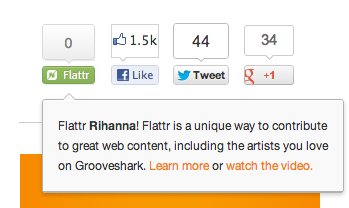
In light of copyright issues that got Grooveshark banned from social networks in the first place, artists on Grooveshark can now claim their musician profile, add their own music or delete ones that don’t belong to them, and reach out to fans. Grooveshark has also partnered with Flattr, a micropayment service, which will allow fans to donate money to support artists. “Flattr”-ing an artist is much like Liking a page on Facebook — you can allot the amount of money you want to spend on the site in a month and your budget will divide evenly among all the artists you’ve Flattred so far. This spells a neat monetary platform for independent musicians looking to share their music and build a fanbase outside of Myspace or Soundcloud, but it will still be difficult for major music labels to keep control over their property.

While the new Grooveshark incorporate larger photos, more functionality, social integration, searching for music on the site can still get a little wonky. Since the site relies on users uploading their own songs, it can be hard to find the track you’re looking for especially when users upload them with the wrong song title. The new features are Grooveshark’s way of taking one step closer to winning back some credibility, but with a business model that’s still relatively shaky, it will need to do tons more to ensure copyright laws are obeyed on its platform.

The new Grooveshark will be available for public on November 1.


Source : digitaltrends[dot]com

Oct 16, 2012

Xbox 360 Dashboard update unifies Microsoft’s entertainment businesses, but challenges remain

xbox 360 price drop

The latest update fo the Xbox 360 dashboard is slowly releasing in different territories starting this week, brining new features like Internet Explorer to the platform. Microsoft still has changes to make before it perfects its digital entertainment ecosystem.

Microsoft is brewing up a fairly quiet storm for its Xbox 360 business this year. This week brought many announcements and new releases for the company’s console, identifying it even more with entertainment of all stripes rather than just video games. There was an Xbox 360 price drop to $250, Xbox Music opened for business, and now comes the new Xbox Dashboard update, a release that finally brings Internet Explorer to the seven-year-old machine.

Larry “Major Nelson” Hryb, the director of Xbox Live, announced via his blog that Microsoft is releasing its latest update for the Xbox 360’s proprietary interface starting Tuesday. Roll out is a more appropriate term than release, though, as not all regions will be able to download the update immediately, and it may take until November for it to be available in all regions.

“To ensure a stable release, this will be a gradual deployment across subscribers and regions over the course of the next week,” reads Hryb’s post, “Our initial deployment will reach approximately three million consoles worldwide, with additional users being updated over the course of a couple weeks. Don’t panic if you don’t see an immediate update, just keep checking back in.”

In addition to Internet Explorer, there are a number of other changes coming to the Dashboard, including improved search tools, the ability to customize your Dashboard front page by “pinning” your most used apps and services to the front, and the rebranding of the Zune Video Marketplace as Xbox Video.

Xbox SmartGlass support isn’t officially a part of this update. That won’t be released until Windows 8 hits on Oct. 26.

None of these changes are system sellers. Microsoft isn’t going to get people lining up on Black Friday because its downloadable video store has a new name and there’s a web browser on its gaming console. This Dashboard update will, however, make Microsoft’s myriad services a more uniform and understandable across its platforms. This update will bring the console ecosystem in line with where the Xbox brand is on phones, PCs, and tablets.

Microsoft will have to work hard not to frustrate consumers though. Internet Explorer is a potent tool for the Xbox 360, not for basic web services, but for its potential access to video entertainment. Microsoft will obviously block users from accessing video websites like Hulu, though, forcing them to pay for an Xbox Live Gold subscription so they can use Xbox-based apps. This Dashboard update, and its place in the larger Microsoft entertainment business, is only a half step. The company needs to drop Xbox Live Gold next, and make these web services free across its platforms, or it won’t be able to compete properly with Apple.


Source : digitaltrends[dot]com

How Facebook will track your offline life with Datalogix

facebook datalogix partnerIn the eight years that Facebook has been providing users with a platform to share their personal data, the social network has time and time again been criticized for violating privacy in its quest to be an ad platform. Facebook’s recent partnership with Datalogix—a service that tracks whether people who view ads on the site end up buying the advertised products in stores—has again raised fears among users about how the social media giant is turning their personal data (both on-and-offline) into a revenue-generating strategy. To understand what exactly this means and how we got to this point, we have to go back to when it all began.

A short history of Facebook and its fight for revenue

Facebook launched in 2004, received its Series A shortly after, and was valued at $98 million dollars by the time it received its Series B in 2005. A year later Facebook opened up to the general public, closed its Series C with a valuation of $500 million, and then its Series D with a valuation of $15 billion—but the company was still far from profitability.

While Facebook’s worth continued to grow, investors began to question the company’s earnings capabilities. In 2008, after passing its 100 million user mark, Facebook began focusing on its monetization strategy and reached profitability in 2009 largely through advertising. Since then, however, while the company’s user-base and revenues have been increasing, the rate of advertising as a percentage of the company’s revenue has been steadily dropping.

As Facebook began focusing on monetization and leveraging the power of its personal information database, alarm bells began sounding for privacy advocates and concerned users who were starting to wonder what the company was doing with this data. Despite these privacy worries, Facebook continued its high user growth rate and passed 500 million users in 2010.

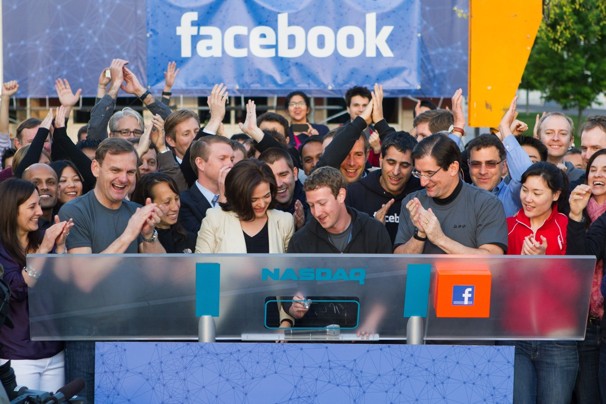
facebook ipo nasdaqThis past February, Facebook went through a highly-anticipated, controversial IPO—opening at $38 per share at a valuation of $100 billion and then dropping below $19 a share just a few weeks later. Investors began to worry and marketers questioned the effectiveness of advertising on Facebook—with big names like GM completely pulling their ad dollars and concluding Facebook ads were “ineffective.”

Facebook, which was competing with heavy weights like Google—the world’s largest display advertising network—for ad dollars, needed to find a way to prove the efficacy of its platform. It opened up its real-time bidding ad–exchange (FBX) in September, and this month, reported hitting the one billion-user mark.

Try as it might, Facebook can’t compete with Google

Last year, Facebook’s advertising revenue grew 69 percent from the year prior, to hit $3.1 billion. In contrast, competitor Google’s total advertising revenue grew nearly 30 percent to reach $36.5 billion. But while advertising rates on Facebook are increasing, click through rates (CTRs) aren’t keeping up.

The average CTR for banner ads in the US is .1 percent, but a Webtrends report found that Facebook’s 2010 CTR was only .051 percent while Google’s was .04 percent—almost 10 times as high. And while advertising rates of Facebook ads in the first quarter of 2012 rose by 40 percent, CTRs reportedly fell by eight percent. Not only that, but while the average CTR for Facebook ads decline by half just two days after being released, advertisers on Google reportedly drive 20 percent of conversions through the search engine’s display network.

And in terms of what the two companies offer in the way of targeting, Facebook is still far from catching up to Google. While Facebook offers targeting by education, workplace, Likes, location and demographics, Google lets you target based on topics and interests, contextual keywords, location, demographics, and also offers the ability for advertisers to extend their audience by retargeting.

To persuade marketers to spend an increasing share of their ad dollars on Facebook despite the not yet promising numbers, the social network needs to find different metrics to prove that their ads are equally or more effective at producing conversions. Unable to challenge Google in terms of display ads, Facebook has turned to new methods to try to prove that it can compete in terms of offline conversions.

When the times get tough… the tough get invasive

All of this is why Facebook is getting creative. To prove the value of its ads, the company turned to Datalogix to help it gather information around the offline activities of users to show that even if CTRs weren’t high, conversions were.

“As marketers look to build digital campaigns to connect with and influence consumers, many are asking how best to measure success and optimize the impact of their ad campaigns,” the Facebook blog post announcing the partnership explained. “Since the early days of digital advertising, online marketing has been focused on optimizing ad campaigns for the click. But while clicks are an effective way to measure campaigns designed to drive traffic and fulfill direct response goals, increasingly, research from firms like Nielsen suggest that clicks aren’t the right metric for the broader set of marketing objectives beyond direct response.”

But Facebook’s new partnership with Datalogix has consumers deservedly worried that for the first time, their private, offline purchasing data—from information on personal doctor’s prescriptions to data on dietary choices—can be combined with their activity online and then sold to advertisers. It’s a whole new level of invasiveness, and brands stand to profit far more than users even hypothetically could.

What is Datalogix and how will it work with Facebook?

Datalogix has purchasing data from a reported 70 million U.S. households covering a $1 trillion in consumer transactions; the data is largely drawn from loyalty cards and programs at more than 1,000 stores.  For each of these users, Datalogix creates a Datalogix ID number that is then matched to Facebook users, who by default are opted into the program. By matching personal data like contact information associated with both the loyalty cards and Facebook accounts, Datalogix can track whether people bought a product in a store after seeing an ad on Facebook.

logoDatalogix says users’ personal information is made anonymous and collected into different groups of people who saw or did not see an ad, arguing that since data was aggregated by group, it doesn’t pose any privacy violations. Once Facebook turns over data on which group was served a specific ad and which group wasn’t, Datalogix generates a report showing the contrast between the two groups in terms of who actually went out and made purchases of the advertised product or service. This data will help Facebook—and in turn, advertisers—understand how ads are performing.

To date, the two companies have measured 45 ad campaigns and reported that in 70 percent of cases, for every $1 spent on Facebook ads it earned an additional $3 in incremental sales.

Time to kiss your offline privacy goodbye

As you can imagine, this new partnership has caused many privacy advocates to speak up, noting an evolution of Facebook’s infringement on user privacy from collecting and owning user data on its own site, to indulging itself with information of users and non-users on pages outside of Facebook—so long as the site included a Facebook Like button. But with the new partnership, Facebook now has access to the offline data of its users. And unlike data users share on their social media profiles—data created with the intent to share and the knowledge that it might be passed along to third-parties—this offline data is private information that consumers probably don’t realize is being created in the first place, let alone being shared with third parties.

“The Datalogix/Facebook partnership isn’t surprising because data brokers are combining offline and online data much more often lately,” senior privacy strategist with Abine, Inc. Sarah Downey explains. “It’s a process called ‘data enhancement,’ where lots of companies who each know a little about you combine their information to get a much clearer and more detailed picture of who you are. They claim it’s only used for advertising, but the real, demonstrated harms of this data collection include identity theft, stalking, missed job opportunities, and lowered credit limits.

“The argument that data isn’t harmful because it’s aggregated or de-identified doesn’t always stand up. Plenty of so-called non-personally identifiable information has been tied to individuals and re-identified with ease. I’d hope that Facebook took extra precautions to prevent de-identification, but any data sharing runs the risk of being tied back to individuals,” Downey says.

grocery shoppingJeff Chester, executive director of the privacy group Center for Digital Democracy, echoes these concerns. “Individuals are being targeted through the Facebook Exchange. Facebook is working with many different data collection and targeting companies including Datalogix to track and market to individual Facebook users. This is not disclosed by Facebook and users have no control over this.”

Consumers who participate in loyalty programs don’t realize the data gathered about their purchasing history will be shared with third parties and those who are aware that their data might be sold, aren’t necessarily happy about it. An academic study titled Americans Reject Tailored Advertising and Three Activities that Enable It found that 86 percent of those surveyed did not want online advertisers to tailor ads based on their offline activities.

Facebook’s priority: Profit at all costs

Facebook isn’t the only company using offline data to target online viewers. Earlier this year, for example, Yahoo announced it was partnering with ad company CampaignGrid. Through the partnership, Yahoo could tap offline data to target millions of registered voters based on things like party affiliation, voting history, age, location, and more.

But Downey noted that Facebook is unlike any other company when it comes to the amount and depth of information it has about its users.

“The difference here is that Facebook isn’t just another company: It knows more about its one billion users than any other company in history.  It was just a matter of time before Facebook started doing data enhancement, given that they have a duty to shareholders to live up to their valuation, and proving that Facebook ads work in brick and mortar stores is an important part of demonstrating their value,” Downey says.

“This Datalogix partnership, combined with their ad network development (currently called Facebook Exchange), shows they’re aiming to track you everywhere you go, both online and off,” Downey adds. “What they’re doing is completely against consumers’ expectation and desires, but it follows Facebook’s historical trend of gradually eroding its members’ privacy. Facebook is the master of small changes that make the most of your personal information, even if you aren’t comfortable with them.”
Source : digitaltrends[dot]com