Pages

Showing posts with label future. Show all posts

Nov 14, 2012

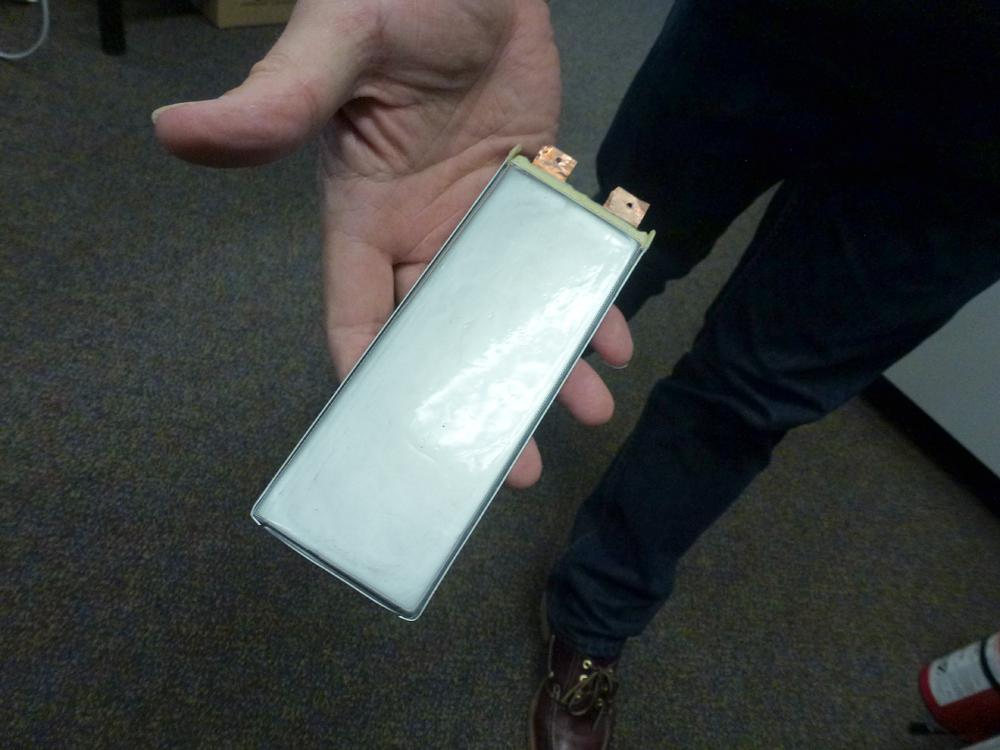
Excide working on a stronger car battery to meet the demands of start-stop technology

The proliferation of start-stop technology is expected to put huge demands on car batteries in the near future, and Exide has new technology to make sure their batteries will be ready for it.

Car batteries, not counting those in hybrids or electric cars, haven’t changed much since the introduction of the electric starter. The added strain of more and more electronics has made for incremental yet very slow evolution of the technology. But as more and more mainstream cars are fitted with fuel-saving start-stop technology, the demands placed on batteries are expected to increase exponentially. Start-stop systems, in their current form, will shut down your car’s engine while you’re stopped at a red light and then start it again when you take your foot off the brake pedal. This means the life cycle of the average battery could increase from about 5,000 starts to 50,000 starts easily.

With ever-tighter regulations governing fuel consumption and emissions, this technology will become more and more commonplace, and it would obviously be a lot to ask of our current battery technology to be able to handle this huge increase in use. As WardsAuto reports, battery maker Exide is now working on batteries designed specifically to meet the demands of the new technology. The new battery design is called Advanced Glass Mat, and is an improvement on the traditional flooded lead-acid battery. In a flooded lead-acid battery, a process known as shedding occurs, whereby the positive and negative sides of the battery gradually wear down. With the new design, a polyethylene absorbent glass mat is used between the positive and negative sides. The battery is then also sealed, and the glass mat puts pressure against the positive and negative sides, keeping them apart and preventing wear and tear.

In a flooded lead-acid battery, it usually takes about one minute of driving to recharge a battery after it has been used to start the engine. This takes longer and longer as the battery ages, and this aging would accelerate greatly with a start-stop system, and in as little as a year the recharge time could reach 10 minutes. This would obviously be a problem for start-stop equipped cars, and Exide estimates that most lead-acid batteries on start-stop equipped cars would need replacing after just six months. With the new AGM batteries, aging would be much slower, and batteries would last from three to five years. They are expected to cost about double what regular batteries cost, but this is still much less than the price would be if the technology had necessitated a switch to lithium-ion or some other more exotic material.


Source : digitaltrends[dot]com

Tumblr CEO David Karp talks monetization, user franchises, and the power of the reblog button

david karp

At Uncubed, Tumblr CEO David Karp shed some light on the future of Tumblr as a content distribution platform, and its monetization strategies.

As the visualization of the Web continues to evolve, all eyes are on one of the network’s that started it all: Tumblr. David Karp, the blogging platform’s CEO and co-founder, took to the stage during an Uncubed panel in New York City yesterday to discuss the company’s future as a content distribution network.

It was apparent that during Karp’s discussion with Reuter’s Felix Salmon, when Karp was drawing comparisons between Tumblr and YouTube, the “blog” was being taken out of social blogging. Tumblr has become a hub for creative users turn to the platform to get their careers off the ground and snag book and film deals. But an economic trend that Karp is seeing now more than ever is that the audiences being built around a Tumblr blog are being leveraged to sell digital goods or to promote a Kickstarter campaign. Look no further than the franchise being built around the Fu*k!I’mInMy20s or the meteoric rise of Kelly Oxford, whose Tumblr has a massive following. 

And the company recognizes that there’s an economic opportunity here that Tumblr can monetize, and it’s something that Karp admits he wants to experiment in — although, for now, he says the company is just focusing on building its audience. He did point out, however, that while Tumblr and YouTube are both content distributors, YouTube’s economic model is proving to be creatively restrictive to its users. Because YouTube is sending a check to its users at the end of every month, YouTube’s monetization structure “shapes the behavior of the community” and normalizes content creation. It motivates content creators to churn out work for the sake of generating revenue on YouTube.

Tumblr, on the other hand, “has different sensibilities,” and intends to keep its platform “open” for its users. Users have room to flex their creative muscles using the platform, whether it’s for making money or for garnering recognition.

“One of the nice things about the economics of Tumblr being wide, wide open, is that we’ve got people who are just in it for the fame, and who are just in it for the fortune. But, that fortune might be from becoming on air talent, or from getting the next big photograph gig,” said Karp. It’s clear that there isn’t just one way to leverage Tumblr and the company is a marketing platform, with some bells and whistles, at heart.

While Karp knows Tumblr has plenty of opportunities to really go after the marketing angle, he still seems wary of totally turning the network into a means of capitalizing on its users’ promotion and content — like YouTube has done with its content creators. Unlike YouTube, Tumblr won’t say “you need X number of views to receive $Y.” At the same time, Tumblr isn’t going to provide its users with a clear-cut strategy to monetize their blogs, so it’s not to say that one strategy is better than the other. 

Tumblr also isn’t just a platform that strictly promotes original content. Karp was fond of Tumblr’s reblog feature, which enables users to republish another’s content onto their own blog with a press of a button (like Twitter’s retweet), and explained that it was a tool that lets users express themselves through the curation of content. The reblog feature also helps distribute content virally throughout Tumblr’s network of users. In fact, Karp revealed, if an original piece of content is published to Tumblr, that content is on average reblogged nine times, appears in four Facebook feeds, and five Twitter feeds. So among the 80 million blogs on Tumblr, only between 10 and 15 percent of the content is deemed “original.” The remainder is reblogged — something you can either interpret as the inspiring power of the Tumblr network or the slow death of original Web content.

When we asked Karp how Tumblr was performing, he told us they were finally able to return calls from the advertisers that were anxious to promote their content on Tumblr. We also asked how Tumblr was monetizing its features like reblogs, and Karp explained that while the company doesn’t generate revenue directly from its features, the platform is able to monetize the audience by selling ads against the resulting traffic. “A big chunk of the traffic represents reblogging, it represents logged in users viewing the dashboard, people who spend hours a day sitting there hitting refresh, it represents views for people who search for something, so in a sense we’re monetizing all the behaviors there.” And Tumblr generates most of its advertising revenue by elevating content from brands on Tumblr Spotlight, which features influencers each week, and Tumblr Radar, essentially an image-based promoted link to a brand’s Tumblr blog. Tumblr also offers individual users the option to Highlight or Pin posts (a feature much like Facebook’s Promoted Posts) for the small fee of $2 and $5 respectively. “It’s doing pretty well,” Karp said about Tumblr Radar.

Karp remarked that things could have gone very differently for Tumblr, and the network could have taken a sharp turn back in 2008. At that time, Tumblr received $4.5 million in Series B funding and which was to be invested into its freemium model, but after a couple of months of conversations Karp was finally convinced by “smarter people” in his team who realized that by releasing features for free instead of going the premium route, Tumblr would end up attracting audiences who were creating the “best creative content in the world.”


Source : digitaltrends[dot]com

Nov 8, 2012

Vauxhall grabs three awards at RAC Future Car Challenge

GM, and its UK division of Vauxhall, took three awards from the RAC Future Car Challenge for green technology in both its production and prototype vehicles.

The Royal Automobile Club (RAC) Future Car Challenge is an annual event in which a fleet of vehicles are driven the 63 miles from Brighton to London in the UK, with the winner being the car which used the least energy to get there. This year’s winner was the Renault Zoe, a pure electric car which will be going on sale in Europe soon. But the big news for us in the US was the three awards grabbed by Vauxhall, GM’s UK division. Two of these were won by the Vauxhall Ampera, a rebadging of the Opel Ampera, basically a Chevy Volt with some slightly different styling.

The Ampera took the award for Most Efficient Regular Car (The Zoe being much smaller than the Ampera, the Most Efficient Small Car winner is generally the outright winner), as well as the title for Best Range Extender/Plug-In Hybrid. GM’s HydroGen4 (entered as a Vauxhall) hydrogen prototype took the prototype vehicle class title of Best Fuel Cell Vehicle. This is a nice feather in GM’s cap, especially at a time when they are losing huge amounts of money in the European market. But it is also important to us here. Although we may not get the Renault Zoe in the US, the Volt has become a very high-profile car.

It has been criticized over and over for having been built at a time when GM was in need of government assistance to stay afloat. But this award, among others, shows that the technology works, and that the car wasn’t some cobbled-together political tool for GM to pretend to be green. Add to this the fact that Consumer Reports recently named the Volt as the most reliable car that GM makes, and the criticism starts to look a bit hollow.

The awards from the RAC shouldn’t really come as too big a surprise. We know the Ampera to be an efficient vehicle, especially within this kind of distance. What is potentially more interesting is the prototype vehicles. There is a lot of guesswork out there about what the future of transportation holds, and there was an unfortunate lack of variety among even the prototypes. The HydroGen4 represents the biggest deviation among the award winners from the norm of plug-in electric vehicles. These vehicles have some significant drawbacks, and the potential is there for other alternative fuels to take the lead if a way can be found to make them viable. This might not be hydrogen, but it’s always good to see manufacturers exploring other avenues.


Source : digitaltrends[dot]com

Nov 7, 2012

What Obama’s second term means for technology

Obama's second term for tech presidential election

Obama has four more years in the White House, but what will his policies mean for the future of the tech we use every day?

A couple of years ago, President Obama was having dinner with Silicon Valley movers and shakers, including an ailing Steve Jobs. Although no recording of the dinner has been made available, legend has it that the President asked Jobs what it would take for Apple’s manufacturing jobs to come back to America.

“Those jobs aren’t coming back,” replied Jobs.

Whether that is true or not, during the campaign both President Obama and Governor Romney focused a lot of their energies on plans to bring that kind of manufacturing back to American shores. Now that the president has won a second term, what does that mean for American technology and manufacturing?

Mr. Obama’s plan was built on education and training, investing in clean energy, and giving tax incentives to companies that bring jobs back to America.

Jobs’ grim reply was based on the fact that American workers are no longer trained for the needs of high-tech manufacturing. Obama believes that making college more accessible, both at the university and community college level, is part of the solution for closing that skills gap.

A major focus during Obama’s first term was keeping tuition rates down, doubling funding for Pell Grants, and trying to get community colleges to work together with local employers to better train outgoing students for jobs that already exist locally. There’s every reason to believe that push will continue.

Another creative idea from the campaign trail was the creation of “manufacturing innovation institutes,” where businesses and research institutions work together to make sure that American research and development produces corresponding high-tech manufacturing jobs. How the federal government can spur that idea remains to be seen, but it could be a key step in reshaping the American manufacturing sector and making sure the next Apple keeps its assembly lines here at home.

During the campaign, Obama predictably hit Governor Romney on the Republican Party’s close ties with the oil industry. In his first term, the president advocated an “all of the above” energy policy. He’s willing to explore any source, including oil, which can help America reach a majority of energy independence by 2035. It is now expected that investment in alternative energy technologies will only continue in the next four years.

Gas pump car fuel efficiency obama technologyDuring his first term, President Obama pushed ahead with plans to double fuel economy standards for cars and light trucks by 2025, which is spurring the auto industry’s investments in hybrid and electric vehicles and has led to an American manufacturing boom of sorts in battery technology. Since these rules are now under no threat of repeal, cars and light trucks are expected to sip less and less gas in the next four years. Horsepower may be a different story.

One of the places where we heard repeats of 2008’s campaign pledges was in the area of corporate tax structure. The president promised to end tax breaks for companies that participate in outsourcing during his first term and promised to do the same in his second term (which you can assume to mean that the first effort didn’t go so well).

He also wants to provide tax incentives for companies to bring jobs back to the US. Considering Apple currently enjoys a 1.9 percent tax rate on its foreign earnings, I’m not sure how much of an incentive the US government can provide. Perhaps they will mandate that all federal employees will have to buy an iPad Mini. At least all of our forest rangers will have something to do while they’re stuck in those fire towers.

Any conversation about tax policy centers on Congress. In the coming days, it will be interesting to see if our Republican House makes any overtures of bipartisanship to the president now that they know they are stuck with him for another four years. If history is any indication, don’t hold your breath. There’s probably better chance of an impeachment investigation than bipartisan tax reform.

Whatever the case, many pundits believe that the president will be bolder in his second term, enacting whatever policies he can without congressional approval if Congress proves to be as intransigent as they have been in the past. A lot of the policies mentioned above came to pass through that same kind of executive maneuvering. Because of that, the next four years of America’s technology and education policy might be just as much decided in courtrooms as in the Oval Office.


Source : digitaltrends[dot]com

Nov 1, 2012

Consumers accuse lithium-ion battery makers of price fixing in class-action lawsuits

Brammo Empulse electric motorcycle preview li ion battery power

Several of the biggest makers of lithium-ion batteries have been accused of price fixing in a number of class action suits, which could have major implications for the future of electric cars.

As key components in everything from laptops and cell phones to electric vehicles, lithium-ion batteries have never been cheap, but it may have been more than just insatiable demand that has kept them that way over the years. According to the New Jersey Law Journal, at least 10 class actions have been brought against manufacturers of lithium-ion batteries alleging price fixing. Firms named include Panasonic, LG, Sony, Samsung, Sanyo and Hitachi, along with their American subsidiaries in California and New Jersey. The plaintiffs allege that these companies have engaged in price fixing to keep lithium-ion battery prices artificially high since 2000, and that they have controlled at times between 60 and 90 percent of global lithium-ion battery production.

The suit follows in the footsteps of others filed over price fixing of electronic components, such as LCD screens and RAM, and in some cases, the companies involved are the same. The plaintiffs allege that the situation the battery situation mirrors those previous cases in some ways, such as a highly concentrated market, rapid commoditization of new technology, and pricing that seems to defy the effects of fierce competition.

According to court filings, li-ion battery prices fell dramatically between 2000 and 2002 as Korean manufacturers entered the market and competition increased. But in the period following this, prices have risen consistently without even a hiccup during the 2008 economic downturn, evidence, plaintiffs claim, of price fixing.

Breaking up a potential price-fixing racket in lithium-ion batteries could be a significant development for EVs, where prohibitively expensive battery packs have served as an insurmountable stumbling block preventing mass EV implementation. Government programs have helped somewhat in reducing the cost for the consumer, but this spending is controversial, and skeptics see any consumer technology that needs to be propped up with legislation as being impractical in the long run. Prices have been predicted to fall for lithium-ion EV batteries over the next decade, but with sales of EVs falling well short of the high expectations of just two years ago and automakers rethinking their EV strategies, a decade from now might already be too late to save the EV. Should these suits trigger a worldwide drop in lithium-ion battery prices, the potential is there for an EV market which is competitive with standard gasoline-powered cars.


Source : digitaltrends[dot]com

Oct 17, 2012

One small step for Baumgartner, one giant pitfall for TV networks

youtube tv online tv streaming cable

Felix Baumgartner’s record-breaking skydive from the edge of space proves that the future of television – even live television – indisputably lies online.

When Felix Baumgartner jumped out of a balloon at the edge of space this weekend, we may have had a glimpse of the future. Not of the future of extreme sports, although I’m sure we will have more and more “Armchair Felixes” emerge. I’m talking about the future of broadcast television.

More than 8 million people watched the event live on YouTube, making it the most-watched live event in the history of the site. Some viewers even commented that the coverage on YouTube was better than the coverage provided by established news sources like CNN, probably because the production online was direct from the source (Red Bull Stratos) while the networks still felt the need to give more time to their talking heads and less time to Felix. Today’s consumer simply isn’t going to put up with that for much longer.

A weakening grip on the antenna

As consumers, we’re getting comfortable with having more control over our entertainment choices. You can only buy the songs you like from an album (if we buy music at all). Increasingly, you are no longer behind the trend if you wait to see a movie in your home (again, probably not purchasing it) rather than rush out to the theater.

TV is the last bastion of conglomerates dictating your entertainment experience to you, but as Baumgartner’s jump proves, even that is changing. So, what’s keeping you from dropping cable?

Maybe it’s the uncertainty of receiving your local network stations over the air like your grandparents did, reliving the memories of having to bang on the TV to get it to work. Or the prospect of walking a legal tightrope when trying to find something that may not be available in your market, like a certain sports event.

cable tv box streaming videoChances are you know someone who has already made the leap. After all, there are now 5.1 million people who have eschewed the cable companies in favor of broadband solutions like YouTube, Hulu, and Netflix while receiving their network stations over the air. Traditional cable companies have lost on average about 750,000 subscribers each year for the past three years. Some of those people (like me) go to competing solutions marketed by Verizon or AT&T. Most, it is assumed, simply cut the cord.

Fast forward

So what does the future of TV look like when cable companies only provide the broadband Internet that allows the majority of homes in America to stream their TV, rather than operating as the middleman between the producers and the consumer? Perhaps the networks, as currently organized, no longer exist as well.

First, what happens to commercials? Does everything we watch live become pay-per-view? Perhaps that could bring even more democratization to the entertainment industry, allowing for what amounts to small-budget, independent TV shows. It also has the potential to turn the NFL into Don King, for better or worse.

The alternative is the sponsors producing content themselves, so that “American Idol, brought to you by Gillette” doesn’t just mean that Gillette wrote a check to Fox. It means Gillette actually pays Mariah Carey and Nicki Minaj to bicker at each other. Conveniently, you have to go to Gillette’s YouTube channel or website to watch this week’s episode. That’s very close to what happened on Sunday with Red Bull.

netflix new streaming video cableFor anything recorded, however, it’s business as usual. Your TV shows are available on whichever streaming service you prefer, except that the only middleman between you and the producers of the show is Hulu or Netflix, rather than NBC or Fox.

Eventually, YouTube’s business model might shift from providing content free with advertising to becoming the Kickstarter of television. If enough people are interested in someone doing something stupid on camera on a regular basis, they pay to finance that person’s channel. Established stars like Jerry Seinfeld and Louis C.K. have already experimented with this model on their own. Pretty soon the experiments will become the norm.

Is this a better world? Ask Red Bull. They just got 8 million people to watch what amounts to a very interesting commercial, not to mention getting live television outlets around the world to cover that commercial. Whether that translates into 8 oz. cans moving off the shelves remains to be seen.

Is this a better world for the consumer? So far I haven’t heard anyone complaining about the commercial-laden football they missed on Sunday afternoon while they were watching that Red Bull commercial.


Source : digitaltrends[dot]com

Oct 10, 2012

Microsoft Points are out on Windows 8, here to stay on Xbox 360

microsoft points windows 8

In clarifying the future of its virtual currency, Microsoft confirms that Microsoft Points will be used on Xbox 360 but not Windows 8.

It’s always surprising when a massive corporation decides to introduce consumer friendly policies. Obviously Sony wants people to buy more PS Vitas, but it’s still impressive that it’s just giving away Vita versions of games like Sly Cooper: Thieves in Time with PS3 versions that are going to be sold for $60 regardless. On Monday, it appeared that Microsoft would finally reconsider some of the more byzantine and vicious monetization policies in its entertainment business. It would still charge people to play together online through Xbox Live, but it would finally stop using Microsoft Points, its virtual currency, for downloadable purchases. The reasoning was sound: The Windows 8 platform would unify all Microsofts platforms—PC, Windows Phone, and the still unannounced Xbox 720—and digital shopping transparency would speed adoption of the platform.

Turns out that Microsoft won’t be engaging in any consumer friendly activity after all, as the company confirmed on Wednesday that it was not just keeping Microsoft Points, it would further confuse its audience by using real money prices on other platforms.

“Microsoft Points continue to be the currency for purchasing content for the Xbox 360 console,” a Microsoft spokesman told The Verge. When it releases on Oct. 26, though, Windows 8 will let users purchase goods, even through Xbox Live, using local currency or Microsoft points. “Current Xbox Live customers may also make a purchase using points.”

Any customers looking for parity between their Xbox Music and Xbox Video accounts between their Xbox 360 in the living room and, for example, a Windows 8 laptop taken on the road will be out of luck.

Microsoft’s confirmation that Microsoft Points are here to stay on the Xbox 360 does not mean that its policy won’t change when the next console arrives. The Xbox 720, sometimes called Durango, will run on the Windows 8 operating system according to Microsoft’s Brian Hall, so it’s reasonable to expect that by the time it releases in 2013/2014, Microsoft will finally stop charging consumers for virtual currency packs that leave them with credit they can’t spend.

The time for Microsoft to begin changing its policies is now though. If Windows 8 is going to be successful as a core for the company’s growing entertainment businesses, it needs parity across all platforms. Restricting options on the Xbox 360, and continuing to charge for services like online play as part of Xbox Gold, is only going to alienate consumers increasingly accustomed to free play and real money pricing on platforms like iOS.


Source : digitaltrends[dot]com

Sep 25, 2012

Borderlands 2 dev explains the art and science of ‘distilling fun’

Borderlands 2 characters

We spoke with Matt Charles, Gearbox producer for Borderlands 2 about the recently released game, the future of the industry, and the merits of the Super Mario Bros. movie.

Last week 2K Games and Gearbox’s Borderland 2 arrived with a bang. Most people suspected that it would be a hit thanks to the pre-orders as well as the general popularity of the franchise, but we didn’t know that it would also be one of the best games of the year. We hoped it would be, but we had no way of telling until the copies were released from the protective clutches of the developer.

If you need more proof that the game is a hit (beyond our review), just jump on PSN, Steam, or Xbox Live at any given time and check out how many friends you have playing it right now. If the answer is none, consider investing in some new online friends.

Now that the years of work have concluded and the game has shipped, there is a slight lull in the game’s development cycle before the work on the DLC begins (as well as a probable sequel, although Gearbox will probably defend that secret bitterly until it is ready to announce one). So what does a Borderlands 2 producer do with himself in that time? And what was the development like? And while we’re at it, can we expect a Borderlands movie, and if so is there any way to make it not suck? We ask Gearbox producer Matt Charles these questions and more.

Matt Charles from GearboxHow long have you been working on Borderlands 2?

The full history: Borderlands 1 came out, did great. We turned a small team to focus on the DLC efforts – the add-on content. Once those finished, we started work on Borderlands 2. So it’s a gray area, it doesn’t happen overnight. But it’s about 2 ½ years.

Did you expect Borderlands 1 to do as well as it did, or did its success surprise you?

Well we certainly hoped so. I’d say we were pleasantly surprised. We’d been working on that game for a long time. Brand new IP, brand new genre — we felt it was a new idea, blending the best of first person shooter and RPG and turning it into what we called the RPS. It was very much our baby.

When you have a game coming out with lofty expectations, how do you deal with the stress leading up to the launch day?

It’s interesting. It’s a dash of nerve wracking; it’s a dash of calm before the storm. It feels like a shuttle launch, like everything is done already, and we just have to wait and see what happens.

After a game is done and released, not counting the DLC, do you have to go through a cool down period, or are you eager to get back to work?

There’s a nice break in the work flow, naturally caused by the certification process with first parties, such as Microsoft and Sony. We do continue to work on the PC version, bug fixing for patches during that time, but that’s generally less intense than preparing for that period when everything’s got to be done and flawless and perfect and ready to be printed on disc. So that’s a great time for people to take some time off.

We also then immediately come back and hit the ground running with DLC, so it’s a short break.

MechromancerWhat DLC for Borderlands 2 can you talk about?

There will, in fact, be a season pass. I look forward to seeing what we do there… [laughter].

I can also talk about the Mechromancer. She’s really interesting. At PAX East we announced that we had this idea, we had this beautiful little nugget of a word called “mechromancer,” that was really catchy to us, and she would come with Deathtrap, and that idea was really interesting to us as well — the polar opposite of Claptrap, essentially. Where he’s cracking wise, Deathtrap is about death and destruction, but obviously the friendly protector of the mechromancer.

How big is Gearbox now, including the other teams, like those working on Aliens: Colonial Marines?

Between 150 and 200 people.

Do you enjoy working in that type of larger environment, or is it more stressful?

I think we have a great organization. We’re obviously a multi-project studio, so there are teams within Gearbox, so no single person necessarily has to be worried about 200 other people. We have our own organizations within Gearbox. I really like the project cycles that we have at Gearbox as well, because it can go from a smaller, pre-production team to a very large team, and then back down a bit smaller team, as we don’t need to full force of the company behind it.

So it’s nice. I feel like I get to experience all parts of it.

borderlands-2In your opinion, what is it about Borderlands that makes it resonate with players?

It’s pure fun. It is distilled fun in every corner. That was actually the goal. “Ok, just make everything fun. We’ll figure out what that means as we start designing systems, features, and characters,” but that was always the goal. And I think that really touches everything in the game. When you start with that goal of “let’s make sure everything is fun, avoid frustration” it’s going to come through in a lot of ways.

Were there any technical limitations you hit?

It was interesting going from Borderlands 1 to Borderlands 2. We’re still releasing on the PlayStation 3, Xbox 360, and the PC. Of course PC has evolved, but with consoles the entire point is that you know what hardware is going to be there. But our ambitions never stopped growing, especially with the sequel to a hugely successful game. So it was interesting balancing what can we do on certain hardware versus what we want to do, what we can dream up.

So are you excited for the next generation of consoles, or are you happy with what we have now?

I still have to wait and see. I’m still waiting for more concrete info, so I’m going to reserve my judgment for now.

Where do you see the industry going five or ten years down the road?

That’s an interesting question, and I think we’ve seen unarguably a large push towards mobile gaming, and a focus on that recently. I’m really curious to see new console hardware — how that impacts the future as well. I think that we’re getting more social as an industry and as game players as well. I like the fact that games are taking advantage of that in the sense that it’s easy for me to hop on a game and see what my friends are doing. I love that aspect of it. So if we’re going more mobile, but also more connected, we’re going to have this wide mesh of the world with gamers playing against each other, and I think that’s really cool. I hope it goes more in that direction.

How do you see the gaming industry’s growth compared to other entertainment industries like film?

So…. I gotta make sure to get this right or my film teachers are gonna wack me upside the head… We’re able to look back at the film industry and see how that evolved. And I’m very glad that we have that example because in a lot of ways it is very similar to ours, and we’re able to look at that and plot our own relatively brief history of the video game industry, and sort of chart where we are, relatively speaking.

There are a lot of differences, and I think we’ve figured out some of the variables that make us different, and why we’re not exactly following in film’s footsteps, so to speak in terms of industry growth. But at the same time we’re almost on the cutting edge of technology anyway, so I don’t know, I think we may sort of diverge. It’s hard for me to predict whether we will see explosive growth like film did, or whether it’ll be a steadier pace, or what’s going to happen. I don’t see it decline.

As games get bigger and more complex, are they getting more difficult to create, or do the improving tools make it easier?

Film is obviously still huge, but their models have changed and their delivery method, and everyone is still experimenting with the viewing experience. 3D is the obvious example. That’s the technology that could go wide and we could see more 3D games; Nintendo 3DS being a great example of that. I think it’ll be driven by technology and what’s cutting edge.

Honestly, it’s kind of both. Because as technology comes out, as new hardware comes out, our creative minds go wild and our ambitions totally soar. And then we have to build the tools that let us chip away at what we have in our head that’s possible with this new tech. And then over time those tools get better and better and better, and then it becomes much easier on a relatively small scale to do those things.

For example, I’m going to segue a bit and tie this into something we did for Borderlands 2. In Borderlands 1, everything was data driven, for example our weapons. 17 million guns, and that was all a combination of parts system, but it was very manual entry. The same was true for creating an enemy, or managing a player’s skills behind the scenes. In Borderlands 2 we doubled down and made this tool called “constructs” internally for ourselves that turns all that data entry into a much more visual tool. So you can say with this block over here, let’s tie it to this other thing and it should interact in that way. So we can actually see it; it was almost like a blue print for what we wanted to see happen in a game. So in that sense, that’s one of the things that helped us. We scraped all the old guns from the first game in order to make new ones, all the while offering a lot more creature type and variety. We wouldn’t have been able to do that had we not invested in a new tool set.

Yes it does get faster. At the same time, our production team is also bigger this time around because our tools help us do things faster, but our ambitions are always growing.

Borderlands comic

It was recently announced that there is going to be a four-part Borderlands comic mini-series due out later this year. Any plans to further explore the Borderlands universe in other mediums? Maybe an animated movie like EA’s Dead Space?

That would be really interesting. I’d be very interested to explore all parts of the Borderlands universe, it’s huge. I think it would be great to see other mediums try to explore it.

Could Borderlands work as a movie?

[Laughter] That’s interesting.

Maybe a better question would be could any game really work as a movie?

Well I liked Super Mario Bros. [Laughter].

That’s a bold claim.

I say that while smiling very heavily.

claptrap and lilithYou may be the first person ever to say those exact words in that order.

I think I was 3 when I saw it, so my opinion may have changed since then.

Do you think there will be a day when gaming movies can get it together and reach the heights of comic book movies?

I think so. This is certainly just my opinion… The video game industry is still relatively new and the film industry has been around for a long time, and the comics industry has been around longer than video games as well. So I think comics and film have learned how to work together. I think we’re still trying to figure that out, the relationship – rather the translation between film and video games. But I think once we do understand the sorts of things we can do that translate very well and the things that don’t, we’ll start to see more of those.

With the Borderlands series, what is the single thing you are most proud of?

As a producer, shipping on time [laughter].


Source : digitaltrends[dot]com

Sep 24, 2012

Concept refrigerator with no door won’t let you forget what’s inside

Electrolux 2012 Impress fridge design Ben de la Roche

The Impress refrigerator wall is one of the many Electrolux Design Lab 2012 entries that should get you excited about the future of industrial design.

Are you the kind of person who throws a box of leftovers in the fridge, only to forget it was ever there? One design student figured the solution to this would be if you could keep sight of what’s in your fridge whenever you walk by… so what’s a better way to do that than to eliminate the door as a whole? Wait, huh?

Ben de la Roche Impress fridge designSounds like a crazy idea, but according to Ben de la Roche’s logic, his door-less refrigerator might not sound as wild as you’d imagine. The energy-conscious design features hexagonal panels that act as an opening for each item inserted. The fridge — interestingly-named Impress — does not power to cool anything until it realizes an object is inside, and even then the machine will only cool the area where the item is located. 

“Impress is a refrigeration wall that holds your food and drinks for you, out in the open and not behind closed doors so you will always remember the lunch you prepared for work or find that midnight snack with ease,” de la Roche, 21, writes in his contest entry. “Waste no more leftovers, waste less space and save more money with Impress.”

Thanks to the honeycomb design, the fridge wall can shapeshift to fit whatever the item you are trying to refrigerate. While the idea will definitely work for beverage and or sealed containers, open plates of food or fruits will need a cover or a plastic wrap to keep the contents from spilling inside this proposed fridge design. We also wonder how well the design will work for soups or food items that need to be stored horizontally.

The eco-friendly and literally off-the-wall design earned de la Roche a trip from New Zealand to Milan to present his entry with the hopes of earning the grand prize: €5000 (approximately $6,453 USD) and a six-month internship with Electrolux at its global headquarters. Since 2003, Electrolux has hosted a Design Lab competition to undergraduate and graduate industrial design students. The 2012 final event for the design competition will take place on October 25, where we’ll hope to see more incredible designs come alive to make us feel one step closer to the future.

Image via Massey University


Source : digitaltrends[dot]com

The ‘Internet of Things’ needs to empower people, not machines

internet network sensors physical web

Sensors embedded in everything you buy in the future could radically change what computers are capable of, but ultimately, they’ll need to save you time, money and annoyance to be worth their weight in silicon.

Business predictions from more than a decade ago are not likely to come true as originally envisioned, and that’s turning out to be the case with the so-called “Internet of Things.”

By his own account, Kevin Ashton coined the term “Internet of Things” in a presentation to Proctor & Gamble in 1999. “We need to empower computers with their own means of gathering information,” he explained. “So they can see, hear and smell the world for themselves, in all its random glory.”

With all respect to Kevin, this is why the “Internet of Things” phrase bothers me; it’s obsessed with the notion of empowering machines — instead of people.

In our book Smart Customers, Stupid Companies, Michael Hinshaw and I used the term “Physical Web” to describe what happens when the real world becomes linked up like the Web is today. The Physical Web will connect people, ideas, events and things.

To help you grasp the difference, I reached out to Rick Bullotta, co-founder of ThingWorx. He, too, dislikes terms like Internet of Things and M2M (machine to machine). His firm has built an application development platform that helps companies connect devices and people faster and hopefully for less money.

“The Internet of Things, ” says Rick, “Sprung up around the notion that everything will have a smart tag, and that you will therefore be able to follow it around with some sort of tracking. People basically had three business models in mind. There was telematics stuff, like ‘where’s my truck?’ There was remote monitoring, like tell me when the tank on my farm is empty. And there were remote servicing ideas, like hooking up an expensive MRI machine to a service center.”

thingworx data physical web interactionBut as useful as many of these ideas can be, they don’t really scratch the surface of what’s possible.

“When the tsunami hit Fukushima,” explains Rick, “Citizens in Japan were starved for information on the status of leaks, and the amount of radiation that had been released. Other people and groups stepped into to share radiation data that the government failed to provide.”

Many, if not most, new businesses spring up to solve a problem. To use a simple example: people like hamburgers + hamburgers cost too much = McDonalds!

But Rick says that if you ask a customer what her problems are, she most likely will follow an innate human impulse to limit her responses to what she thinks is possible. This is why no one in in 1995 asked for an iPhone, and why no one today is asking for a $5-a-month home security service: People don’t believe it is possible.

If you want to start a company or service that is mind-boggling in its potential growth and profitability, you will have to expand significantly your notions of what’s possible. (That, by the way, is the main reason I write this column.)

“Do you think anyone envisioned the kind of apps people would come up with when they added sensors to smartphones?” Rick asked.

No way. Human ingenuity is remarkable, especially when you free it from the constraints of working in a large company with all sorts of bureaucratic rules.

How to think about the Physical Web

To simplify things a bit, across the Physical Web you’ll find ideas and events, plus:

1. People

2. Systems (mainly computer hardware and software)

3. Devices (meaning everything from sensors to your refrigerator)

Rick says that if you want to broaden your thinking, pick any two and consider what each can and can’t do.

People and devices, for example, are each capable of sensing that something happened or changed. But neither can do the sort of brute force calculating that enables Google to gather 10,000 searches for the term “earthquake” in the five minutes following a tremor.

Systems and devices make a potent combination, in that they can free people from many tasks that require repetition or concentration. For example, a device can check your basement floor every minute for the presence of water, and combine with a system to alert you and others you have named. But in the end, this only matters if the pair solves problems that matter to people.

To Rick’s formula, I’d add one word: less.

How can you combine people, systems and devices to give customers less of the stuff that drives them crazy? Most want to spend less time, less money and less effort on annoyances.

computer connected physical web sensors networkInstead of expecting that a customer will wait on hold for a customer agent to pick up, you could enable People to provide a number at which a System can have the agent call them back when a Device notices the agent is free.

There are billions of other possibilities, once you embrace the idea that the Physical Web will link people, devices and systems — plus ideas and events and all the other facets of human activity.

Rick is eager for innovators to solve real human problems, instead of simply marketing cool new gadgets. Billions of people can’t find clean water. They don’t have affordable ways to monitor and improve their health. They don’t know how to lower their energy costs, or to keep their children or elderly relatives safe.

Broaden your thinking. Don’t be limited by what you think is possible. Don’t be fooled into thinking that the opportunity is to link things to other things.

Look out your window and think: When I click on that (a tree, mailbox, sign or product)… I want this (it becomes mine, it answers my question, it tells me about itself, it gets saved to my file) to happen.

Bruce Kasanoff is a speaker, author and innovation strategist who tracks sensor-driven innovation at Sense of the Future. Kasanoff and co-author Michael Hinshaw teamed up to explore more of the opportunities unearthed by disruptive forces in Smart Customers, Stupid Companies.

[Image credit: digital technology concept: fotographic1980/Shutterstock; ThingWorx; Social network communication: VLADGRIN/Shutterstock]


Source : digitaltrends[dot]com

Sep 21, 2012

Grand Theft Auto V and BioShock Infinite delays responsible for Take-Two losses

grand theft auto v release date

Grand Theft Auto 5 and BioShock Infinite are going to give Take-Two a lucrative 2013, but it's hurting in 2012 as a result of their delays.

The future is bright for Take-Two Interactive. Borderlands 2 had a strong first week, with critics raving and financial analysts predicting it will be the fourth best-selling game of the year, trailing only Call of Duty: Black Ops 2, Assassin’s Creed 3, and Halo 4. XCOM: Enemy Unknown‘s got good buzz and NBA 2K13 will enjoy the series’ perennially great sales. Next year? BioShock Infinite, Grand Theft Auto V. Those two games though, the shining stars of 2K Games’ 2013, were supposed to come out in 2012. They’re the root of Take-Two’s low revenue expectation woes.

As reported by GamesIndustry International, Take-Two CEO Strauss Zelnick explained during a meeting this week why the company saw a $107.7 million loss in the last fiscal year. “This was primarily due to our decision to postpone the release of several titles in order to allow for additional development time,” said Zelnick, “Although our commitment to quality may occasionally affect near-term results, we believe it’s the right approach for maximizing revenue and profits over the long-term.”

BioShock Infinite, by all accounts, needed the extra gestation time to be the success that Take-Two wants it to be with gamers. Irrational Games announced ahead of E3 2012 that it would push BioShock Infinite into 2013 and that it wouldn’t show the game to the press until it was close to finished. In August, though, numerous key staff members working on Infinite left Irrational amid reports that the game was in deep trouble. Cut multiplayer modes and broken play systems were just a couple of the alleged problems facing the game.

Grand Theft Auto V meanwhile didn’t come out in 2012 because Rockstar Games is, as the studio is wont to do, taking its time making the game perfect. “Grand Theft Auto V is in full development and making substantial progress,” said Zelnick in the meeting. There were rumors that GTAV might see a surprise release in October, but the game’s now a lock for the beginning of the next fiscal year.

A year that will prove markedly better than 2012. Take-Two saw sales during the April to June quarter drop to $226 million from $334 million during the same period in 2011. Max Payne 3 simply didn’t hit in the way that past spring Rockstar releases like Red Dead Redemption and LA Noire did. Grand Theft Auto V shouldn’t have the same problem, and BioShock Infinite should help Take-Two close the fiscal year in March strong.


Source : digitaltrends[dot]com

Sep 16, 2012

Room to Grow: No More Room in Hell devs talk Steam Greenlight success

steam greenlight

NMRiH Dev Team talks Steam Greenlight and the future of Source Engine mods on Valve's Steam store.

No More Room in Hell is coming to Valve’s Steam. Why? Because you demanded it. At least, that is, if you’re one of the 54 million registered users on Steam and you also happened to participate in Steam Greenlight, Valve’s new community-based game selection process. One of the initial ten selections from the Greenlight program to be added to the Steam store, No More Room in Hell says a lot about what games will make it through the selection process. Digital Trends caught up with No More Room in Hell’s creators to discuss Steam Greenlight, its shaky launch, what opportunities the service offers independent developers, and how Steam will help the game reach an even bigger audience.

“We planned since the very second Greenlight was announced that we would try it if it was open to Source Engine mods,” says David Meade of the NMRiH Dev Team, “We didn’t know if sourcemods would be allowed on the platform. At QuakeCon2012 this year I knew a few names from Valve were attending and I wanted to know more about Greenlight. I ended up talking to Chet Faliszek [about Greenlight] in a little more detail. We exchanged emails, he told us to go for it, and it paid of quite well for us in the end here.”

Like every other developer on Greenlight though, Hell was buried beneath a wave of spam, prank, and offensive game submissions. It was rough, but Meade’s confident Valve will work out Greenlight’s kinks. “You saw the issues with spam and hiccups with percentages changing every time you refresh the page. It’s going to be some time before it’s perfect but overall we believe the service has real potential.” That isn’t to say there aren’t things that can be fixed though.

“As it is you can’t submit a game as a group, only as an individual. If you were able to say link it to a steam group or at least add moderators to manage the page it would have made things easier to manage on our end.”

Even with PC Magazine naming it mod of the year in 2011, there are still many people who never had the chance to play Hell. “The game is free, we just want people to play it and enjoy it so being on Steam will make that a much more achievable goal for us, says NMRiH Dev Team’s Matt ‘Maxx’ Kazan, “Greenlight will allow us to open up the game to a much wider audience of people who might not even know it exists.

It’s more than just a ready made audience though. As Steam has done for PC gaming in general, Greenlight will help make mods like Hell and other selectees like Black Mesa easier to run for less tech savvy players. “I don’t know if you’ve ever tried installing a sourcemod before but it can be quite confusing and frustrating for beginners,” says Meade, “We try our best to explain in detail where to download how to install etc. It’s never enough. Steam fixes all of that as it allows us to auto patch. One click download and install and you’re done.”

No More Room in Hell won’t be available on Steam right away, as the team is still trying to sort through a number of technical and legal issues to get the game available. Details on the road to reaching a broader audience. Congratulations again to the NMRiH DevTeam and the other initial Greenlight selectees.


Source : digitaltrends[dot]com

Sep 12, 2012

Social casino games will generate $2.4 billion in revenue by 2015. Will gambling save Zynga?

As executives abandon Zynga in droves, a new report on the future of social gambling bodes well for the company's new ventures.

The social game dream is dead! No longer can companies rely on Facebook’s unwitting users to sit in front of a screen, dropping dollars on in-game items and clicking on ads just so they can watch a virtual farm thrive. The market for viral social games like Farmville is shrinking, just as companies like Zynga thought they were going to get rich on people’s addictive habits.

But wait! There’s still plenty of opportunity to take advantage of people’s addictive habits after all! That’s why Zynga, Big Fish, RocketPlay, and others are turning to the oldest type of social game on the planet: Gambling for real money. Why keep trying to reinvent the Mafia Wars wheel when you can just get people betting on football games and playing poker?

Zynga and the other social game makers will likely see their gamble pay off big according to new data compiled by SuperData. That analyst group’s latest report on “Social Casino Metrics” predicts that revenue from real money social game gambling will total $1.6 billion by the end of 2012. By 2015, the take will be $2.4 billion.

“Both small social game developers and large land-based casino operators are looking at this new space,” says SuperData VP Janelle Benjamin, “With declining margins in the overall social games segment, casino-style games offer a healthy growth potential.”

According to SuperData, the average social gambler is spending almost twice as much as the average social game player, $78 to $43 in July alone, a dead period in the year when most people are spending on activities rather than gaming. The bulk of spending is happening in the US. $660 million of all social game gambling revenue this year will come from the US’ more than 35 million active players (around 11 percent of the total population.)

 If clicking on a virtual cow on Facebook wasn’t depressing enough, social games will now be the virtual equivalent of Atlantic City slot machines.

The expected growth of the social gambling market doesn’t necessarily mean that Zynga’s survival is guaranteed. Corporate upheaval may kill the company first. It’s bleeding executives right now. After its stock was crippled in August, chief operating officer John Schappert quit the company. Chief technology officer Allan Leinwand followed last week, and chief marketing officer Jeff Karp quit on Tuesday. Maytal Ginzberg, Zynga’s executive in charge of real money gambling operations, just joined the company on Aug. 31.

Source: Venturebeat


Source : digitaltrends[dot]com

Sep 7, 2012

Digital Manifest Destiny: August sales mark the continuing decline of video game retail

The NPD Group's report on August video game sales demonstrates the dire future for video game retailers across the country.

The sky is falling! The sea is boiling! Generations of darkness, studio closures, Final Fantasy turned into a social game, Grand Theft Auto re-imagined as a co-operative corridor shooter where the game is free but every bullet must be purchased with real money! We should have seen the signs when Nintendo released Nintendogs + Cats for 3DS last year because IT LITERALLY MEANS DOGS AND CATS ARE LIVING TOGETHER! There’s no hope left, the video game industry is over.

Don’t jump to conclusions everyone. The intrepid analysts at the NPD Group released their monthly report on the US video game market on Thursday and the outlook for the industry-in-flux isn’t pretty. August video game, console, and accessory sales were down a whopping 20 percent year-on-year, plummeting to just under $517 million from over $647 million during the same period in 2011.

Even though sequels in best-selling franchises hit the top ten, they fell behind previous entries. Kingdom Hearts 3D: Dream Drop Distance for example moved 180,000 copies across August, well behind the 225,000 copies 2010 PSP game Kingdom Hearts: Birth By Sleep sold in its first month. The same for Transformers: Fall of Cybertron, which sold 105,000 copies in August, well behind its June 2010 precursor War for Cybertron which sold nearly 170,000. 

Consoles are plummeting as well. The Xbox 360’s resurgence over the past two years thanks to its slick redesign and the Kinect has worn off as Microsoft sold just 193,000 consoles, a drop of more than -37 percent from last year. In the Madden NFL month, that’s a troubling figure. NPD’s Anita Frazier reported that total console sales were down -39 percent year-on-year. “The current hardware systems are showing their age, so it goes without saying that it would be great to have new systems breathe life into traditional retail industry sales.”

August’s woes are nothing new, though; the retail video game industry has been contracting for four years straight. Look at the full year totals: In 2008, the US retail game business generated $22 billion in sales. Then $20 billion in 2009, $18.6 billion in 2010, and $17 billion in 2011.

Again: The sky is falling, etc.

The sky isn’t really falling though. It’s important to remember how misleading the NPD Group’s data is if looked at as representative of the full industry. Consider this: Up until June of this year, the NPD Group’s retail analysis didn’t incorporate sales from Walmart at all, meaning that its tallies were lacking data from one of the biggest game retailers in the country. Additionally, as Frazier was quick to point out in this month’s report, NPD sales tracking is retail only. It doesn’t account for any digital sales, not from closed networks controlled by platform holders like PSN and XBLA, not PC services like Steam, or mobile services like Apple’s iTunes. Frazier’s report claims that the digital and mobile market generated $391 million on its own. “You can’t talk about the gaming market without taking into consideration the growth in the number of mobile gamers on smartphones and tablets,” she told Market Watch.

There’s the truth: The sky isn’t falling on the video game industry, it’s falling on video game retail. Game retail may have totaled $17 billion last year, but people actually spent $25 billion on games in 2011 according to the ESA. The money isn’t gone. It’s just moved.


Source : digitaltrends[dot]com

Sep 5, 2012

EA: No more single player-only games on PlayStation 4, Xbox 720

EA xbox 720

EA talks up its future as a purveyor of free-to-play games played across all platforms. The casualty of this strategy? Single player games.

EA Labels president Frank Gibeau has been particularly vocal about the future of EA lately. The executive is adamant that the company’s new focus doesn’t mean EA will abandon the game console market in favor of mobile and PC. It’s all the same ecosystem after all.

“For all the investments we’ve made in mobile and social, we never abandoned consoles,” says Gibeau in a brochure distributed at the Cloud Gaming USA Conference and Exhibition, “We are working closely with the console manufacturers and we are VERY excited about the Gen4 consoles that will be launched in the months and years ahead.”

“Gen4” consoles are Microsoft’s Xbox 720 and Sony’s PlayStation 4 respectively, and possibly machines from other competitors as well, like Boxer8’s Ouya and Valve’s rumored Steam Box.

Fans of Electronic Arts single player games of the past five years don’t have much to look forward to on those platforms though. If anyone is waiting for the return of creative visions like the original Dead Space, DICE’s Mirror’s Edge, or classic BioWare efforts like Mass Effect 2 and Dragon Age: Origins, Gibeau’s got bad news: EA is done with single player-focused games.

“I have not green lit one game to be developed as a single player experience. Today, all of our games include online applications and digital services that make them live 24/7/365.”

That’s not to say that EA’s games will be devoid of single-player campaigns, only that they will all be augmented with multiplayer and social modes. Mass Effect 3 is a perfect example. The game can be played and enjoyed alone, but to get the complete story experience you have to buy additional DLC as well as play online with others.

In the wake of E3 2012, Electronic Arts’ executives have been preaching a new gospel. You’ve heard the goods news! The future is a place where we all play together, on every device simultaneously, and pay what we want for the privilege, forever and ever amen. EA’s future is free-to-play. It’s cross-platform play. It’s day one DLC for triple-A releases like Mass Effect. Is the pattern emerging for you? Do you see EA’s path forward?

Comedic drama aside, yes, Electronic Arts is aggressively redefining its entire business to accommodate for the new gaming market, a place where people expect to be able to play a game of Sim City on their mobile phone, then continue it on PC, and even on their living room console and each base level version of it is free. Grand! Shareholders should have faith in the new model.

EA is sacrificing a vital element of its business, though, in its mad dash to make every game appeal to every potential customer. Single player games still thrive when done right. Look at Bethesda’s Fallout and Elder Scrolls series, Mr. Gibeau. Something to keep in mind as you force studios like BioWare that specialize in single player games to change.


Source : digitaltrends[dot]com

Aug 27, 2012

Human Immortality in 33 Years Claims Dmitry Itskov’s 2045 Initiative

ap avatar ll 120827 wblog Human Immortality in 33 Years Claims Dmitry Itskovs 2045 Initiative

Twentieth Century Fox/AP Photo

Although James Cameron’s “Avatar” took place more than 140 years into the future, a Russian billionaire has teamed with  dozens of scientists to lay out a plan that would use avatars to transfer human consciousness into an artificial form. The goal:  human immortality by 2045.

The 2045 Initiative, a life-extension project founded by 31-year-old Russian billionaire Dmitry Itskov in February 2011, offers a timeline for immortality over the next 33 years. Beginning with remotely controlled robotic avatars and re-creating the human brain through computer models, the end result would be human immortality in the form of holographic avatars.

The 2045 Initiative, which has  had a major social media blitz, brought together 30 top Russian scientists to develop the “imortal” technology, laying out  the plan for human immortality on its website.

“The first phase  is to create a humanoid robot dubbed ‘avatar,’ and a state-of-the-art brain-computer interface system. The next phase consists of creating a life-support system for the human brain and connect it to the ‘avatar.’ The final phase … is to create an artificial brain in which to transfer the original individual consciousness into,” reads the plan.

Got that?

Here’s the 2045 Initiative’s timeline for this feat:  

2015 – 2020: A robotic copy of a human body remotely controlled by a brain-computer interface

2020 – 2025: An avatar is created in which a human brain can be transplanted at the end of  life

2030 – 2035: An avatar that  can now contain an artificial brain in which a human personality can be transferred at the end of  life

 2040 – 2045:  A holographic avatar emerges

In addition to taking the Internet by storm, the 2045 Initiative has  also launched its own political party, called Evolution 2045, pushing a  new strategy for human development. The Russia-based party takes a global approach, encouraging other countries to follow in its footsteps “not in the arms race, but in the race for building a bright future for mankind.”

Last  month Itskov appealed to members of the Forbes World’s Billionaires List, urging  them  to take heed of  the “vital importance of funding scientific development in the field of cybernetic immortality and the artificial body.

“Contributing to cutting-edge innovations in the fields of neuroscience, nanotechnology and android robotics is more than building a brighter future for human civilization. [It's also] a wise and profitable business strategy that will create a new and vibrant industry of immortality — limitless in its importance and scale. This kind of investment will change every aspect of business as we know it,”  read Itskov’s open letter.

Itskov plans to host a Global Future Congress meeting next year in New York. A previous event was held last February in Moscow.

This  massive hypothetical technology would give the “new” mankind amazing survival abilities, according to the Initiative.

“The new human being will receive a huge range of abilities and will be capable of withstanding extreme external conditions easily: high temperatures, pressure, radiation, lack of oxygen,” claims the Initiative on its website.

And according to a slick video produced by the 2045 Initiative, once the hologram-like avatar reinvents mankind’s scientific and social structure, war and violence will go by the wayside as “spiritual self-improvement” becomes mankind’s primary goal.

But what about the average Joe who  just wants to live forever?

The cost of these avatars should be on par with that of an automobile, the Initiative’s website assures, as soon as mass production begins.

So start saving up.


Source : abcnews[dot]go[dot]com

Aug 24, 2012

Apple television is still a long way off, says analyst

apple rumored tv

The release of an Apple television in the new future is "extremely unlikely," says Pacific Crest analyst Andy Hargreaves.

It’s been a while since we’ve heard anything about an Apple television — a mythical device that has repeatedly flooded the blogosphere over the past year. And now it seems as though we’re going to have to wait a bit longer before any concrete information comes out of Cupertino.

Fortune’s Apple editor Philip Elmer-DeWitt reports that Pacific Crest market analyst Andy Hargreaves released a “company update” memo today regarding Apple’s television plans. The memo was written after a meeting between Hargreaves, Apple CFO Peter Oppenheimer, and Eddy Cue, Senior Vice President of of Internet Software and Services. In short, Hargreaves estimates that the Apple television problem is far from cracked thanks to Hollywood’s lock on content distribution.

Here is the portion of the memo published by Elmer-DeWitt:

An Apple Television Appears Extremely Unlikely in the Near-term

Relative to the television market, Eddy Cue, Apple SVP of Internet Software and Services, reiterated the company’s mantra that it will enter markets where it feels it can create great customer experiences and address key problems. The key problems in the television market are the poor quality of the user interface and the forced bundling of pay TV content, in our view. While Apple could almost certainly create a better user interface, Mr. Cue’s commentary suggested that this would be an incomplete solution from Apple’s perspective unless it could deliver content in a way that is different from the current multichannel pay TV model.

Unfortunately for Apple and for consumers, acquiring rights for traditional broadcast and cable network content outside of the current bundled model is virtually impossible because the content is owned by a relatively small group of companies that have little interest in alternative models for their most valuable content. The differences in regional broadcast content and the lack of scale internationally also create significant hurdles that do not seem possible to cross at this point.

We have reached out to Hargreaves for further comment, but have not yet received a response.

Earlier this month, the Wall Street Journal reported that Apple is currently in talks with major cable service providers about the development of an Apple set-top box that would have live TV capabilities, as well as DVR functionality. Similar to Hargreaves’s assessment, WSJ indicated that Apple has not yet reached a deal with any of the cable operators, and that may be because of “the reluctance of operators to let Apple establish a foothold in the television business.”

Talk of an Apple-branded television hit a fevered pitch last October after the release of Walter Isaacson’s biography of late Apple co-founder and CEO Steve Jobs, who is quoted in the book as saying he had “finally cracked” the problem of producing a television that lives up to Apple’s user experience standards.

Piper Jaffray’s Apple analyst, Gene Munster, is one of the people most responsible for spreading Apple “iTV”rumors. Back in March, Munster said that the Apple television “is real.” He also proclaimed that it would be “the biggest thing in consumer electronics since the smartphone came out.”

In May, Apple iTV rumors heated up once again after an anonymous source claimed to have seen an Apple television set prototype, and claimed that it had both Siri voice control, and FaceTime video chat functionality.

Well, for now at least, it seems as though we’re all going to have to hold off on our Apple iTV purchasing plans. Which is probably a good thing — more time to save up for what will surely be one of the most expensive televisions on the market, if it ever gets there.


Source : digitaltrends[dot]com

Aug 23, 2012

EA’s Peter Moore says game discs aren’t going anywhere soon

electronic arts retail

EA's chief operating officer says that packaged goods are going to be part of the games business for a while to come.

EA may see its future in free-to-play PC games but it doesn’t foresee the end of physical games in the immediate future. In fact, despite years of decline in video game retail, EA expects that the impending release of the Xbox 720, PlayStation 4, and even Wii U will revitalize the ailing business of selling games in a store.

The company’s digital revenues grew to $1 billion last fiscal year and it expects that to increase to nearly $2 billion before this year ends. Physical disc sales are still going to pull in the bulk of its revenue though.

“The tipping point will come,” EA chief operating officer Peter Moore told MCV, “But it’s not that packaged is going away, it’s that digital is going up. Let’s not misunderstand this. Our forecast the year is to also do $2.6 billion in packaged goods. So there will be a £40 console game (the UK equivalent of a $60 game in the US), but there will be an iPhone experience and a PC experience too. There is always an opportunity for a Battlefield or a FIFA.”

He’s right. After all, people are actually still buying music CDs and DVDs. The all-digital future is coming, but it won’t be here even in the next five years. What Moore doesn’t address though is how there will be fewer and fewer retail games. Battlefield and FIFA, games that will sell millions of copies, will be available as discs, but will Persona 4 Arena, something that will only sell in the hundred of thousands? Not a chance.


Source : digitaltrends[dot]com

Aug 15, 2012

Gamescom 2012: Hands-On with Call of Duty: Black Ops 2′s multiplayer

Call of Duty: Black Ops 2

The future of war never looked so good: We go hands-on with Treyarch’s Call of Duty: Black Ops 2, and break down the load out options and the killstreak replacement.

Activision and developer Treyarch kicked off Gamescom 2012 with a bang, literally. The game developer revealed a ton of new information about the multiplayer experience for Call of Duty: Black Ops II (although there’s a lot still left under the hood for future reveals). Most importantly, the developer offered hands-on gameplay on four of the multiplayer maps, allowing media to get some quality time with the future of warfare.

“Coming off Black Ops the team was energized and they thrived on the creative freedom of exploring a new time period of 2025 with new weapons and vehicles and how that translated to gameplay, especially with the multiplayer experience,” said Mark Lamia, Treyarch Studio Head. “Drones, robotics, and artificial intelligence all play a vital role in warfare, and provide powerful combinations of power in multiplayer. Call of Duty: Black Ops II is the most ambitious and best multiplayer game we’ve ever made. The team is building off the success of Black Ops, but challenging the fundamentals of gameplay.”

While the campaign mode of the game will feature key missions set in the 1980s, the multiplayer experience will be set exclusively in 2025. This has allowed the separate multiplayer team at Treyarch (the developer has three massive teams working on each component of the game – campaign, zombies, and multiplayer) to delve into the current battlefield technology and extrapolate how it would appear a decade from now.

According to Treyarch Game Design Director David Vonderhaar, this futuristic setting gave his team a bigger sandbox to play with. Black Ops II has a new Score Streaks system replacing the Kill Streaks from the last game, which is closer to the support killstreaks in Modern Warfare 3 than the traditional killstreaks. This will introduce approximately 20 new upgrade rewards that players can access and use in combat, dynamically altering the strategies involved on the battlefield.

New Weapons of Destruction

“We’re introducing a new arsenal of rewards like the Guardian, which is a group crowd control mechanic,” said Vonderhaar. “The military uses something similar to this today, but it needs a Humvee with an upgraded frame and a trailer to carry a giant battery. Since we’re set in 2025, we’ve made it a portable turret. Technically, it’s non-lethal. But if you stand in the radius of that turret for long, you’re definitely going to get cooked.”

Black Ops 2 Hands on

Another futuristic reward comes in the form of an AGR (Autonomous Ground Robot). It’s a high level score streak reward that allows the player to jump in and control the walking turret on-the-fly. Whenever you jump out, the AI controls this powerful beast.

“It comes in a supply drop canister and a helicopter drops it and it bursts out of its container, powers on and goes out autonomously and starts wrecking people,” said Vonderhaar. “You can pull it up on the data pad by pressing X and you can take control of it at any time. This thing’s a complete beast, although if an enemy player is equipped correctly with an EMP (Electro Magnetic Pulse) grenade, you can deal with it. But it’s a lot of fun to play with.”

Vonderhaar said the Hellstorm Missile Score Streak reward perfectly illustrates how the team thought about keeping players engaged with rewards at all times, while adding new interactions to those rewards so players can have risk/reward gameplay around the decisions they’re making on the battlefield. This devastating missile has a secondary fire that increases the area of effect while risking prevision. If you can get a team clustered together, the burst can be devastating to a squad. But it’s not an easy move to pull off.

Another Score Streak comes in the form of an Escort Drone, a futuristic version of the unmanned weapons that are currently flying the skies in hotspots around the globe. This AI-controlled drone is constantly in contact with the player. They tell you they’re wheeled up, they’re coming down, and they’ll let you know how they’re behaving on your behalf. They add a nice level of immersion to the complexities of the battle and give you the sense of a bigger war, as well as a big brother in the sky.

Customizable Gameplay

“When we started development of this game, we were inspired by the need to challenge all core assumptions of what cows are sacred in the multiplayer game,” said Vonderhaar. “The common theme was that the power of the game belongs in the hands of players. Every gameplay system has been re-examined to make sure that we give the player the utmost control of the system.”

The new Create-A-Class system actually has its roots in an old fashioned board game. The team created several versions of a board game in paper form for each of the core systems, which allowed them to evaluate and test core systems. They decided to move away from the rigidly structured content in favor of a giant bucket with no categories that players could use to build the class they wanted to have.

CoD Black Ops 2

The system is called Pick 10, and it allows you to take 10 pieces of equipment from anything – weapons, perks, equipment, etc. – and build your experience. You don’t even have to take a primary weapon. If you don’t want a grenade, it doesn’t matter, everything costs one of these allocation points. Of course, there are some Wild Cards. Treyarch allows players to extend system rules and use these Wild Cards like extra lethal grenades, third attachments for weapons, or double perks, but each of these also takes up one of those 10 slots. This means every time you go into battle, it can be a truly unique experience.

The entire experience has been designed to be visually intuitive, which will allow anyone to easily jump in and explore the system. The grid is a visual representation of all the content you have available. You pick your primary firearm from a weapons carousel, going left or right to pick a particular gun and up and down to change categories. I picked an AN94, which is good in combat because the first two rounds of each burst are fired at a faster rate — this benefits those players who can handle the trigger really well.

In keeping with that theme, attachments are also in a grid format. The laser site illustrates how the team thought about the weapons system because there are no perks that modify the behavior of a gun. You have to take an attachment and add it to the weapon. Since this is 2025, Treyarch added a millimeter scanner into the optic of the gun as one attachment, which sends a pulse wave through the map. This will allow you to see them through smoke. And in heat of battle, any second or advantage you get is a massive one.

Black Ops 2 MPIf at any point during this customization process you change your mind and you want to add something like a foregrip, you can. The game will show you the 10 items, so you can trade and stay at the right number by removing a grenade to add the foregrip.

The game also offers secondary perks through Greed Cards, which introduce new things like “Ghost” to the mix, which allows you to move without being detected by enemy UAVs, but you have to be moving for it to work. There are no perk pros in Black Ops II, and Vanderhaar said although everything is tunable, no one perk overly dominates a category, which ensures there’s plenty of diversity.

During combat, tactical grenades come in handy. A shock charge grenade can be used as an alarm system by players. If you throw them out by doors and entrances to an area, anyone coming through will get temporarily electrocuted. That gives players a few extra seconds to take them down.

Treyarch’s multiplayer rewards desirable gameplay, encouraging players to follow objectives. Now, the points you earn are for more than bragging rights in a leader board. Vonderhaar explained that with a UAV being worth 375 points, players can’t simply get a flag capture and two kills to start the UAV spam. There’s a value to each objective — for example a kill is worth 100 points, but capturing a flag in domination could earn you 250 points. The attempt to capture the flag is 100 points, completing the objective is an extra 150. That gives you two and a half kills worth of points. In contrast, to scale the points based on objective, taking out a Dragon Fly rewards players with only 50 points.

“These are key design changes where everything has a score requirement, but they’re not strict,” said Vonderhaar. “You can earn multiple score streaks at the same time. Guys helping teammates are going to be earning rewards.

Four New Multiplayer Maps

Call of Duty Black Ops 2 -- Aftermath map

Treyarch offered four playable multiplayer maps at Gamescom, which fans will be able to play throughout this weekend. There’s Aftermath, Countdown, Turbine, and Yemen. Each map featured different gameplay elements that opened up multiplayer strategies.

Aftermath shows off the destruction in the game with a torn-up Los Angeles, likely the aftermath of the campaign shown at E3 that saw the city wasted. This is a mid-sized stage with a lot of different routes to explore. There are interior areas that lead to high vantage points, as well as underground routes that take you into the basements of demolished buildings. Also adding depth to this map are large exterior streets.

Call of Duty Black Ops 2 -- Cargo map

Another mid-sized map, Cargo, is an ever-changing experience thanks to giant cranes that are picking up and moving crates around a dock area. This movement is constantly opening up new areas to explore, or hide, as they provide cover too. And there are some great vantage points for snipers to camp up in the buildings surrounding the central shipping container area. Filled with tunnels and narrow walkways, this map showcased some fast-paced gameplay with more of an arena feel.

The Yemen map seemed like it was designed for shotgun fans. In contrast to the previous described maps, it’s been designed for close-quarters combat. This Middle Eastern backdrop offers urban alleyways and claustrophobic corridors for in-your-face fighting. Building ledges also open up the ability to sneak around out of enemy sight for surprise attacks.

Call of Duty Black Ops 2 -- Turbine map

The largest of the maps shown, Turbine harkens back to Modern Warfare 2’s Afghan map. This huge map seems like it was designed for new team-oriented objective modes. Giant wind turbines fill the backdrop of this dusty map, which features a crashed airplane at its center. Everything in the game, including that plane wreck, can be climbed upon. There’s even a mounted rifle on a ledge that can be used to obliterate enemies. Factor in a pair of interior spaces, and this map offers a lot of depth.

Call of Duty Black Ops 2 -- Yemen mapLet’s be honest, Treyarch could have phoned it in with Black Ops II. These days, the Call of Duty franchise is all but guaranteed to sell a billion dollars of software each fall. But the team has really outdone themselves, delving into what works – and doesn’t – with multiplayer. With plenty of development time left, even at this stage, this multiplayer experience blows away previous Call of Duty games. And keep in mind, it’s just one part – albeit a very large part – of the new Black Ops II experience.

WEAPONS, EQUIPMENT, AND PERKS

Black Ops 2Assault Rifles

• AN-94

• SMR

• M8A1

• Type 25

• SA58

• Sig 556

• SCAR-H

Shotguns

• m1216

• Seiga 12

• R870-MCS


• LSATLight Machine Guns

• QBB-LSW

• Mk 48

Sniper Rifles

• DSR-50

• SVU-AS

• Ballista

• Special

• Assault Shield

Sub-Machine Guns

• MP7

• Chicom QCB

• PDW-57

• Skorpion EVO 3

• MSMC

• Secondary Weapons

Launchers

• SMAW

• RPG

• FJH-18AA

• Pistols

• KAP-40

• Tac-45

• Executioner

• u23-R

No Weapon Equipped

• Combat Knife

Primary Attachments (Assault Rifle Only)

• Reflex Scope

• ACOG

• Target Finder — Sight which highlights enemies when they enter the field-of-view

• Hybrid Optic

• Suppresser

• Fast Mag

• Adjustable Stock

• Quickdraw

• Grenade ScannerMillimeter Scanner

• Grenade Launcher

• Select Fire

• FMJ

• Extended Clip

Secondary Attachments (Pistol Only)

• Reflex

• Suppressor

• Extended Clip

• Fast Mag

• FMJ

• Dual Wield

• Laser Sight

Perk 1

• Flak Jacket — Take less explosive damage.

• Ghost — Cannot be detected by enemy UAVs while moving.

• Blind Eye — Unaffected by AI-controlled perks.

• Hardline — Receive bonus score points.

• Lightweight — Move faster, take no damage from falling.

Perk 2

• Hard-wired — Immune to counter-UAV and enemy EMPs.

• Scavenger — Replenish ammo and grenades from fallen enemies.

• Cold-blooded — Resistance to targeting systems including Dual Band, Target Finder, Sensor Grenades and player-controlled aircraft.

• Toughness — Flinch less when shot.

• Fast Hands — Swap grenades faster, use grenades and equipment faster, and safely throw back frag grenades.

Perk 3

• Engineer — Show enemy equipment in the world, delay explosives and re-roll and booby trap care packages.

• Dead Silence — Move silently.

• Extreme Conditioning — Sprint for a longer duration.

• Tactical Mask — Reduce the effect of flash, concussion and shock charges.

• Awareness — Enemy movements are easier to hear.

• Dexterity — Climb ladders and mantle over objects faster, recover from melee faster and aim faster after sprinting.

Lethal Grenades

• Grenade — Produces lethal radius damage upon detonation.

• Semtex — Grenade that sticks to surfaces before detonating.

• Combat Axe — Retrievable axe that causes instant death upon impact.

• Claymore — Directional antipersonnel mine that triggers a proximity-based explosion.

• C4 — Plastic explosive device that can be set and triggered remotely.

• Bouncing Betty — Proximity mine that launches into the air before detonating. Can be avoided by crouching or going prone.

Tactical Grenades

• Sensor Grenade

• Flashbang

• Concussion

• Shock Charge — A deployable charge which stuns enemies that enter its proximity.

• EMP Grenade

• Tactical Insertion

• Smoke Grenade

• Black Hat PDA — Hack equipment and care packages, or disable enemy vehicles.

• One additional point can be spent on any tactical grenade to bring two of the same type into battle when you spawn.

Wildcards

• Primary Gunfighter — Allows a 3rd attachment for the primary weapon.

• Secondary Gunfighter — Allows a 2nd attachment for the secondary weapon.

• Overkill — Take a primary weapon as your secondary weapon.

• Danger Close — Take a second Lethal.

• Perk 1 Greed — Take a second Perk 1.

• Perk 2 Greed — Take a second Perk 2.

• Perk 3 Greed — Take a second Perk 3.

• Tactician — Take a Tactical grenade in place of your lethal Grenade.

Scorestreaks

• RCC — 325 points — A remote-controlled car packed with explosives.

• UAV — 375 points — Shows enemies on the mini-map.

• Hunter Killer — 400 points — Airborne drone that seeks out and destroys a nearby target.

• Care Package — 450 points — Air drop a random Scorestreak.

• Counter-UAV — 475 points — Temporarily disables enemy radar.

• Guardian — 500 points — Projects microwave field which stuns and impairs enemies.

• Hellstorm Missile — 525 points — An air-to-surface missile which can be scattered into a cluster bomb whilefalling.

• Lightning Strike — 550 points — Launch a coordinated lightning strike on three locations.

• Death Machine — 600 points — Your own personal handheld mini-gun.

• Sentry Gun — 650 points — An automatic sentry gun which can be remote-controlled.

• War Machine — 700 points — Grenade launcher with rapid, semi-automatic firing.

• Dragonfire — 725 points — Remote-controlled quad-rotor with lightweight machine gun.

• AGR — 800 points — Air drop an autonomous ground robot that searches for and destroys enemies and can be remote controlled.

• Stealth Chopper — 850 points — Call in a stealth helicopter which does not appear on the enemy’s mini-map.

• Orbital VSAT — 900 points — Shows both enemy position and direction on the mini-map, cannot be shot down.

• Escort Drone — 1000 points — Get personal air support from an escort drone.

• Warthog — 1025 points — Jet aircraft that provides close air support with several strafe runs.

• EMP Systems — 1050 points — Temporarily disables enemy electronics.

• Lodestar — 1150 points — Lase missile targets remotely from the Lodestar.

• VTOL Warship — 1200 points — Be the gunner of a powerful VTOL Warship.

• Canine Unit — 1275 points — Attack dogs that hunt down the enemy.

• Swarm — 1400 points — Call in a swarm of lethal Hunter Killer drones that search and destroy enemies


Source : digitaltrends[dot]com