Pages

Showing posts with label tracking. Show all posts

Nov 7, 2012

Withings releases the WS-30 Web-connected bathroom scale

withings scale

Definitely helpful when determined to lose weight, the new Wi-Fi scale from Withings offers an easy tracking solution as well as motivation to hit goals.

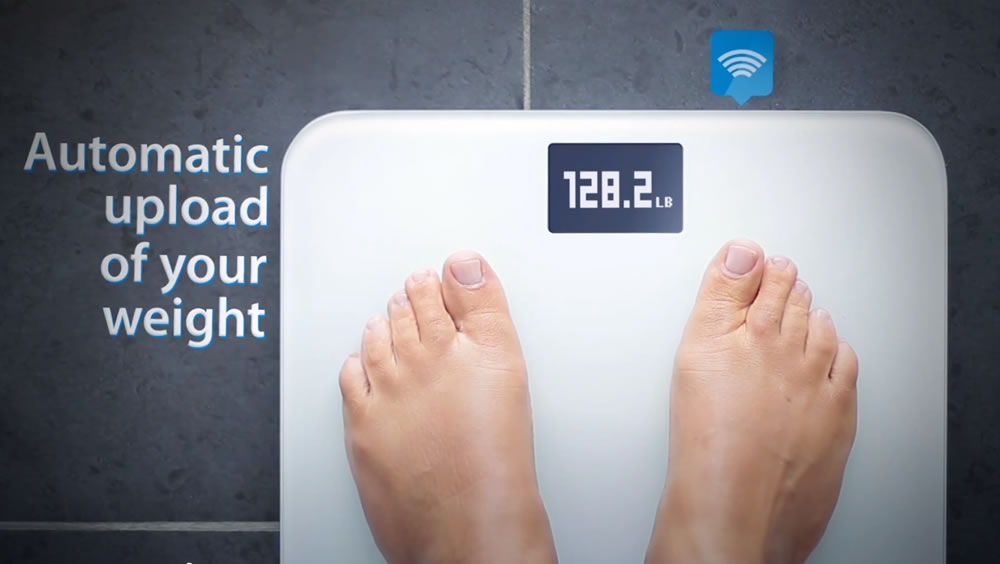
Definitely positioned to compete with the Fitbit Aria Wi-Fi connected bathroom scale, Withings announced the U.S. launch of the WS-30 Bluetooth-connected wireless scale earlier this week. Similar to the Aria, the Withings WS-30 will automatically detect the person that’s standing on the scale based on previous weigh-ins. Basically, an entire family (up to eight people) can use the scale and they won’t have to select their name in the user interface. When a person steps onto the scale, the digital readout will quickly tell the person their weight in addition to tracking their body mass index (BMI). Different from the Aria, the WS-30 doesn’t offer the user an estimation of their body fat percentage.
withings appWhen setting up the WS-30 for the first time, the scale can connect over Bluetooth to an iPod, iPad or iPhone. The Apple device will automatically share the home’s Wi-Fi network configuration, ideally so the user doesn’t have to hunt down the wireless password. As long as the Withings scale is within range of the Wi-Fi router, it will automatically upload a user’s weight and BMI to a personal user profile.

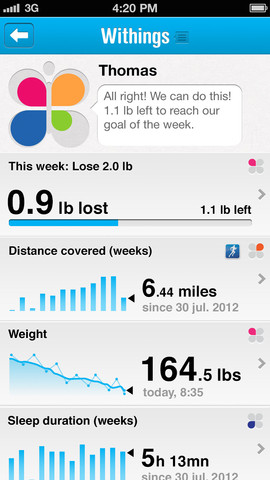
Using the Withings Health Companion mobile application for both Android smartphones and the iPhone, the user will be able to view a personal weight chart and track progress over time. Within the application, the user can set a weight loss goal as well. 

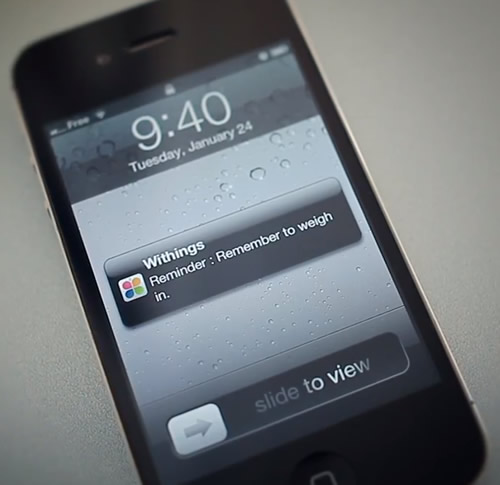
In addition, the mobile application can provide notifications on a regular basis as a reminder to step up on the scale. The development team at Withings has also designed the application to be compatible with other fitness applications. For instance, users can track Runkeeper’s exercise data, LoseIt! caloric intake data or Zeo’s sleep efficiency data within the Withings application. If a user wants to monitor their blood pressure, data from the Withings blood pressure monitor can also be fed into the application. According to the company, there are over sixty compatible applications that can feed fitness and health data into the main Withings application.
withings dataAll weight information can also be viewed on Withings site through a personal login. By default, the weight data that’s transmitted from the scale is kept completely confidential. However, Withings encourages users to share the data with family or friends in order to provide extra motivation to hit weight loss goals.

Similar to the previous Withings scale, the WS-30 includes an option to share weight information on Facebook and Twitter. This feature can be setup for automatic publication each time a user weighs themselves or once a week. Users can also share weight information on those social networks manually through the user interface. 

Similar to the design of the Fitbit Aria, the slick glass top of the WS-30 can be easily cleaned with a damp cloth periodically. However, the device isn’t waterproof and hopping on the scale after taking a shower isn’t recommended  The Withings scale runs on four AAA batteries, comes with a one-year warranty and is only available in white. Identical to the Fitbit Aria in price, the Withings WS-30 bathroom scale is priced at approximately $130. 


Source : digitaltrends[dot]com

Oct 17, 2012

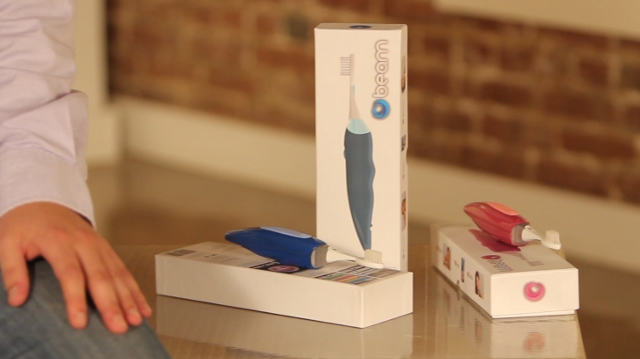
App-enabled Beam Brush tracks habits, gamifies brushing your teeth

Beam Brush

Possibly a fun way to get kids to brush their teeth more often, the Beam Brush utilizes your smartphone to encourage better oral hygiene.

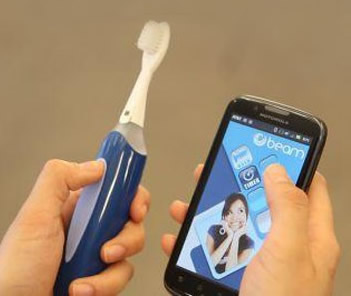
Similar to health-related tracking devices like the Fitbit, a company called Beam Technologies has developed a toothbrush that syncs with your smartphone to track your oral health. Called the Beam Brush, the Bluetooth-enabled toothbrush is designed to increase the amount of time you spend brushing your teeth in addition to tracking overall consistency. Syncing to either an iPhone or Android phone, the Beam Brush includes a two minute timer and a quadrant indicator to help the user target specific sections of their mouth. In addition, the user can setup the application to play their favorite song in order to listen to something entertaining while brushing. 

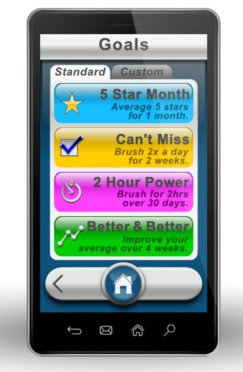
Beam Brush SyncThis product may be particularly helpful for parents trying to encourage their children to brush their teeth on a consistent basis. The app allows parents to sync multiple Beam Brushes to a single smartphone, so an entire family could track their progress. In addition to a set of standard goals within the app, parents could also setup custom goals that could lead to incentives for a child.

The application also outputs reports detailing each time a person brushes their teeth in addition to the length of time for each instance. Reports can be formatted for a single day, a full week or an entire month. These reports can be supplied to your dentist through email, thus helping the dentist evaluate a patient’s oral care more accurately. Rather than telling a patient to simply increase the amount of times they brush and floss their teeth each day, dentists will be able to offer more specific advice regarding future oral hygiene. 

According to data provided by Beam Technologies, the average person brushes their teeth for 46 seconds. By increasing the figure to 120 seconds, users will be able to reduce the potential for cavities or other problems that would require a trip to the dentist. People are also 50 percent more likely to brush for a full two minutes if using a timer. 

beam brush goalsAccording to Mashable, the company plans to monetize brushing goals for all Beam Brush users. This would include prizes such as discounts on specific merchandise or entertainment options like tickets to a local theater as well as video games for kids.

Hypothetically, the company could also work with dentists to provide incentives to patients that supply the Beam Brush tracking data prior to a checkup.

Beam Technologies plans to launch the Beam Brush during November 2012 for a price of $49.99, but is currently offering a preorder price of $34.99 on the company’s site. Available in blue and pink colors, the Beam Brush uses AA batteries that last approximately 90 days per charge. It also requires Android version 2.2+ or iOS 3.2+ on your Android phone or iPhone.

Replacement brush heads will be sold through the site for a price of $3.99. Beam Technologies recommends that the brush head be swapped out every three months and includes a feature within the app to track the last time the brush head was replaced. In order to raise consumer awareness about the Beam Brush, the company is also working with dentists on a resale program. If a dentist likes having access to the Beam Brush data, they could offer the brush to patients during a checkup.


Source : digitaltrends[dot]com

Sep 28, 2012

Nestlé puts GPS trackers in candy bars as part of big cash-prize contest

Nestlé's latest marketing campaign involves six chocolate bars, GPS tracking devices, a helicopter, big cash prizes and "a crack team of highly trained individuals."

Buy a chocolate bar in the UK and before you know it you could have someone knocking on your front door holding a suitcase full of cash – with your name on it.

It’s all part of a competition launched by confectionary giant Nestlé. Called ‘We Will Find You’, it involves GPS chips placed inside six of its big-selling chocolate bars.

Once someone opens one of the lucky bars, the chip will activate and send location information back to Nestlé, who will then despatch a helicopter to find the buyer to present them with a briefcase containing their £10,000 (about $16,000) cash prize.

The fun 30-second promotional video (check it out below) describes how a “crack team of highly trained individuals….will board a helicopter, find the special bar, and give the owner £10,000.”

The marketing campaign, developed by creative agency JWT London, is part of a huge promotion involving ads on TV and radio, as well as online, costing Nestlé around £4 million ($6.5 million).

Any of our UK-based readers feeling lucky, as well as a bit peckish, should consider purchasing one of the following bars (or all of them, many times over): Kit Kat 4 Finger, Kit Kat Chunky, Yorkie and Aero Peppermint Medium.

For more information on the high-tech Willy Wonka-style competition, head over to Nestlé’s Facebook page here.

[via CSPNet]


Source : digitaltrends[dot]com

Sep 27, 2012

TSA agent steals iPad, busted using Apple’s tracking software

Find My iPad

Despite the existence of GPS tracking applications for security, criminals still think they can get away with mobile devices.

Detailed extensively in an investigative sting operation conducted by ABC News, an Florida-based TSA agent named Andy Ramirez was caught with a iPad stolen from the security line at the Orlando International Airport. In an attempt to test the honesty of TSA agents at ten major airports around the United States, ABC News representatives “accidentally” left their iPad at the security checkpoint. Each iPad had a case that displayed the owner’s name and phone number. At nine of the ten airports, TSA agents correctly followed procedure and contacted the owner of the tablet. In addition, ABC News representatives tested sending checked bags containing cash and an iPad through security, but nothing was stolen from any suitcase at all ten airports.

Former TSA Agent RameriezRegarding the iPad that went missing, ABC News secretly filmed Ramirez handling the iPad at the security checkpoint. Two hours later, representatives used Apple’s Find My iPad application to track the location of the expensive tablet to Ramirez’s home.

Over two weeks later, ABC News sent reporter Brian Ross and a camera crew to Ramirez’s home. Catching Ramirez outside in his TSA uniform, Ross introduced himself and asked Ramirez about the missing iPad. Despite showing Ramirez the current GPS location of the iPad on another tablet, Ramirez denied that the iPad was located within his home.

Ross then used the Find My iPad sound feature that overrides the volume or silent setting on the tablet to activate a loud alarm. After hearing the tablet inside the home, Ramirez retrieved the iPad and blamed his wife for stealing the tablet. Ramirez said “My wife said she got the iPad and brought it home.” Ross disputed his claim by bringing up the footage taken at the security checkpoint, but Ramirez refused to answer any more questions and closed the door.

As of Wednesday afternoon, Ramirez was no longer employed by the Transportation Security Administration. Regarding the incident, a TSA representative stated that the organization has “a zero-tolerance policy for theft and terminates any employee who is determined to have stolen from a passenger.”

However, this isn’t the first time that a TSA agent has been busted for stealing electronics or other valuables from passenger luggage. In a similar case during February 2012, police at the Dallas-Fort Worth International Airport arrested 31-year-old Clayton Keith Dovel after using Find My iPad tracking to locate eight stolen iPads at Dovel’s home. Dovel was a TSA baggage inspector at the Dallas airport.

Also during February 2012, a 31-year-old, New York based TSA agent named Alexandra Schmid was arrested for stealing $5,000 in cash from a passenger’s jacket. After wrapping the cash within a plastic glove, Schmid was filmed taking the money into a bathroom to pass it off to an unknown person. Shortly after the incident Schmid was arrested for grand larceny. During July 2011, TSA agent Nelson Santiago-Serrano at another Florida airport was arrested after authorities discovered an iPad shoved into his pants. His arrest led to the discovery of $50,000 dollars of additional stolen electronics during his employment period with the TSA.


Source : digitaltrends[dot]com