Pages

Showing posts with label smartphone. Show all posts

Nov 19, 2012

Google Nexus 4 drop test shows how good that Gorilla Glass protection actually is

The Google Nexus 4 is the latest smartphone to star in a drop test, falling hard from at least five feet on pavement.

The phone was dropped twice and managed to survive the first one with minor scratches. As for the second one…

Well, here’s the video itself, I won’t spoil the ending.

So it looks like the front glass on the Google Nexus 4 is tougher than the rear one. And it’s good that the phone looked fully functional even after its second hard fall.


Source : blog[dot]gsmarena[dot]com

Philips announces W832 Xenium dual-SIM droid, promises impressive battery endurance

Philips has announced its W832 Xenium dual-core Android smartphone. It’s a 4″ dual-SIM device that runs on Android 4.0 Ice Cream Sandwich.

The W832 Xenium offers dual-standby and supports 3G networks on one of the SIM cards.

The new Philips flagship features a 4.5-inch qHD display and runs on a MTK chipset with a 1GHz dual-core processor. The rest of the specs include an 8MP camera, 4 GB internal storage, Wi-Fi, GPS, Bluetooth and a microSD card slot.

Philips promises great battery life for this one with up to 11 hours of talk time and up to 9 hours of web browsing. The battery capacity is 2400mAh and should offer you 683 hours of stand-by, with both SIM cards active.


Source : blog[dot]gsmarena[dot]com

Nov 9, 2012

This week’s best app updates

App update roundup ios productivity apps

Missed all the new app updates this week? Here's a roundup of the week's best additions that are the clear must-haves on your smartphone.

Man, there were a lot of apps that got some update love this week. Did you manage to download them all? If not, have a look through our roundup and see for yourself whether or not these changes seem urgent to your needs. We know, data gets expensive, so feel free to spread them out as you see fit.

Tumblr

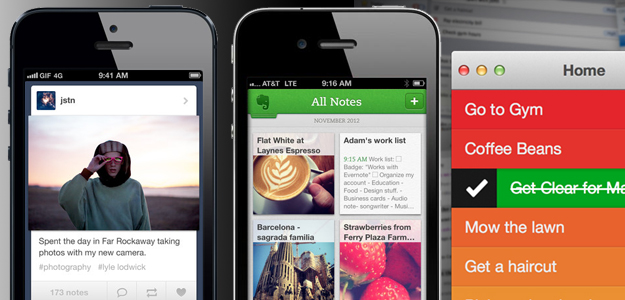
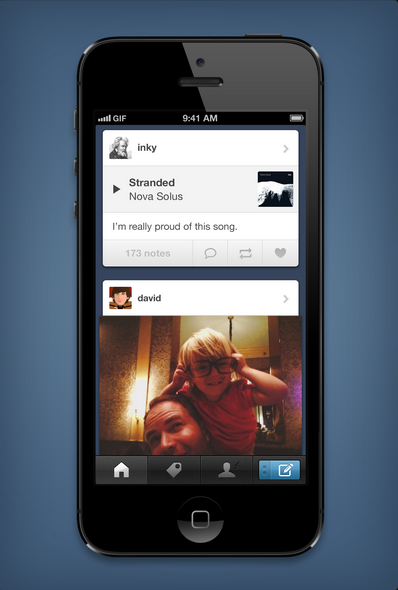
With the latest iOS update, Tumblr is now “completely native,” meaning a faster and more responsive interface for you iPhone users. The update also comes with a new notifications board that lets you see exactly who liked, reblogged, commented, or replied to your posts. One of the more interesting updates, however, is animated GIF playback. This will be great for all you LOLcat lovers now that animated GIFs will play automatically from the dashboard without needing a separate tap. Gesture shortcuts also include right swipe to return to the previous screen, and holding a tap to open up more options.

Evernote

Evernote got a nearly complete refresh with its new update, offering a new homescreen, navigation interface, and existing notes list. “Our goal with the redesign was simple: make all major functions accessible within two taps,” Evernote writes on its blog. You’ll find this with a shortcut navigation to your content, and a tap on the header to browse the section. The Notebook section is one of the most improved aspects, gathering all the notes you’ve ever created or have been shared under one hood. Additionally, you can sort your notes by tags or places – the latter of which will bring up a map of plotted notes according to their location info. There are also shortcuts (“Quick Notes”) on the top of the homescreen to help you quickly add new notes and take photos. This Evernote 5 update will be compatible with the iPad mini as well, and is free across iOS platforms.

Foursquare

You know how Facebook lets you tag friends you’re at an event with when you check into spaces? Well, now you can do the same on Foursquare, even if your friend isn’t a Foursquare user. The hot link will just sync to your friend’s Facebook account instead – where your friend can either approve or hide the Facebook notification for a wall post.

In addition to the social aspect update, users can also rate establishments on a scale of 1 to 10 to help explorers get a gauge on the venue’s rating. The number rank will appear in a color square next to the name of a location under your Explore tab. The update is available only on iOS, but Android users should be receiving the same love shortly.

Clear for Mac

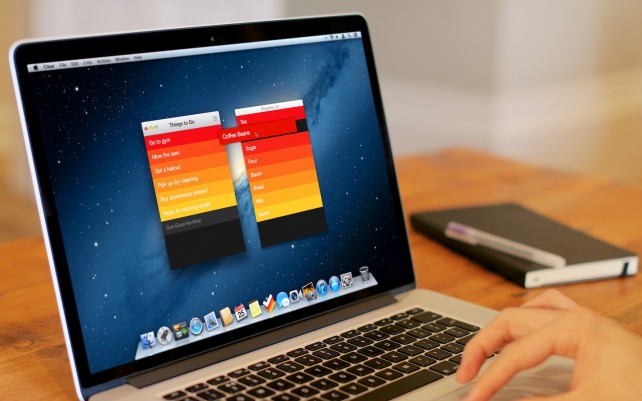
Clear is a hotly popular app on the iPhone, and this week, the beautiful to-do lister app comes to the big screen: your MacBook. The Mac edition will include all the touch gestures available on your iPhone if you own a later edition of MacBooks that have gestures built into the touchpad. This means you can still perform all the left and right swipes to “clear” a task and drag items around to reorder them. After you finish setting up your lists on the Mac, the app also syncs with your iPhone so you can access lists on the go. To make accomplishing tasks even more fun, you can fudge with the preferences to set sounds and theme colors to make you want to use the app more.

Pinterest

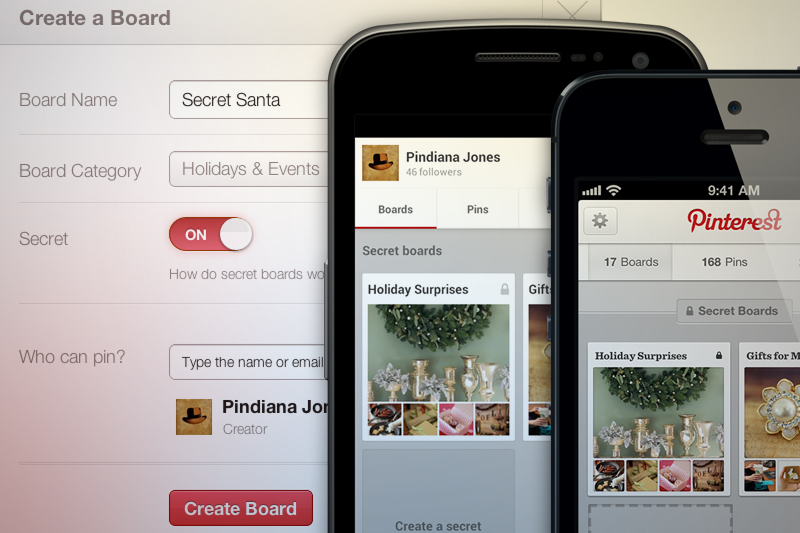
Starting your holiday shopping early but don’t want anyone to find out you’re using Pinterest to save your to-buy lists? The new Pinterest updates for iOS and Android will now include Secret Boards so you can create up to three privatized boards made for your eyes only. You can also share them with a few santa helpers to get the holiday season rolling, or turn the secret boards public after you’re finished putting the last pieces on the board. The option can be found right when you create a new board, or at the bottom of your app homepage.

Pulse News

Pulse 3.0 is here for both Android and iOS, complete with a sleeker mobile interface and a new search feature to help you browse more efficiently. With the search side bar, you can sort news by sources (Reddit, Tumblr, Google, Flickr, Facebook, etc.) and there’s an infinite scroll so you can keep dragging down for more stories. Seriously — as many as you can stomach in one sitting.

Editing pages is also simpler thanks to the side bar, which allows you to add, edit, and reorder to your customizable needs. Basically, the mobile version gets the same personalization options the Web service Pulse.me already has, so if you’ve an avid fan of the Web edition, now you’ll have the same features on the go.


Source : digitaltrends[dot]com

Nov 8, 2012

Drive further in EV mode with Ford’s EV+ algorithm

2013 Ford C-Max Energi

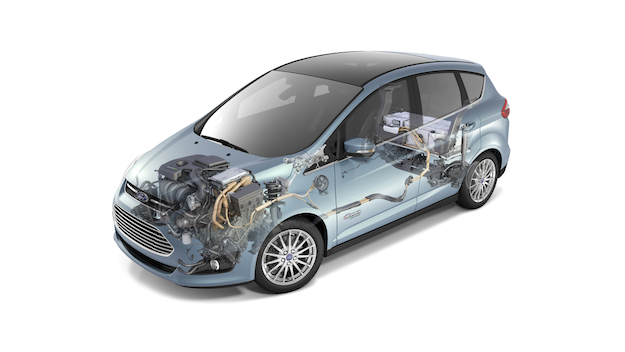
Ford’s new EV+ cleverly extends emissions-free driving by learning your driving habits through a combination of smartphone application and GPS.

Ford knows hybrid and plug-in hybrid owners want to spend the greatest possible amount of time driving in EV (electric-only) mode, leaving the gasoline engine at rest for as long as possible. Not only is an extended EV mode both eco-friendly, it also makes the most of the energy stored in the on-board batteries and saves on gasoline.

Eager to accommodate eco-minded customers and further separate itself from the competition, two Ford engineers developed a way to use GPS signals, allowing C-MAX Energi (plug-in hybrid) and Fusion Energi to remain in EV for extended periods of time.

Virtually everyone has a daily routine: driving from home to work in the mornings and from work to pick up the kids at school in the afternoon, then stopping by the store before finally heading home. What if, Ford engineers wondered, your car could recognize your familiar stomping grounds and extend your EV range?

EV+ works by cleverly harnessing the already built-in GPS unit included within each Ford model fitted with Sync. Ford uses the SmartGauge app, which is standard on all Ford plug-in hybrids, to determine if the vehicle is near (within an 1/8th of a mile) a frequently visited location. When the system recognizes a frequently visited location, it will leave the gasoline engine off, ignite the EV+ light on the dashboard so the driver knows the system has been engaged, and squeeze what it can out of the remaining on-board battery power.

Ford hasn’t divulged exactly how the EV+ works, but from what we can gather, the system limits throttle response thereby drawing less juice and prolonging the electric driving range. This in turn allows the batteries to drain down more readily than they normally would, assuming you will soon be home and able to charge it up.

For customers who find the idea of their vehicle actively tracking and interacting with their daily routine a bit unsettling, the EV+ system memory can be erased with the push of a button or fully disabled.

While the system is downright ingenious and will certainly save countless numbers of gallons of gas for drivers each year, we wonder what the added stress on the battery packs will be. If the system is normally designed to shutdown and revert to a standard gas/electric drive mode at a given level of remaining battery charge, what will be the outcome of drawing more power from the battery pack?

In spite of our skepticism, we’re pleased to see Ford using big-bother technologies to improve fuel economy, even if it seems a bit weird at the outset.


Source : digitaltrends[dot]com

Samsung Galaxy Express steams into your local AT&T store, where it’s yours for $100

Samsung Galaxy Express

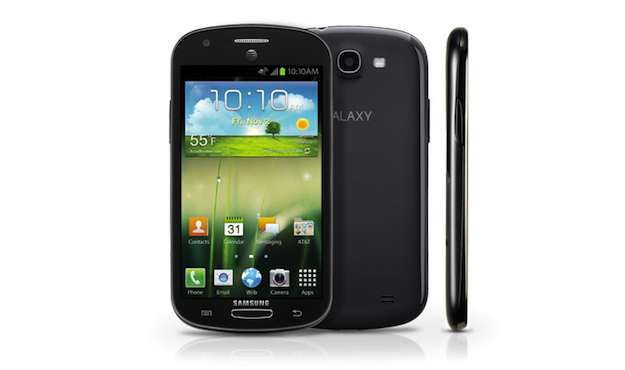
AT&T has provided more details about the Samsung Galaxy Express, set to be released onto the network next week. Aimed at first-time smartphone owners, it has 4G LTE connectivity and a sensible price tag.

Previously announced in September, AT&T has now provided some more details about the Samsung Galaxy Express, it’s latest mid-range Android smartphone. The network is pushing the Galaxy Express as being suitable for first-time smartphone owners, or those who’re planning to upgrade from a basic device.

It’s making it an attractive proposition too, as it has slapped a $100 price tag on the front, provided you scrawl your signature on the bottom of a two-year contract. For that, you’ll get a curvy, Galaxy Ace 2-alike device that will happily connect to AT&T’s 4G LTE network.

The specification, while not quite up to the standard of the current crop of superphones, is still intriguing, particularly the screen. It measures 4.5-inches, a fairly unusual size, and one that’s shared by devices such as the Nokia Lumia 920, the Motorola Atrix HD and the Huawei Honor 2. It’s a Super AMOLED Plus panel too, meaning it’s the same as that seen on the Galaxy S2, and not the often unfairly maligned PenTile display used on the Galaxy S3.

Inside is a 1.5GHz, dual-core processor of currently unknown parentage, which should see the Android 4.0 Ice Cream Sandwich operating system perform well. There’s no information on the amount of RAM, nor any clues on how much internal memory will be found inside the Galaxy Express, although a microSD card slot is present.

A 5-megapixel camera sits on the real panel, and other features include GPS, Bluetooth and a 2,000mAh battery.

Anyone interested in the Galaxy Express will be pleased to know it’s going to be available from AT&T on November 16. It’s also part of an AT&T offer where you’ll get $100 off a second Samsung smartphone when you buy a Galaxy-branded device with a new contract.


Source : digitaltrends[dot]com

Nov 5, 2012

Mom uses BlackBerry to write novel – no ‘BlackBerry thumb’ reported

You'd think that writing a book day and night on a BlackBerry smartphone would eventually render your thumbs useless, but a woman from London has done just that, and now her novel is selling on Amazon.

If you were going to write a book, the chances are you’d sit yourself in front of a full-size keyboard connected to a full-size computer screen before you embarked on your full-size project. Not so Brit Georgina Campbell.

She bashed out a 55,600-word book on, of all things, her BlackBerry smartphone. The 41-year-old Londoner said the idea to put thumb to keyboard came about after watching the 2011 sci-fi movie Attack the Block. While daughter Lorra loved it, Georgina thought it was abysmal and so bet Lorra she could write something better. It was then she grabbed her writing tool of choice and started work on her novel.

In an interview with the Daily Mail, Georgina said it took four months to complete the gritty tale of a group of girls growing up in inner-city London, writing it entirely on the phone’s native MemoPad app.

“When I started writing the book I would normally do it after a 12-hour shift at work and it would be a breeze – I loved it and wrote through the night,” she told the Mail. “It was almost like a holiday – I’d just sit down and start typing the book out on my BlackBerry using my two thumbs.”

Georgina said the phone was the ideal writing tool simply because it was with her all the time. “I was writing on the train, on breaks at work, waiting for a bus, having a bath, when I was walking around – anywhere. It completely took over my life – all I thought about morning to night was writing the book.” Four months after tapping out the first word, The Kickdown Girls made it  to Amazon.

Possibly the most remarkable part of the story, however, is that despite her round-the-clock commitment, her thumbs are still fully operational instead of finishing up as mere worn-down stumps; she didn’t even develop BlackBerry thumb, the repetitive strain injury linked to excessive use of the physical keyboard so beloved by BlackBerry users.

Whether Georgina’s work is better than the script of Attack the Block is something for readers to decide, though at the time of writing the publication is languishing at 257,164 in Amazon’s book chart and has no reader reviews.


Source : digitaltrends[dot]com

Instagram CEO: Sandy Our Most Documented Event Ever

ap Facebook Instagram nt 120411 wblog Instagram CEO: Sandy Our Most Documented Event Ever

Karly Domb Sadof/AP Photo

The smartphone photo sharing app Instragram was an instant hit when it debuted in 2010. Now, two years later, the app has quickly become the most popular way that phone users share pictures, and may soon become the most popular means to share photos in any way.

When Superstorm Sandy hit the East Coast last week, many people reached for their phones to document the aftermath. Most of them, it seems, used Instagram to snap the photo.

“Sandy was a really interesting event for us,” Systrom said at the Nov. 5 GigaOM conference in San Francisco. “Sandy was the single largest event captured on Instagram — and the largest event captured on cellphones ever.”

According to Systrom, nearly one million Instagram photos were uploaded with the hashtag #Sandy.

That means Instagram is much more than just a way to show off to your friends. Users, Systrom says, are now updating their accounts to document important events like Sandy in what amounts to participation in the event. Instead of passive documentation, Instagram users are communicating with photos and making their Instagram experience more than just about consumption.

That conversation with photos is also about to get even easier, as the smartphone-based app expands onto the Web. The company, which was purchased by Facebook in the spring of 2012 for nearly $1 billion, is rolling out Instagram profiles, complete with user bios and photo streams of recent uploads.

According to a post on the Instagram blog, Web profiles will be rolled out “over the next few days” in a move that is sure to open the platform up to even more users.


Source : abcnews[dot]go[dot]com

Nov 2, 2012

Samsung sells 3 million Galaxy Note 2 devices while it waits for the competition to catch up,

samsung galaxy note 2 hardware screen

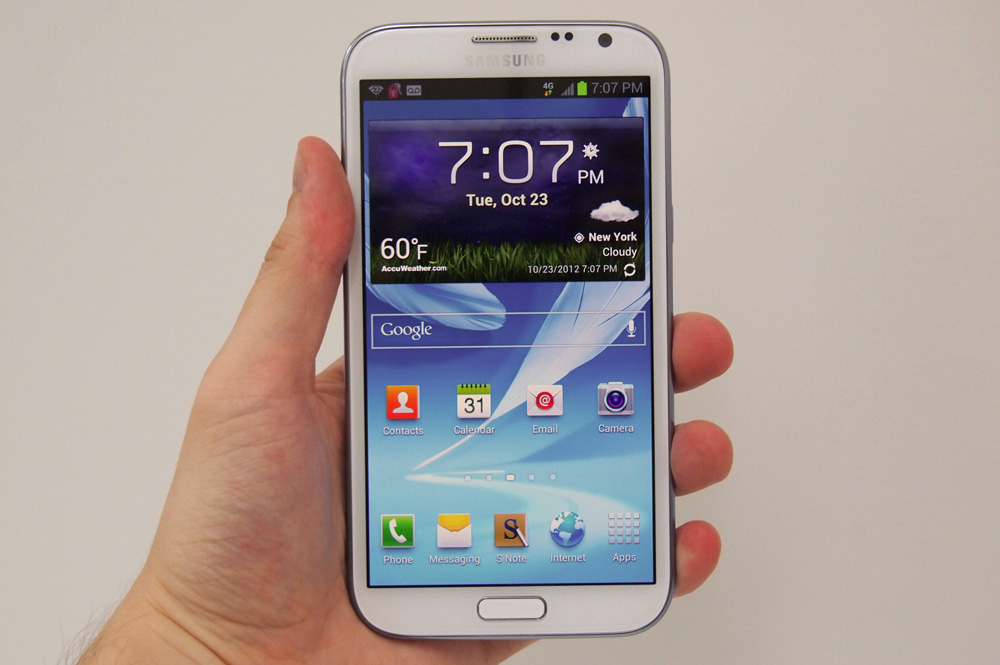
Samsung has announced that it has sold 3 million Galaxy Note 2 tablet/smartphone hybrid devices, despite it only have been on sale since September. That's a lot of sales for a niche product, so where is its competition?

Samsung must be looking at the latest sales figures for the Galaxy Note 2, which it has just made public, shaking its head and then having a good laugh. It has released a device nobody thought they wanted and critics instantly took against, then went on to sell millions of them. So why is it laughing? Because there still isn’t any competition.

The Galaxy Note 2 went on sale during September in Korea, reached the UK on October 1, and has steadily made its way to the US and other regions around the world since. According to Samsung, in 37 days it has racked up more than 3 million sales.

The original Galaxy Note arrived in September 2011, but didn’t reach 1 million sales until the end of December, so the Note 2‘s performance is impressive going, particularly when you take into account the Note 2 is still a niche device.

But is it so niche that it doesn’t need some competition? Who does Samsung think it is? Apple? Has it really produced an initially derided product that in reality, just caught other manufacturers napping?

Rumors and half-releases

It seems so, as viable alternatives to the Note 2 are few and far between, despite the product line having been on sale for more than a year. There’s the LG Optimus Vu, or the LG Intuition if you buy it from Verizon; but in its infinite wisdom, LG hasn’t bothered to give it a wide release, so its sales are unlikely to impress.

HTC’s bizarrely named J Butterfly phone has a 5-inch, 1080p screen, but it’s only available in Japan, while Panasonic has picked up its 5-inch Eluga Power and taken it home, after it failed to gain any traction in the European market. At least these have seen a release, as phones such as the LG Optimus Vu II, the Oppo Find 5, Lenovo’s S880 and the Thomson X-View 2 are all seemingly in some kind of release date limbo.

Huawei and ZTE have woken up and started talking about their own tablet/smartphone hybrid machines. For Huawei, it will be the Ascend D2 and the rumor is it will be equipped with a quad-core chip and a 720p 5-inch display. ZTE’s Nubia Z5 will have the same specification, but will add a 13-megapixel camera too. Neither are confirmed though, and both are likely to do the rounds in China before possibly going international sometime next year.

There are also a few other rumored devices with 5-inch-plus sized screens coming soon. HTC may adapt the J Butterfly for international release — possibly to be named the Droid DNA and launched on the Verizon network — while the Sony C650X, codename Odin, may arrive next year too, along with a 6-inch screen version codename Yuga. Both of these and the Droid DNA are said to have 5-inch, 1080p screens.

All this gives the Galaxy Note 2 an almost entirely open playing field until well into 2013. How many Note 2 handsets will it have gone on to sell before a true alternative finally goes on sale?


Source : digitaltrends[dot]com

Oct 29, 2012

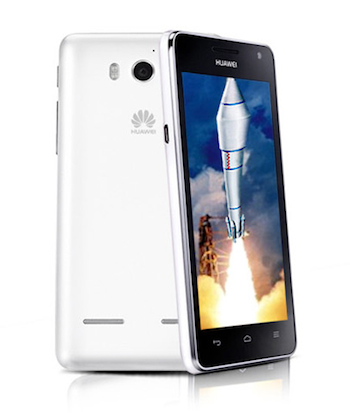
Huawei teases cheap quad-core Android thrills with the Honor 2

Huawei Honor 2

Huawei has announced the Honor 2 Android smartphone, a quad-core device that could cost between $300 and $370 if it makes it to US shores. Its predecessor did, so there's a good chance it will do too.

Huawei has recently had more headlines dedicated to it allegedly posing a threat to US national security than its cut price, great spec Android smartphones for which it was once best known. With the announcement of the Honor 2, it could turn this around, provided it sees an international release sometime soon.

News of the Honor 2 seems to have originated from Huawei’s Weibo account, where the phone is named the Glory, a name repeated on the Chinese version of the manufacturers own website, where just to confuse matters it also listed as the “Glory Quad-core Love Shared Exclusive Edition.” Now that’s a memorable name for a smartphone.

So why are we calling it the Honor 2? Well, the original Huawei Glory U8860 was renamed the Honor in the USA and other regions (as well as the Mercury if you grabbed it from Cricket, or the Honour if you live in the UK), and Huawei’s CEO has also referred to the phone under this name, when he hinted at its impending release late last week.

Hopefully that’s cleared up any confusion over the name, so on to the most interesting part — the specification. Inside the Honor 2 is a 1.4GHz, quad-core Hass K3V2 processor of Huawei’s own design, plus 2GB of RAM. The screen measures 4.5-inches and has a 1280 x 720 pixel resolution, providing an excellent 326ppi pixel density.

Android 4.0 is its operating system, and there is also an 8-megapixel camera with 1080p video, 8GB of internal memory and a 2230mAh battery that could offer 72 hours of standby. This does make it a little larger than its competitors, as it measures 10.5mm thick and weighs 145 grams. Some may consider this to be a small price to pay for the bigger battery though.

Talking of small prices, there’s confusion over the Honor 2′s possible cost, with Engadget.com saying it will come in at a little over $300 — a bargain if so — while pocketdroid.net says it will be around $370. Whichever turns out to be correct, the Honor 2 will go on sale early next month, and given that the original Glory/Honor made it out of China, there’s a good chance its sequel will do as well.


Source : digitaltrends[dot]com

Oct 26, 2012

Panasonic planning European smartphone market exit, less than a year after its return

Panasonic Eluga

Panasonic could be planning to withdraw from the European smartphone market, despite only having rejoined at the beginning of the year. Poor sales are cited as the reason, but a lack of effort and financial problems could be closer to the mark.

A new report indicates Panasonic is considering withdrawing its range of phones from Europe, despite only having re-entered the market at the beginning of the year.

Having previously left Europe in 2005, so it could concentrate on sales at home, Panasonic announced its return in February, and showed off its new handsets during Mobile World Congress. A Reuters report says it wanted to sell 1.5 million phones this year, but it’s unlikely to reach this figure, prompting talk of a withdrawal.

It placed its hopes on two phones, the Eluga and the Eluga Power. The former is an Android 2.3 Gingerbread phone with a 4.3-inch touchscreen, and a 1.2GHz, dual-core Texas Instruments processor. Despite boasting a slim, 7.8mm chassis and an attractive, waterproof body, this specification barely provided the phone with the power to compete with devices from Samsung, Apple and HTC.

The Eluga Power could have been a bigger success, as it has a 5-inch, high definition touchscreen, a dual-core Snapdragon S4 chip, Android 4.0 and IP57 water and dust proofing. A true competitor to the Galaxy Note, then.

Both phones could be purchased through online retailers, but Panasonic never appeared to sign any deals with UK networks. While this isn’t quite as important as it is in the US, it would have been essential for Panasonic to re-connect with buyers and promote its new phones.

Evidence of trouble brewing came when the firm told TechRadar.com in August that it was selling its two phones “to consumers in Germany and Italy and currently does not have any plans to change this.” A report in The Times around the same time said Panasonic had put its European smartphone plans on hold, and “looked likely to abandon its mass market ambitions.”

The smartphone market is tough, but Panasonic’s potential exit could be directly related to the $7.6 billion bailout given to it by Japanese banks this month after record losses, rather than any failure to perform following its half-hearted attempt to break back into Europe.


Source : digitaltrends[dot]com

Samsung tops the global smartphone market, as HTC, Nokia and RIM fall further behind

Samsung Logo Door Offices

Research published by market analysts IDC has put Samsung way out in front of its rivals in the global smartphone market share charts, where Nokia has disappeared from the top five for the first time, and HTC has dropped several spots too.

Market analyst company IDC has released the latest version of its Mobile Phone Tracker information chart, showing where it places the world’s major phone manufacturers regarding smartphone market share and sales. Samsung is the star of the show, a fact reflected in its own quarterly results, while Nokia, HTC and Research in Motion all show signs of suffering at both its, and Apple’s hands.

Samsung has retained its position at the top of the charts, with a 31.3-percent market share, up from 22.7-percent last year. It’s estimated to have shipped 56 million smartphones between July and September, a huge improvement over the already impressive 28 million from the same period last year.

The Korean company has also announced its financial report for the same period, posting $7.4 billion in profits, beating its previous record for the fourth consecutive time. A Reuters piece on the subject puts its smartphone shipments at 58 million, slightly higher than IDC’s figure, and says that between 18 and 20 million of that amount were Galaxy S3 handsets.

HTC drops behind RIM and ZTE

Apple comes second in IDC’s ranking, with 15-percent of the smartphone market, up from 13.8-percent this time last year, and we all know how it has been performing recently. Research in Motion is gamely holding on to third position with a market share of 4.3-percent, down from 9.6-percent last year, but ZTE is a mere 0.1-percent behind — making a position change likely in IDC’s next report.

Finally, the top five is rounded out by HTC. This time last year, it had a 10.3-percent market share, and was ahead of both RIM and ZTE, but now, with a dismal 4-percent, it trails both of them. It’s shown to have sold 7.3 million smartphones this quarter, highlighting the gulf that has opened up between it, Apple and particularly Samsung.

To try to drum up some business in Europe, HTC has today launched Best Deals, a variation on the popular daily deal system, where HTC owners can enter their own deal preferences and, based on location, the app will return relevant offers. There are 12 providers signed up to Best Deals, including iVoucher, Daily Deal, Qype and LivingSocial, but perhaps crucially, not Groupon. The Best Deals app looks to be part of HTC Sense, is compatible with the One X, One S, One X+, the 8X and 8S, and will be available in the UK, Italy, Germany, France and Spain in November.

Nokia leaves the top five for the first time

Finally, we come to Nokia, a company absent from IDC’s top five smartphone companies for the first time since it first began keeping records in 2004. It does still appear in the overall list of general phone manufacturers though, and in second position. It has shipped a massive 82 million phones during the third quarter, down from the 106 million it shipped during the same period last year, and it retains an 18.7-percent market share.

Samsung again tops this list, with a 23-percent market share and a grand total of 105.4 million phones leaving its warehouse.

There’s no sign of the global smartphone market slowing down either, as the 179 million smartphones sold this summer is 45.3-percent more than this time last year.


Source : digitaltrends[dot]com

‘Don’t underestimate BB10,’ RIM boss says during demo of upcoming BlackBerry OS [video]

As the iPhone 5 flies off the shelves and Samsung reports record profits, the boss of the firm that once ruled the smartphone roost has said in an interview that BlackBerry 10 – set for launch early next year – should not be underestimated.

With so many product launches taking place in the tech world this month, it’s not hard to think Research In Motion should be in the mix too, rolling out its new BB10 phones and next-generation mobile operating system. But, of course, it’s not. For RIM’s new offerings, we still have to wait at least several more months.

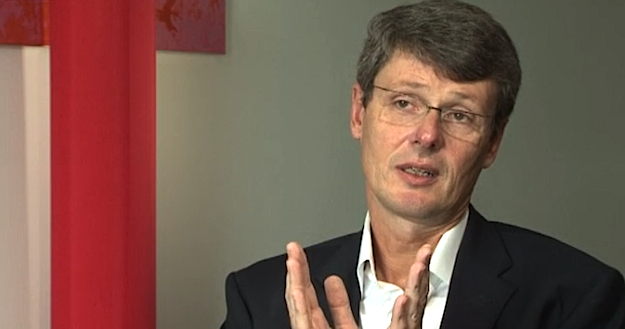
The company is trying to keep itself in the picture though – lest it be completely forgotten by consumers playing with their newly acquired iPhone or Samsung device – with RIM boss Thorsten Heins giving an interview to the BBC this week, offering a glimpse of the new OS while answering a few questions about the company’s current state of affairs.

The demo – given on a Dev Alpha B device similar to the one handed out to developers earlier this year – involves a good deal of touching and swiping, as well as a little bit of ‘blending’ (check out the demo below to learn more), with Heins describing the theme of BB10 as “the integration of various applications into what we in BB10 call the BlackBerry flow…..[so there’ll be no] application grid.”

BB10 is about real-time multi-tasking, Heins said, enabling the user “to live in the multi-taking space,” making it simple to jump between running applications. He also mentioned the BlackBerry Hub, which acts as a kind of notification system that pulls in information from various apps and programs.

Too late?

Heins, it has to be said, didn’t look particularly pleased when Cellan-Jones suggested it was all coming too late, staring straight back at the BBC man with an expression that suggested he was momentarily imagining a scenario involving the interviewer, the Dev Alpha B device and a painful surgical procedure, but overall Heins was cheerful and enthusiastic throughout. And by the way, in response to the accusation that RIM has missed the boat, Heins said, “Don’t underestimate the dynamic this platform is going to create in the market.”

Interestingly, when asked about the recent NY Times article which featured people claiming to be embarrassed about getting their BlackBerry phone out in public, Heins said, “Without going into detail, I would kind of question the sources that were used for that article,” adding that, according to what he sees in markets outside the US, there’s “huge growth and huge commitment to BlackBerry.”

You can check out the interview below.


Source : digitaltrends[dot]com

Oct 19, 2012

Prototype E Ink Android phone puts your AMOLED screen to shame (but only in direct sunlight)

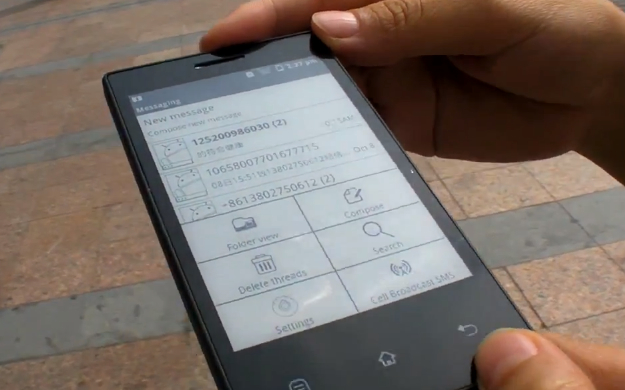
Onyx E Ink Smartphone

Onyx International, a company known for its range of e-readers, has shown off a prototype Android smartphone with an E Ink display. While the outdoor legibility and battery life are both excellent, the screen does let it down in other areas.

As every owner knows only too well, smartphone screens are difficult to view in direct sunlight, and while pushing the brightness up to maximum can help, it doesn’t do wonders for the battery life.

Here’s an interesting solution to the problem from a company named Onyx International, a smartphone with an E Ink screen. Onyx has plenty of experience in the world of E Ink screens, as it produces the Boox series of e-readers. The handset is only a prototype at the moment, but you can see a working version in the video below, where its screen is compared to a Galaxy Nexus.

The result is spectacular, as the Nexus device just looks like it’s turned off the entire time, while the Onyx phone’s display is crisp and sharp, despite being viewed outdoors. This probably won’t come as a surprise to anyone who has used an e-reader over the past few years, and the superior performance of an E Ink screen in sunlight formed the basis of a recent Amazon Kindle ad campaign.

Surprisingly, the Onyx phone runs Google Android, which has been extensively modified to run on a monochrome screen, but as you can see, the core functionality is still there. Because E Ink screens only take little sips of battery power, the standby time on the prototype is a week. Try that on any other smartphone.

There are, however, one or two little drawbacks. E Ink displays aren’t known for their speed, and sure enough the refresh rate is terribly slow, meaning any multimedia or gaming would be impossible. Viewing text webpages is good though.

While it’s an impressive technical feat and the use of an E Ink screen on a phone certainly has its benefits, the thought of enduring those long refresh times and not being able to do the things that almost all other smartphones can do, would probably make ownership too frustrating. After all, If I wanted a long standby time, a monochrome screen and little else, I’d buy a basic feature phone.

Take a look at the video showing the phone in action and see what you think.


Source : digitaltrends[dot]com

Oct 17, 2012

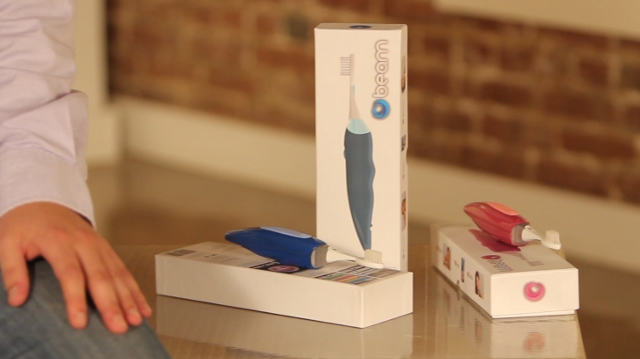
App-enabled Beam Brush tracks habits, gamifies brushing your teeth

Beam Brush

Possibly a fun way to get kids to brush their teeth more often, the Beam Brush utilizes your smartphone to encourage better oral hygiene.

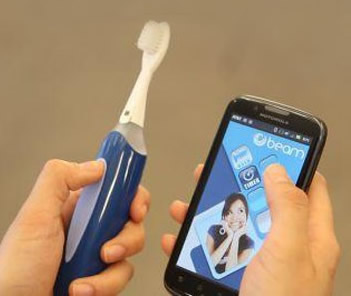
Similar to health-related tracking devices like the Fitbit, a company called Beam Technologies has developed a toothbrush that syncs with your smartphone to track your oral health. Called the Beam Brush, the Bluetooth-enabled toothbrush is designed to increase the amount of time you spend brushing your teeth in addition to tracking overall consistency. Syncing to either an iPhone or Android phone, the Beam Brush includes a two minute timer and a quadrant indicator to help the user target specific sections of their mouth. In addition, the user can setup the application to play their favorite song in order to listen to something entertaining while brushing. 

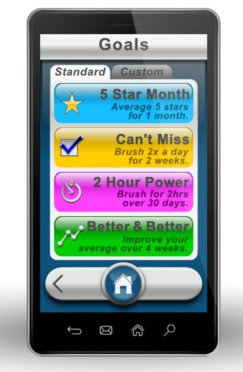
Beam Brush SyncThis product may be particularly helpful for parents trying to encourage their children to brush their teeth on a consistent basis. The app allows parents to sync multiple Beam Brushes to a single smartphone, so an entire family could track their progress. In addition to a set of standard goals within the app, parents could also setup custom goals that could lead to incentives for a child.

The application also outputs reports detailing each time a person brushes their teeth in addition to the length of time for each instance. Reports can be formatted for a single day, a full week or an entire month. These reports can be supplied to your dentist through email, thus helping the dentist evaluate a patient’s oral care more accurately. Rather than telling a patient to simply increase the amount of times they brush and floss their teeth each day, dentists will be able to offer more specific advice regarding future oral hygiene. 

According to data provided by Beam Technologies, the average person brushes their teeth for 46 seconds. By increasing the figure to 120 seconds, users will be able to reduce the potential for cavities or other problems that would require a trip to the dentist. People are also 50 percent more likely to brush for a full two minutes if using a timer. 

beam brush goalsAccording to Mashable, the company plans to monetize brushing goals for all Beam Brush users. This would include prizes such as discounts on specific merchandise or entertainment options like tickets to a local theater as well as video games for kids.

Hypothetically, the company could also work with dentists to provide incentives to patients that supply the Beam Brush tracking data prior to a checkup.

Beam Technologies plans to launch the Beam Brush during November 2012 for a price of $49.99, but is currently offering a preorder price of $34.99 on the company’s site. Available in blue and pink colors, the Beam Brush uses AA batteries that last approximately 90 days per charge. It also requires Android version 2.2+ or iOS 3.2+ on your Android phone or iPhone.

Replacement brush heads will be sold through the site for a price of $3.99. Beam Technologies recommends that the brush head be swapped out every three months and includes a feature within the app to track the last time the brush head was replaced. In order to raise consumer awareness about the Beam Brush, the company is also working with dentists on a resale program. If a dentist likes having access to the Beam Brush data, they could offer the brush to patients during a checkup.


Source : digitaltrends[dot]com

Oct 16, 2012

Asus launches the quirky but powerful PadFone 2

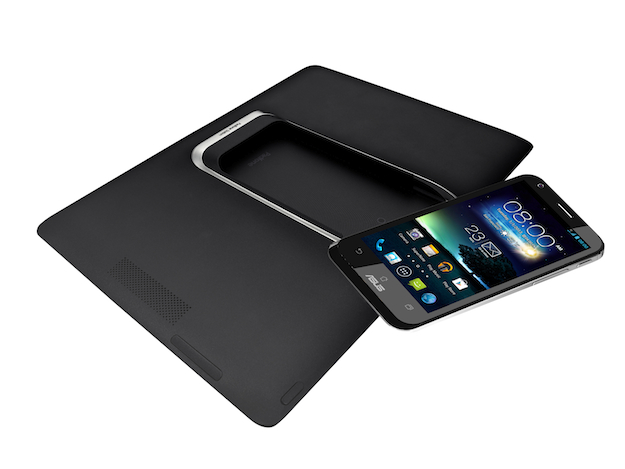
Asus Padfone 2

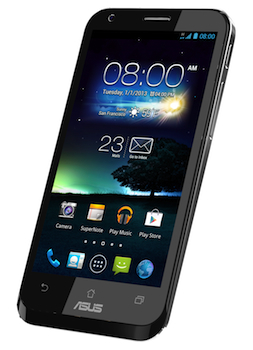
Asus has launched the PadFone 2, a revised version of its quirky original, but still featuring a smartphone that docks with a tablet screen.

Asus has announced the PadFone 2, the follow-up device to its quirky PadFone, which first appeared in 2011. The launch event was an international affair, with two almost simultaneous conferences taking place in Milan and Taipei, which were also streamed to audiences online. It’s fair to say that Asus really wants you to know there’s a new PadFone in town.

Asus is focusing on the PadFone’s intuitive design to sell it this time around, and promoting it to people who may not want the bother of purchasing two separate devices, with two network agreements, but still want the convenience of a smartphone and a tablet at all times.

While the original PadFone had a door on the rear of its tablet dock, in which to hold the smartphone, Asus has replaced this with a slot for the PadFone 2. It’s not only more attractive, but far simpler to quickly connect and disconnect the phone. This is important, as the sharing of content from phone to pad is a big thing on the PadFone 2.

We’re getting ahead of ourselves though, so let’s talk about the hardware. The smartphone has a 4.7-inch Super IPS+ touchscreen, covered with scratch-resistant Gorilla Glass, with a 1280 x 720 pixel resolution and a pixel density of 312ppi. The tablet’s 10.1-inch screen is almost identical, with a 1280 x 800 pixel resolution, but the pixel density is considerably less at 149ppi.

As the tablet is a brainless dock — or Station as Asus calls it — it relies on the smartphone’s processor and power to make it work, so it’s a good thing Asus decided to use Qualcomm’s 1.5GHz, quad-core APQ8064 Snapdragon S4 Pro chip. The phone comes with either 16GB, 32GB or 64GB of internal memory, plus a hefty 2GB of RAM, and a black or white finish.

The PadFone 2 has a 13-megapixel camera with 1080p video recording, a 100-shot burst mode that takes six shots per second and an f2.4 aperture. Because the PadFone 2 sits screen-forward in the back of the tablet, the camera can be used when it’s docked. There’s a separate video call lens above each screen too.

Padfone 2 PhoneStrong battery, high price

Keeping the PadFone 2 up and running is a 2140mAh battery inside the phone, plus a 5000mAh battery inside the tablet. When docked, the tablet recharges the phone, and can do so three times before the battery expires. Asus quoted the phone as providing 16 hours of 3G talktime, but 48 hours when docked along with 27 hours of video playback.

Despite all this technology, Asus has made sure the overall weight hasn’t spiraled out of control, as the phone weighs 135 grams on its own, or 649 grams when mated with the tablet dock. As a comparison, the new iPad weighs 652 grams and the Galaxy Note 10.1 600 grams.

Back to the sharing for a moment. Slotting the phone into the tablet will see certain tasks and apps instantly transfer over to the big screen, with no input needed from the user. This was demonstrated with the gallery, browser and streaming video.

Other features include NFC, LTE connectivity, Wi-Fi Direct, Bluetooth 4.0, plus a speaker system with Asus’ own SonicMaster enhancements, handwriting recognition, dual-language support and an instant translator too.

Asus says the PadFone 2 perfectly embodies what it calls Customer Experience 2.0, as it combines beauty inside and out, plus a great display, audio and performance.

So, you probably want to know how much and when you can get one? If you’re in the USA, it’s almost certainly not going to be this year, as according to Asus, it’s still in discussions with networks. In Europe, release is likely to come between January and March 2013, but there’s hope for a last-minute launch before Christmas too. Asus will release the PadFone 2 in Taiwan at the end of October.

The price? It’s 799 euros for the 32GB model and 899 euros for the 64GB PadFone 2. That’s $1040 and $1175. Those are very big numbers, but take a moment to consider how much a Galaxy S3 and a Galaxy Note 10.1, or an iPhone 5 and new iPad cost together. Do this, and it doesn’t sound so bad.


Source : digitaltrends[dot]com

Watch three ASUS Padfone 2 video ads right here

Asus just completed presenting their latest smartphone – the Padfone 2. We already gave you a really good idea of how it looks like and we even have a hands-on article straight from the announcement event. But if you didn’t have the time to watch the event itself, you might have missed these Padfone 2 video ads.

The clips were first shown during the unveiling event in Milan, but there are finally available online separately. And these are actually pretty nice. Enjoy!

First, here’s a behind the scenes flick that shows how the Padfone 2 came to be.

Next up is a more technical video that presents the specs of the Padfone 2.

And finally, here’s an easy going Padfone 2 video ad.


Source : blog[dot]gsmarena[dot]com

Oct 11, 2012

Samsung’s Galaxy S3 Mini is official, but is it worthy of the name?

Samsung Galaxy S3 Mini

As expected, Samsung has announced the Galaxy S3 Mini, a mid-range Android 4.1 smartphone that has a similar design to its big brother.

Samsung has announced the Galaxy S3 Mini, just as promised by the company’s mobile communications boss yesterday, but can it live up to our expectations, especially as it shares the same name as one of the very best Android smartphones on the market?

The answer to that question very much depends on your expectations, and if they’ve been kept in check. Let’s put it this way, it’s not a Galaxy S3 in a slightly smaller body, but a small phone aimed at a different buyer. Here’s what it’s all about.

Design-wise, it’s very close to its big brother, with the same “natural” flowing edges, rounded corners and smooth rear panel. No lawsuit over the design of this one, then. So how mini is the Mini? It measures 121 x 63 x 9.8mm and weighs 111 grams, so it’s a touch larger than an iPhone 4S, but noticeably smaller than the full-size S3’s 136 x 70 x 8.6mm dimensions and 133 gram weight.

Inside is a dual-core, 1Ghz ST-Ericsson NovaThor processor, with 1GB of RAM and either 8GB or 16GB of internal storage memory. As expected, the Super AMOLED screen measures 4-inches and has a 480 x 800 pixel resolution, while the camera has 5-megapixels, 720p video recording and an LED flash. There’s also a VGA video call camera above the screen.

Samsung Galaxy S3 Mini RearAndroid 4.1 onboard

The good news is the phone will come with Android 4.1 Jelly Bean, so there won’t be any waiting around for Samsung to issue an update, plus there’s the TouchWiz user interface and some of the cool software features from more expensive Galaxy hardware, such as S Voice, Direct Call and Smart Stay. Other features include NFC, DLNA, GPS, a microSD card slot and a 1500mAh battery.

So, the Galaxy S3 Mini is a concoction of the Galaxy S3 and the Galaxy S Advance. Many will bemoan the lack of 4G — although it does support HSDPA and HSUPA — and the processor missing two more cores, but those are features for upper range phones, not a solid mid-ranger like the S3 Mini.

Using the S3 title is certainly a win for the marketing team, but the S3 Mini is far from being an embarrassment to its good name; after all, the design was, and still is, a winner. Plus, Samsung isn’t wrong, in stature it is a miniature S3.

The more sensible spec also means a more sensible price tag. While Samsung hasn’t talked about the cost just yet, Clove Technology has put a SIM-free S3 Mini up for pre-order in the UK for £298, or $477, which is about £120/$192 less than the full-size S3.

Samsung has remained quiet on availability too, but Vodafone UK has tweeted that the device is coming soon to its network. There’s no word on a US release at this time.


Source : digitaltrends[dot]com

Lenovo to build on PC success with international smartphone release, leaves HP in its dust

Lenovo K890

Research indicates Lenovo has become the world's number one PC manufacturer, as the company announces plans to expand its smartphone range.

Lenovo is riding a wave of success at the moment, after announcing some exciting Windows 8 tablets, and now it appears the company has become the world’s number one PC manufacturer, and is preparing to release its smartphone range internationally too.

Research firm Gartner has released data that shows Lenovo has pushed past Hewlett-Packard to take the number one spot, and the figures read like this: HP can claim a 15.5-percent global market share, with 13.55 million units shipped, while Lenovo has a 15.7-percent market share with 13.77 million units heading out the door this quarter.

Perhaps more importantly, Gartner shows HP’s sales as down 16.4-percent on last year, while Lenovo is up by just under 10-percent. If you had to choose a direction as a company, you’d want to be the one going up.

According to Reuters, researchers from IDC still put Lenovo ahead of HP, with market shares of 15.7 and 15.9-percent respectively. HP told them that IDC’s report was “more expansive,” but then, they would say that. Almost regardless of who’s right today, the trend certainly indicates the position swap will happen soon.

HP’s CEO Meg Whitman has been quoted as saying the company is in the first year of a five-year restructuring plan, but despite the much-publicized downturn in PC sales — IDC says global sales have dropped by 8.6-percent since July — it still hasn’t made up its mind about re-entering the smartphone and tablet market. Recent reports seem to indicate confusion regarding this market segment within HP.

Lenovo to enter international smartphone market

Lenovo feels rather differently. It already produces smartphones for a variety of Eastern markets and in June this year, overtook both Nokia and Huawei to take second place in the Chinese market. Perhaps most tellingly — and a point HP needs to hear — is that its phone sales surpassed that of its PC sales for the first time there too.

It’s not just low-end hardware the company produces either, as it introduced the LePhone K860 in August, which has a 5-inch display with a 720p resolution, a quad-core processor (actually Samsung’s Exynos 4 Quad, also seen in the Galaxy S3), Android 4.0 and an 8-megapixel camera. It’s destined for Japan sometime later this year.

The momentum is there for Lenovo, and it’s already producing some interesting hardware, so it’s no surprise to see the following message posted on its Facebook page: “We won’t stop at laptops and tablets. For the first time, Lenovo is making plans to sell smartphones outside China.”

Introducing new hardware into the already massively competitive US and European markets isn’t going to be easy, but Lenovo knows it has little choice. Besides, it can always look at the lucrative African, Russian and South American markets initially, before hitting the rest of Europe and the US with devices such as the K860.

Lenovo hasn’t provided any further details, and we’d be surprised to see any releases this year, but it’s still a very positive step from a highly motivated company. Whether HP will respond remains to be seen.


Source : digitaltrends[dot]com

LG’s Nexus 4 smartphone rumored for release on October 29

LG Nexus 4 Leak

LG is rumored to be preparing a Google Nexus smartphone, and it could be released as soon as October 29.

LG is one of the manufacturers believed to be producing a Nexus phone for Google, potentially under the name of the Nexus 4, Nexus G or Nexus X. Now, French newspaper Le Figaro has published a report saying the device will be released on October 29.

The article doesn’t provide the source of this information, but claims this will be the worldwide release, while France will be introduced to the phone in December. It’s referred to as the Nexus 4 throughout, a name which has been circulating since it was discovered in UK retailer Carphone Warehouse’s computer system.

Leaks of the LG Nexus phone have shown it to be similar in specification to the Optimus G, meaning it will have that monster quad-core Snapdragon S4 Pro processor, a 4.7-inch, 1280 x 768 pixel resolution display and an 8-megapixel camera. This would represent a major alteration over the Optimus G, which has a 13-megapixel camera.

A supposed prototype of the Nexus 4 showed up in a series of pictures on the XDA-developers.com forums earlier this week, when it was shown to run Android Jelly Bean, but the version number wasn’t stated. Today, the device has appeared on a Russian website, which confirms all the above specifications, and publishes some new images.

October 29?

Leaving the feature list aside, let’s take a moment to consider that release date. October 29 is also the day that Microsoft will formally announce Windows Phone 8, so would Google really want to take on Microsoft in a battle for headlines on the same day? It’s not about who gets the most, remember, it’s about gaining the best coverage, and competing that way would be strange considering it has 364 other days from which to choose.

That said, if Google is gearing up to launch a host of new Nexus devices — from LG, Samsung, HTC and Motorola — then perhaps it will decide to go head-to-head with Microsoft, as all its hardware has already been revealed. It’s also not all that clear whether the article claims October 29 will be the release date or the date of the announcement. Either way, it’s still going to have to deal with Microsoft.

Then there is the question of the Optimus G, as if LG’s Nexus phone is based on the company’s new flagship — which comes with Android 4.0 Ice Cream Sandwich — then it may not want it on the streets beforehand either. The Optimus G is still waiting for its final release date, and rumors include a November date for the US and a December or early 2013 date for Europe and the UK. Any Optimus G-based LG Nexus phone may have to patiently wait its turn.


Source : digitaltrends[dot]com

Oct 10, 2012

How iOS 6 is elbowing in Google and Facebook’s turf

ios 6 competes with fb and google

While iOS 6 has inspired plenty of user backlash, Apple's ability to undermine and intrude on the smartphone industry should look like a threat to Google and Facebook, both of which need to make their stamp on the mobile market.

In case you were hiding under a rock, Apple recently came under some heavy criticism for replacing Google’s Map app with its own competing client, effectively wiping all things native and Google away with the iOS 6 upgrade. While Apple removed native Google products, it did just the opposite for Facebook and also integrated the social media behemoth into iTunes as well as natively into iOS 6. But despite the seemingly different approaches Apple is taking in regards these two platforms, the iOS 6 upgrade could actually pose a threat to both.

Apple’s brand remains strong

The backlash from the Maps fiasco has been palpable—users have been complaining about inaccurate addresses, missing landmarks, and a lack of public transportation information on Apple’s version of Maps. But while the premature release of Maps likely tarnished a brand synonymous with perfection, it’s also showed us how badly Apple can mess up and still see high adoption rates. It’s those numbers that, despite any user outrage, should make Google Maps — and for that matter, Facebook and its photos application (we’ll get to that shortly) — a little nervous. Apple has released so-so competitor products, and even though they might not be better and they might not be gaining a lot of early love, the iOS reputation might be enough for the brand to coast on.

Google Maps has more ground to lose

apple mapsFor all the flak Apple is (deservedly) getting for replacing Google Maps before it could perfect its own application, Google will likely be hit harder than Apple. Ever hear about losing the battle but winning the war? iPhone users are unlikely to give up their Apple devices and switch to an Android device simply because of an inferior map application. Instead, they will turn to other increasingly popular apps like Waze or MapQuest, and the longer it takes for Google to come out with its updated iOS app, the more comfortable users will get with the alternatives. Clearly, Google has more to lose here.

Google is reportedly planning on releasing its new iOS Maps app—despite Executive Chairman Eric Schmidt’s earlier announcement that the company hadn’t made any moves to do so. When asked about whether or not Google had immediate plans for an updated iOS 6 version, Nate Tyler, a representative at Google, says, “We believe Google Maps are the most comprehensive, accurate and easy-to-use maps in the world. Our goal is to make Google Maps available to everyone who wants to use it, regardless of device, browser, or operating system.” Tyler didn’t expand on a timeline for the new App, but a recent article in The New York Times reported that Google has plans to have its iOS 6 Maps app finished by the end of the year — and it would be wise to do so, as quickly as possible, before consumers either become comfortable with a third-party alternative or succumb to the Apple replacement. 

A Facebook photo challenger?

Much attention has been given to the iTunes integration with Facebook — which lets users see if any of their friends Like apps, music, or books they’re considering buying — as well as iOS 6’s native integration with Facebook. But the social media site is also seeing some quiet competition from Apple’s new photo-sharing and commenting feature, Photo Stream.

It hasn’t received much attention yet, but this new mechanism allows users to easily create and share multiple albums through the cloud so that photos instantly appear in a user’s photo stream without having to manually send them. Users can share photos and simultaneously add and edit albums with select individuals or groups without having to deal with privacy issues that worry many Facebook users.

photostream devicesLike Facebook, iOS 6 allows users to comment on and Like photos within shared albums—making engagement with this content, overall, far quicker and more seamless. Users can even create simple slideshows out of shared photos and set background music from their iTunes accounts, a touch Facebook obviously doesn’t provide.

At this stage, and with Photo Stream still somewhat under the radar, it doesn’t yet pose a real threat to the photo-sharing tools Facebook offers. Commenting on whether or not Apple’s Photo Stream could be a competitor to Facebook, Ian Broyles, developer of Versagram, says, “[It’s] not a threat to Facebook in its current form. People know how to share a photo on Facebook easily but I would guess most iOS 6 users don’t know iOS 6 even has shared Photo Stream. Also, the requirement to have an iCloud account is a big barrier to sharing photos that ‘Grandma’ can easily view.”

But it often takes time for new native apps to capture mass attention—and with 100 million iOS 6 users already, and more than 150 million iCloud users—Photo Stream has a pretty solid number of potential consumers. For now at least, Apple users have an interesting—and more personal—alternative to group photo-sharing and commenting.

Slow and steady might just win the race… again

Half-finished and unpromoted products are anything but synonymous with Apple’s brand — many even questioned whether Apple would have prematurely put out its own mapping app if Steve Jobs had still been CEO. It’s clear from Apple CEO Tim Cook’s public apology regarding the Maps fiasco and its hush-hush treatment with iCloud and Photo Streams that iOS 6 may not have been totally ready for its users.

Regardless, it’s here — and also regardless, we’re using it: 60 percent of iPhones are running iOS 6 now. With all the new iPhone 5s consumers are pocketing — five million iPhone 5s were sold within the first three days of its release — that number is only going to go up. Like always, Apple can do no wrong; or rather, it can do a lot of wrong, and we’re going to put up with it and adopt what it throws our way, and that’s something that should serve as a bit of a warning for Google Maps and Facebook Photos. Apple’s new products might not be shining now and they certainly aren’t beloved, but they will undoubtedly get used — and those are that numbers that matter in the end.


Source : digitaltrends[dot]com