Pages

Showing posts with label marketing. Show all posts

Nov 14, 2012

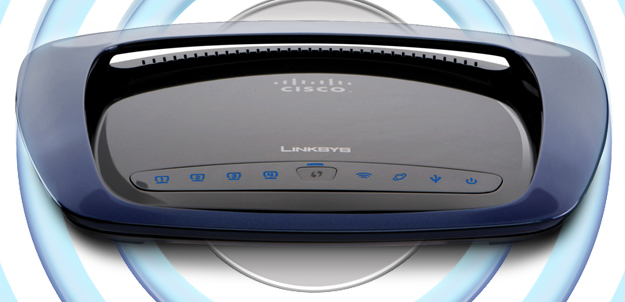
Wireless Router Buying Guide

Wireless router buying guide

We separate marketing from reality to outline the specs and features you need in a wireless router.

Wireless Router Buying Guide

Looking to set up a network in your home so you can connect all your PCs to your broadband Internet service, share data files, and stream audio and video between rooms? Don’t know what equipment you need? Confused by the spec charts for the gear you know you need? Skeptical of the pie-in-the-sky performance claims? We can help.

We’ll assume you already have broadband Internet access (via DSL, cable TV, or whatever solution you might have). The next thing you need is a wireless router that will go between your broadband Internet device (i.e. your DSL or cable modem) and one of your PCs. (Or between your modem and data switch if you already have a more elaborate network). We’re suggesting a wireless model because you don’t want to string Ethernet cable around your home unless you absolutely have to; besides, a wireless router is the best way to access the Internet using your smartphone. And if you ever discover you absolutely must have a wired connection, the router will have a built-in switch to handle it.

Features and wireless networking standards

Now let’s talk about the features you should look for in a wireless router. Just like smartphones, new wireless networking standards are coming out more often than ever. The current standard is 802.11n. Just about every router you can find on store shelves these days should comply with this standard, and this spec typically appears at the top of the list of features printed on the box, so it shouldn’t be hard to find when you go shopping.

There are, however, two new standards now in development that will soon make 802.11n old news: 802.11ac, and 802.11ad. The latter is still a few months off, but 802.11ac routers are already available, such as Buffalo’s AC1300, or D-Link’s DIR 865L. This new standard supplements 802.11n and offers considerably faster speeds, but the problem is that this standard isn’t supported by any of the devices most people currently own. So basically, if you get an 802.11ac router, it’ll probably still be backward compatible with all your 802.11n hardware, but you’ll have to wait for a while before you can get your hands on a device that can actually utilize your router’s 802.11ac capabilities.

Because of this rapid progress in wireless networking standards, if you have older wireless gear, you’ll want to make sure that any new router you buy will remain compatible with whatever previous IEEE standard your other hardware is based on (examples include 802.11a, 802.11b, and 802.11g). And if you want further assurance that your wireless router will work with other wireless devices you already own (wireless network adapters, media-streaming boxes and so on), look for the Wi-Fi Alliance’s Wi-Fi Certified logo. The alliance’s 300 member companies conduct extensive interoperability testing to ensure that products claiming to adhere to 802.11 specifications are in fact compatible.

Wi-Fi network speeds

You should take manufacturers’ speed declarations with a colossal grain of salt. For example, you’ll encounter many claims of “theoretical” maximum bandwidth of 300 or 450Mb/sec (megabits per second), but you’ll never see throughput that high in realistic environments in which walls, doors, appliances, and other barriers separate your router from its client devices. When transferring files using TCP/IP (the most common file-transfer protocol that Windows computers use), you’ll more likely achieve speeds of 100Mb/sec at close range – much less than that at longer distance.

The 300Mb/sec claims aren’t fabrications; they’re just not based on real-world conditions. Fortunately, most wireless routers manufactured in compliance with the 802.11n standard should be capable of streaming high-definition video over a reasonable distance, provided there aren’t too many obstacles in the path between the router and its client.

All wireless routers have built-in switches for making hard-wired network connections, but cheaper routers will have switches rated at only 100Mb/sec. You won’t regret spending a few extra dollars to buy a model with a gigabit switch (that’s 1,000Mb/sec). A gigabit switch won’t make downloading files from the Internet any faster (the fastest cable modems currently deliver only 50MB/sec to 60Mb/sec), but it will make a significant difference in the speed at which you can move files across hard-wired network connections inside your home.

Wireless data security

Wireless networks are as insecure as they are convenient – if you don’t take steps to secure your network, just about any troublemaker within range can eavesdrop on your online activities, leech off your Internet connection, access any of the files stored on your computers, infect your systems with viruses, and cause all sorts of other problems.

If you’re operating an older router that’s limited to WEP (Wired Equivalent Privacy) security, however, you might as well not have any security at all. Cracking WEP security is literally child’s play. The router you buy should support at least WPA2 (the second implementation of the Wi-Fi Protected Access protocol), but every device you add to your network must also support WPA2 for this to work. Your network is only as secure as the least-secure device that’s connected to it.

Linksys WRT610NDual-band and tri-band routers

Manufacturers have sold dual-band routers for years, but now many are starting to roll out tri-band routers as well. What does all this ‘dual’ and ‘tri’ business mean? Dual-band typically means that the router is equipped with two radios: one that operates on the 2.4GHz frequency band, and one that runs on the 5.0GHz frequency band. This enables you to set up two separate wireless networks, which is nice to have if you want to use one network exclusively for transferring data files and the other for streaming media, for example. Make sure you read the fine print though – some dual-band routers only have one radio that can operate on either the 2.4GHz or 5.0GHz bands, but not both at the same time. Netgear’s WNDR4500 or Linksys EA4500 are both capable of running on the 2.4GHz and 5.0GHz bands simultaneously.

Tri-band routers are a bit of a new thing, and chances are you’ll have some trouble finding one to purchase. If you’re reading this in 2014 or later however, tri-band routers will likely be ubiquitous by now. Essentially, these routers have a third radio that operates on the currently unlicensed 60GHz frequency band. Using a new technique to beam the radio signal directly to the antennas of connected devices (a process called beamforming) allows some of these routers to achieve data throughput rates of 7Gbps – considerably faster than the measly 300Mbps that 802.11n routers are capable of. 

If you’re only looking to get basic internet access and don’t need all these bells and whistles, you can save a bit of money by going with a single-band N router like the Securifi Almond, or a D-Link DIR-636. 

Quality of Service

Despite the label, Quality of Service (QoS) is not related to the quality of your Internet connection; rather, it’s a set of mechanisms within the router’s firmware that reserves certain resources for different applications. If you rely on a VoIP (Voice over Internet Protocol) service, such as Vonage, for telephone service, QoS allows you to configure the router to assign that data flow higher priority. So if someone in your home is downloading a large file while you’re talking on the phone, the quality of your call won’t degrade.

QoS can also be used to optimize your network’s performance with online games, video streaming, and similar applications. QoS can’t increase your network’s bandwidth or speed up your Internet access, but it can make the best use of the online resources you do have.

D-Link-DIR-855USB connections

The last router feature we’ll examine is USB support. You’ll find USB ports on many routers, but it’s important to find out what that port is used for. On some routers, it’s merely a means of transferring setup information (network ID and password, for example) from the router to a client via a USB memory key. Better routers will allow you to plug in a USB mass-storage device to add NAS (network-attached storage) functionality. Plug a large USB hard drive into your router and every device on your network will have access to that storage resource – it’s like having a cheap server. A good number of routers on the market have USB support, like Netgear’s WNDR4500 for example.

What to spend: price vs. performance

Let’s sum up with a discussion of prices. Depending on the type you get, you can spend anywhere from $35 to nearly $200 on a wireless router. 802.11ac routers will likely cost you a bit more, but the cheapest products will likely sacrifice advanced features such as Quality of Service, USB connectivity, and dual- or tri- radios. They might also be more difficult to set up and may not have strong tech support on tap. If you run into problems. If you don’t need those features and are confident in your own skills, those shortcomings won’t matter.

A cheap router that delivers subpar performance, however, is no bargain. Product reviews will give you a hint as to what you can expect, but setting one up in your own home is the only sure way of knowing how the router will perform in your unique environment. When you buy yours, make sure the retailer you do business with offers a liberal return policy if you’re not satisfied. 


Source : digitaltrends[dot]com

Nov 10, 2012

How Samsung, Microsoft and stupidity are staining Apple’s brand image

Microsoft apple logo samsung

Clever marketing from competitors and its own stumbles have left Apple’s effortlessly cool brand image looking more effortlessly clueless.

I’m at an IBM event this week, and at dinner I had what has been an increasingly frequent experience.

It used to be that attendees at these events gushed about the new Apple gadget they were carrying, and anyone who expressed reservations seemed out of touch with the group. Much like talking about religion or politics from the minority position at the dinner table, bashing Apple was one sure way to ensure everyone thought you were an idiot.

But last night, instead of showing off an Apple device, another guest showed off his new Samsung Galaxy S III phone, which led to more chatter about my new Microsoft Surface tablet. It spiraled into an “everyone dump on Apple” event, and by the end of the evening, Cupertino’s sole defender seemed to be considering other options.

This may be anecdotal, but I’ve seen the same event played out several times recently among analysts and other influencers in the tech space. It makes me think Apple’s image is changing, and the firm’s products are losing their magical edge.

Samsung’s anti-Apple marketing

The blemish on Apple’s spotless image didn’t just appear there; Samsung helped etch it into the glossy white plastic quite intentionally. Its excellent marketing campaign has attacked Apple’s image on three vectors.

The first is questioning Apple’s leadership. Samsung’s ads paint Apple’s “upgrades” as features the company accidentally or intentionally left out of prior products (larger screens, 4G radios), or obvious improvements (headphone jacks on the bottom). In some cases, they also point out where Apple still lags behind the curve after launching a new device, like the lack of NFC in the iPhone 5. Samsung wants to depict itself as the innovator Apple is struggling to match.

Second, the campaign raises the idea that Apple fans aren’t smart consumers. They’re depicted slogging through long lines waiting for their technology, and getting unreasonably excited about aspects of the product that aren’t exciting. In fact, the not-so-subtle message is that Apple buyers are kind of dense.

Samsung Apple commercial iphone 5 samsung galaxy s3Finally the ads build on this dense concept by showcasing Apple users as people you wouldn’t want to emulate: Your parents. Dorks. Clueless hipsters. This is designed to strip away the prestige that Apple products typically carry.

For all its mocking, Samsung actually copied Apple with its first smartphones, but has since diverged, trying to drag away the perceived market leadership with it. The Korean company waged a similar type of warfare on Sony in the television space, which was once the clear leader. Samsung first emulated Sony, then partnered with the company, then took the market away. Sony has never recovered. Granted, Sony had additional issues that complicated things, but the plan worked, and Samsung appears to be following the same playbook with Apple.

Microsoft Surface

Samsung isn’t the only company slinging mud on Apple’s image. The Microsoft Surface tablet is doing relatively well, and Apple’s efforts to disparage it have largely been ineffective (at least so far). It appears to have been designed specifically to make the iPad look wanting in comparison.

As I write this, the Surface is still generating lines, but the important part is it looks both more advanced and more unique than Apple’s offerings. This impression dovetails nicely with Samsung’s efforts, because while the two companies aren’t aligned on products, they are aligned on a common message: Apple’s offerings don’t convey status anymore because they appear to be bought by stupid people.

The too-soon iPad 4 and too-expensive iPad mini

The third leg on this this ugly three-legged stool comes from Apple itself. Its latest launch even showcased an array of different products under one roof, a “big bang” event that trivializes individual products. Firms like Compaq were famous for this approach, but Apple has avoided them like the plague since Steve Jobs returned in the late 90s. Worse, the new iPad made buyers of the old version – launched only back in March – look stupid.

Meanwhile, the iPad mini was priced well out of line with competing models, with inferior specs. When Steve Jobs launched the iPad, it was the lowest priced tablet from a major vendor in its class, and since then, it has remained price competitive against the alternatives. The iPad mini is priced at a 65 percent premium, but lacks the same high-quality displays found on far cheaper competitors. Smart people would probably not buy it as a result. I wouldn’t be surprised to see Apple discount it significantly once initial demand falls off, leaving early buyers upset and looking stupid yet again.
Destroying Apple’s brand

Apple’s strongest asset is the power of its brand, and the historically valid belief that Apple products are purchased by smart people who are well regarded. This asset is being systematically destroyed, overtly by Samsung, covertly by Microsoft, and stupidly by Apple. Apple is not effectively defending this incredibly valuable asset, and the end result will likely resemble the company that existed before Steve Jobs’ return. That also means a market less dominated by Apple. Since I’m writing this on my Surface Tablet, I’m thinking this may turn out to be a good thing.


Source : digitaltrends[dot]com

Nov 8, 2012

Is Sony’s Xperia TL the perfect phone for Bond?

Sony Xperia TL James Bond

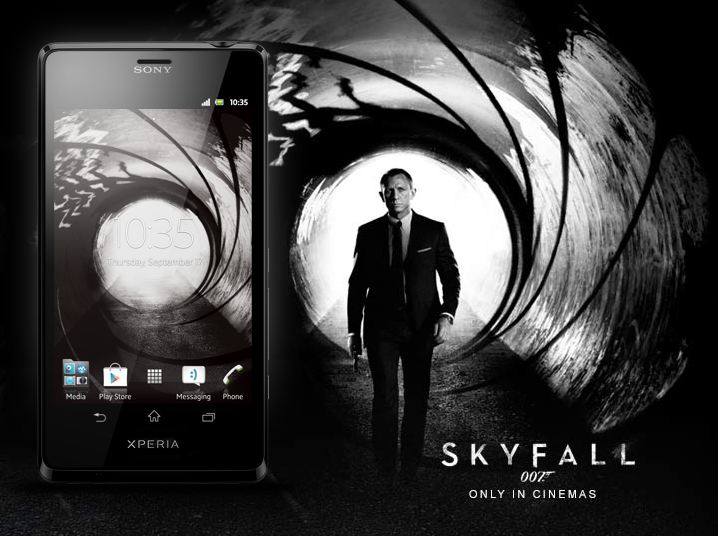
Marketing gimmick or not, Sony's Xperia TL actually has a few spy-worthy features that make it fit 007 like a Tom Ford suit. Just don't take it any more seriously than the films.

Back in Connery’s days, Bond was lucky to have a giant phone in his car, but these days, he’s using a different kind of mobile phone. In the new film, Skyfall, Bond will again be touting a Sony smartphone: the Xperia TL. However, for the first time, the things he does with it might not appear so out of character. The TL is as fast and capable as almost any spy could hope for these days, and with a nearly limitless number of crazy apps that can be installed, Bond’s only limit is Q’s imagination … and programming skills. We haven’t yet written a full review of the Xperia TL, but we did get the chance to spend some time with it. Here’s how we think it might benefit Bond in his 23rd adventure.

Good thing Bond waited for Skyfall

Skyfall may have been released years ago if not for the troubles at MGM. But Bond benefits from the holdup. The Xperia TL solves a lot of the problems of its predecessors. Many had high hopes for the Xperia Ion when it came to AT&T earlier this year. It was the first handset to lose the “Sony Ericsson” branding and be released as a true Sony product, and one of Sony’s first to get a decent push from a major U.S. carrier in some time. Sony has struggled to get the attention of wireless carriers in the U.S. since the days of feature phones and Walkman-branded handsets. With a $100 price on AT&T, it appeared that the carrier was finally giving a top Sony smartphone a real push. Unfortunately, like some ions, it was ultimately unstable. The Ion was running an old version of Android (2.3 Gingerbread), had some construction issues, ran on an older processor, and didn’t produce the quality photos its 12-megapixel camera promised. Fortunately, Sony has addressed these issues with the Xperia TL. Good thing, too. I don’t think Bond would be happy if his phone had trouble focusing or locked up when he needed to call M.

Comfortable for Daniel Craig’s man hands

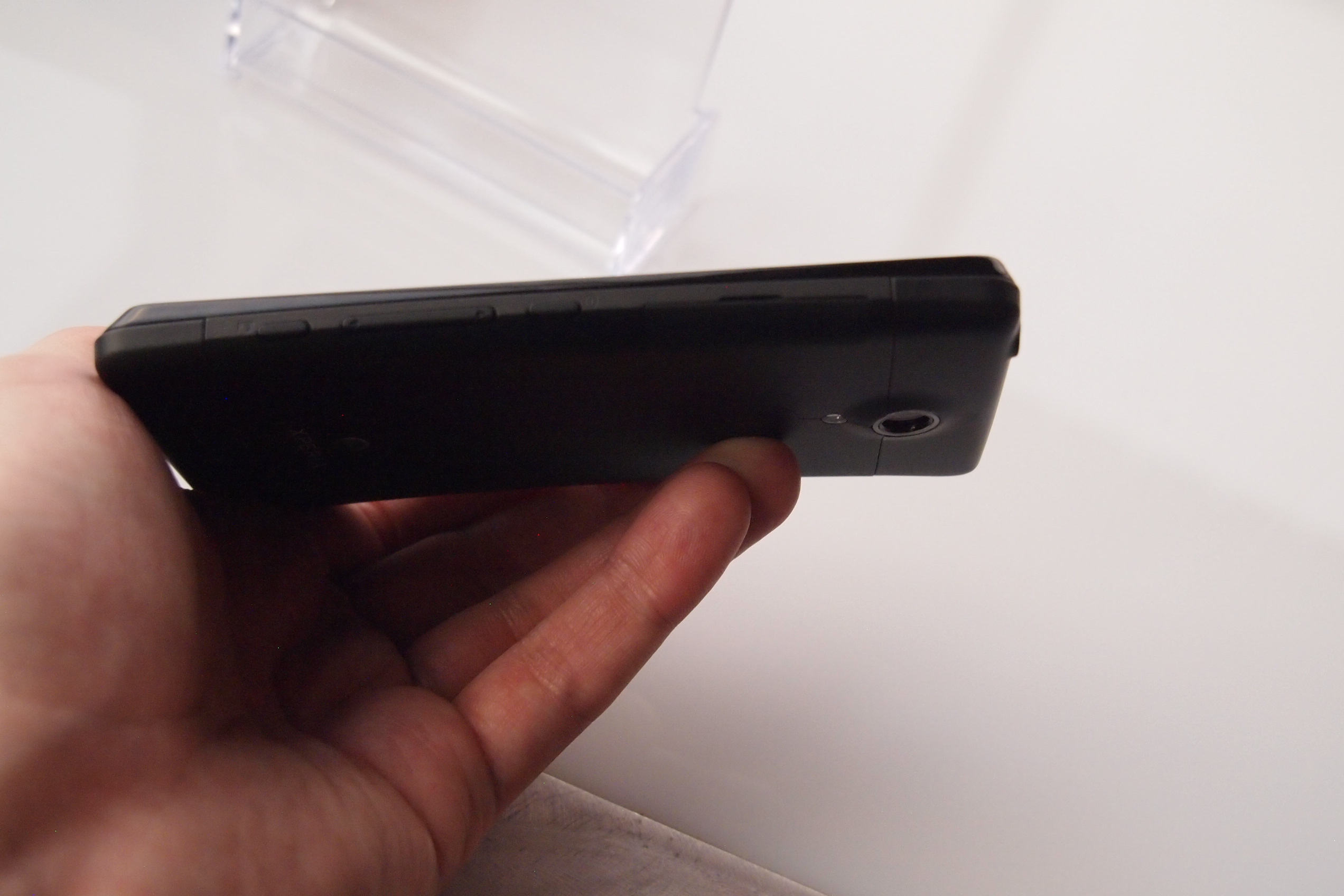
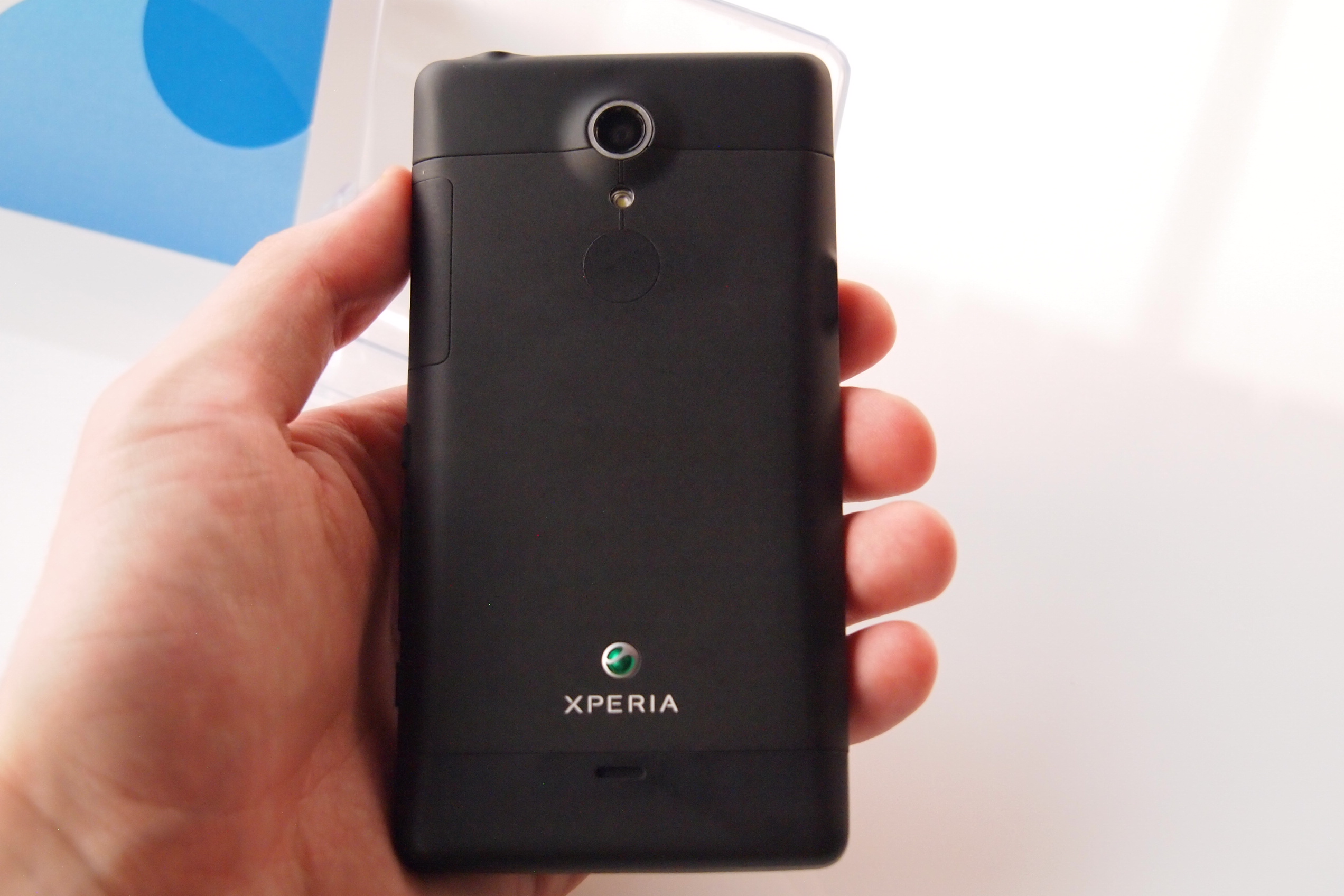
James Bond is all about business, but he’s also about style and comfort. Those fancy suits don’t press themselves. With the Xperia TL, he’s got a top-notch Android smartphone, but also one that’s pretty comfortable to hold. To me, the Xperia TL felt more comfortable than previous Sony handsets by a good margin. Sony has replaced the sharp edges on previous Xperia phones with a smooth, curved edge that just fits better in the hand. Whether you’re a secret agent or a twenty-something phone reviewer choking down a cocktail that’s shaken, not stirred, your hands will thank Sony for smoothing out its edges. The 4.55-inch screen is large, but still manageable for even the most petite of spy hands. Bond likes his phones big.

Instagram those super secret photos

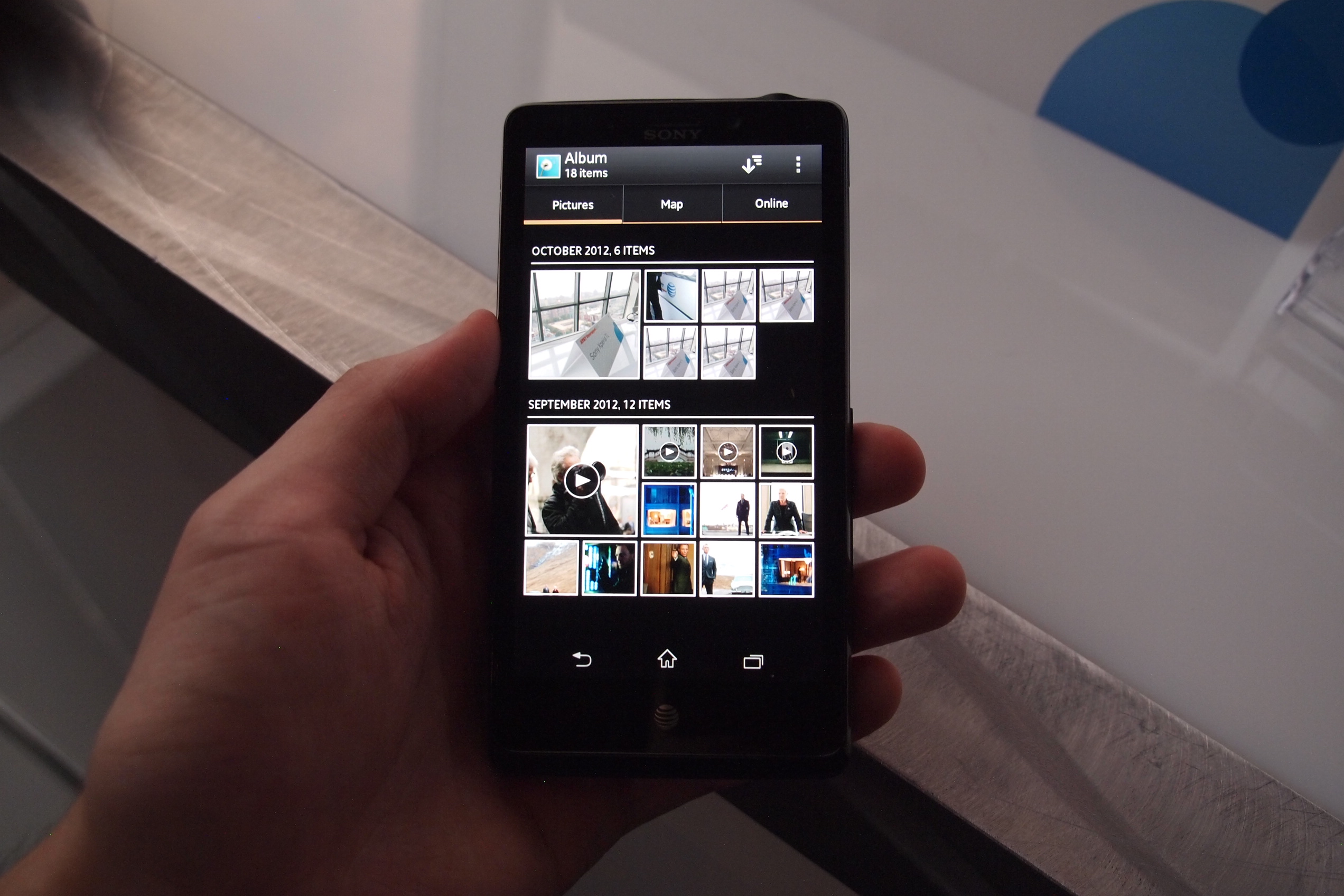
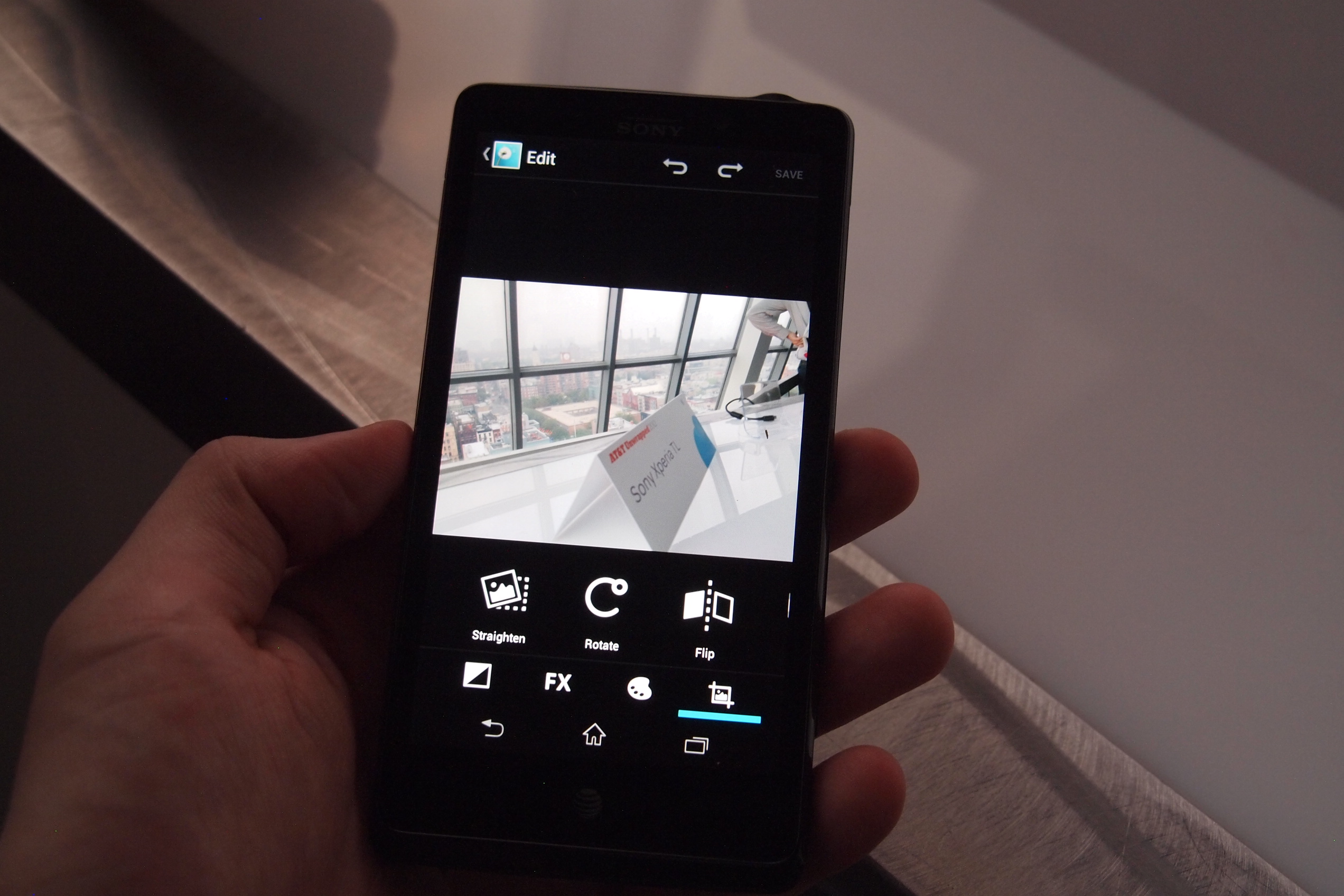
Thanks to the 13-megapixel camera on the TL, 007 can now take some detailed shots of all the ladies and locales in Skyfall. Though we imagine Bond already has Instagram (I mean, why not?), he doesn’t really need it. The Xperia TL’s built-in photo app has a myriad of crazy filters, letting you ruin all of your favorite photos in more ways than ever. If James Bond is feeling a little Connery,  he could make all his photos black and white, like the Cold War days. Or he could get modern and turn his shots of evil Javier Bardem into hipster gold, with washed-out, Polaroid-style filters abound. He could even take a picture of Goldfinger and color it yellow. Snap a picture of each Bond girl on his Facebook page and remove red eye? Easy to do on a TL.

Calculate while you spy

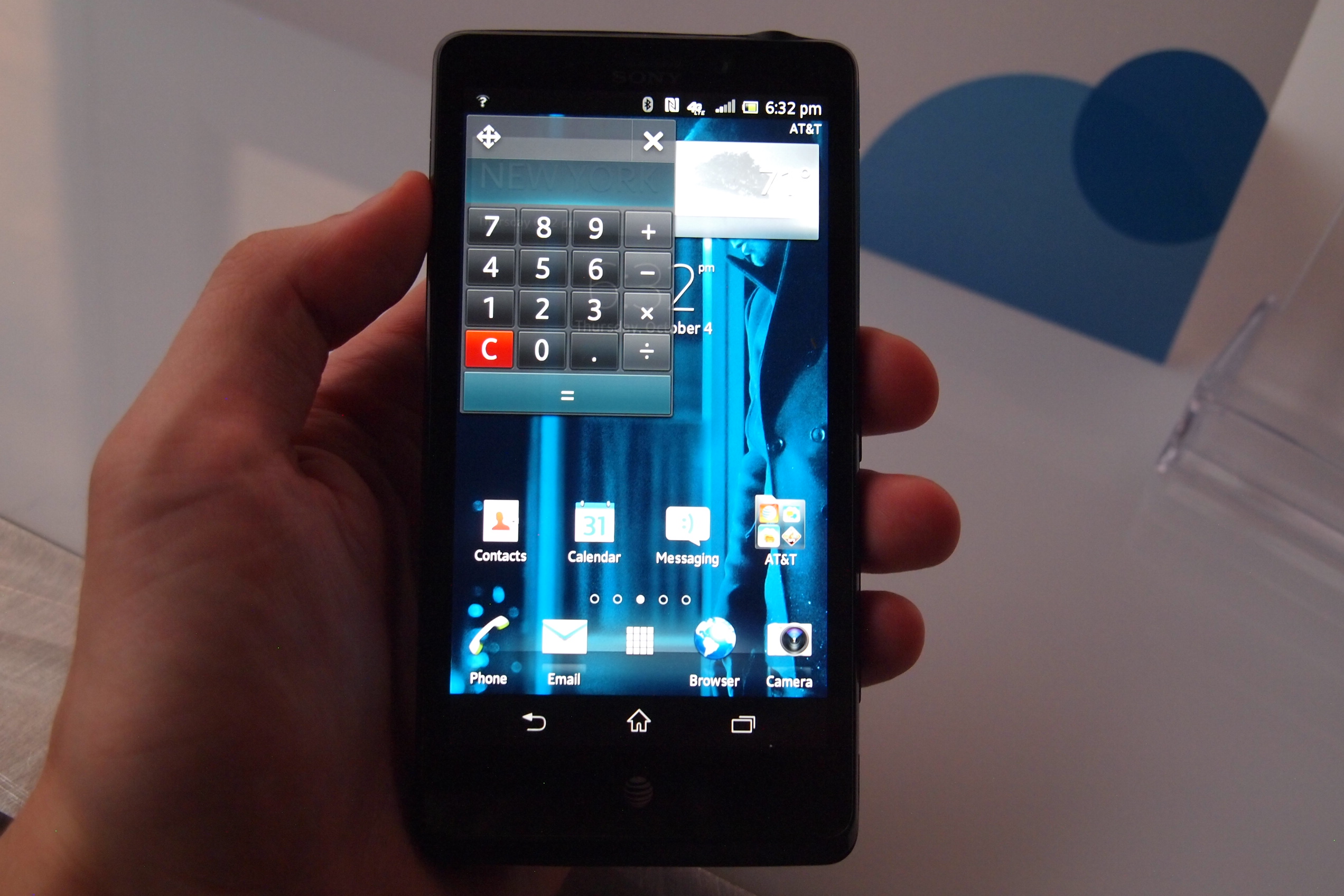
If you’re an international secret agent, you don’t have the luxury of performing just one task at a time. That’s why Bond was likely super stoked when Q told him that the Xperia TL has a modified Recent Apps menu. Like all Android 4.0 and higher handsets, you can quickly re-enter recently used apps, but Sony has now added the concept of mini apps. Now, you or Mr. Bond can open up something like a miniature calculator and drag it around the screen, crunching numbers while you furiously browse Google News for signs of international peril. Maybe Bond needs to calculate a tip for one of his expensive lunches? It can now be done while he checks his Twitter feed. This is the freedom he’s always fought to defend. Any widget installed on the TL can also be used as a mini app.

Snappy specs

With the TL, James Bond isn’t using the most powerful phone on the market, which is a shame, but it’s up there. A 1.5GHz dual-core Qualcomm Snapdragon S4 processor puts his phone on par with most top-notch phones like the Galaxy S3, as does the 1GB of RAM, 16GB of internal storage, expandable microSD slot, and 1280 x 720 pixel LCD screen. But I hope Bond has a secret Micro USB cable hidden in his watch, because the 1,850mAh battery on the TL may leave him needing a recharge before a heavy day of spying is up, especially if he downloads or streams a lot of his own theme songs.

Fit for a secret agent?

Tomorrow Never Dies - Sony Ericsson JB988

We’re looking forward to spending more time with the Xperia TL. Is it fit for a secret agent? We can imagine some cooler phones, but the Xperia TL is one of the best Android phones available on AT&T this holiday season. And the $100 price probably helps with government budget cuts around the world. At the very least, it’s a lot nicer than the Sony Ericsson JB988 flip phone that Pierce Brosnan used in Tomorrow Never Dies or even Daniel Craig’s Sony Ericsson K800i from Casino Royale. For the first time, Bond is on Android. Hopefully Q labs has some cool apps in development.


Source : digitaltrends[dot]com

Oct 19, 2012

FTC launches ‘Robocall Challenge’ to end telemarketing nightmare

The FTC has launched a contest to find the best way to block robocalls from telemarketers. As if a cessation of robo marketing wasn't enough, turns out that there's also $50,000 in it for the winner, as well.

Just how much do you hate those robo marketing calls that you get when you’re trying to relax at night? Are they a nuisance? A problem? Worse? Just how bad can robocalls even get, when it comes down to it, anyway? That’s when the Federal Trade Commission wants to know – and, even moreso, it wants to know what you’re prepared to do about it.

The FTC has announced a public contest entitled the FTC Robocall Challenge to find the best way to identify and block robotic marketing calls. The contest is described as something that challenges the general public to “create innovative solutions that will block illegal robocalls on landlines and mobile phones,” noting that the “vast majority of telephone calls that deliver a pre-recorded message trying to sell something to the recipient are illegal.”

David Vladeck, director of the FTC’s Bureau of Consumer Protection, told the Washington Post that the Commission is “attacking illegal robo-calls on all fronts, and one of the things that we can do as a government agency is to tap into the genius and technical expertise among the public… We think that this will be an effective approach in the case of robo-calls, because the winner of the challenge will become a national hero.”

If the gratitude and admiration of your fellow Americans isn’t enough for you, there’s also a cash prize available; the FTC is putting up $50,000 in prize money for the best ideas, with proposals being scored by a panel of judges who will be looking for three main areas of interest: Workability, ease of use, and potential for mass production or roll out (The first of those will carry twice as much weight as the other two, according to the Challenge’s official rules). If no-one manages to hit all three marks, according to the FTC, there will be no prize awarded; if multiple proposals are deemed to be equally worthy, the $50,000 will be split amongst as many winners as necessary.

(There will also be a separate award, the Federal Trade Commission Technology Achievement Award, but that carries with it only bragging rights; the official rules of the Challenge list that prize as “recognition only,” somewhat sadly.)

Those entering the contest are inviting to submit proposals to block robo calling on landlines, cellphones or both, although the FTC points out that an entry that manages to stop calling on both will automatically be scored higher, so bear that in mind when thinking of your particular solution.

The Challenge “opens” in six days, with proposals being accepted between October 25 and January 17, 2013. For those wondering what to do with their next few months who also happen to be technical wizards, it would be unfair to tell you how to spend your time… and yet, we humbly submit that there’s nothing wrong with trying to better humanity through small things like this, when it comes down to it.


Source : digitaltrends[dot]com

Oct 16, 2012

New Microsoft Surface ad shows a scary world where people dance with their tablets in public

As part of their ongoing marketing campaign for the Surface for which Microsoft is said to have spent a cool billion dollars comes a new ad that was the first to appear on national television in the US.

So what’s the ad about? It’s about people clicking, flipping and throwing their tablets in public while they are dancing. That’s basically all that happens in the video. Does it show what the Surface can do? No. Does it show how much it costs? No. All you get in the end is the date as to when the product will be available. It’s a cool video, to say the least. But will it make you want to buy one? No.


Source : blog[dot]gsmarena[dot]com

Oct 3, 2012

Samsung is now among the Top 10 most valuable brands for 2012, Apple takes second place

The investment Samsung makes in the marketing of its two latest Android flagships, the Galaxy S III and Galaxy Note II has paid off not only in massive sales, but also in boosting the brand’s worth, shooting it among the top 10 most valuable in the world.

According to Interbrand’s 13th annual Best Global Brands report, Samsung, for the first time in its history, finds its place in the Top 10 of the prestigious ranking. In fact, it’s now considered the 9th most valuable brand on the planet and is estimated to be worth $32.8 billion.

Samsung’s value has increased by 40% since the company became the world’s largest smartphone and mobile phone manufacturer. Moreover, the aggressive marketing campaign and the buzz the Koreans have generated around the Galaxy S III and Galaxy Note II has also helped them boost their value.

At the other end of the list is Apple cozily taking second place right below Coca-Cola. Valued at $76.5 billion, the Apple brand has made an incredible 129% jump in value compared to last year.


Source : blog[dot]gsmarena[dot]com

Sep 28, 2012

Nestlé puts GPS trackers in candy bars as part of big cash-prize contest

Nestlé's latest marketing campaign involves six chocolate bars, GPS tracking devices, a helicopter, big cash prizes and "a crack team of highly trained individuals."

Buy a chocolate bar in the UK and before you know it you could have someone knocking on your front door holding a suitcase full of cash – with your name on it.

It’s all part of a competition launched by confectionary giant Nestlé. Called ‘We Will Find You’, it involves GPS chips placed inside six of its big-selling chocolate bars.

Once someone opens one of the lucky bars, the chip will activate and send location information back to Nestlé, who will then despatch a helicopter to find the buyer to present them with a briefcase containing their £10,000 (about $16,000) cash prize.

The fun 30-second promotional video (check it out below) describes how a “crack team of highly trained individuals….will board a helicopter, find the special bar, and give the owner £10,000.”

The marketing campaign, developed by creative agency JWT London, is part of a huge promotion involving ads on TV and radio, as well as online, costing Nestlé around £4 million ($6.5 million).

Any of our UK-based readers feeling lucky, as well as a bit peckish, should consider purchasing one of the following bars (or all of them, many times over): Kit Kat 4 Finger, Kit Kat Chunky, Yorkie and Aero Peppermint Medium.

For more information on the high-tech Willy Wonka-style competition, head over to Nestlé’s Facebook page here.

[via CSPNet]


Source : digitaltrends[dot]com

Sep 27, 2012

Want To Sell More? Do Not Make These Mistakes

So, you wish to make a lot of money. That is cool but in order to achieve this, you have to be really good at sales and marketing. Oh, good is not just enough anymore; you need to be exceptional at it. But before you start learning the tricks of how to be a hotshot marketer, you need to learn what you should not be doing while marketing your products. Sometimes, you do not have to be exceptional at selling to make a lot of money, rather you should be aware of some common mistakes that can undone the whole process. Want to have a look at those mistakes that can derail your marketing endeavour? Here they go:

Opportunity is not easy to come by: You may have the best product or the best deal in the market but you need to find out the prospective buyers otherwise, how you will be able to see its sales volume shooting through the roof. You need to have an idea of who are your potential customers, how you are going to reach out to them or what they like and dislike the most, your marketing effort will be going nowhere. So, take your time, do extensive marketing research, figure out the potential audience who might be interested in your proposal and they go on a killing spree.
I have seen how my friend – Paul’s marketing campaign kissed the ground when he made the same mistake. He was selling new strawberry flavor candy and he was marketing that thing in different universities across Houston. Quite expectedly, the grown up guys seemed do not mind checking the taste of those beautiful candies. So, I believe that now you can understand why you should not be marketing your products to audience who might be least interested in your products.

Do not say “Yes” all the time:  Yes, I know they are your valuable customers but that does not mean that you would act like a “Yes man” all the time. Do not be that cheap. Rather you learn to say NO whenever it is required. But I know how you feel when a customer makes a request. Most marketers fall into this prey and says Yes just to get the person converted but this is like walking on eggshells. Because once a request is met, the customer will continue to press you until you start creaking. Apart from costing you money and your valuable time, it will make the customer bold enough to make unreasonable request because he knows that you will eventually oblige.

So, the sooner you start saying No to customers, the better it is for your career and marketing campaign. Moreover, if you promise something and then you finally realize that you will not be able to meet that you will make your customers angry and unhappy. Do not do that, say clearly what is possible for you to deliver and what is not in a polite way and believe me you will not lose your customers.

Do not Give them All: A confused person cannot be your customer. So, make sure that you are not making your customers confused with details that are unnecessary. Master the art of delivering your message to your targeted audience in a clear way. Do not try to look smart by using some tough technical jargons. When you are pitching your customers, you need to make sure that you are telling them exactly what they are looking for. Have the draft ready before you start addressing the customers so that you do not start fumbling in the middle. Make it short and nice full of cliff hanging moments that will help you seize the attention of the visitors.


Do not lose focus: While communicating your message to your targeted audience, you need to make sure that you are not wasting your time chitchatting with people. You should try to get your message across to them since you cannot have their undivided forever.  Obviously, you should not be speaking business all the time but you should at least try to make sure you have spread your message to them successfully and when you have spear time in hand, you can spend some time with them to build a better relation.

Wait for the opportunity: Take sales like Dating. You should not be desperate while wooing a girl and the same rule is applicable when you are trying to sell your product or service. Try to make an appearance that you are not that much interested in selling things or have enough customers who will be lining up to have your product. Do not pushy all the time, as it is a big turn off and make people aversive to your service.

Author Bio
Michael Evans is a passionate Writer and social media analysts. He works for Webarts, which is a
Cyprus Social Media company. 

Tags: Ecommerce

Source : techtalkafrica[dot]com

Sep 22, 2012

Has 4G become meaningless?

4G meaningless smartphones data carriers lte

A cesspool of acronyms, overoptimistic marketing claims and incompatible technologies has made 4G incomprehensible to the average consumer. Now carriers will suffer for the mess they’ve created.

Recently, the investment firm Piper Jaffray conducted a study that found a full 47 percent of U.S. consumers don’t feel the need for 4G. This isn’t good news for the carriers, which have been fiercely touting their 4G networks for a few years now. Almost all new smartphones have some kind of 4G connectivity, including the new iPhone, at long last.

Part of consumers’ apathy over 4G might come from their inability to understand the difference between different flavors of it. The same survey found that 51 percent of consumers said that all 4G networks are the same. Not only can’t they name which is best,

That’s bad news for an industry as competitive as wireless communication, with recent marketing campaigns based upon name calling as a means of brand differentiation. With carriers betting ever more heavily upon data tiers as a main revenue stream, what can carriers do about consumers who don’t seem to understand their services?

How to be 4G

Confusion is the name of the game, and the carriers haven’t helped explain to consumers the benefits of 4G. Commercial mobile technologies are standardized by a complex number of bodies such as the ITU (International Telecommunication Union), the 3GGP (3rd Generation Partnership Project), and the IEEE (Institute of Electrical and Electronics Engineers). Still reading? Good. They are tasked with bickering until they set a strict, definite standard for each iteration.

These powers that be hold conferences, conduct studies, and perform secret ritual sacrifices in order to define what it each G – or generation – actually means. 4G is, of course the next numerical step, but the powers stumbled when it came to defining what that actually meant.

Strange encounters of the fourth generation

The 4G war got off to a specular fail from a marketing standpoint. There were many, vastly different technologies all vying for subscribers.

Sprint tried to get the ball rolling with WiMAX in 2008, a technology descended from the same tech in your Wi-Fi router. It was branded 4G, though real-life speeds were often more equivalent to a particularly fast 3G device. This was promising, but Sprint eventually declared the technology dead and migrated to LTE (Long Term Evolution, if you were curious). One down.

T-Mobile further muddied the waters with an upgrade to HSPA+, which is technically more like 3.5G, but which has been branded 4G.

AT&T had a wide, but much decried 3G network (partly blamed on iPhone exclusivity for years). While AT&T deploys its 4G LTE network nationwide, it’s also making things needlessly confusing by offering HSPA+ alongside, and branding it 4G just like T-Mobile. If you have an AT&T iPhone 4S, you might see a 4G logo appear sometimes, but it’s not the “true” 4G LTE you would get by upgrading to an iPhone 5.

Verizon launched a 4G LTE network in late 2010 – in its truest sense – it fulfilled the 4G guidelines.

Simple, right?

Setting low bars

No. Not simple, at all. Once the carriers got to building their new networks, the powers that be decided to change the definition of 4G. They lowered the minimum speed guidelines, so that carriers wouldn’t have to do too much heavy lifting, meaning that 4G networks would not be as revolutionary as they had first planned. Hence the bickering over “true” 4G. On top of that, building 4G networks gave carriers a chance to improve their existing networks with beefier backhaul – the connections that tie cell towers back to the backbone of the Internet. This greatly improved 3G speeds and availability, closing the gap between 3G and 4G.

cell tower 4g data speedsIt’s not surprising that the average consumer doesn’t care about 4G when they don’t get it, and 3G networks are progressively getting better. Coverage matters more than speed to many people — a souped-up network means squat if there isn’t a tower in your area.

The consumers don’t care

With so many different carrier definitions of 4G, and even an official designation that’s a moving target, it’s hardly surprising that people are confused. So what can the carriers do?

Agree on a standard speed definition. This is probably impossible, because the telecom industry is notorious for talking at, rather than with each other. But setting a baseline speed for 4G would at least let customers know what they’re being promised.

Stop slapping 4G on everything. This is really aimed at AT&T and T-Mobile, which are allowed to brand older HSPA+ 3G tech as 4G due to a magical shift in definitions back in 2010. While this is legal, it confuses people to a point where they don’t care.

Stop lying about speeds. Advertised speeds are not the same as real world speeds. T-Mobile might advertise 42mbps, but that’s the theoretical limit. That doesn’t look so rosy when you’re getting 45kbps downloads. Averages work much better, and leave less room for error.

Change phone branding conventions. While some handset-makers are responsible for this, it isn’t in a carrier’s best interest to have a phone named after wireless services. For example: The HTC EVO 4G LTE. Not the easiest name to understand. This particular model caused a friend to ask “What is a 4G?” as if it were some kind of new device. Apple keeps it simple with 3, 4s, 5 and so on. Heck, even Samsung does with its flagship line of Galaxy phones (S2, S3). I wonder where that inspiration came from?

Conclusion

The carriers have themselves to blame for the consumer confusion they’re currently stewing in. Unexplained acronyms, incompatible networks, technologies that vanish as soon as they’ve appeared – it’s as if they’re running Area 51, not voice and data networks. Carriers have the leverage to make the average consumer more interested in 4G, but it’s all up to them.

More speed is nice, but most of us would just settle for better reception. After all, if a guy with a mohawk can put a robot on Mars with less cash than it took to put on the Olympics, why can’t I have cell reception in an elevator?


Source : digitaltrends[dot]com

Sep 11, 2012

Top 7 Video Submission Websites For Backlinks

If there is one thing that every SEO provider understands, it’s that backlinks are an extremely important part of every internet marketing campaign. After all, without backlinks Google has no idea how relevant your content is and won’t be able to show it when your audience is searching for it! To help Google push your content up in the search engine rankings, here are the top seven best video submission websites for obtaining backlinks.

1) YouTube
YouTube — aside from being owned by Google — is the absolute best place to submit your video for backlinks. YouTube has a staggering PR of nine, and while that does not automatically transfer to your video, it goes to show how much love Google gives this website. While not explicitly stated, it can be inferred through search engine results that YouTube videos rank extremely well, and it’s unlikely that this will be changing any time soon.

2) MySpace
Myspace, with a PR of eight, is also an excellent source for free backlinks from your video. While it may not be the social giant that it used to be, it is still an excellent place to submit your video for easy backlinks.

3) Vimeo
Vimeo is a social network based solely around the uploading and sharing of videos — what does the mean? It means not only do you get a backlink from this immensely popular site for free, there’s a good chance (if your video is interesting) that people will comment and share it on other video websites! More backlinks means higher search engine rankings, so Vimeo is one video submission website definitely worth getting a backlink from.

4) Yahoo Video
Yahoo Video is like YouTube’s younger brother: not as popular, but still extremely relevant. Many SEO providers forget about Yahoo in favor of Google, but the search engine still gets an immense amount of traffic every day. Combine that with the fact that Yahoo Video has a solid PR of eight, and you are one backlink closer to getting that subscriber, sale, or just plain reader!

5) Daily Motion
Daily Motion is very similar to Vimeo in that it is yet another community-based video sharing site with a high PR of seven. Videos are easily organized by category, and you can find a video on just about anything here.

6) Photobucket
Here’s a name I bet you haven’t heard in a while! Also one that you probably weren’t expecting to make the cut, but Photobucket is yet another great website to obtain a free, high-quality backlinks. While the website is primarily used to share photos, it has recently begun integrating videos into its infrastructure. With a PR of seven, this is another video submission site I highly recommend.

7) Metacafe
Last on my list of the top seven video submission sites is good old Metacafe. Similar to both Daily Motion and Vimeo, this community is all about promoting interesting videos. Don’t worry though if your video isn’t interesting enough to share, Metacafe’s PR of seven will give you yet another strong backlink to add to your host of others.

This concludes my list of the top seven websites you should submit your video to if you’re looking for high-quality backlinks. Remember that quality is always better than quantity, so instead of blasting your video to 100 different video submission websites, stick with the best and watch you rankings rise!

Tags: Video Submission, Video Websites

Source : techtalkafrica[dot]com

Sep 5, 2012

Ben & Jerry’s goes to court over ‘Ben & Cherry’s’ porn movies

Not wishing to have its name associated with the porn industry, Ben & Jerry's has decided to sue a production company for marketing porn DVDs with titles inspired by its popular ice cream offerings.

When Vermont-based ice cream maker Ben & Jerry’s heard about the existence of a 10-DVD set of porn movies cheekily entitled Ben & Cherry’s, the company was having none of it.

The set comprised movie titles based on the name of its ice cream offerings, prompting lawyers for the ice cream company to sue for trademark violation.

Though it’s possible the movie titles raised a smile or two with company executives – with names like Boston Cream Thighs (Boston Cream Pie), Chocolate Fudge Babes (Chocolate Fudge Brownie), and Peanut Butter D-Cups (Peanut Butter Cup), how could they not? – they nevertheless instructed their lawyers to take up the matter with the production company, California-based Rodax Distributors, with the aim of getting the porn producer to remove the titles from the market, or at least change the names to something else.

The jackets of the DVDs were reportedly also an issue, as they resembled the packaging of various products made by the ice cream company, with the familiar fluffy white clouds and grazing cows set alongside images of men and women in their birthday suits.

In its complaint, reported by Bloomberg, Ben & Jerry’s said: “The hardcore and exploitive pornographic infringing ‘Ben & Cherry’s’ DVDs” are likely to confuse consumers by “creating an association of the Ben & Jerry’s family of marks and the Ben & Jerry’s trade dress with pornography.”

Precisely how many consumers would get confused between a milk- and sugar-based dessert and a porn movie is open to debate, but one can understand Ben & Jerry’s annoyance at having its firmly established logos and images used by other companies to sell its own products.

The case was filed by Ben & Jerry’s in a Manhattan federal court on Wednesday. The dessert maker is also seeking monetary damages.

The company (Ben & Jerry’s, that is), set up by friends Ben Cohen and Jerry Greenfield, started out in a Vermont gas station in 1978. Its large range of ice creams now sold in 26 countries across the world.


Source : digitaltrends[dot]com

Sep 4, 2012

Top 7 Article Marketing Websites For Traffic

Article marketing is a very effective way to bring traffic to your website. The benefits are two-fold. You can receive traffic directly from your articles posted on other sites, and you can get a boost in the search engine results for your website also increasing traffic.

Here are the top 7 article marketing websites for traffic.

Ezine Articles

Ezinearticles.com is the number one article directory. It has been around for a very long time and has a lot of great features that has kept it number one on many marketers’ lists. You can submit your well-written articles in dozens of available categories. Ezine Articles has a lot of organic traffic right to their site and often ranks high in the search engines. Plus, your articles can be used on other people’s sites for more traffic.

Ezine Articles allows you to have different pen names. This works well for a variety of different reasons such as if you have different types of marketing to do for different websites or products. Your articles need to be at least 400 words and well-written. Set up a profile so that people can learn more about you and find your website. This is an important step for any article marketing site you use that has such a feature. You can also upgrade to premium membership for more features and benefits.

Go Articles

Goarticles.com is another directory that gets a lot of traffic and use by article marketers. If you want exposure for your business, use this article directory as much as possible. It’s very easy to get a membership started, and the submission process is simple as well. Your articles may also be republished by other sites for added exposure.

Idea Marketers

Ideamarketers.com has a variety of helpful services. Publishing marketing articles is just one of them. They have a wide variety of categories you can choose to publish in. This site also allows you to submit press releases which can be very beneficial to your business.

Article Base

Articlebase.com is free to join and gives you another outlet for basic article submission. It’s very similar to other sites that give you free exposure, more traffic, and credibility to your name. It has a good amount of traffic making it great to add to your article marketing rounds.

Hubpages

Hubpages.com is a little different than the above article directories. When you set up a hub, you do more than submit an article. You can write articles and add pictures, links to products, reviews, and other interactive media. The strength of Hubpages is when you build a lot of hubs and interlink them. You also need to maintain a certain score in order for your links to be do-follow.

Squidoo

Squidoo.com is another site like Hubpages where you create lenses. You can promote your business and earn money directly from your hub. Get involved in the community to improve your lenses and build more traffic.

Infobarrel

Infobarrel.com is a newer site that has become increasingly like Hubpages and Squidoo. Designing your pages is similar, but they are strict about varying the types of articles you write. Gain a lot of exposure through Infobarrel by adding pages frequently. They also have monthly contests where you can win free gift certificates by writing more.

Tags: Article Directory, Article marketing, Article Sites, Article Submission, Do Follow Article Submission, Free Article Sites

Source : techtalkafrica[dot]com