Pages

Showing posts with label block. Show all posts

Nov 1, 2012

Does tech really make kids grow up faster?

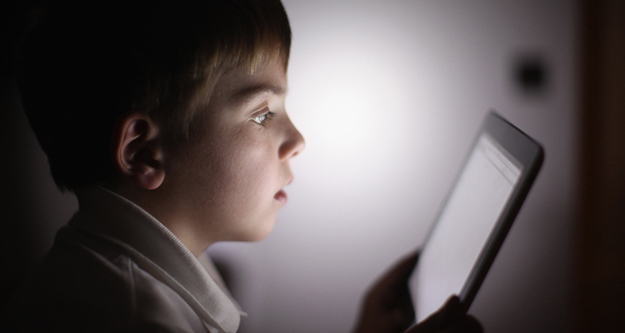
child using tablet growing up with technology

Kids now have access to more information through a 4-inch screen than used to be available in a library the size of a city block, but is it affecting the way they develop for better or worse?

The debate over whether our children are maturing too quickly was reignited last week when the American Academy of Pediatrics published a study which suggests boys are reaching puberty earlier than before. Taking evidence from over 4,000 boys in 41 states, the findings suggested that boys are showing signs of puberty between six months and two years earlier than in past studies. Back in 2010, a similar study of girls in the Journal of Pediatrics revealed that they are also showing signs of puberty earlier than they did in the past – some as young as seven years old.

While these studies are finding evidence that children are maturing faster physically, they are less certain on the causes. While factors like higher caloric intake definitely come into play, there’s also a popular conception that technology may play some roles as children are bombarded with graphic sexual images and violence through TV, video games, and the Internet.

But are kids really growing up faster in the glow of omnipresent ultra-connected screens, or has paranoia led us to blame what might be one of the greatest assets to our children?

The sedentary lifestyle

Perhaps the most well documented, and seemingly obvious, negative impact of technology on our kids is the growing obesity problem. In the last 50 years, the childhood obesity rate in the U.S. has soared, and according to the American Heart Association, one third of American kids are overweight or obese. A combination of diet and lack of physical exercise is to blame and technology is seen as a major reason why kids are sitting for long periods of time and generally exercising less than their parents and grandparents did.

kids using ipad growing up with technologyThere are two ways to look at that. You can blame the technology itself, or you can acknowledge that it is actually people – kids and their parents – who decide not to exercise because they would rather play a video game or watch TV. With kids, there is also peer pressure to engage in tech on various levels, and there are other reasons that parents may be comfortable with kids playing video games in the house rather than going out to play sports. Fear of injury or “stranger danger” seems to be far more common nowadays than it was in the past, when children were often given a great deal of freedom to explore the great outdoors.

Social media and cyberbullying

According to a recent study commissioned by Care.com, there is another technology-related concern that looms even larger in most parent’s minds, and that’s cyberbullying. It found that 62 percent of parents thought “that increased use of texting, social media activity and the playing of more violent video games are resulting in meaner behavior among kids,” and 30 percent of parents of children between 12 and 17 years-old “fear bullying and cyberbullying over kidnapping, domestic terrorism, car accidents, suicide or any other incident.”

Is it a legitimate fear? Is social media necessarily negative? We consulted Dr. Larry Rosen, Professor and past Chair of Psychology at California State University, and an international expert in the psychology of technology.

“I do believe that with social media now reaching younger and younger kids they are getting more practice communicating with others and this can be a good thing,” Rosen says. “On the other hand, they are getting less practice communicating face to face and are missing out on learning how to interpret all of those critical nonverbal cues that make us understand language and conversation.”
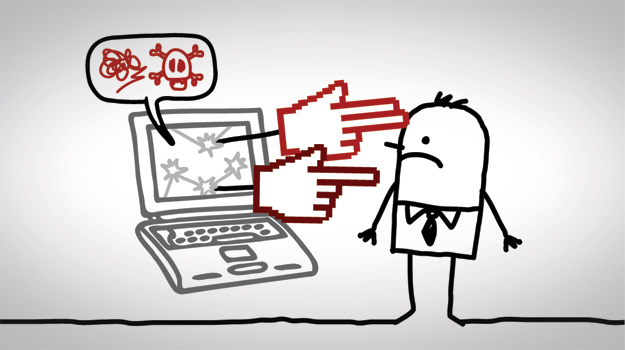
cyberbullying social media kidsHe pointed out that young kids “are also being exposed to situations that are not necessarily appropriate for their developmental level, and that is important as they will react from a younger place compared to facing the same situation later in their preteen or teen years when they have passed more developmental milestones.”

Social media is a two-way street. A Pew Research Center report found that 77 percent of teens (aged 12 to 17) use social media and while 69 percent of them say “people are mostly kind,” 88 percent have witnessed people being “mean or cruel.”

Research on the long-term effects of learning social skills online is still coming in, but Rosen doesn’t believe it has to be a bad influence. “Teens who spend more time on social media can learn how to be more empathic by practicing empathy online and then transferring it to situations offline,” Rosen says. “That is a good thing! Yet there are still other situations that may lead to negative behaviors such as being rude and mean online and transferring this to the real world.”

Technology in education

You won’t find a true consensus on many issues when it comes to technology and children, but the impact on education is generally seen as positive. Besides bringing interactivity into the classroom, you simply cannot argue with the benefits of assistive technology for children with all kinds of disabilities. The efficacy has been well-established by a number of studies over the last few years.

You’ll also find a wealth of interesting studies, such as those at the Center for Children & Technology, that reveal the potential benefits of using technology in education to engage children. Rosen concurs. “As far as learning goes, I think technology actually can aid their learning and allow them to be engaged by the technology and develop their own style and pace.”

Is parental responsibility enough?

One of the major issues with children and technology revolves are their potential exposure to inappropriate material. Unfettered access to the Internet cannot be good for any child. Trying to emulate pop stars in music videos or being exposed to sexually suggestive adverts on TV is enough to worry many parents. Beyond that there’s Internet porn and clear battle lines between those who favor some form of mandatory censorship, and campaigners for Internet freedom.

Presidential candidate Mitt Romney said back in 2007, “If I am President, I will work to make sure that every computer sold into the home has an easy to engage pornography filter so that every parent can protect their child from unwanted filth.” In the UK, the government recently completed a consultation on porn blocking and some people are pushing for an “opt-in” system, whereby you would have access blocked by default and have to contact your ISP to ask them for access to adult content. Is legislation really the answer though?
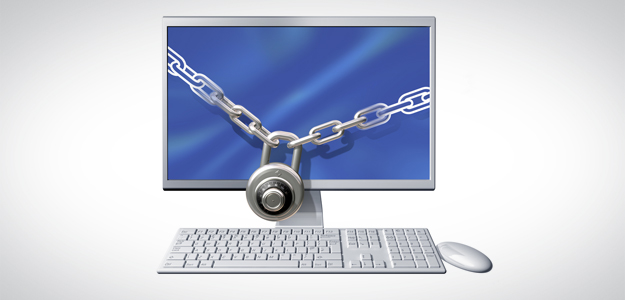
computer locked internet filterThere are lots of parental filters available, and some ISPs will even offer solutions, so parents have no excuse for not filtering what their kids can access at home and on their mobile devices. What they can’t control is what their kids are accessing elsewhere. The concern isn’t confined to pornography either – there’s also the risk of content promoting suicide and self-harm or exposing children to extreme violence.

The ultimate responsibility for what kids are being exposed to has to rest with parents. Speaking to the Telegraph on this issue, a Google spokesperson put it like this, “Laws alone can’t teach kids to cross the road. The same is true of learning to be safe online. We work with government and child safety organizations to promote sensible legislation and have developed technology, including Google Safe Search and the Family Safety Centre, that parents can use to protect their children online.”

No easy answer

As a tech writer I’m an evangelist for new devices and services ,and I’m convinced they can be good for our children. As a parent I’m concerned about what my kids will be exposed to, especially beyond the family home where I can’t exert as much control. Ultimately I see tech as a set of tools; it cannot be to blame simply because it is possible to misuse it. It’s our responsibility to encourage our kids to exercise, to support their education, and to talk to them about the dangers of the wider world.

It’s tough for a generation getting used to tech and constant Internet access to imagine what it’s like for children growing up in a world where these devices and services are ubiquitous. One of the nicest ways to look at it, and one of the most encouraging, is to listen to children themselves. There’s a series of great studies at Latitude about how kids are reacting to and learning about technology. Like it or not, technology is a fully integrated part of most kid’s lives nowadays, and it’s not going away.

Kids are overwhelmingly positive. They are less jaded and cynical than many adults, and they don’t see barriers to solutions in the same way we do. Maybe a truly useful debate on this topic should include them. They may have more to contribute than we realize.

Where do you stand on the topic? Whether you’re a parent, adult or child – post a comment and weigh in.

[Image credit: Child with iPad: Canada.com; Children using a tablet: wavebreakmedia/Shutterstock; Cyberbullying: NLshop/Shutterstock; Computer padlock: Paul Fleet/Shutterstock]


Source : digitaltrends[dot]com

Sep 2, 2012

Terms & Conditions: App.net’s terms of service, privacy policy explained

terms & conditions app net social media service

App.net, the cool new kid on the social media block, makes respect for its users and its users personal data a primary selling point. Here, we take a look at the site's terms of service and privacy policy to see how well they adhere to that ideal.

Welcome to the second edition of Terms & Conditions, a weekly column where break down the terms of service, privacy policies, and other legalese we all love to ignore — but that have serious bearing on our digital lives. This week’s target: App.net.

Social media’s coolest newcomer, App.net, has been described as a more open, advertising-free, developer-friendly alternative to Twitter. The service, which launched in alpha in mid-August after a successful $500,000 crowdfunding run, currently costs $50 per year to use. And with respect for privacy and its users in general, App.net released the first versions of its terms of service and privacy policy at the end of August. To make things even more open, App.net has requested that users review the documents in an effort to refine them, a process that is taking place on Github.

At present, App.net appears to be sticking to its principles, with a ToS and privacy policy that are simple, and easy to follow.

“We asked our attorney to help us craft some terms that outline, with the least amount of legalese, the important things you need to know about accessing and using App.net’s website and service (collectively, “Service”),” begins the ToS document. “These are our terms of service (“Terms”). Please read them carefully.”

That we will.

App.net Terms of Service: Part 1. Accepting terms — whether they change or not

Like all terms of service, the document kicks off by saying that you must agree to the terms to use the service. Or, to flip it around, if you use the service, you agree to the terms. Nothing odd or unreasonable about that.

App.net also reserves the right to change the terms at any time. This is probably not so they can trick you into signing over your life savings or handing over your new puppy to the App.net team. Rather, the terms will change if they roll out new services. To be a safe, vigilant user, you need to pay attention to changes to the terms of service — because if you keep using the service after they change, then you have agreed to the new terms by default.

Part 2. Accounts

Unlike Facebook, App.net allows users to create accounts that do not publicly carry your real name. You can make “pseudo anonymous” accounts. And you can make “parody” accounts, but parody accounts must be explicitly identified as such. Further, you do have to give App.net your real name — or at least the name that appears on whatever credit card you use — for billing purposes.

Furthermore, by agreeing to the ToS, you take responsibility for keeping your login credentials a secret, and accept all the consequences of not doing so.

Part 3. ‘Content & conduct’

Anything you post to App.net — links, photos, poetry, whatever — is your responsibility, ” including its legality, reliability, and appropriateness.”

App.net has the “limited right” to “reproduce, modify, publicly perform, publicly display, and distribute” the content you post to the service, which basically means that you give App.net the right to do exactly what you intend App.net to do: publish the content to your followers.

Unlike some other services, App.net is quite clear about its deletion policy: You can delete any of your content, and it will immediately be taken out of public view. App.net’s servers may still retain some of the content, but only for a period of two weeks. It is then gone forever.

App.net then lists a variety of content that you man not post to the service. Their description is quite clear here, so I’ll just let them do the explaining. The following types of content are forbidden from App.net (and yes, links to pirated content and child pornography are included):

  • Content that is libelous, defamatory, bigoted, fraudulent or deceptive;
  • Content that is illegal or unlawful, that would otherwise create liability;
  • Content that may infringe or violate any patent, trademark, trade secret, copyright, right of privacy, right of publicity or other intellectual or other right of any party;
  • Unsolicited promotions, political campaigning, or commercial messages (SPAM);
  • Private information of any third party (e.g., addresses, phone numbers, email addresses, Social Security numbers and credit card numbers); and
  • Viruses, corrupted data or other harmful, disruptive or destructive files or code.
  • Use the Service in any manner that could interfere with, disrupt, negatively affect or inhibit other users from fully enjoying the Service or that could damage, disable, overburden or impair the functioning of the Service;
  • Impersonate or post on behalf or any person or entity or otherwise misrepresent your affiliation with a person or entity;
  • Collect any personal information about other users, or intimidate, threaten, stalk or otherwise harass other users of the Service;
  • Create an account or post any content if you are not over 13 years of age;
  • Circumvent or attempt to circumvent any filtering, security measures, rate limits or other features designed to protect the Service, users of the Service, or third parties.

Later in the document, App.net says that breach of any of the rules outlined in the terms of service — including those above — may result in you losing your App.net account, and access to the service.

Part 4. App.net is not your property

Under the “App.net’s Materials” section of its ToS, the company simply says that you are forbidden from stealing App.net’s technology, or the information posted to App.net, and using it for your own purposes outside of the service itself. Do so, and you’ll probably get kicked out.

Part 5. Outside content

I’m not exactly sure whey they didn’t include this portion under Part 3. — it would certainly fit there — but for whatever reason, they’ve decided to include “hyperlinks and third-party content” in its own category.

While the first part says that you may not link to App.net or content on the service to make money, it’s the second part that really matters for most people: Specifically, App.net does not take responsibility for any lies posted by its users. Nor does it take responsibility for content outside of App.net that its users may link to; if you click on a link to something offensive or illegal, that’s not App.net’s problem.

Part 5. “Unavoidable legal stuff”

All this section says, in ALL CAPITAL LETTERS (why does legal stuff have to scream at us?), is that App.net takes no responsibility if you break its code of conduct, post illegal material, stalk someone because of information found on App.net, or otherwise bring the wrath of lawsuits down on App.net’s head. If you do, you will have to pay the consequences, and the legal fees, involved.

Part 6. Copyright

If you post links to pirated material, and App.net gets served DMCA (Digital Millennium Copyright Act) takedown notices, you might get kicked out of App.net entirely. So don’t do that. (App.net has a stand-alone Copyright Policy, which has more details about DMCA takedown notices.)

Part 7. Laws and stuff

App.net is a California company, and is therefore subject to the state’s laws.

Part 8. Settling disputes

If you and App.net have a problem with each other that relates in anyway to something covered in the terms of service, you both agree to try to resolve the matter directly with each other. If, after 60 days, you and App.net have failed to resolve the problem, the negotiations may then move into “mediation” territory, which also lasts a maximum of 60 days. During these first 120 days, neither you or App.net may sue each other. After the first 120 days, however, lawsuits may be filed.

Hopefully that doesn’t happen, and negotiations can then move into arbitration territory, which means the you’ll try to settle the dispute out of court. But, unlike the simple mediation process, a third-party will officially serve as the arbitrator, who can decide how damages are awarded, and whether anyone will have to pay the other’s legal fees. Arbitration can only last up to 90 days, except under “extraordinary circumstances.”

Part. 9 Getting kicked out

As mentioned above, failure to abide by the terms of service could result in you account being suspended or entirely disabled.

At the end of the document, App.net asks for your feedback, which you can give through the Github discussion board, or by emailing App.net at: support@app.net.

>>Next Page: App.net’s privacy policy


Source : digitaltrends[dot]com

Aug 19, 2012

So long, Mr. Popular: Fake Follower Check outs surprising Twitter frauds

Pay-for-tweets

The Fake Follower Check application shows how many famous people's follower count has been wildly inflated by spammers and block purchases.

It’s been a bad week for Twitter fans. First, the company hinted that the new Twitter API would break a whole lot of third-party developer’s software. Now, StatusPeople has proven that a whole lot of people’s all-important follower count is fake as @FakeSteveJobs.

StatusPeople is a company that makes “social media platforms for business.”  But unlike many companies with that mission statement, it doesn’t just promise to get your business more followers; it helps you figure out how many of your existing followers are spammers, inactive, or otherwise mere social media clutter.  That’s the purpose of their Fake Follower Check, an application that runs a follower list through a set of spam criteria. FFC mostly looks for followers who have few or no followers or tweets, but follow a lot of people themselves.  It’s not exactly a bulletproof algorithm – will no one hear the silence of social media’s introverts – but it’s not bad as a quick and dirty review system.  

Things get more interesting when you run Fake Follower Check on other people’s follower lists. A clever reporter at Business Insider decided to run some Twitter-loving celebrities through the FFC, and discovered that pop stars like Justin Bieber and Lady Gaga have follower lists that are 45 to 48 percent fake, President Barack Obama’s follower list is about 41 percent phony, and Republican presidential candidate Mitt Romney has a follower list that’s 22 percent spammers.  Over at Metafilter, user crunchland decided to check for both fake and inactive accounts on the follower lists of prominent right-wing political figures, and discovered that not only were the faker numbers high, but Michelle Malkin, Rush Limbaugh, and Barack Obama all had more fake and inactive followers than real people.

All of this would be nothing more than drive-by schadenfreude if not for the fact that many media outlets, celebrities, politicians and corporations use follower counts as a measure of their real-world success.  When Newt Gingrich was trying to convince the press that his presidential candidacy wasn’t just a scheme to get casino billionaires to buy him lunch, he pointed to his follower count as proof of his grassroots popularity, only to be accused of buying that count. Similar accusations have been lobbed at Mitt Romney, whose follower list included a number of users whose only presence online was a page offering to increase your Twitter following for a modest charge. 

Why would anyone pay for a bunch of fake followers?  First and foremost, because it leads to real followers. Jason Rundle, at PR Daily, tried buying a block of 1,000 fake followers to see if it would affect his real follower count, and was depressed to find that “my new, lifeless flock convinced other real people that the profile was popular and influential.”  That kind of increase can have real consequences when a high follower count can bring Hollywood agents and major publishers to your virtual door, reasoning that anyone with that many followers must have a built-in fan base.  Even Saudi clerics are taking an official position on the ethics of buying fake followers; as with most things Saudi clerics take a position on, they think it’s bad.

The practice of paying people to simulate popularity predates Twitter, the Internet, and the English language.  Long before the Roman Empire, rich men would hire professional mourners to follow their funeral trains making a great show of weeping to convince bystanders of their noble character.  The practice was so common that the Greek legislator Solon banned it in 6th century B.C., though it remained both frequent and frequently banned well into the 19th century. On a similar but more cheerful note, the word “claque”, today used to refer to a politician’s advocates, originated in early 19th century France, when professional agencies would arrange for crowds of any paid-for size to come cheer your theatrical or operatic performance, a useful service in the days when riots would often break out over who had the bigger audience.  So while buying followers may be a sleazy way to get donations, press attention, and ego gratification, it is at least a charming outbreak of traditionalism in the new media world.


Source : digitaltrends[dot]com