Pages

Showing posts with label media. Show all posts

Nov 19, 2012

Brookstone Big Blue Media Tower looks to dominate your living room’s skyline

The Big Blue Media tower from gadget-guru Brookstone packs 2.1 audio into a vertical sound bar solution.

Brookstone recently introduced its new Big Blue Media Tower, the third entry in a line of Bluetooth-enabled speakers. It’s described as a 38-inch tall vertical sound bar and supports streaming from phones, tablets, computers, and any other Bluetooth devices you might possess. Despite its focus on wireless technology, however, the Big Blue includes a analog audio inputs, an auxiliary output jack and a digital optical audio input. Brookstone has even tossed in a six-foot optical cable as well.Big-Blue-Media-Tower-guts

The new kid on Brookstone’s block features dual 1.5-inch tweeters and 3-inch mid-range drivers. The tower also houses a ported, 30-watt powered subwoofer. Brookstone has designed Big Blue’s speakers so that they are aimed at different angles, a move which is said to produce an omnipresent sound. We saw speaker orientation make a difference with Boston Acoustics’ MC200air, and if the tower can produce a similarly immersive sound, we’d be excited to check it out.

The Big Blue Media Tower will be available online and in Brookstone stores on December 5th and is set to retail for $400


Source : digitaltrends[dot]com

Nov 8, 2012

Twitter Asks Users to #Reset Passwords, Citing Hacking Issues

ht twitter logo jef 120321 wblog Twitter Asks Users to #Reset Passwords, Citing Hacking Issues

Twitter Logo (Twitter)

Twitter may have had a record 20 million tweets about the election on Tuesday, but there are some problems in paradise today for the social media service.

Many Twitter users received an email notification from Twitter asking them to reset their passwords after an unknown website or online service compromised the accounts of many users. A few high-profiled accounts, including TechCrunch’s, were affected.

Once users reset their passwords, naturally, they took to the Twitterverse to complain about having to do it.

“We’re committed to keeping Twitter a safe and open community. As part of that commitment, in instances when we believe an account may have been compromised, we reset the password and send an email letting the account owner know this has happened along with information about creating a new password. This is a routine part of our processes to protect our users,” Twitter said in a statement on its blog.

Twitter, however, admitted that it reset more passwords than it should have. “In this case, we unintentionally reset passwords of a larger number of accounts, beyond those that we believed to have been compromised. We apologize for any inconvenience or confusion this may have caused,” the company said.

Twitter also encouraged users to read about how to protect their accounts and make their passwords secure. To reset your password, Twitter recommends users type in the link into your browser to reset your password. Often, hackers can access your password by tracing the original link from the notification.

Many argue that Twitter, like Google, should implement stronger security, including two-factor authentication, which, if enabled, forces users to type in two passwords.  ”We’ve certainly explored two-factor authentication among other security measures, and we continue to introduce features, such as https, to help users keep their accounts secure,” Twitter told TechCrunch.


Source : abcnews[dot]go[dot]com

Nov 7, 2012

Election night 2012 by the social media numbers

Election 2012 social media numbers

Election 2012 proves that social media has become one of the most important tools in a political campaign's arsenal – and a great way for citizens to interact with their elected leaders. Here are the key numbers from Facebook, Twitter, and Instagram for election day.

President Barack Obama may have won a right to the White House for another four years, but it was the Web that made this election historic. For the first time ever, social media served as a critical tool both campaigns. And Obama even took to social news website Reddit for a second time, late on election day, in a last ditch effort to get Reddit users out to the polls. Below, we’ve collected the stats and figures that show why social media will remain a key political tool in the election years to come.

Facebook

facebook stats for obama romney election night

Obama dominated Facebook’s social media charts throughout election day, according to the CNN-Facebook Election Insights tool, which tracked the Facebook buzz around the presidential candidates. Light blue in the chart above represents President Obama, while the bright red line under that represents Facebook mentions of Mitt Romney. Facebook disclosed that mentions of “Obama” in the six hours between 3 p.m. EST and 9 p.m. EST were 43 percent higher than mentions of “Romney.”

obama four more years facebook post

After being projected to win a second term in the White House, Obama’s social media team published a celebratory post of an image with President Obama and the First Lady in embrace. That post generated over 1.1 million “Likes,” and over 160,000 shares, in a span of less than one hour.

Facebook made additional social metrics available leading up to the re-election confirmation, which it collected between the hours of 3 p.m. and 9 p.m. EST on November 6. Here, we have the terms that dominated Facebook on election day.

Election Day overall Facebook mention count in the United States

[November 7, 1:00 a.m. EST]

  1. Obama
  2. Vote / Voted
  3. Romney
  4. Election
  5. President
  6. Country
  7. Win / Wins
  8. Line
  9. Four More Years / 4 More Years
  10. Ohio
  11. Election Day
  12. Results
  13. Polls
  14. Ballots
  15. Proud
  16. Close
  17. Florida
  18. Electoral
  19. Lost
  20. Colorado

Most-shared terms on Facebook

[November 7, 1:00 a.m. EST]

  1. Obama
  2. 4 more years / 4 years
  3. President / President Obama
  4. Thank God
  5. Won / Wins
  6. America
  7. Country / My Country / This Country
  8. Yes
  9. Ohio
  10. Florida
  11. My President
  12. Elected
  13. Congrats / Congratulations
  14. Reelected
  15. Did it / They did it / We did it
  16. Another 4
  17. Colorado
  18. Our president
  19. Warren / Elizabeth Warren
  20. Akin

[November 6, 11:30 p.m. EST]

  1. Obama Wins
  2. Romney
  3. President
  4. Four More Years
  5. Come On

[November 6, 3 p.m. – 9 p.m. EST]

  1. Vote / Voted / Votes
  2. Obama
  3. Romney
  4. Win / Wins / Winning / Win the election
  5. Results / Election Results
  6. Close
  7. Electoral / Electoral Map / Electoral Votes
  8. Won
  9. If Romney Wins
  10. CNN
  11. Coverage / Election Coverage
  12. Map
  13. Election Night
  14. 2012 Election
  15. Senate
  16. Nervous
  17. If Obama Wins
  18. Virginia
  19. Polls Close
  20. Indiana

Facebook mention spikes 

[November 6, 3 p.m. - 9 p.m. EST]

  1. Ohio – up 2175 percent
  2. Virginia – up 1870 percent
  3. Electoral – up 662 percent
  4. Nervous – up 581 percent
  5. North Carolina – up 684 percent
  6. Pennsylvania – up 674 percent
  7. Florida – up 537 percent
  8. Close – up 268 percent
  9. Romney – up 223 percent
  10. Obama – up 190 percent

Twitter

Election 2012 made Twitter history last night, as well, becoming the most-tweeted event of any U.S. political contest. The social network saw over 20 million election-related tweets at 10:01 p.m. EST on November 6. That number climbed to 31.7 million total tweets by the night’s end, according to Twitter, smashing the previous record of 10 million tweets during the last presidential election.

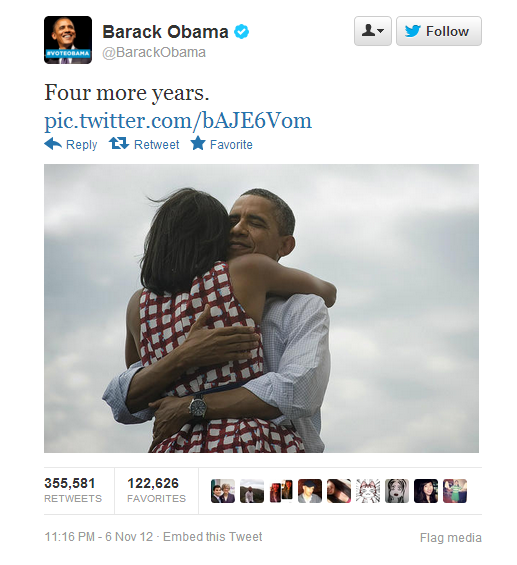
Tweets peeked to 66,019 tweets per minute (TPM) before 11 p.m. EST. But following the announcement of President Obama’s reelection by the networks and cable news stations, the number of tweets sky rocketed to 327,452 tweets per minute at 11:19 p.m. EST. President Obama’s social media team may have helped boost those numbers with a tweet of the President hugging Michelle Obama, and the words “Four more years.” That tweet  broke Twitter’s record in less than one hour as the most retweeted post of all-time, with over 350,000 retweets, and over 122,000 favorites, by election day’s end. By 7 a.m. EST, the post has been retweeted 585,000 times.

barack obama four more years tweet

Other notable stats from the night include:

  • 85,273 TPM -11:12pm ET – IA presidential race called
  • 69,031 TPM – 9:33pm ET – PA and WI presidential races called
  • 65,106 TPM – 8:03pm ET – Polls close in various states; AP calls races for IL, CT, ME, DC, DE, RI, MD, MA

Instagram

Voters were encouraged to document their voting process on Instagram, and Instagram users have been whole heartedly embracing the platform for showing their support for the presidential candidates. Some have been taking pictures of their patriotic accessories, while many others have even taken photos of their ballots in the voting booth. Unbeknownst to these users, some states have outlawed recording inside polling locations.

During the election day, Instagram shared more than 680,000 photos labeled with the term “vote.” Photos tagged with the words “election” or its variations saw 250,000 photos. Instagram photos tagged with the #obama hashtag clock in at 1.27 million, while users posted the #romney hashtag just 260,700 times.


Source : digitaltrends[dot]com

Social media election reactions that made us laugh, cry, and proud to be Americans

Best social media election day presidential election 2012

Social media played a huge role in garnering raw reactions from American citizens, and here's how you guys made us feel after an eventful 24 hours.

Decision 2012 is officially made and President Barack Obama will serve four more years as our nation’s leader. If you were like any of us here at Digital Trends, you were probably glued to Twitter, apps, and various news sources for the latest election updates. And like most current events as told by social media, there was a lot of information to sift through that made us laugh, cry, and even proud to be Americans — and for taking the opportunity to exercise our freedom of speech.

Laugh

Fools clinging to relevance

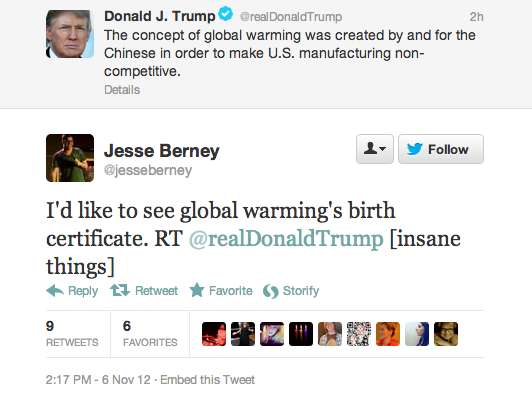
The amount of incoherent tweets from absent-minded people could not have made our office laugh any louder. The superstar troll this season, and maybe every political season, easily goes  to Donald Trump, who tweeted: “The concept of global warming was created by and for the Chinese in order to make U.S. manufacturing non-competitive.” Wait, is that supposed to be radical? Global warming isn’t a scientific issue, and Hurricane Sandy was just a random and devastating fart from the clouds?

Then, after Barack Obama was declared re-elected, good ol’ Don had the nerve to call the poll results BS and say America is not a democracy… even though the president won by a significant popular vote as well. Try harder, Mr. Trump.

Sarah Palin’s hair disaster

Via citylightsanddrunkhighfives

We swear this isn’t a way to be sexist because we’d absolutely point out if John McCain appeared on television with a horrible toupee, but our jaws dropped when Sarah Palin appeared on Fox News last night looking… well, different. During the 2008 campaigns, we remembered her as a relatively put-together woman with her hair neatly held back and a possible Bumpit hidden under that volumized poof. Last night, Palin proved that the recently released photo of her in big 80s hair, off-shoulder cropped top, and wedge heels while shopping at Kmart in Los Angeles isn’t just a phase. She’s officially lost it.

Arnold Schwarzenegger’s patriotism

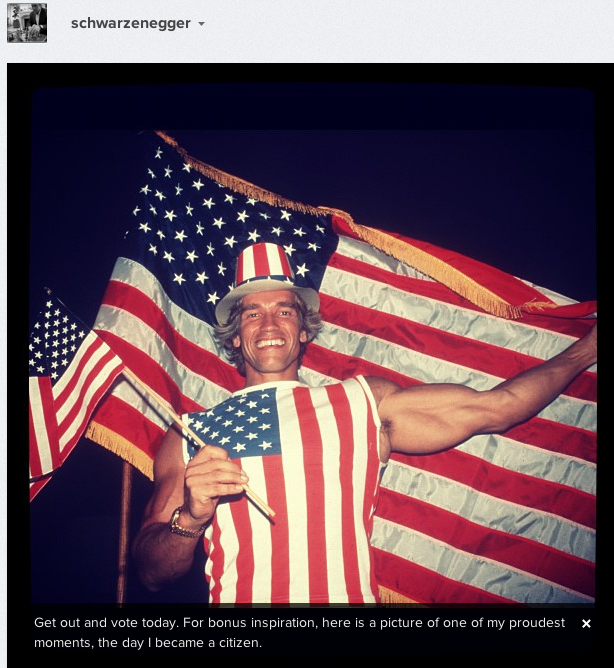
This was a hard call — does this gem belong under the Laugh or the Proud sections? We’re pretty happy for Arnold Schwarzenegger on his road to citizenship, but we don’t think we’ve ever seen anyone go this all out when they first received their United States passport. It’s adorable, sweet, personable, but let’s face it: It’s also hilarious. Were you inspired to go out and vote after this photo? And for the green card holders, are you aspiring for the same kind of celebration one day? Oh, sweet, sweet Arnold.

Proud 

Inventive ways to follow the elections

Back in the day (and by that we mean two elections ago) people used to sit around and actually watch television to keep up with state tallies and news analytics. These days, we have apps, widgets, even an HTML5-infused comic strip to help illustrate the journey of how we got to Election Day 2012. Following the elections has never been so interactive, creative, and dare we say, fun, to keep up with … in an effortless manner, no less. We are continually stunned by how app developers, Web designers, and graphic artists manage to find ways to make all this information digestible and approachable depending on your personal interests and styles.

Obama hits Reddit one last time

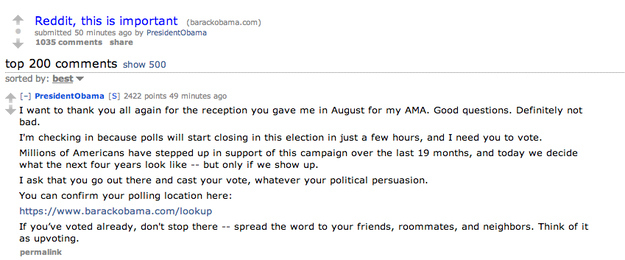
In the late afternoon of Election Day 2012, the POTUS decided that since he already had an account on Reddit, he might as well put it to good use to garner some last-minute Internet followers’ votes. “Think of it as upvoting,” he writes in a completely relevant and connected way to target his Reddit audience. He even referenced the viral Not Bad rage face. If there’s anything we learned this political season, it’s that the Web should also be considered a campaign stop, and probably the most cost-efficient one as well.

Amazing political discourse on Quora

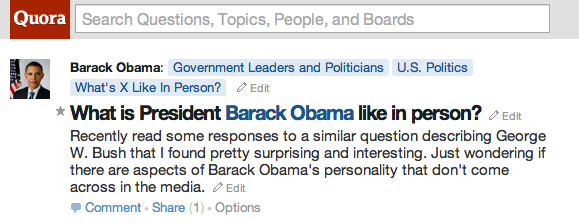
Quora is a great place to hit up when you’ve got questions you’re dying to find a logical, reasonable answer to, and the open-minded discussions on that site made us truly proud of our fellow American Netizens. Especially when the question was as simple as “What is President Barack Obama like in person?” It’s hard to envision any politician as a regular guy, but Peter Marquez, a former White House director for Space Policy (who’s also a republican), managed to do it in a completely unbiased manner. The discussion adds a sense of familiarity and a new personable level that reveals a different side to the president. Whether or not this had to do with your voting decision is another story, but we’re proud of the Internet nonetheless for using resources in a respectful and insightful way.

Social media trends soar

Twitter is one of the biggest go-to sources for real-time reactions to current events, from the Super Bowl to Hurricane Sandy updates. Decision 2012 was no different. Members of the social media world took to Twitter and Facebook to encourage friends to vote and make their voices heard, noting that you can’t complain about losing if you don’t vote. According to the latest Twitter update, about 31 million tweets were shared yesterday, hitting a peak of 327,452 Tweets per minute – right around when the president was declared re-elected.

Pepsi commercials and celebrity endorsements might be cool for most social issues, but Twitter takes the cake on spreading the word this election season (on top of the president himself on Reddit). It was also nice to see politicians offer congratulatory remarks to the president, and thanking voters for their support.

But of course, social media’s power did not come without hiccups, which brings us to our next segment…

Cry 

Instagramming your ballots

We get it, Instagram is everywhere. It’s in your local restaurant, bus stop, park, airport, and it’s an overall visual way to chronicle your life. But do explain to us what is so awesome about a piece of paper that shows you’ve voted? Are we going to start encouraging high school students to Instagram their SAT scores now? We know you mean well by proving your civic engagement, but we’re pretty sure no one would lie about taking part in democracy at a crucial time. Consider your voice heard, and keep those ballot photos to yourself. After all, it actually is illegal to photograph your voting booth in several states.

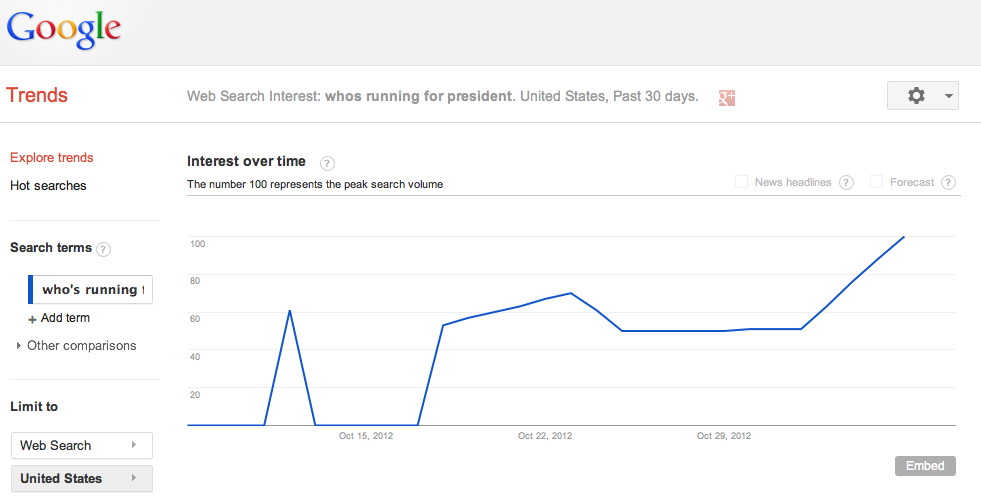
Google searches for “Who’s running for president” spike

Really, America? You waited until the last possible moment to figure out who the presidential nominees are this year or when election day is? It’s one thing to be undecided till the last minute, but completely clueless is unforgivable. This misguided, uninformed, careless inactiveness is everything that’s wrong with America. If you had to search on the day of the elections, we have to cry over the fact that people like you have the power to vote.

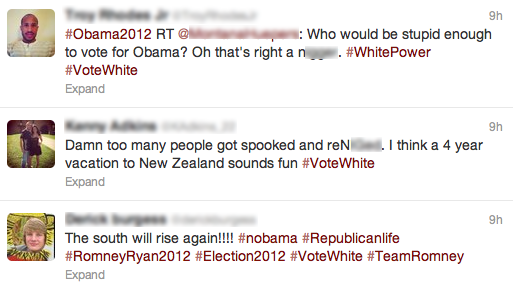
#VoteBlack and #VoteWhite hashtags remind us racism still exists

Let’s just get one thing straight in America: Barack Obama is not the first African American man to ever run for president. Turning this election into a race-based decision is as good as Donald Trump’s repeated taunts and challenges to bully Obama for his birth certificate and college transcript: Degrading, tasteless, and offensive. Worse, some of the offending tweets with the hashtag offered completely inappropriate remarks, showing just how vile people can be.

We had to blur out some horrible vernacular, but you can use your imagination as to what these words might have been. Thankfully, plenty of other tweets with the same hashtags shared our sense of disgust. Guess what, haters?


Technology is the clear loser in the elections

We obviously love, live, and breathe technology here at Digital Trends, but we have to admit: Real world instances of tech did not fare well during the elections whatsoever. A touchscreen voting machine in Pennsylvania seems to have spazzed out and auto-changed Obama votes to Romney. New Jersey’s email voting option backfired on residents because county email inboxes couldn’t handle the requests. Even if we can vote online, the opportunity opens e-voters to fraud and will make it that much harder to accurately tally the polls. Although we’re in this to help society advance, it seems the ol’ paper ballot is still the trustworthy method.


Source : digitaltrends[dot]com

How social networking and peer pressure swept Obama to victory

While apps and hashtags have been all the rage this election season, another age-old mechanism has surfaced thanks to social media: Good old-fashioned peer pressure.

voting peer pressure presidential election 2012

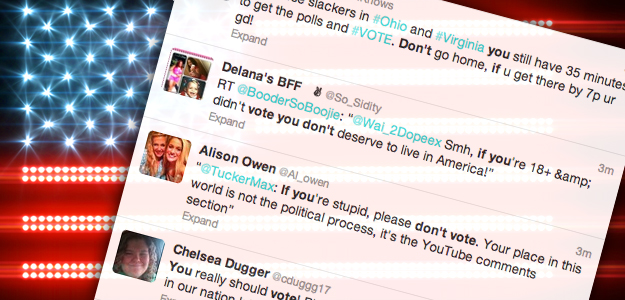
Hey, did you vote yesterday? Oh, that’s right – you told me in some odd million ways that you did: You hit the Facebook “I’m Voting” button, checked in to your polling place using Foursquare and received your “I Voted” badge that you then tweeted out using the #ivoted hashtag. And then there was that possibly illegal photo of your ballot and local polling place you posted on Instagram.

This is being called the social media election – the first time that candidates and the world are using social media to campaign, predict, and get out the vote. But after today, it’s clear this is our peer pressure election.

Up until now, social networking efforts have been focused on educating users, as well as serving as data sources for a barrage of infographics and charts (the effectiveness of these being debateable). But things took a turn yesterday as the polls opened: Social networks were flooded with bragging rights, badges, pictures, and hashtags showing off civic engagement.

When did participating in politics on the civic level warrant a pat on the back from your entire social circle? People have been voting for a really, really long time and that little sticker used to be enough. Talking about politics and voting traditionally was a private matter, something you kept close to the chest because it wasn’t polite to initiate a potential disagreement.

Of course, nothing is personal anymore. Social networking made it okay and normal to talk about what you had for breakfast, whether or not you should cut your hair, how exactly you feel about your new running shoes … everything. Everything is relevant and interesting and up for discussion – even if it’s not. So, of course, that’s going to include politics.

It’s been made cool to get politically involved and motivated, and to simultaneously flood your friends’ feeds with near-threatening statements about voting. The same people that you’ve seen posting drunken bar photos and needy song lyrics and bathroom mirror-taken profile pictures have also been the ones bragging about their vote and urging – shaming, even – you to do the same. Every time I got an app-prompted email or text pushed from a friend or saw a tweet or Facebook post roll in touting their voting accomplishment and telling me to be as politically engaged as they are and do the same, I just want to scream, “Yes. Got it. I voted too, I just don’t feel the need to scream it from the rooftops. Way to go for doing the bear minimum in a functioning democracy, something that people in other countries fight and die for. You’re a national hero!”

But here’s the thing: If it worked, if it increased voter turnout, then it was worth it. One thing we already know is that the youth vote looks to be even more important during this election than four years ago. As of press time, national exit polling shows that 19 percent of the electorate was between 18 and 29 and that Obama won this group by 24 points – in fact, Obama captured 60 percent of the youth vote. 

A study also shows that being able to hit this button and immediately share your activism is motivating people to vote, and that just seeing it is also increasing voter turnout. There’s also this report from the American Political Science Association that explains people get a kick out of others recognizing their activism: 

“A large-scale field experiment involving several hundred thousand registered voters used a series of mailings to gauge these effects. Substantially higher turnout was observed among those who received mailings promising to publicize their turnout to their household or their neighbors. These findings demonstrate the profound importance of social pressure as an inducement to political participation.”

As of press time, overall voter turnout appeared down from 2008 and whether or not the youth vote was up or down was unclear. Pundits are going back and forth on this, as well as the overall effect of Hurricane Sandy on voting the Northeast and Mid-Atlantic. But one thing is clear: the youth vote cannot be ignored, and all presidential hopefuls will need to court this age bracket. 

Facebook also had some numbers to report. According to the network, 9,682,443 (as of press time) of its users hit the I Voted app to log their engagement. 

We’ve yet to see official metrics on voter turnout, young voters, or any hard numbers (if those can even exist) on social media’s influence, but a correlation seems implicit. There’s something much more emotional about seeing your entire social network buzzing about the election than there is about getting a pamphlet in the mail. That whole “fear of missing out” theory that social networking exacerbates absolutely applies to this election, and – annoying though it may be – it’s becoming clear that connections we forge on Facebook are stronger than we may have thought.

While that means the cynical among us (like, you know, me) have to suffer through a barrage of slactivists who checked two boxes on a ballot, took an Instagram photo, tossed it in the mail, and want a virtual pat on the back … well, in the name of increased civic engagement: Here’s to you, socially-motivated and peer-pressured voters. We’ll see you in 2016 – because you’ll make sure we do. 


Source : digitaltrends[dot]com

Nov 1, 2012

Curalate’s Promote tool takes the pain out of Pinterest contests for marketers and users

Curalate launches its Promote promotion module today to solve the pain points of running contests on a visual social network like Pinterest.

Pinterest is every social media marketer’s dream come true. Still, it’s something of a misunderstood tool, not to mention that there are few resources available to brands to help with their campaigns. Today Curalate, a social media monitoring and analytics service for image-based marketing, is solving that pain point with the launch of “Promote.” Brands can now take the guess work out of hosting contests and promotions on Pinterest, while tracking how well the campaigns are doing.

The inherent problem with creating an analytics platform to track the virality of pins on Pinterest is due to the image-based nature of the network. What brands want to know is, “What’s my most popular product on Pinterest, and in what color is it popular?” But the answer to that isn’t as simple as it seems. “That’s a very difficult question to answer for a brand today,” says Curalate CEO and co-founder Apu Gupta.

Tracking the comments and text accompanying a pin is unreliable. When a Pinterest user talks about an image that they’ve pinned, Gupta explains, most won’t say “I love this sweater from JCrew.” They’ll say “I love this sweater.” And you might think that URLs are a way for a brand to track pins, but you’d more often be wrong than right. If a user has pinned a scarf from a catalog page feating a cornucopia of scarves in 10 colors, it wouldn’t be possible to figure out algorithmically what color scarf has been pinned from that page.

This is where Curalate comes in, and it gets interesting. Curalate tracks where the images are being shared on the visual social network from pins to repins. Its robust analytics platform is powered by a sophisticated algorithm that examines every pixel in a pinned image, and matches that image to a database of images to determine what type of product was pinned by a Pinterest user. “We look at several million images daily and compare that to billions of images that we already know about,” says Gupta.

Promote is a new product feature launched today by Curalate. The product combines Curalate’s analytics technology with Promote to offer brands a frictionless way for creating and running promotional contests using Pinterest. Without a service like Curalate, Pinterest contests are a complicated ordeal; Gupta says they are broken. “The way that brands try to run these contests places a lot of burden on the consumers.” The contest process even for us, when Gupta described the process was overwhelming. To submit an entry for a Pinterest contest, participants may be asked to name their board in a specific way, hashtag pins, and pin multiple pins. Once that’s done, participants typically are required to email the brands with the location of their pins. It’s a logistical nightmare for both contest participants and the brand hosting the contest.

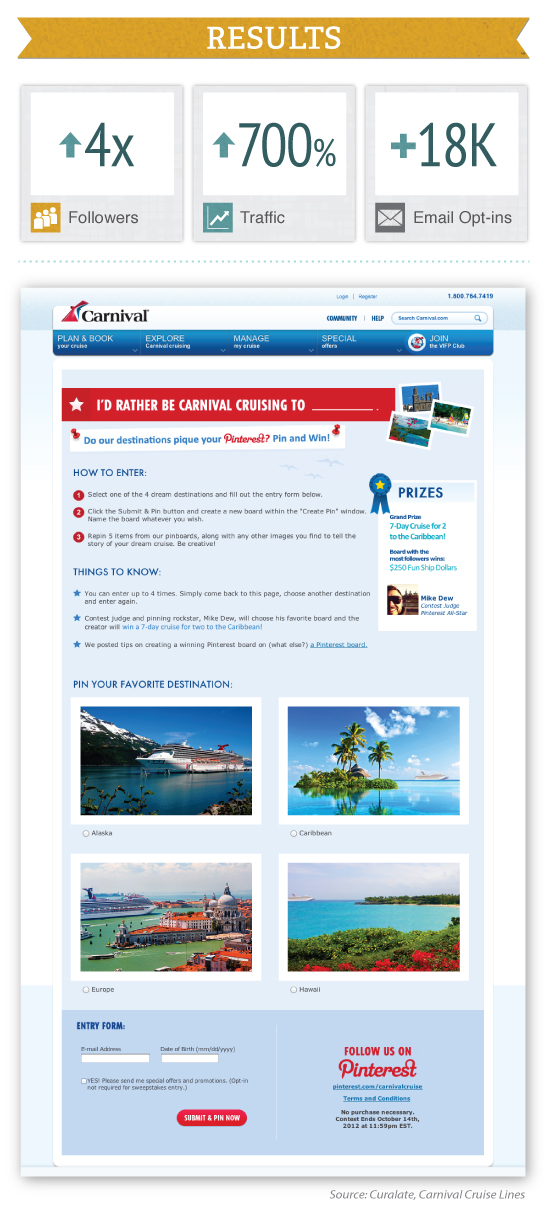
Gupta pointed us to a case study that represented Curalate’s capabilities during the beta testing phase with its client, Carnival Cruise. During an 11-day entry period, Carnival Cruise saw a fourfold increase in followers, 700 percent boost in traffic to its site, and 18,000 email opt-ins (45 percent of entrants).

Pinterest, compared to Facebook and Twitter, is still a fledgling social network with just an estimated 12 million users (as of May 2012). But a recent study by BizRate Insights sheds light on the power that it packs as a key driver for commerce. It’s the fourth largest driver of traffic, and 70 percent of users are on Pinterest to figure out what to purchase. Just 17 percent of Facebook users could state that as a reason for using Facebook. And 43 percent use Pinterest to keep up with brands and retailers, compared to just 24 percent of Facebook users. For this reason Pinterest is an enticing marketing platform for brands looking to sell their services or products.

Giving the interest in photo-sharing lately (Instagram is quickly becoming a hub for marketers) Gupta reveals to us that Pinterest is just one platform that the company is working with at the moment, and hopes to expand its service to other visual social media marketing channels in the near future.

 You can view an example of a Curalate Promote contest below:

carnival cruise


Source : digitaltrends[dot]com

Oct 26, 2012

How to Find Your Facebook ID

As of March 2012, an estimated 901 million people are active users on Facebook, the most popular social media network on the planet, I believe this number has increased to over 1 billion people. The social networks has taken great measures to manage each users account with a number of features to provide their members with security and privacy while using their accounts. When a new member sets up their Facebook account for the first time, the system immediately assigns the Facebook user with an ID number.

For whatever reason, users may want to know how to retrieve their Facebook ID. The steps to do this are simple, and just a few clicks away.

How to Find Your Facebook ID Number

1) Log into your Facebook account.

2) You should be able to see your name beside your profile picture at the upper right corner, click on it

3) There are two ways of doing this, you can either hover your mouse over your profile photo or click on your profile photo and wait for the page to load.

5) Go to the URL bar in your browser with your mouse and slide it along the bar; you should see a string of
numbers appear.

6) Look for the set of numbers that follow after the word “fbid=”.

7) This is your Facebook ID number.

Social networking websites such as Facebook has one priority which is to help their account users stay connected with their family and friends, and also have endless opportunities to meet new people along the way. Email, phone numbers, and physical addresses can all be easily accessed with an active Facebook ID. The Facebook ID number especially comes in handy if you’re a person who uses Facebook applications on a regular basis. It also allows you to compare your social ranking with your friends’ ID’s as well.

Also See: How To Enable Your Facebook Timeline: Fast & Easy

A Facebook user who wants to know how to find their ID number by means of an app can retrieve it by following these instructions:

1) Log into your Facebook account

2) In the search box, type “What is My ID?”. Locate the top search result from your query in the drop-down
menu.

3) You will see the phrase, “Go to App”, click the tab and then click “Allow”.

4) Your Facebook ID will appear.

To locate Your Facebook Fanpage ID, you can follow similar steps

Tags: Facebook ID, Find Facebook ID, Get Facebook ID

Source : techtalkafrica[dot]com

Oct 25, 2012

How to Get a Job Using Social Media

How to get a job using social media is a recent topic in job seeking conversations. The innovation of social media is allowing people to find work every day. Getting a Job using social media is easier than you think. Social media helps you connect to the right employers because many companies are using social media as a tool to scout for talent. Some job seekers are using the traditional way of finding jobs and it is giving them negative results. Using social media as a tool to find a job enables you to beat the trend of failure. Understanding who you are and how your skills translate into the job market will help you find the job you’ve been waiting for.

Job Search

Flickr image courtesy of glokbell

Social media websites allow you to create a unique profile that showcases your skills. After you have created your profile you can start relationships with other job seekers or people that are employed at the location you want to work at. Realistically, job seekers find and learn about jobs through other people, not so much computers. If you develop a personal relationship with employers through various social media websites your chances of getting hired will increase. Social media benefits not only job seekers but employers because it eliminates cold calling.

Here are some websites that can help you develop relationship with other job seekers and employers.

LinkedIn is a great website for job seekers. When you create a profile, it’s recommended that you upload all your email contacts. LinkedIn allows you to filter your job search to keep the results relevant to your set of skills. With this website, job seekers can perform background research on each company. Finding background research on each company helps job seekers because employers will notice that “homework was done” during interview.

vCard in LinkedIn

Flickr image courtesy of topgold / Bernard Goldbach

Facebook

One the most popular websites on the planet Facebook has a job board overlay known as InTheDoor.com. This tool connects Indeed.com job board database and your Facebook social graph.

Technology has enabled us to apply for jobs on the go. More job seekers are using smart phones like IPhone and Android to look for work. These smart phones can help you look for jobs around the area you are currently located in. If you have an IPhone, you should download an application named Layar. Once this application is installed you should search for a tool name JobAmp Mobile. This allows for a convenient way to search for jobs while you walk around your city.

Having paper resumes isn’t always the best choice when preparing for your job search. A recent survey from OfficeTeam survey, suggested that eventually paper resumes will be replaced by social media and its profiles on networking sites. Profiles let job seekers be creative and really show their uniqueness to employers. Having the right profile helps you stand out in an application pool that is unfortunately increasing every day.

Tags: Social Media Job Hunting, Social Media Jobhunt, Social Media Jobs, Social Media Jobsearch

Source : techtalkafrica[dot]com

Oct 19, 2012

Liberal Democrats More Likely to Hit ‘Like’ Than Conservative Republicans, Says Pew Report

ht obama facebook jef 121019 wblog Liberal Democrats More Likely to Hit Like Than Conservative Republicans, Says Pew Report

Image credit: Twitter

Does your political leaning say anything about how you use Facebook‘s “Like” button or social media in general? It could. The Pew Internet & American Life Project has found, among other things, that liberal Democrats are more likely to hit the “Like” button than conservative Republicans.

Specifically, 52 percent of liberal Democrats have “liked” a post to promote material related to politics, while 42 percent of conservative Republicans have done so. Pew also found that 38 percent of the social media-using population has used the “like” function to promote political issues.

Democrats are also more likely to encourage people to vote on social media. Forty-two percent have done so, compared to the 36 percent of Republicans.

In other areas of social media use, though, it appears that Democrats and Republicans aren’t all that different. For instance, Pew said 42 percent of liberal Democrats and 41 percent of conservative Republicans who use social media have posted their own thoughts or comments on social media sites.

Pew said 39 percent of Republican social media users repost political content from others, while 34 percent of Democrat social media users do so.

“There is a mixed picture along party lines. One party doesn’t have an obvious social media edge. The biggest driver here is whether you are interested in politics in the first place. If you talk about it with friends, you are going to use the social tools to talk politics,” Lee Rainie, director of the Pew Research Center, told ABC News.

Kay Lehman Schlozman, a professor of political science at Boston College and co-author of the survey, said, “I would not hyper-analyze the differences. What is clear is that the liberal Democrats and conservative Republicans are more active than moderates or independents because they care so much more about politics.”

Beyond partisanship, the rise in usage is certainly the major takeaway. The report found that 66 percent of the social media users use services like Twitter or Facebook to engage in some form of political discussion. According to Pew, that amounts to 39 percent of all American adults.

The results of the report were based on a survey of a national sample of 2,253 adults (18 or older). It is important to note that the survey was conducted between July and August and that some of these patterns may have changed as the election season has progressed.


Source : abcnews[dot]go[dot]com

Solving Crime With Social Media [Infographic]

As you already know, social media can be a great tool for documenting our daily lives. It turns out, when it comes to solving crimes, over 80% of law enforcement personnel are using social media to conduct investigations.  A survey of law enforcement professionals recently conducted revealed that majority used social media for several reasons, from identifying people and information to gathering evidence and recruitment, let’s take a look at this interesting infographic from Background Check and see how Social Media can be used to solve crimes, we think you’ll find it interesting

Solving Crime with Social Media
Compiled By: BackgroundCheck.org

Report an error

No tags for this post.
Source : techtalkafrica[dot]com

Oct 18, 2012

AOL’s Patch to be profitable by 2014

AOL's Patch local service is headed towards profitability by the end of 2013, according to AOL CEO Tim Armstrong. Proof that the world still needs local media?

Despite many predicting doom, gloom and the death of the very concept of hyper-local content, AOL has announced that Patch, its local news service, is expected to head into the black within the next twelve months. Speaking at a conference, AOL chief executive Tim Armstrong said that the news underscores his believe that investing in local Internet is the way of the future.

Armstrong talked about the growing success of Patch at the Dublin Web Summit today, saying that the service has over 17 million users, and is on route to being profitable in the fourth quarter of 2013 (This year, Armstrong says, the service will generate somewhere close to $40 million).

Armstrong has reason to be bullish about the success of Patch; he co-founded the service as Patch Media way in 2007, two years before he joined AOL with the intent of creating a service that would be able to offer users similar information as would traditionally have been found in local newspapers before the Internet quickly put a stop to the idea of a healthy newspaper industry (Armstrong is said to have founded Patch Media as a response to being unable to find enough information about his hometown of Riverside, Connecticut, online). The mix of local news, weather, and traffic information initially attracted criticism from many onlookers, who cited poor working conditions (and, in some locations, poor quality of output) as an argument against such a decentralized business model. Nonetheless, when Armstrong became AOL CEO in 2009, one of the first things he did was purchase the company for an estimated $7 million in cash (Armstrong was paid in AOL stock).

The news that the site is approaching profitability has Armstrong happily sharing the wisdom behind his initial decision to launch the service in the first place, telling the Dublin Summit audience that “the needs of the local community remain the same. The way we approach it is, by investing in the community, we become part of the community and long term that works. It was the business model for local newspapers between 1965 and 1995.” And, of course, we know how well that worked out for local newspapers after 1995.

Since its acquisition by AOL, Patch has been criticized alongside other AOL/Huffington Post properties for the non-payment of contributors, something that Armstrong dismissed by describing AOL as “the single largest investor in journalism” online, going on to describe the company as “big believers in journalism and big believers in paying journalists.”

Perhaps, when Patch starts turning more of a profit, then its contributors will start seeing more evidence of that. Currently although there are paid positions (editors and sales managers, apparently), other contributors do it for the love of the community – or, perhaps, the hope of a payday at some point in the future.


Source : digitaltrends[dot]com

Video conversion service YesVideo can now send your preserved memories to Facebook Timeline

yesvideo profile

YesVideo converts vintage media into a digital format, and it's adding new social features that will allow customers to publish indexed footage to their Facebook Timeline.

If you have old VHS tapes, 8mm, miniDV, or photos, you’ve probably looked for a way to digitize the priceless memories from your life — and one of those ways is YesVideo, a conversion service that takes your ancient media and brings it into the 21st century. And starting today, YesVideo is adding a new feature that will allow you to publish those memories and any other archaic media to your Facebook Timeline.

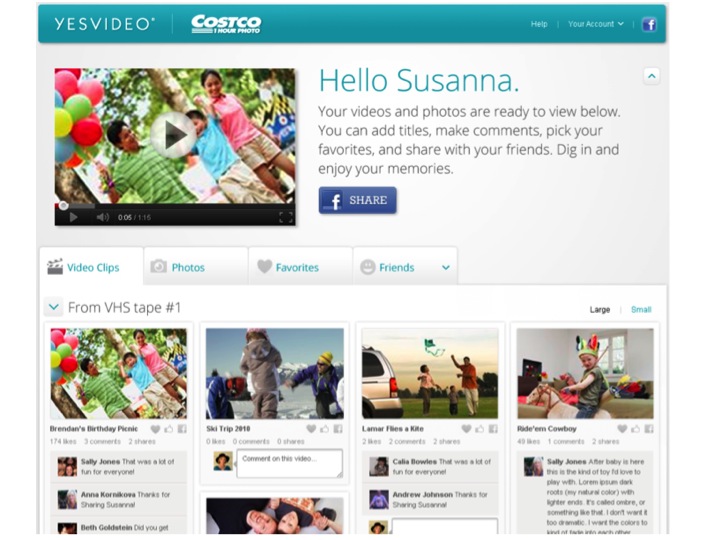
You can submit your vintage videos at any of YesVideo’s at CVS/pharmacy, Walgreen’s, Walmart, and Costco retail locations. The footage is sent to YesVideo’s San Clara or Atlanta locations, where it’s digitized and uploaded to the platform’s cloud for you to view and share. While YesVideo’s primary focus is its cloud hosting service, the company sends you a DVD copy, alongside the original media as well. 

yesvideo commenting

To make the experience more social, YesVideo’s Facebook Timeline integration will show up on your profile in a couple ways. First, if you log into YesVideo using Facebook Connect and comment or like a friend’s video, those actions will be published to your Timeline. Second, YesVideo is using Facebook’s Open Graph to offer you a quick way to share clips of the converted footage on your own Timeline. To share a video, you just click the “Share” button on your YesVideo profile page, add whatever metadata your choose, and publish the media to the corresponding date on your Timeline. It’s worth mentioning that the visibility of content published from YesVideo to Facebook is restricted strictly to your friends.

YesVideo is also introducing a feature that indexes your video algorithmically so your content is easily digestible. What this means is that your converted videos uploaded to YesVideo will automatically be broken down into bite-sized clips (called chapters). You’re more likely to share shortened footage than publish the 65 minutes of video that’s converted on average for each YesVideo customer.

YesVideo’s Timeline integration was a natural progression for the company, says CEO Michael Chang. Chang says that based on initial testing, the company has “really seen some explosive growth on Timeline.” Users were already publishing an average of three times more videos in the last two months alone. In August, users shared just 2.3 YesVideo videos on Facebook, and during the Timeline integration trials this month that figure jumped to 6.7 videos. YesVideo users seem to appreciate the collaboration of these two services in general, as 37 percent of them have been logging into the platform through Facebook Connect, so tying the two closer together is a natural next step. 

There’s a spillover effect for Facebook as well, as the partnership will help fill out the Timeline. While the last five or so years of your Timeline might be bursting with content, years prior are likely fairly empty. Facebook encourages you to share important historical events in your life including your new job, marriage, or even your birth using the “Life Events” tab. These are all moments possibly documented through video or photographs that YesVideo can seamlessly port over to the Timeline, while also digitally preserving. Talk about killing two birds with one stone.

“We’re posting content like your birth, your first steps, playing with grandma, first birthday, second birthday, and third birthday,” says Chang. “We’re getting that kind of stuff posted to Timeline.”

According to Chang, YesVideo digitizes over 1.5 million videos per year, and with its indexing feature, turns that into approximately somewhere between 75 million and 150 million clips a year. The company is on track to make $60 million in retail revenue (this being YesVideo’s brick-and-mortar operations), which makes up 95 percent of the business.

Next on the agenda is offering an open API so third-party developers can create additional tools, like video editing. “We think of ourselves as more of a platform, so we’re going to start opening up the platform to third-parties,” says Chang.

Chang also hinted at a few features on the road map: “This idea that you have all your home videos and access to your extended family’s old home videos and you sit down and log into your Google TV for instance or your Roku box and voila, you’ve got your home videos that you can share with your family or on your mobile device.” The future of YesVideo, he says, is the idea that “personal home media is an entertainment category for customers.”


Source : digitaltrends[dot]com

Investigation finds children as young as 14 working at Foxconn

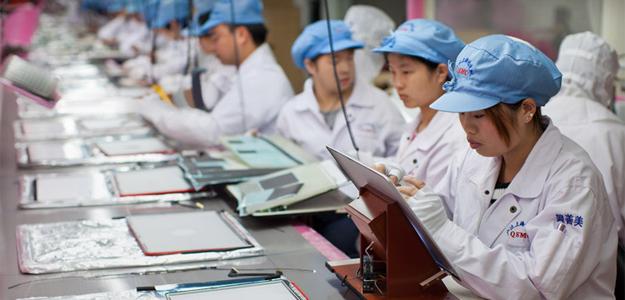
foxconn workers apple iphone ipad mac

An internal investigation at Foxconn, prompted by the media, has confirmed at least 50 children under 16 have been found working in one of its factories.

More controversy has hit Foxconn this week, as workers under the age of 16 have been found working in one of its factories, breaking not only Chinese labor laws, but also Foxconn’s own regulations.

Rather than the news being broken through a series of leaks or by an undercover expose, the scandal was confirmed through an internal investigation carried out by the Hon Tai Precision Industry, Foxconn’s parent company. This wasn’t solely done out of the goodness of its heart though, but after Chinese media and the China Labor Watch group accused the company of employing underage workers.

A group of interns aged between 14 and 16 were found to be working at the Foxconn factory in the Yantai province, and had been there for around three weeks. Recently, Foxconn had appealed for extra workers in the area, after it found itself needing 19,000 extra personnel to cover a staff shortage.

Although the report doesn’t state how many underage workers were found in the plant, Chinadaily.com says that Foxconn has sent 56 interns back to their schools. A statement from the company says it takes “full responsibility for these violations” and it has “apologized to each of the students for [its] role in this action.

A statement from China Labor Watch says schools are as much to blame as Foxconn, as that’s who sent the underage interns to the company in the first place. Foxconn however, did not check the IDs of these young interns, or failed to recognize fakes.

Interns, conditions and child labor at Foxconn

Foxconn’s interns are essentially trainees, who must complete a one to three-month course before becoming fully fledged employees, which includes instruction on the company’s ethos and expectations, plus 10-hours work a day on the production line. The Chinadaily.com report says interns usually earn less than 2,000 yuan per month, which is around $320.

This isn’t the first time Foxconn has been found to employ underage workers, as Apple discovered 91 children below the age of 16 working there during an audit in 2010. Apple stopped working with the factory that employed almost 50-percent of those workers, and according to its Supplier Responsibility code of conduct, hasn’t found evidence of underage workers since.

NBC.com says the Yantai plant doesn’t produce Apple hardware, and a source speaking to Chinadaily.com says the workers were assembling gamepads for the Nintendo Wii. As a company, Foxconn builds products for Dell, Sony, Intel, Acer and many others.

The discovery of more children working at Foxconn is another in a string of scandals to hit the company in the last few weeks alone, following on from reports of strikes due to intolerable living conditions, riots and earlier in the year, suicide threats too. Despite this, a report by the Fair Labor Association says conditions at some of Foxconn’s factories are improving.


Source : digitaltrends[dot]com

Oct 17, 2012

Adult Swim launches Thing X to compete for Internet comedy supremacy

If you liked the Onion, but wished that it satirized the Internet in the same way that it satirized the news media, you may be very, very interested in new start-up Thing X.

Not content with creating the latest viral video sensation in the form of The Greatest Event in Television History, Cartoon Network’s late-night offshoot Adult Swim has taken another step towards dominating the Internet comedy scene with the creation of a new website, Thing X.

According to the announcement of the site’s launch, “Thing X uses the conceptual launch point of a click-hungry web portal to satirize everything on the Internet through exclusive videos, columns, interviews, reviews, e-mails, blurbs, bleeps, cybersnips, and podcasts.” If you’re wondering what that actually means in non-corporate PR-speak, perhaps the website itself can help put things in some perspective:

As the site’s creative director, Joe Randazzo, explains, “Each month, the site will explore one central, human theme, through a series of video, polls, incantations, recipes, quizzes, and… blogs, or whatever.” So, that’s much clearer, then.

Perhaps the site’s own “About” page will offer more clarity: “Thing X, Inc. strives to provide an unparalleled digital experience – not through a monstrous, semi-organic web-based intelligence that will exploit users’ clicks and page views to gradually enslave them,” it reads, “but by providing the best content from every square micrometer of the Internet, every single day.” So that’s… good, I think?

All of this sounds somewhat Onion-esque, it has to be said. Turns out, there’s a really, really good reason for that: Thing X is essentially made up of Onion writers. Randazzo is a former editor for the site, and he’s joined by senior writers and editors from The Onion, as well as the site’s former digital product manager. Despite this, the announcement from Adult Swim of the site’s launch would rather play it up as something brand new and completely original, with Randazzo calling Thing X “a unique opportunity for us to create something totally new and original that is very much a product of the digital age.” That sounds like the kind of sarcastic comment he makes on the site, but apparently he means it this time, adding that “the content we’re making for Thing X is kind of insane. It’s going to be unlike anything else out there.” Well, aside from The Onion, of course.

Outside of Onion alums, the site will also feature contributions in future from Adult Swim regulars including Gregg Turkington, Aqua Teen Hunger Force‘s Dave Willis and Tim and Eric Awesome Show, Great Job!‘s Tim Heidecker. It may not necessarily have the immediate appeal of The Greatest Event or even some of Adult Swim’s regular programming – Ah, Venture Bros, it’s been far, far too long since we’ve enjoyed your concise pop cultural cruelty – and it may be a little too hard to separate the fictional desperation for clicks from the reality, but still: One to watch in future, I suspect.


Source : digitaltrends[dot]com

Oct 11, 2012

Fab Launches New iPhone and iPad Apps

If you haven’t heard of Fab, you will soon. The shopping website with a social media twist launched 16 months ago, in June 2011. By July 2012 it had five million members and today it is at 7.5 million users.

The e-commerce site has become one of the coolest places to shop on the web. It has everything from clothes, home furnishings, fun gadgets, stuff for kids, food and even pets. But it’s not only the cool products and great selection that has made Fab so popular, two tech components have been central to the success: social media and mobile.

“Fifty percent of our members are buying through their mobile phones,” Fab CEO Jason Goldberg told ABC News in an interview Wednesday. “With that we challenged ourselves to think beyond the existing apps and to start from scratch to build something for the very mobile users.”

The new Fab apps for the iPhone and iPad have been given a fresh coat of paint. Both apps let you swipe from the left to reveal a toolbar and you can see different tabs, including the latest items added to the site, popular items, and things that are popular with your friends.

“We wanted to present an experience that is design-worthy as the products we sell. We want people to think of Fab as a place to check out every day, to see what is new,” Goldberg said.

It’s that “latest” feed, which gives the site and app a newsy feel, and social media integration that has also been key to the service’s fast growth.

According to Goldberg, over 50 percent of the users have joined the site from social sharing. You can login with Facebook to the shopping site, easily share items you like with friends, see what your Facebook friends like on Fab.com, and even use Facebook’s new Collections feature on Facebook.com itself.

Goldberg says it is working on an Android app, but it simply doesn’t see the same demand from Android users. “We do have an Android app, but we find that only two percent of our usage is on Android. We wish we had more Android usage,” he explained.

The new Fab apps for the iPhone and iPad will hit the App Store today.


Source : abcnews[dot]go[dot]com

Rockmelt social browser launches on iPad offering a ‘fast and fun’ mobile experience

rockmelt

If you fancy a new kind of web browsing experience on your iPad, check out Rockmelt, a Safari "fast and fun" alternative with social media at its core.

Alongside Firefox, Safari, IE and Chrome, Rockmelt is but a small player in the world of web browsers, but with the introduction of its new browser for iPad, that could be about to change.

Founded by Eric Vishria and Tim Howes in 2009, Rockmelt set out to provide a “fundamentally better web experience” by building a browser around how people use and interact with the web today, with a social media focus at its core.

Its ambition has inspired a number of backers to get involved, including venture capital firm Andreeson Horowitz, helping the California-based start-up to raise $40 million to date.

Now it’s moving from desktop to mobile with the launch of a free iPad version that maintains its social media focus, creating a mobile web browsing experience which is more touch than type and a breeze to use.

Imagine a coming together of Flipboard and Pinterest, creating a browser populated with content from your Facebook and Twitter feeds. Scroll down the image-heavy front page until something catches your eye, tap on the item and away you go. Read it without formatting or tap the specs at the top and view the content in its original form on its webpage.

Once you’re done, perform a two-finger pinch to lose it and return to your main page or swipe to the right to save it for later.

You don’t have to go for content from your own social media feeds – tap the browse button at the top of the screen and choose from a long list of other categories, including business, cute, geek, news, science and shopping.

Being a browser with social media at its heart, there are sharing options aplenty. Buttons for Facebook, Twitter and email are all within easy reach, but Rockmelt goes one step further, offering so-called emoticodes such as like, lol, want, wtf?, aww, and hmm for a one-tap response that makes a statement without having to pull up a keyboard.

Yes, it is a browser, so at the top there’s a window where you can tap in an web address if you really must, or a word or phrase to initiate a search on Google. Chances are, however, you’ll be too busy tapping away on the endless streaming content to think about heading elsewhere.

According to a blog post announcing the launch of the app, it took a team of developers eight months to create Rockmelt for iPad, with its main aim to make it fast, fun to use and easy to share content. “It is an entirely new way to explore the web, built for you and your iPad from the ground up,” it says in the post.

It’s definitely worth checking out. If you’re a frequent user of, say, Flipboard, you’ll get what it’s about pretty quick. If you’re coming straight from Safari, it might take a little longer to get your head around. For many, however, it may soon become the iPad browser of choice. You can find out more about it here


Source : digitaltrends[dot]com

Oct 10, 2012

Sling Media loosens up on details for the new Slingbox 500 & 350

Sling Media finally unveiled details on its new Slingbox 500 and 350 models today after a slip-up at a Best Buy store prematurely let the cat out of the bag.

Less than 10 days after someone spotted Sling Media’s unannounced Slingboxes  on a shelf at a BestBuy store come official details from Sling, which opted to remain tight-lipped about the new products until now. Let’s take a look at what’s new for the Slingbox 500 and 350.

First, it’s nice to see that we have images of the actual products, instead of shots of boxes on a shelf. Both look great, and the 500’s sleek, angular aesthetic is particularly cool. The real update here, though, is that the 500 will offer SlingProjector capability, allowing you to stream content from your mobile device to your television. Originally, Slingbox offered only what it called placeshifting technology, which allowed users to stream live and recorded television to their mobile PC’s, smartphones and tablets. This is a modest update, but one that brings the new boxes in-line with the times. As mentioned last week, the 500 also offers built-in WiFi. 

Furthermore, we now know that both models will be able to stream in full 1080p HD, which was expected, but, until now, unconfirmed. Slingbox is also rolling out new SlingPlayer software, which will retail for $15 initially, a price point the company says reflects a 50 percent discount as a special launch offer.

Overall the two new boxes seem more like updates to an existing formula –nothing too new here. But if you’re already a Slingbox fan, this impromptu release is a welcome one.

Both the Slingbox 500 and the Slingbox 350 will be available on October 14th. The 500 will retail for $300 and the 350 will retail for $180.


Source : digitaltrends[dot]com

Sep 27, 2012

How social media is sinking Mitt Romney

mitt romney social media fail

Love or hate his politics, Mitt Romney’s recurring social media slipups show how technology is changing the campaign game, and steepening on the learning curve.

The significance of social media is indisputable. While its monetary value is still up for debate, the influential role it plays in users’ lives is inarguable, and that’s become incredibly evident in the world of politics. The fact that campaigns now have Social Media Directors is proof enough that this stuff matters – as in could decide elections matters.

As November nears, it’s becoming increasingly clear that our next president takes social media seriously, and the results have been mixed. Presidential hopeful Mitt Romney has particularly had a rough go at attempting to mold the minds of America using these tools. A quick recap on the Romney teams social missteps:

  • The “With Mitt” app misspells “America” as “Amercia.” Hilarity and fodder ensue, as you’d expect.
  • Romney’s Twitter followers jumped more than 100k followers over 24 hours back in July, causing many of us to assume the campaign bought them. A charge they denied – but suffice it to say there’s a lot of evidence suggesting this was absolutely what happened.
  • The Romney donation products appear to copy wording from Obama’s.

And those are just some of the most obvious digital blunders – there are plenty of Romney gaffes that have gone viral thanks to the Internet, but that’s something else entirely. It’s the fact that the presidential candidate’s own efforts to embrace social media have been so cringe worthy that’s raising eyebrows.

Now, the Romney campaign is going on the offensive, trying to prove they – he – gets social media, mostly thanks to a handful of collaborations with some of the Silicon Valley elite and new product implementation. For instance, Romney’s team hit the ground running with Facebook’s new Sponsored Results feature shortly after it was available, and its propriety Square app and reader it’s been using for fundraising. Romney has the new Twitter profile set up, while Obama doesn’t. He’s arguably making better use of the tools at his disposal. 

This is all well and good, and these are things that Romney’s campaign – and Obama’s for that matter – should be doing. But the act of using social media to connect is what eludes Romney: He doesn’t exactly seem like a personable guy, and his attempts at humanizing himself using the social Web sound just as measured and calculated,and occasionally, awkward as everything else he does. From his laughable overuse of @ pinging President Obama every time he mentions him, to the fact that his Facebook posts are almost entirely written in the first person, as if we’re supposed to believe that he seriously pens each of these posts. It’s clear that painting himself as the Average Joe who uses the Internet just like you and I do simply isn’t within Romney’s reach.

romney and the mention

Honestly, this has nothing to do with politics – it’s purely personal. But advocates will point to his social media accounts’ impressive numbers, so they deserve mention. As of press time: 

  • Romney Twitter followers: 1,187,593; Obama Twitter Followers: 20,195,248
  • Romney retweets: 1,184; Obama retweets: NA
  • Romney Facebook Likes: 7,457,939;Obama Facebook Likes: 28,930,040

Given the fact that Obama is a veteran here, those are certainly admirable metrics. But there’s one that doesn’t get mentioned very much that also matters quite a bit and reflects outreach efforts:

  • Romney following (via Twitter): 269; Obama following (via Twitter): 672, 501

This critique isn’t about political leanings, it’s about the personal touch. All the optimization tools, hashtags, Sponsored Stories, and Promoted Tweets in the world can’t turn a man into a social media master. You have to understand how people talk on Twitter, how they respond on Facebook, and try as the Romney campaign might, the result has simply been to showcase that no, Mitt Romney is just not like you and me – and no amount of social networking can change that. 


Source : digitaltrends[dot]com

Sep 17, 2012

Winklevoss twins invest in ‘SumZero’ social network

Consider it social media deja vu: Having settled a lawsuit over ownership of Facebook, the Winklevoss twins are investing part of their settlement in... a new social network. What could go wrong this time?

Apparently attempting to prove the axiom of “If at once you don’t succeed, try, try again,” Tyler and Cameron Winklevoss are taking the money they earned as a result of their settling the long-running legal challenge to Mark Zuckerberg over the ownership of Facebook and investing it into another social network. Clearly, nothing can go wrong this time around, right?

The Winklevoss twins are reported to have sunk $1,000,000 of their estimated $65 million settlement amount into a new network for professional investors called SumZero, according to a report in the Wall Street Journal. But, unlike the first time they handed their money over to someone with a great idea and some technical know-how, this time there are strings attached.

The WSJ’s John Jannarone suggests that, this time around, “the Winklevosses plan to be more than passive investors” in the new venture, with the two instead hoping to be intimately involved in the running of the new venture with those responsible for the company – who just so happen to be old friends Divya Narendra and Aaalap Mehadevia, the former of whom was an ally in the legal fight against Zuckerberg. In fact, when talking to Jannarone about the new investment, Tyler Winkelvoss even described the arrangement as “the band is back together again.”

Officially, the Winklevoss’ investment comes from Winklevoss Capital, the company the two brothers set up in February to invest their wealth after last December’s settlement of the Facebook ownership battle. As such, it marks the very first investment made by the company, with the influx of cash coming four years into SumZero’s lifespan.

Currently, the site requires members to regularly submit trading ideas in order to maintain an active profile, with those who don’t submit ideas for six months finding their access to the site’s central database limited until they start contributing again; membership is currently free – although Narendra says that the company is considering paid access models for corporations and larger institutions so that they can look at the database without the need to contribute themseves – with each application being individually handled by Narendra himself to ensure that it meets the standards that he has set for the company (He claims to reject around three quarters of all applications for not meeting high enough standards; the site boasts somewhere in the region of 7,500 members at this time, apparently). Amusingly enough, Nerendra revealed that the Winklevoss brothers themselves didn’t have access to SumZero’s database before they made their investment in the company.

Moving forward, Tyler says that he and his brother want to “really roll up our sleeves” with SumZero, with his brother Cameron adding that “We always saw ourselves in careers as entrepreneurs or angels. My favorite toy as a kid was Legos. I loved building things, and that’s what we’re doing with SumZero.”


Source : digitaltrends[dot]com

Why aren’t there more movies based on apps?

We've seen movies based on toys, comics, television shows and even other movies. So where are the movies based on new digital media? Perhaps Hollywood isn't ready, claims a new New York Times report.

While old media has traditionally proven itself to be very happy at the idea of recycling itself into irrelevance – See the latest reboot of a television series/movie franchise/etc. to hit a movie theater near you soon – it has equally turned out to be something that is surprisingly slow at taking advantage of media that is outside of its immediate comfort zone. While we are now used to superheroes dominating the summer blockbuster circuit, it’s worth remembering that Tim Burton’s Batman movie came out almost twenty five years ago, and the original Superman: The Movie more than a decade before that. Even comic books, apparently, needed some time to be assimilated into the movie and television mainstream. All of which is a long way of saying, for everyone who may be expecting Hollywood to turn around any minute now and realize that there is a lot of Intellectual Property just waiting to be bought up, adapted and exploited for enterprising entertainment executives out there…? You may have quite a wait ahead of you.

If you’re looking for some evidence of that, then you need look no further than this weekend’s New York Times, in which the trials awaiting app developers hoping for a multimedia payday were enumerated in painful detail. Whereas Iron Man, Optimus Prime and even John Carter have specific audiences – and nostalgic appeal – the problem with apps (and even video games) is that, well, they appeal to too many people: “Should Talking Tom be a cartoon for children on Nickelodeon?” the piece asked, referring to the creation of Outfit7, an app developer looking to bring their brand outside of the tech field. “Or is it something more grown-up, perhaps for Spike or Cartoon Network’s Adult Swim? The wrong move could narrow the following. A Nickelodeon show, for instance, could make Talking Tom uncool for men in their 20s.”

Additionally, there is the problem that today’s app makers are more merchandise-savvy than many more traditional creators. “App makers want to keep potentially lucrative toy rights for themselves. But studio executives say it is hard for them to justify pouring tens of millions of dollars into the creation of a movie or television show unless there is an added revenue stream as an incentive,” explained the Times’ Brooks Barnes.

There is, of course, an even more obvious reason why moviemakers might want to stick with what they know for now: No-one in Hollywood has worked out a way to translate first-person interactive narratives – videogames, for the most part, or even analog like Battleship – into a successful movie just yet. Until they can work out how to create a pleasing story for all viewers out of something that so much of its potential audience has made up in its head, it’ll be awhile until we’ll see a massive influx of material that’s based even more on interactivity and less on pre-set conditions.

Well, Angry Birds aside, obviously.


Source : digitaltrends[dot]com