Pages

Showing posts with label shows. Show all posts

Oct 27, 2012

LG launches 84-inch, Ultra HD television at $19,999

LG Ultra HD 84LM9600 front

Finally transitioning from simply showing off 4K technology at trade shows, LG is now selling an Ultra HD television around the same price as some cars.

Earlier this week, LG held a launch event in Southern California to debut the company’s first Ultra HD (4K) television at a sizable list price of $19,999. The LG 84LM9600 has a native screen resolution of 3840 x 2160, four times the resolution of a typical 1080p television. While the amount of content available in Ultra HD resolution is incredibly scarce at the moment, the 84-inch LED Ultra HD panel also includes LG’s proprietary “Resolution Upscaler Plus” technology to up-convert 1080p content to the Ultra HD resolution. Regarding size, the 84-inch screen is the equivalent of four 42-inch, 1080p panels stacked in a rectangle shape. 

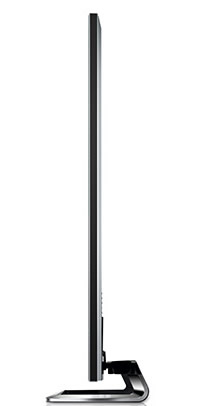
LG 84LM9600 sideWhile the television does include technology to allow consumers to watch 3D movies, an interesting feature directed at gaming consumers allows two players to play a multiplayer game without the need for split screen. Using glasses that are sold separately, the television is simultaneously displaying two video feeds and each pair of glasses is designed to pick up a specific feed.

In regards to 3D content, LG is including six pairs of flicker-free -glasses with the Ultra HD set. Flicker-free glasses are identical to glasses found within movie theaters, thus it’s inexpensive to add or replace glasses. Similar to other panels in the LG lineup, the company also includes a 2D-to 3D conversion feature with the set.

While the massive panel is just 1.57-inches thick, the television is over 150 pounds in weight plus another 25 pounds for the stand. Consumers will have to be careful when wall mounting the LG 84LM9600 which may require professional assistance for installation.

However, consumers won’t have to worry too much about a wired network connection near the home theater as the 84-inch television comes with built in Wi-Fi. The television ties into LG’s Smart TV ecosystem, so consumers will have access to plenty of applications like Netflix, Facebook, Vudu, Skype and Hulu Plus.

LG 84LM9600 sizeThe LG Ultra HD panel includes the gesture system and “Magic remote” found on other LG televisions. Consumers have to make gestures with the remote to interact with menus on the screen in addition to using voice commands. Specific to sound, the television includes a 10-speaker system rated at 50 watts.

The 84-inch panel also has a significant amount of audio and video inputs. Besides four HDMI inputs and three USB 2.0 inputs, the LG set includes an Ethernet port, antenna/cable input, composite audio / video input, component video input, RGB PC input and PC audio input. In addition, there is an optical digital audio output to send audio content to a receiver. 

While the list price on the television set nearly breaks $20,000, the sales price in stores will likely be around $16,999 according to LG management. However, it’s highly unlikely that an online retailer like Amazon will carry the massive television. According to LG’s site, there are currently no online retailers stocking the television yet and it can only be purchased at a handful of high-end home theater stores. To date, the only other Ultra HD television that will be available to consumers this year is Sony’s 84-inch XBR-84X900. However, the list price of Sony’s television is significantly higher. On the Sony store site, the price of the display is $24,999.99.


Source : digitaltrends[dot]com

Oct 19, 2012

How to bypass video region restrictions in under a minute

How to skip region restrictions with a proxy

Accessing your favorite movies or TV shows on the Web isn't always easy due to a pesky thing called region restrictions. Here is a beginner's guide to using a proxy to skip over the technical wall and start enjoying content from around the world.

I’m not going to lie to you: My girlfriend and I are big, sappy, aristocrat-loving “Downton Abbey” fans. So when season three debuted in September, we could hardly wait to start watching. Problem is, the show is currently only available to viewers in the U.K., and won’t make its way stateside until January 6, 2013. Impatient, we frantically began searching for a way around this useless (to us) hurdle — but we weren’t willing to start downloading things illegally.

Such is the dilemma of many Web users who try to access U.S.-made content from their respective international homes. Hulu, ABC, NBC, and even “The Daily Show” are blocked in many countries not called the United States. This is also true of music services like Spotify, and a wide range of other sites and services across the Web. Similarly, those of us in the U.S. cannot use BBC iPlayer, or, in the case of “Downton Abbey” fans, iTV Player.

Now, there are quite a few solutions to the problem of region restrictions. Unfortunately, the most user-friendly options, like a Virtual Private Network (VPN), usually cost money (not a lot, but some), or are complicated to use if the most technical thing you’ve ever done with your PC is install Firefox. There are also options like Tor, the anonymization software that masks your identity. And this is a fine option, but does involve downloading and getting to know additional software.

Fortunately for those of us who are not technical wizards, there is a quick and easy way to bypass region blocks in less than a minute, for free. I’m talking about using a proxy, and it’s surprisingly simple to use. (If you already know all about proxies and how to use them, feel free to move along — this one isn’t for you.)

Proxy basics

Before we get into the how-to bit, some background: Each time you go online, your computer is assigned an IP address. Your IP address, which is transmitted to every website you visit through your browser, tells these sites what your physical location is. This is why region blocks work — they simply forbid any computer with an IP address outside a particular geographic region from accessing content. By using a proxy, you actually change the IP address that your browser transmits to the Web.

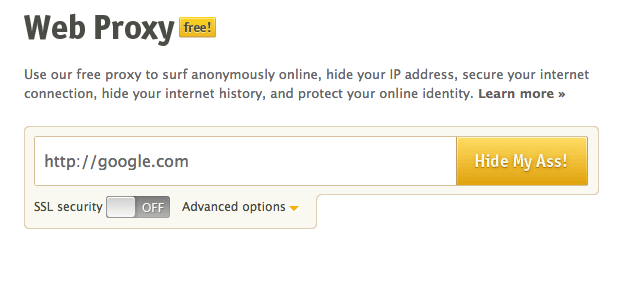
The simplest way to use a proxy is to visit the mildly-NSFW-named VPN provider Hide My Ass (HMA), which allows you to simply past a URL into its Web Proxy tool and start browsing under a different IP address. Under the “advanced settings” tab, you can choose which country you want to appear to be browsing from. Website Proxify offers a similar service, as well. Easy though it may be, however, this solution will not work with certain websites. And, because so many other people are trying to use the same proxy address as you, load times slow to a slug-like pace.

HMA web proxy

Another solution is to establish your own proxy through your Web browser. You can either do this through the browser itself, or by downloading a plugin, like Proxy Switchy for Chrome, or FoxyProxy for Firefox.

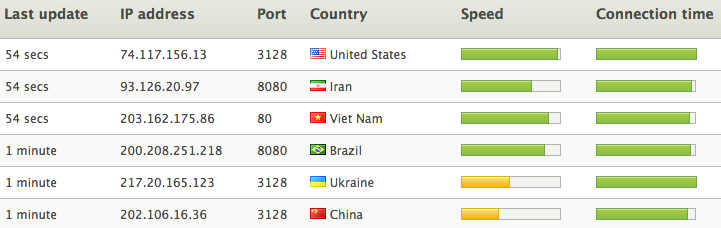
To use any of these options, you’re going to need to find a proxy IP address and port. HMA generously offers a constantly updated list of these, which you can find here. You’ll want to pick a proxy that is from the country as the content you want to access. (So for “Downton Abbey,” I would choose a U.K.-based proxy.) Also check to make sure the “speed” and “connection” categories are good — if they’re not, you will experience a maddening series of interruptions.

How to use FoxyProxy

After going through a headache of glitches, we found the very best option is to use Firefox, and install the FoxyProxy add-on. Once you’ve done that, head over to the HMA proxy list page. Select your country of choice. Under the “Protocol” options, de-select “socks4/5.” (Just for simplicity’s sake.) Then hit “Update Results.”

HMA proxies

At this point, you will also want to open FoxyProxy by hitting the icon that appears to the right of the URL box. Click “Add New Proxy.” Next, head back over to the HMA page and find a proxy that looks good (the bars next to the country name should both be green). Once you’ve selected one, copy the IP address, and paste it into the “Host or IP Address” field in the FoxyProxy window. Go back to HMA, and copy the “port” number that appears next to the IP address you’ve chosen. Paste the port number in the “Port” field in the FoxyProxy window. Then click “Ok.” (Don’t worry, you’re almost done.)

foxyproxy 1

A notice will then pop up saying “you didn’t enter and enable any whitelisted (included) URL patters.” For our purposes, you can just ignore that — click “OK.” At the top of the FoxyProxy window, click on the drop-down menu next to “Select Mode,” then select the option that includes the IP address you just entered. Click close — and you’re done! Start streaming.

foxyproxy 2

If you want to turn off the proxy, just click the FoxyProxy button, and change the mode to “Completely disable FoxyProxy.”

The downsides

Now, cheating the system never works out flawlessly. The first thing you MUST consider are your local laws. In the U.S., it is legal to use proxies. In other countries, it might not beso check to make sure you’re in the clear before doing any of this. And, at the very least, you will likely be violating the terms of service of the websites you visit. In short: Whether or not this is legal doesn’t necessarily make it right.

Even if using a proxy is legal, and you don’t mind the ethical gray areas, you’re probably going to have to change the specific proxy you use on a regular basis. Free proxies, like those available through HMA, often get shut down, or are just too slow for streaming puposes. That said, you can get access to high-quality proxies through FoxyProxy, but it’ll cost you a few bucks a month for a subscription — totally worth it, if you plan to leap over region restrictions on a regular basis.

Image via Pell Studio/Shutterstock


Source : digitaltrends[dot]com

Oct 17, 2012

The CW’s digital studio gets a Homecoming with two new series

The CW's new digital studio, CWD, has signed two more shows to its schedule, including the final season of a series that debuted on MySpace in 2007.

Not content with filling your television screens five evenings a week with quality entertainment like Supernatural, Nikita and America’s Next Top Model: College Edition – Hey, at least the first two are good, okay? – the CW is moving into digital distribution with the announcement of two new web series being added to the production slate of the channel’s digital studio, CWD.

The most high-profile of the two series is Prom Queen: Homecoming, the third (and final) season of Vuguru’s Prom Queen web series. Launched in 2007 by Vuguru – the web production company owned by former Walt Disney Company CEO Michael Eisner – and Big Fantastic, the series made its debut on MySpace before running 80 episodes (each lasting 80 seconds) across twelve weeks, with over 15 million viewers “tuning in.” The second series, Prom Queen: Summer Heat, debuted later that year. Homecoming isn’t actually debuting on CWD; the real debut came two years ago, on Canada’s CityTV online network. Instead, the CW is calling the show’s addition to its CWD line-up as “the US debut,” adding that it will now be the exclusive home for the season as well as the two earlier Prom Queens and prequel seriesSam Has 7 Friends.

In addition to the Prom Queen franchise, CWD is adding a new series spinning off from an established online property, with CelebTV on The CW. Described as “a daily short-form entertainment series that gives fans the inside scoop on their favorite CW stars – both what’s happening on-screen and off – from red carpet sightings and magazine cover shoots to new projects and style secrets,” the series leverages CelebTV’s existing digital network – which already offers daily videos covering the lifestyle and entertainment beats, and has partnered with Hulu, YouTube and Xfinity – to produce new reports specifically based around the existing CW brand, so expect to see a lot of Kristin Kreuk, Stephen Amell and Maggie Q teasing future episodes of their shows amongst fast-cut breathless reports about why this season of Supernatural is the best one yet.

The two series will join the already announced Stupid Hype – A show about the return to fame of a former breakdancer that will surely delight anyone who’s ever wanted to see Vanilla Ice’s career recreated for laughs with undertones of Eminem’s 8 Mile big-screen debut (Check out the trailer for proof) – on the soon-to-launch CWD, which will make series available through multiple avenues. Not only will the CWD have a dedicated part of the CW’s official website, but its content will also be made available through the official CW Facebook page, as well as being attached to full-episode streams of broadcast shows through CWTV.com and the CW’s YouTube channel.


Source : digitaltrends[dot]com

Oct 9, 2012

Hulu, Viacom expand deal to include Nickelodeon shows

spongebob squarepants hulu

Potentially ideal for parents looking for another way to entertain their kids, a barrage of Nickelodeon shows are headed to Hulu.

Covered in detail on the official Hulu blog earlier today, Hulu and Viacom have signed a new deal that brings the current season Nickelodeon programming to Hulu Plus subscribers. Different from Netflix, Hulu Plus subscribers will be able to watch the most recent five episodes of Nickelodeon shows approximately 21 days after the shows have aired. While Netflix provides an extensive amount of older Nickelodeon programming, Hulu is the first third-party subscription service to offer access to current episodes of Nickelodeon shows. Alternatively, children can visit the Nickelodeon site in order to view select episodes of their favorite shows.

nick hulu partnershipSpecifically, shows such as Spongebob Squarepants,  the final season of iCarly, Kung Fu Panda, The Penguins of Madagascar, Winx Club, Robot & Monster, The Legend of Korra, T.U.F.F. Puppy and Teenage Mutant Ninja Turtles are included within the deal.

In addition, Hulu doesn’t play any advertising during the Nickelodeon shows beyond a reminder of the broadcast date and time before an episode starts. There are no restrictions on devices either, so parents can give their child a smartphone or tablet to watch these Nickelodeon shows assuming they have a subscription to Hulu Plus.

This deal does not include programming that’s broadcast on Nick Jr.. Shows directed at younger viewers like Dora the Explorer, Team Umizoomi, Max & Ruby and Bubble Guppies aren’t included within the new Viacom agreement. However, the inclusion of the previously mentioned shows on Nickelodeon’s main channel should significantly increase the usefulness of Hulu Plus among parents with tweens. For example, Netflix’s “Just for Kids” user interface has been particularly helpful in attracting new streaming subscribers with young children.

Interestingly, Hulu does not have expanded settings regarding parental controls according to the Hulu support page. This could be a problem for adults that share the account with their kids. In order to block mature content from younger viewers, parents have to log out of their Hulu account. For Hulu Plus subscribers, users have to contact Hulu’s customer service to alter the birth year on the account in order to block mature content.

netflix parental controlsWhile Hulu specifically provides pages for family and kids programming, Hulu’s method of blocking content is cumbersome when compared to Netflix. Netflix allows the user to assign a specific rating value to the video content that can be accessed through the account.

With five different rating levels, parents could setup a Netflix streaming account for a child that’s limited to “PG and below” programming. This rating system applies to television programming and limits what shows up onscreen as well as the Instant queue. However, changes to the parental rating on the account take up to eight hours to start working.

In addition to the news about Nickelodeon, the new deal between Hulu and Viacom includes a continuation of the agreement that adds new episodes of The Daily Show with Jon Stewart and The Colbert Report a day after each show has aired on Comedy Central. Identical to the previous agreement, viewing the high definition version of each show requires a Hulu Plus subscription. Due to the current news topics covered by the two popular shows, Viacom’s standard 21-day waiting period on a show like Jersey Shore simply wouldn’t be beneficial to viewership.


Source : digitaltrends[dot]com

Sep 21, 2012

CBS introduces ‘Tweet Week’ to launch fall shows

CBS is getting social with its new Fall line-up, launching a week of interactivity through Twitter and Facebook with the stars and creators of such shows as The Big Bang Theory, CSI and Made in Jersey. And, no, you probably haven't heard of that last one; it's new.

Imagine, for a second, that you’re a broadcast television network in the United States, and you’re wondering what would be the best way to launch your new fall line-up at the same time as the other broadcast networks, without getting lost in the sheer volume of new and returning shows vying for people’s attention. How, exactly, could you make your shows stand out and grab the eyeballs and all-important Nielsen ratings numbers of viewers in this landscape? Why, the answer is obvious, isn’t it? It doesn’t take 140 characters to spell out the need for social media in this situation.

The Hollywood Reporter has the exclusive on CBS Tweet Week 2012, during which both casts and crews of shows like The Big Bang Theory, Person of Interest and Vegas will be online during the East Coast timezone premieres of their new seasons, answering questions from fans and offering additional insight – or, at least amusing anecdotes – about the shows and their upcoming episodes. Despite the title of the promotion, this interactivity isn’t limited to Twitter, with Facebook also being used during the period.

The shows that will be included during the event will be:

  • How I Met Your Mother, Partners, 2 Broke Girls, Mike and Molly and Hawaii Five-O on Monday, September 24
  • NCIS, NCIS: Los Angeles and Vegas on Tuesday, September 25
  • Survivor, Criminal Mindsand CSI on Wednesday, September 26
  • Big Bang Theory, Two and A Half Man, Person of Interest and Elementary on Thursday, September 27
  • CSI: NY, Made in Jersey and Blue Bloods on Friday, September 28.

That’s not the only online promotion CBS is giving its new fall line-up; a web-series called Fall Premiere Show launched this week, offering viewers “a sneak peak at each night’s line-up,” as well as interviews with those involved in making the shows and, perhaps most importantly for returning shows, recaps of what happened during previous episodes. The show is hosted by Taryn Southern, and makes a point of pushing CBS Connect – “the place where fans and stars get social,” according to Southern – which just so happens to be the department responsible for Tweet Week. Suddenly, everything falls into place.

It’s interesting to see CBS pushing social media promotion of its new shows so heavily, considering it has traditionally been seen as the oldest-skewing of all the broadcast networks with its steady diet of procedurals and “safe” comedies. The combination of this network and Twitter can either be looked at as a case of CBS trying to get in touch with a younger demographic – or, alternatively, a sign that Twitter and Facebook are now firmly mainstream enough that their own demographics are shifting upwards in age.


Source : digitaltrends[dot]com

Sep 17, 2012

Why aren’t there more movies based on apps?

We've seen movies based on toys, comics, television shows and even other movies. So where are the movies based on new digital media? Perhaps Hollywood isn't ready, claims a new New York Times report.

While old media has traditionally proven itself to be very happy at the idea of recycling itself into irrelevance – See the latest reboot of a television series/movie franchise/etc. to hit a movie theater near you soon – it has equally turned out to be something that is surprisingly slow at taking advantage of media that is outside of its immediate comfort zone. While we are now used to superheroes dominating the summer blockbuster circuit, it’s worth remembering that Tim Burton’s Batman movie came out almost twenty five years ago, and the original Superman: The Movie more than a decade before that. Even comic books, apparently, needed some time to be assimilated into the movie and television mainstream. All of which is a long way of saying, for everyone who may be expecting Hollywood to turn around any minute now and realize that there is a lot of Intellectual Property just waiting to be bought up, adapted and exploited for enterprising entertainment executives out there…? You may have quite a wait ahead of you.

If you’re looking for some evidence of that, then you need look no further than this weekend’s New York Times, in which the trials awaiting app developers hoping for a multimedia payday were enumerated in painful detail. Whereas Iron Man, Optimus Prime and even John Carter have specific audiences – and nostalgic appeal – the problem with apps (and even video games) is that, well, they appeal to too many people: “Should Talking Tom be a cartoon for children on Nickelodeon?” the piece asked, referring to the creation of Outfit7, an app developer looking to bring their brand outside of the tech field. “Or is it something more grown-up, perhaps for Spike or Cartoon Network’s Adult Swim? The wrong move could narrow the following. A Nickelodeon show, for instance, could make Talking Tom uncool for men in their 20s.”

Additionally, there is the problem that today’s app makers are more merchandise-savvy than many more traditional creators. “App makers want to keep potentially lucrative toy rights for themselves. But studio executives say it is hard for them to justify pouring tens of millions of dollars into the creation of a movie or television show unless there is an added revenue stream as an incentive,” explained the Times’ Brooks Barnes.

There is, of course, an even more obvious reason why moviemakers might want to stick with what they know for now: No-one in Hollywood has worked out a way to translate first-person interactive narratives – videogames, for the most part, or even analog like Battleship – into a successful movie just yet. Until they can work out how to create a pleasing story for all viewers out of something that so much of its potential audience has made up in its head, it’ll be awhile until we’ll see a massive influx of material that’s based even more on interactivity and less on pre-set conditions.

Well, Angry Birds aside, obviously.


Source : digitaltrends[dot]com

Sep 3, 2012

BBC iPlayer update brings offline viewing to mobile devices

BBC iPlayer

Users of the BBC's iPlayer catch-up and video-on-demand service will be pleased to know that an app update out on Tuesday will make it possible to download shows to mobile devices for viewing offline. Previously, it was only possible to stream TV shows to smartphones and tablets.

The BBC’s iPlayer catch-up and video-on-demand service is being updated to allow users to watch shows offline on their smartphones and tablets, meaning viewers will be able to download programs to watch later on the train, in the car or even on vacation. Before now, viewers using the app could only stream content to their mobile devices.

The new feature is being rolled out in an app update for iOS devices on Tuesday, and is also expected to be introduced soon for Android handsets and tablets.

“This fundamentally changes one of the most annoying restrictions about viewing programmes,“ Daniel Danker, the BBC’s general manager of on-demand programs, told the Guardian, adding that the update will allow even greater freedom when it comes to choosing where and when to watch a TV show.

Danker continued, “With mobile downloads, you can now load up your mobile phone or tablet with hours and hours of BBC programmes, then watch them on the road, on the tube, on a plane, without worrying about having an Internet connection or running up a mobile data bill.”

After downloading a show onto a device, users have 30 days to watch it.

The Guardian report says the move by the BBC comes in the wake of program requests on iPlayer leaping by 142 percent in the last 12 months to 30 million a month, brought on in part by the rapid increase in ownership of smartphones and tablets.

The iPlayer has been a huge hit since it came on the scene in 2007, allowing users to enjoy BBC TV shows and radio programs on mobile devices, PCs and many TV sets.

The service is free to those located in the UK, though last year the BBC launched a paid-for video-on-demand (as opposed to a catch-up) service in 11 countries, including Canada, Australia and a number of European countries.

The global iPlayer is part of a year-long pilot scheme, and with that year just about up, we might soon be hearing news of a US launch for the BBC’s popular service.


Source : digitaltrends[dot]com

Aug 23, 2012

Critter, the portable kitchen, is made for the nomadic top chefs

Who says cooking outdoor means working around strange elements? The Critter kitchen system brings indoor functionalities anywhere you go.

You know those cooking reality shows where contestants are often required to go outside their comfort zones and craft a masterful dish in an unconventional location? This has ranged anywhere from a sandy beach, a snowy mountain, a forest, even inside a gondola lift up a ski slope as seen on the recent Top Chef: Texas. If only these chefs could use Critter: a modular kitchen that’s designed to be movable, portable, and can provide full functionalities comparable to a full-sized facility.

Envisioned by Italian designer Elia Mangia, Critter is unlike most portable cooking systems that only feature electric stoves or one water heating pot. The kitchen can be fully assembled to provide a dual-burner gas stovetop, hot water faucet with a sink, elongated food preparation space, garbage disposal area, and hooks underneath to hold utensils, pots, and pans. The entire system is free standing and can be put together in just eight screws, allowing users to take it apart and piece it back together again in quick and easy steps. This means simple preparation for those who want to shift from cooking inside their tiny apartments to a patio or backyard, or even taking the Critter system along on a driving trip for roadside cookouts and camping overnights. It also helps that Critter looks like an actual kitchen, adding a sense of home to wherever it may be that requires a portable cooking system.

Of course, a slight downside to Critter is how many pieces the full kitchen actually has. Assuming you need both a sink, burner, and trays to keep all your separate ingredients apart, you’re looking at bringing at least 12 pieces of hardware to assemble once you’re onsite. Still, Critter looks good, is relatively space-efficient, and seems more practical than cooking over open fire. Who knows, maybe the juxtaposition of fancy modular kitchen and the rugged wilderness can actually make a trip more memorable, especially when you can whip up something a bit more complex than s’mores and ramen noodles.

Critter will be available on the Italian contemporary design shop Skitsch but no pricing information has been announced just yet.


Source : digitaltrends[dot]com

Aug 19, 2012

So long, Mr. Popular: Fake Follower Check outs surprising Twitter frauds

Pay-for-tweets

The Fake Follower Check application shows how many famous people's follower count has been wildly inflated by spammers and block purchases.

It’s been a bad week for Twitter fans. First, the company hinted that the new Twitter API would break a whole lot of third-party developer’s software. Now, StatusPeople has proven that a whole lot of people’s all-important follower count is fake as @FakeSteveJobs.

StatusPeople is a company that makes “social media platforms for business.”  But unlike many companies with that mission statement, it doesn’t just promise to get your business more followers; it helps you figure out how many of your existing followers are spammers, inactive, or otherwise mere social media clutter.  That’s the purpose of their Fake Follower Check, an application that runs a follower list through a set of spam criteria. FFC mostly looks for followers who have few or no followers or tweets, but follow a lot of people themselves.  It’s not exactly a bulletproof algorithm – will no one hear the silence of social media’s introverts – but it’s not bad as a quick and dirty review system.  

Things get more interesting when you run Fake Follower Check on other people’s follower lists. A clever reporter at Business Insider decided to run some Twitter-loving celebrities through the FFC, and discovered that pop stars like Justin Bieber and Lady Gaga have follower lists that are 45 to 48 percent fake, President Barack Obama’s follower list is about 41 percent phony, and Republican presidential candidate Mitt Romney has a follower list that’s 22 percent spammers.  Over at Metafilter, user crunchland decided to check for both fake and inactive accounts on the follower lists of prominent right-wing political figures, and discovered that not only were the faker numbers high, but Michelle Malkin, Rush Limbaugh, and Barack Obama all had more fake and inactive followers than real people.

All of this would be nothing more than drive-by schadenfreude if not for the fact that many media outlets, celebrities, politicians and corporations use follower counts as a measure of their real-world success.  When Newt Gingrich was trying to convince the press that his presidential candidacy wasn’t just a scheme to get casino billionaires to buy him lunch, he pointed to his follower count as proof of his grassroots popularity, only to be accused of buying that count. Similar accusations have been lobbed at Mitt Romney, whose follower list included a number of users whose only presence online was a page offering to increase your Twitter following for a modest charge. 

Why would anyone pay for a bunch of fake followers?  First and foremost, because it leads to real followers. Jason Rundle, at PR Daily, tried buying a block of 1,000 fake followers to see if it would affect his real follower count, and was depressed to find that “my new, lifeless flock convinced other real people that the profile was popular and influential.”  That kind of increase can have real consequences when a high follower count can bring Hollywood agents and major publishers to your virtual door, reasoning that anyone with that many followers must have a built-in fan base.  Even Saudi clerics are taking an official position on the ethics of buying fake followers; as with most things Saudi clerics take a position on, they think it’s bad.

The practice of paying people to simulate popularity predates Twitter, the Internet, and the English language.  Long before the Roman Empire, rich men would hire professional mourners to follow their funeral trains making a great show of weeping to convince bystanders of their noble character.  The practice was so common that the Greek legislator Solon banned it in 6th century B.C., though it remained both frequent and frequently banned well into the 19th century. On a similar but more cheerful note, the word “claque”, today used to refer to a politician’s advocates, originated in early 19th century France, when professional agencies would arrange for crowds of any paid-for size to come cheer your theatrical or operatic performance, a useful service in the days when riots would often break out over who had the bigger audience.  So while buying followers may be a sleazy way to get donations, press attention, and ego gratification, it is at least a charming outbreak of traditionalism in the new media world.


Source : digitaltrends[dot]com