Pages

Showing posts with label parts. Show all posts

Nov 9, 2012

NASA using 3D printing technology to build parts for Mars-bound rocket

NASA's getting in on the 3D printing scene with new selective laser melting technology which is being used to build parts for future space rockets.

When it comes to 3D printing, it’s almost as if there’s a game of one-upmanship going on as to what can be created using this emerging technology. We’ve seen an acoustic guitar (novel) knocked together using 3D printing technology, a titanium jaw (impressive), an electric racing car (it’s getting interesting now), a plane (amazing) and even ‘magic’ arms (interesting and amazing).

Evidently not wanting to be outdone, and mindful of having access to some of the most advanced technology in the world, NASA recently piped up to say it’s currently using a kind of 3D printing technology to help build parts for future rockets that could one day carry humans to Mars. Top that, 3D printing fanatics.

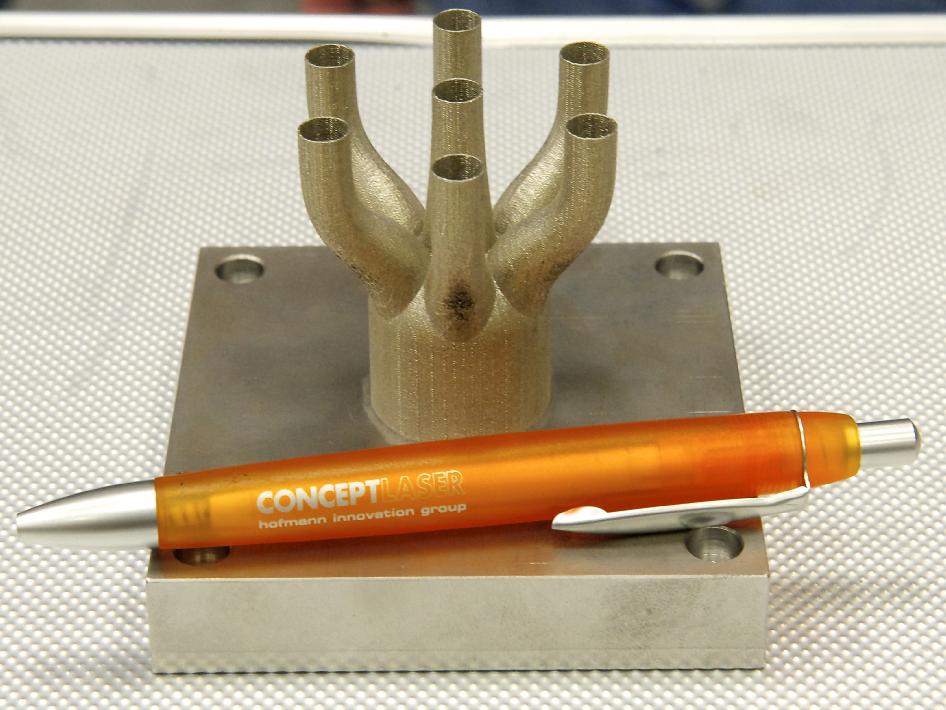
The method, called selective laser melting (SLM), can create intricate metal parts for future space rockets and could save the space agency millions of dollars in manufacturing costs, NASA said on its website recently.

Explaining SLM technology, Ken Cooper of NASA’s Space Flight Center in Alabama said, “Basically, this machine takes metal powder and uses a high-energy laser to melt it in a designed pattern.

“The laser will layer the melted dust to fuse whatever part we need from the ground up, creating intricate designs. The process produces parts with complex geometries and precise mechanical properties from a three-dimensional computer-aided design.”

According to Andy Hardin of NASA’s Engines Office, using the technology can cut manufacturing time drastically “from months to weeks or even days in some cases.”

He added that since engineers wouldn’t be welding parts together, the more complete parts created using SLM technology will be “structurally stronger and more reliable, which creates an overall safer vehicle.”

Saving money while improving reliability and safety means utilizing the technology is something of a no-brainer for the space agency, which is already dealing with major cuts to its budget.

Parts created using the technology will be tested on the ground later this year with NASA aiming to use them in a test flight in 2017. 

[Image: NASA/MSFC/Andy Hardin – shows the first test piece produced on one of NASA's SLM machines, with a pen included for scale.]

Image credit:


Source : digitaltrends[dot]com

Oct 11, 2012

NHTSA: Beware of counterfeit airbags

NHTSA counterfeit airbag test

The National Highway Traffic Safety Administration is advising consumers whose vehicles have been in a crash in the past three years to have them inspected for fake parts.

The National Highway Traffic Safety Administration (NHTSA) has issued a consumer safety advisory regarding counterfeit airbags. These airbags, which the NHTSA says are installed at third party repair shops, can malfunction and jeopardize the lives of vehicle occupants in a crash.

According to the NHTSA, car owners who have been in a crash may have had their airbags replaced with counterfeits. The counterfeit parts look like original equipment, right down to fake manufacturer logos.

However, the counterfeit airbags are not made to the same standards as genuine parts, and have consistently malfunctioned in tests. In a crash, these fake airbags may not deploy, or they may expel metal shrapnel if they do. In one test, an airbag separated from its mounting point, showering the vehicle occupants with sparks from the bag’s pyrotechnics.

While it does not know the full scope of the problem, at the moment the NHTSA estimates that a very small number (0.1 percent) of American vehicles have counterfeit airbags. The NHTSA is not aware of any deaths or injuries due to counterfeit airbags.

The NHTSA is urging consumers whose vehicle has been in a crash within the last three years, and who have had the airbags replaced by a shop that is not part of a new car dealership, to call the manufacturer and have the replacement parts inspected. The safety advisory also applies to anyone who bought a replacement airbag online.

If the manufacturer finds a counterfeit airbag, vehicle owners will need to have it replaced at their own expense.

Consumers who purchased their cars new and have not been in a crash, and people who own a used car that has not had its airbags replaced in the last three years, shouldn’t have anything to worry about.

So far, the NHTSA is aware of counterfeit airbags being made for the following makes and models:

Acura: 2009-2011 TSX

Audi: 2006-2009 A3, A4, A6, A8, Q5, Q7

BMW: 2004-2011 5 Series; 2007-2011 3 Series, X5; 2011-2012 X3

Buick: 2010-2011 Lacrosse

Chevrolet: 2011-2012 Cruze, Volt; 2006-2010 Aveo; 2012 Camaro

Ford: 2012 Focus; 2005-2009 Mustang

Honda: 2003-2012 Accord; 2006-2011 Civic; 2002-2011 CRV; 2007-2011 Fit; 2009-2011 Pilot, Insight; 2010-2011 Crosstour; 2011 Odyssey

Hyundai: 2007-2011 Elantra; (not listed) Genesis, Sonata

Infiniti: 2007-2011 G35/37, EX35

Kia: 2010-2011 Soul, Forte; 2004-2009 Spectra

Land Rover: 2012 Range Rover Evoque

Lexus: 2006-2011 IS; 2003-2008 GX470; 2007-2009 RX350; (not listed) ES350

 Mazda: 2004, 2010-2012 Mazda3

Mercedes: 2009-2011 C-Class, GLK; 2010-2011 E-Class; 2007-2008 S550; 2006-2010 ML; 2009-2010 GL

Mitsubishi: (not listed) Outlander

Nissan: 1992-2002, Quest; 2010-2011 Quest; 2009-2011 Cube; 2007-2011 Versa; 2009-2010 Murano; (not listed) Altima

Subaru: 2008-2009 Forester, Impreza, Outback; 2010-2011 Legacy

Suzuki: 2007-2010 SX4

Toyota: 2002-2006, 2012 Camry; 2009-2011 Corolla, Matrix; 2007-2011 Yaris, Tundra; 2004-2011 Highlander, Sienna, Tacoma; 2010-2012 Prius; 2003-2006 Tundra, Sequoia; 2003-2010 Land Cruiser; 2004-2010 Highlander; 2004-2009 4Runner; 2007-2009 Solara; 2005-2011 RAV4

Volkswagen: 2006-2010 Jetta

Volvo: (not listed) XC60, XC70, V70, S60, S80

The NHTSA is advising all consumers, even ones whose cars do not appear on this list, to have their vehicles inspected if their airbags have been replaced in the last three years. In addition, a vehicle may not have counterfeit airbags just because it is on this list, it just means the NHTSA has found counterfeits made for that model. A full list of manufacturer call centers is available at the NHTSA’s website.


Source : digitaltrends[dot]com

Aug 21, 2012

iPhone 5 leaks: Has Apple lost control of its secrets?

apple secrecy loss iphone 5 rumors

Alleged parts for the forthcoming iPhone 5 are leaking out on a weekly basis. Has Apple lost its secretive ways -- or just gotten better at them?

This year, we have witnessed what appears to be an unprecedented number of believable iPhone parts leaks. Each week, some new component or photo makes its way onto the Web. And if the leaks are real — they certainly look real — then almost nothing about the forthcoming “iPhone 5″ is a secret. Sure, we don’t “know” everything about the device — but more or less, the proverbial cat seems to have slipped out of the bag. So, what exactly is going on in Cupertino? Has Tim Cook lost control? Or has Apple employed some other, more calculated strategy?

Bad Apple

The most obvious answer to the parts-leak conundrum is that component manufacturers in China, and around the world, simply have lost some of their respect (or fear) for Apple now that Tim Cook is in charge and co-founder Steve Jobs is gone. After the company released the “new iPad” last year, its main slogan for the Retina-enhanced device was the made-up marketing word “Resolutionary.” I literally laughed  out loud when I first saw it plastered in 1000-point font across Apple.com. To this day, it sounds like a word invented for QVC, yet Apple used it for months.

For me — a 100 percent Apple outsider — the tackiness of “Resolutionary” was the first visible (albeit tiny) crack in Apple’s meticulously constructed corporate wall. Then came the whole EPEAT debacle. In June, Apple removed all 39 of its products from the Electronic Product Environmental Assessment Tool, a registry that rates consumer products’ for their impact on the environment. The move caused Apple customers — many of whom I would wager had never even heard of EPEAT in the past — to freak out with righteous indignation. The removal of Apple’s lineup was a bold move, after all, from a PR perspective. But Apple has never shied away from bold in the past. Less than a week later, however, Apple completely reversed its decision, and handed its Macs and i-devices back to EPEAT. Not only that, but the company actually said it was sorry. Sorry! Sorry? Apple doesn’t say “sorry.” Even when Apple’s iPhone 4 was found to have a defective antenna in 2010 (no service if you hold it the wrong way), then-CEO Steve Jobs refused to apologize. Instead, he told everyone to “calm down,” and gave away some free bumper cases to end the controversy. For the last decade, Apple has told us what to think, not the other way around. Crack number two.

Cook has strayed from Jobs’s hard-lined path in a number of other ways. When faced with criticism over the treatment of workers of Apple’s manufacturing partners in China, Apple pushed for third-party inspections of Foxconn factories. He decided to pay out dividends to investors — something Steve Jobs avoided. And, most recently, Apple pulled a series of Genius ads after they were harshly criticized in the press.  That’s right: Not only did Apple make some uncharacteristically bad ads, but they were shamed into taking the off the air.

And now we have all these leaks — leaks that fuel the rumors that Apple says hurt its bottom line. After all, if you know a new iPhone is coming soon, why would you slap down hundreds of dollars on something that’s about to become outdated? Perhaps. But if the leaks are real, then the next iPhone is going to be pretty darn boring — like the iPhone 4S again, just a bit taller, with a different dock connector, and a headphone jack moved to the bottom. Whoopie! 

TechCrunch’s John Biggs, who seems equally perplexed by Apple’s softening nature, tries to explain the leaks with the admittedly “far-fetched” theory that “Apple needs to telegraph the changes they are planning to the [next iPhone's] dock and, as a result, are forced to release more test hardware than usual. This hardware is falling into the wrong hands.” In other words, more peripheral manufacturers are getting demo units and some of them are leaking pictures and information — betraying Apple.

Bada** Apple

Far-fetched or not, Biggs’s theory is as good as I’ve heard so far. But I have another, even less-plausible explanation: Apple hasn’t grown weak at all. Instead, Cook has used the great resources at Apple’s disposal to launch a covert disinformation campaign. The leaked Apple parts are not real — or, at least, they are not parts that will make up the sixth-generation iPhone. They are decoys released by Apple, or on Apple’s behalf, to throw the tech blogosphere off its trail. The REAL new iPhone will look nothing like these leaked components.

As difficult to pull off as this might be, it would have a great effect for Apple. First, it would allow the company to still surprise everyone when they officially release the new iPhone. In turn, this would release an endless flow of positive comments from the technology media about the device, and how Apple, under Cook, has “still got it.” Seriously, it would be a virtual orgy of fanboyish congratulations. End result: Apple sells even more iPhone units that it would have otherwise.

It would also show the technology blogs who’s boss. If Apple can trick everyone with fake leaks, then the already-sketchy rumor articles we all know and despise will become even more dubious. Perhaps that will result in more conservative reporting, thus stifling the Apple rumor mill altogether, which would also theoretically help sales.

Wild as this may sound, a similar thing happened during last year’s “iPhone 5″ rumor mess. The tech press was convinced Apple would release a tear-drop-shaped smartphone with a larger screen. Instead, Apple release the iPhone 4 with Siri, a better camera, and slightly improved hardware. The only thing wrong with last year’s confusion was that the rumored device was infinitely more interesting than what Apple ultimately offered. If it could turn the tables and make everyone think that it’s releasing one thing, then actually come out with something way better, then Apple will have won on all counts.

Conclusion

I’m going to save you some energy and call my own theory bunk from the start. Even if Apple has the resources to wage such a disinformation campaign, it would still be a tough move to pull off — one that could very well cost a lot of money. And it’s not like Apple’s iPhone sales are hurting — not yet, anyway. Still, I’m going to hold onto this idea as a dream, a hope that Apple is still the baddest company in town, one capable of creating mind-blowing devices that change what I think is possible in personal electronics; A company that doesn’t say things like “Resolutionary,” and never says “sorry,” even when it clearly should. That is the Apple I knew. And when the new iPhone is unveiled in the next few weeks, we’ll find out if that Apple remains.

Image via Andrey Bayda/Shutterstock


Source : digitaltrends[dot]com