Pages

Showing posts with label iphone. Show all posts

Nov 9, 2012

Why would Apple move Macs to ARM processors?

Apple ARM processor mac intel

Rumors have Apple moving away from the Intel chips currently used in Macs to the ARM-based chips used in mobile devices like the iPhone and iPad. But would such a seismic shift make sense?

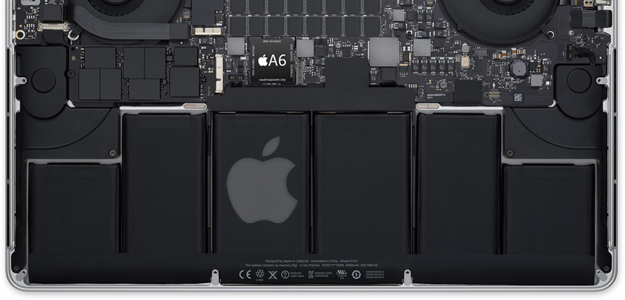
Apple’s Macintosh computers rely on processors from chipmaking giant Intel – just like the vast majority of the world’s PCs, notebooks, and servers. However, Apple’s iOS device line, such as the iPhone, iPads, and iPod touch, rely on processors based on designs from ARM. These chips aren’t as fast or powerful as mainstream Intel processors, but they’re cheaper and they consume far less power, making them ideal for mobile devices like smartphones and tablets.

Now, Bloomberg is citing three unidentified sources saying Apple is seriously investigating shifting Macs from Intel to ARM chips, and new developments from ARM are adding fuel to the fire.

Could Apple move Macs away from Intel to ARM-based processors? What hurdles would Apple face, and how would ARM-based Macs stack up?

Here we go again
Apple Phil Schiller A6X processor

With the original iPad back in 2010, Apple revealed it was designing its own ARM processors rather than relying on chips designed by Samsung or other manufacturers. (That first chip was the Apple A4, which quickly moved to power the iPhone 4 as well.) With Apple designing its own chips, speculation immediately mounted that the company might one day move its Macintosh computers away from Intel to its own ARM-based processors. After all, it wouldn’t be the first time Apple has changed the Mac’s processor architecture. Apple has already shifted the Mac’s processor architecture three times: from Motorola 68000s, to PowerPC, and then to Intel. If there’s a company with experience managing these transitions, it’s Apple. And each time Apple has unveiled a new processor, that speculation has started anew.

What’s different this time around?

ARM 64-bit architecture

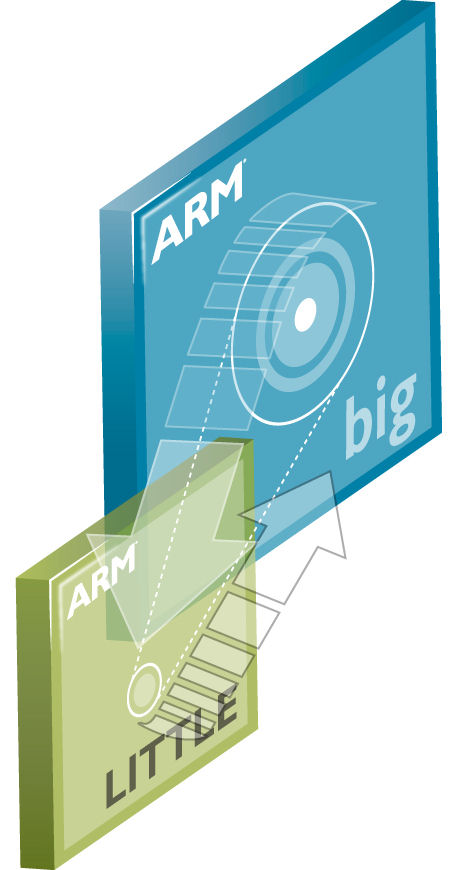
Current ARM-based chip designs use 32-bit architectures. For now, that’s ample for most mobile and tablet applications, but one significant ramification for desktop computing is that these processors can only handle about 4GB of memory. Macs today ship with a minimum of 4GB of RAM, and many ship with  8GB, so using a 32-bit architecture just isn’t feasible for today’s desktop computers. However, last week ARM Holdings took the wraps off its Cortex-A50 series, the first ARM processors designs with a 64-bit architecture. (One of them also can claim the title as the world’s smallest 64-bit processor.) Suddenly, managing the amount of memory common in today’s desktop computers—and even high-end servers and workstations—is within reach.

ARM doesn’t make chips; it designs then, and licenses those designs to companies like Samsung, Qualcomm, and (of course) Apple. It will take time for firms to implement 64-bit designs of their own. Nobody is expecting 64-bit ARM chips to be a reality on the market for another year or 18 months. But the market is no longer holding its breath for ARM to release 64-bit designs: now, the work can begin.

It’s also worth noting Apple’s relationship with ARM is much older than its relationship with Intel. It goes all the way back to the 1980s, and Apple collaborated in early stages of ARM processor development. That resulted in Apple owning a over 40 percent of ARM, and that stake helped Apple weather its mid-1990s death spiral as it repeatedly padded its bottom line by selling ARM shares to lower its losses.

Apple is getting results

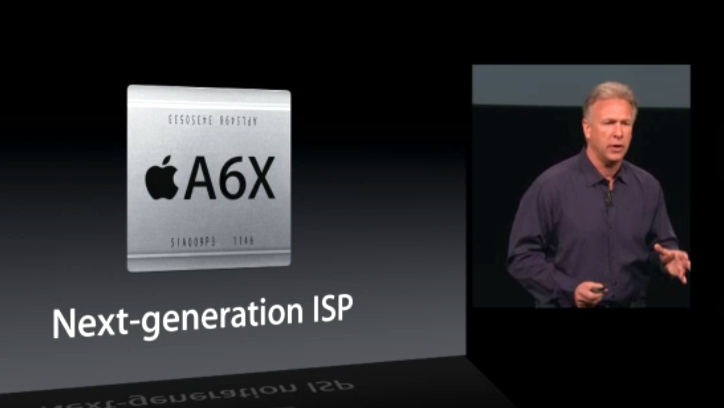
Apple’s work to design its own processors isn’t just a vanity project: It’s about getting performance and capabilities that can’t be matched by other mobile device makers using stock parts. Apple has invested heavily in acquiring chip design expertise (in part through the acquisition of PA Semi and Intrinsity. Apple has consistently been increasing the clock speed of its processor and graphics cores and getting improvements through architectural adjustments. Unveiling the latest iPad, Apple also revealed its latest A6X processor was laid out by hand, rather than trusting the details to CAD tools. The company is clearly willing to sweat the details and design processors that specifically support things like its Retina displays without sacrificing battery life compared to previous, lower-powered products. That expertise can directly translate to notebook and desktop PC designs.

New Technology group

Part of Apple’s recent executive shakeup (which saw the ouster of iOS chief Scott Forstall) was the creation of a new Technologies unit under Bob Mansfield, including Apple’s semiconductor teams, described as having “ambitious plans for the future.” Although the Technologies group is tasks with unifying all of Apple’s wireless efforts, as VP of Mac Hardware Engineering, Mansfield oversaw the development of things like Apple’s iMac and MacBook lines. While the industrial design of Macs remains the province of Jonathan Ive, actually getting them built still seems to fall on Mansfield’s shoulders, in addition to being in charge of chips.

Thinner and lighter

When Apple introduced the MacBook Air back in 2008, it was deemed almost impossibly thin, and the line continues to set the bar for ultraportable notebooks. Apple built the original MacBook Air using a custom Intel processor; one of the reasons Apple was able to beat other PC makers to the super-slim form factor was that it wasn’t using off-the-shelf parts. Apple has continued to demonstrate with the Retina MacBook Pros, ongoing MacBook Air line, and the latest iMac that its obsession with thin-and-light computer designs continues unabated. Although Intel has acknowledged Apple has has provided valuable input into its chip designs, Intel is not making custom processors for Apple, which poses a problem moving forward. It will be difficult for Apple to keep its PC products in front of the rest of the market if it’s forced to use the same off-the-shelf processors as everyone else. Design considerations alone might be incentive to Apple to start seriously looking at alternatives to Intel.

Would OS X run on ARM?
ARM Cortex A50 Big-Little

Apple bringing its OS X operating system to ARM might seem like the equivalent of Microsoft bringing Windows 8 to ARM devices in the form of Windows RT: a potential seismic shift in the product landscape. However, Apple has a head start. Its iOS operating system is based on Mac OS X, meaning the two share a large number of core technologies. Much of the groundwork for running OS X on an ARM chip already exists, and there’s long been speculation Apple has been bringing up most of OS X on ARM systems for years just as a proof of concept.

A bigger question is how well OS X would run on ARM processors: Would it deliver a reasonable desktop experience? By some benchmarks, the A6 processor Apple uses in the iPhone 5 already substantially outperforms any PowerPC notebook Apple ever made, and the A6X in the latest iPad scores even higher. And with the power available in notebooks and desktop computers (as opposed to phones and tablets), Apple could push the processors to significantly higher clockspeeds. Apple could also improve performance and keep heat levels down by adding more processor cores. That would increase the cost of each processor, but Apple’s chips are so much less expensive than Intel’s mainstream CPUs that Apple could afford to eat a bit of expense there.

(Doubt that? Intel’s published price lists (PDF) run from $117 for a low-end Core i3 chip to $999 for a high-end Core i7. Bulk customers like Apple, Dell, Lenovo, and HP presumably get a significant discount, but the contrast is stunning: iSuppli estimates Apple pays under $20 for its A6 processor.)

Given how many people find Apple’s iOS devices totally acceptable for lightweight gaming, Web browsing, email, managing photos and entertainment like movies and music, it’s fair to guess hypothetical ARM-based Macs would be able to meet those same sorts of needs easily. On consumer notebooks and desktop systems, the real performance constraints are usually memory, storage, and networks, not the processor.

However, once one gets beyond mainstream computing needs, ARM chips aren’t going to be able to stand up to Intel in the foreseeable future. That means folks who rely on their Macs for content creation, high-end gaming, software development, and compute-intensive applications like large databases, software development, real-time digital signal processing (think musicians and DJs), would suffer from a switch to ARM processors. These are the same users who purchase Apple’s highest-priced, highest-margin Macintosh computers and constitute many of Apple’s most loyal and lucrative Macintosh customers. It seems unlikely Apple would kick them to the curb, so if Apple does move Macs to ARM-based processors, higher-end Macs are likely to stay with Intel.

Barriers to OS X on ARM
OS X Mountain Lion Messages

This doesn’t mean making OS X practical on ARM chips would be a cakewalk. Assuming Apple can indeed overcome possible performance hurdles with its own 64-bit designs down the road. Other barriers include:

Backward compatibility

Just as Windows RT can’t run old Windows software, a hypothetical ARM-based Mac wouldn’t be able to run old OS X software. In the past, Apple has always provided an emulation layer that let old software continue to run, albeit slower. Apple’s cleanest transition was from PowerPC to Intel: Its Rosetta PowerPC emulators let Mac users transition the vast majority of their existing PowerPC software to their new Intel Macs without batting an eye, letting them continue to use their software, then upgrade to new Intel versions over time.

It’s not clear that Apple could manage a transition from Intel to ARM so easily. Russia’s Elbrus Technologies recently announced an x86 emulator for ARM that can let ARM chips run software compiled for Intel processors, but it can only deliver about 40 percent of the ARM processor’s performance through emulation. Elbrus thinks it can bring that level up to 80 percent by the end of 2014, but considering ARM chips are already slower to begin with, that may still mean sluggish performance. The alternative is Microsoft’s approach: Bar legacy software outright.

A desktop version of iOS?

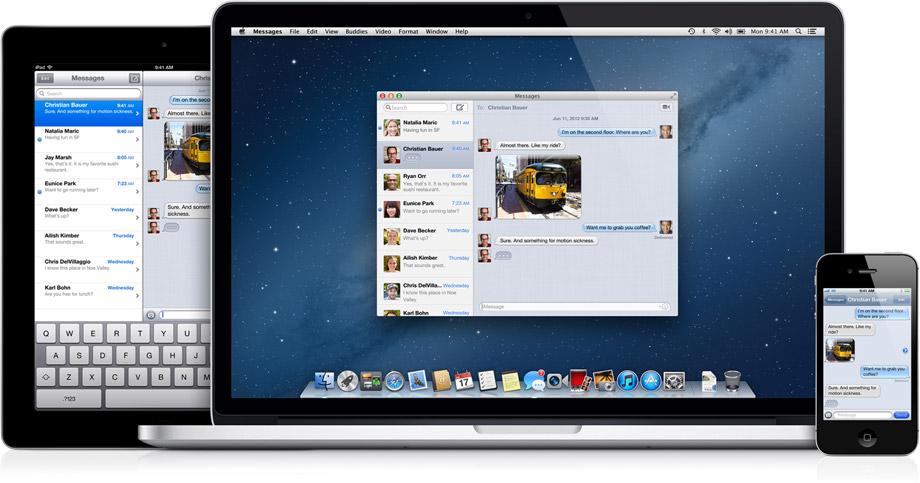
The Mac used to be Apple’s market-leading product… but then it was eclipsed by the iPod, and then by the iPhone, and then by the iPad. Where Apple customers used to come to iOS devices with a knowledge of Mac OS X, now it’s much more likely Apple customers come to the Mac after getting into the Apple ecosystem on an iOS device. Apple’s “back to the Mac” emphasis in Lion and Mountain Lion is about taking elements of iOS and taking them back to OS X so iOS users feel more at home. The Mac App Store, Notifications, and full-screen mode all arose from this effort.

If Apple can’t support legacy Intel apps, would it make sense to essentially make a version of iOS for the desktop? It have the advantage of being instantly familiar to millions of existing iOS users, with hundreds of thousands of existing apps available on launch day. However, apps originally designed for smartphones and tablets generally would not translate well to a notebook or desktop computer. After all, Apple CEO Tim Cook was quick to criticize Microsoft for the sacrifices made by its own hybrids. Apple would also have to make some changes to iOS to match desktop users’ expectations. For instance, multitasking under iOS is currently limited to a handful of tasks that can be delegated to the operating system, all in the name of power management and maximizing battery life. Many desktop users would expect more robust multitasking, without a significant impact on battery life.

What about Intel’s stranglehold?
intel core i7

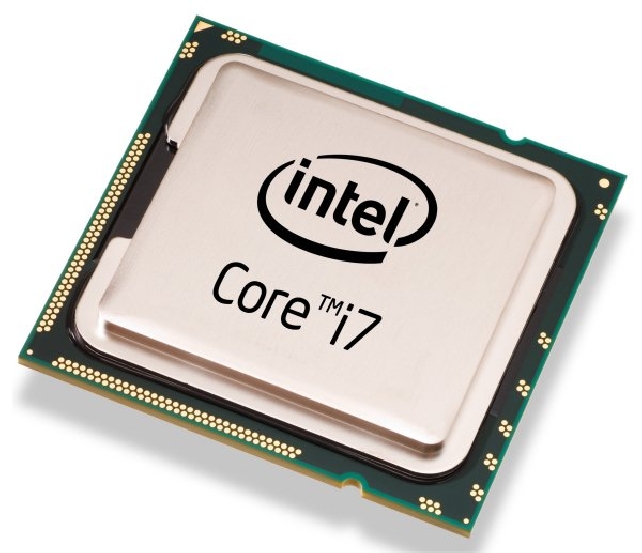
Apple likes to control its own destiny. Part of that fierce independence comes from total control of product design from the ground up, from the silicon in the chips to the finish on the case to the pixels on the screen. With its Macintosh computers, Apple doesn’t control two key parts of the package: the processor and the graphics chip, which it relies on Intel and Nvidia for. If Apple were to make its own ARM processors, it would liberate Apple from dependence on Intel’s rigid upgrade schedule, which controls the rest of the PC industry.

Of course, putting ARM chips into Macs – or threatening to – could simply be a clever way to exert leverage on Intel. Intel scored a tremendous public relations coup back in 2005 when Apple switched from PowerPC to Intel processors. Although Intel can certainly afford to lose Apple as a client on purely financial level, the damage to Intel’s reputation could be substantial – after all, Apple is one of the most-watched and most-respected companies on the planet. Toying with the idea of a switch to ARM chips could give Apple significant negotiating chips with Intel, maybe even enough to get the chipmaking giant back to making custom processors only available to Apple, like it did with the original MacBook Air.

Apple did not respond to a request for comment.


Source : digitaltrends[dot]com

Nov 8, 2012

Man develops iPhone case that shoots pepper spray

spraytect pepper spray

Potentially a useful way to stop an attacker from hurting someone, a new iPhone case includes a blast of pepper spray for personal protection.

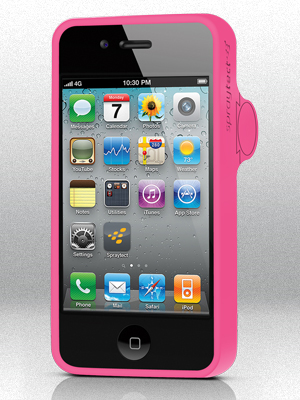
Designed as a personal protection device, an Arizona man has created a case for the iPhone 4 and iPhone 4S that includes a built-in pepper spray canister. Located in Scottsdale, Spraytect founder Scott McPherson thought up the idea when he was concerned about this daughter’s safety after she left for college. On the back of the Spraytect iPhone case, a user slides the custom pepper spray canister canister along a rail positioned horizontally when looking at the phone in a vertical position. Since the pepper spray canister significantly protrudes from the case, it may be difficult to store in a pocket. However, the canister does act as a “kickstand” when the phone is positioned vertically or horizontally and can help the iPhone user view the screen.

spraytect pink caseAfter the canister has been installed and locked into place, the user must pull a safety clip off the canister to start the activation process. The safety clip is designed to keep the canister locked and unable to fire. After the clip is removed, the user rotates the actuator knob into the down position.

When the bright yellow color is completely visible, the canister is ready to be fired. If the user needs to spray an assailant, they rotate the case horizontally and spray the attacker as if they were taking their picture with the iPhone camera.

Spraytect recommends using short bursts lasting approximately half a second and spraying from ear to ear across the face. Similar to other types of pepper spray, Spraytect also recommends moving in the opposite direction after releasing the spray. The spray takes a few seconds to kick in and disable an attacker.

In order to help the user feel more comfortable with using pepper spray, Spraytect includes a test cartridge without any active pepper spray to practice installing, activating and firing the spray from the canister. According to Spraytect, the pepper spray mixture includes habanero pepper. Usually the hottest pepper at your local grocery store, habaneros typically rate between 200,000 and 300,000 Scoville units. The blend is similar to what’s used by police officers, members of the U.S. military, the Federal Bureau of Investigation and Homeland Security.  

spraytect firing spraySince the canister is detachable, the user can choose the right time to utilize the protection. For instance, a college student likely wouldn’t need it during class, but it could be useful when going out with friends at night.

Users also have the option of rotating the actuator knob back into the locked position once they feel safe. The canister would have to be removed before passing through airport security, but the TSA does allow one 4-ounce container of mace or pepper spray included in checked baggage. 

Split into two pieces, the simple iPhone 4 and iPhone 4S case doesn’t obstruct the smartphone’s built-in, rear camera. The case comes in four different colors including black, white, aqua blue and pink. McPherson is currently selling the pepper spray iPhone case for a price of approximately $40 on the Spraytect site. Besides the case, the Spraytect case owner will also get one pepper spray cartridge and one test cartridge. Replacement pepper spray cartridges cost approximately $18 each and they can be color matched to the case.


Source : digitaltrends[dot]com

Nov 7, 2012

Foxconn chairman admits it is ‘falling short’ of iPhone 5 demand

iPhone 5 Front and Rear

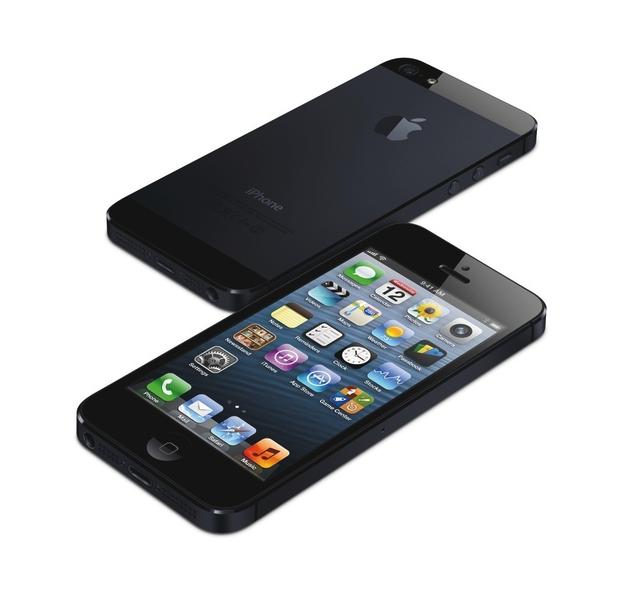
iPhone 5 manufacturer Foxconn admitted Wednesday that assembling the lighter, thinner device is "not easy" and as a result the company is having a serious problem keeping up with demand.

With the holiday season fast approaching, we can safely assume that demand for the new iPhone 5 will surge to some degree, though even now it appears that Foxconn, the company charged with assembling the device, is feeling the pressure.

Speaking to reporters after a business forum on Wednesday, Foxconn boss Terry Gou said, “It’s not easy to make the iPhones. We are falling short of meeting the huge demand.”

Gou’s comments appear to back up a number of recent reports regarding the production of the latest iteration of Apple’s popular smartphone. Last month an official at the Taiwan-based manufacturer told the Wall Street Journal that the handset was “the most difficult device that Foxconn has ever assembled,” largely because its lighter, thinner design called for more precision from factory workers when putting it together. “It takes time to learn how to make this new device. Practice makes perfect. Our productivity has been improving day by day,” the official added.

Another issue facing the production line is the phone’s susceptibility to damage, with its relatively soft aluminum casing more prone to scuffs and scratches compared to the glass back found on the iPhone 4S. Shortly after the phone launched in September, a number of disgruntled customers took to forums to complain that their new handset had arrived damaged. Following this, reports emerged that Apple executives had ordered a quality-control crackdown at Foxconn in an effort to reduce the number of less-than-perfect handsets leaving plants.

No doubt Apple CEO Tim Cook will be more than a little perturbed by the fact that more than six weeks after the iPhone 5 launched, shipping time on its online store is still showing at between three and four weeks. Demand for the new phone may be healthy, but Cook will want Foxconn to find a way of cranking them out at a faster rate – a solution which could involve the Taiwan-based company outsourcing some of the orders to other manufacturers to help cope with demand.

[via Reuters]


Source : digitaltrends[dot]com

Jailbreak iPhone 4 – Step By Step guide to Jailbreaking iPhone 4

If you want to have free applications and games available on the iPhone 4, then it is necessary to jailbreak the phone. This is basically software that is downloaded on the phone. With this the game and application availability will open up exponentially. For everyone who is not into technical aspects of the phone, here is a step-by-step guide to jailbreak the phone for ultimate application usage.

The first and foremost step to take is to open the internet on the IPhone and go to the search box. In this search box there are many key phrases that can be put in, but for the best results type in, “Jailbreak IPhone 4.2.1.”

Once this is done, hit the search bar and it will be possible to look at all the top softwares to jailbreak the IPhone 4. There are plenty of softwares available that can be bought. During this step it is important to research the software, look at the cost, examine the user reviews, and look at the warranty options to find the best option. If wanting to save money there are free options for softwares available.

Now that the choice is made about the software, it needs to be purchased, downloaded, and installed. These are followed normally by prompts on the phone.

After the software is downloaded, the IPhone 4 needs to be hooked up to the computer, whether it be a desktop or laptop. Once it is hooked up, it is necessary for the device to be recognized by ITunes. In case this doesn’t work the first time, keep trying. For the program to work, this step is mandatory. If the phone is already synced to ITunes, it would be a good idea to sync it again just to make sure everything is the way it was before.

Once the phone is synced, open the software that was purchased and click on the button that says “Jailbreak.” The program should start right away. During this process it is best to have the computer working on this task solely. If not, there may be chances the computer will crash.

After the software has finished running, a message should appear that says the restore is completed. Once this message is shown, it is highly recommended that you restart the phone. Once this is done, an additional icon should be on the screen.

By following this process, any IPhone 4 user will successfully Jailbreak their phone. Once the software is installed in the phone, there will be more applications and games at disposal to enjoy.

Tags: iPhone 4, iPhone Jailbreaking, iPhone4, Jailbreaking iPhone

Source : techtalkafrica[dot]com

Nov 6, 2012

Windows Phone 8X vs. Galaxy S3 vs. iPhone 5: spec showdown

Galaxy S3 vs Windows Phone 8X vs iPhone 5 spec comparison

The biggest representatives of every operating system go head-to-head-.to head. The iPhone 5, Samsung Galaxy S3, and HTC Windows Phone 8X square off in a Spec Showdown. Which phone best meets your needs? Take a look at our comparison and make your call.

Since Apple makes its own products, it’s latest product is the default market leader for iOS. For Android and Windows Phone handsets, however, the field is wide open. The market defines the front runners with their wallets, and there’s the media darlings that manage to snag the hearts of reviewers. The Samsung Galaxy S3 has become Android’s model phone, in part because of an aggressive and enjoyable ad campaign, and because it’s just a darn good handset. With Windows Phone 8 just becoming available, we can’t be certain what the mobile operating system’s chief representative will be. What we can say with confidence, though, is that HTC’s Windows Phone 8X can make quite a case for itself. How do these three heavyweights of the handset world stack up against one another? Take a look at the stat sheet and draw your own conclusions.

Read our full reviews for the iPhone 5, Samsung Galaxy S3, and HTC Windows Phone 8X for our extended take on each option. 


iPhone 5 

iPhone 5 display

Galaxy S3

galaxy s3

Windows Phone 8X 

HTC Windows Phone 8X tiny

Size  123.8 x 58.6 x 7.6 (mm)  136.6 x 70.6 x 8.6 (mm)  132.3 x 66.2 x 10.1 (mm)
Weight  112g  133g  130g
Screen  4.0-inch LCD  4.8-inch Super AMOLED  4.3-inch Super LCD 2
Resolution  1136×640 pixels  1280×720 pixels  1280×720 pixels
OS  iOS 6.0.1  Android 4.0 with TouchWiz UI  Windows Phone 8
Storage  16/32/64GB  16/32GB  16GB
SD Card Slot  No  Yes  No
Processor  Dual-core A6X  Dual-core Snapdragon S4 (US)  Dual-core Snapdragon S4
RAM  1GB  2GB  1GB
Connectivity  Wi-Fi, 4G LTE, HSPA+  Wi-Fi, 4G LTE, HSPA+  Wi-Fi, 4G LTE, HSPA+
Camera  Front 1.2MP, Rear 8MP  Front 1.9MP, Rear 8MP  Front 2MP, Rear 8MP
Bluetooth  Yes, version 4.0  Yes, version 4.0  Yes, version 3.1
Battery  1440mAh  2100mAh  1800mAh
Charger  Lightning connector  Micro USB  Micro USB
Marketplace  Apple App Store  Google Play Store  Windows Phone Store
Price  $200+  $200+  $100+
Availability  AT&T, Sprint, Verizon  AT&T, Sprint, T-Mob, Verizon  AT&T, T-Mob, Verizon

What it means: You can sit and compare the processing power and pixel-per-inch count on each device and come to a conclusion about which phone is most technically sound. That said, the biggest and most glaring difference between these three handsets is in one category: the operating system. Apple’s iOS is streamlined and smooth, like everything Apple; Google’s Android OS is in a seemingly constant state of upgrade, but rarely are the changes met with complaints; Windows Phone 8 brings the complete implementation of Live Tiles, and we’ve already started to see that Microsoft may be on to something. The deciding factor may come down to your other devices and computer. If you own a Mac, sticking with the Apple theme may be best for the purposes of continuity. PC users that sprung for Windows 8 should consider snagging the Windows Phone 8X to get the full functionality of the OS. Android devices can work with Mac, Windows, or even Linux, and the NFC features like S Beam make the Galaxy S3 appealing if your friends of co-workers also own the device. Luckily, if you are making your choice from this group, it’s hard to pick wrong.

(Specs by Jeffrey Van Camp)


Source : digitaltrends[dot]com

Nov 5, 2012

Belkin first to release third-party Lighting accessories for iOS devices

When Apple launched the new Lighting connector with the iPhone 5, they immediately made all the existing accessories for iOS devices obsolete (unless you plan on using one of the optional adapters). However, it looks like it’s not going to take take long for accessory makers respond to the change and come out with new accessories designed for the new interface.

Belkin is the first out of the gate with a couple of accessories for your car that are compatible with the Lightning connector. The first is a car charger, that plugs into your car’s power outlet and connects to your iOS device through a Lightning connector. The second one is a Charge + Sync Dock, that doesn’t actually have a Lightning connector of its own but includes an audio jack and you can route your Lightning cable through it.

At $29.99 each, both accessories are considerably expensive for what they do and it would actually be cheaper to buy Apple’s adapters and use your old accessories. It would be best to wait for more manufacturers to release their products before jumping into the Lightning accessory market.


Source : blog[dot]gsmarena[dot]com

Oct 29, 2012

Head of iPhone and iPad Software, Scott Forstall, To Leave Apple

abc scott forstall nt 121029 wblog Head of iPhone and iPad Software, Scott Forstall, To Leave Apple

Scott Forstall at iPhone 5 launch (Credit: Joanna Stern / ABC News)

Silicon Valley isn’t letting Hurricane Sandy get in the way of big tech announcements today. On the heels of Google and Microsoft’s big product launches this afternoon, Apple has just announced a big executive shake-up.

Scott Forstall, the senior vice president of iOS (the software made for the iPhone and iPad), will be leaving the company next year. In his absence, Jony Ive, Apple’s lead hardware designer, will take over leadership and direction for, what Apple describes as, “Human Interface.”

“His incredible design aesthetic has been the driving force behind the look and feel of Apple’s products for more than a decade,” Apple said in its press release.

The reasons for Forstall’s departure are not given in Apple’s press release. However, Forstall has been responsible for Apple’s Maps and Siri features, both of which were criticized as half-baked at the time of launch. When iOS 6 and the iPhone 5 launched in September, Apple was knocked for its inaccurate Maps; CEO Tim Cook was forced to apologize to customers. According to Apple, Eddy Cue will now oversee Siri and Maps.

Industry analysts seem to agree that the Maps and Siri fiascos prompted the decision. “Apple Maps and Siri fell well short of both Apple and industry expectations. Since Forstall was in command, he was taken out,” Patrick Moorhead, principal analyst at Moor Insights & Strategy, told ABC News.

Ryan Block, a long-time Apple watcher, echoed the same thoughts. ”Scott was also in charge of the new Maps product, one of Apple’s most visible (if not monumental) failures of a flagship product in quite some time. SOMEONE’s head was going to roll, it was just a matter of whose. (The last time Apple had something blow up this badly in its face — iPhone 4′s Antennagate — iPhone hardware executive Mark Papermaster was unceremoniously fired.),” Block wrote on gdgt.com.

Apple announced that head of retail John Browett is also leaving; the company will be looking for a replacement in the coming months.

Apple announced last week its new iPad Mini and that it had sold 27 million iPhones in the 4th quarter.


Source : abcnews[dot]go[dot]com

Oct 26, 2012

Apple iPhone 5 vs Samsung Galaxy S III: The aftermath

So, you’ve read our Apple iPhone 5 vs Samsung Galaxy S III comparison, but there’re still some questions you had that left unanswered? Well here is the place to post them – we’ll answer them right here in our blog.

We’ll start with some of those posted in the comments section of the comparison itself. By the way we are considering making this type of articles a regular feature on our blog, so we’d appreciate any feedback you might have on the idea, too.

Unless I’m wrong, iPhone 5 offers USB-OTG as well. Lightning cables to connect USB drives and microSD cards have been shown.

Not quite. The iPhone 5 does have the camera connection kit, which lets you import images from various storages, but that’s not full-featured USB. For example, the Galaxy S III can connect to mice and keyboards. Not to mention that you can access the full file system of any memory cards and thumb drives you connect to it and not just import the images that are stored on them.

How the hell it was a tie in phone and SMS!!!! GSMArena even the web browsing, when SGS3 shines you call it a tie?!

Actually, it’s not – we called the telephony and web browsing chapters in favor of the Galaxy S III. But let’s not let the facts get in the way of a good argument, eh?

Compromising is going nowhere. With this abstract topic, you can make the most phones come in same story. Sorry, but even Canon vs Nikon, even the best warriors, even if they’re both good, just One is the winner. In every fight there is a Winner. Choose one, you made a site, a topic, a blog, you decide. The consumer don’t understands generally like you, that’s up to his choices, he’s…”not so informed” let’s say.

Of course, there’s a winner in every fight, but in this case things aren’t quite so simple. You see the iPhone 5 and the Galaxy S III are both great smartphones and each has its strengths and weaknesses (actually not weakness, really, just area where they are not the best).

Which smartphone suits you best depends mostly on your usage pattern and even though we’d love nothing better than saying X is better than Y, we just can’t. You see this site is visited by about 1.5 million people daily and each of them has their unique needs and preferences, so how could we say that the iPhone 5 is better because of its build quality or the Galaxy S III is the winner just because it supports more video formats?

One might decide to put a protector case on their expensive new smartphone to protect it from drops (in which case looks hardly matter) or they might not watch video on their smartphone at all (so what’s the use of a great video player?).

What we decided to do instead is compare the two most popular smartphones of the season in various real-life scenarios and call which is better in each of them. You should then decide which of those matter to you and which are irrelevant and pick the best one for your personal needs. You can hate us all you want for it, but we feel that is the right thing to do.

I don’t think you can award any extra points for iMessage, considering the SGS3 comes with not only ChatOn, but Google Talk, a cross platform messaging service that works through your GMail address. It’s got a wider platform base, working on all Android devices, plus any computer that can access GMail (probably iOS too, but I’ve never looked).

First of all, GTalk is available on any device with a browser and that naturally includes the Apple iPhone 5 – all you have to do is go to the GMail website and login to your account. But that’s not really the point here – you can install of kinds of IM clients on either device – Viber, Whatsapp, Skype, you name it.

The thing with iMessage is that it is seamlessly integrated in your messaging app, so sending messages through it doesn’t require you to do anything different from what you would do to send a regular SMS. It’s a nice way of saving you some charges when you are texting your iOS-rocking buddies and that’s why we believe it’s actually a good thing to have.

Is it just me or is GSMArena Becoming a Samsung Fanboy? Example: how does one Tie in Battery Life when iPhone 5 beats the GS3?

Given that the Apple iPhone 5 scored an endurance rating of 51 hours and the Galaxy S III got 50 hours, we couldn’t see this chapter ending in anything but a tie. The 1 hour difference means that if you use the two smartphones as in our testing procedure (an hour of calls, an hour of web browsing and an hour of video playback per day) you’d have just under 2% battery left in you iPhone by the time the Galaxy S III dies. Not exactly a huge difference, is it?

Furthermore, some iPhone users aren’t exactly getting to experience the same kind of longevity we did with our test unit (including Chavis from our team).

I think you guys are biased towards the iPhone on some of those. So… the SGS3 has a micro USB… But the iPhone has a fancy suite that you have to install to download pictures from the camera folder via a cable that costs 30$ so it’s a tie! Wuut?!

No, it’s a tie in the picture browsing department, because the two can import images from all kinds of memory cards with an optional accessory. Also the iPhone 5 has more accurate color reproduction, while the Galaxy S III makes everything livelier.

It’s true that the iPhone 5 camera connection kit costs a fortune, but the official Samsung USB host adapter is hardly going for pennies either.

GSMarena, I’ve been your loyal review reader even before the trend of touchscreen hitting everyone of us. but to be frank, this is by far your WORST review ever. perhaps its because you will not like to hurt the feelings of iPhone naive users, or even afraid the Apple company will not give you anymore products to review in the future by reviewing the TRUTH. only brainless and blind-worshipers of Apple will really think that their god-like Apple thingy is better than S3, or any other flagships (Optimus G, Lumia, One X etc.) as a longtime reader, I felt extremely bad about this one-sided, biased review.

You got us there – it’s the fear of losing our Apple PR connections that motivated us to do the article in the first place. Tim Cook himself called and told us to do it or else he wouldn’t let us purchase the next iPhone from the store (because that’s what we did this time to get a review unit). We were also extremely afraid that we won’t get invited to the Apple press events anymore… Oh, wait…

Smells like apple paid advertising…


Source : blog[dot]gsmarena[dot]com

‘Don’t underestimate BB10,’ RIM boss says during demo of upcoming BlackBerry OS [video]

As the iPhone 5 flies off the shelves and Samsung reports record profits, the boss of the firm that once ruled the smartphone roost has said in an interview that BlackBerry 10 – set for launch early next year – should not be underestimated.

With so many product launches taking place in the tech world this month, it’s not hard to think Research In Motion should be in the mix too, rolling out its new BB10 phones and next-generation mobile operating system. But, of course, it’s not. For RIM’s new offerings, we still have to wait at least several more months.

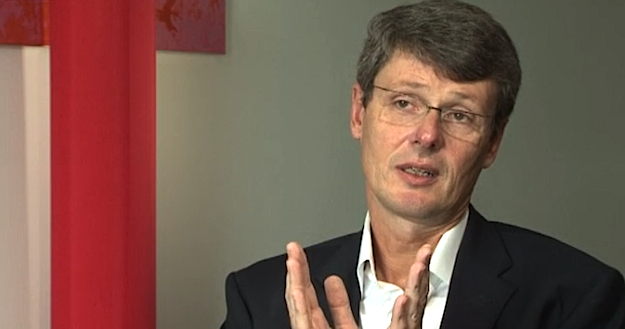
The company is trying to keep itself in the picture though – lest it be completely forgotten by consumers playing with their newly acquired iPhone or Samsung device – with RIM boss Thorsten Heins giving an interview to the BBC this week, offering a glimpse of the new OS while answering a few questions about the company’s current state of affairs.

The demo – given on a Dev Alpha B device similar to the one handed out to developers earlier this year – involves a good deal of touching and swiping, as well as a little bit of ‘blending’ (check out the demo below to learn more), with Heins describing the theme of BB10 as “the integration of various applications into what we in BB10 call the BlackBerry flow…..[so there’ll be no] application grid.”

BB10 is about real-time multi-tasking, Heins said, enabling the user “to live in the multi-taking space,” making it simple to jump between running applications. He also mentioned the BlackBerry Hub, which acts as a kind of notification system that pulls in information from various apps and programs.

Too late?

Heins, it has to be said, didn’t look particularly pleased when Cellan-Jones suggested it was all coming too late, staring straight back at the BBC man with an expression that suggested he was momentarily imagining a scenario involving the interviewer, the Dev Alpha B device and a painful surgical procedure, but overall Heins was cheerful and enthusiastic throughout. And by the way, in response to the accusation that RIM has missed the boat, Heins said, “Don’t underestimate the dynamic this platform is going to create in the market.”

Interestingly, when asked about the recent NY Times article which featured people claiming to be embarrassed about getting their BlackBerry phone out in public, Heins said, “Without going into detail, I would kind of question the sources that were used for that article,” adding that, according to what he sees in markets outside the US, there’s “huge growth and huge commitment to BlackBerry.”

You can check out the interview below.


Source : digitaltrends[dot]com
Oct 25, 2012

Second screen app Boxfish takes its TV-guide-killing self to the iPhone

iphone boxfish

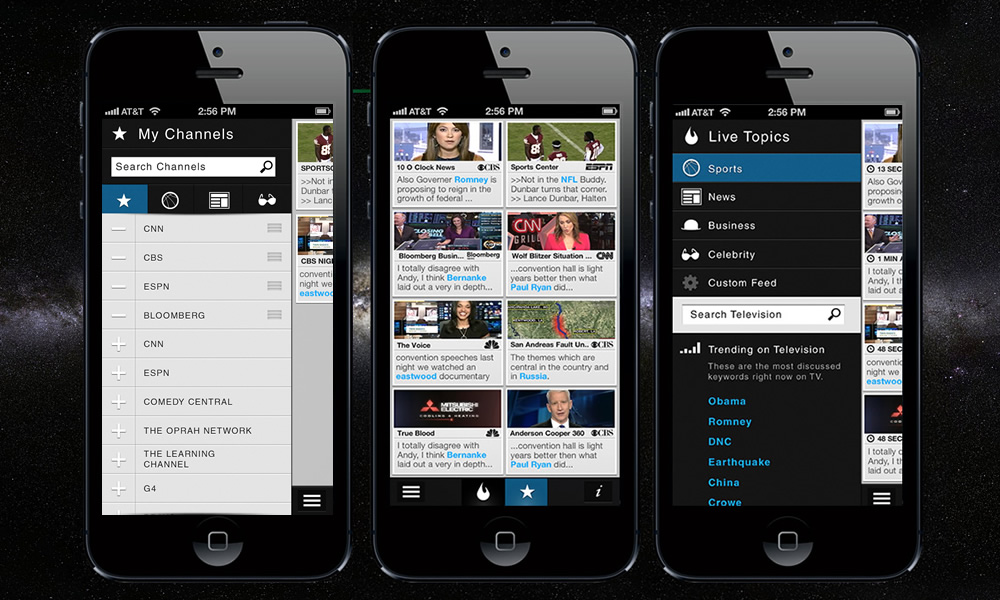
TV search and discovery — as well as remote control — app Boxfish can now add the iPhone to its list of compatible devices. The team has also taken a cue from early user behavior and made some adjustments to transform into more of a lean-back experience.

Today, second screen TV app Boxfish is launching its iPhone app. In August, Boxfish debuted its iPad app, which is essentially a means for helping users break out of the dysfunctional excel spreadsheet called TV guide we currently deal with.

The idea around Boxfish is to capture every word spoken on television along with Twitter trends to create an interactive, customizable platform for browsing and controlling what’s on television. The control function is literal: The app connects with your cable box to change the channel to your selected content (provided you’re using one of Boxfish’s partners – whose ranks are growing).

Boxfish CEO Eoin Dowling tells me the iPhone app essentially functions like the iPad app, with some aesthetic exceptions (screen size related, generally). “It’s a much more focused experience,” he says, adding you get the same set top box control as you do with the iPad app.

The team quietly rolled out the iPhone app last week, and already received plenty of user feedback and reactions. “Session usage is already spiking,” says Dowling. “People just use it more than the iPad – our findings show that people are in a ‘learn forward’ experience with the iPad, and the iPhone works better in ‘lean back’ mode.”

Insights to user behavior aren’t limited to the iPhone, however. Since the launch of Boxfish’s iPad app, the team has made plenty of changes to the tablet version as well. “We’ve moved to a tile UI that constantly updates your topics and channels,” says Dowling. “It’s a much more visual and simple navigation and discovery UI.”

“We found that even though there was a huge, highly active segment that were searching, the majority were making much more use of the ‘favorites’ [category],” he tells me. “We found that people just want to know what’s on. The majority just want a lean back experience.” He says Boxfish is moving more in this direction, while continuing to offer up the option of interactivity, but also becoming a passive app that serves as a background tool.

Change in Boxfish’s dynamic isn’t limited to its product: The team picked up Instagram designer Tim Van Damme for its board, and if there’s anything to be said about Instagram, it’s a heightened attention to aesthetics. “Tim’s all about the simple details. If there’s one thing he’s brought to the experience it’s the focus on simplicity. We’ve spent the last year building a monster technical and data-heavy platform; it’s been immense to have someone with such vast product experience to come in with fresh eyes and a laser focus on the user.”

Today’s iPhone app launch also brings with it Boxfish’s new AT&T integration, and the startup has a handful of other partnerships in the works. Also in the works? The Android app. Dowling says the platform’s fragmentation would have made for a poor user experience at launch and the team is choosing to wait on a release. For now, you can check out Boxfish for iOS, available in the App Store today


Source : digitaltrends[dot]com
Samsung releases new Galaxy S III ads in the US

Samsung has released three new ads for the Galaxy S III in the US. After making fun of iPhone buyers ad nauseam in the previous ads, these new ads actually concentrate on the phone itself and its key features.

There are three ads in total, with each one focusing on the big screen, the Music Hub and the S Beam NFC sharing features respectively. The ads are short, to the point and have a good dose of humor, everything that you expect from a great ad. You can find them all below.


Source : blog[dot]gsmarena[dot]com

Oct 23, 2012

Dropbox for iOS finally updated to match the iPhone 5 taller screen

Dropbox pushed a much needed update to their iOS app on Apple’s Appstore. The new version not only makes full use of the iPhone 5 taller screen, but also has done away with the previous photo size limitation when printing pics or saving them to the Camera Roll from the app.

The new update bring the application version to 1.5.6.

The biggest change is that it removes the previous limitation where saving a high-resolution image from Dropbox to the Camera Roll would downsize it to the meager 960x638px size.

Unfortunately, as TheVerge reports, while resolution remains intact, the app still compresses the images while downloading, so for now, saving images from the Safari web browser remains one of the easiest workarounds to getting full-size high-res shots to your Camera Roll.


Source : blog[dot]gsmarena[dot]com

Oct 19, 2012

iPhone 5 vs iPhone 4S: Our in-depth comparison

iPhone 5 vs iPhone 4s header

The iPhone 5 is here. But is it worth the money to upgrade from the iPhone 4S? Check out the specs and decide for yourself.

The iPhone 5 is the latest entry in Apple’s smartphone line. Whether you are filled with desire or feeling a little underwhelmed by its lack of evolution, there’s no doubt about the demand. With over 5 million sold in the first three days, Apple has another smash hit on its hands. Even with supply issues, Apple is expected to sell around 50 million iPhone 5 handsets by the end of the year.

If you are looking to upgrade, there’s no doubt the iPhone 5 will be on your radar, but what about last year’s iPhone? The iPhone 4S was no slouch and if you picked one up you may be wondering whether an upgrade to the latest model is really worthwhile. Alternatively you may want to take advantage of the deep discounts the old iPhone models enjoy whenever a new kid hits the block.

Join us as we break down the iPhone 5 versus iPhone 4S comparison into individual categories to help you make the right choice.

Before we get started you might want to check out our full iPhone 5 review and our iPhone 4S review. Just remember that those review scores are a product of their times and relate to what was available on the open market when each phone was released.

Design and construction

There’s really no mistaking the distinctive look of the iPhone line, but it has evolved and matured a great deal since the original 2007 release. The iPhone 5 looks a lot like an iPhone 4S that has had a growth spurt. It is 4.87 inches tall compared to 4.5 inches and it is 0.30 inches thick compared to 0.37 inches. When you pick it up you’re struck by how light it feels. The iPhone 5 weighs just 3.95 ounces, which is almost a full ounce lighter than the iPhone 4S.

A larger screen and a slimmer form factor have been achieved without compromising on the materials and quality. The iPhone 5 has a brushed aluminum back instead of glass. It is also significantly tougher than its predecessor and has been trouncing the competition in drop tests.

The controls are much the same. The familiar home button is present and correct, the power button is ever so slightly smaller on the iPhone 5, and a Nano-SIM has replaced the Micro-SIM in the iPhone 4S. You’ll also notice that the lightning port is significantly smaller than the old 30-pin dock connector.

Winner: iPhone 5

Feel

With two devices so similar the feel comes down to a couple of minor points. The iPhone 5 is lighter and yet it still feels like a premium construction. The brushed aluminum backing is also more comfortable than the glass backing you’ll find on the iPhone 4S, not to mention less prone to smears and fingerprints. The only place where the iPhone 5 falls down is the power button. Despite the fact that the phone is taller, Apple has left the power button on the top and it may now be a bit of a stretch for some people.

Winner: iPhone 5

Screen quality

You have a 4-inch Retina display versus a 3.5-inch ‘Retina’ LCD display. Both are rated at 326ppi. The iPhone 5 is 1136×640 pixels and the 4S is 960 x 640 pixels. That extra height definitely counts, although in the short term, many apps will have a black band at the top and bottom rather than stretch to fit the new resolution. Movies can now play in 16:9 without letterboxing, which is great.

The iPhone 5 doesn’t just have a taller screen, though; it also boasts warmer colors, greater clarity in direct sunlight, and wider viewing angles.

Winner: iPhone 5

Operating system

If you’ve made the upgrade to iOS 6 on your iPhone 4S, then you’re running the same operating system as the iPhone 5. That extra display height enables the iPhone 5 to display an extra row of icons and more content in some apps, but there’s really no other difference between the two phones.

Usually there is a new, exclusive software feature with a new iPhone release. The iPhone 4 got FaceTime and the iPhone 4S got Siri, but the iPhone 5 doesn’t really have anything particularly notable, except for a new Maps app and Passbook (which we’re still struggling to figure out).

Winner: iPhone 5 (for its extra icons)

Audio and video

In terms of content, you have exactly the same options, but there are a couple of differences when it comes to audio and video. As mentioned before, the taller screen allows for 16:9 movies to play on your iPhone 5 when you view it horizontally, which is a nice improvement.

Then there’s the new EarPods that ship with the iPhone 5. They are designed to fit your ears more comfortably and they offer much better sound quality than the earphones that came with the iPhone 4S. The bass is better, although true audiophiles will still want to buy good quality earphones or headphones separately. Another tweak is that the audio jack has been moved to the bottom of the iPhone 5 probably because the new lightning port opened up some space there.

Winner: iPhone 5

Cameras

On paper, you have exactly the same 8-megapixel rear-facing camera, but in practice the iPhone 5 does boast a few improvements. For ideal lighting conditions you’ll be hard-pressed to see any difference, but in low light conditions the iPhone 5 camera comes into its own. The LED flash seems to be better and there’s less noise in shots. There have also, apparently, been improvements to its HDR capabilities.

They both support 1080p video recording, but only the iPhone 5 can take photos while you are recording video. The basic quality is also slightly improved thanks to better noise reduction, white balance, and image stabilization, but the difference is subtle. Improved compression means that HD video on the iPhone 5 is 20 percent smaller.

Two other differences worth mentioning are that the iPhone 5 camera is faster to capture a photo and that the new sapphire crystal lens is incredibly tough, making it difficult to scratch.

When we flip over to the front-facing FaceTime camera there’s an obvious improvement. A 1.2-megapixel camera capable of 720p video recording has replaced the VGA camera.

Winner: iPhone 5

Hardware specifications

The iPhone 5 is obviously a jump up from the iPhone 4S when it comes to raw processing power. The new A6 processor is way faster than the A5. The RAM has also been increased from 512MB to 1GB. The phone boots up faster; it loads apps faster; it runs games faster. The improvement in general performance is very noticeable.

Winner: iPhone 5

Voice and LTE data service

The iPhone 5 boasts three noise-cancelling microphones for improved call clarity. It also supports HD Voice, but not on Sprint’s network. We’re still waiting to hear whether any carriers stateside will support HD Voice, but it has been confirmed on 20 carriers elsewhere in the world, including Everything Everywhere in the UK.

Now you can also enjoy 4G LTE on your iPhone and the improvement is vast. If you use a lot of data then this will be a major enticement for you. Even for casual web browsers the increased speeds for web pages opening are immediately noticeable. How much of a benefit that LTE support is for you depends on your carrier and where you live, but those LTE networks are growing larger every day so it’s a great feature to have.

Winner: iPhone 5

Charging/connecting accessories

At last we reach a category where the iPhone 4S can win. The decision to switch to the new lightning port for the iPhone 5 means that all your old accessories aren’t compatible. The Lightning to 30-pin Adapter will cost you $30. If you want to splash out for a replacement charger setup then you’re looking at $38 versus $30 for the iPhone 4S. If you have a range of docks and other accessories that you’re attached to then this is just an extra cost.

Winner: iPhone 4S

Battery life

When it comes to basic 3G talk time, both devices are rated at 8 hours. However, the iPhone 5 will give you 8 hours of browsing on LTE or 3G, versus 6 hours of 3G browsing on the 4S. It also squeezes an extra hour of Wi-Fi browsing in at 10 hours and it should support an extra 25 hours of standby time, according to Apple website.

In practice you aren’t going to notice much of a difference in battery life, but the fact it has a bigger screen and it’s lighter makes that slight improvement for the iPhone 5 quite impressive.

Winner: iPhone 5

Overall winner: iPhone 5

The iPhone 5 is clearly the overall winner, as you would expect. The real question is how much better is it? It really depends on what you want from your phone. If you are set on an iPhone, but you don’t need cutting edge performance and you want to save a bit of cash then the iPhone 4S could be the better choice for you. Everyone else should go for the iPhone 5.

Is it worth upgrading from the iPhone 4S? Well, probably not. You get all the benefits of iOS 6 anyway and the iPhone 5 really isn’t a major leap forward. A few employees here at Digital Trends still use the iPhone 4S with iOS 6 and it doesn’t feel noticeably slower, as phones sometimes do after being upgraded. If you still have a year on your contract, we recommend you wait it out and check out the iPhone 6.

Winners by category:

• Design and construction: iPhone 5
• Feel: iPhone 5
• Screen quality: iPhone 5
• User interface: iPhone 5
• Operating system: iPhone 5
• Audio and video: iPhone 5
• Cameras: iPhone 5
• Hardware specifications: iPhone 5
• Voice and LTE data service: iPhone 5
• Charging and connecting accessories: iPhone 4S
• Battery life: iPhone 5

10 to one makes it pretty clear: the iPhone 5 is better than the iPhone 4S.


Source : digitaltrends[dot]com

Oct 17, 2012

Samsung Galaxy S III and Apple iPhone 5 square off from the inside of a blender

The rivalry between Apple and Samsung just moved to a whole new dimension, people! The popular YouTube series “Will It Blend” featured the Samsung Galaxy S III and the Apple iPhone 5 side by side to determine which one blends better.

For those of you who have followed this particular channel in the past, there is no need to tell you that it is the $500 Blendtec blender which ends up as the winner. I must however note that the Samsung Galaxy S III appeared to hold its ground against the blades much longer than the iPhone 5. See for yourself in the video below.

What do you think? Would the “Will It Blend” outcome determine which smartphone will you pick?


Source : blog[dot]gsmarena[dot]com

Oct 16, 2012

Cheaper, knock-off Apple Lightning cables might not take that long to appear

Since the iPhone 5 launch it became clear the new and way expensive Lightning cable packs some sort of a security chip inside and because of that – the cheap Chinese knock-off cables won’t work.

New findings by the awesome guys at Chipworks however lead us to believe there’s hope for cheaper cables. When Chipworks carried their teardown of the Lightning cable, they discovered it contains four chips – two of them very simple with just a couple of (power) transistors, a third, the NXP NX20P3, which is responsible for charging and finally, a mysterious fourth chip – the TI BQ2025.

This tiny fella manufactured by Texas Instruments is undocumented in TI’s database but there are four others close to it already cataloged in there. They are all battery fuel gauges, three of them serial EFPROMs and the last one – a battery monitor IC. All these terms here are not really important though. What you need to know is BQ2022, BQ2023, BQ2024 and BQ2026 all have one thing in common – they all feature some kind of security. It just makes sense for BQ2025 to deliver security features as well. And this tiny fella is probably the sole reason why all cheap cables just don’t work.

The positive thing from this investigation is that according to Chipworks, the security is far from “herculean”, it’s there to be “just enough” to deter the making of the knock-off cables, but without burdening Apple’s manufacturing costs by much. Chipsworks compare the level of security to “the level of effort that cartridge manufacturers used to implement in the olden days”, which obviously has been overcome many times.

So, there you have it. Apple’s done this so you can’t buy cheap Chinese replicas, at least for now.

Those of you who don’t want to spend a pile of cash on a set of original USB cables, should probably wait just a bit longer before those tiny chips get replicated into $3 cables.


Source : blog[dot]gsmarena[dot]com

Oct 11, 2012

This iPhone has been sleeping with the fishes for 6 months and it still works

Modern day smartphones are great at many tasks, but unfortunately, swimming is not among those. Ken Hovanes learned this the hard way when he accidentally dropped his iPhone in a lake about six months ago. The water in the lake was 2m deep and murky back then so Ken gave up on retrieving the device and bought a new iPhone.

Fast forward to more recent times, after finding the lake waters have slightly receded, he went to search for his iPhone again. And he finally found it, still sitting on the bottom. What surprised him most however, is that it still worked.

The battery is dead (you can see the bulge on the back), there’s no Wi-Fi, the screen is messed up and the rusty port supplies the phone with power, but won’t transfer data just yet. Yes, the newly found iPhone won’t win a beauty contest and it’s hardly usable, but Ken still hopes to find a way to offload his photos from the device.


Water damage does not stop this iPhone from working

So do you have an amazing electronics water damage survival story yourselves? Share it in the comments below.

You can also check out some more photos at the source below.


Source : blog[dot]gsmarena[dot]com

Oct 10, 2012

Google+ app updated on iOS and Android

Google has pushed out a new update for their Google+ app on iOS and Android. One of the key new features in the iOS version is support for the iPhone 5 and iOS 6. Another new feature is Google+ page owners now being able to view, post and comment from the mobile app.

Lastly, you can also edit your posts, save photos to camera roll and search for people and posts on the iPad.

The Android version also gets the ability to let page owners view, post and comment and along with that there is also a new ‘Find People’ option to discover people and topics more easily. There’s also a new homescreen widget. For some reason the Android app stopped loading posts after updating and just says ‘No posts found’ on my device but your mileage may vary. Probably just some temporary bug and should be fixed soon.

You can download the apps from the respective links below.


Source : blog[dot]gsmarena[dot]com

Quality-control crackdown causing iPhone 5 supply issues, Apple shares knocked

iPhone 5 Front and Rear

There are no worries about consumer demand for the new iPhone 5 – Apple is selling millions of them. The problem, thanks to its popularity, is on the supply side. However, quality-control issues and component shortages are not helping the situation.

When the new iPhone 5 started landing in people’s hands last month, it didn’t take long before forums started to fill with comments from disgruntled customers complaining that their handset was delivered with scuffs and scratches on its anodized aluminum back.

Its predecessor, the 4S, had a glass back so didn’t suffer from the same problem. The new aluminum design has enabled Apple to make its popular smartphone thinner and lighter than any earlier iteration, but it seems the soft material also makes it more susceptible to damage.

Quality control

It appears the issue has caused something of a stir behind the scenes at Apple, with a Bloomberg report Wednesday suggesting the supply shortage of the new handset is in part down to a quality-control crackdown by the phone’s manufacturer, Foxconn.

Foxconn is reportedly working hard to limit the number of Apple smartphones leaving its plants with scuffs and scratches, with Bloomberg citing “a person familiar with the matter” as its source.

“Senior Apple managers told executives at Foxconn near the end of September to tighten production standards,” the report claims.

A shortage of iPhone 5 components is also proving to be a problem for the Cupertino company, contributing to manufacturing challenges. As a result, RBC Capital Markets analysts have reevaluated their iPhone 5 sales forecast for the December quarter, cutting it to 49 million units from 57 million.

Share price drop

Worries about supply appear to have been a contributory factor in Apple’s falling share price, with $60 billion wiped off the company’s market value since the handset’s launch. On Tuesday shares closed at $635.85, significantly down from the record $700+ value they reached only a couple of weeks ago.

Demand for the iPhone 5 has admittedly been incredibly strong, with Apple announcing a record five million orders in its first three days of sales. Although a wait is always expected if you order an iPhone online soon after launch (currently 3-4 weeks), it seems the supply problems are being compounded by the quality-control issue and component shortages.

Handsets turning up with scuffs and marks were reported right from the start with the iPhone 5. One unhappy owner fired off an email to Apple’s marketing chief, Phil Schiller, and received the following response:

“Any aluminum product may scratch or chip with use, exposing its natural silver color. That is normal,” Schiller wrote. Trouble is, some of the devices have been arriving damaged.

Until the initial rush to buy the new handset dies down and Apple gets on top of the current supply issues, a certain degree of patience is required if you’re thinking about ordering an iPhone 5 anytime soon. As for Apple’s share value, no doubt that’ll bounce back once (if) it unveils the iPad Mini later this month.


Source : digitaltrends[dot]com

Oct 4, 2012

Digital Photography Review sheds light on the iPhone 5 purple haze issue

Ever since the launch of the iPhone 5, the phone has been a victim of abject criticism for various reasons that, thanks to the popularity of the phone, are usually blown way out of proportion than the situation demands.

One of the things that people liked to complain about was the purple haze seen in some of the iPhone 5 camera photos with a bright light source just entering the frame. In their review of the iPhone 5 camera, Digital Photography Review talked about this phenomenon, what could be causing it and how big a deal it really is.

One of the purported reasons for this issue was the presence of sapphire crystal as lens cover on the iPhone 5, which people believed would give the images that purple tint. Digital Photography Review believes that is not the case and indeed, when you compare it to the iPhone 4S images, you will see the same effect, even though the 4S has a simpler glass lens cover.

Digital Photography Review also dismissed blooming, chromatic aberrations and IR sensitivity as possible reasons, as the actual results don’t match the kind of results you’d get if either of these issues were at play. Eventually they zeroed in internal reflections and/or lens flare to be the possible culprit.

So what’s their solution to this problem? Well, as any photographer or camera manual would tell you, don’t point the camera at a bright light while taking a picture and you should be fine. With a bright light source in a corner, your photos would be pretty much ruined anyway, with or without the haze. Also, lens flare is pretty common problem with cameras and not something exclusive to the iPhone. In other words, it’s no big deal.

You can read more about the test and the rest of the review in the link below.


Source : blog[dot]gsmarena[dot]com

Sep 30, 2012

Google Maps on the original iPhone was a last minute addition

One of the most important applications on the original iPhone was the Maps application that Steve Jobs demoed with a prank call to Starbucks. But it has now come to light that about a month before the phone was announced, no such application even existed on the device.

According to a story by The New York Times, the maps application was not at all part of the original plans for the phone. Steve Jobs thought of having the application on the phone just weeks before the announcement because he thought it would help show off the multi-touch display better.

He then set two engineers who came up with the original maps application in just three weeks before the announcement. Apple then cut a hasty deal with Google to provide the mapping data for their application. This should have been easy back then because the two companies had good relations and Google’s then CEO Eric Schmidt was part of Apple’s board of directors and also came on stage during the iPhone announcement. The last minute inclusion of Maps also tells us why the original iPhone did not have GPS, which was then added in the iPhone 3G next year.

Of course, over time the relationship between the two companies became tense to the point where Apple had to come up with another source for the mapping data (the data for the current Maps application in iOS 6 is provided by TomTom, among others) and the rest is history. Still, it’s interesting to know that the original iPhone would not have had a Maps application at all had Steve Jobs not thought of it at the eleventh hour.


Source : blog[dot]gsmarena[dot]com