Dropbox reaches 100 million users, Nokia unveils their ‘Here’ map technology, Vimeo teases new pay-per-view service, and Google Fiber debuts in Kansas City.
Related Links:
Source : digitaltrends[dot]com
Dropbox reaches 100 million users, Nokia unveils their ‘Here’ map technology, Vimeo teases new pay-per-view service, and Google Fiber debuts in Kansas City.
Related Links:
The proliferation of start-stop technology is expected to put huge demands on car batteries in the near future, and Exide has new technology to make sure their batteries will be ready for it.
Car batteries, not counting those in hybrids or electric cars, haven’t changed much since the introduction of the electric starter. The added strain of more and more electronics has made for incremental yet very slow evolution of the technology. But as more and more mainstream cars are fitted with fuel-saving start-stop technology, the demands placed on batteries are expected to increase exponentially. Start-stop systems, in their current form, will shut down your car’s engine while you’re stopped at a red light and then start it again when you take your foot off the brake pedal. This means the life cycle of the average battery could increase from about 5,000 starts to 50,000 starts easily.
With ever-tighter regulations governing fuel consumption and emissions, this technology will become more and more commonplace, and it would obviously be a lot to ask of our current battery technology to be able to handle this huge increase in use. As WardsAuto reports, battery maker Exide is now working on batteries designed specifically to meet the demands of the new technology. The new battery design is called Advanced Glass Mat, and is an improvement on the traditional flooded lead-acid battery. In a flooded lead-acid battery, a process known as shedding occurs, whereby the positive and negative sides of the battery gradually wear down. With the new design, a polyethylene absorbent glass mat is used between the positive and negative sides. The battery is then also sealed, and the glass mat puts pressure against the positive and negative sides, keeping them apart and preventing wear and tear.
In a flooded lead-acid battery, it usually takes about one minute of driving to recharge a battery after it has been used to start the engine. This takes longer and longer as the battery ages, and this aging would accelerate greatly with a start-stop system, and in as little as a year the recharge time could reach 10 minutes. This would obviously be a problem for start-stop equipped cars, and Exide estimates that most lead-acid batteries on start-stop equipped cars would need replacing after just six months. With the new AGM batteries, aging would be much slower, and batteries would last from three to five years. They are expected to cost about double what regular batteries cost, but this is still much less than the price would be if the technology had necessitated a switch to lithium-ion or some other more exotic material.
NASA's getting in on the 3D printing scene with new selective laser melting technology which is being used to build parts for future space rockets.
When it comes to 3D printing, it’s almost as if there’s a game of one-upmanship going on as to what can be created using this emerging technology. We’ve seen an acoustic guitar (novel) knocked together using 3D printing technology, a titanium jaw (impressive), an electric racing car (it’s getting interesting now), a plane (amazing) and even ‘magic’ arms (interesting and amazing).
Evidently not wanting to be outdone, and mindful of having access to some of the most advanced technology in the world, NASA recently piped up to say it’s currently using a kind of 3D printing technology to help build parts for future rockets that could one day carry humans to Mars. Top that, 3D printing fanatics.
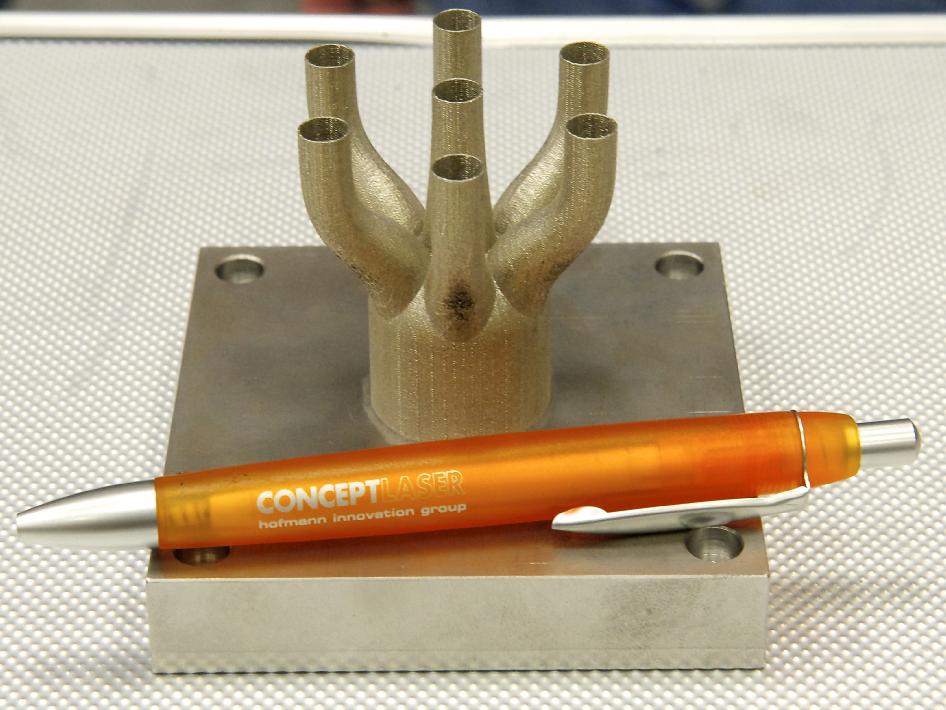
The method, called selective laser melting (SLM), can create intricate metal parts for future space rockets and could save the space agency millions of dollars in manufacturing costs, NASA said on its website recently.
Explaining SLM technology, Ken Cooper of NASA’s Space Flight Center in Alabama said, “Basically, this machine takes metal powder and uses a high-energy laser to melt it in a designed pattern.
“The laser will layer the melted dust to fuse whatever part we need from the ground up, creating intricate designs. The process produces parts with complex geometries and precise mechanical properties from a three-dimensional computer-aided design.”
According to Andy Hardin of NASA’s Engines Office, using the technology can cut manufacturing time drastically “from months to weeks or even days in some cases.”
He added that since engineers wouldn’t be welding parts together, the more complete parts created using SLM technology will be “structurally stronger and more reliable, which creates an overall safer vehicle.”
Saving money while improving reliability and safety means utilizing the technology is something of a no-brainer for the space agency, which is already dealing with major cuts to its budget.
Parts created using the technology will be tested on the ground later this year with NASA aiming to use them in a test flight in 2017.
[Image: NASA/MSFC/Andy Hardin – shows the first test piece produced on one of NASA's SLM machines, with a pen included for scale.]
Image credit:
A continuing legal battle between Dish Network and the broadcast networks it carries over whether or not ad-skipping DVR technology should be allowed had two decisions passed down this week - But if you think either one will bring the fight to a close, you'll soon have another think coming.
In the ongoing battle between television networks and channel carrier Dish Network, the winner seems to be “the legal system,” with two rulings this week that allow the networks to continue fighting with Dish, with the skirmish taking place on two fronts – which was part of Dish’s problem.
The first ruling came on Wednesday as US District Court Judge Dolly Gee refused to allow Fox Broadcasting’s attempt to block Dish’s ad-skipping DVR tech. Although the court order relating to the case is under seal – in part, to allow both parties involved to redact information contained therein that they may deem confidential or proprietary information - the Hollywood Reporter revealed that Gee’s ruling wasn’t as simple as just allowing Dish’s “AutoHop” and “PrimeTime Anytime” features to continue without any restrictions; apparently, she believed that the systems may, in fact, infringe on particular copyright as they pertain to allowing the DVR to make copies of broadcast material in order to skip past commercials (Dish, for their part, responded by saying again that it did not believe that copies made using PrimeTime Anytime infringed on Fox’s exclusive reproduction rights under federal copyright laws in the same way that AutoHop didn’t translate into unauthorized distribution under the same laws, nor contravene VOD provisions of the involved parties).
In a statement released in response to the ruling, the company called Gee’s decision “a victory for common sense and customer choice,” adding that “the court [confirmed] a consumer’s right to enjoy television as they want, when they want, including the reasonable right to skip commercials if they choose.” Fox’s response statement was, as you might expect, a little less pleased with the verdict (“We are disappointed the court erred in finding that Fox’s damages were not suitable for a prelimary injunction,” being the exact phrase they used) but also found something to be happy about: “We are gratified the court found the copies DISH makes for its AutoHop service constitute copyright infringement and breach the parties’ contract.” Fox has already filed for appeal.
In a separate hearing also presided over by Judge Gee, however, Dish was the denied party as its attempt to prevent NBC from pursuing legal action against the company in California instead of New York – where the company is already fighting related legal battles against ABC and CBS – ran aground. NBC filed the suit in May, and a New York judge allowed the case to proceed in California two months later. Now, Gee denied Dish’s appeal against that decision, writing in her decision that “the Court finds that the dismissal of the contract claims would subvert rather than serve the policy objectives of Rule 13(a) and the first-to-file rule.” NBC’s Californian case against the company will continue.
Twitter urges users to change passwords, Mastercard announces card with keypad and LCD technology, LG unveils Ultrawide displays, Netflix allegedly mulls programming deal with traditional studios, and James Bond Skyfall hits theaters.
Related Links:
GM, and its UK division of Vauxhall, took three awards from the RAC Future Car Challenge for green technology in both its production and prototype vehicles.
The Royal Automobile Club (RAC) Future Car Challenge is an annual event in which a fleet of vehicles are driven the 63 miles from Brighton to London in the UK, with the winner being the car which used the least energy to get there. This year’s winner was the Renault Zoe, a pure electric car which will be going on sale in Europe soon. But the big news for us in the US was the three awards grabbed by Vauxhall, GM’s UK division. Two of these were won by the Vauxhall Ampera, a rebadging of the Opel Ampera, basically a Chevy Volt with some slightly different styling.
The Ampera took the award for Most Efficient Regular Car (The Zoe being much smaller than the Ampera, the Most Efficient Small Car winner is generally the outright winner), as well as the title for Best Range Extender/Plug-In Hybrid. GM’s HydroGen4 (entered as a Vauxhall) hydrogen prototype took the prototype vehicle class title of Best Fuel Cell Vehicle. This is a nice feather in GM’s cap, especially at a time when they are losing huge amounts of money in the European market. But it is also important to us here. Although we may not get the Renault Zoe in the US, the Volt has become a very high-profile car.
It has been criticized over and over for having been built at a time when GM was in need of government assistance to stay afloat. But this award, among others, shows that the technology works, and that the car wasn’t some cobbled-together political tool for GM to pretend to be green. Add to this the fact that Consumer Reports recently named the Volt as the most reliable car that GM makes, and the criticism starts to look a bit hollow.
The awards from the RAC shouldn’t really come as too big a surprise. We know the Ampera to be an efficient vehicle, especially within this kind of distance. What is potentially more interesting is the prototype vehicles. There is a lot of guesswork out there about what the future of transportation holds, and there was an unfortunate lack of variety among even the prototypes. The HydroGen4 represents the biggest deviation among the award winners from the norm of plug-in electric vehicles. These vehicles have some significant drawbacks, and the potential is there for other alternative fuels to take the lead if a way can be found to make them viable. This might not be hydrogen, but it’s always good to see manufacturers exploring other avenues.
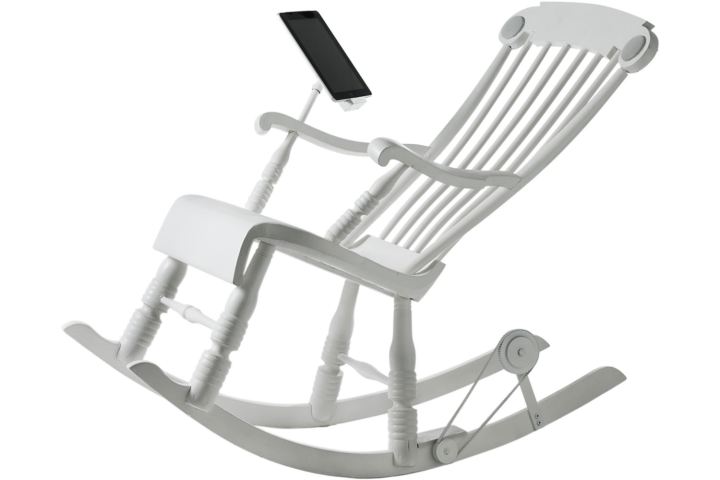
Motion-powered generators are becoming a trend in tech-infused clothing, furniture, and accessories ... but none have targeted an older audience quite like this iRock rocking chair.
Who says technology is only made for the new generation? While my grandmother may not be cool enough to answer emails and text messages, she does know how to work an iPad. So if you’re visiting sweet old grams and realize your tablet is low on battery, just ask her to hang out in her rocking chair to generate extra juice in that iPad.

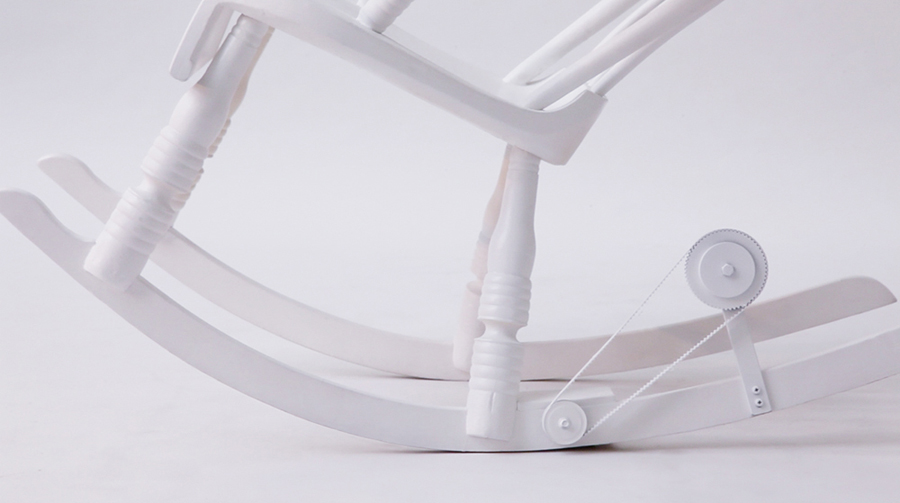
“The iRock is an product that explores how furniture can interact with technology and actually support the power for this technology,” the iRock product page reads. “If you use iRock for 60 minutes you can recharge an iPad 3 to 35%.”
Not sure how fast granny would have to swing to get such power back onto your mobile devices, but any charge at all is better than leaving the tablet out to drain. Micasa Lab, the creator of the iRock, says Android compatibility is not yet available but it is something the company aims to add in the near future. Theoretically, one would only need to buy the chair along with various adapters to fit whichever mobile device you want to rock and charge.
The iRock is crafted with Swedish pine wood and will be available in five color options: Black, White, Pink, Green, and Blue. How much will you have to spend for some technological porch accessory? The iRock is available now for a pretty price of €1,300 (or approximately US$1,680), with an estimated shipment date of late 2013. But for a happy grandma, perhaps that sticker tag is priceless.

Image credit: John Minchillo/AP Photo
Times of national disaster not only can bring together people, but also rival technology companies.
This afternoon, AT&T and T-Mobile have announced that they will be working together in the wake of Hurricane Sandy to provide more service and coverage in areas hit by the storm. The two cellular providers will share networks and roaming capabilities in New York and New Jersey, an AT&T spokesman told ABC News.
AT&T and T-Mobile customers will be able to place calls as they usually do. The calls just might be carried over a network they don’t subscribe to. For instance, T-Mobile customers in New York City who have had very little service during the storm aftermath will now be able to place calls over AT&T’s network.
In each case, calls will be carried over the most operational network in the area.
“This agreement is possible because AT&T and T-Mobile use the same underlying wireless network technology,” AT&T spokesman Mark Siegel told ABC News. “Which network a customer is on will be completely transparent. The customer won’t even notice.”
There will be no extra costs to users, and no roaming fees or extra line items on bills.
Both AT&T and T-Mobile use the same GSM and UMTS network technology.
Verizon and Sprint use different technology, so they aren’t involved in this arrangement.
Finally transitioning from simply showing off 4K technology at trade shows, LG is now selling an Ultra HD television around the same price as some cars.
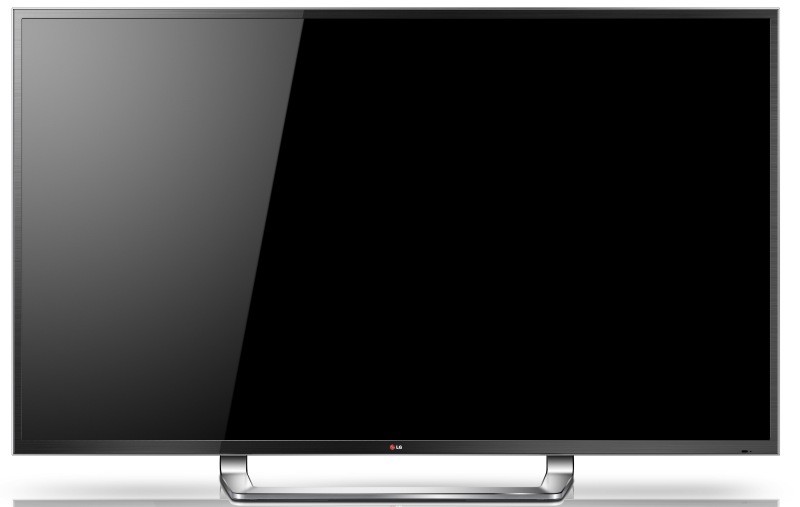
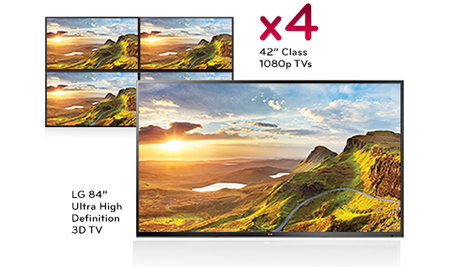
Earlier this week, LG held a launch event in Southern California to debut the company’s first Ultra HD (4K) television at a sizable list price of $19,999. The LG 84LM9600 has a native screen resolution of 3840 x 2160, four times the resolution of a typical 1080p television. While the amount of content available in Ultra HD resolution is incredibly scarce at the moment, the 84-inch LED Ultra HD panel also includes LG’s proprietary “Resolution Upscaler Plus” technology to up-convert 1080p content to the Ultra HD resolution. Regarding size, the 84-inch screen is the equivalent of four 42-inch, 1080p panels stacked in a rectangle shape.
In regards to 3D content, LG is including six pairs of flicker-free -glasses with the Ultra HD set. Flicker-free glasses are identical to glasses found within movie theaters, thus it’s inexpensive to add or replace glasses. Similar to other panels in the LG lineup, the company also includes a 2D-to 3D conversion feature with the set.
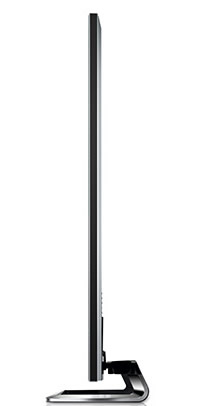
While the massive panel is just 1.57-inches thick, the television is over 150 pounds in weight plus another 25 pounds for the stand. Consumers will have to be careful when wall mounting the LG 84LM9600 which may require professional assistance for installation.
However, consumers won’t have to worry too much about a wired network connection near the home theater as the 84-inch television comes with built in Wi-Fi. The television ties into LG’s Smart TV ecosystem, so consumers will have access to plenty of applications like Netflix, Facebook, Vudu, Skype and Hulu Plus.
The 84-inch panel also has a significant amount of audio and video inputs. Besides four HDMI inputs and three USB 2.0 inputs, the LG set includes an Ethernet port, antenna/cable input, composite audio / video input, component video input, RGB PC input and PC audio input. In addition, there is an optical digital audio output to send audio content to a receiver.
While the list price on the television set nearly breaks $20,000, the sales price in stores will likely be around $16,999 according to LG management. However, it’s highly unlikely that an online retailer like Amazon will carry the massive television. According to LG’s site, there are currently no online retailers stocking the television yet and it can only be purchased at a handful of high-end home theater stores. To date, the only other Ultra HD television that will be available to consumers this year is Sony’s 84-inch XBR-84X900. However, the list price of Sony’s television is significantly higher. On the Sony store site, the price of the display is $24,999.99.
The concept of a navigation system was first proposed around 50years ago. Around 20 years ago, only the Government had access to satellite technology so it amazing that in such a short space of time satellite based technology has made its way into navigation systems and even mobile Phones. You would be hard pressed to find a high or mid-tier phone without a built in navigation system and even some entry level phones (such as the entry level Android phones) come with a ready to use navigation system. Gone are the days when you need to stop and ask for directions but have you ever wondered how your phone determines where you are? Surely the navigation system doesn’t call its friend up and ask it for directions! Does it?
As you read this blog post, a network of GPS satellites are orbiting the Earth at an altitude of about 20,000 KM, making two full rotations around the Earth every day! A few Satellite systems have emerged but only two have made their way into mainstreams phones. At the moment, GPS is more widespread but GLONASS is said to be more accurate due to the way the satellites have been positioned. Many new devices such as the iPhone 4S, iPhone 5, Galaxy S3 as well as the new Sony Xperia phone make use of both GPS and GLONASS satellites to obtain greater accuracy and to shorten location finding times. GPS has 27 satellites and 3 of those are used for backup purposes. Like GPS, GLONASS has 3 for backup purposes as well but only has 24 satellites.
Google Maps on Android
Navigation system on IOS 6
How does it work?
A random number is generated consisting of a long string of data and is continuously broadcasted by each satellite. The contents of the data being transmitted is not important but what is important is that the contents of the data being sent by the satellites and hat being received by the navigation systems is the same.
Your phone compares signals sent from a number of satellites in real-time. Phones use data from 4 satellites since GPS satellites have been positioned so that 4 satellites are able to communicate with a receiver at any given time. Comparing data from 3 satellites is considered to be sufficient but GPS makes use of 4 satellites for additional accuracy.
The phone now knows the distance between itself and the satellites tracking it but doesn’t know in which direction. To do this, it uses trilateration which compares the distance between you and three other locations although GPS uses 4 locations for additional accuracy. If a satellite can see your phone known you must be somewhere in the radius of what that particular satellite can see. If a second satellite can see you then you know that you must also be within the radius of what that satellite can see. However, since two satellites can see you, you know that you must be somewhere where the radius of the two satellites intersects. The introduction of a third satellite can show you exactly where you are.
Now that your phone has your latitude, longitude and altitude it can now compare these coordinates with its own maps in order to determine the details of where you are.
No tags for this post.BIO: This is a guest post on behalf of RAM tracking who specialise in vehicle tracking software. Vehicle tracking software uses a similar method to determine where the driver is.
The world of technology can be a wonderful one. But travelers beware: There are trolls in our midst.
The world of technology can be an amazing, awe-inspiring place, where a torrent of innovation constantly makes gadgets faster, slimmer, cheaper, and more useful to mankind. But lurking in caves and under shadows, travelers will find a savage varmint unlike all other creatures who call this world home: trolls. So strap on your mud boots, and travel with us into a stank, hideous underbelly of the tech world, where skepticism reigns and causing misery is the order of the day. Here are some of the creatures you’ll spot along the way.
Description: First discovered in Usenet groups from the early 1990s, the common Internet troll finds intense pleasure in the frustration of others. This pleasure most often presents itself in the form of “lulz,” a kind of high-pitched cackle that has been known to drive weaker breeds of Web users to the brink of suicide. As a species, Internet trolls are highly allergic to genuine sincerity, and react violently when confronted with any human emotion other than outrage. Internet trolls survive best in environments with high levels of gullibility.
Habitat: Forums, Facebook Pages, Yahoo News
Description: While not a separate species from the common Internet troll, the YouTube breed is distinct in its vicious streak and unique inability to spell. The YouTube troll can often be spotted building crude piles of racism, sexism, and homophobia around the video-sharing site where they reside.
Despite its highly confrontational demeanor online, the YouTube troll shows intensely timid behavior when disconnected from the Web, a characteristic that some have likened to the manure of the common chicken. Around age 13, the YouTube troll begins to build a fragile cocoon, which it enters for a period of one to three years. When it emerges, it has miraculously transformed into a human being. Some YouTube trolls fail to go through this metamorphosis.
Habitat: YouTube
Description: Leech-like in nature, the patent troll feeds off of the hard work of others. It does so by harvesting patent claims off the corpses of bankrupt companies, then using a fist-full of its bounty to bludgeon healthy companies until they cough up cash, which is subsequently gobbled up at a staggering rate. The seed of a patent troll is so potent that the very presence of one can cause other beings to grow new patent trolls on their backs. A refusal to pay out-of-court settlements is the only known defense against a patent troll.
Habitat: Back-room offices of most major technology corporations
Description: A direct descendant of the patent troll, copyright trolls are known for their miserly nature and ability to hoard endless amounts of intellectual property, which they use for the sole purpose of causing others irritation and a loss of cash flow. The copyright troll needs out-of-court settlements to grow, and can only be killed by judges with a keen nose for anything that smells like extortion.
Habitat: Pornography studios, and low-rent publishing houses
Description: A close cousin of the YouTube troll, the Xbox troll most often has a bulbous, oozing body that is 40 percent sphincter, 60 percent mouth. The Xbox troll has a generally limited vocabulary, but is uniquely adept at spouting vulgarities at a near-constant rate, in a nasally high-pitched tone. While Xbox trolls are known for their tenacity, the species has a short life span, and can generally not survive past age 9.
Habitat: Grungy basement dens
From 2008 to 2010, Facebook allowed Profile Technology to index user profiles, then pulling the access. Now the data crawler is fighting back.
Back in 2008, Facebook was just beginning to solidify itself as the social network of our times. Microsoft had just partnered with the site, we were all extremely concerned about the state of Scrabulous (remember the anguish over losing that game?!), the profile page underwent its first big makeover (the Timeline of its time), and Facebook Connect launched to take over the Internet.
At the same time, more ominous changes were going on behind the scenes. Facebook partnered with a company called Profile Technology that created applications for social networks – and one of those applications was data crawler Profile Engine. It’s a people search engine that launched in 2007, claiming to be the “the world’s first dedicated search engine for Facebook.” Profile Technology was less forthcoming with their business model: data brokerage.
“The Profile Engine made it much easier to find your friends on Facebook and provided powerful new search tools for meeting new people, making friends, and dating,” its site says. “More than 10 million people created detailed searchable profiles on the Profile Engine so that others can find them more easily. It made it easier to find old friends and to make new ones.”
According to Profile Technology, an agreement made with Facebook in 2008 allowed the platform to have backend crawling access to Facebook’s data. The deal existed until 2010, when Facebook allegedly shut off access without warning. And now, Profile Technology is suing Facebook.
“Suddenly Facebook interfered with crawler access and told Profile Engine out of the blue that they were not authorized,” Profile Technology’s lawyer Ira P. Rothken tells me. “There have been discussions that were ongoing for a robust period of time and filing this lawsuit wasn’t done lightly, it was a last resort.” In addition to taking away Profile Engine’s ability to index its contents, Facebook also shut off the company’s Facebook apps, “essentially destroying their revenue stream,” says Rothken.
So why did Facebook do this? “That will be something we will be litigating in court,” says Rothken. “We certainly think, as we allege in the complaint, that Facebook acted in bad faith by interfering with crawler access and retaliating.”
While Profile Technology is fighting Facebook for backing out of an agreement as well as hurting its name and thus business relationships, there really isn’t any question here why Facebook terminated its access: Because it was scraping profiles and indexing them into its own site, thus creating other profiles people didn’t even know existed while also making it extremely difficult to delete that information from Profile Engine’s database. A quick search for “Profile Engine” brings up nothing but complaints:
“Profile Engine stole all my info and friends’ info. Used it to create a profile of mine which I’m not able to claim. Zero answer upon request. I’m sure it is a fake site. All my friends, interests, and locations are visible.” [via]
“I deleted my Facebook account months ago yet this morning I found the profile I deleted on some website I never heard of before called Profile Engine! I tried to delete this account… but it won’t let me. This is what it says on their ‘help’ page: ‘You probably don’t really want to delete your profile. It is much better to remove unwanted information from your profile using the Settings page… or by leaving any groups which no longer apply to you.’” [via]
“’Even though I had canceled my Facebook account, my information is still up there, thanks to [Profile Engine]. And I still have a Web footprint that I can’t erase. Anyone who types in my name sees my friends and family.” [via]

Of course, Profile Engine only has this data in the first place because it paid Facebook for it. “For several years, the Profile Technology search engine was highly popular,” the complaint reads. “Over 400 million profiles were aggregated, along with 15 billion ‘friendship’ connections between people, and three billion ‘likes,’ and group memberships. Purchase Inquiries from third parties showed a market value of several million dollars.”
Opinion regarding whether Profile Technology has a case is divided. “I don’t think Profile Technology has a strong case here because Facebook’s Terms govern,” says privacy analyst and attorney Sarah Downey. “If [Facebook] doesn’t like how a third party like Profile Technology is using its platform, it can kick that third party off.”
She does point out that Profile Technology’s defamation claims could hold some merit. “Saying that a product is spammy or unsafe, especially when you have the power and visibility that Facebook does, may very well cause severe harm to a company’s reputation.”
Downey and startup lawyer Randolph Adler both point out that the entire complaint can be traced back to an agreement formed between Profile Technology and a single Facebook employee. “Whether this case has any legs here depends on the contract itself, and the complaint says it was partially written and partially implied through conduct,” Adler tells me. “It would also matter whether the one Facebook representative had the actual authority to enter into a contract.”
“What people don’t realize is that a contract can be verbal or created through email. Is that best practice? Absolutely not.”
Facebook public policy and communications manager Andrew Noyes tells me, “We believe the lawsuit is without merit and will defend ourselves vigorously,” but declined to talk specifics about the agreement between Facebook and Profile Technology.
But we do know this: Around 2009, Facebook stopped allowing Google to index its contents, as it wanted to compete with the search engine. Back in 2007, Facebook implemented Public Search Listings, so its period of time being search engine-friendly was fairly short-lived.
Even so, it looks like that small window is coming back to haunt Facebook, even if just to remind us that for awhile, Facebook made no bones about selling off our information. Even if the social network isn’t found guilty on all counts, it could very well have to make some redress to Profile Technology for terminating a contact without due warning between the two. For users, it should be a relief that Facebook has been cutting off this access, because all signs indicate Profile Engine is nothing less than a scammy data broker – but it’s less than reassuring that a network that holds increasing amounts of your data (now including your purchasing history information) was involved in selling it off less than five years ago.
[Image courtesy of AHMAD FAIZAL YAHYA/Shutterstock.com]
The 2013 Mazda CX-5 rolls off the assembly line boasting impressive tech features to its cabin and under the hood, but does its new SkyActiv Technology prove more caustic than class-leading?
For automakers, bringing a new model to the market can be an exciting, albeit stressful, occasion. Some of the time they are heralded with the sort of pomp and circumstance befitting a royal procession; other times they just mosey on in with little more than a whisper. The 2013 Mazda CX-5 manages neither — but it does enter the market with a decent amount of hype and a whole lot of tech inside and under the hood.
You see, the CX-5 is on a mission, and that mission is simple: Replace the poorly aging (and discontinued) Mazda Tribute with a sporty, smallish crossover utility vehicle (CUV) that could duke it out with segment heavyweights such as the Honda CR-V, Ford Escape, and the Toyota RAV4.
Its weapons: An array of tech features that do more than simply guide you to the nearest Starbucks (although it does that too, courtesy of its new navigation system power by TomTom), but provide some of the most impressive — if not the most impressive — fuel economy we have yet to see in the small crossover segment, which comes courtesy of Mazda’s ultra-fuel-efficient SkyActiv Technology and lightweight construction techniques.
So how does the 2013 Mazda CX-5′s entire package stack up? Let’s climb inside and find out.
Without question, technology forms the nucleus of the 2013 CX-5. But it’s never overbearing, and perhaps more importantly, never overwhelming. Depending on your take this can be either good or bad. If you’re looking for a flashier tech-wonderland full of illuminated instrument clusters, LED lighting, and more buttons than Ramblin’ Rod (look him up), you’ll be largely disappointed. If, however, you yearn for a more subdued aesthetic, the 2013 CX-5 will more than suffice.
 |  |  |  |  |
That’s because, on the inside, the CX-5 courts substance over style, functionality over flash. Our top end Grand Touring trim review unit sported some nice visual touches throughout the cabin, like metallic detailing along the dash, steering wheel, and below the climate controls. But apart from that, there isn’t much vibrancy, save some sporty cluster gauges to go along with the TomTom-powered navigation system and its 5.8-inch MID touchscreen.
Of course, that doesn’t mean the CX-5 isn’t bringing the tech heat — quite the contrary. The 2013 Mazda CX-5 is available in three different trim levels: Sport, Touring, and Grand Touring. Standard tech and comfort features include keyless entry, tilt and telescoping steering wheel, cruise control, USB/iPod interface with AUX jack for MP3 players, and a CD player. Mazda also offers a Bluetooth package that adds phone and audio connectivity, as well as an HD radio option and color monitor.
Moving up the ladder, the Touring trim adds a six-way power driver seat, as well as a blind spot warning system, which we found worked really well. The car will monitor your blind spot for you, beeping aloud and flashing a warning icon on the driver’s and passenger’s side mirror when some mindless nit is hiding out in the pocket. It might not be the most revolutionary feature, but it is a welcome safety tech addition that will surely please drivers (and possibly save lives).
At the front of the lineup sits the Grand Touring trim, which adds 19-inch alloy wheels (as opposed to the standard 17-inch variety), automatic headlamps, heated mirrors and front seats, eight-way power driver seat, as well as dual-zone comfort control and leather upholstery. The Grand Touring trim also includes satellite radio and a nine-speaker Bose system, which we found adequate, if not a little disappointing. Mazda also offers a Technology package ($1,325) that adds the aforementioned TomTom sourced nav system, adaptive xenon headlamps, and keyless ignition.

While the voice recognition manages to work well when placing calls, the same cannot be said when searching for directions — which is strange considering it’s the same voice-recognition technology being utilized. Here, we constantly had trouble getting the system to understand where we wanted to go, and placing an address took multiple attempts before being recognized. Strangely, saying aloud the address in a faster, more natural manner seemed to gather better results than slowing our speech down and speaking more consciously.
 |  |  |  |  |
However, once we did get it working, the turn-by-turn navigation was excellent. On top of giving detailed directions aloud and on the screen, the CX-5’s navigation system shows your current speed and the posted speed along with easy-to-recognize point of interest icons. The navigation system also displays maps in 3D, although it’s not as detailed or vivid as some of the other nav systems we’ve encountered. In addition to route options and directions, the system provides live traffic reports courtesy of TomTom’s HD traffic service. Drivers with any degree of familiarity with standalone TomTom navigation systems will feel right at home thanks to large screen icons and an intuitive interface.
For the audio controls, we felt the 5.8-inch display worked excellently. The capacitive controls are tight and responsive. Screen glare was never an issue. And we found it just as easy to navigate using the touchscreen as it was with the buttons mounted on the steering wheel — which is a rare occurrence indeed. For those planning to use Bluetooth audio or hook up their MP3 player, the Mazda CX-5’s straightforward nature is a welcome change to the convoluted systems we continuously come across. Again, the CX-5 isn’t the flashiest, most elegant system, but it gets the job with little to no fuss. Indeed, there is a striking beauty to its simple nature.
Of course the CX-5 is a car, not a computer — though it’s getting hard to tell the two apart these days. Nevertheless, this competent crossover provides a great deal of comfort and utility for its front and backseat passengers. We have to point out though that space does tend to feel a little cramped in the rear quarters at times, especially for taller folks, but it never breaches levels of unacceptability. For a compact crossover, there is also a great deal of cargo space, with the rear hold able to swallow up 34 cubic feet of luggage on its own, and a massive 65 cubic feet with the rear seats folded forward.
Stepping outside the vehicle we’re treated to an attractive, high-riding CUV that does more than just indulge our stylistic desires. The first thing you’ll notice — we sure did — is how stylish the CX-5 is. Whereas many CUVs opt for a cute and often contrived aesthetic, the CX-5 eschews a handsome, self-confident vibe. It’s the first production vehicle to feature the Japanese automaker’s new Kodo “Soul in Motion” design language, which will eventually make its way across the entire model lineup. Mazda has wisely done away with smiley-face Nagare design seen on existing models — a change that makes us downright giddy. While we’re not exactly disgusted the by the current crop, we’re much more excited to see the new design language make its way into the fold.
Truthfully, we’re just as excited about the tech under the hood as we are with the car’s bold design and cabin features. That’s because 2013 Mazda CX-5 is the first vehicle to come fully equipped with the Japanese automaker’s Skyactiv Technology, which is aimed at delivering the greatest possible fuel economy. And so far, it seems to be working.

Don’t be fooled into thinking all the magic is in the engine though. While it’s true the CX-5 sports a 2.0-liter inline-four available in either a six-speed manual or automatic transmissions, and is capable of producing 155 horsepower ad 150 pound-feet of torque, SkyActiv is much more than just a fancy new powertrain.
On top of the improved, low-displacement mill, a large chunk of the efficiency initiative is centered on designing every component of the CX-5 to be as lightweight as possible — including the new unibody SkyActiv chassis. Factor in the CX-5’s low curb weight (which ranges between 3208 and 3400 pounds) and impressive compression ratio of 13:1 — which Mazda has eagerly pointed out is higher than a Ferrari 458 Italia (12.5:1) – and it’s easy to understand what Mazda is aiming to achieve. With such a ratio, and because the exhaust manifold has been essentially designed from the ground up, with the utmost efficiency in mind, the CX-5 doesn’t need to rely on turbocharging or a hybrid powertrain to squeeze out its impressive fuel economy numbers.

Peppiness aside, the 2013 Mazda CX-5 conducts itself on the road with a self-assuredness rarely afforded cars of its class. Suspension tweaks, paired with an unusually responsive electric steering system give it a unique and engaging drive character, and one that ultimately distracts from the powertrain’s shortcomings.
You see, while the CX-5 grips the road and navigates the most arduous of turns, the low-end torque sullies the experience to a degree, requiring a concentrated effort to mine the most out of its efficient, yet oh-so-stubborn SkyActiv powerplant. On the highway this isn’t as much an issue, but during tight uphill corners, squeezing out an adequate amount of power can be taxing on your foot and the engine.
Still, rarely have we been so impressed with the handling character of a compact SUV and it’s clear Mazda has put in a great deal of effort to provide a compelling and stiff ride that rarely loses its composure on the road.
Like so many other CUVs, the 2013 Mazda CX-5 requires you make some serious decisions about which features are most important, but ultimately asks you to sacrifice much less. Here, you won’t find a syrupy-sweet design, sterile drive mechanics, or a fuel-guzzling powertrain. Instead, the CX-5 delivers class-leading fuel economy and fun-to-drive mechanics wrapped in a sexy-sleek shell. Throw in a healthy-helping of cabin tech, and a very competitive price point (base price starts at just $20,695, while a fully-loaded Grand Touring Trim like ours will set you back just north of $30,000), some spacious quarters, and there isn’t much to complain about the Mazda’s “Soul in Motion” inspired CUV.
There are times where you’d almost be forgiven for thinking the CX-5 descended from the automotive heavens, but sadly its origins are far less celestial. And with that reality comes some harsh truths. While there is certainly a lot to admire about the CX-5, those of you seriously considering one will need to ask whether or not you can live with a car that aims to provide the greatest fuel-efficiency and handling character – with a good deal of comfort sprinkled in — over anything that possesses proficiency in power.
Google has passed Microsoft to become the world's second most valuable technology company.
It’s all-change at the top of the financial market charts, as old-hand Microsoft has been toppled from its lofty position as the second most-valuable technology company in the world, by young upstart Google.
At the close of trading on Monday, Google narrowly topped Microsoft’s total value, with reports showing Google hitting a valuation of $249.1 billion (Bloomberg.com puts the figure at $249.9 billion) compared to Microsoft’s $247.2 billion. The New York Post shows that the trend was evident when trading opened too, although the gap was much smaller at $248.8 billion for Google and $248.1 billion for Microsoft.
On the surface it appears that Microsoft’s stock has been falling, but it’s the opposite, as its share price has stayed fairly steady over the past few months, with a positive upturn occurring recently. But Google’s stock has been steadily rising, and a sudden drop-off for Microsoft provided the catalyst for the position swap.
Google is fresh from its astonishing performance during the second quarter of 2012, where IDC reported that 85-percent of all smartphones shipped between April and June this year had Android installed, giving the OS a massive 68-percent market share.
Microsoft on the other hand, should be in a similar position, with plenty of attention focused on Windows 8 and Windows Phone 8. Both are due for release very soon — October 26 for Windows 8 and potentially, November for Windows Phone 8 — and hardware manufacturers have been busy announcing products for both. It’s surprising then, to see Microsoft slip at this stage.
So, with Google moving into second position, you may be thinking that it’s only a short leap before it become the world’s number one most valuable tech firm. While this is always possible, the leap is far from being short, as Apple holds the number one spot at the moment, and is worth more than Google and Microsoft combined at $618.1 billion.
UK-based startup Moo.com announces NFC business cards so you can digitalize the way you meet new professionals.
In this ever-evolving world of technology, it’s still nice to know that when strangers meet in a professional setting, physical business cards are still something people invest time and creativity into making. United Kingdom-based startup Moo.com is now further digitalizing the business card by adding an option for a Near Field Communication (NFC) microchip to be embedded into your cards so you don’t even need to hand over a card if you’re running low.

“We’ve always aimed to upset the existing order within print – to do new things, think in exciting ways, and to go where no man has gone before,” Moo writes in its announcement blog post. “With the roll-out of our NFC cards, and our recent acquisition of Flavors.me, a design-led personal identity site, we are showing our commitment to expanding online personal and professional identity creation.”
For a limited time, Moo is offering 150,000 free NFC-enabled cards with your next order so you can sample the new technology. The company is also planning to release an accompanying Android app to help you program your NFC business cards.
For those who want to get in on the socially interactive NFC action but don’t particularly need it in a business card capacity, you can always check out the Samsung TecTiles, which essentially do the same thing but you can apply the NFC stickers anywhere you want: tabletops, cashier counters, wallets … whatever surface retains stickiness.
Check out the video below to learn more about Moo NFC-enabled business cards.
NFC Business Cards from MOO from MOO.COM on Vimeo.
Love or hate his politics, Mitt Romney’s recurring social media slipups show how technology is changing the campaign game, and steepening on the learning curve.
The significance of social media is indisputable. While its monetary value is still up for debate, the influential role it plays in users’ lives is inarguable, and that’s become incredibly evident in the world of politics. The fact that campaigns now have Social Media Directors is proof enough that this stuff matters – as in could decide elections matters.
As November nears, it’s becoming increasingly clear that our next president takes social media seriously, and the results have been mixed. Presidential hopeful Mitt Romney has particularly had a rough go at attempting to mold the minds of America using these tools. A quick recap on the Romney teams social missteps:
And those are just some of the most obvious digital blunders – there are plenty of Romney gaffes that have gone viral thanks to the Internet, but that’s something else entirely. It’s the fact that the presidential candidate’s own efforts to embrace social media have been so cringe worthy that’s raising eyebrows.
Now, the Romney campaign is going on the offensive, trying to prove they – he – gets social media, mostly thanks to a handful of collaborations with some of the Silicon Valley elite and new product implementation. For instance, Romney’s team hit the ground running with Facebook’s new Sponsored Results feature shortly after it was available, and its propriety Square app and reader it’s been using for fundraising. Romney has the new Twitter profile set up, while Obama doesn’t. He’s arguably making better use of the tools at his disposal.
This is all well and good, and these are things that Romney’s campaign – and Obama’s for that matter – should be doing. But the act of using social media to connect is what eludes Romney: He doesn’t exactly seem like a personable guy, and his attempts at humanizing himself using the social Web sound just as measured and calculated,and occasionally, awkward as everything else he does. From his laughable overuse of @ pinging President Obama every time he mentions him, to the fact that his Facebook posts are almost entirely written in the first person, as if we’re supposed to believe that he seriously pens each of these posts. It’s clear that painting himself as the Average Joe who uses the Internet just like you and I do simply isn’t within Romney’s reach.
Honestly, this has nothing to do with politics – it’s purely personal. But advocates will point to his social media accounts’ impressive numbers, so they deserve mention. As of press time:
Given the fact that Obama is a veteran here, those are certainly admirable metrics. But there’s one that doesn’t get mentioned very much that also matters quite a bit and reflects outreach efforts:
This critique isn’t about political leanings, it’s about the personal touch. All the optimization tools, hashtags, Sponsored Stories, and Promoted Tweets in the world can’t turn a man into a social media master. You have to understand how people talk on Twitter, how they respond on Facebook, and try as the Romney campaign might, the result has simply been to showcase that no, Mitt Romney is just not like you and me – and no amount of social networking can change that.
Peerless-AV lets you build your own rack from the ground up using an interactive 3D building tool.

Peerless-AV now provides that ability, via its online configurer. The virtual tool allows users to build their A/V racks from the ground up and to specify the location of each component. Once the specifications are set, they can then render the design in 3D, and get a same-day quote on price.
For those who are meticulous about the aesthetic of their beloved home theater system, and for businesses that need a way to organize their A/V equipment, this is somewhat of a revelation. The configurator has different baselines models to choose from, and options for coloring, sizing, paneling and lockable doors. To add that final personal touch, buyers can emblazon a personal or business logo directly onto the rack.
Verizon is facing an expensive payday today, having settled two different lawsuits surrounding patent infringement for DVR technology and having to pay out $510.4 million in costs.
Attention, Verizon customers: Your bills may be taking a slight trend upwards over the next few months, as your provider finds itself saddled with a brand new $500 million+ debt following the settlement of two separate lawsuits surrounding potential patent infringement concerning the company’s Video on Demand technology.
The company announced today that it has settled lawsuits with both TiVo and a company known as ActiveVideo over allegations that Verizon had infringed on proprietary technology relating to VoD, DVR and interactive televisions. In the case of the ActiveVideo settlement, describing it as a settlement is definitely positive spin on Verizon’s part; the situation there is less “settlement” and more “finally agreeing on just how much money to pay in damages,” considering that that particular case had been decided twice in court – once in “regular” court, and once on appeal – and both times decided in ActiveVideo’s favor.
The exact sum Verizon owes ActiveVideo is uncertain at this time; the appeals court ruled that the former company owed $260 million to the latter, but exact terms of the settlement between the two have not been publicly disclosed at this time, meaning that it’s possible that the actual figure is significantly higher.
In addition to that sum, Verizon has also settled a long-lasting dispute with TiVo over DVR technology patents, with the agreement between companies seeing Verizon pay an initial $100 million payment, followed by additional quarterly payments until July, 2018 that will ultimately total somewhere in the region of $150.4 million. Additionally, Verizon will pay monthly fees to continue to use the particular technology if its DVR subscriber base rises above a certain level, and has until December 21 of this year to come to an agreement with TiVo that will see the two essentially go into business together, with – it’s believed, Verizon offering TiVo boxes to its customers. If that happens, then Verizon will earn a $29.4 million credit towards the total $250.4 million it owns TiVo.
(Another possible collaboration would see TiVo boxes carry a streaming video service currently being piloted by Verizon and Constar’s Redbox as a Netflix killer. If the company ends up going with this, then it will be in addition to TiVo’s existing streaming offerings with Netflix and Amazon Prime.)
This is, of course, just one of many patent infringement suits that TiVo has launched over its DVR technology. The outcome, in many cases, mirrors what’s happened here, with all parties either settling out of court, and the court finding in TiVo’s favor, and the infringer ending up paying a monthly fee to essentially license out the technology from that point on. In a statement accompanying news of the settlement, TiVo CEO Tom Rogers seems to recognize that this latest result only strengthens the company in any similar legal action, being quoted as saying that the company “believe[s] this settlement positions us well with respect to future enforceability of our patents.”
Do you have a basic grasp of technology? Is your ambition to become extremely wealthy over the next five years, then it’s time to move to Africa according to David Rowan, Editor of Wired magazine. According to David, there is now a once-in-a-lifetime opportunity to build the next Zyngas, eBays and Groupons for a huge untapped local market of 1 billion people, I’m inclined to agree with David, I think there’s a huge opportunity for a new online bookshop, auction website, directories or online portals in Africa.
About this time last year, British Prime Minister David Cameron led a team of high-level delegation of corporate CEOs to Nigeria and South Africa, the two economic and political superpowers in Africa.
One might ask, Why Africa?
Yes there are negative factors that cannot be ignored, Yes there is lack of Transparency/Corruption – global competitiveness that varies widely by country, of course there is Political unrest, volatility in some countries, we can’t deny the fact that clean water, sanitation, electricity and other services are still inadequate in some areas but in the midst of the need, in the midst of the rough terrain lies huge opportunity.
Recently Helios Investment Partners raised a US $900 million fund for the continent, and Carlyle Group, another American-based global asset management firm, specializing in private equity raised a US $750 million fund specifically for the region
Out of the ten fastest growing economies in the world, six are from Africa. Where will you be making your own tech millions? Still sticking to the old ideas or getting on the bandwagon in an economy that is transforming very rapidly. Let me know your thoughts
Tags: African Billionaires, Emerging Markets, Internet BiilionairesAirPlay and WiDi made big promises of screen mirroring made easy, but both were too closed to succeed. New Miracast technology could finally give consumers an easy, wireless way to stream content from a laptop or smartphone to a TV.
Few things make me feel like I’m living in the future as much as wirelessly beaming movies and music from a mobile device to a big-screen TV or home audio component. Oh, you haven’t heard that song yet? Let me stream it right through your speakers! Missed the latest episode of Top Chef Masters? I have it here on my laptop, let’s pop the high-definition video up on your TV — no wires necessary. That’s right up there with hoverboards and robot butlers in my book, folks.
One problem: It’s not that easy yet. The two major wireless media streaming technology options available today — Apple’s excellent AirPlay and Intel’s, um, improving WiDi — struggle with major flaws that majorly limit their usefulness.
The best hope for a wire-free mobile future rode in this week in the form of Miracast, a new standard backed by the same organization that watches over Wi-Fi itself. It’s an innovative technology that’s backed by a bunch of big-name players and breaks many of the chains holding WiDi and AirPlay back, but Miracast has some hurdles to leap before it becomes a household name.
The biggest issue with WiDi and AirPlay is that they’re proprietary and available on very limited hardware. Only Apple devices broadcast AirPlay signals, and only the Apple TV set-top box or select home theater equipment can receive that signal. WiDi’s restricted to select laptops and notebooks with Intel Core processors inside, plus you have to pay about $100 for a WiDi adapter for your TV. Bleh.
On the positive side, that adapter allows WiDi broadcasters and receivers to talk to each other directly; AirPlay has to piggyback on an external Wi-Fi network. If you don’t have a Wi-Fi network set up, you can’t use AirPlay. (Apple’s rumored to be working on “AirPlay Direct” to ditch the reliance on outside Wi-Fi, however.)
Another issue lies in actually using the wireless streaming technologies. AirPlay’s a model of clean engineering and pretty much works like a charm every time you use it, but WiDi is another matter completely. Intel’s technology frequently suffers from horrible lag, and it didn’t support 1080p video or Blu-ray streaming until earlier this year. A scheduled October update could help things, but we won’t know until we see it.
Finally, WiDi and AirPlay are only kinda wireless. Both require the use of a box that connects to your TV via an HDMI cable, if you want to stream video from your phone or tablet.
Miracast, on the other hand, requires no additional hardware or external Wi-Fi networks. It uses the Wi-Fi Direct standard to create a direct wireless network between the sending device and the receiving device. In other words, just pair your mobile device with your TV or stereo and you’re good to go. Both devices need to be Miracast certified for the technology to work, but if you want to stream music and movies to a non-certified device, there will be Miracast adapters available that plug into HDMI or USB ports.

Like Wi-Fi itself — and unlike WiDi and AirPlay — Miracast is an open, optional certification that any manufacturer can apply for if their products meet the standard. That alone gives it a big potential leg-up over already-established technologies.
In fact, a number of big-name technology manufacturers are already onboard the Miracast bandwagon. Samsung — the world’s most prolific smartphone maker — is signed up, and Nvidia has pledged to certify its Tegra mobile processors — found in scores of smartphones and tablets — to the Miracast standard. Sony, LG, Texas Instruments and Qualcomm have all publicly issued statements of support.
Even Intel wants in on the action: All WiDi products have already been Miracast certified, as have LG’s Optimus G smartphone, the Samsung Galaxy S III, the Samsung Echo-P Series TV, and a number of various chips and adapters.
The sending and receiving gadgets don’t have to be from the same manufacturer, either. A Samsung phone should stream content to a Sony TV just fine, provided both are Miracast certified. Spiffy.
Things look pretty good for Miracast. Many would-be technologies die on the vine due to a sheer lack of adoption, but with the Wi-Fi Alliance and its assorted manufacturer partners on board, that doesn’t seem likely to happen to Miracast.
The biggest potential pitfall, as I see it, lies in customer confusion; it’s great that Intel certified its WiDi devices, but some of WiDi’s more advanced features won’t work if one of the two devices is “only” Miracast certified. That could confuse some people, but I don’t foresee it becoming a major issue because frankly, Intel’s WiDi isn’t in the hearts, minds or laptops of most people yet. A successful Miracast very well could kill it off in short order.
WiDi-esque lag could slow Miracast adoption as well; we’ll have to see how well the first wave of devices play together.

If you ask me, Miracast is here to stay. Folks who haven’t bitten into Apple will be able to get a taste of mobile display mirroring that’s hopefully as easy-to-use as AirPlay. Who knows? If Miracast takes off, maybe Macs and iDevices will one day ditch the proprietary AirPlay and embrace the open-standard goodness. (Hey, it could happen.)
Now, someone needs to start working on those robot butlers.