Pages

Showing posts with label apple. Show all posts

Nov 19, 2012

New report says Apple iMac computers still on target for 2012 launch

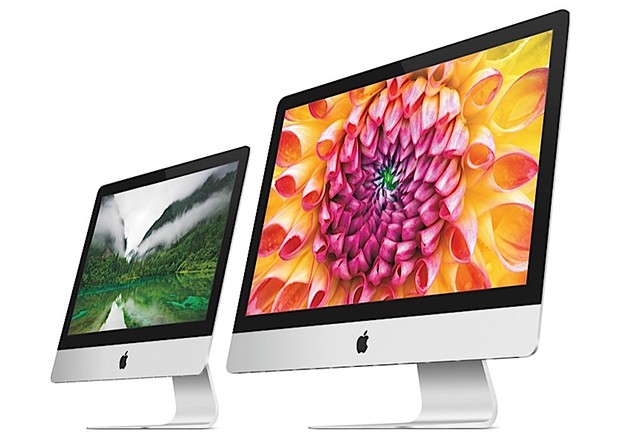
iMacs (October 2012)

Despite last week's report indicating production problems could delay the launch of Apple's new iMac computers until 2013, it seems the machines are still on target for a 2012 release, and may already be arriving at distribution centers around the world.

Concern amongst those waiting for Apple’s new iMac computers escalated last week, after a French blog reported the release had been delayed, possibly until 2013. While it was impossible to judge the validity of the report’s sources, talk of a delay regarding a new Apple product was hardly a surprise, given the problems it has seen with the iPhone 5 and the iPad Mini so far this year.

However, 9to5mac.com has refuted the site’s claims, saying its own sources tell them the 21.5-inch iMac is already arriving at distribution centers in the U.S. and elsewhere in the world; indicating the planned November release will go ahead after all.

As for the 27-inch iMac, Apple gave it a tentative December release date, which is not only likely to be met, but perhaps even improved upon, with the massive computers becoming available to order around the same time as the 21-5-inch iMac.

Apple’s new iMac’s are considerably slimmer than older models, and some high-tech manufacturing processes have been used to fit all the computer hardware inside. The trouble Apple has had manufacturing the iPhone, which has been described by Foxconn as the most difficult device it has ever assembled, only made the rumored iMac delay seem more likely.

So, while a delay in their launch may have been averted, the iMac computers could still be a rarity in stores and online. Apple CEO Tim Cook warned there would be a “significant shortage” of the company’s range-topping desktop machines during the first three months after launch, so it’ll be wise to get an order in early if you’re desperate. You know, just like every other recent Apple release.

The only good thing is there’s unlikely to be a huge run on the $1300-plus computers during the Christmas shopping season, as eager buyers rush to claim the last remaining iPad Mini tablets and new iPod music players instead.


Source : digitaltrends[dot]com

Nov 14, 2012

Samsung denies increasing Apple processor prices

A couple of days ago we reported on the news that Samsung’s chip making division had increased the prices of the processors that it supplies to Apple for use in their iOS devices by as much as 20%. Turns out, that wasn’t true at all.

According to an unnamed Samsung official who spoke to the Korean newspaper The Hankyoreh, Samsung has not increased the prices of the processors. He also said that prices are agreed upon at the beginning of each year and aren’t changed easily.

This puts to rest the news of Samsung increasing the prices but more importantly, the part where people thought they did it just to spite Apple.


Source : blog[dot]gsmarena[dot]com

Launch of new iMacs may be delayed till 2013, report says

iMacs (October 2012)

Waiting to get your hands on one of Apple's new iMacs? Well, it seems like you might have to wait a little longer than expected.

Users of old iMac machines who for the last couple of years have been waiting patiently for Apple to unveil a refreshed machine before upgrading were finally able to feast their eyes on the latest model last month when Apple unveiled a shiny new, and rather thin (at the edge, at least), design.

Shipping dates were set for November for the 21.5-inch model and December for the 27-inch model. Many of those iMac users have no doubt started to make plans for their older machine, whether it involves giving it to a friend, using it as a giant paperweight or simply consigning it to the attic.

Well, those plans might have to be put on hold for now as it appears the launch of the new machines may have been pushed to 2013. This will come as a big disappointment not only to those hoping to purchase a new iMac, but also to Apple executives who’d been looking forward to healthy sales of the new computer during the upcoming holiday shopping season.

French Mac-specialist blog MacBidouille says it has learned from a “commercial source” that Apple has delayed the launch of the new iMacs because of issues with its advanced welding process – possibly so advanced that it hasn’t quite got the hang of how to do it yet. The process, called ‘friction stir welding’, uses high heat pressure to create a seamless joint in the iMac’s frame.

Apple Insider pointed out in a report on Wednesday that other challenges for manufacturers include the screen’s lamination process, which gets rid of a tiny air gap between the iMac’s display and front glass, which was present in previous versions of Apple’s desktop computer. “In August, KGI analyst Ming-Chi Kuo reported that the process is more involved with the 27-inch model and would cause supply constraints for the initial batch of machines,” Apple Insider wrote.

The iMac’s page on Apple’s website displays a “coming soon” badge, while the online store continues to show a November shipping date for the smaller iMac and December for the larger one. If MacBidouille’s source turns out to be correct, we can expect to see these dates change soon.


Source : digitaltrends[dot]com

Nov 10, 2012

How Samsung, Microsoft and stupidity are staining Apple’s brand image

Microsoft apple logo samsung

Clever marketing from competitors and its own stumbles have left Apple’s effortlessly cool brand image looking more effortlessly clueless.

I’m at an IBM event this week, and at dinner I had what has been an increasingly frequent experience.

It used to be that attendees at these events gushed about the new Apple gadget they were carrying, and anyone who expressed reservations seemed out of touch with the group. Much like talking about religion or politics from the minority position at the dinner table, bashing Apple was one sure way to ensure everyone thought you were an idiot.

But last night, instead of showing off an Apple device, another guest showed off his new Samsung Galaxy S III phone, which led to more chatter about my new Microsoft Surface tablet. It spiraled into an “everyone dump on Apple” event, and by the end of the evening, Cupertino’s sole defender seemed to be considering other options.

This may be anecdotal, but I’ve seen the same event played out several times recently among analysts and other influencers in the tech space. It makes me think Apple’s image is changing, and the firm’s products are losing their magical edge.

Samsung’s anti-Apple marketing

The blemish on Apple’s spotless image didn’t just appear there; Samsung helped etch it into the glossy white plastic quite intentionally. Its excellent marketing campaign has attacked Apple’s image on three vectors.

The first is questioning Apple’s leadership. Samsung’s ads paint Apple’s “upgrades” as features the company accidentally or intentionally left out of prior products (larger screens, 4G radios), or obvious improvements (headphone jacks on the bottom). In some cases, they also point out where Apple still lags behind the curve after launching a new device, like the lack of NFC in the iPhone 5. Samsung wants to depict itself as the innovator Apple is struggling to match.

Second, the campaign raises the idea that Apple fans aren’t smart consumers. They’re depicted slogging through long lines waiting for their technology, and getting unreasonably excited about aspects of the product that aren’t exciting. In fact, the not-so-subtle message is that Apple buyers are kind of dense.

Samsung Apple commercial iphone 5 samsung galaxy s3Finally the ads build on this dense concept by showcasing Apple users as people you wouldn’t want to emulate: Your parents. Dorks. Clueless hipsters. This is designed to strip away the prestige that Apple products typically carry.

For all its mocking, Samsung actually copied Apple with its first smartphones, but has since diverged, trying to drag away the perceived market leadership with it. The Korean company waged a similar type of warfare on Sony in the television space, which was once the clear leader. Samsung first emulated Sony, then partnered with the company, then took the market away. Sony has never recovered. Granted, Sony had additional issues that complicated things, but the plan worked, and Samsung appears to be following the same playbook with Apple.

Microsoft Surface

Samsung isn’t the only company slinging mud on Apple’s image. The Microsoft Surface tablet is doing relatively well, and Apple’s efforts to disparage it have largely been ineffective (at least so far). It appears to have been designed specifically to make the iPad look wanting in comparison.

As I write this, the Surface is still generating lines, but the important part is it looks both more advanced and more unique than Apple’s offerings. This impression dovetails nicely with Samsung’s efforts, because while the two companies aren’t aligned on products, they are aligned on a common message: Apple’s offerings don’t convey status anymore because they appear to be bought by stupid people.

The too-soon iPad 4 and too-expensive iPad mini

The third leg on this this ugly three-legged stool comes from Apple itself. Its latest launch even showcased an array of different products under one roof, a “big bang” event that trivializes individual products. Firms like Compaq were famous for this approach, but Apple has avoided them like the plague since Steve Jobs returned in the late 90s. Worse, the new iPad made buyers of the old version – launched only back in March – look stupid.

Meanwhile, the iPad mini was priced well out of line with competing models, with inferior specs. When Steve Jobs launched the iPad, it was the lowest priced tablet from a major vendor in its class, and since then, it has remained price competitive against the alternatives. The iPad mini is priced at a 65 percent premium, but lacks the same high-quality displays found on far cheaper competitors. Smart people would probably not buy it as a result. I wouldn’t be surprised to see Apple discount it significantly once initial demand falls off, leaving early buyers upset and looking stupid yet again.

Destroying Apple’s brand

Apple’s strongest asset is the power of its brand, and the historically valid belief that Apple products are purchased by smart people who are well regarded. This asset is being systematically destroyed, overtly by Samsung, covertly by Microsoft, and stupidly by Apple. Apple is not effectively defending this incredibly valuable asset, and the end result will likely resemble the company that existed before Steve Jobs’ return. That also means a market less dominated by Apple. Since I’m writing this on my Surface Tablet, I’m thinking this may turn out to be a good thing.


Source : digitaltrends[dot]com

Nov 9, 2012

Why would Apple move Macs to ARM processors?

Apple ARM processor mac intel

Rumors have Apple moving away from the Intel chips currently used in Macs to the ARM-based chips used in mobile devices like the iPhone and iPad. But would such a seismic shift make sense?

Apple’s Macintosh computers rely on processors from chipmaking giant Intel – just like the vast majority of the world’s PCs, notebooks, and servers. However, Apple’s iOS device line, such as the iPhone, iPads, and iPod touch, rely on processors based on designs from ARM. These chips aren’t as fast or powerful as mainstream Intel processors, but they’re cheaper and they consume far less power, making them ideal for mobile devices like smartphones and tablets.

Now, Bloomberg is citing three unidentified sources saying Apple is seriously investigating shifting Macs from Intel to ARM chips, and new developments from ARM are adding fuel to the fire.

Could Apple move Macs away from Intel to ARM-based processors? What hurdles would Apple face, and how would ARM-based Macs stack up?

Here we go again

Apple Phil Schiller A6X processor

With the original iPad back in 2010, Apple revealed it was designing its own ARM processors rather than relying on chips designed by Samsung or other manufacturers. (That first chip was the Apple A4, which quickly moved to power the iPhone 4 as well.) With Apple designing its own chips, speculation immediately mounted that the company might one day move its Macintosh computers away from Intel to its own ARM-based processors. After all, it wouldn’t be the first time Apple has changed the Mac’s processor architecture. Apple has already shifted the Mac’s processor architecture three times: from Motorola 68000s, to PowerPC, and then to Intel. If there’s a company with experience managing these transitions, it’s Apple. And each time Apple has unveiled a new processor, that speculation has started anew.

What’s different this time around?

ARM 64-bit architecture

Current ARM-based chip designs use 32-bit architectures. For now, that’s ample for most mobile and tablet applications, but one significant ramification for desktop computing is that these processors can only handle about 4GB of memory. Macs today ship with a minimum of 4GB of RAM, and many ship with  8GB, so using a 32-bit architecture just isn’t feasible for today’s desktop computers. However, last week ARM Holdings took the wraps off its Cortex-A50 series, the first ARM processors designs with a 64-bit architecture. (One of them also can claim the title as the world’s smallest 64-bit processor.) Suddenly, managing the amount of memory common in today’s desktop computers—and even high-end servers and workstations—is within reach.

ARM doesn’t make chips; it designs then, and licenses those designs to companies like Samsung, Qualcomm, and (of course) Apple. It will take time for firms to implement 64-bit designs of their own. Nobody is expecting 64-bit ARM chips to be a reality on the market for another year or 18 months. But the market is no longer holding its breath for ARM to release 64-bit designs: now, the work can begin.

It’s also worth noting Apple’s relationship with ARM is much older than its relationship with Intel. It goes all the way back to the 1980s, and Apple collaborated in early stages of ARM processor development. That resulted in Apple owning a over 40 percent of ARM, and that stake helped Apple weather its mid-1990s death spiral as it repeatedly padded its bottom line by selling ARM shares to lower its losses.

Apple is getting results

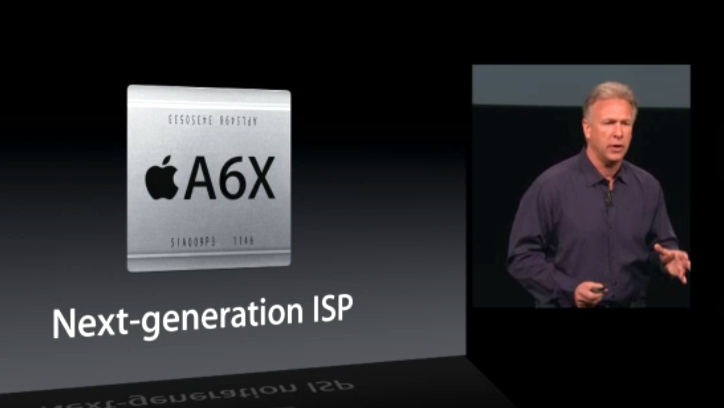
Apple’s work to design its own processors isn’t just a vanity project: It’s about getting performance and capabilities that can’t be matched by other mobile device makers using stock parts. Apple has invested heavily in acquiring chip design expertise (in part through the acquisition of PA Semi and Intrinsity. Apple has consistently been increasing the clock speed of its processor and graphics cores and getting improvements through architectural adjustments. Unveiling the latest iPad, Apple also revealed its latest A6X processor was laid out by hand, rather than trusting the details to CAD tools. The company is clearly willing to sweat the details and design processors that specifically support things like its Retina displays without sacrificing battery life compared to previous, lower-powered products. That expertise can directly translate to notebook and desktop PC designs.

New Technology group

Part of Apple’s recent executive shakeup (which saw the ouster of iOS chief Scott Forstall) was the creation of a new Technologies unit under Bob Mansfield, including Apple’s semiconductor teams, described as having “ambitious plans for the future.” Although the Technologies group is tasks with unifying all of Apple’s wireless efforts, as VP of Mac Hardware Engineering, Mansfield oversaw the development of things like Apple’s iMac and MacBook lines. While the industrial design of Macs remains the province of Jonathan Ive, actually getting them built still seems to fall on Mansfield’s shoulders, in addition to being in charge of chips.

Thinner and lighter

When Apple introduced the MacBook Air back in 2008, it was deemed almost impossibly thin, and the line continues to set the bar for ultraportable notebooks. Apple built the original MacBook Air using a custom Intel processor; one of the reasons Apple was able to beat other PC makers to the super-slim form factor was that it wasn’t using off-the-shelf parts. Apple has continued to demonstrate with the Retina MacBook Pros, ongoing MacBook Air line, and the latest iMac that its obsession with thin-and-light computer designs continues unabated. Although Intel has acknowledged Apple has has provided valuable input into its chip designs, Intel is not making custom processors for Apple, which poses a problem moving forward. It will be difficult for Apple to keep its PC products in front of the rest of the market if it’s forced to use the same off-the-shelf processors as everyone else. Design considerations alone might be incentive to Apple to start seriously looking at alternatives to Intel.

Would OS X run on ARM?

ARM Cortex A50 Big-Little

Apple bringing its OS X operating system to ARM might seem like the equivalent of Microsoft bringing Windows 8 to ARM devices in the form of Windows RT: a potential seismic shift in the product landscape. However, Apple has a head start. Its iOS operating system is based on Mac OS X, meaning the two share a large number of core technologies. Much of the groundwork for running OS X on an ARM chip already exists, and there’s long been speculation Apple has been bringing up most of OS X on ARM systems for years just as a proof of concept.

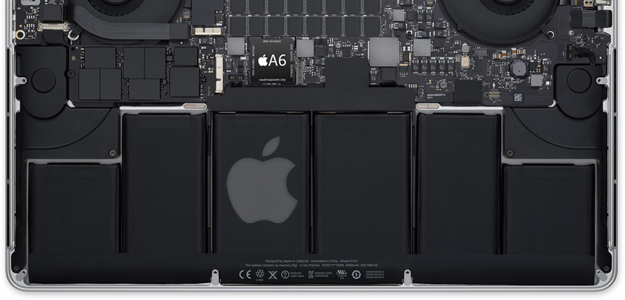
A bigger question is how well OS X would run on ARM processors: Would it deliver a reasonable desktop experience? By some benchmarks, the A6 processor Apple uses in the iPhone 5 already substantially outperforms any PowerPC notebook Apple ever made, and the A6X in the latest iPad scores even higher. And with the power available in notebooks and desktop computers (as opposed to phones and tablets), Apple could push the processors to significantly higher clockspeeds. Apple could also improve performance and keep heat levels down by adding more processor cores. That would increase the cost of each processor, but Apple’s chips are so much less expensive than Intel’s mainstream CPUs that Apple could afford to eat a bit of expense there.

(Doubt that? Intel’s published price lists (PDF) run from $117 for a low-end Core i3 chip to $999 for a high-end Core i7. Bulk customers like Apple, Dell, Lenovo, and HP presumably get a significant discount, but the contrast is stunning: iSuppli estimates Apple pays under $20 for its A6 processor.)

Given how many people find Apple’s iOS devices totally acceptable for lightweight gaming, Web browsing, email, managing photos and entertainment like movies and music, it’s fair to guess hypothetical ARM-based Macs would be able to meet those same sorts of needs easily. On consumer notebooks and desktop systems, the real performance constraints are usually memory, storage, and networks, not the processor.

However, once one gets beyond mainstream computing needs, ARM chips aren’t going to be able to stand up to Intel in the foreseeable future. That means folks who rely on their Macs for content creation, high-end gaming, software development, and compute-intensive applications like large databases, software development, real-time digital signal processing (think musicians and DJs), would suffer from a switch to ARM processors. These are the same users who purchase Apple’s highest-priced, highest-margin Macintosh computers and constitute many of Apple’s most loyal and lucrative Macintosh customers. It seems unlikely Apple would kick them to the curb, so if Apple does move Macs to ARM-based processors, higher-end Macs are likely to stay with Intel.

Barriers to OS X on ARM

OS X Mountain Lion Messages

This doesn’t mean making OS X practical on ARM chips would be a cakewalk. Assuming Apple can indeed overcome possible performance hurdles with its own 64-bit designs down the road. Other barriers include:

Backward compatibility

Just as Windows RT can’t run old Windows software, a hypothetical ARM-based Mac wouldn’t be able to run old OS X software. In the past, Apple has always provided an emulation layer that let old software continue to run, albeit slower. Apple’s cleanest transition was from PowerPC to Intel: Its Rosetta PowerPC emulators let Mac users transition the vast majority of their existing PowerPC software to their new Intel Macs without batting an eye, letting them continue to use their software, then upgrade to new Intel versions over time.

It’s not clear that Apple could manage a transition from Intel to ARM so easily. Russia’s Elbrus Technologies recently announced an x86 emulator for ARM that can let ARM chips run software compiled for Intel processors, but it can only deliver about 40 percent of the ARM processor’s performance through emulation. Elbrus thinks it can bring that level up to 80 percent by the end of 2014, but considering ARM chips are already slower to begin with, that may still mean sluggish performance. The alternative is Microsoft’s approach: Bar legacy software outright.

A desktop version of iOS?

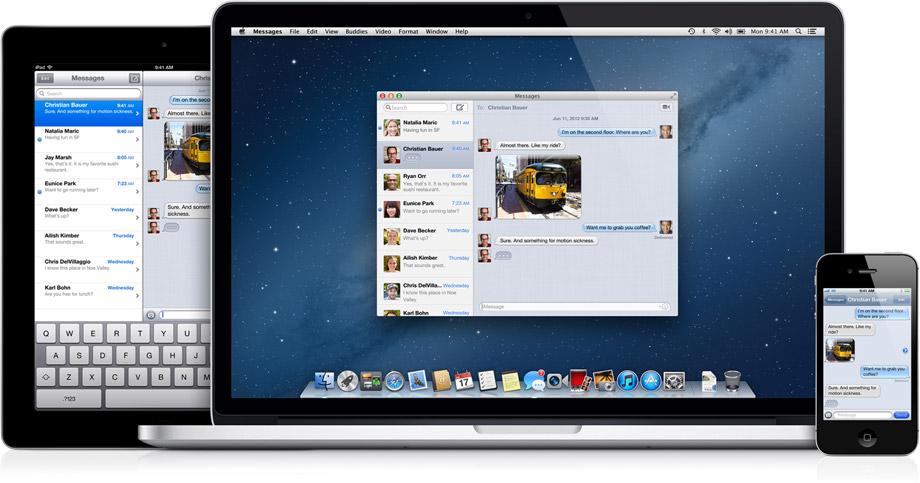
The Mac used to be Apple’s market-leading product… but then it was eclipsed by the iPod, and then by the iPhone, and then by the iPad. Where Apple customers used to come to iOS devices with a knowledge of Mac OS X, now it’s much more likely Apple customers come to the Mac after getting into the Apple ecosystem on an iOS device. Apple’s “back to the Mac” emphasis in Lion and Mountain Lion is about taking elements of iOS and taking them back to OS X so iOS users feel more at home. The Mac App Store, Notifications, and full-screen mode all arose from this effort.

If Apple can’t support legacy Intel apps, would it make sense to essentially make a version of iOS for the desktop? It have the advantage of being instantly familiar to millions of existing iOS users, with hundreds of thousands of existing apps available on launch day. However, apps originally designed for smartphones and tablets generally would not translate well to a notebook or desktop computer. After all, Apple CEO Tim Cook was quick to criticize Microsoft for the sacrifices made by its own hybrids. Apple would also have to make some changes to iOS to match desktop users’ expectations. For instance, multitasking under iOS is currently limited to a handful of tasks that can be delegated to the operating system, all in the name of power management and maximizing battery life. Many desktop users would expect more robust multitasking, without a significant impact on battery life.

What about Intel’s stranglehold?

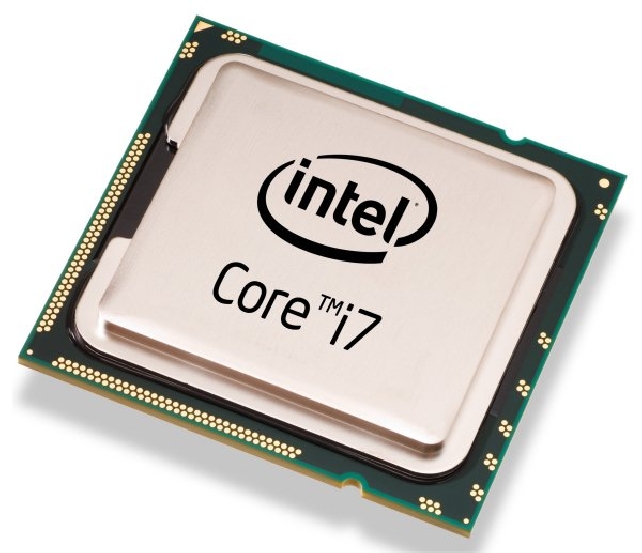
intel core i7

Apple likes to control its own destiny. Part of that fierce independence comes from total control of product design from the ground up, from the silicon in the chips to the finish on the case to the pixels on the screen. With its Macintosh computers, Apple doesn’t control two key parts of the package: the processor and the graphics chip, which it relies on Intel and Nvidia for. If Apple were to make its own ARM processors, it would liberate Apple from dependence on Intel’s rigid upgrade schedule, which controls the rest of the PC industry.

Of course, putting ARM chips into Macs – or threatening to – could simply be a clever way to exert leverage on Intel. Intel scored a tremendous public relations coup back in 2005 when Apple switched from PowerPC to Intel processors. Although Intel can certainly afford to lose Apple as a client on purely financial level, the damage to Intel’s reputation could be substantial – after all, Apple is one of the most-watched and most-respected companies on the planet. Toying with the idea of a switch to ARM chips could give Apple significant negotiating chips with Intel, maybe even enough to get the chipmaking giant back to making custom processors only available to Apple, like it did with the original MacBook Air.

Apple did not respond to a request for comment.

Source : digitaltrends[dot]com

Good guy Apple gives $2.5 million to Hurricane Sandy relief

Apple Hurricane Sandy

After successfully raising "millions" of dollars toward the American Red Cross' Hurricane Sandy relief efforts, Apple CEO Tim Cook told employees today that the company will donate $2.5 million of its own money to help the storm's victims recover.

Apple will donate $2.5 million to victims of Hurricane Sandy, according to an internal memo obtained by 9to5Mac. The charitable gift comes on top of untold millions raised by Apple customers for the American Red Cross through a special page on iTunes. 

tim-cook-red-cross-memo

Apple originally launched the Hurricane Sandy relief page in iTunes on November 1, just days after the storm decimated communities up the East Coast, including towns and cities in New Jersey, New York, and Connecticut. Apple iTunes customers can give amounts ranging from $5 to $200 through the page.

Sandy is said to be the second most-costly hurricane in U.S. history, after 2005′s Hurricane Katrina. Eleven days after Sandy made landfall, around 265,000 homes in New Jersey, and more than 168,000 in Long Island remain without electricity. An untold number of people are displaced or homeless because of the storm.

News of Apple’s donation follows a joint project between Silicon Valley vacation rental starup Airbnb and the New York City Mayor’s Office, which are urging Airbnb hosts (or anyone with a bit of extra room) to lend out their space to displaced Sandy victims for free. As of this writing, more than 530 hosts have signed up for the effort.

Apple’s charitable giving has increased under CEO Tim Cook. In February, Cook revealed that the company had given a total of about $150 million to charity, a large number, but a small fraction of the electronic giant’s approximately $117 billion in cash it had on hand, as of this summer.


Source : digitaltrends[dot]com

Cellular versions of the iPad Mini could start to ship next week

Although Apple hasn't provided an exact, single date on when the iPad Mini Wi-Fi + Cellular model will ship, buyers who have pre-ordered the tablet are seeing their accounts updated with various shipping dates, some as soon as five days time.

Ever since the iPad Mini was announced, there was a question mark over when the model with 3G/4G LTE connectivity would appear. Apple’s press release stated the cellular models would ship “a couple of weeks” after the Wi-Fi only Mini, putting the date somewhere around the middle of November.

It looks like Apple will keep its promise too, as reports are coming in that customers who pre-ordered the cellular Mini tablet have started to receive notices that it’ll ship “in the next five business days.” That could be on or slightly before November 16, two weeks after the iPad Mini went on sale.

This won’t be the same for everyone, of course, and Apple has already flip-flopped on iPad Mini LTE release dates once, with some buyers finding a November 21 and November 23 shipping date added to their account soon after launch, but this was quickly replaced with “mid-November” instead. Subsequently, these dates have been re-applied to some accounts.

So, if you’ve ordered an iPad Mini LTE, there’s a chance it will arrive sometime between November 16 and November 23, depending on when you placed your order, and your chosen delivery method.

Apple has been experiencing some delays with getting the iPad Mini into its customer’s hands, with the Wi-Fi-only tablet selling out as an online pre-order, and then again when it hit retail stores last weekend. Despite this, Apple shifted three million iPad Mini and fourth generation iPad tablets over those three days.

While still a considerable amount of iPad tablets sold, this was a little lower than some analysts hoped for, and this could have been due to the cellular model not being available on launch day. An analyst for Merrill Lynch called the 4G LTE iPad Mini “more important than people think,” reminding us that the cellular versions of the full-size iPad make up 45-percent of sales.

If you’ve pre-ordered an iPad Mini, has its delivery date been updated yet?


Source : digitaltrends[dot]com

Nov 8, 2012

Tablet survey: Apple products top holiday wish lists

Apple iPad Mini review iPad comparison iOS tablet

Hoping to find an Apple tablet in your Christmas stocking? According to the results of a new survey, you're not alone.

For the second year running, a survey by online shopping site PriceGrabber shows Apple products at the top of consumer wish lists this holiday season.

A refreshed iPad (in fact, you could call it double-refreshed) since last Christmas, together with the introduction of the smaller 7.9-inch iPad Mini, have evidently enabled the Cupertino company to maintain strong consumer interest, with 63 percent of respondents hoping to receive a tablet this holiday season wishing for an iPad 3 or 4. Twenty-four percent said they’d like to receive an iPad Mini.

It was neither a Kindle Fire nor the Nexus 7 that placed third, with 22 percent saying they’d like to receive Samsung’s latest 5.5-inch Galaxy Note device instead. Amazon’s Kindle Fire HD was the preferred choice for 20 percent of respondents, while 13 percent went for the Surface.

PriceGrabber’s survey, which allowed respondents to select as many tablets as they liked, involved 1,475 US-based online shoppers interviewed between October 24 and November 1, 2012.

Of course, the tablet market has changed greatly in the last 12 months, with big hitters like Amazon introducing its new range of Kindle Fire tablets. Google also entered the tablet arena this year with its Asus-made Android-powered Nexus 7 and Nexus 10 devices. The Nexus 10 doesn’t appear in the survey results, presumably because it was announced at the tail end of the period during which the research was conducted.

Lower-priced category

In the lower-priced tablet category – a category that’s expected to generate a lot of revenue for tech companies this holiday season – PriceGrabber asked consumers not which tablet they’d like to receive but instead which one they’re most likely to buy as a gift.

The iPad Mini was chosen by 45 percent of consumers, while 27 percent went for the Kindle Fire HD. The Nexus 7 and non-HD Kindle Fire tablet tied for third spot, each receiving 19 percent. Six percent selected one of Barnes & Noble’s tablet offerings.

PriceGrabber’s Rojeh Avanesian commented on the results in a release, saying, “Tablets continue to grow in popularity as a top holiday gift, especially with the emergence of lower priced tablets in the $200 to $300 price range targeting budget-conscience consumers.”

Does it surprise you to see the Galaxy Note in third spot among consumer preferences – placing higher than the Fire HD and Nexus 7 – or, considering its feature set and portability, does it make perfect sense? 


Source : digitaltrends[dot]com

Apple loses patent case related to FaceTime, asked to pay $368 million

Apple has lost a patent related case to VirnetX, a patent holding firm in the US, for infringing on four of the latter’s patents related to FaceTime. The four patents in the case deal with establishing VPSs and domain names.

Apple argued that it did not infringe upon any patents, that FaceTime was a free service with no revenue and that VirnetX does not have any products that use those patents but apparently it was not enough to please the judge and now Apple has been ordered to pay $368 million.

Apple doesn’t have to pay the amount just yet. The company has now filed a motion asking whether VirnetX has sufficient evidence to support its case and to reexamine each of the four patents in question with the US Patent Office.

VirnetX pulled a similar move on Microsoft earlier this year, winning $200 in settlement from Microsoft for using its VPN-related patents in its Windows operating system and other products.


Source : blog[dot]gsmarena[dot]com

Nov 7, 2012

Apple Store app update brings Passbook support for gift cards, Siri integration for checking prices

Apple has updated their Apple Store app for the iOS devices that let you check out prices, buy products and track your purchases on the go. The update brings support for Apple Store gift cards with Passbook support and Siri integration.

Now you can purchase Apple Store gift cards for your friends and family through the Apple Store app. When you send a gift card, it arrives as a mail to your recipient. They can then choose to send it to their iPhone and it appears in Passbook through iCloud integration. They can then just walk into an Apple Store and purchase items by showing the pass in the Passbook app.

Another cool new feature is integration with Siri, so you can now just ask Siri for prices of Apple products and it will provide them if you have the Apple Store app installed.

Both features are only available in the US for now.


Source : blog[dot]gsmarena[dot]com

Apple executive and Ferrari fanatic Eddy Cue joins board of Italian luxury-car maker

Ferrari-F12Berlinetta-rear

Apple executive and Ferrari fanatic Eddy Cue has joined the luxury-car company's board of directors, leaving some wondering if Apple might be up to something.

Apple’s senior vice president for Internet software and services Eddy Cue has joined the board of premium sports car maker Ferrari, it was announced on Wednesday (via Apple Insider). The Apple executive said he was both “pleased and proud” to have been offered the new position.

“I have personally dreamed of owning a Ferrari since I was eight years old and have been lucky to be an owner for the past five years,” the Apple executive said in a statement on the Ferrari website, adding, “I continue to be awed by the world-class design and engineering that only Ferrari can do.”

Ferrari boss Luca di Montezemolo said he was “delighted” to welcome Cue to the car company. “His huge experience in the dynamic, innovative world of the Internet will be of great assistance to us,” he said, refraining from offering any specific details as to what they might have planned – if anything.

At Apple, Cue is responsible for iTunes, the App Store and the Cupertino company’s iCloud service, though a recent management shake-up at the tech giant saw him also take charge of Siri and Maps.

In its report, Apple Insider pointed out that earlier this year Apple appeared to be on the hunt for automotive engineers in China, possibly indicating it was looking closely at car technology with a view to getting involved in the industry in some way.

But whether Cue’s acceptance of an invitation to join the Ferrari board is a sign that Apple is perhaps looking at moving into the automobile space with a new line of integrated gadgets and/or software, or whether it’s simply one man taking his long-held love of the flashy Italian car to the extreme isn’t entirely clear at this stage, though in the fullness of time all will doubtless be revealed.


Source : digitaltrends[dot]com

DC Comics adds entire periodical line to Apple, Nook and Kindle Stores

Look, up on the Apple Store! Is it a bird? Is it a plane? No, it's the new addition of the entire line of DC Comics periodicals, which are also being added to the Kindle and Nook Stores today.

Apparently, it’s far easier to fight Darkseid and the demonic hordes of Apokolips than it is to break new ground in the digital distribution world. After all, DC Entertainment’s line of monthly comic books – including such hit titles as Batman, Green Lantern, Justice League and Action Comics – are more than a year from their much-publicized New 52 relaunch (from September 2011), but only now will they be offered on multiple digital platforms including Amazon’s Kindle Store, Apple’s iBookstore and Barnes & Noble’s NOOK Store.

The announcement of the partnerships was made earlier today as DC Entertainment confirmed that the entire line of DC Comics – which goes beyond the more well-known superhero line to include other imprints such as the mature reader Vertigo line and tie-in comics to such kid-friendly fare as Young Justice, Superman Adventures and various Cartoon Network cartoons – will be made available on what it called “the top three e-bookstores.” In the announcement, DC co-publisher Jim Lee said that, “As e-readers and tablets continue to explode in popularity, it’s important for us to offer consumers convenience and choice in how they download digital comics and graphic novels and these new distribution deals with the top three e-bookstores do just that. We’re very excited to work with Amazon, Apple and Barnes & Noble to bring bestselling DC Comics and Vertigo periodicals to their e-bookstores.”

Previously, only collected editions of these titles have been available through these three outlets, with the digital editions of the regular monthly print releases being limited to release through ComiXology.com (Initially, the collected editions were under exclusive release from Amazon, leading to Barnes & Nobles to pull the print editions of the books from their bookstores in protest; after the exclusivity period finished, both print and digital editions were added to B&N stores across the country). DC and ComiXology signed an exclusive partnership for the digitizing and digital distribution of their catalog in November 2010, initially beginning with back catalog material. In September 2011, coinciding with the publisher’s New 52 relaunch, ComiXology started to offer new releases on the same day as their print release; prices were set to match their print counterparts for the first four weeks of release, before dropping a dollar as each release became back catalog. DC has confirmed that its partnership with ComiXology is no longer an exclusive one, although it is unknown whether or not the new outlets will follow the ComiXology pricing model.

“We were the first to offer our entire comic book line same-day digital,” Lee continued, “and now we are the first to offer fans the convenience of multiple download options.” Each digital outlet will make the DC releases available as of today.


Source : digitaltrends[dot]com

Airbnb and Mayor Bloomberg link up, open home renters’ doors to hurricane victims

Two weeks after Hurricane Sandy, a nor'easter heads toward New York City. Luckily, Airbnb and the Big Apple joined hands to offer free shelter to those displaced.

When Airbnb sent out an email two weeks ago encouraging renters to offer rooms at a discounted rate to help Hurricane Sandy victims, I applauded the startup’s efforts at giving back to the community. Today, as a nor’easter heads back to the tri-state area even though some victims are still without power or have been evacuated from their homes, New York City mayor Michael Bloomberg has announced a collaboration with Airbnb, helping the startup promote the word on free housing for those who need it the most.

Whether you’re an interested renter or in need of shelter, the shortcut URL of Airbnb.com/sandy can take you to the available homes in the NYC vicinity. Every listing under the section is entirely free of charge; Airbnb makes no profit off the listings, and home seekers still have full access to filter search results by neighborhood, amenities, and room type. Luckily, as the number of rooms available decrease after bookings, more renters are offering their homes to the site. When I began this post, 179 homes were available. Last I checked, there are 205.

There’s no word from Airbnb or the mayor’s office on how long this deal lasts, but if you’re seeking shelter or know someone who is, you can find everything from a free bedroom to airbeds and couches. Whatever humble abodes renters can offer, it will sure beat the snow that’s already descended upon New York City. 


Source : digitaltrends[dot]com

Apple adds Android 4.1 Jelly Bean, Galaxy Note 10.1 to Samsung lawsuit

Apple is trying to add Android 4.1, Jelly Bean, and the Galaxy Note 10.1 to yet another patent infringement court case against Samsung in California.

Apple argued yesterday that Samsung’s Galaxy Note 10.1 tablet and the Android 4.1 Jelly Bean operating system infringe on its patents and should be added to an existing California lawsuit against Samsung.

Appearing in a federal court in San Jose, before U.S. Magistrate Judge Paul S. Grewal, Apple’s lawyers sought to expand the lawsuit against Samsung with additional patent infringement claims. This follows Samsung’s attempt to add patent infringement claims against the new iPhone 5 back on October 1.

The judge has not issued a ruling yet.

Most notable among Apple’s claims is the inclusion of Google’s Android 4.1 operating system, also known as Jelly Bean. Apple insisted that the Galaxy Nexus is the only phone with Jelly Bean that it is seeking to add to the patent complaint, for now. The implications of this are serious for Google and it’s the first time that Apple has included the Android platform specifically in its cases against Samsung.

It seems the Cupertino-based company is also now looking to add devices with a stylus, such as the Galaxy Note 10.1, and Apple’s attorney mentioned adding a further 17 devices that could use a stylus, but don’t ship with one.

This case is not scheduled for trial until 2014.

We will find a resolution to the highest profile case so far sooner than that. The jury verdict saw Apple awarded $1.05 billion in damages. As we reported before, Apple is seeking more money while Samsung is claiming juror misconduct. Those arguments will be heard in December and there will also be a decision on Apple’s attempt to get eight Samsung smartphones banned from sale in the U.S.

We’ll keep you posted on all the news about Judge Grewal’s decision and the December hearing as it breaks.


Source : digitaltrends[dot]com

Nov 6, 2012

Apple iPad mini stops by our office, poses for a hands-on video

With the announcement of the iPad mini, Apple will give the already handsomely growing 7-inch tablet market an extra boost. Now that the 7.85-inch slate in our hands, it’s time to take it for a quick spin and see what its deal is.

Some might say out that due to the price there isn’t any deal to be had here. Yet the really beautiful aluminum body of the iPad mini quickly makes you forget about that. The 7.85-inch LCD IPS display at the front packs a resolution of 1024 x 768 pixels resulting in a pixel density of 162ppi. It’s a rather modest achievement and will have the Nexus 7 grin, but the vast catalog of tablet-optimized apps that the App Store offers might make you forgive that too.

You won’t be wrong if you view the iPad mini as an enlarged iPhone 5 (or iPod Touch if you will), mainly because of the design of the slate. The big Apple logo at the back is surrounded of aluminum, with the usual array of buttons at their usual places for an iPad.

At the back, the iPad mini sports a 5MP camera, which shoots video at full HD resolution. There’s also a 1.2MP unit at the front for video chatting.

The internals of the iPad mini are well familiar as this is the same chipset powering the iPad 2. Just like its bigger brother, the mini packs Apple’s A5 chip, featuring two Cortex-A9 processor cores. Graphics processing is taken care of the PowerVR SGX543MP2 GPU.

Naturally, the iPad mini is running iOS 6 out of the box and comes with Siri to help you with your daily endeavors. As usual, we’ve prepared a quick unboxing and user interface video of the new iPad mini. Check it out below.


Source : blog[dot]gsmarena[dot]com

Nov 5, 2012

Belkin first to release third-party Lighting accessories for iOS devices

When Apple launched the new Lighting connector with the iPhone 5, they immediately made all the existing accessories for iOS devices obsolete (unless you plan on using one of the optional adapters). However, it looks like it’s not going to take take long for accessory makers respond to the change and come out with new accessories designed for the new interface.

Belkin is the first out of the gate with a couple of accessories for your car that are compatible with the Lightning connector. The first is a car charger, that plugs into your car’s power outlet and connects to your iOS device through a Lightning connector. The second one is a Charge + Sync Dock, that doesn’t actually have a Lightning connector of its own but includes an audio jack and you can route your Lightning cable through it.

At $29.99 each, both accessories are considerably expensive for what they do and it would actually be cheaper to buy Apple’s adapters and use your old accessories. It would be best to wait for more manufacturers to release their products before jumping into the Lightning accessory market.


Source : blog[dot]gsmarena[dot]com

Apple reportedly considering replacement for Intel chips in future Macs

It looks like there might be a divorce between Apple and Intel in the making. Report has emerged that the Cupertino giant is considering a replacement of Intel silicon in future Mac offerings for its own chips.

Such a move should hardly be a surprise as Apple has amassed quite a lot of expertise already in developing the chips for its iOS devices. As they grow more and more powerful with each product cycle, it is only logical that it won’t be long before they pack enough oomph to power a Mac with all the bells and whistles.

Another benefit from such a move from Apple would be the company’s ability to unify the experience which its mobile and desktop devices have to offer – much like Microsoft has done with Windows 8. Currently, there is a significant difference between OS X and iOS.


Source : blog[dot]gsmarena[dot]com

Apple sold 3 million iPads (big and small) in opening weekend

Apple managed to sell a million iPads a day since the iPad 4th generation and iPad mini hit their first wave of stores just three days ago.

Apple didn’t specify how many iPad mini’s and iPad 4′s were sold but the total number is still worth mentioning.

The 3 million are all Wi-Fi only models and Apple expects the Wi-Fi + Cellular options of both tablets to ship in a few weeks in the US with more countries to be added later this year.

According to Brian White, a Topeka Capital Markets analyst, the iPad mini was sold out at around 60% of surveyed Apple retail stores in the US.

The 3rd generation iPad set record sales in its first weekend back in March by selling 3 million units. Releasing a new iPad as soon as Apple did doesn’t seem to have slowed the pace at which their tablets sell, even if we’re talking about two separate devices this time around.


Source : blog[dot]gsmarena[dot]com

Apple sells 3 million iPads over the weekend, remains coy on how many were Mini

iPad mini price not too expensive

Apple has announced that it has sold three million iPads over the opening weekend, but fails to break down that figure into how many were iPad Mini tablets and how many were fourth generation full-size model.

Apple has sent forth its traditional, post-opening weekend press release trumpeting how many new iPads it has sold. We say iPads — plural — because it wasn’t only the iPad mini that went on sale, but the fourth generation iPad too, despite it being almost completely ignored by the press.

From November 2 to November 5, Apple sold 3 million iPads, which it says “doubles the previous first weekend milestone of 1.5 million Wi-Fi only models sold for the third generation in March.” Neither of the two new iPads have cellular connectivity yet, but 4G models will ship in the next few weeks.

Just in case you didn’t quite catch it, Apple CEO Tim Cook chimed in to confirm that the company “set a new launch weekend record,” and adds that it had “practically sold out of iPad minis.”

So, a resounding success? Well, possibly, but there’s no breakdown of exactly how many units of that 3 million magic number were iPad minis. Reports from around the world on Friday didn’t contain the same degree of excitement over the iPad Mini as they have for previous Apple products, and described shorter lines at stores.

This didn’t stop it from selling out, a fact that anyone could gather from a cursory glance at Twitter late in the launch day, as frustrated buyers found the shelves empty at their local stores. Apple’s statement closes with reference to online pre-orders selling-out too, confirming that “demand for the iPad mini exceeded the initial supply.”

Three million sales needed for success

Prior to the weekend, an analyst from BTIG said Apple needed to shift at least 3 million iPad Mini tablets for it to be hailed a success. For some context, the iPhone 5 sold 5 million over its opening weekend and as we reported last week, the Samsung Galaxy Note 2 has taken nearly 40 days to reach 3 million sales.

Apple analyst Gene Munster warned the company may fall short of this figure, estimating between 1 million and 1.5 million iPad mini devices would be sold. He noted that this lower than expected figure is because the iPad mini will be a “grower,” and that once people see and try it, demand will increase.

Without the aforementioned sales breakdown, it’s impossible to know how close Munster came to the truth, but he’s probably not far off. At least we assume he’s not, as for all we know, the fourth generation iPad could have been responsible for 75 percent of the total.

With the iPad mini selling out online and in stores, it certainly looks like another successful launch for Apple. But it’s difficult to say just how much of this was true demand, and how much was lack of supply. Among the endless iPad Mini rumors, you may recall an analyst warning that there would only be “acceptable” iPad mini stock levels for the first month, due to problems with the supply chain. This rumor may have come true, and comes soon after the iPhone 5’s similar problems.

The iPad mini came out in 34 countries on Friday and according to the Apple Store, is currently limited to two per customer with a two-week wait before it ships.


Source : digitaltrends[dot]com

Apple Logs 3 Million iPads Sold in Three Days

abc ipad mini apple lpl 121023 wblog Apple Logs 3 Million iPads Sold in Three Days

                                                                                  (Image Credit: Joanna Stern/ABC News)

Take that, analysts! That’s what Apple is saying this morning after announcing that it has sold 3 million iPad Minis and fourth-generation iPads since going on sale Friday.

While Apple didn’t break down sales between the two, analysts at Piper Jaffray predicted Apple would only sell 1.5 million Minis in the first few days.

Apple sold 3 million of the new iPads in the first weekend of its launch in March. But with that version it had WiFi and 3G-4G units on shelves at launch. With the Mini, only the WiFi version launched this week; the 3G-4G versions will launch later this month.

In addition to the Mini, Apple also released a slightly updated version of its larger iPad. The fourth-generation iPad has a new processor and dock connector. With the sales of both products combined, Apple is calling this a launch weekend record for the iPad.

The iPad Mini joined a few other popular smaller tablets on the market, including the $199 Nexus 7 and Kindle Fire HD. Asus, the maker of the Nexus 7, has reported its sells close to 1 million units a month.

The new iPad, which starts at $329, has a smaller 7.9-inch screen than the regular 9.7-inch iPad. While the Mini has a lower-resolution screen, it still has all the same capabilities as the other iPad since it runs iOS 6, the latest version of Apple’s operating system for the iPhone and iPad.

Despite the recent superstorm, the Mini was sold out at various stores in New York City this weekend. Apple has begun to allow customers to reserve the tablet online and pick it up in-store the next day.

“We set a new launch weekend record and practically sold out of iPad minis,” Apple CEO Tim Cook said in a statement. “We’re working hard to build more quickly to meet the incredible demand.”

As a result of last week’s executive shakeup at the company and predictions of lackluster iPad Mini sales, Apple’s stock dropped to less than $580. Apple was trading at $582.72 a share this morning.


Source : abcnews[dot]go[dot]com