Pages

Showing posts with label commission. Show all posts

Oct 18, 2012

Wanna be a national hero? FTC contest offers $50,000 prize for solution to end annoying robocalls

A new contest launched this week asking for solutions to end annoying robocalls. Announcing the contest, David Vladeck of the Federal Trade Commission said that $50,000 in prize money was up for grabs, adding that the winner would be so popular they'd be certain to become a national hero.

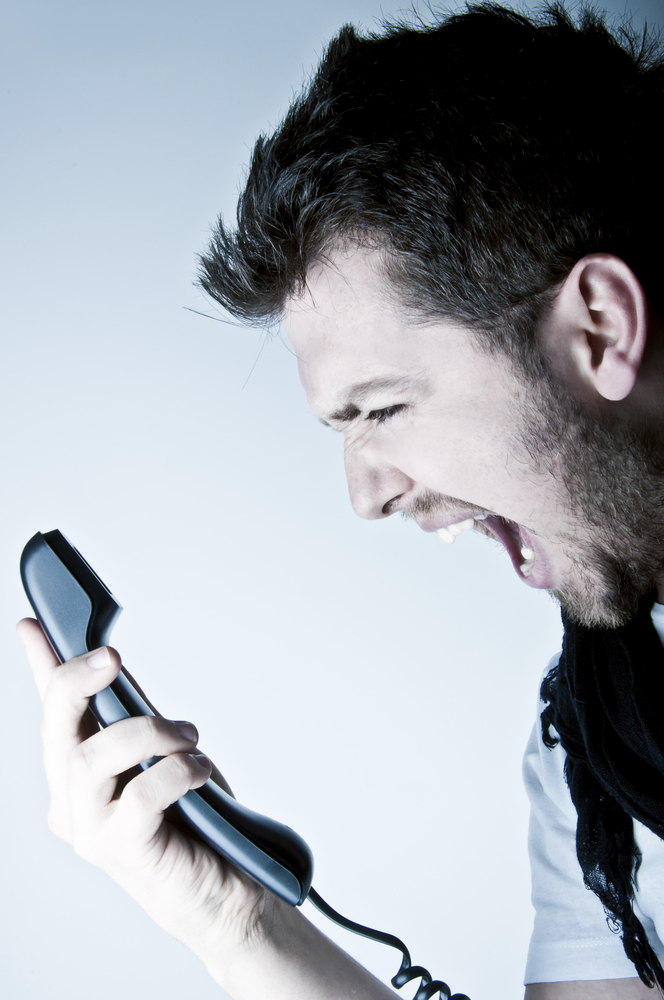
If you have a phone, it’s a safe bet you’ve received plenty of robocalls, you know, those automated, pre-recorded commercial calls that seem to come at the most inopportune moments like when you’re settling down to dinner or stepping into the shower or about to watch a movie. Not only are they extremely annoying, they also happen to be illegal.

You’ve tried telling the caller never to call again, but these robots just won’t listen. You signed up to the National Do Not Call Registry but it might as well be called the Please Call Me Even More Registry for all its effectiveness.

The US Federal Trade Commission (FTC) knows all too well that people are peeved. It’s been working with industry insiders and technical experts to try to find a way to put an end to the unwanted sales calls, but so far has been unable to come up with an effective answer. So now it’s turning to you for help. Yes, you. If you can come up with a workable solution that’s legal (ie. doesn’t involve a hit squad roaming towns and cities looking for the perpetrators), then you could bag yourself $50,000 in prize money.

David Vladeck, Director of the FTC’s bureau of consumer protection, launched the FTC Robocall Challenge on Thursday.

“The FTC is attacking illegal robocalls on all fronts, and one of the things that we can do as a government agency is to tap into the genius and technical expertise among the public,” Vladeck said. “We think this will be an effective approach in the case of robocalls because the winner of our challenge will become a national hero.”

The contest is free and open to all, with entries accepted from individuals, teams and corporations with fewer than 10 employees. According to the contest’s rules, the solution must fulfill the following criteria:

- it has to work (surely that goes without saying?)

- it has to be easy to use

- it has to be easy to roll out

Entries will be accepted from next week until January 17, 2013, with the winner(s) announced in April next year. If you fancy entering, be sure to take a moment to check out the full list of rules and frequently asked questions. Good luck.

[via TNW] [Image: Hypno Creative / Shutterstock]


Source : digitaltrends[dot]com

Sep 13, 2012

Apple launches Lightning to microUSB adapter for EU

The newly announced iPhone 5 introduced a smaller but still proprietary Lightning USB port. It’s different from the microUSB standard required by the EU Commission, so Apple once again had to come up with a workaround.

Yes, I am talking another adapter – Lightning to microUSB.

The adapter is small, unlike the 30pin-to-Lightning one available in the USA for $30.

The Lightning to microUSB gadget costs £15 or €19 in the EU Apple Stores and is compatible with the iPhone 5, iPod Touch 5th gen and iPod nano 7th gen. We were hoping that this will come included in the EU retail packages, but based on current evidence, it appears that this is not going to happen.


Source : blog[dot]gsmarena[dot]com

Sep 7, 2012

Trouble ahead? 4G LTE Kindle Fire doesn’t yet have FCC approval for sale

Kindle Fire HD

Amazon is marketing its new 4G LTE Kindle Fire HD tablet despite the fact that it hasn't yet received approval from the Federal Communications Commission. The situation has been described as unusual by attorneys and analysts familiar with the FCC's procedures.

You’d hope Amazon knows exactly what it’s doing, but the fact that it announced its new high-end 4G LTE Kindle Fire HD tablet before receiving approval for sale from the FCC (Federal Communications Commission) will strike some as a little odd, and has been described as unusual by attorneys and analysts with knowledge of the FCC’s procedures .

The FCC tests all new wireless communication devices to discover if they interfere with other signals. Once cleared, the product is allowed to go on sale. According to a Reuters report on Thursday, Amazon has yet to get the green light, despite promising to ship the product on November 20.

The report said that a confirmation email from the e-commerce giant in response to a pre-order for the 8.9-inch 4G LTE Kindle Fire HD said: “We will send you an email asking you to confirm your pre-order of Kindle Fire when it is approved for sale by the Federal Communications Commission.”

Speaking to Reuters about the situation, John Jackson, a wireless analyst at CCS Insight, said, “I can’t think of an instance where a device has been offered by a US carrier or an independent retailer that has not had FCC approval yet.”

Charles Golvin, a wireless analyst at Forrester Research, suggests that failure to get FCC approval prior putting the device on the market can probably be put down to Amazon’s lack of experience with wireless products.

It’s not just the selling of the device which is prohibited prior to FCC approval – marketing is also banned, unless a disclaimer is included in the promotional material.

Amazon is, however, clear about the situation with its new high-end tablet, stating on its website, “The 4G device has not been authorized as required by the rules of the Federal Communications Commission. This device is not, and may not be, offered for sale or lease, or sold or leased, until authorization is obtained.”

Mitchell Lazarus of law firm Fletcher told Reuters that in most cases companies with new wireless communication products go through the procedures with the FCC “so they don’t have to make these awkward disclaimers.”

It’s being suggested that approval may be taking a little longer than usual as the 4G wireless modem being used in Amazon’s tablet is of a new type, whereas many gadgets sent to the FCC for approval contain modems used in products previously passed by the FCC, and so go through the process more quickly.

The other Kindle Fires announced by Amazon on Thursday are Wi-Fi only devices and are fit for sale.

If the FCC does find some serious issues with Amazon’s priciest Kindle Fire, the company will have limited time to sort it out before the holiday season kicks off. Failure to have it on the shelves by then would be hugely damaging for the Seatlle-based company as it attempts to increase its share of a market still dominated by Apple with its popular iPad tablet. 


Source : digitaltrends[dot]com

Aug 22, 2012

Facebook-Instagram deal gets green light from FTC

facebook filters

The US Federal Trade Commission announced on Wednesday it had finished its investigation into Facebook's acquisition of Instagram and would not be taking any further action, paving the way for the deal to be sealed.

Facebook’s acquisition of photo-sharing app maker Instagram came another step closer on Wednesday when the US Federal Trade Commission (FTC) announced it had completed its antitrust investigation and would not be taking any further action.

Facebook said in a statement that it was “pleased” with the FTC’s decision though it gave no indication as to when the deal might be completed.

Back in April, a month before the social networking giant floated on the stock exchange, Facebook CEO Mark Zuckerberg said it intended to buy Instagram for $1 billion. The deal struck between the two companies meant Instagram would receive $300 million in cash and just under 23 million shares.

Of course, Instagram CEO Kevin Systrom had been hoping to see the value of Facebook shares hit the roof after the company went public in May. However, it’s gone the other way, with shares in the social networking company currently worth just half of their original $38 IPO price. This means the Facebook-Instagram deal is currently valued at just over $747 million.

The news in April of Facebook striking a deal with Instagram came as a surprise to many, not least the Facebook board. Co-founder Mark Zuckerberg reportedly sorted the deal all by himself, meeting Systrom at his Palo Alto home over three days, whittling the Instagram boss down to $1 billion from his original asking price of $2 billion. It’s thought Zuckerberg wanted to act fast in order to stop another company getting in first, with Facebook keen to find ways to increase its presence in the mobile space.

Instagram is a hugely popular free photo-sharing app that allows users to make fast and stylish edits to their snaps before sharing them on the Web. It currently has 80 million users, a figure impressive by any standards, but even more so when you consider it launched less than two years ago.


Source : digitaltrends[dot]com