Pages

Showing posts with label trade. Show all posts

Oct 27, 2012

LG launches 84-inch, Ultra HD television at $19,999

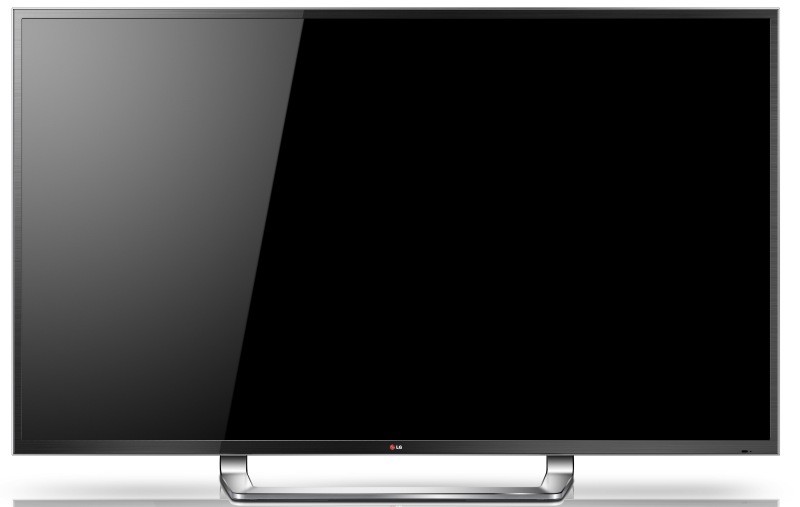
LG Ultra HD 84LM9600 front

Finally transitioning from simply showing off 4K technology at trade shows, LG is now selling an Ultra HD television around the same price as some cars.

Earlier this week, LG held a launch event in Southern California to debut the company’s first Ultra HD (4K) television at a sizable list price of $19,999. The LG 84LM9600 has a native screen resolution of 3840 x 2160, four times the resolution of a typical 1080p television. While the amount of content available in Ultra HD resolution is incredibly scarce at the moment, the 84-inch LED Ultra HD panel also includes LG’s proprietary “Resolution Upscaler Plus” technology to up-convert 1080p content to the Ultra HD resolution. Regarding size, the 84-inch screen is the equivalent of four 42-inch, 1080p panels stacked in a rectangle shape. 
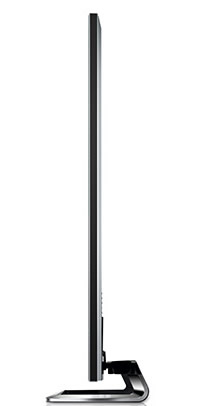
LG 84LM9600 sideWhile the television does include technology to allow consumers to watch 3D movies, an interesting feature directed at gaming consumers allows two players to play a multiplayer game without the need for split screen. Using glasses that are sold separately, the television is simultaneously displaying two video feeds and each pair of glasses is designed to pick up a specific feed.

In regards to 3D content, LG is including six pairs of flicker-free -glasses with the Ultra HD set. Flicker-free glasses are identical to glasses found within movie theaters, thus it’s inexpensive to add or replace glasses. Similar to other panels in the LG lineup, the company also includes a 2D-to 3D conversion feature with the set.

While the massive panel is just 1.57-inches thick, the television is over 150 pounds in weight plus another 25 pounds for the stand. Consumers will have to be careful when wall mounting the LG 84LM9600 which may require professional assistance for installation.

However, consumers won’t have to worry too much about a wired network connection near the home theater as the 84-inch television comes with built in Wi-Fi. The television ties into LG’s Smart TV ecosystem, so consumers will have access to plenty of applications like Netflix, Facebook, Vudu, Skype and Hulu Plus.

LG 84LM9600 sizeThe LG Ultra HD panel includes the gesture system and “Magic remote” found on other LG televisions. Consumers have to make gestures with the remote to interact with menus on the screen in addition to using voice commands. Specific to sound, the television includes a 10-speaker system rated at 50 watts.

The 84-inch panel also has a significant amount of audio and video inputs. Besides four HDMI inputs and three USB 2.0 inputs, the LG set includes an Ethernet port, antenna/cable input, composite audio / video input, component video input, RGB PC input and PC audio input. In addition, there is an optical digital audio output to send audio content to a receiver. 

While the list price on the television set nearly breaks $20,000, the sales price in stores will likely be around $16,999 according to LG management. However, it’s highly unlikely that an online retailer like Amazon will carry the massive television. According to LG’s site, there are currently no online retailers stocking the television yet and it can only be purchased at a handful of high-end home theater stores. To date, the only other Ultra HD television that will be available to consumers this year is Sony’s 84-inch XBR-84X900. However, the list price of Sony’s television is significantly higher. On the Sony store site, the price of the display is $24,999.99.


Source : digitaltrends[dot]com

Oct 18, 2012

Wanna be a national hero? FTC contest offers $50,000 prize for solution to end annoying robocalls

A new contest launched this week asking for solutions to end annoying robocalls. Announcing the contest, David Vladeck of the Federal Trade Commission said that $50,000 in prize money was up for grabs, adding that the winner would be so popular they'd be certain to become a national hero.

If you have a phone, it’s a safe bet you’ve received plenty of robocalls, you know, those automated, pre-recorded commercial calls that seem to come at the most inopportune moments like when you’re settling down to dinner or stepping into the shower or about to watch a movie. Not only are they extremely annoying, they also happen to be illegal.

You’ve tried telling the caller never to call again, but these robots just won’t listen. You signed up to the National Do Not Call Registry but it might as well be called the Please Call Me Even More Registry for all its effectiveness.

The US Federal Trade Commission (FTC) knows all too well that people are peeved. It’s been working with industry insiders and technical experts to try to find a way to put an end to the unwanted sales calls, but so far has been unable to come up with an effective answer. So now it’s turning to you for help. Yes, you. If you can come up with a workable solution that’s legal (ie. doesn’t involve a hit squad roaming towns and cities looking for the perpetrators), then you could bag yourself $50,000 in prize money.

David Vladeck, Director of the FTC’s bureau of consumer protection, launched the FTC Robocall Challenge on Thursday.

“The FTC is attacking illegal robocalls on all fronts, and one of the things that we can do as a government agency is to tap into the genius and technical expertise among the public,” Vladeck said. “We think this will be an effective approach in the case of robocalls because the winner of our challenge will become a national hero.”

The contest is free and open to all, with entries accepted from individuals, teams and corporations with fewer than 10 employees. According to the contest’s rules, the solution must fulfill the following criteria:

- it has to work (surely that goes without saying?)

- it has to be easy to use

- it has to be easy to roll out

Entries will be accepted from next week until January 17, 2013, with the winner(s) announced in April next year. If you fancy entering, be sure to take a moment to check out the full list of rules and frequently asked questions. Good luck.

[via TNW] [Image: Hypno Creative / Shutterstock]


Source : digitaltrends[dot]com

Sep 23, 2012

Receive up to $300 towards a new HTC device by trading in an old one

HTC Logo

HTC introduced a new incentive to buy one of its new smartphones, up to $300 in "trade up" value for customer's used but functional devices.

HTC has a bumpy past in hardware manufacturing. Previously criticized for releasing too many smartphones under confusing product names, the Taiwanese company tried to start anew with its One line. But despite its speedy internals, inclusion of Beats Audio, and stellar build quality, as well as its unified branding, HTC’s current flagship, the One X, hasn’t been able to generate the same excitement as fellow Android juggernaut, the Samsung Galaxy S III.

But HTC hasn’t given up on the game quite yet, it has thrown too many resources at Android to quite now. After all, the original Nexus was an HTC device. It recently announced a pair of Windows Phone 8 devices — candy-colored phones reminiscent of Nokia’s Lumia line — and the HTC One X+ is reportedly right around the corner. In a rather aggressive move, HTC will offer potential buyers a monetary incentive to commit.

In exchange for your used smartphone, HTC will award you with up to $300 (but we were given a $324 quote for a 32GB Galaxy S III) if you purchase one of its new devices. To put it simply, HTC judges the value of your device and pays you to exchange it for a fresh one. However, rather than subtracting the trade-in value directly from your total, you’ll have to pay full price before receiving the rebate.

The funny thing about HTC’s “trade up” program though is that there are many other companies ready to pay for your used smartphone. Gazelle and Amazon both have services in place to exchange money for functional devices. On the positive side, HTC’s new site has a great layout, it’s easy to use, and your quote is generated instantly.

Of course, none of this matters if the prices offered by HTC aren’t competitive when compared with other services. We decided to do some of the legwork for you using a fully-functioning, 16GB Samsung Galaxy S III on Verizon as our standard. Gazelle quoted $245 for a “flawless” S III, whereas HTC quoted $265 for the same device. It seems like HTC did its research in terms of pricing, but ultimately it’s up to you whether you want cash-in-hand or a smartphone from HTC.

Is this the break you’ve been waiting for? Will you be sending in your old smartphone for a discounted HTC device? Or would you rather get cash for an alternate service?


Source : digitaltrends[dot]com

Sep 3, 2012

Indian bloggers accuse Samsung of mistreating them at IFA

Two bloggers are claiming that Samsung threatened to leave them stranded at the IFA trade show in Berlin after they refused to become promoters for Samsung products.

Samsung has since released an official statement which chalks everything up to a “misunderstanding” between the two parties.

The two bloggers, Clinton Jeff of Unleash the Phones and another who wished to remain anonymous, were part of Samsung’s Mob!lers program, which offers bloggers the opportunity to be flown to trade shows for event coverage at the expense of the program sponsor (in this case Samsung).

Jeff claims that throughout the entire process, he made it abundantly clear to Samsung representatives that he wanted to be there covering the event in its entirety as a reporter, rather than simply as a promoter for Samsung products.

Several days prior to his departure, Samsung asked Jeff to provide his clothing measurements for what was supposedly a closed-door event.

Upon arrival, Jeff and the other blogger found a Mob!lers booth waiting for them.

They gave us our key, a Samsung shirt that we’d have to wear for “orientation” the next morning, and we’d have to be down in five minutes to go for the uniform fitting.

They were then told to come the next day to sign a nondisclosure agreement, and that they would have to be in uniform over the course of the event, at Samsung booths, showing off Samsung products to members of the press.

Jeff again reiterated that they had, in no uncertain times, told Samsung that they would be there to cover the event, and not be “booth babes” for Samsung.

At this point, Samsung allegedly cancelled their return tickets and hotel reservations, instead offering to fly them back on the 1st, right after Samsung’s unpacked event, and only if they wore the Samsung shirt and presented devices to the press.

The two bloggers wore the shirts, but refused to present the Samsung devices.

Samsung has since released a statement on the matter:

Samsung Mob!lers is a voluntary community of active Samsung mobile device users, who are offered the opportunity to participate in our marketing events across the world. At these events, all activities they undertake are on a voluntary basis. No activities are forced upon them.

We regret there was a misunderstanding between the Samsung Mob!lers coordinators and the relevant blogger, as we understand he was not sufficiently briefed on the nature of Samsung Mob!lers’ activities at IFA 2012. We have been attempting to get in touch with him.

We respect the independence of bloggers to publish their own stories.

Long story short, this is pretty shady behavior on Samsung’s part, and they should certainly take most of the blame for the misunderstanding. There are a few red flags, however, which should have alerted the two bloggers that something wasn’t exactly right, the most prevalent being the request for clothing sizes.

Secondly, why would the Koreans offer to pay for airfare and hotel stay to essentially ransom two independent bloggers to simply promote their mobile devices at a trade show to other members of the press? Surely, they could have found a person or two in Berlin for that job and it would have cost them significantly less.

Our take is that Samsung’s excuse at a misunderstanding is not far from the truth – the two gentlemen were probably enrolled in a promotional program, and either Samsung wasn’t clear enough about what was expected of them, or the thought of being flown to a trade show to cover the topic they love simply rendered the bloggers blind to the fine print.

As a side note, Nokia allegedly offered to pay for their hotel stay and airfare for them to stay until the 6th and cover the event, but it’s unclear whether they’ve taken advantage of that.


Source : blog[dot]gsmarena[dot]com

Aug 29, 2012

Sony Xperia Tablet S Touts Remote-Control Functionality, Trim Dimensions

ht Sony xperia tablet s android thg 120829 wblog Sony Xperia Tablet S Touts Remote Control Functionality, Trim Dimensions

Image credit: Sony

While Sony experimented with its dual-screen Tablet P last year, it seems to be playing things a bit more conservatively this year. At the IFA technology trade show in Berlin today, Sony announced its new Xperia Tablet S, a 9.4-inch Android 4.0 tablet.

The new version of the tablet has been improved in a few key ways: It is now thinner than the previous version (0.35 inches at its thinnest point), faster with a quad-core Tegra 3 processor from Nvidia, and has some new functionality, including an improved remote app.

And it’s the latter piece – the remote functionality – on which Sony’s  really focusing. The tablet has an IR blaster so it can control your TV. But while you can use the tablet as a universal remote, you can also load up the Watch Now app that provides a visual program guide alongside social media feeds.

Additionally, Sony has made some adjustments to Android 4.0, including a new Guest Mode that lets you set up different accounts with parental controls, if you choose.

The 1.26-pound tablet has a 9.4-inch 1280 x 800-resolution display, 1GB of RAM, an 8-megapixel rear camera and a 1-megapixel front-facing camera for video chatting.

Sony is also releasing some unique accessories to enhance the tablet experience, including a cover with a keyboard similar to the one Microsoft has shown for its Surface tablet. The $99.99 keyboard uses touch sensors rather than physical keys. Sony says that this keyboard was in production before Microsoft’s Surface announcement in June. It also will release a $99.99 docking stand that lets you rotate the screen; one with a built in speaker will be out in November for $ 129.99.

The tablet itself starts at $399 for the 16GB version and will be available Sept. 7 online and at stores.

Sony Mobile Communications announced last week that it planned to lay off 15 percent of its workforce, about 1,000 employees, by 2014.


Source : abcnews[dot]go[dot]com

Aug 22, 2012

Facebook-Instagram deal gets green light from FTC

facebook filters

The US Federal Trade Commission announced on Wednesday it had finished its investigation into Facebook's acquisition of Instagram and would not be taking any further action, paving the way for the deal to be sealed.

Facebook’s acquisition of photo-sharing app maker Instagram came another step closer on Wednesday when the US Federal Trade Commission (FTC) announced it had completed its antitrust investigation and would not be taking any further action.

Facebook said in a statement that it was “pleased” with the FTC’s decision though it gave no indication as to when the deal might be completed.

Back in April, a month before the social networking giant floated on the stock exchange, Facebook CEO Mark Zuckerberg said it intended to buy Instagram for $1 billion. The deal struck between the two companies meant Instagram would receive $300 million in cash and just under 23 million shares.

Of course, Instagram CEO Kevin Systrom had been hoping to see the value of Facebook shares hit the roof after the company went public in May. However, it’s gone the other way, with shares in the social networking company currently worth just half of their original $38 IPO price. This means the Facebook-Instagram deal is currently valued at just over $747 million.

The news in April of Facebook striking a deal with Instagram came as a surprise to many, not least the Facebook board. Co-founder Mark Zuckerberg reportedly sorted the deal all by himself, meeting Systrom at his Palo Alto home over three days, whittling the Instagram boss down to $1 billion from his original asking price of $2 billion. It’s thought Zuckerberg wanted to act fast in order to stop another company getting in first, with Facebook keen to find ways to increase its presence in the mobile space.

Instagram is a hugely popular free photo-sharing app that allows users to make fast and stylish edits to their snaps before sharing them on the Web. It currently has 80 million users, a figure impressive by any standards, but even more so when you consider it launched less than two years ago.


Source : digitaltrends[dot]com

Aug 9, 2012

Watch what you tweet: How online troll crackdowns threaten freedom of speech

tweeting arrests court olympics

Abusive comments and racist insults are the stock and trade of the Web, but now British police have begun cracking down and making arrests. What ever happened to freedom of speech, and where do we draw the line?

You may have seen the news about the Twitter troll in the UK who was arrested for sending an abusive message to diver and gold medal hopeful, Tom Daley. After Daley failed to win a medal, a 17-year-old boy sent a malicious tweet which read, “You let your dad down I hope you know that.”

Daley’s father died of cancer last year. The boy responsible for the malicious tweet was issued with a harassment warning. Another arrest was made just a couple of days later because of a homophobic tweet, also aimed at Daley. The 28-year-old man arrested told police that he had left his phone unattended and someone had used his Twitter account as a prank.

Troll crackdown

These are not isolated incidents. The UK government is cracking down on Internet trolls. Back in March, after the footballer Fabrice Muamba collapsed on the pitch during a match, a student was arrested and subsequently jailed for 56 days for posting offensive and racist comments on Twitter. He served half his sentence.

One of the most high-profile cases concerned Paul Chambers, who sent a joke tweet back in January 2010 threatening to blow up an airport because he was annoyed at the cancellation of his flight. He was arrested by anti-terror police, who searched his home and confiscated his laptop, desktop computer, and mobile phone. He was convicted, fined, and even lost his job as a consequence. His first appeal was rejected but he has now finally won a high-court challenge.

How can you go to jail for trolling?

The law being enforced here in the United Kingdom is section 127 of the Communications Act, 2003 which is concerned with electronic messages which are “grossly offensive or of an indecent, obscene or menacing character.”

In effect, sending abusive tweets and other electronic messages is being treated the same way as if the perpetrator had said them in the street, face to face. But it’s not the same.

Naturally, the police are not expected to arrest everyone who makes an offensive comment. The courts are supposed to apply some common sense, but if they can charge someone like Paul Chambers for an obvious joke, then it’s clear they aren’t applying enough of it.

As a UK citizen, I’m seriously concerned about this. I don’t want the police and courts wasting time and money on this kind of stuff. I won’t feel any safer because a malicious tweeter was fined or sent to prison. There are genuinely dangerous criminals out there, let’s focus on them.

Watch what you tweet

It’s not just UK citizens who have to watch what they say on Twitter. You might not be arrested for a tweet in the US, but you can certainly get fired, even if you are a 20-year veteran of CNN. You also need to be careful not to attract the attention of Homeland Security or you may not get into the country. Two British teenagers tweeted a couple of stupid jokes and were flagged as a threat. When they landed in L.A. they were questioned, searched, handcuffed, and kept under armed guard before being sent home 12 hours later.

twitter site arrestsThen there’s the case of Guy Adams and his criticism of NBC’s Olympic coverage, which led to Twitter suspending his account. It has since been unsuspended, but the whole affair was pretty embarrassing for NBC and Twitter. There have actually been several Twitter-related problems with the Olympics as rounded up by The Wall Street Journal.

What about freedom of speech?

Is freedom of speech an all or nothing deal? Is there actually any harm in posting opinions and comments online?

I always liked the famous Voltaire quote: “I do not agree with what you have to say, but I’ll defend to the death your right to say it.”

Censorship seems like a slippery slope. Even if you start off targeting racist abuse or incitement to hatred it can quickly lead to pointless arrests. There is a distinction between expressing an opinion and sending a threatening or abusive message, but where exactly is the line?

If we’re going to empower security forces to catch potential threats, then we also need them to apply some common sense. Don’t arrest and punish people who are clearly not a threat. Maybe the problem is that saying something, no matter how vile or distasteful, should not be considered a crime.

Anonymity and privacy

Some people think the argument comes down to whether you should be allowed to post anonymously. No doubt, people can be empowered by anonymity and will often post things that they wouldn’t say if their identity was clear. However, many people seem to be happy enough to post all kinds of offensive comments without hiding their identity.

facebook avatar social media arrestsShould social media sites or even Internet service providers be compelled to provide details about their users if they post offensive comments or send threatening messages? Don’t they have a duty to protect the privacy of users? It’s a thorny issue.

It was recently established that anything you post publicly on Twitter can be used against you in a court of law. Law enforcement can access your tweets, even deleted tweets, without a warrant.

Grow a thicker skin

Look at any forum or comment section or at social media posts and you’ll find a wealth of offensive nonsense. As a writer, I’ve grown used to offensive comments and even abusive emails. Perhaps I had already developed a thick skin from playing first-person shooters where abusive language and insults fly thick and fast.

There should be a mechanism for flagging offensive behavior and a process for banning the people responsible. Generally speaking, there already is; it just isn’t very effective against determined trolls. There may be a better way to deal with them, but I’m certain it isn’t getting the police involved. How about just turning the other cheek, growing a thicker skin, and rising above it?

What do you think? Post a (friendly) comment or I’ll set the UK police on you.


Source : digitaltrends[dot]com