Pages

Showing posts with label criticism. Show all posts

Nov 7, 2012

Ford sells five-millionth Sync-equipped vehicle

Ford-Sync

Despite some criticism over complicated controls, Ford's Sync infotainment systems is selling well five years after its debut.

It’s been five years since Ford and Microsoft launched the Sync in-car infotainment system and, despite getting its share of criticism, the system has made it into five million Ford and Lincoln vehicles.

Sync debuted at the Consumer Electronics Show (CES) in 2007, and one was one of the first systems to allow drivers to sync (get it) their smart phones and other devices with their car’s systems. It allows drivers to make hands-free phone calls, read text messages, and give turn-by-turn directions, even on cars that don’t have a built-in navigation system.

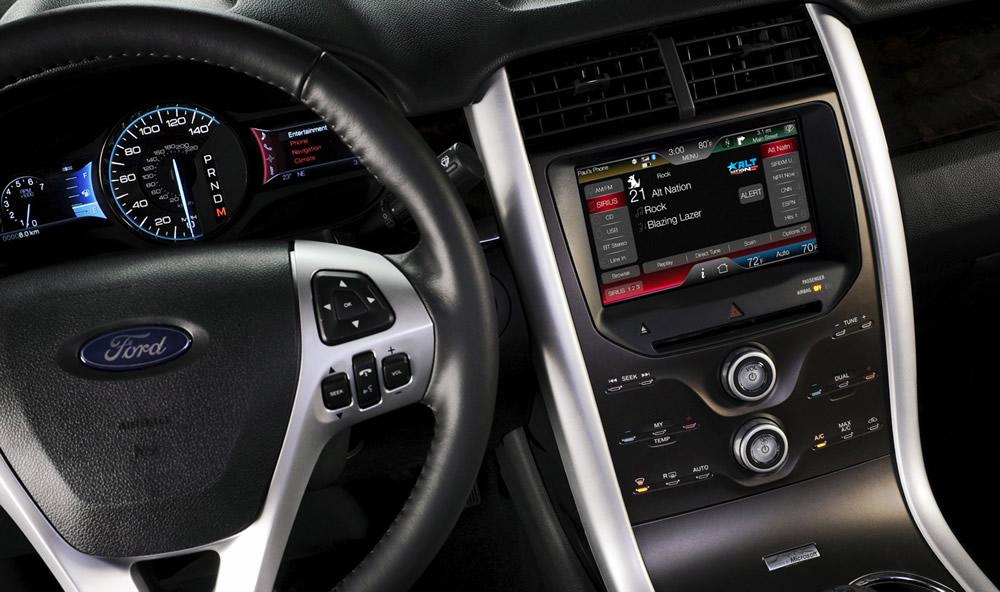
A lot has changed in five years, though. The original Sync only used physical buttons but newer versions (usually paired with Ford’s MyFord Touch and MyLincoln Touch) have touch screens and voice recognition. Like other car companies, Ford has tried to eliminate buttons on its infotainment systems, and to integrate other functions like climate control, audio, and navigation, into one interface that reminds drivers of their tablets and phones.

MyFord Touch also added functions such as music and video streaming, and a voice-activated climate control system that maintains an interior temperature set by the driver. It can also use a smart phone to access the Internet via a USB connection.

The addition of MyFord Touch’s touch screen may not have been a good thing, though. The original Sync got fairly positive reviews, but MyFord Touch has been consistently criticized. Testers have complained that MyFord Touch is too complicated, that the controls don’t respond promptly or are too hard to read, and that the whole package can easily distract drivers.

Ford launched “MyFord Touch 2.0” to correct some of the problems. A software update streamlined some of the menus and tried to make the touch screen and voice recognition controls more responsive.

Consumer Reports said the system “stinks,” and would not wish it on an enemy. Despite the recent upgrades to MyFord Touch’s software, the magazine said its fundamental design was flawed.
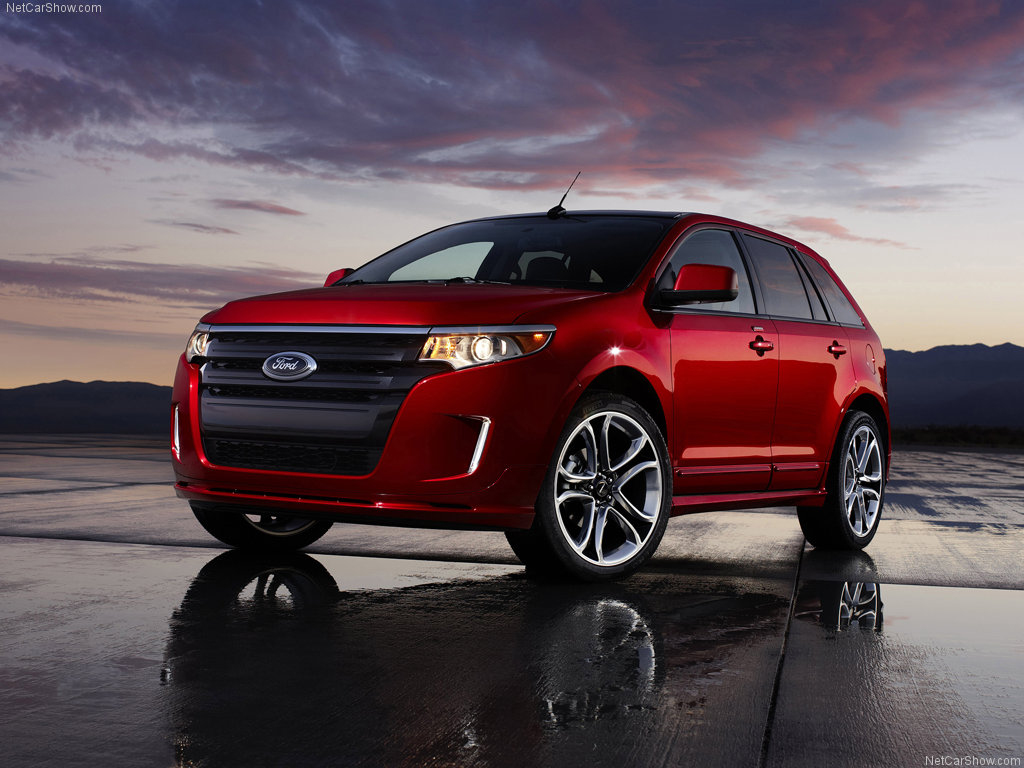
While Ford advertises the combined infotainment system as “Sync with MyFord Touch,” only the basic Sync platform was developed by Microsoft, with Ford adding other functions to it to create MyFord Touch.

Glitches aside, five million sales is an impressive tally for the original Sync. Despite MyFord Touch’s deleterious effect on Ford’s ratings in initial quality surveys and other tests, this infotainment system remains popular.

Sync is compatible with both iOS and Android, and is available on most 2013 Ford and Lincoln models.


Source : digitaltrends[dot]com

Oct 10, 2012

How Apple’s Foxconn problem is like Nike’s sweatshop problem, and why the outcome is the same

foxconn workers apple iphone ipad mac

Reminiscent of 1990s Nike, Apple now faces intense criticism for the working conditions of its manufacturing partners. Will customers force a change?

In recent weeks, we’ve heard news of riots and strikes at some Foxconn plants in China that are making Apple products. Earlier in the year, the New York Times ran a massive feature story detailing working conditions at Foxconn, which left readers with the impression that Foxconn’s plants, while not exactly “sweat shops,” reflect the vast and often troubling differences in workplace standards between China and the U.S. While Foxconn workers did reasonably well compared to their peers, they endured brutal hours and dismal living conditions to achieve it. The situation initially made news in the West after a string of suicides at the plants; the unrest at the end of September put Foxconn back in the news cycle – with one major difference. This time around, coverage was a likely to be about how the riots were effecting Apple’s delivery of the iPhone 5 as it was to be about conditions in the factories.

According to a survey by Hunch.com, the typical Apple consumer is a little more affluent than average. They tend to be college educated (67%) and lean more to the left of center politically (58% characterize themselves as liberal). In other words, the kind of people that – if you’ll pardon the generalization – would seem to concern themselves with the working conditions in second and third-world countries.

Apple’s situation with Foxconn brings to mind another large U.S. corporation facing wide-spread criticism brought on by its manufacturing partners: Nike in the 1990s. That scandal erupted after the sneaker and sportswear giant’s growth caused them to rapidly expand their overseas production. It, too, received widespread coverage in the press, including a 60 Minutes feature and cover stories on many of the top news magazines of the day.

Foxconn plant iphone appleAccording to the stories, Nike’s contracted factories were accused of unsafe and exploitative working conditions involving highly toxic carcinogens and child labor. High profile advocacy groups like Team Sweat were created to in response to the reports. Protests at Nike stores became an annual event, and even turned violent at times. The coverage was so suffocating that Nike chairman Phil Knight famously declared in a May 1998 speech to the National Press Club that “the Nike product has become synonymous with slave wages, forced overtime, and arbitrary abuse.”

To date, Apple’s issues with Foxconn haven’t received coverage either of the scale or the intensity that Nike dealt with at the height of the sweatshop scandal. To be fair, there are important differences between the two. The conditions described at the Nike factories 20 years ago were considerably worse, even by Foxconn’s unpleasant standards. And Apple clearly learned some important lessons from how Nike executive dealt with their issues in the media.

It took several years for Nike to present a united front in the face of criticism, where there was originally equivocation and aloofness. More damaging was the company’s repeated insistence that, since the factories in question weren’t owned by Nike, Nike bore no real responsibility for the conditions there. Apple has been far more proactive in investigating working conditions at Foxconn and making demands of their most important production partner.

Tim Cook Foxconn factoryNevertheless, the events of last month prove that there’s far more to be done.

The differences between the two scandals don’t end with the companies, however. We as consumers seem to have changed since the 90s, and not necessarily for the better. There’s a greater understanding these days that the goods we rely so heavily on are produced in – and often at the expense of – people in the developing world. Of course, this happens at our own expense as well, when you consider that the U.S. has lost 28-percent of it high-tech manufacturing jobs in the last decade.

And it seems we’ve made our peace that, because we’re unwilling to effect change with the most powerful tool available to all of us: our wallets. Between 1994 and 1998 – arguably the height of the Nike sweatshop scandal – the company’s sales went from $3.8 billion to $9.6 billion. And Apple? Potential disruptions to the iPhone 5 supply chain notwithstanding, the most valuable company in history grows larger by the day.


Source : digitaltrends[dot]com

Oct 4, 2012

Digital Photography Review sheds light on the iPhone 5 purple haze issue

Ever since the launch of the iPhone 5, the phone has been a victim of abject criticism for various reasons that, thanks to the popularity of the phone, are usually blown way out of proportion than the situation demands.

One of the things that people liked to complain about was the purple haze seen in some of the iPhone 5 camera photos with a bright light source just entering the frame. In their review of the iPhone 5 camera, Digital Photography Review talked about this phenomenon, what could be causing it and how big a deal it really is.

One of the purported reasons for this issue was the presence of sapphire crystal as lens cover on the iPhone 5, which people believed would give the images that purple tint. Digital Photography Review believes that is not the case and indeed, when you compare it to the iPhone 4S images, you will see the same effect, even though the 4S has a simpler glass lens cover.

Digital Photography Review also dismissed blooming, chromatic aberrations and IR sensitivity as possible reasons, as the actual results don’t match the kind of results you’d get if either of these issues were at play. Eventually they zeroed in internal reflections and/or lens flare to be the possible culprit.

So what’s their solution to this problem? Well, as any photographer or camera manual would tell you, don’t point the camera at a bright light while taking a picture and you should be fine. With a bright light source in a corner, your photos would be pretty much ruined anyway, with or without the haze. Also, lens flare is pretty common problem with cameras and not something exclusive to the iPhone. In other words, it’s no big deal.

You can read more about the test and the rest of the review in the link below.


Source : blog[dot]gsmarena[dot]com

Sep 27, 2012

Replacement Google: What if NFL Ran Google and Locked Out the Real Results?

ht replacement google ll 120927 wblog Replacement Google: What if NFL Ran Google and Locked Out the Real Results?

Image credit: Erik Johnson

The NFL has been tackled with criticism for its replacement referees and their inconsistent calls, inspiring a new website that might just illustrate the frustrations of players and fans best.

It’s called Replacement Google and it imagines a digital world in which the NFL has taken over Google and locked out the real results.

Visit http://www.replacementgoogle.com, type in “J.K. Rowling,” and it will return results for an aardvark. Type in “Barack Obama” and you’ll get a lot of information about Dino Bravo. Mitt Romney? Lots about Spiderman.  (The results will vary for different users since it uses a random script for results.) You get the point very quickly: Google’s algorithm has been replaced with one that, well, just doesn’t work the way it should.

“With the lockout, you saw what happens when things don’t work the way they’re supposed to. I started wondering what would happen if other things out there suddenly didn’t work as they have always,” Erik Johnson, the creator of the site, told ABC News. “Replacement Google popped into my mind and I went home on my lunch break and put it together within an hour.”

The site went live on Tuesday afternoon and has had over 350,000 unique visitors since. Not quite the numbers that Google.com gets, but it’s a pretty sizable audience for a site in its first 36 hours. When Johnson isn’t working on his new popular site, he is a webmaster at a development firm in Vermont.

Of course, now that the NFL and its referees have reached an agreement, Replacement Google might seem a bit less relevant, but Johnson says he’s happy it caught the attention of the Internet and of Google. (Google tweeted a link to the site on Wednesday.)

“It’s cool that people have checked it out,” he said. “But I’m really happy about the truce.”


Source : abcnews[dot]go[dot]com

Sep 21, 2012

Google is reportedly ready with the native Google Maps app for iOS

Despite its great look, the Apple Maps app -which replaced Google Maps in iOS 6 – has been subject to some heavy criticism over the past few days. The incomplete coverage and numerous inaccuracies made most users miss the iOS 5 days, when they could actually go places.

However, salvation might be on the horizon, as we got a report saying that Google is already done with the development of an iOS-6 compatible Google Maps app. Earlier rumors that it has already been submitted to Apple for approval were refuted, but that should happen soon enough. We are yet to see if Apple approves the app and allows it to make it into the App Store, but we are hoping for the best.

Meanwhile, if you don’t feel like using the new Maps app, you can always go to the Google Maps mobile website and use the “add to homescreen” button to create a shortcut, which could partially compensate for the lack of a native app. Either that, or hope that Apple focuses all its effort on making its alternative better than it currently is.


Source : blog[dot]gsmarena[dot]com