Pages

Showing posts with label google. Show all posts

Nov 20, 2012

Nexus 7 shipments projected to reach 5 million by the end of 2012

Shipments of Google's Nexus 7 tablet could reach five million by the year's end, according to component suppliers.
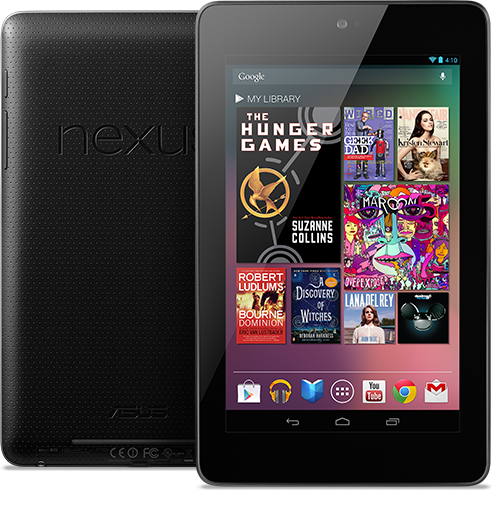
Shipments of the Nexus 7 tablet for 2012 could be higher than the Google had originally expected – in fact, it may even double Google’s initial predictions.

At the end of this year’s second quarter, the search engine giant expected to ship 2.5 million Nexus 7 units for 2012 in total. Now, however, Taiwan players in Google’s supply chain are saying that the shipment volume could reach 5 million units based on the number of orders released, according to DigiTimes.

Shipments typically peak around October or November to meet end-of-the-year demand, but sources have told DigiTimes that Nexus 7 shipments are expected to stay strong throughout November and December. To be exact, these unnamed sources in Google’s Taiwanese supply chain expect Nexus 7 shipments to remain in the range of seven hundred thousand and one million units throughout these two months.

Following the success of its 16GB Nexus 7 ($200) and its 32GB Nexus 7 ($250), Google released another version of its seven-inch tablet just one week ago. On Nov. 13, alongside its brand new Nexus 4 and Nexus 10 devices, Google announced that a 3G-enabled edition of its 32GB Nexus 7 will be available for $300. AT&T has already sold out of this new Nexus 7 model following its launch, though no sales numbers were revealed.

The 7-inch slate has been gaining momentum since it was released back in July. Google has been relatively tight-lipped about the tablet’s sales, but its hardware partner ASUS spilled some sales secrets to the Wall Street Journal at the end of October. The Nexus 7 is reportedly coming close to selling one million units per month, which is just about double the rate of its sales at launch.

However, while Google may be seeing unexpected growth in the sales of its Nexus 7, the tablet will be facing impeding competition this holiday season. Apple’s iPad Mini and fourth generation iPad, which launched last month, reached three million in sales in their first few days of availability. While Google is projected to hit five million, Apple tablets have likely already surpassed this.


Source : digitaltrends[dot]com

Nov 19, 2012

Google strikes deal with European music publishers to add 5.5 million tracks in 35 countries

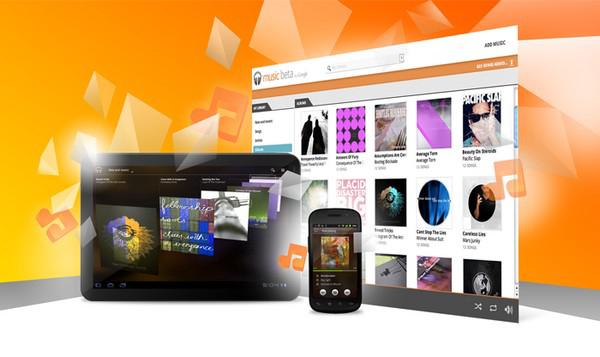
google music

Google has inked a music licensing deal with Armonia that will enable users to play 5.5 million tracks on Google Music in 35 European countries.

Google Music is about to get a much-needed boost to its catalog thanks to a new deal with overseas rights holders. The Associated Press reports that the platform inked a licensing deal with European music publishers and artists that will add an additional 5.5 million tracks spanning 35 countries throughout Europe.

Typically, music licensing deals are secured on a country-by-country basis, as has been the case with Amazon and iTunes, but by working with Armonia, a major European music publishing group that represents licensing organizations based out of France, Italy, and Spain, Google has obtained the rights to stream music in 35 more countries in one fell swoop. The royalty and financial parts of the deal were “in line with industry standards involving Google rivals like Amazon and iTunes,” says SACEM spokesperson Catherine Kerr-Vignale.

The deal will enable Google Music users in these 35 countries to sync their albums and music to their Google Music library that can hold up to 20,000 songs. It also grants its European users the opportunity to purchase music from what we can tell include mainstream artists, considering that music from Lady Gaga and Rihanna are among the types of tracks that have been named in the deal.

The announcement comes after Google Music unveiled its free scan and match feature that finds the music on your computer and uploads it to the Google Music platform. Normally, users of Amazon and iTunes are charged an annual fee of $25 for the same feature and the extra storage.

The deal will be critical in expanding its services internationally to remain competitive and in particular to stave off rumors that circulated in March suggesting that Google Music was bleeding users consistently on a weekly basis and “not living up to expectations.” Some music label executives at the time were voicing their concerns that Google was shuttering the doors of its Google Music project.

Google Music’s main struggle can be traced back to its contention with the major music labels. The labels are wary of partnering with the platform because they see Google Search as a path toward illegal downloading, which it undeniably is, and want the company to block these sites completely or at least do more to thwart music pirating — and they’re holding out on a deal until Google appeases them. And for all its work partnering with indie labels and artists, the relatively empty library remains a problem. While Google Music does have partnerships with Universal and Sony, it’s becoming more and more important to net all four labels in order to compete with the likes of iTunes and streaming services like Pandora and Spotify. 

Perhaps this new deal will make it a more viable option overseas, although it seems like Google Music faces an uphill battle in general. 


Source : digitaltrends[dot]com

Google Takes on Tiny Doogle

ht doogle nt 121119 wblog Google Takes on Tiny Doogle

doogle.co.za

Search engine giant Google is threatening a lawsuit against a tiny South African website named Doogle.

The legal fight may threaten the existence of the company, but has been a short term boon for Doogle, creating so much traffic for the site that it crashed last week. Andries Maree Van Der Merwe, 23, said the free job search site he launched two years ago to help unemployed people in his country find work had more than a million hits last Wednesday.

The Doogle site features the Os as eyes and includes the phrase “Doogle it.”

“That’s more hits than in the entire first year.  I can’t believe the site has gone international,” said Van Der Merwe. He is so encouraged by the show of interest to persevere in a potential legal battle to save his business and domain name, www.doogle.co.za.

Van Der Merwe said he received a letter last month from attorneys at Google threatening to sue him for copyright infringement because his name and logo have similarities to the popular search engine’s.  One South African newspaper columnist declared Google had crossed the line by “persecuting small companies just because their name sounds vaguely similar.”  Van Der Merwe’s story was soon went viral.

“I’m not giving up my name. Doogle is who I am. It’s my business. I registered the company and legally acquired the domain,” said Van Der Merwe.

He said after dropping out of high school and teaching himself to use computers while scraping by on a meager income selling newspapers, he started the company on a computer he bought from a pawn shop.  Since then he has begun to do software development and web site creation for other businesses, but he says his dream is for Doogle to become a successful enterprise.  He has expanded the site beyond employment posting to include vehicle, realty and other classified listings.

“I am going all the way to court if Google wants to go to court, but I hope there’s a better way to solve this,” said Van Der Merwe.

Van Der Merwe says his attorney has replied to Google’s letter denying the claims and offering to put a notice on his site distancing itself from Google.

A Google spokesperson told the Guardian newspaper she could not comment on individual cases, but said the company is “passionate about protecting the reputation of our brand.”


Source : abcnews[dot]go[dot]com

Google Nexus 4 drop test shows how good that Gorilla Glass protection actually is

The Google Nexus 4 is the latest smartphone to star in a drop test, falling hard from at least five feet on pavement.

The phone was dropped twice and managed to survive the first one with minor scratches. As for the second one…

Well, here’s the video itself, I won’t spoil the ending.

So it looks like the front glass on the Google Nexus 4 is tougher than the rear one. And it’s good that the phone looked fully functional even after its second hard fall.


Source : blog[dot]gsmarena[dot]com

Google kills Christmas (and all of December) with Android 4.2 bug

Google Android 4.2 bug kills Christmas

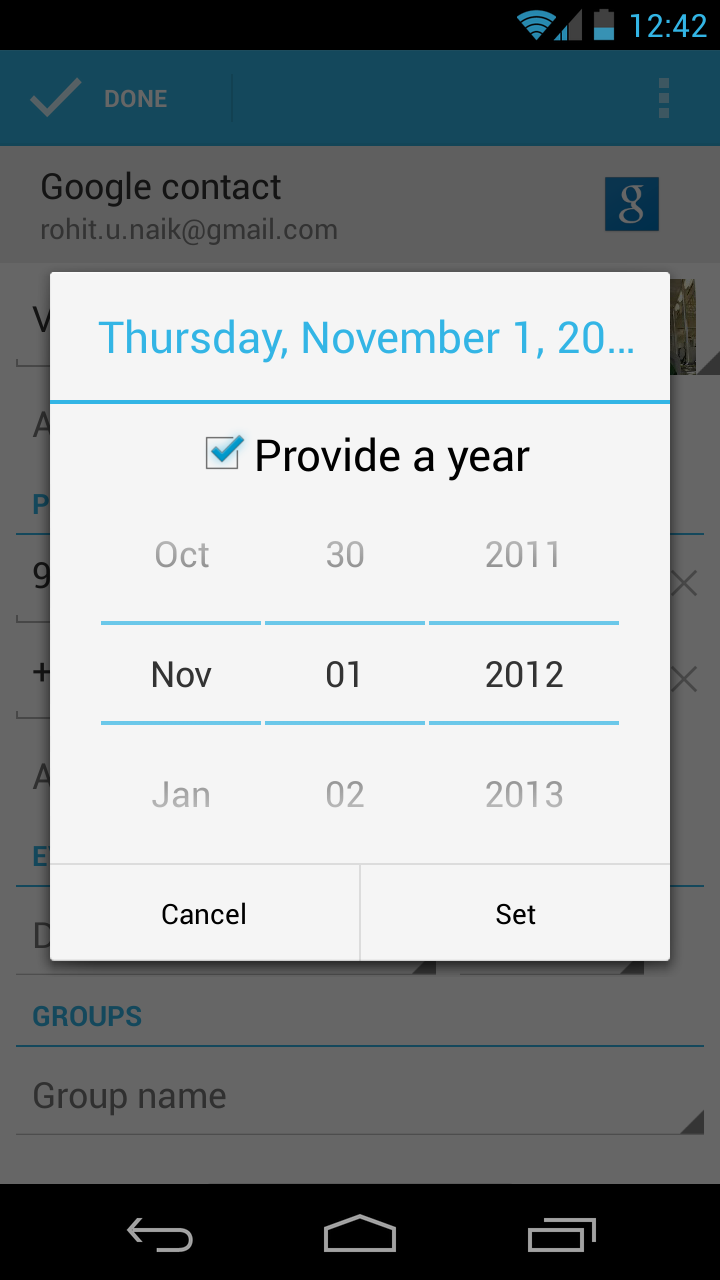
A bug in Google's Android 4.2 (Jelly Bean) mobile operating system has caused the entire month of December to disappear. But fear not: Google has recognized the issue, which we hope means a fix will arrive soon.

Sorry, kids, Christmas is cancelled this year – at least, that’s what Google’s Android 4.2 (Jelly Bean) mobile operating system is telling users. As first reported by AndroidPolice on Saturday, Google accidentally left out the entire month of December in its most recent Android update. Fortunately for users, a fix is likely coming soon. (We hope.)

Christmas Android bug

The absence of December in the Jelly Bean calendar is especially disruptive to the People (contacts) app, since birthdays, reminders, or any other notes related to the month of December cannot be added (since December does not currently exist). The flaw comes built in to the new Nexus 4 and Nexus 10 devices, as well as new or upgraded versions of the Nexus 7 tablet and Galaxy Nexus smartphones.

The no-December flaw was first noted in an Android bug-tracker forum on November 14. It has since been confirmed by a number of users from around the world. But it wasn’t until Saturday, November 17, that Google acknowledged that December 2012 was missing from Jelly Bean.

All said, this is a relatively minor bug – more a source of mild annoyance than catastrophic mayhem. (If, on the other hand, Apple had left out December in iOS, there would surely be nothing short of Hell to pay for the Cupertino giant.) Alas, Google’s roll-out-fix-later modus operandi has likely saved it from too much wrath, if not a dose of embarrassment.

Still, Google has yet to comment on when a fix is due. But we would guess that an update will arrive before December does.

Image via Jeff Cameron Collingwood/Shutterstock


Source : digitaltrends[dot]com

Nov 14, 2012

That was fast: Google already launches Android 4.2 update to fix Google Voice bug

Google has already released an update for Android 4.2 that fixes bugs with Google Voice.

Android 4.2 may be Google’s newest mobile operating system update, but new doesn’t always mean perfect. The latest iteration of Jelly Bean has reportedly caused issues with Google Voice, but the search giant has already issued a fix.

Within 24 hours of its release, Google launched an update for the operating system that fixed inaccuracies with Google Voice. The app has experienced problems ever since the fresh, treat-themed upgrade launched alongside Google’s new Nexus 4 handset and Nexus 10 tablet. Some complaints said that the bug would Force Close a text message if you tried to add a new contact at the same time. This text messaging glitch appears to be the most significant issue, but the update is believed to address any and all compatibility problems between Android 4.2 and Google Voice.

Luckily, the majority of Android users have probably never even encountered this inconvenience. Android 4.2 is only currently available for the Samsung Galaxy Nexus and the LG Nexus 4, which means that the bug has only affected a small number of Android users. The updated operating system will also ship with the Nexus 10 tablet that debuted on Tuesday and almost instantly sold out in the U.S. and UK within minutes (though we don’t know how many sales it took to sell out).

Android 4.2, initially believed to be called Key Lime Pie, represents the next major software upgrade for Android devices. Google introduced the previous edition of Jelly Bean, Android 4.1, at its I/O conference in June along with its Nexus 7 tablet. The search engine giant emphasized the “buttery smooth” interface that users would experience with Jelly Bean, and its new iteration promises the same.

The update boasts new features such as the ability to open multiple windows and apps simultaneously and Android Beam integration. This is Google’s term for its Near-Field Communication (NFC) capability, which lets users share photos, YouTube videos and other content by touching Android devices back-to-back. One of the most noteworthy additions is the new Photo Sphere camera, which takes snapshots in various directions and stitches them together to form one big picture.

While this may seem exciting, it could take a while for the update to completely roll out. Google recently announced that the Nexus S and Motorola Xoom will not be getting Android 4.2, and data collected by the company shows that Android 4.1 is still barely present on most devices.


Source : digitaltrends[dot]com
Google Reaches for the Stars, Takes You to Outer Space in Your Browser

ht star system tk 121114 wblog Google Reaches for the Stars, Takes You to Outer Space in Your Browser

Image Credit: Google

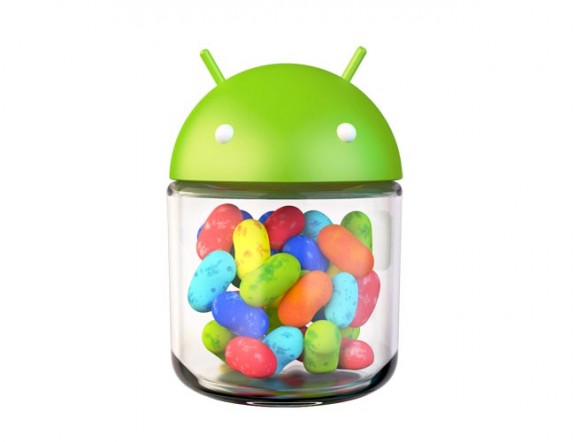
You ready to space out? Literally? Google’s got just the trick, and no, it’s not another Doodle.

The company’s creative lab has put together a new project called 100,000 Stars. Dubbed an “experiment,” the search-engine giant has plotted 100,000 starts in an interactive map of outer space. Using imagery and data from NASA, the European Space Agency and other sources together with the Chrome browser’s support for advanced web technologies (HTML 5, WebGL and CSS3D), the team was able to put together a beautiful site, which lets you pan and zoom around the stars closest to the sun. Zoom in on the stars, and you will see their names and more from Wikipedia, including just how hot it is with a color index map.

Of course, Google decided to focus only on 100,000 stars, not the billions out there. “As you explore this experiment, we hope you share our wonder for how large the galaxy really is. It’s incredible to think that this mist of 100,000 measurable stars is a tiny fraction of the sextillions of stars in the broader universe,” Google’s Aaron Koblin said in a post on the company’s Chrome blog.

The imagery is really stunning, but Google emphasizes that it’s an artist’s rendition. It shouldn’t be seen as a scientific document, and the music by Sam Hulick, who composed tracks for video games, makes that pretty obvious.

With that, we’ll let you get out of here and go check it out yourselves here.


Source : abcnews[dot]go[dot]com

Vuzix M100 Smart Glasses coming next year to challenge Google’s Project Glass

Vuzix M110 Smart Glasses

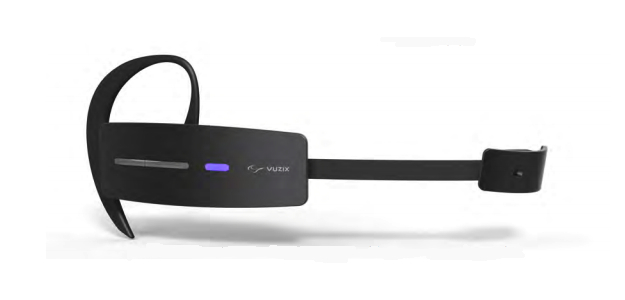
Vuzix will be demonstrating its M100 Smart Glasses at CES 2013. A rival to Google's Project Glass, the M100 has the ability to use its own apps thanks to its Android OS, and is expected to go on sale in the middle of next year.

Google’s Project Glass has hogged the headlines over the past six months when it comes to augmented reality spectacles, but there are other companies who’re working on similar devices, one of which is Vuzix. Vuzix has been busy perfecting augmented reality lens technology for a while, and its latest toy is the M100 Smart Glasses, prototypes of which will be on display during CES 2013.

Vuzix describes the M100 as an “intelligent hands-free display for smartphones,” but it’s a little more complex than that name suggests, as the M100 has its own 1GHz processor and Android 4.0 operating system, so it will run its own apps. Corresponding versions of these apps are loaded onto your smartphone, which connects to the glasses using Bluetooth.

Well, we call the M100 “glasses,” but it’s really a single stem with the lens mounted onto a Bluetooth headset style earpiece. This projects a 16:9, 240 x 400 pixel color image in front of your eye, which can contain everything from basic web content, email, video, GPS information and anything related to apps the two devices share. A camera can shoot 720p video and capture stills, and the M100 has 4GB of flash memory as standard. Other handy features include an accelerometer, a compass and Wi-Fi.

The extensive feature list means there’s plenty of opportunity for developers to build exciting apps for the Smart Glasses. During a recent interview, Vuzix President, Paul Travers, spoke positively about developers producing apps made especially for the M100, saying an SDK will be available in December and a selection of apps will be ready at launch, but exactly which ones has yet to be decided.

Working prototypes of Vuzix’s Smart Glasses will be on display at CES 2013, and it’s hoped the final versions will be ready to go on sale by mid-2013. The price? Travers told CNet the M100 would cost less than $500.

Google’s Project Glass isn’t expected to be available to the public before 2014, with only the Explorer Edition developer units coming in 2013.


Source : digitaltrends[dot]com

Nov 10, 2012

Google and ASUS provide money back for 16GB Nexus 7 buyers in the US

If you bought a 16GB Nexus 7 in the US 15 days after it received a price drop, you are in luck. According to Google’s Price Protection policy, if you purchased the 16GB model 15 days after the price cut was announced, that is on October 14, then Google will refund the price difference to you ($50). Unfortunately, no such offer is available to those who purchased the 8GB model.

Meanwhile, ASUS also has its own scheme going on for buyers in Europe who purchased the tablet before October 29. If you are one of the eligible buyers, you will get a €30 (or ₤25 in the UK) voucher, that you can use on ASUS’s online store. ASUS hasn’t mentioned any particular model, so it is apparently available on both the 8GB and 16GB variants.


Source : blog[dot]gsmarena[dot]com

Nov 9, 2012

Google blocked in China?

Google has apparently fallen afoul of Chinese authorities, with the site and related services seemingly being blocked in their entirety across China as of today.

Google is, apparently, no longer available in China.

What seems to be happening, somewhat surprisingly, is that Chinese authorities are blocking Google’s search engine and other services, including Gmail, Maps and cloud document storage, bringing to a head a conflict that has been brewing since 2009. The blockage was initially noticed by Google, with its Transparency Report website logging a suspicious drop in web traffic in China earlier today. According to Google, the sudden drop was so significant that it was initially believed that something had perhaps gone wrong technically, but a spokesperson told reporters that “we’ve checked and there’s nothing wrong on our end.”

According to Greatfire.org, a site that tracks Internet activity and access in the region, Google and affiliated sites and services have been blocked by authorities, with attempts to reach Google-related sites being re-routed to different sites located in Korea. A spokeswoman for the Chinese consulate in New York, however, told Bloomberg Businessweek that she had not been informed of any such move, and referred all future inquiries to Beijing, where offices were closed due to time zone differences and all attempts to get confirmation went unanswered.

This isn’t the first time that Google services have been blocked by the Chinese authorities; the company’s YouTube has actually been entirely unavailable since 2009 following conflicts over content, and other services have been taken on- and offline on irregular bases in recent years. Two years ago, Google moved its Chinese search engine facilities to Hong Kong after a disagreement with authorities around cyber-attacks that may have originated in China.

Google actually addressed the problems with occasional outages of service in a blog post on the Official Google Search Blog earlier this year, writing that “over the past couple years, we’ve had a lot of feedback that Google Search from mainland China can be inconsistent and unreliable,” and noting that after investigating the complaints, “we’ve noticed that these interruptions are closely correlated with searches into a particular subset of queries.” The response at the time was to add a new feature that would warn users if a particular search was likely to trigger censorship action by Internet watchdogs, something that undoubtedly did little to please Chinese authorities.

This latest, and seemingly blanket, blockage of Google services happens just as Chinese authorities convene the 18th Chinese Communist Party Congress, a grand meeting that occurs once ever decade and started on Thursday of this week, with more than 2,000 Communist party delegates from across China meeting in Beijing with a mission to appoint a new generation of leaders. Whether or not the timing is a coincidence or some particular attempt to crackdown on what are deemed subversive online behavior during this time remains to be seen.


Source : digitaltrends[dot]com
7 Google Android Apps to Protect Your Phone from Virus

Google Android is one of the most popular operating systems in the mobile world. As an open source platform it allows others to modify the system files and develop applications. Unfortunately this can result in security threats to the very device that stores all your personal information. Protecting your personal data is easy with one of these free securities and antivirus applications offered for Android.


Antivirus Free
The Antivirus Free application will protect your phone from any malicious apps and viruses by discovering new apps installed on your system and cross-referencing them with a database. The app will request certain permissions which all for an easy installation and function.

Avast! Mobile Security
This application is a fully featured antivirus and anti-theft security application. The avast! application has an automatic virus scans and alerts for infected URL’s. In addition, if your phone is rooted you can add a firewall, control anti-theft features with remote SMS commands.

AVG Antivirus free

The AVG Antivirus is a free security application that protects your smartphones and tablets in real-time, from any viruses, malware and spyware or online corruption. In addition, this app has a task killer, phone locator, app lock and real-time scanner.

Dr.Web Antivirus Light 
This application will not effect your mobile phone operating system performance or reduce the batter life. Dr. Web Antivirus Light uses a distinctive process for discovering new virus families based on previous threats which reduce the size of the virus database.

Lookout Security & Antivirus
On a daily and weekly basis the Lookout application will scan your mobile phone for viruses. In addition, Lookout will scan the root folder of your mobile phone and solve any other problems relating to holes in security.


NetQin Mobile Security & Antivirus
The NetQin application identifies new applications installed and check a database for malicious apps. The functions and use are practical and user-friendly. In addition, there is an anti-theft feature which will allows you to track your robbed phone through Google Maps.

Zoner Antivirus Free
The Zoner Antivirus application provides protection against trojans, worms, spyware, adware, malware and viruses. In addition, the application offers theft protection which enables you to control remotely your device through SMS messages.

It could be devastating if your mobile phone is lost, stolen, or compromised by a virus. It is free and easy to protect all your information stored in your Google Android with one of these antivirus applications.

Tags: Anti-theft Security, Antivirus Free, Automatic Virus Scans, Avast! Mobile Security, Dr.Web Antivirus Light, Google Android Apps, Lookout Security & Antivirus, Mobile Phone Operating System Performance, NetQin Mobile Security & Antivirus, Security Holes, Trojan Worms, Zoner Antivirus Free

Source : techtalkafrica[dot]com

Google TVs in the UK, France and Germany will all welcome the Google Play store this month

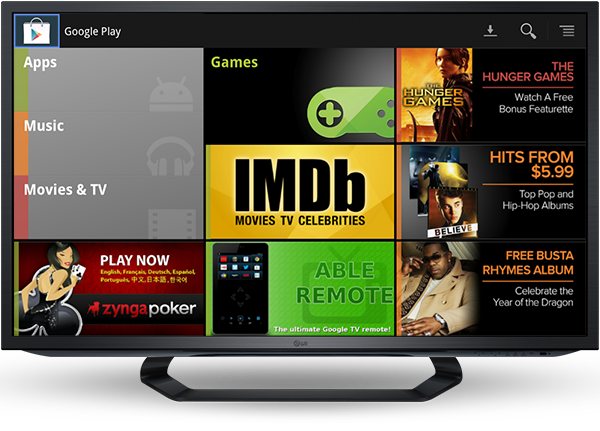
google play on google tv

Google has announced it is expanding the reach of its Google Play store on Google TV boxes, with the UK, France and Germany all gaining access to movies and music later this month.

Google TV has been around for a few years, but didn’t make it to Europe until mid-2011. Last month, Google added Google Play support to its set-top boxes, and thankfully it hasn’t taken another year for them to provide the same service elsewhere in the world, as today, Google has announced that it will be opening up Google Play for Google TV boxes in the UK, Germany and France on November 13.

With Google Play available on Google TV, access will be granted to the music and movie stores, but it has yet to be confirmed whether TV shows will be included. It’s also unclear how many studios and content providers have signed agreements with Google and for which countries, so expect them all to vary when it goes live. Finally, there’s no information on pricing for renting or buying content for Google TV either.

Initially, Google added Canada and Australia to its list of lucky new countries, but these have since been removed with an apology, and a promise that more locations will be added soon. Whether this was a mistake, or the result of some last minute legal wrangling, isn’t known. However, if it’s the latter, then they may appear again sooner rather than later.

If the news that Google Play is coming to Google TV in your home country has inspired you to seek out a box, your choice is slim, with Sony’s NSZ-GS7 being one of the only official, current options. It’s yours for £160 through Amazon in the UK. By contrast, Apple TV, the closest competitor to Google TV is a mere £75, and provides access to iTunes and its extensive collection of movies, music and television shows.

The November 13 release date will be a busy one for Google, as it’s the same day the new Nexus 4 smartphone and Nexus 10 tablet go on sale too.


Source : digitaltrends[dot]com

Nov 7, 2012

How To Increase Your Alexa Ranking

The Alexa rank for a website can be considered second in importance to Google page rank. This means that you not only need to optimize your site for Google, but for Alexa as well. Increasing rankings is an important focus for blogs, as this ranking shows the reputation and status of a blog. Various options can be used to increase your Alexa ranking.

The Alexa ranking for your site is based on a variety of factors such as traffic. This rank is updated on a daily basis and the lower the number signifies a higher ranking. However, they only count traffic that is passing through their system. This is done by placing an Alexa widget on your site by the installation of a toolbar.
How To Claim Your Site
Go to Alexa and create an account. You will be sent an email to complete the process. Log into the site and view the Site Tools tab. Scroll to the bottom of the page and click the Claim Your Site link. This is a way for you to edit your site’s information on Alexa. You have the choice of an Intro option or to pay for a subscription.

Custom Alexa Toolbar
Log into your Alexa account and scroll to the bottom of the page. Click on the link for Create a Custom Toolbar under the Alexa Tools for Site Owners heading. This will take you to the Alexa Toolbar Creator Page. This is a free service that you can use to create your own branded toolbar. One-click access to the information on your site is available for social network features. Promote the toolbar on your website to allow visitors to install it on their own web browser.

Alexa Site Widgets
Scroll to the bottom of the main page when your first log into your Alexa account. Click on the link for Alexa Site Widgets. These are used to display the Traffic Rank for your site. These widgets can also be used to count hits to your site that will improve your site’s Alexa rank. You have the option to include a site stats button, a traffic rank button, and a traffic graph. A small piece of code will need to be added to your site to enable the widget.

Watch the video below to see Building a Custom Toolbar in less than 3 minutes with Alexa Tool creator

The Alexa Toolbar Creator from Alexa Internet on Vimeo.

Reviews on Alexa
Encourage the visitors to your site to leave a positive review on Alexa. Place a link to your site that will take visitors to your Alexa listing where they can leave a review.

Link Building
Post links to your site on other blogs and online directories. This is a good way to promote and market your site to attract visitors. Concentrate your link placement on specialty blogs and sites that a visitor is likely to use.

Build Traffic
Ask your friends and family to visit your website and install the Alexa toolbar. Make sure that you have friends and family members disable the toolbar when performing search on Google. This will provide a boost to blogs and other sites that can decrease your Alexa ranking, this technique will help you to boost alexa but that does not necessarily mean you are getting the traffic.

Tags: Alexa Rank, Alexa Ranking, Increasing Page Rank, Page Rank, Page Rank Increase

Source : techtalkafrica[dot]com

Top Google+ ShortCuts for Better Experience

Google+ is a growing entity that has people busy writing userscripts and Firefox and Chrome add-ons so that they can tweak layouts, add the necessary new tools and change the overall feel and look of the social network. Even though the Google+ interface is solid, the user can have a lot of fun including some great add-ons and tricks to make it easier and more fun to use.

Google+Ultimate is a Chrome add-on that can totally change the look and use of Google+ by placing the status bar at the page top and a sidebar on the left that contains friends and circles available for chatting with both float elements that stay in place as the user scrolls down the page.

Google+Tweaks is another Chrome add-on that exists as a userscript for Firefox user with Greasemonkey installed. Here are 10 reasons why Google+ is gaining so much momentum as it has already crossed over 10 million users. This list includes extensions that are useful and will improve the users networking experience on Google+. These have been chosen from the perspective of a user, even though there are many other extensions.

1. The Chrome Web Store: The extension is a surplus which adds Google+ to pop up windows. With this clever device, you do not have to open the browser to comment or view on any posts.

2. Start G+: It will help the user to share articles written on Facebook or Twitter coming directly from Google+ post interface.

3. Image Sharing: Google+ has Picasa already integrated into it and images can be shared from any albums. A simple extension called Photo Zoom can give the user quick and easy zooming for photos within Google+ Stream. All the user has to do is hover above the image and Photo Zoom will load the picture enlarged.

4. G+ Extended: Shortcuts called keyboard shortcuts are handy and help with improving productivity. This extension provides extra keyboard shortcuts which makes better use of Google+

5. Hiding Wanted Comments: This is where Comments Toggle comes into play. There might be an extended list of comments that may not be interested to the viewer. Comments Toggles will conceal the comments and they can only be viewed by togging from the interface.

6. Google Plus Usability Boost: The extension will add some CSS styling to Google+ interface. It does so by taking each post, grouping them in segments along with comments.

7. Social and Share Buttons: When finding articles on Google+ they can be shared on other social networks by using the Share+ Social Buttons for Google+.

8. Notification Count: This is an extension showing new notifications that have been received on Google+. It can be found on the top navigation bar. The user does not even need to open the Google+ account. When the notification button is clicked, it will actually take the user to the account.

9. Google+ Ultimate: Ported from a userstyle, this extension can remove elements from Google+ accounts when viewed on Chrome.

10. Google+ Helper: All posts on Google+ will receive two links through this extension. One link is to tweet a post while the other is used to translate. Google translate helps the user easily update in other languages.

Tags: Google, Google Plus, Google Plus Shortcuts, Google+ Shortcuts

Source : techtalkafrica[dot]com

Browsing with Chrome now gets you longer battery life

The latest stable release of the popular Chrome for Windows browser from Google now has full GPU acceleration enabled for video decoding.

Dedicated graphics chips draw considerably less power than CPUs when watching videos, which means that your laptop will last that much longer.

In Google’s own tests, with GPU video acceleration enabled the battery lasted 25% longer when watching 1080p videos on YouTube.

Another update brought by this release is a quicker way to access permissions for any website you visit with Chrome. Instead of having to dig through a settings menu for the permissions of a particular website, simply clicking on the new padlock icon in the address bar will give you access to all the permissions available for the current website you’re visiting.

If you have Chrome already, then the update should roll out to you automatically. Otherwise, Chrome for Windows can be found here.


Source : blog[dot]gsmarena[dot]com

At $229 the 32GB Nexus 7 from RadioShack is a steal

The Nexus 7 deals keep getting better and better since Google announced the pricedrop of the 16GB model and introduced the 32GB version. Now, for a limited time, RadioShack is offering the 32GB Nexus 7 for the incredibly sounding $229.

To take advantage of the deal, use the coupon code “RMN20″. It’ll grant you a $20 discount for products costing $125 and up. And to make the deal even better, there’s free ground shipping (for US only).

So, if you’re a US resident and are still hesitant which compact tablet to go for, this discounted Nexus 7 might have just convinced you to go the Google way.


Source : blog[dot]gsmarena[dot]com

Nov 6, 2012

Google updates search engine results page

Google has done some minor modifications to their SERP (search engine results page). The new design mostly involves rearranging the navigation controls around.

As you can see from the screenshot above, the navigation controls, which previously could be found on the side, have now been moved up top. This works fine for usual web search but poses new problems for image search.

Earlier when you made an image search on Google, you would see options for image size, image type, etc. on the sidebar and you could quickly click them. In the new layout, these additional options are hidden inside a drop down menu called Search tools. Opening it reveals other options, such as Any time, Any size, Any color, etc., so you then have to click on those to access the submenus. So essentially your one click process has now turned into a three click process.

Moving the navigation controls up top has freed up space on the side. The image view fills it with image results, so you now have images spanning the entire width of your browser window. Web searches, however, just show blank white space on the side, which looks remarkably like Bing now.


Source : blog[dot]gsmarena[dot]com

Nov 5, 2012

Hotmail no more: Gmail is now the world’s most used email service

Pity poor Hotmail, finally ousted from worldwide email service control by Google's Gmail after eight years of competition.

Sorry, Microsoft: The rein of Hotmail is finally over, with the long-lived email service finally being knocked off of the top spot when it comes to the most-used email service on the Internet last month by Google’s Gmail offering.

Originally launched on July 4 1996 as one of the first web-based email services – Its launch was tied to American Independence Day, as the service promoted itself as offering users “freedom” from ISP-based email and email addresses -  Hotmail was purchased a year later by Microsoft for an estimated $400 million, and rebranded as MSN Hotmail (Later becoming “Windows Live Hotmail” in 2006/2007). Despite becoming the butt of many online jokes for its ubiquitous quality and age, Hotmail has been continually revised, upgraded and refined by Microsoft, with the company even going so far as to introduce an “all-new” update a year ago that mimicked many of the features that won users over to Google.

That, sadly, wasn’t enough to allow the service to maintain user dominance. According to a ComScore report for October – first made public by GigaOm – Gmail usage finally rose above that of Hotmail last month worldwide. This isn’t the first time that this shift has been reported; Google quietly boasted about it happening way back in June of this year, in the middle of a blog post about cloud computing when it announced that it had “more than 425 million active users globally.” However, ComScore disagreed with that number more than a little, claiming at the time that it only had 289 million users active worldwide. ComScore Vice President Andrew Lipsman explained the discrepancy by saying that “there are going to be some users that are left out” of its calculations, as it only tracks home and business use, meaning that Internet access via smartphone or other mobile device, or Internet cafe access, would be missing from their figures (Google, when asked about the difference in estimates, commented that it doesn’t comment on third-party numbers).

Now, however, it appears to be official: Gmail is the king of web-based email services even by third-party metrics. This, apparently, is down to a fall in email provider numbers overall, with Gmail’s simply seeing less attrition than either Hotmail or Yahoo and coming out stronger as a result (It’s perhaps worth noting that Microsoft introduced Outlook.com as its Hotmail replacement in July; I wonder whether adding Outlook and Hotmail users together for October would provide Microsoft with overall control of the market?). 

It’s less of a contest when it comes to American email service use, and more of a surprise who wins that particular battle: Yahoo, which has 40.8 percent of the US market, compared with Gmail’s 36.7 percent, or to put that in real numbers, a 7 million user difference between the two (Hotmail languished in far third place, with 18.9 percent of the US market).


Source : digitaltrends[dot]com

Nov 2, 2012

Amazon released Cloud Drive Photos app for Android with 5GB of free storage

Amazon has just launched the Cloud Drive Photos app in the Google Play Store. It’s free and can be installed on any device running Android 2.3.3 Gingerbread or higher.

With this app you can easily upload photos from your Android devices and computers to the Amazon cloud. You can also easily share those photos to various social services, via email, etc.

Amazon gives you 5GB of free storage for your photos.

Unfortunately, the app doesn’t offer automatic camera upload along the lines of Dropbox. Hopefully a future update will see to it.

You can get the app right here.


Source : blog[dot]gsmarena[dot]com

Leaked screenshots show Google Wallet is getting a physical Google Wallet Card

google wallet card

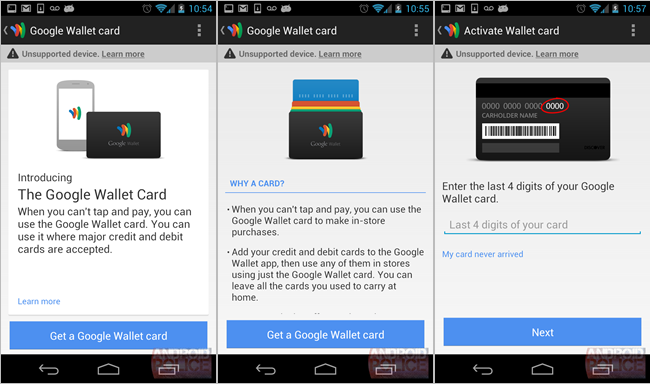
Leaked screenshots of an update to Google's Wallet App that hasn't been pushed yet shows evidence that a physical Google Wallet Card will be made available for instances where you can't make purchases with your NFC-enabled Android phone.

Digital wallet services are flooding the market, despite the many barriers between them and consumers pockets. Apparently, Google is trying to alleviate some of this existing friction with a tangible solution. Android Police received an anonymous tip and series of screenshots showing off a Google Wallet app promoting a physical Google Wallet card. According to the screenshots, the Google Wallet Card will be a physical credit card used in lieu of the multiple credit cards you have in your physical wallet.

The screenshots might have been taken by someone who had early access to an updated Google Wallet app, and it shows off a leaked informational page explaining the advantages of a Google Wallet Card. The cards are likely intended for brick-and-mortar shops that haven’t adopted NFC reading terminals or even iPad-based solutions. 

The card is supposed to bridge the gap between the new and old payment systems we’re stuck in. On one hand it’s a credit card like any other, but it digitally stores all of your existing cards so you can leave the multiple pieces of plastic at home. Users will defer to the Google Wallet app to indicate which credit card stored on the physical Google Wallet Card they want to swipe.

There are a few advantages to this system. For instance, if you lose your wallet, you’re not forced to cancel all your cards. In fact, “you only need to cancel your Google Wallet Card (not every card in your wallet).” You’ll also probably be able to request a new Google Card with the press of a button in the Google Wallet app. Some bonus security measures appear to include 24/7 fraud monitoring, and the ability to remotely disable your card at any time.

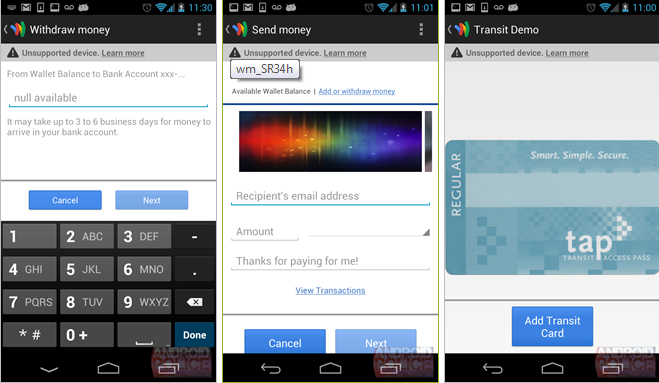
google wallet withdrawing money

The second part of the leak introduces withdrawing money or sending money to a “Wallet Balance,” which seems to be a debt-like account where you can store, send, or spend money. It may suggest being able to soon use the Google Wallet Card as a debit card itself, independent of the stored credit cards. Finally, the screen shot shows evidence of the ability to add a transit card, like a New York City Metro Card for instance.

Of course until Google gets back to us we’re merely speculating, but the screenshots are incredibly telling: Google is aggressively entering this market and competing with the likes of Square and even more so Apple Passbook.


Source : digitaltrends[dot]com