Pages

Showing posts with label debut. Show all posts

Nov 7, 2012

Ford sells five-millionth Sync-equipped vehicle

Ford-Sync

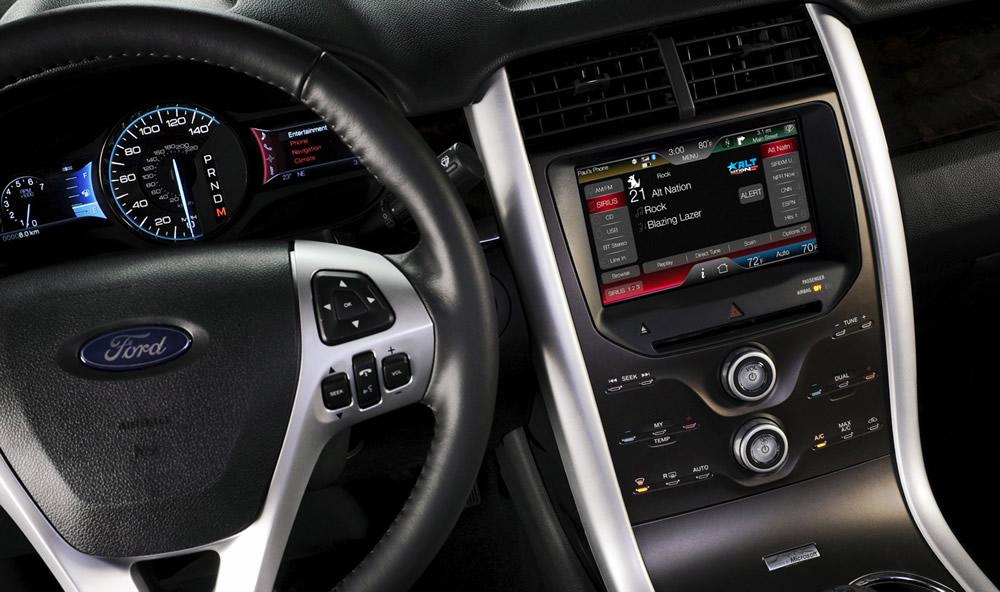
Despite some criticism over complicated controls, Ford's Sync infotainment systems is selling well five years after its debut.

It’s been five years since Ford and Microsoft launched the Sync in-car infotainment system and, despite getting its share of criticism, the system has made it into five million Ford and Lincoln vehicles.

Sync debuted at the Consumer Electronics Show (CES) in 2007, and one was one of the first systems to allow drivers to sync (get it) their smart phones and other devices with their car’s systems. It allows drivers to make hands-free phone calls, read text messages, and give turn-by-turn directions, even on cars that don’t have a built-in navigation system.

A lot has changed in five years, though. The original Sync only used physical buttons but newer versions (usually paired with Ford’s MyFord Touch and MyLincoln Touch) have touch screens and voice recognition. Like other car companies, Ford has tried to eliminate buttons on its infotainment systems, and to integrate other functions like climate control, audio, and navigation, into one interface that reminds drivers of their tablets and phones.

MyFord Touch also added functions such as music and video streaming, and a voice-activated climate control system that maintains an interior temperature set by the driver. It can also use a smart phone to access the Internet via a USB connection.

The addition of MyFord Touch’s touch screen may not have been a good thing, though. The original Sync got fairly positive reviews, but MyFord Touch has been consistently criticized. Testers have complained that MyFord Touch is too complicated, that the controls don’t respond promptly or are too hard to read, and that the whole package can easily distract drivers.

Ford launched “MyFord Touch 2.0” to correct some of the problems. A software update streamlined some of the menus and tried to make the touch screen and voice recognition controls more responsive.

Consumer Reports said the system “stinks,” and would not wish it on an enemy. Despite the recent upgrades to MyFord Touch’s software, the magazine said its fundamental design was flawed.
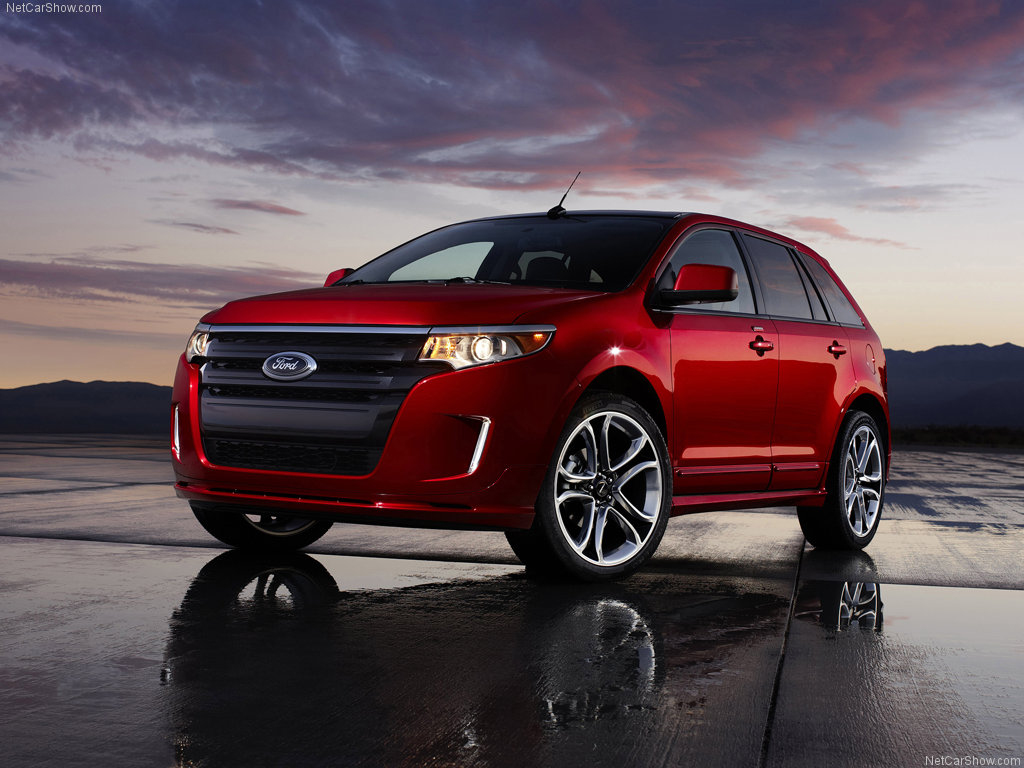
While Ford advertises the combined infotainment system as “Sync with MyFord Touch,” only the basic Sync platform was developed by Microsoft, with Ford adding other functions to it to create MyFord Touch.

Glitches aside, five million sales is an impressive tally for the original Sync. Despite MyFord Touch’s deleterious effect on Ford’s ratings in initial quality surveys and other tests, this infotainment system remains popular.

Sync is compatible with both iOS and Android, and is available on most 2013 Ford and Lincoln models.


Source : digitaltrends[dot]com

Sep 25, 2012

Toyota shows eQ EV, but cancels plans for mass production

Toyota eQ charging

Just days before its Paris Motor Show debut, Toyota shelved plans to mass produce this electric version of the iQ city car. The Japanese company will concentrate on hybrids instead.

Toyota built an electric version of its microscopic iQ city car (known as the Scion iQ in the U.S.), but it won’t put it on sale. Just days before that car, dubbed eQ, was set to debut at the Paris Motor Show, Toyota announced that it is shelving plans for a mass-market electric car.

Toyota first discussed the iQ EV two years ago, saying the electric version of its smallest car would be a mass-produced item, just like Japanese rival Nissan’s Leaf. However, Toyota has changed its plans.

“Two years later, there are many difficulties,” Takeshi Uchiyamada, Toyota’s vice chairman, told Reuters. In expressing his company’s concern over the limits of EV technology, Uchiyamada vocalized what nearly every other carmaker has denied in the name of green credibility.

“The current capabilities of electric vehicles do not meet society’s needs, whether it may be the distance the cars can run, or the costs, or how it takes a long time to charge,” Uchiyamada said.

As an alternative to all-electric vehicles, Toyota will continue to promote hybrid and plug-in hybrid cars. The makers of the Prius hope to have 21 hybrid models on sale by 2015, and eventually have a hybrid version of every car the company makes.

Instead of building an EV for the masses, Toyota will only build a small number of eQs, perhaps 100. This low-volume approach puts the eQ in the same category as the Honda Fit EV and Smart ED.

Toyota’s other electric vehicle, the RAV4 EV, is also a limited-production proposition. Only 2,600 of the electric SUVs will be sold.Toyota eQ rear three-quarter view

The eQ itself may not be ready for prime time anyway. Its 47-kW electric motor can only propel this pint-sized car to 77 mph, with a maximum range of 52 miles. In comparison, the Mitsubishi i-MiEV, the smallest mainstream EV sold in the U.S., can reach 81 mph, has a 62-mile range, and has two more doors.

Since the eQ is so small, Toyota had to trim the size of the battery pack. This means interior space remains the same as in a gasoline iQ, but it also means the eQ needs new seat heaters and a new windshield defogger that draw less current.

On the plus side, the eQ’s downsized battery charges quickly. A full charge from a 230-volt outlet takes three hours, and an 80 percent charge is possible in just 15 minutes with a quick charger.

Toyota’s decision to abort its EV mission may be sudden, but it isn’t too surprising given the company’s success with hybrids. Pure-electric advocates like Nissan and Mitsubishi can’t claim a success like the Prius, so this might be a case of “to each, his own.”

At any rate, buyers will not be missing much. Even in gasoline-powered form, the iQ just isn’t enough car for most people. The same appears to be true for the electric eQ.


Source : digitaltrends[dot]com

Sep 10, 2012

Instagram is officially coming to Windows Phone

nokia instagram iphone app in windows phone

Instagram has confirmed that it will make its Windows Phone debut in the Windows Marketplace later this year.

The number of apps available in Microsoft’s Windows Phone Marketplace dwarfs the number of apps available on the Apple App Store and Google Play. But soon, those of you who took a risk with a Windows phone won’t have to fret that the world’s favorite photo app isn’t available: Instagram is coming to Windows Phones.

The Verge was initially tipped off about the app’s existence when a reader thought he noticed Instagram featured in the Nokia promo video featuring its PureMotion technology. This wouldn’t be the first time Nokia inadvertently unveiled a big new app in a promo video; Nokia’s promo video demonstrating a Lumia charging on a wireless charging dock “accidentally” unveiled Skype’s Windows Phone app in action.

We re-watched the video and could make out what might be the Instagram app during the PureMotion demo, but we couldn’t be sure. The tile in question is displayed toward the end of the promo clip and displays the words “Walk Up,” and is accompanied by a comment and “Like” button that’s uncanny to the silhouette of the talk balloon and heart button that you would find on Instagram. But a secondary explanation could be that the app is actually Vimeo.

Whatever the case may be, The Verge has confirmed that Instagram will be making its way onto Windows Phones.

ZDNet theorized that Facebook’s purchase of Instagram would result in the app coming to Windows Phones, and it looks like they were right. Facebook has a tight-knit relationship with Microsoft, which purchased a stake in Facebook back in 2007. Further, the Federal Trade Commission finally approved the Instagram and Facebook deal after conducting an investigation due to antitrust concerns. Had the deal been blocked by the FTC, Instagram would have walked away with $200 million from Facebook for its troubles.

A consumer’s decision on purchasing a smartphone these days has a lot to do with what the complimenting app store has to offer. Microsoft’s Marketplace has cracked the 100,000 app mark, while Apple has broken 700,000 apps. The Google Play store is hot on Apple’s tail with more than 500,000 apps. That said, the number of apps isn’t everything; a large number of apps go unused simply by getting lost in the mix. In other words, it’s a matter of quality over quantity — how many of the main app titles an app store can get from existing popular apps like Skype, Instagram, and Angry Birds. Of course getting apps like Skype, Instagram, and even Angry Birds onto the Marketplace came courtesy of existing Microsoft relationships. 

Windows Phone users — are you excited for Instagram? Let us know your thoughts in the comments.


Source : digitaltrends[dot]com