Pages

Showing posts with label version. Show all posts

Nov 8, 2012

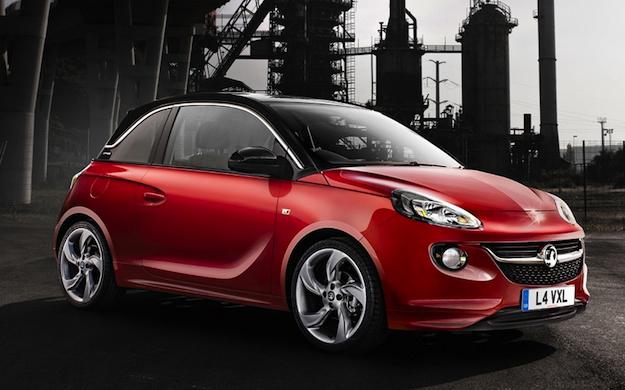
GM cancels electric version of Opel Adam city car

Opel Adam Red

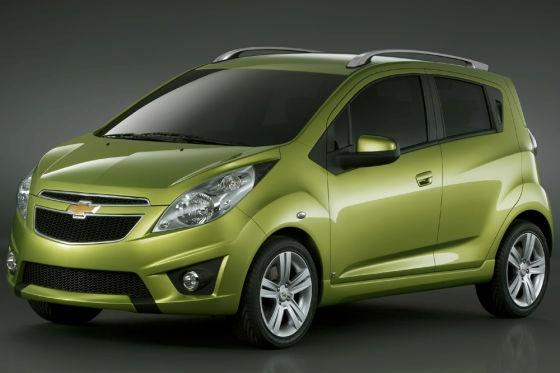
Opel could not make a business case for an electric version of its handsome city car, but buyers wanting a small EV from GM can wait for the 2013 Chevy Spark.

General Motors’ European division is pulling the plug on an all-electric version of the Opel Adam city car. The pint-sized EV made it through the prototype phase, but Opel says its could not make a business case for the car.

“We could not charge the customer the price needed to make it work on the cost side,” Dieter Metz, chief engineer for the Adam, told Automotive News.

The Adam EV was based on the new city car just launched by the German brand. It would have used the same electric powertrain as the upcoming Chevrolet Spark EV, and, like every other Opel, would have been sold in Britain as a Vauxhall.

Conventional versions of the Adam are powered by an assortment of internal combustion engines. These include a 1.2-liter four-cylinder that produces 69 horsepower, and a 1.4-liter with either 86 or 99 hp.

The Adam joins a growing list of EV city cars that never happened, or barely happened. Toyota scrapped plans to mass-produce an electric version of its iQ, called the eQ (and badged Scion iQ EV in the United States), instead deciding to build a small batch of production models.

Fiat will launch a 500 EV at the 2012 Los Angeles auto show in early December but, like the Toyota/Scion, it will most likely be a limited-production item.

With the European car market depressed, and with other companies wavering in their commitment to EVs, GM may have seen the writing on the wall. Its European operations are already struggling, so burdening Opel and Vauxhall with a relatively expensive car that may not sell well might have seemed like too much of a risk.

The Adam EV would have also put two electric city cars in GM’s portfolio. The Spark is sold in Europe, and it is likely that the Spark EV will be as well when it debuts in 2013. Since the Spark is sold worldwide, it gives GM a bigger market and a better chance to make money on the Spark than the Europe-only Adam.

The Adam EV’s cancellation could fuel a larger discussion on the relevance of EVs or the need for EV-friendly infrastructure, but the simple fact is that the Adam is a cheap small car with an engine just big enough to putter around European cities; it was not the ideal platform for an EV.Chevy Spark front three-quarter gray background

Ideally, an electric car should be designed from the ground-up as such. Even when that’s not the case, very small cars do not seem like ideal candidates for EV conversion. Electric hardware adds weight, which can push these tiny, underpowered cars into the realm of impracticality. Cars like the eQ and Mitsubishi i-MiEV will never make the case for EVs because they’re not very appealing as cars.

GM should focus its efforts on refining and promoting the Spark EV, instead of splitting its resources between the Spark and the Adam.


Source : digitaltrends[dot]com

Should Small Businesses Invest in a Mobile Version Website?

Should small business owners invest in a mobile version of their business website or not has been a serious matter of debate for quite a long time. It depends on one’s personal opinions, ideas and perceptions when it comes to investing resources for a mobile version website, but the statistics show a desperate need of such a step.

The need for mobile version websites has been knocking at the door for the past couple of years. However, with the recent advancement in mobile technology and introduction of different tablets and iPads, etc. investing your time and resources in designing a mobile version website has almost become an imperative decision to take.

Why is it Necessary for Small Businesses to Invest in a Mobile Version of their Website?

It is necessary for small businesses to invest in a mobile version of their website, mainly because it is an absolute need of time right now. Moreover, as the time goes on, this need is going to become bigger only. For the past couple of years, using mobile devices for surfing on the internet and doing business have become a growing trend. In the past 2 years, this ratio has been increased by 500%. Moreover, for doing online shopping or business, 43% of the people use their mobile phones and devices. This means that if your website does not have a mobile version, then you lose around 43% of your potential customers – which is too big a number to ignore.

Among all the business types, small businesses need to invest their time and resources in a mobile version of their website as soon as possible. Unlike the big giants, small businesses face fierce competition because of too many sellers and no dominancy of their brand name. Having your mobile website can give you a great edge over your competitors, and you can even knock them out.

This theory can be supported and justified by the following two facts:

1.    Approximately, 93% of all the small businesses do not have a mobile version of their websites. In short, 93% of small business websites cannot be rendered properly on a mobile phone or a mobile device. This means that by having a mobile version of your website, you can jump ahead of those 93% small businesses.
2.    After having a bad mobile experience with a small business website, approximately 40% of consumers shift to their direct consumers for the same type of transaction. This means that you can easily snatch an average of 40% share of customers from your direct competitors if they do not have a good mobile website.
To gain such a high level of customer base, a small business needs to invest tons of money on advertisement and marketing.

Negative Impacts of Not Having a Mobile Compatible Website:

Following are some negative impacts of not having a mobile compatible website for your small business:

•    Approximately 23% of your possible customers are not likely to do business with you if you do not have a properly working mobile website.
•    You will not be exposed to local searches done using mobile devices, and approximately 51% of people use their mobile phones for local searches.
•    You lose approximately 43% of smartphone users who use their smartphones for online shopping.
•    You lose another 57% of your customers, who do not recommend doing business with an organization who does not have a mobile version of their website.

Conclusion:

In short, a mobile version of your website has become an absolute necessity for your survival. Sooner or later, you will have to step up and make a mobile version website. So, why not invest your resources now?

Today’s author, Matt Fuller, works for Website Hotline, and specializes in small business web design.

Tags: Mobile Technology, Mobile Web, Mobile Website

Source : techtalkafrica[dot]com

Nov 7, 2012

Why ‘The Hobbit’ may not look the same in every US cinema

When 'The Hobbit: An Unexpected Journey' is released next month, 400 screens across the US will be showing a technically superior version after Warner Bros announces which theaters will receive the 48 frames per second edition of the movie.

With the release of the first of Peter Jackson’s much-anticipated Hobbit trilogy less than two months away, theater owners are having to come to terms with the fact that, while the movie will be released in a format that allows it to be projected at the increased frame rate of 48 frames per second, that enhanced release will be limited to a small number of theaters in the US, based around two particular theater chains.

Warner Bros. had announced last Spring that it planned to make The Hobbit: An Unexpected Journey available at the increased rate – The traditional frame rate for movie projection is 24 frames per second – to excitement from the theater industry in general. However, that excitement has paled when it was revealed that only 400 screens in the US will be receiving this edition of the movie, with the remainder receiving a 24 frame per second edition (For context, it was estimated that there were 39,580 movie screens in total in the US last year).

The limited release for the advanced format is being described by the studio as “a platform release” that utilizes what is called HFR 3D technology present in mostly Regal and AMC theaters, upsetting many theater owners. According to Michael Karagosian, president of cinema consultancy MKPE Consulting, “Several manufacturers set aside profitable projects to switch resources to supporting HFRs for Hobbit,” without realizing that they wouldn’t have the opportunity to show the improved version. Amongst those manufacturers, Sony Electronics, whose Senior Vice President of Digital Cinema Solutions Gary Johns admits “We put the money into it,” before adding that although “the opportunity for sales is diminished,” he “think[s] we will get there. I’m sure it will be back. We think HFRs is great thing.”

The reason for the limited release, according to Warners, is that it wants the movie to be seen in the best light possible, which means taking time to ensure that the technology has been properly installed. “We want to make sure we do it properly and make sure the public sees it in its best form,” Warners President of Domestic Distribution Dan Fellman is on record as saying. “We are very committed to this. [High frame rates are] the most important change in exhibition, probably since the introduction of sound.”

The idea that the technology may not be up to standards everywhere isn’t an entirely fallacious one, according to Dolby’s Senior Director of Cinema Product Marketing Matt Cuson: “Some technical issues have come up in testing and not all the devices did things as well as Warners had expected,” he said, adding that “It’s a high profile fail, should you fail. Nobody wants that.”

The takeaway for fans interested in seeing Jackson’s latest epic as close to the way the director intended it, perhaps, is that they should pick their theaters carefully when the movie is released December 14. Otherwise, who knows what treats you’ll miss?


Source : digitaltrends[dot]com

At $229 the 32GB Nexus 7 from RadioShack is a steal

The Nexus 7 deals keep getting better and better since Google announced the pricedrop of the 16GB model and introduced the 32GB version. Now, for a limited time, RadioShack is offering the 32GB Nexus 7 for the incredibly sounding $229.

To take advantage of the deal, use the coupon code “RMN20″. It’ll grant you a $20 discount for products costing $125 and up. And to make the deal even better, there’s free ground shipping (for US only).

So, if you’re a US resident and are still hesitant which compact tablet to go for, this discounted Nexus 7 might have just convinced you to go the Google way.


Source : blog[dot]gsmarena[dot]com

1080p Droid DNA tipped for launch at Verizon and HTC’s November 13 event

Droid DNA Leak

HTC and Verizon have sent out invitations to a press event on November 13, where it's rumored to be announcing the Droid DNA, the US version of Japan's J Butterfly smartphone that's equipped with a 5-inch, 1080p display.

Phone fans could be in for a treat next week, as HTC and Verizon have sent out invitations to a press event to be held in New York on November 13, where we could get the first 1080p smartphone/tablet hybrid launched outside Japan.

The invite doesn’t appear to contain any hidden messages, showing nothing more than a lens-flared light on a dark background, but a few leaked press pictures could give us a better idea what these long-time partners are preparing for us.

The images popped up on @evleaks’ Twitter account this week, and show a big-screen, Verizon-branded HTC smartphone that bears a striking resemblance to the HTC J Butterfly.

Quite how such a bizarrely named phone could slip you memory, we’re not sure; but just in case it has, here’s what it’s all about. Announced last month in Japan, the J Butterfly has a 5-inch display with a headline-grabbing 1080p resolution. It seemed inevitable that HTC would let the Butterfly spread its wings at some point, and the Verizon event seems like the ideal launchpad.

Five-inch, full HD touchscreens are set to be the next big thing in the world of the smartphone display, with Sharp’s 1080p IGZO screen making its debut this week, and LG confirming recently that it’s also working on a similar panel.

It’s highly unlikely the J Butterfly name will remain on the US version though, and instead it’s likely to be another “Droid” device, this time the Droid DNA. That name has appeared on both the FCC’s website and a leaked Verizon price list, and has superseded other possible names including the HTC DLX and the HTC X5. Neither of those names are dead though, and could be used for a GSM version of the phone.

If the 5-inch, 1080p screen isn’t enough to get your pulse racing, then should the Droid DNA share the J Butterfly’s other features, it will also have Qualcomm’s high performance, 1.5GHz, quad-core Snapdragon S4 Pro processor, plus Android 4.1 Jelly Bean as its operating system.

Previous leaks have suggested a December 6 release date for the phone, but we’ll have to wait for the November 13 event to confirm this, and all the other details concerning HTC and Verizon’s new device.


Source : digitaltrends[dot]com

Nov 4, 2012

How To Convert Word to PDF

The process of converting a Word file into a PDF file is relatively simple, and it all depends on what version of the Microsoft Word software you are working with. Older versions are set up slightly different from newer versions, and Mac software runs somewhat differently than Windows software.

The first step you need to accomplish this task is determining which version of Word you are working with. Obviously if you are using a Mac computer, then you are using the Mac version of the software. The same with the Windows version. To figure out what version you are using besides its operating platform, simply log in to the software. As it opens up it should give you version information. If it does not or it goes by too quickly to read, you can also get it once you are fully logged in. Just go to the Word tab in the top drop down menu, and select About Word from the menu that opens up. This should have the information you need.

If you are using something like Word 2007, then your word will have has a big round button, known officially as the “Office button”, and unofficially as the “pizza button”.

Word 2010 will have a square blue button, known officially as the “File button”, and unofficially as the “pizza box” as shown below

Once you have determined what version of Word you have, you can go about creating or opening a document that you can save as a PDF. Some Word formatting will not translate properly to other formats, though most crossover to PDF better than they will to .RTF or .TXT. Once your document is ready, make sure to save it as a Word .DOC or .DOCX file, just in case something happens and you need a copy in the future.

After creating and saving your document, it is time to convert it into a PDF. If you have Word for Mac or an older version of Word for Windows, you can try this method. Go to the File tab at the top of the screen. When the menu drops down, select the Print option. In the window that opens up, select PDF as your printer, or the PDF menu if it is separate. This should give you another option to Save as PDF. Once you select this, it will let you create a document name as well as Author and Keywords if you wish. Fill out the information you need and click Save. The document is now a PDF file.

In Word 2007, the conversion process is handled somewhat differently. Instead of choosing the Print option from the File drop down menu, you will click on Save As. In the window that opens up you can select the PDF option. Create a title for the document and adjust any settings as needed. After that click the Publish button. Your document will be converted into PDF. This method does require a Microsoft converter in the Word software. If your software did not come with it or if it is not working properly you may need to download a new version online.

Tags: PDF to Word, PDF2Word, Word to PDF, Word2PDF

Source : techtalkafrica[dot]com

Nov 2, 2012

Forget about iOS 6.0.1, developers have been sent iOS 6.1 for testing

Apple Maps Problem Button

In addition to releasing the bug fixing iOS 6.0.1 update yesterday, Apple has also seeded the first beta version of iOS 6.1 to developers. This is traditionally where new features will be discovered, so does 6.1 hold any great surprises?

Yesterday, Apple released its first revision of iOS 6, entitled iOS 6.0.1, which as you would expect from such a lowly number is all about bug fixes and performance updates. That’s fine, and will come as good news for those affected by bugs it claims to fix, but what about iOS 6.1, where new features could make an appearance?

At the same time as 6.0.1 was released, Apple also seeded the first beta version of iOS 6.1 to its developers. As it’s an early version of the software, exciting new features are thin on the ground, however Apple Maps has seen a small feature update.

Before anyone gets too excited, alterations to Apple Maps’ mapping ability don’t need a software update, with improvements being made to the much-maligned Google Maps replacement being pushed through all the time, without you even knowing.

But what about when you find something missing, broken or just plain wrong? Apple wants to make it much easier to tell them about these issues, and has therefore added a massive button marked “report a problem.” It has been given the upper most position under the flap in Apple Maps, and is considerably larger than any other button on the screen.

Additionally, iOS 6.1 beta gives developers the chance to integrate map searches into their own apps, which will work even when normal language is used in the search phrase, for example entering “books” would return information on book stores in the area. Handy if your unfamiliar with your surroundings, unless Apple Maps is even more clueless than you, that is.

Apart from this, iOS 6 beta 1 changes the style of the music controls on the homescreen — buttons are more widely spaced, and the volume slider is now consistent with the design seen elsewhere in iOS — plus a tweak to Passbook, where developers are advised to provide both date and relevant location information on boarding passes.appl

For now, that’s it on the new features list of iOS 6.1. Anyone wondering where all the good stuff is, don’t forget, it’s only the first beta version, and Apple won’t give everything away immediately. As for its possible release, judging by the gap between iOS 5.1’s first beta in November 2011 and its final release in March 2012 there’s still plenty of time to go before it graces our phones.


Source : digitaltrends[dot]com

Oct 26, 2012

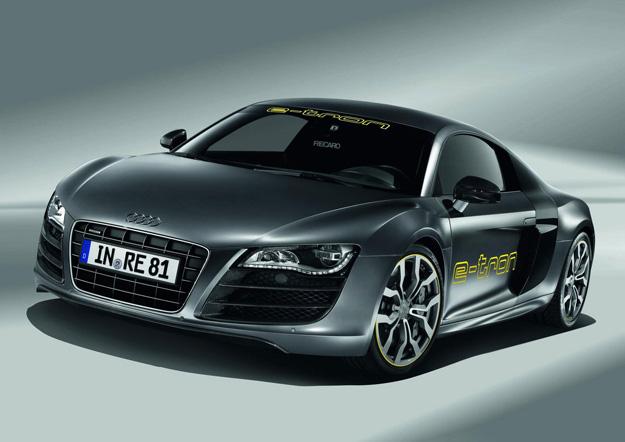
Audi puts R8 e-tron electric supercar on hold

Audi R8 e-tron

Audi has halted work on this electric version of its R8 supercar, and may cancel the project altogether.

Audi has stopped development work on the R8 e-tron, an electric version of its R8 supercar. after more than three years of gestation, the all-electric Audi might never see the light of day.

Audi told Car and Driver that all work on the R8 e-tron has been stopped, and that the whole project is under review. The halt was ordered by Wolfgang Dürheimer, Audi’s new chief of research and development. Dürheimer came to Audi after occupying the CEO’s office at Bentley and Porsche.

Dürheimer’s concerns should sound familiar to any EV enthusiasts. It’s all about the batteries, which are still too expensive and too heavy to justify their relative inability to store electrons.

A normal R8 with a 4.2-liter gasoline V8 weighs 3,605 pounds, while the e-tron weighs 3,924. That added weight is not cancelled out by extra power, either: the V8 generates 430 horsepower, but the e-tron’s two electric motors can only muster 376 hp. Granted, the e-tron does produce 605 pound-feet of torque, compared to the 4.2’s 317 lb-ft.

The e-tron can accelerate from zero to 62 mph (0-100 kph) in 4.6 seconds, and has a 124 mph top speed. The regular R8 matches that time, but will keep accelerating until it reaches 187 mph.

Audi says the e-tron’s 49-kWh battery pack provides a range of 134 miles, but in 2010, a prototype e-tron could barely do three laps of the Le Mans circuit. With the market for supercars already limited, Audi may have realized that the market for a supercar that takes hours to refuel would probably be miniscule.

Range aside, the e-tron does hold the Nürburgring lap record for production-ready electric cars. While the Toyota P002 lapped the ‘Ring in 7:22, much faster than the e-tron’s 8:09, it was not designed to be mass produced. Now that the e-tron is on the chopping block, that distinction may not matter.

Audi has not given up on electric cars, though. The company still plans to lease small batches of electric test vehicles to customers in the United States and Europe to acquire real-world usage data. The non-super e-trons will be based on the A3 (U.S.) and A1 (Europe).

Audi’s crisis of faith echoes that of another major car company: Toyota. The Japanese giant pulled the plug (no pun intended) on an electric version of the Scion iQ, deciding to limit U.S. production to 90 examples for fleet buyers instead.

On the other hand, one of Audi’s biggest rivals, Mercedes-Benz, is betting on a battery-powered future. Mercedes is preparing an electric version of its B-Class compact hatchback and, at the complete opposite end of the spectrum, an electric sports car. The R8 e-tron would have been the perfect rival for Mercedes’ SLS AMG Electric Drive, which boasts 740 hp and a $536,000 price tag.


Source : digitaltrends[dot]com

Guys, Facebook Collections isn’t gone, just under further ‘development’

facebook collections

Facebook Collections may have temporarily disappeared, but a representative says the feature isn't getting shut down. Instead, a mobile version is under development, which isn't possible unless the feature comes off the site entirely first.

Yesterday, TechCrunch first reported that it noticed Facebook Collections, a Pinterest-esque feature where users can group photo collections from Brands, similar to the form of “Liking” something was missing. We reached out to Facebook to confirm that Collections isn’t particularly gone, but is going under further evaluation before the social network can proceed with how to launch the product (if at all).

“Product development on Collections has not stopped,” a Facebook representative tells us. “Instead we have completed our initial test of Collections and are now analyzing the data to inform product development. For many of the product tests we do, we periodically pause the test to assess how to best progress with the product’s rollout.”

The rep goes on to elaborate that Facebook is working on a mobile edition on which Collections was previously not available. “We want to build out the mobile experience as well as make enhancements, which we can’t do unless we remove the functionality from external users.”

If you haven’t noticed Collections, you’re not missing much. It’s basically a way for Facebook to monopolize on good marketing and social networking strategies from other websites so Facebook users don’t need to leave the site to enjoy such features. But with the sudden disappearance of Collections, either the team is trying to develop it into something more original than the Pinterest scheme, or it may eventually realize the feature won’t really work well on Facebook. For one, Facebook isn’t necessarily a go-to marketplace, and while brands use it to promote and tease products, users aren’t exactly buying things off the site like they used to with Facebook Gifts. Still, as a now-public company, it is the social network’s responsibility to monetize as best it can, so perhaps this truly is the beginning of the Facebook commercial market on a consumer level.

There are no words on when we can expect to hear about Facebook Collections again, although the limited initial testing probably means not too many of you have even used the feature. For now, it remains in flux — though one thing is certain: Facebook is hell bent on turning a dime by targeting the elusive social shopping market.


Source : digitaltrends[dot]com

Oct 23, 2012

Apple iPad Mini / ‘Little More to Show You’ Event Live Blog

liveblog apple 640x360 wblog Apple iPad Mini / Little More to Show You Event Live Blog

Image credit: Apple

Today is the day. Or at least we think it is the day that we learn about the smaller version of the iPad from Apple itself. After months of rumors and speculation, Apple executives will take the stage in San Jose to reveal the details about its new, smaller tablet — what’s being called the iPad Mini.

There may be more up Apple’s high-tech sleeve today; rumors are strong that Apple will detail a new 13-inch Macbook Pro with Retina display and a new Mac Mini.

Of course, we will know a lot more starting at 10:00 a.m. PT / 1:00 p.m. ET when the event kicks off at the California Theatre. We will be there, bringing you the details in the live blog below.

Note: The updates in the CoverItLive module below will come through automatically when the event begins; no need to refresh the page. Just keep it locked here!


Source : abcnews[dot]go[dot]com

Dropbox for iOS finally updated to match the iPhone 5 taller screen

Dropbox pushed a much needed update to their iOS app on Apple’s Appstore. The new version not only makes full use of the iPhone 5 taller screen, but also has done away with the previous photo size limitation when printing pics or saving them to the Camera Roll from the app.

The new update bring the application version to 1.5.6.

The biggest change is that it removes the previous limitation where saving a high-resolution image from Dropbox to the Camera Roll would downsize it to the meager 960x638px size.

Unfortunately, as TheVerge reports, while resolution remains intact, the app still compresses the images while downloading, so for now, saving images from the Safari web browser remains one of the easiest workarounds to getting full-size high-res shots to your Camera Roll.


Source : blog[dot]gsmarena[dot]com

Oct 19, 2012

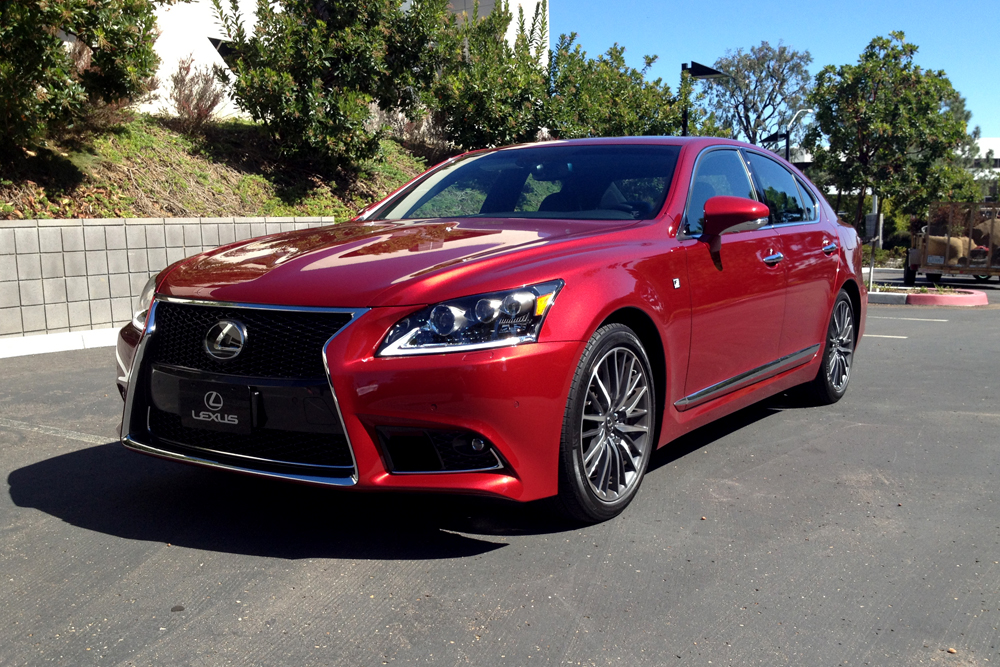
2013 Lexus LS 460 first drive

2013 Lexus LS 460 F Sport front angle first drive

Lexus unveils the latest version of its flagship sedan, featuring a dramatic styling overhaul and a robust list of tech features throughout its cabin.

Up until recently, Lexus had been swimming in dangerous waters. The Japanese luxury brand had become stagnant with its design philosophy, offering up little aesthetic excitement in comparison to some of its rivals, most notably BMW, Audi, and Mercedes. To draw a sports analogy, it seemed Lexus was merely content with becoming the automotive world’s equivalent of former Utah Jazz point guard and NBA Hall of Famer John Stockton: an industrious, hardworking, and unassuming player who was big on performing, but offered little flair or excitement to his approach to the game. While Stockton is regarded as one of the greatest point guards of all time, he was never exactly lighting up the highlight reels.

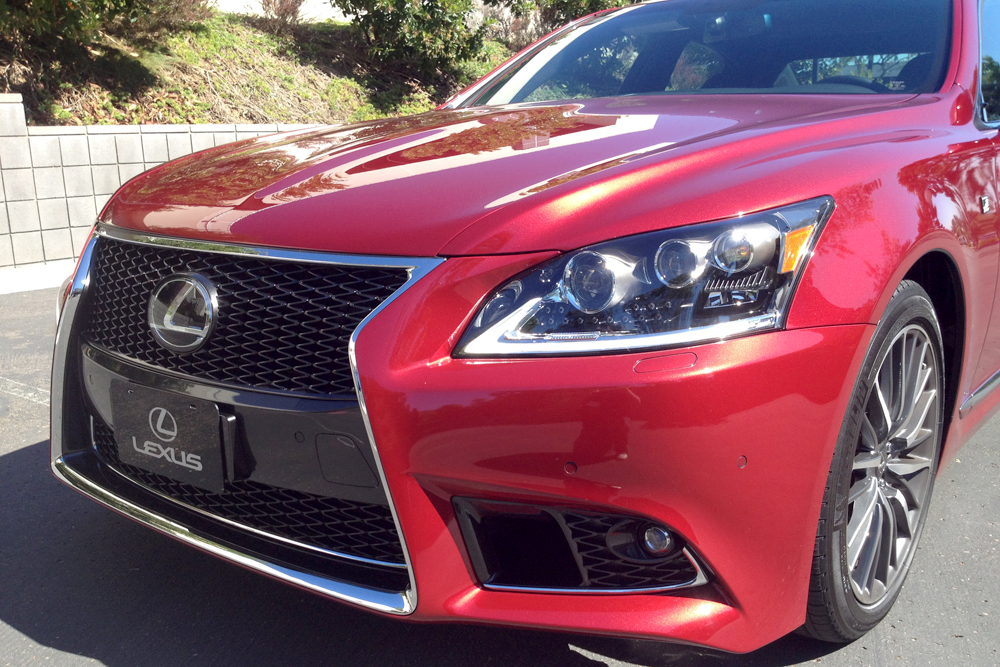
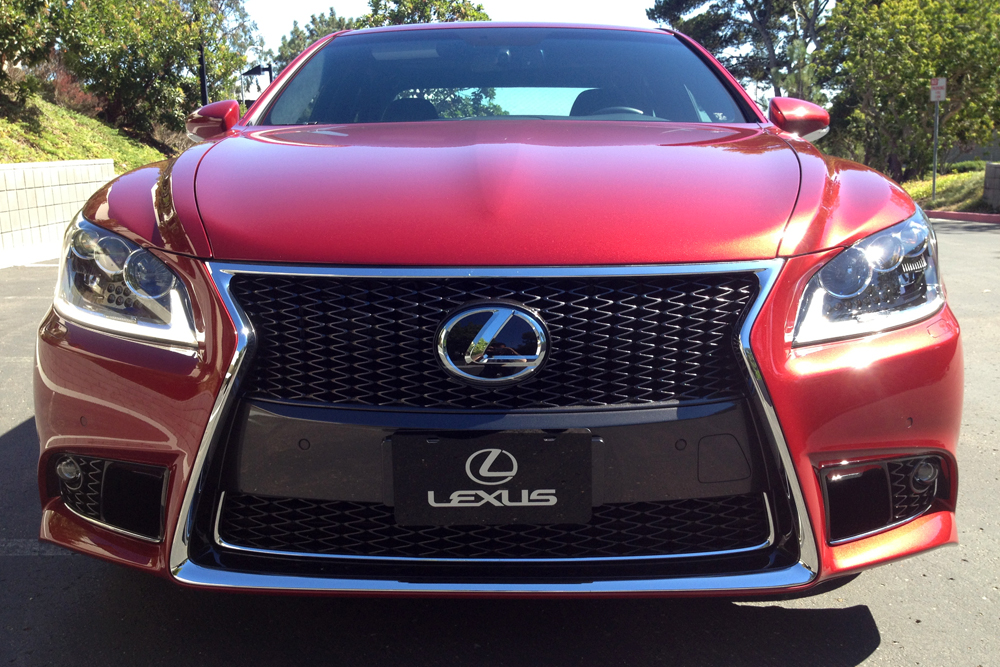
The same could be said for Lexus, although thankfully things are looking much brighter — and more exciting — at camp Lexus these days. It all starts with the company’s new “spindle grille,” which has finally made its way to the flagship LS sedan after having graced the new GS and ES models. But unlike the recent GS and ES models, the new LS lineup, which includes the LS 460, the all-new LS 460 F Sport, and the Earth-friendly hybrid LS 600h L, is more of a refresh of its 2012 predecessors than an entirely new offering. Thankfully, though, this update provides more than enough substance.

We recently had the opportunity to drive the 2013 LS 460 F Sport through the streets of sunny San Diego, California. Here is what we walked, or rather, drove away with.

More powerful than polite

The old maxim states that you should put your best foot forward; in this instance, however, Lexus has opted to put its best face forward, and it all centers on the company’s new grille. Gone is the sterile and sleepy trapezoidal front end adorning previous model years. Instead, Lexus has wisely opted to bring in a degree of uniformity to its models – and it works. BMW has the iconic kidneys, Audi has its dazzling LEDs, and now Lexus has provided itself with an aggressive aesthetic: a bolder, wider front end with a gaping maw that commands attention. The same look has been implemented across the line.

2013 Lexus LS 460 F Sport front left angle 2For the 2013 LS, Lexus also tweaked the front LED headlamps. Gone are the numerous sequential LEDs, replaced by a three-lamp configuration that provides a solid, continuous glow during both day and nighttime driving. It’s a small change, but one that provides just enough significance and visual cadence to Lexus’ flagship sedan.

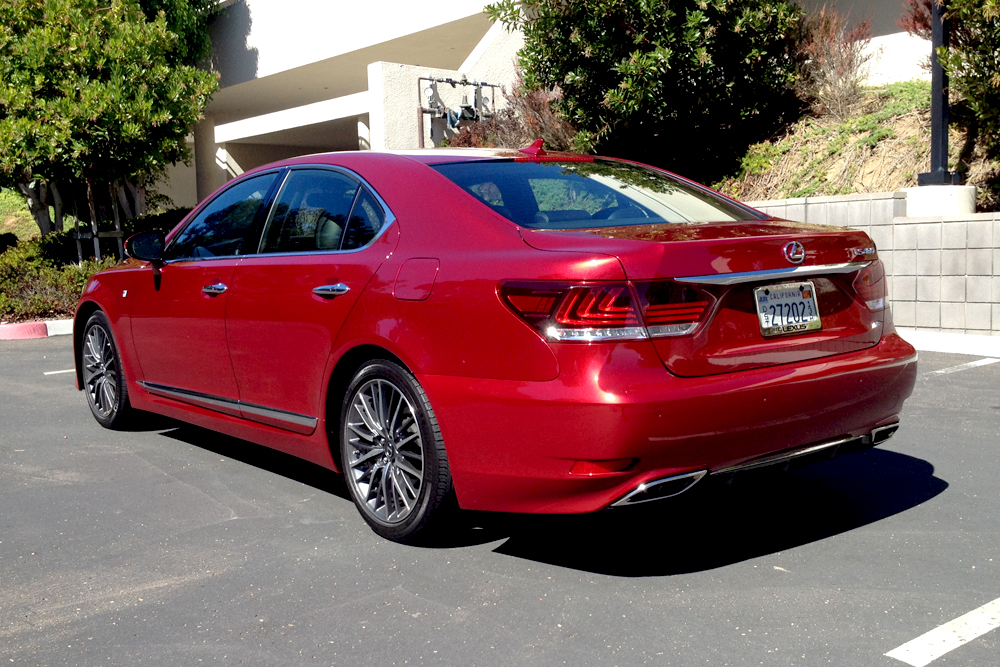
2013 Lexus LS 460 F Sport back right angleEven so, while the majority of 2013 LS’ touch ups are more readily witnessed up front, the tail of the car has received some love and attention from Lexus’ engineers. In keeping with the wider, more aggressive theme, the rear of the vehicle compliments the front’s athletic stance with sleeker LED taillamps and more sharply blended pillars.

It’s the little things

As you can imagine from a premium nameplate like Lexus, the LS 460 doesn’t skimp on luxury. For the 2013 model year, the LS 460 demonstrates its quality with a host of features and appointments that seamlessly blend Japanese craftsmanship with 21st century design. According to Lexus, a great deal of effort went into creating a cabin that was both spacious and luxurious. With our time in the LS 460 we see that this is very much the case. Of course, it’s the little things that add up, like genuine spun aluminum used throughout the cabin, and the gorgeous Shimamoku wood trim found on the steering wheel. Simply put, those looking for well-appointed, full-size luxury sedan would do well to cross shop against a comparable Audi, BMW, or Mercedes-Benz.

The technology of luxury

While we could drone on about bolstered seats and a host of other comfort details, what really had us most excited is the available cabin and safety tech integrated into the 2013 LS. We’ll start with the convenience aspect, though.

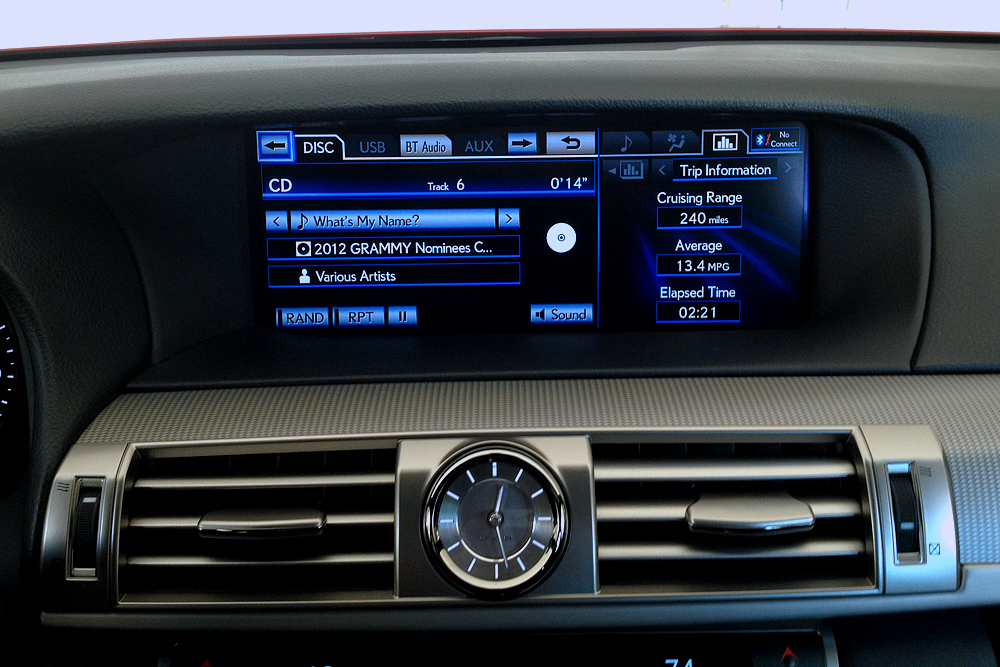
New for 2013 is a 12.3-inch LCD screen located centrally along the dashboard. In addition to displaying the navigation system, the LCD screen displays both phone and stereo interfaces. Its generous real-estate can be partitioned into three separate displays allowing for simultaneous viewing. For example, if you’re in the midst of using the navigation system, you can also see what track is playing on the stereo, or place a phone calls without having to close out one function over the other. This allows for a greater degree of utility and functionality. While bigger isn’t always better, it’s nice to see Lexus make use of the larger screen size in a smarter way.

2013 Lexus LS 460 F Sport GPS test driveSimilar to the interface we encountered in our 2013 Lexus GS 350 review, the 2013 LS utilizes the same mouse-like knob for controlling and navigating the vivid LCD screen, which itself is located on the center console. While touchscreens may be more intuitive, we’re proponents of a more tactile like this, and BMW’s iDrive controller. The responsiveness and ease of dial system over the current crop of touchscreens cannot be ignored.

Also available in the 2013 Lexus LS is an HDD navigation system with 80GB hard drive. In addition to downloading, updating, and transferring map data via a DVD or USB thumb drive, a few new features have made their way into the system. Automatic zooming, true 3D map viewing with city model and landmark graphics, as well as relayed speed limit information are all new for 2013. Lexus also tells us that the voice guidance system has been beefed up for the new model year, including active rerouting guidance as well as dynamic traffic guidance on roads without sufficient information.

2013 Lexus LS 460 F Sport dash musicIntegrating into the navigation system is Lexus’ Enform telematics suite. Here, drivers have the ability to download the corresponding Enform smartphone app and gain access to supported apps via voice commands and Bluetooth. Currently, Enform supports various functions such as internet searches via its Bing app, as well as other applications such as iHeartRadio, Pandora, and OpenTable, among others. We weren’t able to test these functions during our brief drive, but we’ll have a more comprehensive rundown once we fully review the vehicle.

But much more than simply offering superfluous tech features, the 2013 Lexus LS packs three impressive safety technologies drivers are sure to appreciate. First up is Blind Spot Monitoring (BSM). While driving, this tech will alert you tif a vehicle is operating within your blind spot zone. It uses two radars, which are located at both the left and right rear quarters of the vehicle. If you try to shift lanes when they detect a vehicle present, it will will illuminate a mirror indicator to notify you of the potential hazard. If you happen to not being paying attention to the initial warning, BSM takes it a step further by emitting a flashing indicator on the side mirror when engaging your turn signal while a car is drifting in your blind spot.

The 2013 LS also features what Lexus calls its Rear Cross-Traffic Alert (RCTA). While the LS is equipped with a rear backup camera that allows you to see what is directly behind you, RCTA makes use of small microwaves to detect approaching vehicles to either side of you while parked.

Finally, perhaps the most impressive safety tech implementation, and one we are more than happy to have but hope to never have to use, is Lexus’ Advanced Pre-Collision System (A-PCS). Working in conjunction with millimeter-wave radar, front-facing near infrared projectors, and a front-mounted stereo camera, the A-PCS is designed to detect both vehicles and pedestrians and, you guessed it, avoid colliding into them. A-PCS works in conjunction with the vehicle’s advanced obstacle detection system and provides an innovative way of avoiding low-speed collisions, the key word here being low-speed. At speeds of less than 24 miles per hour, and in the event of a potential collision, A-PCS will assess the probability of a collision. If the system anticipates that a collision is indeed imminent, it will seek to warn the driver by emitting both a visual and audible warning. At the same time, A-PCS will automatically engage a number of safety measures, including emergency steering assist, giving the steering a greater response to the driver’s input; stiffening up the air suspension system for greater evasion controls. Last but not least, the A-PCS will apply a Pre-Collision Brake Assist system (PBA) to aid in emergency breaking force.

If all else fails, you fail to take the appropriate counter measures, and if you are traveling 24 mph or less, the A-PCS will automatically engage its breaking system, providing approximately 1G of stopping power. Lexus tells us the system will still kick into effect even when traveling at greater speeds, in order to mitigate potential harm and damage.

Rounding out the safety tech in the 2013 Lexus LS is a Dynamic Radar Cruse Control system, as well as an active lane departure system.

Powertrain: Same, but different

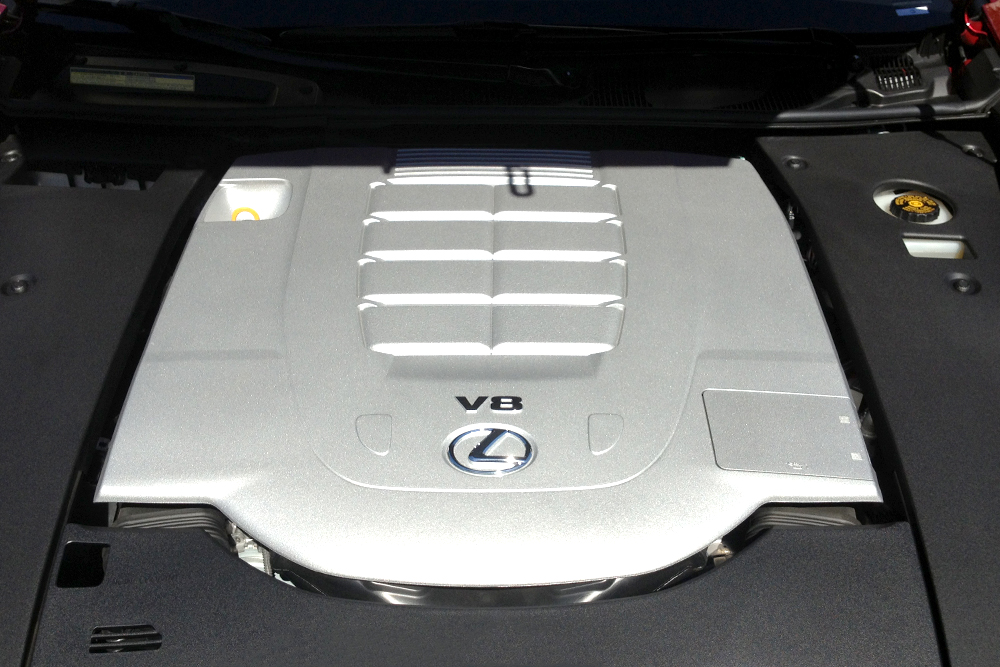
Powertrain options across the 2013 LS remain relatively simple as not much has changed from last year’s models. That means we see the same 4.6-liter V8 — only this year, Lexus has manage to squeeze out six more horsepower, bringing the total to 386 hp and sending 367 pound-feet of torque to the rear wheels via an eight speed automatic transmission. We see those numbers dip in the all-wheel-drive model due to a different exhaust setup, where the 2013 LS produces 359 horsepower and 347 lb-ft of torque.

For drivers just as concerned with style and luxury as they are with helping the environment, Lexus continues to offer its LS 600h L for 2013 model year. Its hybrid drivetrain features a 5.0-liter V8, two electric motors, and a nickel-metal hydride battery pack.

As far as engine efficiency is concerned, the 2WD LS should net 16 mpg in the city, 24 mpg on the highway, and 19 mpg combined, while the AWD LS is estimate to achieve 16/23/19. (Both figures based on using premium fuel.) This is by no means stellar, but not the worst fuel economy numbers we have seen in this class.

2013 Lexus LS 460 F Sport engineWhen it comes to performance, Lexus is looking to kick the LS into high gear. Lexus claims the 2013 LS can dash from 0-60 mph in just 5.4 second with an electronically limited top speed of 130 mph. While we were unable to generate a proper 0-60 time during our ride and drive, it’s clear the latest LS lineup possesses added energy under the hood.

Of course, for those looking for an even livelier experience, Lexus has included the LS F Sport to its 2013 LS lineup. Much like the GS F Sport, this go-fast version of the LS is gifted a veritable amount of tweaks and enhancements such as a Torsen limited-slip differential, Brembo front-brake calipers, 19-inch alloy wheels, and a 10 millimeter lowered adjustable air suspension, among others.

2013 Lexus LS 460 F Sport frontOverall, we really enjoyed our time with the AWD version of the F sport. The tightened air suspension felt comfortable and poised throughout our drive, and the added handling dynamics the F Sport package provides delivered some truly solid road manners. Even though the LS features several driving settings to choose from (Eco, Comfort, Normal, Sport, and Sport+) we never felt much of a difference outside of Eco and Comfort. That’s not to say the LS wasn’t fast or fun, but it never felt as confident or enthralling as we hoped. Still, if you prefer poise over power, the LS delivers without any fuss.

With the LS 460 starting at $71,990, and our LS F Sport north of that figure at $89,310, Lexus’ flagship lineup isn’t exactly cheap. But when compared to full-size luxury sedans from rivals BMW, Mercedes-Benz, and Audi, which can easily run upwards of $100,000, it almost seems a bargain… almost.

The pursuit of perfection continues

If you haven’t already gathered, there is a lot to like about the 2013 LS. The 2013 LS F Sport package we spent time in promising evidence that Lexus is capable of doing away with – if even just partially — its stiff persona and injecting a little more life and personality into its vehicles. We would still like to see Lexus approach the LS in a more radical way, but from a design perspective, the new spindle grill is a fine start. Likewise, techies as well as gearheads will appreciate the robust amount of advanced technology this lux sedan is carrying.

We’d still like to see a little more dynamism under the hood, but for now we’re willing to settle for what the LS has to offer: a buttery smooth ride with a competent, if not a tiny bit underwhelming drivetrain.
Source : digitaltrends[dot]com

Ubuntu 12.10 Quantal Quetzal released

Following their biyearly tradition of releasing major updates to their OS, Canonical has released the newest version of Ubuntu, 12.10 Quantal Quetzal.

Among the chief new features is the ability to set websites as web apps and pin them to the launcher. You can have websites such as Gmail or Facebook pinned to your launcher and then open them just as you would open an application.

The other new feature is the inclusion of online search for your accounts within the Dash. Earlier you could only search for local files within the OS but now you can type any query and Ubuntu will search your online accounts such as Flickr, Google Drive, etc. as long as you log in to them from within the OS.

Lastly, there is a new Preview option for files within the Dash that lets you preview them without having to open the file.

As usual, Ubuntu 12.10 is completely free to download and install and you can get it from the link below.

Here’s a bit of trivia. When the Ubuntu 12.10 was released yesterday, the homepage said ‘Avoid the pain of Windows 8′. Now if you go to the homepage, it says ‘Your wish is our command’. Wonder what made Ubuntu suddenly change their wording.


Source : blog[dot]gsmarena[dot]com

Oct 17, 2012

Toyota Prius Persona Series Special Edition: Is it really that special?

2013 Toyota Prius rear three-quarter view

The Persona Series Special Edition isn't a radical new version of the Prius, but that means buyers will probably gobble it up.

Toyota has been trying to expand the Prius “family” by adding new models like the Prius C and Prius V, as well as the MPGe master Prius plug-in. Each new Prius permutation was meant to make Toyota’s signature product do something different. The latest version, the Prius Persona Series Special Edition, is not a completely new car, but it’s trying to accomplish the same mission as the other Priuses (Prii? Priot?) by being a bit classier.

The key word here is a bit. Like most automotive special editions, the changes that make the Persona are not substantial. On the outside, Toyota added new 17-inch wheels and three unique paint colors: Black Cherry Pearl, Blizzard Pearl, and plain old Black. None of this makes the Prius Persona more efficient or luxurious.

The interior gets SofTex leather seats with red stitching and a SofTex-wrapped steering wheel. The shifter and door panels are trimmed in chrome. That should make this Prius’ interior a little more interesting but, again, the changes aren’t significant enough to make the Persona Special Edition that special.

Nothing in life is free, so the Persona costs $27,890, a noticeable hike from the base Prius Two’s $24,960 base price. However, it’s possible to spend more on a Prius. A fully loaded Prius Five starts at $30,765, and the Prius plug-in starts at $32,760 and a loaded Advanced model costs $40,285.

You know a car has truly arrived when its maker rolls out a special edition. The Prius Persona may just be new paint and leather seats, but Toyota knows that, because it’s a Prius, people will still buy it and at least feel like they got a little something extra. That’s because those buyers will be thinking more about how much they want a Prius than how much they want it to be special.

That should be good enough for Toyota, especially since the company has had trouble producing a truly upmarket purpose-built hybrid. Lexus’ HS 250h sedan (since discontinued) and CT 200h hatchback haven’t been that successful, and there may be a limit to how much people will pay for a regular Prius.

With four distinct models already on sale, the Prius already has plenty going on. Those models may not carry a “special edition” badge, but they should be everything most buyers need from a hybrid.


Source : digitaltrends[dot]com

HTC J Butterfly has our hearts aflutter with it’s high-res screen

HTC rolls out a new version of the HTC J -- the J Butterfly. The handset will be exclusive to Japan, but comes with a screen that will make the world envious. It's 5-inch display comes packed to the brim with 440ppi resolution.

HTC brought its latest creation to Tokyo today, and now we’re wondering how long it takes a butterfly to fly over the Pacific Ocean. The HTC J Butterfly is the new flagship handset from the Taiwanese phone maker and it comes fully equipped with a screen that you just can’t help but to stare at. There’s plenty to see with the 5-inch HD Super LCD 3 display that is ready to run at 1080p — the highest resolution yet for a phone.

The screen isn’t the only attraction on the J Butterfly, the successor to the HTC J. The black-and-red skinned phone will come running Android 4.1 (Jelly Bean). It’s powered by a 1.5GHz Snapdragon quad-core processor and 2GB of RAM and is equipped with a 2020mAh battery that will have its work cut out for it. It’s also loaded with an 8-megapixel camera with a f/2.0 lens. All of this is housed within a thickness of 9.1mm. A quick comparison of the specs makes the J Butterfly most comparable to the One X, the crowd-pleasing offering from HTC released earlier this year.

It’s that screen that puts the J Butterfly in the league of its own, though. The HTC One X came with an impressive Super LCD screen that was worthy of comparison with the best displays on the market. The J Butterfly aims to float above the competition, and may well do so. It’s promising a resolution that reaches 440-pixels per inch (ppi). For comparison purposes, the iPhone 5 sits at 326ppi. I’d hate to be the guy that has to try to pack all those pixels in. That’s how those things work, right?

The J Butterfly will be exclusive to the Japanese market, but that doesn’t mean the Super LCD 3 screen won’t find its way on the front of some U.S.-bound handsets. Until then, we’ll just have to look forward to the day we can wipe the drool off our screen.


Source : digitaltrends[dot]com

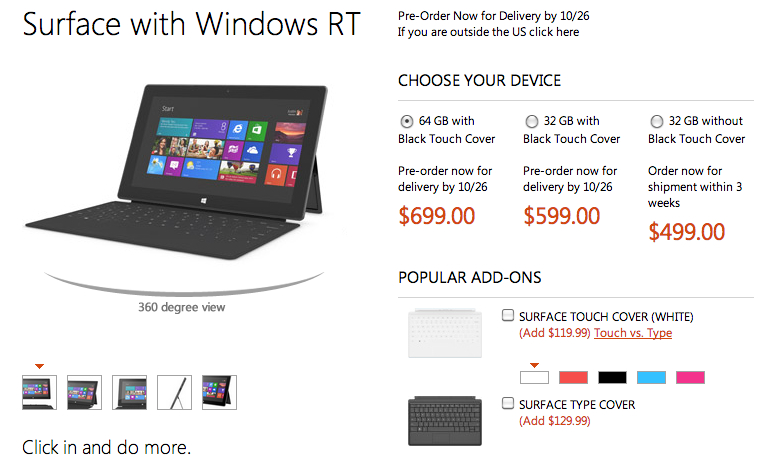
Delivery of cheapest Surface slips to three weeks, Touch Cover rejected by consumers?

Of the various Surface models currently available, it appears the early adopters have been most taken by the cheapest, $499 32GB version. And that's the one without the Touch Cover keyboard, an accessory which Microsoft has been promoting hard since the tablet was first unveiled.

Anyone considering placing an order for the least expensive version of Microsoft’s new Surface tablet (ie. the $499 32GB model running Windows RT that comes without the ultra-thin Touch Cover keyboard) might have to wait as long as three weeks to receive the device, according to its page on the Microsoft Store website. It originally showed October 26 – the day the tablet officially launches – as the delivery date.

The $599 32GB version with the Touch Cover, and the $699 64GB version also with the Touch Cover, are, at the time of writing, still showing a “by October 26” delivery date.

It’s tempting to think there’s been an early rush by consumers for Microsoft’s new tablet, but as noted by Cnet (via Neowin), without knowing exactly how many of the tablets are built, boxed and ready to ship, it’s hard to accurately gauge how much demand there really is for the device at this early stage.

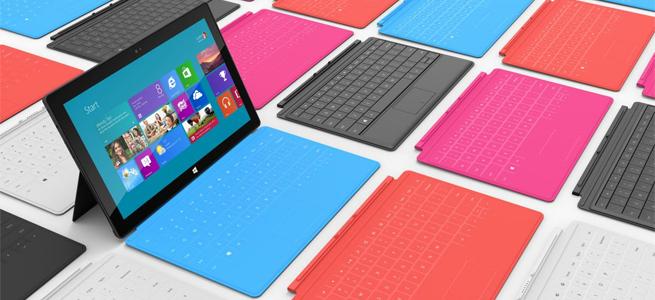
It does appear, however, that the early adopters are ignoring the Touch Cover, opting for just the tablet. If they change their mind at a later date, they can of course pick up a Touch Cover for $119, or a Type Cover, best described as a more conventional keyboard compared to the Touch Cover, for $10 more.

This may be of some concern to Microsoft, which has been making a big deal of its accompanying cover/keyboard since it first unveiled the Surface back in June – indeed, an ad for the new tablet, shown for the first time Monday night, featured the cover/keyboard as much as the tablet.

The Wall Street Journal reported Tuesday that the computer giant has placed orders to manufacture between three and five million Surface tablets from now until the end of this year. But whether Microsoft can persuade people to part with their cash for one of them is what industry watchers are waiting to find out.

One thing’s for certain though – consumers looking to purchase a tablet this holiday season will be spoilt for choice, with big-hitters Microsoft, Apple, Google and Amazon, as well as a slew of other tech companies, all set to battle it out in the coming weeks in what has suddenly become an incredibly busy, as well as crowded, tablet market.


Source : digitaltrends[dot]com

Oct 16, 2012

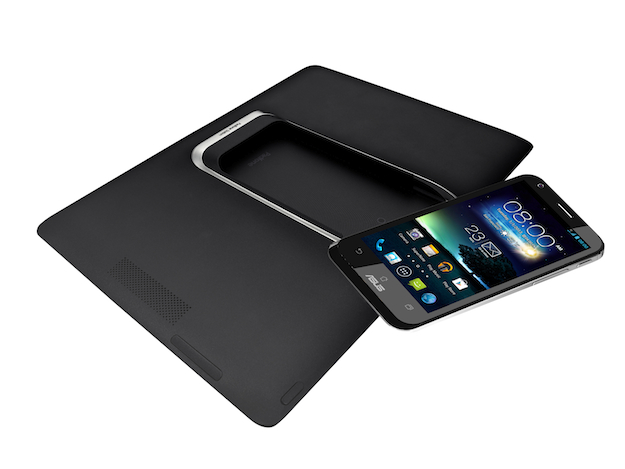
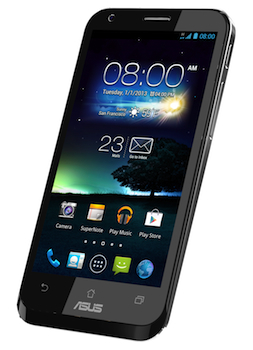
Asus launches the quirky but powerful PadFone 2

Asus Padfone 2

Asus has launched the PadFone 2, a revised version of its quirky original, but still featuring a smartphone that docks with a tablet screen.

Asus has announced the PadFone 2, the follow-up device to its quirky PadFone, which first appeared in 2011. The launch event was an international affair, with two almost simultaneous conferences taking place in Milan and Taipei, which were also streamed to audiences online. It’s fair to say that Asus really wants you to know there’s a new PadFone in town.

Asus is focusing on the PadFone’s intuitive design to sell it this time around, and promoting it to people who may not want the bother of purchasing two separate devices, with two network agreements, but still want the convenience of a smartphone and a tablet at all times.

While the original PadFone had a door on the rear of its tablet dock, in which to hold the smartphone, Asus has replaced this with a slot for the PadFone 2. It’s not only more attractive, but far simpler to quickly connect and disconnect the phone. This is important, as the sharing of content from phone to pad is a big thing on the PadFone 2.

We’re getting ahead of ourselves though, so let’s talk about the hardware. The smartphone has a 4.7-inch Super IPS+ touchscreen, covered with scratch-resistant Gorilla Glass, with a 1280 x 720 pixel resolution and a pixel density of 312ppi. The tablet’s 10.1-inch screen is almost identical, with a 1280 x 800 pixel resolution, but the pixel density is considerably less at 149ppi.

As the tablet is a brainless dock — or Station as Asus calls it — it relies on the smartphone’s processor and power to make it work, so it’s a good thing Asus decided to use Qualcomm’s 1.5GHz, quad-core APQ8064 Snapdragon S4 Pro chip. The phone comes with either 16GB, 32GB or 64GB of internal memory, plus a hefty 2GB of RAM, and a black or white finish.

The PadFone 2 has a 13-megapixel camera with 1080p video recording, a 100-shot burst mode that takes six shots per second and an f2.4 aperture. Because the PadFone 2 sits screen-forward in the back of the tablet, the camera can be used when it’s docked. There’s a separate video call lens above each screen too.

Padfone 2 PhoneStrong battery, high price

Keeping the PadFone 2 up and running is a 2140mAh battery inside the phone, plus a 5000mAh battery inside the tablet. When docked, the tablet recharges the phone, and can do so three times before the battery expires. Asus quoted the phone as providing 16 hours of 3G talktime, but 48 hours when docked along with 27 hours of video playback.

Despite all this technology, Asus has made sure the overall weight hasn’t spiraled out of control, as the phone weighs 135 grams on its own, or 649 grams when mated with the tablet dock. As a comparison, the new iPad weighs 652 grams and the Galaxy Note 10.1 600 grams.

Back to the sharing for a moment. Slotting the phone into the tablet will see certain tasks and apps instantly transfer over to the big screen, with no input needed from the user. This was demonstrated with the gallery, browser and streaming video.

Other features include NFC, LTE connectivity, Wi-Fi Direct, Bluetooth 4.0, plus a speaker system with Asus’ own SonicMaster enhancements, handwriting recognition, dual-language support and an instant translator too.

Asus says the PadFone 2 perfectly embodies what it calls Customer Experience 2.0, as it combines beauty inside and out, plus a great display, audio and performance.

So, you probably want to know how much and when you can get one? If you’re in the USA, it’s almost certainly not going to be this year, as according to Asus, it’s still in discussions with networks. In Europe, release is likely to come between January and March 2013, but there’s hope for a last-minute launch before Christmas too. Asus will release the PadFone 2 in Taiwan at the end of October.

The price? It’s 799 euros for the 32GB model and 899 euros for the 64GB PadFone 2. That’s $1040 and $1175. Those are very big numbers, but take a moment to consider how much a Galaxy S3 and a Galaxy Note 10.1, or an iPhone 5 and new iPad cost together. Do this, and it doesn’t sound so bad.


Source : digitaltrends[dot]com

Oct 12, 2012

Upcoming Gmail 4.2 for Android will brings pinch to zoom and swipe to delete gestures

An upcoming version 4.2 of the Gmail app has been spotted in the wild and has two new features, one of which was right on top of the most requested features for this app.

Yes, v4.2 finally allows you to pinch to zoom within an email. If you’re someone like us who receives a ton of press releases every day or simply mails that are formatted for the big display on desktop computers, you’d know how useful this feature is.

The other new feature is that you can now swipe on a mail to delete it. Once you swipe, you get two options; you can either choose to archive the message instead of permanently deleting it or press the undo button, in case you change your mind.

The update is not rolling out yet but hopefully, will soon. Meanwhile, you can catch a video of the two features in action below, courtesy of Android Police.


Source : blog[dot]gsmarena[dot]com

Madfinger releases Shadowgun: DeadZone beta

Madfinger has released the public beta of Shadowgun: DeadZone, a multiplayer version of the superb Shadowgun currently available on iOS and Android. Shadowgun: DeadZone is currently available for free (until the beta test lasts) and is only available on Android devices running NVIDIA Tegra 3 chipset.

DeadZone is an exclusive, multi-player only version of the standard Shadowgun. You play in similar environments as Shadowgun but you now have multiple characters to choose from and instead of dumb AI enemies you will be against much tougher human ones.

Since the game is in beta, some of the features aren’t working and the performance may not be the best. The game is also operating on a limited number of servers right now. The purpose of this beta test is to try out the game and give feedback to Madfinger, so that they can improve the final version.

If you have a phone or a tablet running Tegra 3, hit the source link to download the game. If you find any issues, report them at deadzone@madfingergames.com.


Source : blog[dot]gsmarena[dot]com

Oct 10, 2012

Google+ app updated on iOS and Android

Google has pushed out a new update for their Google+ app on iOS and Android. One of the key new features in the iOS version is support for the iPhone 5 and iOS 6. Another new feature is Google+ page owners now being able to view, post and comment from the mobile app.

Lastly, you can also edit your posts, save photos to camera roll and search for people and posts on the iPad.

The Android version also gets the ability to let page owners view, post and comment and along with that there is also a new ‘Find People’ option to discover people and topics more easily. There’s also a new homescreen widget. For some reason the Android app stopped loading posts after updating and just says ‘No posts found’ on my device but your mileage may vary. Probably just some temporary bug and should be fixed soon.

You can download the apps from the respective links below.


Source : blog[dot]gsmarena[dot]com