Pages

Showing posts with label plans. Show all posts

Nov 7, 2012

Valve releases Steam for Linux beta

We have reported in the past on Valve’s plans for releasing the Steam client for the Linux platform. Keeping true to that promise, the company has released the first beta that can be installed on systems running Ubuntu 12.04 and above.

To start off, you will be able to play Valve’s highly popular, online multiplayer, free-to-play game Team Fortress 2. If that’s not enough, there are a whole bunch of other games as well, including Amnesia: The Dark Descent, World of Goo, Superbrothers: Sword & Sworcery EP, Serious Sam 3: BFE and many more.

The client is fully featured and also includes the recently released Big Picture mode that is designed for use with a TV and controller.

Valve is currently working on bringing the platform to other Linux distros and bring more games to the service.

In other news, if you have an NVIDIA GPU in your PC, you should also be glad to know that NVIDIA has released a new GeForce R310 drivers for Linux, which promise up to double the performance over the previous drivers.


Source : blog[dot]gsmarena[dot]com

Nov 5, 2012

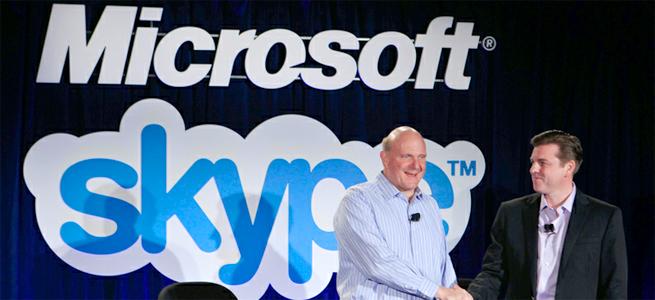
Microsoft killing Windows Live Messenger, will replace it with Skype

Microsoft is reportedly putting Windows Live Messenger to rest, and replacing the messaging client with Skype.

We got a first glimpse of Microsoft’s plans for their $8.5 billion purchase of Skype late last month when Microsoft enabled Facebook, Hotmail, and Windows Live logins through Skype. Now The Verge has caught wind from his sources that Microsoft may be taking this a step further by replacing Windows Live Messenger with Skype altogether.

The announcement that Windows Live Messenger will be put to rest after thirteen years since its founding, first introduced as MSN Messenger in 1999, may come as early as this week. The report adds that Windows Live Messenger’s backend is slowly being integrated into Skype, which means that the only change for existing Windows Live users is that they’ll have to login through Skype’s client.

Skype has already been married into Windows 8 as a default native app to the Microsoft operating system, and Microsoft is free to do with Skype as it wishes — so the decision makes sense. The news of Windows Live Messenger’s retirement however isn’t official just yet and users have yet to be notified of Microsoft’s intentions, so as for the answer to how tightly integrated Skype will be with Microsoft’s products, we’ll have to update you once we hear back from a spokesperson.

Windows Live Messenger has been in use by 300 million users per month in 2010, although we suspect that number has dwindled due to new competition Google Talk and Hangouts, Facebook Messenger, and of course the many mobile messaging apps on the market today. Skype’s CEO, Tony Bates revealed the latest figures show it had 250 million monthly users in May of this year.

Skype has been subject to a number of face lifts as of late. We’ve been content with the majority of the updates, but there have been just a couple of caveats. For instance all of the cross-platform integration means the Skype contact list is consequently flooded with friends, so users are either left to clean up with lists, deal with it, or forego using the new login integrations altogether. 

But the pros outweigh the cons. Messaging Facebook and Live Messenger friends on the Skype client is admittedly a far better experience. Skype acts as a prompt to video call friends you otherwise might not using Facebook. 

Pushing Windows Live Messenger clearly wasn’t in the forefront of Microsoft’s mind with the service since it’s Skype acquisition. With a robust messaging and video calling service like Skype, Microsoft has room to offer more comprehensive monetization strategies, like its conversation ads rolled out in June, as it doubles up Skype’s user base with existing Messenger users.


Source : digitaltrends[dot]com

Oct 15, 2012

Christmas plans: Amazon to hire 50,000 extra workers for the holiday season

amazon

Online retail giant Amazon is set to take on 50,000 temporary workers this holiday season to cope with increased demand.

Amazon is already making plans for the holiday season, announcing its intention to hire 50,000 seasonal workers for its 40 fulfillment centers across the US.

With a year-round full-time staff count of 20,000 at its centers, the large number of extra workers indicate Amazon’s expectation of a bumper Christmas. Alongside orders for its large number of usual items, the e-commerce giant will also be looking forward to a flurry of requests for its new range of Kindle Fire HD tablets, as well as its e-readers, which include the new Paperwhite device.

Referring to the company’s hiring plans in a statement, Dave Clark, Amazon’s vice president of global customer fulfillment, said, “We’re hiring at our sites across the US for talented individuals to help us deliver a great experience for our customers this holiday season.”

Clark said the temporary workers play a “critical role” helping with increased customer demand, adding that thousands end up staying on in full-time positions.

The precise nature of the available work isn’t specified, though being located at the fulfillment centers where online orders are dealt with likely means physical tasks – such as taking purchased products from wharehouse shelves, packing and labeling – will form the bulk of the work.

In March, the Seattle-based company purchased warehouse automation solution firm Kiva Systems in a bid to make its centers more efficient.

On its dedicated Fulfillment website, one Amazon employee says intriguingly of her job, “Amazon’s peculiar ways is what keeps this career exciting and rejuvenating.” So if you enjoy a bit of peculiarity and are free this holiday season, you know exactly what you should do.

[Image: Amazon]


Source : digitaltrends[dot]com

Oct 11, 2012

Lenovo to build on PC success with international smartphone release, leaves HP in its dust

Lenovo K890

Research indicates Lenovo has become the world's number one PC manufacturer, as the company announces plans to expand its smartphone range.

Lenovo is riding a wave of success at the moment, after announcing some exciting Windows 8 tablets, and now it appears the company has become the world’s number one PC manufacturer, and is preparing to release its smartphone range internationally too.

Research firm Gartner has released data that shows Lenovo has pushed past Hewlett-Packard to take the number one spot, and the figures read like this: HP can claim a 15.5-percent global market share, with 13.55 million units shipped, while Lenovo has a 15.7-percent market share with 13.77 million units heading out the door this quarter.

Perhaps more importantly, Gartner shows HP’s sales as down 16.4-percent on last year, while Lenovo is up by just under 10-percent. If you had to choose a direction as a company, you’d want to be the one going up.

According to Reuters, researchers from IDC still put Lenovo ahead of HP, with market shares of 15.7 and 15.9-percent respectively. HP told them that IDC’s report was “more expansive,” but then, they would say that. Almost regardless of who’s right today, the trend certainly indicates the position swap will happen soon.

HP’s CEO Meg Whitman has been quoted as saying the company is in the first year of a five-year restructuring plan, but despite the much-publicized downturn in PC sales — IDC says global sales have dropped by 8.6-percent since July — it still hasn’t made up its mind about re-entering the smartphone and tablet market. Recent reports seem to indicate confusion regarding this market segment within HP.

Lenovo to enter international smartphone market

Lenovo feels rather differently. It already produces smartphones for a variety of Eastern markets and in June this year, overtook both Nokia and Huawei to take second place in the Chinese market. Perhaps most tellingly — and a point HP needs to hear — is that its phone sales surpassed that of its PC sales for the first time there too.

It’s not just low-end hardware the company produces either, as it introduced the LePhone K860 in August, which has a 5-inch display with a 720p resolution, a quad-core processor (actually Samsung’s Exynos 4 Quad, also seen in the Galaxy S3), Android 4.0 and an 8-megapixel camera. It’s destined for Japan sometime later this year.

The momentum is there for Lenovo, and it’s already producing some interesting hardware, so it’s no surprise to see the following message posted on its Facebook page: “We won’t stop at laptops and tablets. For the first time, Lenovo is making plans to sell smartphones outside China.”

Introducing new hardware into the already massively competitive US and European markets isn’t going to be easy, but Lenovo knows it has little choice. Besides, it can always look at the lucrative African, Russian and South American markets initially, before hitting the rest of Europe and the US with devices such as the K860.

Lenovo hasn’t provided any further details, and we’d be surprised to see any releases this year, but it’s still a very positive step from a highly motivated company. Whether HP will respond remains to be seen.


Source : digitaltrends[dot]com

Oct 4, 2012

Let’s go MeeGo: open-source OS is on track for its comeback

Jolla MeeGo

Jolla, the company resurrecting the MeeGo mobile OS, has announced $260 million in funding and plans to reveal its first phone soon.

In July, ambitious Finnish startup Jolla announced it had adopted the abandoned — by Nokia, at least — operating system MeeGo, and would be designing and developing new smartphones based around it.

Jolla’s seriousness was proven by the members of its team, the majority of whom worked on MeeGo with Nokia, and therefore were both personally and professionally attached to the project from the start. MeeGo has plenty of fans around the world too, thanks primarily to the Nokia N9, the one and so-far only MeeGo smartphone to be released.

That could all change very soon though, as Jolla has announced that it has raised 200 million euros/$260 million in funding, and that its first smartphone is almost ready for its public debut.

Details on the funding are sketchy, with Jolla saying only that it has formed an alliance with “leading players in the industry,” and that a data center to host the OS’s cloud services and infrastructure will be setup through Cyberport in Hong Kong. This is an important point, as Jolla plans to aggressively target the Asian and Chinese market, calling China a “game changer in the technology industry,” adding how it wants to create the “third smartphone ecosystem in China,” after Android and iOS.

Jolla’s MeeGo OS has a codename too, Sailfish, and it will make its first appearance very soon. Jussi Hurmola, Jolla’s CEO, called the OS “more open than Google Android regarding apps and service development,” and said in a tweet that now the ecosystem support system is in place, the company “is very close to announce the date for the device launch.” Speaking to Lightreading.com, Hurmola said that the launch dates for the hardware would be decided later this week.

International availability promised

International fans of MeeGo shouldn’t despair at this apparent focus on Asia, as a tweet from Jolla’s official Twitter account stated that Sailfish is “definitely not for China only.”

As for the first phone, if Jolla listens to those who voted in its poll to find out the preferred form factor for the debut device, it’ll be a touchscreen QWERTY slider. Of the just over 3,000 people who voted, 47-percent chose it, despite — or perhaps because of — the design having fallen from mainstream grace over the past few years. The phone announced is almost certainly going to be a pre-release device though, as Sailboat isn’t going to be available for licensing until early 2013.

Speculating on whether Jolla has a meaningful future ahead of it is almost impossible at this stage, particularly without a look at the Sailboat OS and the phone on which it will first appear. Concentrating on rapidly developing markets — in this case China — is a solid tactic, and something which other companies looking to re-invent themselves are also doing.

Competition is fierce though, with ZTE already adopting Mozilla’s Firefox OS, and the Alibaba Group pledging to invest $200 million per month into its Aliyun mobile OS. Jolla has certainly got some hard work ahead if it wants that coveted third position in the market.


Source : digitaltrends[dot]com

Sep 25, 2012

Toyota shows eQ EV, but cancels plans for mass production

Toyota eQ charging

Just days before its Paris Motor Show debut, Toyota shelved plans to mass produce this electric version of the iQ city car. The Japanese company will concentrate on hybrids instead.

Toyota built an electric version of its microscopic iQ city car (known as the Scion iQ in the U.S.), but it won’t put it on sale. Just days before that car, dubbed eQ, was set to debut at the Paris Motor Show, Toyota announced that it is shelving plans for a mass-market electric car.

Toyota first discussed the iQ EV two years ago, saying the electric version of its smallest car would be a mass-produced item, just like Japanese rival Nissan’s Leaf. However, Toyota has changed its plans.

“Two years later, there are many difficulties,” Takeshi Uchiyamada, Toyota’s vice chairman, told Reuters. In expressing his company’s concern over the limits of EV technology, Uchiyamada vocalized what nearly every other carmaker has denied in the name of green credibility.

“The current capabilities of electric vehicles do not meet society’s needs, whether it may be the distance the cars can run, or the costs, or how it takes a long time to charge,” Uchiyamada said.

As an alternative to all-electric vehicles, Toyota will continue to promote hybrid and plug-in hybrid cars. The makers of the Prius hope to have 21 hybrid models on sale by 2015, and eventually have a hybrid version of every car the company makes.

Instead of building an EV for the masses, Toyota will only build a small number of eQs, perhaps 100. This low-volume approach puts the eQ in the same category as the Honda Fit EV and Smart ED.

Toyota’s other electric vehicle, the RAV4 EV, is also a limited-production proposition. Only 2,600 of the electric SUVs will be sold.Toyota eQ rear three-quarter view

The eQ itself may not be ready for prime time anyway. Its 47-kW electric motor can only propel this pint-sized car to 77 mph, with a maximum range of 52 miles. In comparison, the Mitsubishi i-MiEV, the smallest mainstream EV sold in the U.S., can reach 81 mph, has a 62-mile range, and has two more doors.

Since the eQ is so small, Toyota had to trim the size of the battery pack. This means interior space remains the same as in a gasoline iQ, but it also means the eQ needs new seat heaters and a new windshield defogger that draw less current.

On the plus side, the eQ’s downsized battery charges quickly. A full charge from a 230-volt outlet takes three hours, and an 80 percent charge is possible in just 15 minutes with a quick charger.

Toyota’s decision to abort its EV mission may be sudden, but it isn’t too surprising given the company’s success with hybrids. Pure-electric advocates like Nissan and Mitsubishi can’t claim a success like the Prius, so this might be a case of “to each, his own.”

At any rate, buyers will not be missing much. Even in gasoline-powered form, the iQ just isn’t enough car for most people. The same appears to be true for the electric eQ.


Source : digitaltrends[dot]com

Sep 12, 2012

Topshop and Facebook join forces for unique London Fashion Week event

topshop - london fashion week

If you're into fashion, Facebook and online shopping, you might be interested to hear more about Topshop's plans for its catwalk event at London Fashion Week this Sunday....

Fashion retail giant Topshop has joined forces with Facebook for a unique event at London Fashion Week this Sunday.

Working with engineers from the social networking site, Topshop is for the first time offering armchair fashionistas a ‘front row’ live-stream view of its catwalk event, giving viewers the chance to customize and even purchase garments and accessories worn by models as they appear on stage. It could well be the most intense shopping experience you ever have.

Those who join the live stream will be able to switch the color of the clothes worn by the models, take screenshots to share immediately with Facebook friends with the aid of a special on-screen button, share video clips, buy the show’s soundtrack from iTunes and purchase garments and accessories worn by the models. Shoppers will be able to receive the clothes well before they appear in stores.

“Fashion enthusiasts are sharing the things they love on Facebook more than ever,” Joanna Shields, Facebook’s vice-president and managing director, told the Guardian. “This is where the conversation happens, it’s among friends and it’s where great brands need to engage.”

The live stream from London will be broadcast on the fashion retailer’s Facebook site as well as at Topshop.com. On top of that, the event is set to be shown on big screens at Topshop’s flagship store on Oxford Street in central London, as well as on the websites of over 200 of its media partners.

“We want to take the energy and the excitement of our iconic Oxford Street store to millions of people all over the world through Topshop.com,” says Justin Cooke, chief marketing officer of Topshop. “It’s social, it’s commerce and it’s entertainment all rolled into one.”

The special event could prove to be a decent money-spinner for Topshop, as online shopping addicts and fashion lovers flock to its site on Sunday (10am ET) in search of a new kind of retail experience.

[via Guardian / Mashable]


Source : digitaltrends[dot]com

Sep 2, 2012

HP keeps its promise, launches beta of Open webOS

Open webOS beta running in Ubuntu

HP finally does right by webOS, giving it a home as an open source platform.

Though it gave up on any plans to continue its Pre and TouchPad hardware collection, HP has managed to keep webOS alive. We’ve known for a while that HP wanted to introduce an open source version of webOS, but its recently made it official by finally releasing the beta version after keeping us waiting for eight months.

The news was released via a blog post on an Open webOS branded site. The website looks like it features the original webOS font (nice touch) and includes some documentation pertaining to the new software. If you’re interested in looking it over, the source code can be found on the site and on Github. An example of Open webOS beta can be seen above, running on a Ubuntu machine. The screenshot captures the trademark card view that made multitasking on webOS such a pleasure.

“It has taken a lot of hard work, long hours and weekend sacrifices by our engineering team to deliver on our promise and we have accomplished this goal,” the developers write in the post.

Open webOS comes with two different build environments: a desktop build and an OpenEmbedded build.

The desktop build provides a way for developers to play around with new features and technologies bundled with the OS on a Ubuntu PC. The OpenEmbedded build, on the other hand, allows webOS to be ported to “new and existing devices.” There are no specific devices named in the article, but hopefully this will be clarified sooner rather than later. However, it would make sense for Open webOS to play nice with Android — its open source peer — and perhaps even make it super simple to revamp Android apps to run on Open webOS. 

Although there is one piece of hardware that’s definitely able to run the beta software. The webOS-Ports team have come together to make Open webOS simple to install on the short-lived TouchPad using Preware software. If you’re still using a TouchPad and for some reason don’t want it to run Android, the update may be worth it you. Apparently the beta version includes a bunch of new features, gestures, and card-based functions.

According to the blog, the beta release of Open webOS comes with 54 components and totals over 450,000 lines of code. It all falls under the Apache 2.0 license, which the developers call “one of the most liberal and accepted in the open source community.”

All in all, Open webOS may breathe new life into the ailing platform. Just don’t expect to see it be picked up with the same ferocity as Android once was. Sadly, those days are well behind us.


Source : digitaltrends[dot]com

Aug 29, 2012

Sharp to cut 2,000 jobs domestically in first layoffs in 60 years

Sharp has announced plans to cut its domestic workforce by 2,000 as it struggles against Asian competitors selling cheaper TVs. Globally, the electronics company is planning to lose about 10 percent of its workers by March next year.

Japanese electronics maker Sharp announced on Tuesday plans to lay off 2,000 of its workforce in the country. The job cuts are the company’s first in 60 years and come as a result of a downturn in demand for flat-screen TVs, partly due to a sluggish world economy. Competition from Asian competitors selling cheaper TVs is also taking its toll.

A statement released by the Osaka-based company explained it planned to shed the jobs – which amount to just over 6 percent of its 30,800 domestic workforce – through a voluntary retirement program. According to Reuters, this will likely target employees aged around 55, as severance packages for this age group usually amount to a year’s wages. Workers in their 40s, on the other hand, would be entitled to as much as three years’ salary. The offer will be presented to employees in the first two weeks of November, with those who take it up expected to leave their positions in December.

In an effort to turn the company’s fortunes around, Sharp said in its statement it is in the process of “improving its earnings structure so that it can compete amid severe global competition by downscaling productions bases and branches, streamlining the headquarters, and adjusting employment to an appropriate level.”

Job cuts aren’t confined just to the domestic market, with the company planning to shed a further 2,400 workers globally by the end of March next year. In total, the planned losses will likely amount to 10 percent of its global workforce.

Sharp was founded in 1912 and expanded outside of Japan in 1962. The company made the first ever solar-powered calculator and currently sells the largest commercially available LCD monitor, the enormous 90-inch AQUOS LED Smart 3D TV

The electronics company is now supplying display panels for Apple’s iPad and is also one of three suppliers of screens for the Cupertino company’s next-generation iPhone, which is expected to be unveiled next month.


Source : digitaltrends[dot]com

Aug 22, 2012

LG launches world’s first 84-inch, 4K 3D TV in Korea

LG has launched the world’s first 84-inch ‘Ultra Definition’ 4K 3D TV in Korea, with plans to release in international markets soon. This gigantic panel has a resolution of 3,840 x 2,160, which is basically four times the resolution of a 1080p display.

The TV, which is named 84LM9600, comes with LG’s Cinema 3D and a whole bunch of other features with 3D in the name. You also get a pair of passive 3D glasses for viewing the 3D content.

While on paper, this display sounds fantastic, but the reality is that there is very little 4K resolution content available at the moment, which means most of the time you’ll be looking at 1080p content quadrupled to its original size, on an 84-inch panel. This, along with the 25 million won (US$22,105) price tag, makes the whole thing hard to swallow. But if you’re someone who has loads of money to spend and want the absolute best TV to watch all the videos you shot using your RED Scarlet camera then this should make a great buy.

The LG 84LM9600 is out in South Korea right now and will be available in North America, Europe, Asia, and Latin America starting in September.


Source : blog[dot]gsmarena[dot]com

Aug 21, 2012

T-Mobile to Offer Unlimited 4G Data for Phones Starting Sept. 5

ap t mobile ll 111125 wblog T Mobile to Offer Unlimited 4G Data for Phones Starting Sept. 5

Credit: Mark Lennihan/AP Photo

While AT&T and Verizon move to shared data plans, which allow users to share a bucket of data across multiple devices, T-Mobile has a different approach.

Today, the U.S. carrier announced that it will begin offering unlimited 4G data plans for smartphones starting Sept. 5. The plan will cost a very affordable $20 a month when added to one of T-Mobile’s value voice and text plans and $30 when added to a classic voice and texting plan. T-Mobile will offer an unlimited calling and text plan with the unlimited  data for $69.99.

T-Mobile’s unlimited data plan offers unlimited Web surfing and app usage over T-Mobile’s HSPA+ network. There are no data caps or speed limits. The plan is only for smartphones, not tablets, laptops, 4G connection cards or mobile hotspots.

In comparison, AT&T’s plans start at $40 a month for just 1GB of data to share across 10 devices and unlimited voice and texting – and every additional phone you add to the plan costs $45 a month. AT&T’s highest offering, which includes a cap of 20GB of data, costs $200 a month with unlimited texting and calls.

Since introducing its respective data share plans in July, AT&T and Verizon do not offer unlimited data for new customers. Sprint offers unlimited 4G, texting and talk for a base of $100.

“AT&T and Verizon are in the costly and confusing camp and Sprint’s offering is limited since their 4G coverage is limited,” T-Mobile’s vice president of marketing, Kevin McLaughlin, told ABC News.

Sprint began offering a limited LTE network this summer in Baltimore and other cities. T-Mobile’s 4G network is not LTE, though covers much of the country.

It plans to roll out its LTE network in 2013, though it notes that its HSPA+ network is faster than even some LTE networks in parts of the country.

T-Mobile has taken a hit in the last couple of years in a large part because of the fact that it doesn’t offer the iPhone. T-Mobile is hopeful that this plan will help pull customers from other networks, even if it doesn’t have Apple’s popular phone.

“We are trying to serve the customers and there is a lot of need in the market with Verizon and AT&T’s new plans,” McLaughlin said. “They are frustrated with the fact that they cannot get unlimited data.”


Source : abcnews[dot]go[dot]com

Aug 19, 2012

Move over Chrome, preview of Firefox for Windows 8 expected in September

Firefox for Windows 8 with top sites

Mozilla will release a preview of Firefox for Windows 8 in September, complete with Modern UI styling and windowless Flash.

Mozilla already announced plans earlier in the year to offer a Modern UI (formerly known as Metro) version of its popular browser, but now new details are beginning to emerge, including a few carefully placed screenshots like the one above.

Brian R. Bondy, a developer working on the project, posted an update to his blog outlining Mozilla’s progress and goals for the fall release.

“Work on the Metro style enabled desktop browser has progressed steadily and things are looking really good,” Bondy writes.

According to Bondy, a preview version of Firefox will be available first as a beta release, planned for later in the year. The preview will be styled as a “combined classic + metro browser” with classic desktop user interface elements for tabbed browsing and navigation.

The Mozilla team still has a lot of work to do before beta release, but a few features have already been successfully implemented. Some are of little interest to the average user, referring to programmer-specific details. But others like a built-in PDF viewer (no need for a plug-in), an option to view a page on the desktop when in the Metro version, windowless Flash, and auto-populated search results below the URL bar are all promising.

Add-ons will not be included in the initial release when in Metro-mode — much like IE’s Metro browser — but Mozilla hopes to enable them eventually. Syncing between the desktop and Metro versions of the browser is also in development. Bondy hopes to find some sort of local sync functionality requiring zero set-up, but says he and the rest of the team can always default to the current syncing solution if needed.

Firefox for Windows 8 with auto search results

Based on some screenshots posted by developers working on the project, Firefox for Windows 8 will borrow a little inspiration from its Android version with a sprinkling of Modern UI on top. The simple URL bar at the top of screen makes the design look neat and clean, though it’s oddly located at the top rather than the bottom — Microsoft’s preferred position. The tiled bookmarks are a welcome addition as well, an improvement over the traditional drop-down menu.

Google may have beat Mozilla to the punch on Windows 8 with a Chrome dev release tailored to the Modern UI design, but from what we’ve seen and read so far, it seems Firefox will do a much better job of competing with Internet Explorer’s tiled interface than Chrome, which basically ported its desktop design to Windows 8. 


Source : digitaltrends[dot]com