Pages

Showing posts with label lights. Show all posts

Nov 9, 2012

Hands on: Halo Belt makes us believe in Kickstarter again

Tired of getting your bike lights stolen? Why not just wear the bike light? WIth Halo Belt, the Kickstarted project brings nighttime visibility directly to - and on - you so you can commute with ease.

In a sea of hidden failures and over-promised ideas, Halo Belt makes Kickstarter a worthy source for creative projects again. Over the summer, we caught a glimpse of the LED belt designed to increase land commuters’ visibility when traveling at night. By October’s end, the Kickstarted project shipped the final product to its loyal supporters, with an international launch due in January. Well, is Halo Belt worth the hype? 

Look and feel

Halo Belt comes packaged in a tube container, a clever design that’s sure to please retail showrooms with how portable yet presentable the product can be. Out of the tube, the belt is like your average fabric strap found on most backpacks. On the outer side of the belt is the flexible LED strip lining the majority of the belt length. The belt loops on the wearer with a plastic buckle, all designed to be weather proof during your commute. 
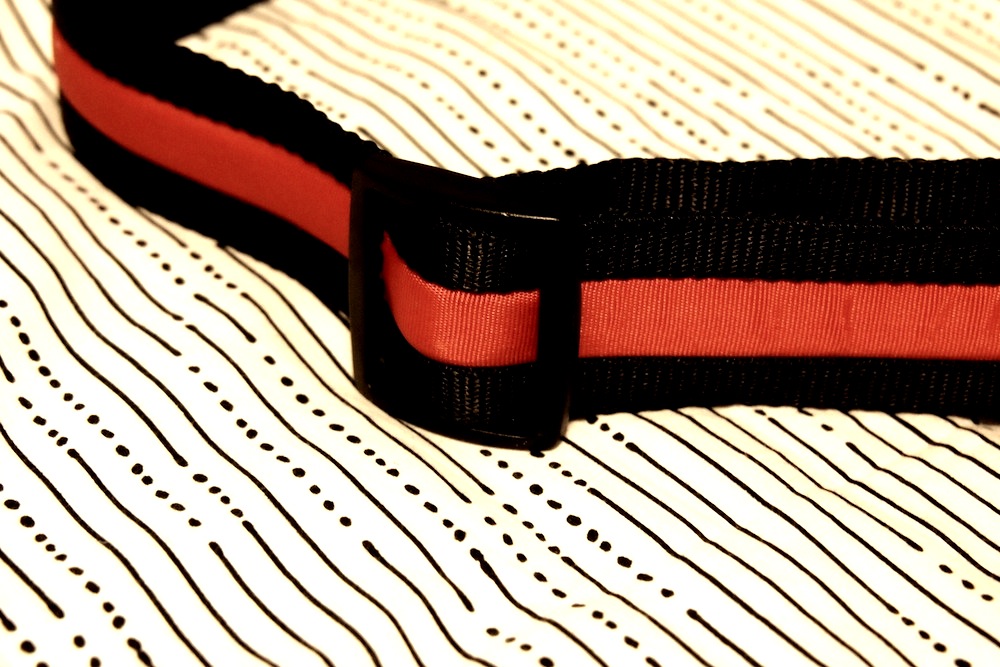
Halo Belt advises that it one size fits most, from a women’s 0 to men’s 38-inch waist. I’m wear a women’s 0 and found myself forcing parts of the LED through the adjustment loop for Halo Belt to fit loosely on my hip. It’s not a difficult fix, but I can’t imagine jamming the LED strip through the plastic slots is good for prolonged use, especially if you continually readjust the size. Fortunately for Halo Belt, I’m likely in the minority of being too thin for the product.

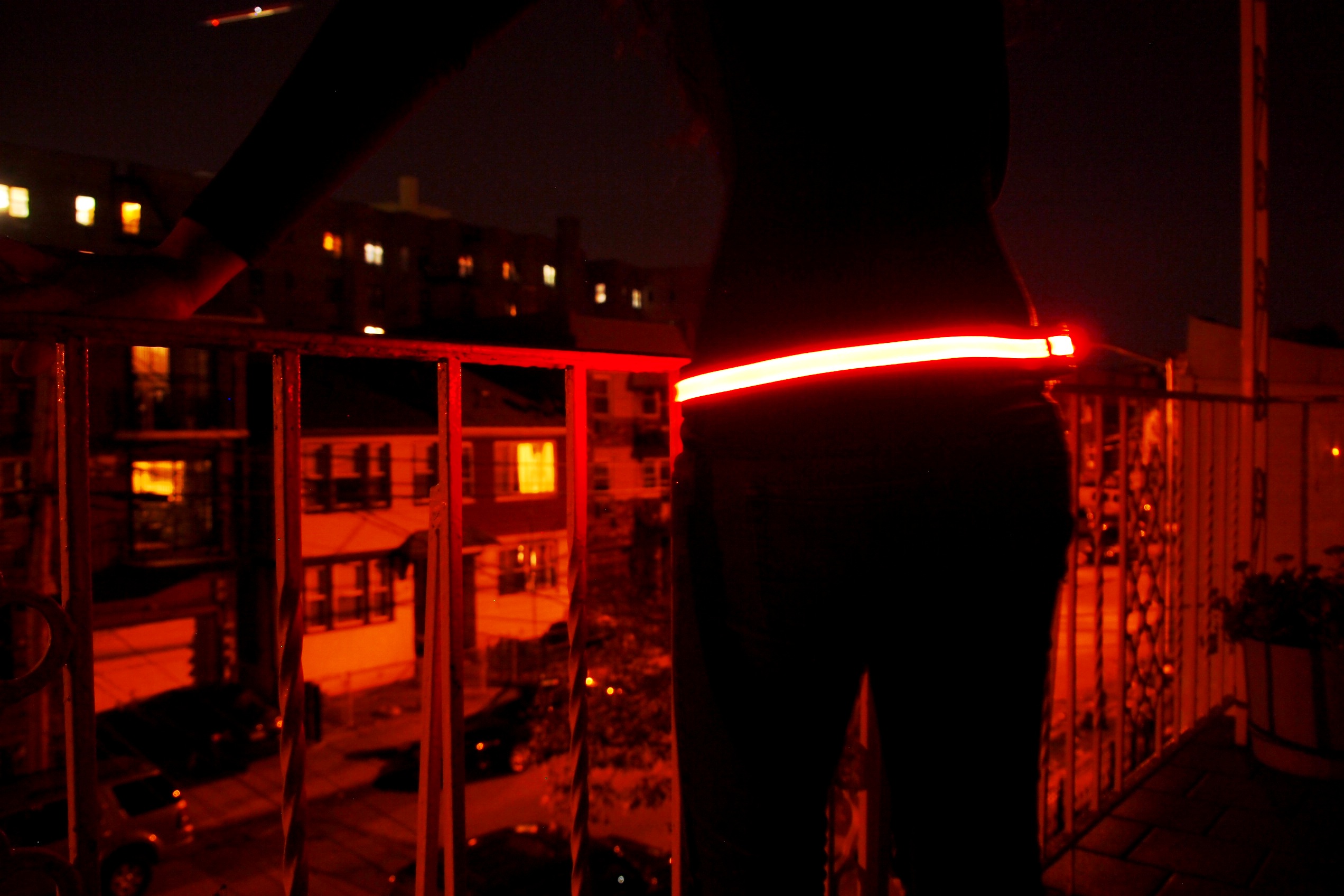
Once worn, the Halo Belt is noticeable without feeling noticeable. The strap is lightweight, looks cool while glowing in the dark, and the Power button is easily accessible next to the plastic buckle. One tap turns the belt on at a flashing mode, an extra push puts it on strobe, and one more keeps the LED light on solid. 

Utility 
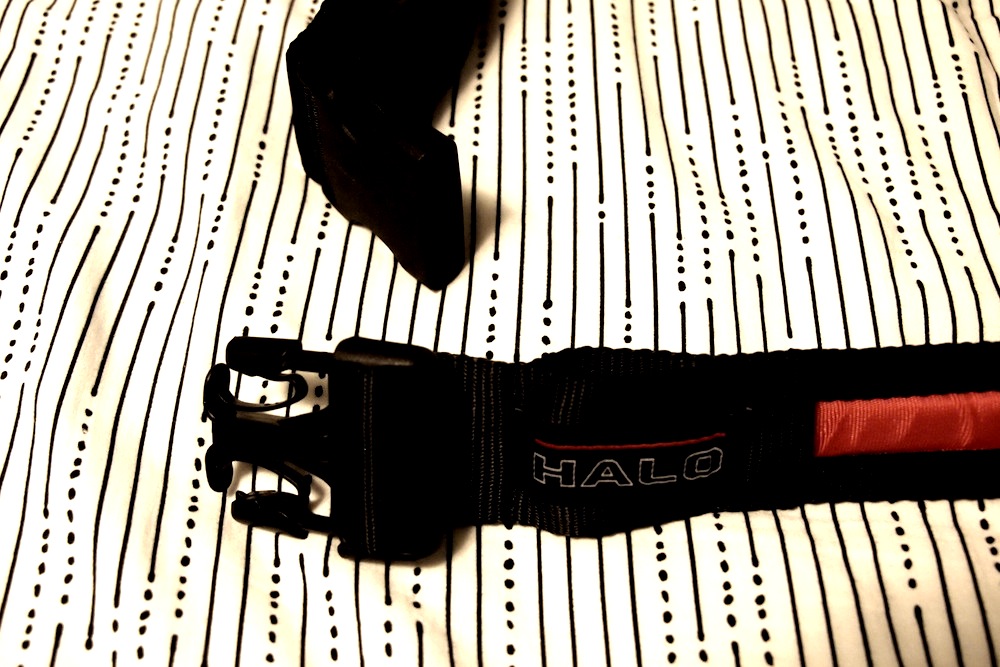
With an intuitive functionality, Halo Belt works like a charm. The light is soft on the eyes but bright enough to make you more visible on the street. Quick access to the button makes it easy for you to switch to flash mode to indicate turns or change of lanes, if you’re an expert at one-handed bike riding. Halo Belt runs on two CR2025 batteries that lasts up to 20 consecutive hours or 75 non-consecutive. Assuming your nightly commute lasts no more than 45 minutes on average, you can get about three and a half months of power on a full set of batteries. If your commute takes less time, more power to you (and your belt).

Even with prolonged use, the LED light never gets too hot, and you can wear the belt in as many styles as you want: around your shoulder and arm like a messenger bag, high-waisted, loose on the hips. With four color choices, you can also use it to categorize teams during a night game of basketball in the park. We’ve even seen photos on Halo Belt’s Facebook that show wearers utilizing the belt as a Halloween accessory. Take it to your next concert or club night and hit up strobe mode for an attention-grabbing look. What was made as a commuter’s utility belt has clearly become a fashion item of its own caliber, and the possibilities make Halo Belt an exciting and fun accessory.

Bottom Line
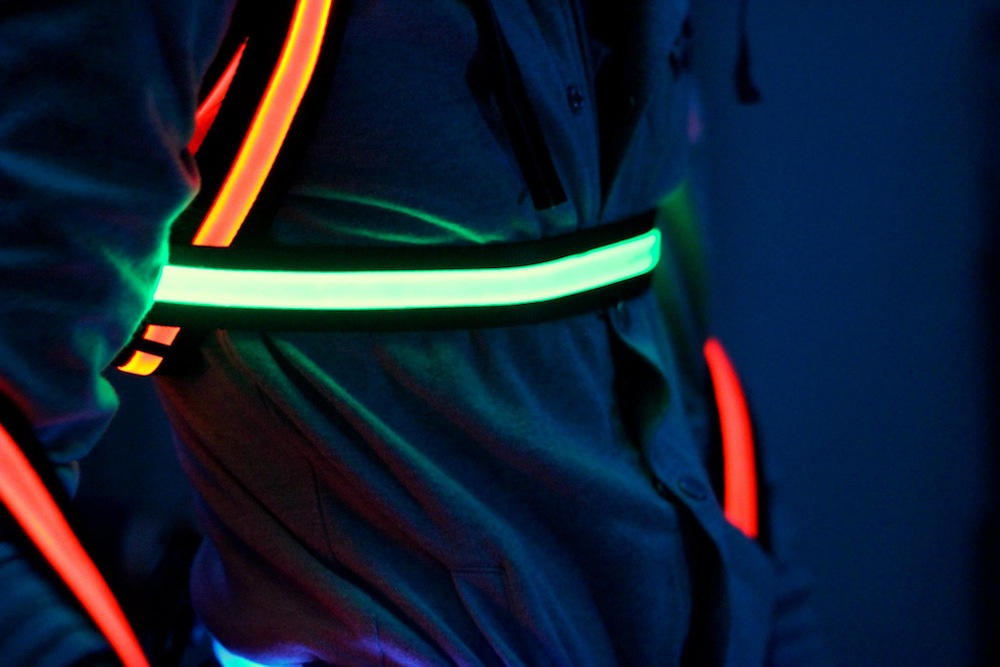
Halo Belt first appeared on Kickstarter in June, completed its funding in August, and fell into our hands late October. Aspiring entrepreneurs should look at the Halo Belt team as a prime example of how to successfully promise, create, and deliver a product in a timely manner – all while keeping backers in the loop with monthly updates, tweets, and Facebook statuses. Halo Belt project starter Vincent Ng clearly had the sourcing and design logistics figured out to offer a simple and well-made item without losing his backers’ faith or over-promising any features. In fact, Halo Belt underestimated itself for how cool it could be to multitask a seemingly basic strap of LED light into something fun, fashionable, and useful. If only Halo Belt included an extra set of batteries… because now that daylight savings is in effect, I might just wear it all the darn time.

Halo Belt is available today for $85 in red, blue, green, and yellow. 


Source : digitaltrends[dot]com

Oct 15, 2012

noPhoto license plate frame foils speeding and red light cameras

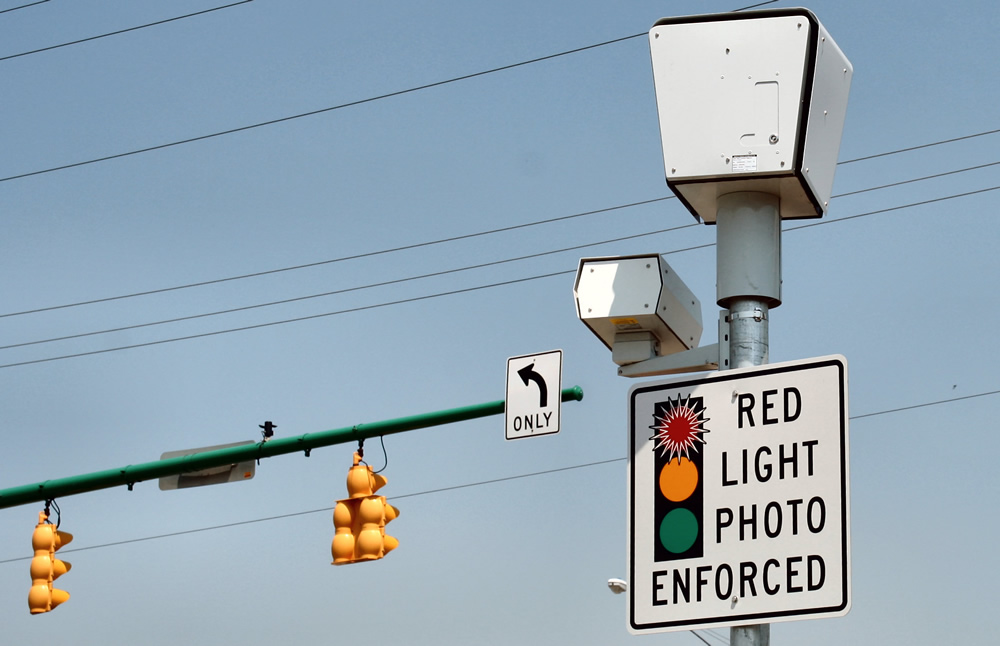
Red light camera

Attempting to limit the ability of law enforcement to deliver automated traffic tickets, the noPhoto frame lights up when you need it.

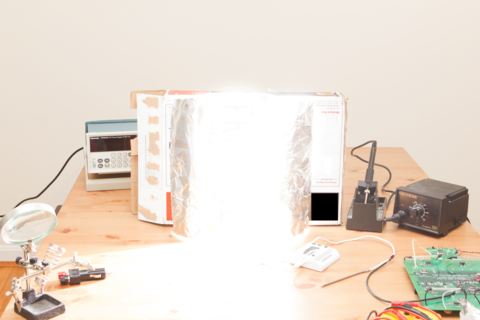
Detailed extensively on a current Indiegogo project, inventor Jonathan Dandrow has developed a smart license plate frame that has the ability to blanket the numbers and letters on your license plate in white light when being captured by a traffic camera. When a red light or speeding camera uses a high-powered flash to illuminate your vehicle, the sensor at the top of the noPhoto frame detects that flash. After quickly analyzing the incoming flash, the sensor triggers two flashes from the xenon lights on the left and right side of the frame. When the lights are active, it’s impossible to see any letters or numbers on the license plate and the driver of the car won’t receive a ticket in the mail based of the photo taken by the traffic camera.

nophoto frameThe noPhoto frame is basically designed to overexpose the area around the license plate with too much white light without breaking any current laws about license plates.

According to Dandrow, the noPhoto frame is legal because it doesn’t cover the state name on the plate or the actual identification number. In addition, Dandrow claims there are no laws specifically indicating how much light can cover a license plate at any given time.

If the noPhoto frame is used to successfully thwart a camera, a driver would avoid paying a fine for the ticket in addition to increased car insurance costs over the year. Beyond the obvious financial incentive to using the NoPhoto frame, Dandrow also indicates that there are privacy concerns to red light and speeding cameras. According to Dandrow, a company called Redflex located in Arizona makes the majority of the traffic cameras used in the United States. Each time a photo is taken by a Redflex camera, Dandrow claims a driver’s personal information is being stored in a database. Dandrow fears that information could be sold for marketing purposes at some point.

noPhoto OverExposedBeyond specifically using the noPhoto frame to drive recklessly, Dandrow also stresses that red light and speeding cameras can be prone to failure. Faulty equipment can send out tickets to people that didn’t actually break any traffic laws, thus the noPhoto frame would be useful for the law-abiding citizen.

Dandrow is also attempting to market the noPhoto frame to celebrities looking to avoid paparazzi, owners of exotic cars or basically anyone that prefers anonymity.

In order to fully fund the Indiegogo project, Dandrow is seeking $80,000 to get UL certification as well as kick off manufacturing of the noPhotos frames. Dandrow is currently offering the first one hundred noPhoto frames at a price of $199, but the standard price of the frame appears to be $350 according to the main site. The frame is designed to work in all types of weather since the circuity is sealed in plastic within the frame. Dandrow has included a test button on the noPhoto frame to see if the lights are still active. In addition, the firmware of the noPhoto frame can be updated assuming manufacturers of red light and speeding cameras attempt to modify photo timing in the future.


Source : digitaltrends[dot]com

Sep 29, 2012

9 home theater apps to improve your big screen with a small screen

improve big screen header

Dim the lights, check the polarity of your speakers, or just find the right time to run for a bathroom break with these indispensible, inexpensive home-theater apps.

Customizing your home theater is a blast. But what do you do once you’ve already mounted that ultra-thin flat-screen, installed that nuclear speaker system, and hooked up the Blu-ray player that does everything but your taxes? Chances are, your wallet’s lost a few pounds by then; so if you’re not done optimizing your home theater experience, you’ll want a slightly cheaper alternative going forward.

Well, there’s an app for … you know the rest. Let’s try to get through an app-related article without using that particular cliché. That being said, home-theater applications have progressed far beyond the “Wow, I can use my phone as the remote” stage. Apps can now enhance your home theater experience in a ton of creative and useful ways. And the best part is, they usually won’t set you back more than a few bucks. Here’s a list of 9 apps that are great utilities for any home theater system.

runpee app icon movies home theaterRunPee (free) for iOS, Android, Windows 7

Besides being a great conversation piece, the RunPee.com app is actually very useful. Look up whatever movie you’re watching and the app will identify several spots where the action lulls and you can sneak in a bathroom break without missing much. Granted, if you’re all alone there’s something called a pause button, but if you’re the owner of a swanky new home theater system, odds are you’ll be hosting a room full of moochers from time to time.

runpee app android apple windows 7

home theater glossary iconHome Theater Glossary ($0.99) for Android

This app is a simple glossary of home-theater keywords, with each defined in layman’s terms, rather than in techy talk. Whether you’re trying to educate yourself before making a major purchase, or you want to impress your friends with your technical lexicon, this app is for you.

home theater glossary app

dijit icon mobile appDijit (free) for iOS, Android

Remember when you used to watch MTV Cribs and gawk as celebrities whipped out their home-controlling remotes? They’d turn on the lights, close the curtains, and fire up the flat-screen, all with a couple of taps on a touch screen. Nowadays, all you need for that kind of omnipotence is a smart phone and an empty bank account. Dijit’s free universal remote app, hooks up to home theater equipment and appliances alike, so you can control your home from the palm of your hand.

dijit screenshot mobile app

imdb icon home theater moviesIMDB (free) for iOS, Android, Windows 7

If an actor or actresses’ name is on the tip of your tongue and you’re wracking your brain trying to remember, fret not. You can pull up their life story in seconds with IMDB’s free app. You can also screen your movie choices by browsing user-ratings and message board chatter. What cinephile wouldn’t want a movie database at their fingertips?

imdb screen home theater movies app


audiocalc home theater appAudiocalc & Videocalc ($3) for iOS

A duo of apps that essentially function as one, Audiocalc & Videocalc let you optimize your audio and video systems so that you hear every decibel and see every pixel properly. Whether you’re trying to assess your amp power, or figure out where to place your projector, these apps have you covered. At $3 apiece, it’s slightly cheaper than hiring an installer.

audiocalc videocalc screen smartphone app

itv screenshot home theater appi.TV (free) for iOS

i.TV is one of the dozens of apps that offer mobile TV Guide services, but it simply does it much better than most. Its easy-on-the-eyes interface and streamlined usability are features that set it apart from the throng of apps looking to fill this particular niche. Oh, and its best feature of all? It’s free.

itv screen home theater app ios

htcables icon home theater education appHTCables ($0.99) for iOS

Another education-based app, the job of HTCables is to guide novices through the process of optimizing their home-theater by choosing the right cables and connections. Cables are typically inexpensive, but choosing the wrong types can diminish your viewing experience. HTCables provides descriptions of most major A/V cables, lists of recommended devices for each, pictures of available products, and links to purchase them – all for just a buck.

htcables screen app ios

Speaker Pop ($5) for iOS

Speaker pop is a palm-sized polarity tester that will let you know right away whether or not your speakers are wired correctly. The app is useful for both business and pleasure and works by listening for a “pop” sound from the speaker and running a subsequent DSP analysis. Yet another way to make sure you’re getting the most out of your A/V equipment.

speakerpop screen ios home theater app

db icon iphone decibel appDB ($1) for iOS

DB is one of the more basic entries on our list. It serves as a simple decibel meter, allowing you to calibrate your speaker levels manually. If you’re an avid enough Digital Trends reader, you know that we recommend manual calibration in our home theater speaker setup guide. As an added bonus, those of you who are true audiophiles can use the app to measure the relative loudness of sporting events, concerts, and various other cacophonous events.

DB screen


Source : digitaltrends[dot]com

Aug 20, 2012

Halo LED belt increases cyclist visibility at night

Make commuting at night safer with the Halo LED belt and be visible on the road without running the risk of getting your bike lights stolen.

In many cities, cyclists are required to have rear lights outfitted to their bikes in order to ride safely on the streets, especially during sundown. So why not take safety a step further into fashion by making it cool to promote good behavior? The Halo LED belt achieves both by allowing wearers to wear LED light as a belt, increasing his or her visibility on the road. 

So you may ask: why not just get bike lights? According to city laws around the world, light lumen limits vary — which make it difficult to have the same light be legal across all borders. Bike lights are also the subject of a thief’s desire. By wearing the safety light on you, you’re always visible and never run the risk of someone stealing your lights… unless, of course, you’re just entirely robbed out of your outfit. 

The Halo LED belt is also great for other types of land commuters, such as skateboarders or joggers, to be seen on the streets at night. The belt is a battery-powered gear that runs on two CR2025′s and lasts up to 20 hours of consecutive use, or 75 hours non-consecutive. Users also have the option of switching between three light modes: strobe, solid, or flash. The product started out as a Kickstarter project which asked for a rather measly $5,000… and ended up crowdfunding more than $53,000.

Designed for universal use, the belt can fit anywhere from a women’s size 0 to men’s size 38 waist. Even if you’re not a cyclist, the belt looks cool enough to wander the streets in or catch some attention inside a dark bar. Some of the promotional photos also show basketball players wearing the belt in the dark, which can help you classify teammates if you play in the park at night. You can even wear it around your shoulders if you want extra visibility — whether on the road or just roaming the streets.

You can purchase the Halo LED belt now in a choice of four colors — red, blue, green, and yellow — for $85.


Source : digitaltrends[dot]com

Aug 18, 2012

Disneyland updates a classic with new LED Mickey Mouse ears

Disneyland's new Mickey Mouse ears have LED lights that sync with select attractions.

Mickey Mouse Ears

Even as adults, we’re still mesmerized by Disneyland. There’s just something about all those sparkly lights and thrilling dips and dives of the rides that keeps us coming back for more.

But if there is one boring thing about Disneyland, it’s the Mickey Mouse ears. Going to Disneyland, you have no choice but to purchase a pair of Mickey Mouse ears and don them on your head like everyone else. It’s just a theme park necessity, no matter how yawn-inducing they are.

It seems that everything else in Disneyland has been updated aside from the ridiculous ears. But now, the Mickey Mouse ears are getting revamped. And this isn’t a typical redesign, either.

The Disneyland Adventure Park has just introduced the “Glow with the Show” Mickey Mouse ears. The ears are fitted with LEDs which sync with some attractions at the park. That means if you and your friends go on some ride together, your cute Mickey Mouse ears will start flashing the same color. Right now, the ears can interact with the World of Color nighttime show, the Mad T Party event, and some new Cars Land locations. It makes for a very entertaining experience when hundreds of ears flash the same color.

Video of the ears doing their thing at the Glow with the Show event makes the experience seem almost like a light show. Everything else is dark, so the ears look like they’re floating around. The audience “becomes part of the entertainment.” It’s similar to Coldplay’s LED wristbands.

When Mickey Mouse ears are away from any of the eligible syncing attractions, the person wearing them can switch it to “demo mode” and have their own little light show. It makes for a pretty fun set of ears that will stand as a reminder of all the fun you had at Disneyland.


Source : digitaltrends[dot]com