Pages

Showing posts with label project. Show all posts

Nov 14, 2012

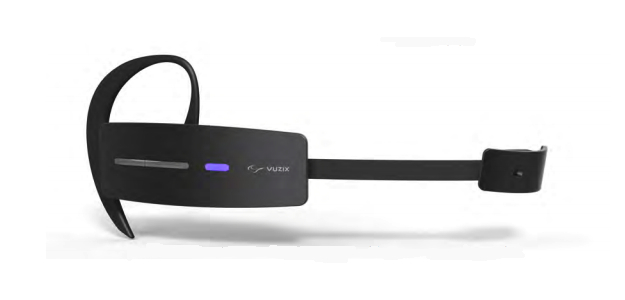
Vuzix M100 Smart Glasses coming next year to challenge Google’s Project Glass

Vuzix M110 Smart Glasses

Vuzix will be demonstrating its M100 Smart Glasses at CES 2013. A rival to Google's Project Glass, the M100 has the ability to use its own apps thanks to its Android OS, and is expected to go on sale in the middle of next year.

Google’s Project Glass has hogged the headlines over the past six months when it comes to augmented reality spectacles, but there are other companies who’re working on similar devices, one of which is Vuzix. Vuzix has been busy perfecting augmented reality lens technology for a while, and its latest toy is the M100 Smart Glasses, prototypes of which will be on display during CES 2013.

Vuzix describes the M100 as an “intelligent hands-free display for smartphones,” but it’s a little more complex than that name suggests, as the M100 has its own 1GHz processor and Android 4.0 operating system, so it will run its own apps. Corresponding versions of these apps are loaded onto your smartphone, which connects to the glasses using Bluetooth.

Well, we call the M100 “glasses,” but it’s really a single stem with the lens mounted onto a Bluetooth headset style earpiece. This projects a 16:9, 240 x 400 pixel color image in front of your eye, which can contain everything from basic web content, email, video, GPS information and anything related to apps the two devices share. A camera can shoot 720p video and capture stills, and the M100 has 4GB of flash memory as standard. Other handy features include an accelerometer, a compass and Wi-Fi.

The extensive feature list means there’s plenty of opportunity for developers to build exciting apps for the Smart Glasses. During a recent interview, Vuzix President, Paul Travers, spoke positively about developers producing apps made especially for the M100, saying an SDK will be available in December and a selection of apps will be ready at launch, but exactly which ones has yet to be decided.

Working prototypes of Vuzix’s Smart Glasses will be on display at CES 2013, and it’s hoped the final versions will be ready to go on sale by mid-2013. The price? Travers told CNet the M100 would cost less than $500.

Google’s Project Glass isn’t expected to be available to the public before 2014, with only the Explorer Edition developer units coming in 2013.


Source : digitaltrends[dot]com

Nov 9, 2012

Hands on: Halo Belt makes us believe in Kickstarter again

Tired of getting your bike lights stolen? Why not just wear the bike light? WIth Halo Belt, the Kickstarted project brings nighttime visibility directly to - and on - you so you can commute with ease.

In a sea of hidden failures and over-promised ideas, Halo Belt makes Kickstarter a worthy source for creative projects again. Over the summer, we caught a glimpse of the LED belt designed to increase land commuters’ visibility when traveling at night. By October’s end, the Kickstarted project shipped the final product to its loyal supporters, with an international launch due in January. Well, is Halo Belt worth the hype? 

Look and feel

Halo Belt comes packaged in a tube container, a clever design that’s sure to please retail showrooms with how portable yet presentable the product can be. Out of the tube, the belt is like your average fabric strap found on most backpacks. On the outer side of the belt is the flexible LED strip lining the majority of the belt length. The belt loops on the wearer with a plastic buckle, all designed to be weather proof during your commute. 

Halo Belt advises that it one size fits most, from a women’s 0 to men’s 38-inch waist. I’m wear a women’s 0 and found myself forcing parts of the LED through the adjustment loop for Halo Belt to fit loosely on my hip. It’s not a difficult fix, but I can’t imagine jamming the LED strip through the plastic slots is good for prolonged use, especially if you continually readjust the size. Fortunately for Halo Belt, I’m likely in the minority of being too thin for the product.

Once worn, the Halo Belt is noticeable without feeling noticeable. The strap is lightweight, looks cool while glowing in the dark, and the Power button is easily accessible next to the plastic buckle. One tap turns the belt on at a flashing mode, an extra push puts it on strobe, and one more keeps the LED light on solid. 

Utility 

With an intuitive functionality, Halo Belt works like a charm. The light is soft on the eyes but bright enough to make you more visible on the street. Quick access to the button makes it easy for you to switch to flash mode to indicate turns or change of lanes, if you’re an expert at one-handed bike riding. Halo Belt runs on two CR2025 batteries that lasts up to 20 consecutive hours or 75 non-consecutive. Assuming your nightly commute lasts no more than 45 minutes on average, you can get about three and a half months of power on a full set of batteries. If your commute takes less time, more power to you (and your belt).

Even with prolonged use, the LED light never gets too hot, and you can wear the belt in as many styles as you want: around your shoulder and arm like a messenger bag, high-waisted, loose on the hips. With four color choices, you can also use it to categorize teams during a night game of basketball in the park. We’ve even seen photos on Halo Belt’s Facebook that show wearers utilizing the belt as a Halloween accessory. Take it to your next concert or club night and hit up strobe mode for an attention-grabbing look. What was made as a commuter’s utility belt has clearly become a fashion item of its own caliber, and the possibilities make Halo Belt an exciting and fun accessory.

Bottom Line

Halo Belt first appeared on Kickstarter in June, completed its funding in August, and fell into our hands late October. Aspiring entrepreneurs should look at the Halo Belt team as a prime example of how to successfully promise, create, and deliver a product in a timely manner – all while keeping backers in the loop with monthly updates, tweets, and Facebook statuses. Halo Belt project starter Vincent Ng clearly had the sourcing and design logistics figured out to offer a simple and well-made item without losing his backers’ faith or over-promising any features. In fact, Halo Belt underestimated itself for how cool it could be to multitask a seemingly basic strap of LED light into something fun, fashionable, and useful. If only Halo Belt included an extra set of batteries… because now that daylight savings is in effect, I might just wear it all the darn time.

Halo Belt is available today for $85 in red, blue, green, and yellow. 


Source : digitaltrends[dot]com

Oct 26, 2012

Audi puts R8 e-tron electric supercar on hold

Audi R8 e-tron

Audi has halted work on this electric version of its R8 supercar, and may cancel the project altogether.

Audi has stopped development work on the R8 e-tron, an electric version of its R8 supercar. after more than three years of gestation, the all-electric Audi might never see the light of day.

Audi told Car and Driver that all work on the R8 e-tron has been stopped, and that the whole project is under review. The halt was ordered by Wolfgang Dürheimer, Audi’s new chief of research and development. Dürheimer came to Audi after occupying the CEO’s office at Bentley and Porsche.

Dürheimer’s concerns should sound familiar to any EV enthusiasts. It’s all about the batteries, which are still too expensive and too heavy to justify their relative inability to store electrons.

A normal R8 with a 4.2-liter gasoline V8 weighs 3,605 pounds, while the e-tron weighs 3,924. That added weight is not cancelled out by extra power, either: the V8 generates 430 horsepower, but the e-tron’s two electric motors can only muster 376 hp. Granted, the e-tron does produce 605 pound-feet of torque, compared to the 4.2’s 317 lb-ft.

The e-tron can accelerate from zero to 62 mph (0-100 kph) in 4.6 seconds, and has a 124 mph top speed. The regular R8 matches that time, but will keep accelerating until it reaches 187 mph.

Audi says the e-tron’s 49-kWh battery pack provides a range of 134 miles, but in 2010, a prototype e-tron could barely do three laps of the Le Mans circuit. With the market for supercars already limited, Audi may have realized that the market for a supercar that takes hours to refuel would probably be miniscule.

Range aside, the e-tron does hold the Nürburgring lap record for production-ready electric cars. While the Toyota P002 lapped the ‘Ring in 7:22, much faster than the e-tron’s 8:09, it was not designed to be mass produced. Now that the e-tron is on the chopping block, that distinction may not matter.

Audi has not given up on electric cars, though. The company still plans to lease small batches of electric test vehicles to customers in the United States and Europe to acquire real-world usage data. The non-super e-trons will be based on the A3 (U.S.) and A1 (Europe).

Audi’s crisis of faith echoes that of another major car company: Toyota. The Japanese giant pulled the plug (no pun intended) on an electric version of the Scion iQ, deciding to limit U.S. production to 90 examples for fleet buyers instead.

On the other hand, one of Audi’s biggest rivals, Mercedes-Benz, is betting on a battery-powered future. Mercedes is preparing an electric version of its B-Class compact hatchback and, at the complete opposite end of the spectrum, an electric sports car. The R8 e-tron would have been the perfect rival for Mercedes’ SLS AMG Electric Drive, which boasts 740 hp and a $536,000 price tag.


Source : digitaltrends[dot]com

Oct 18, 2012

Google launches ARM-based $249 Chromebook

Google may not have had tremendous success with their ambitious Chromebook project but they don’t plan on hanging up their gloves any time soon. The newest product in the Chromebook like is a 11.6-inch model manufactured by Samsung and will be selling for just $249.

What really makes this Chromebook different from others is that this is the first to run on an ARM-based processor. Inside, the new Chromebook has a dual-core Exynos 5 Dual 5250 processor, which if you remember, is the world’s first Cortex A15 based SoC.

Other than that it has a 1,366 x 768 resolution display, 2GB of RAM, 16GB built-in flash memory + 100GB on Google Drive, 1 x USB 3.0 port, 1 x USB 2.0 port, HDMI-out, SD card slot, Wi-Fi and Bluetooth. The Chromebook has a battery life of over 6 hours, which is surprisingly less for something running on such frugal hardware.

The new Chromebook is available for pre-order online from Amazon, Best Buy, PC World and other retailers and will be available on the Play Store next week onwards. You can also buy them at over 500 Best Buy stores across the U.S and over 30 PC World and Currys stores in the U.K.


Source : blog[dot]gsmarena[dot]com

Oct 15, 2012

noPhoto license plate frame foils speeding and red light cameras

Red light camera

Attempting to limit the ability of law enforcement to deliver automated traffic tickets, the noPhoto frame lights up when you need it.

Detailed extensively on a current Indiegogo project, inventor Jonathan Dandrow has developed a smart license plate frame that has the ability to blanket the numbers and letters on your license plate in white light when being captured by a traffic camera. When a red light or speeding camera uses a high-powered flash to illuminate your vehicle, the sensor at the top of the noPhoto frame detects that flash. After quickly analyzing the incoming flash, the sensor triggers two flashes from the xenon lights on the left and right side of the frame. When the lights are active, it’s impossible to see any letters or numbers on the license plate and the driver of the car won’t receive a ticket in the mail based of the photo taken by the traffic camera.

nophoto frameThe noPhoto frame is basically designed to overexpose the area around the license plate with too much white light without breaking any current laws about license plates.

According to Dandrow, the noPhoto frame is legal because it doesn’t cover the state name on the plate or the actual identification number. In addition, Dandrow claims there are no laws specifically indicating how much light can cover a license plate at any given time.

If the noPhoto frame is used to successfully thwart a camera, a driver would avoid paying a fine for the ticket in addition to increased car insurance costs over the year. Beyond the obvious financial incentive to using the NoPhoto frame, Dandrow also indicates that there are privacy concerns to red light and speeding cameras. According to Dandrow, a company called Redflex located in Arizona makes the majority of the traffic cameras used in the United States. Each time a photo is taken by a Redflex camera, Dandrow claims a driver’s personal information is being stored in a database. Dandrow fears that information could be sold for marketing purposes at some point.

noPhoto OverExposedBeyond specifically using the noPhoto frame to drive recklessly, Dandrow also stresses that red light and speeding cameras can be prone to failure. Faulty equipment can send out tickets to people that didn’t actually break any traffic laws, thus the noPhoto frame would be useful for the law-abiding citizen.

Dandrow is also attempting to market the noPhoto frame to celebrities looking to avoid paparazzi, owners of exotic cars or basically anyone that prefers anonymity.

In order to fully fund the Indiegogo project, Dandrow is seeking $80,000 to get UL certification as well as kick off manufacturing of the noPhotos frames. Dandrow is currently offering the first one hundred noPhoto frames at a price of $199, but the standard price of the frame appears to be $350 according to the main site. The frame is designed to work in all types of weather since the circuity is sealed in plastic within the frame. Dandrow has included a test button on the noPhoto frame to see if the lights are still active. In addition, the firmware of the noPhoto frame can be updated assuming manufacturers of red light and speeding cameras attempt to modify photo timing in the future.


Source : digitaltrends[dot]com

Oct 3, 2012

Sandia’s MegaDroid goes public

What has 300,000 Android Operating Systems and helps tech professionals predict how mobile devices would react in a crisis? It's a massive project called MegaDroid, based in California.

What do you call an artificial system that simulates a network of hundreds of thousands of Android devices, allowing to predict the behavior of said devices in case of new app, malware or unforeseen technological breakdown? If your answer was “The Matrix,” then somewhere the Wachowski siblings would like to thank you, but the real answer is something far more entertaining than any amount of Keanu Reeveses staring blankly at the screen. World, meet the MegaDroid.

The MegaDroid is the creation of researchers at California-based Sandia National Laboratories, and virtually simulates 300,000 separate Android devices in an attempt to analyze the reactions of large-scale networks to any number of situations. According to computer scientist John Floren, the MegaDroid is completely insulated from all other networks in the world, but nonetheless offers a realistic network environment inside itself, complete with full domain name service, Internet relay chat server, web server and multiple subnets. It even includes a fake GPS system so that the fictional users of the multiple Android devices being simulated can be tracked in different environments to see whether environment would have any effect on the particular data being studied, and also whether areas without WiFi or Bluetooth impact service significantly.

The need for MegaDroid is explained by Floren very simply: “You can’t defend against something you don’t understand,” he says, pointing to the system’s use in running simulations that will allow Android users to be protected against cyber attack or disruption of service from more benign sources. It’s something echoed by Sandia’s David Fritz, who says that, although “smartphones are now ubiquitous and used as general-purpose computing devices as much as desktop or laptop computers,” they remain easy targets for those seeking to disrupt the system. “No-one appears to be studying them at the scale we’re attempting,” he added.

Continuing, Fritz said that “It’s possible for something to go wrong on the scale of a big wireless network because of a coding mistake in an operating system or an application, and it’s very hard to diagnose and fix. You can’t possibly read through 15 million lines of code and understand every possible interaction between all these devices and the network.”

MegaDroid uses data gleaned from 2009′s MegaTux project, in which Sandia ran a million virtual Linux machines (They have also created MegaWin, which runs multiple Windows OSs simultaneously; clearly, they find mass production very attractive). The experience helped when it came to duplicating the surprisingly complex Android code, with Google’s coding running on top of Linux. Sandia plans to make much of MegaDroid open source once the bugs have been worked out, with Fritz explaining that decision with remarkable ease. “Tools are only useful if they’re used,” he said. What would you do with 300,000 Android devices…?


Source : digitaltrends[dot]com

Scientists Hope to Put Bee Brain in Robot

gty honey bee ll 121003 wblog Scientists Hope to Put Bee Brain in Robot

Flickr/Getty Images

Scientists in the U.K. are working on a buzzworthy project that will scan the brains of bees and then build models of them, creating robots that will act like the real thing.

The goal of the $1.61 million study, called “Green Brain,” is to create a robotic brain that can perform tasks as well as the brain of an animal.

Scientists hope bionic bees could be used for life saving jobs, such as search and rescue missions or detecting the source of a gas leak.

“The development of an artificial brain is one of the greatest challenges in Artificial Intelligence,” said Dr. James Marshall, who is leading the research at the Universities of Sheffield and Sussex. “So far, researchers have typically studied brains such as those of rats, monkeys, and humans, but actually ‘simpler’ organisms such as social insects have surprisingly advanced cognitive abilities.”

The study is being funded by the U.K.’s Engineering and Physical Sciences Research Council.  Scientists say they hope to have the bionic bee buzzing by 2015.


Source : abcnews[dot]go[dot]com

Sep 28, 2012

404 error pages put to good use in missing children project

Th NotFound project, launched in Europe this week, utilizes 404 error pages in a bid to help locate missing children.

The 404 Not Found page. It’s always a tiny bit frustrating when you land on one of these after mistyping a website address or because the page has been taken down.

However, the Brussels-based Missing Children Europe organization, working with Child Focus, has found a way to make use of these otherwise empty pages with the launch of its NotFound initiative designed to spread the word about missing children.

If a company signs up to be part of the NotFound 404 project, which launched this week, web users who land on one of its deleted web pages will be met with the message, “Page not found, neither is [name of missing person]”. A photo of the missing child, together with some information about that person, is also displayed.

Francis Herbert, secretary-general of Missing Children Europe, said in a release, “The idea of ‌‌integrating missing person messages into 404 pages immediately seemed very interesting to us. We are always looking for new communication channels to distribute missing children messages and increase the chances to bring them home.”

Speaking about the initiative, Child Focus’s Maryse Roland said, “This project will allow us to once again concentrate the attention on children whom we haven’t heard of for many years,” adding, “These children risk to fall into oblivion. The choice of the shown missing persons message on the 404 page will be at random: it could be a recent disappearance, or on the contrary, a child that has been missing for a long time. We already have a few major partners and invite every business or person with a website to join our project. No financial investment is required, just good will.”

To get involved, website owners simply need to register their site and add a couple of lines of code to their customized 404 page.

“The 404-page is a cornerstone of the Internet culture,” said Digital Conceptor’s Laurent Dochy, one of the creators of the project. “An increasing number of website designs have customized error pages that limit frustrations for the user. With the NotFound project we are, however, taking this one step further by giving these pages a reason to exist.”

Up to now, around 500 companies have joined the initiative, though organizers are hoping for many more to sign up once word gets around.


Source : digitaltrends[dot]com

Sep 7, 2012

Marketing Mobile Money in Nigeria: The Critical Success Factors

No doubt, the cashless economy project of the Central Bank of Nigeria (CBN) is being pursued gradually but vigorously and the introduction of mobile money in Nigeria in recent times can be better appreciated when appraised within this greater scheme of things. In Nigeria, as it is in other developing nations where mobile money operations have successfully taken off, the use of mobile phones as payment platforms has been necessitated by the need to include a greater proportion of the unbanked and under-banked populations in the financial system. Much-quoted statistics for instance reveal that with a population of 167 million people, only 25 million bank accounts exist in Nigeria. Conversely, the country can boast of 90 million phone subscribers (and that figure continues to grow).

The best model yet of a mobile money platform in Africa and the world over, has been Kenya’s M-PESA. Launched in March 2007 by Safaricom, an affiliate of Vodafone, M-PESA’s subscriber base had reached 6.5 million by May 2009 with 2 million daily transactions. In 2010, with over 700 million domestic and international money transfer transactions, M-PESA accounted for $130 million in revenues. Presently, it boasts of over 20 million subscribers and processes mobile banking transactions for over 70% of the country’s adult population of 14 million.  For a more populous nation as Nigeria, therefore, the potentials for financial transactions through the integration of financial services with mobile telephony are vast.

True, mobile money operations have taken off with such visible brands as Paga (Pagatech), PocketMoni (eTranzact), VCash (VTNetwork) U-Mo (UBA) and IBTC MobileMoney gaining top of mind awareness among consumers. Other brands and players, less visible but equally operating, just starting up, or recently licensed include M-Kudi, PayCom, Eartholeum, Fortis, Monitise, GTBank, EAZYmoney (Zenithbank), Chams Nigeria, Corpereti Services, Parkway, First Bank, EcoBank, etc.

However, Nigeria is not Kenya and at the risk of sounding fatalistic, some of the emerging brands may either fizzle out even before they reach the market or die without ever breaking even. While this may sometimes be due to challenges of inadequate financing and technology, the greatest challenge which may sound the death knell will be Marketing.

How, despite the strictures of financial and telecom regulations by CBN and NCC; the relatively zero- value of the SMS platform to a large majority of the unbanked (they mostly belong to a socio-economic tribe which is called Base of Pyramid -BoP- and may only be conversant and comfortable with mobile voice operations, rather than SMS) and the need to adhere to the fundamental dictates of financial inclusion can the discerning mobile money brand thrive in Nigeria?

Positioning

In order to succeed, a mobile money brand must be able to seek a position within the market that will give it some competitive advantage over others. Such positioning must translate into profitability and resonate with consumers. A well-thought out positioning for instance could be based on excellent value addition. This will not only differentiate the brand in a market where every other brand offers the same range of benefits, but also help the brand to either charge a premium (when it is known for offering additional value) or lower costs (based on rapid rate of sales turnover). The discerning mobile money brand will do well to study the market and determine what else (and how, where and when) consumers need, apart from the intrinsic benefits which the mobile money platform offers. It can then seek out ways to provide these other (extended) offerings as part of a bundle product, thereby occupying a position in the minds of consumers. A strategic positioning may also be based on having the largest and most efficient network of agents. Afterall, one of the leverages which mobile money is expected to offer to the economy is ubiquity of access to the financial system.

Market Segmentation and Target Marketing

The consumer market for mobile money services is not homogenous. One important consideration is the fact that while mobile money benefits are statutorily targeted at Base of Pyramid (BoP) consumers, this segment may not be the driver of product adoption in the Nigerian market. Ultimately, innovators and early adopters will be found among the middle class, enlightened men and women in the C1-3 socio-economic strata, who see the mobile payment platform as a tool of convenience in transferring money, paying utility bills and consummating a myriad of transactions with ease. Nonetheless, consumers at the lower end of the socio-economic strata will definitely come to catch up with the beneficial realities of mobile money, but not as fast as envisaged.

        Source: IFC; Mobile Money Adoption Life Cycle

How should the mobile money brand that will succeed talk and sell to disparate, yet profitable segments of the consumer market?

Beyond media (or mass) advertising, a more targeted approach should be employed. A consumer in Ikeja, Lagos, who wishes to use the mobile money platform to pay for say groceries bought at a supermarket, utility bills, or transfer money to a child in school, will be different from a farmer in Arondizuogu in the East, who needs to remit advance payment for genetically-modified seedlings, to a middleman in Onitsha. The demographics and psychographics are different and one should rather recruit or convert the farmer through someone who has a strong influence on him. This could be a traditional head in his town, or the leader of his farmers’ association; influencer relations, rather than media advertising should be strong here. One may thereafter sustain one’s efforts with tactical radio and television spots.

Again, in deploying their services, mobile money brands must profile their consumers and tailor particular services to specific segments. In addition, segment-specific benefits must be emphasized in their communications.

Product Innovation

Technology is never static. The mobile money brand that will breast the tape of market leadership in Nigeria will not wait for the next five years before questioning the present technological platform on which mobile money operations are deployed. Can the rural market woman conclude her transaction on that phone by following voice prompts, rather than looking stupid while asking someone else to help decrypt SMS instructions? Can that mobile money brand, in conjunction with a telco or a mobile hardware manufacturer (say HUAWEI) start now to outsource product design alternatives to a tech geek somewhere in India and be the first to reach the market with this innovation?

Or else, since the present trend globally is for micro and medium scale entrepreneurs to look for informal ways to raise capital, can a mobile money brand partner a Non-Governmental Organization to establish a platform for crowdfunding, whereby mobile money users who believe in the cause of a particular venture can raise some capital for the dreams of an entrepreneur to take shape?

Final Words

The options and opportunities for mobile money brands within the marketing space are limitless. While technology and superb organizational management may be the difference between failure and success for mobile money operators, by far the most important, yet controllable factor is Strategic Marketing. This, ultimately, will separate the bigguns from the smallies and those who have tunnel vision from the ones who may never see beyond their noses.

The race has just begun.

Author Bio:

A 360° marketing professional, Dele Ogundahunsi works with The Field Marketing Company and may be reached at the following addresses: @deneri(twitter), deneri4(skype), and /deneri4 (facebook)

Tags: Mobile Money Marketing

Source : techtalkafrica[dot]com
Sep 6, 2012

‘Homestuck’ heads towards new Kickstarter record

A Kickstarter campaign to translate a webcomic into an adventure game looks set to break the record for the most money raised for a comic-related project on the crowdsourcing campaign. What is so appealing about 'Homestuck'?

Even as you read these words, it’s possible that crowdfunding history is being made.

Specifically, Kickstarter history for the most money raised on the crowdfunding site for a comic-related project. Previously, that record belonged to Rich Burlew’s The Order of The Stick, which managed to raise $1,254,120 in order to publish a number of out-of-print comics in February of this year, describing the success of his funding drive as something that revealed “this huge geeky safety net out there that I didn’t know about this whole time.” Now, however, it’s looking as if another webcomic-related project is about to take the crown, as Andrew Hussie’s Homestuck continues to rack up pledges as a truly startling rate.

Only three days into its Kickstarter drive, the Homestuck campaign has already met its $700,000 goal to develop a videogame based on the long-running webseries that started as a parody of adventure games, and is en route to demolish Burlew’s record without breaking a sweat. For those unfamiliar with Hussie’sHomestruck, the creator describes it as “an illustrated, semi-animated story on the internet [that] was specifically designed to exist there, to explore the potential of the medium, and evolve through reader participation.” The story revolves around four friends who agree to play an adventure game online together with, as Hussie puts it, “major consequences.”

“Saying anything more about the plot here would probably be getting in too deep,” he says in an in-depth description of the multiple-formatted series. “It gets fairly complicated. One of the goals was to begin with extremely simple, mundane circumstances, and allow reader participation combined with some preplanned elements to grow the story quickly and spontaneously, into something much bigger, more dynamic, and more intricate as a natural result of this approach.”

Another result of the level of reader participation is, apparently, the sense of ownership and involvement that readers feel when it comes to the idea of continuing the Homestuck experience past its initial serialization. Understandably for a series based in part on gaming culture, parts of Homestuck have already been translated into short-form games, but Hussie’s plan was to extend the universe of his series into a stand-alone game that goes far beyond its original incarnation. “It’ll be a little more like a spinoff than an adaptation,” he wrote. “Something that draws from the elements already established in the vast Homestuck universe, applied more selectively to a shorter, self-contained story. Homestuck’s structure is very open, which suits a highly exploratory piece of freeform media with a huge cast and many silly tangents.”

The idea has already struck a chord with the Internet, obviously, with close to 9,000 backers funding the project at time of writing and 28 days remaining on the campaign’s clock. Whether it’s the concept of translating narrative into a free-form immersive game that’s so appealing, or the adventure game comic genre (Order of The Stick was also a comic that dealt with adventure game tropes, interestingly enough), it’s clear that there’s a sweet spot somewhere in Homestuck‘s DNA. Personally, I suspect it’s this video:


Source : digitaltrends[dot]com

Watch Kevin Tancharoen’s rejected Hunger Games pitch reel

The Hunger Games

Though he never landed a directing gig on The Hunger Games, we're big fans of what Kevin Tancharoen had in mind for the project.

There you are, sitting on your couch or in your office, and you read the above headline. “A pitch reel? Seriously? Why would I want to watch an alternate take on a film I enjoyed from a director whose ideas were rejected by the film’s producers?,” you wonder, hoping that we might somehow offer a convincing reason to hit “play” on that clip embedded below. Fortunately for you, we have many reasons why you should watch director Kevin Tancharoen’s pitch reel for The Hunger Games.

Tancharoen, though far from a household name, is one of the most interesting up-and-coming directors in Hollywood. Remember that awesome live-action Mortal Kombat vignette starring our beloved Michael Jai White as Jax? That was Tancharoen’s work. Warner Bros. even tapped the man to film a 9-part live-action Mortal Kombat series around the same time that its video game division was releasing the various iterations of the most recent Mortal Kombat game. In short, the guy has proven directorial chops.

Secondly, we caught The Hunger Games in theaters and while it was a perfectly acceptable blend of romantic notions aimed directly at impressionable teenage girls (and the surprisingly impressionable adult women they inevitably grow into), the world created by director Gary Ross was a bit too clean for our tastes. Here’s a dystopia where newly-pubescent youths are forced to fight to the death, and yet the film’s aesthetic tone was as bright and relatively chipper as any of the Twilight movies (which, in fairness, makes a canny sort of fiscal sense). Tancharoen’s vision of The Hunger Games however, skews more towards a sort of dark, depressing urban sprawl that more accurately mirrors the macabre fate awaiting the movie’s attractive, MTV-ready cast. That’s not to say there isn’t spectacular beauty however. Tancharoen’s vision works specifically because he contrasts the wealthy with the poor, and by rapidly showing us the physical edifices that each group have constructed to live and work in, Tancharoen demonstrates that he has a keen understanding of the kind of societal dysfunction that might spawn an entertainment medium built on the literal blood and sweat of high-school-aged children — or, at least, that he has a pretty solid idea of what it might look like.

We also like the fact that Tancharoen’s pitch reel is seemingly designed to work with or without the presence of major movie stars. We’re well aware of all the myriad reasons why Hollywood relies so heavily on recognizable faces for its big tent pole productions, but by removing that element of “hey, I know that guy from …” viewers are more inclined to identify with emotions and concepts, rather than individuals. The version of The Hunger Games that was released to theaters was acceptable, but it seemed that director Gary Ross wanted to create a “bubblegum action movie,” that would be both appealing to the key demographic of the original Hunger Games novel, and as easy to digest as any Schwarzenegger flick from the late ’80s. It’s an entertaining spectacle to be sure, but we can’t help but feel that Tancharoen’s version might have a bit more nuance, or at least inspire people to discuss the worrying prescience of the story’s vaguely allegorical ideas of where our modern, reality-TV-soaked culture might lead.

The last reason why we want you to watch this thing is simple: How often do you get a chance to watch a pitch reel for a major Hollywood film? Unless you’re Harvey Weinstein or Brian Grazer a chance like this probably doesn’t come around that often, so you may as well take advantage and see what you think. If nothing else, it should be entertaining to see how many of the pitch’s scenes you recognize as belonging to another film. Apparently that’s how they do these sorts of things. See, you learn something new every day.


Source : digitaltrends[dot]com

Sep 3, 2012

‘Veep’ co-creator to take on tech industry in new series

Having successfully dealt with politics in his earlier work, British comedy writer and producer Armando Iannucci is moving on to the Internet for his new project for HBO.

Beware, Mark Zuckerberg, Larry Page and Sergey Brin, and Marissa Meyer: Armando Iannucci has you in his sites.

If you’re not a fan of the HBO series Veep – or a connoisseur of British comedy over the last twenty years or so – then it’s very possible that Iannucci’s name means very little to you, and the news that he is working on a new sitcom pilot for HBO set in Silicon Valley and looking at the tech industry something that may at best raise a quasi-interested “huh,” but little else. Nevertheless, this is very good news for those who would like to see smart commentary on the tech world, especially if “smart” comes with a side of “sarcastic, caustic comedy and a healthy sense of the absurd.”

For close to twenty years now, Iannucci has been responsible for some of the best comedy in the United Kingdom, working as a producer and writer on such projects as On The Hour and The Day Today – Chris Morris’ faux-news shows that predicted the rise of The Onion – as well as Steve Coogan’s various Alan Partridge spin-offs and the critically-acclaimed political sitcom The Thick of It (Not to mention its big-screen spin-off In The Loop), before launching a career in American television with the HBO series Veep. Now, it seems, he wants to give up on political writing and look at where the real power is these days.

Talking to Andrew Rawnsley in the Guardian to promote the fourth season of The Thick of It, Iannucci said, “Probably this will be the last series of The Thick of It. The door is left open at the end to come back and do specials, but I feel I have explored every crevice now and it’s time to take stock and move on. I’m thinking about the power of the internet.” What interests Iannucci, and will influence the new pilot is, he explained, the new power structure created by the Internet and the youth of those in charge of the largest companies in that particular area. “Microsoft, Google, Facebook; you have these twentysomethings who have a way into billions of households. Where’s the power gone? The power is gravitating towards these companies,” he told Rawnsley, adding, “I’m also interested in that personal thing of what it does to you when you’re 25 and you’re a multibillionaire and everyone in the world knows who you are.”

Iannucci has reportedly already finished the script, which has been handed in to HBO. Given the performance of Veep, it’s unsurprising that HBO would look to the writer and producer for another show; we can only hope that the channel is happy enough with the script to give the show the greenlight.


Source : digitaltrends[dot]com

Aug 27, 2012

Pups battle zombies in short film Play Dead

Play Dead

Ever wondered what it's like to be a dog during the zombie apocalypse? Play Dead offers an answer.

While we normally avoid covering every single film project to emerge from the modern electronic gestation pod that is Kickstarter, once in a while something comes along that is just too cool to ignore. Something like a short film depicting the zombie apocalypse. Wait, don’t click away just yet. Granted, zombies have been done to (un)death, but Play Dead is a different kind of zombie movie. Instead of pitting hungry, desperate human survivors against a shambling horde of reanimated corpses, the short film’s creators have decided that perhaps it would be more interesting if these rotting corpses were forced to battle man’s best friend.

The results, as you can see in the 18-minute vignette embedded below, are equal parts adorable, depressing and weirdly funny. It’s dark humor, but c’mon, it’s dark humor starring cute lil’ pooches. You Internet people love stuff like that!

With the hype properly shoved onto you people, we can get to the crucial details behind this. Play Dead, as we mentioned, is the result of a successful Kickstarter project from a Florida-based studio calling itself the Borscht Corporation. Though it has no real impact on the short film’s content, we’d also like to point out that the Corporation has a lovely alligator Ouroboros as its logo. Honestly, that’s pretty keen, so propers to whoever designed that bit of art.

That aside though, we know very little of the people behind this movie. As far as we can tell none of them have been involved in any major Hollywood productions to date, nor can we find any information on what the Corporation has planned for its next project. We do know that the people behind Play Dead are quite capable of working on a minuscule budget — the Kickstarter originally sought to raise $3,000 but managed to nearly double that figure by pulling in $5,849 — and that bodes well for the potential future of the studio. While a small film project like this won’t ever hit theaters, it makes a nice stepping zone toward the big time, and few Hollywood studios would turn away a director capable of producing a movie like Play Dead with a budget of less than $6,000.

If we have one qualm about Play Dead however, it’s that the short is just too short. That’s a stupid complaint for us to make, but as die-hard fans of zombie lore (yes, we can see the pun, and no, it was not intentional) and anything involving adorable animals this kind of thing lands directly in our wheelhouse. Though we doubt it’s a possibility, we’d love to see a major studio hire the Borscht Corporation to remake Play Dead as a full feature-length movie with a proper budget. The project wouldn’t even need major stars either; we’re perfectly content with the amateur thespians seen in the short film, and the potential profits generated by the “dogs versus zombies” premise alone should make such a film a massive hit. Just don’t let Romero direct the thing. As much as we love the man’s work, the quality of his zombie films dropped off precipitously after 1985, and we’d hate to see these puppies squandered on a movie that is qualitatively comparable to 2007′s Diary Of The Dead.


Source : digitaltrends[dot]com

Aug 26, 2012

Discover the hidden perils of augmented reality in short film ‘Sight’

Sight, a new short film exploring augmented reality

A new short film explores how dangerous life could be if augmented reality was fully-integrated with modern society.

Augmented reality systems like Google’s Project Glass may seem like an incredible new way of making our lives easier, but filmmakers Eran May-raz and Daniel Lazo imagine an alternate version of the future, a world in which the new technology begins to damage life. Created as a graduation project upon completing their education at the Bezaleal Academy of Arts in Jerusalem, Sight shows us the darker side of virtual reality.

We follow Patrick, a single gentleman living in a barren bachelor pad in some nameless metropolis. At the opening of the film he lies chest-first on his living room floor with his arms and legs hovering inches above the ground for no apparent reason. But Patrick sees something entirely different. Through a set of special contact lenses, Patrick seems to be careening toward the earth, collecting points as he directs his body through various targets while avoiding any obstacles in his path.

Next we watch him make his way to the kitchen. He opens the refrigerator and an information overlay informs him when his food items will expire. Choosing a cucumber, he begins to cut it as a game of Fruit Ninja launches. The goal of the new game is to slice vegetables evenly to score the most points. 

As the film progresses it becomes clear that most things in Patrick’s world are more fiction than fact. For instance, the walls of his apartment are actually empty but when seen through his lenses they are covered in gaming scoreboards and impossibly expensive art pieces. Patrick’s seemingly full and perfect life quickly begins to reflect an uninspired and empty existence.

By the time Patrick is out in the real world with his date, Daphne, augmented reality has become the enemy. Rather than enhance his experience, the lenses become a block between two people, a barrier keeping Patrick and Daphne from truly connecting. As date scores and facial recognition software cross-over Patrick’s vision, he struggles to keep the conversation flowing. Suddenly virtual reality is situated as the enemy and we see a much more complicated example of heavily-integrated applications and how they affect social situations. It’s certainly not the future Google is advertising.

What do you think? Is augmented reality a scary prospect or one you look forward to? How close is Sight to showcasing the future?


Source : digitaltrends[dot]com

Aug 17, 2012

Nintendo makes little effort to police use of “conflict minerals” in Nintendo 3DS, Wii U

nintendo wii u

Advocacy group the Enough Project has given Nintendo a 0 score for making no effort to police the use of "conflict minerals" in its devices.

Shocker: All the parts in your iPhone and your Nintendo 3DS come from somewhere. They are not, no matter what Apple’s shiny commercials tell you, magic. People dig metals, minerals and other goods out of the ground, refine them, and they are used in the production of electronic products. Many of those minerals like tin and tungsten are cultivated in the war ravaged Democratic Republic of Congo and the ceaseless conflicts in that nation are over control of those resources.

The Enough Project, an advocacy group backed by the Center for American Progress, released its 2012 Conflict Minerals Company Rankings this week, giving a score to electronics companies based on how well they work to not use minerals seized through violence. Intel and HP lead the pack, but coming in dead last is Nintendo.

“Nintendo is, I believe, the only company that has basically refused to acknowledge the issue or demonstrate they are making any sort of effort on it,” Enough Project senior policy analyst Sasha Lezhnev told CNN on Thursday, “And this is despite a good two years of trying to get in contact with them.”

Nintendo released a blanket statement to CNN placing the responsibility of sourcing materials on Nintendo’s manufacturing partners, not the company itself. When Digital Trends reached out to Nintendo for comment, we received the same statement. “Nintendo outsources the manufacture and assembly of Nintendo products to our production partners and therefore is not directly involved in the sourcing of raw materials that are ultimately used in our products. We nonetheless take out social responsibilities as a global company very seriously and expect our production partners to do the same.”

Like many companies, Nintendo established a set of guidelines its production partners need to agree to called the Nintendo CSR Procurement Guidelines. Nintendo did not however go into any detail on how it ensures that these guidelines are followed. The “Honor System” isn’t exactly foolproof.

This isn’t the first time in recent years Nintendo’s been accused of socially irresponsible corporate policy. In 2010, Greenpeace named Nintendo the least green electronics manufacturer in the world. Plus, that was an improvement from reports in 2008 and 2009.

For every effort that Nintendo makes to appear as family friendly as possible—from restricting the western release of games like Mother 3 it deems potentially offensive to insisting on byzantine online friend networks through Friend Codes—it’s shocking how willful the company is in its disregard for socially conscious business.


Source : digitaltrends[dot]com

Aug 13, 2012

Google adds Lexus RX450h to ongoing self-driving car project

Lexus RX450h self-driving car

Google is adding another hybrid, in the form of the Lexus RX450h, to its self-driving car project.

“Roads…? Where we’re going we don’t need roads!” Okay, so we still need roads, perhaps what Doc Brown should have said was “where we’re going we don’t need drivers,” because that is rapidly becoming the case thanks to modern technology. You see, in the future cars will drive themselves. And one of the companies paving the way for that very future is Google and its self-driving car project; a project which we might add has proven without a doubt that autonomous vehicles are no longer an object of science fiction.

How so? Well, the Internet search giant has clocked in over 300,000 miles testing its self-driving Toyota Prius, sweeping across city-scapes and suburbs alike. Now, it looks to add another hybrid to the mix, the Lexus RX450h, as it turns its attention to more treacherous and tricky road conditions.

“To provide the best experience we can, we’ll need to master snow-covered roadways, interpret temporary construction signals and handle other tricky situations that many drivers encounter,” Chris Urmson, Engineering Lead of the Self-driving program wrote on Google’s official blog.

With the RX450h’s electric all-wheel-drive system Google should have little difficulty traversing the tricky terrain it has planned.

In addition to incorporating the RX450h into its fleet of autonomous test vehicles, Google will soon begin to alter the way its self-driving teams go about their research. Right now, two person teams are employed for test drives at all times, but that number will drop down to one as team members begin to utilize the vehicles for their daily commutes and other conventional tasks.

With the reduction of one driver, we have to ask: When will we see a Google car without any human overseers? The answer: Probably not anytime soon. Despite the fact that Google’s self-driving car has gone more than 300,000 without incident, Google says it will keep a watchful pair of eyes in the car in case something does go awry. Furthermore, in order for Google to operate its self-driving cars in California, a licensed driver must be behind the wheel at all times.

Of course, questions arise as to why Google has chosen to delve into the autonomous driving technology market in the first place. For a company that so handily dominates the search engine business, and has other lucrative arms, it doesn’t add up entirely. But perhaps this question is answered in Urmon’s blog entry when he writes, “Technology is at its best when it makes people’s lives better, and that’s precisely what we’re going for with our self-driving car project. We’re using advanced computer science to try and make driving safer and more enjoyable.”

That may be, but should Google’s motives prove less altruistic the reality is it doesn’t really matter, short of some maniacal plot to overthrow the world powers and install its own Google government. Although, with the way the company is run we can’t say we’d mind all that much.

Nevertheless, the realization of our nerd-fueled childhood fantasies is slowly taking shape, and we couldn’t be happier.


Source : digitaltrends[dot]com

Aug 9, 2012

38 Studios’ IP Kingdoms of Amalur up for auction. Will EA or Epic buy?

The state of Rhode Island now owns Kingdoms of Amalur and Project Copernicus and it plans to sell. Who might be interested in buying?

The disintegration of Curt Schilling’s 38 Studios, the company behind this year’s Kingdoms of Amalur: Reckoning and the cancelled MMO set in the same universe Project Copernicus, is coming to a close. Shut down in May with all employees shown the door, there are survivors emerging from the wreckage. Just today, Epic Games officially announced the opening of Impossible Games, a new studio made up of former staffers from Big Huge Games, the 38 Studios’ subsidiary responsible for Kingdoms of Amalur. With many of those imperiled talented people now in new positions, it’s time to wonder where the intellectual property developed over years by Schillings studio will go.

The current owner of the Kingdoms of Amalur, Project Copernicus, and other intellectual property created by 38 is the state of Rhode Island. The state was one of 38 Studios’ primary creditors and it was the inability to repay taxpayer-funded loans that forced the studio’s closure earlier this year. Bloomberg reported on Wednesday that the Bank of New York Mellon Trust Co. (BNY) and the Rhode Island Economic Development Corp. (RIEDC) were awarded all assets held by 38 Studios by U.S. Bankruptcy Judge Mary Walrath.

Intellectual property is the only asset of worth left at 38 Studios, and this is why BNY lobbied to gain control of it. Where 38 just dismantled, said court papers followed by both BNY and the RIEDC, “all or substantially all of the intellectual property could be irretrievably lost.” Meaning that the art, game prototypes, everything developed in association with Amalur and Copernicus could be destroyed before being preserved on RIEDC/BNY controlled servers.

The IP will now be sold off to the highest bidder to recoup the $75 million lost in loans given to Schilling’s studio.

Who’s buying? Big Huge Games was said to be working on Kingdoms of Amalur 2 pre-production when 38 Studios was shut down in May. Epic’s Mike Capps said on Thursday that Impossible Games will be working on Epic-owned intellectual property when it finishes its first project, Infinity Blade: Dungeons, later this year. Epic is slowly branching out its stable of IPs with Fortnite being the latest. Provided it could get the IP for cheap, it might pick up Kingdoms of Amalur and allow Impossible Games to finish what it started.

Amalur publishing partner Electronic Arts is also a candidate. EA Labels president Frank Gibeau said in July that his company would love to see a sequel to that game. “I think it’s unfortunate how everything worked out [for 38 Studios],” said Gibeau, “At the end of the day we saw a lot of creativity and vision in the team that Curt put together. We thought the game was terrific. It reviewed well. We built a good business there and hope there’s a sequel someday. We’d love to be a partner for that.”


Source : digitaltrends[dot]com

Epic’s latest studio Impossible Games polishing up Infinity Blade: Dungeons

Former 38 Studios subsidiary Big Huge Games is now the Epic-owned Impossible Studios. Its first project: Infinity Blade: Dungeons.

Epic Games is expanding. The Unreal Engine studio behind Bulletstorm, Gears of War, and the upcoming Fortnite is, for the first time, seeking outside investment from companies like Tencent as it builds its video game making business into a survivor. It opened yet another branch studio this week. On its homepage, Epic announced the opening of Impossible Games. The Maryland-based studio will be working on Epic’s mobile projects, including Infinity Blade: Dungeons.

Impossible Studios is a new territory in the Epic empire, but the truth it it’s a lifeboat. The studio was first opened at the beginning of June after Kingdoms of Amalur: Reckoning creator 38 Studios laid off all staff, including the Baltimore-based Big Huge Games. A number of employees at Big Huge were snatched up by Epic and put up in a development house that was dubbed Epic Baltimore by fans on the Internet. Impossible Games is the official name for the studio rising from Big Huge’s ashes.

“We were so glad we could help keep this great team together, and we’re lucky to have them,” said Epic President Mike Capps in the announcement, “At the time, I said that finding a full team of superstars was ‘impossible’ and apparently the name stuck! Pairing the imagination and experience of Impossible with Epic’s technology, IP and resources makes for a business greater than the sum of its parts.”

Former Big Huge general manager Sean Dunn, whose credits include bonafide classics like Company of Heroes as well as Amalur, has been named studio director at Impossible. Its first project, Infinity Blade: Dungeons, is actually a collaboration between Shadow Complex studio ChAIR and Epic Cary, with the bulk of work happening at Impossible’s home base.

Infinity Blade: Dungeons will no doubt benefit from Impossible’s expertise in action RPGs. Early demos of the iPad game have been found wanting by the press. The look of the Diablo-style dungeon crawler has been praised but the touch-only interface has been finicky, lacking the simple precision of the Infinity Blade one-on-one fighters released to date. Since most of the game is already finished, it sounds as Impossible will simply be polishing the game’s quality.

Which begs the question: What will Impossible Games’ first project be? Capps’ comments indicate that Impossible will work with established Epic intellectual properties to start with which is understandable. Epic is likely still gun-shy about letting its satellite studios develop new IP after the disappointing 2011 performance of People Can Fly’s Bulletstorm. Maybe a Gears of War RPG? A new Infinity Blade for PCs and consoles? Nothing’s impossible!

And here I thought I could get through this without a single pun.


Source : digitaltrends[dot]com