Pages

Showing posts with label buyers. Show all posts

Nov 9, 2012

Cellular versions of the iPad Mini could start to ship next week

Although Apple hasn't provided an exact, single date on when the iPad Mini Wi-Fi + Cellular model will ship, buyers who have pre-ordered the tablet are seeing their accounts updated with various shipping dates, some as soon as five days time.

Ever since the iPad Mini was announced, there was a question mark over when the model with 3G/4G LTE connectivity would appear. Apple’s press release stated the cellular models would ship “a couple of weeks” after the Wi-Fi only Mini, putting the date somewhere around the middle of November.

It looks like Apple will keep its promise too, as reports are coming in that customers who pre-ordered the cellular Mini tablet have started to receive notices that it’ll ship “in the next five business days.” That could be on or slightly before November 16, two weeks after the iPad Mini went on sale.

This won’t be the same for everyone, of course, and Apple has already flip-flopped on iPad Mini LTE release dates once, with some buyers finding a November 21 and November 23 shipping date added to their account soon after launch, but this was quickly replaced with “mid-November” instead. Subsequently, these dates have been re-applied to some accounts.

So, if you’ve ordered an iPad Mini LTE, there’s a chance it will arrive sometime between November 16 and November 23, depending on when you placed your order, and your chosen delivery method.

Apple has been experiencing some delays with getting the iPad Mini into its customer’s hands, with the Wi-Fi-only tablet selling out as an online pre-order, and then again when it hit retail stores last weekend. Despite this, Apple shifted three million iPad Mini and fourth generation iPad tablets over those three days.

While still a considerable amount of iPad tablets sold, this was a little lower than some analysts hoped for, and this could have been due to the cellular model not being available on launch day. An analyst for Merrill Lynch called the 4G LTE iPad Mini “more important than people think,” reminding us that the cellular versions of the full-size iPad make up 45-percent of sales.

If you’ve pre-ordered an iPad Mini, has its delivery date been updated yet?


Source : digitaltrends[dot]com

Nov 8, 2012

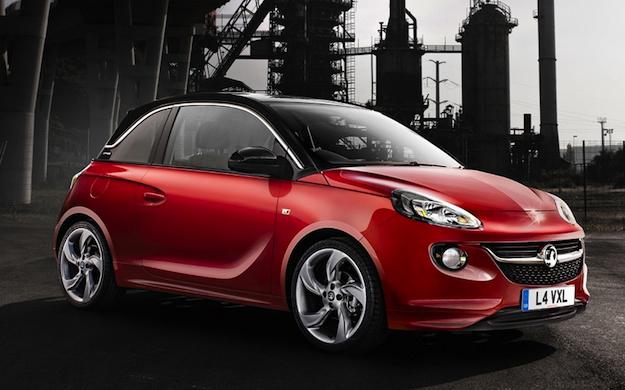
GM cancels electric version of Opel Adam city car

Opel Adam Red

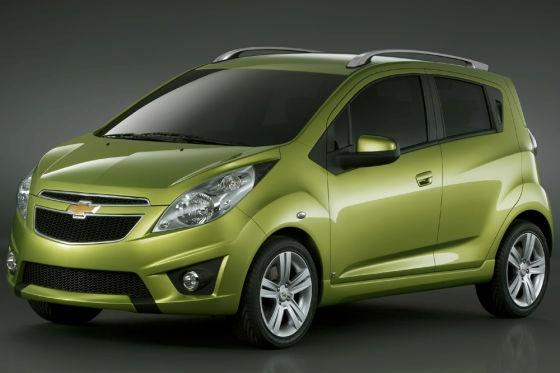
Opel could not make a business case for an electric version of its handsome city car, but buyers wanting a small EV from GM can wait for the 2013 Chevy Spark.

General Motors’ European division is pulling the plug on an all-electric version of the Opel Adam city car. The pint-sized EV made it through the prototype phase, but Opel says its could not make a business case for the car.

“We could not charge the customer the price needed to make it work on the cost side,” Dieter Metz, chief engineer for the Adam, told Automotive News.

The Adam EV was based on the new city car just launched by the German brand. It would have used the same electric powertrain as the upcoming Chevrolet Spark EV, and, like every other Opel, would have been sold in Britain as a Vauxhall.

Conventional versions of the Adam are powered by an assortment of internal combustion engines. These include a 1.2-liter four-cylinder that produces 69 horsepower, and a 1.4-liter with either 86 or 99 hp.

The Adam joins a growing list of EV city cars that never happened, or barely happened. Toyota scrapped plans to mass-produce an electric version of its iQ, called the eQ (and badged Scion iQ EV in the United States), instead deciding to build a small batch of production models.

Fiat will launch a 500 EV at the 2012 Los Angeles auto show in early December but, like the Toyota/Scion, it will most likely be a limited-production item.

With the European car market depressed, and with other companies wavering in their commitment to EVs, GM may have seen the writing on the wall. Its European operations are already struggling, so burdening Opel and Vauxhall with a relatively expensive car that may not sell well might have seemed like too much of a risk.

The Adam EV would have also put two electric city cars in GM’s portfolio. The Spark is sold in Europe, and it is likely that the Spark EV will be as well when it debuts in 2013. Since the Spark is sold worldwide, it gives GM a bigger market and a better chance to make money on the Spark than the Europe-only Adam.

The Adam EV’s cancellation could fuel a larger discussion on the relevance of EVs or the need for EV-friendly infrastructure, but the simple fact is that the Adam is a cheap small car with an engine just big enough to putter around European cities; it was not the ideal platform for an EV.Chevy Spark front three-quarter gray background

Ideally, an electric car should be designed from the ground-up as such. Even when that’s not the case, very small cars do not seem like ideal candidates for EV conversion. Electric hardware adds weight, which can push these tiny, underpowered cars into the realm of impracticality. Cars like the eQ and Mitsubishi i-MiEV will never make the case for EVs because they’re not very appealing as cars.

GM should focus its efforts on refining and promoting the Spark EV, instead of splitting its resources between the Spark and the Adam.


Source : digitaltrends[dot]com

Spoiled for choice: BMW planning six new diesel models for the U.S.

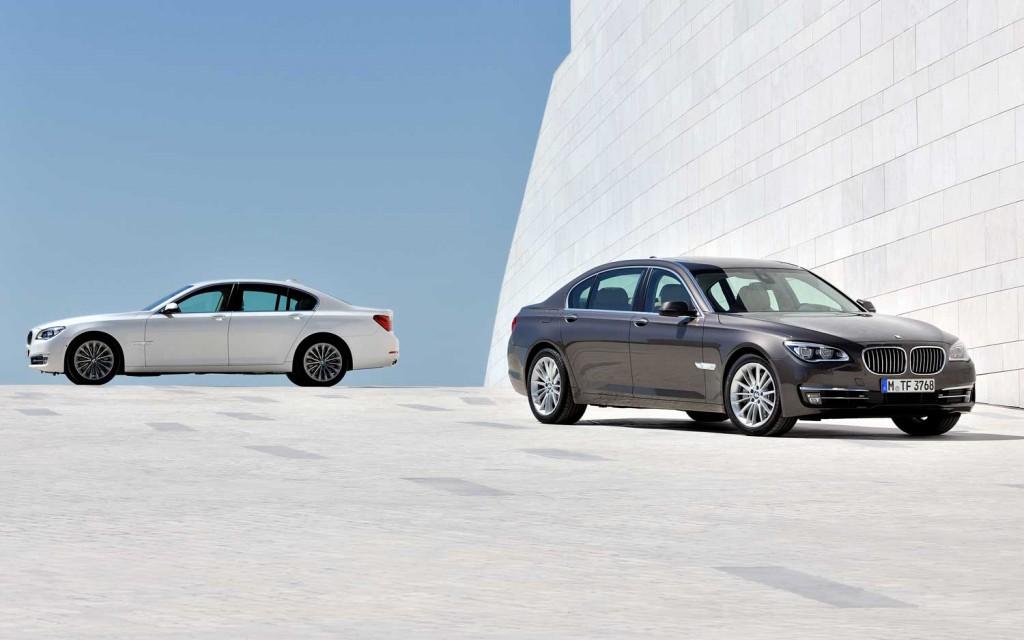
2013 BMW 7 Series

BMW is reportedly working on a full line of diesels, including three sedans, two crossovers, and a station wagon, for North America. Will they offer buyers more options or just poach sales from BMW's hybrids?

In greening up its image, BMW has two choices: push the diesel engines it already sells in droves in Europe, or continue to promote its “ActiveHybrid” powertrain. The Bavarian company seems to be choosing “all of the above.” Even with hybrid versions of all of its sedans, BMW is reportedly planning to launch a full line of diesels in North America.

A slide showing release dates for six diesel models, reportedly taken from a BMW North America meeting, was leaked on the F30Post forum. If it’s legitimate, Americans can expect an onslaught of diesel Bimmers beginning next year.

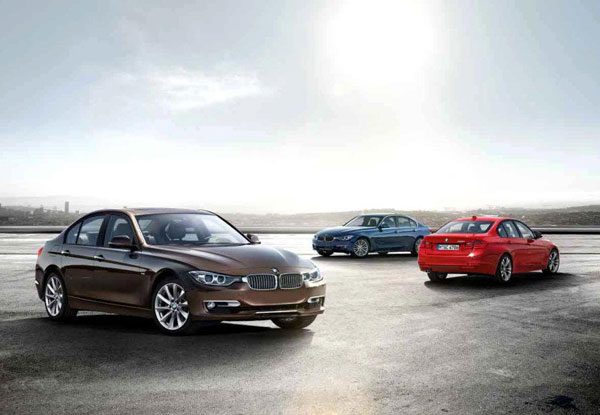
The first car listed is a 3 series sedan, which will arrive in the first half of 2013. It will be followed by a 3 series wagon in the second half of next year. The diesel will be the second engine option for the wagon, which launches next May as a 328i with BMW’s 2.0-liter turbocharged inline-four, but not the inline-six found in 335i sedan models.

Rounding out 2013 will be a diesel 5 Series sedan and a new X5d. The 5 Series will debut in the third quarter of 2013, with the X5d following at the end of the year.

In 2014, BMW will launch a diesel version of its flagship 7 Series model, along with an X3d version of the company’s medium-sized crossover. Both models are scheduled to arrive in the first half of 2014.

It’s a little early to tell which engines will power each of these new diesel BMWs, but the company’s 3.0-liter inline-six is a good bet for most of them. It’s essentially a diesel version of BMW’s ubiquitous gasoline six, and it powers the current X5d. In that crossover, it produces 265 horsepower and 425 pound-feet of torque in that crossover.

A smaller, four-cylinder diesel is also a possibility, especially on the smaller X3d and the 3 Series wagon, which will only be offered with four-cylinder gasoline power.

Experimenting with diesels shows that BMW is in the same state of confusion as its German luxury rivals when it comes to green technology. After years of campaigning for diesel power, Audi launched the A8 hybrid in Europe, and built an A6L plug-in hybrid concept. Mercedes-Benz has the S400 Hybrid and its Bluetec diesels and, of course, all three companies are experimenting with battery-electric vehicles.2012-bmw-3-series options

For its part, BMW will have hybrid versions of its three sedans, along with a full line of diesels. In Europe, diesels and hybrids coexist like this, but diesel is also the fossil fuel of choice for most European buyers.

In America, diesel is still an obscure technology; it’s viewed as a high-mileage alternative to gasoline, not the norm. So, depending on EPA ratings and price, it’s possible that buyers looking for a fuel efficient luxury car might cross-shop a diesel with a hybrid. At least they won’t have to go far if they’re already at a BMW dealer.


Source : digitaltrends[dot]com

Oct 25, 2012

Samsung releases new Galaxy S III ads in the US

Samsung has released three new ads for the Galaxy S III in the US. After making fun of iPhone buyers ad nauseam in the previous ads, these new ads actually concentrate on the phone itself and its key features.

There are three ads in total, with each one focusing on the big screen, the Music Hub and the S Beam NFC sharing features respectively. The ads are short, to the point and have a good dose of humor, everything that you expect from a great ad. You can find them all below.


Source : blog[dot]gsmarena[dot]com

Oct 17, 2012

Toyota Prius Persona Series Special Edition: Is it really that special?

2013 Toyota Prius rear three-quarter view

The Persona Series Special Edition isn't a radical new version of the Prius, but that means buyers will probably gobble it up.

Toyota has been trying to expand the Prius “family” by adding new models like the Prius C and Prius V, as well as the MPGe master Prius plug-in. Each new Prius permutation was meant to make Toyota’s signature product do something different. The latest version, the Prius Persona Series Special Edition, is not a completely new car, but it’s trying to accomplish the same mission as the other Priuses (Prii? Priot?) by being a bit classier.

The key word here is a bit. Like most automotive special editions, the changes that make the Persona are not substantial. On the outside, Toyota added new 17-inch wheels and three unique paint colors: Black Cherry Pearl, Blizzard Pearl, and plain old Black. None of this makes the Prius Persona more efficient or luxurious.

The interior gets SofTex leather seats with red stitching and a SofTex-wrapped steering wheel. The shifter and door panels are trimmed in chrome. That should make this Prius’ interior a little more interesting but, again, the changes aren’t significant enough to make the Persona Special Edition that special.

Nothing in life is free, so the Persona costs $27,890, a noticeable hike from the base Prius Two’s $24,960 base price. However, it’s possible to spend more on a Prius. A fully loaded Prius Five starts at $30,765, and the Prius plug-in starts at $32,760 and a loaded Advanced model costs $40,285.

You know a car has truly arrived when its maker rolls out a special edition. The Prius Persona may just be new paint and leather seats, but Toyota knows that, because it’s a Prius, people will still buy it and at least feel like they got a little something extra. That’s because those buyers will be thinking more about how much they want a Prius than how much they want it to be special.

That should be good enough for Toyota, especially since the company has had trouble producing a truly upmarket purpose-built hybrid. Lexus’ HS 250h sedan (since discontinued) and CT 200h hatchback haven’t been that successful, and there may be a limit to how much people will pay for a regular Prius.

With four distinct models already on sale, the Prius already has plenty going on. Those models may not carry a “special edition” badge, but they should be everything most buyers need from a hybrid.


Source : digitaltrends[dot]com

Sep 7, 2012

Nissan Leaf sales take a dive through August

2012 Nissan Leaf red

The Leaf all-electric hatchback is having a hard time finding buyers, putting Nissan's plan to sell 20,000 Leafs in 2012 on hold.

The Nissan Leaf electric hatchback has been having a tough time finding buyers, despite the promise of zero emission motoring. Leaf sales have been on the decline in 2012, right through the end of August.

Nissan has delivered just 4,228 Leafs in 2012, which is a 31.5 percent decrease from 2011. In August, just 685 Leafs were sold, a 50 percent decrease from the previous year.

Nissan hopes to sell 20,000 of the electric vehicles in the United States in 2012, but that seems increasingly unlikely. To meet that goal, the company would have to sell 4,000 cars per month through September, October, November, and December.

In comparison, sales of General Motors plug-in hybrid Chevrolet Volt have skyrocketed. Chevy sold 2,831 Volts in August, and has shifted 13,497 cars so far this year.

Toyota moved 21,111 Priuses in August 2012, compared to 9,491 in August 2011. However, that number includes multiple models (Prius, Prius C, Prius V, Prius plug-in), some of which were not available in 2011.

This is a surprising turnaround because, in some respects, the Leaf looks like a better deal than the Volt. The Chevy starts at $39,995, a price many potential buyers sneer at, while the Leaf starts at $35,200.

Nissan mocked the Volt’s use of a gasoline engine-generator in ads featuring a gasoline-powered dentist’s drill, but that may have been premature. Leaf owners will never have to buy gas, to the car’s range is limited to 79 miles, much less than that of any conventional car or hybrid.

Other than that, the Leaf doesn’t seem to have many drawbacks. Unlike the tiny Mitusbishi i-MiEV, the Leaf is an EPA-rated midsize car, with plenty of room for the average person. While the Volt had to contend with a battery fire scare that ultimately proved baseless, the worst recorded quality issue with the Leaf was a claim by Arizona owners that excess heat damaged the batteries.

While disappointed, Nissan is redoubling its efforts to sell the Leaf to America.

“We had a significant increase in Leaf sales in August over the prior months and we are moving in the right direction,” Nissan spokesman David Reuter told The Detroit News. “Our actions to widen availability, train dealers and broaden exposure for Leaf are yielding some positive results and move us closer to meeting our high expectations for the vehicle.”


Source : digitaltrends[dot]com

Aug 17, 2012

Opinion: Geeks keep companies honest, even when you’re not looking

geeks latest tech specs update

Mainstream buyers no longer seem to care about the hard numbers behind gadgets, but you can thank vigilant geeks for ensuring the figurative engine still runs while you’re busy gawking at the moon roof.

You know how if you have a truck, everyone hits you up when they need to move? Being a technology writer is a lot like that: Everybody you even remotely know asks for your advice and recommendations whenever they’re buying something with a transistor.

Recently, three or four people asked for some technological guidance, and in the course of helping them, something hit me: Megahertz, gigabytes and refresh rates don’t matter anymore. The spec is really, truly dead.

People aren’t looking for numbers

Going through the requests, I realized that none of them referred to hard drive size, display refresh rates or processor speeds. Instead, my friends and colleagues just knew what they wanted to do with their gadgets:

“I need a laptop with a big screen, but I hate Macs. I only use it to check my email and surf the Web. Oh, and it has to be white.”

“I just want a TV that will look good with sports and has a button to let me watch Netflix.”

“What smartphone is good for watching movies?”

“Can you recommend a good, cheap laptop?”

“Can you recommend a good, cheap tablet?”

Of course, tasks like watching Netflix tie back into core specs, but the specs themselves are meaningless. Nobody cared about the technical details. Nobody wanted to know how much RAM a PC had or the response time of an LCD display. The people just wanted to know if the device they were buying would meet their needs.

Why don’t specs matter?

Of course, none of this is new. Pundits have heralded the death of the spec before. Deciphering specs has never been a major concern for the mainstream consumer; tech specs are a foreign language for most folks. Unfortunately, marketing departments have taken advantage of that ignorance by slapping laundry lists of untrue, misleading or outright useless specs on the outside of electronics packaging, all in the hopes of swaying confused customers with increasingly large, increasingly B.S. numbers.

The good news is, most people don’t care about the numbers, nor do they need to.

There are a few reasons for that. First, as I argued a few weeks back, mainstream tech is more than powerful enough for mainstream users. Pretty much any smartphone can handle the Facebook app, and even the Atom processors and AMD APUs found in lowly netbooks can play 1080p video with nary a hitch these days. Video looks great — or at least good enough — on even the cheapest of flat-screen HDTVs. Even the cheapest of PCs comes with 4GB of RAM and a 320GB hard drive, which is more than enough for the average user. If the budget options can blow through your basic needs, why worry about complex technical jargon?

computer specs

Second, we’re moving away from a locally hosted, hardware-driven world into an ecosystem that’s increasingly handled by offsite servers and small, mobile-friendly apps. A lot of people already store their data in Dropbox, or edit their documents with Google Docs or Office Web Apps, use HTML5 apps, or stream video with Hulu or Amazon. The transition to the cloud brings up its own concerns, but one thing is for certain: you don’t need a lot of horsepower to run a rig that’s basically a conduit for the Web.

As much as it hurts me to say it as a hardcore hardware geek, we’re moving towards a future where the software built on top of the hardware matters significantly more than the hardware itself. Look at smartphones: With quad-core chips, dozen-core GPUs and 4G LTE technology, Android devices should be far and away the dominant option in the mobile arena. But last quarter, the older, slower iPhone 4S accounted for more than three quarters of AT&T’s phone sales and nearly half of Verizon’s phone sales. Android devices may be more technically powerful than Apple’s baby, but the Android operating system is also much buggier and less intuitive than iOS. (Google’s making big leaps forward with Android ICS and Jelly Bean, though. If Android OEMs would only push updates out faster…)

Features make the world go ’round

All that being said, one “spec” still matters when most people go looking for new electronics: features.

No, not the bevy of features that are basically just specs in disguise, like WiDi support, DLNA compatibility, a built-in webcam or surround-sound output, many of which are de facto standards these days, anyway. Not refresh rates or contrast ratios. I’m talking about truly awesome features that can change your day-to-day life or cause passers-by to stop in their tracks and whistle admiringly. Features that are tangible, concrete and useful to average people, not just techies.

john malkovich siri ad iphone commercial

You know who really gets that idea? Apple. Siri and the whole “You talk, Siri answers” advertising campaign were sheer brilliance and generated a lot of excitement in the general population. Once you’ve laid eyes on an iDevice with a Retina Display, everything else seems so… bland. And before you call that a spec, note that the important part is the jaw-dropping smoothness of the image, not the technical resolution. It’s a feature, not a benchmark.

Google’s doing a great job in this realm, too. The turn-by-turn navigation in the Google Maps app was huge when it first appeared, while Android Jelly Bean’s “Google Now” feature seems to tap into your brain to make your day easier. These are the kinds of things that sell electronics. Well, either strong features or competitive prices.

Notice that those prominent examples revolve more around software rather than hardware. That’s because normal users judge electronics as a complete package, with hardware and software joined in holy union rather than treated as separate elements in their own right.

Why we still need geeks, and specs

I said before that the world needs geeks to drive tech innovation; with the death of the spec, the world needs geeks to keep manufacturers honest, too. Because in a world where the guts of a device remain a total mystery, manufacturers have more opportunity than ever to screw people over in a bid to cut costs and raise profits. Some companies already refuse to divulge who makes the CPU in their Android devices.

Ultrabooks have already seen manufacturers fudging parts purchases as consumers gaze away from specs. Laptop Magazine recently ran an article about how OEMs have gotten tight-lipped about which SSDs make it into Ultrabooks. The practice makes some sense on the surface, since manufacturers often pull components from several different suppliers, but the performance of those SSDs vary greatly. Laptop’s Michael Prospero says the SanDisk SSDs found in several top Ultrabooks are even slower than 7,200RPM mechanical hard drives.

All of that is unacceptable. As Prospero notes, the storage performance is a key component to how good a laptop “feels,” and the CPU is the heart of any electronic device. That’s the kind of trickery that can be exploited now that the spec is dead… unless the geeks stay vigilant.

Specs may be dead to the mainstream, but manufacturers still need to be accountable for delivering what they promise. And that’s why the geek vanguard — with its obsession for benchmarks and hard data — remains very important, even when those very numbers are gibberish to most people. The spec is dead to the public, but underneath all the utilitarian functionality and glamorous features the core specs still matter, regardless of whether or not the masses realize it.

So yes, you can say sayonara to the spec. But at the same time, you should say “thank you” to the geeks who refuse to let the spec die quietly — and force manufacturers to stay honest.

[Laptop image credit: Jurgen Ziewe/Shutterstock]


Source : digitaltrends[dot]com