Pages

Showing posts with label gadgets. Show all posts

Nov 9, 2012

7 Technology Gadgets For Better Productivity

It doesn’t matter if you’re a student, CEO or an entrepreneur, there are tech gadgets that will make your life simpler and move productivity smoothly. The following list will help to organize and produce great results.

Samlex Pure Sine Wave Inverter

If you’re working mostly on the road or a student living in a dorm room, here is a phenomenal gadget. Power inverters will direct DC power (as batteries) into AC power, as electricity. You’re able to use an electric razor, toaster, coffee pot and other small appliances with an inverter. This inexpensive gadget, will make your life much easier; you won’t have to worry again about finding an outlet.

Intuit Quickbooks Pro

All business owners have to be very careful with expenses. Keeping account of money activity is the bottom line to productive managing. An accounting software is an important investment. Intuit will help you stay on budget, makes it easy to file taxes and gives you great advice on money management.

Ingenico Payment Terminal

via ingenico

If you’re not always in front of your computer but you have customers who want to make payments, a payment terminal is ideal for you. Great investments will help to produce even greater results. You no longer will have to worry about carrying cash or waiting until you’re back in your office to receive a payment.

Apple IPhone

This tech gadget doesn’t even have to be explained. The IPhone is the greatest invention next to the computer. It has a very clear display, camera, video recording, voice recognition and a processor. You’ll want to get rid of the landline telephone in your office once you start using an IPhone.

Brother Multifunctional Printer

This printer is a business in a box. It’s a printer, copier, fax, and scanner. It not only saves you the clutter, it keeps you organized and efficient. It saves on electricity and will go into power saving mode, when not in use. It’s prints black and white and color. It’s lightweight, portable and has built in networking and wireless capabilities.

Pocket eDGe 7.0 Dualbook

End of paper books for lewro

image courtesy of lewro

The Pocket Dualbook is a reader and a tablet all in one. It’s much easier to carry than a laptop. and conveniently tucks away in the most slim briefcases. If you need to take notes at a meeting or review and update market material and review information about a client you’re coming to meet, this gadget will be a great buy.

iGo Portable Projector


This convenient little gadget works with Mac and Windows software. You’ll be able to show your presentation to your clients as you eat lunch. It’s small, durable and the display screen is clear and concise so that nothing is missed. The sound clarity is brilliant and your work will be presented professionally and successfully.

These are my endorsements to make your professional life easier and more productive. You can never be ready “enough” when it comes to business.

Tags: Accounting Software, Apple Iphone, Brother Multifunctional Printer, iGo Portable Projector, Inexpensive Gadget, Ingenico Payment Terminal, Intuit Quickbooks Pro, Pocket eDGe 7.0 Dualbook, Power Inverters, Samlex Pure Sine Wave Inverter

Source : techtalkafrica[dot]com

Nov 6, 2012

iPad mini, Nexus 7 and Kindle Fire HD go head to head, inside a blender

Continuing their tradition of blending newly released gadgets inside one of their absurdly strong and powerful blender by none other than the CEO Tom Dickson himself, Blendtec has released a new video where they blend the iPad mini.

But it’s not just the iPad mini that will be facing the blades of chaos inside the blender. Giving it company are the Google Nexus 7 and the Amazon Kindle Fire HD. It really doesn’t matter how many contestants there are, though. In the end, the only winner is the Blendtec blender.


Source : blog[dot]gsmarena[dot]com

Nov 5, 2012

Skyfall gear guide: All the gadgets fit for a spy

Skyfall gear guide

Skyfall hits theaters in the United States later this week, but many of the gadgets Bond will use are already available to buy – if you have a Bond budget. Prepare your lusty eyes over these one-of-a-kind pieces.


While the latest 007 flick, Skyfall, has already popped up in UK theaters, those of us in the States will lay eyes on Daniel Craig’s third go around as Bond this Friday, November 9. Of course, the super sleek spy is known for a closet full of badass gadgets, and Skyfall is no exception. Here’s a first look at all the gear Bond will be sporting in Skyfall – and where you can snag some for your next mission.

Aston Martin DB5

Plenty of exotic automotive nameplates have graced the Bond films throughout the decades — Lotus, BMW, and Jaguar have all served as four-wheel chariots for the dapper double O. But another car, more than any other, has come to define our beloved MI6 agent, and that car is the Aston Martin DB5.

Marking its third appearance in the long-running Bond franchise, the iconic Aston is back. We’re not sure what additional gadgets and weaponry the classic car may feature, but we expect upgrades to the original’s bulletproof shield, passenger ejector seat, oil slick sprayer and pop-out guns are in order. Consider our excitement shaken, not stirred, to see DB5 in action once again.

Walther PPK

If you’ve seen the trailer for Skyfall, you might have noticed that Q is a lot younger than we’re used to seeing. In one scene, he is seen issuing Bond a brand new Walther PPK. Perhaps his most personalized gadget yet, this re-modified version of classic Bond handgun has a palm-sensitive biometric reader that will not fire unless Bond is the one holding the firearm. So, enemies, if you’re out of ammo, don’t bother trying to snatch this bad boy from the man. It’s not Bond’s most powerful weapon to date, but it sure is pretty cool.

Globe-Trotter Stabilist Rifle Case

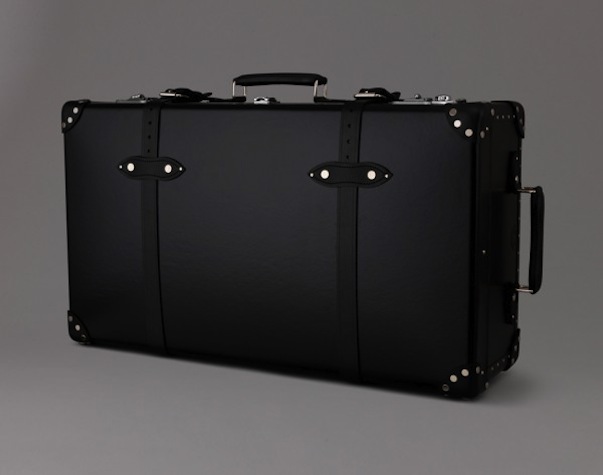
Produced just for Skyfall, this limited-edition rifle case features an aluminium body with a diamond-quilted lining and chrome locks so even your weapons get the ultra-luxe accommodation. The handle in this commercial edition also has the telescopic sight, replicating the James Bond’s version to a tee (without the actual functionality, of course. We can only dream.) Globe-Trotter has crafted only 100 of these for global sale at a retail value of £5,000 (approximately $8,000 USD) so get your order in while supplies last, if you’ve got the cash.

Sony Xperia TL

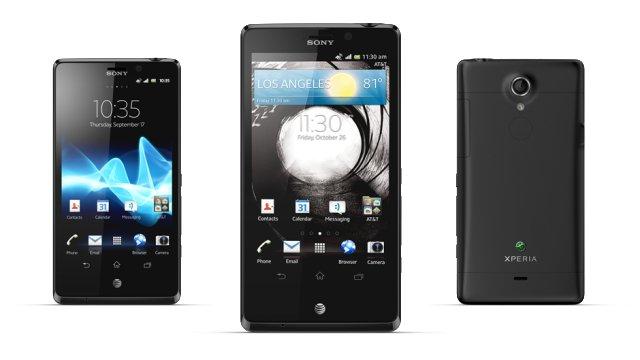
Every gadget James Bond uses is full of crazy doo-dads and secret features. Oddly enough, with a modern smartphone, there’s an app for just about everything. The Sony Xperia TL is set to be Bond’s phone of choice in Skyfall, and this time he’s in for a treat. The TL will soon be released on AT&T and comes with a 4.6-inch HD screen and an impressive 13-megapixel camera, which we’d imagine would be good for spying. Bond might also make use of the NFC capabilities of the TL, which can pair with other devices by simply tapping it on them. The only downside is that Bond will be stuck using Android 4.0 at launch. Like the rest of us, he’ll have to wait for an upgrade to Android 4.1 (Jelly Bean) … unless, of course, Q has already hacked into the system to give him all the apps he’ll ever need.

Omega Seamaster Planet Ocean 600M

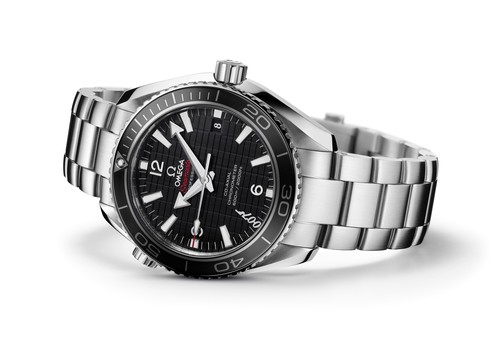
Think you can walk into your nearest Omega retailer, spend big bucks, and get yourself a piece of that James Bond flavor? Well, yes and no. The special edition watch Bond wears in the film can perform any function a phone can (and then some), so expect some hidden tricks to unveil throughout the movie. While your Omega might not be able to shoot lasers, it is equipped with a scratch-resistant crystal dome, a chromium-nitride diving scale, rhodium-plated hands, steel case, and is water-resistant for up to 2,000 feet deep. The limited-edition Planet Ocean Skyfall edition is slated for release some time before the year’s end, with prices to be announced. Bond can be seen wearing the watch in some of the promotional posters, along with a classic black suit. Speaking of which…

Bespoke Tom Ford suit

Hardly a gadget but hardly James Bond without, the staple Tom Ford suit is a must-have if you’re looking to cop Bond’s style. The custom tailored suit uses breathable, flexible fabric that allows Bond to both battle and strut while maintaining a modern fit.

[Additional reporting by Amir Iliaifar and Jeffrey Van Camp]


Source : digitaltrends[dot]com

Nov 1, 2012

8 things you think you own, but don’t

8 things

The rise of digital goods and software-reliant gadgets has thrown a wrench in the contemporary concept of ownership. Here are eight products that, even though you paid for them, aren't entirely yours.


This week, the U.S. Supreme Court heard arguments in a case called Kirtsaeng v. Wiley, which will test the limits of something called the “first sale” doctrine. First sale is the legal doctrine that governs our right to buy, sell, and loan things like CDs, books, DVDs, and any other product that is covered by copyright without first having to obtain permission from the product’s copyright holder.

If the Supreme Court sides with textbook publisher John Wiley and Sons, which sued Thai-born student Supap Kirtsaeng on copyright infringement grounds for buying the publishers books in Thailand and selling them to U.S. college students at a profit, you may no longer be able to freely buy or resell used, copyrighted goods. It could even put a stake through the heart of companies like eBay, Amazon, and Craigslist, all of which deal heavily in the sale of used goods.

Regardless of the outcome of Kirtsaeng v. Wiley, a decision for which is expected in June, there appears to be broad confusion among consumers about what “ownership” really means these days. So, in the spirit of clearing things up, here is a quick rundown of the products that, even though you paid for them, aren’t entirely yours.

Smartphones

While it’s currently legal to buy or sell a used smartphone, the law says you may not necessarily do whatever you like with the device. According to the most recent round of exemptions to the Digital Millennium Copyright Act (DMCA) from the Library of Congress, smartphone owners will soon no longer be allowed to unlock their devices for use overseas or with another wireless provider, unless their current carriers give them permission to do so.

Tablets

Unlike smartphones, which may be jailbroken for the purposes of installing apps not approved by the respective app marketplace, tablets are not exempt, according to the new DMCA rules. The reason being: Jailbreaking requires making changes to the device’s firmware, which is currently a copyright violation, at least when tablets are involved. So, why is it allowed for smartphones and not tablets? Two reasons: First, the U.S. government says the definition of a tablet is still too broad to write in an exemption for devices that fall under that name. Second, because tablets are less widely adopted than smartphones, copyright holders were able to convince the government that adding an exemption for tablet jailbreaking would adversely affect the devices.

In short, if you have an iPad, you’re only allowed to install apps from the iTunes App Store. Try to jailbreak it, and you’ve broken the law.

Kindle e-books

If you think you just bought that Kindle e-book, you’d be wrong. You licensed it – a concept everyone needs to be familiar with these days. Amazon’s Kindle Terms explicitly state that “Kindle Content is licensed, not sold,” and that, “you may not sell, rent, lease, distribute, broadcast, sublicense, or otherwise assign any rights to the Kindle Content or any portion of it to any third party.”

The control Amazon has over your Kindle e-book collection came under intense public scrutiny last week after a woman named “Linn” alleged that the company had shutdown her Amazon account and deleted the entire contents of her Kindle e-reader due to some suspicious activity linked to her account. Amazon later stated that “account status should not affect any customer’s ability to access their library.” But Linn is not the only one who has experienced similar loss of access.

Music

Just like e-books, “purchasing” a song on, say, iTunes does not mean you’ve bought the song itself. Instead, you’ve paid for the right to play that song in your personal life (provided your “personal life” doesn’t involve playing songs for large groups of people). Furthermore, it is – believe it or not – against the law to burn a copy of a song you “purchased” onto a CD, or to give a licensed MP3 file to a friend.

In terms of being able to resell music you’ve paid for, things are even more complicated. A company called ReDigi is currently being sued by Capitol Records for giving users the ability to resell their MP3 files, just as used record stores sold, well, used records. This, despite the fact that ReDigi’s technology automatically deletes the seller’s copy of a song or album when it goes up for sale. And no copies of a track are made — the actual file is transferred from one machine to the other, which the company says is a perfectly legitimate way to resell music. Capitol, of course, disagrees.

Movies and TV shows

Movies fall into the same category as music and e-books. As such, making copies of a DVD, or ripping a DVD so you can watch it on a device that does not have an optical drive, are violations of copyright. Now, if you’re copying DVDs on a small scale, just giving a copy to a friend or relative, then there is little chance that you’ll get served with a lawsuit from the MPAA. But not getting caught and being allowed to do something are, as you likely realized by now, two entirely different things.

Oh, and if you’re wondering, the whole “licensed, not sold” thing goes for digital movies purchased through Amazon, iTunes, and other online digital movie marketplaces, too.

Video game consoles

As with tablets, it is perfectly legal (for now) to resell your used Xbox or PS3. What you may not do is mod your video game console (or handheld gaming device) to run an alternative operating system due to copyright on the device’s firmware. Furthermore, jailbreaking your Xbox (or other console) is also forbidden because, according to the Library of Congress, “video games are far more difficult and complex to produce than smartphone applications” and anti-jailbreaking mechanisms are in place to “protect highly valuable expressive works.”

Apps

Don’t even think about trying to give away or resell any of your mobile apps. Not only is this technically difficult, both Google Play and Apple’s iTunes App Store – the two largest online mobile app marketplaces – firmly forbid the reselling of your apps. According to the Google Play terms of service, customers are not allowed to “copy, sell, license, distribute, transfer, modify, adapt, translate, prepare derivative works from, decompile, reverse engineer, disassemble or otherwise attempt to derive source code from” purchased apps. And Apple goes even further, saying that customers may not “rent, lease, lend, sell, transfer redistribute, or sublicense the Licensed Application,” and must “remove the Licensed Application from the Mac Computer or iOS Device” before reselling the device.

Pre-loaded devices

Which brings us to our final item: Pre-loaded devices. Because of the copyright rules governing e-books, movies, e-books, apps and other software, selling a device that already contains these copyrighted items means you would likely be in violation of intellectual property law were you to do so. So if you were thinking about offloading your old iPod with 40,000 songs already on it to your mom’s best friend, just make sure the RIAA doesn’t catch wind of your little scheme, or you could be in hot legal water.

Image via Borys Shevchuk/Shutterstock


Source : digitaltrends[dot]com

Sep 23, 2012

Tagg the Fitbit for dogs, mountable action live-cams, Evernote meets Moleskine and more from Pepcom Holiday Spectacular

Tagg fitbit for dogs

From toys for your dogs to the new Moleskin with Evernote integration, here's our roundup of the gadgets coming up this holiday season.

Tons of exhibitors, so many gadgets to sift through. We were present at the Pepcom Holiday Spectacular tradeshow which gave us previews of what’s coming up this season in consumer tech, and here are the products we think you should keep an eye out for. At least we will.

Tagg: GPS and Fitbit for your pups

Tagg pet trackerIf your dog has a habit of running away, the Tagg pet tracker system will do Fido some good by helping you keep track of his whereabouts. Tagg collar runs on a GPS system to let you know exactly where your dog is at all times, and you can set the parameters of where you think it’s okay for your pet to be. If Fido steps outside this boundary, you’ll get a text alerting you of the situation, and use the accompanying app to locate your pet. 

Now we know what you’re thinking: What if this thing runs out of battery? Tagg has a “sleep” integration that will put the collar to energy conservation mode to keep the battery from draining when the GPS isn’t quite necessary. This means that if the Tagg collar is located near the charging base, the collar will be in sleep. When the collar is detected to be too far from that range or goes off your set parameters, only then will the device begin using the charge. In standby mode, the collar can last up to 30 days while constant use can extend up to a week — so unless your dog runs away constantly, you’ll probably only need to charge the Tagg collar twice a month.

Newly updated is an upcoming fitness tracking integration to see how much activity your dog is getting a day. You’ll get an overview of the level of activeness your pet receives per day to keep him healthy and fit. For $100 plus an $8-per-month subscription, Tagg is essentially a smartphone and a Fitbit for your dog. Not a bad time and money investment for man’s best friend.

Looxcie action live-cam

Looxcie HD cameraWe’ve seen GoPro cameras that promise to deliver quality photos while you’re on your most extreme adventures. We’ve also seen livestream webcams that are mediocre at best. Looxcie wants to be the best of both worlds by providing you full 1080p capacity streaming while allowing you to mount the lightweight camera anywhere you go.

The camera connects either via Bluetooth or Wi-Fi, and optionally via your data plan to run your live stream. You can also access the video streams in your history if you want to revisit old clips (say, a web show you host weekly) and share them either publicly or with those you carefully select.

What’s also integrated into Looxcie is camera sensors and Bluetooth capacity, meaning the device can double as a Bluetooth headset and a point-and-shoot. You can also leave Looxcie recording a video without saving, but press a special button to retrace the last 30 seconds of what you just saw. “For example, I can leave the camera running while I’m watching my son play soccer,” Looxcie CEO Romulus Pereira tells me. “And I can press this button to record just the part where he makes the goal.” Makes perfect sense for those who witness strange things all the time, wishing they had a camera to capture what just happened. Looxcie HD Explore launched this past week at $330 a set.

Duracell Powermat and smartphone cases

Duracell Powermat casesFor those who want to combine extra battery power with a protective smartphone case, Duracell Powermat 24-Hour System is definitely one hot item making a buzz in the consumer tech market. The $100 set comes with a charging station, a portable backup battery pack, and a chargeable smartphone case. All you have to do is leave the battery pack and case (with or without your phone already inside) on top of the power mat overnight for charge. When you’re ready to go for the day, just pick the gadgets up and go.

The set comes in a variety of candy-coated colors and is currently available for the Samsung Galaxy S3 and iPhone 4/4S. The iPhone 5 edition is in development, with plans of a release sometime by Q1 of 2013.

Evernote and Moleskine

Launching October 1st, the Evernote integration with Moleskine notebooks may just change the way we incorporate physical note-taking into our digital lives. From what Evernote demonstrated to us at Pepcom, the app is able to recognize the moleskin pages by reading the hues of the paper and the dotted lines so that when you snap a picture to load into your phone, Evernote can make your notes brighter, clearer, and easier to store. The smart stickers can also programmable to set as tags for particular types of notes, such as Recipes, To-Do’s, Receipts, Deadlines, and more.

Evernote Moleskin app

Alternatively, you can also take your own picture with your phone’s camera app and upload it within the Evernote app. You can group photos and edit them as you please when they’re all ready in your Evernote list, and of course, shareable to your friends and family. Not to mention the elephant logo embedded in the leather cover looks exclusive, beautiful, and just plain cool. The app integration will be available for both iOS and Android. Our Molly McHugh is excited… aren’t you?

Keep an eye out for one or more of the above items as we hope to get review units shortly.


Source : digitaltrends[dot]com

Sep 17, 2012

Fitbit announces two new fitness devices: One and Zip

Fitbit One

Welcoming the new season, Fitbit is releasing two new fitness activity tracker gadgets -- one to replace its famous Ultra and another for the budget-conscious.

Fitness gadget competitors may have to rethink their pricing strategies now that Fitbit has unveiled two new devices for the season. Following Fitbit’s premier gadget, the Fitbit Ultra, the company is now releasing the One and Zip — both updated to run with Bluetooth 4.0 support so you can wirelessly sync with the latest smartphone models such as the iPhone 4S/5 and Samsung Galaxy S3.

The Fitbit One, the more expensive of the two, is meant to be a major improvement and replacement over the Ultra. The One has a slightly curvier design and contains a clip that holds securely to your clothes to make sure you don’t misplace your pricey gear. It integrates a vibrating silence alarm to wake you up without disturbing your partner. Like the Ultra, the One not only follows the walk, steps, and calories burned in a day but also doubles as a sleep tracker to note the times you fall asleep and when you wake up. In a single charge, the One’s battery reportedly lasts between five to seven days with a battery indicator right on the LED screen. You can currently pre-order the device at $100 in your choice of Black or Burgundy colors, with a shipment date of around mid-October.

Fitbit OneIf $100 seems like to much to fork over at the moment, Fitbit will also offer a budget alternative. The Fitbit Zip is a $60 version that offers the basic fitness tracking functionalities as the One, just sans-sleep tracking and vibrating alarm. The tiny gadget (which looks a bit like a Tamagotchi toy — remember those?) also measures to just about the size of a quarter, and uses a replaceable battery so USB ports here. Fitbit estimates that the Zip’s battery will last approximately six months.

Fitbit Zip colors

The Fitbit Zip is available in five colors — magenta, lime, blue, charcoal, and white — and features a plastic, water-resistant body perfect for those wearing this during sweaty workouts. The device also connects to an online Fitbit account to keep track of your fitness activities online. When used in conjunction with the refreshed iOS and Android app, you can cheer on your Fitbit friends’ activities and view a leaderboard of who’s burning the most calories or losing the most weight. Like all previous Fitbit accessories, the accompanying online account offers gamified rewards such as badges for achieving certain weight loss goals. The Fitbit Zip is up for purchase today at the Fitbit official site.

Will the devices stack up to the likes of its competitors, such as the increasingly popular Nike+ Fuelband? Only time will tell.


Source : digitaltrends[dot]com

Sep 12, 2012

TaskRabbit offers people to stand in line for you on iPhone 5 release day

Apple Store line

For early adopters that absolutely despise having to stand in line for new gadgets, there's an easy way to pay someone to do it for you.

Detailed in a TaskRabbit blog post, the service networking company launched a new task today in conjunction with Apple’s iPhone 5 announcement. For a price of $55, anyone can pay a TaskRabbit representative to stand in line in front of an Apple store on the release date of the new iPhone 5. Easy to identify in a TaskRabbit shirt, the representative will stand in the line for up to four hours on the morning of Friday, September 21. TaskRabbit has setup an iPhone 5 hub page for people around San Francisco and New York City, but anyone can setup a similar TaskRabbit task at Apple stores around the United States. 

TaskRabbit representativeAfter someone interested in purchasing the new iPhone 5 schedules the task through the site, an assigned TaskRabbit representative will contact the user within the next 48 hours. The user can specify timing in addition to model information like the iPhone 5 color as well as the size of the internal storage drive. Model information is required since Apple store employees typically walk through the line to assign inventory in order to cut the line at a specific point. 

At this point, the representative will show up at a specific time to stand in line. Hypothetically, someone that’s been standing in line since midnight for a spot much closer to the Apple store could schedule a TaskRabbit representative to come relieve them for a few hours. After the task has been completed on September 21, the user will be charged the $55 fee for the TaskRabbit service. TaskRabbit is also offering the opportunity for two people to win a new iPhone 5 if they schedule a TaskRabbit representative prior to September 20. 

TaskRabbit iphone 5 taskIn order to become a TaskRabbit representative, an interested party has to fill out an application in addition to submitting to a criminal background check through a company called Acxiom. Beyond the application, a video interview is also required to be hired.

Approval is based on the location of the applicant, skill set and needs for different services within the community. When an applicant is approved to become a TaskRabbit representative, they have the ability to dictate their schedule in addition to setting their own rate. According to the TaskRabbit FAQ, some representatives make upwards of $5,000 per month through the site.

When the iPhone 4S was launched on October 14, 2011, an eight-block line formed outside an Apple store in Tokyo and some people attempted to sell spots in line on Craigslist. Lines around the United States started forming within six to twelve hours prior to the opening of each Apple store. Stores in Paris and London also saw a significant number of people standing in line many hours before stores opened. At the Apple store in Los Gatos, Steve Wozniak landed the first spot in line and happily took photographs with many Apple fans as well as reminisce about the late Steve Jobs. In order to snag the first spot in line at that Apple store, he arrived a little more than eighteen hours before the store opened the day that the iPhone 4S officially went on sale.


Source : digitaltrends[dot]com

Sep 4, 2012

Inebriator, the Arduino-powered cocktail robot, is your personal bartender

The Inebriator robot bartender arduino

With a lot of time and a few gadgets, some crafty creatives at home built a robot bartender powered by Arduino microcontroller.

Bartenders can be tricky to deal with. You always want to shop around to find ones that mixes a generous ratio of liquor, but it’s an added plus if he or she is also fun to talk. It’s even better if they throw you a free drink or two after a long night. While it can be hard to find all these qualities in one bartender, the Inebriator comes close. This Arduino microprocessor-powered robot can make you the perfect drink every time — and you don’t even have to tip or leave your home.

The setup is simple: rows of spirits lined up upside down, ready for pouring. When you order a drink, the robot moves the glass horizontally across the machine to obtain the calculated parts of a cocktail — making the drink with the exact same ratio each time. If you drink comes with a mixer, an external cooler attached to the machine spritz the final touches to complete your order. Did we mention a cool glow of lights changes colors each time a new drink component is thrown in?

The inebriator robot bartender backThis home project relies largely on the tiny Arduino board, an inexpensive processor similar to Raspberry Pi. While it doesn’t have the functionalities or capacities like Raspberry Pi, Arduino is relatively inexpensive and fun for programmers to experiment with in order to whip up something as creative as the Inebriator. From the looks from its website, putting the robot bartender together was no easy feat. Among the gadgets required, a Hitachi HD44780 compatible display, a stepper motor, RFID sensor, and LED lights were just some of the items used in the making.

The Inebriator creators are currently working on a second version which should hopefully hide the cords in the back of the machine and also heed to the recommendations from a recent Reddit forum. Some of the ideas discussed include a pressurized CO2 system to keep mixers carbonated as necessary. Our other suggestions are to figure out a way for the robot to grab a glass of ice itself, or adding a tumbler so the robot can shake and mix the cocktails to perfection.

No words on whether the Inebriator is meant to be made for commercial use or if the creators will release a tutorial for the curious programmers at home. While you ponder, here’s a video of the cocktail robot in action.


Source : digitaltrends[dot]com

Aug 29, 2012

Top 10 Printers For Apple Mac PC’s

The majority Mac users are happy with their machines. The problem begins when they can’t configure their machine with gadgets from other producers. Perhaps, it is the highest standard of Mac that doesn’t appear to incorporate the ordinary features of a strange constituent. The proof is the better performance of Mac machines when employed with parts, which are completely well-suited with Apple configuration. The following are some of the best printers that work faultlessly with Mac PCs.

Canon MP 560
For a selling price of only one hundred fifteen dollars, this all-in-one printer is a typical deal for customers. This printer is valuable for printing very huge amounts. Its double tray employs auto-document feeder that is administered by a big multipurpose two inch LCD display. The reader of media card is well prepared to manage most kinds of USB devices, MMC, micro SD cards, and memory sticks.

Epson Stylus NX420
This is among the best Wifi enabled printers. It is produced to scan and print best quality images. With an approximate scanning ability close to 2400 dpi, red eye removals and auto image correction, the 4 ink cartridge reacts with speeds starting from three point three ISO ppm to six point four ISO ppm. It is a very helpful instrument for Mac users who may desire their images to dry immediately. All images and photos can directly be printed using memory cards without using the computer.

Lexmark C510N
It is produced for business users; it prints documents with an image quality of 2400 dpi. The 500 MHZ processor administers the mechanics of picture resolution to provide excellent outcomes at a speed of 8 ppm in color and 30 ppm in monochrome.

Samsung ML 2525 W
If you aren’t happy with printer’s noise, this is among the silent gadgets accessible for Mac clients. This printer is very simple to arrange and can print heavy graphics with no blotching. As said by the producer, the toner cartridge mostly lasts following printing of nearly 2500 pages. A wireless connectivity, USB, Ethernet, and small footprint make it a very important machine.

Epson Artisan 710
This printer isn’t only compatible with any MAC PC on design; however, it also offers quick laser quality at a speed of 9 ppm. Two sided automatic printing and two paper trays can print everything from custom-made CD to coloring books. For instance, the 4 x 6 inch photos of ultra high definition can be printed in below ten seconds.

Canon L170 Laser Fax Printer
This is the most important type of laser fax printer for businesses that are small. It can simply print heavy pictures with a speed of nineteen ppm. Very large memory and the G3 fax speed adds to directory search options and 32 speed dials. This is a moveable printer, which is able to print high quality pictures resembling its desktop siblings.

Brother HL 5370 Black & White
If you ever require a simple yet great printer to deliver uppermost quality monochrome outcomes then there is not anything better than this printer. Mac customers may like its fast printing speed and easy setup. The automatic duplex printing attribute can print double sided papers with a 32 ppm speed. This printer comes with a one year guarantee and is loaded with features, for instance 32 bit memory, built-in wireless, and 300 sheet standard paper capacities.

Brother HL-2140 Personal Laser Printer
This high-class resolution printer is able to print twenty three pages in a minute. The two hundred fifty paper tray can manage most kinds of legal papers. It is well-suited with both Mac and Windows, users will be pleased to become aware of toner saving mode.

Konica Minolta Magicolor 1600W
The lightweight and compact design of this printer is equally appreciated like its performance. Using the technology of plug and play, it can create both color and B&W prints. Its USB printer interface is able to print at 20 ppm speed. With an utmost capacity of two hundred sheets and sixteen MB memory, it is in fact a great value for your money.


Source : techtalkafrica[dot]com

Aug 17, 2012

Opinion: Geeks keep companies honest, even when you’re not looking

geeks latest tech specs update

Mainstream buyers no longer seem to care about the hard numbers behind gadgets, but you can thank vigilant geeks for ensuring the figurative engine still runs while you’re busy gawking at the moon roof.

You know how if you have a truck, everyone hits you up when they need to move? Being a technology writer is a lot like that: Everybody you even remotely know asks for your advice and recommendations whenever they’re buying something with a transistor.

Recently, three or four people asked for some technological guidance, and in the course of helping them, something hit me: Megahertz, gigabytes and refresh rates don’t matter anymore. The spec is really, truly dead.

People aren’t looking for numbers

Going through the requests, I realized that none of them referred to hard drive size, display refresh rates or processor speeds. Instead, my friends and colleagues just knew what they wanted to do with their gadgets:

“I need a laptop with a big screen, but I hate Macs. I only use it to check my email and surf the Web. Oh, and it has to be white.”

“I just want a TV that will look good with sports and has a button to let me watch Netflix.”

“What smartphone is good for watching movies?”

“Can you recommend a good, cheap laptop?”

“Can you recommend a good, cheap tablet?”

Of course, tasks like watching Netflix tie back into core specs, but the specs themselves are meaningless. Nobody cared about the technical details. Nobody wanted to know how much RAM a PC had or the response time of an LCD display. The people just wanted to know if the device they were buying would meet their needs.

Why don’t specs matter?

Of course, none of this is new. Pundits have heralded the death of the spec before. Deciphering specs has never been a major concern for the mainstream consumer; tech specs are a foreign language for most folks. Unfortunately, marketing departments have taken advantage of that ignorance by slapping laundry lists of untrue, misleading or outright useless specs on the outside of electronics packaging, all in the hopes of swaying confused customers with increasingly large, increasingly B.S. numbers.

The good news is, most people don’t care about the numbers, nor do they need to.

There are a few reasons for that. First, as I argued a few weeks back, mainstream tech is more than powerful enough for mainstream users. Pretty much any smartphone can handle the Facebook app, and even the Atom processors and AMD APUs found in lowly netbooks can play 1080p video with nary a hitch these days. Video looks great — or at least good enough — on even the cheapest of flat-screen HDTVs. Even the cheapest of PCs comes with 4GB of RAM and a 320GB hard drive, which is more than enough for the average user. If the budget options can blow through your basic needs, why worry about complex technical jargon?

computer specs

Second, we’re moving away from a locally hosted, hardware-driven world into an ecosystem that’s increasingly handled by offsite servers and small, mobile-friendly apps. A lot of people already store their data in Dropbox, or edit their documents with Google Docs or Office Web Apps, use HTML5 apps, or stream video with Hulu or Amazon. The transition to the cloud brings up its own concerns, but one thing is for certain: you don’t need a lot of horsepower to run a rig that’s basically a conduit for the Web.

As much as it hurts me to say it as a hardcore hardware geek, we’re moving towards a future where the software built on top of the hardware matters significantly more than the hardware itself. Look at smartphones: With quad-core chips, dozen-core GPUs and 4G LTE technology, Android devices should be far and away the dominant option in the mobile arena. But last quarter, the older, slower iPhone 4S accounted for more than three quarters of AT&T’s phone sales and nearly half of Verizon’s phone sales. Android devices may be more technically powerful than Apple’s baby, but the Android operating system is also much buggier and less intuitive than iOS. (Google’s making big leaps forward with Android ICS and Jelly Bean, though. If Android OEMs would only push updates out faster…)

Features make the world go ’round

All that being said, one “spec” still matters when most people go looking for new electronics: features.

No, not the bevy of features that are basically just specs in disguise, like WiDi support, DLNA compatibility, a built-in webcam or surround-sound output, many of which are de facto standards these days, anyway. Not refresh rates or contrast ratios. I’m talking about truly awesome features that can change your day-to-day life or cause passers-by to stop in their tracks and whistle admiringly. Features that are tangible, concrete and useful to average people, not just techies.

john malkovich siri ad iphone commercial

You know who really gets that idea? Apple. Siri and the whole “You talk, Siri answers” advertising campaign were sheer brilliance and generated a lot of excitement in the general population. Once you’ve laid eyes on an iDevice with a Retina Display, everything else seems so… bland. And before you call that a spec, note that the important part is the jaw-dropping smoothness of the image, not the technical resolution. It’s a feature, not a benchmark.

Google’s doing a great job in this realm, too. The turn-by-turn navigation in the Google Maps app was huge when it first appeared, while Android Jelly Bean’s “Google Now” feature seems to tap into your brain to make your day easier. These are the kinds of things that sell electronics. Well, either strong features or competitive prices.

Notice that those prominent examples revolve more around software rather than hardware. That’s because normal users judge electronics as a complete package, with hardware and software joined in holy union rather than treated as separate elements in their own right.

Why we still need geeks, and specs

I said before that the world needs geeks to drive tech innovation; with the death of the spec, the world needs geeks to keep manufacturers honest, too. Because in a world where the guts of a device remain a total mystery, manufacturers have more opportunity than ever to screw people over in a bid to cut costs and raise profits. Some companies already refuse to divulge who makes the CPU in their Android devices.

Ultrabooks have already seen manufacturers fudging parts purchases as consumers gaze away from specs. Laptop Magazine recently ran an article about how OEMs have gotten tight-lipped about which SSDs make it into Ultrabooks. The practice makes some sense on the surface, since manufacturers often pull components from several different suppliers, but the performance of those SSDs vary greatly. Laptop’s Michael Prospero says the SanDisk SSDs found in several top Ultrabooks are even slower than 7,200RPM mechanical hard drives.

All of that is unacceptable. As Prospero notes, the storage performance is a key component to how good a laptop “feels,” and the CPU is the heart of any electronic device. That’s the kind of trickery that can be exploited now that the spec is dead… unless the geeks stay vigilant.

Specs may be dead to the mainstream, but manufacturers still need to be accountable for delivering what they promise. And that’s why the geek vanguard — with its obsession for benchmarks and hard data — remains very important, even when those very numbers are gibberish to most people. The spec is dead to the public, but underneath all the utilitarian functionality and glamorous features the core specs still matter, regardless of whether or not the masses realize it.

So yes, you can say sayonara to the spec. But at the same time, you should say “thank you” to the geeks who refuse to let the spec die quietly — and force manufacturers to stay honest.

[Laptop image credit: Jurgen Ziewe/Shutterstock]


Source : digitaltrends[dot]com