Making solid-state drives sound interesting is an advertiser's Everest. However, Samsung's latest ad for its SSD 840 series made us chuckle thanks to Internet star Laina Walker, the Overly Attached Girlfriend.
Solid-state drives (SSD): they’re tough, fast, silent … and inherently difficult to advertise. While you’d want them in your computer, they’re not exactly the feature-rich eye candy you’d want to ogle over on your screen. So when Samsung launched its SSD 840 line, the company decided the best way to drum up publicity for a boring product is to release a hilariously creepy viral video starring Laina Walker, otherwise known as Overly Attached Girlfriend. And lo and behold, the ad has over 1 million views on YouTube.
“Hey, it’s me your computer,” the ditty begins, as Walker’s large, Stepford-Wife-like eyes hold you captive with their unblinking stare. Walker, known for the funny yet slightly unsettling Overly Attached Girlfriend Internet meme, takes on the role of a wayward computer, threatening you to get her a Samsung SSD if you don’t want to lose your files or have sensitive data leaked. “There’s tons I stopped from getting out: passwords, credit cards, bank account. These days, I’m so clumsy, I need your love to calm me,” she sings in part of lyrics.
But all creepiness aside, the Samsung SSD 840 Pro series is designed for use by IT professionals, heavy computer users, and serious gamers. They’re slightly more expensive than the regular SSD 840 products, which are meant for everyone else who just wants an SSD. Both the Pro and regular options feature super-fast load and read speeds – the Pro more so than the regular variant. The Samsung SSD 840 Pro series is available in 128GB, 256GB, and 512GB configurations, with prices starting at $189.99. The regular SSD 840 series is available in 120GB, 250GB, and 500GB configurations, with prices starting at $139.99.
Check out the video below and let us know what you think.
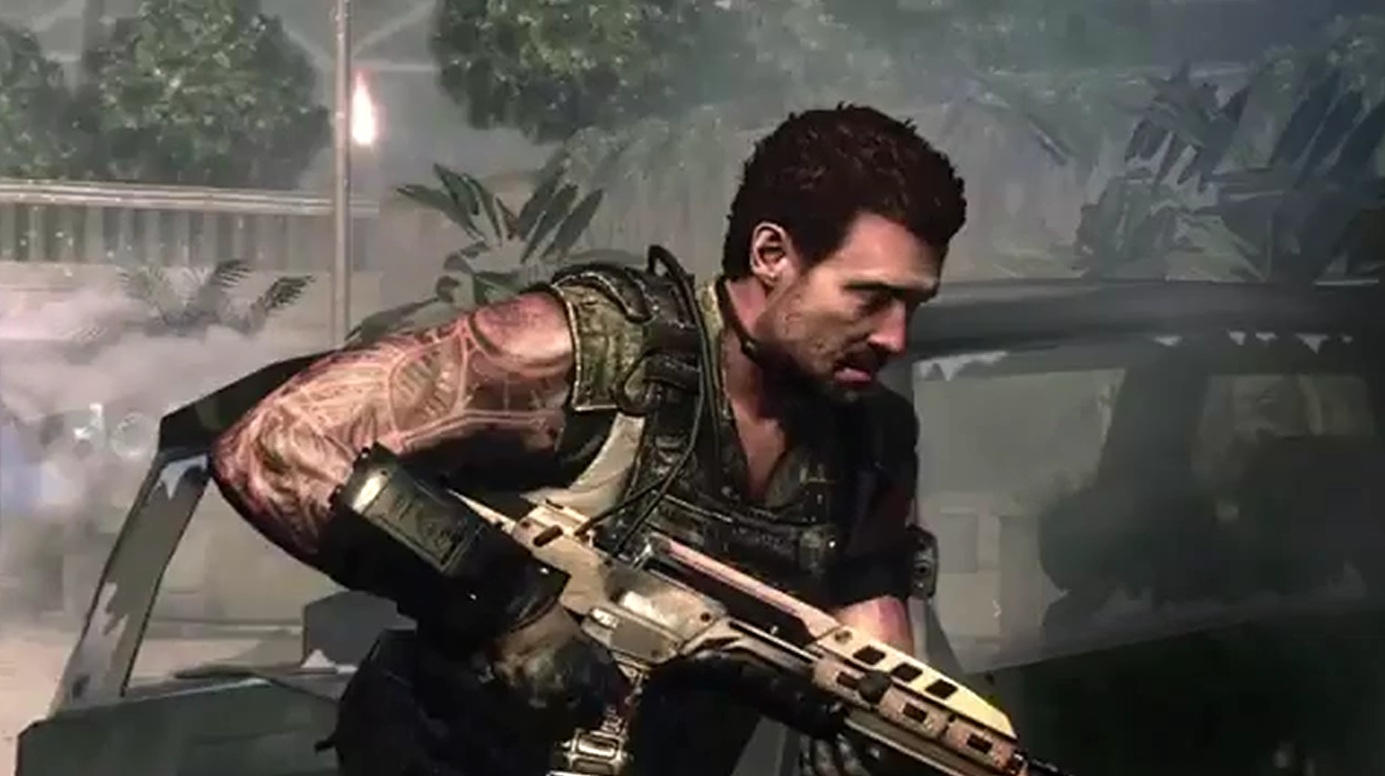
This Tuesday Call of Duty: Black Ops 2 will be released. Although the series is famous for its multiplayer, developer Treyarch and publisher Activision have put a huge emphasis on the campaign, hiring well-known actors to fill roles, and bringing Hollywood scribe David Goyer on board to write the plot.
The Santa Monica-based Treyarch is once again taking advantage of its Hollywood backyard to bring the new campaign in Call of Duty: Black Ops II to life. The game developer, backed by Activision’s huge coffers, enlisted The Dark Knight Rises scribe David S. Goyer to write the game’s story and dialogue.
Actor James C. Burns (Criminal Minds, Make It or Break It), who returns as Sergeant Frank Woods, said having Goyer on board shows how far the art form of interactive entertainment has come in a relatively short period of time.
“The writing of a narrative for a game is important, and it’s also an avenue for writers like Goyer to really tell a story in a different way, in a much broader way, than in film,” said Burns. “In a game like this you have multiple opportunities to change the story. You can follow storylines to different places. It’s more like doing a mini-series with a lot of characters, but it’s all done in one big swoop. For a writer it’s an opportunity to really stretch the legs and do a very multiple tasked story.”
Activision also brought actor Sam Worthington (Wrath of the Titans, Man on A Ledge) back as Alex Mason and enlisted a huge cast of notable talent to breathe life into the game’s many virtual characters, including Michael Rooker (The Walking Dead, Slither). In a first for the franchise, Goyer, who came on late in the development of the first Black Ops, decided to focus the story on the villain, Raul Menendez.
“The most important thing is to create someone that the player can empathize with,” said Kamar de los Reyes (Read Between the Lines, Salt), who plays Menendez. “You can play a one-dimensional villain, that’s easy. But you want to create someone that the player will at one moment might love and empathize with, and another moment he will hate and not understand or relate to at all. That’s where it becomes really difficult, and fun, fun as the actor.”
In another move towards a Hollywood scale production, Black Ops II features full performance capture. The actors donned the increasingly familiar skintight motion-capture suits and read their dialogue while acting on set at the House of Moves in Los Angeles.
“This is the first game where actors like myself, James Burns and Rich McDonald are actually actors playing the roles,” said de los Reyes. “We are the guys in the video game. In the past, you always had stuntmen playing the roles and doing the motion capture and then having someone come in the voice like Keifer Sutherland or Gary Oldman to do the voice. It’s a lot of fun for the actors. I personally thought it was a hell of a lot more fun doing it all, and I think that’s what sets this game apart from all the others.”
Tony Todd (Chuck, Candy Man), who plays Admiral Tommy Briggs, believes Black Ops II is going to be the most narrative game that gamers have ever encountered.
“Between the ‘80s flashbacks, the future setting, the holograms, and the current situation on the Battleship Barack Obama; it’s just going to be mind-bending,” said Todd in a previous interview for Digital Trends, who had over 50 pages of script to perform in the game.
Getting actors to come back for more Call of Duty isn’t that much of a chore for Treyarch. Everyone involved had nothing but accolades for director Dave Anthony, who helmed the game’s epic story once again.
“I loved working on Black Ops I,” said Burns. “Treyarch is a dream job and Woods is a fun character to play. Come on, I play army for a living for God sakes. And the story progression is phenomenal. I’m a big fan of the game itself, and Black Ops II is such a great, inventive idea of how to take it to the next level. I’m very proud to be part of it.”
With the sequel being set in 2025, the returning characters are a lot older in this game – although the story does jump back in time to the ‘80s for some missions. Burns said Woods has evolved from a “badass weapon” into an “elder oracle” in the new game.
“Woods is the guy that has all this information and his function in the game is to illuminate the player as to the nature of the events, why things happened, and what’s happening,” said Burns. “He’s evolved into this still highly wired, pretty powerful – even though he’s in a wheelchair – character. He has his mental acuity is there. He’s smart. He’s incisive. He’s a smartass. He’s just that old guy in a chair that knows sh*t before you even think that you need to know it. He’s already got you pegged before you walk in the room. He’s evolved from this warrior with a knife to a warrior with an intellect. He’s this rugged badass in a wheelchair.”
The characters in the game are now old enough to have sons that become involved in the plot. Rich McDonald (Heart of Dixie, God Bless America) plays Commander David Mason, son of Alex Mason. He commands an elite team of Navy SEALs, which ends up going after Menendez. The actor loves the futuristic setting, which introduces new weapons, drones and vehicles to the story and gameplay.
“That’s a very intelligent choice to make as far as a time period to pick; not going too far into the future, but just far enough to where they can bring in certain aspects that are being explored right now in the technology fields,” said McDonald. “It’s all too realistic in that time frame. You also have elements from the present that are still going to be applicable in that timeframe, as well.”
Thanks to Goyer, the game’s script challenged actors to cope with major plot twists, as well as serious choices.
“My character is Javier Salazar, who is a military man whose spirit is torn between a way of life that he’s been taught and trained to do, and then something that moves him in a very internal level,” said actor Celestin Cornielle (The Finder, The Mentalist). “He’s forced to choose between two roads. One leads to light, one leads to darkness. To him, it truly leads to an awakening, a new consciousness, and a revelation that we all must be aware of. That’s all I can tell you without killing you.”
The campaign mode in Black Ops II is about much more than killing, although there’s plenty of that. With the success of the Call of Duty game franchises, developers have been able to work with larger budgets. And the growing fan base of gamers includes many Hollywood “names” both in front of, and behind, the camera. Goyer’s involvement has helped assemble a great cast of actors, who in turn deliver performances that Treyarch hopes will connect with gamers.
Hitachi's latest UltraVision UltraThin TVs offer clean design and in one series, the chance to add Roku capability for $100 thanks to compatibility with Roku's Streaming Stick.
Some of Japan’s tech titans may be stumbling these days, but that doesn’t mean the rest of them are sitting idly by. Today, Hitachi announced its fall 2012 line of TVs, and looks to be putting forth a serious effort in the arena. Rather than taking the value-only approach, this group of TVs actually packs some impressive tech, including MHL HDMI ports for use with Roku’s affordable Streaming Stick. The UltraVision UltraThin LED Series includes two lines: the W806 Smart 3D TV and S606 series, while a third Value series stands apart. Let’s break down each:
W806 Smart 3D TV Series – Dressed in a piano-black bezel, this series includes two different sizes, 48 inches and 55 inches. Both are LED units, offering 120Hz refresh rates for 3D content, built-in Wi-Fi, and IPTV connectivity. Both also feature 1080p HD and include two pairs of 3D glasses.
S606 Series – This series comes in three different sizes, 42-inch, 46-inch, and 55-inch. All sizes are LED models, with 120Hz refresh rates and full 1080p HD. They all sport a platinum finish. Most interestingly, they offer full Mobile High-Definition Link (MHL) HDMI ports, which can deliver power to devices in addition to receiving signal. That makes the S606 one of the first “Roku-Ready” TVs, making it easy to add advanced streaming capabilities with the purchase of Roku’s $100 Streaming Stick.
Value Series – The platinum-finished Value Series consists of the S406, H306 and H316. Each model sports an ultra-thin bezel, surround sound, and Dolby Digital. The S406 sports a 32-inch 720p panel with a 60Hz refresh rates, the H306 has a 29-inch panel with the same specs, and the H316 actually comes in three sizes: 29, 32, and 39 inches. All feature a 60Hz refresh rates, full 1080p HD and a Hitachi’s PicturePerfect video processor.
Though their panel specs may be quite pedestrian clean design and MHL capability in the S606 Series may give these Hitachi models bragging rights and a possible home in your living room.
Pricing hasn’t yet been announced for the new models, though we expect to see them on store shelves soon for the holiday season.
The web is flooded with various interesting websites that allow anyone to effortlessly download video streams, watch movie series, or even live concerts online. Even so, it is still incomparable to watch them with a wide-screen television. The good news is here. With today’s innovative technology, it is possible to enjoy unlimited internet privileges through Internet TV.
Choose from the modern gadgets and bring your favourite Internet features to your living room. The most popular consumer choice is the Apple TV. Its specification includes high definition multimedia interface (HMDI) which allows for the transfer of digital data to a compatible audio digital device such as projectors and digital television. Apple supports internet features and in-channel search from Netflix, iTunes, and YouTube. The average cost of Apple unit is around $99.
Roku: For a cheaper option, the Roku player is available for 50 bucks. Supported internet features include: Hulu Plus, Netflix, Amazon, and YouTube. Like Apple, it also operates with an HMDI output connection but not packed with a HMDI cable. You can buy this for $10 or less from online stores. If you have already bought a high-end TV but it does not include HMDI support in its product description, then a Roku player is the best choice. It is the only media player with a component output which permits the access of digital data from computers for devices without an HMDI feature.
Consumers who are particular about media resolution often prefer Boxee Box or Google TV. Both offer better image resolution. Users can save on the extra cost of purchasing HMDI cables because specifications for both devices are included. However, configurations differ among machines. Unlike Apple or Roku which uses an on-screen keyboard, Boxee Box comes with a QWERTY style remote control to let you search with ease. Google Box has more to give. Aside from this feature, it also allows search for on-air TV shows or broadcasts. While Boxee Box supports YouTube, Google supports other features like Netflix and Amazon.
The above-mentioned media gadgets have wireless and Ethernet ports for internet connection but if you get a Vudu box; you need to buy wireless kit to use the Wi-Fi feature. Vudu allows you to connect with streaming video sites and YouTube.
Hulu Plushas the most important US TV networks: the ABC, NBC, etc. Netflix offers full-length movies and online television access.
You can enjoy unlimited streaming with Netflix facilities at only $8 per month. Meanwhile, Amazon offers pay-per-view services for an array of television shows such as live sporting events and new movies recently out in different cinemas.
iTunes sells videos, music, and even offers pay-per-view options. If you are looking for more selection and themes of video clips, find them from YouTube.
Itunes
youtube
Purchasing the right unit is the key to successfully combine the Internet with your favorite TV. Always ask for the TV specifications before opting to buy one. LCD and plasma televisions often come with VGA input and HMDI support features. In fact, you can still connect your TV to the Internet without spending or subscribing to anything. All your TV unit really needs is a particular adapter or wireless media extender.
After taking the arcade racing genre by storm with the original Need for Speed Most Wanted back in 2005, EA rebooted the series this year and put the steering wheel in the able hands of Criterion Games, makers of the popular Burnout games as well as Need for Speed: Hot Pursuit.
This time, however, the action won’t be limited to the big screen. A mobile version of the game has been released for iOS and Android and although it’s not exactly the same game as the console version, you will find similar races, cop chases and a great roster of cars in what promises to be one of the best racing games on the mobile platform. We put our seat belts on and decided to take it for a test drive.
Title
Need for Speed Most Wanted
Developer
Electronic Arts
Platform
iOS
Android
Release Date
October 2012
October 2012
Content rating
4+
Everyone
Size
593MB
12MB + 560MB additional files
Price
$6.99
Gameplay
The original Most Wanted included open world racing combined with frantic cop chases. The story of the game involved competing against expert drivers from a blacklist and racing to the top to get your car back. The new one is somewhat similar although for the mobile version, the open world has been dropped. You have a map where race events appear for you to play. As you win more races, more events get unlocked. After a handful of regular events, you will get to race against one of the blacklist members. Defeat all the ten racers on that list and you beat the game. You can of course go back to playing the unlocked events, of which there are plenty.
Race events are of multiple types. You have the simple races where you have to come first to win. Checkpoint races make you go around the track reaching checkpoints before the timer runs out. In some races, you have to finish the race before a specified time. A variant of that involves taking as little damage to your car as possible otherwise you get penalized with extra seconds added to your time. In one type of race, you need to have an average speed above a specific value. Depending upon how you do, you get gold, silver or bronze medals. These medals are at times separate from the actual race results. So, for example, you may win the race but if you did not finish within a specified time you will still get a bronze medal. Ultimately, it’s the medal that counts, not the race positions.
In every level you will have cops to give you company, along with other drivers. These are some of the most ruthless opponents that you will find in any game. Their sole objective is to stop you and they’ll do anything to make that happen. Their most popular trick is to tap the rear corner of your car, which at high speeds, is enough for your car to fishtail out of control. They also try to pin you to the side of the road to slow you down. At times they also drive in front of you and brake to slow you down.
As you unlock more races, the police opposition gets tougher. They bring out faster cars to take you down and you will have multiple cars on your tail at times. But their best trick is using the spike strip. Yes, the infamous spike strips from the original Most Wanted makes an appearance here and the cops are not afraid to use them. When things get out of hands the cops will deploy spike strips on the road while the cars are moving, similar to the way they did in Hot Pursuit (Most Wanted had stationary strips fixed to the road). These are harder to avoid, particularly at high speeds and unless you are careful you will drive over them.
Fortunately, the damage that happens to your car is minimal. You slow down a bit but you can still continue if nothing happened. It takes a bit away from the health of your car but it’s not the show stopper that it was in the original 2005 game.
The cops in Most Wanted are so relentless that they are often the reason you lose a race because they hold you back while everyone else is free to go. I have never understood the logic behind this, which has been the same since the original game. The other racers are breaking as many laws as you are but the cops only have eyes for your car as if it has ‘FREE DONUTS INSIDE’ written on its side.
One of Most Wanted’s most impressive features is basic vehicular damage for the cars. This adds a touch of realism to the game as cars no longer look like they strolled out of a showroom even after hitting a tree at 200mph. It’s not quite as extensive as you find in some console games but the basics are all here. Bumpers come off, windshields crack, mirrors break, the body gets scratched after you scrape against the side of another car, the works. The cars you drive have a health bar so you see how much more damage you can take. Performance is unaffected by the damage, so your car goes from working perfectly fine to out of commission instantly once you run out of health, which is weird.
Funny thing is, Codemasters nailed the vehicle damage model on their cars in Colin McRae Rally for the N-Gage back in 2004, with cars that had full body damage and actual deterioration of performance per part and it’s been years since then but no one has either surpassed or come close to matching the level of complexity of that game, which is quite sad, actually.
In terms of driving, the cars more or less feel the same. The muscle cars and SUVs are a touch lethargic but it’s not nearly enough to drastically change your driving style. What I found a bit lacking was a sense of speed that is so important in racing games. The sense of speed you get from the screen doesn’t correlate well with the speedometer readout. The most you get is some blurring around the edges of the screen as you go faster. It’s not bad but it fails to convey the visceral sense of speed that some of these cars are capable of delivering in real life. Asphalt 7 does this better and things like nitro boost in that game actually make you feel like you’re going faster and not just make the speedometer count increase.
I was disappointed with the limited control options available in this game. There are just two options: in the first one the acceleration is done automatically and you steer using the accelerometer and brake by tapping the left side of the screen. The second option places a virtual steering wheel on the left on which you slide your thumb, along with a brake button on the right. I’d have liked to see an option with manual acceleration so I can lift off the throttle when I want so I don’t go face first into the side of the road (braking is slower and bleeds a lot more speed). The second control option is just bad because the onscreen steering is terribly imprecise and makes finer steering inputs impossible. The first one is a bit better, especially with finer inputs but dial some more effort and your car ends up inside a coffee shop on the side of the road.
Speaking of the actual cars, EA has once again come up with an impressive roster. It’s not quite in the league of the 60 cars that Asphalt 7 has to offer, but the 35 ones that are here are all good. You have your usual variety of Lamborghinis, BMWs, Audis, McLarens, Aston Martins, Mercedes, Porsches, Chevrolets, Fords, Jaguars, Nissans, Bentleys and Mitsubishis here. Then there is a Hummer, Land Rover, a Lotus and an Alfa Romeo. There is also a Tesla Roadster, an electric car that somehow has Nitro Boost. Racing in this, you don’t just break street laws but also those of chemistry and logic.
There is plenty of variety in the game in terms of vehicle options and should please most people. Cars get unlocked as you win races but you will have to buy them using the money you earn from the races.
There is also a customization option available for vehicles but it comes with its own restrictions. First of all, you can only make three modifications per car before every race and one of them is the paint job. The other two can be any of the item from a list of customizations, including stronger body to withstand damage, better tires, faster engines, better or longer nitro boost, etc.
Since you can only choose two you have to carefully consider what you want to use for the race. The best thing to do is just get the more powerful engine and nitro options as they give you the biggest kick in the back while driving and that’s often all you need while racing. However, they can be quite expensive at times, depending upon the car, often nullifying the money you’ll be earning after winning the race. Assuming you do win the race.
Now here’s something funny. The customizations are not permanent and are limited to a race. After the race is over the car gets reset (except for the paint). What’s worse, if you lose a race and you choose the restart option, you will have to pay for the customizations again or else choose to play without them (as if that’s going to increase your chances of winning the second time). If, however, you restart the race before it’s over, you can replay without having to pay extra, so that would be the best thing to do if you think you’re going to lose a race.
As many options you have in terms of cars, you don’t get nearly as much in terms of tracks. The tracks are surprisingly few and what’s worse, most of them look quite similar. The game does throw in a new track every now and then but the number of times it makes you go around the same ones in every direction makes it seem like it only has one track to offer.
I’d like to make a note of the traffic in the game, which is ridiculously annoying. The traffic cars are placed so that you only see them at the last moment. They’ll often spring up on you while going through a blind corner. What’s more, they are placed so that they only appear in the exact line you place your car while going around the corner, making them even harder to avoid. Unless you go out of your way to screw up your corner, you will find yourself staring down the headlights of a lorry and eventually getting intimate with its radiator. Fortunately, crashing into traffic does not total your car immediately but it does slow you down considerably.
The game has a multiplayer element courtesy EA’s Autolog feature, which requires an Origin ID. You will need friends with Origin IDs to play multiplayer against. You can see each other’s rankings and race against each other. Since it uses Autolog, you can also play against someone from a different platform. I couldn’t find anyone with an Origin account and a copy of the game and the game doesn’t let you play against strangers so I can’t say how good the multiplayer experience is.
The Android version of the game still uses the archaic installer method of downloading the game. You download the installer through the Play Store, and then when you launch the game it downloads the rest of the files, all 560MB of them. Problem with this system is that unless you have a ridiculously fast connection, there is no way you can download all the files and still have time left to refund the game, if, say, it does not work well on your device. This method may have made sense when the Play Store did not allow files over 50MB but now it can take up to 4GB so there is no excuse to not use that space and scam users out of the refund option.
Graphics and Sound
Visually, Need for Speed Most Wanted is one of the best games right now on the mobile platform. The game just looks absolutely stunning. The cars in particular look incredible and almost photorealistic at times, save for the usual aliasing. The tracks look impressive at first, especially the wet streets, which have been captured perfectly, but then you realize pretty much every street in the game looks wet and start wondering if you accidentally drove off into Mawsynram. Still, the game looks fantastic and is almost as good as its console counterpart.
Unfortunately, the visual quality comes with a framerate penalty, which oscillates between “This is not bad.” to “Is that you, Crysis?”. The framerate is never super smooth and this could be one of the reasons for the less than impressive sense of speed (the view out of actual cars isn’t at 20fps). I must note here that I tested the game on a Galaxy Note 10.1, which has one of the most powerful hardware around, at least on Android. Asphalt 7, in comparison is very smooth on this hardware, even though it does not look much worse.
Don’t get me wrong, the game is not unplayable by any stretch of imagination. In fact it’s quite playable. Just don’t expect a silky smooth framerate, at least on Android (I can’t speak for the iOS version).
As for the audio, Most Wanted sounds great. First of all, there is a decent collection of licensed tracks, something you often see on EA titles, which makes it feel that much closer to the console gaming feel. The tracks are pretty great, most of them at least, and don’t leave much to complain about.
In terms of sound effects, the vehicles all sound loud and powerful, especially the thrumming of the muscle cars with their big engines. However, the engine notes often sound off compared to the speed they were doing. When you are racing down the highway, pedal to the metal with the car running close to its limit, you don’t expect it to sound like you’re cruising down the road on a lazy Sunday afternoon. The engines sound unnaturally relaxed even when taken to their limit and the exhaust notes don’t carry the fierceness that they should have at those claimed speeds, which makes a frantic cop chase sound like a trip down to the store to buy a loaf of bread.
Verdict
Need for Speed Most Wanted is not without its flaws, but none of them is tragic enough to prevent you from enjoying the rest of the game, which is one of the finest racing games right now on the mobile platform. The races are fun, the graphics look great, there is a large variety of cars and a ton of replay value. And if you find someone with an Origin account and a copy of the game, you can also play multiplayer. At $6.99, the price is a bit on the higher side and although I can’t say it’s worth every penny, it is worth checking out if you’re feeling a bit indulgent.
Rating: 3.5/5
Pros: Enjoyable gameplay, excellent visuals, impressive roster of cars, good list of licensed soundtracks, tons of races and plenty of replay value Cons: Needs more control options, unimpressive framerate, not much variety in tracks, visuals lack a sense of speed, engine notes inconsistent with the speed, silly vehicle customization restrictions, Android version uses archaic installer method to download additional files
Sonic Jump is the latest installment in the series of Sonic games for the mobile platform. However, unlike the other games that came before it, this is a brand new game and not a port from some other platform.
With Sonic Jump, the series has taken a new direction, and I mean literally at that. Instead of the previous side scrolling or the third person sprinting, Sonic Jump takes you straight up, as you vertically jump from one platform to another. We decided to take a look and see how well this new experiment works.
Title
Sonic Jump
Developer
SEGA
Platform
iOS
Android
Release Date
October 2012
November 2012
Content rating
4+
N/A
Size
97.7MB
N/A
Price
$1.99
N/A
Note: The game is currently only available on iOS but an Android version is expected in November.
Gameplay
If you have played Doodle Jump, you already know how to play Sonic Jump. You have a character that is constantly bouncing and you have to control him around so he doesn’t fall off the platforms or hit an enemy. You control the character by tilting the device left or right. To jump higher mid-air, tap once on the screen. You will have enemies to deal with and to take them down just jump towards them from below. Hitting them from the sides or the top means you will be the one taking the damage.
This is a Sonic game, so obviously there are rings to collect. You can collect as many rings as you can but if you hit an enemy or a spike strip you lose all of them. Hit something again when you have zero rings and you die. At times you will find safes during a level that you can use to store all the rings you have collected till that point so if you hit something you don’t lose all of them.
Along with the rings, you also have three stars to collect during the level. Depending upon the number of rings and stars you collected and the time you took to reach the top, you get rated in the end. You don’t need a great rating to complete the level; just reaching the top does the trick but you might want to play the levels again to get a better rating. Completing the level unlocks the next one.
There are three worlds in the Story model of the game, with 12 levels each. The first 11 levels have the same basic structure where you have to avoid all obstacles and reach the top. The 12th one is a boss level where you have to keep jumping to the top while avoiding as well as attacking the boss. SEGA has promised more levels in future through free updates.
There is also an Arcade mode, where there is no finish line and you have to keep going as high as you can, similar to Doodle Jump. You can compete with your friends through Game Center to see who can jump the highest in Arcade mode.
The pacing of the game in the initial levels was a bit slow and it was fairly easy to complete the level without breaking into a sweat. But by the second world things go up several notches and while before it hardly took any effort to collect all the rings and reach the top, you would now have a hard time even reaching halfway through the level without dying several times.
The shift in difficulty comes in right when you start thinking things were getting too easy and takes you by surprise. By the end of the second world, the sheer number of things you have to look out for while jumping is quite staggering and it’s hard not to die repeatedly if you aren’t paying attention. In fact, to be honest, I didn’t quite manage to finish the game in time for this review because I got stuck badly at this one level for a long time and am yet to finish it.
Helping you through the game are several power-ups that you can use, such as magnets that attract nearby rings towards you, shield for protection against enemies, etc. You can either purchase them using the rings you collected or you can also often find them within the level while playing. If you don’t have enough rings, you can purchase more using in-app purchase option.
While reading about the premise one might assume that the game would become boring pretty quickly but that does not happen. Sonic Jump introduces new gameplay mechanics at a frequent rate so with every other level you have a new challenge to look out for. The platforms you jump on eventually start sliding around, flipping upside down, crumbling underneath you and at times, completely disappearing. You have spike strips to watch out for, enemies that explode when you’re near them, fans that blow you sideways and giant boulders dropping down from the top. Keeping up with all of this requires the reaction times of a fly on Red Bull and perfect timing for the double jump or else you would soon have to start all over again.
Is the game exciting? Yes. Can it be frustratingly difficult at times? Yes. But I think the developers have managed to keep the difficulty level just high enough to make you want to keep playing and push harder instead of giving up immediately.
If you get tired of playing with Sonic you can also unlock other Sonic world characters such as Tails and Knuckles to play with instead but they can only be unlocked once you reach a specific level in the game.
Graphics and Sound
Sonic Jump uses the same typical colorful visuals that you have seen for a long time in the Sonic series of games. Even the sound is similar to the old-school 8-bit style sounds for some of the actions, such as jumping. Not that the game looks or sounds bad, in fact it looks pretty good on the iPad’s Retina display. It’s just the visuals and the sound feels a bit dated now after all these years.
Just look at the Rayman series, for example. That too has been around for a while now but received a major facelift recently with Rayman Origins and Jungle Run, which significantly freshened up the look and feel of the game while maintaining the basic look that the game is known for. The Sonic series has been around for even longer and is starting to look a bit long in the tooth. A major visual upgrade could inject some new life into the series and make it more appealing to today’s gamers.
Verdict
To dismiss Sonic Jump as a Doodle Jump rip-off would be a folly, because this game is much more than that. The basic gameplay might be similar, but SEGA has added enough bells and whistles to make this feel like an entirely different game, and a good one at that. The basic controls make the game approachable to anyone and the challenging levels will give some of the more serious gamers enough meat to chew on. The visuals and sound are definitely in need of a major refresh and this applies not just to this game but the entire Sonic universe but otherwise it’s not a bad looking game at all and looks especially good on high resolution displays.
For $1.99, Sonic Jump is well worth the money and worth checking out even if you’re not a particularly big fan of Sonic games.
Rating: 4/5 Pros: Fun, challenging gameplay, short levels make it ideal for pick up and play Cons: Graphics and sound can use some freshening up to keep up with the times
Nikon has announced the newest member of their Nikon 1 series of mirrorless interchangeable lens camera. The Nikon 1 V2 has a 14.2 megapixel CMOS sensor and a new design, that unlike the previous Nikon 1 series cameras has a proper grip like a DSLR to make it easier to hold.
Other features include a built-in flash, notably missing on the V1, along with a hotshoe for attaching the new optional SB-N7 compact speedlight, a new Command dial, EXPEED 3A image processor, 73 point AF system, 15fps burst mode for up to 45 images or 60fps for up to 40 images, FullHD video recording and a 3.0-inch, 921k dot LCD.
The Nikon 1 V2 will be available in late November 2012 for $899.95 along with the 10-30mm kit lens. The SB-N7 speedlight will be sold separately for $159.95.
Apple will announce a series of new products today, Amazon claims Kindle Fire is its top selling product, Bill Gates pushes the Surface, and Beluga whales learn to speak.
The CW's new digital studio, CWD, has signed two more shows to its schedule, including the final season of a series that debuted on MySpace in 2007.
Not content with filling your television screens five evenings a week with quality entertainment like Supernatural, Nikita and America’s Next Top Model: College Edition – Hey, at least the first two are good, okay? – the CW is moving into digital distribution with the announcement of two new web series being added to the production slate of the channel’s digital studio, CWD.
The most high-profile of the two series is Prom Queen: Homecoming, the third (and final) season of Vuguru’s Prom Queen web series. Launched in 2007 by Vuguru – the web production company owned by former Walt Disney Company CEO Michael Eisner – and Big Fantastic, the series made its debut on MySpace before running 80 episodes (each lasting 80 seconds) across twelve weeks, with over 15 million viewers “tuning in.” The second series, Prom Queen: Summer Heat, debuted later that year. Homecoming isn’t actually debuting on CWD; the real debut came two years ago, on Canada’s CityTV online network. Instead, the CW is calling the show’s addition to its CWD line-up as “the US debut,” adding that it will now be the exclusive home for the season as well as the two earlier Prom Queens and prequel seriesSam Has 7 Friends.
In addition to the Prom Queen franchise, CWD is adding a new series spinning off from an established online property, with CelebTV on The CW. Described as “a daily short-form entertainment series that gives fans the inside scoop on their favorite CW stars – both what’s happening on-screen and off – from red carpet sightings and magazine cover shoots to new projects and style secrets,” the series leverages CelebTV’s existing digital network – which already offers daily videos covering the lifestyle and entertainment beats, and has partnered with Hulu, YouTube and Xfinity – to produce new reports specifically based around the existing CW brand, so expect to see a lot of Kristin Kreuk, Stephen Amell and Maggie Q teasing future episodes of their shows amongst fast-cut breathless reports about why this season of Supernatural is the best one yet.
The two series will join the already announced Stupid Hype – A show about the return to fame of a former breakdancer that will surely delight anyone who’s ever wanted to see Vanilla Ice’s career recreated for laughs with undertones of Eminem’s 8 Mile big-screen debut (Check out the trailer for proof) – on the soon-to-launch CWD, which will make series available through multiple avenues. Not only will the CWD have a dedicated part of the CW’s official website, but its content will also be made available through the official CW Facebook page, as well as being attached to full-episode streams of broadcast shows through CWTV.com and the CW’s YouTube channel.
The Persona Series Special Edition isn't a radical new version of the Prius, but that means buyers will probably gobble it up.
Toyota has been trying to expand the Prius “family” by adding new models like the Prius C and Prius V, as well as the MPGe master Prius plug-in. Each new Prius permutation was meant to make Toyota’s signature product do something different. The latest version, the Prius Persona Series Special Edition, is not a completely new car, but it’s trying to accomplish the same mission as the other Priuses (Prii? Priot?) by being a bit classier.
The key word here is a bit. Like most automotive special editions, the changes that make the Persona are not substantial. On the outside, Toyota added new 17-inch wheels and three unique paint colors: Black Cherry Pearl, Blizzard Pearl, and plain old Black. None of this makes the Prius Persona more efficient or luxurious.
The interior gets SofTex leather seats with red stitching and a SofTex-wrapped steering wheel. The shifter and door panels are trimmed in chrome. That should make this Prius’ interior a little more interesting but, again, the changes aren’t significant enough to make the Persona Special Edition that special.
Nothing in life is free, so the Persona costs $27,890, a noticeable hike from the base Prius Two’s $24,960 base price. However, it’s possible to spend more on a Prius. A fully loaded Prius Five starts at $30,765, and the Prius plug-in starts at $32,760 and a loaded Advanced model costs $40,285.
You know a car has truly arrived when its maker rolls out a special edition. The Prius Persona may just be new paint and leather seats, but Toyota knows that, because it’s a Prius, people will still buy it and at least feel like they got a little something extra. That’s because those buyers will be thinking more about how much they want a Prius than how much they want it to be special.
That should be good enough for Toyota, especially since the company has had trouble producing a truly upmarket purpose-built hybrid. Lexus’ HS 250h sedan (since discontinued) and CT 200h hatchback haven’t been that successful, and there may be a limit to how much people will pay for a regular Prius.
With four distinct models already on sale, the Prius already has plenty going on. Those models may not carry a “special edition” badge, but they should be everything most buyers need from a hybrid.
The rivalry between Apple and Samsung just moved to a whole new dimension, people! The popular YouTube series “Will It Blend” featured the Samsung Galaxy S III and the Apple iPhone 5 side by side to determine which one blends better.
For those of you who have followed this particular channel in the past, there is no need to tell you that it is the $500 Blendtec blender which ends up as the winner. I must however note that the Samsung Galaxy S III appeared to hold its ground against the blades much longer than the iPhone 5. See for yourself in the video below.
What do you think? Would the “Will It Blend” outcome determine which smartphone will you pick?
The Forza franchise is the current king of the road, and despite a few bumps as the series find itself in unfamiliar territory, the newest entry in the series, Forza Horizon, still manages to impress once again
I would not classify myself as a racing game fan. I enjoy them for the most part, and I certainly respect the genre, but I tend to play them and then forget them — with one notable exception. Forza Motorsport 4 was one of my favorite (and highest rated) games last year and it still remains in my gaming rotation. Although I do enjoy the odd car flavored news, and watching Top Gear gives me a momentary stat boost of +1 car knowledge, racing sims have not traditionally been my thing. There is just something meditative and tranquil about Forza 4 that keeps me coming back, but when Forza Horizon was announced, I admit that I greeted it with unveiled skepticism.
Taking a part of Forza’s identity – the racing physics – and dropping it into a different, even alien environment, felt like a half measure. It was not combining chocolate and peanut butter, it was combining chocolate and pickles. There are already plenty of racing games that have an arcade environment, but the Forza games just aren’t built that way. They are racing sims with a heavy, heavy emphasis on making you feel like you are actually in the car and racing on the famed Nürburgring, leaving skid marks on the Dayton asphalt. Sure, the two styles of racers share numerous similarities, but they are fundamentally different at their core, so combining them felt like a shallow attempt to perpetuate the Forza brand.
Turns out I was completely wrong. Forza Horizon is hands down the best racing game of the year. It’s not perfect, and it doesn’t come close to surpassing Forza 4, but it stands on its own as an excellent addition to the franchise, and one I hope continues to grow.
Come for the Music, Stay for the Reckless Driving
The title of the game is a reference to the fictional Horizon festival located in the Colorado countryside. Although billed as a music event featuring bands like Friendly Fires, The Black Keys, and enough dubstep DJs to have you wub-wubbing for days, the real reason for you to be there is the accompanying auto show, which brings together 250 of the fastest and most insane people behind the wheel.
You, an unnamed rookie, are new to the circuit and trying to work your way up the ranks by winning races and completing challenges to gain popularity. As you begin to pile up wins, you unlock more races, discover and earn new cars, and face off against rivals – both AI-controlled and via the ghost data of your friends. There is a narrative to point you onward and give you more motivation, but it is more just a structure to invest your own ideals into. If you have played the other Forza games, you will probably appreciate what this is right away. After competing in dozens – even hundreds — of traditional races, it is natural to daydream a bit and imagine a rival you are chasing down, or give yourself illusory goals. Forza Horizon takes that to the next level, but doesn’t go much beyond that.
There is an end game goal as you try to make it up the ranks to take on the champion, and there are a handful of cut scenes that pop up now and then, but they don’t really offer much. The story – if you can really even call it that – is quickly forgotten. In another game that might be a huge issue, but in Horizon it is barely missed. If anything it is a lost opportunity, but not a major issue with the game.
The Horizon festival is in the center of an expanse of Colorado that encompasses several environments, including twisting mountainous paths, open grasslands, barren deserts, and touches of civilization including houses and even a golf course. The map itself is huge, and it’s littered with objectives – some fixed, others like the dozens of AI-controlled competitors, are constantly searching the countryside for challengers to engage in a quick race for credits, the game’s currency of choice.
The more races you win, the more wristbands you earn, which in turn also unlock tougher races. One of the things that the game does very well is to introduce you into the world of Horizon gently, then allow you to play at your own pace. Once you have a firm grasp on the world and have completed a few early races, it opens up exponentially, and at any one time there are dozens of things you can do. The races are what push the campaign forward, but you can earn credits and popularity doing other car related things like stunt driving, speed challenges, and even through some more novel approaches like trying to keep the damage on a borrowed car low as you try to get to a designated point to take a picture.
The world is massive, and there are copious amounts of things to do. Horizon doesn’t reach the levels that Forza 4 did with content, but completing every single race in Forza 4 requires a nearly pathological level of dedication. Horizon has plenty to keep you occupied for a long, long time, and that doesn’t even include the multiplayer.
Put Your Friends into the Wall for Fun and Profit
Multiplayer components to racing games are nothing new, and the Forza games have been one of the best when it comes to online content. That has not changed.
Along with the standard races and the variations that come with it, there are a handful of playground games and a free roam that is populated with challenges. The playground games are a highlight, and include games like “King,” where one person is king and gains points over time while others try to steal the crown by ramming them; “Infected,” where the infected car tries to hit others and enlist them to hunt survivors until none remain; and “Cat and Mouse,” where you have two teams and on each team is a single mouse that is trying to complete a lap while the cats are trying to slow down the other team’s mouse. If you want to play any of these events but don’t have a decent car, you can also borrow one for the event, which makes it balanced and fair.
Each of these playground modes are fun, and along with races they help you level up your online rank. When you do reach a new level, you then receive a shot a slot machine like bonus, which randomly rewards you with anything from a jackpot like a Bugatti Veyron to a bust of a few hundred credits. It is random and wildly addictive. It is also a great way to earn some decent (or potentially exceptional) cars for the single player campaign.
The free roam should be a huge draw to this game, but it feels a bit hollow. If you like, you can go and explore with friends, or you can attempt challenges that are specific to free mode and require a certain set of elements to complete. Some of these challenges are simple enough if you have coordination — things like having four cars all maintain a particular median speed through a speed check area, while others may require things like eight cars to cross a speed point at 200 mph within three seconds of each other. The rewards will vary based on the difficulty.
What’s missing is the integration with the single player campaign. It would have made sense to allow drop in play for the host’s campaign. Having my friend join me in a race event would have pushed this game in a fantastic new direction, but instead the free roam is a novelty that grows old unless you happen to have a dedicated group of eight friends to go after the more obscure challenges, which can be as frustrating as they are rewarding.
The Oil Spot on the Driveway
As you might expect of the Forza series, the graphics, especially the look of the cars, borders on incredible. Each ride has its own distinctive feel to it as well, and the physics that made the series what it is are present in Horizon. The more narrative-based presentation is a new thing for the series, and it generally works well. The rivals you will face all have a personality of their own as well, and while they veer sharply towards stereotype territory, they offer just enough color to be memorable as you beat them and move on.
Accompanying you on your journey up the ranks is the mostly unseen voice of one of the event coordinators who becomes your ally. She can be flirty at times, but is generally a soothing guide. There is also a fairly broad selection of music from all genres to sort through. It ranges in quality, but that comes down far more to personal taste, and the inclusion in the game is a good one.
Despite my love of the game, there is one thing that irked me about Horizon: the token system. Microtransactions within a game are nothing new, and for the most part the tokens just act as shortcuts rather than necessities, but you are constantly being offered ways to spend real money — and it is not a cheap proposal.
One thing you will constantly be offered is a treasure map, which will unlock all the hidden items on the map for a mere five tokens. Those five tokens will cost you 400 MS points, or $5, and the map doesn’t really offer much you wouldn’t find on your own. If anything, it actually takes away from the game and robs you of the joy of exploration. Of course, it is optional though. If you want to buy more tokens, be prepared to put down some serious cash. This is a minor complaint since you can unlock everything with enough time and effort, but the emphasis to buy tokens is inescapable.
One other issue that falls under the “not really a problem, but…” category is the garage selection. Forza Horizon begins with around 125 cars for you to unlock, which pales in comparison to the 534 that were available at launch for Forza 4. Sure, they are different games, but you can almost smell the tidal wave of DLC coming after Horizon. Having additional content for a game is never a bad thing in my book, but removing it from the game in order to sell it later is a bad move – if that is indeed the case. If not, even if I am totally wrong, then there are still fewer cars than in the previous Forza game. Perhaps that is the opinion of spoiled gamer, used to more-more-more, but part of the thrill with games like Forza is unlocking and playing some of the rarest and wildest cars in the world that none of us will ever in our lives actually drive, and may not even see in person.
Conclusion
The Forza series is already at the top of the racing sim food chain, and developers Turn 10 and Playground Games have made a claim for the top of the more arcade-like racing games as well. Forza Horizon offers you an open world and then crams it full of things to do. On the other hand, the narrative works as a means to further your progress through the game, but it doesn’t ever really offer you anything to engage with. You could remove it entirely and be left with exactly the same game. The free mode also feels like it could have been so much more, and while there are a lot of cars, the absences are notable.
All of that aside, Forza Horizon is still the best racing game of the year. It is far from perfect, but the attempt at something new feels fresh, even if the ideas themselves are familiar. Horizon doesn’t come close to the lofty heights that Forza 4 reached, but it is a worthy addition to the family of the best racing series around.
SVS, an Internet-direct company best known for its high-performance subwoofers, has introduced a no-holds-barred loudspeaker family.
SVS has just announced its Ultra Series Loudspeakers, a line it says is built with value in mind. The company claims that the speakers are built to outperform competing brands that cost three, four, or even five times as much. That’s a bold claim indeed.
The SVS Ultra Series employs a small army of speakers that includes the Ultra Tower, the Ultra Bookshelf, the Ultra Center, and the Ultra Surround. We’ll be reviewing the line soon and if it blows our hair back like SVS says it will, we’ll be sure to let you know.
SVS says its goal is no less than “pure acoustic perfection,” an end it hopes to accomplish through the Ultra Tower’s unique trapezoidal construction and its proprietary “ForceFactor” woofer array. The array features two side-firing 8-inch drivers at the base of the tower speakers, horizontally opposed to cancel out cabinet vibrations — a design that, in our experience, does offer cleaner, less distorted bass response with more even room coverage. The towers also feature two 6.5-inch composite glass-fiber midrange drivers and what appears to be a 1-inch tweeter with ring radiator.
The series will begin shipping November 20 — just in time for the holidays. Pricing details are as follows: SVS Ultra Tower $1999 pair; SVS Ultra Bookshelf $999 pair; SVS Ultra Center $699; SVS Ultra Surround $1199 pair. Those price points put the speakers at the pricier end of the Internet-direct speaker spectrum, but if the series can deliver on its promise of ultra performance, this could be the system to beat next year.
Cliff "CliffyB" Bleszinski, the guiding hand behind the Gears Of War series, has departed Epic Games to pursue new opportunities.
In a completely unexpected development — seriously, nobody saw this one coming — Cliff Bleszinski has left Epic Games. A blog post appeared moments ago on the official Epic Games website announcing the decision, and saying that this departure would allow Bleszinski to “chart the next stage of his career.” Notably absent from the blog post however, was any mention of what this “next stage” might be.
What it lacks in solid information about the future though, the announcement more than makes up for in praise for Bleszinski’s work at Epic over the years. Assuming you don’t religiously follow the gaming business, you likely know Cliff Bleszinski best as the lead designer of the hyper-successful Gears Of War franchise. Those with more impressive memories will likely recall that Bleszinski also played a key role in the creation of such classics as Unreal, Jazz Jackrabbit, and Unreal Tournament. As a result (and likely due to Bleszinski’s gregarious, outspoken nature), he has become something of a figurehead both for Epic and for its most famous games.
“In 20 wonderful years with Epic, Cliff Bleszinski has grown into a true design luminary, and his contributions to the ‘Unreal’ and ‘Gears’ series have helped shape the game industry into what it is today,” said Epic co-founder and CEO Tim Sweeney. “Cliff leaves Epic with our gratitude for his many contributions, and our wishes for continued success in the next chapter of his life!”
Likewise, Epic president Dr. Michael Capps has nothing but praise for Bleszinski, saying, “In my 10 years of working with Cliff, his passion for creating video games of the highest quality has been unflinching. We are grateful for all of his hard work, and remain committed to making our fans happy and to always raising the bar in everything we do at Epic.”
As for Bleszinski himself, though he offers no commentary on what his next career move might entail, he did pen the following heartfelt message to colleagues at Epic prior to the announcement:
I’ve been doing this since I was a teenager, and outside of my sabbatical last year, I have been going non-stop. I literally grew up in this business, as Mike likes to say. And now that I’m grown up, it’s time for a much needed break.
I will miss the projects, the playtests, the debates, and most importantly, the people. Epic only hires the best of the best, and it has been a joy working with each and every one of you on a daily basis, whether you were hired weeks ago or decades ago. I have been fortunate enough to collaborate with a variety of disciplines, from code to art to marketing and PR – it’s been one big, rewarding learning experience. I’m confident that each project that is being built, whether at Epic, Chair, PCF, or Impossible will be top notch and will please gamers and critics alike.
As we stated above, Bleszinski is one of the very few game designers who, in the course of his career, successfully transitioned from notable industry figure to genuine celebrity. Though he was never the highest officer at Epic Games, his name and face are instantly conjured up in the minds of most fans when you mention either Epic of the Gears Of War series. Hoping to ascertain where the company goes from here, now that it’s lost both a key employee and its most famous face, we asked Epic what its plans might be, but unfortunately the company is either currently unable or unwilling to share any details beyond what you can find in that aforementioned blog post. We expect to hear further information from both Bleszinski and Epic shortly.
Bad Piggies is a complete departure from Rovio’s award winning Angry Birds series. After letting you play as the birds for almost three years now, you will now get to play as the pigs for the first time.
But you won’t be doing any flinging in this game. Other than the main characters of the game, Bad Piggies shares nothing with Angry Birds and is a complete departure in terms of gameplay. We decided to take a look and see just how bad the piggies really are.
Title
Bad Piggies
Developer
Rovio Entertainment Ltd.
Rovio Mobile Ltd.
Platform
iOS
Android
Content rating
4+
Low Maturity
Size
40.9MB / 41.3MB
34MB
Price
$0.99 / $2.99
Free (with ads)
The Premise
The pigs are making plans to capture the eggs from the birds. Unfortunately, the plans were blown away by the wind and the pigs have to get them all back. They have some objects at their disposal and your job is to assemble a vehicle to transport them to the plans.
Gameplay
In terms of gameplay, Bad Piggies is closer to Amazing Alex than Angry Birds. In each level, you have a single pig and you have to assemble a vehicle around him to transport him to the goal at the end of the level. In each level, you get a bunch of objects that you have to arrange in a grid to form the vehicle.
The object include boxes, wheels, rockets, balloons, TNT, umbrellas, etc. Each of them have a specific purpose. The boxes form the frame of the vehicle and everything has to be attached to them. The wheels, of course, facilitate motion. Propulsion devices, such as fans, rockets, bellows, soda bottles, etc. help propel the vehicle to make it go faster or climb up a slope. Umbrellas act as your brakes. Balloons lift the vehicle and sandbags weight it down as long as you want. TNT, when denoted correctly, lets you shoot the pig in a particular direction and achieve greater height than otherwise would be possible. At times you get objects such as motors, that don’t do anything on their own but combined with something like the fan makes the vehicle move faster.
You can access the in-game tips to see how you can use the objects you have at your disposal. Once you assemble the vehicle, you hit the button and the level begins. Depending upon the objects you have, you get buttons on screen to activate or deactivate them. You can, for example, switch the fans on or off, open or close the umbrellas or pop the balloons as required.
There are multiple goals in the level but the main one is always the plans at the end of the level. You need to get there to finish the level and for other achieved goals to count. Other goals include stars that you can collect, reaching the plans before the timer runs out and not using a specific object in a level.
Unlike Angry Birds, you don’t have to collect all stars at once. You can, for example, choose to finish the level before the timer runs out thus getting one star for it, plus one more for finishing the level. After that, you can replay the level and instead of having to finish it in time, you can go after the stars that might be scattered across the level. Once you finish the level with the stars, your previous star for finishing the level on time stays and you also get a new star for collecting it in the level. This way you can collect a maximum of three stars per level. The more stars you collect, the more levels you unlock in the game.
There are three modes in Bad Piggies. The first is ‘Ground Hog’, where you build vehicles that stay on the ground. The second is ‘When Pigs Fly’, that involves building flying vehicles, consisting of balloons, wings and propellers. The third is ‘Sand Box’, where there are no plans to collect but just to build massive contraptions that can go across the enormous levels and collect all the stars.
So how is the game to play? Well, it’s a bit slow and takes a while to become truly interesting. The initial levels are fairly easy and not very interesting. You need to spend some time with the game and unlock more objects before you get involved in it. Once more objects get unlocked the levels start becoming more and more fun. Eventually you will find yourself playing the levels again and again to get all three stars.
Assembling the vehicles can be fairly challenging. You have to take into consideration the objects you have been provided, the grid in which you can arrange them and the terrain you will be traversing. Needless to say, there is a fair amount of trial and error involved and you will find yourself building and refining your designs again and again until you find one that gets the job done. In many of the levels there is no one particular way that you can build a vehicle. You could place things differently and still get similar results.
You can’t get too creative with the positioning, though. The game relies heavily on physics and the placement of each object has repercussions. Place everything on one end of the vehicle and you will unbalance it, making it tilt on slopes. The propulsion objects need to be placed such that they all fire in one direction and they shouldn’t all be on one side or the vehicle will spin like a top in one place. Once you grasp the physics of the objects and know what each does, building the vehicles becomes relatively easy.
If at all you do get stuck, the game helps you out by building the vehicle for you. You will still have to control it yourself after you start it but that’s the easy part. You can use the game’s help three times and if you want more you will have to purchase them using in-app purchasing.
Speaking of pricing, the iOS version of the game costs $0.99 on the iPhone and iPod touch whereas the iPad version costs $2.99. On Android, there are two versions, with one being optimized for HD displays, and both are free to download but have in-game ads that burn through your battery and look ugly. Unfortunately, there is no paid option available on Android at all, so even if you want to you can’t get rid of the ads.
Graphics and Sound
Bad Piggies feature the same visual style as Angry Birds, which is understandable as it comes from the same universe. However, while the Angry Birds visuals were filled with many objects and characters, the Bad Piggies world looks barren and desolate. This further adds to the general lack of excitement you get while playing the game, as you transport a lone pig through an empty world with nothing but the sound of the contraptions and the odd squeaks of the pig to keep you company. The game could have used jazzier environments to spice things up and look less drab.
The music in the game is pleasant but nothing that particularly stands out. There are couple of themes that play while you’re building your vehicles and another that plays once the level starts. The former is calm and engaging whereas the latter is fast and exciting. They get the job done but again, could have been better.
Conclusion
One of the best things I liked about Bad Piggies was that it wasn’t Angry Birds. That game was fun two years ago but has started getting long in the tooth and honestly, I doubt I can sit through another variant of that game. So kudos to Rovio for making a game from the same universe but without the same gameplay.
On its own, Bad Piggies is not all that bad and offers a fairly enjoyable experience. Its drawbacks are that it’s not particularly exciting, especially during the early levels and that itself could put off many people who wouldn’t go further from that point. Also, it lacks the pick up and play nature of Angry Birds, which is not a bad thing, but not a lot of people would want to spend time and mental energy thinking of the perfect vehicle design to get all the stars in the level. In Angry Birds, you can senselessly fling birds at the pigs and although you wouldn’t many stars you’d still finish it and go to the next one. That does not happen here. Even to finish the level you have to be fairly good at the game.
Lastly, the game is packaged in a dull wrapper, with boring visuals and a passable soundtrack that don’t do justice to the gameplay.
Eventually, you end up with a game that you really wanted to play but can’t go beyond a few levels. Especially when there are so many other good games to play out there.
Rating: 3.5/5 Pros: Challenging gameplay Cons: Initial missions are uninteresting, drab visual presentation makes the game seem more boring than it is, no ad-free version on Android