Pages

Showing posts with label speech. Show all posts

Nov 6, 2012

Barack Obama Announces ‘Four More Years’ With Tweet

ht obama wins tweet wy 121106 wblog Barack Obama Announces Four More Years With Tweet

Image credit: @BarackObama/Twitter

It wasn’t in a speech or a statement that Barack Obama announced that he was going to be re-elected as the president of the United States. It was through Twitter.

At 11:14 p.m. ET, @BarackObama tweeted, “This happened because of you. Thank you.”

A few minutes later: “We’re all in this together. That’s how we campaigned, and that’s who we are. Thank you. – bo.”

And finally along with a photo of him and Michelle Obama: “Four more years.” That last tweet is now his most retweeted tweet and one of the most retweeted tweets ever. Twitter would not confirm if it was the most retweeted tweet ever. Just 40 minutes after posting it, it had 308,705 retweets.

According to Twitter, after a network call of the presidential race at 11:19 p.m., there were 327,453 tweets per minute. On Election Day itself there were over 20 million election related tweets. For more on the social media reaction to Election Day, check out our guide.

Check out our full article on Barack Obama’s win. 


Source : abcnews[dot]go[dot]com

Oct 23, 2012

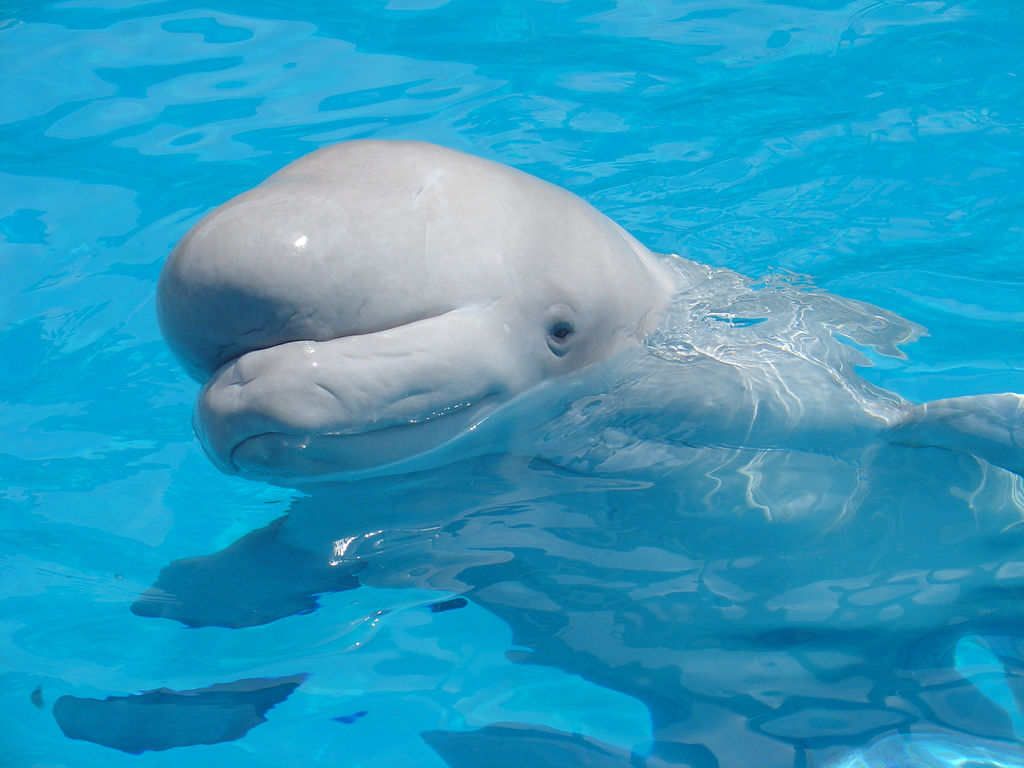
Beluga whale can mimic human speech with surprising accuracy

Beluga whale

A recent study uncovered that a beluga whale had the ability to mimic the sound of human speech -- but it might not be what you're expecting to hear.

Move over, parrots. There’s a new animal in town that can mimic the sound of humans talking, and it’s NOC, a male Beluga whale who was residing National Marine Mammal Foundation in San Diego in 1984 before he died five years ago. A recent study published by Current Biology in the latest October issue found that “spontaneous human speech mimicry by a cetacean” was possible thanks to recordings by NOC.

The story of NOC’s talking is actually quite adorable: Initially, divers claimed they’d always hear strange noises underwater but thought NOC’s voice was the sound of two people chattering in a distance. But when a group of divers trained outside of NOC’s enclosure and thought they heard someone telling them to get out, they realized it was NOC “speaking.” After the incident, divers began studying the series of sounds coming out of NOC’s mouth, and discovered that the white cetacean was mimicking the sounds of humans talking.

“[The] team recorded NOC’s calls, and found that their acoustic features were very unlike typical whale sounds, but not unlike those of human speech,” Discover Magazine reports. “The rhythm was comparable, with vocal bursts that lasted for around three seconds and gaps of less than 0.5 seconds.”

The study goes on to further find that it was unlikely that NOC learned how to speak, but was simply “interested” in the sounds heard around him. Which wouldn’t be surprising, given that whales are also pretty vocal animals, and closely related to its Cetacean sibling, the dolphin. Eventually, the study ended as NOC began to slowed his speech after four years, and passed after 30 years at the NMMF.

So I bet you’re dying to hear how a beluga whale interprets the way we talk. Hold on to your hats, the accuracy is going to blow your mind.

Not what you were expecting, huh? Yes, his voice sounds a bit like a kazoo, but to NOC’s credit, he’s pretty on par with an average Ke$ha song — and it’s honestly not too far off from the typical city chatter or a person fighting on the phone with a telemarketer. Had this discovery been around just a couple of years earlier, he would have been a great candidate for a collaboration with Beyonce and Jay-Z’s baby for a record-breaking single, featuring baby Ivy Blue and NOC the talking Beluga. Ah, the possibilities. Rest in peace, NOC, and thanks for wonderful human depiction.

Image Credit: Flickr/Lars Plougmann


Source : digitaltrends[dot]com

Sep 6, 2012

Obama’s DNC speech sets new political record on Twitter

Obama Reddit AMA question conspiracy

President Obama helped set a new Twitter record Thursday night, with his DNC speech provoking the most tweets ever for a "political moment."

Twitter went into overdrive Thursday night as masses of its users fired off a ton of tweets during President Obama’s acceptance speech at the Democratic National Convention in Charlotte, North Carolina.

According to the official Twitter blog, the speech set a new record for “political moments” on the microblogging site, with 52,756 tweets-per-minute being posted at the end of the president’s address.

Adam Sharp, Twitter’s head of government, news, and social innovation, wrote in the post: “The Democratic National Convention has driven an incredible amount of Twitter conversation since the very first day. [At] the close of the official proceedings, we have seen more than 9.5 million tweets sent about the events in Charlotte.”

He added that Thursday alone saw 4 million tweets relating to the convention, a figure equal to the total number sent during the entire duration of last week’s Republican National Convention.

Sharp singled out the moments during Obama’s speech which really got Twitter users going:

- 43,646 tweets for “I’m no longer just the candidate, I’m the President.”

- 39,002 tweets for “I will never turn Medicare into a voucher.”

- 38,597 tweets during a discussion of Medicare

- 37,694 tweets for “We don’t think government can solve all our problems…”

- 34,572 tweets for quips about the Olympics and “Cold War mind warp.”

Sharp assured its users the Twitter blog would be following events closely between now and Election Day in November. “With the conversation about the 2012 election happening on Twitter, the road to Election Day 2012 will be paved in tweets,” he wrote.

It seems that wherever Obama goes, the connected world goes with him. Last week he did a 30-minute ‘Ask Me Anything’ session on Reddit, setting a new record for visitors to the site in the process. In fact, so many people logged on to view Obama’s AMA that the site buckled under the weight of demand, causing it to crash several times over the course of the session.


Source : digitaltrends[dot]com

Sep 5, 2012

Michelle Obama’s Tuesday speech drives 28K tweets per minute

Michelle Obama's keynote speech at last night's Democratic National Convention provoked almost twice as much conversation on Twitter as Mitt Romney's address to the Republican Convention last week. Is there a message in there about who the Internet is more interested in?

The people have spoken – Well, Tweeted  – and it’s official: America prefers Obama to Romney. Michelle Obama, that is.

According to a post on Twitter’s official blog, last night’s Democratic National Convention keynote speech by the First Lady resulted in an impressive 28,003 Tweets Per Minute, almost double that of the Republican National Convention speech from Republican Presidential nominee Mitt Romney last week (He peaked at 14,289 Tweets Per Minute).

The most popular line from Obama’s speech was “We’ve got so much more to do,” which Twitter reported had 22,004 TPM – Something not entirely surprising, considering the bipartisan appeal of the line (“We’re not done yet!” for the Democrats in the crowd, while the Republicans could take it to mean “We haven’t managed to do what we promised in the last three years.” Would thatall speeches offered quite so much to everyone listening) – while the second most popular line was the equally-agreeable “Living the American Dream,” with 21,577 TPM. Third place went to “How hard you work matters,” which scored 18,669 TPM.

If Romney feels bad about being overshadowed by Mrs. Obama, perhaps he can take some solace in the fact that her 28K TPM last night also scored significantly higher than President Obama’s last State of The Union address, which only managed to reach 14,131 TPM as its peak – 156 TPM lower than Romney’s keynote from last week, should such things matter.

Overall, Twitter engagement with this week’s DNC seems up on last week’s RNC, Twitter’s Head of Government, News and Social Innovation Adam Sharp reported. “Although it’s just the first night at the Democratic National Convention in Charlotte,” he wrote, “people have already posted more than 3 million Tweets, including #DNC2012 and related terms. In comparison, there were 4 million Tweets sent throughout the three days of last week’s Republican National Convention (#RNC2012).”

It wasn’t just Mrs. Obama raising the numbers, either; Mayor Julian Castro, considered by many pundits to be an up-and-comer akin to President Obama’s status back in 2004, reached the Tweets Per Minute total of 11,503 during his much-anticipated speech. That number puts him higher than any individual speaker at the RNC last week with the exception of Mitt Romney, surprisingly (Somewhere, Paul Ryan is very upset… or else, working out for his P90X for the day). Last night’s other speakers Massuchussets Governor Deval Patrick and Maryland Governor Martin O’Malley also hit worthy numbers, with 6.909 and 7,502 TPM respectively.

All of which raises the question: Why?

It’s not that the Republicans are necessarily any less of a force on Twitter; Romney’s numbers have been rising impressively over the last few months, and he’s expected to reach parity with the President before too long in terms of TPM about their respective campaigns, so… Are people just more engaged with the DNC as a topic this year? And if so, why? Expect experts from both sides of the political divide trying to work that one out over the next few days, if not weeks.


Source : digitaltrends[dot]com

Aug 30, 2012

‘Invisible Obama’ turns up on Twitter following Clint Eastwood’s bizarre RNC speech

Invisible Obama

It didn't take long for someone to sign up on Twitter as 'Invisible Obama' following Clint Eastwood's bizarre speech at the RNC on Thursday night. The account has already gathered over 30,000 followers – that's pretty good going considering it only went live a couple of hours ago.

It was all a bit bizarre, a bit confusing, a bit, well, odd. At the Republican National Convention on Thursday night, movie legend Clint Eastwood was brought out to entertain the audience prior to Mitt Romney’s big speech.

The 82-year-old actor proceeded to have a conversation – kind of – with an empty chair that he said seated President Obama. Over the next ten minutes or so, the movie actor asked the Invisible Obama a range of questions, but his rambling manner made the routine something of an awkward watch.

Of course, it didn’t take long for one wit to sign up to Twitter as Invisible Obama. The account – with the bio ‘Stage left of Clint Eastwood’ – has already gathered over 30,000 followers in the space of just a couple of hours.

Invisible Obama on Twitter

Invisible Obama has been posting tweets steadily throughout the evening. Here’s a few of them:

– “When Mitt Romney says “Mr. Chairman”, do you think he’s referring to me?”

– “I’m behind Mitt. No seriously. I’m right behind him.”

– “Clint Eastwood’s performance opposite an invisible man was the best since Daryl Hannah’s. I should know. I had a front seat”

As you might expect, the Twitter hashtags #clinteastwood and #invisibleobama are also on fire just now. And tonight’s speech has given birth to a new meme: Eastwooding – take a look here to see pictures of people talking to empty chairs.

Obama’s campaign team has even made a reference to Eastwood’s speech, posting a picture of Obama in a chair on its Twitter account with the comment, “This seat’s taken.”

A spokesman for the Romney presidential campaign team told The Wrap that Eastwood was making it up as he went along, which certainly appeared to be the case. “His ad-libbing was a break from the political speech-making, and the crowd enjoyed it,” the spokesman said.


Source : digitaltrends[dot]com

Aug 9, 2012

Watch what you tweet: How online troll crackdowns threaten freedom of speech

tweeting arrests court olympics

Abusive comments and racist insults are the stock and trade of the Web, but now British police have begun cracking down and making arrests. What ever happened to freedom of speech, and where do we draw the line?

You may have seen the news about the Twitter troll in the UK who was arrested for sending an abusive message to diver and gold medal hopeful, Tom Daley. After Daley failed to win a medal, a 17-year-old boy sent a malicious tweet which read, “You let your dad down I hope you know that.”

Daley’s father died of cancer last year. The boy responsible for the malicious tweet was issued with a harassment warning. Another arrest was made just a couple of days later because of a homophobic tweet, also aimed at Daley. The 28-year-old man arrested told police that he had left his phone unattended and someone had used his Twitter account as a prank.

Troll crackdown

These are not isolated incidents. The UK government is cracking down on Internet trolls. Back in March, after the footballer Fabrice Muamba collapsed on the pitch during a match, a student was arrested and subsequently jailed for 56 days for posting offensive and racist comments on Twitter. He served half his sentence.

One of the most high-profile cases concerned Paul Chambers, who sent a joke tweet back in January 2010 threatening to blow up an airport because he was annoyed at the cancellation of his flight. He was arrested by anti-terror police, who searched his home and confiscated his laptop, desktop computer, and mobile phone. He was convicted, fined, and even lost his job as a consequence. His first appeal was rejected but he has now finally won a high-court challenge.

How can you go to jail for trolling?

The law being enforced here in the United Kingdom is section 127 of the Communications Act, 2003 which is concerned with electronic messages which are “grossly offensive or of an indecent, obscene or menacing character.”

In effect, sending abusive tweets and other electronic messages is being treated the same way as if the perpetrator had said them in the street, face to face. But it’s not the same.

Naturally, the police are not expected to arrest everyone who makes an offensive comment. The courts are supposed to apply some common sense, but if they can charge someone like Paul Chambers for an obvious joke, then it’s clear they aren’t applying enough of it.

As a UK citizen, I’m seriously concerned about this. I don’t want the police and courts wasting time and money on this kind of stuff. I won’t feel any safer because a malicious tweeter was fined or sent to prison. There are genuinely dangerous criminals out there, let’s focus on them.

Watch what you tweet

It’s not just UK citizens who have to watch what they say on Twitter. You might not be arrested for a tweet in the US, but you can certainly get fired, even if you are a 20-year veteran of CNN. You also need to be careful not to attract the attention of Homeland Security or you may not get into the country. Two British teenagers tweeted a couple of stupid jokes and were flagged as a threat. When they landed in L.A. they were questioned, searched, handcuffed, and kept under armed guard before being sent home 12 hours later.

twitter site arrestsThen there’s the case of Guy Adams and his criticism of NBC’s Olympic coverage, which led to Twitter suspending his account. It has since been unsuspended, but the whole affair was pretty embarrassing for NBC and Twitter. There have actually been several Twitter-related problems with the Olympics as rounded up by The Wall Street Journal.

What about freedom of speech?

Is freedom of speech an all or nothing deal? Is there actually any harm in posting opinions and comments online?

I always liked the famous Voltaire quote: “I do not agree with what you have to say, but I’ll defend to the death your right to say it.”

Censorship seems like a slippery slope. Even if you start off targeting racist abuse or incitement to hatred it can quickly lead to pointless arrests. There is a distinction between expressing an opinion and sending a threatening or abusive message, but where exactly is the line?

If we’re going to empower security forces to catch potential threats, then we also need them to apply some common sense. Don’t arrest and punish people who are clearly not a threat. Maybe the problem is that saying something, no matter how vile or distasteful, should not be considered a crime.

Anonymity and privacy

Some people think the argument comes down to whether you should be allowed to post anonymously. No doubt, people can be empowered by anonymity and will often post things that they wouldn’t say if their identity was clear. However, many people seem to be happy enough to post all kinds of offensive comments without hiding their identity.

facebook avatar social media arrestsShould social media sites or even Internet service providers be compelled to provide details about their users if they post offensive comments or send threatening messages? Don’t they have a duty to protect the privacy of users? It’s a thorny issue.

It was recently established that anything you post publicly on Twitter can be used against you in a court of law. Law enforcement can access your tweets, even deleted tweets, without a warrant.

Grow a thicker skin

Look at any forum or comment section or at social media posts and you’ll find a wealth of offensive nonsense. As a writer, I’ve grown used to offensive comments and even abusive emails. Perhaps I had already developed a thick skin from playing first-person shooters where abusive language and insults fly thick and fast.

There should be a mechanism for flagging offensive behavior and a process for banning the people responsible. Generally speaking, there already is; it just isn’t very effective against determined trolls. There may be a better way to deal with them, but I’m certain it isn’t getting the police involved. How about just turning the other cheek, growing a thicker skin, and rising above it?

What do you think? Post a (friendly) comment or I’ll set the UK police on you.


Source : digitaltrends[dot]com