Pages

Showing posts with label romney. Show all posts

Nov 10, 2012

This week in Facebook news

This week in Facebook: MItt Romney's page is losing friends, popular users can promote posts, and Facebook is upping your self esteem but killing your self control.

Not a week goes by that Facebook doesn’t issue a handful of releases or create a buzz around itself, and this one was no exception. Here are five of the top Facebook stories you may have missed from the last five days.

Mitt Romney is bleeding Facebook friends
romney facebook page bleeding of friends

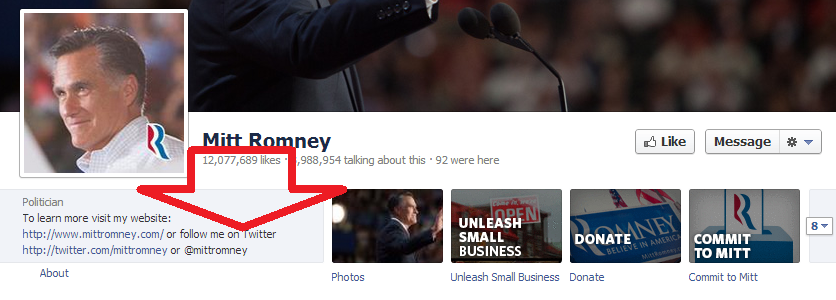
With the election over and along with it Mitt Romney’s campaign, and now Mitt Romney’s Facebook page is stuck in social media purgatory. Campaigners will no longer be updating the page, it just simply “exists.” Whatever the motivation may be, followers of the former presidential candidate’s Facebook page are unliking Romney in droves. “Refresh the page – 12.08 million. Refresh again – 15 less,” Caitlin Dewey of The Washington Post wrote when she first realized what was transpiring. We checked it out for ourselves, and indeed, we were witnessing an exodus of former followers fleeing his Facebook page – based on our eyeball calculation, we estimate about 10 followers were unliking the page every second. At this rate, should it be maintained, the “Likes” count will plummet to zero in just two weeks.

Fedex encourages shipping using its Facebook app

Just in time for the holiday season, and not long after Facebook Gifts was officially announced, Fedex is making a foray into making shipping social – sort of. Fedex’s newly launched Facebook App is called Ship To Friends, which is undoubtedly inspired by Facebook Gift’s own shipping process. On one hand, when we checked out the app we could see the value in the fact that it simplifies the process of shipping a package on the Web. If you’ve ever tried shipping a package on Fedex’s own website, you’ll know how frustrating it is to navigate as well as figure out the price and size of the package. Ship To Friends takes you through the process, with the prices listed clearly alongside delivery hours and dates. It makes you wonder why Fedex.com’s native shipping feature isn’t as easy to use as its Facebook app.

A couple caveats to note from our testing is that that international shipping isn’t supported and the app doesn’t send a shipping request to friends — meaning you can’t request that your friends enter in their own mailing addresses, which is a feature offered on Facebook Gifts. 

Facebook testing audio notifications
facebook audio notification settings

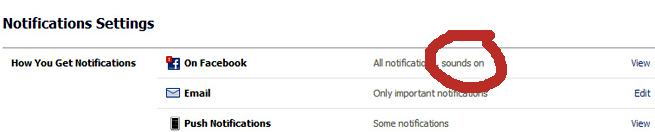
You might remember the days of the iconic “You’ve got mail” alert. It was annoying yet endearing, and apparently something similar may be heading to Facebook. Facebook confirmed with Venturebeat that alerts, which ping users when they receive new notifications, are being tested selectively. The alerts, if rolled out to all users, can be turned on and off in the account settings page.

Popular Facebook users can now get in on Promoted Posts
Facebook promoted post for over 5000 friends

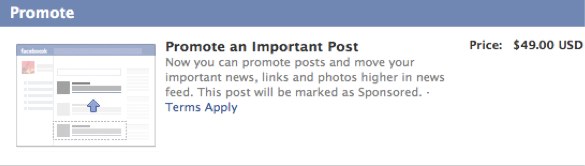
The upper echelons of Facebook users, who have more than 5,000 friends and/or subscribers, were unable to reap the “benefits” of the Promoted Posts advertising product that Facebook launched last month. Namely journalists, celebrities, politicians, and anyone else who would most likely have thousands of subscribers are the ones this change applies to. For those of us that fit in the 5,000 friends and fewer category are only charged $7 for a post to be promoted. It’s being reported that these users are being charged a premium of $49 to promote a post to friends and subscribers.

Facebook inflates egos, users lose self-control

Facebook can be addicting for some people, and for others it can boost self-esteem. A study by researchers from The University of Pittsburgh and Columbia University examined the effects of social media on human behavior and according to the paper, users are selective on what they share online and tend to portray themselves on social networks in a positive matter. This effectively boosts their self esteem. Interestingly enough, the study mentions that people looking in a mirror tend not to feel good about themselves. With this in mind, the researchers found a correlation between high self esteem and self control. “Enhanced self esteem from using a social network can have a detrimental effect on behavior,” says researchers Keith Wilcox of Columbia Business School, and Andrew T. Stephen of The University of Pittsburgh. “We present evidence suggesting that greater social network use is associated with a higher body-mass index and higher levels of credit card debt for individuals with strong ties to their social network.”

The root of the problem is that “elevated feelings of self-worth can lead to more impulsive or indulgent behavior. Citing Wilcox’s previous research, the study adds that inflated feelings of pride, which is related to self esteem, “results in more indulgent choices in subsequent tasks that are unrelated to the source of pride.”

We’ll go ahead and add this to the mountain of behavioral effects social networks are having on us. 

Facebook testing commenting threads
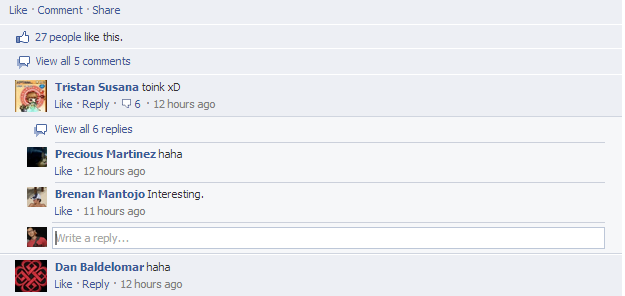
facebook comment threading

If you’ve ever cursed Facebook for overlooking the ability to comment on a comment, it looks like you’re in luck. A blogger and social media manager of Kairay Media discovered that comment threading was enabled on a Filipino Facebook page.

This feature, limited to a small test group, enables users to reply to comments. You’ll see a “Reply” button next to “Like” on the original comments. The replies to the comments can also be “Liked.” A third level of commenting isn’t supported. Facebook confirmed that the structure, as of testing, is as follows:

1. Comment

2. Reply to comment

Facebook’s spokesperson also provided us with the same statement, explaining the purpose of the feature:

“We are testing a new way to add comments to a post on Facebook. With this test you will be able to reply to another comment as well as the original post. This is just a small test at this stage.”

Comment threading, while being tested out at a limited scale, is a much awaited feature that many of us will be glad to embrace. For one thing, it should help to contain those heated arguments or side conversations in its own thread without disrupting the general flow.


Source : digitaltrends[dot]com

Oct 11, 2012

Growing number of Americans ‘dual screened’ debates last week

When you watched Mitt Romney and Barack Obama debate against each other last week, did you do so on television, on your computer, or both at the same time? A new survey suggests that, if you went for the latter option, you weren't alone.

If you’re planning on tuning into tonight’s US Vice Presidential Debate between current VP Joe Biden and Republican challenger Paul Ryan, then here’s a question: How are you planning on tuning in? After all, although the debate will be carried live by multiple television channels (including ABC, CBS, Fox, NBC and PBS, as well as Fox News, CNN and MSNBC), it’ll also be streamed live online in multiple locations as well, and aired on the radio. Which venue and format is the preferred one for checking out the political conversation of the evening?

The reason I ask is that the Pew Research Center for the People and the Press have looked into the ways in which people watched last week’s first Presidential Debate between Mitt Romney and Barack Obama, and discovered that more and more people than ever before appear to be using multiple methods for watching at the same time. According to Pew, 56 percent of those polled said that they watched the debate live, with 11 percent of those watchers admitting to being what the research body calls “dual screeners” – viewers who watched the event on television and followed it online at the same time.

The survey contacted 1006 adults in the US between October 4 (the day after the debate) and October 7 to ask about their viewing habits when it came to the debate. It found that, of the 56 percent who said that they watched the debate live (563 people, assuming that the 56 is a rounded figure), 85 percent of them watched the debate exclusively on television. That figure breaks down, as you might expect, to skew heavily in the older age ranges: Of viewers 65 and older, 98 percent of them watched solely on television, with 89 percent of those aged 40 through 64 years old. Only 67 percent of viewers aged between 18 and 39 restricted themselves to television. The younger demographic was more friendly to online viewing, with 10 percent of the 18-39 group watching only online, and 22 percent watching both television and online simultaneously, compared with 10 percent of the 40-64 group, and 2 percent of the 65 and above group (No-one in that latter group said that they watched the debate online only, and only 1 percent of those in the 40-64 group watched solely via Internet).

(For those who are curious, there was no noticeable pattern in the political affiliations of viewers when it came to their method of viewing; democrats, republicans and independents alike essentially watched television, online and both in equal numbers.)

Overall, the survey found that traditional media can feel confident about the way it’s measuring up to the Internet, with more than twice as many respondents also saying that they watched more traditional sources (Television, radio, newspapers) than digital in terms of overall debate coverage, 78 percent against 36 for digital (Maybe they were waiting for the Bad Lip Reading remix). While traditional media may be in trouble in the larger scheme of things, apparently it still feels like the best choice for people when it comes to political news.


Source : digitaltrends[dot]com

Sep 27, 2012

How social media is sinking Mitt Romney

mitt romney social media fail

Love or hate his politics, Mitt Romney’s recurring social media slipups show how technology is changing the campaign game, and steepening on the learning curve.

The significance of social media is indisputable. While its monetary value is still up for debate, the influential role it plays in users’ lives is inarguable, and that’s become incredibly evident in the world of politics. The fact that campaigns now have Social Media Directors is proof enough that this stuff matters – as in could decide elections matters.

As November nears, it’s becoming increasingly clear that our next president takes social media seriously, and the results have been mixed. Presidential hopeful Mitt Romney has particularly had a rough go at attempting to mold the minds of America using these tools. A quick recap on the Romney teams social missteps:

  • The “With Mitt” app misspells “America” as “Amercia.” Hilarity and fodder ensue, as you’d expect.
  • Romney’s Twitter followers jumped more than 100k followers over 24 hours back in July, causing many of us to assume the campaign bought them. A charge they denied – but suffice it to say there’s a lot of evidence suggesting this was absolutely what happened.
  • The Romney donation products appear to copy wording from Obama’s.

And those are just some of the most obvious digital blunders – there are plenty of Romney gaffes that have gone viral thanks to the Internet, but that’s something else entirely. It’s the fact that the presidential candidate’s own efforts to embrace social media have been so cringe worthy that’s raising eyebrows.

Now, the Romney campaign is going on the offensive, trying to prove they – he – gets social media, mostly thanks to a handful of collaborations with some of the Silicon Valley elite and new product implementation. For instance, Romney’s team hit the ground running with Facebook’s new Sponsored Results feature shortly after it was available, and its propriety Square app and reader it’s been using for fundraising. Romney has the new Twitter profile set up, while Obama doesn’t. He’s arguably making better use of the tools at his disposal. 

This is all well and good, and these are things that Romney’s campaign – and Obama’s for that matter – should be doing. But the act of using social media to connect is what eludes Romney: He doesn’t exactly seem like a personable guy, and his attempts at humanizing himself using the social Web sound just as measured and calculated,and occasionally, awkward as everything else he does. From his laughable overuse of @ pinging President Obama every time he mentions him, to the fact that his Facebook posts are almost entirely written in the first person, as if we’re supposed to believe that he seriously pens each of these posts. It’s clear that painting himself as the Average Joe who uses the Internet just like you and I do simply isn’t within Romney’s reach.

romney and the mention

Honestly, this has nothing to do with politics – it’s purely personal. But advocates will point to his social media accounts’ impressive numbers, so they deserve mention. As of press time: 

  • Romney Twitter followers: 1,187,593; Obama Twitter Followers: 20,195,248
  • Romney retweets: 1,184; Obama retweets: NA
  • Romney Facebook Likes: 7,457,939;Obama Facebook Likes: 28,930,040

Given the fact that Obama is a veteran here, those are certainly admirable metrics. But there’s one that doesn’t get mentioned very much that also matters quite a bit and reflects outreach efforts:

  • Romney following (via Twitter): 269; Obama following (via Twitter): 672, 501

This critique isn’t about political leanings, it’s about the personal touch. All the optimization tools, hashtags, Sponsored Stories, and Promoted Tweets in the world can’t turn a man into a social media master. You have to understand how people talk on Twitter, how they respond on Facebook, and try as the Romney campaign might, the result has simply been to showcase that no, Mitt Romney is just not like you and me – and no amount of social networking can change that. 


Source : digitaltrends[dot]com

Sep 10, 2012

What Facebook can tell us about Obama and Romney’s supporters

Compass Labs, a social media platform, has released a comparison of the likes and dislikes of Facebook supporters of Mitt Romney and Barack Obama, revealing the unsurprising differences - and very surprising similarities - between the two camps.

With all the partisan complaining and fighting coming out of this year’s US Presidential Election, you might think that there’s nothing that Democrats and Republicans can agree on, but there is: The shopping experience known as Target. There’s also The Hangover, football and soccer.

These similarities are some of the facts coming from a comparison of Obama and Romney fans on Facebook that’s been released by social media ad platform Compass Labs. Using its data-mining powers for good (Well, informative purposes) instead of evil (That is to say, marketing purposes), Compass has revealed that while Obama may have more Facebook fans, Romney’s smaller number is more passionate and more in tune with what their guy is saying.

Obama has 28,365,075 fans to Romney’s 6,446,941 fans on Facebook – or, at least, those numbers were the case when Compass surveyed the information – but Romney has the edge on both the amount of online chatter about candidates (3,340,348 people talking about him, against Obama’s 3,051,585) and level of fan engagement in terms of those “liking” statuses or messages – 52 percent for Romney versus a paltry 11 percent for Obama.

(Interestingly enough, there are more Republican Facebook fans than Democrat fans by a considerably margin: 706,872 against 515,690, and the level of engagement is equally swapped, with Democrats being more engaged with a 46 percent ration versus the Republicans’ 34 percent. Republicans still have an edge in terms of discussion, however; 241,451 people commenting against the Democrats’ 234,787 people.)

In terms of demographic breakdown, the majority of Romney’s supporters – 43 percent – are older than 55 years of age (Only 11 percent are younger than 25), while Obama’s appeal is spread more evenly across age groups: 24 percent over 55, then 21 percent aged 25-25, 20 percent aged 18 to 25, 17 percent aged 45-55 and 18 percent 35-45 years of age. Obama’s gender demographic is the mirror image of Romney’s, with a 53 percent female, 47 percent male ratio while his opponent has 53 percent male and 47 percent female.

Where Compass’ data breakdown is most fun, however, is seeing the lists of activities, favorite movies, TV shows and brands. For example, while both Republicans and Democrats like football and soccer, Republicans would rather play golf, quilt or go to church than Democrats, who’ll apparently be spending their time power walking, camping or meditating. Everyone agrees that they like The Hangover, but Democrats would rather watch Paranormal Activity while Republicans prefer The Sound of Music (No, really: The Sound of Music actually shows up as the third most popular movie for Republicans. Who knew?).

The television show breakdown seems amazingly obvious: Republicans prefer The O’Reilly Factor and The Sean Hannity Show, while Democrats go for The Daily Show and The Colbert Report (Both sides enjoy Family Guy, however). When it comes to brands, Target shows up on both lists, but Romney fans would prefer to eat at McDonalds and drink something from Starbucks, while Obama’s followers would spend their time talking on something from Samsung Mobile USA or using their Visa cards.

It’d be nice to imagine that such lists will humanize the all-too-often demonized other sides in what’s all too often a ridiculous and desensitized race, but that may be too much to hope for in today’s climate. Instead, I’ll just cling to the idea that even the worst partisan bickering can apparently be defused by a DVD showing Stewie Griffin playing soccer purchased from Target. Just imagine…


Source : digitaltrends[dot]com

Sep 5, 2012

Michelle Obama’s Tuesday speech drives 28K tweets per minute

Michelle Obama's keynote speech at last night's Democratic National Convention provoked almost twice as much conversation on Twitter as Mitt Romney's address to the Republican Convention last week. Is there a message in there about who the Internet is more interested in?

The people have spoken – Well, Tweeted  – and it’s official: America prefers Obama to Romney. Michelle Obama, that is.

According to a post on Twitter’s official blog, last night’s Democratic National Convention keynote speech by the First Lady resulted in an impressive 28,003 Tweets Per Minute, almost double that of the Republican National Convention speech from Republican Presidential nominee Mitt Romney last week (He peaked at 14,289 Tweets Per Minute).

The most popular line from Obama’s speech was “We’ve got so much more to do,” which Twitter reported had 22,004 TPM – Something not entirely surprising, considering the bipartisan appeal of the line (“We’re not done yet!” for the Democrats in the crowd, while the Republicans could take it to mean “We haven’t managed to do what we promised in the last three years.” Would thatall speeches offered quite so much to everyone listening) – while the second most popular line was the equally-agreeable “Living the American Dream,” with 21,577 TPM. Third place went to “How hard you work matters,” which scored 18,669 TPM.

If Romney feels bad about being overshadowed by Mrs. Obama, perhaps he can take some solace in the fact that her 28K TPM last night also scored significantly higher than President Obama’s last State of The Union address, which only managed to reach 14,131 TPM as its peak – 156 TPM lower than Romney’s keynote from last week, should such things matter.

Overall, Twitter engagement with this week’s DNC seems up on last week’s RNC, Twitter’s Head of Government, News and Social Innovation Adam Sharp reported. “Although it’s just the first night at the Democratic National Convention in Charlotte,” he wrote, “people have already posted more than 3 million Tweets, including #DNC2012 and related terms. In comparison, there were 4 million Tweets sent throughout the three days of last week’s Republican National Convention (#RNC2012).”

It wasn’t just Mrs. Obama raising the numbers, either; Mayor Julian Castro, considered by many pundits to be an up-and-comer akin to President Obama’s status back in 2004, reached the Tweets Per Minute total of 11,503 during his much-anticipated speech. That number puts him higher than any individual speaker at the RNC last week with the exception of Mitt Romney, surprisingly (Somewhere, Paul Ryan is very upset… or else, working out for his P90X for the day). Last night’s other speakers Massuchussets Governor Deval Patrick and Maryland Governor Martin O’Malley also hit worthy numbers, with 6.909 and 7,502 TPM respectively.

All of which raises the question: Why?

It’s not that the Republicans are necessarily any less of a force on Twitter; Romney’s numbers have been rising impressively over the last few months, and he’s expected to reach parity with the President before too long in terms of TPM about their respective campaigns, so… Are people just more engaged with the DNC as a topic this year? And if so, why? Expect experts from both sides of the political divide trying to work that one out over the next few days, if not weeks.


Source : digitaltrends[dot]com