Pages

Showing posts with label study. Show all posts

Nov 19, 2012

The copyright study that Hollywood doesn’t want you to see

Copyright troll tactic tested

A report from the U.S. House's Republican Study Committee that criticizes the current copyright system was quickly removed from the organizations website after alleged complaints from Hollywood lobbyists. Here's everything you need to know, and why you should care.

Few issues rile up civic-minded Web users like copyright policy – and for good reason. U.S. copyright laws are ground zero in the fight between content creators – Hollywood movie studios, record companies, software creators, etc. – and us, the Web users, who “consume” that content. Copyright is the reason the largest Internet service providers in the U.S. are about to start bombarding subscribers with notices that say they may be breaking the law by clicking certain links. It is the force that has confused the idea of ownership in the digital era to the point that it is no longer recognizable. And it is for these reasons, and many others, that so many believe copyright reform is critical for both Web users, and the U.S. economy at large.

Which is why many an eyebrow raised on Friday after the influential Republican Study Committee (RSC) released a policy brief that called for a major overhaul of U.S. copyright policy. The findings and recommendations in the study, which is entitled “Three Myths About Copyright Law and Where to Start to Fix it,” were so “reasonable” that copyright reform evangelists in the technology community immediately jumped on the report as a sign that Washington may soon shed itself of the Hollywood lobbyist-imposed view of copyright, and begin fighting for consumer-focused change.

The elation was short-lived, however; less than 24 hours after the policy brief went up on the Web, the RSC pulled the study from its website. (We’ve reposted it below, in full.)

“Yesterday you received a Policy Brief on copyright law that was published without adequate review within the RSC and failed to meet that standard,” wrote RSC Executive Director Paul S. Teller in a mass email. “Copyright reform would have far-reaching impacts, so it is incredibly important that it be approached with all facts and viewpoints in hand.”

The “three myths” of copyright

The policy brief, authored by RSC staff member Derek Khanna, argues that current copyright policy is damaging to the U.S. economy because it “destroys entire markets,” flies in the face of free market capitalism, and imposes painful, “arbitrary” penalties on those who violate copyright law. In short: The policy brief argues exactly what critics of copyright have been saying for years. Only this time, it came from a source within U.S. House of Representatives – something that has never happened before.

Here is a summary of Khanna’s “three myths” of copyright, and why they are myths:

  1. Copyright was not created in order to guarantee that content creators get paid, as copyright reliant industries claim; it was created to “promote the progress of science and useful arts,” according to the U.S. Constitution. Khanna adds that the “purpose” of copyright “is to lead to maximum productivity and innovation.”
  2. Copyright is not, as some claim, “free market capitalism at work,” writes Khanna. It is the exact opposite: “a government-subsidized monopoly,” thanks to the massive, government-upheld penalties on those who violate copyright.
  3. Copyright does not lead to “innovation and productivity,” writes Khanna. He argues that, instead, copyright policy has created “a system that picks winners and losers, and the losers are new industries that could generate new wealth and added value.”

How to “fix” copyright

Khanna says these misconceptions and errant implementations of copyright policy have stifled a number of industries, including the DJ/remix industry (which he says has become “heavily retarded” in the U.S.); areas of scientific inquiry, due to the copyright of scientific papers from the 20th century; public libraries; journalism; and “added-value” industries, which are prohibited from transforming things like books and movies to include user-generated content such as “‘VH1 Pop-up video’ add-ons.”

To unbind these industries and others, Khanna suggests these reforms to copyright policy:

  1. Statutory damage reform: Limit the amount of money copyright violators can be charged from the current range of $750 to $150,000 per violation down to something more realistic.
  2. Expand fair use: Allow people to use copyrighted content to create their own content more freely. Khanna points to a paper entitled “Infringement Nation,” which “details how things you do every single day are infringing and leave every single person liable for billions in damages each year.”
  3. Punish false copyright claims: Copyright owners face “minimal or nearly non-existent punishment for bogus copyright claims today,” writes Khanna. He says this “often leads to de facto censorship,” something he says would be greatly diminished if there were penalties for copyright owners who falsely claim ownership.
  4. Heavily limit terms of copyright: Right now, copyright law says that individual copyright extends for the life of the author plus 70 years. For corporate copyright owners, the period is potentially even longer: 120 from the date of creation, or 95 years from first publication. Khanna recommends limiting this to an initial “free” 12 years of copyright protection, with the ability for copyright owners to renew the copyright for additional years at a cost.

A tipping point for copyright reform?

While the RSC has disowned Khanna’s report – for reasons officially unknown, but speculated to have something to do with “lobbyist pressure” on the organization, according to an anonymous source who spoke with Ars Technica – the ideas in the brief could represent a sea change for the GOP, which is currently seeking to draw in young voters for which copyright reform is a major issue. The Web-centric fight over the Stop Online Privacy Act (SOPA) and the PROTECT IP Act (PIPA) from earlier this year has also led Congress to reconsider its relationship with Hollywood studios and other heavy hitters in copyright-centric industries.

“It’s always hard to get legislation of any kind passed, but I think the chances have improved enormously since SOPA and PIPA were defeated earlier this year,” said Gigi Sohn, president and CEO of rights advocacy group Public Knowledge, in an email with Digital Trends.

Sohn says that a number of Khanna’s ideas – many of which have been long supported by Public Knowledge and other copyright reform advocates – could make their way through Congress in the coming months and years.

“Some of the possible provisions might include those that 1) expand fair use, including the ability to circumvent technological protection measures for lawful uses; 2) punish copyright holders who willfully and recklessly abuse copyright law and the takedown provisions of the [Digital Millennium Copyright Act]; 3) shorten copyright terms; 4) reduce statutory damages and 5) ensure that the ‘first sale’ doctrine is preserved in the digital age,” said Sohn.

In fact, some of these provisions are already floating around Washington. For example, earlier this month, Rep. Darrell Issa (R-CA) announced a proposal that seeks to allow consumers of movies and music to convert this content into digital formats.

Why you should care (if you don’t already)

Despite the passion surrounding the copyright debate, it is perfectly understandable why many Web users’ eyes glaze over at the mention of any type of policy reform. It’s complicated, even boring. But according to experts on both sides of the debate, copyright is something we should all pay attention to.

“Copyright affects every person’s ability to create, innovate, and express themselves freely,” said Sohn. “If copyright is too strong, it makes those abilities much harder for everyone but the biggest media companies.” She adds that citizens should “tell their Senators and Representatives that reforming our copyright system is important to them and that they want Congress to act in the upcoming term to make copyright law more balanced.”

PJ Kuyper, president of the Motion Picture Licensing Corporation (MPLC), agrees that copyright is important, but believes that it should be respected, not gutted.

“Copyright is not a conservative or liberal issue nor is it about more government or less government,” Kuyper said in an email to Digital Trends. “We should all be on the side of copyright because it is about property rights. No one has a monopoly to music or movies, just a monopoly on their song or their movie. It is no different than car keys giving you a monopoly on your own car.” (Emphasis his.)

What do you think? Should Congress adopt the ideas promoted by Khanna and Public Knowledge? Or should copyright be even stronger than it is today? Let us know your thoughts in the comments. And check out the full RSC policy brief below:

RSC policy brief: Three Myths about Copyright Law and Where to Start to Fix It


Source : digitaltrends[dot]com

Oct 26, 2012

One third of young adults in America are Facebook friends with their boss

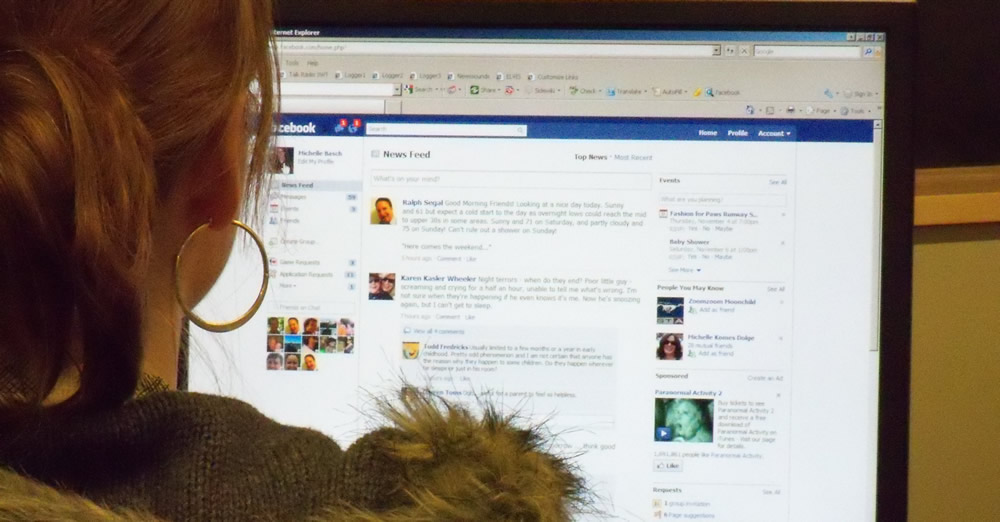
Facebook browsing

Despite the possibility that bad behavior posted on the Web could lead to real-world consequences, more young adults are befriending their boss on Facebook.

Detailed in a new study commissioned by AVG, approximately thirty-three percent of Americans between the age of 18 to 25 are Facebook friends with their boss in the workplace. While the average of all eleven countries was around twenty-five percent, the United States and Italy tied for the highest percentage of young adults that befriended their boss on the popular social network. Alternatively, the lowest percentages came from Germany, Japan and France. AVG’s sample size across the eleven countries included approximately 4,400 young adults. 

Facebook Login Close-upRegarding this social trend with young adults, AVG Security Evangelist Tony Anscombe stated “AVG’s latest research clearly shows young people today have a comfort with using online social networks that is leading to blurring between their professional and private lives. It seems obvious that posting abusive content about a boss or workplace is not very sensible, but it’s important to understand that not only could it damage a person’s existing career, it could also negatively impact on future opportunities too.”

In addition, an average of thirteen percent of young adults claimed to have posted a negative comment on Facebook about their boss or workplace after a stressful day at the office. Employees in Germany, Spain and Italy were the most likely to complain on Facebook. Nearly sixty percent of Americans don’t take advantage of Facebook’s filtering tools to restrict the content that can be viewed by co-workers. People working in Japan and the Czech Republic were the most likely to bypass those security filters while young adults in Germany and France are more diligent about hiding updates from co-workers. 

Approximately 43 percent of young adults had performed an audit of all social profiles on the Web in order to make themselves look attractive to employers. In addition, thirteen percent of young adults in America mentioned that information found on one of their social pages was brought up during an interview. Regarding the use of information found on social media profiles during the interview process, Anscombe said “Our research findings indicate that today’s 18- 25 year old ‘digital natives’ need to be more aware of their online brand as something employers and recruiters are increasingly investigating.” 

Facebook at workWhile America did rank the highest for boss friendships, young American adults are carefully watching what type of media is posted on Facebook. According to the report, the United States ranked the lowest in young adults that are posting inappropriate images on their Facebook accounts.

Spain ranked the highest as eighty percent of respondents claim to post inappropriate images on their profiles. Interestingly, over half of all respondents wish that they could remove all inappropriate images of themselves off social networks. 

Regarding accessing social networks in the workplace, nearly sixty percent of Americans admit to using a mobile device like a smartphone to access Facebook or other social networks. A previous study indicated that nearly eighty percent of people can’t last a single day without checking up on the latest Facebook status updates. More recently, a man attempting to become more productive while working hired a woman off Craigslist to slap him in the face each time he started wasting time on Facebook. 


Source : digitaltrends[dot]com

Oct 23, 2012

Beluga whale can mimic human speech with surprising accuracy

Beluga whale

A recent study uncovered that a beluga whale had the ability to mimic the sound of human speech -- but it might not be what you're expecting to hear.

Move over, parrots. There’s a new animal in town that can mimic the sound of humans talking, and it’s NOC, a male Beluga whale who was residing National Marine Mammal Foundation in San Diego in 1984 before he died five years ago. A recent study published by Current Biology in the latest October issue found that “spontaneous human speech mimicry by a cetacean” was possible thanks to recordings by NOC.

The story of NOC’s talking is actually quite adorable: Initially, divers claimed they’d always hear strange noises underwater but thought NOC’s voice was the sound of two people chattering in a distance. But when a group of divers trained outside of NOC’s enclosure and thought they heard someone telling them to get out, they realized it was NOC “speaking.” After the incident, divers began studying the series of sounds coming out of NOC’s mouth, and discovered that the white cetacean was mimicking the sounds of humans talking.

“[The] team recorded NOC’s calls, and found that their acoustic features were very unlike typical whale sounds, but not unlike those of human speech,” Discover Magazine reports. “The rhythm was comparable, with vocal bursts that lasted for around three seconds and gaps of less than 0.5 seconds.”

The study goes on to further find that it was unlikely that NOC learned how to speak, but was simply “interested” in the sounds heard around him. Which wouldn’t be surprising, given that whales are also pretty vocal animals, and closely related to its Cetacean sibling, the dolphin. Eventually, the study ended as NOC began to slowed his speech after four years, and passed after 30 years at the NMMF.

So I bet you’re dying to hear how a beluga whale interprets the way we talk. Hold on to your hats, the accuracy is going to blow your mind.

Not what you were expecting, huh? Yes, his voice sounds a bit like a kazoo, but to NOC’s credit, he’s pretty on par with an average Ke$ha song — and it’s honestly not too far off from the typical city chatter or a person fighting on the phone with a telemarketer. Had this discovery been around just a couple of years earlier, he would have been a great candidate for a collaboration with Beyonce and Jay-Z’s baby for a record-breaking single, featuring baby Ivy Blue and NOC the talking Beluga. Ah, the possibilities. Rest in peace, NOC, and thanks for wonderful human depiction.

Image Credit: Flickr/Lars Plougmann


Source : digitaltrends[dot]com

Oct 18, 2012

Do you remember Facebook political ads? If not, you’re not alone

The penetration rate of political advertising on Facebook isn't the kind of thing that is likely to impact the results of any electorial race, according to a new study that claims that voters just don't remember the ads that they've seen.

If you’re someone who finds the constant barrage of political advertising on social media in the weeks running up to this year’s US Presidential Election to be more than a little distracting – if not entirely offputting – then there’s some good news for the future: You’re likely to see a lot less of it… Or, at least, a lot less of the kind that you’ve become all too familiar with.

The reason for that is that a new study entitled Can Facebook Advertisements Increase Political Candidates’ Name Recognition and Favorability? Evidence from a Randomized Field Experiment - conducted by University of California Department of Political Science graduate student David Broockman and Columbia University Professor of Political Science, Donald Green – has revealed that… Well, Facebook ads don’t actually seem to make any real impression on those that see them.

As the study reveals, although previous studies have demonstrated that other forms of media and advertising have detectable effects on undecided voters’ choices and behavior when it came to choosing a candidate – or even simply forming early opinions about a candidate – that wasn’t the case when it came to Facebook ads. “We found that voters randomly assigned to view a candidate’s online ads a number of times did not have significantly differing opinions of him and indeed did not recall seeing his ads at all,” the study reports.

“Speaking for myself I thought the results were surprising,” Broockman explained to the Talking Points Memo website. “Like most Americans I use Facebook every day and think it’s a great product. However, on reflection, I can’t remember any Facebook ads I’ve seen in the last week — and it appears most Americans are the same.”

Unsurprisingly, those who work in digital marketing aren’t exactly in agreement with the study’s results, pointing to flaws in the methodology. “This was just one one state legislative race [used in the study],” complained Rebolution Messaging’s Keegan Goudiss, adding, “You would think that they would at least compare several races at whatever level — legislative or above.”

It’s not all bad news for advertisers, though; as Broockman admits, the experiment’s results aren’t 100% bulletproof. “The experiment estimates the effect at zero, but it cannot say that it is exactly zero,” Broockman admitted. “It is possible that a very small number of people remembered the ads. But just like one undecided voter changing their mind from one day to the next wouldn’t itself register in a national poll, effects of the ads of such small sizes wouldn’t be able to be picked up in our study. We can be confident enough — that is, using the language of polls, the margin of error is small enough — to rule out the kind of effects that could have a meaningful impact on candidates’ campaigns.”


Source : digitaltrends[dot]com

Oct 16, 2012

U.S. smartphone owners pay 3-10 times more for 4G LTE data, says study

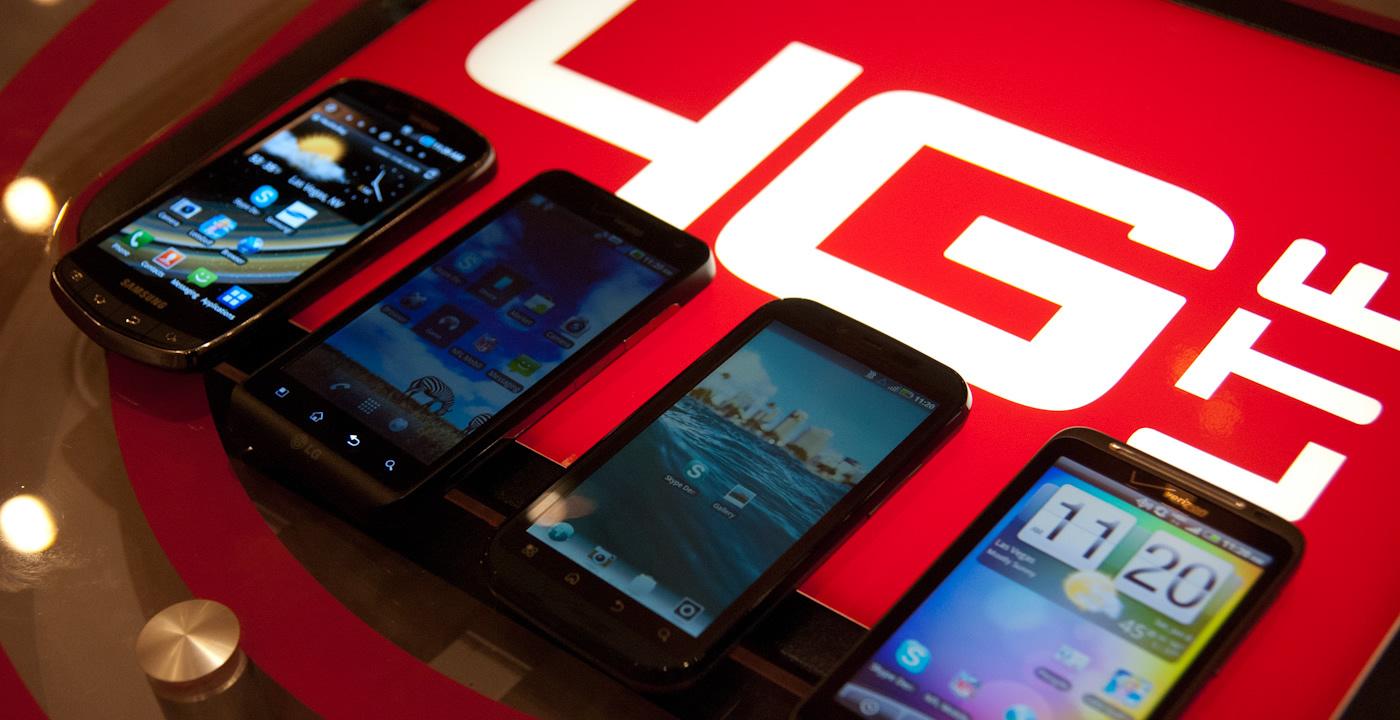
4G LTE

According to a recent study, Americans pay three times as much for their LTE network service than most Europeans -- and nearly ten times more than what Swedish citizens pay.

We can now add 4G LTE service to the list of things Americans pay significantly more to have than the rest of the world — right next to education and health care. According to a GSM Association study reported by the New York Times, Americans pay three times more per gigabyte of data than the average European consumers — and ten times more than Sweden. But at least we can get a large pizza for just $5, right America?

The study revealed that America’s leading LTE provider, Verizon Wireless, charges its subscribers $7.50 for every gigabyte of data downloaded over its network. In comparison, the average cost of a gig in Europe is $2.50. Sweden leads the way in inexpensive service, with data only ringing up at $0.63 per gigabyte.

Verizon spokeswomen Brenda Raney did counter this information by pointing out the Verizon plan that is being compared is from its Share Everything plan, which includes unlimited call and text minutes and allows data to be shared among ten devices. If a person was to purchase a data only plan, similar to how the European providers offer service, they would only pay over twice the European average with a cost of $5.50 per gigabyte. Of course, Europeans separate talk and data plans, though. Verizon, on the other hand, is forcing all new users to sign up for Share Everything plans. And though you can connect up to 10 devices to an account, there is a monthly fee per device, which ranges from $10 to $40. 

Verizon was the first company to roll out 4G LTE in the United States, followed by AT&T. Verizon still owns the market with 11.6 million LTE subscribers (AT&T reports just short of a million), or about 43 percent of the world’s 27 million LTE users. The lone country to beat Verizon to market just happens to be the cheapest: Sweden. The cost gap seems to have everything to do with competition, though. Europe has 38 of the world’s 88 LTE providers fighting for subscribers. Austria and Finland have three within their borders alone. Meanwhile, the world’s largest market for mobile, the United States, is still playing catch up in this regard.

This has actually been a trend with phone service in the United States. The average cost of a 3G contract runs an American citizen $115 a month. In comparison, citizens of the Netherlands pay $51 and those in Britain pay $59. The higher costs keep the adoption rate at a slow climb, which in turn keeps the cost up on those that have jumped on board because the provider has to recoup costs from building  the network. It’s a self-perpetuating cycle that is very American: Pay more, consume more, and get less.


Source : digitaltrends[dot]com

Sep 28, 2012

More Americans read news online than anywhere else, new survey says

More than half of all Americans use the Internet as their primary news source, a new study has found, with one third of adult Americans getting their news from social networks more than any other outlet.

An increasing number of all Americans use the Internet as their primary news source, a new study has found, with one third of adult Americans getting their news from social networks more than any other outlet. Is this a victory for the power of social media, or a sad commentary on the ineptitude of “regular” news media?

The Pew Research Center released the study Trends in News Consumption: 1991-2012 yesterday, tracking the ways in which readers and viewers receive information about current affairs over the last twenty-one years. The report backs up the long-held belief that the rise of the Internet has been felt most dramatically in print media, and print newspapers in particular, and demonstrates that television news reporting looks set to be affected in a similar way very soon, with the first signs already visible.

According to the most recent survey of news sources, only 23 percent of Americans read newspapers today, down from 47 percent in the year 2000; this drop is reflected outside of newspapers, with print magazine consumption also dropping from the year 2000 (18 percent of respondents read news magazines today, down from 26 percent in 2000). In comparison, 46 percent of Americans now get their news from the Internet at least three days a week, with 34 percent having done so in the 24 hours prior to answering the survey (That figure grew to 39 percent when cell phones and other mobile devices are factored in). That 46 percent figure is up from 37 percent for the same question when asked just two years ago, and apparently made up of young people with higher education (65 percent of online news junkies are college graduates, with only 22 percent of them ages 65 or older).

Even more impressive is the rise of social media’s importance in the news landscape. “The percentage of Americans saying they saw news or news headlines on a social networking site yesterday has doubled – from 9% to 19% – since 2010,” the report points out, adding that “among adults younger than age 30, as many saw news on a social networking site the previous day (33 percent) as saw any television news (34 percent), with just 13 percent having read a newspaper either in print or digital form.” Facebook is by far the most successful of all social sites, with 41 percent of all adults using it regularly for news, compared with just 13 percent for Twitter.

Social networking sites have a far higher news penetration than other sites you may have thought would be more traditionally popular; compared with the 33 percent who get their news from social media, only 12 percent read news blogs on a regular basis, with just 5 percent listening to news podcasts. This may be considered a lesson for Huffington Post and other news sites: Perhaps it’s time to just start using Facebook and save yourself the costs of a website.


Source : digitaltrends[dot]com

Sep 26, 2012

NPD: People prefer watching online video on televisions over computers

Samsung Smart TV

Definitely driven by the accessibility of streaming content on smart televisions, more people are watching online video in the home theater.

According to a new study published by the NPD Group, the most common place to watch online, streaming video is now the television rather than the personal computer. According to the results of the study, 45 percent of consumers use the television as the primary place to watch free and premium streaming video off the Web. When asked the same question during 2011, only one third of the respondents utilized the television as their first choice for watching streaming video. Alternatively, the amount of people that choose a personal desktop or laptop computer as the primary screen to watch online video dropped from 48 percent in 2011 to 31 percent during 2012. 

Netflix UINPD attributes the shift to the increased adoption of Web-connected, smart televisions as well as usage of set-top boxes like the Roku 2 or gaming consoles like the PlayStation 3 on older televisions.

According to NPD’s data, about ten percent of U.S. households have at least one smart television with access to streaming video applications like Netflix or Hulu Plus. In addition, more than forty percent of those households with smart televisions have accessed one form of online entertainment within the past year.

When asked about the transition of online video into the home theater, NPD Group senior VP of industry analysis Russ Crupnick stated “The growth in connected TVs is another sign that online video is maturing. Streaming video has moved from the dorm room to the living room; and, as more households obtain and connect TVs to the Web, we predict increased trial and engagement for video distribution services.”

Definitely not surprising, Netflix dominated consumer’s time in regards to services being used on Web-connected televisions. Approximately forty percent of the respondents that had a smart television used the flat panel to access Netflix Instant programming. Other popular services included the similarly priced Hulu Plus and the pay-per-view movie service Vudu. Perhaps most interesting, nearly twenty percent of households with smart televisions stopped using devices like set-top boxes, gaming consoles or Blu-ray players to access streaming video applications.


Source : digitaltrends[dot]com

Sep 25, 2012

Google study: User searches can predict 84% of video game sales

A new Google study analyzing search data related to best-selling games shows that user searches can predict a game's financial success.


Add video game industry sales analyst to the list of professions that Google’s ubiquitous search engine might wipe off the map. Like travel agents and record store clerks before them, the search data compiled by Google’s pervasive tools—used in everything from your web browser to your television—offers the same predicative and analytic insights as a market analyst. According to a new study compiled by Google, searches in its engine can predict 84 percent of video game sales.

“Understanding the Modern Gamer” compiled and analyzed “hundreds of millions” of searches related to the top 20 best-selling video games throughout 2010 and 2011. These searches came from both web browsers as well as mobile devices. The marquee finding in the study is that searches related to games in the ten months surrounding their release—through the online promotion cycle of trailers, previews, advertisements, and post-release promotion through DLC and further advertising—can predict 84 percent of those games’ sales.

“[Our] data demonstrates that 84 percent of sales can be predicted by all clicks during the 10 month launch cycle,” reads the passage relating AdWords clicks to individual game sales, “We used the regression coefficient from our analysis to create a predictive model and found that is a game accrues 250,000 clicks in the 10 months around launch, it will likely sell between 2 and 4 million units in the first four months after release.”

“The ever present relationship between gamer and game may be digital, but it has implications for real-world sales. There is a quantifiable link between what people search for and what they buy that enables us to predict game sales.”

It’s no great insight to discover that something that is popular by consumer interest is likely to sell well. What’s impressive about Google’s data is its accuracy. The study does acknowledge that other mitigating factors—namely television advertising, word of mouth, and the actual quality of the game—that need to be taken into consideration in the next round of study to improve the predictive quality of its data, but 84 percent based on searches alone is impressive.

There’s other interesting data to be found in the study, particularly the fact that mobile searches still account for the minority of interest surrounding a game. Just 1 in 5 buy searches—that is searches that include language related to actually purchasing the game—are made via mobile, meaning that PCs are still user’s primary tools for gathering info and shopping online. “Our data validates the belief that gamers, similar to all users, leverage mobile devices as secondary screens.”


Source : digitaltrends[dot]com

Sep 5, 2012

U.S. comes in second on first-ever global Web Index

Web Index ranks the Web around the world

The World Wide Web Foundation, founded by the Web’s creator Tim Berners-Lee, released today its first-ever Web Index, a comprehensive study of the World Wide Web and its impact on countries around the world. 

Covering 61 “developed and developing nations” across the globe, the Web Index assess the political, economic, and social “impact” of the Web on each country, as well as each country’s “Web readiness” and “Web use.” Each country is scored in these categories to give an overall score for each country. 

The highest scorer on the list is Sweden, with a perfect score of 100. The United States comes in second, with a 97.31, followed by the United Kingdom (93.83), Canada (93.42), and Finland (91.88), to round out the top five. 

Contributing the most to Sweden‘s winning score were high marks in the Web’s impact on its citizenry,  the country’s policies toward the Web, and the Web’s social impact. Its lowest score (89.36) was in the “economic” category.

The U.S. scored a perfect “100″ in the categories of “Web content” (we produce the most Web content of any country), and “institutional infrastructure,” which the Web Foundation defines as “policies regulating Web access and skill and educational levels enabling the full benefit of the Web.” The lowest score (82.57) came from “communications infrastructure,” the physical infrastructure of our Internet. As Venture Beat points out, we also have a lower percentage of our population connected to the Web than other countries in the Web Index’s top 10, and slower average connection speeds.

Web Index Top 10 Bottom 10

The lowest-scoring country on the list is Yemen, with a frustrating score of zero. The developing Middle Eastern nation does get a 12.1 in the “Readiness” category. Zimbabwe is next-to-last, with an overall score of 1.94.

The Web Foundation says that censorship and threats to freedom of speech rank as primary struggle for the Web today. According to the Web Index, nearly 30 percent of countries analyzed for the index “face moderate to severe government restrictions on access to websites,” and roughly half have imposed policies or actions that threaten freedom of the press. 

“The Web is a global conversation. Growing suppression of free speech, both online and offline, is possibly the single biggest challenge to the future of the Web,” said Berners-Lee in a statement.

To view the full study, click here. Or view a condensed version of the findings here: pdf.


Source : digitaltrends[dot]com

Sep 4, 2012

Use The Pirate Bay? You’re being watched, study shows

The Pirate Bay logo DDoS

BitTorrent users are being monitored on a "massive" scale, according to a newly published study from the University of Birmingham, U.K.

If you’ve ever downloaded a hit movie, song, e-book, video game, or television show from The Pirate Bay, your activity was more than likely monitored and recorded within three hours of hitting “download” — even if you only did so once.

This frightening — if not entirely predictable — revelation comes from a newly published study (pdf), conducted over the past three years, by computer science researchers at the University of Birmingham in the United Kingdom. Dr. Tom Chothia, the study’s lead researcher, unveiled the study’s findings at the SecureComm conference, which is taking place this week in Padua, Italy.

Dr. Chothia

Dr. Tom Chothia

The study found that the IP addresses of peer-to-peer network users were being recorded on a “massive” scale by “copyright enforcement organisations, security companies, and even government research labs.” Fortunately for you pirates out there, the study also found that the tracking techniques used by these companies were often unreliable, which likely reduces their usefulness in lawsuits or other court proceedings.

To conduct the study, the team created their own software that mimicked a BitTorrent client and logged any “newly-published” torrent files to the Top 100 of each category on The Pirate Bay. They then monitored any connection made to their software. Within three hours, 40 percent of the trackers had connected to their client. The longest connection took 33 hours.

Dr. Chothia’s team found that trackers used two techniques to gather information about users of The Pirate Bay. The first is “indirect” monitoring, which uses “indirect clues that a peer is uploading or downloading some content,” according to the study. While use of “indirect” tracking is said to be “extensive,” previous research has found that this technique generates a “high rate of false positives,” going so far as to implicate “innocent devices such as printers and wireless access points as file-sharers, which later received cease-and-desist letters.” (Ha!)

The second technique is “direct” tracking, which allows trackers to collect “first-hand evidence” of illegal downloads.

“Direct monitoring can be active if the monitor establishes connections with peers to confirm that they are sharing a file, or passive if the monitor advertises its IP address to a tracker and waits for peers to connect to it,” reads the study. (Emphasis theirs.) While is method is far more effective, it is also much more expensive due to a need for more bandwidth and servers. The team says that it is currently unclear how prevalent direct tracking is.

Due to the inaccuracies of indirect tracking, Dr. Chothia says that it is unlikely that copyright owners could use the evidence gathered through such methods in court.

“All the monitors observed during the study would connect to file sharers believed to be sharing illegal content and verify that they were running the BitTorrent software, however they would not actually collect any of the files being shared,” said Chothia in a statement. “Therefore, it is questionable whether the monitors observed would actually have evidence of file sharing that would stand up in court.”


Source : digitaltrends[dot]com

Aug 30, 2012

Mobile entertainment use jumped dramatically last year

More people used their mobile devices to access (and buy) more entertainment last year, reports a new study, with mobile entertainment spending up 133 percent for 2011 compared with the previous year.

With tablets, smartphones and mobile apps of all kinds becoming an increasingly popular – One could almost say ubiquitous – part of daily life, it should come as no surprise to discover that mobile entertainment is on the increase in America. What may be surprising, however, is to just what extent that’s actually the case. A new study carried out by Millennial Media and comScore has revealed that mobile access to entertainment content of all kinds has undergone a staggering 82 percent increase across the past calendar year, according to a report appearing on the Hollywood Reporter, with the digital downloads jumping almost 50 percent since 2010. Does this change entertainment industry expectations about where their audience is going next?

According to the Reporter, downloads of entertainment content, whether it’s music, movies, television shows or e-Books remain the largest segment of digital purchases, with 47 percent of mobile shoppers having purchased at least one of the previous items between December 2010 and December 2011. The second most popular entertainment purchase is, perhaps unsurprisingly, tickets to some kind of real-world event, whether a concert, movie or something similar; 35 percent of online buyers having spent their money on that during the same twelve month period.

Overall, smartphones were the most common type of device used to access entertainment content during the study period, with tablet devices accounting for just 22 percent of user impressions. Of those smartphones, Apple’s iOS was eclipsed for the first time, with Android OS devices taking the lead with 47 percent of users (BlackBerry took a distant third).

Interestingly enough, despite a 133 percent growth in entertainment spending by mobile shoppers for 2011, the analysts at Millennial Media are predicting that there’s room for even more growth. The reason why? The majority of material accessed via mobile devices was promotional content, created to drive interest towards a particular product and priced accordingly (i.e., either free or available at a significantly reduced price). As Marcus Startzel, Millennial Media’s General Manager for North America, puts it, “I think the real trend we’re seeing is that studios and other entertainment advertisers are using mobile to engage consumers through all stages of the purchase funnel. This definitely includes directly selling over mobile devices, but it also includes steps like running awareness campaigns ahead of premieres and advertising reminders ahead of shows to drive TV tune-in. Additionally, we’re seeing studios develop apps to accompany major releases and then running mobile campaigns to drive adoption.” The future of mobile media, then, will perhaps rely not only on whether or not users can be pursuaded to pay for the content that they’re currently getting for free, but also on content creators treating mobile content as valuable in and of itself, and not something to push users in the direction of something else altogether.


Source : digitaltrends[dot]com

Aug 7, 2012

Kitty Cams Provide Glimpse Into Lives of Feline Friends

ht kitty cam ll 120807 wblog Kitty Cams Provide Glimpse Into Lives of Feline Friends

                                                                                  Image credit: University of Georgia

A research study by the University of Georgia shows a never-before-seen side of family cats, providing a glimpse into the lives they lead when we’re not around.

The researchers attached small cameras, called “Kitty Cams,” around the necks of over 50 cats — and let them roam.

According to Kerrie Anne Loyd, a University of Georgia researcher, the team gathered thousands of hours of video from 55 different cats.

The team then analyzed the video, finding some very unexpected results.

It turns out our feline friends may be more welcoming than we thought.

“One of the most surprising things we witnessed was cats adopting a second set of owners,” the team wrote on the research website. “Four of our project kitties were recorded entering another household for food and/or affection!”

Who says cats aren’t as friendly as dogs?

But at the same time, don’t think all cats are angels. According to Loyd, some of the kitties that participated in the research project were channeling their inner tiger.

“There was a greater number of small reptiles killed than previously thought,” Loyd said. “This is probably because we don’t normally see it. The cats usually end up eating them or leaving them in the woods so we never knew before.”

The research also analyzed the number of risks each cat took, showing that male cats are much more aggressive than females.

Younger cats also took more risks than older cats. Maybe cats aren’t that different from their owners after all.

But according to Loyd, the technology used is as significant as the results.

“National Geographic has been making Critter Cams, cameras for wildlife, for years,” Loyd said. “But they stepped it up a bit and made something that could record large amounts of video.”

Critter Cams are typically used to study wild animals. But with the Kitty Cam, owners can recharge the batteries to get more footage. The cameras have motion sensors so the camera turns off if the cat is stationary, saving video. And there are even LED lights built in, so that when the cats went down storm drains or were out in the dark, researchers could see where they went.

“It opens so many doors knowing that this kind of technology works,” Loyd said.


Source : abcnews[dot]go[dot]com