Pages

Showing posts with label electronics. Show all posts

Nov 8, 2012

What Japan’s consumer electronics meltdown means for you

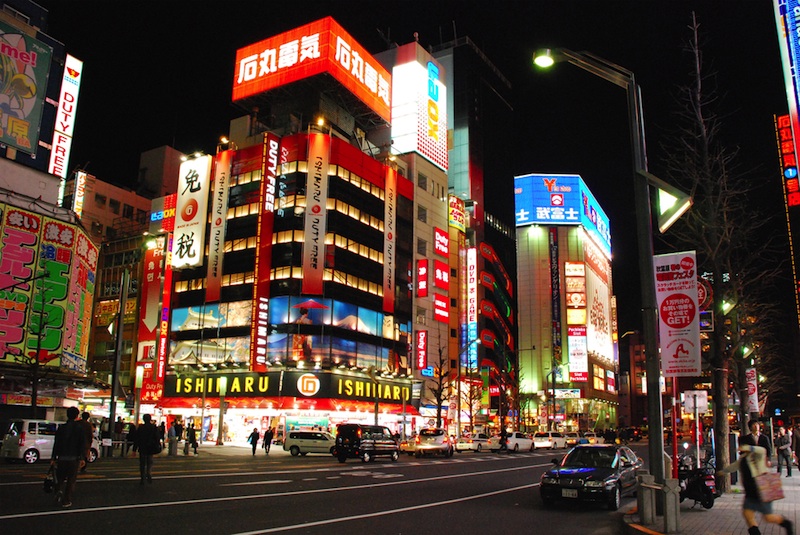
japan consumer electronics akihabara (shutterstock bluehand)

Three of Japan's consumer electronics giants are on the ropes - how have the mighty fallen, and what does it mean for your next tech buys?

Japanese manufacturers used to dominate consumer electronics, with brands like Sony, Sharp, Panasonic, Sanyo, JVC, and Toshiba practically cornering the global marketplace for desirable tech goods in the 80s and 90s. But times have changed, as evidenced by recent reports of massive losses and considerable layoffs at Sony, Panasonic, and Sharp – three of Japan’s largest manufacturers and some of the most recognizable brands in the world. Perhaps even more troubling for a nation once synonymous with technological innovation, Japan’s entire electronics industry has fallen increasingly behind rivals like Samsung, Apple, LG Electronics, and numerous Chinese manufacturers. These rivals aren’t just developing hardware innovations to match – or exceed – the Japanese giants; they’re bringing them to market faster and cheaper. 

What happened? And what does it mean for the future of gadgets in your home, pocket, and life?

Japan’s economic turmoil

Japese factory worker (shutterstock/tororo reaction)

Japan is still a powerhouse: It has the third largest national economy on the planet, surpassed only by the United States and China. But it’s had an uneven path in recent years. Japan’s stock market crashed in slow motion during the early 1990s due to over-valued stock and real-estate prices, something that will be familiar to anyone who survived the dot-com and real estate bubbles in North America. The result was the “Lost Decade” or “The Lost Two Decades,” depending who you ask and how they count. In very broad terms, after the crash, Japanese firms chose to pay down debts and build up their savings rather than take advantage of near-zero interest rates to invest in new businesses and technology. That’s a solid, conservative approach to maintaining solvency, which prevented permanent employees from being laid off, but it gave rivals in other countries (particularly in South Korea and China) an opportunity to invest in their own R&D and electronics manufacturing capabilities. The Lost Decade let rivals find ways to out-produce and under-sell Japanese electronics makers.

Japanese electronics makers were not oblivious to what their overseas rivals were doing. They largely chose to bet on their traditional, historical strengths: advanced technology and high-precision goods.

Part of that effort was an emphasis on monozukuri, a uniquely Japanese concept that loosely means the “art, science, and craft of making things,” according to the University of Tokyo’s Takahiro Fujimoto. It’s been said that monozukuri cannot be fully translated from Japanese, but the concept encompasses both the process of developing, designing, and producing a product, as well as qualities of dedication, continuous refinement, and superior craftsmanship. In other words, Japan’s electronics industry might have aggressive competitors, but Japanese products would focus on the high end: quality, valued products that would hopefully generate high profits.

Japanese electronics did see a resurgence in the mid-2000s, fueled in part by a weak yen that made Japanese products more affordable around the world, as well as a North American consumer market flush with cash from a housing bubble that hadn’t yet burst. The resurgence also coincided with the consumer launch of flat-panel, high-definition televisions, a market dominated by companies like Sony, Sharp, Pioneer, and Panasonic. Sony and Nintendo built gaming empires; Toshiba and (particularly) Sony pushed notebook computers forward; firms like Kenwood and JVC saw solid success with consumer and professional audio-video products. As participants in a protectionist economy, Japanese firms prefer to keep their manufacturing on-shore, and the companies invested heavily in pricey new facilities to make things like high-quality flat panel displays and products that embodied monozukuri.

But in 2008, the global recession took hold: The U.S. housing bubble burst, financial crisis rocked the Eurozone, and demand for consumer electronics dropped worldwide; much of the remaining demand leaned towards goods with the lowest prices, and many of those were not Japanese. Suddenly Japan’s electronics giants found themselves saddled with expensive manufacturing plants that made a high volume of products that few people were buying.

So who’s in the most trouble?

Sharp
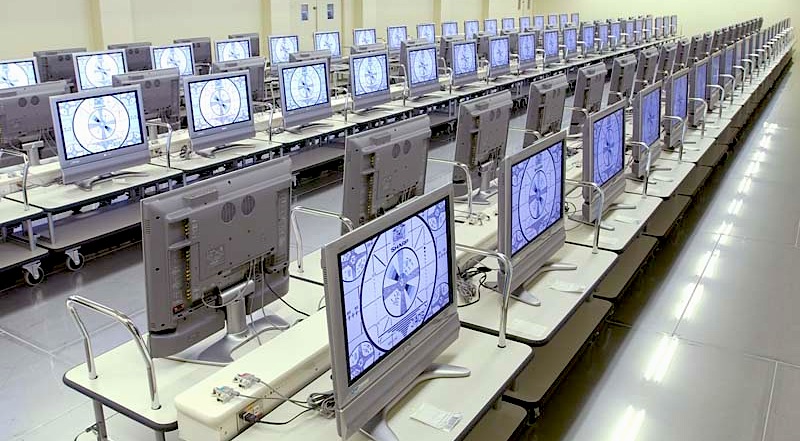
Sharp Kameyama LCD facility

Of Japan’s largest consumer electronics manufacturers, Sharp is perhaps in the tightest spot. In it’s most recent financial results (PDF), Sharp increased its forecast loss for the fiscal year ending March 31, 2013 to a whopping ¥450 billion, or  more than US$5.6 billion. This followed Standard & Poors downgrading Sharp stock to junk status back in August, making it more costly for the company to borrow money. Sharp is currently being viewed as having a 94.9 percent chance of defaulting on its debt in the next five years. Companies are known for putting the boldest face possible on their financial reports, but even Sharp doubts its own future. The original version of the release said there was “material doubt” about the company’s ability to survive, although it has since edited the release to say there are “uncertainties about Sharp being an assumed going concern.” Tomato, tomahto.

Sharp’s decline exemplifies the challenges facing Japanese electronics makers. From 2000 to about 2007 Sharp was riding high: Its profits jumped about 150 percent as it created a premium brand in its Aquos line of high-end flat screen television. (Sharp was also wildly successful in Japan with Aquos phones.) Sharp built cutting-edge facilities in Kameyama to make LCD flat-panel displays. Its success seemed to validate monozukuri and Japanese’ companies’ predisposition to do their own manufacturing. However, even as industry watchers were warning the bottom would soon drop out of flat-panel displays – and the storm clouds of the global financial crisis were gathering – Sharp doubled down, building a new factory in Sakai that could produce 6 million TV-sized LCD panels a year. Then the LCD market collapsed, and Sharp’s Aquos phone business in Japan was cut in half by the consumer smartphone revolution, led by the Apple iPhone. Sharp had also seen success in a solar panel and battery business; however, just as with LCD panels, its high-end products got undercut by competitors in China and other markets in 2011.

What to do? Sharp’s Kameyama factories have now been repurposed to make small LCD displays used in things like the iPad and the iPhone. The company has mortgaged the facilities, along with most of its other factories and offices, and got a fresh round of financing from Japanese banks on promises it would cut jobs, sell off assets, and regain profitability. Sharp thinks it’ll be able to bring in an operating profit in the second half of 2013 and begin paying back debt, but industry watchers and the company itself aren’t sure that’ll work.

Panasonic
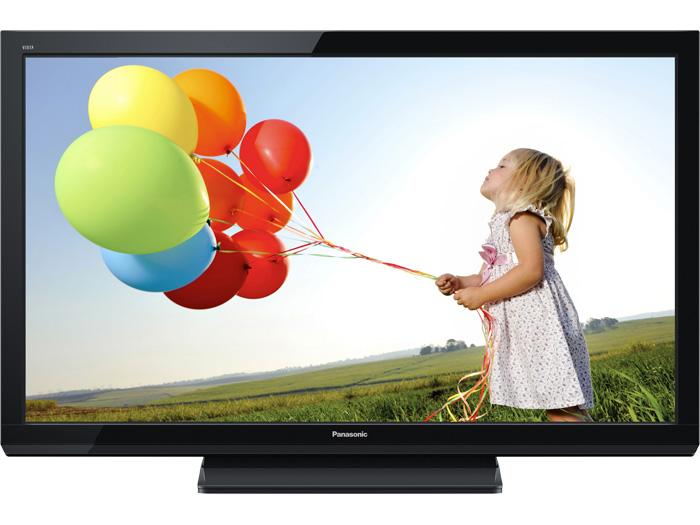
Panasonic Viera TC-P42X5 (front)

Think Sharp’s projected ¥450 billion loss for the fiscal year is steep? Try Panasonic: It’s forecasting a loss of ¥765 billion (about US$9.6 billion) for the same period, based on writedowns in its mobile handset, battery manufacturing, and solar power businesses. That’s a 30-fold increase on the company’s previous estimates, and will be the second-largest shortfall in the company’s history – and that’s saying something for a company founded in 1918. Panasonic will also skip a dividend to investors for the first time since 1950, citing an “urgent need” to shore up its finances.

Some of Panasonic’s woes are tied up in the same solar and battery businesses that have hit Sharp – augmented by the company’s decision to buy up Sanyo back in 2009-2010, which primarily centered around Sanyo’s battery and solar businesses. But where Sharp bet on LCDs, Panasonic bet on plasma, sinking ¥600 billion into factories in Amagasaki. Plasma display technology, of course, has been surpassed in popularity by LCD displays, but unlike Sharp, Panasonic couldn’t repurpose its plants to meet the needs of mobile devices.

“We are among the losers in consumer electronics,” newly-installed Panasonic president Kazuhiro Tsuga told a news conference on November 1. However, Tsuga’s writedowns of Panasonic’s businesses are moves to scale back the company’s operations and move it away from its money-losing businesses in televisions and consumer electronics. Tsuga is repositioning the company – still Japan’s largest employer with over 330,000 workers after laying off 36,000 people last year – to function as a series of small- to medium-sized operations, each of which generate positive revenue.

Sony

Sony CEO Kazuo Hirai

Although Sony is as deep into televisions and consumer electronics as rivals Sharp and Panasonic, its path has been a bit different, and as a result it isn’t in quite as much trouble. Sony posted a ¥15.5 billion loss for its July-September quarter (PDF) – it’s seventh straight quarterly loss – although the company still says it believes this year will mark its first annual profit in five years. New CEO Kazuo Hirai is working to refocus Sony on mobile, gaming, and digital imaging (including medical imaging augmented by the stake in Olympus), although it still clings to a television business that has been losing money for eight years. Sony is now getting its LCD panels from manufacturers like Sharp, LG, and Samsung rather than making them itself; the company is hopeful that getting panels on the open market will reduce its costs and allow the the television unit to return to profitability. Sony has also sold off its chemical products businesses that made materials used in LCD panels and optical discs. And Sony is cutting jobs: 10,000 workers last spring, another 1,000 from its mobile division this summer, and another 2,000 layoffs due by the end of 2012.

Unlike Sharp and Panasonic, Sony has long had a hand not just in consumer electronics, but in content businesses. It wants to make money selling movies, books, music, and games – not just devices. Consider Sony Pictures, the PlayStation network, and the company’s movie and music services. In a way, Sony pioneered aspects of the business models being pursued by Apple (and extended by Amazon and Google) by offering content that brings people to their devices. Between more diversified offerings and a demonstrated willingness to jettison money-losing businesses (except, so far, televisions), Sony may be able to stage a turnaround. That said, Sony cut its estimates of how many televisions, PSPs, Vitas, and digital cameras it expected to sell for the year by 6 to 16 percent; only its PlayStation forecast was unchanged at 16 million units.

What it means

Foxconn factory

The financial turmoil of some of Japan’s largest consumer electronics companies is partly indicative of the broader global economies. Consumers around the world have been tightening their belts, and that limits how many of them will buy luxury items – and monozukuri produces luxury items. Instead, the consumer electronics market has shifted towards manufacturers that can deliver new products fast and cheap, and for the last several years, that hasn’t been happening in Japan.

Fewer Japanese TVs — Sharp, Panasonic, and Sony are Japan’s first, second, and third-largest television makers, and while none are currently shutting down their television businesses, they are all looking to reduce their losses. Unless one or more of the companies decide they want to try to take on the likes of Samsung, LG, and Foxconn directly on a price basis, that means Japanese TV makers will probably have to cede the mainstream television market to competitors and focus on high-end, luxury products. However, this is a very chancy proposition; although Japanese manufacturers were pioneers in OLED television development (remember Sony’s astronomically expensive 11-inch OLED TV?) rivals like Samsung and LG are now driving OLED innovation. Panasonic and Sony have announced plans to partner up on OLED production, but Japanese companies remain behind the curve.

Selling off brands? — If Japanese consumer electronics makers do fail, some of their brands might hold some value… for a while. Sharp’s Aquos brand still has major recognition around the world, and might be something the company would consider selling off to help fuel its survival. Panasonic’s Viera brand could potentially do the same. Sony has similar opportunities with brands like Bravia and Walkman. Given the financial situations at all these companies, it’s possible that icons of Japan’s past dominance could be bought by their more-nimble overseas rivals.

Lessons for Apple? — If there’s a leading electronics company that exemplifies monozukuri, it’s probably Apple. The Cupertino company is world-famous for its attention to detail, craftsmanship, and dedication to design, both in its hardware products and onscreen. Even its product line revisions reflect that: Updated products are rarely revolutionary departures from what came before. They’re consistent, continued refinements and improvements. Apple also targets the high end of the market, focusing on profit margin rather than market share. The company would seem to be vulnerable to many of the same market forces that are rocking Japan’s largest consumer electronics makers.

There are some key differences, however. Apple does outsource its manufacturing, most famously to China’s Foxconn. Apple also outsources most of its components: it buys memory and processors from Samsung, Gorilla glass from Corning, and still more components from Toshiba, Panasonic, Intel, Nvidia, and more than 150 other companies (PDF). Apple isn’t on the hook for manufacturing facilities that cost it billions of dollars: It leaves the risk of owning those kinds of facilities to the likes of Samsung.

[Akihabara image via Shutterstock / tororo reaction
Japanese factory worker image via Shutterstock / bluehand]


Source : digitaltrends[dot]com

Oct 17, 2012

Non-jagged little pill: Beats Electronics’ Beats Pill wireless speaker showcases smooth styling

Beats Electronics' Beats Pill hopes to bring a dose of value to the Bluetooth speaker game. For $200, you get a pill-shaped, aptX-enabled speaker that also bears the distinction of being the first tap-to-touch NFC speaker on the market. Specs such as driver size and power rating are scant, but its safe to say we can expect the Pill to carry on the Beats sound signature tradition.

Yesterday, Beats Electronics released their Beats Pill wireless speaker. The new offering features the company’s Beats Audio technology delivered through a four-speaker system, and this time around, Beats isn’t just courting music enthusiasts; it’s also catering to the conference calling set. The speaker handles all call functions, has a built-in mic for conferencing, and echo cancellation to maintain call clarity.

The Bluetooth-enabled model is, according to Beats, the first wireless speaker in stores that boasts both tap-to-pair NFC (Near Field Communications) and apt-X technology, but other than that, the audio specs aren’t available in detail. That leaves us with some questions. For instance, we know there are four drivers, but what size are they?  How about a power rating? #audiophileproblems. We acknowledge that Beats products typically do a good job of appealing to their target audience, but hearing is believing.

The Beats Pill’s versatility is part & parcel with a new objective of Beats Electronics: transitioning into a freestanding consumer electronics company. Though Beats is unlikely to stray too far from its Producer/President Dr. Dre’s musical roots, it’s clear that the company is aiming to throw its hat into a few more rings.

The Beats Pill retails for $200 and is available today at The Beats Store and other authorized locations.


Source : digitaltrends[dot]com

Oct 15, 2012

iPad mini nudges closer to reality, leaked inventory shows pricing

MobileGeeks.de has got hold of an alleged inventory photo from German electronics retailer MediaMarkt concerning the pricing, storage capacity and colors of the yet unannounced iPad mini.

According to the leaked image the iPad mini will be offered in Black and White with storage options ranging from 8 GB to 64 GB, Wi-Fi only or Wi-Fi and Cellular with prices starting from €249.

The iPad mini Wi-Fi variants are €249 for the 8 gig version, €349 for 16 GB, €449 earns you a 32 gig model and €549 for the 64 GB one. If you want all the trimmings just add another €100 to the quoted prices to receive a cellular option.

These prices are obviously meant to put the iPad mini at odds with its most direct competitors the Asus Nexus 7 and Amazon’s Kindle Fire HD. The Google pureblood offers 16 GB (and even rumored 32GB) of storage for the price of an 8 GB iPad mini (€249), while Amazon gives you 32 GB worth of storage on a Kindle Fire HD for the same asking price.

I’m rather disappointed that the iPad mini would be only 100 euro cheaper than the equivalent 10-inch iPad configurations. Unfortunately, Apple continues the trend of heavily overpricing storage. A 16GB iPad mini would have made lots of sense at around the €250 euro mark.

Still, things could wind up totally different so stay tuned for the unconfirmed October 23 event at which Apple could make the iPad mini official.

MobileGeeks seems to be down at the moment, but still, you will find a link to their article below.


Source : blog[dot]gsmarena[dot]com

Sep 28, 2012

Hidden’s gem: Kickstarter-funded Hidden touts its HiddenRadio speaker as a revolution in design

Intuitive and clever, HIDDEN's HiddenRadio hopes its simple design will be groundbreaking as well.

Earlier this week, consumer electronics manufacturer Hidden, made its HiddenRadio Bluetooth speaker available for pre-order on its website. The compact, minimalistic speaker doubles as an FM radio and purports to be powerful, despite its diminutive size. Its sleek structure was crafted by award-winning industrial designers John Van Den Nieuwenhuizen and Vitor Santa Maria and it was originally launched on Kickstarter, an online social funding platform for creative projects.

In addressing HiddenRadio,  Tim Bajarin, president and analyst at Creative Strategies, said, “as innovators like Apple have shown, occasionally a product comes along that just makes ‘sense’ in its design that it changes the way we think about an entire category.”

Whether you’re all about a chic aesthetic, or you’re partial to power under-the-hood, it’s difficult to deny that HiddenRadio is a truly unique product.

Its barely-there visual impact is the reason for the name,  but HiddenRadio, touts advancements in functionality as well. Its interactive cap serves as both power button and volume knob. The more you lift the cap, the more of the underlying speaker is exposed, and the more speaker you expose, the higher the volume goes. Press the cap all the way down and you’ll shut it off. It’s simple, but revolutionary from a design perspective.

HiddenRadio is available via the Hidden website and comes in metallic silver, graphite black, or pure white. Pre-orders are available at a discounted price of $150 and will ship free of charge to the United States, the United Kingdom and Hong Kong. This price point will be unavailable after September 30, 2012.


Source : digitaltrends[dot]com

Sep 17, 2012

Wii U Deluxe pre-orders sell out. Will Nintendo’s console see the same launch success as Wii?

wii u launch

Electronics retailers have sold out of pre-orders for the $350 Nintendo Wii U Deluxe Set, but will the console see Wii-like success?

Nintendo’s Wii made such a powerful connection with people when it came out in 2006 that Nintendo wasn’t able to satisfy demand for years. It wasn’t until the end of 2008, a full year before Wii sales peaked, that Nintendo was able to manufacture enough devices to properly meet demand. That’s an intimidating legacy for the Wii U to live up to, especially for a machine that’s so confused the public to date.

There is promise for Nintendo’s Wii U: Pre-orders for the device have sold out at GameStop.

Polygon reported on Saturday that myriad GameStop stores around the US had already sold through their expected allocations for the Wii U’s Nov. 18 release. Reservations for the Wii U Deluxe Set, the $350 model that comes packed in with a copy of NintendoLand as well as free access to Nintendo Network Premium, were half-filled within hours of the console’s price announcement on Thursday. By the end of Friday, all Deluxe sets were sold out including online.

The Wii U Basic Set, the $300 edition of the console that comes with just the machine, controller, and 8GB of flash memory, is still available for pre-order at GameStop’s website as well as in many stores.

Nintendo is discovering what Microsoft proved with the Xbox 360 in 2005: When you offer multiple models of a console, people will ignore the cheaper model unless it offers real value. The Xbox 360 Arcade, a hard drive-less version of the machine sold at launch, was roundly ignored by consumers until it was re-released in 2010 as a $200 package with 4GB of internal flash memory.

The Xbox 360 is the device responsible for GameStop and other retailers’ policy of limiting the number of pre-orders taken for new consoles. In 2005, far more Xbox 360 pre-orders were sold than systems that were actually available on day one. As a result, devices had to be trickled out to customers over the course of months.

As of right now, there are still other outlets taking pre-orders for Wii U Deluxe. Walmart is taking preorders online but require you purchase it as part of a $450 bundle along with New Super Mario Bros. U. Others like Best Buy have sold through this initial round of pre-orders. Other outlets however haven’t started accepting pre-orders at all. Amazon.com’s product pages for Wii U don’t allow you to pre-order yet and Toys R Us simple has a placeholder page that says pre-orders will be accepted soon.

Wii U’s success is far from guaranteed. There’s interest, yes, but nothing resembling the furor of Wii’s 2006 release. At least, not yet.


Source : digitaltrends[dot]com

Sep 3, 2012

Samsung promises to review Chinese labor practices

Samsung IFA 2012 Berlin Shin Jong-kyun

Samsung plans to inspect 150 Chinese supplies for labor law violations after an investigation uncovered problems at Huizhou's HEG Electronics.

Apple isn’t the only major electronics manufacturer facing questions about the labor practices of its Chinese suppliers. South Korean electronics giant Samsung says it plans to inspect some 250 Chinese companies that supply components or manufacture its products to ensure no labor laws are being broken.

The announcement comes after Samsung announced results of an auditn into labor practices at an HEG Electronics facility in Huizhou, in southern China. Earlier this month, the U.S.-based human rights group China Labor Watch accused HEG Electronics of employing child laborers and exploiting student labor, claiming student labor makes up as much as 80 percent of HEG’s workforce, and that investigators believed as many as 50 to 100 child workers were being employed in various departments in the factory.

Samsung says its audit does not confirm China Labor Watch’s claims. According to Samsung, there are workers in the factory under age 18, they are all over 16 and are student workers or interns and therefore legal under Chinese law. Samsung says it was not able to identify any underage workers are the HEG site, although it notes the factory’s high turnover rate (some 30 percent per month) limited the extent of their audit.

Samsung did find other problems at the HEG Electronics facility, including potentially unsafe practices, improper safety measures, overtime in excess of nine hours per week, and a system of fins to punish workers for tardiness or absences.

“Samsung has demanded that HEG immediately improve its working conditions,” the company said in a statement. “If HEG fails to meet Samsung’s zero tolerance policy on child labor, the contract will be immediately severed.”

Samsung plans to conduct direct inspections of 105 Chinese companies that product goods solely for Samsung by the end of September, and conduct documentation reviews of an additional 144 suppliers by the end of the year. Samsung says it will require corrective action be taken for any violation of its policies; if a company continues to be found in violation of Samsung policies, Samsung will terminate the contract.

[Image: Samsung's president Information Technology and Mobile Communication Shin Jong-kyun at IFA 2012 Berline, via Samsung.]


Source : digitaltrends[dot]com

Aug 29, 2012

Sharp to cut 2,000 jobs domestically in first layoffs in 60 years

Sharp has announced plans to cut its domestic workforce by 2,000 as it struggles against Asian competitors selling cheaper TVs. Globally, the electronics company is planning to lose about 10 percent of its workers by March next year.

Japanese electronics maker Sharp announced on Tuesday plans to lay off 2,000 of its workforce in the country. The job cuts are the company’s first in 60 years and come as a result of a downturn in demand for flat-screen TVs, partly due to a sluggish world economy. Competition from Asian competitors selling cheaper TVs is also taking its toll.

A statement released by the Osaka-based company explained it planned to shed the jobs – which amount to just over 6 percent of its 30,800 domestic workforce – through a voluntary retirement program. According to Reuters, this will likely target employees aged around 55, as severance packages for this age group usually amount to a year’s wages. Workers in their 40s, on the other hand, would be entitled to as much as three years’ salary. The offer will be presented to employees in the first two weeks of November, with those who take it up expected to leave their positions in December.

In an effort to turn the company’s fortunes around, Sharp said in its statement it is in the process of “improving its earnings structure so that it can compete amid severe global competition by downscaling productions bases and branches, streamlining the headquarters, and adjusting employment to an appropriate level.”

Job cuts aren’t confined just to the domestic market, with the company planning to shed a further 2,400 workers globally by the end of March next year. In total, the planned losses will likely amount to 10 percent of its global workforce.

Sharp was founded in 1912 and expanded outside of Japan in 1962. The company made the first ever solar-powered calculator and currently sells the largest commercially available LCD monitor, the enormous 90-inch AQUOS LED Smart 3D TV

The electronics company is now supplying display panels for Apple’s iPad and is also one of three suppliers of screens for the Cupertino company’s next-generation iPhone, which is expected to be unveiled next month.


Source : digitaltrends[dot]com

Aug 27, 2012

US flight regulator to look again at in-flight use of electronics, may relax rules

The Federal Aviation Administration is planning to take a closer look at the use of electronics on passenger planes in a move that could ultimately see rules relaxed.

If you’ve ever flown, you’ll be more than a little familiar with the take-off and landing procedures, which include switching off all personal electronic devices (PEDs), a source of frustration among many nervous flyers who would rather listen to some calming tunes on their music player than the roar of the engines as they hurtle down the runway in an aluminum tube laden with highly inflammable fuel.

Likewise, taking a few photos of the landscape below with your digital camera as you come in to land will, if you get spotted, result in a few stern words from a member of the cabin crew.

Interference?

Can it really be the case that all PEDs have inner workings that, if switched on, are going to bring the plane down? Despite people discreetly using their iPods or e-readers during take-offs and landings, has there ever been a report of an aviation accident caused by a PED? Aren’t airplane crashes usually the result of pilot error or catastrophic mechanical failure rather than Mr. Smith in seat 43A using his music player?

With a Reuters report on Monday about Federal Aviation Administration (FAA) plans to take a closer look at the use of PEDs on flights, perhaps things are about to change for the better for passengers with a bag of gadgets under the seat.

Study group

The report says that starting in the fall, a new study group will examine the procedures airlines use to discover whether a gadget or gizmo can be safely used during a flight, or parts of a flight. However, the group will not be considering whether to allow passengers to make calls using mobile phones.

As things currently stand, airlines have to show that a device doesn’t cause potentially dangerous radio interference before they can be given the green light for use during a flight.

Acting FAA Administrator Michael Huerta said of the plans: “We’re looking for information to help air carriers and operators decide if they can allow more widespread use of electronic devices in today’s aircraft,” adding, “We also want solid safety data to make sure tomorrow’s aircraft designs are protected from interference.”

Speaking to Forbes about the FAA’s plans, Steve Lott, a spokesperson for industry trade group Airlines for America, said: “The safety of our passengers and crews remains our top priority and our members will work cooperatively with the FAA on opportunities to evaluate personal electronic devices to ensure customers can use these products safely during flight.”

Troublesome passengers

Though there have been reports of pilots suspecting PEDs as the cause of some mysterious happenings on the flight deck, no link has ever been proved.

Indeed, the biggest PED-related problem appears not to be interference with an aircraft’s flying instruments, but stubborn passengers who cause trouble by refusing to switch off their device – remember the incident late last year when actor Alec Baldwin was kicked off a plane for refusing to turn off his phone during what must have been a particularly exciting game of Words With Friends?

With more and more people dumping paper books in favor of e-readers, and with other PEDs gaining in popularity, it would be great if the airlines discovered that actually many of these devices are safe to use during any part of the flight. We await the study groups’s decision….

[Image: Dimitriy Shironosov / Shutterstock]


Source : digitaltrends[dot]com

Aug 20, 2012

Can Hubert Joly rescue Best Buy?

Customer exiting a Best Buy store

Best Buy is bringing in French turnaround expert Hubert Jolie to revive its ailing business. Can Best Buy avoid being the next Circuit City?

Leading consumer electronics retailer Best Buy has announced that it is hiring Hubert Joly as CEO. Joly most recently headed up restaurant and hotel operator Carlson Co. The Frenchman is expected to take over as Best Buy CEO next month once his visa is secured; in the meantime, Best Buy board member Mike Mikan will continue to serve as interim CEO.

Bringing Joly on board may help the retailer focus on the future rather muddling through the chaos left behind in the wake of former CEO Brain Dunn’s scandalous departure. But public perception is not Best Buy’s only problem: How can Joly — who has no retail experience — hope to prevent the company from becoming another Circuit City?

Who is Hubert Joly?

Best Buy CEO Hubert Joly

Herbert Joly comes to Best Buy by way of Carlson Co., which is not exactly a household name, but it’s the parent company behind plenty of them. The Minneapolis-based firm runs more than 900 restaurants (including T.G.I. Friday’s) and more than 1,000 hotels (including Radisson, park Plaza, and Country Inns & Suites) in 150 countries around the world. The Carlson Companies are closely held, but are generally well-regarded by its employees, especially in terms of supporting workplace diversity.

Joly became Carlson’s CEO in 2008; before that he was the head of Carson Wagonlit Travel (CWT), a partnership Carlson formed with Paris-based Wagonlit Travel. CWT is one of the world’s largest business travel management firms. At the helm, Joly headed a turnaround that saw a nearly three-fold increase in sales and strongly improved profit margins.

These credentials may illustrate Joly’s ability to lead a large corporation and instigate financial turnarounds, but experience in travel, hotels, and restaurants doesn’t seem to have any bearing on consumer electronics, technology, or new media. For that, Best Buy is digging back further into Joly’s career: Before CWT, he served briefly as Vivendi Universal’s CIO, and had overseen the integration of Vivendi and Universal’s assets in the United States. Starting back in 1999, Joly played a major role in restructuring Vivendi’s video game business — at the time, that included the development and expansion of its still-active Diablo and World of Warcraft franchises.

Further back, Joly has additional tech cred: From 1996 to 1999 he was a major player in turning around Electronic Data Systems (EDS) in France. EDS was the technology services company founded by former U.S. presidential candidate H. Ross Perot; it offered data processing, personnel management, and services like claims processing for a variety of companies, as well as the U.S. federal government. Hewlett-Packard acquired it back in 2009, and it now forms much of HP’s Enterprise Services division.

Joly is largely viewed as a turnaround-expert for hire: Companies hire him to come in, initiate forceful turnaround plans, and put the company on firmer business ground. Once that’s done, Joly transitions to another company in need of his skills. Joly’s track record is about as good as they come — and there’s no doubt that Best Buy needs some serious help.

Best Buy’s situation

Best Buy

Best Buy is the United State’s leading consumer electronics retailer, with more than 1,400 retail locations, more than $50 billion in business, and more than 160,000 employees. By any measure, Best Buy seems to be a roaring success, clinching its hold on the consumer electronics space while competitors like CompUSA and Circuit City withdrew from the market or closed up altogether.

But it’s not easy being king. In its most recent fiscal year, Best Buy reported a loss of $1.2 billion — that compares with a profit of $1.3 billion the previous year. Numbers like that make investors and partners very nervous, as the company sees in-store sales declining as customers ship to online retailers like Amazon.com that can often offer better prices (and free shipping) on the exact same products. Increasingly, Best Buy’s expensive-to-operate retail stores are functioning as showrooms for consumers, who may go into a Best Buy location to check out new products, but then purchase the products online at a lower price after they leave. The situation can be exasperated by instances of questionable sales tactics, with stories of customers being pressured to purchase things like (highly profitable) extended warranties, or even preying on seniors and other customers who may not have a strong understanding of products into buying things they may not want or need. (It’s certainly not a universal experience, but with social media even a single negative instance can be substantially magnified.)

Some of Best Buy’s injuries are self-inflicted. A good portion of the company’s loss in its most recent fiscal year stemmed from buying out Carphone Warehouse’s share of Best Buy Mobile and writing down Best Buy Europe goodwill: Best Buy might be the leading electronics retailer in the U.S., but its plans to expand into Europe fizzled out, in part due to the worldwide economic downturn. The costly gambit didn’t work out. Similarly, the company’s plans to turn into a digital media giant with services like Napster and CinemaNow failed to resonate with consumers. Best Buy also inked a deal with LightSquared to bring 4G LTE to its Best Buy Connect offerings — that sure worked out well.

Former Best Buy CEO Brian Dunn

Challenges like these are more-or-less part and parcel of being a massive brick-and-mortar business these days. However, Best Buy truly stepped in it with the abrupt resignation of CEO Brian Dunn in April. Best Buy was very clear it had no problems with Dunn’s operational or financial decision-making. Instead, the “mutual” decision that he should depart stemmed from an inappropriate “extremely close” relationship with a 29-year-old female employee. It’s one thing for a corporate leader to announce a round of belt-tightening in a tough business — as Dunn did when he announced the closure of 50 U.S. Best Buy locations. It’s another thing to have a philanderer in the top chair.

Since then, Best Buy has been struggling for direction. Best Buy founder Richard Schulze resigned as chairman of the company in June, in part for helping keep Dunn’s shenanigans a secret. However, Schulze remained a force to be reckoned with, since he still owned more than 20 percent of the company. Schulze has since engaged in an almost guerrilla campaign to make a $10 billion offer to take Best Buy private. Schulze would cut costs, slash prices, and improve customer service — and, perhaps most importantly, streamline corporate governance into a kind of benign dictatorship that would make the company more nimble. In the meantime, Best Buy announced it was laying off some 600 of its Geek Squad employees and 1,800 additional store personnel to cut costs.

In hiring Joly as CEO, Best Buy’s board is essentially telling Schulze to go packing. Best Buy says it offered to take Schulze’s offer seriously and give him time and flexibility to line up financing, but claimed Schulze’s offer contained “insufficient information.” Schulze describes Best Buy’s actions as an “abrupt public termination” of negotiations. However, Schulze still has his 20 percent stake in the company — and Best Buy hasn’t yet made arrangements with him for a standstill period wherein he won’t take his takeover offer directly to shareholders. Schulze could still try to stage a rebellion.

Can Best Buy avoid being the next Circuit City?

Circuit City going out of business (source unknown)

Hubert Joly certainly has his work cut out for him: Best Buy’s stock is down 13 percent this year, and the company is facing continuing losses due to strong competition from online retailers. Moreover, by bringing Joly on board, Best Buy is essentially signaling to investors that they won’t see details of a turnaround plan until 2013: It is going to take some time for Joly to come on board, get his feet wet, and formulate a strategy.

On Joly’s side, Best Buy is probably the most-recognized electronics retailing brand in the United States, and the company has had some success transitioning business towards highly profitable products like mobile phones. Best Buy is also working to compete with Amazon directly as an online retailer. After all, Best Buy already has enormous inventory management and customer fulfillment systems. It could conceivably focus on offering a premier consumer electronics online shopping experience that would contrast with Amazon’s catch-all online shopping strategy, which has spilled over into everything from tools to groceries to perhaps igloos.

However, regardless of Joly’s successful track record turning around businesses, investors and industry-watchers would be much happier if Best Buy had settled on a new CEO who actually has significant experience in retailing, rather than coming to Best Buy from restaurants and hospitality. But, if Joly really is the turnaround rockstar Best Buy thinks he is, maybe a lack of retail experience will enable some outside-the-big-box thinking that could re-invigorate Best Buy.


Source : digitaltrends[dot]com