Pages

Showing posts with label company. Show all posts

Nov 19, 2012

Google Takes on Tiny Doogle

ht doogle nt 121119 wblog Google Takes on Tiny Doogle

doogle.co.za

Search engine giant Google is threatening a lawsuit against a tiny South African website named Doogle.

The legal fight may threaten the existence of the company, but has been a short term boon for Doogle, creating so much traffic for the site that it crashed last week. Andries Maree Van Der Merwe, 23, said the free job search site he launched two years ago to help unemployed people in his country find work had more than a million hits last Wednesday.

The Doogle site features the Os as eyes and includes the phrase “Doogle it.”

“That’s more hits than in the entire first year.  I can’t believe the site has gone international,” said Van Der Merwe. He is so encouraged by the show of interest to persevere in a potential legal battle to save his business and domain name, www.doogle.co.za.

Van Der Merwe said he received a letter last month from attorneys at Google threatening to sue him for copyright infringement because his name and logo have similarities to the popular search engine’s.  One South African newspaper columnist declared Google had crossed the line by “persecuting small companies just because their name sounds vaguely similar.”  Van Der Merwe’s story was soon went viral.

“I’m not giving up my name. Doogle is who I am. It’s my business. I registered the company and legally acquired the domain,” said Van Der Merwe.

He said after dropping out of high school and teaching himself to use computers while scraping by on a meager income selling newspapers, he started the company on a computer he bought from a pawn shop.  Since then he has begun to do software development and web site creation for other businesses, but he says his dream is for Doogle to become a successful enterprise.  He has expanded the site beyond employment posting to include vehicle, realty and other classified listings.

“I am going all the way to court if Google wants to go to court, but I hope there’s a better way to solve this,” said Van Der Merwe.

Van Der Merwe says his attorney has replied to Google’s letter denying the claims and offering to put a notice on his site distancing itself from Google.

A Google spokesperson told the Guardian newspaper she could not comment on individual cases, but said the company is “passionate about protecting the reputation of our brand.”


Source : abcnews[dot]go[dot]com

Nov 14, 2012

Google Reaches for the Stars, Takes You to Outer Space in Your Browser

ht star system tk 121114 wblog Google Reaches for the Stars, Takes You to Outer Space in Your Browser

Image Credit: Google

You ready to space out? Literally? Google’s got just the trick, and no, it’s not another Doodle.

The company’s creative lab has put together a new project called 100,000 Stars. Dubbed an “experiment,” the search-engine giant has plotted 100,000 starts in an interactive map of outer space. Using imagery and data from NASA, the European Space Agency and other sources together with the Chrome browser’s support for advanced web technologies (HTML 5, WebGL and CSS3D), the team was able to put together a beautiful site, which lets you pan and zoom around the stars closest to the sun. Zoom in on the stars, and you will see their names and more from Wikipedia, including just how hot it is with a color index map.

Of course, Google decided to focus only on 100,000 stars, not the billions out there. “As you explore this experiment, we hope you share our wonder for how large the galaxy really is. It’s incredible to think that this mist of 100,000 measurable stars is a tiny fraction of the sextillions of stars in the broader universe,” Google’s Aaron Koblin said in a post on the company’s Chrome blog.

The imagery is really stunning, but Google emphasizes that it’s an artist’s rendition. It shouldn’t be seen as a scientific document, and the music by Sam Hulick, who composed tracks for video games, makes that pretty obvious.

With that, we’ll let you get out of here and go check it out yourselves here.


Source : abcnews[dot]go[dot]com

Xiaomi is working on a $64 Android-based set-top box called MiBox

Xiaomi is a young company that made a name for itself with affordable, feature-rich Android phones but is branching out now. Its new product is called the Xiaomi MiBox, an Android-based set-top box.

Typically for Xiaomi, the MiBox is priced quite attractively – $64 (RMB 399). Unfortunately, the company is yet to expand its availability beyond China.

The set-top box will have access to 30,000 movies and TV shows (the source of the videos is unknown). The MiBox will also play Android games, including Plants vs. Zombies, and will feature Douban Music support.

The MiBox hooks up to the TV using a standard HDMI cable and has an Ethernet port for Internet connectivity and a USB port for connecting external storage. There’s a remote control in the box, but you can also stream content from your Android or iOS phone (AirPlay is supported too).

It’s not clear what kind of hardware powers the device, but Xiaomi have used Exynos and Snapdragon S4 Pro chipsets in their phones so far. The supported video formats are – RM / RMVB, MKV, TS, FLV, AVI, VOB, MOV, WMV, MP4 at up to 1080p.


Source : blog[dot]gsmarena[dot]com

Nov 9, 2012

Low on funds, Reddit ups the ante and goes for the gold with new focus on Reddit Gold program

reddit postcard

As Reddit grows it's becoming more difficult to scale, and the company needs funds in order to keep everything ship-shape. In lieu of increasing advertising, Reddit has ramped-up its little known Reddit Gold program.

As Reddit grows, so does its need to scale — and by scaling, we mean more server space. Reddit is and will likely always remain a free service, and the collective Internet easily takes the platform and everything it offers for granted. Yishan Wong, Reddit’s newly appointed CEO, disclosed that the site raked in 3.8 billion page views last month and boasts 46 million unique users, but behind the guise of its successes, Wong hints at the reality that Reddit can’t sustain its growth without money. The solution, Reddit announced, is to ramp up its for-pay Gold program.

Reddit has stuck to remaining relatively lean in terms of the ads served on the site. Its contextual ads are non-intrusive and are native to its platform, with the exception of the lone banner ad on the right. To Reddit’s credit, that ad more often than not recommends Subreddits or the occasional hilarious cat or dog picture. You’re not going to find an insurance ad, but instead ads for Busted Tees.

While Wong admits that advertising will “probably always be a part of our revenue,” the little known Gold program that the team at Reddit has never overtly promoted hasn’t realy taken off, and the platform wants to change that. Reddit Gold is typically gifted to other users for a few dollars per month as a gesture of appreciation. There are a few perks like receiving exclusive access to new features before public release, surfacing content from up to 100 Subreddits, access to a super secretive members-only lounge whose existence is neither confirmed nor denied by Reddit, and a few other goodies. But many Reddits aren’t even aware of the program’s existence, says Wong, and if you’re a long time Redditor, the service wasn’t doing much to entice you.

“We want to announce a recommitment to Reddit Gold, a program we’d like to expand and promote,” Wong wrote in the blog post.

The new features that will be added to the Gold program, as Wong announced, include:

  • An oft-requested feature: Comment saving and filtering saves by Subreddit
  • Ability to give Gold to other peoples’ comments you really like [or “gilding” as Reddit calls it]
  • Some upgrades and fun stuff in the members-only lounge …[that may or may not exist]
  • [Reddit] might add a remote-controlled office robot you can drive. Under construction.

Wong adds that this is just the start of the program and that Reddit Gold will be worth its weight. “We also want to make Reddit Gold a membership that confers real benefits that are worth what you pay for it, so we’re talking to some Reddit-friendly companies to provide special perks or access to stuff for Gold members.”


Source : digitaltrends[dot]com

Nov 8, 2012

LG introduces impressive new 21:9 UltraWide monitor

LG today announced the launch of the world's first 21:9 UltraWide monitor; and with the ability to break down the 29-inch screen into four split screens, the company has our attention.

Whether you’re a hardcore multitasker, a tech fanatic, or simply just a bit myopic, LG has a new monitor to pique your interest. The EA93 UltraWide Monitor is a whopping 29-inches wide and boasts a 21:9 aspect ratio. The company says it’s the world’s first monitor with that format. 

LG is focusing on the new product’s multitasking capabilities for its launch. Not only does the impressive size mean plenty of space for however many documents, files, or windows you might have open at once, but the EA93 also has a feature called 4-Screen Split, which allows you to divvy up screen real estate into quarters, with the ability to separately customize each section. That could make this monitor a possible alternative for people who use a dual-screen setup. In fact, it has a Dual Link-up option to connect the monitor to two external devices, which means you could have a similar setup to multiple monitors without any variation in color or image quality. It also features a DVI-D port and two HDMI connectors.

The company insists that the UltraWide monitor can perform double duty as a machine for work and personal use. The aspect ratio makes the EA93 an excellent choice for watching movies. With a maximum resolution of 2560 x 1080, the IPS display is designed for people who live and die by intense visuals. Although LG has not given a price point for this impressive monitor, it is due to roll out in South Korea early this month before making its way to the US market. 

LG has been making waves with its efforts to improve screen quality this year. The company has gone very small with a 5-inch LCD screen with high definition and 440ppi, and insanely big with a whopping 84-inch Ultra HD television. Between these updates, Apple’s proliferation of Retina displays, and other companies working hard to offer comparable technologies, computing will only be getting easier on the eyes.


Source : digitaltrends[dot]com

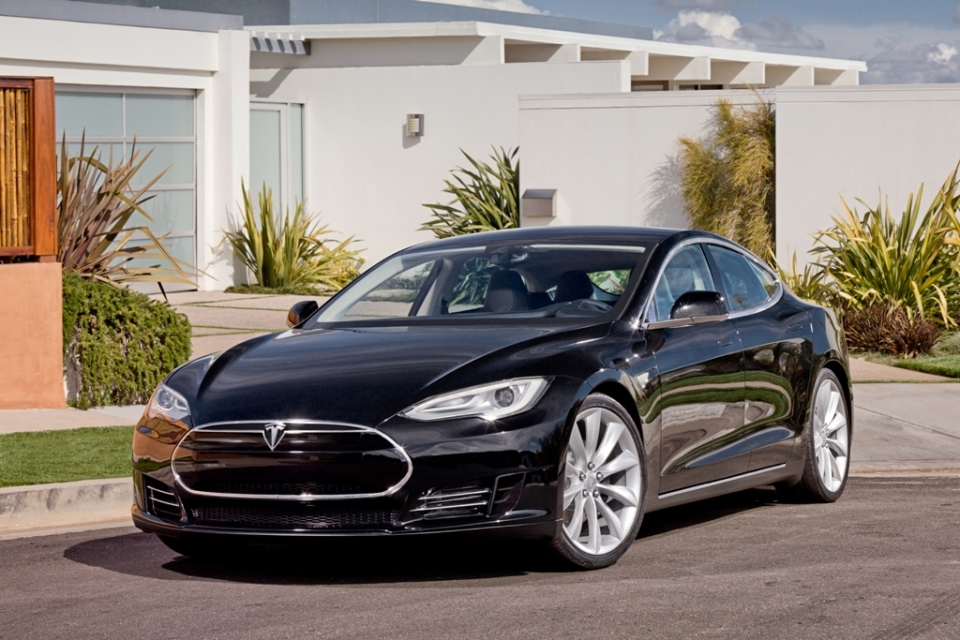
Tesla Motors CEO Elon Musk: “Model S variants to arrive next year”

Tesla Model S sedan

With the Tesla Model S barely out the factory door and keys only in the hands of a few hundred customers, company CEO Elon Musk is already preparing the automotive world for new variations sometime next year.

There’s no denying Tesla Motor’s Model S is red hot at the moment. It’s the automotive equivalent to Justin Bieber (he is still cool, right?), at least for EV fans and automotive journalists that is. When the Model S isn’t busy collecting awards, the sleek electric sports sedan is busy turning heads at one of Tesla’s many Apple-like shops across the country. Needless to say, there is a remarkable amount of hype surrounding the California start-up and one of the major sources of that hype is the company’s enigmatic CEO Elon Musk.

As reported by AutoblogGreen, during a recent third quarter financial results call, Musk hinted at the future production of Model S variants due sometime next year, stating: “There are a few other variants of the Model S that we’ll come out next year that I think are going to be pretty exciting.”

In addition to this teasing, yet vague proclamation, Musk reportedly discussed Tesla’s ongoing efforts with the company’s next vehicle, the all-electric crossover known as the Model X, as well as the fact that work has begun on the company’s third-generation and yet–to-be-named vehicle it hopes to launch before the end of the decade.

Of course all of this is simply talk, and we have no way of knowing what is actually in the works for the California-based automaker, but it does give us ample opportunity to speculate and dissect what this all means.

For starters, it’s more than likely Mr. Musk is simply referring to a better handling and performance package, which was mentioned a few months back. Another possibility could be the introduction of an all-wheel-drive system in addition to the current rear-wheel-drive layout found in the Model S. Finally, there is talk of adding an open-air model as well as one with battery packs larger than the current 85 kWh variety found in the Performance Model S.

Aside from speculation, Musk revealed that in response to customer demand, Tesla will make other options available to customers upon ordering their vehicles, in addition to others that could be retroactively fitted.

Whatever the case may be, one thing is clear: We’ll be seeing much more from the Model S in the near future.

What types of additions would you like to see, if any, in the Model S? Be sure to let us know in the comments section below.


Source : digitaltrends[dot]com

Nov 7, 2012

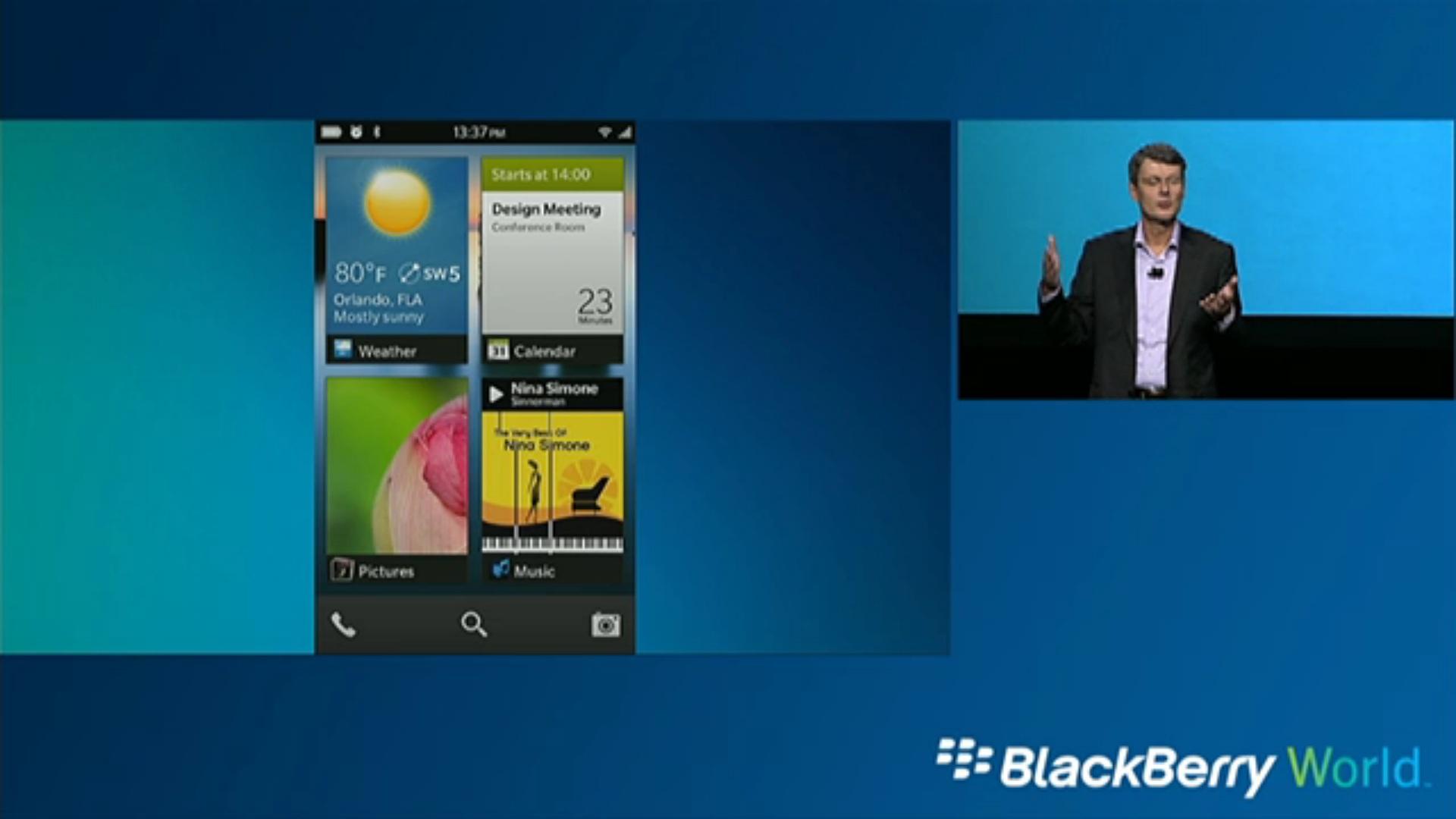
BlackBerry 10 gets important US security clearance ahead of launch

Research In Motion's upcoming BlackBerry 10 platform has received US security clearance that will allow it to be used by goverment agencies – provided they don't all desert the Canadian company before the new platform launches.

As Research In Motion (RIM) executives count down the days to the launch of its next-generation BlackBerry 10 platform (though one wonders if they really know precisely how many days are left), the company has been pushing out a number of positive press releases recently in an effort to create a silver lining on the gray cloud that has been hanging over the firm for some time.

Last week it announced that development of BB10 had passed what it described as a “critical milestone” with news that it had entered lab testing with more than 50 carriers worldwide.

And on Wednesday evening it issued a statement saying its new BB10 smartphones and its Enterprise Service 10 management console had both received important Federal Information Processing Standard (FIPS) 140-2 security certification from the National Institute of Standards and Technology. This is the first time BlackBerry products have been FIPS certified ahead of launch, the Ontario-based company said, and paves the way for US and Canadian government agencies to use the devices in their work.

Commenting on the news, Michael K. Brown, vice president of security product management and research at RIM, said, “Achieving FIPS 140-2 certification means that BlackBerry 10 is ready to meet the strict security requirements of government agencies and enterprises at launch.”

Talking up the security features of BB10, he added, “What differentiates BlackBerry is that it integrates end-to-end security, and includes certified encryption algorithms for data at rest and data in transit. No other mobile solution has achieved the level of security accreditation that the BlackBerry solution has.”

The certification is undoubtedly good news for the mobile company, though with several agencies in recent months announcing their intention to turn away from BlackBerry handsets in favor of iOS and Android-powered devices, RIM will have its work cut out to get them back on board. It must also work to hold on to those who have so far stuck with its devices.

Happily for RIM, last week the Pentagon said it would continue to support “large numbers” of BlackBerry smartphones even though it’ll also be allowing many of its employees to use the iPhone and other devices.

BlackBerry’s reputation for strong security was what until recently made RIM’s handsets stand out for those who required such features. But for many IT administrators working today, iOS and Android phones now offer more secure and manageable platforms.

RIM has been able to offer a few bits of positive news of late, but the real test will of course come when its new, long-awaited BB10 OS and handsets finally make an appearance.


Source : digitaltrends[dot]com

Apple executive and Ferrari fanatic Eddy Cue joins board of Italian luxury-car maker

Ferrari-F12Berlinetta-rear

Apple executive and Ferrari fanatic Eddy Cue has joined the luxury-car company's board of directors, leaving some wondering if Apple might be up to something.

Apple’s senior vice president for Internet software and services Eddy Cue has joined the board of premium sports car maker Ferrari, it was announced on Wednesday (via Apple Insider). The Apple executive said he was both “pleased and proud” to have been offered the new position.

“I have personally dreamed of owning a Ferrari since I was eight years old and have been lucky to be an owner for the past five years,” the Apple executive said in a statement on the Ferrari website, adding, “I continue to be awed by the world-class design and engineering that only Ferrari can do.”

Ferrari boss Luca di Montezemolo said he was “delighted” to welcome Cue to the car company. “His huge experience in the dynamic, innovative world of the Internet will be of great assistance to us,” he said, refraining from offering any specific details as to what they might have planned – if anything.

At Apple, Cue is responsible for iTunes, the App Store and the Cupertino company’s iCloud service, though a recent management shake-up at the tech giant saw him also take charge of Siri and Maps.

In its report, Apple Insider pointed out that earlier this year Apple appeared to be on the hunt for automotive engineers in China, possibly indicating it was looking closely at car technology with a view to getting involved in the industry in some way.

But whether Cue’s acceptance of an invitation to join the Ferrari board is a sign that Apple is perhaps looking at moving into the automobile space with a new line of integrated gadgets and/or software, or whether it’s simply one man taking his long-held love of the flashy Italian car to the extreme isn’t entirely clear at this stage, though in the fullness of time all will doubtless be revealed.


Source : digitaltrends[dot]com

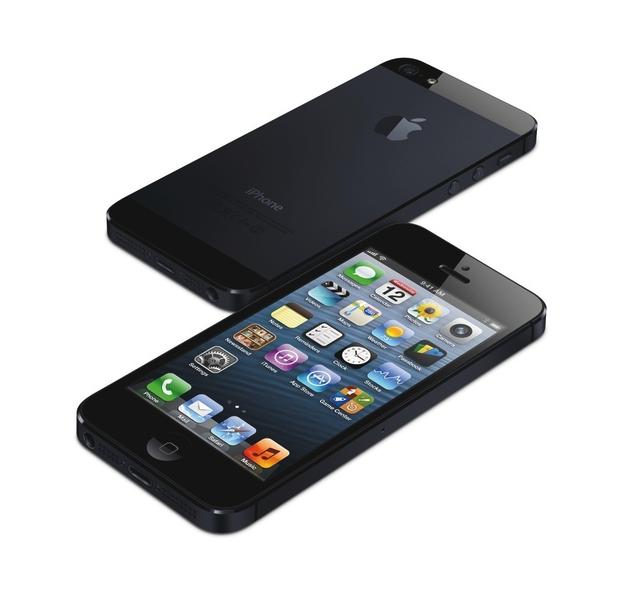
Foxconn chairman admits it is ‘falling short’ of iPhone 5 demand

iPhone 5 Front and Rear

iPhone 5 manufacturer Foxconn admitted Wednesday that assembling the lighter, thinner device is "not easy" and as a result the company is having a serious problem keeping up with demand.

With the holiday season fast approaching, we can safely assume that demand for the new iPhone 5 will surge to some degree, though even now it appears that Foxconn, the company charged with assembling the device, is feeling the pressure.

Speaking to reporters after a business forum on Wednesday, Foxconn boss Terry Gou said, “It’s not easy to make the iPhones. We are falling short of meeting the huge demand.”

Gou’s comments appear to back up a number of recent reports regarding the production of the latest iteration of Apple’s popular smartphone. Last month an official at the Taiwan-based manufacturer told the Wall Street Journal that the handset was “the most difficult device that Foxconn has ever assembled,” largely because its lighter, thinner design called for more precision from factory workers when putting it together. “It takes time to learn how to make this new device. Practice makes perfect. Our productivity has been improving day by day,” the official added.

Another issue facing the production line is the phone’s susceptibility to damage, with its relatively soft aluminum casing more prone to scuffs and scratches compared to the glass back found on the iPhone 4S. Shortly after the phone launched in September, a number of disgruntled customers took to forums to complain that their new handset had arrived damaged. Following this, reports emerged that Apple executives had ordered a quality-control crackdown at Foxconn in an effort to reduce the number of less-than-perfect handsets leaving plants.

No doubt Apple CEO Tim Cook will be more than a little perturbed by the fact that more than six weeks after the iPhone 5 launched, shipping time on its online store is still showing at between three and four weeks. Demand for the new phone may be healthy, but Cook will want Foxconn to find a way of cranking them out at a faster rate – a solution which could involve the Taiwan-based company outsourcing some of the orders to other manufacturers to help cope with demand.

[via Reuters]


Source : digitaltrends[dot]com

Valve releases Steam for Linux beta

We have reported in the past on Valve’s plans for releasing the Steam client for the Linux platform. Keeping true to that promise, the company has released the first beta that can be installed on systems running Ubuntu 12.04 and above.

To start off, you will be able to play Valve’s highly popular, online multiplayer, free-to-play game Team Fortress 2. If that’s not enough, there are a whole bunch of other games as well, including Amnesia: The Dark Descent, World of Goo, Superbrothers: Sword & Sworcery EP, Serious Sam 3: BFE and many more.

The client is fully featured and also includes the recently released Big Picture mode that is designed for use with a TV and controller.

Valve is currently working on bringing the platform to other Linux distros and bring more games to the service.

In other news, if you have an NVIDIA GPU in your PC, you should also be glad to know that NVIDIA has released a new GeForce R310 drivers for Linux, which promise up to double the performance over the previous drivers.


Source : blog[dot]gsmarena[dot]com

Nov 6, 2012

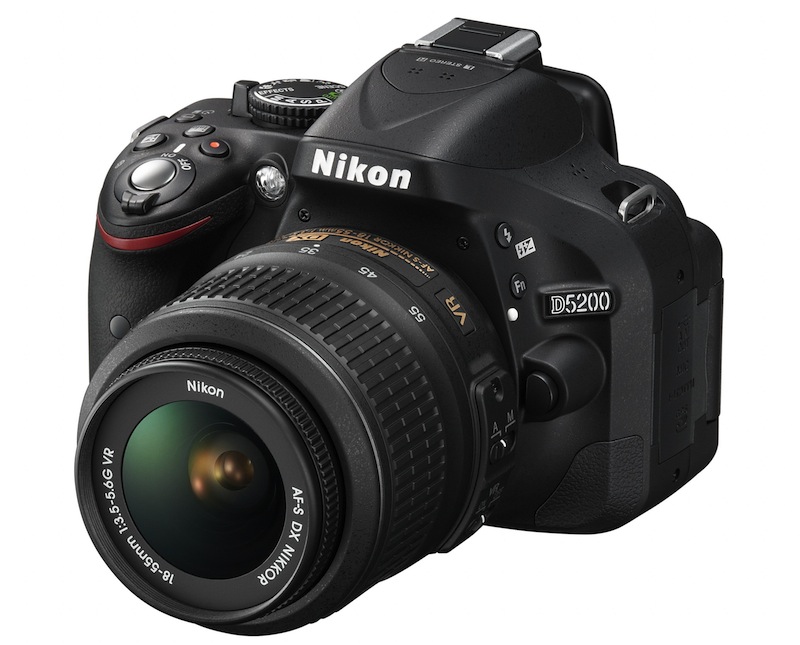
Nikon unveils D5200 DSLR, borrows from pricier D7000

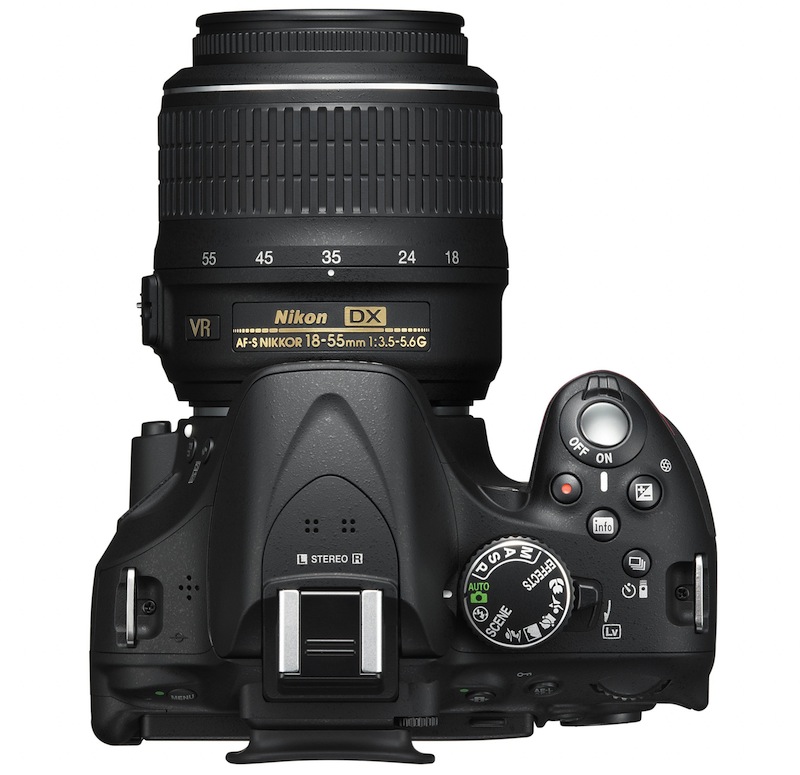
It's been a busy year for Nikon's DSLR range, with the Japanese camera company today announcing its fifth model since January. The new D5200 shooter is an improved version of the D5100 and incorporates several features found on Nikon's more advanced D7000 device.

Nikon unveiled the latest addition to its DSLR range on Tuesday. The D5200 is an improved version of the D5100 that it released 18 months ago, though the earlier model will continue to roll off the production line – for the time being, at least.

The new consumer-level DSLR shooter pulls a number of features from Nikon’s pricier D7000 camera, including its 39-point autofocus system (up from the 11 points found on the D5100) and 2016-pixel RGB metering sensor.

Buyers of the new camera might want to consider investing in some beefy SDHC/SDXC cards and hefty external hard drive, with its new super-sized 24.1-megapixel APS-C sensor guaranteeing snap-happy photographers rapid memory usage with the large picture files the camera will be serving up.

The frames-per-second rate of the D5200 shows a slight improvement over the D5100, increasing from four shots to five thanks to its new Expeed 3 processor.

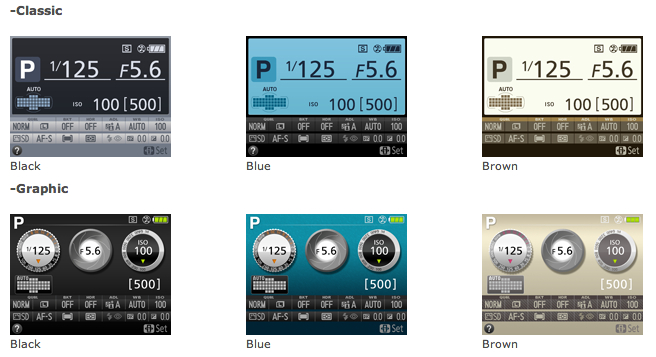
For camera operation, Nikon is promising that the device’s newly designed graphical user interface will be “easier and more intuitive” to operate than previous versions, with ‘classic’ or ‘graphic’ options to choose from.

Anyone wanting to make use of its 1080p movie capabilities can now shoot at rates of up to 60 fps, and will also be able to utilize its new built-in stereo microphone for improved sound over the older D5100.

Owners of iOS and Android devices who want to receive pictures wirelessly from the camera can do so with the optional WU-1a adapter, which also allows remote shutter control.

As with the older model, the new mid-range camera incorporates a 921k-dot TFT LCD screen that flips out, twists and turns, making it more likely you’ll get the picture you’re after when shooting at arms’ length over the top of people’s heads.

For those who prefer a dash of color with their camera bodies instead of the usual black, the Japanese camera giant is offering the D5200 in two other flavors – bronze and red.

Pricing for the new device hasn’t yet been confirmed, though it’s expected to arrive in stores in December.


Source : digitaltrends[dot]com

Nov 5, 2012

Nikon announces D5200 mid-range DSLR

Nikon has announced a new mid-range DSLR – The D5200 – that bridges the gap between the company’s aging D5100 and D7000 models. The D5200 looks similar to the D5100 but comes with a whole bunch of updates, including a new 24.1 megapixel APS-C CMOS sensor.

Inside there is a new 39-point AF system, along with an EXPEED 3 processor that allows the camera to capture up to 5 fps. There is also a new 2,016-pixel RGB metering sensor for better exposure, autofocus and white balance. The camera also records videos up to 60fps in 1080i in stereo sound.

On the back is a 3.0-inch, 921k dot fully-articulated LCD that shows an updated UI over the previous models. The camera is compatible with Nikon’s optional GPS and WI-Fi model and the latter allows you to control the camera remotely using an iOS or Android device.

Unfortunately, no pricing or availability information has been revealed so far.


Source : blog[dot]gsmarena[dot]com

Nov 2, 2012

Hands On: Amazon wants you to trust it with your photos

Amazon's cloud storage service for photos isn't just for Kindle HD users anymore. The company made its Cloud Drive Photos app available for most Android devices today. Signing in with your Amazon account will net you 5GB of free space for your pictures.

Android phone and tablet users have yet another option for cloud-based storage, though this time it’s specifically for photos. Amazon has made its Cloud Drive Photos app, which is already integrated into the Kindle Fire HD, available on most Android devices. This app looks like a service that will serve constant photo-snappers quite well.

The app initially asks for users to sign in using an Amazon account. You’re going to want to sign up for an account if you don’t already have one, because this app is completely useless if you don’t. The point of a cloud drive service is to save space, not take it up. Once you’re signed in, you’ll be greeted with the app’s home screen, or the “Cloud” tab. This simply explains to you how to access your drive online and add content from your computer that can then be viewed on your phone or tablet.

There is a second tab atop the display in this app called “Photos.” This is where you will actually be able to see the photo content that is currently saved on your device. Your camera roll, screen captures, Draw Something drawings, Instagram images, and all other photographic data is displayed. These are displayed by category, which can then be explored to see what each album holds. Pressing and holding on an album or an individual picture will allow you to manage the selection, prompting you to either remove it from the device or upload it to the cloud. These are very contrary choices, so make sure you select the one you want. The app also doesn’t appear to automatically sync and there is no option to do so in the settings, so you’ll have to manually update your sync after every snapshot, making this app annoyingly out of date compared to options from Google+ and others. 

All users of Amazon’s Cloud Drive Photos get 5GB of free storage. That can be upgraded to 20GB of space for $10 a year. Everything you upload is accessible right from your Amazon account, making it easy to manage from your phone or your computer. The app isn’t exactly feature rich, but it does the job it claims. An auto-sync feature would be nice, but it looks like we’ll have to wait until the next update to see if it’s there.


Source : digitaltrends[dot]com

Nov 1, 2012

Pearltrees releases version 1.0, premium accounts included

pearltrees

We caught up with Pearltrees' chief evangelist, Oliver Starr, after the company announced its 1.0 release and a new subscription-based business model.

Visualizing the scope of what we share from around the Web is a challenge, but given the popularity of tactile devices like iPhones and iPads it seems a valuable one to undertake. Interacting with website content is becoming more and more expected, and developers are taking note. Pearltrees, a startup we wrote about to announce its $6.7 million in funding early this year, just may be at the forefront of haptically curating information, and the company says it has the metrics to prove it.

We caught up with Pearltrees yesterday when the company celebrated the app’s 1.0 milestone. Pearltrees explains that 1.0 signifies the cohesiveness of its product across its three supported platforms: Web, iPhone, and iPad. It also marks, in some respects, the true launch of the site, despite having officially having launched in 2008. Oliver Starr, chief evangelist for Pearltrees, explains to me that Pearltrees started out as a Web app, but was developed for devices like iPhone in mind. The Web app was just an intermediary platform, since at the time Apple’s mobile wouldn’t be able to support the tech required to develop Pearltrees for the iPhone. In fact, the iPhone app wasn’t launched until July of this year.

Pearltrees was founded on the principles that Tim Burners-Lee, the godfather and founder of the Web, had in mind when developing what we know as the Internet. First, anyone should be able to view any piece of information published on the Web — the leading thought of Web 1.0. The second is that anybody should be able to publish any piece of information, which happened with the rise of blogging, wikis, and Twitter. Finally, and most importantly, the third criterion was that anyone could organize collections of this information.

Pearltrees visually aggregates bookmarks of websites, photos, and anything found online into visual “pearls.” Collectively the pearls make up a tree of information, clearly where the app gets its name. Users can save their latest interests from around the Web individually, but multiple users sharing the same interest can collaboratively curate a single pearl as well. It sort of feels like a visual, graphic Wikipedia without the user-contributed text. For instance, one of Starr’s favorite pearls has over 150 members and curates TED Talks. As he took me through it, the pearl was admittedly expertly curated and there didn’t appear to be any irrelevant information to be found.

The moderation of community pearls is left up to the devices of its members. Despite this, Starr tells me he’s only had to administratively ban approximately fifty accounts, including spam bots. It’s an astoundingly small number considering the 700,000 active users, two million unique visitors per month, and about 30 million pearls. And Starr knows a thing or about community moderation. “Being a veteran of moderating tech comments, I can tell you that’s not the norm.” Starr was Michael Arrington’s first employee at TechCrunch and responsible not only for creating “MobileCrunch,” but also worked as the tech blog’s first community moderator.

Pearltrees has access to unprecendented information about its users through its interest graph, called TreeRank. It can group pearls into similar interests and display them to you. Should you search for “Wolves,” the app would then display all pearls relevant to your search query. But since the algorithm scrapes your interests, it knows exactly what Pearltrees’ users interests are and similar things you’d want to see. It’s a powerful feature that, and one you’d think a marketer’s dream.

Despite this goldmine of user information, the company refuses to sell out. “We’ve kept true to the spirit of the company and the product, which is that we wouldn’t leverage what our users do through marketing,” says Starrs.

Instead, Pearltrees is taking the more difficult and less traveled route to making money by selling services. Luckily, the for-pay feature was one requested by the users. Now users can pay $4.99 per month or $49.99 for one year to make pearls private. But this model serves a dual purpose: It implicitly improves Pearltrees’ platform as a repository of valuable curated content. Putting a price on something will increase its value, and while that can be difficult to prove, it’s been done before — sites like Quora, Wikipedia, and even Evernote have showed us this.

By default all pearls are public, so anyone can see your pearls. With Pearltrees’ mantra to be host to a library of valuable content, Starrs explains that the pearls that users want to hide are typically content that Pearltrees wants you to pay to hide anyway. If it’s a pearl containing embarrassing content or even something not worth sharing, then it’s likely not content that would be helpful to other users should they find that pearl. So users should help pay for the hosting costs if it’s not going to contribute to the benefit of Pearltrees as a whole.

It’s a big bet, but one that the site is confident it can take. Pearltrees 1.0 is available now via the Web and for iOS devices. 


Source : digitaltrends[dot]com

Apple’s new iMacs are great, but can we get an iTV already?

Apple TV ipad iphone

Apple's new iMacs are mighty impressive, but we're still left wondering why the company doesn't just give us its next big thing: an iTV.

Running his hand along the slender 5-millimeter-thick edge, Apple’s Phil Schiller, senior vice president of worldwide marketing, debuted the company’s newest iMac. “It’s hard to believe there’s even a display in there,” Schiller said, highlighting how outlandishly thin it is.  

Though Schiller said the new iMac “epitomizes something Apple does so well, to create an innovative, breakthrough product,” the last time an iMac was a breakthrough product was when it was introduced in 1998. Yes, everything on display at the October 23 launch featured top-of-the-line specs and dazzling improvements, but nothing felt truly new. Where are the disruptive technologies of launches past? The one area that many of us have prayed Apple would dive into is the HDTV market. So where is the iTV?

There’s a market for computers large enough and thin enough to double as televisions, and Apple has all the key ingredients to build one. Creating an Apple-branded flat-screen HDTV that doubles as a powerful computer would surely make an impact on the television market. And though it’s a good start, Apple has only inched into the arena with its current Apple TV set-top box.

Computers are far more versatile than TVs. Not only can people watch televised content through a myriad of sources, including Hulu, Netflix, YouTube, HBO Go, and iTunes, but they can also enjoy full Internet browsing and productive capabilities native to a computer. That being said, today’s Smart TVs are already doing a pretty good job at blurring the lines between computer and TV. Most Smart TVs offer streaming from the above sources, and many of them offer Internet browsers with support for Flash; what they don’t offer is the kind of clean, simple user interface that Apple has leveraged through the years to turn customers into obsessives.  

As TV manufacturers struggle to integrate the increasing functionality of their products, Apple could easily leapfrog ahead of them. But don’t take our word for it. Walter Isaacson, Steve Jobs’ authorized biographer, quotes the late Apple founder on the subject in Steve Jobs: The Exclusive Biography:

“‘I’d like to create an integrated television set that is completely easy to use,’ he told me. ‘It would be seamlessly synced with all of your devices and with iCloud.’ No longer would users have to fiddle with complex remotes for DVD players and cable channels. ‘It will have the simplest user interface you could imagine. I finally cracked it.’”

Although we know Apple can do it, the company has not yet made large displays with competitive pixel resolution. The new iMacs lack Retina Display, but come packing a 1920-by-1080-pixel resolution on the 21.5-inch model, and a 2560-by-1440-pixel resolution on the 27-inch model. Coupled with the laminated screen and 300-nit brightness, it is almost ready to wrangle with some of the HDTVs already on the market. No, it’s not Plasma or LCD/ LED technology, but it’s very good, and it leaves us with no doubt that Apple’s talented staff could (and perhaps do) already have a prototype capable of making current purveyors like Sony tremble.

Perhaps more important than the hardware, though, is the need for a content ecosystem robust enough to convince the average consumer to cut their cable cords. The Apple TV is a good start, since it marries iTunes, Netflix, Vimeo, and other streaming services, but Apple would have to up its ante to compete with traditional cable companies.

Jobs knew this, as evidenced by his efforts to reach out to content partners in a possible attempt to create a streaming media service. Reported back in March by Engadget, CBS CEO Leslie Moonves disclosed Jobs’ advances towards establishing a partnership. Moonves chose to decline the partnership due to concerns about the impact it would have on existing revenue streams.

One way of working around the challenges of quickly establishing a content system as comprehensive as those of cable companies is to shift the emphasis away from the convenience of browsing channels over to the convenience of having a mounted computer. As more television networks have recognized the importance of streaming content, more shows have become available online. In an ideal world, the TV industry would have the future of computers built into TVs, but we think the future of TV is actually on computers. Because of that, it makes sense that an iTV would do more to blur the lines between computers and TVs than any other product so far. It also makes sense for Apple to stop trying to fit the outmoded concept of network time slots into its usually forward-thinking vision, and champion streaming.

What Jobs claimed to have “cracked” remains out of his company’s reach for the time being. Apple’s recent launch introduced some attractive devices, but none of them shifted paradigms in the same way as the iPod, iPhone, or iPad have done in the past. And though the company isn’t quite there yet, it won’t have another watershed moment until it introduces something as legitimately game-changing as an iTV – or something equally novel.


Source : digitaltrends[dot]com

Sony cut losses, but PlayStation 3 and PS Vita sales continue to drag

sony earnings

Layoffs and consolidation throughout Sony's empire helped trim the company's losses over the summer quarter, but its video game business continues to flounder. How will Sony reinvigorate the PlayStation 3 and PS Vita market?

Sony CEO Kaz Hirai continues to take blows as his first year at the head of the Japanese technology giant rolls on. His company reported earnings for the summer quarter on Thursday, and the massive layoffs and consolidation throughout Sony’s empire are helping to stop the fiscal bleeding. Losses continue to drop year-on-year and quarter-to-quarter. Between July and September, Sony recorded a net loss of just over $193 million, down from the $337 million it reported during the same period in 2011 and from the $312 million loss it recorded during the April to June quarter this year. The company is well on its way to a fiscal year where it doesn’t report a $5.7 billion total loss. While Sony itself recovers, though, the PlayStation division continues to drag the company down.

Sony’s video game division reported revenues of $1.85 billion for the quarter, down 14 percent for the approximately $2.2 billion it earned during the same period last year. Operating income fell to just below $29 million for the period.

Hardware, unsurprisingly, is the culprit. PlayStation 3 and PlayStation 2 sales fell hard, total home console sales falling from nearly 5 million machines during the period in 2011 to just 3.5 million this year. Naturally the ongoing erosion of PlayStation 2 sales, about to enter its thirteenth year on shelves, was a contributing factor, but the real culprit is the still-expensive PlayStation 3.

Sony’s handheld business fared much worse. The PS Vita and PSP sold a combined 1.6 million units. During the same period in 2011, Sony managed to sell 1.7 million PSPs and the Vita was still months from releasing in Japan. As a result, Sony further downgraded its forecast for total handheld sales in the fiscal year, from 12 million total to 10 million. Unless the Vita gets a major push in the market, you can expect Sony to keep lowering that forecast after the holiday quarter.

Game sales, at least, were up albeit slightly. Sony sold more than 41 million home console games and just under 9 million portable games, up from above 40 million and 8 million respectively in 2011.

Sony’s between a rock and a hard place. Both the PlayStation 3 and the PS Vita need to drop in price to create sales momentum. Bundles with new games and new models are simply not enough. The PlayStation 3 is old news compared to Wii U and too expensive compared to Xbox 360. The PlayStation Vita is too expensive and too limited in terms of functionality compared to iOS and Android devices. At the same time, Sony needs every penny it makes on the units it does sell. There’s no obvious solution to the company’s predicament in the games industry, but if it doesn’t make a change soon, the PlayStation business will be in grave danger of fading out.


Source : digitaltrends[dot]com

UK court orders smug PR spin to be removed from Apple’s Samsung apology

Apple-gavel-antitrust-governement-laws

Apple will need to amend its statement saying Samsung didn't copy the iPad's design, after UK courts took a dim view of the PR spin the company added after the approved text.

Apple’s apology to Samsung, which it was ordered to place on its website following the loss of its patent court case in the UK earlier this year, will have to be amended.

The statement can be found by following a link on Apple’s home page which leads to an otherwise blank page, where Apple has not only published the court-approved text, but added its own PR spin afterwards.

Its smug tone hasn’t gone down well with the UK courts or the presiding judges, with Judge Robin Jacob quoted as saying “I’m at a loss that a company such as Apple would do this,” and called the move “a plain breach of the order.”

The judge is probably the only one who is surprised by Apple’s actions, as the attempt to obfuscate the original meaning of the text by adding some self-serving Apple spin, is exactly the kind of egotistical move many of the company’s detractors have come to expect.

Samsung’s lawyer said that Apple’s statement gives the impression that “the UK court is out of step with other courts,” as it mentions both the $1 billion judgement in the US and another win against Samsung in Germany.

However, the back-slapping that inevitably followed the publication of the statement is all in the past, and Apple must change it to that which the court ordered, and it must do so within 24 hours. At the time of writing, the original statement remains on Apple’s website.

According to Bloomberg, Apple asked for 14 days to make the changes. Judge Jacob was shocked that it would need this long, and rejected the request. “I would like to see the head of Apple make an affidavit setting out the technical difficulties which means Apple can’t put this on their website,” he said. Us too, Judge, as it usually only takes them a couple of hours to put up an entirely new product range.

All this would be amusing, if it didn’t sound so childish.


Source : digitaltrends[dot]com

Megan Fox talks to dolphins with the help of the Acer S7 ultrabook in a cool ad

Acer has launched a new ad featuring Megan Fox. She uses the company’s latest Windows 8 flagship notebook – the S7 – to fulfill her dream of talking with dolphins.

For good or bad, the ad doesn’t feature the Acer S7 ultrabook as much as Megan Fox, but I am not complaining.

Check out the video below.

With Microsoft reaching out to Jessica Alba at the Windows Phone 8 event, and now Acer relying on Megan Fox’s cuteness to sell its S7 Windows 8 ultrabook, which Hollywood face should star the next Windows 8 ad? I hope Dell or Sony call Kate Beckinsale right away to fight zombies relying on Nokia Maps and the WP8 live tiles.


Source : blog[dot]gsmarena[dot]com

Google Earth for desktop gets tour guide feature and additional 3D imagery

Google Earth 7 is now available for download, with the Mountain View company adding the tour guide feature from the Android and iOS versions together with a load of new 3D imagery.

The latest version of Google Earth for desktop computers was rolled out on Wednesday, bringing many of the features that Android and iOS users of the virtual-globe software have been enjoying for a few months now.

Version 7 brings with it the tour guide feature, which Google describes as “a local expert”. To try it out, look for thumbnails appearing at the bottom of the screen as you’re viewing various locations around the world. These thumbnails indicate that a tour has been created. Click on one that looks appealing and you’ll be taken on a virtual flyover of the landmark or location, with various relevant facts and figures pulled from Wikipedia showing up on screen.

As you might expect, the feature works best with cities where buildings have been rendered in 3D by Google, rather than in locations like Paris which are still waiting for a makeover. Flying around an Eiffel Tower showing up as flat as a pancake is, of course, no fun at all. The Golden Gate Bridge in San Francisco and Rome’s Colosseum, on the other hand, both offer a superb demonstration of the feature. To view the buildings in 3D, you need to first check the 3D Buildings box in the layers column on the left side of the screen. To find out more about which landmarks are currently viewable in 3D, check out Google’s dedicated webpage here.

Locations updated with 3D imagery on Google Earth 7 include those that have been available on Android and iOS devices for several months such as Boulder, Boston, Charlotte, Denver, Lawrence, Long Beach, Los Angeles, Portland, San Antonio, San Diego, Santa Cruz, Seattle, Tampa, Tucson, Rome and the San Francisco Bay Area (including the Peninsula and East Bay).

And there’s more – from Wednesday additional 3D imagery is showing up for a number of other places including Avignon, France; Austin, Texas; Munich, Germany; Phoenix, Arizona; and Mannheim, Germany.

“The experience of flying through these areas and seeing the buildings, terrain and even the trees rendered in 3D is now consistent across both mobile and desktop devices, making all of your virtual travels more realistic than ever,” Google Earth product manager Peter Birch said in a blog post announcing the update.

Uou can download Google Earth 7 here.


Source : digitaltrends[dot]com

Oct 29, 2012

Meet Windows Phone 8 in a detailed video overview from Microsoft, pokes iOS and Android

Today is a pretty important day for Microsoft, as the company is launching the latest iteration of its Windows Phone mobile platform.

And to make sure that everybody understands and learns all about the new features Windows Phone 8 packs, Microsoft’s Corporate VP of Windows Phone, Joe Belifore stands in front of the camera for a lengthy 18-minute video showcase of the OS.

Dubbing it the “most personal smartphone around”, Mr. Belifore uses an HTC Windows Phone 8X and a Nokia Lumia 920 to demo nearly all the feature Microsoft’s mobile OS offers. He also doesn’t miss the opportunity to poke iOS and Android for the lack of live tiles and the ability to feed you with new information.

So, get some popcorn and watch the video below. Scroll after 1:00 for the iOS and Android commentary.

Have some popcorn left? Thirsty for even more in-depth review of Windows Phone 8? No problem, just check out our extensive review of Microsoft’s new mobile platform.


Source : blog[dot]gsmarena[dot]com