Pages

Showing posts with label percent. Show all posts

Oct 23, 2012

Samsung says it will continue supplying displays to Apple, despite rumors to the contrary

apple iphone 5 4G

A rumor has suggested Samsung is preparing to stop supplying Apple with touchscreens, however this has since been called "100-percent false" by a Samsung spokesperson. It's the latest in an escalating component supply war between the two companies.

Yesterday, the Korea Times reported that Samsung was to cease suppling screens to Apple next year, due to falling profits and presumably, the continuing animosity between the two companies. Today, Samsung has spoken to CNET to refute the rumor, calling it “100-percent false.”

Sources at Samsung were quoted in the original article as saying “we are unable to supply our flat screens to Apple with huge price discounts. Samsung has already cut our portion of shipments to Apple and next year we will stop shipping displays.” Another source said Samsung sent 3 million displays to Apple over the summer, but that number would halve between October and the end of the year.

Apple is known for driving a hard bargain with its component suppliers, and Samsung is said to feel that the company is “no longer a cash-generator” due to the deeply discounted prices and increased competition.

In response to the claims made by the Korea Times, a Samsung spokesperson made a statement to CNET, calling the post “100-percent false,” and that it was asking the publication to alter the story. Of course, this doesn’t mean it’s not true, just that Samsung would prefer it not to be public knowledge just yet.

Samsung has supplied a wide-range of components to Apple for several years, including the processor, RAM, memory and of course, the screen. However, in the iPhone 5, the flash memory, RAM and the battery are all produced by other companies, indicating Apple also wants to distance itself from its longtime partner. It has also started to rely more on LG and Sharp to produce its touchscreens too.

Even if profits are as tight as Samsung makes out, it’s still going to miss Apple should it eventually decide to stop making components for them. Its hands may be full with its own range of smartphones and tablets, along with a burgeoning relationship with Amazon, but any contract loss always hurts.

Samsung’s denial comes soon after it was revealed Apple intended to cut back on its services for processors too. Even outside the courtroom, the war between Samsung and Apple continues to escalate.


Source : digitaltrends[dot]com

Oct 16, 2012

Beats By Dre Releases Pill Bluetooth Speaker and Executive Headphones for Holidays

What do you do when you have 56 percent of the premium headphone market in the U.S.? What do you do when people everywhere are wearing the red wired headphones with the B insignia? You make products, that’s what you do.

Today Beats by Dre is releasing two new products for the holiday season — its Executive noise-canceling headphones and a new portable Bluetooth speaker called the Pill. In 2008, when Beats released its first product, Monster Cable was granted a five year contract to make Beats-branded headphones. These two new products are the first releases for Beats without the Monster partnership.

“This marks our first release as an independent Beats. As we define who we are as a company, the fundamental business of great sound experience and great design stays,” Luke Wood, president and COO of Beats, told ABC News in an interview.

And that’s our first impression of the new products, which will be introduced by Dr. Dre and Jimmy Iovine, the founders of the company, in New York City today. The Pill is a Bluetooth speaker no bigger than a bottle of shampoo, and it is shaped just like a pill. Yet with four drivers it blasts out some pretty powerful sound. It also has an NFC chip inside so that you can link an NFC-enabled phone, like the Galaxy S 3, with the speaker by just tapping it on the back. (It didn’t work with a Galaxy Nexus, however.) At $199, it costs less than Jawbone’s Jambox, but the sound didn’t seem as full.

If you’re looking for a more private listening experience, there are the new Executive noise-canceling headphones. The $299 headphones are well-made and comfortable to wear; the earpieces are covered in brushed aluminum, and lined inside with hand-stitched leather. Like other Beats headphones, the Executive requires AA batteries, and there is an on/off switch. On a cross country flight the headphones made the background noise of the plane and a crying baby disappear and provided very full sound when we listened to music or watched an episode of “Breaking Bad.”

Both the Pill and the Executive headphones are available today.


Source : abcnews[dot]go[dot]com

Oct 15, 2012

Softbank’s $20 bln Sprint takeover: Everything you need to know

new sprint softbank wireless carrier

Japan's Softbank, a telecom and Internet giant, is taking a 70 percent stake in Sprint for $20.1 billion. What is it thinking? Can Sprint customers expect anything from the deal?

In a surprise move, Japanese mobile operator Softbank has made a deal to acquire a 70 percent stake in Sprint, the United States’ number-three mobile operator. At $20 billion, the takeover represents Softbank’s largest overseas acquisition to date — and the biggest deal inked by a Japanese company in the United States in something like three decades. Acquiring Sprint gives Softbank a major entry point into the still-growing U.S. mobile market — perhaps a welcome move, since Japan’s mobile market is mostly stagnant.

However, for Sprint customers the takeover brings uncertainty. What will change at Sprint once Softbank is holding the reigns? Given that Sprint has lost money in its last 19 quarters (nearly 5 years) — with a 20th on the way — is Softbank out of its mind to sink $20 billion in cash into the company? And, most importantly, can Sprint customers — and potential customers — expect any benefits from the deal?

How the Softbank takeover will work

Sprint CEO Dan Hesse (July 2010)

Like many other high-profile deals, Softbank’s takeover of Sprint is complicated, but it’s also an example of one of the fundamental axioms of business: cash talks. Softbank is putting a total of $20 billion in cold hard cash into Sprint. Softbank will be spending a total of $12.1 billion on Sprint stock: the bulk will go toward buying up about 55 percent of current Sprint shares for $7.30 each, with some $3.1 billion of that money earmarked for buying shares in a new publicly-traded company dubbed “New Sprint,” for the time being. On top of that, Softbank will be pouring another $8 billion in cash into the new company, providing it with substantial operating capital.

Taken at face value, Softbank putting $20.1 billion into Sprint means it valued Sprint at about $28.6 billion — some two-thirds higher than Sprint’s total market capitalization as of the markets’ close last week.

Softbank Sprint structure

That operating capital will likely be all about fueling Sprint’s 4G LTE expansion. Right now, Sprint has LTE service up and running in a couple dozen markets, but that pales in comparison to the hundreds of markets where Verizon Wireless currently offers LTE service. The new Sprint will most likely use that $8 billion in cash to not only accelerate its planned rollout of LTE services, but quite possibly to make additional acquisitions to bolster its spectrum holdings and reach. The most likely candidate there is Clearwire, where Sprint already has a 48 percent stake, but MetroPCS may not be out of reach either, even through it’s agreed to a reverse merger with T-Mobile.

Softbank’s cash is coming from its own bank accounts, plus financing from three Japanese banks (Mizuho Corporate Bank, Sumitomo Mitsui Banking, the Bank of Tokyo-Mitsubishi UFJ), along with Deutsche Bank. The $7.30 in cash Softbank is offering for Sprint shares represents a 27 percent premium over the company’s stock price when the deal was announced. Softbank expects the stock purchases to be completed by mid-2013. Once the deal is complete, Softbank will hold 70 percent of “New Sprint,” while Sprint’s existing shareholders will retain about 30 percent of the new company.

For all these changes, there will be some continuity. Sprint’s current CEO Dan Hesse will stay on as the CEO of the new company, and Sprint’s headquarters will stay in Overland Park, Kansas. “New Sprint” will have a ten-member board of directors, with at least three of those members coming from Sprint’s existing board (and that includes Hesse himself on the board).

What is Softbank thinking?

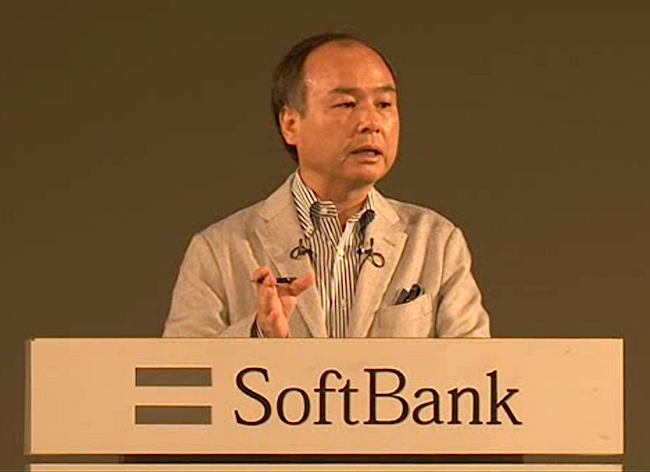
Masayoshi Son Softbank

Softbank’s decision to put $20 billion into Sprint may seem like folly. After all, Sprint has been a money-losing proposition since 2007 and it’s far behind competitors Verizon Wireless and AT&T in rolling out 4G LTE. What’s more, Sprint has been losing subscribers, it’s saddled with $15 billion in debt, and the company is still trying to crawl out from under a near-disastrous merger with Nextel in 2005. Sprint doesn’t seem like a good takeover target.

But that’s not the way Softbank sees it. Softbank’s CEO Masayoshi Son isn’t cut from the risk-averse, conservative cloth of many other Japanese business magnates: he’s a risk-taker who isn’t afraid to do something seemingly crazy he believes will pay off in the long run. And he’s done it before. Back in 2006, Softbank sunk $15.5 billion into acquiring Vodafone’s Japanese unit—and, as with the Sprint deal, most industry watchers thought Softbank overpaid and was utterly out of its head. And, at first, the deal did not seem to go well, costing Softbank a billion a year for the next four years. The 2008 financial crisis also hit Softbank hard: the company had poured ¥75 billion into an investment based on credit-default swaps, some of which defaulted in the financial meltdown. Softbank incurred tremendous debt, but the bet in acquiring Vodafone was sound, and Softbank bolstered its core business by (for a while) being the exclusive Japanese carrier of the Apple iPhone. Son had pledged to retire Softbank’s debt by early 2014, but had recently backpedalled a bit on that, saying that the company only needed to get its debt to manageable levels before looking at new acquisitions.

In Japan, Softbank has been very aggressive about deploying LTE service — and, moreover, Softbank’s flavor of LTE is Time-Division Long-Term Evolution (TD-LTE), which is similar to the LTE technology currently being rolled out by Sprint partner Clearwire. Although some of Softbank’s experience building out LTE in Japan is not directly applicable to the United States — the geographies are radically different, after all — the company’s experience with both network management and offering differentiated services that capture subscribers from other carriers are well-established. In many ways, Softbank’s bet on Sprint is very similar to its bet on Vodafone six years ago. And, on average, Japan’s mobile networks have long offered far more bandwidth than those in the United States. U.S. mobile operators are still learning what it means to offer high-bandwidth services to consumers: Softbank has been doing it for years.

But the Japanese mobile phone market is almost stagnant, and has almost no growth prospects, particularly with Japan’s population growth near zero. That means Softbank’s only way to grow in Japan is through acquisitions. Softbank has just announced a $2.3 billion effort to acquire Japanese mobile provider eAccess in a bid to become Japan’s number-two mobile operator, but Sprint is far more tempting. The United States’ mobile market is still growing, and only about half of the United States’ 320+ million mobile users are carrying a smartphone. That means half are still using feature phones; Softbank sees this as a tremendous growth opportunity.

Moreover, the time is right for Softbank to move. Japanese interest rates are at record low levels and the yen is near all-time highs against other world currencies. There may never be a cheaper time for a Japanese company to make a major play in the U.S. market.

How could things go wrong?

Sprint

Softbank’s bet on Sprint is not without significant risks. The new company is not going to be able sit back and watch the dollars roll in.

Market experience: Softbank has zero experience in the U.S. market. None. Although Softbank is determined to keep Sprint CEO Dan Hesse on board along with (it seems) a portion of Sprint’s existing management, there’s no telling if Softbank will be able to develop working strategies to differentiate Sprint’s service to consumers and grow its business.

Overextended management: Softbank just bought eAccess in Japan in a bid to become Japan’s second-largest mobile operator: that was ambitious in itself. Taking over the much-larger Sprint may be more than Softbank’s management can handle. Moreover, Sprint already had its hands full: Sprint is in the middle of a $15 billion+ commitment to Apple to carry the iPhone and spending billions to bring LTE to its network as part of its Network Vision plan. The good news is that the $8 billion in cash from Softbank should help Sprint carry through on both those initiatives; the bad news is that Sprint is now adding a corporate restructuring to its already daunting to-do list.

“There’s a huge risk that the deal will not go to plan and could weaken both companies at critical times,” noted Informa Telecoms & Media principal analyst Mike Roberts.

Debt: Softbank’s takeover of Sprint will have Softbank once again swimming in debt: Sprint already has $15 billion in outstanding debt, and Softbank is still carrying about $10 billion in debt. Those numbers push Softbank’s debt-to-capital ratio into dangerous territory, and could place significant pressure on Softbank’s operating cash in the next few years as it’s forced to work on retiring debt rather than growing its business. Softbank may wind up owning Sprint but unable to do much with it — particular if the world economy takes another downturn.

Who could win?

clear clearwire logo

All that said, Softbank’s bet on Sprint may be risky, but many parts of it make sense.

Clearwire: Sprint and Softbank emphasized that their deal does not require Sprint to take any actions with Clearwire. However, the deal could leave Clearwire sitting in a very nice spot. Clearwire has been moving its network away from WiMax 4G service it debuted in 2009 to LTE. (Sprint and other investors had bet that getting out the door first with WiMax 4G services in 2008 or 2009 was a better bet than waiting until 2012 or 2013 for LTE to become a reality, though it doesn’t seem to have helped much.) Clearwire has a substantial portfolio of spectrum licenses in the 2.5GHz range — that’s well above the building-penetrating 700GHz range preferred by AT&T and Verizon Wireless, but would still add significant coverage to Sprint’s LTE efforts. However, Clearwire hasn’t been able to capitalize effectively on those licenses due to a lack of money to invest in its network. The bulk of its users are actually from Sprint, thanks to a wholesale agreement, so the tighter Clearwire becomes with Sprint, the better.

The $8 billion in operating capital Sprint is receiving from Softbank would go a long way toward building out LTE services in Clearwire’s spectrum. Moreover, Softbank’s LTE services in Japan are also built in the similar 2.5GHz spectrum blocks, and use the same TD-LTE service that Clearwire is deploying on its network. Some industry watchers expect Sprint to invest even more heavily in Clearwire, or move to purchase it outright.

Clearwire had no comment on Softbank’s acquisition of Sprint.

Sprint: Being acquired by Softbank makes Sprint more directly competitive with AT&T and Verizon Wireless in one important way: subscriber numbers. In the second quarter of 2012, Verizon and AT&T sported 105 and 102 million subscribers, respectively, accounting for 33 percent and 31 percent of the U.S. mobile market. Sprint is in a distant third place with 56 million subscribers. However, Softbank boasts some 34 million subscribers in Japan, meaning once Softbank acquires Sprint it will have an effective customer base of about 90 million people. That’s not far behind Verizon and AT&T, and should help the new Sprint negotiate more advantageous deals with equipment and handset providers. Softbank ought to be able to pay less for networking gear than Sprint, and have access to a better deals and a broader range of gear and handsets from equipment manufacturers. That may include Apple, since Softbank probably wants to keep Japan’s NTT Docomo from getting the iPhone.

The upshot could be a wider range of handsets, tablets, and other mobile gear available on Sprint at the same time they launch on other major U.S. carriers.

Upshot

Bringing the iPhone on board has helped Sprint gain subscribers and revenue. (Just ask T-Mobile how it feels to not have the iPhone.) Unfortunately, it hasn’t swung the company back to profitability. After 19 straight quarters of losses, Sprint needs a turnaround.

Sprint’s kind of turnaround seems to be Masayoshi Son’s specialty. The Japanese mobile market is dominated by KDDI and NTT Docomo, and Son was able to buy Vodafone, revamp it, and make it a solid competitor against a duopoly. In the United States, the mobile market is dominated by the duopoly of Verizon Wireless and AT&T. With Sprint, Son sees an opportunity to bring his successful turnaround model to the United States.

“I think we can provide much better competitive technology and services that U.S. citizens have never experienced,” Softbank’s Masayoshi Son said in a conference call with analysts today.

Sprint customers certainly hope he’s right. But changes won’t come overnight: Softbank’s acquisition of Sprint won’t be complete until the middle of next year, and still needs regulatory approval. In the meantime, AT&T and Verizon won’t be sitting on their hands. Verizon Wireless plans to light up its 400th LTE market this week.


Source : digitaltrends[dot]com

Sep 28, 2012

Sony buys 11% stake in Olympus for $644 million

Sony has bought an 11 percent stake in Olympus for $644 million with the hopes of providing advances in medical imaging and camera lenses.

The partnership aims at expanding on Olympus’ dominance of the medical endoscope market, as well as on both companies’ consumer camera technology.

Olympus currently holds roughly 70 percent of the endoscope market, and Sony has plans to push that even higher with the introduction of new 4k endoscope technology with 3D imaging capabilities.

Sony also gets the added benefit of Olympus’ imaging technology, which includes lens and mirror cell technology, which Sony can employ in its cameras for consumer electronics.


Source : blog[dot]gsmarena[dot]com

Sep 17, 2012

Gartner report: By 2014, 10-15 percent of social media reviews will be fake

fake-reviews

Gartner analysts have found that by 2014, between 10 and 15 percent of reviews will be fake.

Product reviews, whether coming from Amazon, Rotten Tomatoes, or Yelp, can make or break your Internet marketing efforts. There’s a lot at stake and that means plenty of outlets resort to illicit practices (read: faux users and spambots) to improve their reputation. In a Gartner study, analysts found that by 2014, between 10 and 15 percent of social media reviews will be faked.

Over half of the Internet population use social networks, and a handful of those platforms (Facebook, Twitter, Pinterest, and Google+), house a dense concentration of users that are sharing and promoting content on their own accord. It is word of mouth 2.0 and it’s a powerful and lucrative marketing opportunity. So powerful, in fact, that analysts predict that at least two Fortune 500 companies will face litigation from the Federal Trade Commission in the next two years for illicit social media practices.

“Organizations are scrambling for new ways to build bigger follower bases, generate more hits on videos, garner more positive reviews than their competitors and solicit ‘likes’ on their Facebook pages,” Jenny Sussin, senior research analyst at Gartner said in a statement.

Just scanning Craigslist jobs shows you the potential for careers in faux brand promotion. Desperate companies will often offer a small compensation in exchange for a positive review of their product, even if the reviewer never set foot within the restaurant or never used the product in question. It seems like a harmless scheme that quickly pays a few bucks, but the FTC ruled that reviews for products without appropriate disclosures, including being paid off or receiving a free gift, is a deceptive advertising strategy and can be prosecuted with a fine.

Several years ago, the FTC’s Guide Concerning the Use of Endorsements and Testimonials in Advertising impacted the blogging community, which responded angrily. Bloggers under this ruling have been required to disclose to readers of any payments, affiliations, or free products recieved in exchange for a review.

While the noise around blogging has died down, criminal online and social media practices have consequently evolved. Businesses can easily purchase “Likes” on Facebook or “Followers” on Twitter for a low as five dollars on sites like Fiverr. Anyone resorting to this strategy would know that they would be acquiring fake users or users that have no interest in your business, but with the pressure on marketers to perform, paying to bolster a company’s reputation with a few more thousand followers can be incredibly tempting.

“Marketing, customer service, and IT social media managers looking to use reviews, fans and ‘Likes’ to improve their brand’s reputation on social media must beware of the potential negative consequences on corporate reputation and profitability,” said Ed Thompson, Gartner Vice President and analyst.

While companies tangle with this ethical and legal dilemma surrounding social media practices, Facebook has made strides with shutting down accounts and removing “Likes” that fail to abide by its terms of service. As we reported, as many as 83 million accounts are “fake” accounts, and Facebook’s latest effort to clean house affected less than one percent of any given Facebook Page.


Source : digitaltrends[dot]com

Sep 3, 2012

Chitika: OS X Mountain Lion continues to gain share

OS X Mountain Lion

Ad network Chitika says Apple's OS X Mountain Lion now accounts for 10 percent of impressions from desktop Macs across its network.

One of the measures of the success of a computer operating system is how quickly users embrace it — that’s why Windows Vista was generally considered a bit of a flop and why Microsoft’s Windows 7 follow-up is viewed as a stronger success. When Apple launched OS X Mountain Lion last month, the company did everything it could to encourage users to jump on board, making the update available to a wide range of recent Macs as a downloadable update that only cost $20.

Ad network Chitika initially reported very strong adoption of OS X Mountain Lion, finding that 3.2 percent of traffic from Mac desktops across its ad network was from Mountain Lion systems just 48 hours after launch. Now that Mountain Lion has been out a month, however, the OS’s adoption rate seems to have calmed down a bit — but it’s still way ahead of its predecessor, Mac OS X 10.7 “Lion.” According to Chitika, as of August 27, Mountain Lion accounted for 10.3 percent of all the hits it was seeing from desktop Macs across its ad network. In contrast, Chitika count Lion took more than three months to represent 14 percent of total Mac OS X traffic.

Chitika OS X Mountain Lion adoption first month

Chitika’s figures are derived from impressions across its “extensive” advertising network, which the company claims spans more than 200,000 sites and serves up more than 4 billion ads a month. They do not represent official Mountain Lion adoption figures from Apple. The only official word from Apple on Mountain Lion sales is that the operating system sold more than three million copies in its first four days of availability.

Although Mountain Lion has generally received positive reviews, it has also been criticized for adopting too many elements from Apple’s iOS — although it’s important to note that Apple has many millions more customers using iOS than Mac OS X, at this point. Chitika speculates that the rapid adoption of Mountain Lion may have more to do with the low price point and the easy online distribution model Apple has adopted for the release. Ultimately, quick adoption of Mountain Lion and desktop operating systems means Apple can innovate the Macintosh more quickly with less concern about long-term support for legacy systems.


Source : digitaltrends[dot]com

Aug 30, 2012

Mobile entertainment use jumped dramatically last year

More people used their mobile devices to access (and buy) more entertainment last year, reports a new study, with mobile entertainment spending up 133 percent for 2011 compared with the previous year.

With tablets, smartphones and mobile apps of all kinds becoming an increasingly popular – One could almost say ubiquitous – part of daily life, it should come as no surprise to discover that mobile entertainment is on the increase in America. What may be surprising, however, is to just what extent that’s actually the case. A new study carried out by Millennial Media and comScore has revealed that mobile access to entertainment content of all kinds has undergone a staggering 82 percent increase across the past calendar year, according to a report appearing on the Hollywood Reporter, with the digital downloads jumping almost 50 percent since 2010. Does this change entertainment industry expectations about where their audience is going next?

According to the Reporter, downloads of entertainment content, whether it’s music, movies, television shows or e-Books remain the largest segment of digital purchases, with 47 percent of mobile shoppers having purchased at least one of the previous items between December 2010 and December 2011. The second most popular entertainment purchase is, perhaps unsurprisingly, tickets to some kind of real-world event, whether a concert, movie or something similar; 35 percent of online buyers having spent their money on that during the same twelve month period.

Overall, smartphones were the most common type of device used to access entertainment content during the study period, with tablet devices accounting for just 22 percent of user impressions. Of those smartphones, Apple’s iOS was eclipsed for the first time, with Android OS devices taking the lead with 47 percent of users (BlackBerry took a distant third).

Interestingly enough, despite a 133 percent growth in entertainment spending by mobile shoppers for 2011, the analysts at Millennial Media are predicting that there’s room for even more growth. The reason why? The majority of material accessed via mobile devices was promotional content, created to drive interest towards a particular product and priced accordingly (i.e., either free or available at a significantly reduced price). As Marcus Startzel, Millennial Media’s General Manager for North America, puts it, “I think the real trend we’re seeing is that studios and other entertainment advertisers are using mobile to engage consumers through all stages of the purchase funnel. This definitely includes directly selling over mobile devices, but it also includes steps like running awareness campaigns ahead of premieres and advertising reminders ahead of shows to drive TV tune-in. Additionally, we’re seeing studios develop apps to accompany major releases and then running mobile campaigns to drive adoption.” The future of mobile media, then, will perhaps rely not only on whether or not users can be pursuaded to pay for the content that they’re currently getting for free, but also on content creators treating mobile content as valuable in and of itself, and not something to push users in the direction of something else altogether.


Source : digitaltrends[dot]com

Aug 29, 2012

Some Americans believe stormy weather interferes with cloud computing

Stormy weather

While many Americans use cloud computing every single day, that doesn't mean they necessarily understand it.

According to a recent survey conducted by Wakefield Research for Citrix, approximately 51 percent of the respondents believe that a few rain clouds in the sky will directly interfere with Internet-connected electronics when attempting to upload or download data through cloud computing. Of the 1,004 people surveyed, the majority thought the term “the cloud” was related to actual clouds in the sky and 29 percent thought it had to do with weather conditions. Only 16 percent recognized the cloud as the common term when referring to a computer network that stores data for Internet-connected devices like laptops, tablets and smartphones.

Cloud-ComputingApproximately 54 percent of the respondents stated that they didn’t use the cloud when using their Internet-connected devices. However, over 90 percent of that group admitted to several common actions that uses cloud storage for user data.

These actions included online banking and shopping, browsing social networks like Facebook, using file-sharing services, playing online games as well as storing photos, videos and music on various Web services. It’s clear that people are able to take advantage of cloud computing without actually being able to define it.

Also interesting, more than one in five respondents have claimed to understand how the cloud works, but were only pretending to understand. In addition, over 50 percent of the respondents believe that when friends, family and co-workers refer to the cloud in conversation, they really don’t understand it at all. One third of the respondents have pretended to understand references to the cloud at work and fourteen percent claimed to understand cloud computing during a job interview. In addition, seventeen percent pretended to understand “the cloud” while on a first date.

However, nearly 60 percent of respondents believe that the “workplace of the future” will exist entirely in the cloud. When asked about advantages to conducting business over cloud computing, over a third want to use it in order to avoid specific people at work and approximately forty percent would like to use it at home to avoid getting dressing in the morning.

When asked why using cloud computing wasn’t a priority for them, respondents named privacy concerns, security concerns and cost as the main deterrents to cloud computing. However, some respondents do believe that businesses can lower costs with cloud services as well as increase consumer engagement.

While some Americans aren’t quite sure how to define the cloud, this hasn’t stopped many Web startups from taking advantage of cloud computing to scale up services for new users. According to a recent article in the New York Times about Amazon Web Services, CEO Daniel Gross, the founder of the Cue mobile application, claimed that Amazon Web Services saved the company hundreds of thousands of dollars and provided a great deal of flexibility as more users started using the application. In regards to Amazon Web Services, Gross stated “I have ten engineers, but without A.W.S. I guarantee I’d need sixty. It just gets cheaper, and cheaper, and cheaper. I don’t even know what the ballpark number for a server is. For me, it would be like knowing what the price of a sword is.”


Source : digitaltrends[dot]com

Sharp to cut 2,000 jobs domestically in first layoffs in 60 years

Sharp has announced plans to cut its domestic workforce by 2,000 as it struggles against Asian competitors selling cheaper TVs. Globally, the electronics company is planning to lose about 10 percent of its workers by March next year.

Japanese electronics maker Sharp announced on Tuesday plans to lay off 2,000 of its workforce in the country. The job cuts are the company’s first in 60 years and come as a result of a downturn in demand for flat-screen TVs, partly due to a sluggish world economy. Competition from Asian competitors selling cheaper TVs is also taking its toll.

A statement released by the Osaka-based company explained it planned to shed the jobs – which amount to just over 6 percent of its 30,800 domestic workforce – through a voluntary retirement program. According to Reuters, this will likely target employees aged around 55, as severance packages for this age group usually amount to a year’s wages. Workers in their 40s, on the other hand, would be entitled to as much as three years’ salary. The offer will be presented to employees in the first two weeks of November, with those who take it up expected to leave their positions in December.

In an effort to turn the company’s fortunes around, Sharp said in its statement it is in the process of “improving its earnings structure so that it can compete amid severe global competition by downscaling productions bases and branches, streamlining the headquarters, and adjusting employment to an appropriate level.”

Job cuts aren’t confined just to the domestic market, with the company planning to shed a further 2,400 workers globally by the end of March next year. In total, the planned losses will likely amount to 10 percent of its global workforce.

Sharp was founded in 1912 and expanded outside of Japan in 1962. The company made the first ever solar-powered calculator and currently sells the largest commercially available LCD monitor, the enormous 90-inch AQUOS LED Smart 3D TV

The electronics company is now supplying display panels for Apple’s iPad and is also one of three suppliers of screens for the Cupertino company’s next-generation iPhone, which is expected to be unveiled next month.


Source : digitaltrends[dot]com

Aug 27, 2012

Samsung’s value drops by $12 billion after court loss to Apple

samsung-vs-apple

Samsung loses 7.5 percent of its value in the first day of trading after Apple's court victory. It looks like the real cost of that losing verdict for Samsung could be high.

In the aftermath of the Apple vs. Samsung verdict, everyone is trying to work out what it really means. Is Google’s Android platform really at risk now? Will Apple continue to sue everyone? How will Apple’s victory over Samsung affect you?

The $1.049 billion that Samsung has to pay to Apple is less than one percent of its revenue in 2011, but focusing on the award is to ignore the real cost of this loss for the South Korean company.

Samsung Electronics shares slumped 7.5 percent after the Apple victory. According to The Guardian that’s $12 billion in market value and it is Samsung’s biggest daily drop in nearly four years. A staggering 1.27m Samsung shares changed hands on Monday, although the share price recovered slightly before the Seoul market closed.

Early indications are that Samsung’s rivals, LG and Nokia, will benefit with share prices rising for both companies. However, other Android manufacturers like HTC and ZTE saw share prices drop as well. That could signal a loss of confidence in the platform. That could also be good news for Microsoft with a Windows Phone 8 launch on the horizon and Nokia as a partner.

While Samsung has fingers in a lot of pies in the consumer electronics industry, it is sales of mobile devices which have driven recent profits. A number of Samsung devices will probably now be banned after the Californian jury found the company had infringed six Apple patents. The hearing to decide on that is scheduled for next month. Samsung’s flagship Galaxy S3 was not included in the case, but there are obviously fears that Apple will now go after it and other devices in Samsung’s line-up.

Ultimately this loss may cost Samsung a lot more than the $1 billion that the jury awarded.


Source : digitaltrends[dot]com

Aug 26, 2012

Changing Cities: A Wind Turbine That Creates Fresh Water Out of Thin Air

ht eole water jt 120826 wblog Changing Cities: A Wind Turbine That Creates Fresh Water Out of Thin Air

(Eole Water)

For the nearly 20 percent of the world’s population lives in areas without access to fresh drinking water, getting access is a matter of life or death. Inspired by the mechanics of a dripping air conditioner, French inventor Marc Parent was inspired to create a solution that could bring fresh water to the most remote, driest parts of the world.

Parent created a company, Eole Water, that produces wind turbines that literally pull fresh water out of thin air.  His solution, dubbed the WMS1000 uses the electricity generated from a windmill to collect and treat water without tapping into a water source such as a river, lake or well.

Eole Water is testing the invention in France and Abu Dhabi.  The invention, if the company can get the economics to work, looks to be a promising solution to the water crisis.

I recently interviewed Thibault Janin,  Marketing and Communication Director of Eole Water on the WMS 1000 turbine to find out what’s in store for this new technology.

How was the idea of a wind turbine that produces water developed?
Thibault Janin: The idea came from Marc Parent, founder of Eole Water, when he lived in the Caribbean, and was subjected to water shortages. He began to work on a system that could recover moisture from the air and transform it into water. Soon after, he returned to France. He patented the process and founded Eole Water.

Millions of people worldwide live in remote areas without any access to safe drinking water. What is the potential  for the Eole system to solve this issue?
Thibault Janin: Each unit can create 1,000 liters of drinking water using only moisture and powered only by wind. Let me highlight this word : CREATE. All existing solutions (wells, desalination, lakes/rivers pumping, etc.) only treat an existing source of water. Thus, what happens when there is no or no more water available? The WMS1000 can create water when there is no existing source available. That makes a difference. Our technology integrates water creation, water collection, water treatment and water local distribution.  The WMS1000 can produce and distribute water everywhere.

Today, people only use centralized distribution, from a center point to others. With our turbine, we wish to decentralize the water access. As the logistic and the process are easy to install and operate, it will be an answer to various issues like massive population movements that cause swelling of cities, increased diseases and therefore health care costs increasing, a door to agriculture or a local industry beginning. All economic or welfare starts with access to water. And this is what we provide.

Are any of these turbines in place and operational?
Thibault Janin: Wind turbines (first, second, third generation) can be seen at Eole Water Headquarters in Manosque in the South of France. The fourth one is used to make demonstration during shows and exhibitions. The fifth one, the WMS1000, is the real showcase of our actual company knowledge. It has been designed and manufactured between January 2010 and December 2011. Then first tested in France between January 2011 to August 2011, and second in Abu Dhabi (Mussafah) from November 2011 to April 2012. The final location of this turbine will be Dubai by the end of 2012. The location will be opened to public.

What’s the cost of production and operation of the turbine?
Thibault Janin: The WMS1000 has a price of $600,000. It has been designed to operate in very remote areas, which implies that the maintenance overheads are strictly reduced to minimum. The WMS1000 wind turbine has lifetime of 20 years minimum.

What is the potential for the turbine?
Thibault Janin: Thibault Janin: Do not look only at the 150 million potential customers for this technology. It is much more complex. Water is becoming increasingly scarce. Household needs in the matter should increase by 130 percent by 2030. At the same time, the WMS1000 is only one step in our development. Our range will expand to provide more precise and larger answers to communities with larger turbines featuring higher capacities of water production. We respond to a growing and constant global demand, not subjected to economic classical cycles, since water is essential to life.

What hurdles do you see standing in the way of bringing more of these wind turbines online?
The major challenge for Eole Water is to make this technology more competitive in terms of price per water cubic meter. Our technology must reach maturity as quickly as possible, at several levels: production, R&D, legal or business experience.

This interview has been edited


Source : abcnews[dot]go[dot]com

Aug 23, 2012

Sony Mobile to Lay Off 1,000 Employees

By Tina Trinh (@TinaTrinhNYC)

Sony Mobile Communications announced today that it plans to lay off 15 percent of its workforce, approximately 1,000 employees, by 2014.  The decision will mainly affect employees stationed at Sony Mobile’s headquarters in Lund, Sweden.

In October, the division’s headquarters will also relocate from Sweden to Toyko.  The Lund offices will remain, with a focus on mobile software and application development.

In a statement, the president and CEO of Sony Mobile, Kunimasa Suzuki, said, “We are accelerating the integration and convergence with the wider Sony group to continue enhancing our offerings, and a more focused and efficient operational structure will help to reduce Sony Mobile’s costs, enhance time to market efficiency and bring the business back to a place of strength.”

Last February, Sony acquired full ownership of Sony Ericsson Mobile Communications and renamed the company Sony Mobile.  Today’s announcement signals an effort to streamline operations at the struggling mobile division, which has lagged behind such competitors as Apple and Samsung.  Sony Mobile Communications’ flagship product is the Xperia line of smartphones.  In the rough-and-tumble smartphone marketplace, Sony’s products face an uphill battle, but Sony said it anticipates that uniting the mobile division with the broader company will make it better positioned to compete.


Source : abcnews[dot]go[dot]com

Aug 15, 2012

LA restaurant offers discount to diners who give up their phone during meal

A restaurant in Los Angeles is offering a 5 percent discount to diners willing to hand over their handset for the duration of the meal. The owner says he wants people to connect again (with the person sitting opposite them rather than with someone in another part of the country).

There was a time when visiting a restaurant with a friend meant enjoying a tasty meal together and having an engaging conversation. Thanks to the proliferation of smartphones, however, it’s now also about texting a friend between the starter and the main, taking a call from a co-worker mid-meal, tweeting a photo of the dessert, and firing off an email during the post-dinner coffee. Of course, a review of the eatery posted online even before you’re out the door is also obligatory.

If both of you are at it, no one gets hurt, but it kind of defeats the whole point of going to a restaurant with a friend, does it not?

Discount

One restaurant owner/chef in Los Angeles has decided to encourage people to once again enjoy the company of their fellow diners by offering a 5 percent discount on their check if they hand over their phone before the first course is served.

Southern California radio station KPCC reported that Mark Gold, who runs Eva restaurant on Beverly Boulevard, is hoping to create a more homely atmosphere by giving patrons the chance to enjoy their meal without the possibility of a handset interrupting the flow of the dining experience.

“For us, it’s really not about people disrupting other guests. Eva is home, and we want to create that environment of home, and we want people to connect again,” Gold told KPCC. “It’s about two people sitting together and just connecting, without the distraction of a phone, and we’re trying to create an ambience where you come in and really enjoy the experience and the food and the company.”

Gold added that so far just under half of the diners visiting his restaurant have taken up the offer, though he failed to mention whether anyone had broken into a cold sweat halfway through the main course, begging to have their phone returned.

Phone Stack

Earlier this year another Californian man, Brian Perez, also had an idea to get diners looking at each other again, instead of at their handsets, creating a game called Phone Stack. The idea is that after taking your seat, everyone places their mobile in the center of the table. The first person who grabs their device during the meal, regardless of the reason, has to take care of the check.

How do you feel about Mark Gold’s idea of taking your phone away for the duration of the meal? Could you handle it? Or does the thought of being separated from your handset for even just a few minutes fill you with dread?

[Image: Shebeko / Shutterstock]


Source : digitaltrends[dot]com

Aug 13, 2012

Google axes 4,000 Motorola jobs, closes a third of offices

Google announced on Sunday that it will cut 20 percent of Motorola employees in addition to closing 33 percent of offices worldwide.

Monday morning did not arrive with pleasant news for the Motorola Mobility work force. Google, which bought Motorola in May, told staff Sunday that it will begin cutting 20 percent of its employees and closing 33 percent of its offices worldwide.

The move is inevitable, seeing as how Motorola has been struggling to be profitable, losing money in fourteen of the last sixteen quarters, reports The Wall Street Journal. This 20 percent cut will account for approximately 4,000 jobs from its 20,000 employees along with 30 out of its 90 offices slated for closure. A third of the layoffs will come after United States-based employees though it has not been specified which facilities will be affected.

In reducing its work force, Google said in its filing with the Securities and Exchange Commission that this change will “shift its emphasis from feature phones to more innovative and profitable devices.” Which makes sense, since Motorola will have a long way to catch up with Android giants Samsung and HTC.

According to The New York Times, Motorola aims to “stop making low-end devices and focus on a few cellphones instead of dozens.” This means a cut of 27 phone models to select, higher end editions — ones that are packed with unique features no other phones have such as the ability to recognize who is in the room based on voice or batteries that can last for days. Still, an analyst even described Motorola as being “left in the dust by the competition and kind of missed the smartphone transition,” so these ambitions are purely hopeful, to say the least.

The cuts are slated to cost Google no more than $275 million which will be recognized in the third quarter, with continuing charges to incur within the next few quarters. Google told investors that they should anticipate “significant revenue variability” as part of an overall restructuring to make Motorola a viable company again.

“While lower expenses are likely to lag the immediate negative impact to revenue, Google sees these actions as a key step for Motorola to achieve sustainable profitability,” Google stated in the SEC filing.

With Motorola in the hands of the search engine giant, do you think it has a chance to coming back with innovative mobile devices? Or is it true that it has truly been left behind by the likes of Samsung and Apple?


Source : digitaltrends[dot]com

Aug 8, 2012

Frugality for the win: Amazon now offers textbook rentals

Amazon is introducing a Textbook Rental center to loan college students physical textbooks for up to 70 percent off the retail value.

Just in time before college begins, Amazon has launched a textbook rental program that will allow students to borrow physical books for periods of 30 to 360 days. Is there anything Amazon won’t do to become the online superstore?

Much like competitor textbook rental sites such as Chegg or Half.com, Amazon is offering book rentals for a fraction of the cost of actually buying the book. Take for example this Media and Culture textbook I remembered purchasing back in college (albeit a much older edition). Amazon currently sells it for $90 new, $62 used, or $29 to rent until mid-December. Surely this beats buying the book only to sell it back for 30 percent of what you originally paid, especially when Amazon only sells back in gift cards.

“College is expensive, and students are always looking for ways to save money on textbooks, which is why we’ve long offered great prices on both new and used textbooks,” said Ripley MacDonald, Director of Textbooks at Amazon.com. “With Textbook Rental, Amazon gives students yet another great option for saving money — it’s now easier than ever for students to get the books they need, in the format they want, at affordable prices.”

Amazon also pays for return shipping, meaning that students who have signed up for their free Amazon Prime membership can oftentimes get textbooks with a complimentary two-day shipping and pay nothing to send it back. Students will also get e-mail alerts of when their textbooks are close to their due dates to avoid any late fees. Alternatively, they can also extend the rental period if they want to bump the 30-day loan to a semester-long borrow. Depending on availability, renting textbooks could mean receiving new books if the version you need happens to have been recently published.

“All this means more money in your pocket for the things in life that can’t be learned from a book,” Amazon.com’s Textbook Rental FAQ reads.

Physical textbook rentals isn’t the first of Amazon’s efforts to help college students save money. For the tech-savvy, students have been able to loan Kindle e-books since last summer though textbook options may be limited in such format. The convenience there is, of course, not having to worry about shipping books back in time. Wonder if Amazon will get into game rentals in the near future as well?

Amazon’s Textbook Rental program is currently only available for students in the United States. If you want to stick with reading off your Kindle or e-reader of choice, check out our comparison guide to e-book rental services.


Source : digitaltrends[dot]com