Pages

Showing posts with label consumer. Show all posts

Nov 8, 2012

What Japan’s consumer electronics meltdown means for you

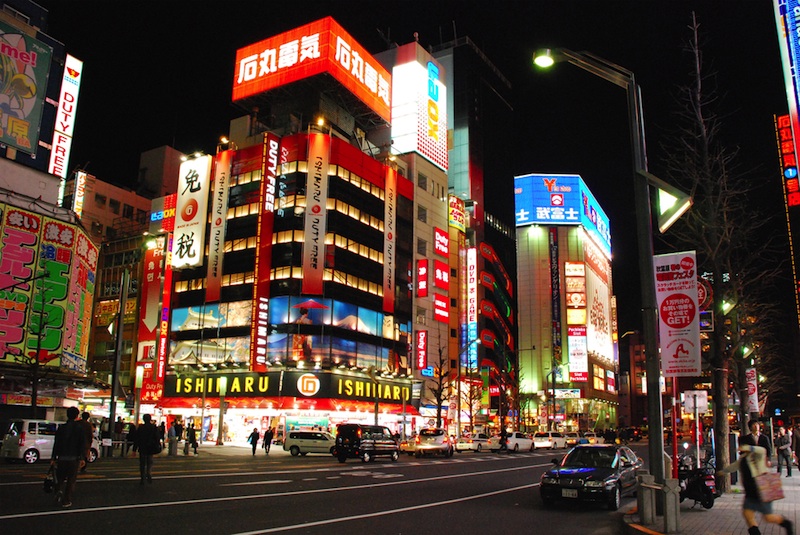
japan consumer electronics akihabara (shutterstock bluehand)

Three of Japan's consumer electronics giants are on the ropes - how have the mighty fallen, and what does it mean for your next tech buys?

Japanese manufacturers used to dominate consumer electronics, with brands like Sony, Sharp, Panasonic, Sanyo, JVC, and Toshiba practically cornering the global marketplace for desirable tech goods in the 80s and 90s. But times have changed, as evidenced by recent reports of massive losses and considerable layoffs at Sony, Panasonic, and Sharp – three of Japan’s largest manufacturers and some of the most recognizable brands in the world. Perhaps even more troubling for a nation once synonymous with technological innovation, Japan’s entire electronics industry has fallen increasingly behind rivals like Samsung, Apple, LG Electronics, and numerous Chinese manufacturers. These rivals aren’t just developing hardware innovations to match – or exceed – the Japanese giants; they’re bringing them to market faster and cheaper. 

What happened? And what does it mean for the future of gadgets in your home, pocket, and life?

Japan’s economic turmoil

Japese factory worker (shutterstock/tororo reaction)

Japan is still a powerhouse: It has the third largest national economy on the planet, surpassed only by the United States and China. But it’s had an uneven path in recent years. Japan’s stock market crashed in slow motion during the early 1990s due to over-valued stock and real-estate prices, something that will be familiar to anyone who survived the dot-com and real estate bubbles in North America. The result was the “Lost Decade” or “The Lost Two Decades,” depending who you ask and how they count. In very broad terms, after the crash, Japanese firms chose to pay down debts and build up their savings rather than take advantage of near-zero interest rates to invest in new businesses and technology. That’s a solid, conservative approach to maintaining solvency, which prevented permanent employees from being laid off, but it gave rivals in other countries (particularly in South Korea and China) an opportunity to invest in their own R&D and electronics manufacturing capabilities. The Lost Decade let rivals find ways to out-produce and under-sell Japanese electronics makers.

Japanese electronics makers were not oblivious to what their overseas rivals were doing. They largely chose to bet on their traditional, historical strengths: advanced technology and high-precision goods.

Part of that effort was an emphasis on monozukuri, a uniquely Japanese concept that loosely means the “art, science, and craft of making things,” according to the University of Tokyo’s Takahiro Fujimoto. It’s been said that monozukuri cannot be fully translated from Japanese, but the concept encompasses both the process of developing, designing, and producing a product, as well as qualities of dedication, continuous refinement, and superior craftsmanship. In other words, Japan’s electronics industry might have aggressive competitors, but Japanese products would focus on the high end: quality, valued products that would hopefully generate high profits.

Japanese electronics did see a resurgence in the mid-2000s, fueled in part by a weak yen that made Japanese products more affordable around the world, as well as a North American consumer market flush with cash from a housing bubble that hadn’t yet burst. The resurgence also coincided with the consumer launch of flat-panel, high-definition televisions, a market dominated by companies like Sony, Sharp, Pioneer, and Panasonic. Sony and Nintendo built gaming empires; Toshiba and (particularly) Sony pushed notebook computers forward; firms like Kenwood and JVC saw solid success with consumer and professional audio-video products. As participants in a protectionist economy, Japanese firms prefer to keep their manufacturing on-shore, and the companies invested heavily in pricey new facilities to make things like high-quality flat panel displays and products that embodied monozukuri.

But in 2008, the global recession took hold: The U.S. housing bubble burst, financial crisis rocked the Eurozone, and demand for consumer electronics dropped worldwide; much of the remaining demand leaned towards goods with the lowest prices, and many of those were not Japanese. Suddenly Japan’s electronics giants found themselves saddled with expensive manufacturing plants that made a high volume of products that few people were buying.

So who’s in the most trouble?

Sharp
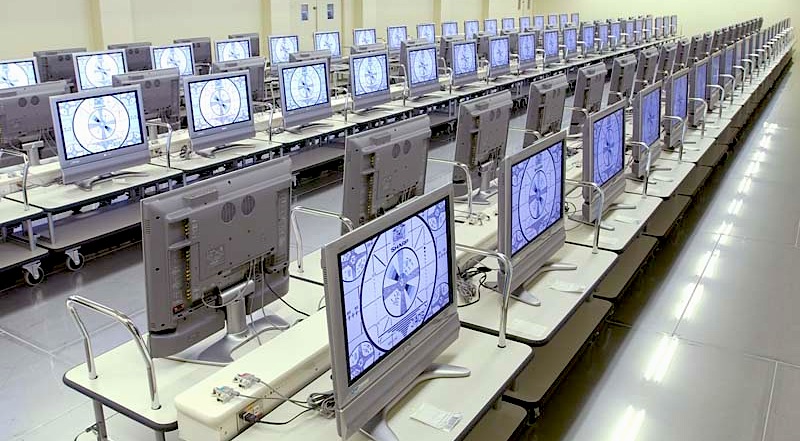
Sharp Kameyama LCD facility

Of Japan’s largest consumer electronics manufacturers, Sharp is perhaps in the tightest spot. In it’s most recent financial results (PDF), Sharp increased its forecast loss for the fiscal year ending March 31, 2013 to a whopping ¥450 billion, or  more than US$5.6 billion. This followed Standard & Poors downgrading Sharp stock to junk status back in August, making it more costly for the company to borrow money. Sharp is currently being viewed as having a 94.9 percent chance of defaulting on its debt in the next five years. Companies are known for putting the boldest face possible on their financial reports, but even Sharp doubts its own future. The original version of the release said there was “material doubt” about the company’s ability to survive, although it has since edited the release to say there are “uncertainties about Sharp being an assumed going concern.” Tomato, tomahto.

Sharp’s decline exemplifies the challenges facing Japanese electronics makers. From 2000 to about 2007 Sharp was riding high: Its profits jumped about 150 percent as it created a premium brand in its Aquos line of high-end flat screen television. (Sharp was also wildly successful in Japan with Aquos phones.) Sharp built cutting-edge facilities in Kameyama to make LCD flat-panel displays. Its success seemed to validate monozukuri and Japanese’ companies’ predisposition to do their own manufacturing. However, even as industry watchers were warning the bottom would soon drop out of flat-panel displays – and the storm clouds of the global financial crisis were gathering – Sharp doubled down, building a new factory in Sakai that could produce 6 million TV-sized LCD panels a year. Then the LCD market collapsed, and Sharp’s Aquos phone business in Japan was cut in half by the consumer smartphone revolution, led by the Apple iPhone. Sharp had also seen success in a solar panel and battery business; however, just as with LCD panels, its high-end products got undercut by competitors in China and other markets in 2011.

What to do? Sharp’s Kameyama factories have now been repurposed to make small LCD displays used in things like the iPad and the iPhone. The company has mortgaged the facilities, along with most of its other factories and offices, and got a fresh round of financing from Japanese banks on promises it would cut jobs, sell off assets, and regain profitability. Sharp thinks it’ll be able to bring in an operating profit in the second half of 2013 and begin paying back debt, but industry watchers and the company itself aren’t sure that’ll work.

Panasonic
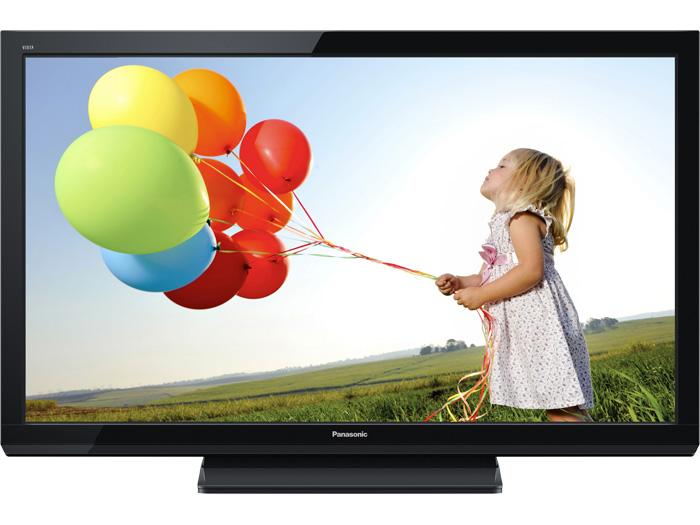
Panasonic Viera TC-P42X5 (front)

Think Sharp’s projected ¥450 billion loss for the fiscal year is steep? Try Panasonic: It’s forecasting a loss of ¥765 billion (about US$9.6 billion) for the same period, based on writedowns in its mobile handset, battery manufacturing, and solar power businesses. That’s a 30-fold increase on the company’s previous estimates, and will be the second-largest shortfall in the company’s history – and that’s saying something for a company founded in 1918. Panasonic will also skip a dividend to investors for the first time since 1950, citing an “urgent need” to shore up its finances.

Some of Panasonic’s woes are tied up in the same solar and battery businesses that have hit Sharp – augmented by the company’s decision to buy up Sanyo back in 2009-2010, which primarily centered around Sanyo’s battery and solar businesses. But where Sharp bet on LCDs, Panasonic bet on plasma, sinking ¥600 billion into factories in Amagasaki. Plasma display technology, of course, has been surpassed in popularity by LCD displays, but unlike Sharp, Panasonic couldn’t repurpose its plants to meet the needs of mobile devices.

“We are among the losers in consumer electronics,” newly-installed Panasonic president Kazuhiro Tsuga told a news conference on November 1. However, Tsuga’s writedowns of Panasonic’s businesses are moves to scale back the company’s operations and move it away from its money-losing businesses in televisions and consumer electronics. Tsuga is repositioning the company – still Japan’s largest employer with over 330,000 workers after laying off 36,000 people last year – to function as a series of small- to medium-sized operations, each of which generate positive revenue.

Sony

Sony CEO Kazuo Hirai

Although Sony is as deep into televisions and consumer electronics as rivals Sharp and Panasonic, its path has been a bit different, and as a result it isn’t in quite as much trouble. Sony posted a ¥15.5 billion loss for its July-September quarter (PDF) – it’s seventh straight quarterly loss – although the company still says it believes this year will mark its first annual profit in five years. New CEO Kazuo Hirai is working to refocus Sony on mobile, gaming, and digital imaging (including medical imaging augmented by the stake in Olympus), although it still clings to a television business that has been losing money for eight years. Sony is now getting its LCD panels from manufacturers like Sharp, LG, and Samsung rather than making them itself; the company is hopeful that getting panels on the open market will reduce its costs and allow the the television unit to return to profitability. Sony has also sold off its chemical products businesses that made materials used in LCD panels and optical discs. And Sony is cutting jobs: 10,000 workers last spring, another 1,000 from its mobile division this summer, and another 2,000 layoffs due by the end of 2012.

Unlike Sharp and Panasonic, Sony has long had a hand not just in consumer electronics, but in content businesses. It wants to make money selling movies, books, music, and games – not just devices. Consider Sony Pictures, the PlayStation network, and the company’s movie and music services. In a way, Sony pioneered aspects of the business models being pursued by Apple (and extended by Amazon and Google) by offering content that brings people to their devices. Between more diversified offerings and a demonstrated willingness to jettison money-losing businesses (except, so far, televisions), Sony may be able to stage a turnaround. That said, Sony cut its estimates of how many televisions, PSPs, Vitas, and digital cameras it expected to sell for the year by 6 to 16 percent; only its PlayStation forecast was unchanged at 16 million units.

What it means

Foxconn factory

The financial turmoil of some of Japan’s largest consumer electronics companies is partly indicative of the broader global economies. Consumers around the world have been tightening their belts, and that limits how many of them will buy luxury items – and monozukuri produces luxury items. Instead, the consumer electronics market has shifted towards manufacturers that can deliver new products fast and cheap, and for the last several years, that hasn’t been happening in Japan.

Fewer Japanese TVs — Sharp, Panasonic, and Sony are Japan’s first, second, and third-largest television makers, and while none are currently shutting down their television businesses, they are all looking to reduce their losses. Unless one or more of the companies decide they want to try to take on the likes of Samsung, LG, and Foxconn directly on a price basis, that means Japanese TV makers will probably have to cede the mainstream television market to competitors and focus on high-end, luxury products. However, this is a very chancy proposition; although Japanese manufacturers were pioneers in OLED television development (remember Sony’s astronomically expensive 11-inch OLED TV?) rivals like Samsung and LG are now driving OLED innovation. Panasonic and Sony have announced plans to partner up on OLED production, but Japanese companies remain behind the curve.

Selling off brands? — If Japanese consumer electronics makers do fail, some of their brands might hold some value… for a while. Sharp’s Aquos brand still has major recognition around the world, and might be something the company would consider selling off to help fuel its survival. Panasonic’s Viera brand could potentially do the same. Sony has similar opportunities with brands like Bravia and Walkman. Given the financial situations at all these companies, it’s possible that icons of Japan’s past dominance could be bought by their more-nimble overseas rivals.

Lessons for Apple? — If there’s a leading electronics company that exemplifies monozukuri, it’s probably Apple. The Cupertino company is world-famous for its attention to detail, craftsmanship, and dedication to design, both in its hardware products and onscreen. Even its product line revisions reflect that: Updated products are rarely revolutionary departures from what came before. They’re consistent, continued refinements and improvements. Apple also targets the high end of the market, focusing on profit margin rather than market share. The company would seem to be vulnerable to many of the same market forces that are rocking Japan’s largest consumer electronics makers.

There are some key differences, however. Apple does outsource its manufacturing, most famously to China’s Foxconn. Apple also outsources most of its components: it buys memory and processors from Samsung, Gorilla glass from Corning, and still more components from Toshiba, Panasonic, Intel, Nvidia, and more than 150 other companies (PDF). Apple isn’t on the hook for manufacturing facilities that cost it billions of dollars: It leaves the risk of owning those kinds of facilities to the likes of Samsung.

[Akihabara image via Shutterstock / tororo reaction
Japanese factory worker image via Shutterstock / bluehand]


Source : digitaltrends[dot]com

Oct 10, 2012

Quality-control crackdown causing iPhone 5 supply issues, Apple shares knocked

iPhone 5 Front and Rear

There are no worries about consumer demand for the new iPhone 5 – Apple is selling millions of them. The problem, thanks to its popularity, is on the supply side. However, quality-control issues and component shortages are not helping the situation.

When the new iPhone 5 started landing in people’s hands last month, it didn’t take long before forums started to fill with comments from disgruntled customers complaining that their handset was delivered with scuffs and scratches on its anodized aluminum back.

Its predecessor, the 4S, had a glass back so didn’t suffer from the same problem. The new aluminum design has enabled Apple to make its popular smartphone thinner and lighter than any earlier iteration, but it seems the soft material also makes it more susceptible to damage.

Quality control

It appears the issue has caused something of a stir behind the scenes at Apple, with a Bloomberg report Wednesday suggesting the supply shortage of the new handset is in part down to a quality-control crackdown by the phone’s manufacturer, Foxconn.

Foxconn is reportedly working hard to limit the number of Apple smartphones leaving its plants with scuffs and scratches, with Bloomberg citing “a person familiar with the matter” as its source.

“Senior Apple managers told executives at Foxconn near the end of September to tighten production standards,” the report claims.

A shortage of iPhone 5 components is also proving to be a problem for the Cupertino company, contributing to manufacturing challenges. As a result, RBC Capital Markets analysts have reevaluated their iPhone 5 sales forecast for the December quarter, cutting it to 49 million units from 57 million.

Share price drop

Worries about supply appear to have been a contributory factor in Apple’s falling share price, with $60 billion wiped off the company’s market value since the handset’s launch. On Tuesday shares closed at $635.85, significantly down from the record $700+ value they reached only a couple of weeks ago.

Demand for the iPhone 5 has admittedly been incredibly strong, with Apple announcing a record five million orders in its first three days of sales. Although a wait is always expected if you order an iPhone online soon after launch (currently 3-4 weeks), it seems the supply problems are being compounded by the quality-control issue and component shortages.

Handsets turning up with scuffs and marks were reported right from the start with the iPhone 5. One unhappy owner fired off an email to Apple’s marketing chief, Phil Schiller, and received the following response:

“Any aluminum product may scratch or chip with use, exposing its natural silver color. That is normal,” Schiller wrote. Trouble is, some of the devices have been arriving damaged.

Until the initial rush to buy the new handset dies down and Apple gets on top of the current supply issues, a certain degree of patience is required if you’re thinking about ordering an iPhone 5 anytime soon. As for Apple’s share value, no doubt that’ll bounce back once (if) it unveils the iPad Mini later this month.


Source : digitaltrends[dot]com

Sep 28, 2012

Hidden’s gem: Kickstarter-funded Hidden touts its HiddenRadio speaker as a revolution in design

Intuitive and clever, HIDDEN's HiddenRadio hopes its simple design will be groundbreaking as well.

Earlier this week, consumer electronics manufacturer Hidden, made its HiddenRadio Bluetooth speaker available for pre-order on its website. The compact, minimalistic speaker doubles as an FM radio and purports to be powerful, despite its diminutive size. Its sleek structure was crafted by award-winning industrial designers John Van Den Nieuwenhuizen and Vitor Santa Maria and it was originally launched on Kickstarter, an online social funding platform for creative projects.

In addressing HiddenRadio,  Tim Bajarin, president and analyst at Creative Strategies, said, “as innovators like Apple have shown, occasionally a product comes along that just makes ‘sense’ in its design that it changes the way we think about an entire category.”

Whether you’re all about a chic aesthetic, or you’re partial to power under-the-hood, it’s difficult to deny that HiddenRadio is a truly unique product.

Its barely-there visual impact is the reason for the name,  but HiddenRadio, touts advancements in functionality as well. Its interactive cap serves as both power button and volume knob. The more you lift the cap, the more of the underlying speaker is exposed, and the more speaker you expose, the higher the volume goes. Press the cap all the way down and you’ll shut it off. It’s simple, but revolutionary from a design perspective.

HiddenRadio is available via the Hidden website and comes in metallic silver, graphite black, or pure white. Pre-orders are available at a discounted price of $150 and will ship free of charge to the United States, the United Kingdom and Hong Kong. This price point will be unavailable after September 30, 2012.


Source : digitaltrends[dot]com

Sep 26, 2012

Hands On: Fitbit Zip makes your workout adorable

Fitbit Zip

We spent a week with the new Fitbit Zip to see how the little gadget can motivate you to get moving.

When it first appeared on the consumer market, the Fitbit Ultra was one of the pioneer fitness gadgets that sparked the creation of a slew of social health gear, such as the Nike+ Fuelband and the now-defunct UP by Jawbone. Now, Fitbit’s got a more budget-friendly version of its premier device known as the Zip. It’s smaller, cuter, comes in various colors, all designed to make you more aware of everyday health.

Look and feel

Compared to the Ultra, and even the recently announced Fitbit One, the Zip is tiny. The downsizing makes the Zip almost as small as a quarter. And in its silicone, water-resistent case, the device comes out to be about half the length of a business card. The soft case allows you to clip the Zip onto your clothes in case you don’t prefer to throw it into your jeans like you would pocket change.

Fitbit Zip and dongleUnlike the more advanced One, the Zip uses an external rechargeable battery, which needs replacement approximately every six months. The screen also has a tap recognition feature that rotates between the items displayed in response to each tap received. For example, waking the Zip up from blank screen will display the last thing you looked on, which could be anything from Steps Taken, Calories Burned, Time, and Miles Traveled. The Zip also rotates with a strange emoticon that rates its satisfaction level of how much you’ve worked out today. When I first booted the Zip up, it stuck its pixelated tongue out at me, but after several hours of wear, the face changed to a grin and a wide smile. Okay, thanks, Zip.

Since the Fitbit Zip is so small, it is barely noticeable when worn. After a while, you forget it’s even there until someone makes a remark at the Tamagotchi-like creature you have pinned to your shirt. It’s a conversation-starter piece for sure, and the selection of bright colors help you coordinate it with your closet. 

Utility

Fitbit Zip setupAfter you clip it onto your outfit, just resume your day as normal. Later, check back with your Fitbit web dashboard to see how your day is going. When you first set up the device, you have to make sure the Zip is in range of the wireless USB dongle that comes with. A quick installation process syncs the dongle with the Zip, and all you have to do is enter the number that shows up on your device along with your height, weight, age, and gender. Each time you are within the dongle’s range, the Zip updates your activity information to your online account, and continues to do so every 15 minutes.

What’s surprising to me is how accurately the Zip was able to distinguish between walks and my ride on the train to work. Both include fairly physical shakes, but as I watched the Zip like a hawk during my bumpy train ride, the Zip did little to add an accidental step in my total walking count. Once I started walking again, it took a few seconds for the device to register the movement and the numbers sprang back up.

Fitbit Zip activity dashboardThe average person burns approximately 2,000 to 3,000 calories per day. An average New Yorker like myself probably burns more, thanks to the endless fast-paced walks we take daily. I’ve been wearing the Fitbit Zip for about a week, and my daily walks plus normal activities (meeting friends for dinner, cleaning, cooking) comes to a low of 7,400 steps on a regular day and 12,400 steps on a busy one. At this rate, I am walking an average of four miles a day — which isn’t too shabby at all. So how can I make the Zip help me get even fitter?

The Zip definitely works better used in conjunction with its web interface, which allows you set calorie burning goals. The site automatically sets your goal at 10,000 steps a day, but you can adjust this to suit your fitness level. Each time you reach a goal, you also receive a badge as a reward. This gamified process is cute and encouraging, and seeing all your daily activities in a graph helps you feel more motivated to keep things up. If you own the Fitbit Aria scale, the two gadgets are also clearly meant to complement each other to keep your activity level high and your weight low — or at least on track. 

Bottom line

Fitbit Zip 2

There are a few issues with the Fitbit Zip compared to other wearable fitness gadgets. For example, the device relies heavily on being clipped on your clothes or carried around. What abut the calories you burn in the shower, or other, ahem, activities where you’re not required to wear clothes? A gadget like the Nike+ Fuelband would be able to give you an estimate since it’s worn as a wristband, but the Zip is best for walkers and runners. Of course, at just $60, you have to accept the Zip’s lack of features and realize that’s what you get for skimping out an extra $90.

The Fitbit Zip is a great introductory gear for those who want to exercise more with minimal effort. When you wear a fitness gadget, your subconscious just becomes infinitely more aware of your daily activities. You want to please the tongue-sticking face on that little device, and if that means taking 2,000 more steps in a day, you’ll do it. I do believe the science is purely in your head, and a constant reminder that sits in your pocket is a nice way to start. The Zip is designed to keep you motivated to move, and will make a neat gadget to treat yourself with, or as a gift for those looking to have more fun with fitness.


Source : digitaltrends[dot]com

Sep 22, 2012

Has 4G become meaningless?

4G meaningless smartphones data carriers lte

A cesspool of acronyms, overoptimistic marketing claims and incompatible technologies has made 4G incomprehensible to the average consumer. Now carriers will suffer for the mess they’ve created.

Recently, the investment firm Piper Jaffray conducted a study that found a full 47 percent of U.S. consumers don’t feel the need for 4G. This isn’t good news for the carriers, which have been fiercely touting their 4G networks for a few years now. Almost all new smartphones have some kind of 4G connectivity, including the new iPhone, at long last.

Part of consumers’ apathy over 4G might come from their inability to understand the difference between different flavors of it. The same survey found that 51 percent of consumers said that all 4G networks are the same. Not only can’t they name which is best,

That’s bad news for an industry as competitive as wireless communication, with recent marketing campaigns based upon name calling as a means of brand differentiation. With carriers betting ever more heavily upon data tiers as a main revenue stream, what can carriers do about consumers who don’t seem to understand their services?

How to be 4G

Confusion is the name of the game, and the carriers haven’t helped explain to consumers the benefits of 4G. Commercial mobile technologies are standardized by a complex number of bodies such as the ITU (International Telecommunication Union), the 3GGP (3rd Generation Partnership Project), and the IEEE (Institute of Electrical and Electronics Engineers). Still reading? Good. They are tasked with bickering until they set a strict, definite standard for each iteration.

These powers that be hold conferences, conduct studies, and perform secret ritual sacrifices in order to define what it each G – or generation – actually means. 4G is, of course the next numerical step, but the powers stumbled when it came to defining what that actually meant.

Strange encounters of the fourth generation

The 4G war got off to a specular fail from a marketing standpoint. There were many, vastly different technologies all vying for subscribers.

Sprint tried to get the ball rolling with WiMAX in 2008, a technology descended from the same tech in your Wi-Fi router. It was branded 4G, though real-life speeds were often more equivalent to a particularly fast 3G device. This was promising, but Sprint eventually declared the technology dead and migrated to LTE (Long Term Evolution, if you were curious). One down.

T-Mobile further muddied the waters with an upgrade to HSPA+, which is technically more like 3.5G, but which has been branded 4G.

AT&T had a wide, but much decried 3G network (partly blamed on iPhone exclusivity for years). While AT&T deploys its 4G LTE network nationwide, it’s also making things needlessly confusing by offering HSPA+ alongside, and branding it 4G just like T-Mobile. If you have an AT&T iPhone 4S, you might see a 4G logo appear sometimes, but it’s not the “true” 4G LTE you would get by upgrading to an iPhone 5.

Verizon launched a 4G LTE network in late 2010 – in its truest sense – it fulfilled the 4G guidelines.

Simple, right?

Setting low bars

No. Not simple, at all. Once the carriers got to building their new networks, the powers that be decided to change the definition of 4G. They lowered the minimum speed guidelines, so that carriers wouldn’t have to do too much heavy lifting, meaning that 4G networks would not be as revolutionary as they had first planned. Hence the bickering over “true” 4G. On top of that, building 4G networks gave carriers a chance to improve their existing networks with beefier backhaul – the connections that tie cell towers back to the backbone of the Internet. This greatly improved 3G speeds and availability, closing the gap between 3G and 4G.

cell tower 4g data speedsIt’s not surprising that the average consumer doesn’t care about 4G when they don’t get it, and 3G networks are progressively getting better. Coverage matters more than speed to many people — a souped-up network means squat if there isn’t a tower in your area.

The consumers don’t care

With so many different carrier definitions of 4G, and even an official designation that’s a moving target, it’s hardly surprising that people are confused. So what can the carriers do?

Agree on a standard speed definition. This is probably impossible, because the telecom industry is notorious for talking at, rather than with each other. But setting a baseline speed for 4G would at least let customers know what they’re being promised.

Stop slapping 4G on everything. This is really aimed at AT&T and T-Mobile, which are allowed to brand older HSPA+ 3G tech as 4G due to a magical shift in definitions back in 2010. While this is legal, it confuses people to a point where they don’t care.

Stop lying about speeds. Advertised speeds are not the same as real world speeds. T-Mobile might advertise 42mbps, but that’s the theoretical limit. That doesn’t look so rosy when you’re getting 45kbps downloads. Averages work much better, and leave less room for error.

Change phone branding conventions. While some handset-makers are responsible for this, it isn’t in a carrier’s best interest to have a phone named after wireless services. For example: The HTC EVO 4G LTE. Not the easiest name to understand. This particular model caused a friend to ask “What is a 4G?” as if it were some kind of new device. Apple keeps it simple with 3, 4s, 5 and so on. Heck, even Samsung does with its flagship line of Galaxy phones (S2, S3). I wonder where that inspiration came from?

Conclusion

The carriers have themselves to blame for the consumer confusion they’re currently stewing in. Unexplained acronyms, incompatible networks, technologies that vanish as soon as they’ve appeared – it’s as if they’re running Area 51, not voice and data networks. Carriers have the leverage to make the average consumer more interested in 4G, but it’s all up to them.

More speed is nice, but most of us would just settle for better reception. After all, if a guy with a mohawk can put a robot on Mars with less cash than it took to put on the Olympics, why can’t I have cell reception in an elevator?


Source : digitaltrends[dot]com

Aug 21, 2012

Nikon unveils its Android-enabled S800c, compact S7700, and beginner-friendly S01

nikon coolpix p7700

Ahead of Photokina, Nikon unveils a handful of new Coolpix consumer cameras.

The new camera parade continues as Nikon just announced a trio for very different photographers, including the first Nikon digicam featuring the Android OS. While the $349 Coolpix S800c is pretty cool (details to follow), the updated version of the S7100—the S7700—will give enthusiasts something to chew on as they consider buying it or the Canon G12 or Panasonic LX7.

nikon s800cThe new S800c is Nikon’s latest Wi-Fi-enabled digicam. With Android onboard, social networks aren’t far behind as you can connect to Google+, Facebook, and Twitter to upload much higher-quality images than your basic smartphone. You can also surf the Web and download apps and games from Google Play. We didn’t get the chance to connect with our Wi-Fi network (the camera is due next month) but hopefully it’s easier than Nikon’s earlier efforts. Internal memory holds up to 680MB of apps.

Although you can’t make calls, the S800c’s photographic capabilities blow away any smartphone. It has a 16MP BSI CMOS sensor and a 10x optical zoom (25-250mm). This glass lens is far superior to plastic smartphone lenses and their digital zooms. Like a smartphone, the S800c has a built-in GPS. It has a nice 3.5-inch touch screen too using OLED technology rather than a typical LCD. 

nikon p7700Yes, we all know Compact System Cameras and DSLRs get all the headlines but we’re rather fond of fixed lens digicams with quality zooms and enhanced imaging sensors. This class of camera is designed for shooters comfortable with apertures and shutter speeds—and don’t mind spending $500 to capture images. The Canon PowerShot G12 is the clear leader here but Nikon and Panasonic have quality offerings. (We’re leaving the Canon G1 X and Sony RX100 off the list as they’re much more expensive.)  The new Nikon Coolpix S7700 ($499) should be a winner—but we’ll withhold final judgment until we get a production sample to review. The new model has a 12MP 1/1.7-inch CMOS sensor, 2 megapixels more than the S7100 which featured CCD technology. Switching to CMOS also speeds up response.

The S7700 has a 7.1x optical zoom (28-200mm) just like its predecessor but with a much wider aperture of f/2.0 versus f/2.8 of S7100. This helps you take better shots in low light. The CMOS chip lets you grab photos at up to 8 frames per second (for 6 shots) and video is improved to 1080p from 720p.

It has a 3-inch vari-angle LCD screen rated 921K-dots, lets you capture RAW files and gives you access to P/A/S/M (program, aperture, shutter, and manual priority) so you can make adjustments to your heart’s content.

nikon S01Rounding out the list is the Coolpix S01, a $179 camera Nikon claims is one of the thinnest and lightest available. We didn’t handle it but the tiny digicam weighs 3.4 ounces and measures 3.1 x 2.1 x .7 (WHD, in inches). Since it’s so small, you’ll make your adjustments via the 2.5-inch touchscreen. Beyond the dimensions, the S01 won’t make your inner techie swoon as its uses a 10MP CCD sensor and a 3x zoom (29-87mm), decidedly unimpressive specs for a 2012 digital camera. 

Don’t worry, the announcements aren’t over yet…


Source : digitaltrends[dot]com

Aug 20, 2012

Can Hubert Joly rescue Best Buy?

Customer exiting a Best Buy store

Best Buy is bringing in French turnaround expert Hubert Jolie to revive its ailing business. Can Best Buy avoid being the next Circuit City?

Leading consumer electronics retailer Best Buy has announced that it is hiring Hubert Joly as CEO. Joly most recently headed up restaurant and hotel operator Carlson Co. The Frenchman is expected to take over as Best Buy CEO next month once his visa is secured; in the meantime, Best Buy board member Mike Mikan will continue to serve as interim CEO.

Bringing Joly on board may help the retailer focus on the future rather muddling through the chaos left behind in the wake of former CEO Brain Dunn’s scandalous departure. But public perception is not Best Buy’s only problem: How can Joly — who has no retail experience — hope to prevent the company from becoming another Circuit City?

Who is Hubert Joly?

Best Buy CEO Hubert Joly

Herbert Joly comes to Best Buy by way of Carlson Co., which is not exactly a household name, but it’s the parent company behind plenty of them. The Minneapolis-based firm runs more than 900 restaurants (including T.G.I. Friday’s) and more than 1,000 hotels (including Radisson, park Plaza, and Country Inns & Suites) in 150 countries around the world. The Carlson Companies are closely held, but are generally well-regarded by its employees, especially in terms of supporting workplace diversity.

Joly became Carlson’s CEO in 2008; before that he was the head of Carson Wagonlit Travel (CWT), a partnership Carlson formed with Paris-based Wagonlit Travel. CWT is one of the world’s largest business travel management firms. At the helm, Joly headed a turnaround that saw a nearly three-fold increase in sales and strongly improved profit margins.

These credentials may illustrate Joly’s ability to lead a large corporation and instigate financial turnarounds, but experience in travel, hotels, and restaurants doesn’t seem to have any bearing on consumer electronics, technology, or new media. For that, Best Buy is digging back further into Joly’s career: Before CWT, he served briefly as Vivendi Universal’s CIO, and had overseen the integration of Vivendi and Universal’s assets in the United States. Starting back in 1999, Joly played a major role in restructuring Vivendi’s video game business — at the time, that included the development and expansion of its still-active Diablo and World of Warcraft franchises.

Further back, Joly has additional tech cred: From 1996 to 1999 he was a major player in turning around Electronic Data Systems (EDS) in France. EDS was the technology services company founded by former U.S. presidential candidate H. Ross Perot; it offered data processing, personnel management, and services like claims processing for a variety of companies, as well as the U.S. federal government. Hewlett-Packard acquired it back in 2009, and it now forms much of HP’s Enterprise Services division.

Joly is largely viewed as a turnaround-expert for hire: Companies hire him to come in, initiate forceful turnaround plans, and put the company on firmer business ground. Once that’s done, Joly transitions to another company in need of his skills. Joly’s track record is about as good as they come — and there’s no doubt that Best Buy needs some serious help.

Best Buy’s situation

Best Buy

Best Buy is the United State’s leading consumer electronics retailer, with more than 1,400 retail locations, more than $50 billion in business, and more than 160,000 employees. By any measure, Best Buy seems to be a roaring success, clinching its hold on the consumer electronics space while competitors like CompUSA and Circuit City withdrew from the market or closed up altogether.

But it’s not easy being king. In its most recent fiscal year, Best Buy reported a loss of $1.2 billion — that compares with a profit of $1.3 billion the previous year. Numbers like that make investors and partners very nervous, as the company sees in-store sales declining as customers ship to online retailers like Amazon.com that can often offer better prices (and free shipping) on the exact same products. Increasingly, Best Buy’s expensive-to-operate retail stores are functioning as showrooms for consumers, who may go into a Best Buy location to check out new products, but then purchase the products online at a lower price after they leave. The situation can be exasperated by instances of questionable sales tactics, with stories of customers being pressured to purchase things like (highly profitable) extended warranties, or even preying on seniors and other customers who may not have a strong understanding of products into buying things they may not want or need. (It’s certainly not a universal experience, but with social media even a single negative instance can be substantially magnified.)

Some of Best Buy’s injuries are self-inflicted. A good portion of the company’s loss in its most recent fiscal year stemmed from buying out Carphone Warehouse’s share of Best Buy Mobile and writing down Best Buy Europe goodwill: Best Buy might be the leading electronics retailer in the U.S., but its plans to expand into Europe fizzled out, in part due to the worldwide economic downturn. The costly gambit didn’t work out. Similarly, the company’s plans to turn into a digital media giant with services like Napster and CinemaNow failed to resonate with consumers. Best Buy also inked a deal with LightSquared to bring 4G LTE to its Best Buy Connect offerings — that sure worked out well.

Former Best Buy CEO Brian Dunn

Challenges like these are more-or-less part and parcel of being a massive brick-and-mortar business these days. However, Best Buy truly stepped in it with the abrupt resignation of CEO Brian Dunn in April. Best Buy was very clear it had no problems with Dunn’s operational or financial decision-making. Instead, the “mutual” decision that he should depart stemmed from an inappropriate “extremely close” relationship with a 29-year-old female employee. It’s one thing for a corporate leader to announce a round of belt-tightening in a tough business — as Dunn did when he announced the closure of 50 U.S. Best Buy locations. It’s another thing to have a philanderer in the top chair.

Since then, Best Buy has been struggling for direction. Best Buy founder Richard Schulze resigned as chairman of the company in June, in part for helping keep Dunn’s shenanigans a secret. However, Schulze remained a force to be reckoned with, since he still owned more than 20 percent of the company. Schulze has since engaged in an almost guerrilla campaign to make a $10 billion offer to take Best Buy private. Schulze would cut costs, slash prices, and improve customer service — and, perhaps most importantly, streamline corporate governance into a kind of benign dictatorship that would make the company more nimble. In the meantime, Best Buy announced it was laying off some 600 of its Geek Squad employees and 1,800 additional store personnel to cut costs.

In hiring Joly as CEO, Best Buy’s board is essentially telling Schulze to go packing. Best Buy says it offered to take Schulze’s offer seriously and give him time and flexibility to line up financing, but claimed Schulze’s offer contained “insufficient information.” Schulze describes Best Buy’s actions as an “abrupt public termination” of negotiations. However, Schulze still has his 20 percent stake in the company — and Best Buy hasn’t yet made arrangements with him for a standstill period wherein he won’t take his takeover offer directly to shareholders. Schulze could still try to stage a rebellion.

Can Best Buy avoid being the next Circuit City?

Circuit City going out of business (source unknown)

Hubert Joly certainly has his work cut out for him: Best Buy’s stock is down 13 percent this year, and the company is facing continuing losses due to strong competition from online retailers. Moreover, by bringing Joly on board, Best Buy is essentially signaling to investors that they won’t see details of a turnaround plan until 2013: It is going to take some time for Joly to come on board, get his feet wet, and formulate a strategy.

On Joly’s side, Best Buy is probably the most-recognized electronics retailing brand in the United States, and the company has had some success transitioning business towards highly profitable products like mobile phones. Best Buy is also working to compete with Amazon directly as an online retailer. After all, Best Buy already has enormous inventory management and customer fulfillment systems. It could conceivably focus on offering a premier consumer electronics online shopping experience that would contrast with Amazon’s catch-all online shopping strategy, which has spilled over into everything from tools to groceries to perhaps igloos.

However, regardless of Joly’s successful track record turning around businesses, investors and industry-watchers would be much happier if Best Buy had settled on a new CEO who actually has significant experience in retailing, rather than coming to Best Buy from restaurants and hospitality. But, if Joly really is the turnaround rockstar Best Buy thinks he is, maybe a lack of retail experience will enable some outside-the-big-box thinking that could re-invigorate Best Buy.


Source : digitaltrends[dot]com