Pages

Showing posts with label competitors. Show all posts

Nov 10, 2012

How Samsung, Microsoft and stupidity are staining Apple’s brand image

Microsoft apple logo samsung

Clever marketing from competitors and its own stumbles have left Apple’s effortlessly cool brand image looking more effortlessly clueless.

I’m at an IBM event this week, and at dinner I had what has been an increasingly frequent experience.

It used to be that attendees at these events gushed about the new Apple gadget they were carrying, and anyone who expressed reservations seemed out of touch with the group. Much like talking about religion or politics from the minority position at the dinner table, bashing Apple was one sure way to ensure everyone thought you were an idiot.

But last night, instead of showing off an Apple device, another guest showed off his new Samsung Galaxy S III phone, which led to more chatter about my new Microsoft Surface tablet. It spiraled into an “everyone dump on Apple” event, and by the end of the evening, Cupertino’s sole defender seemed to be considering other options.

This may be anecdotal, but I’ve seen the same event played out several times recently among analysts and other influencers in the tech space. It makes me think Apple’s image is changing, and the firm’s products are losing their magical edge.

Samsung’s anti-Apple marketing

The blemish on Apple’s spotless image didn’t just appear there; Samsung helped etch it into the glossy white plastic quite intentionally. Its excellent marketing campaign has attacked Apple’s image on three vectors.

The first is questioning Apple’s leadership. Samsung’s ads paint Apple’s “upgrades” as features the company accidentally or intentionally left out of prior products (larger screens, 4G radios), or obvious improvements (headphone jacks on the bottom). In some cases, they also point out where Apple still lags behind the curve after launching a new device, like the lack of NFC in the iPhone 5. Samsung wants to depict itself as the innovator Apple is struggling to match.

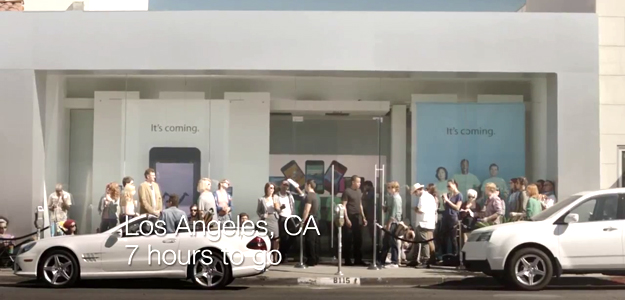
Second, the campaign raises the idea that Apple fans aren’t smart consumers. They’re depicted slogging through long lines waiting for their technology, and getting unreasonably excited about aspects of the product that aren’t exciting. In fact, the not-so-subtle message is that Apple buyers are kind of dense.

Samsung Apple commercial iphone 5 samsung galaxy s3Finally the ads build on this dense concept by showcasing Apple users as people you wouldn’t want to emulate: Your parents. Dorks. Clueless hipsters. This is designed to strip away the prestige that Apple products typically carry.

For all its mocking, Samsung actually copied Apple with its first smartphones, but has since diverged, trying to drag away the perceived market leadership with it. The Korean company waged a similar type of warfare on Sony in the television space, which was once the clear leader. Samsung first emulated Sony, then partnered with the company, then took the market away. Sony has never recovered. Granted, Sony had additional issues that complicated things, but the plan worked, and Samsung appears to be following the same playbook with Apple.

Microsoft Surface

Samsung isn’t the only company slinging mud on Apple’s image. The Microsoft Surface tablet is doing relatively well, and Apple’s efforts to disparage it have largely been ineffective (at least so far). It appears to have been designed specifically to make the iPad look wanting in comparison.

As I write this, the Surface is still generating lines, but the important part is it looks both more advanced and more unique than Apple’s offerings. This impression dovetails nicely with Samsung’s efforts, because while the two companies aren’t aligned on products, they are aligned on a common message: Apple’s offerings don’t convey status anymore because they appear to be bought by stupid people.

The too-soon iPad 4 and too-expensive iPad mini

The third leg on this this ugly three-legged stool comes from Apple itself. Its latest launch even showcased an array of different products under one roof, a “big bang” event that trivializes individual products. Firms like Compaq were famous for this approach, but Apple has avoided them like the plague since Steve Jobs returned in the late 90s. Worse, the new iPad made buyers of the old version – launched only back in March – look stupid.

Meanwhile, the iPad mini was priced well out of line with competing models, with inferior specs. When Steve Jobs launched the iPad, it was the lowest priced tablet from a major vendor in its class, and since then, it has remained price competitive against the alternatives. The iPad mini is priced at a 65 percent premium, but lacks the same high-quality displays found on far cheaper competitors. Smart people would probably not buy it as a result. I wouldn’t be surprised to see Apple discount it significantly once initial demand falls off, leaving early buyers upset and looking stupid yet again.

Destroying Apple’s brand

Apple’s strongest asset is the power of its brand, and the historically valid belief that Apple products are purchased by smart people who are well regarded. This asset is being systematically destroyed, overtly by Samsung, covertly by Microsoft, and stupidly by Apple. Apple is not effectively defending this incredibly valuable asset, and the end result will likely resemble the company that existed before Steve Jobs’ return. That also means a market less dominated by Apple. Since I’m writing this on my Surface Tablet, I’m thinking this may turn out to be a good thing.


Source : digitaltrends[dot]com

Oct 27, 2012

The Nexus 4 was lost in a bar… Why is this so familiar?

Nexus 4 lost at bar

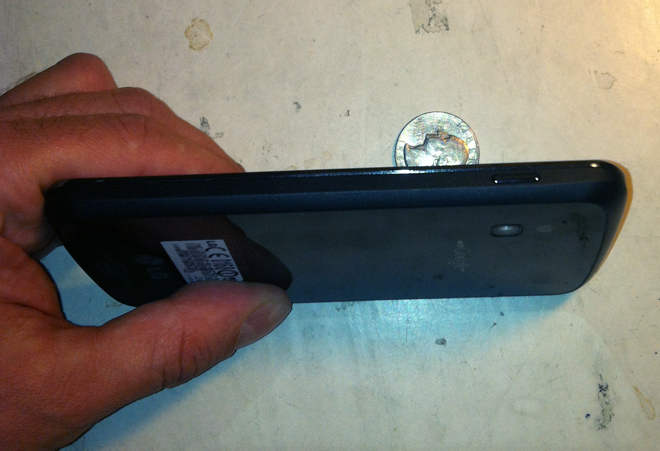
Following in the footsteps of Apple, one of its biggest competitors, a Google employee left a Nexus 4 prototype at a bar in San Francisco. Refusing a free phone, the man who found it decided to leak details of the device to media outlets.

Turns out Apple isn’t the only one who knows how to lose a smartphone in a bar because it looks like someone at Google did the same thing. To refresh your memory, a man named Brian Hogan found an iPhone 4 prototype in a bar left behind by an Apple engineer. Hogan ended up selling it to Gizmodo for $5,000 and consequently ended up in a lot of trouble. This story ends a little differently.

The bar this time around was the 500 Club in San Francisco. It happened on a Tuesday of last month. Jamin Barton, a bartender nicknamed “Sudsy”, found the phone while closing. At first, he didn’t think anything of it.

“We find about 20 a week,” Barton told Wired. ”Most people come back for them in 15 minutes.”

But this particular phone didn’t seem like the others. Nobody came to pick it up and Barton noticed quite a few peculiar features like a lack of SIM card and a “not for sale” sticker accompanying a Google logo on the rear panel. Once he showed it to fellow 500 Club employee, Dave, it was confirmed to be the upcoming Nexus 4.

The Nexus 4 is the smartphone Google was planning to unveil in New York on October 29, but that event has since been cancelled due to Hurricane Sandy. And, we might add, every detail about the Nexus 4 has already been leaked, including photos of the device. It will be manufactured by LG and have a 4.7 inch display, a quad-core processor, and ship with Android 4.2. If it was meant to be a secret then Google clearly dropped the ball.

Dave took over from there, offering to call Google HQ and explain what had happened. And much like Apple, Google blew the whole thing out of proportion. Brian Katz, Google’s global investigations and intelligence manager, was sent to the 500 Club almost immediately. Dave assured Google that Barton would hand over the phone as long as whoever picked it up confirmed their affiliation with Google.

Long story short, after some drama involving a riot and the local police station, Dave handed the phone over to Katz. In exchange, Katz offered Barton a free phone if he would agree to keep the incident under wraps and not discuss it with the pubic until after the official announcement. Obviously, Barton refused the offer and was paid a freelance fee by Wired for providing photos published alongside the article. Looks like isn’t the only one that’s lost control of its secrets. 


Source : digitaltrends[dot]com

Oct 23, 2012

13-inch MacBook Pro w. Retina vs. old MacBook Pro vs. Sony Vaio Z: Spec showdown

macbook sony vaio macbook pro retina display 13" apple comparison

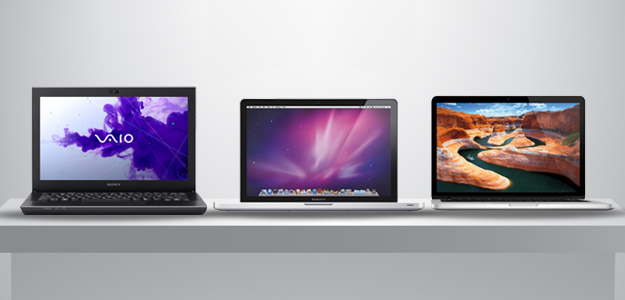
We compare the new 13-inch MacBook Pro to Sony's Vaio Z to see how it stacks up to one of its closest PC competitors, along with the old, non-Retina MacBook Pro thrown in for good measure.

You had to know it was coming. After extending its well-regarded Retina display technology from the iPhone to the iPad, then the 15-inch MacBook Pro, Apple continued packing pixels on Tuesday by introducing the 13-inch MacBook Pro with Retina. Like its larger Pro predecessors, it also gets thinner and lighter this year, and like the MacBook Air, it sacrifices its optical drive in the process. Yet unlike that most waif of Apple notebooks, the Pro still uses a full-power CPU running at 2.5GHz —  not the clocked-down chips found in the MacBook Air and its Ultrabook competitors. Its high resolution, low weight and full-speed processor make the MacBook Pro difficult to find a close competitor to in the PC world, but we picked Sony’s Vaio Z for its similar no-compromises approach. Read on to see how they stacked up, along with the old 13-inch MacBook Pro thrown in for good measure.


Source : digitaltrends[dot]com

Sep 17, 2012

Fitbit announces two new fitness devices: One and Zip

Fitbit One

Welcoming the new season, Fitbit is releasing two new fitness activity tracker gadgets -- one to replace its famous Ultra and another for the budget-conscious.

Fitness gadget competitors may have to rethink their pricing strategies now that Fitbit has unveiled two new devices for the season. Following Fitbit’s premier gadget, the Fitbit Ultra, the company is now releasing the One and Zip — both updated to run with Bluetooth 4.0 support so you can wirelessly sync with the latest smartphone models such as the iPhone 4S/5 and Samsung Galaxy S3.

The Fitbit One, the more expensive of the two, is meant to be a major improvement and replacement over the Ultra. The One has a slightly curvier design and contains a clip that holds securely to your clothes to make sure you don’t misplace your pricey gear. It integrates a vibrating silence alarm to wake you up without disturbing your partner. Like the Ultra, the One not only follows the walk, steps, and calories burned in a day but also doubles as a sleep tracker to note the times you fall asleep and when you wake up. In a single charge, the One’s battery reportedly lasts between five to seven days with a battery indicator right on the LED screen. You can currently pre-order the device at $100 in your choice of Black or Burgundy colors, with a shipment date of around mid-October.

Fitbit OneIf $100 seems like to much to fork over at the moment, Fitbit will also offer a budget alternative. The Fitbit Zip is a $60 version that offers the basic fitness tracking functionalities as the One, just sans-sleep tracking and vibrating alarm. The tiny gadget (which looks a bit like a Tamagotchi toy — remember those?) also measures to just about the size of a quarter, and uses a replaceable battery so USB ports here. Fitbit estimates that the Zip’s battery will last approximately six months.

Fitbit Zip colors

The Fitbit Zip is available in five colors — magenta, lime, blue, charcoal, and white — and features a plastic, water-resistant body perfect for those wearing this during sweaty workouts. The device also connects to an online Fitbit account to keep track of your fitness activities online. When used in conjunction with the refreshed iOS and Android app, you can cheer on your Fitbit friends’ activities and view a leaderboard of who’s burning the most calories or losing the most weight. Like all previous Fitbit accessories, the accompanying online account offers gamified rewards such as badges for achieving certain weight loss goals. The Fitbit Zip is up for purchase today at the Fitbit official site.

Will the devices stack up to the likes of its competitors, such as the increasingly popular Nike+ Fuelband? Only time will tell.


Source : digitaltrends[dot]com

Sep 13, 2012

Walmart taking iPhone 5 pre-orders Friday morning, cheaper than competitors

Walmart will be taking pre-orders for the iPhone 5 at its US stores from Friday morning – for a price that undercuts its competitors.

Following the unveiling of the latest iPhone in San Francisco on Wednesday, it’s possible many owners of the 4S are already looking at their device like it belongs in a museum. It’s a safe bet many will be chomping at the bit to rid themselves of their ‘ancient’ handset in favor of the new one, with its bigger screen and faster processor.

If you happen to be one of these people, or if your current phone is on its last legs and the iPhone 5 seems like a fine replacement, you may be interested to know that Walmart will be taking pre-orders for the new handset at its US stores from Friday morning – for a price that undercuts its competitors.

The retail giant is offering the 16GB version of Apple’s new phone with a $189.97 price tag, as part of a two-year contract. Meanwhile, Apple, AT&T and Verizon will be selling the same phone for 10 bucks more – $199. Walmart’s prices for the 32GB and 64GB versions aren’t known.

Those choosing to buy the new handset from the store are asked to pre-order in person. In return for a $25 deposit, you’ll be given a reservation card, needed for when you collect the phone a week later.

Walmart is also slashing the price of the old iPhone 4S from $148 to $89.97, with a two-year contract. Even cheaper is the iPhone 4, going for just 97 cents with a two-year contract. That’s down from $48.88. If the iPhone 5 seems a little on the pricey side but you’d still like to bag yourself an iPhone, you have choices.

Many analysts believe sales of the Cupertino company’s new smartphone will break all records, selling 10 million units even before the end of the month. The iPhone revolutionzed the handset market when it burst onto the scene in 2007, and in the intervening years has sold a staggering 244 million units.

Users upgrading from an earlier iteration to the new model will gain a lighter, slimmer device with a larger screen, a faster processor, 4G LTE compatibility, and a better camera.

It’ll be available for pick-up on September 21.

[Source: Bloomberg, LA Times]


Source : digitaltrends[dot]com

Sep 12, 2012

Apple against the world: iPhone 5 vs Samsung Galaxy S III vs Nokia Lumia 920

Apple just announced its latest flagship smartphone and everyone is already wondering how it will fare against its high-profile competitors. The best-selling Galaxy S III is the leader of the droid gang, while the newly introduced Nokia Lumia 920 is seemingly the best that the WP8 camp will be able to offer.

So is the iPhone 5 good enough to face those two in a specs battle and come out victorious. Join us and find out.

 
Apple iPhone 5
SAMSUNG GALAXY S III
Nokia Lumia 920
OS
Apple iOS 6
Android 4.0.4 Ice Cream Sandwich
(upgradable to
4.1 Jelly Bean)
Windows Phone 8
Display
4-inch
LED-backlit IPS TFT
~326 ppi pixel density
4.8-inch
HD Super AMOLED
w/ Corning Gorilla Glass 2
4.5-inch
PureMotion HD+
w/ Corning Gorilla Glass
~332 ppi pixel density
Pixel density
~326 ppi pixel density
~306 ppi pixel density
~332 ppi pixel density
Resolution
HD (1136 x 640)
HD (1280 x 720)
HD (1280 x 768)
Height
Width
Thickness

123.8 mm
58.5 mm
7.6 mm
136.6mm
70.6mm
8.6mm
130.3 mm
70.8 mm
10.7 mm
Weight
112 grams
133 grams
185 grams
Processor
Apple A6
1.4GHz quad-core
Cortex A9 processor
Exynos 4212 Quad
1.5GHz dual-core
Krait processor
Qualcomm MSM8960 Snapdragon
GPU
-
Mali-400MP
Adreno 225
RAM
TBA
1GB
1GB
Storage
16GB / 32GB / 64GB
16GB / 32GB / 64GB
32GB
microSD card slot
No
Yes, up to 64GB
No
Primary camera
8 MP, 3264×2448 pixels,
autofocus
8 MP, 3264×2448 pixels,
autofocus
8 MP, 3264×2448 pixels,
autofocus
Primary camera extras
Touch focus, geo-tagging, face detection, panorama, HDR
Simultaneous HD video and image recording, geo-tagging, touch focus, face and smile detection, image stabilization
Carl Zeiss optics, optical image stabilization, autofocus, dual-LED flash, PureView technology, geo-tagging
Front camera
720p
1.9MP
720p@30fps
1.3MP
720p@30fps
Battery
-
Li-Ion 2100  mAh
Li-Ion 2000  mAh
Wi-Fi
Wi-Fi 802.11 a/b/g/n, dual-band, Wi-Fi Plus Cellular
Wi-Fi 802.11 a/b/g/n, DLNA, Wi-Fi Direct, Wi-Fi hotspot
802.11 a/b/g/n, DLNA, Wi-Fi Direct, Wi-Fi hotspot
Network
2G Network GSM 850 / 900 / 1800 / 1900
CDMA 800 / 1900 – for Verizon
3G Network HSDPA 850 / 900 / 1900 / 2100
CDMA2000 1xEV-DO – for Verizon
4G Network LTE 700 MHz Class 17 / 2100 – for AT&T
LTE 700 MHz Class 13 – for Verizon
2G Network GSM 850 / 900 / 1800 / 1900
3G Network HSDPA 850 / 900 / 1900 / 2100
4G Network LTE (regional)
2G Network GSM 850 / 900 / 1800 / 1900
3G Network HSDPA 850 / 900 / 1900 / 2100
4G Network LTE 800 / 1800 / 2600 / 900 / 2100
USB
Yes, proprietary 9-pin connector
Yes, microUSB v2.0 (MHL), USB On-the-go
Yes, microUSB (MHL) v2.0
Bluetooth
Yes, v4.0 with A2DP, EDR
Yes, v3.1 with A2DP, EDR
NFC
No
Yes
Yes
Sensors
Gyroscope, G-Sensor, Digital Compass, Ambient Light Sensor, Proximity Sensor
Gyroscope, Accelerometer, Digital Compass, Ambient Light Sensor, Proximity Sensor
Gyroscope, G-Sensor, Digital Compass, Ambient Light Sensor, Proximity Sensor, Barometer
Availability
September 21
Currently available
Expected release 2012, Q4

Source : blog[dot]gsmarena[dot]com

Sep 8, 2012

How many times can Apple bottle lighting? The challenges of staying on top

apple tim cook iphone 5 announcement sept 12 keynote

With iPhone 5 details leaking out of every seam and competitors already ahead, Apple’s September 12 launch event will present one of its toughest challenges ever.

APPLE'S NEXT BIG LAUNCH: WHAT WE EXPECT FROM CUPERTINO ON SEPTEMBER 12Apple has two big products left to unveil this year: the new iPhone 5 and the iPad Mini. Of the two, the phone will be more critical, because Android competitors (Samsung in particular) have been gaining significant ground on the current iPhone. The iPhone 5 may well be Apple’s only way to keep from slipping to a number-two spot. More importantly, the September 12 launch event will be the first to really showcase Tim Cook’s Apple. If Cook stumbles, are we veering toward a future Apple that looks far less powerful than the one Steve Jobs helmed?

Unfortunately for Cook, a number of problems have already presented themselves. For one, the company’s vaunted wall of secrecy might be cracking; we seem to know far more about the iPhone 5 than we should. Two, while Apple was winning its patent war with Samsung, Samsung was wracking up more market share: It now controls 32.6 percent of the smartphone market, compared to Apple’s 18.8 percent. Three, Apple’s ads during the Olympics (which made Apple customers look stupid) were arguably the company’s first marketing misstep since Jobs returned to the company in 1996.

Apple has been setting the bar for smartphones since it introduced the original iPhone in 2007, but its ability to continue raising it is more in question than ever. That makes the iPhone 5 a critical product for Apple’s continued dominance and market leadership. But will it be enough?

Treading the line between new and familiar

The iPhone 5 will have a unique 4-inch screen among highest resolutions in the market, and 4G LTE capability. Its strongest competitive feature will be its similarity to other iPhones – Apple can’t break that because we users don’t like change. This is why otherwise excellent products like Windows Phone devices aren’t taking off; they are just too different from the current iPhone standard. Maintaining that sense of familiarity creates a tricky dance for Apple: It has to showcase the product as both new and innovative, but also old and familiar. If Apple fails on either vector, it will either lose existing iPhone users for becoming too different, or fail to capture new ones for not becoming different enough.

iphone 5 vs iphone 4s september 12 annoucementSo much has leaked about the iPhone 5 that we already know a lack of similarity won’t be the problem here; existing iPhone users won’t have a problem with this product. The challenge will be appearing innovative and market leading. Even a 4-inch screen will be smaller than other phones, it won’t be as brilliant, and it won’t be as sturdy. Those are all OK if users see the unique configuration as being more useful. The iPhone 5 may well accomplish much of what its competitors accomplish without referring to those competitors’ occasionally cumbersome dimensions, but being “Best In Class” if the class in question is “fitting into small hands” isn’t what the world has come to expect from Apple.

Besides introducing new features, Apple will also be on the hook for fixing and improving old ones. Siri and iCloud have both proven somewhat problematic in actual use, so I would hope for improvements in both – especially since Siri has become a keystone iPhone feature. Apple could improve both reasonably quickly. I would also expect an improvement on how the phone takes, edits, and shares pictures, which has the possibility to appear magical with the right spin.

Finding the magic

No matter what Apple announces on Wednesday, I have no doubt that the pent-up demand will create lines. We’re creatures of habit. We lined up for the old Batman and Star Wars films long after they stopped being great, and we’ll pay Apple the same courtesy if it loses its mojo.

I don’t think Apple is going to have a flop, but it will have real difficulty creating the kind of magic that Jobs was able to summon up. For instance, we’ll likely see a celebrity trotted out at the launch event to help create the kind of on-stage presence that Steve Jobs once had, and Tim Cook lacks.

Apple’s future will have a great deal to do with perfecting the recipe for magic, and learning to conjure it up without Steve Jobs. The company will continue to sell phones either way, but retaining that magic is the only way to retain true leadership in the market. I know Apple can do it. I hope they will do it. But I also have my doubts.

We’ll know in a few days. Fingers crossed.

Guest contributor Rob Enderle is the founder and principal analyst for the Enderle Group, and one of the most frequently quoted tech pundits in the world. Opinion pieces denote the opinions of the author, and do not necessarily represent the views of Digital Trends.


Source : digitaltrends[dot]com

Aug 29, 2012

Sharp to cut 2,000 jobs domestically in first layoffs in 60 years

Sharp has announced plans to cut its domestic workforce by 2,000 as it struggles against Asian competitors selling cheaper TVs. Globally, the electronics company is planning to lose about 10 percent of its workers by March next year.

Japanese electronics maker Sharp announced on Tuesday plans to lay off 2,000 of its workforce in the country. The job cuts are the company’s first in 60 years and come as a result of a downturn in demand for flat-screen TVs, partly due to a sluggish world economy. Competition from Asian competitors selling cheaper TVs is also taking its toll.

A statement released by the Osaka-based company explained it planned to shed the jobs – which amount to just over 6 percent of its 30,800 domestic workforce – through a voluntary retirement program. According to Reuters, this will likely target employees aged around 55, as severance packages for this age group usually amount to a year’s wages. Workers in their 40s, on the other hand, would be entitled to as much as three years’ salary. The offer will be presented to employees in the first two weeks of November, with those who take it up expected to leave their positions in December.

In an effort to turn the company’s fortunes around, Sharp said in its statement it is in the process of “improving its earnings structure so that it can compete amid severe global competition by downscaling productions bases and branches, streamlining the headquarters, and adjusting employment to an appropriate level.”

Job cuts aren’t confined just to the domestic market, with the company planning to shed a further 2,400 workers globally by the end of March next year. In total, the planned losses will likely amount to 10 percent of its global workforce.

Sharp was founded in 1912 and expanded outside of Japan in 1962. The company made the first ever solar-powered calculator and currently sells the largest commercially available LCD monitor, the enormous 90-inch AQUOS LED Smart 3D TV

The electronics company is now supplying display panels for Apple’s iPad and is also one of three suppliers of screens for the Cupertino company’s next-generation iPhone, which is expected to be unveiled next month.


Source : digitaltrends[dot]com

Aug 28, 2012

Will Apple patents stifle innovation?

Will Apple's patent victories encourage competitors to try harder, or stunt the growth of the industry by closing off avenues for improvement?

Now that a California jury has issued a $1.05 billion verdict in Apple’s patent infringement battle with Samsung, the mobile industry is going to have to adjust to Apple’s newly-fortified high ground in intellectual property wars. Many future battles remain unfought: Samsung will certainly appeal the decision, and other jurisdictions might not find in Apple’s favor at all — after all, just last week a South Korean court found the companies infringed on each others’ patents. But suppose Apple’s victory holds — or at least amounts to more than a temporary ripple in the mobile industry. What might it mean for future mobile products, and how companies attempt to complete?

What’s a utility patent?

Pinch to zoom

Apple’s victory over Samsung was based on infringement of two types of patents: utility patents and design patents.

In United States law, utility patents cover inventions that have some demonstrable benefit and are capable of being used — meaning they have to be operational, practical, and beneficial. Utility patents cannot be granted simply for cool ideas: For instance, the U.S. Patent Office has an outright ban on patent applications for devices like perpetual motion machines.

There is no special class of “software patent,” so most patents covering computer software are utility patents covering the functionality of a particular feature or application. Utility patents do not cover the algorithm behind particular kinds of software; however, they can protect software that performs a particular function based on an algorithm. In other words, if someone comes up with a novel way for (say) analyzing harmonic content of digital audio, that algorithm probably isn’t patentable. But applications that rely on it — like digital tuners, automatic song recognition apps like Shazam, or even melodic transcribers — could be protected by utility patents.

There’s no standard for how minor (or how broad) a utility patent can be: It merely has to demonstrate that it’s useful to someone with normal knowledge and skills in a particular field. Most challenges to utility patents are on the basis that the patented innovation would have been obvious to anyone familiar with the technology and prior art: If an invention doesn’t pass this “obviousness” standard, it isn’t patentable.

Apple’s case against Samsung was whittled down to three utility patents. Perhaps the most significant is the so-called ’381 patent. It covers overscroll bounce (or rubber-banding) to indicate that a user has reached the end of a scrolling content area, but also common touchscreen actions like dragging documents, pinch-to-zoom, and twist-to-rotate. Another Apple utility patent (’915) covers distinguishing between a single-touch scroll action and a multi-touch pinch-to-zoom gesture, while a third covers double-tapping to enlarge and center onscreen content.

What’s a design patent?

Coca Cola bottle design patent figure

Design patents live in the area between utility patents and protections like trademark and copyright. Design patents cover the distinctive non-functional ornamentation of an otherwise functional item. In the software world, design patents are most often used to cover on-screen icons and other non-functional aspects of an interface.

One of the first U.S. design patents was awarded in the 1840s for a typeface, but one of the best best-known objects protected by design patent was the original Coca-Cola bottle. The particular design and ornamentation of the bottle didn’t mean that nobody else could make bottles — but it did mean if another beverage maker mimicked the design of Coca-Cola bottles for a different product, Coca-Cola could claim patent infringement. Designs can be covered by both design patents and trademark: Coca-Cola’s design patent has long since expired, but since trademarks remain active as long as a product is on the market, it’s still protected by trademark.

While utility patents can be invalidated if they’re found obvious, one irony of design patents is that they can be invalidated if they’re found to be useful. If the Coca-Cola bottle design enabled more-efficient packaging or strengthened the bottle, competitors could have sought to have it invalidated. However, utility patents differ from copyright in that patent holders do not need to show that an alleged infringer copied an original work: Even if someone arrives at the same ornamental design completely independently, they can still be sued under a design patent.

(Another famous design patent covered the Statue of Liberty, although it’s hard to argue what the practical utility of the statue might have been. The patent was mostly issued to protect sales of small versions of the statue, proceeds of which were used to built the full statue.)

Design patents are generally considered weaker than utility patents, because they cover things that are (by definition) useless. They also run for a shorter period of time: Design patents typically last 14 years, while utility patents last for 20. Furthermore, unlike utility patents, design patents are limited to a particular field or industry. For example, if a jewelry designer files for a utility patent covering a particular design and someone can find a kitchen utensil with the same design — guess what? The jeweler is out of luck.

Was Jobs right to focus on style?

Apple banner Redmond Start Your Photocopies (ross_tt)

Amongst technology companies, Apple has been uniquely concerned with design patents. Of the nearly 360 Apple patents that list Steve Jobs as a co-inventor, more than 300 are design patents. A great deal of these have nothing to do with the iPhone: In fact, two cover the glass staircases in some Apple retail stores. Many others cover the final design of a multitude of Apple products, including iPods, keyboards, mice, notebook power adapters, and even product packaging and lanyards included with some iPods. Jobs was famous for berating companies like Microsoft for having no style and failing to bring taste and sensibility to their products.

Apple’s predilection for design patents no doubt dates back to the early days of its competition with Microsoft over graphical user interfaces. Apple fought a long and bitter court battle with the Redmond software giant, alleging Windows copies key elements of the Macintosh user interface — something that was pretty obvious to anyone who saw before-Mac and after-Mac versions of Windows, in much the same way the iPhone’s impact on smartphone design is obvious when looking at the evolution of smartphones. However, due to a licensing agreement the companies had in place, Microsoft was able to fight the case under contract law rather than copyright law, and Apple lost. Apple learned its lesson, and since Steve Jobs’ return to Apple in the late 1990s, the company focused on using all available legal means to protect its designs, including trademark, copyright, and design patents.

Apple’s victory over Samsung represents a partial vindication for its protection strategy, and the ostensibly weak design patents that go along with it. The jury found that Samsung infringed on three Apple design patents, including the front-face appearance of the iPhone, the general outline of the iPhone (including the infamous round rectangles), and the grid of round square app icons on a black background that serves as the iPhone’s home screen. However, the jury did not find that Samsung infringed on an Apple design patent covering the design of the iPad — which is why Samsung is now requesting a June 26 injunction on U.S. sales of the Galaxy Tab 10.1 be lifted.

If the decision stands, Apple will have proven what consumers (and its competitors) have known all along : design matters. Apple is used to being copied: It was the first computer maker to move keyboards back from the front lip of a notebook computer; as soon as the iMac appeared, computer makers around the world started making candy-colored all-in-one computers. Pretty much everybody thought they could make iPod knockoffs, and Apple’s MacBook Air essentially invented a new category of notebook computer. The iPhone and iPad’s impact on the mobile and tablet markets is undeniable.

But where Apple previously mocked copycats with marketing taunts like “Redmond, start your photocopiers,” the company can now come back with a much more forceful response: “See you in court.”

Suppressing innovation?

galaxy tab v ipad samsung apple tablet

Apple’s victory over Samsung has drawn out discussion over weaknesses in the existing patent system. Critics have argued that many of the patents at issue in the case are trivial items that shouldn’t be eligible for patent protection, and Samsung itself continues to articulate its dismay that something as seemingly simple as a rectangular phone with rounded rectangles should be eligible for design patent protection. Others have argued that Apple’s utility patents are overly broad: Tectonics creative director Bill Flora (formerly involved with Windows Phone) likened Apple’s ’381 utility patent covering pinch-to-zoom and twist-to-rotate as the equivalent of patenting a car’s steering wheel. (We bet Alfred Vacheron would have patented his steering wheel back in 1894 if automobile tillers hadn’t been all the rage — and plenty of other steering wheel designs have been patented since.)

There is some truth to these concerns. In the existing legal environment, it’s practically impossible for a small company or determined individual to take a great new idea for a phone or tablet, run with it, and have a major impact on the market. The mobile marketplace is only accessible to companies with broad patent portfolios or substantial cash reserves to license other companies’ patent portfolios. Preferably, a company needs both. For now, that means only the big names can compete in the market.

Apple’s victory on design patents might also create a new playing field for patent trolls. Individuals or companies might now start acquiring design patents in hopes of being able to license them (or leverage them) against mobile device makers. In any case, designers of everything from on-screen icons to smartphones to tablets are going to be looking over their shoulders with every move they make, lest their great ideas turn out to be covered by someone else’s design patent. Thanks to the ways design patents work, determining whether they’re in the clear or not will mean much more than an exhaustive search for prior art in the computing or mobile industries: They’ll have to look at everything from furniture and architecture to jewelry and typefaces to be sure they’re in the clear.

However, it’s also easy to argue these concerns are overblown. It’s true that the current patent landscape means small companies are essentially locked out of the mobile device arena — and I would argue that’s a bad thing. However, there are many players with both the patent portfolios and the operating capital to make a go: these include not only successful mobile device makers like Samsung, HTC, Nokia, RIM, Amazon, LG, Google/Motorola, and Asus, but also companies like Microsoft, Sony, Dell, and even HP (if it could ever pull its head together) — and that’s not even considering companies likt ZTE. Apple did not create the patent and licensing landscape that is keeping small, fleet-footed innovators out of the market — it’s just that, right now, they’re among the companies most successfully negotiating it. That breeds a certain amount of resentment.

Are Apple’s utility patents so broad that they prevent others from making competitive mobile products? I have real trouble believing that — particularly if Apple’s competitors are even half as smart as they claim. There’s nothing in Apple’s utility patents that prevents a company from conceiving, building, and marketing a device that consumers will embrace as being superior to the iPhone or iPad, or from creating some new class of mobile device that the market hasn’t imagined yet. The smartphone and tablet market so far has been focused on trying to catch up with the iPhone and the iPad, mainly by appealing to consumers through lower price tags. Smartphones and tablets are the focus of the market right now. If a company wants to innovate, perhaps it should consider skating to where the puck will be, rather than complaining about where Apple was five years ago.

Source : digitaltrends[dot]com