Pages

Showing posts with label entry. Show all posts

Nov 9, 2012

UK Retailers warn of Samsung Ativ S and Ativ Tab delay, could be a case of first in, last out

Samsung ATIV S

The release of the Samsung Ativ S has been delayed in the UK, moving from mid-November to mid-December. A similar fate has befallen the Ativ Tab, Samsung's entry into the rapidly shrinking Windows RT tablet market.

Samsung was the first to announce a Windows Phone 8 device, when it revealed the Ativ S at a packed IFA 2012 event. It was also joined by a 10.1-inch tablet named the Ativ Tab, which runs Windows RT. Unfortunately, despite this early lead, it’s possible the Ativ S will end up being the last of this first wave of Windows Phone 8 handsets to arrive.

Since the Ativ S’s debut, other manufacturers have not only announced, but launched their Windows Phone 8 hardware, with HTC beating the competition on to the shelves with the 8X. Samsung was expected to put the Ativ S on sale very soon, with November 19 being accepted as the UK release date.

This has now changed, as according to UK online retailer Clove Technology, the Ativ S has been pushed back to the second week of December, with stock expected to arrive on December 10. A glance at Amazon UK’s page tells a similar story, with a five to seven week despatch date quoted.

In the US, the Ativ S — a phone which impressed us — hasn’t found a network interested in stocking it yet, but Verizon has been rumored to be coming up with a version named the Odyssey, and that it could possibly arrive in November. A look online reveals Expansys USA expects the Ativ S to arrive on November 23. We’ve contacted them to see if this still stands, and will update here if we hear back.

So, it’s not looking like good news for the Ativ S, and worse still, the Ativ Tab has also suffered the same delay. Clove has added the same December 10 date for the tablet, which makes the whole affair sound like supply or production issues, however it’s not the first Windows RT tablet to have its release pushed back.

Microsoft’s Surface tablet has caused problems for Acer and Asus, with the former deciding not to release its tablets at all, while the latter has cut the price of its Vivo Tab RT in order to better compete in the market. Is Samsung having similar concerns, and held its own tablet back while it considers its position?

Samsung hasn’t made any official statement about the Ativ S and Ativ Tab’s delay.


Source : digitaltrends[dot]com

Oct 25, 2012

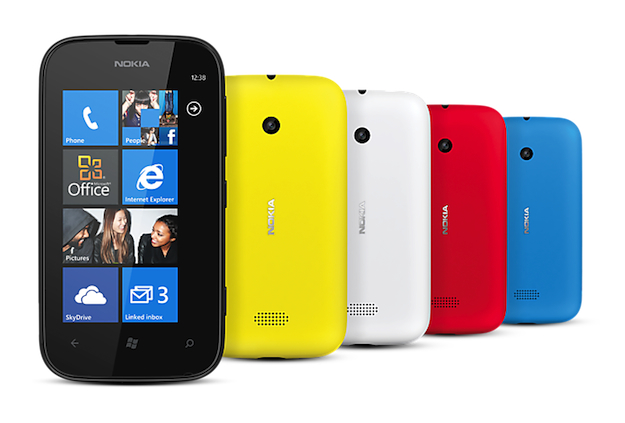
Nokia still loves Windows Phone 7, announces the Lumia 510 to prove it

Nokia Lumia 510

Nokia considers Windows Phone 7 to be ideal for entry-level smartphones, bridging the gap between Symbian and Windows Phone 8, and has announced the competitively priced Lumia 510 to prove it.

Next month, phones running Windows Phone 8 should finally hit store shelves, following the official release of Microsoft’s new smartphone OS on October 29. Some may think this means the end of Windows Phone 7, the OS that preceded it, however Nokia thinks it still has legs and has announced a new phone to prove it.

The Lumia 510 is an entry-level phone using Windows Phone 7.5 as its operating system, and although its model number suggests it slips into Nokia’s range below the Lumia 610, the 510’s spec trumps it in one key area — the screen size.

Nokia has given the 510 a 4-inch display with the same 480 x 800 pixel resolution as the 610, although that device has a smaller 3.7-inch screen. The processor is listed as a Snapdragon S1, which could be the same MSM7227A chip found in the 610, where it runs at 800Mhz. Phonearena.com’s spec list indicates that this is indeed the case.

There’s 256MB of RAM, which will mean some apps won’t operate on the phone, 4GB of internal storage memory and 7GB of free cloud space with Microsoft’s SkyDrive. Mounted in the center of the colorful rear panel is a 5-megapixel camera, which can also shoot VGA video.

The spec list continues with GPS along with Nokia Maps and Nokia Drive, an FM radio, Bluetooth 2.1, Wi-Fi, a 3.5mm headphone socket and a 1300mAh battery.

Designed to sit in-between its Symbian smartphones and the latest Lumia 820 and Lumia 920 Windows Phone 8 handsets, the Lumia 510 is an affordable introduction to Microsoft’s still-growing OS.

Nokia will initially release the phone in India and China during November, then bring it to South America and other countries soon afterwards. Available in white, black, red, yellow and cyan, Nokia has priced the Lumia 510 at $199.


Source : digitaltrends[dot]com

Oct 19, 2012

iPhone 5 vs iPhone 4S: Our in-depth comparison

iPhone 5 vs iPhone 4s header

The iPhone 5 is here. But is it worth the money to upgrade from the iPhone 4S? Check out the specs and decide for yourself.

The iPhone 5 is the latest entry in Apple’s smartphone line. Whether you are filled with desire or feeling a little underwhelmed by its lack of evolution, there’s no doubt about the demand. With over 5 million sold in the first three days, Apple has another smash hit on its hands. Even with supply issues, Apple is expected to sell around 50 million iPhone 5 handsets by the end of the year.

If you are looking to upgrade, there’s no doubt the iPhone 5 will be on your radar, but what about last year’s iPhone? The iPhone 4S was no slouch and if you picked one up you may be wondering whether an upgrade to the latest model is really worthwhile. Alternatively you may want to take advantage of the deep discounts the old iPhone models enjoy whenever a new kid hits the block.

Join us as we break down the iPhone 5 versus iPhone 4S comparison into individual categories to help you make the right choice.

Before we get started you might want to check out our full iPhone 5 review and our iPhone 4S review. Just remember that those review scores are a product of their times and relate to what was available on the open market when each phone was released.

Design and construction

There’s really no mistaking the distinctive look of the iPhone line, but it has evolved and matured a great deal since the original 2007 release. The iPhone 5 looks a lot like an iPhone 4S that has had a growth spurt. It is 4.87 inches tall compared to 4.5 inches and it is 0.30 inches thick compared to 0.37 inches. When you pick it up you’re struck by how light it feels. The iPhone 5 weighs just 3.95 ounces, which is almost a full ounce lighter than the iPhone 4S.

A larger screen and a slimmer form factor have been achieved without compromising on the materials and quality. The iPhone 5 has a brushed aluminum back instead of glass. It is also significantly tougher than its predecessor and has been trouncing the competition in drop tests.

The controls are much the same. The familiar home button is present and correct, the power button is ever so slightly smaller on the iPhone 5, and a Nano-SIM has replaced the Micro-SIM in the iPhone 4S. You’ll also notice that the lightning port is significantly smaller than the old 30-pin dock connector.

Winner: iPhone 5

Feel

With two devices so similar the feel comes down to a couple of minor points. The iPhone 5 is lighter and yet it still feels like a premium construction. The brushed aluminum backing is also more comfortable than the glass backing you’ll find on the iPhone 4S, not to mention less prone to smears and fingerprints. The only place where the iPhone 5 falls down is the power button. Despite the fact that the phone is taller, Apple has left the power button on the top and it may now be a bit of a stretch for some people.

Winner: iPhone 5

Screen quality

You have a 4-inch Retina display versus a 3.5-inch ‘Retina’ LCD display. Both are rated at 326ppi. The iPhone 5 is 1136×640 pixels and the 4S is 960 x 640 pixels. That extra height definitely counts, although in the short term, many apps will have a black band at the top and bottom rather than stretch to fit the new resolution. Movies can now play in 16:9 without letterboxing, which is great.

The iPhone 5 doesn’t just have a taller screen, though; it also boasts warmer colors, greater clarity in direct sunlight, and wider viewing angles.

Winner: iPhone 5

Operating system

If you’ve made the upgrade to iOS 6 on your iPhone 4S, then you’re running the same operating system as the iPhone 5. That extra display height enables the iPhone 5 to display an extra row of icons and more content in some apps, but there’s really no other difference between the two phones.

Usually there is a new, exclusive software feature with a new iPhone release. The iPhone 4 got FaceTime and the iPhone 4S got Siri, but the iPhone 5 doesn’t really have anything particularly notable, except for a new Maps app and Passbook (which we’re still struggling to figure out).

Winner: iPhone 5 (for its extra icons)

Audio and video

In terms of content, you have exactly the same options, but there are a couple of differences when it comes to audio and video. As mentioned before, the taller screen allows for 16:9 movies to play on your iPhone 5 when you view it horizontally, which is a nice improvement.

Then there’s the new EarPods that ship with the iPhone 5. They are designed to fit your ears more comfortably and they offer much better sound quality than the earphones that came with the iPhone 4S. The bass is better, although true audiophiles will still want to buy good quality earphones or headphones separately. Another tweak is that the audio jack has been moved to the bottom of the iPhone 5 probably because the new lightning port opened up some space there.

Winner: iPhone 5

Cameras

On paper, you have exactly the same 8-megapixel rear-facing camera, but in practice the iPhone 5 does boast a few improvements. For ideal lighting conditions you’ll be hard-pressed to see any difference, but in low light conditions the iPhone 5 camera comes into its own. The LED flash seems to be better and there’s less noise in shots. There have also, apparently, been improvements to its HDR capabilities.

They both support 1080p video recording, but only the iPhone 5 can take photos while you are recording video. The basic quality is also slightly improved thanks to better noise reduction, white balance, and image stabilization, but the difference is subtle. Improved compression means that HD video on the iPhone 5 is 20 percent smaller.

Two other differences worth mentioning are that the iPhone 5 camera is faster to capture a photo and that the new sapphire crystal lens is incredibly tough, making it difficult to scratch.

When we flip over to the front-facing FaceTime camera there’s an obvious improvement. A 1.2-megapixel camera capable of 720p video recording has replaced the VGA camera.

Winner: iPhone 5

Hardware specifications

The iPhone 5 is obviously a jump up from the iPhone 4S when it comes to raw processing power. The new A6 processor is way faster than the A5. The RAM has also been increased from 512MB to 1GB. The phone boots up faster; it loads apps faster; it runs games faster. The improvement in general performance is very noticeable.

Winner: iPhone 5

Voice and LTE data service

The iPhone 5 boasts three noise-cancelling microphones for improved call clarity. It also supports HD Voice, but not on Sprint’s network. We’re still waiting to hear whether any carriers stateside will support HD Voice, but it has been confirmed on 20 carriers elsewhere in the world, including Everything Everywhere in the UK.

Now you can also enjoy 4G LTE on your iPhone and the improvement is vast. If you use a lot of data then this will be a major enticement for you. Even for casual web browsers the increased speeds for web pages opening are immediately noticeable. How much of a benefit that LTE support is for you depends on your carrier and where you live, but those LTE networks are growing larger every day so it’s a great feature to have.

Winner: iPhone 5

Charging/connecting accessories

At last we reach a category where the iPhone 4S can win. The decision to switch to the new lightning port for the iPhone 5 means that all your old accessories aren’t compatible. The Lightning to 30-pin Adapter will cost you $30. If you want to splash out for a replacement charger setup then you’re looking at $38 versus $30 for the iPhone 4S. If you have a range of docks and other accessories that you’re attached to then this is just an extra cost.

Winner: iPhone 4S

Battery life

When it comes to basic 3G talk time, both devices are rated at 8 hours. However, the iPhone 5 will give you 8 hours of browsing on LTE or 3G, versus 6 hours of 3G browsing on the 4S. It also squeezes an extra hour of Wi-Fi browsing in at 10 hours and it should support an extra 25 hours of standby time, according to Apple website.

In practice you aren’t going to notice much of a difference in battery life, but the fact it has a bigger screen and it’s lighter makes that slight improvement for the iPhone 5 quite impressive.

Winner: iPhone 5

Overall winner: iPhone 5

The iPhone 5 is clearly the overall winner, as you would expect. The real question is how much better is it? It really depends on what you want from your phone. If you are set on an iPhone, but you don’t need cutting edge performance and you want to save a bit of cash then the iPhone 4S could be the better choice for you. Everyone else should go for the iPhone 5.

Is it worth upgrading from the iPhone 4S? Well, probably not. You get all the benefits of iOS 6 anyway and the iPhone 5 really isn’t a major leap forward. A few employees here at Digital Trends still use the iPhone 4S with iOS 6 and it doesn’t feel noticeably slower, as phones sometimes do after being upgraded. If you still have a year on your contract, we recommend you wait it out and check out the iPhone 6.

Winners by category:

• Design and construction: iPhone 5
• Feel: iPhone 5
• Screen quality: iPhone 5
• User interface: iPhone 5
• Operating system: iPhone 5
• Audio and video: iPhone 5
• Cameras: iPhone 5
• Hardware specifications: iPhone 5
• Voice and LTE data service: iPhone 5
• Charging and connecting accessories: iPhone 4S
• Battery life: iPhone 5

10 to one makes it pretty clear: the iPhone 5 is better than the iPhone 4S.


Source : digitaltrends[dot]com

Oct 12, 2012

Forza Horizon review: The king of the road takes to the country

Forza Horizon review

The Forza franchise is the current king of the road, and despite a few bumps as the series find itself in unfamiliar territory, the newest entry in the series, Forza Horizon, still manages to impress once again

I would not classify myself as a racing game fan. I enjoy them for the most part, and I certainly respect the genre, but I tend to play them and then forget them — with one notable exception. Forza Motorsport 4 was one of my favorite (and highest rated) games last year and it still remains in my gaming rotation. Although I do enjoy the odd car flavored news, and watching Top Gear gives me a momentary stat boost of +1 car knowledge, racing sims have not traditionally been my thing. There is just something meditative and tranquil about Forza 4 that keeps me coming back, but when Forza Horizon was announced, I admit that I greeted it with unveiled skepticism.

Taking a part of Forza’s identity – the racing physics – and dropping it into a different, even alien environment, felt like a half measure. It was not combining chocolate and peanut butter, it was combining chocolate and pickles. There are already plenty of racing games that have an arcade environment, but the Forza games just aren’t built that way. They are racing sims with a heavy, heavy emphasis on making you feel like you are actually in the car and racing on the famed Nürburgring, leaving skid marks on the Dayton asphalt. Sure, the two styles of racers share numerous similarities, but they are fundamentally different at their core, so combining them felt like a shallow attempt to perpetuate the Forza brand.

Turns out I was completely wrong. Forza Horizon is hands down the best racing game of the year. It’s not perfect, and it doesn’t come close to surpassing Forza 4, but it stands on its own as an excellent addition to the franchise, and one I hope continues to grow.

Come for the Music, Stay for the Reckless Driving

The title of the game is a reference to the fictional Horizon festival located in the Colorado countryside. Although billed as a music event featuring bands like Friendly Fires, The Black Keys, and enough dubstep DJs to have you wub-wubbing for days, the real reason for you to be there is the accompanying auto show, which brings together 250 of the fastest and most insane people behind the wheel.

Forza HorizonYou, an unnamed rookie, are new to the circuit and trying to work your way up the ranks by winning races and completing challenges to gain popularity. As you begin to pile up wins, you unlock more races, discover and earn new cars, and face off against rivals – both AI-controlled and via the ghost data of your friends. There is a narrative to point you onward and give you more motivation, but it is more just a structure to invest your own ideals into. If you have played the other Forza games, you will probably appreciate what this is right away. After competing in dozens – even hundreds — of traditional races, it is natural to daydream a bit and imagine a rival you are chasing down, or give yourself illusory goals. Forza Horizon takes that to the next level, but doesn’t go much beyond that. 

There is an end game goal as you try to make it up the ranks to take on the champion, and there are a handful of cut scenes that pop up now and then, but they don’t really offer much. The story – if you can really even call it that – is quickly forgotten. In another game that might be a huge issue, but in Horizon it is barely missed. If anything it is a lost opportunity, but not a major issue with the game.

The Horizon festival is in the center of an expanse of Colorado that encompasses several environments, including twisting mountainous paths, open grasslands, barren deserts, and touches of civilization including houses and even a golf course. The map itself is huge, and it’s littered with objectives – some fixed, others like the dozens of AI-controlled competitors, are constantly searching the countryside for challengers to engage in a quick race for credits, the game’s currency of choice.

Forza Horizon reviewThe more races you win, the more wristbands you earn, which in turn also unlock tougher races. One of the things that the game does very well is to introduce you into the world of Horizon gently, then allow you to play at your own pace. Once you have a firm grasp on the world and have completed a few early races, it opens up exponentially, and at any one time there are dozens of things you can do. The races are what push the campaign forward, but you can earn credits and popularity doing other car related things like stunt driving, speed challenges, and even through some more novel approaches like trying to keep the damage on a borrowed car low as you try to get to a designated point to take a picture.

The world is massive, and there are copious amounts of things to do. Horizon doesn’t reach the levels that Forza 4 did with content, but completing every single race in Forza 4 requires a nearly pathological level of dedication. Horizon has plenty to keep you occupied for a long, long time, and that doesn’t even include the multiplayer.

Put Your Friends into the Wall for Fun and Profit

Multiplayer components to racing games are nothing new, and the Forza games have been one of the best when it comes to online content. That has not changed.

Along with the standard races and the variations that come with it, there are a handful of playground games and a free roam that is populated with challenges. The playground games are a highlight, and include games like “King,” where one person is king and gains points over time while others try to steal the crown by ramming them; “Infected,” where the infected car tries to hit others and enlist them to hunt survivors until none remain; and “Cat and Mouse,” where you have two teams and on each team is a single mouse that is trying to complete a lap while the cats are trying to slow down the other team’s mouse. If you want to play any of these events but don’t have a decent car, you can also borrow one for the event, which makes it balanced and fair.

ForzaEach of these playground modes are fun, and along with races they help you level up your online rank. When you do reach a new level, you then receive a shot a slot machine like bonus, which randomly rewards you with anything from a jackpot like a Bugatti Veyron to a bust of a few hundred credits. It is random and wildly addictive. It is also a great way to earn some decent (or potentially exceptional) cars for the single player campaign.

The free roam should be a huge draw to this game, but it feels a bit hollow. If you like, you can go and explore with friends, or you can attempt challenges that are specific to free mode and require a certain set of elements to complete. Some of these challenges are simple enough if you have coordination — things like having four cars all maintain a particular median speed through a speed check area, while others may require things like eight cars to cross a speed point at 200 mph within three seconds of each other. The rewards will vary based on the difficulty.

What’s missing is the integration with the single player campaign. It would have made sense to allow drop in play for the host’s campaign. Having my friend join me in a race event would have pushed this game in a fantastic new direction, but instead the free roam is a novelty that grows old unless you happen to have a dedicated group of eight friends to go after the more obscure challenges, which can be as frustrating as they are rewarding.

The Oil Spot on the Driveway

As you might expect of the Forza series, the graphics, especially the look of the cars, borders on incredible. Each ride has its own distinctive feel to it as well, and the physics that made the series what it is are present in Horizon. The more narrative-based presentation is a new thing for the series, and it generally works well. The rivals you will face all have a personality of their own as well, and while they veer sharply towards stereotype territory, they offer just enough color to be memorable as you beat them and move on.

Forza HorizonAccompanying you on your journey up the ranks is the mostly unseen voice of one of the event coordinators who becomes your ally. She can be flirty at times, but is generally a soothing guide. There is also a fairly broad selection of music from all genres to sort through. It ranges in quality, but that comes down far more to personal taste, and the inclusion in the game is a good one.

Despite my love of the game, there is one thing that irked me about Horizon: the token system. Microtransactions within a game are nothing new, and for the most part the tokens just act as shortcuts rather than necessities, but you are constantly being offered ways to spend real money — and it is not a cheap proposal.

One thing you will constantly be offered is a treasure map, which will unlock all the hidden items on the map for a mere five tokens. Those five tokens will cost you 400 MS points, or $5, and the map doesn’t really offer much you wouldn’t find on your own. If anything, it actually takes away from the game and robs you of the joy of exploration. Of course, it is optional though. If you want to buy more tokens, be prepared to put down some serious cash. This is a minor complaint since you can unlock everything with enough time and effort, but the emphasis to buy tokens is inescapable.

FHOne other issue that falls under the “not really a problem, but…” category is the garage selection. Forza Horizon begins with around 125 cars for you to unlock, which pales in comparison to the 534 that were available at launch for Forza 4. Sure, they are different games, but you can almost smell the tidal wave of DLC coming after Horizon. Having additional content for a game is never a bad thing in my book, but removing it from the game in order to sell it later is a bad move – if that is indeed the case. If not, even if I am totally wrong, then there are still fewer cars than in the previous Forza game. Perhaps that is the opinion of spoiled gamer, used to more-more-more, but part of the thrill with games like Forza is unlocking and playing some of the rarest and wildest cars in the world that none of us will ever in our lives actually drive, and may not even see in person.

Conclusion

The Forza series is already at the top of the racing sim food chain, and developers Turn 10 and Playground Games have made a claim for the top of the more arcade-like racing games as well. Forza Horizon offers you an open world and then crams it full of things to do. On the other hand, the narrative works as a means to further your progress through the game, but it doesn’t ever really offer you anything to engage with. You could remove it entirely and be left with exactly the same game. The free mode also feels like it could have been so much more, and while there are a lot of cars, the absences are notable.

All of that aside, Forza Horizon is still the best racing game of the year. It is far from perfect, but the attempt at something new feels fresh, even if the ideas themselves are familiar. Horizon doesn’t come close to the lofty heights that Forza 4 reached, but it is a worthy addition to the family of the best racing series around.

Score: 8.5 out of 10


Source : digitaltrends[dot]com

Sep 17, 2012

Canon announces EOS 6D full-frame DSLR along with PowerShot G15, S110 and SX50 HS point and shoot cameras

Few days ago we saw Nikon announce their smallest and lightest entry level full-frame camera, the D600, at the $2100 price point. Now, Canon has announced a rival in the form of the EOS 6D, their own smallest and lightest entry-level full-frame DSLR selling for the exact same price.

The Canon 6D uses a 36 x 24mm CMOS sensor with a resolution of 20.2 megapixels. It’s lower than the 24.3 megapixels on the D600 sensor but since the sensors are of the same size, it should theoretically give the Canon an advantage in low light situations, as the individual pixels are larger and thus will collect more light.

The autofocus system on the 6D has 11 points, way lower than the 39 points on the D600. Having said that, Canon claims their AF system on the 6D offers the strongest low-light performance of any of their AF systems till date. Canon trumps the Nikon in the max ISO department, where it can go up to ISO 25,600 whereas the Nikon can only go up to 6,400. Both offer the option to go beyond that limit using software tricks, at which point the 6D goes up to ISO 102,400 and the D600 up to ISO 25,600. It remains to be seen how good the images actually are at those sensitivities, however.

Where the Canon really shines is in having GPS and Wi-Fi built into the camera, whereas on the Nikon you would need to buy separate accessories. It’s also the first Canon EOS to include these features. The 6D also has a slightly better 3.2-inch 1024k dot display, compared to the 3.2-inch 921k dot display. Neither displays, however, swivel or have touchscreen functionalities.

The Canon EOS 6D will sell for $2,099 body-only and for $2,899 with the 24-105mm F/4 L lens. Unlike the D600, though, that launches this week, you’ll have to wait until December to get your hands on the 6D.

The next one is PowerShot G15, part of Canon’s G-series of enthusiast point and shoot cameras that offer the settings and manual modes of a DSLR in a compact body. The G15 has a 12 megapixel, 1/1.7-inch CMOS sensor and a 28-140mm, f/1.8-2.8 lens. The 3.0-inch display has a higher resolution, 920k dot panel compared to the previous G12 but loses the swivel functionality. As before, it has a front dial and full manual control, along with RAW and HDR shooting modes. The G15 can also record 1080p videos.

The PowerShot G15 will go on sale in October for $499.

The PowerShot S110 is the successor to the S100, a point and shoot camera designed for those who don’t want a lot of control options but still expect high quality photos from their camera. The S110 has a slightly updated 12 megapixel sensor from the S100, along with the same 24-100mm, f2.0-5.9 lens and the GPS functionality. What’s new is Wi-Fi and a touchscreen functionality for the 3.0-inch, 461k dot display.

The PowerShot S110 will go on sale in October for $499 and will be sold in black and white.

Lastly, we have the PowerShot SX50 HS, a super zoom camera with a mind-boggling 50x optical zoom. The lens in question is a 24-1200mm equivalent with f3.4-6.5 aperture. Behind this lens sits a 1/2.3-inch, 12.1 megapixel BSI-CMOS sensor. The SX50 HS has a 4.5-stop optical image stabilizer, 1080p video recording with HDMI out, 2.8-inch, 461k dot LCD, as well as manual and RAW shooting modes.

The PowerShot SX50 HS will go on sale in October for $479.


Source : blog[dot]gsmarena[dot]com

Sep 13, 2012

2012 Acura TSX Special Edition review

2012 Accura tsx exterior front left angle sedan review

With so many cars making up the entry-level luxury scene it’s hard to know which one is right for you. Thankfully, our review of the 2012 Acura TSX is here to find out if affordable luxury actually exists.

Cars can mean many different things to people. They can serve as a source of freedom, an extension of your personality, or — as is often the case with luxury nameplates – signify your “status” in this crazy mixed up world. But whatever a car may mean to you, ultimately we all want the same thing: to buy the best one possible for the money we’re spending.

Enter Acura. The Japanese luxury automaker is looking to draw in first-time luxury shoppers with its entry-level offerings, and it begins with the 2012 TSX. And while the Acura nameplate may carry the distinction of being the first luxury Japanese automotive brand, it has seen its popularity wax and wane throughout the years, with fellow Japanese brands like Infiniti and Lexus enjoying more influence in the luxury sphere. That being said, the image of Acura as a serious luxury brand is slowly starting to revive and evolve once again, and what better way to draw consumers in than with an eye-catching, entry-level luxury sedan?

With luxury rivals from Europe and Japan vying for dominance, how does the 2012 Acura TSX stack up? Let’s find out.

Less sharp design, but in a good way

There is something about the recent Acura design language that has truly failed to resonate with us. We’re not exactly sure what it is — well that’s not true. In fact, many of the recent Acura designs refuse to utilize a look that is even remotely curvaceous, preferring the harsh lines and rakish angles found in a geometry diagram. Which is why we were pleasantly surprised at the 2012 TSX’s lessened triangular tone.

2012 Accura tsx exterior front top left angle sedan review

2012 Accura tsx exterior front sedan review   2012 Accura tsx exterior left side sedan review   2012 Accura tsx exterior back sedan review   2012 Accura tsx exterior back tsx logo sedan review   2012 Accura tsx exterior back left angle sedan review

Don’t get us wrong: there are more angles to work here than a politician at a town hall meeting, but the 2012 TSX is much more bearable, dare we say likeable, than other designs past, current, and we’re guessing future.

A beginner’s guide to luxury

When it comes to the interior of the 2012 TSX, there isn’t much to complain about. From a design perspective Acura have done an excellent job putting together a cabin that encompasses varying degrees of comfort, luxury, and space. While it might not espouse the same feelings of luxury you would find from a comparable Lexus, Audi, or BMW, the Acura TSX features a smartly designed cabin with a great deal of amenities one would expect. Honda, and by extension Acura, have garnered a reputation based on build quality for years now and the 2012 TSX happily carries on that tradition. The material quality in the TSX looks and feels great; rich leathers and firm plastics never drag the interior’s luxurious atmosphere down.

2012 Accura tsx interior steering wheel sedan review

2012 Accura tsx interior middle dash sedan review   2012 Accura tsx interior gearstick sedan review   2012 Accura tsx review exterior trunk sedan review   2012 Accura tsx interior speedometer sedan review   2013 Accura review interior logo sedan review

And while there’s no doubt the 2012 TSX earns a lot of style points, we do have to call out Acura is with its execution. Both the three-spoke steering wheel and center console are filled with an excessive amount of buttons, more so the center console. It’s not necessarily a deal breaker, and after out week-long loan we had gotten accustomed to it, but the buttons for controlling the Bluetooth calling features and for selecting the different audio sources are either too thinly positioned or at an awkward angle that simply make placing a call more of chore than it needs to be. We also found the shifter in our review model to be on the dainty side, which isn’t a huge deal but again takes some getting used to. Standard interior features in the 2012 Acura TSX include leather upholstery, eight-way power driver seat with memory, four-way power passenger seat, heated front seats, a tilt and telescoping steering column, an auto-dimming rearview mirror, and 60/40-split-folding rear seat, to name a few. Our TSX Special Edition included little touches like aluminum pedals and red interior stitching that helps lend a greater degree of sportiness and personality to an already excellent cabin.

Tech troubles

Despite the fact that the 2012 TSX is Acura’s entry-level model, we should be willing to cut it a little slack when it comes to its in-car tech. But with an MSRP of $32,310 we’re simply not. Standard features include a USB audio input for connecting and charging your smartphone, an AUX output for MP3 playback, Bluetooth audio and HandsFreeLink for wireless calling, as well as Acura’s seven-speaker premium sound system and XM Satellite radio with three month’s free subscription. An option tech package adds a rearview camera, hard drive-based navigation system with real-time traffic and weather forecasting, in addition to an upgraded 10-speaker Acura/ELS surround sound system.

Sadly our review unit excluded the tech package, and what the TSX is packing isn’t remarkable in any way. In fact, if we are going to be honest –and we are — while the 2012 TSX sports a decent amount of standard tech features, we were left pretty disappointed by them. Pairing your smartphone with HandsFreeLink’s voice feature is dreadfully slow, and only after six voice tutorials were we able to figure out how to actually pair our phone. When we did finally get our phone paired, making calls was easy, but again the voice recognition software suffered under our non-regional diction (really!?).

Once paired streaming music via various apps like Pandora and Spotify is easy, but Acura’s interface is rather limited in the standard TSX model, with no cover art or detailed title information given in the digital display above the instrument panel.

Adequate power, disappointing fuel economy

The 2012 Acura TSX is available in two different engine choices: A 2.4-liter four-cylinder producing 201 horsepower 201 horsepower and 172 pound-feet of torque when mated to a six-speed manual (as opposed to 170 with a five-speed automatic transmission), and a 3.5-liter V6 capable of spitting out 280 horsepower and 245 pound-feet of torque.

Our review unit consisted of the former and offered up a respectable amount of power when pressed out of the gate. Truth be told though, the 2012 Acura TSX offers up nowhere near as thrilling a ride as you’d expect from some of its European counterparts, namely the BMW 3-Series or Audi A4. Instead, the 2012 TSX prefers to operate in a more subdued and calculated manner. It’s not going to excite you like a German sport sedan, and it’s not the most engaging luxury sedan, but it won’t make you regret your decision for choosing Japanese poise over German power… too much. Still, those yearning for more gas-guzzling gravitas will want to opt for the V6.

2012 Accura tsx review exterior engine sedan reviewUnfortunately, where the Acura fails to meet our expectations comes by way of its fuel economy. For the size of the TSX’s engine the EPA-awarded fuel economy is disappointingly low at 21 mpg in city, 29 on the highway, and 24 combined. Factor that this is with premium gasoline and a six-speed manual and the 2012 TSX ultimately drops the ball. For comparison, a 2012 Audi A4 with quattro all-wheel-drive and a 2.0-liter turbocharged inline four-cylinder with six-speed manual transmission is capable of pumping out 211 hp, 258 lb-ft of torque, and returning an EPA estimated 21/31/25.

A true street sweeper

While power, or lack thereof, might restrict the 2012 TSX on the track, out on the road it’s a different story. For all its faults the TSX exhibits excellent road manners and cornering, maintaining excellent grip on the road when tasked with keeping ready and rigid. Entering corners at higher than recommended speeds doesn’t pose too much of a problem and the TSX manages to get the most out of its double-wishbone front suspension and multi-link rear. Enthusiasts will argue that it lacks a certain dynamism other entry-level luxury sedan’s possess, but for the vast majority the TSX provides plenty of pavement pounding pizazz.

Finish Line

When it comes down to it, the 2012 Acura TSX is a four-star vehicle living in a five-star world. Overall it’s a very solid choice for people wanting to enter the luxury sphere, but not exactly enamored or impressed with the power and prestige on offer from some of the more established brands like BMW, Audi, and Mercedes-Benz. At the same time, the 2012 TSX exhibits a calm, distinguished ride character all of its own, and possesses one of the most buttery smooth and forgiving clutches we have ever dealt with – period.

Ultimately it comes down to what you value most. If you value your tech and smart features, and want them done right, the TSX has trouble delivering. While we certainly appreciate the amount of standard features packed in, the exclusion of navigation, the convoluted button layout, and the glitchy Bluetooth streaming system remind us that Acura still has a ways to go before it can truly be mentioned in the same breath as Lexus, Infiniti, and the like. However, if an upscale Honda, with improved driving dynamics, more comfort, and increased social recognition is what you’re after then we see no reason why you shouldn’t seriously consider the 2012 Acura TSX.

Highs

  • Impressive list of standard tech features
  • Spacious and comfortable interior
  • Top-shelf build and material quality

Lows

  • Poor tech execution
  • Some questionable design choices
  • Slightly anemic powertrain
  • Fuel economy is less than stellar

Source : digitaltrends[dot]com