Dropbox reaches 100 million users, Nokia unveils their ‘Here’ map technology, Vimeo teases new pay-per-view service, and Google Fiber debuts in Kansas City.
Related Links:
Source : digitaltrends[dot]com
Dropbox reaches 100 million users, Nokia unveils their ‘Here’ map technology, Vimeo teases new pay-per-view service, and Google Fiber debuts in Kansas City.
Related Links:
Nokia’s official blog Conversations has posted an article detailing 10 things you might have missed about the Lumia 920.
Did you know that the camera decoration and side buttons are made out of zirconium? Or that the LED flash on the back is a higher-powered dual one? Hop after the break for more.
Unlike the rest of the Windows Phone smartphones (even those Beats flaunting ones) the Lumia 920 features a built-in equalizer with 18 presets and the option to customize your own. That’s something audiophiles with WP 8 affiliations will appreciate.
There’s a nifty feature, which lets you read or ignore text messages via your voice. All you need is to be connected to your car or additional Bluetooth headset.
There’s more over at the Conversations blog in the link below. And here’s our hands-on of the Nokia Lumia 920.
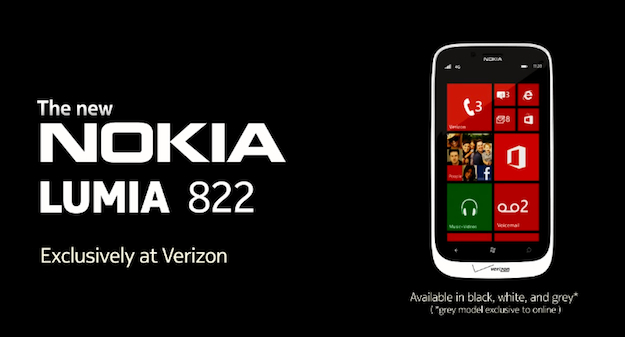
Verizon has welcomed Windows Phone back into the family with the announcement of the Nokia Lumia 822, an exclusive Windows Phone 8 device set to be released soon.
Verizon has announced the Nokia Lumia 822, a Windows Phone 8 handset exclusive to the network. The news comes a few hours ahead of Microsoft’s big Windows Phone 8 event, which will be held in San Francisco, where the last pieces of information regarding the new OS will be shared.
In the meantime, lets look at the Lumia 822. The screen measures 4.3-inches and hides behind a sheet of protective Gorilla Glass, and although no resolution is mentioned in the press release, it’s likely to be the same as the GSM Lumia 820, which stands at 480 x 800 pixels.
An 8-megapixel camera sits on the rear of the curvy device, complete with Carl Zeiss lens and 1080p video recording, while a 1.2-megapixel video call lens can be found above the screen around the front.
Nokia makes a point to emphasize all the applications it bundles with its Lumia phones, including Nokia Maps, Nokia Drive, City Lens and the recently launched Nokia Music. This music streaming service has been out in Europe for a while, and is particularly interesting due to there being no subscription charge and no streamed advertising either.
Other features include NFC, Bluetooth and a choice of black, white or an online exclusive grey color scheme, plus the chance to swap the rear cover for one that enables wireless charging.
The Lumia 822 will connect to Verizon’s 4G LTE network, but aside from all this there is a lack of information on the device’s finer technical points. That won’t stop us hazarding a guess though, as the 822 will probably share the same dual-core, 1.5GHz Snapdragon processor, 1GB of RAM and 8GB of internal memory as the Lumia 820.
All this is identical to the Lumia 810 too, which is exclusive to T-Mobile USA, while the Lumia 820 can only be found with AT&T. As they share the same spec sheet, the 810, 822 and 820 should really be considered network-exclusive designs, as the differences are all cosmetic.
The Lumia 822 is the first Windows Phone to hit Verizon since last year, when it carried the affordable Lumia 710, and confirms rumors dating back to August of the network’s plans to once again carry handsets running Microsoft’s mobile operating system. Verizon and Nokia have so far committed only to the Lumia 822’s “upcoming availability,” so we’d expect to hear more following Microsoft’s final big reveal later today.
Nokia considers Windows Phone 7 to be ideal for entry-level smartphones, bridging the gap between Symbian and Windows Phone 8, and has announced the competitively priced Lumia 510 to prove it.
Next month, phones running Windows Phone 8 should finally hit store shelves, following the official release of Microsoft’s new smartphone OS on October 29. Some may think this means the end of Windows Phone 7, the OS that preceded it, however Nokia thinks it still has legs and has announced a new phone to prove it.
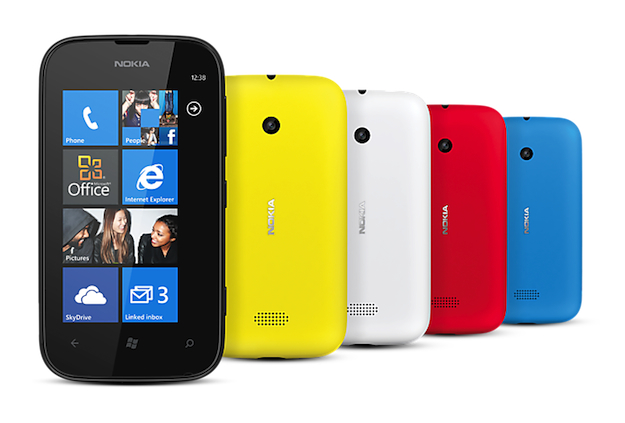
The Lumia 510 is an entry-level phone using Windows Phone 7.5 as its operating system, and although its model number suggests it slips into Nokia’s range below the Lumia 610, the 510’s spec trumps it in one key area — the screen size.
Nokia has given the 510 a 4-inch display with the same 480 x 800 pixel resolution as the 610, although that device has a smaller 3.7-inch screen. The processor is listed as a Snapdragon S1, which could be the same MSM7227A chip found in the 610, where it runs at 800Mhz. Phonearena.com’s spec list indicates that this is indeed the case.
There’s 256MB of RAM, which will mean some apps won’t operate on the phone, 4GB of internal storage memory and 7GB of free cloud space with Microsoft’s SkyDrive. Mounted in the center of the colorful rear panel is a 5-megapixel camera, which can also shoot VGA video.
The spec list continues with GPS along with Nokia Maps and Nokia Drive, an FM radio, Bluetooth 2.1, Wi-Fi, a 3.5mm headphone socket and a 1300mAh battery.
Designed to sit in-between its Symbian smartphones and the latest Lumia 820 and Lumia 920 Windows Phone 8 handsets, the Lumia 510 is an affordable introduction to Microsoft’s still-growing OS.
Nokia will initially release the phone in India and China during November, then bring it to South America and other countries soon afterwards. Available in white, black, red, yellow and cyan, Nokia has priced the Lumia 510 at $199.
The Nokia Lumia 510 aims to be the company’s most affordable Lumia handset, but still bring excellent features like a 4″ screen and a 5MP autofocus wide angle amera. It will run Windows Phone 7.5 at first (complete with Nokia Drive navigation), but it should get the WP7.8 update too.
The first promo video is already out, giving you the lowdown on the newest Lumia member, check it out after the break.
The Nokia Lumia 510 will launch in November in China and India with an estimated price of $200 before taxes and subsidies. What the video doesn’t tell you is that the phone will have only 256MB RAM and 4GB of non-expandable storage. Still, it looks pretty good for its price.
Thanks to everyone for the tips!
Nokia City Lens is one of the “most well received new applications” from the Finnish company (they also used it to generate buzz for the WP8 Lumias before unveiling them). The Symbian and MeeGo users weren’t left out – they got to participate in the beta trials, which are now over.
There’s some bad news though – City Lens is becoming Lumia-exclusive. If you have the beta installed on your Symbian phone or Nokia N9 (the only MeeGo phone), you can continue using the app.
But there’s a catch – the beta app doesn’t support the latest Nokia Belle update. There are reports that the app crashes after the update. You could still try Live View, which is City Lens’s predecessor.
Nokia still has big plans for the Windows Phone app though, especially the WP8 version. Not that that’s a big consolation to 808 PureView and N9 owners.
AT&T will exclusively carry the Nokia Lumia 920 and 820 in the United States.
AT&T just announced that the Windows Phone 8 smartphones, the Nokia Lumia 920 and Nokia Lumia 820 will be exclusive to the carrier in the States.
The flagship Lumia 920 is Nokia’s first Windows Phone 8 device, which also means its one of the first Windows Phones to pack some impressive hardware. It has a 4.5-inch curved glass touchscreen, a dual-core 1.5GHz Snapdragon S4 chip, 32GB of storage, and an 8-megapixel camera. The Lumia 820 is a little smaller with a 4.3-inch display and is being billed as a mid-range smartphone. The stand out feature for both is wireless charging support.
Jeff Bradley, senior vice president of Devices and Developer Services at AT&T Mobility said, “Exclusive to our customers and featuring unique innovations in imaging technology, wireless charging and a bright, sensitive display – all on the nation’s largest 4G network – the Lumia 920 will be one of the hottest phones for the holidays,”
AT&T continues to position itself as the leading Windows Phone 8 carrier and reminded us in its press release that it has sold more Windows Phones than any other carrier to date. It will also offer the HTC 8X.
Both the Lumia 920 and 820 will feature Nokia’s City Lens AR overlay and benefit from all the new features Windows Phone 8 has to offer. The 920 comes in red, white, black, yellow, and cyan; the 820 comes in black.
There’s no word on release date or pricing beyond the fact that the new devices will hit shelves sometime this autumn.
Nokia has released the beta version of a new browser called Xpress for Lumia that is based on the same principle as the browser on their Asha phones, which itself was based on the Opera Mini.
The Nokia Xpress for Lumia browser is designed exclusively for Nokia Lumia phones and claims to compress data by up to 90 percent, saving your data, time and money.
Some of the other important features of this browser include:
The browser is currently available for download only from Nokia Beta Labs.
The Nokia Lumia 510 has obviously overcome its camera shyness, and after posing for a live photo earlier today, is now featuring in a hands-on video.
Unfortunately, the author obviously didn’t have the best camera at hand, so the video doesn’t reveal too much, but is at least yet another proof that the Lumia 510 is on the way. Plus we got some comments from the guy who got to handle the Lumia 510 and he says that the smartphone looks just like the Lumia 610, albeit lighter and slightly bigger.
The Nokia Lumia 510 is tipped to be the cheapest Windows Phone-running smartphone with an initial price tag of $150. Naturally, it targets the entry level phone market and features a 4-inch display, 4GB of internal memory and 256MB of RAM.
Here’s the video itself.
The Nokia Asha 306 is part of the latest crop of fully touch-operated S40 phones. It is nearly identical to the Asha 305, except that one was a dual-SIM phone and this one has Wi-Fi.
The Nokia Asha 306 relies on a 3″ WQVGA resistive touchscreen – the capacitive units are reserved for the Asha 311 in this family. It’s not as sensitive as we would have liked, but it is multi-touch enabled, which comes in handy in the Gallery.
The Asha 306 exterior is made of plastic and while we like the matte plastic on the back, the glossy accents on the top and bottom look rather cheap. Still, the phone finds a good balance between being light and having some heft to it (which gives it a solid feel).
Nokia Asha 306 at ours
The hardware inside is pretty basic. You only get quad-band 2G, though the Wi-Fi g/b does improve things considerably. The phone is powered by a rather constrained chipset with a slow CPU and little RAM, which means the user interface is far from buttery smooth.
Speaking of interface, the Asha 306 uses the MeeGo inspired swipe UI and its one of the very best UIs we’ve seen on a feature phone. Check out the video below to see it in action, right after the overview of the retail package of the phone and its hardware.
From Nokia to Motorola and finally to Apple, there’s been a tidal wave of smartphone announcements in the last month. But don’t forget about RIM, the company that once led the smartphone race.
Today RIM CEO Thorsten Heins took the stage at the company’s BlackBerry Jam conference for application developers to demo the next version of its operating system — BlackBerry 10. Originally due out before the end of the year, Heins announced in June that BlackBerry 10 wouldn’t be ready until early 2013. Today he said it is on track and just “a few short months away.”
Heins demonstrated a number of the platform’s new features, including one for multitasking called Peek. You can swipe the screen to pull up a small hub of your apps. Also previewed was a new Balance feature, which separates work from play on the device. There are two separate browsers, so you can keep your work searches separate from your personal ones.
The touch keyboard was also a major focus. The new touchscreen keyboard predicts words based on what you begin to type. The first BlackBerry 10 phone will have a touchscreen only; RIM says phones with physical QWERTY keyboards will follow.
Above all, Heins stressed that the company was changing. “We recognize the need for change. There is a new culture at RIM,” he said at the conference in San Jose, Calif..
Along with the details on the software, RIM also released a motivational music video on YouTube. Written to the tune of Speedwagon’s “Keep On Loving You,” the song says, “We’re in transition, a whole new mobile computing platform, one tough proposition.” It also reveals a bit about the phones: “The launch is just ahead. We’ll have Blackberry 10, both in full touch and QWERTY editions.”
RIM will announce its second quarter earnings on Thursday. RIM reported major losses last quarter, seeing a 33 percent drop from its previous quarter earnings and announcing 5,000 job cuts. The company did report today that its user base is at 80 million, up from 78 million at the end of the previous quarter.
Nokia has announced a pair of new Asha touchscreen phones, and made a point of labeling them as smartphones. So, what has changed?
Nokia has announced a pair of new Asha phones, the Asha 308 and Asha 309, which as touchscreen devices join the previously released Asha 305, Asha 306 and Asha 311. While we, and everyone else, referred to them as “feature phones,” according to Nokia’s press release, the Asha phones have earned “full smartphone classification from global market research companies and analysts such as GfK and IDC.”
So, you may be thinking, the Asha’s run Symbian Belle? Nope, the 308 and 309 still use Series 40 as their operating system, except it’s now called “Nokia OS” according to the specification pages on Nokia’s website.
The press release continues to refer to the 308 and 309 as smartphones, but looking back at the release for the Asha 305, 306 and 311, they were “touch screen devices,” with a “smartphone-like” experience. What has changed about Series 40 between early June, July — when Nokia still referred to it as a feature phone OS — and now? Not much, as this is manipulative marketing at its best.
It has been a long-time coming too, as the new generation of Series 40 phones have been blurring the line between feature and smart devices for a while, and when Nokia sold its 1.5 billionth Series 40 handset it paved the way for the change by describing them as “smartphone lite.”
Here’s what you need to know about the new Asha phones. The Asha 308 is a dual-SIM variant of the Asha 309 and aside from this feature, they’re both identical, so we’ll concentrate on the 309. A 3-inch capacitive touchscreen is your window into the world of Nokia OS and it has a resolution of 400 x 240, while the little device weighs just 104 grams and measures 13.2mm thick.
There’s a 2-megapixel camera on the back, plus Nokia Maps, Wi-Fi, a microSD card slot and an FM radio are all to be found inside. The Nokia Xpress browser compresses webpages for speedier (and cheaper) browsing, there’s access to an app store and a Facebook and Twitter app come pre-installed. Electronic Arts also provide 40 free games to download. Both Asha phones connect only to a 2G network.
While the hardware specification doesn’t scream smartphone, the software is more convincing, and although it’s easy to sneer at Series 40, there’s no denying it looks polished and really quite flash in the video below. To us, “smartphone-like” is still the best description of the Asha range — particularly for those without 3G — but that’s not going to sell any phones for Nokia, at least not where it counts.
Feature phone sales are dropping in the USA, but the Asha range isn’t aimed at those with the means to purchase a Samsung Galaxy S3 or an iPhone 5, it’s for markets where those devices are either prohibitively expensive, or don’t offer the right feature set — dual-SIM for example. These emerging markets are prime Asha hunting ground, but for Nokia to do business, it must compete with endless cheap Android smartphones.
With the software looking its best and installed on full, capacitive touchscreen handsets with a cool, colorful style; the only thing left was to convince the public that they’re buying a fashionable smartphone and not a feature phone that’s one step away from the grave. A task which starts right now.
Nokia will release the Asha 308 and Asha 309 before the end of the year, and both will cost around $99.
Nokia just introduced the two latest additions to its Asha lineup and to convince you of their worth, it has dedicated a promo video to each of them. The Nokia Asha 308 and Nokia Asha 309 each got just over a minute of footage, highlighting their key strengths.
Check out the two short clips here:
This should hardly catch you by surprise, given that the company is under Google ownership. Motorola has followed Nokia’s example, and released an ad, which pokes fun at Apple’s far from perfect Maps service.
The ad, released by Motorola in Twitter and Google+ put the Apple iPhone 5 next to the company’s latest DROID RAZR M. Both devices have the same search query entered with Apple’s handset returning a rather questionable result.
Here is the full ad from Motorola.
With Apple’s Maps clearly far from perfect, perhaps it would be the right thing for the Cupertino giant to allow iOS 6 users the luxury of Google Maps until it sorts its own service out. What do you think?
Nokia used the City Lens augmented reality app to tease the new Lumia phones before they were announced, but the app is not exclusive to the Lumia 920 and 820. Sure, the duo of Windows Phone 8 handsets will be getting a more powerful version, but older, WP7-running, Nokia phones can grab City Lens right now.
What is City Lens? It’s an augmented reality app – that is, it overlays info on the camera viewfinder – and helps you discover places nearby where you can eat, shop and so on. If you’ve used Layar, then you know what I’m talking about.
If not, check out this video:
It’s cool that the City Lens app can switch between three view modes just depending on how you hold it – the camera overlay described above, a map and a simple list are available.
Anyway, the beta period is over and owners of a Lumia 900, 800 or 710 can download City Lens right now (sorry, Lumia 610 owners, it seems that you’re note invited, most likely because of the RAM).
An updated version of the app will be available for the WP8 Lumia models, the 920 and 820. It will have the ability to hide POIs if they are not in view (obscured by a building), it will let you pin a POI category or favorite search to the start too.
Yesterday, we talked in length about the new variation of the PureView technology found on the new Nokia Lumia 920. But that’s not the only new feature that Nokia introduced with the phone.
Nokia also announced a display related feature that they like to call PureMotion technology. We are about to find out what it is and how it will help you in real life.
Now the PureMotion technology on the Lumia 920 includes a bunch of stuff but at its core it concentrates on the response time of the LCD panel. Now in display technology, response time is the name given to the time it takes a pixel to go from black to white and back. The shorter this time, the better the display.
But how short does it really have to be? Well, an ideal display would have a response time of 0ms but that’s not practically possible. Now most displays have a refresh rate of 60Hz, that is the display is refreshed with new information 60 times per second. Now every second has 1000 milliseconds, so at 60Hz, each frame gets around 16.77ms before the next one comes in. If a display fails to switch pixel value under that time, you see visual blurring on the screen.
Having said that, you usually need more time for every frame because the frame has to be written to the display. So if a display has a response time that is slightly under 16.77ms, it would still exceed the time it takes to write one frame in practice, causing motion blur.
Due to this the response time has to be as low as possible, preferably under 10ms. This is where PureMotion comes in. Nokia uses a Response Time Compensation or overdrive process to provide temporary higher voltage to the display to make the pixels change state much faster than usual. This method has been widely used in recent HDTV and monitor panels but Nokia is possibly the first to use it on a mobile display. Nokia promises a response time of around 9ms, which is well under the minimum response time for a display.
The result is pixels that change value or color quickly, thus even at high framerates the display remains blur-free, whether you’re just scrolling through the menus or playing a fast paced 3D game.
The other aspect of the PureMotion display on the Lumia 920 is about the sunlight legibility. Nokia introduced their proprietary ClearBlack displays two years ago – they utilize a polarizing filter to cut off reflections and make the display easier to see under direct light. And their ClearBlack displays have been amazing out in the open. Now, with the Lumia 920 PureMotion display they’ve improved their ClearBlack tech.
The new feature on the Lumia 920 uses software algorithm in conjunction with the ambient light sensor to determine the amount of light falling on the display and automatically boosts the brightness and contrast of the LCD panel to make it clearer to see under bright light. The adjustments are done on-the-fly without any user intervention.
The Lumia 920 display has a resolution, which Nokia refers to as HD+. It’s basically a WXGA panel with a resolution of 1,280 x 768, a bit more than the usual 1,280 x 720 that you usually find in high end smartphones these days. This gives the display an aspect ratio of 15:9. This means that when you put a 16:9 and 15:9 displays of the same diagonal size side by side, the 15:9 display would be shorter and wider in portrait mode.
Nokia chose this arrangement because reportedly, it would allow users to reach the top of the display with their thumb more easily. You also get the advantage of the few extra pixels, which will be great for web browsing or playing games but not so much for watching videos or movies that usually have a 16:9 aspect ratio.
Lastly, Nokia has utilized Synaptics latest ClearPad capacitive touchscreen sensing technology, which gave the Lumia 920 something they call Super Sensitive Touch. It would let you operate the touchscreen with a glove on, with a fingernail or with an object such as a pen or a key. And since it has a Gorilla Glass layer on top, the last two objects won’t leave a scratch.
Those are all the intricate aspects hidden behind the PureMotion display moniker on the Nokia Lumia 920. Hopefully, this article helped dispel any confusion regarding what makes this display so special. We’ll be taking a better look at the display when the phone is released in the next couple of months.
The Nokia Lumia 920 comes with an immense amount of camera innovation. It’s the first time we see a cameraphone with real optical image stabilization system in place and surprise, surprise… it doesn’t come with a huge hump on its back. While only having 8MP of maximum image resolution, the Nokia Lumia 920 also wows with the high-quality Carl Zeiss optics, a last-gen backlit image sensor, multi-aspect shooting, the extra wide viewing angle (up to 26mm in 16:9 mode), a new type of high power/short pulse LED flash and finally, the extra bright F2.0 aperture.
As you see, with the Nokia Lumia 920, PureView development has zoomed on low light performance rather than class leading sharpness and dynamic range. But the results we get should be as impressive as ever. It’s just that this time Nokia’s R&D team is focusing in another direction.
But before I get to the nitty-gritty details, I’d like to get something out of the way. I find the reuse of the PureView moniker for pure marketing’s sake a letdown. What was once the name for a pioneering image technology using a high-megapixel sensor with pixel oversampling to produce sharp images with wide dynamic rage is now turned into a dumbed down name of a series of camera-centric smartphones by Nokia.
I get it, it’s their trademark name, they are free to use it however they like. But it still feels like cheating, sorry. “Whilst some may associate the PureView moniker with specific features, specifications or functionality introduced along with the 808 PureView, Nokia’s ultimate intent for PureView is to be synonymous with high performance imaging.”
And while the announcement of the Lumia 920 yesterday was marred by other forms of cheating too, I still can’t help but be fascinated by the amount of innovation that has gone into making the Lumia 920 camera system.
The backside illuminated image (BSI) sensor or the “backlit sensor”, as it’s commonly called, usually delivers superior pixel performance in low light situations. The advantage you would expect from this type of sensor is getting lower noise levels at a given ISO sensitivity compared to a similar frontside illuminated sensor (FSI). Nokia’s Damian Dinning claims they’ve utilized the absolutely latest generation BSI sensor, which reportedly, has gotten rid of most inherent disadvantages of the technology.
Much like in the Nokia 808, the sensor is oversized (it’s actually 8.7MP rather than 8MP) to allow for higher resolution 16:9 aspect shooting mode. In 4:3 shooting mode the Lumia 920 captures 8MP stills, and in 16:9 aspect mode, the stills turn out 7.1MP, which is a lot more than what competing cameraphones without this multi-aspect oversized sensor would turn in.
When you are aiming in letting as much light as possible to the image sensor, you can hardly go wrong with a wider aperture. The wider the aperture, the wider the “hole” through which light gets to the camera’s sensor. Nokia has gone for a F2.0, which is really wide.
And good-quality wide aperture optics are pretty hard to make and most importantly, usually, they are bulkier.
Much like zooming, optical image stabilization (OIS) has long been among the mainstays of digicams, something that’s been out of reach for cameraphones up until now. Creating their OIS system, Nokia has gone for a complex design that is more advanced than the one used in your regular-sized digital camera.
The diminutive optical system on the Nokia Lumia 920 allowed the engineers to create something they call “floating optics”. Rather than shifting a single lens element inside the module to compensate for camera shake, Nokia’s OIS system moves the entire optical assembly to counter the camera shake. “The benefit of this approach is that the amount and form of camera movement that can be compensated for is much greater.” And as Damian Dinning himself puts it, this has been their “most challenging opto-mechanical design to date.”
Reportedly, the new system is performing even better than the OIS on some dedicated digicams catering for about 50% more movements per second than conventional OIS systems. It’s also capable of responding to new movements surprisingly quickly without much lag, as they’ve implemented a system that constantly monitors the position of the lens assembly, allowing continuous updates to the movement pattern regardless of how random it is.
Internal tests have revealed that the OIS on the Lumia 920 is able to compensate for shutter speeds, which are up to three stops lower. So instead of a minimum handheld speed of say, 1/30 of a second, the Lumia 920 can have its shutter shooting wide open for 1/4th of a second – an 8x longer shutter speed – and that’s again, handheld.
The following figure shows the exact benefit of having the OIS on board as the shutter speed goes down. There’s already a big difference at 1/30 and the gap only widens as shutter speed lowers.
In video recording, the OIS system is tuned slightly differently. It makes sense of the movements you are making with the camera and will only compensate for the unintended ones, so panning for example is uninterrupted. This is not evident on the video below, but it still the conveys what an amazing feature OIS is in video recording.
Unlike the Nokia 808, the Lumia 920 lacks a xenon flash. Instead, it makes use of Nokia’s latest generation LED. It’s reportedly, over 2x more powerful than their previous best LED flashes and Damian Dinning would like to have us believe the new short pulse mode would help “freeze” subject movement in much the same fashion as a xenon flash would.
Now, good flash pictures depend on the force of the flash burst rather than on its duration, so I am not quite sure about the advantages of this new short pulse mode. The technical details are scarce at this point so I’ll just give it the benefit of a doubt.
Of course, nothing can beat a xenon flash with a big enough capacitor for freezing the moment in low light photography but that’s one of the compromises they had to make. Also, the LED can also be used as a video light and as a flashlight.
Using the Windows Phone 8 new imaging framework has allowed Nokia engineers to integrate into the Lumia 920 a wide range of their proprietary image processing algorithms concerning the autofocus, the exposure metering and the white balance among others. Damian Dinning shares that one of the most important new algorithms is Nokia’s new denoise algorithm for reducing visual noise while keeping the image’s natural look.
Another area of advancement is the new lens add-ons that you can install under the Windows Phone 8 camera app. Nokia’s Damian Dinning eagerly promised that the Lumia 920 will come pre-installed with a nice set of lens apps, which are “to be followed in the future by yet more magic.”
Unfortunately, we failed to get the awesome big megasensor from the Nokia 808 in a Windows Phone. Instead, Nokia’s R&D decided to spend their efforts on optimizing low light performance. The integration of a real OIS system inside a phone is an exciting feat and I’d really like to see some more from where that innovation came from. The Lumia 920 seems like a well rounded smartphone/cameraphone and its market release cannot come soon enough. Then the real hands-on testing will continue in our over eager hands.
Nokia’s yesterday announcement shook the mobile world for sure, one way or another. The new flagship, Lumia 920, managed both to impress and get involved in a PR sandal.
Then you learn that the Lumia 920’s PureView camera lacks the monstrous censor the 808 PureView has, instead it relies on other kind of magic. And finally, the smartphone lacks memory expansion slot. You probably wonder why that is. After all Windows Phone 8 introduced support for microSD slots.
Well, Kevin Shields, executive vice president at Nokia, explains the decision not to include an SD slot.
“We started with the premise that we wanted an uncompromised physical form…To put an SD card slot in it would have defiled it.”
Well that’s certainly one way to explain it. I’ll leave the conclusions to you.
Are the Nokia Lumia 820 and Lumia 920 the blockbuster phones Nokia needs to reignite its phone business? Probably not.
When Nokia declared defeat on Symbian and stacked all its remaining chips on Windows Phone, the company’s fate was sealed. With the Lumia 900, that bet didn’t go so well.
Now it’s rolling the dice one more time with the Lumia 920 and Lumia 820. Are these the smartphones that will save Nokia?
The answer, sadly, is “probably not.” Unfortunately for Nokia, the scales of the smartphone market are tipped against it right now, and the only a pair of game-changing devices could tip them back. The Lumia 920 and 820 don’t carry that weight. Here’s why.
In terms of specs, both the Lumia 920 and the Lumia 820 are competitive with devices like the Samsung Galaxy S III and other mid- to high-end smartphones. That’s part of their problem: There’s little about the new Lumia hardware that stands out at first glance, other than swappable neon-colored cases. In fact, the new Lumia’s specs aren’t all that different from their predecessors, the Lumia 800 and 900, in many respects. The Lumia 900 offers a 1.4GHz processor, 4.3-inch 800 by 480-pixel AMOLED display (same dimensions as the new Lumia 820), an 8-megapixel Carl Zeiss camera, and support for 4G LTE networks. Add Qi wireless charging and a more-sensitive screen, and you’ve essentially got a Lumia 820.
It wouldn’t be hard to argue that one of Nokia’s new flagship phones is slightly warmed-over version of its previous flagship phone: You know, the one that didn’t sell well and that Nokia wound up issuing full-price rebates on because of a software gaffe.
The specs above on the Lumia 920 gloss over a genuine hardware innovation: the PureView 8.7-megapixel camera. Seeing the name PureView immediately recalls the recent Nokia 808 smartphone. The 808 is based on the moribund Symbian platform, but it sports a unique and stunning 41-megapixel camera. That doesn’t mean the 808 takes 41-megapixel pictures; it uses all the extra capacity in the sensor to offer high-quality zoom and noise reduction. It’s really quite cool, and totally unique. Nokia introduced PureView as a fundamental rethinking of how mobile cameras can operate — and delivered.

However, the Lumia 920′s camera means Nokia is now positioning PureView as a brand, rather than a specific set of technologies. The Nokia 808 represented the first “phase” of the technology; the Lumia 920 represents a second “phase” aimed at improving low-light use and reaching a broader range of consumers. Nokia wants PureView to denote a premium imaging experience of some sort, regardless of the specific technologies in play.
That’s a mixed message if we’ve ever seen one.
Nokia says the combination of image processing and high-quality optics make the Lumia 920 worthy of the PureView brand name. In fact, Nokia’s Damian Dinning — who has spent five years developing PureView technologies, took to Twitter this week to argue exactly that. Early reports of image quality in the Lumia 920 are quite positive, particularly in low-light situations, and Nokia is expected to bring out lens “apps” to add functionality via software.
Nonetheless, the consumer camera market largely hasn’t gotten past the megapixel argument. Show a typical buyer two $99 cameras, one with an 8-megapixel sensor and one with a 14-megapixel sensor, consumers will almost always buy the 14-megapixel camera because “more” is better. Some may make a different decision based on size, battery type, features like an optical zoom, or even image quality, but megapixels are still the primarily marketing point for digital cameras.
From a marketing perspective, Nokia would have been better off skipping the PureView brand entirely and trumpeting the Lumia 920 as “the first phone camera in the world with optical image stabilization.” That’s a tremendous accomplishment. Instead, the Lumia 920′s PureView camera comes across as a watered down version of technologies originally meant to support a 41-megapixel sensor. That’s if consumers are aware of the 41-megapixel PureView camera at all — otherwise, the Lumia 920 is just another phone with an 8-megapixel camera. Don’t they all have that these days?
Nokia’s press event in New York City today basically amounted to a stunt. With Apple preparing to unveil the iPhone 5 on September 12, major technology companies (like Motorola and Amazon) have been scrambling to introduce their products ahead of Apple for two primary reasons:
However, Nokia has failed to account for two factors that make Apple’s hardware product announcements so devastatingly effective:
Nokia did neither of these things. The company offered no timeframe for when the new devices would be available, save that they would land in the last three months of 2012. The company has revealed no pricing information. Few expect that the Lumia 920 would cost more than an iPhone or a high-end Android phone, but right now, there’s no telling. Some industry watchers are speculating Nokia will follow the path of the Lumia 800 and 900 and price the devices at $49 and $99 (on contact) in an effort to attract buyers.
The lack of pricing and availability information leads to another crucial question: Who is going to buy a new Lumia phone?
The logical answer is that early adopters will be folks who have already bought Windows Phone devices from the likes of Nokia, HTC, and Samsung. After all, they already have an investment in the platform, so stepping up to a new flagship Nokia device might be a no-brainer.
Or is it? Windows Phone 7 debuted in October 2010, almost two years ago, which means that users who were among the very first to jump on the platform are nearing the end of their phone contracts and probably starting to look for a new phone. The new Nokia handsets might be very tempting when they eventually ship.
However, most existing Windows Phone customers did not jump on the platform on Day One. And the Lumia 900 — arguably the best device to date engineered to the Windows Phone platform — only hit the market five months ago. Customers who bought that phone won’t be out of their contracts until 2014.
Moreover, those customers probably feel more than a little bit slighted, since no existing Windows Phone 7 devices will be upgradable to Windows Phone 8. (They’ll get a new start screen with Windows Phone 7.8, though.) Even if folks bought a new Windows Phone just a few months ago, they’ll have to buy a whole new device to get Windows Phone 8.
Put together, that probably means many existing Windows Phone 7 customers aren’t in much of a hurry to snap up the Lumia 820 or 920 when they become available later this year.
Who does that leave in Microsoft and Nokia’s target market?
Existing smartphone owners are difficult to convert because they already have an investment in apps, accessories, and add-ons for their platform. Once you’re locked in, it’s hard to switch — or not feel annoyed at having to buy Angry Birds all over again for your new phone.
Guess which platform is widely preferred by folks who are looking for their first smartphone? Often, it’s the platforms their friends and family use.
How many people have friends and family using Windows Phone 8? Zero.
The bottom line is that Nokia’s new Lumia phones will be a tough sell all around, at least, when they go on sale. Whenever that might be.
The Lumia 820 and Lumia 920 may represent Nokia’s last, best opportunity to wow the smartphone market.
But it’s just not enough.
Nokia is hemorrhaging money, and it’s getting very difficult for the company to borrow to keep its operations afloat. Standard & Poors recently downgraded Nokia from BB+ (high-end junk bond) to BB- (a somewhat junkier junk bond). The move follows a similar downgrade by Moody’s (from Ba1 to Ba3) in July. Nokia has put a brave face on these ratings downgrades, noting it has a few billion euros in the bank (more than twice its reported debt) and access to 1.5 billion more in credit lines that are good through 2016. That cash position — coupled with cost reductions like layoffs — can keep the company afloat for a time.
But Nokia’s stock price declined nearly 16 percent with the announcement of the Lumia 820 and Lumia 920. Investors — even those willing to consider sub-prime “speculative” stocks — didn’t like what they saw today. Nokia’s stock price is down over 60 percent in the last year.
The stock price and rating downgrades are indicative of how deep a hole Nokia has dug for itself with its all-or-nothing bet on Windows Phone. Most of Nokia’s revenue still comes from feature phones, primarily sold to developing markets, and that revenue is drying up as carriers shift away from Symbian in favor of platforms like Android, or demand deep discounts from Nokia to keep Symbian on the shelves. Nokia’s Windows Phone devices have generally been well reviewed, but not enough people are buying them to make up for the lost revenue. The result is that Nokia is having to cut deals with carriers and discount the phones in an effort to make consumers even consider them. It all smacks of desperation—not a known turn-on for consumers.
Nokia has a few things going in its favor: Microsoft will aggressively promote Windows Phone 8 alongside Windows 8 and Windows RT going into the crucial end-of-year holiday season, which should help make Nokia devices more visible. Mobile carriers are interested in having a third major phone platform that they can play against Apple’s iOS and Google’s Android, so they may be willing to cut some favorable deals to give Windows Phone a chance. And it’s significant that Nokia unveiled these new Lumia phones in the United States: it means Nokia is looking to re-assert itself in the North American market, which it has largely abandoned for the last several years.
But the clock is ticking. Microsoft has a lot of cash. It can afford to keep promoting and iterating the Windows Phone platform for years — just as it has done with its Bing search engine — without making a penny from it.
Nokia cannot afford to play out that kind of long-term strategy. Today’s highly-anticipated announcement from Nokia, leading up to the official launch of Windows Phone 8, was perhaps the company’s best shot at showing it can innovate and disrupt the smartphone market with something truly unexpected.
That didn’t happen. Nokia has enough money for maybe two more attempts. Personally, I hope they can do it.
Busted within 24 hours of posting the promotional ad online, Nokia backpedals regarding a misleading video featuring PureView technology.
Detailed on the Conversation by Nokia blog, editor-in-chief Heidi Lemmetyinen released an apology for misleading consumers with a video that was meant to show off how optical image stabilization helps when shooting high definition video on smartphones like the Lumia 920. The concept of the video in question was designed to show the difference between shooting with OIS turned on compared to shooting when it’s unavailable. In the video, the side-by-side-comparison video stream shows a couple riding bicycles and the twenty-something man is filming a young girl with a Nokia smartphone using PureView and OIS as they speed down the street.
Noted by many people on YouTube and other news organizations, a van can be seen filming the girl with a high-end dSLR or video camera in a reflection off the window of a nearby trailer around the 27 second mark of the video. Not only was the video taken while someone rode in a stable car compared to a less stable bicycle, the type of camera used was completely different from the PureView camera in the Lumia 920.
In the apology, Lemmetyinen stated “In an effort to demonstrate the benefits of optical image stabilization (which eliminates blurry images and improves pictures shot in low light conditions), we produced a video that simulates what we will be able to deliver with OIS. Of course, hindsight is 20/20, but we should have posted a disclaimer stating this was a representation of OIS only. This was not shot with a Lumia 920. At least, not yet. We apologize for the confusion we created.”
In addition to the written apology, Lemmetyinen posted a video shown at the press conference that displayed the difference between shooting with a smartphone without OIS and a Lumia 920 prototype with OIS turned on. While Nokia didn’t identify the other smartphone in the video, the side displaying the OIS feature clearly shows a significantly smoother video stream while someone is walking and filming toward a fixed spot.