Pages

Showing posts with label target. Show all posts

Nov 19, 2012

New report says Apple iMac computers still on target for 2012 launch

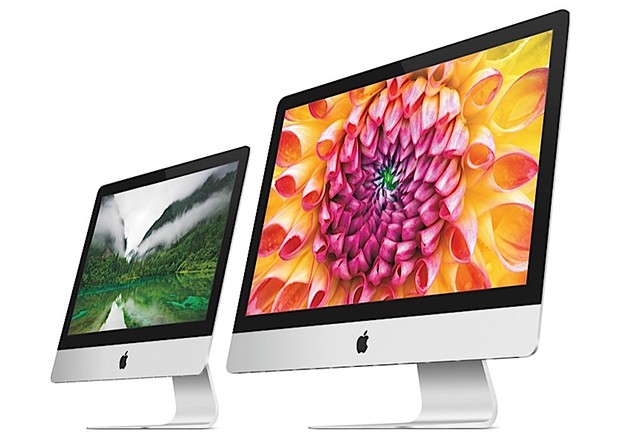
iMacs (October 2012)

Despite last week's report indicating production problems could delay the launch of Apple's new iMac computers until 2013, it seems the machines are still on target for a 2012 release, and may already be arriving at distribution centers around the world.

Concern amongst those waiting for Apple’s new iMac computers escalated last week, after a French blog reported the release had been delayed, possibly until 2013. While it was impossible to judge the validity of the report’s sources, talk of a delay regarding a new Apple product was hardly a surprise, given the problems it has seen with the iPhone 5 and the iPad Mini so far this year.

However, 9to5mac.com has refuted the site’s claims, saying its own sources tell them the 21.5-inch iMac is already arriving at distribution centers in the U.S. and elsewhere in the world; indicating the planned November release will go ahead after all.

As for the 27-inch iMac, Apple gave it a tentative December release date, which is not only likely to be met, but perhaps even improved upon, with the massive computers becoming available to order around the same time as the 21-5-inch iMac.

Apple’s new iMac’s are considerably slimmer than older models, and some high-tech manufacturing processes have been used to fit all the computer hardware inside. The trouble Apple has had manufacturing the iPhone, which has been described by Foxconn as the most difficult device it has ever assembled, only made the rumored iMac delay seem more likely.

So, while a delay in their launch may have been averted, the iMac computers could still be a rarity in stores and online. Apple CEO Tim Cook warned there would be a “significant shortage” of the company’s range-topping desktop machines during the first three months after launch, so it’ll be wise to get an order in early if you’re desperate. You know, just like every other recent Apple release.

The only good thing is there’s unlikely to be a huge run on the $1300-plus computers during the Christmas shopping season, as eager buyers rush to claim the last remaining iPad Mini tablets and new iPod music players instead.


Source : digitaltrends[dot]com

Sep 25, 2012

Lytro light-field camera coming to Amazon, Target, Best Buy

The Lytro light-field camera is moving into the big leagues of Amazon, Target, and Best Buy online stores next month.


The revolutionary Lytro light-field camera is about to get easier to buy. The company announced today that it is expanding its retail reach in the U.S. and around the world starting next month.

On October 9, photography enthusiasts in the U.S. will be able to purchase a Lytro camera through Amazon.com, Target.com, and BestBuy.com. In November, CityTarget stores in Chicago, Los Angeles, San Francisco, Seattle, and Westwood, California, will also begin carrying the Lytro. Brick-and-mortar stores in Australia, Canada, Hong Kong, and Singapore will offer Lytro cameras, as of October.

“Since our first shipments of the Lytro camera only six months ago, we’ve been inundated with requests to bring the Lytro camera to countries near and far and to stores near you,” said Charles Chi, CEO of Lytro in a statement.

Currently, the Lytro has only been available through Lytro.com. The camera costs $400 for the 8GB version, or $500 for the 16GB model.

For those of you unfamiliar with Lytro, the device is anything but ordinary. The first thing you’ll notice is its look — a rectangular block, with none of the buttons or detachable lenses that you’d find on an traditional camera. But this isn’t just an aesthetic choice; the Lytro uses light-field technology, which captures 11 million different rays of light, “megarays,” rather than traditional megapixels, a difference that dictates the camera’s shape. By capturing all this light, Lytro removes the need to focus when taking the picture.

Lytro pictures — which are digital-only — are then ported to a computer and processed by Lytro’s software. From there, users can choose the focus of their picture with a click of the mouse. Don’t like the way it looks? Refocus again and again. These pictures can also be embedded onto Web pages, where anyone can manipulated the focus to their heart’s content.

Check out some examples below. (Just click on the point in the picture where you want to focus.) And be sure to peruse our full Lytro review here.


Source : digitaltrends[dot]com

Aug 30, 2012

Twitter refines advertising services with ‘interest targeting’

With a new payment service, accounts will lose their Verified status if they stop advertising on Twitter.

Twitter has introduced ad target based on is user's interests in an attempt to lure more advertisers.

Today, Twitter has launched its own targeted advertising, which offers advertisers the option to target Twitter users’ specific ‘topical interests.’ The move puts Twitter a step closer to similar offerings from Facebook and Google.

Twitter offers the majority of its advertiser one of two advertising options: Promoted Tweets and Promoted Accounts. Promoted Tweets highlight an advertiser’s tweets and displays them prominently on a Twitter user’s feed. Promoted Accounts are featured at the top of “Who to follow,” on the left of their homepage. Initially, targeted ads on Twitter were all-encompassing through geography and devices. Targeting more specific categories wasn’t much of an option. But now Twitter offers two “flavors” of interest targeting.

The first can refine an advertiser’s efforts with its Promoted Tweets and Promoted Accounts campaign by targeting more than 350 interest categories in a two-tier hierarchy. For example, advertisers can select individual genres of entertainment from the broader “Movies and Television” category, which you can see in the example below.

twitter interest ad backend

In its second option of interest targeting, advertisers can target certain types of Twitter users based on the @usernames that are relevant to the advertiser’s campaign.  Twitter explains this feature in a blog post: “If you’re promoting your indie band’s next tour, you can create a custom audience by adding @usernames of related bands, thus targeting users with the same taste in music.” 

To further sweeten the pot, Twitter has lowered the minimum bid for ad runs to just a single penny, which will likely lure in a large number of smaller advertisers that might not have otherwise opted to promote their product or service on the microblogging platform.

To a degree, Twitter’s advertising services are nearing closer and closer to what Facebook has been offering all along. Even Twitter’s second flavor of interest targeting by usernames is reminiscent of Facebook’s sponsored results. Facebook advertisers can include their Facebook app or pages in the search results of its competitors by bidding for pages, apps, or places. With over 140 million monthly active Twitter users, and projected advertising revenue to reach $399.5 million by 2013, it’s still a far cry from the revised projection of $5.48 billion Facebook is expected to generate by next year. But the rate of its growth is indicative of the realization that Facebook’s ad revenue growth is leveling out, unlike Twitter’s hastening ad revenue growth. Facebook’s ad revenue is forecasted to grow 29.5 percent between 2012 and 2013, while Twitter’s ad revenue is expected to grow by 55 percent during the same period.


Source : digitaltrends[dot]com

Aug 21, 2012

Google Play gift cards now available at GameStop, RadioShack, Target

Get excited, people: Google Play gift cards are now for sale at Target, GameStop, and RadioShack.

Holy crap, guys. Guess what. No, guess. Go ahead, guess. Wrong! You can now buy Google Play gift cards! Isn’t that exciting? Guys?

Oh well, that’s the news — news we saw coming almost a week ago. Google has partnered with Target, GameStop, and RadioShack to sell $10, $25, and $50 gift cards for its Google Play digital marketplace, where you can buy Android apps, movies, music, movies and TV shows, and digital magazines.

Perhaps more interesting is what you may not do with your Google Play gift card. You may not use your Google Play gift card to purchase “Android app subscriptions, magazine subscriptions, or hardware and accessory purchases.,” according to Google.

Also, according to the Google Play gift card terms of service — yes, everything has a terms of service — Google Play gift cards may not be used by any one under the age of 13. Why? Because, technically, no one under the age of 13 is allowed to make purchases through Google Play at all. Further, Google Play gift card owners between the ages of 13 and 17 may only make purchases on Google Play with their gift card — anything that costs more than your gift card balance is out of reach thanks to rules with Google Wallet, to which your Google Play gift card connects.

In other riveting gift card news, Walmart is now offering $100 iTunes gift cards for just $80. As Fortune’s Apple guru Philip Elmer-Dewitt explains, the only caveat is that you have to give your personal information — name, email address, and payment info — to Walmart, which can then use it for its own purposes, or that of its subsidiary companies. It cannot, however, sell your identity to third-parties.


Source : digitaltrends[dot]com