Pages

Showing posts with label month. Show all posts

Nov 19, 2012

Google kills Christmas (and all of December) with Android 4.2 bug

Google Android 4.2 bug kills Christmas

A bug in Google's Android 4.2 (Jelly Bean) mobile operating system has caused the entire month of December to disappear. But fear not: Google has recognized the issue, which we hope means a fix will arrive soon.

Sorry, kids, Christmas is cancelled this year – at least, that’s what Google’s Android 4.2 (Jelly Bean) mobile operating system is telling users. As first reported by AndroidPolice on Saturday, Google accidentally left out the entire month of December in its most recent Android update. Fortunately for users, a fix is likely coming soon. (We hope.)

Christmas Android bug

The absence of December in the Jelly Bean calendar is especially disruptive to the People (contacts) app, since birthdays, reminders, or any other notes related to the month of December cannot be added (since December does not currently exist). The flaw comes built in to the new Nexus 4 and Nexus 10 devices, as well as new or upgraded versions of the Nexus 7 tablet and Galaxy Nexus smartphones.

The no-December flaw was first noted in an Android bug-tracker forum on November 14. It has since been confirmed by a number of users from around the world. But it wasn’t until Saturday, November 17, that Google acknowledged that December 2012 was missing from Jelly Bean.

All said, this is a relatively minor bug – more a source of mild annoyance than catastrophic mayhem. (If, on the other hand, Apple had left out December in iOS, there would surely be nothing short of Hell to pay for the Cupertino giant.) Alas, Google’s roll-out-fix-later modus operandi has likely saved it from too much wrath, if not a dose of embarrassment.

Still, Google has yet to comment on when a fix is due. But we would guess that an update will arrive before December does.

Image via Jeff Cameron Collingwood/Shutterstock


Source : digitaltrends[dot]com

Nov 8, 2012

Angry Birds Star Wars now available for download

After teasing it for over a month, Rovio has finally released Angry Birds Star Wars. The game is available for download on iOS, Android and OS X and although a Windows Phone and Windows 8 versions are promised neither are currently available for download.

The game is priced at $0.99 on iOS for the iPhone version and $2.99 for the iPad version. Meanwhile, Android has two versions, one that is free but comes with ads and another ‘HD’ version, which despite the name looks identical to the standard version but costs $2.99 and does not include ads. The OS X version costs $4.99.

After playing it for a few minutes prior to writing this article, the game seems very similar to the standard Angry Birds, which means not all that exciting. Of course, I plan to play further and hopefully it gets better. You can expect a full review later this week.


Source : blog[dot]gsmarena[dot]com

Nov 7, 2012

Why ‘The Hobbit’ may not look the same in every US cinema

When 'The Hobbit: An Unexpected Journey' is released next month, 400 screens across the US will be showing a technically superior version after Warner Bros announces which theaters will receive the 48 frames per second edition of the movie.

With the release of the first of Peter Jackson’s much-anticipated Hobbit trilogy less than two months away, theater owners are having to come to terms with the fact that, while the movie will be released in a format that allows it to be projected at the increased frame rate of 48 frames per second, that enhanced release will be limited to a small number of theaters in the US, based around two particular theater chains.

Warner Bros. had announced last Spring that it planned to make The Hobbit: An Unexpected Journey available at the increased rate – The traditional frame rate for movie projection is 24 frames per second – to excitement from the theater industry in general. However, that excitement has paled when it was revealed that only 400 screens in the US will be receiving this edition of the movie, with the remainder receiving a 24 frame per second edition (For context, it was estimated that there were 39,580 movie screens in total in the US last year).

The limited release for the advanced format is being described by the studio as “a platform release” that utilizes what is called HFR 3D technology present in mostly Regal and AMC theaters, upsetting many theater owners. According to Michael Karagosian, president of cinema consultancy MKPE Consulting, “Several manufacturers set aside profitable projects to switch resources to supporting HFRs for Hobbit,” without realizing that they wouldn’t have the opportunity to show the improved version. Amongst those manufacturers, Sony Electronics, whose Senior Vice President of Digital Cinema Solutions Gary Johns admits “We put the money into it,” before adding that although “the opportunity for sales is diminished,” he “think[s] we will get there. I’m sure it will be back. We think HFRs is great thing.”

The reason for the limited release, according to Warners, is that it wants the movie to be seen in the best light possible, which means taking time to ensure that the technology has been properly installed. “We want to make sure we do it properly and make sure the public sees it in its best form,” Warners President of Domestic Distribution Dan Fellman is on record as saying. “We are very committed to this. [High frame rates are] the most important change in exhibition, probably since the introduction of sound.”

The idea that the technology may not be up to standards everywhere isn’t an entirely fallacious one, according to Dolby’s Senior Director of Cinema Product Marketing Matt Cuson: “Some technical issues have come up in testing and not all the devices did things as well as Warners had expected,” he said, adding that “It’s a high profile fail, should you fail. Nobody wants that.”

The takeaway for fans interested in seeing Jackson’s latest epic as close to the way the director intended it, perhaps, is that they should pick their theaters carefully when the movie is released December 14. Otherwise, who knows what treats you’ll miss?


Source : digitaltrends[dot]com

Oct 19, 2012

Startup Six3 hits the video market with a new take on the messaging app

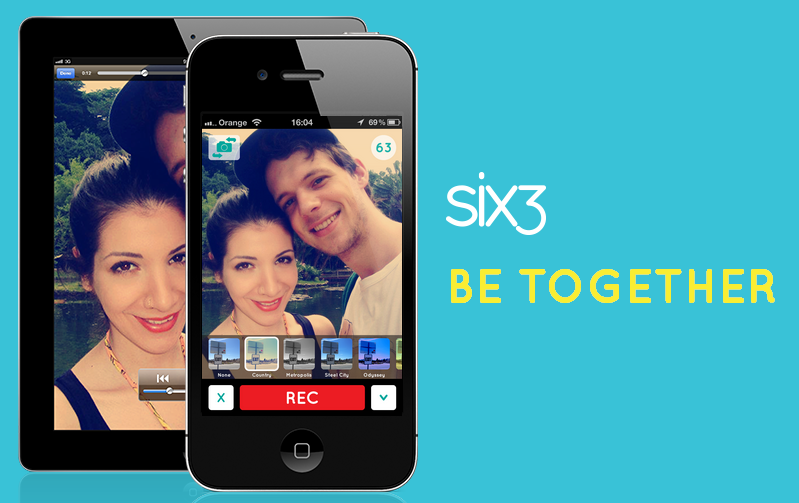
six3 be together

Telefonica-backed startup Six3 wants to bring video messaging to the masses with its new app -- which lies somewhere between Skype and Viddy.

UK-based, 14-month-old startup Six3 wants to shake up the messaging platform by adding video the mix, and with a backer like Telefonica, the largest telecommunications companies in the world, it might just be able to. There isn’t a direct competitor with any existing mobile app out there, so Six3 describes itself as a hybrid between Whatsapp and Viddy and hopes to be a game changer that opens up a market of users communicating strictly through short video messages.

There are undoubtedly countless messaging and video sharing apps out there, which Six3’s CEO and co-founder Tim Grimsditch categorizes into three buckets. First there are one-to-one video chatting services, but Grimsditch says that the growth for those companies is slow since users “tend to stick to very tight circles using that service.”

In bucket two are the Instagram-for-video apps. The most well known in this market are services like Viddy or Mobli. Those apps, however, are about producing quality content. Six3 is about bite-sized messages and quick communication.

The third bucket is filled by the all-in-one communication services like Whatsapp and Skype. These apps tend to “focus all of their energy behind a piece of their service that they’re famous for,” says Grimsditch. The video part of a messaging service like Whatsapp, he explains, is weak. “We’re a tiny team with small resources, yet our video messages are twice as fast as Whatsapp.”

Internationally, particularly in Asia, there’s been a lot of experimentation with new types of chat apps — a popular one being WeChat. Its users are so accustomed to its unique voice messaging feature that I was told few WeChat users in China even send text messages anymore. Six3 wants to do something similar by targeting an untapped niche. “[We're] a platform to communicate with video messages in a way that’s easy, mobile, lets people decide on private or public messaging, and lets people use it within their existing network,” says Grimsditch.

Using the app is as simple. You can select a colored filter, record your video for a maximum of 63 seconds (which is where Six3’s name comes from), select the video’s recipients (via email, address book contacts, Twitter, Facebook, or other Six3 users), and press “Send.”

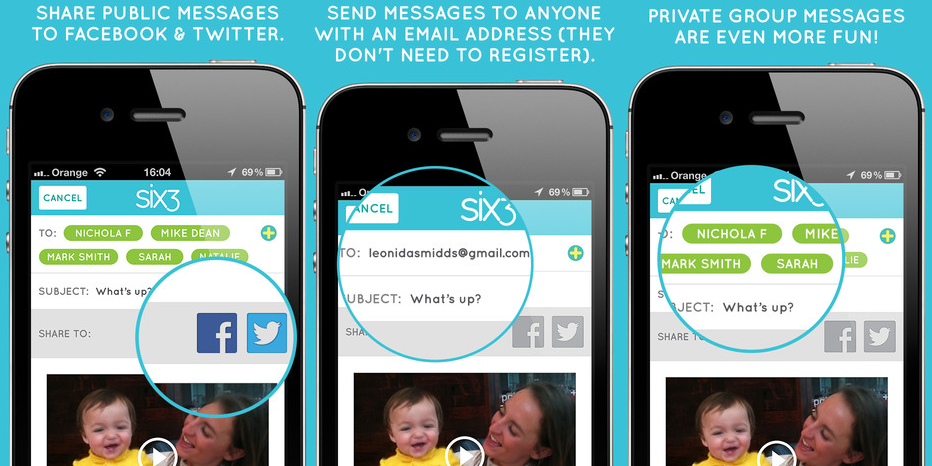
six3 messaging to

To take social a step further, Six3 announced a deeper Facebook integration yesterday at the Dublin Web Summit’s START conference, where the company was recognized as one of the “world’s 100 most promising early stage startups.” The update adds the ability for users to send private Six3 video messages to individual Facebook friends or share them publicly to your Facebook Timeline, while offering a faster and more seamless user experience. “It makes it incredibly easy to create good looking 63 second long video, share it through Six3, Twitter or Facebook, and respond to the video,” explains Grimditch.

The app will remain free for as long as it exists and you can find it in the App Store (the Android version is in the works), but Six3 will be experimenting with a few revenue models. The ones that Grimsditch was comfortable describing include charging users to archive messages for those important clips that you might have an emotional attachment to as well as the possibility of creating sell premium options like color filters or other visual effects as in-app purchases.

To many developers’ benefit, smartphone owners aren’t particularly app-loyal. Grimsditch is well aware of this and hopes to jostle competitors and become not jut a trend, but a staple app in the sea of 700 million smartphones. “The reality is that we’re just getting started and the dust isn’t going to settle in this market for years and years. So I think you’re going to see many years of explosive innovation, and we’re absolutely planning to be at the forefront of that.”


Source : digitaltrends[dot]com

Oct 16, 2012

Best iOS 100 Apps For Mobile Learning [Infographic]

Last month, Edudemic published a list of some of the best iOS applications for mobile learning. We took the opportunity to Brain Exercises, Quizzes and Flashcards, Math Science, Geography and History, English and Literature just to name a few, these are some of the best apps you can find online and we just thought you might be interested in having a look at them.

Best iOS Apps for Mobile Learning

From: OnlineUniversities.com

Report an error

No tags for this post.
Source : techtalkafrica[dot]com

Oct 15, 2012

Re-released I, Robot to be first home release-exclusive 3D

When the 2004 science fiction movie I, Robot is re-released on Blu-ray later this month, it'll make movie history as the first movie to be re-mastered in 3D for the home market exclusively, launching a new range of 3D Blu-rays from 20th Century Fox.

A sign that 3D movies aren’t necessarily the modern fad that some believe may come in the unlikely form of Will Smith’s 2004 movie I, Robot, which is to become the first library title to be re-worked into the stereo visual format for Blu-ray release, instead of theater re-release, when it hits stores at the end of this month.

The movie is one of what studio Twentieth Century Fox is calling “a handful” of movies from its library that will be converted for Blu-ray re-release in the 3D format, although no other titles have been named at this time (Entirely conjecture, but considering that Fox owns the rights to the Alien movies, is it really going to pass up the chance to at least put either Ridley Scott’s original or James Cameron’s Aliens into 3D? After all, both are at least as well-known as I, Robot, and in the same genre, as well…). According to a Fox spokesperson talking to the Hollywood Reporter, associates of Will Smith have seen the results of the 3D-conversion of I, Robot, and were apparently happy enough with it to ask about the possibility of other Smith movies receiving similar treatment.

The movie has been converted using JVC Kenwood’s 2D3D workstation, which made its public debut at last winter’s Hollywood Post Alliance Technology Retreat, with Fox already attached as a business partner at that time. One of the benefits of this system when compared with other conversion techniques, according to Fox SVP of Advanced Technology Ian Harvey, is that it allows for faster conversion by minimizing manual rotoscoping or paint work, which in turn can cut costs considerably. Estimates for 3D conversation have ranged from anywhere from $30,000 to $100,000 per minute in the past, which would considerably add to the budget of any movie project; Harvey won’t be drawn on the cost of the JVC system, but will admit that it is “less than other techniques” that Fox has previously considered.

The conversion for I, Robot was handled by a creative team including a specialist stereographer, but director Alex Proyas wasn’t involved, according to Fox (Again, it’s unknown whether other directors will be involved in their movies’ conversion in future, especially considering that the titles of said movies have not been made public as yet). Currently, the JVC system is aimed primarily on movies  – and, presumably, potentially television shows aimed at the home market, rendering in HD but not beyond at this point; according to Fox’s Harvey, that’s the way it should stay. “They should shoot new films in 3D,” he said, adding that in his opinion, “there are still issues on any conversion. It is not like Avatar.”

The new, 3D I, Robot is released on Blu-ray October 23.


Source : digitaltrends[dot]com

New bundles and an Xbox 360 price drop may make for a very Microsoft Christmas

Not even one month after Sony announced that it would actually raise the retail price of the PlayStation 3 this fall, Microsoft finally lowers the price of its Xbox 360 line to $250. What does the price drop say about Microsoft's future?

How will the Xbox 360 compete with Nintendo’s Wii U for attention this fall? Not with a line up of blockbuster exclusives, and but with a price drop.

The Xbox 360 is quietly enjoying its retail dotage. November will mark the system’s seventh year on shelves, making it positively ancient by video game technology standards. It’s getting just two major exclusive release this fall in Forza Horizon, which will appeal primarily to a niche audience, and Halo 4, a game that isn’t attended by the manic hype that surrounded its predecessor in 2007. Microsoft is opening new services associated with the box, like Xbox Music, and laying the groundwork for the brand’s future with Windows 8, but the Xbox 360 is largely staying quiet going into the always-competitive holidays.

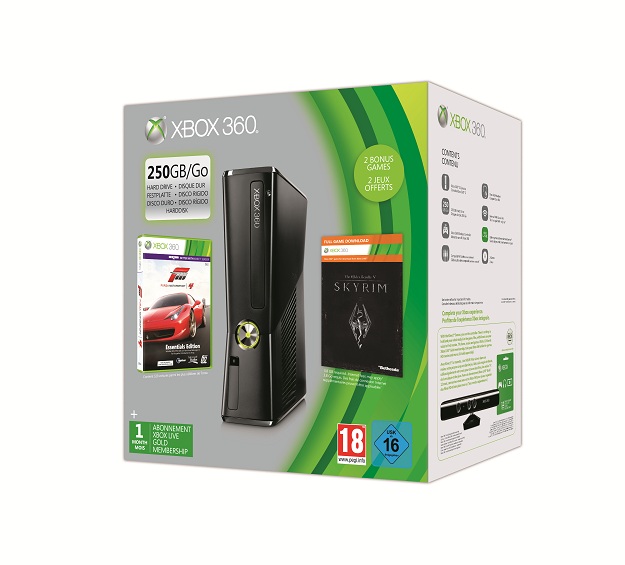
The Xbox 360 is getting a price drop this holiday though. Microsoft isn’t announcing a line wide price drop for all Xbox 360 packages, but its retail partners are. Best Buy, Kmart, GameStop, Amazon, and Target are all selling brand new Xbox 360 bundles that are $50 cheaper than usual. GameStop, for example, is selling a $250 box that comes with a 250GB Xbox 360, a copy of Forza Motorsport 4, and a download voucher for The Elder Scrolls V: Skyrim, alongside another $250 package with a 4GB Xbox 360 and a Kinect. Other retailers are offering similar packages at the same price.

Microsoft is making a number of silent statements with this price drop. The first is that this holiday will be one of the last for the Xbox 360 as Microsoft’s marquee piece of consumer entertainment technology. The $250 price point doesn’t bring the Xbox 360 into the impulse buy, budget region of $199, a price that Microsoft will likely drop to at the beginning of the next fiscal year. That timing may pave the way for Microsoft to release its next console, the Xbox 720 or Durango as it may be called, to control the next fall.

The other statement: We are taking advantage of Sony’s weakness. These are console bundles with significant value to consumers (two games, both of which are recognizable best-sellers from the past few seasons), and they are priced just below Sony’s confusingly priced new PlayStation 3 bundles, which start at $270. Sony also doesn’t have a Halo 4 to move its machine, and the next major PS3 exclusive, God of War: Ascension, won’t be released until March 12.

With this price cut, Microsoft has casually put itself in the best position in the US market for Christmas, and will put its its seasoned console head-to-head with Nintendo’s newest offering. An impressive close to seven years.


Source : digitaltrends[dot]com

Oct 12, 2012

Kindle Paperwhite now up for pre-order in UK, France and Germany

The Kindle Paperwhite finally made it across the pond. Amazon UK, France and Germany are already accepting pre-orders. UK users however, will be getting it a good month in advance.

Amazon UK has a suggested shipping date of 25 Oct, while both Amazon DE and Amazon FR expect it to launch on 22 Nov. The custom Paperwhite Leather Cover, which is capable of activating the reader magnetically, will be available around the same time, but it’s priced at the rather steep £31/€35 .

Speaking about prices, the UK version of the Kindle Paperwhite costs £109 for the Wi-Fi model, and £169 for the 3G-enabled model. The price in Germany and France is €129 for Wi-Fi version and €189 for the 3G one.

Interestingly, none of the three European stores mentions Special Offers, so I’m guessing the European edition of the Paperwhite will come unadulterated. Oh, but there’s a limit of two per customer.

Of course, if you need a charger, that’s an (overpriced) extra. The Paperwhite ships only with USB cable, much like most previous Kindle models. You can always use a charger from another device, or simply charge it off a computer.

The product pre-order campaign comes along with the related news that Amazon’s Kindle Owners’ Lending Library will finally launch in UK, Germany, and France. It’s a free perk for Amazon Prime subscribers. They can lend one e-book per month, picking it out of the growing library catalog. The Library will launch later this month – I’m guessing, just in time for the launch of the Paperwhite.

Stateside, the Kindle Paperwhite reviews have been raving so far. I’ve been eyeing a front-lit e-ink reader for a while now, so I went ahead and pre-ordered one from the European stock myself.

Are you getting one too?


Source : blog[dot]gsmarena[dot]com

Oct 10, 2012

Are You Excited For The Arrival of The next iPad Mini?

Are you excited for the arrival of the next iPad Mini? In any case, a survey conducted last month suggested that many Americans are! Apple thinks you’ll also be happy! It is to meet this possible request that Apple has decided to order massive iPad Mini in time for the holidays .

According to the Wall Street Journal , Apple has ordered 10 million iPad Mini to be delivered in the fourth quarter. The invitation to the event on iPad Mini should arrive this week, so we’re on track to cover the release in early November if the WSJ report is real. This puts Apple in the enviable position of having two major product launches just before the holiday season .

Of course, the iPad Mini is still a controversial concept. In the era of Steve Jobs, the iPad Mini was not even conceivable, and since the latter had said that a device which sports less than a 10 inch screen, is not actually a tablet. However, it is now Tim Cook officiating at the head of the company, and this rumor reaffirms the confidence that the company may have to compete with Amazon and Google, which are already set to dominate the market shelves with their 7 inch beasts (Kindle Fire HD and Nexus 7). The iPad Mini will be the real test of what Apple can do without Steve Jobs and the future of the company

Unfortunately, we still have no information regarding the price or the official specifications, but here are some rumors doing rounds around the internet. According to them, the iPad Mini will have a screen of 7.85 inches and should ship the same specifications as the iPad 2. Of course, this means no Retina display. It may be best for Apple could target a market other than the “luxury” with the iPad Mini. Its price tag may be around $ 300 or less, so as to battle it’s rivals Kindle Fire HD and Nexus

Just as the iPhone 5, rumors will certainly ramp up as we approach the date of the announcement. Stay tuned for more information and official announced regarding the iPad mini

Author Bio:- Ganesh is a technology columnist at SmashPixels, Tech Blog. Which provides latest Tablet Updates

Report an error

Tags: Apple, ipad mini

Source : techtalkafrica[dot]com

Four Windows 8 ads show up ahead of time, show the flexibility of the new OS

The launch of the new Windows 8 OS (and probably Microsoft Surface tablets right along with it) is coming later this month and the first crop of Windows 8 ads is already out – even if Microsoft didn’t intend it to be.

The videos showcase some of the new gestures and features of the new OS, check it out after the jump.

The ads show Windows 8′s new app switching gesture (including docking apps), the flexibility of the OS,which allows it to work both on a tablet and on an old-fashioned desktop PC (complete with the traditional desktop mode too) and the SkyDrive integration.

They also highlight one of the most controversial changes, the Start screen:

Apps have a completely new look and you’ll be getting them at the Store:

Picture passwords and unified search seem pretty cool too:


Source : blog[dot]gsmarena[dot]com

Oct 3, 2012

Xbox Music launches alongside Windows 8 on Oct. 26

Xbox Music, Microsoft's Spotify competitor raised from the ashes of Zune, will launch alongside Windows 8 at the end of the month.

 xbox spotify

Microsoft has held a nearly year long funeral for Zune in 2012. Now after months of rumors and vague announcements confirming the death of the Zune brand in favor of the name Xbox Music, Redmond is finally ready to unleash its latest attempt to secure a share of the shifting music market. The Spotify-style, advertising supported Xbox Music streaming service will open for business, free of charge, on October 26th. Right in time for the launch of a little operating system

At least, that’s according to sources familiar with Microsoft’s plans. Xbox Music will be available on all of Microsoft’s major consumer products, including Windows Phone, Xbox 360, and the company’s would-be Apple killer, Windows 8. Like the Windows Player app of old, though, Microsoft is aiming to get Xbox Music onto as many platforms as possible, with plans for the service on iOS and Android devices as well. Any adventurous iPhone 5 users gearing up to experiment with an alternative music service hosted by a massive multinational corporation will have to wait a bit though, as the iOS and Android Xbox Music apps won’t be available until an unspecified future date.

All Microsoft media apps will be updated to account for the new service.

As expected, the service will come in a variety of packages. There will be subscriptions for users looking for unlimited, ad-free access and existing Zune Music Pass subscribers will see their accounts transferred over automatically. There will also be a free version that offers ad-supported music a la Spotify.

Official pricing for Xbox Music subscriptions is still unknown. Users that received early access to the service claimed that the unlimited subscriptions would run around $15 per month and $145 per year. Like many media apps, Xbox 360 owners will have to have a premium Xbox Live Gold subscription, an additional $60 per year, to even access Xbox Music on the console.

Microsoft made the right choice killing the Zune brand. Over its six years in the market, Zune was never able to build any cache with users in the way that iTunes or even Amazon’s music and media services have. After eleven years, the Xbox brand is particularly strong, but if Microsoft can’t rely on it to automatically draw consumers. Xbox Live branded games haven’t made the Windows app market on Nokia Lumia phones a booming business after all. Microsoft also can’t expect the Xbox 360 audience to consider access to an advertising-based music streaming service a draw to spend on Xbox Live Gold. The sooner Microsoft realizes that the old Xbox Live Gold subscription model, giving access to basic services that are free on competing machines, is dead, the sooner it can really build a cross-platform strategy around Windows 8.

Source: The Verge


Source : digitaltrends[dot]com

Sep 28, 2012

Survey shows Windows 8 early adopters prefer Windows 7, but are they Microsoft’s target audience?

windows 8 desktop pc

A survey shows that half of those using Windows 8 prefer Windows 7, but are they the market at which Microsoft is aiming its new OS?

There’s just under one month to go before Microsoft puts Windows 8 on sale, and as most already know, it’s a dramatic change over previous editions of the PC operating system.

Radical changes to such an established product will inevitably divide fans, but one would expect Microsoft to still win over its dedicated, hardcore early adopters without too much trouble. This may not be the case though, and what’s more, it may not even want to.

A survey taken by Forumswindows8.com, a large online community offering support for Windows 8 users, shows that out of 50,000 people, 53-percent rank Windows 7 as their favorite Windows OS, while just 25-percent choosing Windows 8. Windows XP followed closely, as it took 20-percent of the vote.

Windows 7’s success was always going to be a thorn in Windows 8’s side, and it’s going to be difficult to lure everyone away from the best-selling version of Windows yet.

So what’s wrong with Windows 8, according to the survey? Strangely, it’s price at the top of the list, with 35-percent saying it’s Windows 8’s biggest weakness. A downloaded Windows 8 upgrade has been given a promotional price of $39 until January 2013, which is reasonable, and no other price has been confirmed yet. Microsoft’s Surface tablets are also price-less, as are many other Windows 8 devices.

The list continues with system requirements, incompatibility and instability all hovering around the 20-percent mark. This is a little concerning, because three of the major complaints leveled at Vista were incompatible software, bugs and hardware not being powerful enough to support it.

Is there any good news? Yes, at least half of those surveyed rank Windows 8’s easy installation and quick startup and shutdown times as major benefits, but Microsoft’s new Metro interface only gains 22-percent approval.

Changing customer base

What’s not clear though is how many are using Windows 8 on a touchscreen, which is not only where Microsoft appear to think the software is at its best, but also the focus of a high percentage of third-party manufacturers hardware. Also, only 26-percent of the 50,000 say they’ve actually used Windows 8, well behind Windows 7 and XP, at 75-percent and 58-percent respectively.

Does Forumswindows8.com’s survey show the effect of Microsoft shifting focus away from the established Windows way of doing things, to the more consumer-friendly approach offered by iOS and Android? Possibly so, as when asked, 35-percent of the surveyed members would buy a Surface tablet, 33-percent an Android and only 26-percent an iPad.

So how much weight does this survey carry? Well, judging by many of the posts, these are knowledgeable and tech-savvy folk; but it has gives the distinct impression that the respondents represent the most dedicated of Microsoft’s current customer base, the definition of which could change with the introduction of Windows 8, almost as drastically as the software itself.


Source : digitaltrends[dot]com

Sep 27, 2012

Can The LG Optimus G Make You Go O-M-G?

It didn’t get a fancy unveiling event in New York or San Francisco, but the LG Optimus G E973 is quite as interesting as any other smartphone launched far this month. The new flagship phone from the Korean electronics company has its work cut out for it, but it should be a viable contender based on its spec sheet. Let’s check it out in greater detail here.

Courtesy image by By reviewsongadgets

Specs

Looks like there won’t be any major leaps as far as spec sheets go from last year’s flagships to this year’s batch, although there are some improvements. The LG Optimus G comes with a 4.7-inch True HD IPS LCD screen with a 768×1280 resolution. It is powered by a 1.5GHz quad-core Krait processor and an Adreno 320 GPU and it runs on Android 4.0.4 Ice Cream Sandwich (skinned with LG’s Optimus UI 3.0), likely set to get a 4.1.1 update.

There’s 2GB of RAM on board to make sure that the games and apps run fast and well. 32GB of internal storage should be ample for most users, although you can add up to 64GB of expandable memory via the microSD slot. Connectivity options include Wi-Fi, Wi-Fi Direct, DLNA, Bluetooth 4.0, NFC, and LTE.

Those specs are pretty neat, yes? On paper, that looks good—if not better than—the current crop of flagship phones available on the market. Unless the remaining players like Sony and Samsung reveal something new to trump the Optimus G, it’s going to have quite a good run. Of course, the spec sheet gives us the numbers and won’t really make or break the success of this phone.

Flickr image by reviewsongadgets

Key Features

LG presents us with one of the more intriguing functions in a smartphone in recent memory: the QSlide Function, which takes multitasking to a whole new level by allowing users to overlap 2 different screens with different apps. A couple other notable functions are Cheese Shutter, which triggers the camera shutter based on your voice commands, and Application Link. You also get stuff like Dual Screen Dual Play, Screen Zooming, and Icon Personalizer. These functions are all in line with LG’s focus on “cross-tasking” and commitment to engaging user experience.

Depending on the market, the Optimus G will come with either an 8MP rear camera or a larger 13MP snapper. The camera UI features a number of goodies like the aforementioned Cheese Shutter, Time Catch Shot, Smart Shutter, and Low Light Noise Reduction.

Even telephony should get a boost with the active noise cancellation and dedicated microphone. You can make decent calls even in noisy situations, and you won’t likely experience call quality problems even when you’re using a VoIP service application or video-calling via Skype or some other provider.

Design

The unibody design and Prada- and Chocolate-influenced aesthetics should appeal to many prospective buyers, making the Optimus G a prime alternative to already-revealed smartphones that don’t really bring anything new to the table design-wise. While the Optimus G looks really good, its design doesn’t really stand out all that much, either. But with very little in terms of embellishments, the smartphone keeps the user focused on what he’s doing on the phone itself, which is why the 4.7-inch IPS screen becomes so prominent on the design.

This isn’t a review yet, of course, so we can’t really tell you anything about performance. However, the smartphone looks good on paper, and it’s pretty easy to see it challenging flagships from other manufacturers better than how the Optimus 4X fared against rivals like the Samsung Galaxy S III and the HTC One X. Priced right, the Optimus G can give other flagships a run for their money. However, at the moment, estimates have the phone’s price at around $900, which just won’t do considering the alternatives are priced much more attractively.

Still, with what we’ve seen so far—and with some hands-on videos you can find all over tech blogs and on YouTube—you get a pretty good first impression of the Optimus G. It won’t take the spotlight from the iPhone 5 or from a new Galaxy S model should there be one, but it’s going to get people thinking about it and looking at it and, ultimately, consider purchasing it.

Tags: voip service

Source : techtalkafrica[dot]com

Sep 25, 2012

Don’t Forget About Us: BlackBerry 10 Demoed by RIM CEO

From Nokia to Motorola and finally to Apple, there’s been a tidal wave of smartphone announcements in the last month. But don’t forget about RIM, the company that once led the smartphone race.

Today RIM CEO Thorsten Heins took the stage at the company’s BlackBerry Jam conference for application developers to demo the next version of its operating system — BlackBerry 10. Originally due out before the end of the year, Heins announced in June that BlackBerry 10 wouldn’t be ready until early 2013. Today he said it is on track and just “a few short months away.”

Heins demonstrated a number of the platform’s new features, including one for multitasking called Peek. You can swipe the screen to pull up a small hub of your apps. Also previewed was a new Balance feature, which separates work from play on the device. There are two separate browsers, so you can keep your work searches separate from your personal ones.

The touch keyboard was also a major focus. The new touchscreen keyboard predicts words based on what you begin to type. The first BlackBerry 10 phone will have a touchscreen only; RIM says phones with physical QWERTY keyboards will follow.

Above all, Heins stressed that the company was changing. “We recognize the need for change. There is a new culture at RIM,” he said at the conference in San Jose, Calif..

Along with the details on the software, RIM also released a motivational music video on YouTube. Written to the tune of Speedwagon’s “Keep On Loving You,” the song says, “We’re in transition, a whole new mobile computing platform, one tough proposition.” It also reveals a bit about the phones: “The launch is just ahead. We’ll have Blackberry 10, both in full touch and QWERTY editions.”

RIM will announce its second quarter earnings on Thursday. RIM reported major losses last quarter, seeing a 33 percent drop from its previous quarter earnings and announcing 5,000 job cuts. The company did report today that its user base is at 80 million, up from 78 million at the end of the previous quarter.


Source : abcnews[dot]go[dot]com

Lytro light-field camera coming to Amazon, Target, Best Buy

The Lytro light-field camera is moving into the big leagues of Amazon, Target, and Best Buy online stores next month.


The revolutionary Lytro light-field camera is about to get easier to buy. The company announced today that it is expanding its retail reach in the U.S. and around the world starting next month.

On October 9, photography enthusiasts in the U.S. will be able to purchase a Lytro camera through Amazon.com, Target.com, and BestBuy.com. In November, CityTarget stores in Chicago, Los Angeles, San Francisco, Seattle, and Westwood, California, will also begin carrying the Lytro. Brick-and-mortar stores in Australia, Canada, Hong Kong, and Singapore will offer Lytro cameras, as of October.

“Since our first shipments of the Lytro camera only six months ago, we’ve been inundated with requests to bring the Lytro camera to countries near and far and to stores near you,” said Charles Chi, CEO of Lytro in a statement.

Currently, the Lytro has only been available through Lytro.com. The camera costs $400 for the 8GB version, or $500 for the 16GB model.

For those of you unfamiliar with Lytro, the device is anything but ordinary. The first thing you’ll notice is its look — a rectangular block, with none of the buttons or detachable lenses that you’d find on an traditional camera. But this isn’t just an aesthetic choice; the Lytro uses light-field technology, which captures 11 million different rays of light, “megarays,” rather than traditional megapixels, a difference that dictates the camera’s shape. By capturing all this light, Lytro removes the need to focus when taking the picture.

Lytro pictures — which are digital-only — are then ported to a computer and processed by Lytro’s software. From there, users can choose the focus of their picture with a click of the mouse. Don’t like the way it looks? Refocus again and again. These pictures can also be embedded onto Web pages, where anyone can manipulated the focus to their heart’s content.

Check out some examples below. (Just click on the point in the picture where you want to focus.) And be sure to peruse our full Lytro review here.


Source : digitaltrends[dot]com

Sep 17, 2012

Twitter roadkill: Photo-sharing apps ousted today, who’s next?

twitter api restrictions

Photo-sharing sites get the boot as Twitter continues to tighten things up.

Earlier this month, Twitter officially unveiled its new API. After months of talking about talking about new restrictions for third party developers, the network finally anted up and put things in specific terms. The short of it: Developers have until March 5 to comply with the rules – which more or less heavily restrict the creation or use of anything duplicating Twitter’s core function – or else.

No surprises here. The blog post heard round the tech world late last month put everyone on warning, announcing that services that use the Twitter API to mimic or recreate the service (which, for the record, is a very vague statement and a thin line… a thin line which Twitter will interpret as it sees fit) are on the outs. And the reason why is incredibly clear: Twitter wants eyeballs on its site because it’s a media company now with partnerships and big ad deals. And if users are looking at a third party client, all that money will slip away. Of course, if Twitter would update its proprietary app with the features we’re being driven to outside services for… but that’s a whole other issue, and one that still puts third party developers out to pasture.

“It’s not surprising, it’s what we all expected,” Bottlenose creator and CEO Nova Spivack told me when Twitter officially announced the new Rest API. And it isn’t, and neither are the limitations for alternative Twitter clients but now it’s time we take a look at the carnage being left in Twitter’s wake thus far.

First up, big changes for services like YFrog and Twitpic, which take and post pictures to Twitter, are being run out. According to Buzzfeed, Twitter reached out to tell developers this was coming. (Which is something of an unprecedented move: When Twitter first introduced its own photo sharing feature, third parties were given no warning). Twitter will be removing support for outside photo-sharing apps, a change likely coming in the next issued updates – so  you can say goodbye to most of the photo-sharing services on this list. (For the record, Posterous is owned by Twitter).

twitter list photo sharing“Because of twitter’s actions against devs the past year we kind of thought this was going to happen at some point, and Twitter did reach out to us to let us know which I really appreciate,” TwitPic founder Noah Everett tells me. “I understand why they are going this route since they are under pressure to make ad dollars; however, obviously we do wish they wouldn’t pull choices away from their users. The majority of our uploads come from other sources, so this doesn’t affect us much, and we’re still going forward strong.”

It might not be surprising that this is happening; it lines up with Twitter’s new agenda and photo sharing spells big traffic. But I have to question how core this is to the Twitter experience – the proprietary platform didn’t even introduce its own photo feature until last year. It definitely wasn’t part of the original Twitter core function, and it’s remained so silent about its evolutionary focus that claiming this to be a key cog of the Twitter machine seems like a stretch.

This is a big switch-up that immediately will impact users, but here are a few other specifics suffering from the Twitter ecosystem changes:

  • RSS, XML, and Atom support is being ended. This is more the end of function rather than feature, and will be a developer-facing issue rather than something that impacts end users, but it’s worth mentioning.
  • Tweetbot is having yet more problems with its beta because of the Twitter limitations. Basically anyone who is trying to grab the client after already having authorized it might be out in the cold until the final version is available. You can check out this blog post for troubleshooting help, but it’s possible you just have to wait.
  • Big, popular sites have lost access – we’ve already covered this, but it’s still sort of a head-shaking move on Twitter’s part: Tumblr, Instagram, and LinkedIn can no longer use the site to find friends or in LinkedIn’s case send tweets to its own platform.
  • Twythm CEO Ben Thomson recently wrote a guest post about how he had to rewrite much of how his application functions – the bigger picture here being that Twythm, a service that allows you to post what you’re listening to, something Twitter has no foot in, changes the way tweet timelines are displayed, so it’s on the outs. It’s just an example of how the new rules can be interpreted and hurt outside applications.

I don’t want to add to the Twitter hate-fest that’s been brewing since the company started making these moves, but it’s important to reflect on what’s happening to individual services right now, and to look at how it could affect future ones. Remember how Twitter said it was going to introduce its own fully-featured analytics client? Does that mean that applications currently doing this – of which there are many – should start watching their backs?

It’s questions like this we’ll have to keep asking as Twitter continues to evolve and interpret its own function. 


Source : digitaltrends[dot]com

Sep 14, 2012

The 7-inch Kindle Fire HD and the updated Fire are available now, basic Kindle e-reader too

The new 7″ Kindle Fires that were unveiled earlier this month are available right now on Amazon.com. That includes the revamped Kindle Fire and also the new 7″ Kindle Fire HD.

The basic Kindle e-reader is also out now.

The new 7″ Kindle Fire HD has a better screen (with 1280 x 800 resolution, polarizer and anti-glare tech), it also has Dolby stereo speakers, more internal storage and is actually thinner than the original.

Only the 16GB version is available at the moment for $199, the 32GB version will come on October 25.

As for the updated Kindle Fire, Amazon gave it a faster CPU, doubled the RAM and improved the battery compared to the original. This one is available only with 8GB storage but is cheaper at $159.

The basic Amazon Kindle e-reader received a price cut and now costs just $69. That is the version with ads though, it will cost you $89 to get the one without. This model doesn’t use the new Paperwhite screen like the higher-end Kindle (which is coming October 22).

Amazon will be bringing the updated Kindle Fire and Fire HD 7″ to the UK too, but they are still on pre-order there. Unlike their American counterparts, these won’t net you a free year of Amazon Prime.


Source : blog[dot]gsmarena[dot]com

Sep 12, 2012

Insomniac Games joins EA, is finished making single-player-only games

insomniac fuse

Like its publishing partner for multiplayer shooter Fuse, Insomniac Games is done with single-player-only games.

Earlier this month, EA Labels president Frank Gibeau proudly touted that he was finished greenlighting development on games that are only for solo players. The Insomniac-developed, EA-published Fuse, formerly OverStrike, certainly fits the bill. Like so many shooters these days, Fuse is playable solo but it’s built with four players in mind. Resistance 2 and Ratchet & Clank: All 4 One are Insomniac’s experiments in co-operative play that gave birth to Fuse, but the studio has a rich heritage in single-player games. Is it giving up the single player ghost?

Just like Electronic Arts, Insomniac is done developing single-player-only games.

Speaking with Gamespot, Insomniac CEO Ted Price said that the nature of the modern game industry means that the era of games like the original Ratchet & Clank is over. “I can’t imagine that any game we’d do from here on out will be single-player-only,” said Price, “The [industry] has changed. As gamers, we have always been social, but thanks to the way technology has evolved, it’s much easier for us to play together. And it’s much easier for developers to create experiences where you can play together. So we want to encourage that with all of our games because ultimately, in my opinion, it’s often more fun to play with a friend.”

To reiterate, solo campaigns aren’t disappearing from EA or Insomniac’s games. After Gibeau’s words circled the web last week, the executive was quick to say that EA would still make single-player content. “You can have a very deep single-player game but it has to have an ongoing content plan for keeping customers engaged beyond what’s on the initial disc,” Gibeau told Kotaku, “I’m not saying deathmatch must come to Mirror’s Edge.”

Price mirrored the sentiment. “We understand that a large portion of players are interested in that single-player experience. A lot of us gamers are interested in both. I love single-player games but I also love multiplayer games, and I think Fuse offers you the opportunity to do both without having to skimp on either side.”

Skimping on either side is definitely the concern when it comes to incorporating online and social elements into every game. EA’s SSX for example would have benefitted from a greater focus on how the game played by a single person rather than incorporating intrusive annoying social features and micro-transaction-based gear acquisitions. Insomniac games have often benefitted from that sort of focus. Ratchet & Clank: A Crack in Time is a crafted single-player-only game and it happens to be the finest thing the studio has ever made.


Source : digitaltrends[dot]com

Sep 11, 2012

Google releases new YouTube app for the iPhone, iPad version arriving later

We reported last month that Apple will be officially dropping the YouTube application out of iOS with the release of iOS 6 due to the expiration of their license. At the same time Google also announced that they will be releasing their own application for iOS to make up for the loss, and they have.

A brand new YouTube application is now available on the App Store and can be downloaded for free on your iPhone and iPod touch. We decided to try it out and see how it fares.

The similarities to the new Android YouTube app become clear once you launch the application. The iOS app features the same wide tiles for videos on your home feed. You can swipe left on the screen to display additional options, such as your account page and all the feeds you subscribed to. Scroll down further and you will come across all the categories on YouTube.

There is the all-important search button in the top right and the application also provides search suggestions as you type. Open a video and again it looks similar to the Android version. You can click on the tabs below the video or swipe horizontally to move between the sections. You can also share the video on Twitter, Facebook, Google+, email or SMS.

Overall, the application seems quite nice but there are two major problems at the moment. First of all, there is no iPad version yet, however, Google has assured that it will be released in the coming months. Secondly, and more importantly, there is no option to upload a video. This seems rather ridiculous and Google has provided no reason nor any tentative dates as to when the feature will be implemented. Hopefully, it will be added in future updates.


Source : blog[dot]gsmarena[dot]com

Sep 10, 2012

2013 Honda Accord Sedan,Coupe, and 2014 Accord Plug-in Hybrid drive impressions

Honda Accord 2013 lineup car review

Honda will introduce two of its three new Accord models this month, beginning with the 2013 Accord sedan and coupe, with the 2014 Accord Plug-in Hybrid due early next year.

Numbers get tossed around the auto industry like fish at Pike Place, but after a while you begin to understand which ones are important and worth your attention, and which ones are not. For the 2013 Accord, Honda has a couple of numbers you should be paying attention to: nine and 36. The first refers to the generation of Accord that’s about to roll off the production line. This will be the ninth generation of Honda’s successful sedan. The second, well, that’s how many years the Accord has been around, which is a rather large accomplishment given the amount of models that come and go year in and year out.

But while Honda certainly deserves plaudits for its automotive milestones, the Japanese automaker faces stiffer competition than ever before. Quite frankly, it has seen its position challenged by relative newcomers Kia and Hyundai, as well as American competitors Ford and Chevy, with longtime rival Toyota still leading the group with its top-selling Camry. And with the mid-size segment such a crowded and competitive one these days, Honda is hoping the reinvigorated 2013 Accord will inject just the right mix of style, technology, and comfort in order to propel it to the forefront of the pack.

So how does the 2013 Honda Accord fair? We recently had a chance to test drive all three of the new Accord models coming out, which includes the 2013 Accord Sedan, 2013 Accord Coupe, and even the upcoming 2014 Accord Plug-in Hybrid. While our time with each model was too brief to provide a full review, first impressions of the latest Accord left a very favorable impression.

Older, but bolder

Easily the most important and significant changes for the 2013 model year Accord center on its new design. Honda has gone to great lengths to bring the styling cues of the ninth generation Accord in line with modern tastes and sensibilities. Here we have an Accord that looks more aggressive and athletic than ever before thanks to the its raked hood, available LED lighting, and sharply shaped front headlights. For added punch, Honda has incorporated some brightwork across the face of all models, with the Sedan featuring a dipping and thicker “U” shaped chrome bar; the Coupe sporting a thinner variety; and the 2014 Accord Plug-in Hybrid featuring a distinct front fascia all its own. While it still might not be the most visually impressive sedan on the market, the 2013 Honda Accord manages to blend just the right amount of style refinements that will begin to turn heads once again.

Honda Accord 2013 review exterior left side angle coupe

Honda Accord 2013 review exterior front grill v6 coupe   Honda Accord 2013 review exterior front coupe   Honda Accord 2013 review exterior right side coupe   Honda Accord 2013 review exterior back coupe   Honda Accord 2013 review exterior trunk coupe

Smaller in stature, bigger on comfort

You can’t really tell from the naked eye, but the latest Accord has had its dimensions reduced for the 2013 model year. Both the Sedan and Coupe are shorter in length from last year’s version, but thankfully that doesn’t translate into a cramped cabin. On the contrary, there is a real sense of space both up front and in the rear passenger seats, with the level of comfort remaining superb throughout.

Despite its smaller stature, the 2013 Accord sees certain interior dimensions grow. Rear legroom has increased over an inch, both front and rear shoulder room has also improved, while cargo space has swelled to 15.8 cubic feet, up from last year’s 14.7.

Recently, Honda took heavy criticism for the materials it used in the 2012 Civic, but that blemish on Honda’s otherwise stellar record for build quality has been erased for 2013. The plastics used for the dash and center console never appear cheap, and Honda’s redesigned interior shines with quality. Think of it as a simplified and subdued style, but one that never approaches dull.

That said, a few questionable aesthetic choices do stand out. Most notably, a shiny, speckled finish surrounding the new touchscreen system (standard on all models) reminded us of the psychedelic-looking material used on stools in a 1970s bowling alley, and brings down an otherwise solid cabin. And while both the sedan and coupe versions we drove sported rich leather seats, we’re not sure customers will exactly dig the smart “biofabric” in the PHEV version simply because it isn’t as luxurious, and while we don’t know the price for the 2014 Accord Plug-in hybrid, we imagine it will be in the somewhere in the region where leather is a standard feature. That’s not to say the biofabric feels or looks cheap, just that we see most longing for cowhide instead.

A “smarter” Accord

If you want more than just a sprinkle of technology in your car, the 2013 Accord will bring a smile to your face, both virtual and otherwise, with a wide array of tech features that help to keep you connected and comfortable. Virtually everything you need is here and, more importantly, easy to use. There is a USB audio port for easy iPod connectivity, Bluetooth HandsFreeLink for wireless music streaming services and hands-free calling, a nifty backup camera, and, as we mentioned before, Honda’s new touchscreen interface with built-in Pandora radio interface. Pairing your phone through Bluetooth is easy too and allows for a simple, yet handy, SMS text feature that will read an incoming text out loud and allow you to respond with preset messages.

Sitting atop the new audio touchscreen is a Honda’s new “intelligent” eight-inch Multi-Information Display (i-Mid), which provides a wide array of technical information and comes in two varieties: a standard WQVGA (480 x 320 pixel) screen for trims without navigation, and an upgraded high-resolution WVGA (800 x 480 pixel) display for those that do. Here you can view fuel economy, Bluetooth audio functions, and even upload pictures using a USB thumb drive and change the i-MID’s background display.

Honda Accord 2013 review exterior back wheel hybrid

Honda has crammed a lot of cool tech features into its new Accord, but it’s not all about keeping you connected. The new 2013 Accord also debuts two safety features new to the storied nameplate. The first is a blindspot monitoring system Honda calls LaneWatch. This new feature comes standard on the EX, EX-L, and new Touring trim Sedan models, and on the EX-L Coupe. It utilizes a small camera placed beneath the passenger side’s exterior mirror and relays that image to the i-MID display whenever you activate the right turn signal. The second is an active Lane Departure Warning system (LDW) that sets off both visual and audible cues if you start drifting out of your lane. Of the two, the LaneWatch system was our favorite and proved the most useful. The LDW system, while helpful, can become somewhat annoying when you even remotely begin to leave your lane, but thankfully you can turn it off.

By far the biggest, and most hyped, addition to the 2013 Accord is the new HondaLink system. Accessed through your smartphone, HondaLink allows drivers free access to cloud-based services such as various apps, music, and information services. Initially, Honda will be partnering with Harman and its Aha service. Users will be able to curate and organize their favorite Web content including Internet radio services like Slacker. Honda has stressed personalization as a key factor in its new HondaLink system, so while Aha by Harman is the first HondaLink resource to be offered, more services are set to expand the functionality down the road. Sadly, we were only given an out-of-car tech demo, but from what we saw the HondaLink service looks like it will offer an extensive display of features drivers wishing to stay connected will surely appreciate. For social-media types, Aha will even read allow your Twitter and Facebook news feeds, although there are some limitations like not reading aloud sport scores. HondaLink will be available in EX-L and above Accord Sedan and EX and above Coupe models.

Powering the newest generation

For the 2013 Accord Sedan, customers can choose between a new direct-injected 2.4-liter four-cylinder motor, and an Earth Dreams 3.5-liter V6. Transmission choices for the base 2.4-liter engine will consist of a newly developed automatic CVT or six-speed manual, while the 3.5-liter V6 will only be available with a six-speed automatic. For the 2013 Accord Coupe, powertrain options remain the same, but gear-shifters will be happy learn that a six-speed manual makes it way into the lineup.

We’ll start with the new direct-injected 2.4-liter i-VTEC inline four-cylinder found in the base Accord and fitted with Honda’s new CVT. Easily the best thing about the CVT was just how quickly we forgot it was a CVT. Generating 185 horsepower and 181 lb-ft of torque, the new Accord provided a great deal of power without sacrificing efficiency. In fact, not only were gear changes smooth and consistent, but fuel has economy increased to 27 mpg in the city, 36 highway, and 30 mpg combined with the CVT, which is up from last year’s 23/34/27.

Honda Accord 2013 review exterior engine coupe

Of course for those that require a greater degree of sportiness in their life there is the 2013 Accord Coupe. Our test drive with the two-door featured Honda’s 3.5-liter V-6 producing 278 horsepower and 252 lb-ft of torque mated to a six-speed automatic. Naturally, fuel economy suffers due to the pulse-pounding V6, but numbers remain respectable depending on what transmission you’re rocking. Honda has implemented a new Variable Cylinder Management system (VCM) on V6 models with automatic transmission with fuel economy for these models sitting at 21/32/25, while a six-speed manual without VCM will see those numbers drop to 18/28/22. Without a doubt, at this point it becomes a question of driving pleasure over practicality, which is a shame because our time in the V6 Coupe was all about the former.

Our final test drive saw us clamber into the upcoming 2014 Accord Plug-in Hybrid, which houses a new 2.0-liter four-cylinder engine and Honda’s two-motor hybrid system. Drivers can choose between three modes of driving: all-electric, gasoline-electric, and direct to drive. All-electric mode yields a range of 10 to 15 miles from the 6.7 kWh lithium-ion battery, which is coupled to a using a 124 kW electric motor. Charge times for the PHEV will be similar to the Prius Plug-in, with Honda saying it will take three hours for a full charge using a standard 120-volt outlet, and less than one hour using a 240-volt charger.

The veteran takes to the road

On the road there is a lot to like about the 2013 Honda Accord. A great deal of effort on Honda’s part has been taken to improve handling dynamics and road manners, and it starts with a retooled and redesigned chassis. Replacing the old double-wishbone system is a lighter, more advanced MacPherson strut up front and multi-link rear suspension, which affords the 2013 Accord with a greater sense of competence on the road. The 2013 Accord also utilizes a new aluminum and steel front subframe that translates to less road noise and vibration harshness. Alloy wheels are now standard on both the Coupe and Sedan, and range in size from 16 inches to 18 inches.

 Honda Accord 2013 review exterior front angle hybrid

Altogether the 2013 Accord handles smoothly and provides a quiet and competent cabin, which drivers have come to expect and appreciate from Honda. Our only complaint, however, is the move to the new electric power steering system (EPS) from the old hydraulic assists of the previous Accord. While not everyone will agree, the new EPS feels stinted and numb; depriving us of that tactile feedback and precision we have come to appreciate. Still, those that desire less steering effort will likely appreciate the feel and stability the EPS provides.

Finish Line

Without a doubt the 2013 Honda Accord is the best Accord model the Japanese automaker has delivered. The visual overhaul, improved ride dynamics, and new tech features alone make it a strong choice in an increasingly competitive segment. Add to that improved fuel economy and an aggressive base price ($21,680 for the six-speed manual and $22,480 for the CVT) and consumers looking for a new mid-size car will simply have to consider the new Accord.

Honda’s work isn’t done, though. While the good far outweighs the bad in the 2013 Accord, Honda really needs to push the envelope further. There is no arguing that the 2013 Accord looks sharp, but we really want to see more from the Big H. It has added plenty advanced tech features, but that willingness to innovate needs to start translating into its design language, especially if it wants to retain its relevancy in a market that has continued to criticize its stylistic efforts.

Of course, the hard truth remains: The auto industry is changing, and the traditional base of power brands like Toyota and Honda have enjoyed are constantly being challenged. The 2013 Accord is a great start for Honda, but it can’t stop here.


Source : digitaltrends[dot]com