Pages

Showing posts with label option. Show all posts

Nov 7, 2012

Motorola gives you the keys to its Atrix HD with the new Developer Edition

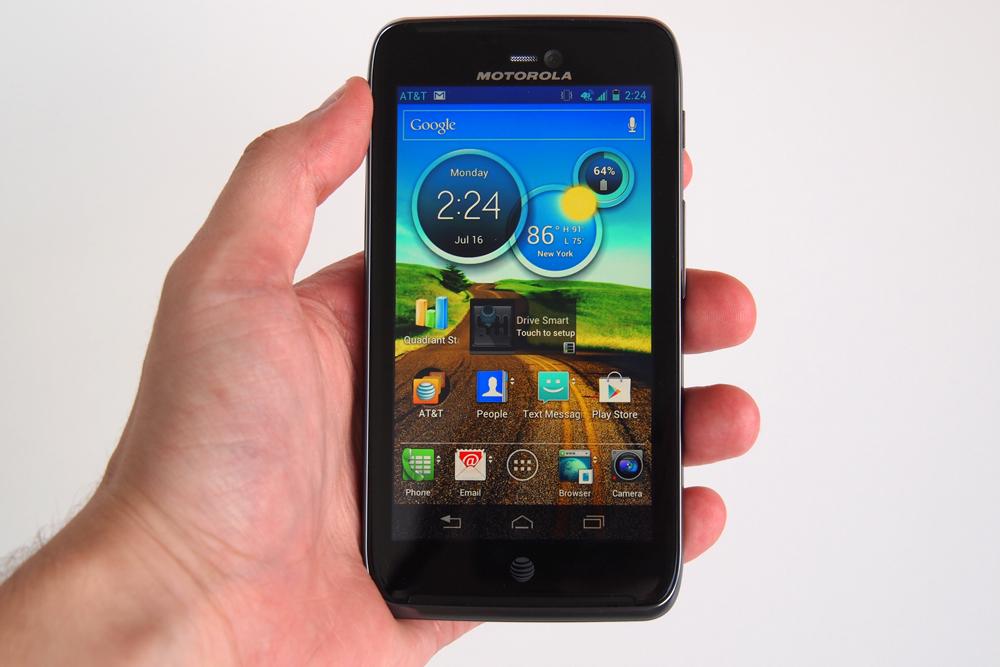
Motorola Atrix HD Review hardware android screen

Motorola has announced a special Developer Edition of its Atrix HD Android phone. Designed for those who want to customize their Atrix HD, it comes with the option of unlocking the bootloader, allowing the installation of custom software.

Motorola is sure to please developers and those amongst us who like to customize our Android phones with its latest device, the Atrix HD. “Hold on,” you’re probably thinking, “that’s already been announced once.” Indeed it has, but this time it’s a special Developer Edition.

What makes the phone special is its unlockable bootloader, which in English, means once Motorola has provided a unique code to unlock the handset, owners are free to install their own custom versions of Android, run test versions of apps, and generally customize the phone to their heart’s content.

This isn’t the first time Motorola has offered such a phone either, with both the Razr, Razr M and the Razr HD all receiving Developer Editions in the past. Being given the keys to the Android kingdom isn’t without its price though, as once you’ve started fiddling with the bootloader, you can say goodbye to your warranty. Our advice is, be sure you know what you’re doing before you start.

Motorola’s Atrix HD was announced in July this year, and we gave it an impressive 8/10 in our review, highlighting in particular the excellent $100 price tag with AT&T. For that you get a 4.5-inch touchscreen with a 1280 x 720 pixel resolution, a 1.5GHz Snapdragon processor and an 8-megapixel camera. A relatively untouched version of Android 4.0 Ice Cream Sandwich is installed as standard, but there’s no word on when 4.1 Jelly Bean will arrive.

Don’t expect to pick up the Developer Edition as cheaply as AT&T’s deal though, as it’s not available on contract. It won’t be priced as low as the new Nexus 4 either — a phone that’s also easily unlocked.

Motorola hasn’t provided a release date or a price for the Atrix HD Developer Edition, and suggests those interested should register for updates on its website.


Source : digitaltrends[dot]com

Oct 23, 2012

Apogee announces an iPhone recording rig that’s snazzy – but limited

Apogee's MiC/Zgrip kit is an intriguing on-the-go option, but is hurt by Apple's recent switch its dock connector.

Today Zacuto and Apogee announced this neat little kit, comprised of both the Zacuto Zgrip Jr., and the Apogee MiC. The Zgrip Jr. is a handgrip for shooting video on the iPhone 4 or 4s, while the MiC is a condenser microphone that pops right into the top of it. Together with the iPhone, this highly-portable kit allows users to record HD video and high-quality sound almost anywhere. 

Those are the positives; but right off the bat, a couple of things trouble us. First off, the kit isn’t compatible with the iPhone 5, and second, it won’t function on any mobile device, other than the iPhone 4, and iPhone 4S. After Apple’s much maligned move to a different dock connector, it’s hard to blame anyone for the former, but the long and short of it is that the rig won’t work on the newest model of the phone it’s designed for. Since the real selling point here – given that the Zgrip won’t hold up a MacBook – is phone recording functionality, that’s a bit worrying. 

In some ways it would be like having a snazzy, expensive remote that only works with non-smart TVs. The problem is that, as the iPhone 5 and subsequent models are adopted on a wider scale, the devices this rig does fit, will quickly become obsolete. Add that to the fact that the MiC doesn’t work with any device that’s not an iPhone, and its use is very limited.

All that being said, the rig does work on iPads and Macs, and – if it performs as advertised – it will provide some measure of value if used on either of those devices. It’s also – from what we can tell – the only studio-level mic that connects directly to Garageband, Apple’s proprietary music creation software.
Bottom line: If you have an iPhone 4 or 4S already, and you know you’ll be hanging on to it, the kit’s $290 price point could be worth it. If you don’t want to be locked into either device, however, we’d suggest going in a different direction.


Source : digitaltrends[dot]com

Sep 6, 2012

AT&T to launch trial run of text-to-911 service

911 dispatch

Ideal for many emergency situations where a call isn't an option, AT&T is testing the text-to-911 service prior to a major network launch.

Detailed within a press release earlier today, AT&T and representatives within the state of Tennessee are joining forces to start testing emergency 911 texting before a nationwide launch of the useful feature. In order to enable the new text-to-911 service, all 911 text messages from AT&T customers will be routed through Tennessee’s Emergency Service IP Network (ESInet) and send to emergency call centers around the state. As the new feature undergoes significant testing, AT&T and the state will get a better understanding of how useful the text-to-911 service is for the public in addition to measuring how efficient call center operators will be at handling the flow and distribution of emergency messages. AT&T hopes to develop a set of rules and standards that will help guide emergency call centers within other states. 

Text-911This new service will be particularly helpful for anyone that’s physically lost the ability to vocalize their emergency with a traditional voice call through 911 emergency services. In addition, the hearing impaired community will be able to communicate problems vastly quicker with a text message through the text-to-911 service.

Another scenario where a text-to-911 service would be vital would be a home invasion. A young child hiding within the home could easily text the emergency to 911 in order to avoid making any noise by speaking during a typical voice call. In addition, a text-to-911 service could be particularly helpful for customers that get poor voice reception in a remote area and have significant problems with dropped calls.

During August 2011, the Federal Communications Commission announced plans to push forward on the text-to-911 service and include the ability to send photos and videos to call center operators. A year prior to that, the FCC has started the initial planning on the project, namely because of the tragic shootings on the Virginia Tech campus. Apparently students were sending text messages to 911 during the shootings, but call centers weren’t equipped to receive the messages.

When asked about the trial run of the text-to-911 service, AT&T Business Solutions VP of Public Safety Solutions Mel Coker stated “AT&T is committed to working with standard bodies, national, state, and local public safety organizations to determine how best to integrate SMS text messages and other advanced communications into future 9-1-1 systems and wireless networks. This trial will be vital in evaluating Text to 9-1-1 solutions with the goal of providing reliable, universal access for our customers.”

Announced during May 2012, Verizon is also working toward providing a text-to-911 service to customers. Verizon customers will simply need a wireless phone capable of sending messages in addition to the wireless service plan that supports text messaging. Based off prior plans, Verizon representatives will launch the new feature within several major metropolitan areas during the first half of 2013 prior to launching the feature across the entire nation. A future planned addition to the text-to-911 service is the ability to automatically include a link to the user’s location. However, the phone would have to utilize a built-in GPS chip in order to relay that specific information to emergency services. 


Source : digitaltrends[dot]com

Ad supported: All of Amazon’s new Kindle Fire tablets come with Special Offers

amazon kindle fire hd

All of Amazon's new Kindle Fire tablets will feature ads on the lock screen, with no option to opt out. If you were interested in one of the new devices from the e-commerce giant, does this put you off?

So there we have it. Jeff Bezos has spoken. Amazon is coming at you with four new Kindle Fire tablets, with a refreshed version of its original 7-inch model selling for $159 and, at the other end of the price scale, an 8.9-inch Kindle Fire HD 4G LTE, with a $499 price tag.

Prior to the event in Santa Monica on Thursday, there had been talk of Amazon launching two 7-inch Kindle Fires – a lower-priced one with ads and one without.

During his spiel, Bezos made no mention of the situation regarding ads – or as Amazon likes to call them, ‘Special Offers’ – though a look at information on its website about its new products reveals that in fact all of these new tablets will be coming with ads, with no option to opt out – for now at least.

The ads will appear on the lock screen of the tablets and will include “special offers and screensavers from brands like AT&T, Discover and Intel, such as a special offer of a $10 Amazon.com Gift Card when a customer uses their Discover card to purchase a digital product on Amazon,” the e-commerce giant explained on its website.

Of course, ads on the lock screen are hardly obtrusive, but there will be those who would rather not be confronted by a special offer or promotion every time they switch on their tablet, preferring instead to have the ability to customize all parts of their device. For Amazon, it’s a way to keep costs down, and let’s face it, for the specifications of these new tablets, they really are going for a song. In fact, if the new products are anything like the original Fire, they’re being sold at below cost price, with Amazon banking on making money from users buying content for their Fires from its well-stocked online store.

“People don’t want gadgets anymore, they want services,” Bezos told those gathered before him in Santa Monica on Thursday. They probably don’t particularly want ads on their lock screen either, but if it means they can get their hands on a Kindle Fire for a dirt cheap price, then plenty of them will quite happily live with this minor inconvenience.


Source : digitaltrends[dot]com

Aug 30, 2012

Twitter refines advertising services with ‘interest targeting’

With a new payment service, accounts will lose their Verified status if they stop advertising on Twitter.

Twitter has introduced ad target based on is user's interests in an attempt to lure more advertisers.

Today, Twitter has launched its own targeted advertising, which offers advertisers the option to target Twitter users’ specific ‘topical interests.’ The move puts Twitter a step closer to similar offerings from Facebook and Google.

Twitter offers the majority of its advertiser one of two advertising options: Promoted Tweets and Promoted Accounts. Promoted Tweets highlight an advertiser’s tweets and displays them prominently on a Twitter user’s feed. Promoted Accounts are featured at the top of “Who to follow,” on the left of their homepage. Initially, targeted ads on Twitter were all-encompassing through geography and devices. Targeting more specific categories wasn’t much of an option. But now Twitter offers two “flavors” of interest targeting.

The first can refine an advertiser’s efforts with its Promoted Tweets and Promoted Accounts campaign by targeting more than 350 interest categories in a two-tier hierarchy. For example, advertisers can select individual genres of entertainment from the broader “Movies and Television” category, which you can see in the example below.

twitter interest ad backend

In its second option of interest targeting, advertisers can target certain types of Twitter users based on the @usernames that are relevant to the advertiser’s campaign.  Twitter explains this feature in a blog post: “If you’re promoting your indie band’s next tour, you can create a custom audience by adding @usernames of related bands, thus targeting users with the same taste in music.” 

To further sweeten the pot, Twitter has lowered the minimum bid for ad runs to just a single penny, which will likely lure in a large number of smaller advertisers that might not have otherwise opted to promote their product or service on the microblogging platform.

To a degree, Twitter’s advertising services are nearing closer and closer to what Facebook has been offering all along. Even Twitter’s second flavor of interest targeting by usernames is reminiscent of Facebook’s sponsored results. Facebook advertisers can include their Facebook app or pages in the search results of its competitors by bidding for pages, apps, or places. With over 140 million monthly active Twitter users, and projected advertising revenue to reach $399.5 million by 2013, it’s still a far cry from the revised projection of $5.48 billion Facebook is expected to generate by next year. But the rate of its growth is indicative of the realization that Facebook’s ad revenue growth is leveling out, unlike Twitter’s hastening ad revenue growth. Facebook’s ad revenue is forecasted to grow 29.5 percent between 2012 and 2013, while Twitter’s ad revenue is expected to grow by 55 percent during the same period.


Source : digitaltrends[dot]com

Aug 23, 2012

Chrome for iOS gets updated, adds sharing options

Google has released an update to the Chrome browser for iOS, which brings it to version 21.0.1180.77. The major change in this update is the inclusion of sharing option. Now you can tap the Share button in the drop down menu on the top right and it will give you options to share the page on Google+, email, Facebook and Twitter.

For email and Twitter the app pops up the built-in editing box and for Google+ and Facebook it launches the respective applications, if they are installed on the device. Otherwise it takes you to the App Store page to download them.

Other changes include stability and security improvements and bug fixes. Unfortunately, Google still hasn’t done anything about that hideous icon. Fortunately, you can change it to something better, such as this one. You can download the app itself from the link below.


Source : blog[dot]gsmarena[dot]com