Pages

Showing posts with label americans. Show all posts

Oct 16, 2012

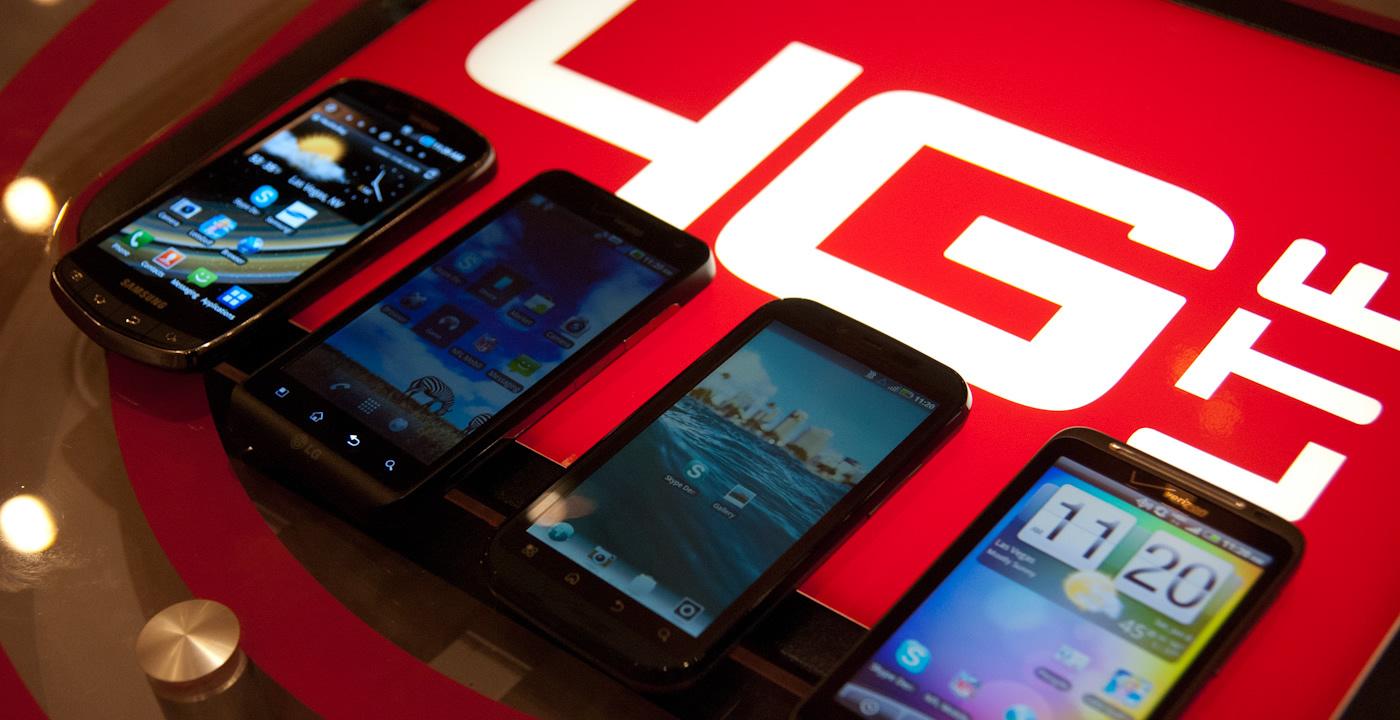
U.S. smartphone owners pay 3-10 times more for 4G LTE data, says study

4G LTE

According to a recent study, Americans pay three times as much for their LTE network service than most Europeans -- and nearly ten times more than what Swedish citizens pay.

We can now add 4G LTE service to the list of things Americans pay significantly more to have than the rest of the world — right next to education and health care. According to a GSM Association study reported by the New York Times, Americans pay three times more per gigabyte of data than the average European consumers — and ten times more than Sweden. But at least we can get a large pizza for just $5, right America?

The study revealed that America’s leading LTE provider, Verizon Wireless, charges its subscribers $7.50 for every gigabyte of data downloaded over its network. In comparison, the average cost of a gig in Europe is $2.50. Sweden leads the way in inexpensive service, with data only ringing up at $0.63 per gigabyte.

Verizon spokeswomen Brenda Raney did counter this information by pointing out the Verizon plan that is being compared is from its Share Everything plan, which includes unlimited call and text minutes and allows data to be shared among ten devices. If a person was to purchase a data only plan, similar to how the European providers offer service, they would only pay over twice the European average with a cost of $5.50 per gigabyte. Of course, Europeans separate talk and data plans, though. Verizon, on the other hand, is forcing all new users to sign up for Share Everything plans. And though you can connect up to 10 devices to an account, there is a monthly fee per device, which ranges from $10 to $40. 

Verizon was the first company to roll out 4G LTE in the United States, followed by AT&T. Verizon still owns the market with 11.6 million LTE subscribers (AT&T reports just short of a million), or about 43 percent of the world’s 27 million LTE users. The lone country to beat Verizon to market just happens to be the cheapest: Sweden. The cost gap seems to have everything to do with competition, though. Europe has 38 of the world’s 88 LTE providers fighting for subscribers. Austria and Finland have three within their borders alone. Meanwhile, the world’s largest market for mobile, the United States, is still playing catch up in this regard.

This has actually been a trend with phone service in the United States. The average cost of a 3G contract runs an American citizen $115 a month. In comparison, citizens of the Netherlands pay $51 and those in Britain pay $59. The higher costs keep the adoption rate at a slow climb, which in turn keeps the cost up on those that have jumped on board because the provider has to recoup costs from building  the network. It’s a self-perpetuating cycle that is very American: Pay more, consume more, and get less.


Source : digitaltrends[dot]com

Oct 10, 2012

Are You Excited For The Arrival of The next iPad Mini?

Are you excited for the arrival of the next iPad Mini? In any case, a survey conducted last month suggested that many Americans are! Apple thinks you’ll also be happy! It is to meet this possible request that Apple has decided to order massive iPad Mini in time for the holidays .

According to the Wall Street Journal , Apple has ordered 10 million iPad Mini to be delivered in the fourth quarter. The invitation to the event on iPad Mini should arrive this week, so we’re on track to cover the release in early November if the WSJ report is real. This puts Apple in the enviable position of having two major product launches just before the holiday season .

Of course, the iPad Mini is still a controversial concept. In the era of Steve Jobs, the iPad Mini was not even conceivable, and since the latter had said that a device which sports less than a 10 inch screen, is not actually a tablet. However, it is now Tim Cook officiating at the head of the company, and this rumor reaffirms the confidence that the company may have to compete with Amazon and Google, which are already set to dominate the market shelves with their 7 inch beasts (Kindle Fire HD and Nexus 7). The iPad Mini will be the real test of what Apple can do without Steve Jobs and the future of the company

Unfortunately, we still have no information regarding the price or the official specifications, but here are some rumors doing rounds around the internet. According to them, the iPad Mini will have a screen of 7.85 inches and should ship the same specifications as the iPad 2. Of course, this means no Retina display. It may be best for Apple could target a market other than the “luxury” with the iPad Mini. Its price tag may be around $ 300 or less, so as to battle it’s rivals Kindle Fire HD and Nexus

Just as the iPhone 5, rumors will certainly ramp up as we approach the date of the announcement. Stay tuned for more information and official announced regarding the iPad mini

Author Bio:- Ganesh is a technology columnist at SmashPixels, Tech Blog. Which provides latest Tablet Updates

Report an error

Tags: Apple, ipad mini

Source : techtalkafrica[dot]com

Sep 28, 2012

More Americans read news online than anywhere else, new survey says

More than half of all Americans use the Internet as their primary news source, a new study has found, with one third of adult Americans getting their news from social networks more than any other outlet.

An increasing number of all Americans use the Internet as their primary news source, a new study has found, with one third of adult Americans getting their news from social networks more than any other outlet. Is this a victory for the power of social media, or a sad commentary on the ineptitude of “regular” news media?

The Pew Research Center released the study Trends in News Consumption: 1991-2012 yesterday, tracking the ways in which readers and viewers receive information about current affairs over the last twenty-one years. The report backs up the long-held belief that the rise of the Internet has been felt most dramatically in print media, and print newspapers in particular, and demonstrates that television news reporting looks set to be affected in a similar way very soon, with the first signs already visible.

According to the most recent survey of news sources, only 23 percent of Americans read newspapers today, down from 47 percent in the year 2000; this drop is reflected outside of newspapers, with print magazine consumption also dropping from the year 2000 (18 percent of respondents read news magazines today, down from 26 percent in 2000). In comparison, 46 percent of Americans now get their news from the Internet at least three days a week, with 34 percent having done so in the 24 hours prior to answering the survey (That figure grew to 39 percent when cell phones and other mobile devices are factored in). That 46 percent figure is up from 37 percent for the same question when asked just two years ago, and apparently made up of young people with higher education (65 percent of online news junkies are college graduates, with only 22 percent of them ages 65 or older).

Even more impressive is the rise of social media’s importance in the news landscape. “The percentage of Americans saying they saw news or news headlines on a social networking site yesterday has doubled – from 9% to 19% – since 2010,” the report points out, adding that “among adults younger than age 30, as many saw news on a social networking site the previous day (33 percent) as saw any television news (34 percent), with just 13 percent having read a newspaper either in print or digital form.” Facebook is by far the most successful of all social sites, with 41 percent of all adults using it regularly for news, compared with just 13 percent for Twitter.

Social networking sites have a far higher news penetration than other sites you may have thought would be more traditionally popular; compared with the 33 percent who get their news from social media, only 12 percent read news blogs on a regular basis, with just 5 percent listening to news podcasts. This may be considered a lesson for Huffington Post and other news sites: Perhaps it’s time to just start using Facebook and save yourself the costs of a website.


Source : digitaltrends[dot]com

Sep 21, 2012

‘Gangnam Style’ breaks Guinness World Record on YouTube

Gangnam Style PSY

Winning the hearts of South Koreans and Americans alike, the insanely viral song is now the Most Liked YouTube video of our time.

No horsing around for the world’s latest viral sensation. “Gangnam Style,” the mega-catchy pop tune by South Korean rapper Psy has set a new Guinness World Record for “Most Likes On YouTube” with a whopping 2,141,758 likes and counting, reports Mashable. Time to break out the horse riding dance in celebration?

The YouTube hit first appeared on the site on July 15, blew up over the summer, and truly took America by a storm when Psy made an appearance in the states — showing up on Ellen DeGeneres’ self-titled talk show, performing on The Today Show, and making a cameo on last week’s Saturday Night Live skit. Audience members can be seen attempting to sing along to the tune, despite the fact that 90 percent of the song is in a foreign language. Of course, each appearance did not go without the crowd reenacting the infamous dance that’s quirky, silly, but strangely fun to move along.

“Having been the ‘Have you seen this?!’ video of the last two months across the web, it’s great to be able to award a record for this tremendously popular video,” says Dan Barrett, Guinness World Records Community Manager. “In years past it was unthinkable that something would be viewed a hundred million times, and now “Gangnam Style” has achieved more than twice this figure in just three months on YouTube.”

Previous records belonged to pop artists LMFAO’s “Party Rock Anthem” (1,574,963), Justin’s Bieber’s “Baby” (1,327,147), and Adele’s “Rolling in The Deep” (1,245,641). Exceeding two million likes blew these tunes out of the water by far, and the popularity is still on the rise. At more than 227,450,628 views, Gangnam Style is closely trailing the top 30 most viewed videos of all time on YouTube, following the likes of Justin Bieber, Rihanna, and Carly Rae Jepsen.

So, in celebration, or in case you haven’t been on the Internet to witness the craze that is Gangnam Style, enjoy the video in all its glory.


Source : digitaltrends[dot]com

Aug 29, 2012

Some Americans believe stormy weather interferes with cloud computing

Stormy weather

While many Americans use cloud computing every single day, that doesn't mean they necessarily understand it.

According to a recent survey conducted by Wakefield Research for Citrix, approximately 51 percent of the respondents believe that a few rain clouds in the sky will directly interfere with Internet-connected electronics when attempting to upload or download data through cloud computing. Of the 1,004 people surveyed, the majority thought the term “the cloud” was related to actual clouds in the sky and 29 percent thought it had to do with weather conditions. Only 16 percent recognized the cloud as the common term when referring to a computer network that stores data for Internet-connected devices like laptops, tablets and smartphones.

Cloud-ComputingApproximately 54 percent of the respondents stated that they didn’t use the cloud when using their Internet-connected devices. However, over 90 percent of that group admitted to several common actions that uses cloud storage for user data.

These actions included online banking and shopping, browsing social networks like Facebook, using file-sharing services, playing online games as well as storing photos, videos and music on various Web services. It’s clear that people are able to take advantage of cloud computing without actually being able to define it.

Also interesting, more than one in five respondents have claimed to understand how the cloud works, but were only pretending to understand. In addition, over 50 percent of the respondents believe that when friends, family and co-workers refer to the cloud in conversation, they really don’t understand it at all. One third of the respondents have pretended to understand references to the cloud at work and fourteen percent claimed to understand cloud computing during a job interview. In addition, seventeen percent pretended to understand “the cloud” while on a first date.

However, nearly 60 percent of respondents believe that the “workplace of the future” will exist entirely in the cloud. When asked about advantages to conducting business over cloud computing, over a third want to use it in order to avoid specific people at work and approximately forty percent would like to use it at home to avoid getting dressing in the morning.

When asked why using cloud computing wasn’t a priority for them, respondents named privacy concerns, security concerns and cost as the main deterrents to cloud computing. However, some respondents do believe that businesses can lower costs with cloud services as well as increase consumer engagement.

While some Americans aren’t quite sure how to define the cloud, this hasn’t stopped many Web startups from taking advantage of cloud computing to scale up services for new users. According to a recent article in the New York Times about Amazon Web Services, CEO Daniel Gross, the founder of the Cue mobile application, claimed that Amazon Web Services saved the company hundreds of thousands of dollars and provided a great deal of flexibility as more users started using the application. In regards to Amazon Web Services, Gross stated “I have ten engineers, but without A.W.S. I guarantee I’d need sixty. It just gets cheaper, and cheaper, and cheaper. I don’t even know what the ballpark number for a server is. For me, it would be like knowing what the price of a sword is.”


Source : digitaltrends[dot]com

Aug 24, 2012

In the Amazon election, it’s Romney by a landslide

Amazon has launched its own Election Heat Map 2012, a tool that shows whether Americans are buying more conservative books than liberal, and by how much. Paul Ryan fans, prepare to get excited.

If America voted the way that it bought books, then Willard Mitt Romney would be a very, very happy man indeed.

With everyone in America beginning to get Election Fever ahead of the race getting started in earnest with next week’s Republican National Convention – Well, that or Election Burnout; it really depends on how closely you’ve been paying attention to the race so far – it shouldn’t really be that much of a surprise to find out that everyone is trying to find some way to offer their own brand of unique political commentary to add to the breathless and heated discussions that will undoubtedly be going on across dinner tables, dimly-lit bars and any and every kind of social gathering point in the United States between now and November. Into this landscape of potential conversational landmines steps Amazon.com, with its “Amazon Election Heat Map 2012,” which lets you see whether states are ordering political screeds that lean left, or right, and what percentage of which.

“Our 2012 Election Heat Map colors each state according to the percentage of red and blue book purchases, based on shipping address, that have been made on Amazon.com during the past 30 days,” the site explains. “We take the top-selling political books on Amazon.com and categorize them as ‘red,’ ‘blue,’ or neutral. We classify books as red or blue if they have a political leaning made evident in book promotion material and/or customer classification, such as tags. We compute percentages, updated daily, for each state and the US by comparing the 250 best-selling blue books during the time period against the 250 best-selling red books during the same time period, including new book launches.” Different sales formats are counted in different calculations, although Amazon reports that “all orders during the period are given equal weighting in the calculation.”

Somewhat amazingly, only five states in the entire US have a more left-leaning bias overall than right, and even more amazingly, none of those states are traditionally-assumed liberal strongholds like California or Oregon. No, the five states that are buying more “blue” books than “red” are New York, Vermont, Massachusetts, Rhode Island and Washington DC, and DC is the only location where “blue” books have a significant edge (Currently, it’s 68 percent to 32 percent). Overall, at time of writing, the US is leaning towards “red” purchases, with 57 percent of purchases trending conservative. The reddest of red states, according to Amazon’s calculations, is Mississippi, with 73 percent of purchases being “red” books (Current top seller: The Kindle edition of Edward Klein’s Obama administration exposeThe Amateur).

Whether this map will offer any true value in the days and weeks ahead remains to be seen. After all, as Amazon itself points out, its customers “read widely and often buy books that don’t necessarily fit with their own views.” But still: It’s fun to see where the nation’s readers’ heads are at right now, isn’t it?


Source : digitaltrends[dot]com