Pages

Showing posts with label world. Show all posts

Nov 19, 2012

Top Cloud Innovations of 2012

This year the cloud has grown—have you kept up?

Assuming the world doesn’t end at the end of December, this year might just be remembered as the “Year of the Cloud”. Everyone knows about online storage applications, and why they’re a good idea, but what else has rained down to us from up there? Well, this year the Cloud has seen a lot of innovations, broadening its relevance from every day consumers, to multi-billion dollar companies, and it’s doing it by becoming:

1. Social

With companies like CloudApp that are utilizing and promoting open source code and giving out their API to developers to utilize in their own applications, Cloud companies are making it easier for both larger and smaller companies to tailor cloud based applications to their specific needs.  On the more personal end of the spectrum, Waze is an app for your mobile devices (iOS, Android, Windows, etc) that allows users to update their cities with traffic information, with the net result that users can see live updated information about their commute, city or highway construction, and even events like street fairs.

2. Mobile

Waze is just one of many companies utilizing the cloud in a mobile environment. DropBox, Box.net, Github, Google, and many more are releasing full featured mobile apps, many for free. It’s now become easier than ever to synchronize your documents, files, and media between all of your devices. So whether you’re syncing your latest iPhone 5 photo, jotting down notes on your ultra light laptop, or rendering and sending out video from your new desktop, it’s never been easier to keep them all connected.

While some applications still have a way to go (I’m looking at you Google Drive) others have really stepped up their game. Box.net for example have consistently been upgrading their app to include features like Customizable synchronization and uploading files to discreet folders. Other companies like Romanian startup SkinScan, are legitimately trying to save people’s lives with mobile apps that can alert them of potentially cancerous moles.

3. User Friendly

The cloud isn’t just a business term any more, and it’s not just some techy phrase with a description as ethereal as its name. Companies like Spotify are changing how we feel about the cloud, and are making it much a part of everyday life. Audiobox.fm is in the same genre, but has allowed users to stream the music they already own, to any device they have.

Operating systems are even becoming more Cloud oriented. Windows 8 for example is heavily cloud integrated, meaning that with a few clicks, you can set up your computer to store everything securely in the cloud, all connected via your Windows Live ID, making it easily and safely accessible from anywhere.

4. Functional

Evernote has made the cloud indispensible for students, as it gathers snippets from websites you’re reading, or applications you’re using, and categorizes them so that information can be synced and searched from multiple devices. Services like Hojoki have taken the concept of linked in and the usefulness of the Salesforce messaging application, and combines them to allow you network with people you know, and the people they know, to collaborate on awesomeness.

5. The Future

Everything is in the cloud now. The phrase has become prevalent in conversation it’s becoming cliché to even say it. Really, it’s just becoming redundant to say “it’s in the cloud” because everyone already knows it is… even if they don’t know it is. Your photos are all online, your documents can be shared easily, you can listen to your music from wherever and whenever, and you never have to leave your daily routine to find everyone and everything you’ll need to accomplish whatever project you’re about to undertake. Everything is in the cloud, or maybe it’s more accurately stated that, the cloud is everything.

No tags for this post.
Source : techtalkafrica[dot]com

Nov 9, 2012

7 Google Android Apps to Protect Your Phone from Virus

Google Android is one of the most popular operating systems in the mobile world. As an open source platform it allows others to modify the system files and develop applications. Unfortunately this can result in security threats to the very device that stores all your personal information. Protecting your personal data is easy with one of these free securities and antivirus applications offered for Android.


Antivirus Free
The Antivirus Free application will protect your phone from any malicious apps and viruses by discovering new apps installed on your system and cross-referencing them with a database. The app will request certain permissions which all for an easy installation and function.

Avast! Mobile Security
This application is a fully featured antivirus and anti-theft security application. The avast! application has an automatic virus scans and alerts for infected URL’s. In addition, if your phone is rooted you can add a firewall, control anti-theft features with remote SMS commands.

AVG Antivirus free

The AVG Antivirus is a free security application that protects your smartphones and tablets in real-time, from any viruses, malware and spyware or online corruption. In addition, this app has a task killer, phone locator, app lock and real-time scanner.

Dr.Web Antivirus Light 
This application will not effect your mobile phone operating system performance or reduce the batter life. Dr. Web Antivirus Light uses a distinctive process for discovering new virus families based on previous threats which reduce the size of the virus database.

Lookout Security & Antivirus
On a daily and weekly basis the Lookout application will scan your mobile phone for viruses. In addition, Lookout will scan the root folder of your mobile phone and solve any other problems relating to holes in security.


NetQin Mobile Security & Antivirus
The NetQin application identifies new applications installed and check a database for malicious apps. The functions and use are practical and user-friendly. In addition, there is an anti-theft feature which will allows you to track your robbed phone through Google Maps.

Zoner Antivirus Free
The Zoner Antivirus application provides protection against trojans, worms, spyware, adware, malware and viruses. In addition, the application offers theft protection which enables you to control remotely your device through SMS messages.

It could be devastating if your mobile phone is lost, stolen, or compromised by a virus. It is free and easy to protect all your information stored in your Google Android with one of these antivirus applications.

Tags: Anti-theft Security, Antivirus Free, Automatic Virus Scans, Avast! Mobile Security, Dr.Web Antivirus Light, Google Android Apps, Lookout Security & Antivirus, Mobile Phone Operating System Performance, NetQin Mobile Security & Antivirus, Security Holes, Trojan Worms, Zoner Antivirus Free

Source : techtalkafrica[dot]com

Nov 8, 2012

LG introduces impressive new 21:9 UltraWide monitor

LG today announced the launch of the world's first 21:9 UltraWide monitor; and with the ability to break down the 29-inch screen into four split screens, the company has our attention.

Whether you’re a hardcore multitasker, a tech fanatic, or simply just a bit myopic, LG has a new monitor to pique your interest. The EA93 UltraWide Monitor is a whopping 29-inches wide and boasts a 21:9 aspect ratio. The company says it’s the world’s first monitor with that format. 

LG is focusing on the new product’s multitasking capabilities for its launch. Not only does the impressive size mean plenty of space for however many documents, files, or windows you might have open at once, but the EA93 also has a feature called 4-Screen Split, which allows you to divvy up screen real estate into quarters, with the ability to separately customize each section. That could make this monitor a possible alternative for people who use a dual-screen setup. In fact, it has a Dual Link-up option to connect the monitor to two external devices, which means you could have a similar setup to multiple monitors without any variation in color or image quality. It also features a DVI-D port and two HDMI connectors.

The company insists that the UltraWide monitor can perform double duty as a machine for work and personal use. The aspect ratio makes the EA93 an excellent choice for watching movies. With a maximum resolution of 2560 x 1080, the IPS display is designed for people who live and die by intense visuals. Although LG has not given a price point for this impressive monitor, it is due to roll out in South Korea early this month before making its way to the US market. 

LG has been making waves with its efforts to improve screen quality this year. The company has gone very small with a 5-inch LCD screen with high definition and 440ppi, and insanely big with a whopping 84-inch Ultra HD television. Between these updates, Apple’s proliferation of Retina displays, and other companies working hard to offer comparable technologies, computing will only be getting easier on the eyes.


Source : digitaltrends[dot]com

Nov 6, 2012

State of the Web: We gotta fight! For our right! … to Instagram our ballots

state of the web ballots election voting 2012

If you photographed your completed ballot this election day and shared it with the world, beware: You may have broken your state laws against ballot disclosure. For this week's State of the Web, Harvard University's Andy Sellars explains the ins, outs, and total confusion surrounding the anti-Instagram laws.

Did you know that you could be arrested, fined, kicked out of your polling place, or have your vote tossed in the trash for sharing a photo of your marked ballot on the Web?

This is the reality for most states in the U.S. Florida, Georgia, Kentucky, Nevada, North Carolina, Texas, and West Virginia all have laws on the books that explicitly forbid photography or video recording in polling places. Some states forbid the use of cellphones – which more often than not double as cameras. A majority of states have laws against the “public display” of a marked ballot – which means that Instagram photo you just posted to the Web may have broken state law. And other states just don’t make the rules clear, meaning you’d have to ask an already over-worked polling place volunteer first before snapping a pic or shooting video – and they might not know the answer.

Despite this, citizens are flooding the Web with photos of their ballots. A quick search for the #vote hashtag on Instagram at the time of this writing brings up nearly 600,000 photos, many of which likely violated the law – though many probably didn’t know they were doing so. On top of that, YouTube is pushing voters to record their voting experience, another potential no-no in the eyes of state laws.

In short, we might have a legal mess on our hands. So, how did we get in this muck? And, more importantly, can we get out?

To get a better sense of the issues at hand, I reached out to Andy Sellars, a First Amendment Fellow at Harvard University’s Berkman Center for Internet & Society and a staff attorney for its Digital Media Law Project, which has become the preeminent authority on laws governing the photographing and recording of ballots.

Protecting the vote

First, it’s important to remember that these laws are in place to protect citizens’ right to vote and the integrity of the voting process at large.

“The reason to have laws like this largely go to issues of voter intimidation and voter fraud,” says Sellars. “The concerns with voter intimidation would be you showing your ballot around the polling place, trying to use your vote as a way of influencing other voters how to vote, which obviously we [Americans] are pretty repugnant toward.”

In terms of voter fraud, Sellars says these laws are often in place to prevent vote-purchasing schemes, which could become more prevalent if voters are able to take a photo of their completed ballot as proof that they voted a particular way. “By preventing the disclosure of ballots, you’re preventing that from being able to happen,” says Sellars. “It reinforces the privacy of the vote … It also helps make sure that people aren’t interrupting other voters, or interfering with other voters, while in the polling place.”

Despite the protection anti-ballot-disclosure laws provide, Sellars notes that much of this legislation was concocted in an age before smartphones and social media.

“It’s important to keep in mind that these laws were probably written before we all walked around with cameras in our pockets,” says Sellars. “So the laws contemplate sort of a traditional era of voting, where you’d mark your ballot, you’d deposit your ballot, then you’d walk out, and there would be no physical record of that ballot traveling [outside the polling place].”

A dangerous culture of disclosure

Another argument for the presence of laws against ballot disclosure is that, by allowing everyone to photograph and share their ballots, it could create a so-called culture of disclosure, wherein people who do not wish to share their ballot with anyone feel pressure to do so. Sellars, however, doesn’t see this becoming too widespread a problem.

“There haven’t been that many elections where we have social media like we have today, so this election could be setting a new standard here,” says Sellars. “But, in general, we haven’t seen all that many people doing this. We see it happen for sure. And Instagram, I’m sure, will have many examples of this today. But I think that this idea of privacy around your vote isn’t escaping the next generation of youth that are voting for the first time today.”

“For the same reasons that you might be careful about photos you post on Facebook from a party this weekend, you might be careful about posting [your ballot],” Sellars adds. “It could jump back to bite you later.”

Ballot photo

Shackled free speech

Of course, it is difficult not to notice the irony in laws that are meant to protect the most sacred form of free speech – your vote – which in turn prevent people from engaging in speech. Sellars says that “these sorts of disclosure laws face some serious Constitutional issues under the First Amendment,” but that the issues are most pertinent “in circumstances where [states are] prohibiting the disclosure of a ballot after the election has concluded.”

Furthermore, these laws do not prevent all forms of disclosure. As Jeff Hermes, director of the Digital Media Law Project, writes in a blog post on the First Amendment issues, “ballot disclosure laws are not complete bars to disclosure of a voter’s choice; voters are free to discuss their votes, albeit without proof in photographic form.”

Limited usefulness

Hermes goes on to argue that taking a picture of your marked ballot, or recording video at a polling location, only adds further protection against voter fraud and errors which seem to have become increasingly commonplace given the prevalence of e-voting machines.

“Voting is the fundamental method by which American citizens exercise their rights of self-governance, and it is essential to combat corruption of the process,” writes Hermes. “However, the extraordinary importance of voting also requires that we be free as citizens to discuss our experiences at the polls, including the people for whom we voted if we so wish. Otherwise, we begin to lose the protection against corruption and error that the First Amendment itself provides.”

The ability to record in your ballot has already proven its usefulness in this election, with a Reddit user capturing an e-voting machine switching his vote from Obama to Romney.

Sellars says that recording the conditions around your polling location may provide “very helpful evidence” as to whether the election is being conducted legally (as the video above proves); however, he says it’s not entirely clear that photographing your ballot is a particularly useful way to make elections more transparent.

“You’d have to have so many people disclosing their ballots in order to show a bad count in their precinct,” says Sellars. “You could come up with a circumstance where, you know, a precinct says, ‘We had 100 percent of respondents say this.’ And then you say, ‘No, here’s me voting the other way.’ But statistically, that’s very unlikely.”

Times a-changin’ – but not yet

In other words, there is a great debate to be had over whether or not disclosure laws are a positive or negative force on our democracy. Still, some states, like Maine, have already begun to update their disclosure laws. And Sellars says others may follow suit. Until then, however, your best bet is to “contact your precinct first,” says Sellars, before you snap an Instagram pic of your ballot. This is especially important due to the fact that many of these laws are so vague.

“Just because a state law doesn’t expressly prohibit [photographing and sharing your ballot], doesn’t necessarily mean it’s OK,” says Sellars. “Virtually every state empowers the secretary of state or the attorney general of the state, as well as local election officials, to take action to prevent activity which would disrupt a polling place”

So snap cautiously, people. Who knows what could happen if you don’t.


Source : digitaltrends[dot]com

Nov 5, 2012

Booksellers push back against Amazon’s titles

After years of undercutting physical booksellers with cheaper titles and greater selection, Amazon is facing trouble placing the books it publishes in stores in the real world.

With its continuing growth in areas outside of its original core business of selling books online – Amazon has, this year, announced the formation of its own videogame studio and is rumored to be getting into the wine business, in addition to its already existing movie production house, digital publishing house, electronics, clothing and grocery stores and “Pinzon” label household products – you’d be forgiven for thinking that everything was coming up Amazon these days. And, while that may be true in the virtual world, the Seattle, Washington company is said to be facing unexpected trouble in another of its satellite business ventures in a way that may make you wonder whether or not there really is such a thing as karma.

The New York Times reported yesterday that booksellers are refusing to handle The 4-Hour Chef, the new book from self-help guru Timothy Ferriss that just so happens to be the first product of his deal with Amazon’s publishing arm. Despite Ferriss’ proven track record in book sales – His first book, The 4-Hour Workweek sold almost half a million copies in its original edition, according to Neilsen BookScan figures, with the sequel The 4-Hour Body reaching similar sales heights (Both made it onto the New York Times’ non-fiction Bestseller list) – booksellers from independent one-store outlets to competitive chains like Barnes & Noble will not be stocking Chef, citing Amazon’s involvement as the reason why.

“We don’t think it’s in our best interests to do business with Amazon,” said Bill Petrocelli, co-owner of Book Passage, a store in Marin County, CA. Michael Tucker, owner of the Books Inc. chain agrees. “At a certain point, you have to decide how far you want to nail your own coffin shut,” he explained. “Amazon wants to completely control the entire book trade. You’re crazy if you want to play that game with them.” (Books Inc. will special order the title for any customer who asks, however.) Barnes & Noble, one of Amazon’s largest competitors in both the book trade and digital reader business, agrees, and has made it clear that it won’t be stocking Amazon product, with Walmart and Target both only carrying the title in their online stores.

There’s also ill-feeling from stores towards Ferriss for signing with Amazon in the first place. “[Previous publisher] Crown put in a lot of effort to promote [Ferriss' first two] books,” Petrocelli pointed out, adding that Ferriss “decided to walk away. That’s his decision to make but I can’t say I applaud it. I think writers should be supportive of publishers that are supportive of them.”

Not all bookstores are boycotting the book. San Francisco’s Green Apple will stock it, although store buyer Kevin Ryan said that the store won’t be “go[ing] out of our way to promote something from Amazon. We’re not going to stretch.”

For his part, Ferriss seemed prepared for this kind of response. He told the NYT “By signing with Amazon, I expected this type of blowback.” Saying that he’s “griding [his] loins” in preparation, he added “I don’t feel like I’m giving anything up, financially or otherwise” with his new deal. Time will tell if that continues to be the case when The 4-Hour Chef is released on November 20.


Source : digitaltrends[dot]com

How to maximize your iPhone’s battery life

iPhone Battery Large

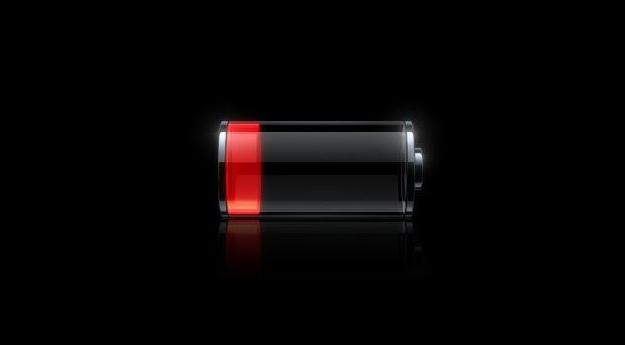
Get the most out of your iPhone battery by following these steps, which should see you return the phone to it's charger less often.

It’s one of those first-world problems that we’re all trying to solve: How to make the battery on our iPhone last just that little while longer. Thanks to Apple’s wisdom, we can’t pull the battery and replace it with a fully charged one, so we have to examine our usage and the phone’s activities to extend the amount of time between charges.

The basics

Battery life can be increased just by familiarizing yourself with the Settings menu and toggling a few switches, some of which are fairly obvious, while others not so. Let’s get started: Open the Settings menu, and pay close attention.

  • Wi-Fi: This one is an easy one: If you don’t need it or are using 3G/4G, then turn off Wi-Fi. The convenience of not having to switch it on and off isn’t a fair trade for the power it uses while searching for networks.
  • Bluetooth: Another obvious one, but leaving Bluetooth on when you aren’t using it causes considerable battery drain.
  • Location Services: This one needs some consideration, as some apps — Maps for example — require location services to be active, so you may want to explore the Location Services menu (found under Privacy in iOS 6) and only turn off those you don’t use on a regular basis. For example, does IMDb and Ocarina really need to know where you are?
  • Time Zone: While you’re digging about in the Privacy menu, scroll down and tap System Services, where you’ll find a range of options including the chance to turn off automatic time-zone changes. In iOS 5 this was found to be a power hog, so if you don’t need it, turn it off. In fact, while you’re there, turn off Location-based iAds and Diagnostics too.
  • Push: Whether it’s Push emails or Push notifications, your phone will be chatting to the network on a regular basis with both activated, and therefore using precious power. Email accounts can be individually set up for Push data, so switch off those that you don’t always need to check, or if you’re serious about saving battery power, turn them all to “manual.” You’ll find these options under Settings, Mail/Contacts/Calendars and Fetch New Data. For notifications, there’s an entire menu dedicated to them in iOS 6, and each app that offers Push notifications can be activated or crucially, deactivated. Like Push emails, if you’re serious about your iPhone’s battery, turn all but the essentials off.
  • Brightness: Turn Auto-Brightness on, but at the same time drag the brightness slider down as low as you dare. This will save significant energy.

iPhone App TrayIntermediate level

By managing Wi-Fi, Bluetooth, Push, and the brightness of your iPhone’s screen, you’re well on your way to a longer lasting battery. But if you want more, then you’ll want to try these suggestions, although the effect won’t be as great as those described above.

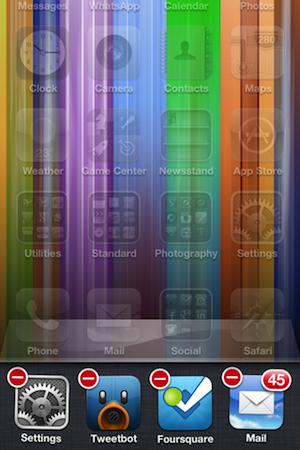
  • Manually Close Apps: This is a controversial one, as Apple will tell you that apps living in the app tray are in stasis, and shouldn’t drain your battery at all. Possibly, but many users will know certain apps still draw power when in this state. So, double tap the Home button, hold down an icon to enter “jiggly” mode, and close everything using the little “x.”
  • Siri: If you never ask Siri a question, shut her down under the Settings menu. She doesn’t do much unless you ask her something, but one less active feature can only be a good thing.
  • Screen Lock: Make sure your phone locks itself — which turns off the screen — after one minute. The less time it’s idle with the screen on, the better. Do this under Settings, General, and Auto-Lock.
  • iCloud: This works in a similar way to Push, where data is being transmitted from your phone to Apple’s servers in the background. If you don’t need to back up to iCloud, turn it off under iCloud in the Settings menu. You can also individually select what’s backed up too, and the fewer there are, the less time it takes. Plus, there’s the added benefit of using less iCloud storage space too.

For the hardcore among you

So, you’ve done all that you can, but the charger still beckons. Then it’s time to get serious. If you want your battery to last, really last; then sacrifices need to be made.

  • Cellular Data: No arguing, if you don’t need it, head to Settings, General then Cellular and turn it off. If calls are unimportant, putting the iPhone into Airplane mode will really stretch the battery’s life too. You’ll just be left holding the equivalent of an iPod Touch.
  • External Battery Packs: You may not be able to change the battery, but you can add a battery to the iPhone instead. There are many long-life battery packs available — mostly using the 30-pin connector, but that will change over time — where you sacrifice size and weight in return for a heavy duty battery case plugged into your slim and light iPhone.

Finally, if you want the best from your battery; look after it. Regular charging patterns are good for phone batteries, and continually having it at 10-percent and only charging it halfway will shorten its lifespan, and provide poor performance. Modern Li-ion batteries may not have the same issues as older Ni-cad cells, but that doesn’t mean they don’t respond to proper treatment.


Source : digitaltrends[dot]com

Nov 2, 2012

Wreck-It Ralph review: A story to warm your animated cockles

Wreck-It Ralph review

Walt Disney Animation Studio return with Wreck-It Ralph, a film steeped in the world of video games. But at its core, the digital overlay is simply the setting for a traditional, and heartwarming story of a guy who makes a friend.

Although the days of the arcade are on the wane to the point of extinction, there will always be a certain subset of people who have grown up with the influence of those institutions ingrained upon them. During the 80s and 90s, the arcade was a place where you could go to experience something new. It was a place to hide away for a few hours, or a place to socialize in a new way. For many it was an escape, while for others it was a babysitter, reassuring parents in the knowledge that they could leave their kids there and those kids would be content to hover around the games like moths around a light without even entertaining the thought of wandering off. 

Over the years though, the evolution of technology has not been kind to these digital meccas. Prices went up, while the convenience and sophistication of the product moved to the home. A handful of arcades remain, but they are few and far between. They will always exist, however, in the hearts and minds of those that experienced arcades in their prime. It is to those people that Wreck-It Ralph has been promoted through trailers and promotional materials. But while the film is certainly heavily influenced by those unique days, the story is a deeper and more universal tale.

Wreck-It Ralph: Ralph and Vanellope

That arcade influence is at the heart of Wreck-It Ralph, but it is not the driving force. Beyond the flashy cameos of characters like Pac-Man and Street Fighter’s Zangief, there is a story of a lonely guy, badly treated and shunned through no fault of his own, who befriends another lonely and isolated character that just wants to be accepted. Like most of Disney’s animated films it is a morality tale, and one that is created to appeal to all ages. In that, it succeeds.

After 30 years as the unappreciated antagonist of a Donkey Kong-like arcade game called “Fix-It Felix Jr.”, Ralph (voiced by John C. Reilly) has begun to question his role. After being shunned by his fellow characters at the anniversary party for their game, Ralph decides that the only way he will ever belong is to prove that he can be a hero too. Things soon go wrong, and Ralph accidentally leaves a trail of mishaps in his wake, forcing his own game’s hero, Felix (voiced by Jack McBrayer), to come looking for him. 

Through a bizarre turn, Ralph finds himself in a game called “Sugar Rush,” a candy-themed kart racer (created for this film, but bearing more than a passing similarity to Mario Kart), where he meets the annoying, but endearing Vanellope (voiced by Sarah Silverman). But Ralph’s journey has caused bigger problems than he knows. With Felix on his trail thanks to the no-nonsense Sergeant Calhoun (voiced by Jane Lynch), Ralph’s actions could spell doom for the entire arcade.  

Wreck-It Ralph

The hook of Wreck-It Ralph is, of course, the gaming-inspired world that Ralph and his cohorts inhabit, but that is actually a fairly small portion of the overall package, just as the toys were just the setup to tell a much deeper narrative in Toy Story. If anything, the promotion of this movie has been a little misleading. Although publicized as a gaming-centric film, the gaming icons are there for only a very small potion of the actual movie. Of the eight characters from real games in the poster above, their combined screen time may be five minutes, and three of those come in one scene at the beginning. That isn’t really a criticism  though, just a note that the promotion of this film has been focusing so heavily on its ties to the gaming world that you may not expect to find that it is actually a minor aspect of it in the same way that toys are a relatively small focus of Toy Story.  In both cases the world creates the rules, and in both cases the setup offers some original humor thanks to the subject matter, but the heart of the story runs deeper than that. 

Director Rich Moore (Multiple Simpsons and Futurama episodes) certainly understands the nostalgic appeal of the arcade, but that world quickly takes a backseat to the story. The arcade environment is simply the vehicle that offers the filmmakers a clever and entertaining backdrop to tell a deeper and more heartfelt story of friendship and acceptance. It comes across a touch heavy handed for the more cynically minded, but there are moments that are actually fairly touching even if they are a bit predictable. 

Wreck-It Ralph doesn’t quite hit that level of originality or emotional resonance of the brilliant Toy Story series, but it is possibly the best animated film of the year. Brave and ParaNorman both have a horse in that race as well, but the humor, originality of the universe, and story that hits all the right emotional notes, make Wreck-It Ralph the leader.  

Wreck-It RalphThe artwork is also beautiful and expressive, and the characters emote a great deal. The voice cast is involved in the story, not just reading dialogue. Even when the story does begin to stray into predictable territory – and it does so heavily, especially at the end with the twist you’ll see coming from a mile away – the art can help keep you engaged.  

Conclusion

Although the “hidden world of gaming” promised by the advertising is actually more of a background than a feature, Wreck-It Ralph has more than enough on its own merits to make a worthy entry into the Walt Disney vaults. There is a simple, but universal story at play that will appeal to all ages, and it succeeds because of the sharp writing, endearing animation, and great voice work. It is a touch formulaic, but ultimately satisfying and worth the time. Your inner child that still yearns for the days of the arcade will thank you for it.


Source : digitaltrends[dot]com

Oct 31, 2012

BlackBerry 10 phones being tested by carriers as Pentagon says it will keep using RIM handsets

Research In Motion boss Thorsten Heins has announced that devices running the firm's next-generation OS, BlackBerry 10, are now being tested by carriers around the world, keeping it on course for release early next year. Meanwhile, the Pentagon has said it will continue to use BlackBerry devices in its work.

It’s encouraging. It’s a step in the right direction. It might mean Research In Motion (RIM) really will fulfill its promise of a first-quarter 2013 launch of its next-generation BlackBerry 10 OS and handsets.

RIM CEO Thorsten Heins announced in a statement on Wednesday that handsets running the new OS were now being tested by more than 50 carriers worldwide.

Heins said reaching the testing phase meant the company had “passed a critical milestone” in the development of its new mobile computing platform.

“The hard work will not stop here as we build towards launch,” Heins said in the statement, adding, “Our developer teams are continuing to generate momentum to bring a wealth of applications to BlackBerry 10, our enterprise teams have started to present BlackBerry 10 devices and services to our business customers, and our engineers are fully mobilized to ensure that BlackBerry 10 launches flawlessly in the first quarter of 2013.”

In an interview with the BBC last week, Heins urged consumers not to underestimate “the dynamic [BlackBerry 10] is going to create in the market.”

In other news involving the mobile company, the Pentagon made clear this week that it would carry on supporting “large numbers” of BlackBerry handsets despite going ahead with plans to allow the US military to use other devices such as the iPhone.

“The Defense Information Systems Agency is managing an enterprise email capability that continues to support large numbers of RIM devices,” a spokesman told Reuters this week. A number of government agencies and businesses have said in the last year they would be issuing staff with iOS or Android devices, ending long-standing contracts with BlackBerry. While the Pentagon also appears to be relaxing its association with RIM, things are so serious at the Canadian company that the defense agency’s announcement that it’s not switching entirely to rival devices will actually be perceived as good news by many.

The BlackBerry was once the phone of choice for many agencies and firms thanks largely to its strong security features. However, security on rival handsets such as Apple’s iPhone and a number of Android-powered devices has improved over time, offering an alternative to the BlackBerry.

The launch of RIM’s next-generation OS and handsets is its make-or-break moment. Perhaps the Canadian mobile maker – once the country’s most valuable company – can still turn things around, remain a viable player in the mobile game and consequently help to keep competitors on their toes.


Source : digitaltrends[dot]com

Oct 29, 2012

Google Maps gets a big update to terrain, looks more natural

Google Maps is undoubtedly on of the best (if not the best) mapping service in the world and when it comes to the various layers Maps offers there really isn’t anyone that can come close.

Terrain is among those layers, which is available both in the Android app and in the website. The Google team has now updated the terrain view in the entire world and it is now much more detailed and differentiates mountains and forests far better than before.

Those of us who use Google Maps frequently have the habit of neglecting the various improvements but the new terrain maps are really hard to miss. Detail is incredible and the once flat-looking surface is now alive with mountains and hills providing a more true-to-life experience.


Source : blog[dot]gsmarena[dot]com

Oct 27, 2012

Hurricane Sandy Prompts Google to Cancel Android Event

ht google invite jef 121018 wblog Hurricane Sandy Prompts Google to Cancel Android Event

Image credit: Google

Google had hoped to take the tech world by storm on Monday with its Android event, but a storm is now taking the event.

As a result of Hurricane Sandy, Google cancelled its big Android event, which was set to be held in New York City at 9:00 a.m. Monday. The effects of the hurricane are expected to be felt in the New York City area as early as Monday morning. New York Gov. Andrew Cuomo has already declared a state of emergency, and New York City Mayor Michael Bloomberg warned residents to brace themselves.

Hurricane Sandy: Live Storm Tracker

At the event, Google was expected to detail the next version of Android, codenamed Key Lime Pie. It has also been rumored that it would announce a new Nexus phone made by LG and a new Nexus 10 tablet made by Samsung.

Google has not yet shared details on when or where they will hold the rescheduled event.

“We are canceling our Monday morning event in New York due to Hurricane Sandy. We will let you know our plans as soon as we know more,” Google said in an e-mail to ABC News.

Google’s event was planned to compete with Microsoft’s Windows Phone 8 event taking place in San Francisco the same day.

Android chief Andy Rubin is still expected to speak at the All Things D “Dive Into Mobile” conference in New York City on Monday afternoon. ABC News still plans to attend the conference and report on the news.


Source : abcnews[dot]go[dot]com

Oct 26, 2012

One third of young adults in America are Facebook friends with their boss

Facebook browsing

Despite the possibility that bad behavior posted on the Web could lead to real-world consequences, more young adults are befriending their boss on Facebook.

Detailed in a new study commissioned by AVG, approximately thirty-three percent of Americans between the age of 18 to 25 are Facebook friends with their boss in the workplace. While the average of all eleven countries was around twenty-five percent, the United States and Italy tied for the highest percentage of young adults that befriended their boss on the popular social network. Alternatively, the lowest percentages came from Germany, Japan and France. AVG’s sample size across the eleven countries included approximately 4,400 young adults. 

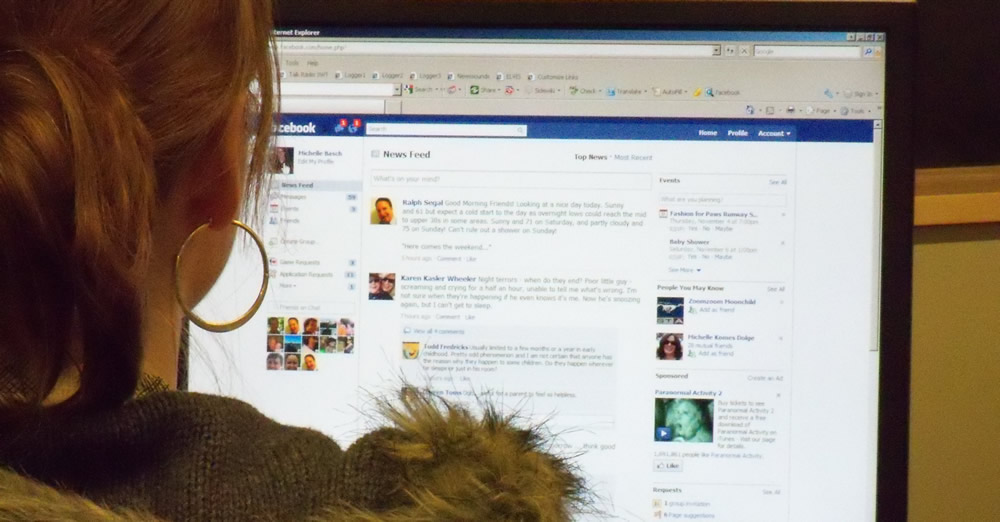
Facebook Login Close-upRegarding this social trend with young adults, AVG Security Evangelist Tony Anscombe stated “AVG’s latest research clearly shows young people today have a comfort with using online social networks that is leading to blurring between their professional and private lives. It seems obvious that posting abusive content about a boss or workplace is not very sensible, but it’s important to understand that not only could it damage a person’s existing career, it could also negatively impact on future opportunities too.”

In addition, an average of thirteen percent of young adults claimed to have posted a negative comment on Facebook about their boss or workplace after a stressful day at the office. Employees in Germany, Spain and Italy were the most likely to complain on Facebook. Nearly sixty percent of Americans don’t take advantage of Facebook’s filtering tools to restrict the content that can be viewed by co-workers. People working in Japan and the Czech Republic were the most likely to bypass those security filters while young adults in Germany and France are more diligent about hiding updates from co-workers. 

Approximately 43 percent of young adults had performed an audit of all social profiles on the Web in order to make themselves look attractive to employers. In addition, thirteen percent of young adults in America mentioned that information found on one of their social pages was brought up during an interview. Regarding the use of information found on social media profiles during the interview process, Anscombe said “Our research findings indicate that today’s 18- 25 year old ‘digital natives’ need to be more aware of their online brand as something employers and recruiters are increasingly investigating.” 

Facebook at workWhile America did rank the highest for boss friendships, young American adults are carefully watching what type of media is posted on Facebook. According to the report, the United States ranked the lowest in young adults that are posting inappropriate images on their Facebook accounts.

Spain ranked the highest as eighty percent of respondents claim to post inappropriate images on their profiles. Interestingly, over half of all respondents wish that they could remove all inappropriate images of themselves off social networks. 

Regarding accessing social networks in the workplace, nearly sixty percent of Americans admit to using a mobile device like a smartphone to access Facebook or other social networks. A previous study indicated that nearly eighty percent of people can’t last a single day without checking up on the latest Facebook status updates. More recently, a man attempting to become more productive while working hired a woman off Craigslist to slap him in the face each time he started wasting time on Facebook. 


Source : digitaltrends[dot]com

Procrastinators beware: Twitter map showing last million tweets will take up your time

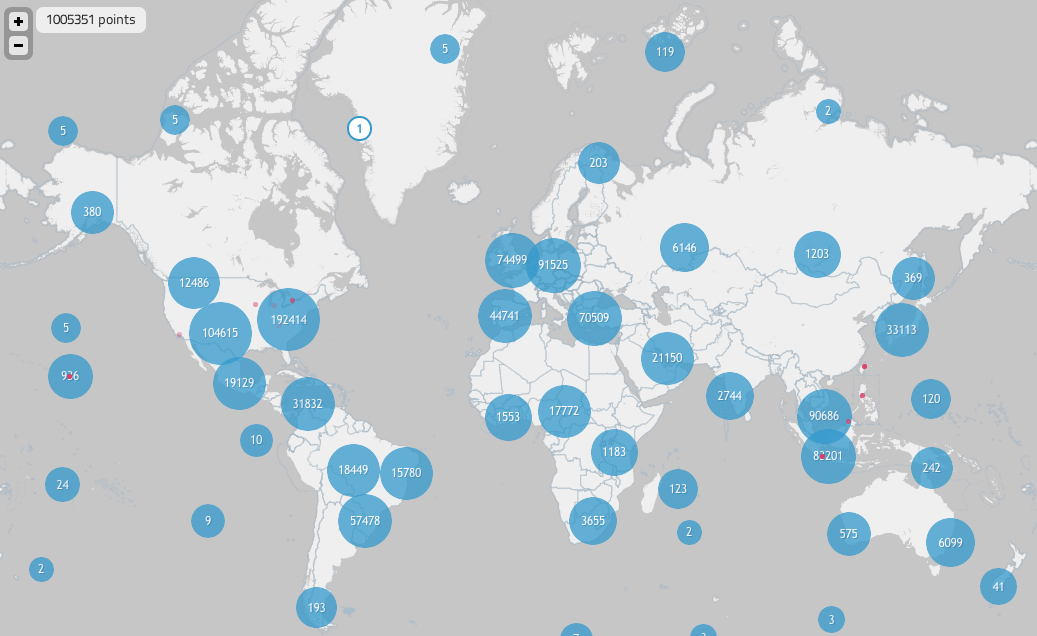
Maptimize has launched the One Million Tweet Map showing the last million tweets posted around the world – the perfect distraction for procrastinators everywhere.

If you’re a professional procrastinator, you may or may not be delighted to hear about the One Million Tweet Map, giving you yet another opportunity to do something less important than the very important thing you really should be doing.

Powered by Maptimize, a geographical clustering engine for showing and analyzing geolocalized data on online maps, the Twitter map does pretty much what is says on the tin – show the locations of the last million geotagged tweets posted around the world using data pulled from the Twitter API.

Updated in real time, the map is constantly changing, with the latest 20 tweets added at the same time as the oldest 20 are dropped, keeping the tally at around a million.

One cool feature is the ability to zoom in on a cluster, which splits into smaller clusters until, once you’ve zoomed all the way in, you’re presented with a single tweet which you can click on and read. That way, you can explore your own neighborhood to see if anyone close by is tweeting about you, or visit some remote village in Tasmania to see what’s going on there.

But hold on, procrastinators, there’s more to play about with before you return to the (more important) job in hand. Besides the cluster view, you’re bound to want to spend a bit of time also exploring the heat-map view. You can also filter by keywords, hashtags and time. How about that?

OK, that’s all for now, I need to get back to the One Million Tweet Map for no good reason whatsoever.

[via Mashable]


Source : digitaltrends[dot]com

The iPad and iPad mini delivery dates already pushed back 2 weeks

The iPad mini has only started selling today but it’s already on backorder with the next shipments due for no sooner than 2 weeks across the world. The only exception is the US where the black version will still be delivered on the promised November 2nd.

It’s either that the white version is immensely more popular in the US or there were fewer white units available. Having a look across European Apple stores however, shows us that both the white and black versions are back-ordered already in the UK, Germany, France, Spain and Italy.

The situation with the 4th generation of the 10-inch iPad is identical in Europe, with only the US iPad still holding strong for a delivery on November 2nd. It’s clear which of the two iPads is the hotter product, at least on the US market.

Apple Store US, UK, DE, FR, IT, ES


Source : blog[dot]gsmarena[dot]com

Oct 25, 2012

Co-op, Not Competition: Nintendo reveals list of worldwide best-selling games of 2012

Nintendo revealed comprehensive lists of the best-selling video games of 2012 to date, shedding significant light on player tastes around the world. What games will publishers be investing in based on current trends?

Regional sales tracking firms like the NPD Group, Media Creates and others are often the only regular source for getting a picture of what people are paying to play in the video game market. As the balance between digital distribution and traditional brick and mortar retail even out, it’s become more difficult to accurately portray just what people like to play besides Call of Duty. It’s surprising then that Nintendo, one of gaming’s most secretive companies, revealed the top twenty bestselling video games from around the world during its recent earnings report. Nintendo compiled data from those previously listed research firms as well as Gfk International.

With breakdowns for the US, Europe, and Japan, the lists show not just what’s performed well this year, but helps gauge what types of games console publishers will invest in over the next few years as the transition to next-gen consoles begins in earnest.

The tops of the charts aren’t surprising based on how the industry’s past half decade. The top two best-selling video games in the United States between January and September 2012 were Madden NFL 13 for the Xbox 360 and PlayStation 3. Electronic Arts also dominated Europe (Gfk tracks fourteen countries in the region), taking the top three spots with FIFA 13 on PS3 and Xbox 360 in first and second respectively with FIFA 12 on PS3 taking third. Nintendo dominated Japan, with Pokémon Black 2/White 2 taking the top two slots.

It’s deeper in the list that more revealing statistics emerge. Call of Duty: Modern Warfare 3, for example, was only the sixth best-selling game across 2012, beaten out by competitors like Mass Effect 3 and even Borderlands 2 (fifth and third respectively.) This means that while the sales tail on Call of Duty remains strong, it’s diminished from highs in 2010 with Call of Duty: Black Ops and Call of Duty: Modern Warfare 2, which dominated for months after their respective releases. The competitive shooting games was not as favored over the first nine months of the year as co-operative, campaign-centric shooters like Mass Effect and Borderlands. The rest of the list bears this out as well. Tom Clancy’s Ghost Recon: Future Soldier came in at eleventh, where EA’s Battlefield 3 came in at fourteenth. Future Soldier was a May release, and it does sport competitive modes, but even that example supports the POV that multiplayer tastes in the US are shifting.

What of Europe? Modern Warfare 3, Battlefield 3, Uncharted 3, and Mass Effect 3 were on the European list, but that was it for shooters. Nintendo published titles like Super Mario 3D Land, Wii Party and others were far more common in the region, boding well for the Wii U. Gran Turismo 5 also took eighth in Europe, reaffirming the strength of that brand for Sony abroad.

Japan was, again unsurprisingly, dominated by Nintendo and Square-Enix published games for handhelds, with three Capcom titles and two Namco Bandai titles sneaking in as well.


Source : digitaltrends[dot]com

Microsoft officially releases Windows 8 and Windows RT

Today Microsoft stepped on stage and released its Windows 8 and Windows RT to the tech world in what was largely conceived as the biggest Windows release ever. Availability starts today and active Windows 7 customers can upgrade starting from $39.99.

Microsoft talked OS features, integration along a wide variety of devices, the services that are launching alongside the OS and demoed all of them.

Windows 8 is released with a couple of services in tow. Those are Xbox Music, Videos, Games and also Skype. All Windows 8 users will get unlimited streaming of music via Xbox Music free of charge.

Microsoft’s speakers (CEO Steve Ballmer included) were keen tp repeating that the Windows 8 PCs are the “Best PCs Ever”. There are around 670 million PCs currently, which are compatible with Windows 8 and Ballmer expects around 400 million to come out with Windows 8 out of box.

The Windows 8/RT store was also a big part of the event. Currently there are around 7000 apps available, which isn’t as good as Apple’s numbers but Steven Sinofsky pointed out that the Windows Store has the most number of apps for an app store on its launch day.

A big part of the Windows 8/RT release was the emphasis on touch – the fact it can support a mouse and hardware keyboard but that it was ultimately designed to work as a touch-only OS. pre-Win8 ultrabooks as well as post-Win8 tablets and notebooks were used to demonstrate that.


Source : blog[dot]gsmarena[dot]com

Hypersonic Plane Could Revolutionize Commercial Flight

ht lynx ascent tk 121024 wblog Hypersonic Plane Could Revolutionize Commercial Flight

Outer space just seems a bit closer these days.

Just weeks after Austrian daredevil Felix Baumgartner awed the world with a stratospheric skydive, a California aerospace firm is hoping send even more people to the edge of space with a hypersonic aircraft capable of cruising at 3.5 times the speed of sound.

Mojave-based XCOR is currently busy constructing the “Lynx,” a two-seater commercial craft supposedly capable of cruising 62 miles above the Earth’s surface at speeds of more than 2,500 miles per hour.

“I’m excited as hell,” XCOR Chief Operating Officer Andrew Nelson told ABC News.  “It’s going to be the most exciting suborbital space flight you will ever take.”

The ride, the entirety of which takes about 30 to 45 minutes, consists of a rocket-powered ascent, several minutes of microgravity coasting near the edge of space, re-entry and a gliding landing similar to that of a space shuttle.

Though the Lynx is drawing comparisons with the Concorde, the supersonic passenger jet retired from service in 2003, Nelson stressed that the Lynx isn’t meant to fly from city to city.

“The Lynx will not fly from New York to Tokyo in 90 minutes,” he said.  “It’s designed to go up and come down. When you start going sideways real fast through the atmosphere, you build up a ton of heat.”

If you have a cool $95,000 to splash around, Lynx suborbital flight tickets are being sold right now on the company’s website.  A ticket includes a medical screening and g-force training for the passenger and “fellow space travelers.”

Despite the hefty price tag, XCOR apparently isn’t suffering from lack of demand.

“We’ve already sold over 225 seats, and those sales are accelerating,” Nelson said. “And those include both personal space flights as well as science flights.”

XCOR expects to begin offering flights on the new plane beginning in 2013 and hopes to conduct about four flights a day.

So what exactly is it like to take part in this suborbital joyride?

“You basically become a rocket,” said Nelson, describing take-off.  ”After about 50 seconds, you are past mach 1 and you continue to accelerate and climb.

“You’ll get fitted for a pressure suit, like Felix Baumgartner,” Nelson said. “The pressure suit is not too dissimilar to that.  You’ll also have a parachute you’ll put on, just in case.

“It takes only 4.5 minutes to get to the very top and hit at your peak rate of velocity of 3,300 feet per second,” he said. “That’s faster than the muzzle velocity of a standard rifle.”

Nelson added that his company doesn’t plan to enlarge the aircraft to accommodate more passengers in the near future.

“At the moment, we don’t have a plan to make it larger, but that doesn’t mean we won’t make a derivative in the future,” he said. “We think it’s the right vehicle for the right time. …  We are planning a future orbital vehicle and that will have more seats, we see Lynx as a stepping stone to a reusable orbital system.”

To that end, Nelson believes that within eight to 10 years, aircraft like the Lynx could be bringing astronauts to the international space station and back.

“It won’t be the Lynx, but it will be the son of the Lynx,” he said.

ht lynx telescope tk 121024 wblog Hypersonic Plane Could Revolutionize Commercial Flight

Nelson also hopes to take advantage of the Lynx’s capabilities to conduct a variety of scientific experiments, including those submitted to him by children and students.

“The long-term impact the Lynx is going to have is on kids and getting them energized again about science and mathematics and engineering,” said Nelson.


Source : abcnews[dot]go[dot]com

Oct 23, 2012

Tony Stark has a bad day in debut Iron Man 3 trailer

Ben Kingsley Mandarin Iron Man 3

After saving the world in The Avengers it seems that Iron Man has hit a rough patch. Being attacked by a new supervillain probably won't help much.

After months of waiting the first trailer for the upcoming Iron Man 3 has hit the ‘net. You can find the entire clip embedded below, but first a few thoughts on what we see here and what it may mean for the film as a whole.

It seems that Tony Stark has been having issues since we last saw him in The Avengers, saving the world from alien invasion. It appears that he’s haunted by the events of that film. This seems a clever move by the filmmakers as not only does it build upon earlier Marvel Studios films (thus expanding the growing Marvel Cinematic Universe), it also offers viewers a believable reason why this normally smug, infinitely capable superhero is overcome with feelings of self-doubt and vulnerability. Which, thanks to comic book logic, makes a supervillain attack inevitable.

Actually, that might be two supervillain attacks. Obviously Ben Kingsley’s depiction of classic Iron Man foe The Mandarin serves as one of the key antagonists, but we’re still wondering what purpose the Iron Patriot suit serves in Iron Man 3. We don’t ever see Iron Man battle his star-spangled doppelganger, just footage of it being unveiled to the public. If we’re sticking with comic book logic, the Iron Patriot (and whoever is wearing that suit) should attack Iron Man at some point — not just because Norman Osborn did it in the comics, but also because two characters this similar are rarely allowed to exist together for long. Iron Man is our hero, so by default Iron Patriot gets to be the “evil” Iron Man.

Unless, of course, the Iron Patriot armor isn’t that important, and is just a new paint scheme for one of Tony Stark’s new suits designed for public relations work at things like parades and park dedications. We have no evidence for this idea, but then again, we also don’t have any evidence against it.

Unfortunately, it looks like we’re going to be in the dark on this question for the immediate future. We expect more information on this movie’s plot to emerge as we inch toward the May 3, 2013 release date Disney has assigned Iron Man 3. In the meantime, leave your reaction to the trailer in the comments.


Source : digitaltrends[dot]com

Oct 18, 2012

AOL’s Patch to be profitable by 2014

AOL's Patch local service is headed towards profitability by the end of 2013, according to AOL CEO Tim Armstrong. Proof that the world still needs local media?

Despite many predicting doom, gloom and the death of the very concept of hyper-local content, AOL has announced that Patch, its local news service, is expected to head into the black within the next twelve months. Speaking at a conference, AOL chief executive Tim Armstrong said that the news underscores his believe that investing in local Internet is the way of the future.

Armstrong talked about the growing success of Patch at the Dublin Web Summit today, saying that the service has over 17 million users, and is on route to being profitable in the fourth quarter of 2013 (This year, Armstrong says, the service will generate somewhere close to $40 million).

Armstrong has reason to be bullish about the success of Patch; he co-founded the service as Patch Media way in 2007, two years before he joined AOL with the intent of creating a service that would be able to offer users similar information as would traditionally have been found in local newspapers before the Internet quickly put a stop to the idea of a healthy newspaper industry (Armstrong is said to have founded Patch Media as a response to being unable to find enough information about his hometown of Riverside, Connecticut, online). The mix of local news, weather, and traffic information initially attracted criticism from many onlookers, who cited poor working conditions (and, in some locations, poor quality of output) as an argument against such a decentralized business model. Nonetheless, when Armstrong became AOL CEO in 2009, one of the first things he did was purchase the company for an estimated $7 million in cash (Armstrong was paid in AOL stock).

The news that the site is approaching profitability has Armstrong happily sharing the wisdom behind his initial decision to launch the service in the first place, telling the Dublin Summit audience that “the needs of the local community remain the same. The way we approach it is, by investing in the community, we become part of the community and long term that works. It was the business model for local newspapers between 1965 and 1995.” And, of course, we know how well that worked out for local newspapers after 1995.

Since its acquisition by AOL, Patch has been criticized alongside other AOL/Huffington Post properties for the non-payment of contributors, something that Armstrong dismissed by describing AOL as “the single largest investor in journalism” online, going on to describe the company as “big believers in journalism and big believers in paying journalists.”

Perhaps, when Patch starts turning more of a profit, then its contributors will start seeing more evidence of that. Currently although there are paid positions (editors and sales managers, apparently), other contributors do it for the love of the community – or, perhaps, the hope of a payday at some point in the future.


Source : digitaltrends[dot]com

Will Lightt fade in Instagram’s shadow or could its future make it more than just another image app?

lightt web site

Lightt is a new take on content sharing, producing animated GIF-like video clips of the world as you're seeing it. Will the platform prosper thanks to a future integration or is it doomed to fall on Instagram's sword?

You can’t launch a new photo-sharing app without being called an Instagram challenger, and the unfortunate label has not escaped Lightt. The new app launched yesterday, revealing a new take on the photo feed. Instead of creating a network based on stills and filters, Lightt takes 10-second videos and plays them back fast-forwarded with no sound. Will Lightt face the same fate as the amibitious yet ill-fated Color, or will its future integration with Google’s Project Glass keep it safe from being buried in the underbelly of the App Store?

How Lightt works

Your Lightt sign-up experience is nothing new: Download the app, create your account, idly flip through the initial instructions pointing out icons and what they do, and you’re off. Perhaps the strangest part of the whole thing is your profile picture: Instead of letting you pull a still from your gallery or even take a photo, you create a short video that Lightt speeds up and turns into your avatar. It’s disorienting… and honestly, the result is a little strange – it’s like one of those haunted house paintings where the eyes follow you.

light web viewerAfter that, you should just jump in and start using Lightt. You hit the center camera icon to take quick videos. You can take one (10 seconds), or keep hitting the icon in order to continue to capture the scene – or what Lightt calls a highlight (“A highlight is a burst of pictures that captures about 10 seconds of time in one tap. Your highlights upload immediately and play back faster than real life, like the speed of our memories,” per the Lightt blog).

You can share photos to Facebook or Twitter – thought realize that they aren’t grouped together and you’ll just be posting continuous blocks of this content. From there, you’re sent to a Web viewer, but this is the only way to see your media via desktop, to share it out, and then hit the link. There aren’t any embed options right now, either, so you can’t host your Lightt content on your Tumblr, WordPress, or any other blog yet. 

The app has a home page, which is segmented by your feed, a “happening now” feed, and a “featured” feed. You can also navigate to your own page, your friends list, and an activity bar. Users are able to leave comments or like highlights – and you can strangely share other users’ highlights to your own social networks.

mobile screenshots

The Color connection

If you immediately started playing with Lightt or looking through the available feed and thought things seemed familiar, you’re not the only one: My first thought is that this is  exactly what Color tried to do. When the beleaguered startup first launched, it had a rather simple photo-sharing mechanism (no filters, no editing, no video, no captions, just point and capture) but did introduce what was a rather revolutionary location-aware social network.

Eventually Color pivoted into a video streaming application and became a Facebook Timeline app. The idea was to “show the world what you’re up to,” and users with the app would get an invitation to “visit” the recorded moment in real-time via Facebook. However, when I tried to use the Color app, I recieved this notification from Facebook.

facebook color misconfigured

This, on top of the mountain of rumors that Color is not long for this world (which, honestly, could end up meaning very little if the company is indeed acquired by Apple, not to mention the money it stands to make off patents), all points to the fact that the app wasn’t a hit with users.

And there are some similarities between Color and Lightt. There’s the fact that they are both image, media-focused apps. But that’s not exactly a novelty anymore (you could create a daily newsletter full of these app launches). Then there’s the location element; Color bet heavy on this and ended up scaring the crap out of users. Lightt is using location as well, but it’s not nearly as important to the app (you can choose to have location settings turned on or off, though Lightt will prompt you to give up the data so it can auto tag the vicinity of your content).

The big difference between the two apps is the fact that Lightt has a much more user-friendly, explanatory interface. Color was without words, without explanation, without guidance; you were thrown into this entirely new and unfamiliar territory with no gentle hand to lead you through it. Lightt didn’t make this mistake. And in Color’s defense, the team never thought they’d get the type of early fundraising or attention that they did – the startup has been honest about that fact that mistakes were made.

Don’t look a GIF horse in the mouth

While Lightt falls squarely into the photo-sharing genre, the media it creates is actually far more similar to apps like Cinemagram or Gifture, which take your short-form videos and turn them into animated GIFs.

[Via cinemagr.am]

Lightt sees the result as more of a visual timeline of your activity, but the rest of us are surely going to see the sped-up, stop-motion effect as an animated GIF. This medium has at once become the pride and joy as well as the scourge of the Internet. Twitter has fiercely fought animated GIF avatars (you’re no longer able to upload them to the site), and there’s a quiet but budding movement supporting cleaner Web design that eschews the ostentatious, attention-demanding art form. Despite any of this, they are assuredly the Web’s bread and butter, and it’s hardly an exaggeration to say Tumblr is bursting at the seams with the stuff.

Animated GIFs are the Internet’s comeback kid: After a brief love affair with them in the 90s, they died down for whatever reason. And now, they’re back with a vengeance.

However, while there are a handful of apps tapping into this popularity, they aren’t able to produce as high quality of results. The limitations of working on a small screen with nothing but your hands and the video you can capture with a smartphone means your creations probably won’t enjoy to the viral success many Web animated GIFs do.

While Lightt makes the process far easier (anyone who’s tried Cinemagram, Kinotopic, or Gifture knows the inaccuracy and frustration of coloring in the desired moving segment of media with your finger), the effect isn’t quite an animated GIF. Not that Lightt wants it to be – but maybe we want it to be.  The jury is still out on how well we’ll ever be able to make these with mobile devices, or whether we even want to, but what you’re able to make with Lightt right now sort of feels like a half-hearted effort. 

Instagram, you’re safe 

Instagram killer, Lightt is not – but the most interesting part about the app is where it’s going, which is to Google Glasses. This is where Lightt could make sense; walking around, holding my iPhone up while I record a scene still just feels awkward. That’s the beauty of Instagram: It’s instant. It’s a quickly captured moment. Lightt is still a little too much work, but the minute you implement it into something I’m wearing, the results could be stunning.

For the time being, the actual quality of what you create using Lightt isn’t up to par – Instagrams, and photo apps for stills in general – are still much prettier to look at. Video is a trickier beast, it’s a much more complicated process under-the-hood. Which is why time will only tell if Lightt can bring something compelling to the table when it hits Google Glasses. 


Source : digitaltrends[dot]com

China’s Wingsuit Flying World Championship

Jumping off a cliff 4,593 above sea level is all a part of the game for the men and women participating in this year’s Wingsuit Flying World Championship in Zhangjiajie, China.

Using only a special jumpsuit called a wingsuit as a flying mechanism, fifteen of the world’s best competed in the championships over the past two days, jumping from the Tianmen Mountain in central China’s Hunan Province.

The suits have fabric between the arms and legs to increase the surface area and make gliding possible. A parachute is also attached to the suit, but may only be used for landing.

The participants were required to complete a looping flight in the valley and glide across a designated area before deploying their parachutes and landing at the finish line. The competitor with the fastest time took home the prize.

This year, South African flyer Julian Boulle won first place with a world record of 23.41 seconds. A Norwegian, Espen Fadnes, came in a close second at 23.55 seconds and British competitor James Boole took third place with a time of 23.84 seconds.

Wingsuit flying is one of the most challenging of the world’s extreme sports. Eight flyers participated in the final day of the World Championships today and no more than 20 wingsuit flyers are qualified to participate in the competition worldwide, according to the Associated Press.


Source : abcnews[dot]go[dot]com