Pages

Showing posts with label times. Show all posts

Oct 31, 2012

T-Mobile and AT&T to Share Networks in Areas Impacted by Hurricane Sandy

ap people using payphones after sandy thg 121031 wblog T Mobile and AT&T to Share Networks in Areas Impacted by Hurricane Sandy

Image credit: John Minchillo/AP Photo

Times of national disaster not only can bring together people, but also rival technology companies.

This afternoon, AT&T and T-Mobile have announced that they will be working together in the wake of Hurricane Sandy to provide more service and coverage in areas hit by the storm. The two cellular providers will share networks and roaming capabilities in New York and New Jersey, an AT&T spokesman told ABC News.

AT&T and T-Mobile customers will be able to place calls as they usually do. The calls just might be carried over a network they don’t subscribe to. For instance, T-Mobile customers in New York City who have had very little service during the storm aftermath will now be able to place calls over AT&T’s network.

In each case, calls will be carried over the most operational network in the area.

“This agreement is possible because AT&T and T-Mobile use the same underlying wireless network technology,” AT&T spokesman Mark Siegel told ABC News. “Which network a customer is on will be completely transparent. The customer won’t even notice.”

There will be no extra costs to users, and no roaming fees or extra line items on bills.

Both AT&T and T-Mobile use the same GSM and UMTS network technology.

Verizon and Sprint use different technology, so they aren’t involved in this arrangement.


Source : abcnews[dot]go[dot]com

Oct 19, 2012

Acer Iconia Tab A110 arriving in the US and Canada on October 30 for $230

We have reported several times in the past about the 7-inch Acer Iconia Tab A110 Android tablet. We knew that the tablet was going to be priced competitively, somewhere around the $200 mark.

Now Acer has finally announced the pricing and launch date for the US and Canadian market. The Iconia Tab A110 will be launching on October 30 and will be priced at $229.99.

For that price, you get a tablet with a 7-inch, 1,024 x 600 resolution display, NVIDIA Tegra 3 processor, 1GB RAM, 8GB internal memory with a microSD card slot, front facing camera, HDMI-out, 7.5 hour battery life and Android 4.1 Jelly Bean out of the box.

Compared to the Nexus 7, the only advantages the Acer Iconia Tab A110 has are the microSD card slot and the HDMI out but is it worth spending the $30 extra for? Not to mention get a lower resolution display and none of the stock-Android, quick update business you get with the Nexus 7? I don’t think so.


Source : blog[dot]gsmarena[dot]com

Oct 17, 2012

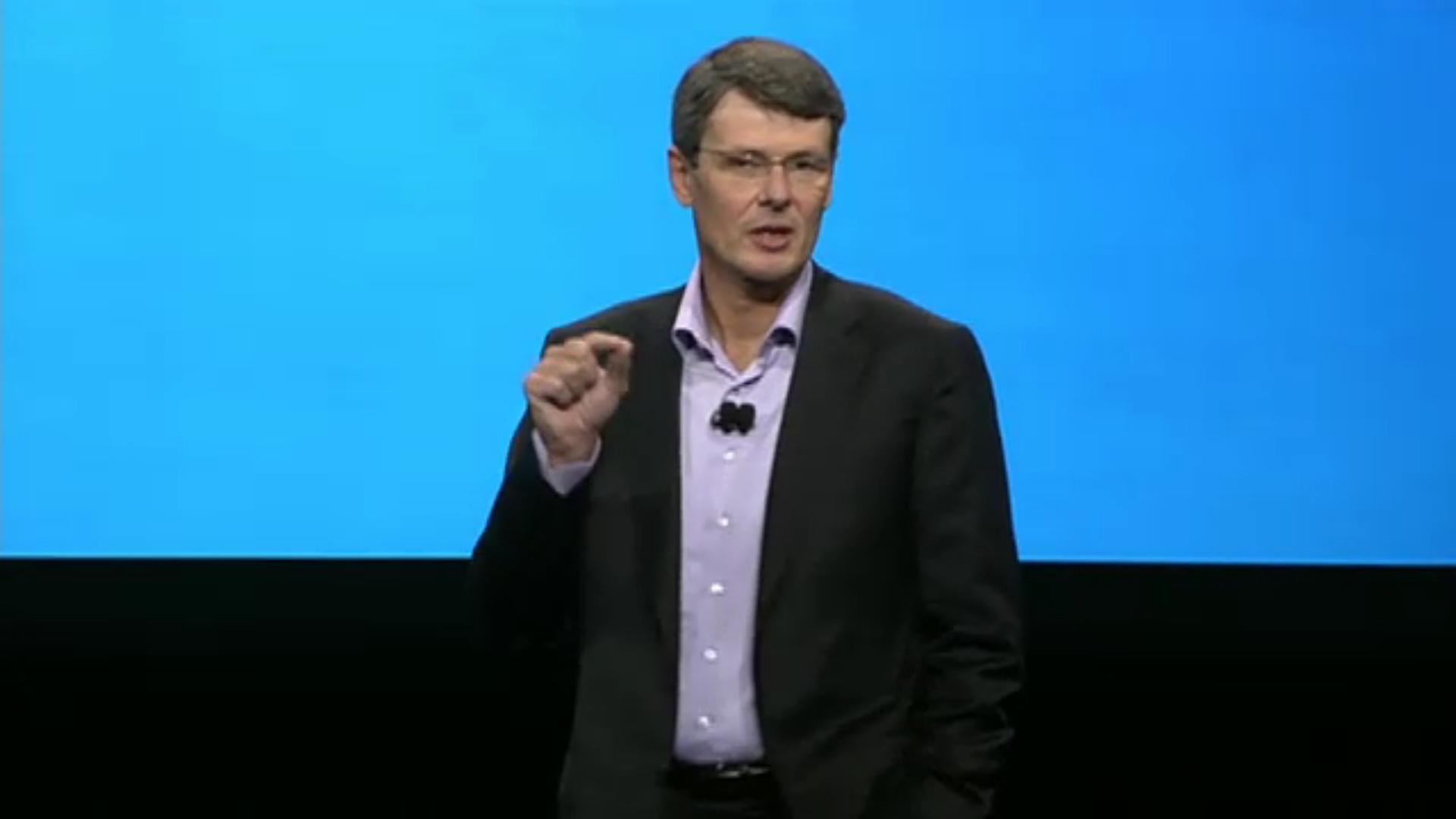
RIM boss Thorsten Heins hits back at BlackBerry-bashing NY Times article

BlackBerry World 2012 Thorsten Heins

RIM CEO Thorsten Heins has hit back at a recent NY Times article that interviewed a number of disgruntled BlackBerry owners. In a letter published by the newspaper on Wednesday, Heins accused the piece of lacking balance and said there were still "millions of BlackBerry fans out there."

RIM CEO Thorsten Heins must have had smoke coming out of his ears when he read a New York Times article on Monday entitled The BlackBerry as Black Sheep.

His company is struggling, for sure, but he’s hoping it can turn things around with the launch of its next-generation operating system, BlackBerry 10, early next year. Until then, he needs to hold on to his customers, and prevent the company’s image from being bashed about any more than it is right now. His heart will have sunk when he read the NY Times piece.

It pretty much ripped into the phone maker, interviewing users who had apparently become embarrassed about pulling their BlackBerry phone out of their bag. “I’m ashamed of it,” said one, who claimed to hide her device under her iPad for fear of being judged by clients.

Another said she wanted to “take a bat to it,” which, let’s be honest, seems like something of an overreaction when it comes to feelings about a mobile device. There were a few favorable words towards the end of the piece from a BlackBerry owner called Mr. Fenton who said he couldn’t understand what all the fuss was about when it came to the iPhone, but in case the reader might start to think that perhaps RIM’s phones weren’t so bad after all, the article finished off with someone called Mr. Mindel laying the boot in, saying, “I’m considering removing my BlackBerry battery, pouring in cement, and using the BlackBerry as an actual paperweight.” You get the picture. 

So imagine Heins in his office earlier this week, NY Times in hand, reading this article. Of course he wasn’t going to let this go without saying something. He hammered out a response and on Wednesday the newspaper published it.

In his letter, Heins accused the publication of lacking “the balance your readers expect,” before going on to explain that carriers and partners around the world have recently told him “there are millions of BlackBerry fans out there who not only find great value in their device, but also pride in being a BlackBerry owner.”

He says that he takes reports of dissatisfaction among BlackBerry users very seriously, adding that he was encouraged by the supportive comments received in response to the NY Times article.

After trotting out a couple of stats, Heins ends his letter confirming that RIM is on track to deliver BlackBerry 10 in the first quarter of 2013, and offers thanks to “the customers who have remained loyal to the BlackBerry platform.” He also says RIM is looking forward to “winning back many who have left.”

Heins is all too aware that having nothing to show for at least another 10 weeks gives BlackBerry bashers ample time to keep on bashing, and that what RIM must do is keep current users on board while trying to put a positive spin on a very difficult situation. Of course, there will be those who say RIM has done a decent job of beating itself up in recent years with various PR blunders and missteps, but Heins is steering the ship now and is doing everything in his power to save the company from collapse.


Source : digitaltrends[dot]com

Oct 16, 2012

U.S. smartphone owners pay 3-10 times more for 4G LTE data, says study

4G LTE

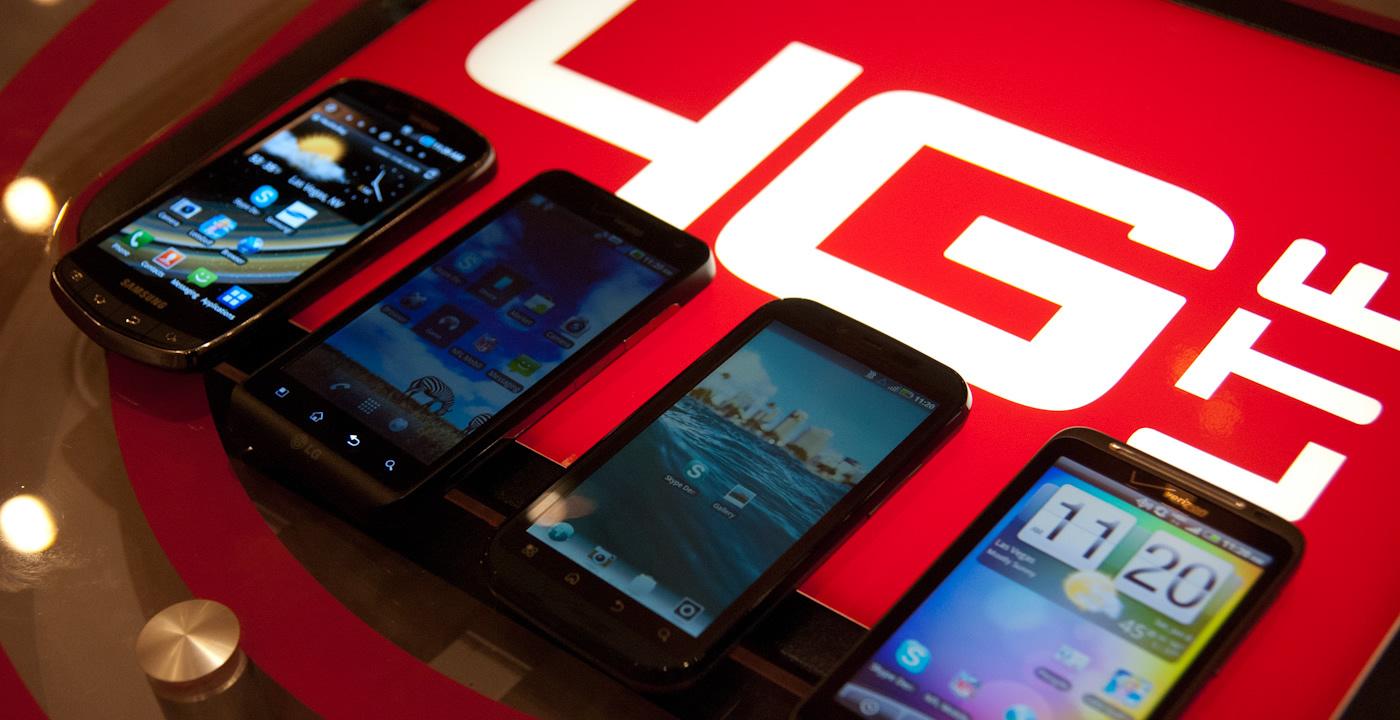
According to a recent study, Americans pay three times as much for their LTE network service than most Europeans -- and nearly ten times more than what Swedish citizens pay.

We can now add 4G LTE service to the list of things Americans pay significantly more to have than the rest of the world — right next to education and health care. According to a GSM Association study reported by the New York Times, Americans pay three times more per gigabyte of data than the average European consumers — and ten times more than Sweden. But at least we can get a large pizza for just $5, right America?

The study revealed that America’s leading LTE provider, Verizon Wireless, charges its subscribers $7.50 for every gigabyte of data downloaded over its network. In comparison, the average cost of a gig in Europe is $2.50. Sweden leads the way in inexpensive service, with data only ringing up at $0.63 per gigabyte.

Verizon spokeswomen Brenda Raney did counter this information by pointing out the Verizon plan that is being compared is from its Share Everything plan, which includes unlimited call and text minutes and allows data to be shared among ten devices. If a person was to purchase a data only plan, similar to how the European providers offer service, they would only pay over twice the European average with a cost of $5.50 per gigabyte. Of course, Europeans separate talk and data plans, though. Verizon, on the other hand, is forcing all new users to sign up for Share Everything plans. And though you can connect up to 10 devices to an account, there is a monthly fee per device, which ranges from $10 to $40. 

Verizon was the first company to roll out 4G LTE in the United States, followed by AT&T. Verizon still owns the market with 11.6 million LTE subscribers (AT&T reports just short of a million), or about 43 percent of the world’s 27 million LTE users. The lone country to beat Verizon to market just happens to be the cheapest: Sweden. The cost gap seems to have everything to do with competition, though. Europe has 38 of the world’s 88 LTE providers fighting for subscribers. Austria and Finland have three within their borders alone. Meanwhile, the world’s largest market for mobile, the United States, is still playing catch up in this regard.

This has actually been a trend with phone service in the United States. The average cost of a 3G contract runs an American citizen $115 a month. In comparison, citizens of the Netherlands pay $51 and those in Britain pay $59. The higher costs keep the adoption rate at a slow climb, which in turn keeps the cost up on those that have jumped on board because the provider has to recoup costs from building  the network. It’s a self-perpetuating cycle that is very American: Pay more, consume more, and get less.


Source : digitaltrends[dot]com

Sep 21, 2012

Hostage situation unfolds over Facebook, ends peacefully

hostage siutation pittsburgh

Definitely a tense situation for several hours this morning, police were able to end a hostage situation safely with Facebook in the mix.

Covered in detail on the New York Times earlier today, a hostage standoff in Pittsburgh ended without harm today after police successfully convinced 22-year-old Klein Michael Thaxton to give up peacefully. However, it’s possible that a few Facebook comments also helped encourage the military veteran to release his 58-year-old hostage. Around 8 a.m. this morning, Thaxton entered a large office building and took the elevator to the 16th floor. Thaxton entered the offices of CW Breitsman Associates, a company that handles employee-benefits programs for outside businesses, and took CEO Charles Breitsman hostage. It’s unclear if there was a previous relationship between Thaxton and Breitsman prior to this incident.

facebook updates Michael ThaxtonWhile some reports from people previously inside the building indicated that Thaxton was carrying a rifle, Thaxton was armed with a kitchen knife and hammer when he took Breitsman hostage. Police also thought that Thaxton could have been carrying some sort of explosive in addition to the firearm. 

As Pittsburgh police gathered outside the building to begin negotiating, Thaxton started posting depressing status updates on his Facebook page. In one of the posts, Thaxton stated “‘this life im livin rite now i dnt want anymore. ive lost everything and I aint gettin it back.

During the day, Thaxton attempted to reach out to family members as well. In one of the updates, Thaxton posted “welln pops youll never have to woryy about me again you’ll nevr need to by me anything no need to ever waste ur hard earned money on me. i’ll live n jail you dnt want me around anymore thats kool bye…i love u assata sis.” As the hostage situation become more public, more of Thaxton’s friends and family posted to the page in an attempt to encourage him to give up without harming himself or others. 

According to Boston.com, police wanted to keep the Facebook page open at first in order to keep Thaxton talking and hoped that he would release more specific details about the situation inside the office. Regarding the use of the Facebook page, Pittsburgh police chief Nate Harper stated “It helped because it let the suspect know people cared about him. It was helpful because he was focusing on Facebook rather than harming the victim.”

thaxton arrestAs the hostage situation continued, police noticed that some people were encouraging Thaxton to continue the standoff. At this point, police moved quickly to cut off his access to the page. According to Harper, the people that left those messages could be charged as accessories to the crime.

After the comments started becoming more distracting, Harper also told the local press “We would hope his friends would stop communications on Facebook, let our trained negotiators deal with this matter.”

Around 2 p.m., police negotiators and Thaxton’s mother convinced Thaxton to give up and end the public spectacle that he was watching on television within the offices of CW Breitsman Associates. Thaxton has been charged with aggravated assault, kidnapping and terroristic threats for his actions today. Breitsman was unharmed during the incident and was reunited with his family shortly after the hostage situation came to an end.


Source : digitaltrends[dot]com

Sep 7, 2012

Marketing Mobile Money in Nigeria: The Critical Success Factors

No doubt, the cashless economy project of the Central Bank of Nigeria (CBN) is being pursued gradually but vigorously and the introduction of mobile money in Nigeria in recent times can be better appreciated when appraised within this greater scheme of things. In Nigeria, as it is in other developing nations where mobile money operations have successfully taken off, the use of mobile phones as payment platforms has been necessitated by the need to include a greater proportion of the unbanked and under-banked populations in the financial system. Much-quoted statistics for instance reveal that with a population of 167 million people, only 25 million bank accounts exist in Nigeria. Conversely, the country can boast of 90 million phone subscribers (and that figure continues to grow).

The best model yet of a mobile money platform in Africa and the world over, has been Kenya’s M-PESA. Launched in March 2007 by Safaricom, an affiliate of Vodafone, M-PESA’s subscriber base had reached 6.5 million by May 2009 with 2 million daily transactions. In 2010, with over 700 million domestic and international money transfer transactions, M-PESA accounted for $130 million in revenues. Presently, it boasts of over 20 million subscribers and processes mobile banking transactions for over 70% of the country’s adult population of 14 million.  For a more populous nation as Nigeria, therefore, the potentials for financial transactions through the integration of financial services with mobile telephony are vast.

True, mobile money operations have taken off with such visible brands as Paga (Pagatech), PocketMoni (eTranzact), VCash (VTNetwork) U-Mo (UBA) and IBTC MobileMoney gaining top of mind awareness among consumers. Other brands and players, less visible but equally operating, just starting up, or recently licensed include M-Kudi, PayCom, Eartholeum, Fortis, Monitise, GTBank, EAZYmoney (Zenithbank), Chams Nigeria, Corpereti Services, Parkway, First Bank, EcoBank, etc.

However, Nigeria is not Kenya and at the risk of sounding fatalistic, some of the emerging brands may either fizzle out even before they reach the market or die without ever breaking even. While this may sometimes be due to challenges of inadequate financing and technology, the greatest challenge which may sound the death knell will be Marketing.

How, despite the strictures of financial and telecom regulations by CBN and NCC; the relatively zero- value of the SMS platform to a large majority of the unbanked (they mostly belong to a socio-economic tribe which is called Base of Pyramid -BoP- and may only be conversant and comfortable with mobile voice operations, rather than SMS) and the need to adhere to the fundamental dictates of financial inclusion can the discerning mobile money brand thrive in Nigeria?

Positioning

In order to succeed, a mobile money brand must be able to seek a position within the market that will give it some competitive advantage over others. Such positioning must translate into profitability and resonate with consumers. A well-thought out positioning for instance could be based on excellent value addition. This will not only differentiate the brand in a market where every other brand offers the same range of benefits, but also help the brand to either charge a premium (when it is known for offering additional value) or lower costs (based on rapid rate of sales turnover). The discerning mobile money brand will do well to study the market and determine what else (and how, where and when) consumers need, apart from the intrinsic benefits which the mobile money platform offers. It can then seek out ways to provide these other (extended) offerings as part of a bundle product, thereby occupying a position in the minds of consumers. A strategic positioning may also be based on having the largest and most efficient network of agents. Afterall, one of the leverages which mobile money is expected to offer to the economy is ubiquity of access to the financial system.

Market Segmentation and Target Marketing

The consumer market for mobile money services is not homogenous. One important consideration is the fact that while mobile money benefits are statutorily targeted at Base of Pyramid (BoP) consumers, this segment may not be the driver of product adoption in the Nigerian market. Ultimately, innovators and early adopters will be found among the middle class, enlightened men and women in the C1-3 socio-economic strata, who see the mobile payment platform as a tool of convenience in transferring money, paying utility bills and consummating a myriad of transactions with ease. Nonetheless, consumers at the lower end of the socio-economic strata will definitely come to catch up with the beneficial realities of mobile money, but not as fast as envisaged.

        Source: IFC; Mobile Money Adoption Life Cycle

How should the mobile money brand that will succeed talk and sell to disparate, yet profitable segments of the consumer market?

Beyond media (or mass) advertising, a more targeted approach should be employed. A consumer in Ikeja, Lagos, who wishes to use the mobile money platform to pay for say groceries bought at a supermarket, utility bills, or transfer money to a child in school, will be different from a farmer in Arondizuogu in the East, who needs to remit advance payment for genetically-modified seedlings, to a middleman in Onitsha. The demographics and psychographics are different and one should rather recruit or convert the farmer through someone who has a strong influence on him. This could be a traditional head in his town, or the leader of his farmers’ association; influencer relations, rather than media advertising should be strong here. One may thereafter sustain one’s efforts with tactical radio and television spots.

Again, in deploying their services, mobile money brands must profile their consumers and tailor particular services to specific segments. In addition, segment-specific benefits must be emphasized in their communications.

Product Innovation

Technology is never static. The mobile money brand that will breast the tape of market leadership in Nigeria will not wait for the next five years before questioning the present technological platform on which mobile money operations are deployed. Can the rural market woman conclude her transaction on that phone by following voice prompts, rather than looking stupid while asking someone else to help decrypt SMS instructions? Can that mobile money brand, in conjunction with a telco or a mobile hardware manufacturer (say HUAWEI) start now to outsource product design alternatives to a tech geek somewhere in India and be the first to reach the market with this innovation?

Or else, since the present trend globally is for micro and medium scale entrepreneurs to look for informal ways to raise capital, can a mobile money brand partner a Non-Governmental Organization to establish a platform for crowdfunding, whereby mobile money users who believe in the cause of a particular venture can raise some capital for the dreams of an entrepreneur to take shape?

Final Words

The options and opportunities for mobile money brands within the marketing space are limitless. While technology and superb organizational management may be the difference between failure and success for mobile money operators, by far the most important, yet controllable factor is Strategic Marketing. This, ultimately, will separate the bigguns from the smallies and those who have tunnel vision from the ones who may never see beyond their noses.

The race has just begun.

Author Bio:

A 360° marketing professional, Dele Ogundahunsi works with The Field Marketing Company and may be reached at the following addresses: @deneri(twitter), deneri4(skype), and /deneri4 (facebook)

Tags: Mobile Money Marketing

Source : techtalkafrica[dot]com

Aug 25, 2012

Benefits of Mobile Monitoring Software

In current times when the usage of smartphones is growing phenomenally, the amount of information that is stored in the mobiles is also pretty substantial. Such being the case, it can hardly be contested that anyone who has access to mobile data is sure to learn quite a lot about that mobile’s owner. Mobile monitoring software has the power to secretly monitor a mobile’s data and record it elsewhere.

Beneficial features offered by mobile monitoring software

Calls and text messages, emails, sites visited, chat messages, phone’s address book, Notes, calendar events, task lists and so on are just a few of the things mobile monitoring apps are designed to observe. Videos, pictures and audio files and the GPS location of the mobile are some more points that they record. Applications blocking, time restrictions and alerting facilities when mobile leaves a certain physical location are other useful options that mobile monitoring software offer.

Apart from these, advanced applications like Mobile Spy provide further options like live screen viewing of the mobile being monitored, generating remote commands to the cell phone, deleting the mobile data remotely, getting latest SIM info and locking the device. Additional features offered could include parallel listening to calls and activating the cell’s microphone to listen into its environment.

Setting up mobile monitoring software

A mobile monitoring application built on the lines of the popular app Mobile Spy would be compatible with “n” number of mobile models and OSs. Installing the app would also be quite a straight forward process.

Users have to first purchase a suitable app and compatible version. Next they will be asked to register an account on the server of the app. This is where all data relating to the mobile under observation are updated and users can access the logs.

After registering their accounts, they have to get hold of the mobiles that need monitoring. The downloading and installing of the mobile monitoring software should ideally take only a few minutes. After this step is completed, users have to select the mobile data and activity they want to get tracked. From that time, the monitoring app begins to send back reports on the chosen smartphone usage to the server, after encrypting the data.

Benefits of mobile monitoring

Situations when people are forced to place someone else’s phone under scrutiny are certainly not uncommon! Parents anxious to learn about their children’s whereabouts, companies trailing corrupt staff, husbands/ wives scrambling to find out more about their spouse’s suspicious behaviour and similar instances keep arising all the time, anywhere in the world. Mobile monitoring software helps them to gather information and take steps to prevent any untoward incidents or loss.

Of course, there are users who install cell phone spy apps with the idea of backing up their mobile data over a period of time and those who choose these apps to ensure the safety of their mobiles and mobile data, in case of loss. Whatever might be the reason, mobile monitoring software products have options to cater to every need; users just have to compare features and choose the best available app for their specific tracking and monitoring purposes.

This is a guest post by Cynthia Tolliver for TechTalkAfrica


Source : techtalkafrica[dot]com