Pages

Showing posts with label emergency. Show all posts

Nov 1, 2012

Verizon rolls out mobile device charging stations for Sandy victims

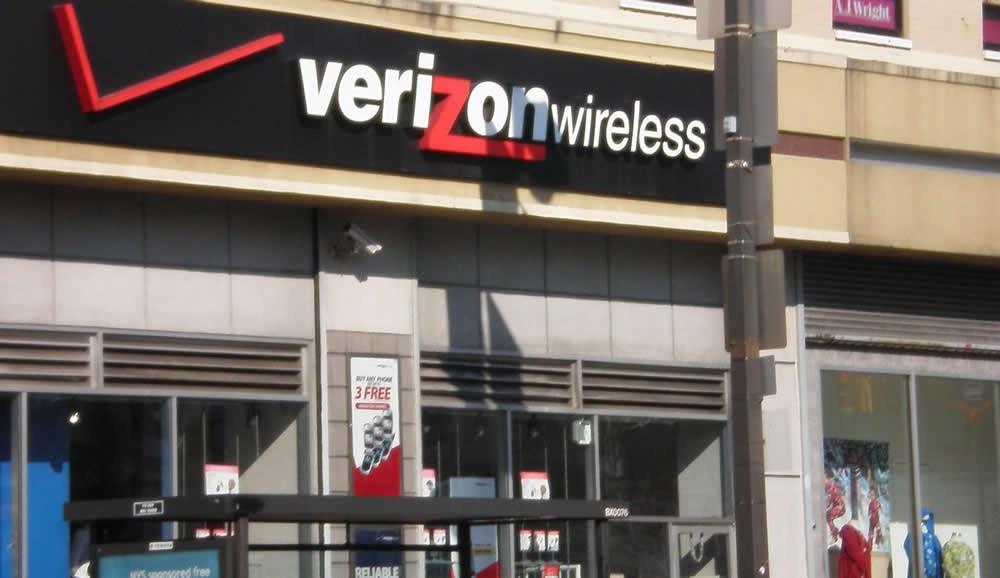
verizon storefront

Definitely helpful for anyone impacted by Hurricane Sandy, Verizon is providing assistance to the public in the form of emergency communication centers.

With locations detailed on Verizon’s site, the wireless company has positioned large, trailer-sized charging stations at locations within Ohio, New Jersey and West Virginia as well as Staten Island. Not limiting outreach to Verizon customers, the company is welcoming anyone that was impacted negatively by Hurricane Sandy. The public can visit the mobile trailers to recharge their mobile devices like smartphones, tablets or laptops. In addition, anyone without a computer can get online at a computer workstation. Verizon is also offering Sandy victims access to mobile phones in order to make domestic calls to friends and families. 
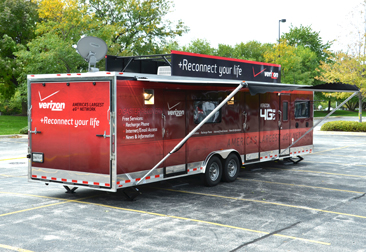
Verizon wireless charging stationBeyond the emergency communication centers, Verizon is opening retail locations up to the public for device charging and free domestic calls. Victims of Hurricane Sandy can also find prepaid phones as well as replacement chargers at Verizon stores if needed.

In order to reestablish wireless communication in areas devastated by Hurricane Sandy, Verizon technicians have been working around the clock to improve service. Regarding the progress of technicians, Verizon representatives stated the company has “seen continued improvement overnight with now more than 96 percent of our cell sites in service and serving our customers in the impacted area, including some of the hardest hit areas of the Northeast.” 

Similar to Verizon, AT&T and T-Mobile stores are opening up retail locations to offer device charging. In addition, AT&T has rolled our mobile charging stations at relief areas across the Northeast. Regarding any payment issues, T-Mobile is giving customers a grace period up until November 8 and plans to waive all late fees as well. Basically, customers that haven’t paid their T-Mobile bill will continue to receive service to their mobile phone. AT&T is also planning on waiving all late fees and will extend payment windows for Hurricane Sandy victims. AT&T representatives did not specifically mention an end date on that grace period. 


Source : digitaltrends[dot]com

Oct 26, 2012

Twizy as a fire truck? Renault Twizy EV to be used by Paris firefighters

Say-bonjour-to-Twizy-Renault's-stylish-EV-with-a-petite-price

The ultra-compact Twizy electric vehicle is set to be tested by the Paris fire department as a support vehicle. The specially adapted car will be equipped with emergency response equipment such as fire extinguishers and oxygen tanks.

While most of us are used to seeing firefighters responding to emergency calls in enormous great trucks roaring through the streets with sirens blaring, residents of Paris may be about to witness the tiny Twizy electric ultra-compact tootling out of a fire station on its way to tackle an inferno or some such incident.

Renault, maker of the ultra-small, ultra-light, ultra-short, ultra-cheap, ultra-pretty-much-everything vehicle, this week presented the Paris fire department with a specially adapted Twizy fitted with emergency response equipment such as fire extinguishers, oxygen tanks, a fire suit, a helmet and a first-aid kit. That’s a lot of stuff when you think about it – I hope they’ve left room for the driver.

Co-developed by Renault, Renault Tech and the Paris fire department, the diminutive doorless car – top speed 50mph (80km/h) – is set to be used as a support vehicle for “early interventions ahead of the arrival of more consequential lifesaving equipment,” Renault said in a press release. It will also be used when setting up temporary safety installations at major public events.

Tests will start in November and last for eight months, with the fire department considering the purchase of a fleet of adapted Twizy cars for use across the city.

“This initial prototype is real-life proof of the research and development work carried out together with the emergency services, demonstrating Renault’s ability and determination to innovate to meet the needs of firefighters,” Renault safety officer Claire Petit Boulanger said.

The Twizy was unveiled as a concept car at the Frankfurt Motor Show back in 2009, and went on sale in a number of European countries earlier this year for around $10,000.

How firefighters will feel about jumping into a Twizy after sliding down the firepole remains to be seen. A reviewer writing in the Telegraph recently said when she drove it around London she had “small boys pointing, mothers laughing, men staring.” And hers didn’t even have a siren on the top. Still, if it benefits the work of a firefighter, improves efficiency and is kinder to the environment, it has to be a good thing, right?


Source : digitaltrends[dot]com

Sep 29, 2012

SpareOne emergency phone: One battery, 15-year charge, now in waterproof bag

SpareOne Emergency Phone waterproof bag

When you can't rely on your smartphone battery to last forever, use the SpareOne emergency phone as backup.

Tis the season for new smartphone announcements. Whether you are a diehard gadgeteer or a general consumer shopping for a new phone, one of the most important thing you want to learn about a product is how long the battery lasts. You never know when you will need to make calls during emergency situations. Luckily, you don’t always have to rely on smartphones in case of long term power outages. The SpareOne emergency cellphone is your perfect backup, running on a single AA battery and can reportedly last up to 15 years with 10 hours of talk time.

SpareOne Emergency PhoneWe received a demo unit of the SpareOne phone and it’s as bare as an emergency phone gets. The candybar style device has all the buttons in the front, is extremely lightweight, and comes complete with the one AA battery it needs to power on. You’ll need to insert your own micro SIM card to make calls, but 911 will always work with or without a SIM. SpareOne recently released the device with a new waterproof, floating bag so your one emergency won’t get destroyed, making it durable in an all-weather situation.

While it’s not a particularly fancy gadget, it does seem like a fairly useful one to have sitting in your emergency shelf. If necessary, the phone also doubles as an torchlight and and last up to 24 hours with the single AA battery. Though the idea is for SpareOne to be an emergency backup phone, the device could make for a good starter phone for younger kids whom you don’t believe has the responsibility of owning a smartphone just yet — but should still have cellphone access at the minimum. It could also make for a good rugged, traveling phone for when you take outdoor trips and don’t want to ruin your fancy iPhone 5. Of course, the only problem you’ll run into in these situations is having to actually remember your contacts’ phone numbers or carry a phonebook … and when was the last time anyone did either?

If you’re intrigued, SpareOne emergency phone is available for purchase now at $120 apiece.


Source : digitaltrends[dot]com

Sep 22, 2012

Twitter’s new Lifeline feature helps users in Japan access emergency information

twitter-logo-black

Twitter launched a new feature today called Lifeline to help users in Japan access relevant information during an emergency.

Twitter’s new Lifeline feature lets users find and follow local accounts that upload important information during emergencies. All that’s needed is a postal code, typed into the service, and Twitter will create a list of resources for you. As of right now the feature is only available to Twitter users in Japan, but there are plans to expand Lifeline into other countries. Presumably this expansion will rely on government cooperation and will probably focus first on countries prone to natural disasters.

The new feature generates a list of Twitter accounts actively posting emergency information. This curated list could include city, district, or national government accounts being updated with official announcements important to the public. It won’t be restricted to government, however, and will likely bring attention to local media and utility companies so people in Japan will be informed of service disruptions and breaking news surrounding the event.

Twitter isn’t the first social media site to venture into this field either. Facebook introduced a similar service to Japan earlier in the year, called “Disaster Message Board”, that allows users to indicate whether they are safe during a natural disaster or other emergency situation. Friends and family can then check Facebook to see the status of their loved one, rather than waiting for a phone call or some other form of communication.

These social media features seem to be responding to the announcement from the Department of Homeland Security in the US after last year’s earthquake in Virginia. At the time, it was recommended the public use text messaging, email, Facebook, or Twitter to check up on friends and family, rather than voice calls. The department claimed this would help clear up phone lines crucial to emergency personnel’s response to the disaster.

“Since Twitter often becomes a de facto lifeline during crises everywhere, we hope to eventually expand this functionality to more locations around the world,” Jinen Kamdar, Twitter product manager, told The Next Web.

According to Kamdar, Twitter has entered a partnership with the Prime Minister’s Lifeline Commission, as well as regional governments in Japan. The Lifeline feature hasn’t been used yet, and hopefully it won’t have to be for a very long time, but it seems like a very important addition to Twitter’s growing platform. What do you think of the new feature? How quickly do you think it will spread around the world?


Source : digitaltrends[dot]com

Sep 6, 2012

AT&T to launch trial run of text-to-911 service

911 dispatch

Ideal for many emergency situations where a call isn't an option, AT&T is testing the text-to-911 service prior to a major network launch.

Detailed within a press release earlier today, AT&T and representatives within the state of Tennessee are joining forces to start testing emergency 911 texting before a nationwide launch of the useful feature. In order to enable the new text-to-911 service, all 911 text messages from AT&T customers will be routed through Tennessee’s Emergency Service IP Network (ESInet) and send to emergency call centers around the state. As the new feature undergoes significant testing, AT&T and the state will get a better understanding of how useful the text-to-911 service is for the public in addition to measuring how efficient call center operators will be at handling the flow and distribution of emergency messages. AT&T hopes to develop a set of rules and standards that will help guide emergency call centers within other states. 

Text-911This new service will be particularly helpful for anyone that’s physically lost the ability to vocalize their emergency with a traditional voice call through 911 emergency services. In addition, the hearing impaired community will be able to communicate problems vastly quicker with a text message through the text-to-911 service.

Another scenario where a text-to-911 service would be vital would be a home invasion. A young child hiding within the home could easily text the emergency to 911 in order to avoid making any noise by speaking during a typical voice call. In addition, a text-to-911 service could be particularly helpful for customers that get poor voice reception in a remote area and have significant problems with dropped calls.

During August 2011, the Federal Communications Commission announced plans to push forward on the text-to-911 service and include the ability to send photos and videos to call center operators. A year prior to that, the FCC has started the initial planning on the project, namely because of the tragic shootings on the Virginia Tech campus. Apparently students were sending text messages to 911 during the shootings, but call centers weren’t equipped to receive the messages.

When asked about the trial run of the text-to-911 service, AT&T Business Solutions VP of Public Safety Solutions Mel Coker stated “AT&T is committed to working with standard bodies, national, state, and local public safety organizations to determine how best to integrate SMS text messages and other advanced communications into future 9-1-1 systems and wireless networks. This trial will be vital in evaluating Text to 9-1-1 solutions with the goal of providing reliable, universal access for our customers.”

Announced during May 2012, Verizon is also working toward providing a text-to-911 service to customers. Verizon customers will simply need a wireless phone capable of sending messages in addition to the wireless service plan that supports text messaging. Based off prior plans, Verizon representatives will launch the new feature within several major metropolitan areas during the first half of 2013 prior to launching the feature across the entire nation. A future planned addition to the text-to-911 service is the ability to automatically include a link to the user’s location. However, the phone would have to utilize a built-in GPS chip in order to relay that specific information to emergency services. 


Source : digitaltrends[dot]com

Sep 3, 2012

Oracle scrambles to patch Java exploits

Java Logo

Oracle has issued an out-of-cycle emergency update to Java to patch critical security problems - but experts say there's more to come.

Database giant Oracle has issued an out-of-cycle emergency security update to Java that aims to patch several vulnerabilities that are being actively being exploited by cybercriminals. The update — Java Version 7 Update 7 — closes loopholes that potentially allow attackers to gain complete control of a computer over a network without a username or password; moreover, the vulnerabilities specifically apply to Java applications running in desktop Web browsers. While standalone Java applications and Java running on servers isn’t affected (and that includes Oracles own server-based software), it does mean folks who can run Java in a Web browser are vulnerable — and some estimates put that number at over a billion machines worldwide.

Oracle’s highly-unusual move to issue an out-of-cycle security update comes on the heels of the Java exploits being incorporated in the widely-used Blackhole cyberattack toolkit. Blackhole is a popular cut-and-paste exploit tool that comes pre-loaded with code designed to exploit flaws in things like Adobe Flash, Adobe Reader, and Java — it’s popular with cybercriminals who lack deep technical background because it’s relatively easy to use and is regularly updated with new exploits. Kaspersky Labs were apparently the first to report Blackhole had integrated the zero-day Java exploits; the news was quickly confirmed by security firms like Sophos and ESET.

However, the situation is more complicated. Researchers at Security Explorations claim they reported the vulnerabilities just patched by Oracle all the way back in April of 2012 — nearly six months ago. Moreover, Security Explorations claims that the latest update — Java 7 Update 7 — contains another vulnerability. If confirmed by Oracle, that means another Java update could be on the way in days — or, perhaps, in six months.

Java has been highlighted as a potentially massive security threat for years, but it’s only in 2012 that it’s jumped to the forefront of mainstream security topics, first with the Flashback malware that targeted Mac OS X systems, and now with zero-day exploits targeting desktop browsers with Java enabled.

As originally envisioned by Sun, Java was intended to be a write-once, run-anywhere language that would enable developers to write applications that could be run on any computer with a Java VM, regardless of platform. However, while Java technology has found widespread use in servers and mobile devices (the Dalvik Java virtual machine was the center of Oracle’s high-profile suit against Google over Android), the market dominance of Flash and now the ascendency of HTML5 technologies make Java on the desktop unnecessary for the vast majority of Internet users. Most security researchers recommend users uninstall or disable the Java Web plug-in in their browsers.

The current Java vulnerabilities are mostly applicable to Windows and Linux users. Most Mac users are immune from these particular Java exploits, even if they have Java installed. (Apple has not shipped Java by default with Macs for some time.) Java for OS X has not been updated to Java 7, so the only potentially-vulnerable Mac users are folks who have manually installed Java SE 7 on their own.


Source : digitaltrends[dot]com

Aug 28, 2012

The OwnFone: A perfect phone for kids, backup for adults

Ordering your own OwnFone

OwnFone lets parents create customizable, super simple phones for their kids or good emergency phones for adults

Turns out, it doesn’t matter who won the patent wars because there’s a new (possibly) must-have phone on the market: the OwnFone. Created specifically for those users who couldn’t be bothered with a feature-rich smartphone, the OwnFone is programmed for the sole purpose of calling the people you talk to the most. Numbers aren’t stored on an internal storage device either. Rather, to make the phone as simple as possible, numbers are stored in the cloud and retrieved when needed.

Launched first in the UK, the super simple device allows you to configure up to 12 contacts. The names of each contact will then be printed on a large white button, push the button and it will call that contact. As far as features go, that basically sums it up — though it’s worth mentioning that braille and photo buttons are in the works. And just to be clear, there is no keyboard or screen on the device.

The OwnFone has the dimensions of a credit card, weighs 40 grams, and manages to be a slim 7mm thick. The size is great if you need a back-up device for when your main one drains battery. You can even forward your main number to your OwnFone if you want a fairly-disposable phone to take travelling. The look of the device is left up to you. First, you can choose from 2, 4, 8, or 12 contact layouts. Then you choose from pink, blue, green, orange, red, or black for the main color of your OwnFone. Finally, you can choose to leave it plain or add an image or pattern to customize it further.

Besides catering to smartphone-haters everywhere (they exist, right?), the OwnFone seems like a perfect fit for kids to carry around without having to add another expensive mobile contract to the monthly bills. Alternately, less tech-inclined adults could definitely benefit from a device that does one thing and does it well. Plus, it’s easy on the wallet with a meager price tag of £55. Throw in free replacements and you have a pretty stellar deal.

Unfortunately, if all of this sounds like your cup of tea, the OwnFone is currently limited to the United Kingdom and Northern Ireland. Would you consider ordering an OwnFone? What would you use it for?


Source : digitaltrends[dot]com