Pages

Showing posts with label phones. Show all posts

Nov 14, 2012

JLab releases style-centric Diego and Bombora headphones

As cool as these new phones look, we're hoping JLab put as much effort into their interiors as it did with their exteriors.

 The perennial kickoff for holiday madness known as Black Friday is a little more than a week out, and things are beginning to heat up. JLab has been fanning those flames of late, as yesterday, it unveiled its new Crasher Bluetooth speaker, and two new pairs of headphones. The phones, dubbed Bombora and Diego, are on-ear and in-ear respectively and inject some funk into the traditional red & green holiday palette.

  • Diego – Inspired by SoCal sound and style, the Diego earbuds are powered by a with a 10mm neodymium micro driver, and are outfitted with an in-line mic/remote, pretty standard given their $20 price point. We just hope that these phones, while clearly built around the culture of music, also reflect the power of music. In other words, let’s hope substance isn’t forgone for style. The Diego’s (pictured right) also feature a Double Molded Y Connector w/ 3.5mm Jack and a variety of tips. 

             Pricing: $20.  Availability: Purple/Mint available for pre-order at JLabAudio and Amazon 

  • Bombora – These cushy surf-inspired on-ear headphones sport 40 mm full-range drivers, a push button mic, a detachable flat nylon cable, and fully-isolating ear-cups. Again, they seem a bit more style-centric than audio-obsessed. Named after the Aboriginal word for large, powerful ocean waves, Bomboras (pictured above) come in a variety of colors and designs, including the limited edition skin seen above, created by the San Diego-based TEKST artist. It seems comfort was also a concern here, as the Bomboras utilize memory foam ear cushions upholstered with micro-suede; sounds like a treat for the ears. 

             Pricing: $70.  Availability:  Midnight Black/Gunmetal and TEKST edition available for pre-order at JLabAudio and Amazon 

We’ve yet to review either of these offerings, but we’re anxious to see if their designs – which ooze cool – overshadow their audio.


Source : digitaltrends[dot]com

Xiaomi is working on a $64 Android-based set-top box called MiBox

Xiaomi is a young company that made a name for itself with affordable, feature-rich Android phones but is branching out now. Its new product is called the Xiaomi MiBox, an Android-based set-top box.

Typically for Xiaomi, the MiBox is priced quite attractively – $64 (RMB 399). Unfortunately, the company is yet to expand its availability beyond China.

The set-top box will have access to 30,000 movies and TV shows (the source of the videos is unknown). The MiBox will also play Android games, including Plants vs. Zombies, and will feature Douban Music support.

The MiBox hooks up to the TV using a standard HDMI cable and has an Ethernet port for Internet connectivity and a USB port for connecting external storage. There’s a remote control in the box, but you can also stream content from your Android or iOS phone (AirPlay is supported too).

It’s not clear what kind of hardware powers the device, but Xiaomi have used Exynos and Snapdragon S4 Pro chipsets in their phones so far. The supported video formats are – RM / RMVB, MKV, TS, FLV, AVI, VOB, MOV, WMV, MP4 at up to 1080p.


Source : blog[dot]gsmarena[dot]com

Nov 5, 2012

Samsung Galaxy S Duos battery tests are complete, results are inside

Dual-SIM phones are still relatively rare and usually limited to the low-end, but the Samsung Galaxy S Duos takes after the Galaxy S III mini in terms of looks (though not in terms of specs, unfortunately).

Dual-SIM phones are usually bought when there are no good plans available – ones that offer enough talk time, texts and data. So, how long can the S Duos last if you need the second SIM for even more talking?

With a time of 8 and a half hours, the Galaxy S Duos manages to outlast its Galaxy Ace Duos cousin, even though it doesn’t have much of an advantage in the battery department – 1500mAh for the S Duos and 1300mAh for the Ace Duos. This is also an hour more than the official specs promise (those are usually conservative).


Talk time

  • Motorola RAZR MAXX (ICS)
    21:18
  • Motorola DROID RAZR MAXX
    20:24
  • Motorola RAZR i
    20:07
  • Samsung Galaxy Note II N7100
    16:57
  • LG Optimus G
    15:30
  • Huawei Ascend P1
    12:30
  • Samsung Galaxy Note
    12:14
  • Samsung I8530 Galaxy Beam
    11:58
  • Samsung Wave 3 S8600
    11:07
  • HTC One X (AT&T, LTE)
    10:35
  • Samsung Galaxy S Duos
    11:28
  • Samsung I9300 Galaxy S III
    10:20
  • Samsung I9300 Galaxy S III (JB)
    10:15
  • HTC One V
    10:00
  • Meizu MX 4-core
    10:00
  • HTC One X
    9:57
  • HTC One S
    9:42
  • Samsung I9103 Galaxy R
    9:40
  • HTC Sensation XL
    9:30
  • Nokia Lumia 710
    9:05
  • Motorola Atrix HD
    9:04
  • HTC Vivid
    9:02
  • HTC Rhyme
    8:48
  • Apple iPhone 5
    8:42
  • LG Optimus 3D Max P720
    8:42
  • Sony Ericsson Xperia neo V
    8:41
  • Meizu MX
    8:39
  • Samsung Galaxy S II
    8:35
  • Nokia Lumia 800
    8:25
  • Samsung Galaxy Nexus
    8:23
  • HTC Desire V
    8:20
  • Samsung Captivate Glide
    8:20
  • Sony Xperia T
    8:15
  • HTC Rezound (LTE)
    8:10
  • Samsung Galaxy Note (LTE)
    8:02
  • LG Optimus Vu
    7:57
  • LG Optimus 4X HD
    7:41
  • Apple iPhone 4S
    7:41
  • Samsung i937 Focus S
    7:25
  • HTC Evo 4G LTE (LTE)
    7:21
  • Samsung Galaxy S Blaze 4G
    7:14
  • Sony Xperia acro S
    7:09
  • Samsung Rugby Smart I847
    7:09
  • Sony Ericsson Xperia Pro
    6:57
  • Nokia N9
    6:57
  • HTC Radar
    6:53
  • Samsung Galaxy Ace Duos
    6:53
  • BlackBerry Curve 9380
    6:52
  • Samsung Galaxy Pocket
    5:54
  • Nokia Lumia 900 for AT&T (LTE)
    5:53
  • Sony Xperia ion LTE
    5:52
  • Sony Xperia P
    5:33
  • Nokia 808 PureView
    5:16
  • LG Nitro HD (LTE)
    5:16
  • HTC Titan II (LTE)
    5:10
  • BlackBerry Bold 9790
    5:00
  • Pantech Burst
    4:46

The web browsing test was done over Wi-Fi and the phone lasted around 5 hours and 20 minutes. It’s a bit better than what the dual-SIM Ace did, which is pretty good considering the Galaxy S Duos has a larger, higher-res screen (4″ vs. 3.5″ and WVGA vs. HVGA).

Web browsing

  • Apple iPhone 5
    9:56
  • Motorola RAZR MAXX (ICS)
    9:12
  • Samsung Galaxy Note II N7100
    8:48
  • Motorola DROID RAZR MAXX
    7:23
  • HTC Radar
    7:17
  • Motorola RAZR i
    7:06
  • Apple iPhone 4S
    6:56
  • HTC One V
    6:49
  • Motorola Atrix HD
    6:40
  • BlackBerry Curve 9380
    6:40
  • Samsung I9300 Galaxy S III (JB)
    6:27
  • Samsung i937 Focus S
    6:15
  • Sony Xperia ion LTE
    5:56
  • Samsung Rugby Smart I847
    5:53
  • Pantech Burst
    5:51
  • Samsung Galaxy S Blaze 4G
    5:45
  • HTC Desire V
    5:44
  • HTC Evo 4G LTE
    5:41
  • Samsung Wave 3 S8600
    5:34
  • Sony Xperia T
    5:33
  • Samsung Captivate Glide
    5:33
  • Samsung I8530 Galaxy Beam
    5:28
  • Samsung Galaxy Note LTE
    5:24
  • Samsung Galaxy S Duos
    5:23
  • HTC Sensation XL
    5:20
  • Meizu MX 4-core
    5:19
  • Samsung I9300 Galaxy S III
    5:17
  • Sony Xperia acro S
    5:16
  • HTC Rezound
    5:16
  • LG Optimus G
    5:15
  • HTC Rhyme
    5:08
  • Samsung I9103 Galaxy R
    5:07
  • HTC One X (AT&T)
    5:03
  • Sony Ericsson Xperia Pro
    4:50
  • LG Optimus Vu
    4:49
  • HTC Vivid
    4:46
  • Samsung Galaxy Ace Duos
    4:45
  • Meizu MX
    4:35
  • Nokia N9
    4:33
  • Samsung Galaxy S II
    4:24
  • Sony Ericsson Xperia neo V
    4:20
  • HTC One X
    4:18
  • Nokia 808 PureView
    4:14
  • LG Optimus 3D Max P720
    4:10
  • Nokia Lumia 900 for AT&T
    4:10
  • Nokia Lumia 800
    4:07
  • HTC Titan II (LTE)
    4:05
  • HTC One S
    4:03
  • BlackBerry Bold 9790
    4:02
  • LG Nitro HD
    4:00
  • LG Optimus 4X HD
    3:59
  • Sony Xperia P
    3:59
  • Nokia Lumia 710
    3:51
  • Samsung Galaxy Pocket
    3:47
  • Samsung Galaxy Note
    3:35
  • Huawei Ascend P1
    3:23
  • Samsung Galaxy Nexus
    3:01

The video playback time of the S Duos was disappointing at 4 and a half hours, which is two hours less than the Ace and puts the phone towards the bottom of the chart. It’s worse than the performance of the HTC Desire V – another dual-SIM droid with almost identical specs.

Video playback

  • Motorola RAZR MAXX (ICS)
    16:35
  • Motorola DROID RAZR MAXX
    14:17
  • Samsung Galaxy Note II N7100
    11:27
  • Apple iPhone 5
    10:12
  • Samsung I9300 Galaxy S III
    10:01
  • Nokia 808 PureView
    9:53
  • Samsung I8530 Galaxy Beam
    9:42
  • Samsung Rugby Smart I847
    9:34
  • HTC One S
    9:28
  • Samsung I9300 Galaxy S III (JB)
    9:27
  • Apple iPhone 4S
    9:24
  • HTC Evo 4G LTE
    9:07
  • Nokia N9
    8:40
  • Samsung Galaxy Note
    8:25
  • Motorola RAZR i
    8:11
  • Samsung Galaxy S II
    8:00
  • Samsung i937 Focus S
    7:55
  • Samsung Wave 3 S8600
    7:52
  • Sony Ericsson Xperia neo V
    7:45
  • Huawei Ascend P1
    7:38
  • Samsung Galaxy S Blaze 4G
    7:33
  • Samsung Galaxy Note LTE
    7:30
  • LG Optimus G
    7:16
  • Meizu MX 4-core
    6:33
  • HTC Desire V
    6:26
  • HTC One X (AT&T)
    6:26
  • Samsung Galaxy Ace Duos
    6:25
  • LG Optimus Vu
    6:23
  • Samsung I9103 Galaxy R
    6:21
  • HTC Sensation XL
    6:12
  • Samsung Galaxy Pocket
    6:06
  • Samsung Captivate Glide
    6:04
  • Sony Xperia ion LTE
    6:03
  • Samsung Galaxy Nexus
    6:02
  • Sony Xperia T
    6:01
  • Motorola Atrix HD
    6:01
  • HTC Vivid
    6:00
  • HTC Radar
    5:54
  • Nokia Lumia 800
    5:52
  • HTC Titan II
    5:50
  • BlackBerry Bold 9790
    5:47
  • HTC One X
    5:45
  • Sony Ericsson Xperia Pro
    5:44
  • Sony Xperia acro S
    5:38
  • Pantech Burst
    5:38
  • Meizu MX
    5:27
  • HTC Rhyme
    5:23
  • HTC One V
    5:20
  • Nokia Lumia 900 for AT&T
    5:18
  • BlackBerry Curve 9380
    5:09
  • HTC Rezound
    5:03
  • Samsung Galaxy S Duos
    4:30
  • Sony Xperia P
    4:30

  • LG Nitro HD
    4:17
  • LG Optimus 4X HD
    4:14
  • LG Optimus 3D Max P720
    3:28
  • Nokia Lumia 710
    3:27

After running the calculations, the endurance rating for the Samsung Galaxy S Duos works out to 43 hours, barely better than what the Ace Duos got, but a bit less than the Desire V score.


Source : blog[dot]gsmarena[dot]com

Nov 1, 2012

US database for stolen phones is now live, to join the international blacklist soon

The Wireless Association (CTIA) has announced the US database for stolen phones is now up and running. In case a phone gets in there it won’t be allowed to connect to any of the US networks.

The participating carriers in the database are AT&T, Cellcom, Nex-Tech Wireless, Sprint, T-Mobile USA, and Verizon Wireless. They already deployed their IMEI databases of stolen phones and the merge should be completed within a year.

Part of the merged database is already live and when a phone pops in there – it will never get service from any of those networks. In the efforts of drying the stolen phones market this database will soon join the GSMA Global IMEI database and its blacklist. That way no phone stolen stateside will work overseas and vice versa.

This surely won’t stop the phone thefts, but will make things a lot tougher for the thieves and hopefully most of them will drop this “business” eventually.


Source : blog[dot]gsmarena[dot]com

Oct 26, 2012

Pass the pipe: Urbanears intros their funky Plattan Tweed Edition headphones

Urbanears-Plattan-Tweed

Hand-woven tweed headphones are a rarity to say the least, but the Plattan Tweed Edition phones from Urbanears are all about funky style.

When you hear tweed, you probably think of a pipe-smoking Harvard professor circa-1945. Urbanears’ new Plattan Tweed Edition are anachronistic to be sure, but tweed is about  the only thing they have in common with the last century. The funky, ironic phones are equipped with 40 mm handmade drivers, an in-line remote/microphone and a socket on the earpiece so friends can listen in.

We’ve evaluated Urbanears’ products before, and we haven’t been blown away, but this model’s selling point is more style than substance. In other words, audio junkies might be left wanting, but hipsters will swoon over the aesthetic. It’s probably safe to say that we don’t have many tweed connoisseurs in the audience, but in case you were curious, their exterior is constructed of hand-woven harris tweed, made of 100 percent virgin wool. These look comfy for the winter, but on a hot summer day, we don’t know that you’d want to rock a woolen headband.

The phones – which are the third entry in the Urbanears Editions line – also feature a 3.5mm plug and a collapsible design. They’re available now at urbanears.com for $80.


Source : digitaltrends[dot]com

Oct 25, 2012

Bad manners? UK store stops serving customers yakking on mobile phones

cell phone ban

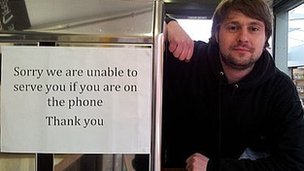
Staff at a store in England have become so annoyed with people talking on their mobile phones at the cash register that they're now refusing to serve them.

The County Stores in south-west England says on its website that visitors will be able to find, among its many offerings, “a bakery, our delicatessen counter, a small and friendly butcher, quality chocolates and coffee.” They’ll also find a notice informing them that should they approach a cash register while talking on a mobile phone, they won’t be served.

Staff at the store, which has been in business since 1836, have become so fed up with distracted customers yakking away on their handsets that in the end the notice seemed like the only solution.

“Quite simply, if someone’s on their phone, we’ll serve the next person,” store assistant Sharon Kidd told the Daily Mail. “People refusing to hang up when it’s their turn to be served is happening increasingly, and…..the queue can get quite long.”

Kidd said that on the whole that the policy has been well received by customers, with only one or two visitors getting upset after being ignored.

The owner of the store, Hugh Duder, understands his workers’ disgruntlement at visitors who appear unable to take a break from their mobiles, saying, “It’s disrespectful to be on the phone when you want to get served, and the counter assistants shouldn’t have to put up with it.”

The store isn’t first in the UK to adopt such a policy. Earlier this year Darren Groom, owner of a coffee shop in Norwich in eastern England, decided to “strike a blow for basic manners” by putting up a sign indicating that he would refuse to serve customers talking on a phone.

Groom explained that he’d become fed up with people expecting him to be able to lip read their order.

“In the shop we need to ask a few questions, like whether they’re having it in or taking it away, whether they want whole milk or not, sugar or not,” he told the BBC, adding “When people come in we like to say ‘hello’. It’s nice if people respond to that. They should have the basic manners to converse with us.”

In the case of retail stores, it’s possible the issue of customers talking on their phone while at the cash register is a bigger annoyance than many people realize. However, beyond sticking up notices, there’s little staff can do. If only cell phone jammers weren’t illegal….

[Image: Arcady / Shutterstock]


Source : digitaltrends[dot]com

Oct 18, 2012

Best Smartphones of 2012

There may still be a couple of months left of the year, but it is already clear to see that some phones have made more of an impact in 2012 than others – not always for the right reasons. This year has seen the Samsung Galaxy S3 become the most pre-ordered thing in history while the latest iPhone outsold earlier versions by a clear margin of one million during its launch weekend.

There have been a lot of great phones this year, and technology has been moving so rapidly that even devices which fall into the “mid-range” or “budget” categories are still highly impressive pieces of technology. But if I were to pick just four handsets that have been the most noteworthy this year, I would probably pick the following:

Samsung Galaxy S3 

Undoubtedly the best phone of the year. Not just in terms of sales figures and critical acclaim but also in the sheer number of innovations it has ushered in. For all Apple’s accusations over the past several months, it seems as though it is actually Samsung that is starting to think outside the box in the mobile arena, while Apple is beginning to rest on its laurels and compete through patent litigation.

The S3′s larger 4.8 inch Super AMOLED HD screen provides unparalleled picture quality and enough room to allow you to watch movies while typing out messages and emails. S Beam, an improved version of Android’s NFC sharing app, not only allows you to easily share music and videos but stands to completely revolutionise the way that people exchange phone numbers (tapping two phones together is surely much simpler than reading a string of numbers seven or eight times back and forth between two people).

Recent tests also showed that the Galaxy S3 outperformed all of its close competition in mobile web browsing battery performance, providing nearly six hours of use – while the iPhone, with its claimed 8 hours, only achieved 3 hours and 20 minutes. Some people are daunted by the larger size of the S3, yet this is something that one can easily become accustomed to in order to enjoy the excellent features on offer.

iPhone 5 

Image Credit by Want China Times

To many people it is an iPhone or nothing, and as far as iPhones go, this is the best one yet. It is the fastest, has the best data connections (the first iPhone with LTE) and has the best screen for movie content and web browsing.

Even though it has been beset by numerous problems, which have even been enough for diehard iFans and former Apple employees to want to switch to Samsung, it would be hard to not include the iPhone 5 in this list.

Despite its problems, this has still been the fastest selling iPhone to date and will most likely wind up being the biggest selling phone of 2012 by the end of December. Irrespective of sales figures, the iPhone marks some of the most important changes to come to the iPhone brand since it first began in 2007. There is the larger 4 inch screen, the new Lightning dock connector and many software enhancements including Facebook integration.

This will be the most popular phone of 2012 without a doubt, even if it won’t win the most awards or the most acclaim from critics, and so it rightfully deserves its place as one of the best phones of the year.

Nokia Lumia 920 

On the surface, the Lumia 920 doesn’t look a whole lot different to some of Nokia’s earlier Lumia phones. However, thanks to Windows Phone 8 and some new hardware that is now supported by the Microsoft OS, this stands to be the finest phone Nokia has produced since its fall from grace a few years back.

Nokia’s plans to reinvent itself were hampered earlier this year when Microsoft revealed that older Windows Phone 7 devices would not be able to update to the newer version, released later this month. This was effectively a nail in the coffin for Nokia’s first wave of Windows Phones and the Finnish company has been on tenterhooks for the past few months while it awaits the launch of WP8.

Windows Phone 8 has added support for multicore processors, and this is the first Nokia phone to come with a dual core 1.5GHz Krait chip and 1GB RAM. WP8 also added support for NFC and this will be one of the first Nokia phones with the new data sharing technology included. The only new addition to WP8 that has not made its way to the Lumia 920 is microSD card support, although this more likely due to aesthetic reasons than anything else. 32GB provides a fair amount of room, but the inability to expand this is disappointing to say the least.

This is also the first Nokia phone and one of the first Windows Phones to include LTE support.

Motorola RAZR MAXX / Droid RAZR MAXX 

Originally released in the United States at start of 2012 as the Droid RAZR MAXX, this handset was later released in other markets as the RAZR MAXX. (This is due to the fact that “Droid” is a trademark owned by Lucasfilm and Motorola only has licence to use it in the US). Why is this phone so special? Simply because the RAZR MAXX demonstrated that excellent smartphone features don’t need to come at the expense of battery life.

The RAZR MAXX has a 3300mAh Lithium Ion battery providing up to a month’s worth of standby battery life and nearly 18 hours of talk time. By comparison, the S3 has a 2100mAh, the Lumia 920 a 2000mAh, and the iPhone 5 a measly 1440mAh battery.

While smartphones are being crammed with more and more features, including face recognition, NFC data sharing, streaming online videos, and all sorts of other things that were just pipedreams a few years back, battery technology has not really changed much in the past 20 years.

To provide more battery life to meet the demands of all these extra power-hungry features the only option that manufacturers have is to keep making batteries bigger and bigger. Motorola showed this could be done while still producing a pocket friendly and slender device.

The RAZR MAXX is several months old now and in smartphone terms is starting to show its age. It shipped with Android 2.3 Gingerbread while the world is quickly heading towards 5.0 Key Lime Pie. Due to the Motorola custom interface the RAZR MAXX will miss out from future Android updates.

These are my picks for the best and most interesting phones of 2012. The best all round winner has to be the Samsung Galaxy S3, while the iPhone 5 and Lumia 920 will provide much to entice fans of either platform. The RAZR also goes to show that a phone doesn’t need to be drained of all power before the end of the day. All of these phones have proved to be extremely popular handsets on best-mobile-contracts.co.uk this year. It has been an interesting year for the smartphone industry and, if current trends continue, next year should be even more exciting.

Report an error

No tags for this post.
Source : techtalkafrica[dot]com

Oct 3, 2012

Nokia releases Xpress for Lumia browser, compresses data by up to 90 percent

Nokia has released the beta version of a new browser called Xpress for Lumia that is based on the same principle as the browser on their Asha phones, which itself was based on the Opera Mini.

The Nokia Xpress for Lumia browser is designed exclusively for Nokia Lumia phones and claims to compress data by up to 90 percent, saving your data, time and money.

Some of the other important features of this browser include:

  • Detailed report on the amount of data that you consumed on the browser. Can be saved as a live tile for quick view.
  • Save sites with RSS feeds in the browser and then view the articles in a magazine style layout.
  • Save pages for offline viewing
  • Save a video on SkyDrive and watch it later
  • Tap on a word on a page and do a quick search on Wikipedia, Bing and YouTube
  • Translate a page to one of the 10 language options available

The browser is currently available for download only from Nokia Beta Labs.


Source : blog[dot]gsmarena[dot]com

Sep 30, 2012

Why I’ll be buying a Wii U at launch

Wii U bundle

Every gamer should buy Nintendo's next console. Here's why.

Wii u everything you need to know pricing launch release date

Nintendo doesn’t have it easy these days. Mobile phones and tablets continue to peck away at its handheld consoles while the Wii, now nearly six years old, struggles to find new buyers among fierce competition from Microsoft and Sony.

As if that weren’t enough, Nintendo is now paying for its negligence towards the gaming industry. The new controller has been met with skepticism, and the claims of better third-party support this time out have been met with shrugs.  We’ve heard this song and dance before.

It’s all seems very doom and gloom. Yet, in spite of this, I’m going to line up to buy a Wii U at launch – and if “gamer” is a label you’re happy to claim, you should too. Here’s why.

Wii U GamepadEnough Power To Please

The Internet’s popular opinion about the Wii U’s hardware is woefully miss-informed.  I’ve read countless forum posts and website comments that firmly state the Wii U is just a minor upgrade to the Wii and no better than the Xbox 360 or PlayStation 3. That’s nonsense.

We don’t know exactly what is in the Wii U yet, but we do know it’s a relatively new PowerPC processor paired with 2GB of RAM and a custom AMD Radeon GPU, most likely derived from the company’s Evergreen architecture. For comparison, the Xbox 360 uses a graphics chip similar to AMD’s Fudo architecture – which is five years older. Given the separation in architectures it would not be surprising if the raw power of the Wii U is three or four times that of an Xbox 360.

We don’t need to rely on speculation, however. Nintendo has constantly demonstrated games running at 1080p, something current consoles aren’t capable of (they render games at a lower resolution and up-scale to 1080p).

It’s likely that the new consoles from Microsoft and Sony will be quicker, but that’s okay. What’s important is that Nintendo will finally have hardware that can do justice to the beautiful art found in its first-party titles.

An Excellent Launch Lineup

New Super Mario Bros. UThe Wii U hits store shelves on November 18th with an impressive selection of games — 23 will be available on launch day, and 51 titles in total are planned for the “launch window” that runs through March.  Several of these are brand-new games that are launching exclusively for the Wii U. I’m personally looking forward to New Super Mario Bros. U, ZombiU and even Epic Mickey 2 (which will be released on all systems, but offer Wii U-specific features on the GamePad). These titles alone put the launch line-ups of the Xbox 360 and PlayStation 3 to shame. I’m also looking forward to Rayman Legends, though it now looks like it may not make the November 18 release.

But that’s just the tip of the iceberg. Nintendo is also launching with a generous selection of third-party titles including Assassin’s Creed III, Darksiders II, Call of Duty: Black Ops II and Mass Effect 3. Most of the have been released, or will be released for other platforms, but their inclusion on the Wii U helps to beef up the console’s appeal. And that goes double for me.

I haven’t played several new console games because my Xbox 360 went kaput (for the third time) and was no longer covered under warranty. I couldn’t find any reason why I should waste money replacing it when the Wii U was already announced and capable of playing the same games. My excitement might be less if Microsoft made reliable hardware.

Nintendo Can Take Over My Living Room

Nintendo TV controllerNintendo TVii came out of nowhere. There was little to hint at its existence and then – boom! Nintendo drops the bomb just a few months before release.

TVii put the Wii U over the top for me. Since my Xbox 360 died, I’ve been using a Roku for my streaming needs. It works fine and I’d recommend it to anyone, but it’s terribly simple. Scrolling through Netflix titles can take some time, and there’s not much customization available. It works. And that’s all it does.

The new controller must have given the guys at Logitech a heart-attack. It’s taken them years to squeeze small touchscreens into their line of Harmony remotes. Then here comes Nintendo, tromping in with 6.2 touchscreen display that connects directly with streaming services (via the Wii U, of course), and can even be used to purchase new content.

Television via console is now Nintendo’s game to lose. As long as the processor isn’t too slow, as long as the touchscreen isn’t unresponsive, as long as the software works right – it’ll be great. And inexpensive, too, because there’s no need for an additional subscription to access content you’ve already paid for. That’s a lesson Microsoft should learn.

wii u pro controllerBackwards Compatibility

Buying a new console is often bitter-sweet. Yay, it’s a new console… but now I have to buy all new peripherals and games. Ah, hell.

The Wii U doesn’t ask so much from buyers. Most Wii accessories are compatible with it, as are most Wii games. Even software and save data downloaded to the Wii will be transferable to the Wii U. In a sense, the new console is more of an upgrade than an entirely new product. It adds new capabilities but also retains the functionality found in the old system.

Nintendo is not abandoning its family-friendly position. And that position is partially based on price. Asking a family to replace an old console with a new one – and three new controllers, plus any peripherals – is always a tall order. I’m happy I’m not going to have to re-purchase controllers when the next Mario Kart game comes out.

Wii U premium bundle

Yes, The Price Is Right

Nintendo’s premium Wii U, which is the one you want, retails for $349. There have been the usual complaints, but they’re only valid if you think coin is traded as freely in real life as it was in the last Mario game.

This entirely new console, which is more powerful than any other on the market today and comes with a 6.2” touchscreen controller, costs less at launch than either the Xbox 360 or PS3 did (by a huge margin in the case of the PS3). Even now it’s only $100 more (in premium guise) than the current mid-range Xbox 360 or PlayStation 3 bundle. This seems like a damn good deal. I seriously doubt that Nintendo is making any per-unit profit at this price.

And let’s not forget that the Wii U is compatible with old controllers, which means current Wii owners don’t have to pay anything extra for additional peripherals. The new Pro controller, which is tailored towards third-party games, is the only exception — but hopefully it will be sold at a price similar to the current Classic controller, which is $20.

Conclusion

Will the new console reverse Nintendo’s fortunes? That’s impossible to know. Its competitors have yet to reveal themselves, and long-term success depends on far more than a console’s capabilities at launch.

Then again, speculation about profit margins won’t make the Wii U more or less enjoyable. It is a game console. It should play games well, and it should have good games to play. The Wii U promises better gaming than any other console, and Nintendo has thrown in a tasty bonus with TVii. That’s more than enough to get me in line. What about U?


Source : digitaltrends[dot]com

Sep 25, 2012

Nokia Asha 306 drops by the office, will stay around for a review

The Nokia Asha 306 is part of the latest crop of fully touch-operated S40 phones. It is nearly identical to the Asha 305, except that one was a dual-SIM phone and this one has Wi-Fi.

The Nokia Asha 306 relies on a 3″ WQVGA resistive touchscreen – the capacitive units are reserved for the Asha 311 in this family. It’s not as sensitive as we would have liked, but it is multi-touch enabled, which comes in handy in the Gallery.

The Asha 306 exterior is made of plastic and while we like the matte plastic on the back, the glossy accents on the top and bottom look rather cheap. Still, the phone finds a good balance between being light and having some heft to it (which gives it a solid feel).


Nokia Asha 306 at ours

The hardware inside is pretty basic. You only get quad-band 2G, though the Wi-Fi g/b does improve things considerably. The phone is powered by a rather constrained chipset with a slow CPU and little RAM, which means the user interface is far from buttery smooth.

Speaking of interface, the Asha 306 uses the MeeGo inspired swipe UI and its one of the very best UIs we’ve seen on a feature phone. Check out the video below to see it in action, right after the overview of the retail package of the phone and its hardware.


Source : blog[dot]gsmarena[dot]com

Nokia’s new Asha 308 and Asha 309 are now “smartphones,” despite running Series 40

Nokia Asha 309

Nokia has announced a pair of new Asha touchscreen phones, and made a point of labeling them as smartphones. So, what has changed?

Nokia has announced a pair of new Asha phones, the Asha 308 and Asha 309, which as touchscreen devices join the previously released Asha 305, Asha 306 and Asha 311. While we, and everyone else, referred to them as “feature phones,” according to Nokia’s press release, the Asha phones have earned “full smartphone classification from global market research companies and analysts such as GfK and IDC.”

So, you may be thinking, the Asha’s run Symbian Belle? Nope, the 308 and 309 still use Series 40 as their operating system, except it’s now called “Nokia OS” according to the specification pages on Nokia’s website.

The press release continues to refer to the 308 and 309 as smartphones, but looking back at the release for the Asha 305, 306 and 311, they were “touch screen devices,” with a “smartphone-like” experience. What has changed about Series 40 between early June, July — when Nokia still referred to it as a feature phone OS — and now? Not much, as this is manipulative marketing at its best.

It has been a long-time coming too, as the new generation of Series 40 phones have been blurring the line between feature and smart devices for a while, and when Nokia sold its 1.5 billionth Series 40 handset it paved the way for the change by describing them as “smartphone lite.”

Asha 308 and 309 features

Here’s what you need to know about the new Asha phones. The Asha 308 is a dual-SIM variant of the Asha 309 and aside from this feature, they’re both identical, so we’ll concentrate on the 309. A 3-inch capacitive touchscreen is your window into the world of Nokia OS and it has a resolution of 400 x 240, while the little device weighs just 104 grams and measures 13.2mm thick.

There’s a 2-megapixel camera on the back, plus Nokia Maps, Wi-Fi, a microSD card slot and an FM radio are all to be found inside. The Nokia Xpress browser compresses webpages for speedier (and cheaper) browsing, there’s access to an app store and a Facebook and Twitter app come pre-installed. Electronic Arts also provide 40 free games to download. Both Asha phones connect only to a 2G network.

While the hardware specification doesn’t scream smartphone, the software is more convincing, and although it’s easy to sneer at Series 40, there’s no denying it looks polished and really quite flash in the video below. To us, “smartphone-like” is still the best description of the Asha range — particularly for those without 3G — but that’s not going to sell any phones for Nokia, at least not where it counts.

Smartphones sell

Feature phone sales are dropping in the USA, but the Asha range isn’t aimed at those with the means to purchase a Samsung Galaxy S3 or an iPhone 5, it’s for markets where those devices are either prohibitively expensive, or don’t offer the right feature set — dual-SIM for example. These emerging markets are prime Asha hunting ground, but for Nokia to do business, it must compete with endless cheap Android smartphones.

With the software looking its best and installed on full, capacitive touchscreen handsets with a cool, colorful style; the only thing left was to convince the public that they’re buying a fashionable smartphone and not a feature phone that’s one step away from the grave. A task which starts right now.

Nokia will release the Asha 308 and Asha 309 before the end of the year, and both will cost around $99.


Source : digitaltrends[dot]com

Sep 21, 2012

ZTE Warp Sequent and Anthem 4G announced, will provide budget Android thrills for MetroPCS and Boost Mobile

ZTE Warp Sequent

Both MetroPCS and Boost Mobile have announced new, budget Android phones this week; the ZTE Warp Sequent and the ZTE Anthem 4G respectively.

ZTE has been busy over the past few days, with two of its phones debuting on two different US networks, and both offering cheap Android smartphone thrills.

The first is the ZTE Warp Sequent, which is available now for Boost Mobile, and as its unusual name suggests — seriously, ZTE, what’s wrong with slapping a “2” on there like you usually do — it’s a new version of the old ZTE Warp.

So what’s changed? The screen remains at 4.3-inches, however it now has a 960 x 540 pixel resolution, plus the processor has been upgraded to a 1.4Ghz, single-core Snapdragon S2. The RAM has been boosted to 768MB, and there’s 4GB of internal storage, plus a microSD card slot to add another 32GB too.

A 5-megapixel camera sits on the back and a 1.3-megapixel video-call lens on the front, while the operating system is Android 4.0 Ice Cream Sandwich, which appears here almost free of manufacturer and network abuse.

Phone fans may recognize this specification as being similar to the Grand X and Grand X IN, and there has been talk that the Warp Sequent could use an Intel Atom processor; however Boost’s specs don’t mention anything other than the clock speed, and the Grand X IN’s Atom runs at 1.6Ghz and not 1.4Ghz, so it’s looking unlikely.

If you’re interested in the Warp Sequent, it’s out now and is priced at $199 without a contract, but you will need to buy one of Boost’s pre-paid plans.

ZTE Anthem 4GZTE Anthem: cheap 4G with a catch

On to the ZTE Anthem 4G, which is MetroPCS’ latest budget offering, and it’s particularly notable because the phone is ZTE’s first 4G LTE device to be released in the USA.

It has a 4.3-inch touchscreen with a 480 x 800 pixel resolution, a 1.2Ghz dual-core Snapdragon processor, 512MB of RAM and 4GB of internal storage.

The camera has 5-megapixels and can shoot 1080p video, plus there’s features such as an HDMI-out, a microSD card slot and GPS. It’s a weighty beast though, tipping the scales at 190 grams, and at 13.7mm, it’s not slim either.

What it is though, is fairly cheap at $219 SIM-free, but then it needs to be as it runs Google Android 2.3 Gingerbread. While Gingerbread is perfectly usable, it looks and feels dated when compared to Ice Cream Sandwich, let alone Jelly Bean.

If the outdated operating system hasn’t put you off, then the Anthem’s budget 4G thrills will be available in both MetroPCS stores and online in the coming weeks.


Source : digitaltrends[dot]com

Sep 17, 2012

iPhone 5 vs Galaxy S3: A Comparative Analysis

iPhone 5 vs Galaxy S3: A Comparative Analysis

Both Samsung and Apple’s flagship phones are amazing devices. Sleek, powerful, and packed with features, it may be hard for you to choose between these two beauties. While there are many similarities between these two phones, there are a few minor differences that may sway you in one direction; to help alleviate some of that indecisiveness, here is a side-by-side comparison of the Samsung Galaxy S3 and Apple iPhone 5.

Design

From a distance, these two phones look very similar, but once held in the hand the differences between these two are fairly obvious. For starters, the iPhone 5 is a full millimeter thinner than the S3. At a mere 7.3mm, the iPhone 5 is much more “hand friendly” than both it’s predecessors and competitor. The iPhone 5 also features an aluminum backing, which feels much sturdier than the S3′s plastic casing. As usual, the iPhone’s battery is sealed shut leaving its user at the mercy of their device; Samsung’s Galaxy S3 features a removable battery, which is convenient for those times when your phone freezes on you.

Screen

The S3′s screen size is significantly larger than the iPhone 5′s. While Apple decided to ship their new phone with a slightly-larger-than-past-iPhones- 58mm wide screen, the S3 has a whopping 71mm of gorgeousness. I recommend getting a hold of one to see how it fits in your hand before taking the plunge, as some may find the S3′s screen too big for their hands.

The iPhone 5 utilizes a slightly new take on the IPS technology that it has used almost exclusively for the past few years, while the Galaxy S3 features a super AMOLED panel. The color differences between these two screens is very minimal, so I recommend focusing more on the size of the screen than what it is actually made of.

Battery Life

Unfortunately for you consumers, Apple still refuses to release exact specs on its battery, opting instead for “real-life” measurements by saying you’ll get about eight hours of talk time, and up to 40 hours of audio. The S3′s 2100mAh battery is its strongest yet, outperforming Samsung’s previous models by almost 20%. Both batteries are excellent and it’s unlikely you’ll have any problems keeping an all-day charge with either one.

Conclusion

It’s extremely hard to say which one of these devices triumphs in this battle, as they are both supreme devices capable of everything you would expect out of a smartphone. While Apple’s aluminum finish and smallish design make for a much more comfortable and sturdy device, the S3 boasts a fairly malleable operating system and the ability to expand memory, making it the more “flexible” choice. Ultimately it will be up to you to decide which device is right for you.

Author Bio: James is a writer based in Soho, London. He loves his IPhone and buys his iPhone4 cases HERE

Tags: Iphone, iPhone 5, Samsung, Samsung Galaxy, Samsung Galaxy s3, Samsung Galaxy S3 Specifications

Source : techtalkafrica[dot]com

Sep 13, 2012

Apple says iPhone 5 is the thinnest smartphone in the world, turns out it isn’t

Apple’s Phil Schiller called the new iPhone 5 “world’s thinnest smartphone”, but many makers have made that claim for many phones. It happens often and sometimes it’s not true. So, how does the new iPhone stack up against the competition.

We’ve prepared a table with every “world’s thinnest” phone we could dig up plus various high-end phones that are competing with Apple’s latest flagship.

Phone
Thickness
Weight
Availability
9.3mm
140g
Yes
7.6mm
112g
In a week
8.6mm
133g
Yes
8.9mm
130g
Yes
7.8mm
120g
Yes
8.7mm
135g
Soon
10.7mm
185g
Soon
9.9mm
160g
Soon
7.1mm*
127g
Yes
8.4mm*
146g
Soon
8.3mm*
126g
Soon
6.7mm
130g
Soon
7.8mm
103g
Yes
6.7mm
125g
Soon
6.7mm
105g
Yes
7.7mm
105g
Yes

* At the thinnest part

So, no the iPhone 5 isn’t the thinnest smartphone in the world. As far as currently available devices go, the Fujitsu Arrows F-07D takes that title. Sure, it’s not an easy phone to get hold of, but it exists.

And there are at least a couple of other phones that will soon be available and are thinner than the iPhone 5. Note that I’m not counting the Motorola RAZR because the top part of the phone is much thicker than the claimed 7.1mm (even though the part where you actually hold the phone is really that slim).


Source : blog[dot]gsmarena[dot]com

Sep 10, 2012

Nokia City Lens available now for first-gen Lumias, more powerful version for new the Lumias in the works

Nokia used the City Lens augmented reality app to tease the new Lumia phones before they were announced, but the app is not exclusive to the Lumia 920 and 820. Sure, the duo of Windows Phone 8 handsets will be getting a more powerful version, but older, WP7-running, Nokia phones can grab City Lens right now.

What is City Lens? It’s an augmented reality app – that is, it overlays info on the camera viewfinder – and helps you discover places nearby where you can eat, shop and so on. If you’ve used Layar, then you know what I’m talking about.

If not, check out this video:

It’s cool that the City Lens app can switch between three view modes just depending on how you hold it – the camera overlay described above, a map and a simple list are available.

Anyway, the beta period is over and owners of a Lumia 900, 800 or 710 can download City Lens right now (sorry, Lumia 610 owners, it seems that you’re note invited, most likely because of the RAM).

An updated version of the app will be available for the WP8 Lumia models, the 920 and 820. It will have the ability to hide POIs if they are not in view (obscured by a building), it will let you pin a POI category or favorite search to the start too.


Source : blog[dot]gsmarena[dot]com

Sep 6, 2012

Why the Lumia 820 and 920 won’t save Nokia

Stephen Elop and Steve Ballmer Nokia Lumia 920

Are the Nokia Lumia 820 and Lumia 920 the blockbuster phones Nokia needs to reignite its phone business? Probably not.

When Nokia declared defeat on Symbian and stacked all its remaining chips on Windows Phone, the company’s fate was sealed. With the Lumia 900, that bet didn’t go so well. 

Now it’s rolling the dice one more time with the Lumia 920 and Lumia 820. Are these the smartphones that will save Nokia?

The answer, sadly, is “probably not.” Unfortunately for Nokia, the scales of the smartphone market are tipped against it right now, and the only a pair of game-changing devices could tip them back. The Lumia 920 and 820 don’t carry that weight. Here’s why.

New phones…or an updated Lumia 900?

nokia lumia 920 and 820

In terms of specs, both the Lumia 920 and the Lumia 820 are competitive with devices like the Samsung Galaxy S III and other mid- to high-end smartphones. That’s part of their problem: There’s little about the new Lumia hardware that stands out at first glance, other than swappable neon-colored cases. In fact, the new Lumia’s specs aren’t all that different from their predecessors, the Lumia 800 and 900, in many respects. The Lumia 900 offers a 1.4GHz processor, 4.3-inch 800 by 480-pixel AMOLED display (same dimensions as the new Lumia 820), an 8-megapixel Carl Zeiss camera, and support for 4G LTE networks. Add Qi wireless charging and a more-sensitive screen, and you’ve essentially got a Lumia 820.

It wouldn’t be hard to argue that one of Nokia’s new flagship phones is slightly warmed-over version of its previous flagship phone: You know, the one that didn’t sell well and that Nokia wound up issuing full-price rebates on because of a software gaffe.

PureView: “It’s a brand, not a technology”

Nokia Lumia 920 prototype pureview image

The specs above on the Lumia 920 gloss over a genuine hardware innovation: the PureView 8.7-megapixel camera. Seeing the name PureView immediately recalls the recent Nokia 808 smartphone. The 808 is based on the moribund Symbian platform, but it sports a unique and stunning 41-megapixel camera. That doesn’t mean the 808 takes 41-megapixel pictures; it uses all the extra capacity in the sensor to offer high-quality zoom and noise reduction. It’s really quite cool, and totally unique. Nokia introduced PureView as a fundamental rethinking of how mobile cameras can operate — and delivered.

Nokia 808 pureview 41 megapixel sensorNone of that PureView is in the Lumia 920. Instead, the Lumia 920 offers a high-quality Carl Zeiss 8.7-megapixel camera. It’s not a stock part: None of the camera components area derived from previous Lumia offerings, and it’s all-new from the flash (twice as powerful as Nokia’s previous LED flash) to the housing. The most significant item on the new list is optical image stabilization, which works to keep the camera lens physically steady and capable of taking sharp, unblurred pictures even in shaky hands. No other smartphone has this technology yet. The floating optics make the camera bigger than most other phone cameras, but Nokia still packed them into a device that measures just 0.42 inches thick. If you’re a photography aficionado, you’re applauding right now.

However, the Lumia 920′s camera means Nokia is now positioning PureView as a brand, rather than a specific set of technologies. The Nokia 808 represented the first “phase” of the technology; the Lumia 920 represents a second “phase” aimed at improving low-light use and reaching a broader range of consumers. Nokia wants PureView to denote a premium imaging experience of some sort, regardless of the specific technologies in play.

That’s a mixed message if we’ve ever seen one.

Nokia says the combination of image processing and high-quality optics make the Lumia 920 worthy of the PureView brand name. In fact, Nokia’s Damian Dinning — who has spent five years developing PureView technologies, took to Twitter this week to argue exactly that. Early reports of image quality in the Lumia 920 are quite positive, particularly in low-light situations, and Nokia is expected to bring out lens “apps” to add functionality via software. 

Nonetheless, the consumer camera market largely hasn’t gotten past the megapixel argument. Show a typical buyer two $99 cameras, one with an 8-megapixel sensor and one with a 14-megapixel sensor, consumers will almost always buy the 14-megapixel camera because “more” is better. Some may make a different decision based on size, battery type, features like an optical zoom, or even image quality, but megapixels are still the primarily marketing point for digital cameras.

From a marketing perspective, Nokia would have been better off skipping the PureView brand entirely and trumpeting the Lumia 920 as “the first phone camera in the world with optical image stabilization.” That’s a tremendous accomplishment. Instead, the Lumia 920′s PureView camera comes across as a watered down version of technologies originally meant to support a 41-megapixel sensor. That’s if consumers are aware of the 41-megapixel PureView camera at all — otherwise, the Lumia 920 is just another phone with an 8-megapixel camera. Don’t they all have that these days?

No firm prices or launch dates

Nokia Jo Harlow Nokia Lumia 920

Nokia’s press event in New York City today basically amounted to a stunt. With Apple preparing to unveil the iPhone 5 on September 12, major technology companies (like Motorola and Amazon) have been scrambling to introduce their products ahead of Apple for two primary reasons:

  1. Apple product announcements garner an incredible amount of press and consumer attention. Pre-empting Apple could potentially take some of the wind out of Apple’s sails.
  2. Pre-empting Apple means a company’s newly-announced products mostly get compared to Apple’s existing product line, rather than whatever the notoriously secretive Apple has up its sleeve.

However, Nokia has failed to account for two factors that make Apple’s hardware product announcements so devastatingly effective:

  1. Apple always announces pricing when they introduce a product.
  2. The new product is always available for pre-order — if not outright sale — shortly after the announcement.

Nokia did neither of these things. The company offered no timeframe for when the new devices would be available, save that they would land in the last three months of 2012. The company has revealed no pricing information. Few expect that the Lumia 920 would cost more than an iPhone or a high-end Android phone, but right now, there’s no telling. Some industry watchers are speculating Nokia will follow the path of the Lumia 800 and 900 and price the devices at $49 and $99 (on contact) in an effort to attract buyers.

Windows Phone fans feel burned, new customers don’t care

Nokia Lumia 820 (alternate)

The lack of pricing and availability information leads to another crucial question: Who is going to buy a new Lumia phone?

The logical answer is that early adopters will be folks who have already bought Windows Phone devices from the likes of Nokia, HTC, and Samsung. After all, they already have an investment in the platform, so stepping up to a new flagship Nokia device might be a no-brainer.

Or is it? Windows Phone 7 debuted in October 2010, almost two years ago, which means that users who were among the very first to jump on the platform are nearing the end of their phone contracts and probably starting to look for a new phone. The new Nokia handsets might be very tempting when they eventually ship.

However, most existing Windows Phone customers did not jump on the platform on Day One. And the Lumia 900 — arguably the best device to date engineered to the Windows Phone platform — only hit the market five months ago. Customers who bought that phone won’t be out of their contracts until 2014.

Moreover, those customers probably feel more than a little bit slighted, since no existing Windows Phone 7 devices will be upgradable to Windows Phone 8. (They’ll get a new start screen with Windows Phone 7.8, though.) Even if folks bought a new Windows Phone just a few months ago, they’ll have to buy a whole new device to get Windows Phone 8.

Put together, that probably means many existing Windows Phone 7 customers aren’t in much of a hurry to snap up the Lumia 820 or 920 when they become available later this year.

Who does that leave in Microsoft and Nokia’s target market?

  • Existing iPhone, Android, and BlackBerry users
  • Folks looking for their first smartphone

Existing smartphone owners are difficult to convert because they already have an investment in apps, accessories, and add-ons for their platform. Once you’re locked in, it’s hard to switch — or not feel annoyed at having to buy Angry Birds all over again for your new phone.

Guess which platform is widely preferred by folks who are looking for their first smartphone? Often, it’s the platforms their friends and family use.

How many people have friends and family using Windows Phone 8? Zero.

The bottom line is that Nokia’s new Lumia phones will be a tough sell all around, at least, when they go on sale. Whenever that might be.

The sand in the hourglass is running out

Nokia CEO Stephen Elop

The Lumia 820 and Lumia 920 may represent Nokia’s last, best opportunity to wow the smartphone market.

But it’s just not enough.

Nokia is hemorrhaging money, and it’s getting very difficult for the company to borrow to keep its operations afloat. Standard & Poors recently downgraded Nokia from BB+ (high-end junk bond) to BB- (a somewhat junkier junk bond). The move follows a similar downgrade by Moody’s (from Ba1 to Ba3) in July. Nokia has put a brave face on these ratings downgrades, noting it has a few billion euros in the bank (more than twice its reported debt) and access to 1.5 billion more in credit lines that are good through 2016. That cash position — coupled with cost reductions like layoffs — can keep the company afloat for a time.

But Nokia’s stock price declined nearly 16 percent with the announcement of the Lumia 820 and Lumia 920. Investors — even those willing to consider sub-prime “speculative” stocks — didn’t like what they saw today. Nokia’s stock price is down over 60 percent in the last year.

The stock price and rating downgrades are indicative of how deep a hole Nokia has dug for itself with its all-or-nothing bet on Windows Phone. Most of Nokia’s revenue still comes from feature phones, primarily sold to developing markets, and that revenue is drying up as carriers shift away from Symbian in favor of platforms like Android, or demand deep discounts from Nokia to keep Symbian on the shelves. Nokia’s Windows Phone devices have generally been well reviewed, but not enough people are buying them to make up for the lost revenue. The result is that Nokia is having to cut deals with carriers and discount the phones in an effort to make consumers even consider them. It all smacks of desperation—not a known turn-on for consumers.

Nokia has a few things going in its favor: Microsoft will aggressively promote Windows Phone 8 alongside Windows 8 and Windows RT going into the crucial end-of-year holiday season, which should help make Nokia devices more visible. Mobile carriers are interested in having a third major phone platform that they can play against Apple’s iOS and Google’s Android, so they may be willing to cut some favorable deals to give Windows Phone a chance. And it’s significant that Nokia unveiled these new Lumia phones in the United States: it means Nokia is looking to re-assert itself in the North American market, which it has largely abandoned for the last several years.

But the clock is ticking. Microsoft has a lot of cash. It can afford to keep promoting and iterating the Windows Phone platform for years — just as it has done with its Bing search engine — without making a penny from it.

Nokia cannot afford to play out that kind of long-term strategy. Today’s highly-anticipated announcement from Nokia, leading up to the official launch of Windows Phone 8, was perhaps the company’s best shot at showing it can innovate and disrupt the smartphone market with something truly unexpected.

That didn’t happen. Nokia has enough money for maybe two more attempts. Personally, I hope they can do it.


Source : digitaltrends[dot]com

Sep 5, 2012

Nokia CEO Hints at Windows 8 Tablet

ht windows 8 preview thg 120531 wblog Nokia CEO Hints at Windows 8 Tablet

Image credit: Microsoft

Nokia announced this morning not one but two Windows Phones, the Lumia 820 and the Lumia 920. Both phones will run the forthcoming version of Windows Phone 8, Microsoft’s operating system for phones.

But it looks like Nokia will soon turn to releasing a device running Windows 8, Microsoft’s operating system for tablets and laptops.

“We have not announced any tablets, but I think the opportunity is very clear,” Nokia CEO Stephen Elop told ABC News. “People today increasingly are looking for a common digital experience between their smartphone and tablet, with a PC, and with their gaming platform, and so there’s clearly an opportunity across there. This is something that we’re looking at very closely.”

Making a computer wouldn’t be something entirely new for Nokia. It released a netbook in 2009 called the Booklet 3G. But Elop stressed that the company’s partnership with Microsoft and its commitment to making Windows phones could make this an even better time to get into the computing game for the phone maker.

“Microsoft is introducing Windows 8 as well for PCs and tablets in the months ahead; same user experience, except taken to a larger screen size, one big family, and therefore many people around the world will gain experience with what we’re doing,” he said. “So, it’s a very, very exciting time for us.”

Additionally, because Windows Phone 8 and Windows 8 are built on the same software, it will encourage developers to write apps for both platforms, Elop said.

Nokia has previously been rumored to release a Windows 8 tablet. The rumors pointed to its having a 10-inch screen and a dual-core processor. A number of company’s last week  announced their Windows 8 computers, including HP, Samsung, and Toshiba.

Microsoft will release its own Windows 8 tablet called Surface when the software is available for release Oct. 26.


Source : abcnews[dot]go[dot]com

Aug 31, 2012

Top 6 Free Phone Anti Theft Locator Apps for Andorid

Security has become one of the most important issues for smart phones. This articles features software that ensure the security of an Android phone.

With the advent of internet and technology the more we are getting dependent upon latest gadgets and electrical and electronics devices the more we are becoming insecure and vulnerable. Privacy and security have become the most important issues in all types of platforms be it mobile phones or computer and internet.

Especially with the recent development of Android OS various types of scams, crimes, hack, and thefts have shown their faces to the people like us who use smart phones. Smart phone is a kind of device where we store most of all our important data such as bank details with passwords, phone numbers and lots of valuable information which are needed to remain top secret.

But Android OS launched by Google comes with a few advanced applications that help the users to keep themselves safe from identity theft. Though these software cannot give you 100% safety but still they at least try their best to keep your phone safe.

Following are some of the best anti theft application developed by Google exclusive for the Android operating systems and the smart phones that run solely on Android platform:

AVG Anti-theft

This application is as effective as anti malware or antivirus software. It can keep all the data of your smart phone secure and hidden so that nobody can access them unless and until you allow them. This app also allows you to track your phone with the help of Google maps in case t gets stolen.

Avast mobile Security

This application offers the all round safety to your android phone. It is a bit different from the traditional antivirus and security software as it does not distinguished between a free and a premium user. Once the device gets rooted this software installs a new set of creative and exciting features.

Though the most of the features are quite similar to that of those security or antivirus software but it has some exclusive features such as remote control, anti theft, stealth mode firewall and many more which have made it class apart. Firewall which works like a gatekeeper can only start working once the device gets rooted. Anti theft is a hidden application which can give you the remote control through SMS.

Lookout security

This is one of the most reputed applications that offer the best Android security. It is included with a lot of exciting and updated features such as backup and restore, anti malware and antivirus scanner and anti theft. The trial version which comes for free includes the features as follows:

Find my phone: It facilitates you with the feature of locating your phone through Google maps in case it gets stolen. You can activate the loud alarm system when our phone is in silent mode and log in into mulookout.com to find our phone with the help of any web browser.

Security: The powerful security app carefully screens all types of files to protect your phone from spyware, malware and viruses.

Backup and restore: It takes a backup of all your data and contact safely and then restores when needed.

Norton Security: Though famous for its security features Norton specially developed an antitheft application for Android devices that gives all round protection.

NQ mobile security: It is an interesting security software that apart from offering anti theft security also helps in managing the other apps and optimizing the phone and network etc.

UnTouchedMe Free Antitheft security: This is one of the best anti-theft software that offers the complete round the clock protection to the smart phones.

These are the few anti theft software which are easily available and developed exclusively for Android OS.


Source : techtalkafrica[dot]com

Aug 28, 2012

The OwnFone: A perfect phone for kids, backup for adults

Ordering your own OwnFone

OwnFone lets parents create customizable, super simple phones for their kids or good emergency phones for adults

Turns out, it doesn’t matter who won the patent wars because there’s a new (possibly) must-have phone on the market: the OwnFone. Created specifically for those users who couldn’t be bothered with a feature-rich smartphone, the OwnFone is programmed for the sole purpose of calling the people you talk to the most. Numbers aren’t stored on an internal storage device either. Rather, to make the phone as simple as possible, numbers are stored in the cloud and retrieved when needed.

Launched first in the UK, the super simple device allows you to configure up to 12 contacts. The names of each contact will then be printed on a large white button, push the button and it will call that contact. As far as features go, that basically sums it up — though it’s worth mentioning that braille and photo buttons are in the works. And just to be clear, there is no keyboard or screen on the device.

The OwnFone has the dimensions of a credit card, weighs 40 grams, and manages to be a slim 7mm thick. The size is great if you need a back-up device for when your main one drains battery. You can even forward your main number to your OwnFone if you want a fairly-disposable phone to take travelling. The look of the device is left up to you. First, you can choose from 2, 4, 8, or 12 contact layouts. Then you choose from pink, blue, green, orange, red, or black for the main color of your OwnFone. Finally, you can choose to leave it plain or add an image or pattern to customize it further.

Besides catering to smartphone-haters everywhere (they exist, right?), the OwnFone seems like a perfect fit for kids to carry around without having to add another expensive mobile contract to the monthly bills. Alternately, less tech-inclined adults could definitely benefit from a device that does one thing and does it well. Plus, it’s easy on the wallet with a meager price tag of £55. Throw in free replacements and you have a pretty stellar deal.

Unfortunately, if all of this sounds like your cup of tea, the OwnFone is currently limited to the United Kingdom and Northern Ireland. Would you consider ordering an OwnFone? What would you use it for?


Source : digitaltrends[dot]com