Pages

Showing posts with label motorola. Show all posts

Nov 7, 2012

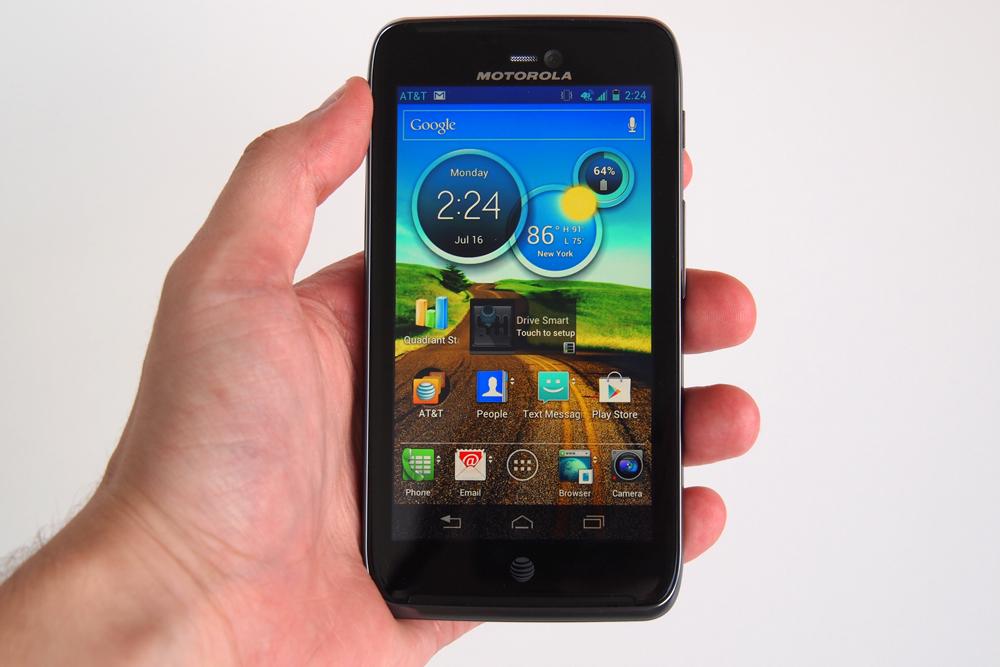
Motorola gives you the keys to its Atrix HD with the new Developer Edition

Motorola Atrix HD Review hardware android screen

Motorola has announced a special Developer Edition of its Atrix HD Android phone. Designed for those who want to customize their Atrix HD, it comes with the option of unlocking the bootloader, allowing the installation of custom software.

Motorola is sure to please developers and those amongst us who like to customize our Android phones with its latest device, the Atrix HD. “Hold on,” you’re probably thinking, “that’s already been announced once.” Indeed it has, but this time it’s a special Developer Edition.

What makes the phone special is its unlockable bootloader, which in English, means once Motorola has provided a unique code to unlock the handset, owners are free to install their own custom versions of Android, run test versions of apps, and generally customize the phone to their heart’s content.

This isn’t the first time Motorola has offered such a phone either, with both the Razr, Razr M and the Razr HD all receiving Developer Editions in the past. Being given the keys to the Android kingdom isn’t without its price though, as once you’ve started fiddling with the bootloader, you can say goodbye to your warranty. Our advice is, be sure you know what you’re doing before you start.

Motorola’s Atrix HD was announced in July this year, and we gave it an impressive 8/10 in our review, highlighting in particular the excellent $100 price tag with AT&T. For that you get a 4.5-inch touchscreen with a 1280 x 720 pixel resolution, a 1.5GHz Snapdragon processor and an 8-megapixel camera. A relatively untouched version of Android 4.0 Ice Cream Sandwich is installed as standard, but there’s no word on when 4.1 Jelly Bean will arrive.

Don’t expect to pick up the Developer Edition as cheaply as AT&T’s deal though, as it’s not available on contract. It won’t be priced as low as the new Nexus 4 either — a phone that’s also easily unlocked.

Motorola hasn’t provided a release date or a price for the Atrix HD Developer Edition, and suggests those interested should register for updates on its website.


Source : digitaltrends[dot]com

Oct 11, 2012

Is Google’s acquisition of Motorola working out?

Google Motorola

Google spent $12.5 billion on Motorola Mobility, but so far, doesn't have much to show for it.

Back in May, Google dotted the I’s and crossed the T’s on its $12.5 billion acquisition of Motorola Mobility. The purchase was by far Google’s largest acquisition to date, and a contentious one. By acquiring a mobile handset maker, Google was essentially putting itself in direct competition with Android hardware partners like Samsung, Acer, and HTC. But Google swore Motorola wouldn’t get any special favors, and — according to Google, anyway — the acquisition was more about acquiring Motorola Mobility’s patent portfolio than getting into the handset business. Google wanted to make it far more difficult for a company like Apple or Microsoft to claim Android infringed on its intellectual property. If they did, Google could bring Motorola’s patent portfolio to bear.

But so far, things don’t seem to be working out all that well for Google, and after nearly six months Google’s plans for its Motorola acquisition are far from clear. Is it just a case of Google working a long-term strategy with benefits that aren’t yet apparent? Or are we looking at something more like HP’s acquisition of Palm, which ended badly for almost everybody?

Money pit or golden goose?

Google Motorola

Back in July, Google posted its first revenue report that included any figures from its Motorola acquisition, and the overall numbers were surprisingly good. Google’s total revenue totaled $12.21 billion, a 21 percent increase from the same quarter the year before.

Motorola had lost money for 14 of the previous 16 quarters, so it was expected to drag down Google’s earnings. That bore out, but not as badly as many thought. About $1.25 billion of Google’s quarterly revenue came from Motorola, with over $840 million coming from Motorola’s handset business. Although sales of low-end phones continued to decline, Motorola’s Droid Razr Maxx sold pretty well. If Motorola Mobility had still been operating as a separate business during the quarter, it would have lost $38 million. That’s not a huge figure — it’s about 3 percent of Motorola’s total revenue.

Google’s financial results for the third quarter of 2012 are due next week, and while the company’s stock is riding high (Google’s market capitalization recently surpassed Microsoft’s) Motorola is still expected to drag on Google’s finances.

First, there are the layoffs. Back in August Google announced plans to lay off about 4,000 people from the former Motorola Mobility — about 20 percent of the company’s former staff, along with shuttering about a third of Motorola Mobility’s locations (mostly outside the United States). Google initially forecast the cuts would cost $275 million, with the bulk of the charges to impact Google’s third-quarter earnings — those are the ones due next week. However, in an SEC filing last week Google raised the price tag for $300 million, and also revealed it will spend about $90 million closing offices and factories as it exits particular markets. Most of those closures will apparently be in Asia and India. Add it up, Google is saying it underestimated the cost of laying off 4,000 Motorola Mobility employees and closing facilities by about 25 percent. If Motorola’s revenues are flat for the quarter (and there’s not much reason to expect they’ll go up) then restructuring charges will consume roughly a third of the revenue Motorola brings in to Google — and Motorola was already operating losing money. Google may face more costs, too:  The company has indicated it may do more restructuring, and might incur “significant” new charges to do it.

But those costs may not matter, up to a point. Google plans to focus Motorola primarily on smartphones rather than low-end feature phones, and that means cutting out Motorola Mobility’s other operations. (One possible casualty is the smartphone-to-notebook Webtop docking technology — not that anyone was using it anyway.) However, Motorola Mobility also has a home unit that makes things like set-top boxes for cable companies, which accounts for about a third of the former company’s revenue. Google, of course, has Google TV and the Nexus Q, and is not interested in set-top boxes, so last month Google hired Barclay’s to assist with selling that home division. According to Bloomberg, the unit might sell in the $2 billion range — about half of what Motorola itself was asking for it back in 2009. If Google can find a buyer, the sale would more than offset the costs of restructuring Motorola’s mobile business as even a period of continued losses from Motorola’s handset business.

The patent situation

google-motorola-lawsuit

Part of the reason Google bought Motorola Mobility was for its portfolio of 17,000 patents (and more than 7,000 pending patent applications) many of which are directly applicable to mobile technologies. Prior to buying Motorola, Google had just lost out on a portfolio of some 6,000 patents that had belonged to the bankrupt Nortel. A consortium from Microsoft, Sony, RIM, and Apple bought those up for $4.5 billion. The deal left Google out in the cold and touched off one of Google’s now-infamous screeds against the patent system.

Google has admitted to focusing more on innovation than patent protection — with the result that Android may be dangerously exposed to the likes of Apple and Google (even if the monster that was Oracle has now been dispatched). Google wanted to go after the Nortel patent portfolio so it would have bargaining chips when — not if — other companies came after Android. With a deep patent portfolio of its own, Google would be in a better position to apply pressure, cut deals, and (hopefully) keep Android free and open so as to foster the growth of the Android ecosystem. When the Nortel patents slipped away, Google was forced to look for another cache of patents… and settled on Motorola Mobility.

So how have Motorola’s patents helped Google? So far, not much.

Aside from the high-profile Apple-versus-Samsung and Google-versus-Oracle battles that have taken place in the United States, one of the most active patent battleground has been in Mannheim, Germany. Rulings in Germany don’t apply to any other jurisdiction, but give Google, Microsoft, Apple, Samsung, and others leverage in their broader patent litigation battles.

Google and Motorola did just win a victory against Microsoft in the Mannheim regional court, which ruled that Motorola was not infringing on a Microsoft patent that covers single applications that can run on multiple handset devices. However, that ruling is an exception is a so-far-bleak battle. Right now, no Motorola Android devices are available for sale in Germany, thanks a series of three rulings in Microsoft’s favor. (The onslaught isn’t over: Microsoft also claims Motorola’s use of Google Maps infringes on a European mapping patent.) Microsoft has been able to leverage its own patent portfolio to negotiate license agreements with almost all Android device makers. Google may say Android is free and open, but essentially every Android device maker but Motorola is paying money to Microsoft for every device they make. Motorola claims it is “reworking” its offerings for the German market and phasing out lower-end devices.

Ya gotta have standards

android money shutterstock palto

Motorola has been asserting patents of its own that cover aspects of the H.264 video encoding standard, claiming infringement from Microsoft in both Windows and the Xbox 360. Motorola even won an injunction on the sale of Xbox 360 systems in Germany, although a U.S. court has ruled Motorola can’t enforce that injunction. Yes, it’s weird that a U.S. court can rule a decision by a German court unenforceable, but the German court ruled that U.S. law has precedence because the dispute is between two U.S. companies.

The pressure Motorola is applying to Microsoft is more complicated. The H.264 video patents are supposed to be available to anybody under Fair, Reasonable, and Non-Discriminatory (FRAND) terms. Motorola is reportedly insisting on a 2.25 percent royalty rate for every Xbox 360 sold; Microsoft argues those terms are utterly unreasonable and would have Microsoft paying around $4 billion a year just for those video encoding patents.

In fact, many of the patents Motorola (and now Google) have been asserting against Apple and Microsoft fall in the same category. Both Apple and Microsoft have claimed that Motorola and Google have been using these patents as weapons, and seeking injunctions barring products using related standard technologies.

Google’s use of Motorola’s standards-essential patents has also drawn the attention of regulators: The Federal Trade Commission has been seeking information from Google, Motorola, Apple, and Microsoft since at least June. And even as it approved Google’s acquisition of Motorola, the U.S. Justice Department noted that Google never promised it wouldn’t use standards-essential patents to keep rival’s products out of the market.

In a statement via email, Google wrote “We take our commitments to license on fair, reasonable and nondiscriminatory terms very seriously, and we are happy to answer any questions.”

And how is Google using Motorola patents to keep Apple at bay? Back in August, Google filed a complaint with the U.S. International Trade Commission claiming Apple was infringing on seven Motorola patents; last week, FOSS Patents’ Florian Mueller noticed Google had quietly withdrawn the complaint — and there’s no settlement or agreement between the companies. Maybe it will come back again soon in another form, but for now Google and Motorola’s strategy seems inconsistent at best.

Upshot

Google seems intent on returning its Motorola unit to profitability. The company has put long-time Google exec Dennis Woodside in charge, and is streamlining the company to focus on high-end (and presumably high-margin) smartphone and tablet products, while at the same time jettisoning employees and portions of the business Google doesn’t need. From a purely fiscal perspective, these move haven’t yet borne fruit, but seem sound. If Google can sell Motorola’s home division (in whole or in part), the revenue should easily give Motorola’s handset division a chance to turn around.

However, Google’s real interest in Motorola was in patents. Those patents are no doubt bringing Google healthy royalty revenue, but so far Google’s efforts to assert Motorola patents against rivals like Microsoft and Apple — and protect Android — have not produced results. In fact, Google’s use of Motorola’s patent portfolio is drawing negative attention from judges and regulators. By acquiring Motorola Mobility, Google may have turned the patent fight between high-tech companies from a high-stakes bouts to an old-school, 40-round, bare-knuckle brawls — and that’s pretty much the opposite of what patents are supposed to do.

[Image via Shutterstock / Palto]

Source : digitaltrends[dot]com

Oct 10, 2012

Motorola RAZR i battery life test concludes, results are inside

We’ve just concluded our in-depth review of the Motorola RAZR i and its Intel Atom Medfield chipset inside and now it’s time to shine a light on its battery performance.

The Motorola RAZR i achieved some pretty good scores in all of our tests, but its talk time endurance was partucularly impressive.

Here we go – the call test is where the new Intel-designed modem really shines. The Motorola RAZR i got a whopping 20 hours and 7 minutes, climbing to third spot in our call test chart and making top 3 a Moto exclusive territory. More impressively it managed to match the achievement of its MAXX siblings with a battery that has a 1300 mAh smaller capacity.

Talk time

  • Motorola RAZR MAXX (ICS)
    21:18
  • Motorola DROID RAZR MAXX
    20:24
  • Motorola RAZR i
    20:07
  • Samsung Galaxy Note II N7100
    16:57
  • Huawei Ascend P1
    12:30
  • Samsung Galaxy Note
    12:14
  • Samsung I8530 Galaxy Beam
    11:58
  • Samsung Wave 3 S8600
    11:07
  • HTC One X (AT&T, LTE)
    10:35
  • Samsung I9300 Galaxy S III
    10:20
  • Samsung I9300 Galaxy S III (JB)
    10:15
  • HTC One V
    10:00
  • Meizu MX 4-core
    10:00
  • HTC One X
    9:57
  • HTC One S
    9:42
  • Samsung I9103 Galaxy R
    9:40
  • HTC Sensation XL
    9:30
  • Nokia Lumia 710
    9:05
  • Motorola Atrix HD
    9:04
  • HTC Vivid
    9:02
  • HTC Rhyme
    8:48
  • Apple iPhone 5
    8:42
  • LG Optimus 3D Max P720
    8:42
  • Sony Ericsson Xperia neo V
    8:41
  • Meizu MX
    8:39
  • Samsung Galaxy S II
    8:35
  • Nokia Lumia 800
    8:25
  • Samsung Galaxy Nexus
    8:23
  • HTC Desire V
    8:20
  • Samsung Captivate Glide
    8:20
  • Sony Xperia T
    8:15
  • HTC Rezound (LTE)
    8:10
  • Samsung Galaxy Note (LTE)
    8:02
  • LG Optimus Vu
    7:57
  • LG Optimus 4X HD
    7:41
  • Apple iPhone 4S
    7:41
  • Samsung i937 Focus S
    7:25
  • HTC Evo 4G LTE (LTE)
    7:21
  • Samsung Galaxy S Blaze 4G
    7:14
  • Sony Xperia acro S
    7:09
  • Samsung Rugby Smart I847
    7:09
  • Sony Ericsson Xperia Pro
    6:57
  • Nokia N9
    6:57
  • HTC Radar
    6:53
  • Samsung Galaxy Ace Duos
    6:53
  • BlackBerry Curve 9380
    6:52
  • Samsung Galaxy Pocket
    5:54
  • Nokia Lumia 900 for AT&T (LTE)
    5:53
  • Sony Xperia ion LTE
    5:52
  • Sony Xperia P
    5:33
  • Nokia 808 PureView
    5:16
  • LG Nitro HD (LTE)
    5:16
  • HTC Titan II (LTE)
    5:10
  • BlackBerry Bold 9790
    5:00
  • Pantech Burst
    4:46

The RAZR i got stellar results in the web browsing department as well. The 2000 mAh Li-Ion battery under the RAZR i’s Kevlar vest was able to pump out 7 whole hours of non-stop browsing, which is not particularly kind to smartphones with AMOLED Screen.

Web browsing

  • Apple iPhone 5
    9:56
  • Motorola RAZR MAXX (ICS)
    9:12
  • Samsung Galaxy Note II N7100
    8:48
  • Motorola DROID RAZR MAXX
    7:23
  • HTC Radar
    7:17
  • Motorola RAZR i
    7:06
  • Apple iPhone 4S
    6:56
  • HTC One V
    6:49
  • Motorola Atrix HD
    6:40
  • BlackBerry Curve 9380
    6:40
  • Samsung I9300 Galaxy S III (JB)
    6:27
  • Samsung i937 Focus S
    6:15
  • Sony Xperia ion LTE
    5:56
  • Samsung Rugby Smart I847
    5:53
  • Pantech Burst
    5:51
  • Samsung Galaxy S Blaze 4G
    5:45
  • HTC Desire V
    5:44
  • HTC Evo 4G LTE
    5:41
  • Samsung Wave 3 S8600
    5:34
  • Sony Xperia T
    5:33
  • Samsung Captivate Glide
    5:33
  • Samsung I8530 Galaxy Beam
    5:28
  • Samsung Galaxy Note LTE
    5:24
  • HTC Sensation XL
    5:20
  • Meizu MX 4-core
    5:19
  • Samsung I9300 Galaxy S III
    5:17
  • Sony Xperia acro S
    5:16
  • HTC Rezound
    5:16
  • HTC Rhyme
    5:08
  • Samsung I9103 Galaxy R
    5:07
  • HTC One X (AT&T)
    5:03
  • Sony Ericsson Xperia Pro
    4:50
  • LG Optimus Vu
    4:49
  • HTC Vivid
    4:46
  • Samsung Galaxy Ace Duos
    4:45
  • Meizu MX
    4:35
  • Nokia N9
    4:33
  • Samsung Galaxy S II
    4:24
  • Sony Ericsson Xperia neo V
    4:20
  • HTC One X
    4:18
  • Nokia 808 PureView
    4:14
  • LG Optimus 3D Max P720
    4:10
  • Nokia Lumia 900 for AT&T
    4:10
  • Nokia Lumia 800
    4:07
  • HTC Titan II (LTE)
    4:05
  • HTC One S
    4:03
  • BlackBerry Bold 9790
    4:02
  • LG Nitro HD
    4:00
  • LG Optimus 4X HD
    3:59
  • Sony Xperia P
    3:59
  • Nokia Lumia 710
    3:51
  • Samsung Galaxy Pocket
    3:47
  • Samsung Galaxy Note
    3:35
  • Huawei Ascend P1
    3:23
  • Samsung Galaxy Nexus
    3:01

And finally the video test for all those people who spend a lot of time traveling and like watching videos on their smartphones during the trips. The Intel Atom-sporting RAZR’s got you covered with 8 solid hours and 11 minutes of video playback, which isn’t a top score but definitely one to be respected.

Video playback

  • Motorola RAZR MAXX (ICS)
    16:35
  • Motorola DROID RAZR MAXX
    14:17
  • Samsung Galaxy Note II N7100
    11:27
  • Apple iPhone 5
    10:12
  • Samsung I9300 Galaxy S III
    10:01
  • Nokia 808 PureView
    9:53
  • Samsung I8530 Galaxy Beam
    9:42
  • Samsung Rugby Smart I847
    9:34
  • HTC One S
    9:28
  • Samsung I9300 Galaxy S III (JB)
    9:27
  • Apple iPhone 4S
    9:24
  • HTC Evo 4G LTE
    9:07
  • Nokia N9
    8:40
  • Samsung Galaxy Note
    8:25
  • Motorola RAZR i
    8:11
  • Samsung Galaxy S II
    8:00
  • Samsung i937 Focus S
    7:55
  • Samsung Wave 3 S8600
    7:52
  • Sony Ericsson Xperia neo V
    7:45
  • Huawei Ascend P1
    7:38
  • Samsung Galaxy S Blaze 4G
    7:33
  • Samsung Galaxy Note LTE
    7:30
  • Meizu MX 4-core
    6:33
  • HTC Desire V
    6:26
  • HTC One X (AT&T)
    6:26
  • Samsung Galaxy Ace Duos
    6:25
  • LG Optimus Vu
    6:23
  • Samsung I9103 Galaxy R
    6:21
  • HTC Sensation XL
    6:12
  • Samsung Galaxy Pocket
    6:06
  • Samsung Captivate Glide
    6:04
  • Sony Xperia ion LTE
    6:03
  • Samsung Galaxy Nexus
    6:02
  • Sony Xperia T
    6:01
  • Motorola Atrix HD
    6:01
  • HTC Vivid
    6:00
  • HTC Radar
    5:54
  • Nokia Lumia 800
    5:52
  • HTC Titan II
    5:50
  • BlackBerry Bold 9790
    5:47
  • HTC One X
    5:45
  • Sony Ericsson Xperia Pro
    5:44
  • Sony Xperia acro S
    5:38
  • Pantech Burst
    5:38
  • Meizu MX
    5:27
  • HTC Rhyme
    5:23
  • HTC One V
    5:20
  • Nokia Lumia 900 for AT&T
    5:18
  • BlackBerry Curve 9380
    5:09
  • HTC Rezound
    5:03
  • Sony Xperia P
    4:30
  • LG Nitro HD
    4:17
  • LG Optimus 4X HD
    4:14
  • LG Optimus 3D Max P720
    3:28
  • Nokia Lumia 710
    3:27

At the end the Intel-designed modem got another chance to shine and it took it. The RAZR i turned out to be excellently efficient at stand-by, which allowed it to get an endurance score of 64h.This means that if you were to use the smartphone for an hour of talking, an hour of web browsing and an hour of video playback per day, you’d need to charge it once every 64 hours.

Still, the breakdown shows that if you use your smartphone for web-browsing and video playback more than you do for actual telephony, than you are probably going to get shorter discharge times.


Source : blog[dot]gsmarena[dot]com

The QWERTY is back with the LG Mach

LG Mach

Sprint has announced the LG Mach, a new QWERTY slider Android smartphone that sits just below the Motorola Photon Q in the network's range.

The QWERTY slider form factor still has its fans, and Sprint wants to make sure they’re well catered for on its network, so it has introduced the new LG Mach. Now, with a name like that, you’re probably expecting incredible performance, but while the Mach isn’t a basic phone, it’s not quite up there with the range-toppers of today.

What we’ve got is a 4-inch touchscreen with an 800 x 480 pixel resolution, which slides to the side to reveal a big QWERTY keyboard, providing users with the best of both worlds. You’ll have to be prepared to compromise on size and weight when comparing it to its touch-only peers though, as the LG Mach is a chunky beast at 12mm thick and 168 grams.

Deep inside the phone is a 1.2GHz, dual-core processor and 1GB of RAM, while the operating system is Android 4.0 Ice Cream Sandwich. Although LG doesn’t talk about it in the press release, CNet.com says the Mach will be upgradeable to Android 4.1 Jelly Bean, but doesn’t offer any timescale.

There is a 5-megapixel camera on the rear of the phone, which can also shoot 1080p video, plus a basic 0.3 megapixel forward-facing video call lens above the screen. LG makes a point of highlighting the Mach’s eco-friendliness, saying it’s 56-percent recyclable, and has been given the seal of approval by a couple of environmental foundations too.

The Mach will connect to Sprint’s 4G LTE network and other features include Bluetooth 4.0, a 1700mAh battery, 8GB of internal storage memory, GPS, a microSD card slot and NFC.

As unusual as the LG Mach’s form factor may be these days, it’s not alone on the market, and one of its closest rivals is also offered through Sprint. The Motorola Photon Q has a slightly larger screen at 4.3-inches, an 8-megapixel camera and a 1.5GHz, dual-core processor, so the LG Mach will likely come in at a slightly lower price. It does win over in one key area though, as the Mach is ever-so slightly lighter and slimmer than the Photon Q.

Sprint hasn’t provided any release information or pricing structure at all, so if you’re interested in the phone, you’ll need a little patience.


Source : digitaltrends[dot]com

Sep 28, 2012

A BlackBerry partnership could help Intel battle ARM

Intel Offices

Motorola's Razr i is a good start for Intel's attack on the mobile chip market, but it'll need a few more big-name partners if it wants to succeed.

Recently, Motorola announced its first smartphone powered by Intel’s Medfield processor, the Razr i, and it’s an important device for both companies. For Intel, it represents the very first Atom-powered phone to come from a “big-name” manufacturer, and for Motorola it marks a return to Europe, a market it has neglected in recent years. Motorola signed a “multi-year, multi-device” partnership with Intel in early January and so far it has the best end of the deal, as the Razr i is not only good-looking, but it’s capable too.

Intel however, doesn’t seem to be making in-roads into the ARM-controlled mobile chipset market, and thanks to the Razr i’s limited initial release — it’s out in the UK, Germany, France, Brazil, Argentina and Mexico next month — the only Intel phone that people might actually want to buy may not be available where they live.

What Intel needs is a new best friend — someone who is also trying to break into a market with which it has lost touch. Right now, that company is Research in Motion, which is doing a decent job of talking up BlackBerry 10, but neatly avoiding the subject of the accompanying hardware. Both it and Intel have challenging times ahead and a partnership could be mutually beneficial.

A huge mountain to climb

One could argue that it’s still early days for Intel, but is it? Intel shouldn’t have missed the smartphone boat. We’re talking about the best known PC chip manufacturer on the planet, with decades of experience here. Medfield wasn’t announced yesterday either. Intel has been chatting about its Lenovo and Motorola partnership as far back as CES in January and MWC in February.

If Intel wants its processors to challenge the dominant ARM mobile chips, then it needs to get its act together, because the mountain it needs to climb is huge. ARM controls 95-percent of the mobile market and more than 270 companies are licensed to use its architecture. Its performance reflects this, and its 2011 revenue climbed 24-percent over 2010 to $785 million, exceeding expectations.

To make matters worse for Intel, ARM is slowly but surely pushing its way into the PC market too, thanks in no small part to Microsoft’s decision to support ARM architecture with Windows 8 RT. ARM’s CEO has stated he wants to own between 10 and 20-percent of the notebook market by 2015.

Unsurprisingly, ARM has played down Intel’s move into its primary business, saying it expects the company to take only about 5 to 10-percent of the smartphone market share “within a few years.” Intel has remained tight-lipped concerning its own expectations, but as forecasters are predicting a downturn in its PC business over the coming years, mobile is only going to become more important.

Intel dominates the PC processor market in the same way ARM does with mobile, with estimates putting Intel’s share at around 80 percent; however, analysts are predicting tough times ahead, with an Endpoint Technologies researcher quoted as saying “the outlook looks grim right now through the new year.” Smartphone and tablets though, are experiencing considerable growth.

So, it’s clear that one device from one manufacturer, plus a few others scattered around the globe, probably won’t bring the success Intel desires. Motorola is a great partner to have, especially because of its new owner, but Intel needs to split the Atom between a few other big companies too.

Samsung and LG were linked with Intel last year, but nothing has come of it, and HTC has remained quiet as well. Research in Motion has always used a variety of processor manufacturers, so why not Intel? After all, it needs all the help it can get right now.

Could Intel save RIM, and vice versa?

Research in Motion is nervously treading water ahead of BlackBerry 10’s eventual release. If it’s not in talks with Intel, or at the very least considering a switch, then it should be.

A long time ago, RIM used Intel 386 chips in its early BlackBerry 950 and 957 handsets, then in 2005 trumpeted another deal with Intel, where it would use its XScale architecture (which is ARM-based anyway) and “Herman” chips in future BlackBerry devices. BlackBerry 10 phones are expected to use ARM architecture and chips from Texas Instruments or Qualcomm, but imagine for a moment the impact of the news that RIM had switched to Intel.

The relationship is there, it just needs to be reinvigorated. The mobile industry thrives on partnerships, from Sony and Ericsson to Microsoft and Nokia. Right now, a new friend would go a long way to helping Research in Motion overcome public perception, and Intel to add another big name to its list.

It makes good sense for Intel too, as RIM is placed third — and rising — in terms of market share in India — an important emerging market — behind Nokia and Samsung. It also made it very clear during BlackBerry 10 Jam that emerging markets were high on its list of priorities, and as Intel has already partnered with Lava to produce the Xolo Android phone in India, we’re assuming it is for Intel too. The combination of both Atom-powered BlackBerrys and Android phones could see them on their way to a significant slice of the market.

RIM on the other hand, needs a differentiator, something to make its BlackBerry 10 phones standout in amongst iPhone 5s, Jelly Beans and Windows Phone 8. Packing in a 2GHz Atom chip could do exactly that. Plus, with Texas Instruments taking a step back from the mobile market, a gap has opened up at RIM into which Intel could neatly slip.

Yes it would be a risk for both parties, and would require plenty of adjustment on RIM’s side, but that could be exactly what’s needed to push forward in today’s fiercely competitive mobile market.


Source : digitaltrends[dot]com

Sep 26, 2012

Motorola DROID RAZR M gets gutted, shows everyone how easy it is

The recently released Motorola DROID RAZR M has been torn down and it has been confirmed that the smartphone is very easy to take apart.

We all know the phone looks the part thanks to its svelte design and nifty Kevlar back panel, but how good is the build quality underneath? Join us after the break for the full disassembly video.

Looks like the entire process can be completed with just a Torx screw and a case opener tool, which is great news if you ever need to replace your screen or battery.

For more on the Motorola DROID RAZR M, check out our full review here.


Source : blog[dot]gsmarena[dot]com

Sep 25, 2012

Don’t Forget About Us: BlackBerry 10 Demoed by RIM CEO

From Nokia to Motorola and finally to Apple, there’s been a tidal wave of smartphone announcements in the last month. But don’t forget about RIM, the company that once led the smartphone race.

Today RIM CEO Thorsten Heins took the stage at the company’s BlackBerry Jam conference for application developers to demo the next version of its operating system — BlackBerry 10. Originally due out before the end of the year, Heins announced in June that BlackBerry 10 wouldn’t be ready until early 2013. Today he said it is on track and just “a few short months away.”

Heins demonstrated a number of the platform’s new features, including one for multitasking called Peek. You can swipe the screen to pull up a small hub of your apps. Also previewed was a new Balance feature, which separates work from play on the device. There are two separate browsers, so you can keep your work searches separate from your personal ones.

The touch keyboard was also a major focus. The new touchscreen keyboard predicts words based on what you begin to type. The first BlackBerry 10 phone will have a touchscreen only; RIM says phones with physical QWERTY keyboards will follow.

Above all, Heins stressed that the company was changing. “We recognize the need for change. There is a new culture at RIM,” he said at the conference in San Jose, Calif..

Along with the details on the software, RIM also released a motivational music video on YouTube. Written to the tune of Speedwagon’s “Keep On Loving You,” the song says, “We’re in transition, a whole new mobile computing platform, one tough proposition.” It also reveals a bit about the phones: “The launch is just ahead. We’ll have Blackberry 10, both in full touch and QWERTY editions.”

RIM will announce its second quarter earnings on Thursday. RIM reported major losses last quarter, seeing a 33 percent drop from its previous quarter earnings and announcing 5,000 job cuts. The company did report today that its user base is at 80 million, up from 78 million at the end of the previous quarter.


Source : abcnews[dot]go[dot]com

Sep 22, 2012

Motorola joins the club of Apple’s map service critics, claims your iPhone 5 will get you lost

This should hardly catch you by surprise, given that the company is under Google ownership. Motorola has followed Nokia’s example, and released an ad, which pokes fun at Apple’s far from perfect Maps service.

The ad, released by Motorola in Twitter and Google+ put the Apple iPhone 5 next to the company’s latest DROID RAZR M. Both devices have the same search query entered with Apple’s handset returning a rather questionable result.

Here is the full ad from Motorola.

With Apple’s Maps clearly far from perfect, perhaps it would be the right thing for the Cupertino giant to allow iOS 6 users the luxury of Google Maps until it sorts its own service out. What do you think?


Source : blog[dot]gsmarena[dot]com

Sep 21, 2012

Qualcomm latest ad targets Intel’s new Atom processor

Following Intel’s recent foray into mobile processing with the Motorola RAZR i, Qualcomm has released a video comparing it to their Snapdragon CPU.

What’s more, Qualcomm are comparing the Atom processor to the Snapdragon S2 architecture, which was first announced back in 2010.

First thing’s first, the video:

While the Qualcomm device of choice is not new, the phone running the Intel Atom processor is not the newest either. In fact, it is the Intel Medfield reference design smartphone, which we first glimpsed back at CES 2012 about 9 months ago.

In case you need a refresher, the reference phone runs a single core Intel Atom Z2460 Medfield processor, alongside a PowerVR SGX540 GPU on a 4 inch screen of 1024×600 pixels resolution. All of this on Android 2.3 Gingerbread.

The Snapdragon device is the Sony Ericsson Xperia Arc S (that’s the old Sony Ericsson logo blurred out along the top), running on a Qualcomm MSM8255T CPU and Adreno 205 GPU. The Arc S was released with Gingerbread as well, but has since received an update to Android ICS 4.0.4.

Now, we won’t go too much into the performance tests, but it’s safe to say that they’re skewed slightly, as one device is a development device which didn’t see much life in terms of consumer availability, while the other is a phone that has received some great support from Sony since its release.

If you’d like a more relevant comparison, check out our hands on of the Motorola RAZR i, complete with benchmarks of the newest Intel Atom processor.


Source : blog[dot]gsmarena[dot]com

Sep 12, 2012

Android activations surpass 500 million, growth rate keeps increasing

Exactly one week ago, Google’s Eric Schmidt stepped on stage during Motorola’s On Display event and announced that Android activations had surpassed 480 million. He also confirmed that there were 1.3 million daily activations of new Android devices.

Yesterday, the director of product management for Android, Hugo Barra, confirmed that the platform has shot past the 500 million mark. This means that about 20 million new Android devices have been purchased over the past six days alone, or about 3.3 million per day.

Of course, this tripling of daily activations is highly unlikely and we’d guess Eric Schmidt’s data wasn’t current at the time of his announcement, but the growth rate is certainly increasing. And that’s even before all the new launches that are expected to happen over the next couple of months (Motorola’s lineup, the Note II, HTC’s new flagship etc.).

The Android platform is obviously in as good a shape as ever, but we have yet to see how it will fare once smartphones running the upcoming WP8 and iOS 6 arrive to the market.


Source : blog[dot]gsmarena[dot]com

Sep 7, 2012

Motorola Razr M first impressions: Maximized screen real estate at its finest

Droid Motorola Razr M

Here's our first look at the budget-friendly model of Motorola's new Droid Razr line ahead of its September 13 release date.

Droid Motorola Razr M sim sd slot
Droid Motorola Razr M side
Droid Motorola Razr M screen
Droid Motorola Razr M box
Droid Motorola Razr M back
Droid Motorola Razr M


Motorola announced an updated line of its Razr smartphone family this week, and the first of the three to be released is the Motorola Razr M — otherwise known as its budget-friendly edition. At $100 (with a 2-year contract,) the phone stacks up competitively to other budget phones on the market such as the HTC One V. Here’s our first look at what Motorola has in store for its Razr line.

It’s funny to think that a 4.3-inch screen phone these days is considered “compact,” but that’s exactly how Motorola described the Razr M during its press conference Wednesday. The near edge-to-edge design offers more screen per square inch — which makes the advertised 4.3-inch screen bigger than it sounds. The 960 x 540 resolution display itself is truly vivid especially under the gorilla glass, and the whole device feels more expensive than your average budget phone. Thanks to its Kevlar back, the anti-scratch and added grip makes for a beautifully-designed phone that feels like it’s worth a ton more than one Benjamin.

While the Motorola Razr M comes with an internal memory of 8GB and 1GB of RAM, storage is expandable with the micro-SD slot placed right on the side of the phone. The SIM card slot is also right next to it, so no more opening the back of your phone and digging your nails in to remove either chips. The device is runs on Android 4.0 Ice Cream Sandwich, which is a bit of a disappointment, but Motorola says all the new Razr phones should be getting Jellybean by the end of the year.

The Razr M also comes with a dual-core Qualcomm MSM8960 Snapdragon S4 processor, 8 MP back camera, and a 3 MP front-facing shooter. The dual-core processor makes the Razr M run extremely fast. Switching between screens is swift, and you can program your own pages and add them as needed. To delete, simply hold and drag the app icon or page to the trash can.  

What’s new about the Razr M is a circle interface that allows you to customize shortcuts. For example, new text messages can appear on the most prominent circle while the second circle is dedicated to weather. For each city you add, you can flip the circle to navigate through the cities and get updated weather information for each location.

According to Motorola, one full charge can deliver an impressive 20 hours of battery life but we’ll see if that claim holds true. Be on a lookout for our full review shortly. In the meantime, the Motorola Razr M is available for pre-order now at Verizon with an official release date of September 13. To get the $100 price, you will have to mail in a $50 rebate through Verizon.


Source : digitaltrends[dot]com

Sep 6, 2012

Motorola DROID RAZR M dropped by right after its announcement, here’s the hands-on

Announced at yesterday’s glitzy event, the Verizon Wireless exclusive Motorola DROID RAZR M is the first of the trio of announced devices to become commercially available. The LTE sporting handset is the baby in the new DROID RAZR family, but don’t be deceived – it is just as powerful as its bigger brothers.

The Motorola DROID RAZR M is powered by a Qualcomm Snapdragon S4 chipset, featuring two Krait CPU cores, clocked at 1.5GHz. There’s a gig of RAM on board and 8GB of built-in memory, which can be further expanded through a microSD card slot. The DROID RAZR M’s display is a familiar sight – it is the same 4.3” PenTile Super AMOLED unit with qHD resolution, found in the original DROID RAZR. The camera is an 8MP unit with FullHD recording capability. A 2MP unit at the front will help you with the video calls. The smartphone is powered by a beefy 2000mAh battery.

Visually, the newbie is easily identifiable as a member of the Motorola RAZR family. The back is covered by Kevlar, while the front sports the easily identifiable chromed-looking earpiece.

Thanks to its practically edgeless screen, the Motorola DROID RAZR M sports extremely elegant measures. They are 122.5 x 60.9 x 8.3 mm, while the handset’s weight is 126 grams.

The build quality of the smartphone is superb. The DROID RAZR M is not metal clad as its bigger brothers, but it still feels well crafted. The exposed bolts on the handset’s sides are a great new touch, which further enhances the phone’s quality appearance.

Software wise, the Motorola DROID RAZR M boots Android 4.0.4 Ice Cream Sandwich, which has been lightly skinned in a fashion similar to what we saw with the Atrix HD for AT&T. A Jelly Bean updates has been promised to arrive by the end of the year. Curiously, the handset comes with Google Chrome for Android preinstalled instead of the stock ICS browser.

Here’s the smartphone in action.


Source : blog[dot]gsmarena[dot]com

DT Daily: Motorola Razr revamp, Amazon event, Internet’s best cat video

Motorola debuts its new Razr lineup, Amazon gears up for a big announcement, Voyager 1 nears the edge of our solar system, hackers claim to have stolen Mitt Romney's tax returns, and the Internet finally has an official best-ever cat video.

Related Links:


Source : digitaltrends[dot]com

Sep 5, 2012

Promo videos for the new Motorola RAZR M pop up, check them out here

The just-announced Motorola RAZR M will be available in the US from Verizon as early as next week, so you may want to catch up on the this hot new device.

Motorola put up a couple of promo videos on Youtube, one of them showing off their new circle widgets.

The first one is the usual promo material we saw in one form or another during the Motorola event a few hours ago:

The second shows off some of the software enhancements Motorola has developed for its Android smartphone:


Source : blog[dot]gsmarena[dot]com

Motorola Droid RAZR HD promo video calls it the ‘all-day phone’

Motorola unleashed the first wave of promo videos and the one for the Droid RAZR HD describes it as the “all-day phone”. It also focuses on the new 4.7” Super AMOLED display with 720p resolution and fact that the RAZR HD is the most compact phone for its screen size.

Check out the video after the break.


Source : blog[dot]gsmarena[dot]com

Here’s how Google plans to get Motorola out of the mud

Today’s Motorola event was mostly dedicated to the company’s new RAZR lineup, but it also gave a chance to Motorola’s recently appointed CEO, Dennis Woodside (a former Google exec), to give us a glimpse of Motorola’s strategy in the realm of mobile devices now that it’s been acquired by Google.

We weren’t treated to any surprises in terms of goals, as obviously Woodside aims a reboot of the company’s smartphone business to a point where it would become a common fact that “the best Android device – it’s a Motorola”.

To achieve this, Motorola would be focusing on three aspects for now. First off, it will be catering to the needs of mobile enthusiasts by releasing developer editions of its phones. Secondly, the company is committing itself on bringing future Android updates as quickly as possible to its whole lineup.


Source : blog[dot]gsmarena[dot]com

Motorola announces new battery-packed Droid RAZR HD, RAZR Maxx HD, and RAZR M

Motorola Droid Family

Today Motorola unveiled a new three-member RAZR family, featuring the Droid RAZR HD, Maxx HD, and RAZR M, in New York City.

Motorola announced three new smartphones at Gotham Hall in New York City. Part of its brand new Droid collection, the RAZR HD, Maxx HD, and RAZR M focus on edge-to-edge displays and insane battery life. 

Called “On Display”, Motorola’s conference kicked off with a band singing about America to a crowd of reporters who look like they’d rather not be forced into some mediocre concert. Once that bit of awkwardness ended, Eric Schmidt took the stage to talk up Motorola’s sales numbers for a while. Then there was more talking, mostly revolving around Motorola’s new focus on unprecedented battery life. 

After more talking, and a couple jabs at Apple and Samsung, the newest Motorola smartphones were finally unveiled. Three to be exact, all part of Motorola’s new and improved RAZR family.

The higher-end devices in the line up are called the Droid RAZR HD and Droid RAZR Maxx HD. The RAZR HD is packing a 4.7-inch edge-to-edge display, Gorilla Glass, dual-core processor, and supports 4G LTE (obviously). Motorola also claims the screen boasts 78% more pixels and 85% more color saturation than the iPhone 4S. In benchmark tests, the new device can browse the web using Chrome up to 40% faster than Safari on the iPhone. Motorola really seems to be after Apple, there have been a lot of comparisons.

For some reason Motorola tried to show off this browsing speed using the Wi-Fi in the building, rather than Verizon’s wireless network so browsing speed was not impressive in the demo. The RAZR HD is NFC-enabled and Verizon has given up on blocking Google Wallet. The real star here, however, is the outstanding battery life. Apparently the RAZR HD can handle up to 16 hours of talk time, basically unheard of in the smartphone world.

The Droid RAZR Maxx HD appears to be running the same specs as the RAZR HD, but with the a maxxed out battery (sorry, couldn’t help it) taken from the RAZR Maxx. Meaning that you’re looking at around 21 hours of talk time and enough juice to watch an entire season of 30 Rock.

Motorola Droid RAZR M

The mid-range Droid RAZR M rounds out the family dynamic, satisfying the needs of more casual users. The RAZR M has a nearly edgeless, 4.3-inch Super AMOLED display (using Gorilla Glass), 4G LTE support, 8GB of storage, 1GB of RAM, dual-core processor, and an 8-megapixel camera in the back. Even at that size, however, it manages to squeeze in 40% more screen real estate than the iPhone 4S. The battery can handle up to 20 hours of music streaming, so there clearly won’t be a huge sacrifice in battery when moving from the RAZR HD to the RAZR M. 

But here’s an interesting twist of events. Despite being owned by Google, Motorola’s latest line up will not ship with Jelly Bean. Instead they will be updated from Ice Cream Sandwich to Android’s latest OS — which was released two months ago — before the end of the year.

Pre-orders for the RAZR M start today at 5pm EDT (New York time). It will retail for $100, presumably on contract, and is eligible for the share everything plan. The RAZR HD and Maxx HD will be available sometime before the holidays.

Our own Natt Garun is in attendance, providing us with the collection of  with the RAZR HD and RAZR Maxx HD below. She will be sharing her own hands-on impressions shortly. 

Motorola Droid Family
Motorola Droid RAZR M
Motorola Droid RAZR HD

Motorola Droid RAZR HD
Motorola Droid RAZR Maxx HD

Motorola Droid RAZR Maxx HD
Motorola Droid RAZR Maxx HD beside Samsung Galaxy S III

Motorola Droid RAZR Maxx HD


Source : digitaltrends[dot]com

Android activations reach 1.3 million per day, total droid count now 480 million

At the Motorola event held today in New York City, Google executive chairman Eric Schmidt confirmed some interesting new numbers for the Android platform adoption.

There are some 480 million total Androids in the world as of today. That’s 80 million more than there were on June 27, when we got the latest update. Currently there are 1.3 million new activations per day, of which 70,000 are Android tablets.


Source : blog[dot]gsmarena[dot]com

Sep 1, 2012

Here’s the full breakdown of Motorola Atrix HD’s battery life test

The Motorola Atrix HD entered our battery test track right after we crowned our new champion – the GSM flavored, Android ICS booting Motorola RAZR MAXX. The AT&T exclusive device packs a truly impressive spec sheet, but is powered by a relatively modest 1780mAh. That’s why we were cautious with our expectations towards the Kevlar dressed handset.

The Motorola Atrix HD did fairly well in the telephony section of the battery trial. It posted a time of 9 hours and 4 minutes. The latter is not the best we’ve encountered, but is nevertheless a respectable achievement.

Talk time

  • Motorola DROID RAZR MAXX
    20:24
  • Huawei Ascend P1
    12:30
  • Samsung Galaxy Note
    12:14
  • Samsung I8530 Galaxy Beam
    11:58
  • Samsung Wave 3 S8600
    11:07
  • HTC One X (AT&T, LTE)
    10:35
  • Samsung I9300 Galaxy S III
    10:20
  • HTC One V
    10:00
  • Meizu MX 4-core
    10:00
  • HTC One X
    9:57
  • HTC One S
    9:42
  • Samsung I9103 Galaxy R
    9:40
  • HTC Sensation XL
    9:30
  • Nokia Lumia 710
    9:05
  • Motorola Atrix HD
    9:04
  • HTC Vivid
    9:02
  • HTC Rhyme
    8:48
  • LG Optimus 3D Max P720
    8:42
  • Sony Ericsson Xperia neo V
    8:41
  • Meizu MX
    8:39
  • Samsung Galaxy S II
    8:35
  • Nokia Lumia 800
    8:25
  • Samsung Galaxy Nexus
    8:23
  • Samsung Captivate Glide
    8:20
  • HTC Rezound (LTE)
    8:10
  • Samsung Galaxy Note (LTE)
    8:02
  • LG Optimus Vu
    7:57
  • LG Optimus 4X HD
    7:41
  • Apple iPhone 4S
    7:41
  • Samsung i937 Focus S
    7:25
  • HTC Evo 4G LTE (LTE)
    7:21
  • Samsung Galaxy S Blaze 4G
    7:14
  • Samsung Rugby Smart I847
    7:09
  • Sony Ericsson Xperia Pro
    6:57
  • Nokia N9
    6:57
  • HTC Radar
    6:53
  • Samsung Galaxy Ace Duos
    6:53
  • BlackBerry Curve 9380
    6:52
  • Samsung Galaxy Pocket
    5:54
  • Nokia Lumia 900 for AT&T (LTE)
    5:53
  • Sony Xperia ion LTE
    5:52
  • Sony Xperia P
    5:33
  • Nokia 808 PureView
    5:16
  • LG Nitro HD (LTE)
    5:16
  • HTC Titan II (LTE)
    5:10
  • BlackBerry Bold 9790
    5:00
  • Pantech Burst
    4:46

The handset’s web browsing time of 6 hours and 40 minutes is nothing short of impressive, given the Atrix HD’s gorgeous 720p screen. The smartphone’s achievement is not far from the best in business and is a clear showcase of the energy efficiency of the Qualcomm Snapdragon S4 chipset’s power efficiency.

Web browsing

  • Motorola DROID RAZR MAXX
    7:23
  • HTC Radar
    7:17
  • Apple iPhone 4S
    6:56
  • HTC One V
    6:49
  • Motorola Atrix HD
    6:40
  • BlackBerry Curve 9380
    6:40
  • Samsung i937 Focus S
    6:15
  • Sony Xperia ion LTE
    5:56
  • Samsung Rugby Smart I847
    5:53
  • Pantech Burst
    5:51
  • Samsung Galaxy S Blaze 4G
    5:45
  • HTC Evo 4G LTE
    5:41
  • Samsung Wave 3 S8600
    5:34
  • Samsung Captivate Glide
    5:33
  • Samsung I8530 Galaxy Beam
    5:28
  • Samsung Galaxy Note LTE
    5:24
  • HTC Sensation XL
    5:20
  • Meizu MX 4-core
    5:19
  • Samsung I9300 Galaxy S III
    5:17
  • HTC Rezound
    5:16
  • HTC Rhyme
    5:08
  • Samsung I9103 Galaxy R
    5:07
  • HTC One X (AT&T)
    5:03
  • Sony Ericsson Xperia Pro
    4:50
  • LG Optimus Vu
    4:49
  • HTC Vivid
    4:46
  • Samsung Galaxy Ace Duos
    4:45
  • Meizu MX
    4:35
  • Nokia N9
    4:33
  • Samsung Galaxy S II
    4:24
  • Sony Ericsson Xperia neo V
    4:20
  • HTC One X
    4:18
  • Nokia 808 PureView
    4:14
  • LG Optimus 3D Max P720
    4:10
  • Nokia Lumia 900 for AT&T
    4:10
  • Nokia Lumia 800
    4:07
  • HTC Titan II (LTE)
    4:05
  • HTC One S
    4:03
  • BlackBerry Bold 9790
    4:02
  • LG Nitro HD
    4:00
  • LG Optimus 4X HD
    3:59
  • Sony Xperia P
    3:59
  • Nokia Lumia 710
    3:51
  • Samsung Galaxy Pocket
    3:47
  • Samsung Galaxy Note
    3:35
  • Huawei Ascend P1
    3:23
  • Samsung Galaxy Nexus
    3:01

Things began to go south for the Motorola Atrix HD in the video playback section of our battery test. The smartphone’s time of 6 hours and 1 minute is far from the best we’ve seen.

Video playback

  • Motorola DROID RAZR MAXX
    14:17
  • Samsung I9300 Galaxy S III
    10:01
  • Nokia 808 PureView
    9:53
  • Samsung I8530 Galaxy Beam
    9:42
  • Samsung Rugby Smart I847
    9:34
  • HTC One S
    9:28
  • Apple iPhone 4S
    9:24
  • HTC Evo 4G LTE
    9:07
  • Nokia N9
    8:40
  • Samsung Galaxy Note
    8:25
  • Samsung Galaxy S II
    8:00
  • Samsung i937 Focus S
    7:55
  • Samsung Wave 3 S8600
    7:52
  • Sony Ericsson Xperia neo V
    7:45
  • Huawei Ascend P1
    7:38
  • Samsung Galaxy S Blaze 4G
    7:33
  • Samsung Galaxy Note LTE
    7:30
  • Meizu MX 4-core
    6:33
  • HTC One X (AT&T)
    6:26
  • Samsung Galaxy Ace Duos
    6:25
  • LG Optimus Vu
    6:23
  • Samsung I9103 Galaxy R
    6:21
  • HTC Sensation XL
    6:12
  • Samsung Galaxy Pocket
    6:06
  • Samsung Captivate Glide
    6:04
  • Sony Xperia ion LTE
    6:03
  • Samsung Galaxy Nexus
    6:02
  • Motorola Atrix HD
    6:01
  • HTC Vivid
    6:00
  • HTC Radar
    5:54
  • Nokia Lumia 800
    5:52
  • HTC Titan II
    5:50
  • BlackBerry Bold 9790
    5:47
  • HTC One X
    5:45
  • Sony Ericsson Xperia Pro
    5:44
  • Pantech Burst
    5:38
  • Meizu MX
    5:27
  • HTC Rhyme
    5:23
  • HTC One V
    5:20
  • Nokia Lumia 900 for AT&T
    5:18
  • BlackBerry Curve 9380
    5:09
  • HTC Rezound
    5:03
  • Sony Xperia P
    4:30
  • LG Nitro HD
    4:17
  • LG Optimus 4X HD
    4:14
  • LG Optimus 3D Max P720
    3:28
  • Nokia Lumia 710
    3:27

Overall, the Motorola Atrix HD for AT&T achieved an endurance rating of 36 hours in our battery test. This means that you will need to charge the device after about a day and a half if you use it for an hour each of telephony, web browsing and video playback every day.


Source : blog[dot]gsmarena[dot]com