Pages

Showing posts with label smart. Show all posts

Nov 14, 2012

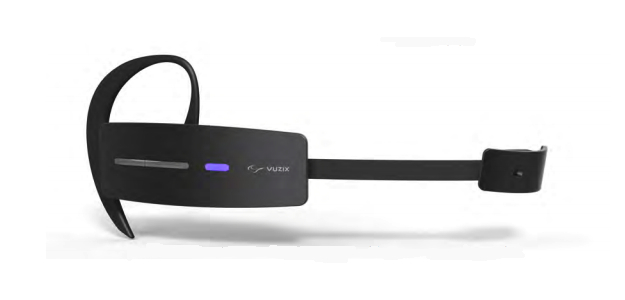
Vuzix M100 Smart Glasses coming next year to challenge Google’s Project Glass

Vuzix M110 Smart Glasses

Vuzix will be demonstrating its M100 Smart Glasses at CES 2013. A rival to Google's Project Glass, the M100 has the ability to use its own apps thanks to its Android OS, and is expected to go on sale in the middle of next year.

Google’s Project Glass has hogged the headlines over the past six months when it comes to augmented reality spectacles, but there are other companies who’re working on similar devices, one of which is Vuzix. Vuzix has been busy perfecting augmented reality lens technology for a while, and its latest toy is the M100 Smart Glasses, prototypes of which will be on display during CES 2013.

Vuzix describes the M100 as an “intelligent hands-free display for smartphones,” but it’s a little more complex than that name suggests, as the M100 has its own 1GHz processor and Android 4.0 operating system, so it will run its own apps. Corresponding versions of these apps are loaded onto your smartphone, which connects to the glasses using Bluetooth.

Well, we call the M100 “glasses,” but it’s really a single stem with the lens mounted onto a Bluetooth headset style earpiece. This projects a 16:9, 240 x 400 pixel color image in front of your eye, which can contain everything from basic web content, email, video, GPS information and anything related to apps the two devices share. A camera can shoot 720p video and capture stills, and the M100 has 4GB of flash memory as standard. Other handy features include an accelerometer, a compass and Wi-Fi.

The extensive feature list means there’s plenty of opportunity for developers to build exciting apps for the Smart Glasses. During a recent interview, Vuzix President, Paul Travers, spoke positively about developers producing apps made especially for the M100, saying an SDK will be available in December and a selection of apps will be ready at launch, but exactly which ones has yet to be decided.

Working prototypes of Vuzix’s Smart Glasses will be on display at CES 2013, and it’s hoped the final versions will be ready to go on sale by mid-2013. The price? Travers told CNet the M100 would cost less than $500.

Google’s Project Glass isn’t expected to be available to the public before 2014, with only the Explorer Edition developer units coming in 2013.


Source : digitaltrends[dot]com

Nov 10, 2012

Samsung Smart Dock shows what it’s capable of with a Galaxy Note II in the front seat

A short while after the launch of the Galaxy Note II, Samsung launched a special dock for the phablet.

Sammy is calling it the Smart Dock and its chock-full of features, which AndroidNZ has shown in a lengthy video.

The Smart Dock features three USB ports, HDMI port with stereo out as well as a 3.5mm audio jack. The phone is docked via its microUSB port, which also charges it.

A trio of USB ports means that you can hook up the Note II to a mouse, keyboard and external storage simultaneously. Obviously, the HDMI is there to connect with an HDTV or a monitor.

And as AndroidNZ has demonstrated the options are limitless. Check out what the Smart Dock is capable of in the video below.

In the US, the Smart Dock is priced at $99.99. EU pricing is not yet detailed.


Source : blog[dot]gsmarena[dot]com

Nov 1, 2012

Samsung releases Smart Dock for the Galaxy Note II

Samsung has announced a new accessory for the Galaxy Note II called the Smart Dock. This allows you to plug your phone into the dock and then use it as a makeshift desktop PC or media center.

The Smart Dock uses the microUSB port to interface with your Galaxy Note II. On the back is an HDMI port that will output 1080p video stream to a monitor or a TV. There is also a 3.5mm headphone jack for outputting stereo sound. The microUSB port on the back lets you connect the dock to a charger or a computer.

Along the sides are three USB 2.0 ports that allow you to connect external storage devices such as flash drives as well as a keyboard and a mouse.

It will be interesting to see what the interface will look like once you connect the dock to a display and whether the HDMI can output multichannel sound but we’ll have to wait till this thing ships to find out.

The Smart Dock is only compatible with the Galaxy Note II at the moment and will set you back by $99.99.


Source : blog[dot]gsmarena[dot]com

Oct 25, 2012

The Danes do it again: Beovision 11 is certainly a sight to see

Bang and Olufsen's BeoVision 11 is beautiful and highly-functional - but is it valuable?


Today, Bang and Olufsen announced that its BeoVision 11 television – the company’s first-ever Smart TV – will be arriving in U.S. showrooms this month. The television will hope to titillate stateside consumers enough to make a splash in the luxury electronics sphere.

 The TV senses ambient light in a 360-degree range and adjusts the picture accordingly, tweaking the brightness and/or contrast to optimize for the conditions. It also boasts an adaptive contrast system that the company claims can showcase detail that would normally be washed out by light, or dampened by dark. Rounding up the specs is the 3D-enabled TV’s 240Hz LED-lit LCD screen, equipped with a glare polarizer for brighter rooms.

Bang and Olufsen didn’t want to disappoint its audiophile fans, either, so, BeoVision 11 has been outfitted with six speakers, each powered by a dedicated 32-watt ICEpower amplifier.

At first glance, its design is striking. Interestingly, the large face-mounted speaker set beneath the screen almost makes the TV look like it adopts the older 4:3 screen format. We’ve yet to decide if it’s different for utility’s sake, or different for different’s sake, but if you have trouble integrating strange/sleek design into your home, don’t fret —  BeoVision 11 comes with a floor stand and a wall bracket, both of which are motorized and adjustable.

Unfortunately, this is the part where we come to the price – and if you’re not affluent, you might be peeking through your fingers. The BeoVision 11 is available in 40-inch, 46-inch and 55-inch models at Bang & Olufsen stores this months with prices beginning at $6,000.


Source : digitaltrends[dot]com

Sep 24, 2012

How Microsoft and HP avoid corporate taxes

corporate tax shutterstock kentoh

A new Congressional memo looks at how America's largest companies use loopholes to avoid corporate taxes. Smart moves, or ripping off taxpayers?

It’s no secret that some of America’s largest corporations engage in complicated accounting in order to minimize their taxes. However, materials released as part of a U.S. Senate subcommittee hearing last week revealed the technology companies like Apple, Cisco, Microsoft, and Hewlett-Packard are among the companies going to the greatest efforts to shelter their revenues — and some of those efforts seem to violate the intent (if not the letter) of U.S. law.

“Major U.S. corporations are increasingly earning their profits here but shipping them overseas to avoid paying the taxes they owe,” wrote Michigan Senator Carl Levin (D), chairman of the Senate’s Permanent Subcommittee on Investigations. “At a time when we face such difficult budget choices, and when American families are facing a tax increase and cuts in critical programs from education to health care to food inspections to national defense, these offshore schemes are unacceptable.”

Are technology companies paying their fair share in taxes? Or are they just using the system as efficiently as possible so they can stay competitive? The subcommittee looked closely at how two companies — HP and Microsoft — are avoiding tax liabilities — and the results are surprising.

How it works

The basic dilemma is that most tax codes are enforceable only within particular geographic borders (like a county, a state, or a nation) but most of the largest companies headquartered in the United States do business all over the world — hence, they function in a variety of different tax jurisdictions. In the United States, the base corporate tax rate is 35 percent; however, it’s much lower (or even non-existent) in other parts of the world. It makes sense that companies would try to find ways to take advantage of any difference in tax laws in the different areas where they operate — after all, their competitors are going to do the same thing. Any dollar companies don’t have to pay in taxes is another dollar tacked onto its bottom line.

In pre-Internet days, these differences in tax structure weren’t make-or-break problems for governments. After all, if you build cars — or make raw materials like steel — geographic limitations will effectively limit where you can sell those products. However, in the digital economy, those restrictions have largely vanished. Digital content like music, movies, e-books, apps, and software can largely be sold to anyone in the world from anywhere in the world, making it easy for companies to pick and choose the jurisdictions where — on paper, anyway — they’re conducting business. So subsidiaries in tax-favorable jurisdictions like Ireland, the British Virgin Islands, Singapore, and the Netherlands conduct mammoth amounts of business for technology firms.

Percent of tech companies’ cash
kept overseas
HP 100
Microsoft 89
Cisco 89
eBay 88
Dell 85
Oracle 84
Apple 67      
Qualcomm 62
Google 48

Technology companies have another advantage over traditional businesses because a significant portion of their revenues comes from royalties and intellectual property, like patent and technology licensing. Again, that business can be conducted anywhere — and companies based in the U.S. don’t seem to have any problem with taking those transactions out of the country.

The tax code hasn’t evolved to keep up, and tech companies are enthusiastically taking advantage of the situation. For instance, of the 500 companies in the Standard & Poor’s 500 index, 71 would be generally classified as technology companies. Those 71 companies report paying worldwide tax rates as much as a third lower than other S&T companies over the last two years. Senator Levin said U.S. multinationals keep as much as $1.7 trillion offshore.

Microsoft

Microsoft building entrance

The Senate subcommittee specifically took a look at how Microsoft and Hewlett-Packard manage their tax burdens, noting that their practices seem to be representative of the technology industry as a whole. The two firms also seem to be among the most invested in the practices. According to materials compiled for the committee from industry estimates and company reports, Microsoft has almost 90 percent of its total cash overseas, while HP maintains virtually no cash in the United States. The subcommittee issued subpoenas and sent letters of inquiry to both companies to get information that isn’t normally revealed in regulatory filings or investor disclosures.

Microsoft’s basic strategy developed in the 1990s, when the company set up a regional operating center in Ireland responsible for retail sales in Europe, the Middle East, and Africa. The Ireland subsidiary was followed by subsidiaries in Singapore (handling retail sales in Asia) and Puerto Rico (handling retail sales in North and South America). Of the $9.1 billion Microsoft spend on R&D in 2011, some $7.8 billion was spent developing Microsoft product in the United States — and Microsoft reaped $200 million in tax credits for conducting that R&D stateside.

These subsidiaries have the right to profit from sales of Microsoft’s intellectual property, while Microsoft itself retains ownership. Basically, if European sales account for 30 percent of Microsoft’s global revenue, Microsoft collects 30 percent of its revenue back from its Irish subsidiary towards the cost of research and development. The rest of the money stays offshore. From 2009 to 2011, that meant some $21 billion in revenue collected by Microsoft — for products developed and sold in the United States — was not subject to U.S. taxes. That’s about half of Microsoft’s U.S. retail sales net revenue, and about $4.5 billion in taxes successfully dodged.

But that’s not all. Microsoft’s subsidiaries are technically disregarded for tax purposes under look-through regulations for controlled foreign corporations (CFCs) and a “check-the-box” rule instituted in 2004 that enables corporations to declare themselves tax-exempt by, essentially, checking a box on a form. For Microsoft, that’s very handy. It means income that would previously have been immediately taxable — like royalty income from its subsidiaries selling software — becomes tax-exempt because it’s basically just considered a transfer of funds between two disregarded entities. This reduced Microsoft’s U.S. tax burden by another $2.43 billion in 2011 alone.

Hewlett-Packard

Hewlett-Packard is warehousing almost all its revenue offshore — which is intriguing, considering that HP is a very large employer in the United States. How does it fund its considerable U.S. operations? Through a series of alternating, short-term loans from a pair of foreign subsidiaries.

According to the subcommittee report (PDF): “This loan program, from at least 2008, appears to have been used as a way to de facto repatriate billions of dollars each year to the United States to fund most of HP’s U.S. operations, and provide those operations with the economic use of the company’s foreign earnings without a formal dividend distribution that would be taxable.”

Normally, when a CFC loans money to a related U.S. company or individual, the loan is considered taxable income. However, there are exceptions: One is that if the loans don’t span the CFC’s quarter ends and the loans are repaid within limited time periods. So HP used two subsidiaries — the Belgian Coordination Center and the Compaq Cayman Holding Corp. — which basically just function as separate cash pools for the parent company. The companies would loan HP money during particular windows, and HP would then use the money for payroll, stock repurchases, and even acquisitions. As the tax-related quarterly window came to a close, HP would receive a short-term loan from the other corporation, pay off the previous loan, and continue operating. The pattern of continuous lending spanned at least 2008 through 2011 — and HP paid no U.S. tax on that income.

HP’s auditors, Ernst & Young, knew about HP’s staggered loan program since its inception in 2008, and apparently signed off on the strategy, finding that, technically, the foreign entities were sufficiently independent and HP was meeting time restrictions for avoiding taxation on the loans. Nonetheless, the Senate subcommittee concluded that “it is clear from HP documents that it structured this program in an attempt to circumvent the spirit” of U.S. tax law.

Tech companies aren’t alone

global interonnection (Shutterstock/Toria)

These sorts of tax shenanigans aren’t limited to technology companies. The Senate subcommittee detailed 18 firms that have more than $5 billion stashed away in overseas accounts. Nine of them — half — are technology firms, and the committee noted that the use of foreign subsidiaries to shelter income from royalties and intellectual property is particular common in the industry. Four more — Pfizer, Medtronic, Merck, and Amgen — represent the pharmaceutical industry. The other firms are General Electric, Johnsons & Johnson, Coca-Cola, Walmart, and Devon Energy. Of those, only Pfizer and J&J appear to be in the same pattern as HP in keeping virtually all their cash outside the United States.

Although Senator Levin noted he doubts that HP’s staggered loan program was legal, Oklahoma Senator Tom Coburn (R) described both Microsoft’s and HP’s tax strategies as “properly legal tax avoidance.” Even though Coburn admitted they don’t look great on paper, he noted companies have a fiscal responsibility to do everything they can to minimize their tax burdens — particularly given the overwhelming complexity of U.S. tax code.

Both Microsoft and HP — who each had representatives appearing before the committee — characterized their company’s strategies as legal and in full compliance with U.S. tax code.

“Microsoft complies with the tax rules in each jurisdiction in which it operates and pays billions of dollars each year in total taxes, including U.S. federal, state, and local taxes and foreign taxes,” Microsoft’s VP for worldwide tax William Sample noted in prepared remarks (PDF). At the same time, he noted tax considerations do figure into Microsoft’s decisions on setting up subsidiaries. “The U.S. international tax rules are outdated and are not competitive with the tax systems of our major trading partners.”

Lester Ezrati, HP’s senior VP of tax, defended the company’s staggered loan program as funds that qualified for “indefinitely reinvested” status under U.S. tax law, and HP’s U.S. parent corporation did have enough cash flow so that overseas money wasn’t actually necessary. Moreover, Ezrati noted none of its actions were secret to the IRS: The company outlined the loan program in detail to its auditors, Ernst & Young, and has continually worked with the IRS to establish an advanced pricing agreement that would cover how overseas funds are repatriated. He also noted the IRS didn’t raise any issues with the loans during a recent audit.

Ultimately, the only thing all parties agreed on was that the U.S. tax code needs an overhaul.

“We comply with U.S. and foreign tax laws,” Sample said during the hearing. “That is not to say that the rules cannot be improved.”

Source : digitaltrends[dot]com

Aug 29, 2012

Samsung announces a trio Windows 8 tablets – meet the ATIV Tab, ATIV Smart PC and ATIV Smart PC Pro

Alongside the Windows Phone 8-running ATIV S smartphone, Samsung also announced three Windows 8-powered slates – the 10.1″ ATIV Tab and the 11.6″ ATIV Smart PC and ATIV Smart PC Pro.

The latter duo will be coming with detachable keyboards with touchpads, just like the ASUS Transformer tablet, and S Pen-support.

Samsung ATIV Tab

We start with the Samsung ATIV Tab. It’s powered by the same 1.5GHz dual-core processor as the ATIV S, but comes with 2GB of RAM. The LCD display measures 10.1″ and has a resolution of 1366 x 769 pixels. The ATIV Tab has a very slim 8.9mm profile and weighs 570 grams, which is pretty decent for a tablet of its size. At the back, there’s a 5MP shooter, while a 1.9MP front-facing camera sits above the display.


Samsung ATIV Tab

The Samsung ATIV Tab will come with either 32GB or 64GB of storage and will offer microSD card slot with support for up to 64GB cards. Connectivity options include NFC, microHDMI, Wi-Fi 802.11 a/b/g/n and Bluetooth 4.0. With a 8,200mAh battery at the back, this slate is sure to last quite long.

Samsung ATIV Smart PC & Samsung ATIV Smart PC Pro

The Samsung ATIV Smart PC and Samsung ATIV Smart PC Pro are hybrid 11.6-inch tablets, which come with a detachable keyboard docks with handy touchpads. Both of them run a full version of the upcoming Windows 8 OS, but are also backward compatible with Windows 7.

In addition, both slates come with the Samsung S Pen, which will make most of the screen’s support of 1024-levels of pressure. The ATIV Smart PC Pro sports a full HD resolution screen, while the ATIV Smart PC makes do with a display of just 1366 x 768 pixels. Both have 10-finger multi-touch support and boast 400-nits of brightness.

The ATIV Smart PC Pro weighs 884 grams without the keyboard dock and 1.6kg with it, while the ATIV Smart PC is lighter at 750 grams without a dock and 1.48kg with it. The difference in the weight is due to the Pro’s Intel Core i5, 4GB of RAM and up to 256GB SSD drive inside it.

Designed for the less demanding users, the ATIV Smart PC is powered by an undisclosed next generation Intel Atom processor, 2GB of RAM and offers a 128GB SSD. Both slates come sans optical drives.


Samsung ATIV Smart PC & Smart PC Pro

The battery life of the slates is rated 13.5 hours for the Smart PC and just 8 hours for the Smart PC Pro. Unfortunately, the keyboard docks don’t pack additional juice. Both slates feature 3G and LTE connectivity, as well as Wi-Fi 802.11 a/b/g/n and Bluetooth 4.0 as well as microSD card slots. The ATIV Smart PC Pro also offers a USB 3.0 port.

Both keyboard docks feature 2 x USB 2.0 ports and one mini-HDMI port for connecting to an external high-resolution display. Availability and pricing isn’t available at this stage.


Source : blog[dot]gsmarena[dot]com

Aug 27, 2012

LG opens Smart TV game platform Game World. How will the Smart TV gaming boom affect consoles?

angry birds samsung smart tv

LG ups its game with Game World, a digital video game marketplace and network for its line of Smart TVs. Will it help LG overtake Samsung?

When it became clear a couple of years ago that 3D television wasn’t going to pan out for Sony, Panasonic, and the other television manufacturers watching their businesses wither due to an indifferent consumer base, they started to switch focus from tech to content. Smart TVs, with access to streaming video like Netflix, social networking tools like Facebook, and other connected content built into the television without needing a set top box at all, would renew industry vigor. Video games have naturally been a part of this plan. Korea’s LG opened its own video game network, Game World, on its Smart TVs on Monday. LG’s hope is that the service will even get people buying those pesky 3D televisions it invested so heavily in developing.

“Game World is a wonderful source of games—especially 3D games—which are suitable for everyone,” LG president Havia Kwon told Venture Beat, “Many popular titles will be available along with games developed exclusively for LG Cinema 3D Smart TVs. By making the most of LG 3D TVs, Game Wolrd will allow us to push the boundaries of 3D gaming and expand the market.”

That market expansion is the real juice LG is looking to squeeze in introducing the Game World service to its consumers. It’s aggressively pursued the Smart TV market looking to maintain its second place standing in the world television market. LG trails Samsung with a 13 percent share of the global market. Partnerships with Google to develop early Google TV-equipped televisions and set top boxes failed to help LG grow.

Game World is promising but right now it doesn’t have much to distinguish itself from existing digital gaming retailers like Apple’s iTunes or Microsoft’s Xbox Live. Electronic Arts properties like Plants vs. Zombies and Chilingo’s Cut the Rope are front and center on Game World, but those games can be purchased on anything. Right now Game World is little more than added value for LG’s televisions, not a draw in and of itself.

Services like Game World are only going to proliferate. Rovio is already supporting the world’s leading television manufacturer, Samsung, with its games including a motion controlled version of Angry Birds. Since casual games will be ubiquitous in most televisions, the real question is how that will impact console makers reliant on televisions being game free. Why would anyone buy Plants vs. Zombies on their PlayStation 4 if it’s already in their Samsung TV. Why would people buy an Ouya when Android games are already built into Google TV-ready LG TVs? 


Source : digitaltrends[dot]com

Aug 23, 2012

PlayStation 4 will support 4K playback, but Sony needs to be careful lest it repeat past mistakes

Sony PlayStation 4 specs

Sony is banking on 4K resolution televisions to boost its home entertainment business so the PlayStation 4 is joining the 4K party.

3D television? Feh. Smart TVs? Whatever. The new hotness in the increasingly desperate television business is 4K resolution, televisions with a horizontal resolution of 4000 pixels. The pixel density of 1080p HD televisions pales in comparison! 4K makes for enormous HD televisions with resolutions comparable to Apple’s iPhone 4 Retina Display. That’s why they call them “Ultra Definition.” These TVs are bananas. Take the LG 84-inch 4K: It is $22,000. Sony’s got one in the works too, the 80-inch XBR, which will cost around $30,000.

No one is going to be buying these things anytime soon. That isn’t stopping Sony from making the PlayStation 4 capable of outputting in 4K.

Boy Genius Report reported on Wednesday that a source indicated that the PlayStation 4, sometimes called Orbis, will support 4K playback.

Now luckily this won’t make the PlayStation 4 an astronomically expensive doodad out the gates like the PlayStation 3 was. Sony currently sells Blu-ray players capable of 4K playback for around $200.

Sony, and more specifically designer Ken Kutaragi, made the PlayStation 3 as a future-proofed catch all last decade. It had Blu-ray. It output in 1080p when the vast majority of games weren’t made for the resolution and most people hadn’t even upgraded to HD televisions. As a result, the console cost $500 when it first came out, a price that guaranteed Microsoft’s Xbox 360 a lasting head start in sales.

If 4K is a perk that doesn’t drive up the PS4’s price, then Sony should have at it. If however Sony thinks that a grand push with 4K across all of its entertainment devices is going to result in rejuvenating its television business, it should think again. Sony’s entertainment business has sagged in recent years because of the company’s insistence on technologies that consumers just aren’t interested in. 3D TV in particular has been an enormous failure for Sony.

It’s only been in the past two years that HD television adoption has finally picked up steam, and it’s still far from ubiquitous. Only 69 percent of US households have an HDTV according to Leichtman Research Group.

Sony CEO Kaz Hirai recently said that Sony needs to build its entertainment businesses—music, movies, video games, etc.—to succeed. He’s right. Sony’s hardware business meanwhile needs to take a page from Samsung’s playbook: Make it cheap.


Source : digitaltrends[dot]com

Aug 17, 2012

Google enables Smart App Updates on the Play Store

Back at the Google I/O keynote where Google announced Android 4.1, Jelly Bean, one of the new features for the Play Store that Google talked about was Smart App Updates. This is basically delta updates for your apps, which means whenever there is a new update available for your installed apps, the Play Store will only download whatever is new within the APK instead of downloading the entire app all over again.

According to Google, Smart App Updates are only a third in size, which means you save a lot of time and data in updating apps. This feature has now been activated on the Google Play Store and some apps are already making use of it.

Smart App Updates is part of the Play Store application and is available to users of Gingerbread and above. You can check out a video of it in action below.


Source : blog[dot]gsmarena[dot]com