Pages

Showing posts with label makers. Show all posts

Nov 1, 2012

Consumers accuse lithium-ion battery makers of price fixing in class-action lawsuits

Brammo Empulse electric motorcycle preview li ion battery power

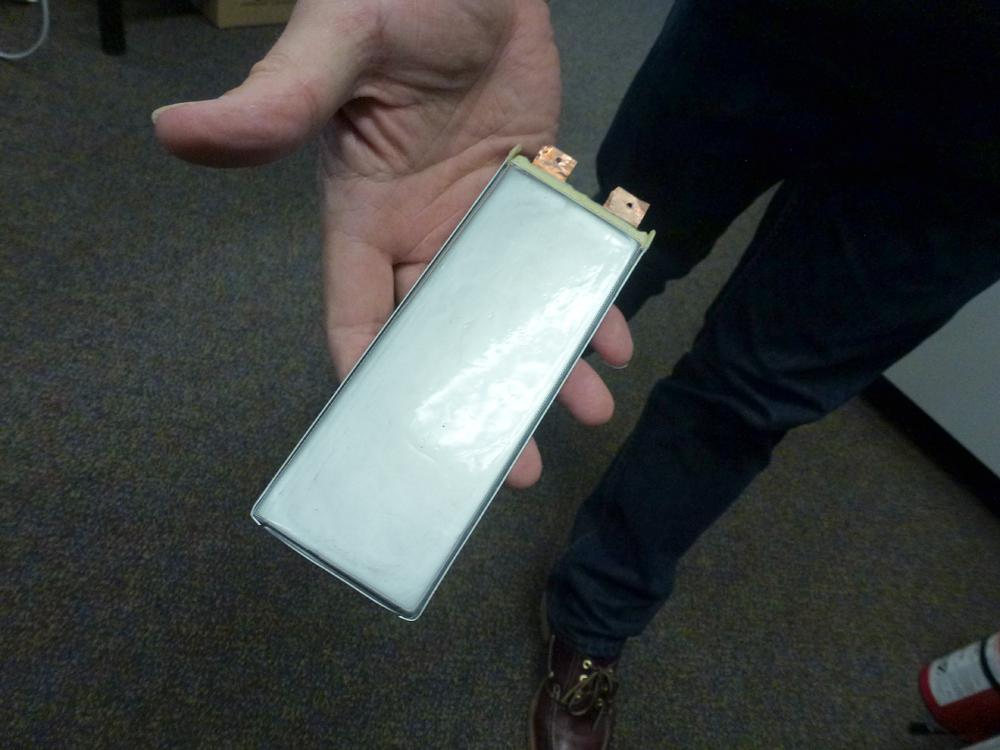
Several of the biggest makers of lithium-ion batteries have been accused of price fixing in a number of class action suits, which could have major implications for the future of electric cars.

As key components in everything from laptops and cell phones to electric vehicles, lithium-ion batteries have never been cheap, but it may have been more than just insatiable demand that has kept them that way over the years. According to the New Jersey Law Journal, at least 10 class actions have been brought against manufacturers of lithium-ion batteries alleging price fixing. Firms named include Panasonic, LG, Sony, Samsung, Sanyo and Hitachi, along with their American subsidiaries in California and New Jersey. The plaintiffs allege that these companies have engaged in price fixing to keep lithium-ion battery prices artificially high since 2000, and that they have controlled at times between 60 and 90 percent of global lithium-ion battery production.

The suit follows in the footsteps of others filed over price fixing of electronic components, such as LCD screens and RAM, and in some cases, the companies involved are the same. The plaintiffs allege that the situation the battery situation mirrors those previous cases in some ways, such as a highly concentrated market, rapid commoditization of new technology, and pricing that seems to defy the effects of fierce competition.

According to court filings, li-ion battery prices fell dramatically between 2000 and 2002 as Korean manufacturers entered the market and competition increased. But in the period following this, prices have risen consistently without even a hiccup during the 2008 economic downturn, evidence, plaintiffs claim, of price fixing.

Breaking up a potential price-fixing racket in lithium-ion batteries could be a significant development for EVs, where prohibitively expensive battery packs have served as an insurmountable stumbling block preventing mass EV implementation. Government programs have helped somewhat in reducing the cost for the consumer, but this spending is controversial, and skeptics see any consumer technology that needs to be propped up with legislation as being impractical in the long run. Prices have been predicted to fall for lithium-ion EV batteries over the next decade, but with sales of EVs falling well short of the high expectations of just two years ago and automakers rethinking their EV strategies, a decade from now might already be too late to save the EV. Should these suits trigger a worldwide drop in lithium-ion battery prices, the potential is there for an EV market which is competitive with standard gasoline-powered cars.


Source : digitaltrends[dot]com

Oct 3, 2012

Squeezed out by Twitter, Tweetbot makers introduce the App.net-friendly version, Netbot

netbot from tweetbot

After Twitter's API restrictions hurt its alpha testing, Tweetbot makers went the developer-friendly route with Netbot, the App.net iPhone and iPad apps.

Fan-favorite iOS Twitter client Tweetbot recently announced it would be shutting down its alpha testing as a result of Twitter’s recent API restrictions. Initially, Tweetbot developer Tapbots reassured us all that the application would be just fine, and the team was working closely with Twitter on the project. Unfortunately that was not the case, as user tokens became limited and so did Tweetbot’s ability to functionally test its app.

So while Tweetbot for Mac waits in the proverbial wings, Tapbots decided to take action where it could – over at App.net. The anti-Twitter, microblogging platform has been developer-friendly from the get-go, launching in reaction to tide of API restrictions Twitter began whispering about early last summer. App.net recently announced it would be incentivizing — allowing developers to build for its platform by offering them a crack at a $20k pool.

App.net also recently dropped its user fees from $50 a year to $36 a year, or $5 a month. The quick assumption there is that the platform is trolling for new users as its initial hype begins to fade, but App.net is spinning this as good news, saying it’s nearing 20,000 users, easily surpassing its 10,000 paying members goal.

Of course, it’s still no Twitter – which, this summer, was estimated to have more than 300 million registered users. But given the platform’s distancing from developers, it’s only natural that app builders are starting to look elsewhere, Tapbots included.

netbot for iphoneWhich is what brings us Netbot. “If you love Tweetbot and are on App.net, you’ll want Netbot,” co-founder Paul Haddad wrote in a blog post introducing the new client. “We’ve been working very closely with App.net. Their goals of always putting users first resonates with what we believe at Tapbots. Even though App.net is currently a small network, we expect big things from them and are proud to be a part of the community.”

Haddad says App.net is also working on bringing expected features like push notifications and private messaging to the platform, and once available, they will be integrated into Netbot as well.

netbot for ipadNetbot for iPhone and iPad is available today (both cost $4.99 — Tweetbot for iPhone is $2.99, for the record), and the app is incredibly reminiscent of what we all fell in love with in Tweetbot for iPhone (the long-awaited iPad version was in the works when the Twitter hammer fell). App.net iOS users will absolutely want to turn to this client for their mobile use. Getting Tapbots – a very respected and creative team – on board with the platform speaks well of where mobile development for App.net is going and the kind of talent it’s attracting. But it’s important to remember that App.net is not a Twitter-as-we-know-it-now killer – it’s just trying to resurrect what Twitter was and could have been. 


Source : digitaltrends[dot]com

Sep 13, 2012

Apple says iPhone 5 is the thinnest smartphone in the world, turns out it isn’t

Apple’s Phil Schiller called the new iPhone 5 “world’s thinnest smartphone”, but many makers have made that claim for many phones. It happens often and sometimes it’s not true. So, how does the new iPhone stack up against the competition.

We’ve prepared a table with every “world’s thinnest” phone we could dig up plus various high-end phones that are competing with Apple’s latest flagship.

Phone
Thickness
Weight
Availability
9.3mm
140g
Yes
7.6mm
112g
In a week
8.6mm
133g
Yes
8.9mm
130g
Yes
7.8mm
120g
Yes
8.7mm
135g
Soon
10.7mm
185g
Soon
9.9mm
160g
Soon
7.1mm*
127g
Yes
8.4mm*
146g
Soon
8.3mm*
126g
Soon
6.7mm
130g
Soon
7.8mm
103g
Yes
6.7mm
125g
Soon
6.7mm
105g
Yes
7.7mm
105g
Yes

* At the thinnest part

So, no the iPhone 5 isn’t the thinnest smartphone in the world. As far as currently available devices go, the Fujitsu Arrows F-07D takes that title. Sure, it’s not an easy phone to get hold of, but it exists.

And there are at least a couple of other phones that will soon be available and are thinner than the iPhone 5. Note that I’m not counting the Motorola RAZR because the top part of the phone is much thicker than the claimed 7.1mm (even though the part where you actually hold the phone is really that slim).


Source : blog[dot]gsmarena[dot]com

Sep 7, 2012

Neither Treyarch or Infinity Ward are making Call of Duty Black Ops: Declassified for PS Vita

call of duty black ops 2

Who's making Call of Duty Black Ops: Declassified? Not Infinity Ward, makers of Modern Warfare, and not Treyarch, makers of Black Ops.

Activision wants everyone, from the lowliest nerd to the highest spending shareholder in the company, to know that it is the publisher behind Call of Duty. Call of Duty: Black Ops is the best-selling video game of all time? That was us! We’re all Call of Duty, all the time, us Activision folk. Unless you’re talking about Call of Duty Black Ops: Declassified for PlayStation Vita. That might not be us.

That seemed to be the message at least when the first PS Vita version of the popular shooter series made its debut during Sony’s press conference at Gamescom in August. Activision was very quiet about the game, especially after the tepid response the first trailer received from press and fans. In fact, Activision wasn’t even clear on who is making it.

Not Treyarch and not Infinity Ward, says CVG. Neither of the studios responsible for Call of Duty’s annual HD console releases has worked on the Vita game. John Rafacz of Treyarch said his said hasn’t “been involved with the Vita version.” Rough!

Who is making the game? Nihilistic, an independent studio in California. Call of Duty obsessed Vita owners might want to dial back their excitement for the game even more considering Nihilistic’s most recent output. Its last game was Resistance: Burning Skies for PS Vita, a shooter built to showcase the handheld’s horsepower and capabilities as a platform for FPS games. It was instead a ramshackle series of boring levels and tacked on touch screen features.

Activision hasn’t totally separated itself from Call of Duty Black Ops: Declassified. “Activision is the publisher, but we also have a partnership with Sony to bundle Declassified with the PlayStation Vita.” Translation: We’re sort of publishing, but Sony’s publishing it more than us!

The concern here is not just the poor quality of Declassified based on footage of the game. Yes, the footage is especially rough since the game is due out in just over a month. The real problem is the amount of money that Sony no doubt spent to get Activision to commit the brand to Vita at all. Activision has been reticent to publish on either Sony or Nintendo’s handhelds in recent years, recognizing that the devoted portable gaming market is contracting on a nearly daily basis. If Sony spent big to get Activision to just loan out the Call of Duty name, it’s not getting very much for its money.


Source : digitaltrends[dot]com

Quadrocopter swarm performs amazing light show [video]

50 quadrocopters perform light show in Austria

Austrian and German robot makers launch a record-breaking 50 quadrocopters to perform an incredible 3D light show in the sky.

When I think of quadrocopters — the miniature flying drones that can be programmed to fly in choreographed formations — the first thing that comes to mind is a nightmarish future where people are bombarded by these little robots, picked up off the ground, and flown to some secret CIA prison. But apparently not everyone is as paranoid and crazy as I am.

Like the clever folks at Austria’s Ars Electronica Futurelab and German firm Ascending Technologies GmbH, who recently used a swarm of 50 quadrocopters to create what can only be called 21st century performance art. Outfitted with programmable LED lights, the swarm of Hummingbird quadrocopters flickered and danced in the night sky on September 1, above Linz, Austria, for the 34th annual Klangwolke (Cloud of Sound) multi-media music festival, to create 2D and 3D images in the sky.

Dubbed “The Cloud in the Web,” the eight-part performance tells the story of “the networking of our world,” according to the press release (pdf). “Episode 0″ starts with the story of waterways like the Danube river (along which the performance took place), which first connected humanity with one another. From there, the story travels through the first harnessing of electricity, to the birth of telecommunication and radio, to the rise of the robots, and finally to the age of the Internet.

The performance set a world record for the number of synced quadrocopters flying in unison. But the team says that it’s not finished there. Better 2D and 3D images are in the works, as is long-range flight. But what the team really wants to do is “crank up the numbers” — say, somewhere in the neighborhood of 5,000 quadrocopters in the sky at once.

Now, if that doesn’t sound like something out of a nightmarish dystopia, I don’t know what does.

Watch a video of “The Cloud of Sound” below:


Source : digitaltrends[dot]com

Aug 31, 2012

Tomorrow is yesterday: Crytek discusses the next step in gaming

Crytek, the makers of Crysis, discuss how far gaming engines have come, and what is coming next.

We as gamers tend to take technical advancements in games for granted. We expect games to be bigger, faster, and shinier than the titles that came before them, and we tend to dismiss the massive amount of work that goes into the finished product. That is a sadly inevitable fate, especially in an entertainment field that pushes us to experience it on a visceral level.

But behind all those impressive explosions, realistic facial movements, and animations that make destroying things all the more satisfying, there’s a graphics engine powering that game. The best engines make the rounds and get licensed out to several other developers, serving as a blank canvas for game after game. Despite heavy modifications from the developers that license them, the fortunes of games themselves become heavily reliant on that initial development.

Of the developers that make their own engines, one of the most highly respected is without question Crytek, makers of the CryENGINE game engines. The first CryENGINE unleashed Far Cry on the world, an impressive game, to say the least. Not to be outdone, Crytek followed that up with CryENGINE 2, the game engine behind one of the most graphically intense and lauded games ever created, Crysis. The game was so technically intensive that it became a running joke as to whether or not a computer could run it at full specs. Even five years later, many new computers still have problems with it.

Carl Jones of Crytek

In 2009, Crytek announced it would release CryENGINE 3 in October of that year, and then later released a free-to-use engine called CryEngine 3 SDK. The original version of the engine was used on Crysis 2, and then later used to bring the original Crysis to consoles. It is also now being used to power the upcoming free-to-play game, Warface, as well as the hotly anticipated Crysis 3, due out in February of next year.

We spoke with Crytek’s Carl Jones, Global Business Development Director for CryENGINE and discussed the role of new game engines, what we can expect in the future, and the role of tech in video games.

Are you excited for the next, more powerful generation of consoles?

Carl Jones: Yes, we’re very excited about the next generation of consoles. Crytek has always made benchmark-setting, high-end PC games, in terms of the quality of our graphics. What we’re expecting to see from the next generation is a console that allows us to take off all the restrictions that come from relatively low-end current hardware, and even go beyond where we’ve been before on high-end PCs.

As graphics and systems become more sophisticated, does it become more difficult to develop new engines, or do the new tools at your disposal make it easier?

CJ: Generally, new systems mean new opportunities for us at Crytek. We hope, of course, that any new hardware advance actually makes it easier to develop new engine features! The sophistication of DirectX 11, for example, gives us the opportunity to do a lot more low-level work, as we get more control over the GPU. You can actually start doing general-purpose GPU systems, which enable you to write really cool, movie-quality simulations for hair, cloth, particles, etc. and have it run really fast on standard DirectX 11 hardware. There aren’t really tools that enable people to build engines, but certainly ensuring that the operating system is simple and that it’s easy to access the hardware makes it easier for us to do cool new things in updating our engine for more powerful systems.

How important are graphics in gaming?

CJ: Since graphics deliver what you see, it’s one of the core and critical components of any game, alongside audio and gameplay. Whether it’s more important than those other two is a matter of opinion. Obviously you can have a great, fun game without a huge amount of high-end graphics. But if you really want to immerse your player in a believable world and have them cross that barrier into really feeling the game and being a part of it, then the believability of your virtual world is key. And the way you do that is via better and better graphics. CryENGINE still leads the way in terms of the quality of our realism and believability of environments. And so for a large number of games, especially high-quality games, you want your player to be truly immersed in the environment, and at that point graphics are vital.

How far away are we from photorealistic graphics and faces?

CJ: Crytek achieved near perfect photo-realism way back with CryENGINE 2 and Crysis. I think where we are now is that you can actually go beyond photo-realism and get into the kind of dream worlds or CGI-style worlds where you’re not limited by realism. More importantly, you can let your creators’ imaginations go wild, and they can be sure that what they choose to design will look believable.

I think that’s the point we’re at now, where having been through photo-realism for environments, we now want to go beyond that and say, “Well, what if it doesn’t exist – can we make people believe it?” If you think of things like Avatar, for example, they’re not real but they’re certainly highly believable, perfect-looking environments. And that’s where I think games are moving to now. We’re always improving and there’s always more you can do with more power from the hardware in terms of the amount of stuff that you can show on screen at any one time. Achieving photo-realism and interactivity at the same time is always the challenge, and we’re seeing more interactive and larger environments with more and more stuff on screen that looks realistic.

With faces and characters, we’re getting closer. I think, again, to use the example of Avatar, we saw that photo-realistic or believable characters are now here in CGI and movies, and I think we’re really close to that in games as well. The issue that we often have in-game is the limited budget that we have to balance between everything that makes up the game. To make a believable-looking face, with believable movement, on top of a believable looking body – and have a whole game with hundreds of characters and lots of things happening at the same time, all completely under the players control – is still beyond the power we have in the hardware today.

Once you get there, how do you overcome the “uncanny valley?”

CJ: We are now seeing, on small scales, extremely believable photo-realistic character faces. We have them now in CryENGINE 3; the faces of the in-game characters are almost indistinguishable from a photo of a person. Of course, we’ve got a fair way to go in terms of the movement of a character’s face and making that feel real. But I think we’re not far off, and certainly you’ll see some cool stuff from Crytek in this area quite soon. The uncanny valley always gets deeper, the closer we get, but we’re definitely seeing some effects now and some CG characters that make it very difficult to tell they’re not real.

What is the next step in graphics engines going to be like? 

CJ: I think you’ll see movie-quality graphics in a fully interactive environment, and I think we’ll be able to do a great deal more with physics simulation for cloth, destruction, fluids and hair. So the world that you’ll be playing in will become significantly more believable and interactive. Having a fully populated realistic and interactive city should soon be possible. 

Unfortunately, to do that you need to create a lot of assets and the next real big step for all engines will be constantly improving the tools and the content creation process. So I think, while we’re going to see a leap in the short term in graphics quality, you might not actually see games being able to fully utilize that until the tools catch up and give the development team the ability to create so much content so quickly. People aren’t going to start just putting bigger and bigger teams onto video games in order to take advantage of the new effects. The tool pipeline needs to be improved generally for game engines to allow much quicker content creation to fill these worlds that we would now be able to create. We established the use of real-time editing with Sandbox years ago – all other engines now work in the same way – as instant iteration gives a lot of time back to the game creators. Now we need to look at other ways of removing downtime, increasing productivity through procedural tools and the like.

What is the trick to making a game look great? Is it the art design, the polygon count, the lighting, etc.?

CJ: It’s a combination of having the technology and the people to realize a well-directed vision. So you need talented art direction matched with the ability of the artists to create beautiful 3D art, and then have technology that can handle incredibly detailed interactive scenes. So really, it is a combination that mostly comes down to creative talent, from the artists, the art director and the guys making the engine and the technology.

Are there any technical things you would like to do, but technology just isn’t there yet? How far off are we?

CJ: We are currently working on things at Crytek that are based on future technology that we expect to arrive – they don’t necessarily exist yet! I can’t talk too much about that, but there are things that we already want to do, but we are waiting for the technology to catch up with our ideas and we’re pretty sure that it will happen within the next three years, maybe even sooner.

With CryENGINE 3 we are now achieving things on current-generation hardware, which we’re told shouldn’t be possible – these are features that other developers think require multiple graphics cards in a supercomputer. We’re managing this because of our research strategy, which is to create features that are ahead of their time, then optimize them to run on the lowest possible hardware specs. This strategy also means our engine is better prepared for AAA, next-generation console games – as we’ve been aiming CryENGINE 3 at the new generation since before 2010. 

So, some of our research now will only become fully usable once future technology becomes available – but it’s going to be pretty sweet when it does!

Source : digitaltrends[dot]com

Aug 13, 2012

Next version of uTorrent to include “featured torrents” as a form of advertising

The makers of popular BitTorrent client µTorrent have announced some changes that they will be making in the upcoming version of the application and how they plan on monetizing it.

So far, the free version of µTorrent offered to install toolbars during installation and that was the only source of revenue for the developers from the free version. The next version of µTorrent, however, will include something called “featured torrents”.

Featured torrents will be sponsored torrents that will appear at the top of your torrent list. These will usually be to content such as movies, music, games, software, etc. Of course, all of this will be genuine and offered directly by their respective owners. This is supposed to help encourage people to download genuine content and at the same time act as a source of income for µTorrent developers.

The featured torrents will only appear in the free version of the client and not in the Pro version.

For more information, click on the source link below.


Source : blog[dot]gsmarena[dot]com